




Abstract
Toxicologic neuropathology for the peripheral nervous system (PNS) is a vital but often underappreciated element of basic translational research and safety assessment. Evaluation of the PNS may be complicated by unfamiliarity with normal nerve and ganglion biology, which differs to some degree among species; the presence of confounding artifacts related to suboptimal sampling and processing; and limited experience with differentiating such artifacts from genuine disease manifestations and incidental background changes. This compilation of key PNS neurobiology, neuropathology, and neurotoxicology references is designed to allow pathologists and toxicologists to readily access essential information that is needed to enhance their proficiency in evaluating and interpreting toxic changes in PNS tissues from many species.
Introduction
Toxicologic neuropathology in animal toxicity studies typically emphasizes identifying and characterizing changes in the central nervous system (CNS) more than the peripheral nervous system (PNS). This difference in focus is clear in the more extensive sampling recommended for brain and spinal cord relative to ganglia and nerves in many published guidelines for collecting neural tissues, especially for general toxicity studies in which no PNS neurotoxicity is known or anticipated. 1 -5 Accordingly, pathologists and toxicologists generally are more familiar with the tenets of CNS biology and pathology rather than the principles of PNS biology and pathology.
This current collection (Table 1) of resources is designed to help interested individuals find key resources to improve their basic understanding of PNS neurobiology for animal species used in conventional Good Laboratory Practice–compliant safety studies using animals as well as important lesions, mechanisms, and toxic causes of test article–related alterations in nerves and ganglia. Spontaneous changes have been included in this compilation because they might be confounded with toxicant-induced lesions. Natural diseases of the PNS associated with bacterial (mycobacteria [leprosy], spirochetes [Lyme disease]); viral (eg, enterovirus, flavivirus [Zika], herpesvirus [chickenpox and pseudorabies], retrovirus [human immunodeficiency virus], rhabdovirus [rabies]); parasitic (protozoa [leishmaniasis], trypanosomes [Chagas disease]); and prion infections as well as inherited and induced genetic mutations (eg, neurodegenerative and storage diseases) have not been incorporated in this compilation. The rationale for this omission is that such genetic and infectious diseases typically cause lesions that are easily discriminated from toxicant-induced findings and thus are outside the scope of this neurotoxicity-focused list. The present article’s focus on PNS structural analysis also precluded inclusion of references on PNS neurotoxic conditions such as botulism where pronounced functional changes seen in natural disease and following therapeutic injections are not accompanied by anatomic abnormalities.
Selected References on Peripheral Nervous System (PNS) Biology and Pathology.
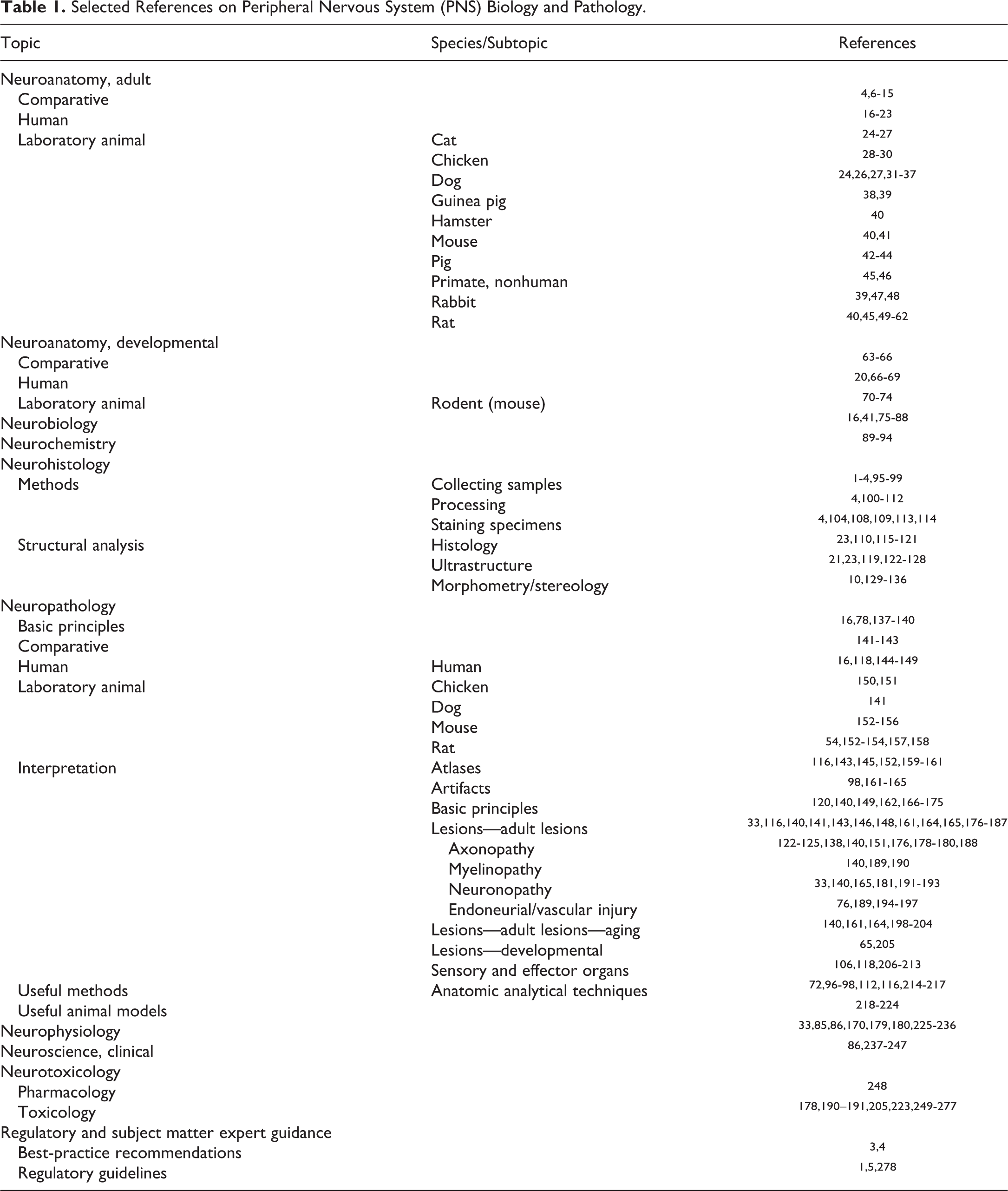
Proficient practice of PNS neuropathology requires ready availability of key resources covering several major areas of PNS biology during health and disease. The foundation is built beginning with references related to PNS neuropathology, including one or more texts that describe the anatomy and functions of major PNS structures as well as known classes of neurotoxicants and their mechanisms of action. 6,16,137,144,279 In addition, at least one atlas 145,159,160 illustrating common lesions that may be observed in PNS ganglia and nerves should be readily accessible for comparison to findings observed in tissue sections. Familiarity with current “best-practice” recommendations 3,4 and related technical papers 95,100 -102,152 regarding preferred methods for collection, processing, evaluation, and interpretation of PNS tissues is an essential next step. Finally, PNS neuropathologists should be well versed in the similarities and differences that exist among international regulatory guidance documents with respect to PNS analysis during animal toxicity studies. 5,278 This abbreviated menu of essential references will provide the necessary underpinning to support proficient PNS neuropathology evaluation. The remaining references in the list below will further enhance a practitioner’s understanding of PNS disease processes.
This compilation is devised to serve the needs of both experienced and novice toxicologic pathologists and toxicologists. Practitioners with existing expertise in evaluating the PNS likely will discover several new references to help increase their proficiency. Individuals just starting to acquire experience with PNS assessment will find many resources to accelerate their ability in this arena. In addition, scientists from allied disciplines (eg, biomedical researchers, regulators) will find numerous useful aids with which to improve their understanding of PNS neurobiology and the nuances of PNS neuropathology data sets. In sum, we anticipate that this list of essential references should profit all professionals who participate in PNS neuropathology examinations in animal toxicity studies to guard the health of humans and animals.
Footnotes
Declaration of Conflicting Interests
The author(s) declared no potential conflicts of interest with respect to the research, authorship, and/or publication of this article.
Funding
The author(s) received no financial support for the research, authorship, and/or publication of this article.
