




Abstract
Coal triggering pollution caused by the emission of harmful substances in the process of coal combustion has been paid more and more attention. Barium is a ubiquitous heavy metal element in coal. During coal combustion, Ba in coal has been released into the environment in different forms, and coal-fired products with high Ba content can cause harm to the environment, human health and even pose a serious threat to life. By reviewing the literature, distribution, modes of occurrence, mobility of Ba in coal seams were summarized and studied in this paper. It is expected to provide information for controlling emission of Ba. The content characteristics of Ba in coal in some countries are introduced, and the content gradient of Ba in coal of Chinese different provinces is introduced in detail. And coal with Ba content greater than or equal to 5 times of the world average Ba content, namely, coal containing 750 μg/g Ba is called high Ba coal. Many studies have shown that Ba was extremely enriched in coal in some areas (up to 5,000 μg/g), particularly in the Jurassic coal seams of the Huanglong coalfield in China. There were various types of occurrences of Ba in coal, including witherite, barite, crandallite and other minerals. Meanwhile, Ba can combine with organic matter as well. According to existing studies, the enrichment mechanism of Ba in coal is mainly derived from soil, sediment and seawater erosion, with the later causal minerals Ba carbonate and strontium rhodochrosite being the main carriers of Ba. The migration and transformation pathways of Ba in coal and its combustion products are described. As a medium volatile element, Ba is prone to concentrate in products of coal combustion, particularly those small-grainsize particles in fly ash, which may induce more serious contamination.
Introduction
As an environmentally sensitive element, Ba is classified as a class D toxic element by the US Resource Conservation and Recovery Act (RCRA) and the US Geochemical Commission listed Ba as the third category of harmful elements (Wang and Qin, 2011). Barium is a common trace element in coal, but its content varies greatly. Scholars have reported the content of Ba in different grades of coal (Dai et al., 2012; Munir et al., 2018; Wang et al., 2018; Zhao et al., 2014). The average content of Ba in world coal and Chinese coal is 150 and 159 μg/g, respectively (Dai et al., 2012; Ketris and Yudovich, 2009). The content of Ba in some coalfields (mining areas) in China is high. The average content of Ba in the coal investigated in the Huangling Mine, Ordos Basin, northern China is 5,728 μg/g, with a maximum value of 26,423 μg/g (Zhao et al., 2014). Tian et al. (2014) found that the content of Ba in coal in Huolinhe coalfield, Inner Mongolia in China is 1,027.3 μg/g. Barium is an alkaline earth metal element with active chemical properties, and the occurrence state of Ba in coal is quite different. Most of Ba in coal is isomorphic with potassium, so it is mostly distributed in clay minerals in the form of minerals such as witherite (BaCO3), barite (BaSO4), boehmite (CaAl3(OH)6(HPO4)(PO4)), and some of them are organically bound in coal (Zhao et al., 2014).
As a medium volatile element, a small part of Ba is volatile during combustion, and most of it remains in ash, but the content and distribution are quite different. For example, the content of Ba in fly ash in Europe reached 745–7,000 μg/g (Block and Dams, 1976), the United States reached 200–2,000 μg/g (Suloway et al., 1983), New South Wales in Australia reached 250–300 μg/g (Swaine, 1981) and South Africa reached 800–2,920 μg/g (Willis, 1987). According to the distribution behavior of coal combustion, some scholars thought that Ba accounted for a large proportion in bottom ash (Vejahati et al., 2010; Yan et al., 2001), however some scholars found that the content of Ba in fly ash from power plants was 1.5–1.9 times that of bottom ash (Wang et al., 1996; Yang et al., 1983), and tended to be enriched in fine-grained fly ash (Wang et al., 2019). Huang and Tang (2002) studied the distribution of Ba content after coal burning in Xiaolongtan Power Plant, and found that the content of Ba in fly ash was 5.1 times that of bottom ash.
During coal combustion, Ba entering the environment through different ways can damage human health, and even threaten life in severe cases. Some soluble Ba salts, such as BaCl2, Ba(NO3)2, BaS, BaO and Ba(OH)2, are extremely toxic. An adult can be poisoned by accidental ingestion of 0.2–0.5 g of BaCl2, and more than 0.8 g can be life-threatening. In recent years, many incidents of Ba poisoning have occurred in China, such as Ba carbonate poisoning in Liaocheng City and Huichuan District, northern Guizhou (Guo et al., 2018; Xu et al., 2014). Huang et al. (2016) searched the published literatures in China from 1975 to 2015 and found 105 cases of occupational Ba compound poisoning. In order to deal with serious harmful trace element pollution, in February 2011, the State Council approved the “Twelfth Five-Year Plan for the Comprehensive Prevention and Control of Heavy Metal Pollution” (2011), which stipulated Ba as a metal element harmful to human health.
Therefore, it is of great significance for the clean and comprehensive utilization of coal to explore the enrichment and occurrence characteristic of Ba in raw coal and the transformation and diffusion mechanism of Ba in coal combustion. However, there are few papers on systematically and comprehensively studying distribution and enrichment of Ba in coal and coal ash. This paper investigated the determination, enrichment, occurrence state and sources of Ba in coal and the migration characteristics of Ba during coal combustion. Finally, the shortcomings of existing study and the development direction in the future were discussed.
Analysis technique of Ba in coal and coal ash
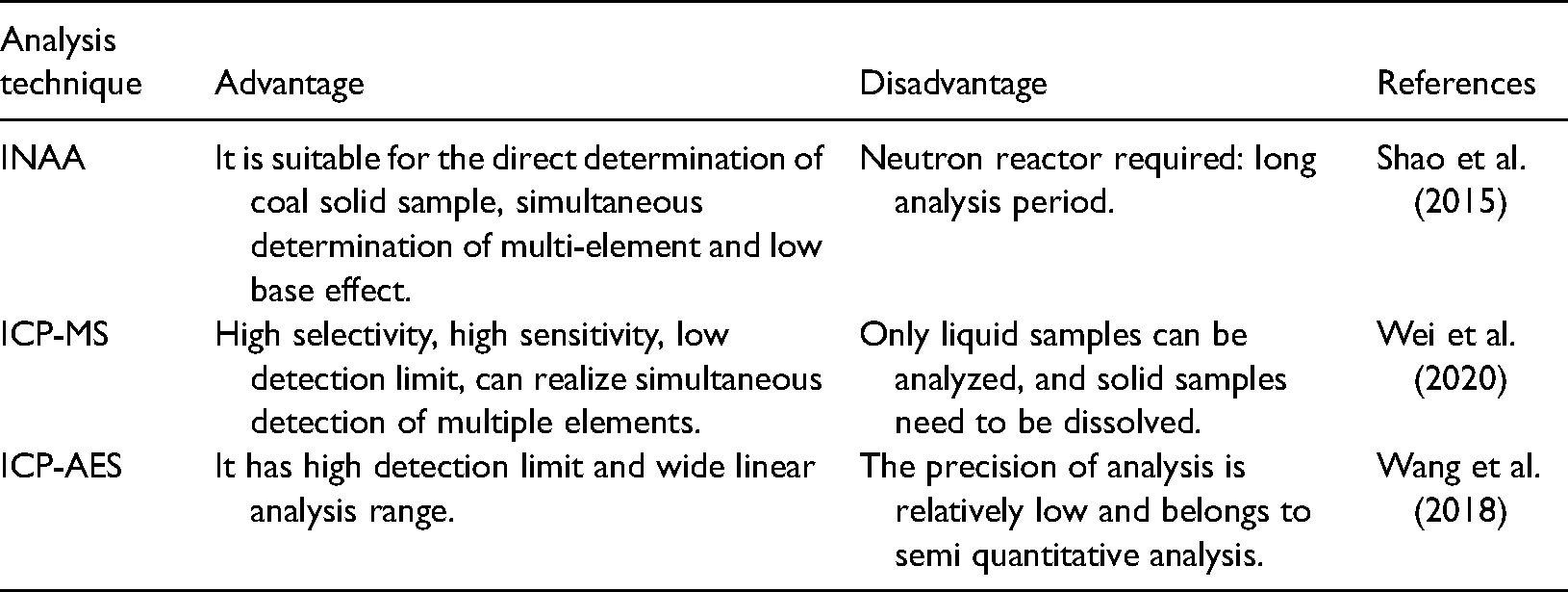
The most commonly used methods for determining Ba content in coal and coal ash include: (1) Instrument Neutron Activation Analysis (INAA); (2) Inductively Coupled Plasma Mass Spectrometry (ICP-MS); (3) Inductively Coupled Plasma Atomic Emission Spectrometry (ICP-AES) (Qin, 2019). The advantages and disadvantages of the most commonly used methods are summarized in Table 1. The determination of Ba in coal or coal combustion products by ICP-MS is disturbed by double charge of Ba. On the one hand, double charge interference can reduce the ionic strength of Ba to be measured. And the ionic strength of Ba can also be increased by the double-charged ions formed by other elements, both of which will greatly affect the accuracy of the test results. Compared with ICP-MS, ICP-AES is more suitable for the determination of Ba content (Yang et al., 2014).
Advantages and disadvantages of INAA, ICP-MS and ICP-AES for Ba determination.
Content, distribution and enrichment of Ba in coal
Barium content in coal
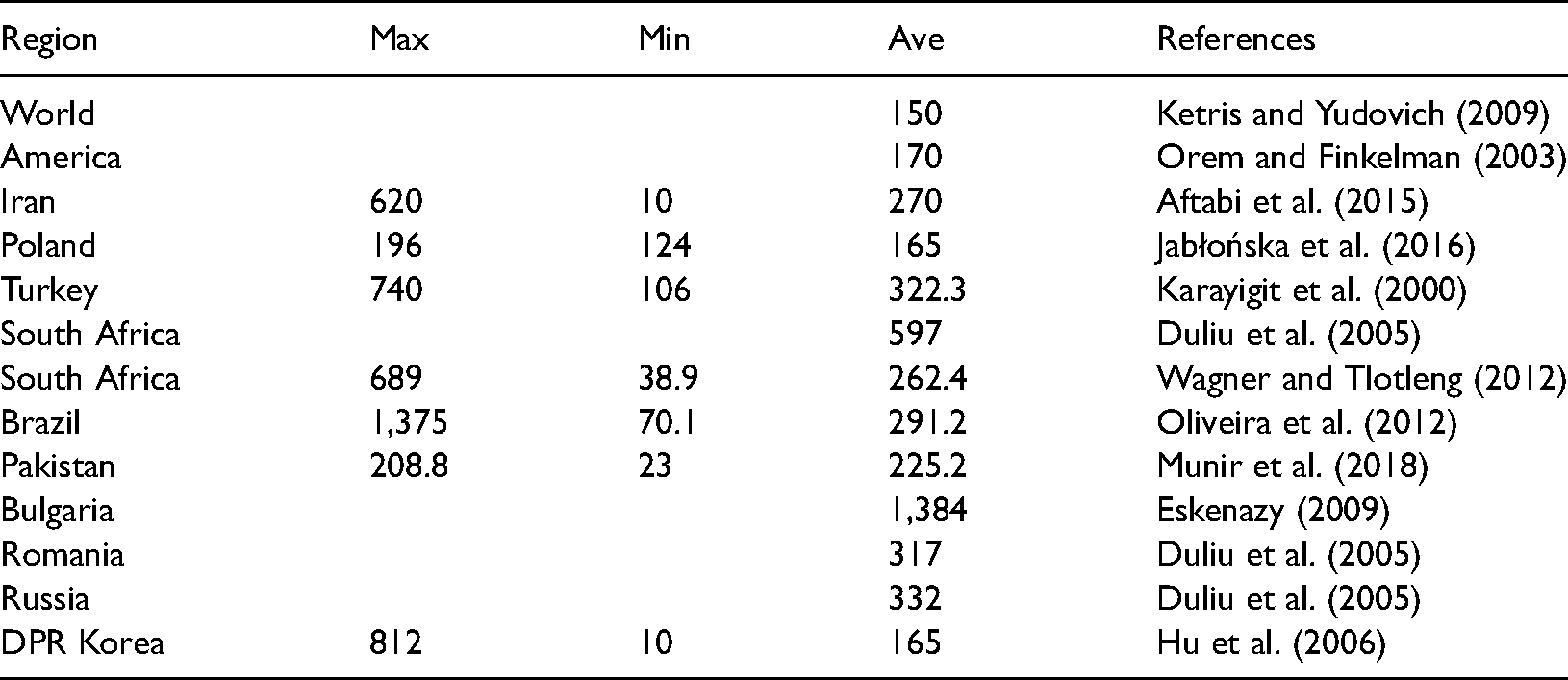
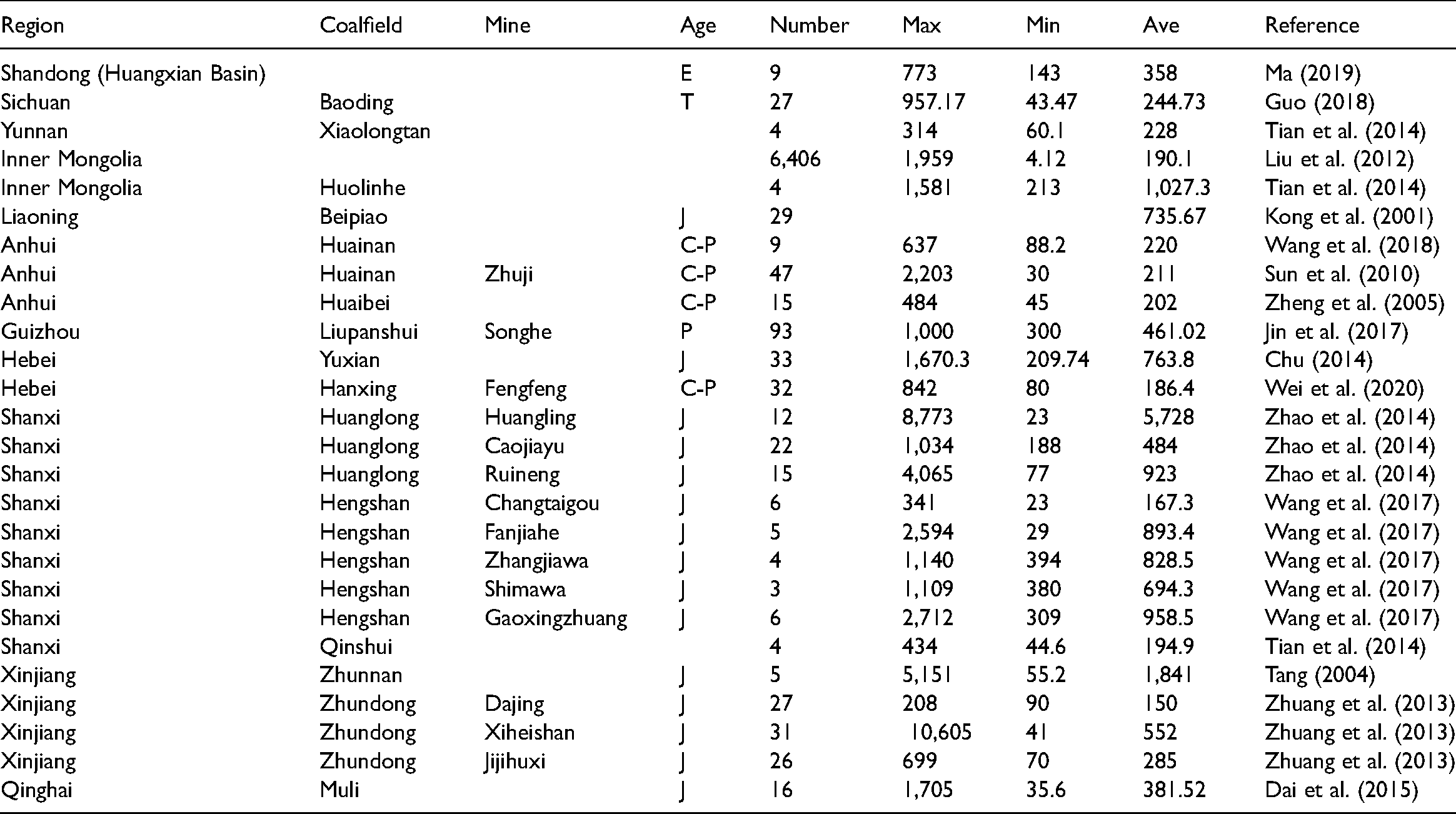
Barium is a common trace element in coal and widely distributed in the world. The average content of Ba in the world coal is 150 μg/g (Ketris and Yudovich, 2009). Dai et al. (2012) reported Ba content of 159 μg/g in common coal in China based on the data of 1,205 samples. Coal with trace element content 5 times higher than the world average is called abnormal enrichment classification scheme (Dai et al., 2012). In this study, coal with Ba content greater than or equal to the world average Ba content (150 μg/g) is called high Ba coal. And coal with Ba content greater than or equal to 5 times of the world average Ba content, namely, coal containing 750 μg/g Ba is called super high Ba coal. The content of Ba in coal seams of some coalfields (mining areas) in China was very high, mainly distributed in Jurassic coal seams with low metamorphic degree. The average content of Ba in Huangling mining area of Ordos Basin was 5,728 μg/g, and the maximum value was 26,423 μg/g, the average content in this area was about 36 times that of Chinese coal (Zhao et al., 2014). The average ash yield of coal was 13.74%, and the content of Ba in ash was more abundant (about 4.2%). The content of Ba in Yan’an Formation coal, Hengshan mining area of Northern Shanxi was 23–2,712 μg/g, with an average of 709 μg/g, which was 3.5 times of the average value of Chinese coal, the proportion of coal samples exceeding the background value of Ba in Chinese coal accounted for more than 75% of the total analysis coal samples, and some mining areas belonged to high Ba coal (Wang et al., 2017). Tang (2004) recorded the trace elements in Chinese coal that the maximum Ba content was 5,151 μg/g in Liuhuanggou mine, Zhunnan coalfield, Xinjiang, with an average of 1,841 μg/g. Kong et al. (2001) studied 29 samples from Beipiao area and found that the average content of Ba in the mining area can reach 735.67 μg/g. Chu (2014) mentioned that the average Ba content in Yuxian coalfield reached 763.8 μg/g. Liu et al. (2012) discovered the statistics and analysis on 6,406 samples in Inner Mongolia, found that the average content of Ba in Inner Mongolia was slightly higher than that in China. The Ba content of coal seams in Pansan Coal Mine of Huainan mining area was higher than that of other coal seams (Wang et al., 2018). Table 2 counts the content of Ba in coal from different countries in the world. Different grades are divided to clearly express the content of Ba in coal of each country (Figure 1). Among them, the content of Ba in Russia, China, Romania and Bulgaria is the highest, above 300 μg/g. Barium content in coal from different regions and coalfields of China is shown in Table 3. Coalfields with Ba content above 750 μg/g are mainly distributed in Shanxi Province (Figure 2).
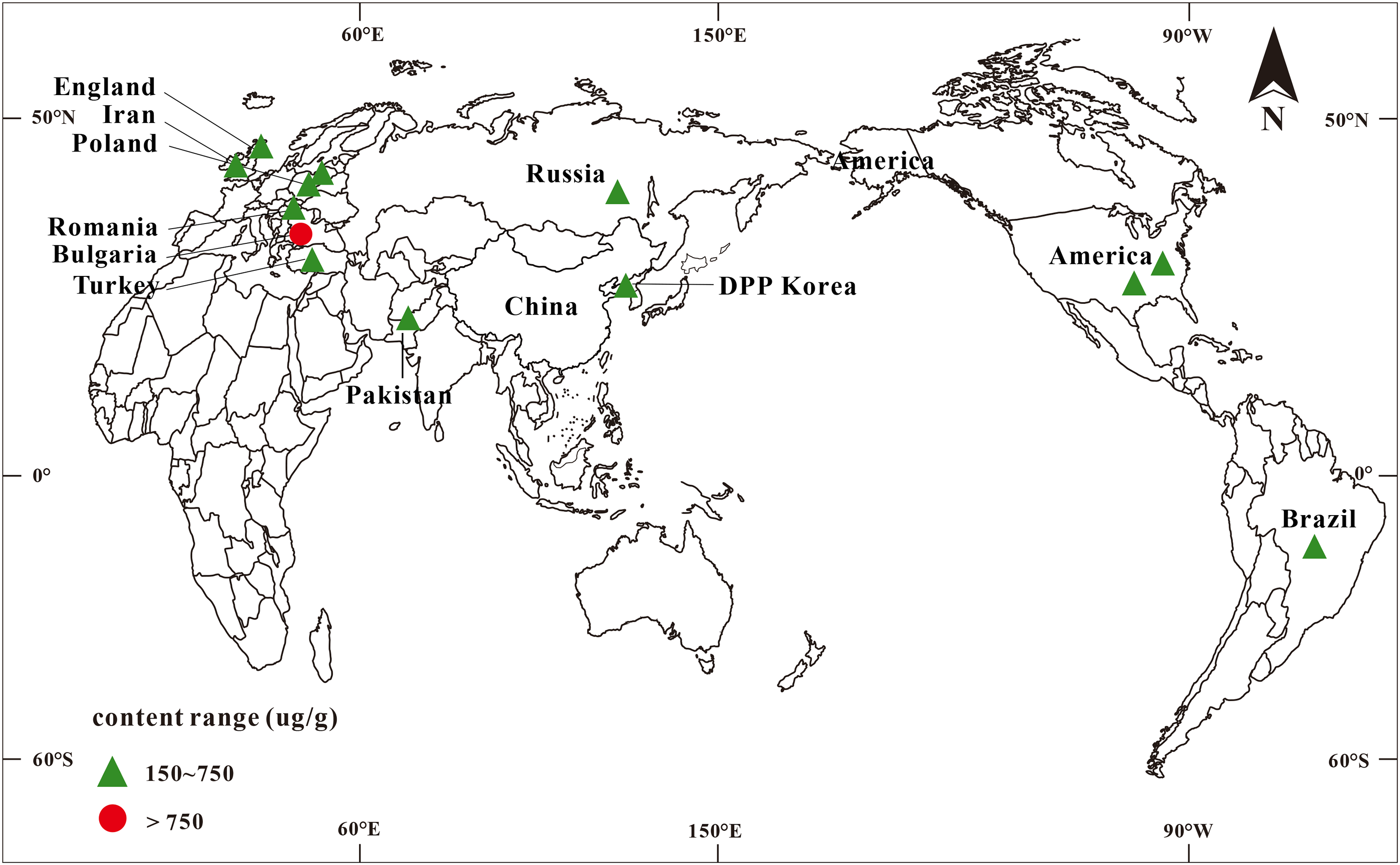
Distribution of high Ba coal in different countries.
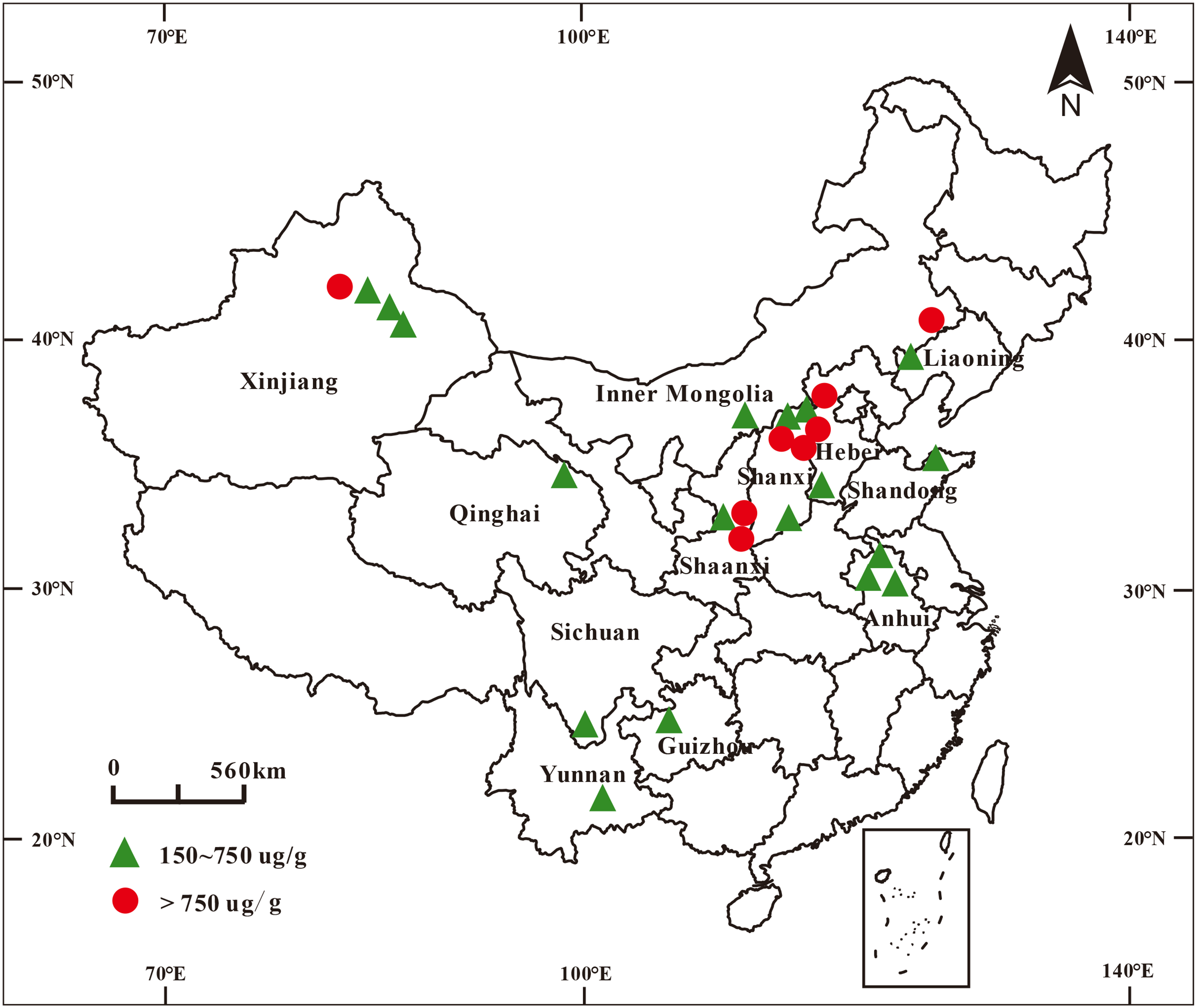
Distribution of high Ba coal from different regions and coal fields in China.
Statistical analysis of Ba content in high Ba coal from different countries (µg/g).
Statistics of high Ba coal from different regions and coal fields in China (µg/g).
Occurrence state and enrichment of Ba in coal
Elemental Ba is not found in nature, but Ba dispersed in rock forming minerals and found in alkaline nature. Ba is a lithophile element with various modes of occurrence in coal (Ketris and Yudovich, 2009). The main modes of occurrence are as follows: (1) Replacement of K element in clay minerals by isomorphism (Xu, 1999) (2) Ba element in the form of organic matter (3) It exists in the form of witherite (BaCO3), barite (BaSO4) and crandallite (CaAl3 (OH)6(HPO4) (PO4)) (Sun and Jervis, 1987). According to literature reports, it was found that the content of Ba in the bituminous coal rich in calcium carbonate was very high (more than 3,000 μg/g), while the study of American bituminous coal showed that Ba was highly correlated with Ca (Zhang et al., 1999).
Gürdal (2008) found that the correlation coefficient between Ba content and ash yield was very low (<0.50), and Ba had affinity with organic matter. However, the statistical analysis of Dai et al. (2005) showed that Ba was mainly related to the inorganic matter of coal. Spears et al. (2007) studied the distribution of Ba in minerals and macerals of polished coal samples from Yorkshire coalfield in Malaysia analyzed by using laser ablation ICP-MS, and found that 13% and 87% Ba were distributed in organic matter and clay components, respectively. Sia and Abdullah (2011) measured the concentration and occurrence modes of Ba in Mukah coal in Malaysia, and found that Ba was mainly inorganic associated (clay mineral), and only a small amount of Ba existed in organic matter. Zhao (1997) found in the study of distribution and occurrence mechanism of harmful trace elements in coal and leaching experiment of coal combustion products, it was found that Ba content in low metamorphic coal was higher than that in high metamorphic coal because it contained high clay minerals, and Ba entered mineral lattice more by isomorphism instead of K element. Ward (2002) reported that Australia Hunter Valley coal contained witherite and hexacelsian (BaCa(CO3)2), Kortenski and Sotirov (2004) identified Ba carbonate (BaCO3) in Neogene Lignite from Bulgaria by XRD, but the content of BaCO3 in these coals was very low.
Several scholars believed that the enrichment of Ba in Beipiao Coal was related to basement lithology (Kong et al., 2001). Based on the R-type cluster analysis of trace elements, Ba, P, Mn and Sr were found to be a cluster combination of lithophile elements, which may be derived from soil, sediment and seawater erosion (Liu et al., 2012). Zhao et al. (2014) discovered BaCO3 particles when studying high Ba coal in Huangling, Shanxi Province, and considered that epigenetic minerals BaCO3 and strontium siderite were the main carriers carrying Ba, and it was speculated that the high content of Ba in Huangling No.2 coal may come from the southern Qinling witherite deposit belt. Wang et al. (2017) found the enrichment of Sr and Ba in most coal samples of Hengshan mining area in Northern Shanxi, and considered that Sr and Ba mainly occurred in the form of inorganic minerals, and celestite, barite, calcite, Ba carbonate, strontium siderite and aragonite were the main inorganic mineral carriers of Sr and Ba.
Mobility, transformation and influencing factors of Ba in coal combustion
Distribution of Ba in coal combustion products
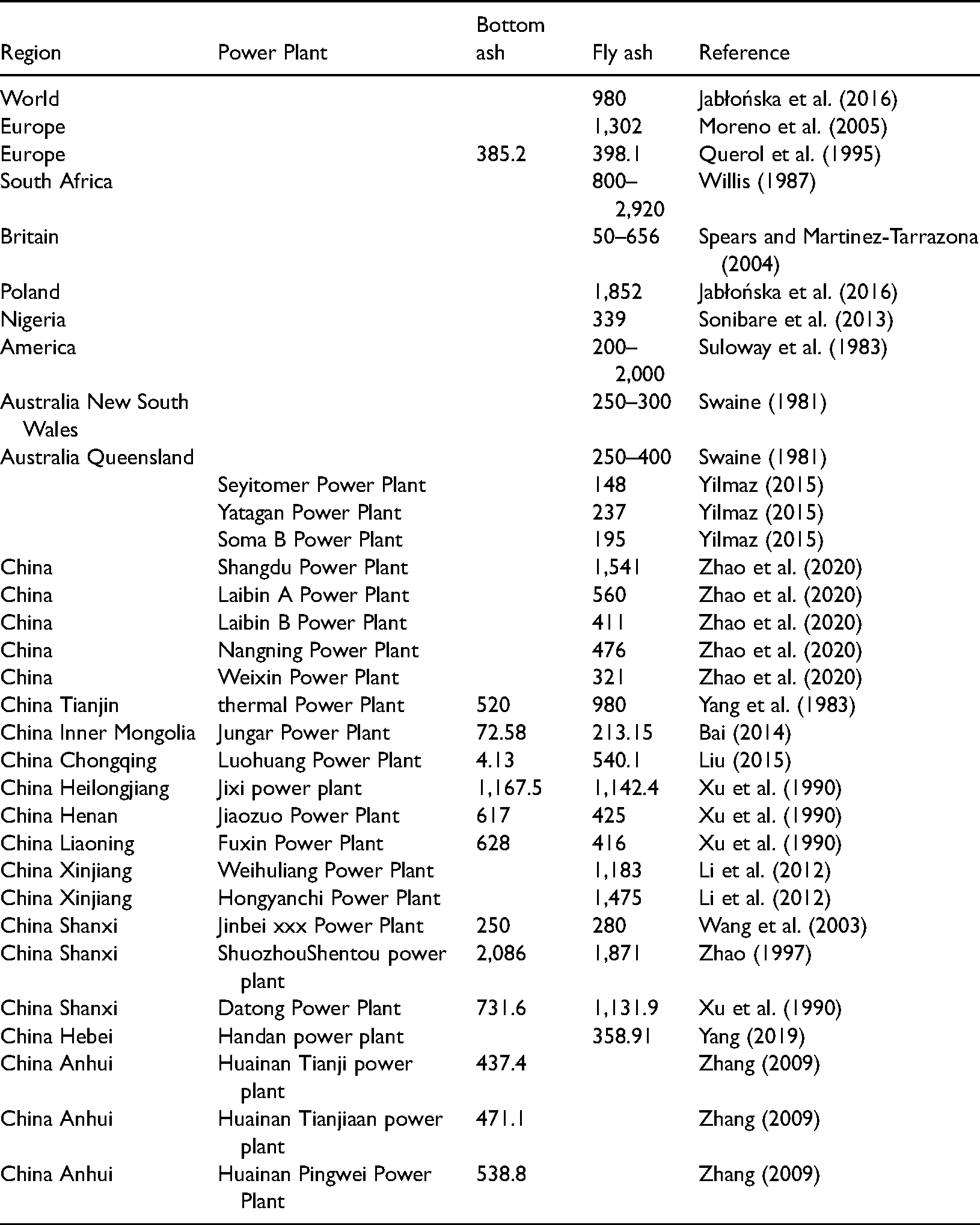
After coal combustion, Ba is further enriched in coal combustion products. The combustion products after coal combustion mainly include fly ash and bottom ash. Several scholars have done a study on the content of Ba in coal products of ordinary coal. The content of Ba in bottom and fly ash of coal combustion in different regions are shown in Table 4. According to the distribution behavior of coal combustion process, many researchers believed that Ba accounted for a large proportion of bottom ash (Vejahati et al., 2010; Yan et al., 2001). The fly ash content in coal-fired power plants in different continents and countries was as follows: 745–7,000 μg/g in Europe (Block and Dams, 1976), 800–2,929 μg/g in South Africa (Willis, 1987), 200–2,000 μg/g in the United States (Suloway et al., 1983), 250–300 μg/g in New South Wales, Australia (Swaine, 1981) and 50–656 μg/g in British (Smith, 1958). Yang et al. (1983) analyzed the change of Ba content in coal combustion products of Tianjin No.1 Power Plant, and found that the content of Ba in fly ash was 1.9 times of that in bottom ash. Xu et al. (1990) and Zhao (1997) compared and analyzed the harmful elements in the coal and coal ash of some power plants in China, and found that Ba was further enriched in the coal combustion products, and the Ba content in the coal ash was 4–10 times of that in the feed coal.
Ba content in bottom and fly ash of coal combustion in different regions (µg/g).
In the process of CFB combustion, most elements (such as Ba) existed in the bottom ash and fly ash. Duan et al. (2016) and found that Ba mainly existed in coal and coal ash in reduced state. At the same time, the emission characteristics and transformation mechanism of harmful trace elements in thermal power plants were studied. It is considered that the enrichment degree of Ba in bottom ash and fly ash was equal, and the relative enrichment index (REI) value was greater than 1, indicating that Ba was difficult to volatilize (Zhao et al., 2018a). Czech et al. (2020) studied the distribution law of heavy metals in fly ash of different types of coal combustion at different stages. In continuous electric field of electrostatic precipitator, the concentration of Ba in small particles less than 1 μm was higher than that in large particles greater than 1 μm.
Barium mobility during coal combustion
At present, there is no special research reports on the mobility and transformation of Ba in coal combustion process. Figure 3 illustrates the Ba cycle and depicts both natural and anthropological mobilization of Ba. Barium-bearing coal is extracted from coal mines and transported to coal-fired power plants. After combustion, a part of Ba exists in fly ash, and the rest escapes into the atmosphere with flue gas. At the same time, Ba in coal gangue waste after coal mining and fly ash deposit of power plant also enters the soil and surface water system through the leaching action of rainwater, then enters the underground water system and enters plants, animals or humans through the food chain (Choudhury et al., 2001). Barium has been shown to take up and accumulate in mushrooms, legumes, grain stalks, forage plants and other plants (Aruguete et al., 1998). Barium has been found in dairy products and eggs (Gormican, 1970), indicating that Ba uptake occurs in animals. During the coal mining process, changes in environmental chemical conditions lead to the exposure of sulphides from reduction reactions to air or surface water, resulting in the oxidative decomposition of large quantities of acidic wastewater. Because of its strong acidity, the wastewater has strong leaching ability, which can bring harmful trace elements in coal into the surface ecological environment such as soil and water, thus causing serious environmental pollution. Moreover, under acid conditions, some of the water-insoluble Ba-containing compounds (e.g. the water-insoluble Ba-sulfate) may become soluble and move into groundwater (US EPA, 1984). Barium is released to the atmosphere during the burning of fossil fuels and waste, and also discharged in wastewater from metallurgical and industrial processes (Choudhury et al., 2001). Barium escaping into the atmosphere and wastewater enter the soil and water body through the atmospheric migration and water circulation system. Most of the Ba in the surface water ultimately reaches the ocean. Once the freshwater source is discharged into seawater, barium sulfate is formed by Ba and sulfate ions existing in salt water. This estimate is supported by evidence that marine concentrations of Ba generally increase with depth, which indicates that a part of Ba may be absorbed by organisms in the euphotic zone and subsequently sedimented and enriched in deeper waters (IPCS, 1990). In addition, Ba participates in sediments through the activity and degradation of organisms. Therefore, the distribution of Ba in the environment is affected by various physical, chemical and biological processes.
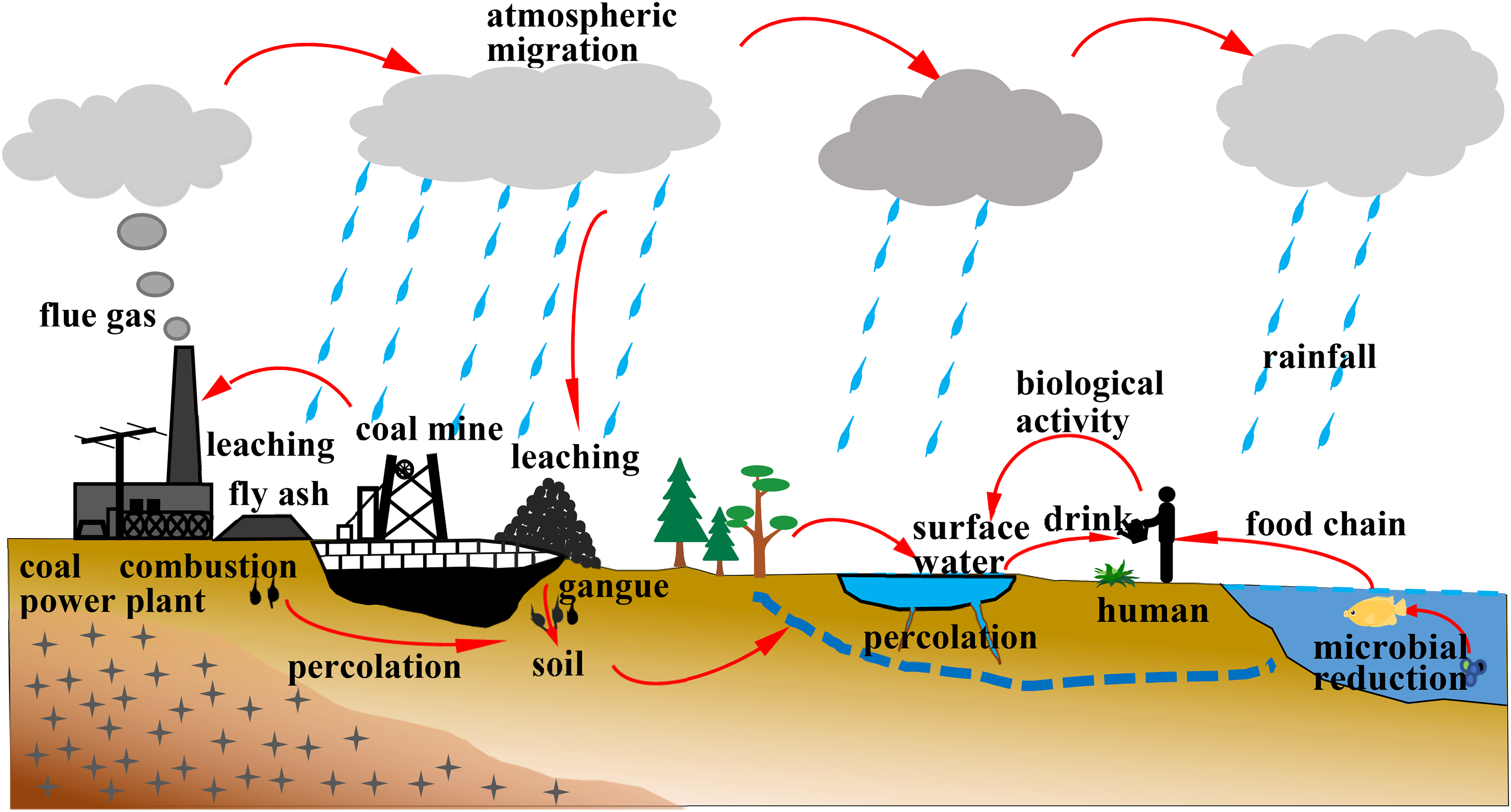
Schematic diagram of Ba migration and transformation.
Many scholars have discussed Ba when studying the harmful element emissions from coal combustion (Yilmaz, 2015). In the 1990s, the research achievements on the mobility and transformation of trace elements in coal combustion process were remarkable. According to the enrichment characteristics of elements in coal combustion process, trace elements can be divided into three categories: (i) nonvolatile, (ii) medium volatile, (iii) volatile. Ba belongs to the second category of medium volatile element, which produces differentiation and volatilization during coal combustion. When the temperature drops, most of them were deposited on the surface of fly ash particles (Clarke and Sloss, 1992). Rizeq et al. (1994) concluded that Ba in coal was basically nonvolatile at 800°C. According to REI, Vejahati et al. (2010) summarized the distribution of trace elements in different coal combustion products during the coal combustion process of power plants. It was found that Ba mainly occurred in clay minerals and feldspars. The enrichment coefficient of Ba in the bottom ash was less than 0.7, the fly ash was about 1, and the fine particle fly ash which was not captured by the dust removal device was greater than 1.3.
The research on the mobility and transformation of harmful elements in coal is relatively late in China, but the achievements are considerable. The distribution, occurrence characteristics, leaching and mobility of harmful elements in coal combustion products have been studied (Wang et al., 2015). It provides a basis for controlling the emission of harmful elements. With the innovation of modern experimental instruments and equipment and the improvement of testing technology, remarkable achievements have been made in the research on the content, enrichment and mobility characteristics of trace elements in coal combustion products. In the process of coal combustion, the matrix formed by fly and bottom ash is those elements with weak volatility and difficult to volatilize, while the morphology and distribution characteristics of volatile and semi-volatile elements would change during flue gas cooling (Zhao et al., 2018b). When discussing the volatilization characteristics of trace elements in coal combustion process, Liu et al. (2003) found that the higher the combustion temperature, the more volatile elements were volatilized. Wang et al. (1996) studied the distribution law of elements in fly and bottom ash, which was the product of coal combustion, and found that Ba tended to accumulate in fine-grained coal ash, and most of the relatively weak volatile elements in coal remained in the bottom and fly ash, while the elements with strong volatility were easy to escape into the atmosphere. Zhang (2009) found that the content of trace elements was closely related to boiler capacity and load when studying the mobility law of trace elements in coal and coal combustion products of Huainan power plant. Xu (2004) systematically collected raw coal, dust collector ash and fly ash with various size of particles from large coal-fired power plants in North China, and studied the distribution characteristics of harmful elements. Compared with the fly ash of dust collector, Ba was more enriched in fly ash, and the content of Ba increased with the decrease of fly ash particle sizes. Xu (1999) carried out a small scale circulating fluidized bed combustion experiment on Shenbei lignite. It was found that Ba was relatively enriched in flue dust and circulating fluidized bed ash behind the dust collector, and the content of Ba increased with the decrease of particle sizes of circulating fluidized bed ash.
Biotoxicity of Ba
Barium is commonly recognized as non-essential trace element that not preforms basic and indispensable function to most organisms. On contrary, Ba-containing compounds can induce intoxication at certain concentration level which poses a considerable risk to human health and ecosystem. In modern manufacturing, Ba-containing compounds are widely used as raw materials or intermediates, such as paper, pesticide, firework, glass, luminous paint, and rubber manufacturing, which are all potential source of Ba contamination in local environment. Additionally, coal and coal combustion products with high Ba concentration, as mentioned above, could result in Ba contamination in environmental media (plant, soil, water and air) in vicinity, and ultimately impact local residents through food chain.
In terms of threat of Ba on human health, both acute and chronic exposure can cause serious symptoms of poisoning. Schorn et al. (1991) reported a suicidal case of ingesting Ba carbonate dissolved in hydrochloric acid. Symptoms of Ba intoxication included respiratory failure, life-threatening arrhythmias, ventricular fibrillation, decline of muscle strength, abdominal pain, hypersalivation and severe hypokalemia. Those are classical symptoms of Ba intoxication occurred in numerous case reports (e.g. Ananda et al., 2013; Koch et al., 2003; Morton, 1945; Omole et al., 2019; Rhyee and Heard, 2009; Roza and Berman, 1971). There are also some uncommon symptoms found in patients. For examples, a collective poisoning case of ingestion of flour contaminated by Ba carbonate reported by Ghose et al. (2009) showed that the patients also had paraesthesia, carpopedal spasm, hypoglycaemia and vomiting with elevation of creatine kinase. Johnson and VanTassell (1991) firstly reported rhabdomyolysis occurring in one family poisoning case of Ba carbonate. Konduru et al. (2014) found that nanoparticulate Ba sulfate can cause lung injury and inflammation based on inhalation dose. Hypophosphatemia once occurred in Ba poisoning (Gould et al., 1973), although the relationship between them was unclear. The main mechanism of acute Ba intoxication is that Ba inhibits the normal K+ transportation through K+ inward rectifier channels (IRCs) (Bhoelan et al., 2014). Barium mainly targets the IRCs of the KCNJx gene family. When high concentration Ba is injected, the transfer function of IRCs that K+ outflows through IRCs is restrained while the Na+-K+ transporter is still active. It can induce rapid decline of K+ concentration in plasma (i.e. hypokalemia) as well as various syndromes.
The cases regarding to Ba intoxication caused by chronic exposure are relatively less. A study conducted by Ohgami et al. (2016) presented that level of Ba concentration in urine, toenail and hair had positive correlation with hearing loss of residents in Bangladesh, India. Blaurock-Busch et al. (2014) found that breast cancer patients in Punjab, India had the maximum concentrations of several heavy metals including Ba compared with the control group. Elevated concentrations of heavy metals in local water and soil could be the basic inducement. The researchers also found high Ba level in both hair and urine specimens in child patients with autistic spectrum disorder in Jeddah, Saudi Arabia (Blaurock-Busch et al., 2014). Residents in Illinois, USA suffered from high level of exposure to Ba in drinking water, which led to high mortality rates of arteriosclerosis and cardiovascular diseases in local communities (Brenniman et al., 1979, 1981). In addition, high concentration of Ba in drinking water was considered as a potential cause of an endemic (namely “Pabing” disease) in Sichuan Province, China of which symptoms included osteomalacia and paralysis (Lin, 1991). Barium in drinking water and rice in Zhongxiang, Hubei Province, China exhibited negative influence on longevity of local residents (Lv et al., 2011).
In terms of the plants, Ba toxicity mainly manifests in suppression of growth at high concentration level. Bivalent Ba cation is easily absorbed by plants on account of its similarity to Ca2+ and Mg2+ (Kabata-Pendias, 2010). Wang (1988) researched potential influence of Ba on aquatic life in Illinois, USA. The result suggested that high concentration of Ba in water may inhibit 50% growth of duckweed. Similarly, high concentration Ba in soil can seriously inhibit growth of soybean (Melo et al., 2011). With the superfluous uptake of Ba, leaf photosynthetic activity is evidently decreased and stomata of leaf is also shut down, together with the decline of K+ absorption ability of soybean root (Suwa et al., 2008). Another study showed that activity of nitrate reductase in Amaranthus caudatus L. can be impaired by Ba in soil (Kalingan et al., 2015). Zhang et al. (2012) researched a contaminated area near a Ba salt plant in Guizhou Province, China. The result showed that sweet potato, Chinese cabbage and chili had high concentration of Ba, especially sweet potato with extreme concentration of 2,858.7 mg/kg. It seems that Ba can not only inhibit regular growth of plants but also accumulate in plants including edible part. Through food chain, Ba would be ingested in human body ultimately, and induce various symptoms if its concentration reaches at a certain level. Considering the role of contaminating environment of coal and coal combustion products, high concentration of Ba in them can definitely threaten the health of local residents. Adequate concern and necessary measures, therefore, should be taken in the future planning and governance.
Some key questions on Ba in coal and coal combustion products
To sum up, the occurrence and enrichment mechanism of Ba in different coals are different. The modes of occurrence of Ba in coal determines the difficulty and toxicity of Ba released in the process of coal processing and utilization. It is of great geochemical significance to accurately evaluate the diffusion performance, environmental impact and possibility of Ba as a by-product.
Previous studies have different understanding of the distribution pattern of Ba in coal combustion products. In particular, these studies are from coal with normal Ba content (called “low Ba coal” in this paper), not high Ba coal. There are differences between the combustion products of high Ba coal and low Ba coal. The differentiation law and influencing factors of Ba in coal combustion products need to be further explored.
Although previous studies have been conducted on the emission of harmful trace elements in coal, there is no consensus on the mechanism of transformation and diffusion of Ba during coal combustion. In particular, the volatilization of Ba from high Ba coal in the process of coal combustion, the degree of Ba volatilization, the occurrence and sedimentation of Ba in coal-fired flue gas need to be further discussed.
In the future research, the distribution law and occurrence state of Ba in coal and coal-fired products should be comprehensively compared and analyzed, and the relative enrichment coefficient should be used to study the dissipation of Ba in high Ba coal combustion, the geochemical behavior model of Ba migration and transformation in coal-ash-flue gas-dust fall should be established to reveal the transformation and diffusion mechanism of Ba in high Ba coal combustion.
Conclusions
Barium is an alkaline earth metal element widely existing in nature. Barium has never been found in nature because of its active chemical properties. The most common minerals of Ba in nature are barite (Ba sulfate) and witherite (Ba carbonate), both of which are insoluble in water. Barium is considered as a toxic metal element, and any Ba compound soluble in water or dilute hydrochloric acid is toxic. Although Ba is a dispersed trace element in coal, many basic geochemical studies show that Ba is extremely enriched in coal (up to 5,000 μg/g) in some areas, and large-scale enriched briquettes have been found, especially in China. Ba content in Jurassic coal seams of Huanglong Coalfield and Hengshan Coalfield exceeded the standard of super high Ba coal (750 μg/g). For reference, this paper summarizes the distribution of Ba -enriched areas in China. From the literature reviewed, ICP-MS and ICP-AES were identified as the preferred and most reliable methods for determining Ba contents in coal and coal combustion byproducts, albeit INAA is also suitable for use.
The occurrence mode and genesis of Ba in coal affect its release difficulty. Barium in coal usually exists in the form of minerals such as witherite (BaCO3) and barite (BaSO4). It can also replace potassium into mineral lattice by isomorphic form. There are a few reports that Ba in coal exists in coal as a combination of organic matter. There is little analysis on the source of Ba in coal, so it is necessary to investigate and study the data of different coalfields and different geological periods in order to have a more comprehensive understanding of the geochemistry of Ba in coal. According to the existing research, the enrichment mechanism of Ba in coal mainly comes from the erosion of soil, sediment and seawater, and the post-generation minerals Ba carbonate and strontianite are the main carriers carrying Ba. Similarly, the combustion of coal will cause the migration and transformation of Ba in the coal, and it is necessary to conduct a more in-depth study on the content, distribution and morphological behavior of Ba during coal combustion or gasification. At present, it can be confirmed that Ba is difficult to volatilize during coal combustion, and is highly enriched in fine fly ash, and Ba in coal combustion products is mainly affected by residue state.
As a big consumer of coal, the coal source pollution of China is serious, which has become an important factor restricting the sustainable development of economy and society. The content of Ba in coal seams of some coal fields (mining areas) in China is extremely high, which is called as high Ba coal. Its combustion and utilization will cause the release of Ba in coal to the environment and cause environmental pollution. Therefore, the transformation and migration mechanism of Ba in the combustion of high Ba coal is a key scientific problem that needs to be solved urgently, but so far there has been no research on Ba in the products of high Ba coal combustion, and it has become one of the heavy metal elements that have been neglected in coal sources. The occurrence state of Ba in coal is quite different, especially the enrichment and occurrence of Ba in high Ba coal has unique geochemical mechanism. The occurrence state of Ba in coal determines the difficulty and toxicity of its release in the process of coal processing and utilization. The change of the occurrence state of Ba in the combustion of high Ba coal has become a bottleneck problem in controlling heavy metal Ba pollution emission during coal combustion. In the future, the study of Ba in coal should be strengthened, the environmental geochemical behavior of Ba in coal should be understood, and the migration and transformation mechanism of Ba should be discovered, which will provide theoretical basis for restraining the emission of the harmful element Ba.
Highlights
The content standard of “super high Ba coal” is defined as 750 μg/g.
The content characteristics of Ba in coal in some countries are introduced, and the content gradient of Ba in coal of Chinese different provinces is introduced in detail.
The migration and transformation pathways of Ba in coal and its combustion products are described.
Footnotes
The authors would like to express appreciation for the support by the National Natural Science Foundation of China (41807305), and Hebei Provincial Natural Science Foundation (E2020209074, D2021402022).
Declaration of conflicting interests
The author(s) declared no potential conflicts of interest with respect to the research, authorship, and/or publication of this article.
Funding
The author(s) disclosed receipt of the following financial support for the research, authorship, and/or publication of this article: This work was supported by the National Natural Science Foundation of China, Natural Science Foundation of Hebei Province (grant number 41807305, D2021402022, E2020209074).
