




Abstract
“High-aluminous coal” is an important coal kind and widely distributed in North China in age of Permo-Carboniferous period. To explore their occurrence state, a total of 15 harmful elements (Li, Ga, In, Cd, Cr, Pb, Be, Mn, Zn, Ag, Co, Ni, Cu, Ba and U) in the No.9 coal and No.11 coal collected from Pingshuo mining district were determined by inductively coupled plasma mass spectrometry (ICP-MS) and scanning electron microscope with energy spectrum (SEM-EDX). The results showed that the content of Li, Ga, In, Pb, Ag and U were all exceed the world hard coal. In view of the result of clustering analysis within trace elements, it was found that Co, Ni, Zn, Cu, Ag and Cr were mainly associated with sulfide minerals due to their common sulfophilic property. Manganese was mainly occurred in carbonate minerals, while Ba, Cd and U were mainly associated with total minerals. In addition, Pb was related to sulfides and Be is mainly distributed in clay minerals. The enrichment of such harmful elements in Pingshuo coal was caused by the combined effect of transgression and input of terrestrial materials in the peat accumulation stage. Li, Ga, In and Ag have reached the harmful grade.
Introduction
Coal has been an important component of the world's energy structure for a long time (Liu and Liu, 2020). The International Energy Agency predicted that by 2035, the proportion of coal in primary energy reached 24% (IEA, 2020). Coal with Al2O3 content exceeding 40% in the coal ash can be defined as “High-aluminous coal” (Sun, 2016). High-alumina coal is widely scattered in China, extending from the southern foot of the Yinshan Mountains in the north to the Qinling Mountains in the south, and from the Helan Mountains and Liupan Mountains in the west to the Taihang Mountains in the east (Sun, 2016). Specifically, majority of high-alumina coal occurs in Jungar, Shendong, Datong and Ningwu coalfields (Sun, 2016; Sun et al., 2016). High-aluminium coals usually contains high level of valuable elements (i.e., Li, Ga, REY), which are valuable to industries. So, the concentration, occurrence, distribution, and extractive of these value elements have been studied by many geologists (Sun et al., 2010, 2013a, 2013b, 2016). But the research on harmful elements accompanied is scarce up to now.
As a big coal consumption province in China, Shanxi Province consumed about 360 million tons coal in 2020, which accounted for 9% of the entire country (Qin et al., 2021). In the process of the utilization in coal, harmful trace elements will enter the atmosphere, water and soil, which will deteriorate local ecological environment and threaten human health (Liu and Liu, 2020). Many researchers focused on health risk assessment on the cohort suffered from chronic exposure to the contamination induced by coal mining and utilization (Huang et al., 2016; White and Shine, 2016, Zhang et al., 2021). Liu and Liu (2020) summarized the impacts of coal dust on miners’ health. Besides, harmful elements and even some elements with industrial value in coal can also raise health problem. For examples, malignant lung tumors, immunosuppression and pulmonary lesions (Cummings et al., 2012; Sikorski et al., 1989) could be relative to chronic exposure to Ga, Li and In which were considered to be very important strategic metals (Sun et al., 2010, 2013a, 2013b). Accompanied by the rapid growth of new electronics and energy technologies requires, the demand for an ever-increasing use of rarer elements is surging as well. Statistically, global Li and Ga production is 82,000 and 300,000 tons annual respectively (USGS, 2021). Lithium as an important strategic element, much attention has focused on its occurrence (Sun et al., 2016), extraction (Sun et al., 2012), and biochemistry (Geddes et al., 2004) in previous studies, but now studies have proved the harm of lithium to human body (Bolan et al., 2021), plants (McStay et al., 1980; Shahzad et al., 2017), and aquatic organisms (Kszos and Stewart, 2003; Niemuth et al., 2019; Pinto-Vidal et al., 2021). Although there is no official standard for Li in drinking water, the US Geological Survey suggested a permissible limit of 60 μg/L and a health-based screening level of 10 μg/L (Lindsey et al., 2021). Zhang et al. (2021) studied the enrichment mechanisms of Ga and In of No.9 Coal in Anjialing Mine with a preliminary discussion on their potential health risks. It is evident that In and Ga exhibit substantial toxicity in certain occupational scene where indium lung disease has been recognized as a potentially fatal disease caused by the inhalation of indium-containing particles (White and Shine, 2016).
Pingshuo mining district products more than 100 million tons coal per year. Geochemical composition, coal petrology and mineralogy of Pingshuo coal has been studied by numerous scholars (Chen, 2017; Cheng et al., 2021; Liu and Lin, 2015; Zhao et al., 2011). Nonetheless, research on harmful trace elements in coal is scarce up to now. Therefore, we selected 77 coal samples collected from Pingshuo mining district and focused on the content, distribution pattern, enrichment degree and occurrence state of 15 harmful trace elements, which can document geochemical data and offer theoretical basis for comprehensive and safe utilization of the coals. We expected to provoke sufficient concern on these harmful elements in coal as well.
Geological setting
The geological setting of the Ningwu Coalfield has been reviewed by Sun et al. (2013a). The geology of coal seams in the coalfield was also discussed (Sun et al., 2013b). In this paper, only those aspects regarding to the selected samples were discussed. The Ningwu Coalfield with an area of 2761 km2 is located at the north part of Shanxi Province. The Pingshuo mine district covers an area of 396 km2 (Sun et al., 2013b). The sedimentary sequences in the coalfield include the Cambrian, Ordovician, Carboniferous, Permian and Triassic. The coal seams are mainly occurred in Shanxi Formation and Taiyuan Formation.
There are 10 coal seams, including Nos. 4-1, 4-2, 4-3, 5, 6, 7, 8, 9, 10 and11 coal seams in the study area. Among them, the nos. 4-1, 9 and 11 are minable. The No. 9 Coal Seam is the most thickness seam with an average thickness of 15.37 m. The roof and floor of the No. 9 coal seam consist of sandstone, carbonaceous mudstone and sandy mudstone. There are 2-3 partings in the coal, which are kaolinite, sandy or carbonaceous mudstone. The sedimentary environment was extensive tidal-flat and partly runnel and sand bar undergoing multi-stage transgression (Wang and Zheng, 1997).
Sampling and methods
Sample collection
The samples were collected from the No.9 coal seam in Pingshuo mine district. Thirteen coal samples were taken from Antaibao coal mine, and sixty-four coal samples were taken from the Anjialing coal mine (Figure 1). The sample collection was conducted following Chinese standard “Sampling Method of Coal Seam and Rock” (GB/T 482-1985). The collected samples were naturally dried and wrapped with aluminum foil for further analyses.
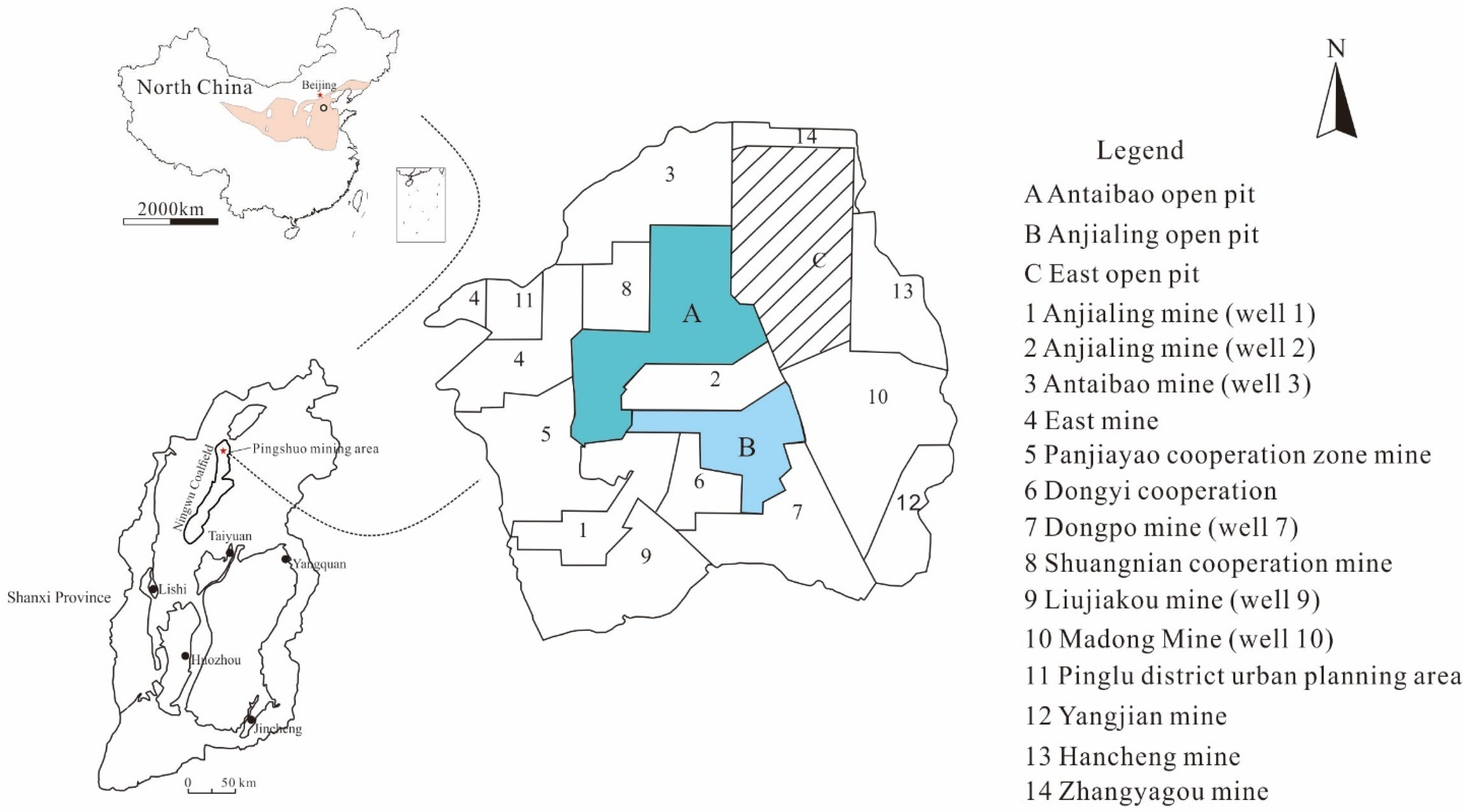
Geographical location map of Pingshuo mining area (Wang et al., 2021), the distribution map of Pingshuo mining area (Xue, 2016).
Petrologic analysis
The samples were air-dried, crushed to <2 mm and prepared as epoxy-bound pellets. The petrologic composition was investigated using a Leica DM2500P reflected light microscope equipped with a Craic QDI 302TM spectrophotometer in the laboratory of the Key Laboratory of Resource Exploration Research of Hebei Province. The detail description is in Sun et al. (2017).
ICP-Ms analysis
The trace elements in the samples were determined by inductively coupled plasma mass spectrometry (ICP-MS), model HR-ICP-MS (Element I, Finnigan mat). The detail description is in Sun et al. (2016).
XRD and SEM-EDX analysis
The mineralogical composition was determined by X-ray diffraction (XRD). Low temperature ashes (LTA) analysis of the samples was performed on an EMITECH K1050X plasma Asher with the temperature maintained below 200 °C. The resultant low temperature ashes of the coal and parting samples were analyzed by XRD performed on a D/max-2500/PC powder diffractometer with Ni-filtered Cu–Ka radiation and a scintillation detector. The XRD patterns were recorded over a 2 h interval of 5–70° with a step size of 0.01°at a voltage of 40 kV. The morphological characteristics of the minerals in coal were identified by SEM-EDX; Resolution: 6 nm; Magnification: 20–300,000), that equipped with quest level II energy spectrum automatic analysis system (EDX, Thermo, USA). The detail description is in Sun et al. (2017).
Results and discussion
Content of harmful elements
The distribution and aggregation of trace elements in coal are controlled by various factors such as coalification, weathering and mud peatification (Ren et al., 1999; Sun et al., 2007). Although concentrations of Hg, As, Cr, F, Pb, Se, Cd and other harmful elements in most coals in China are relatively low, some of them can be enriched under special geological conditions (Dai et al., 2003a; Dai et al., 2003b). In this paper, a total of 45 trace elements were determined by ICP-MS, among them there are 15 harmful trace elements were selected, including Li, Ga, In, Cd, Cr, Pb, Be, Mn, Zn, Ag, Co, Ni, Cu, Ba, and U.
The enrichment degree of trace elements was divided into six categories based on the value of concentration coefficients (CC) (CC = ratio of element concentration in investigated coals vs. world hard coals) by Dai (Dai et al., 2015). The elements are enriched (CC > 100), significantly enriched (10 < CC < 100); enriched (5 < CC < 10); slightly enriched (2 < CC < 5); close to average (0.5 < CC < 2); depleted (CC < 0.5). According to Dai (Dai et al., 2015), the elements of Li and Ag are significantly enriched, Ga and Ni slightly enriched, Mn, Ba, and in some cases, Co are depleted. The remaining elements are close to the average values (Figure 2).
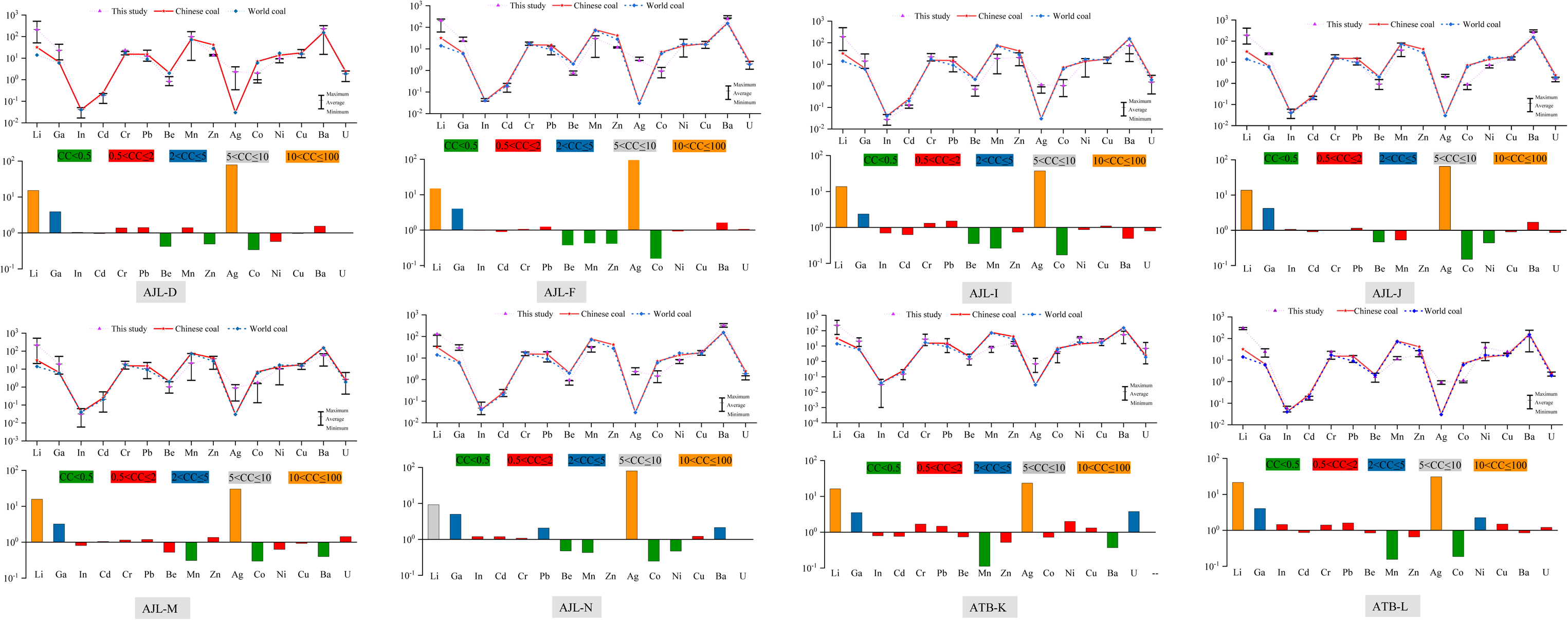
Concentration coefficients (CC) of trace elements in the Pingshuo Mine area.
According to the statistical results that are listed in Table 1, it can be concluded that most elements in No. 9 coals shared similar concentration level with those in China coals except for Li. The content of Li was high in mass fraction. In order to better understand enrichment level of these elements, ratios between their concentrations and Clarke value of crust (Zhao and Zhang, 1988), Permo-Carboniferous value of North China (Dai, 2002), National arithmetic mean value (Dai, 2002), World value (Bouška, 1981; Valkovic, 1983) were employed in this paper. Enrichment factor (EF) was calculated as well (Table 2).
Concentration of trace elements and statistical result of coal from Pingshuo mining district (μg/g).
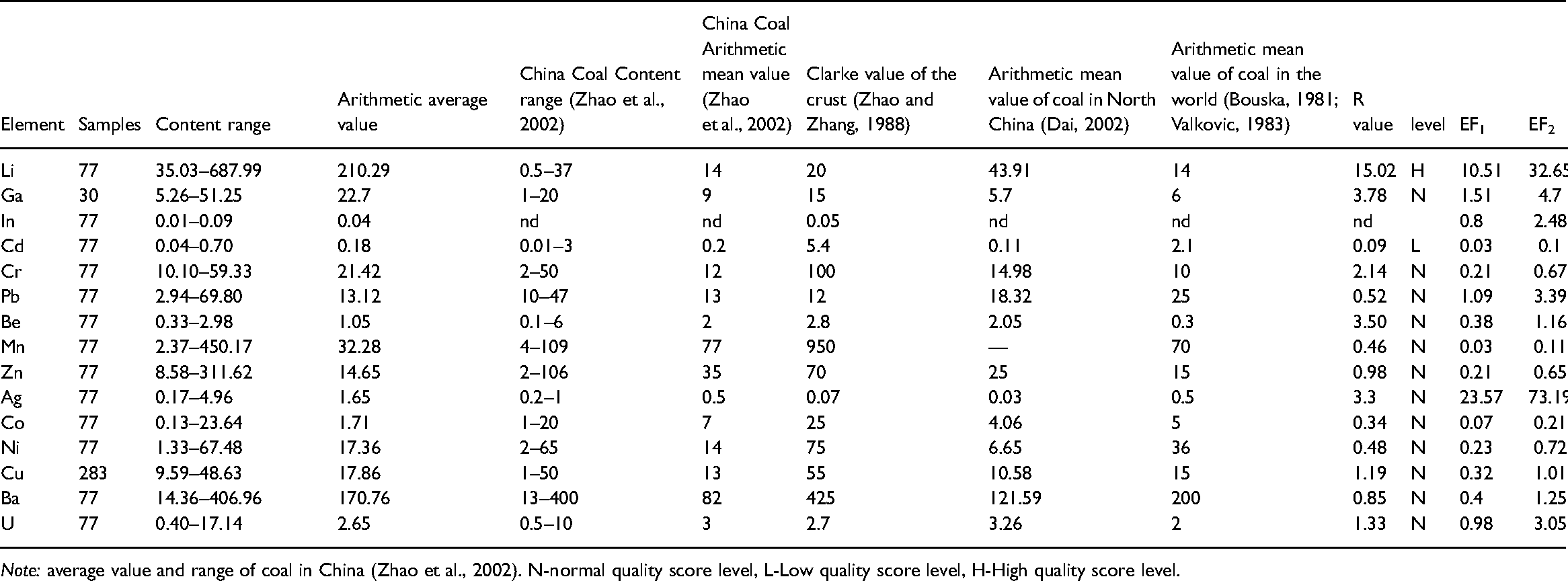
Note: average value and range of coal in China (Zhao et al., 2002). N-normal quality score level, L-Low quality score level, H-High quality score level.
Correlation coefficient matrix of trace elements from the No. 9 coal in Pingshuo coal.
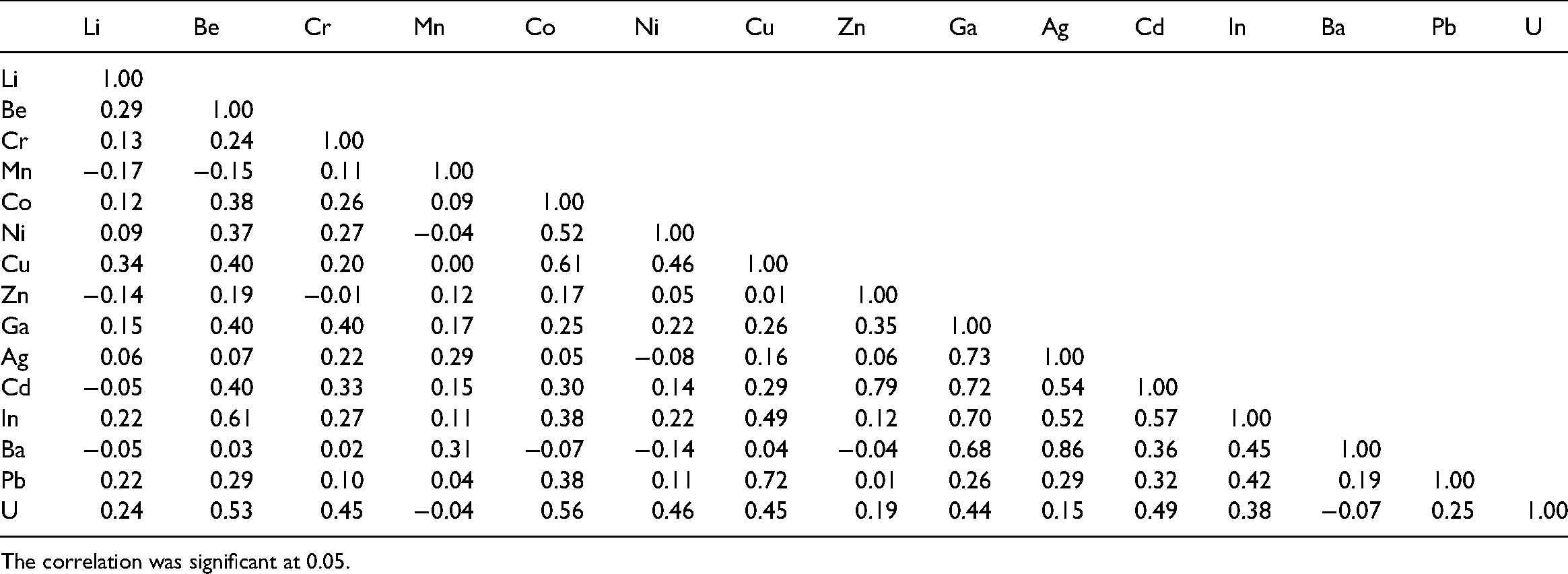
The correlation was significant at 0.05.
Enrichment level of trace elements in coal is commonly expressed by EF. In this study we adopt the enrichment factors EF1 (Formula 1) proposed by Taylor (Taylor and Mclennan, 1985) and EF2 (Formula 2) proposed by Valkovic (1983).


Various classification schemes were proposed by different researchers. For examples, Gluskoter (Gluskoter et al., 1977) argued that EF1 > 0.67 indicates that the elements are enriched in coal, otherwise they are dispersed. Filippidis (Filippidis et al., 1996) argued that EF1 > 2 indicated the enrichment of certain elements in coal while EF1 < 0.5 indicated that elements were dispersed in coal. According toValkovic (1983), EF2 > 5 indicated that elements were enriched in coal while EF2 < 5 indicates that elements are dispersed in coal.
As shown in Table 1, Li, Ga, In, Pb, Ag and U were enriched in coal by Gluskoter's judgment criteria while Cd, Cr, Be, Mn, Zn, Co, Ni, Cu and Ba were dispersed in coal. According to Filippidis’ criterion, however, Li and Ag was enriched in coal while the rest of trace elements were largely dispersed except Ga, In, Pb and U. By Valkovic's formula for enrichment coefficient and its judgment criterion, Li and Ag is enriched in coal, and the rest of trace elements are dispersed.
Concentrations of trace elements such as Li, Ga, Cd, Cr, Ag, Ni, Cu and Ba exceeded the arithmetic mean value of Late Paleozoic Coal in North China, while the contents of trace elements Pb, Be, Zn, Co and U in Pingshuo Coal Mining Area are lower than the arithmetic mean value in Late Paleozoic Coal in North China. Compared to the world arithmetic mean value calculated by Valkovic (1983), the concentration of trace elements such as Li, Ga, Cr, Be, Ag, Cu and U exceeded the arithmetic mean value in the world coal, while the content of trace elements Zn, Mn, Cd, Pb, Co, Ni and Ba are lower than the arithmetic mean value in the world coal.
Distribution characteristics of harmful trace elements in mining area
The distribution of trace elements was influenced by many factors, e.g., the physico-chemical conditions of water during the peat formation, magmatic hydrothermal process, seawater intrusion, and material exchange between roof, floor and coal. The content of harmful trace elements in the No.9 and No.11 coal samples of Pingshuo mining area was different. In addition, the special distribution also showed significant difference.
In terms of contents of harmful elements in the Pingshuo district, it can be seen that the total contents of Li, Ba, Mn, Zn, Ga, Cr, Cu, Pb, Ni, U, Ag, Co, Be, Cd and In showed a descending order (Figure 3). The highest harmful element values occured in the Antaibao No.9 (ATB9#) coal seam and the lowest did in Antaibao No.11 (ATB11#) coal seam (Figure 3). Therefore, we should pay more attention to Antaibao No. 9 coal during its utilizing process.
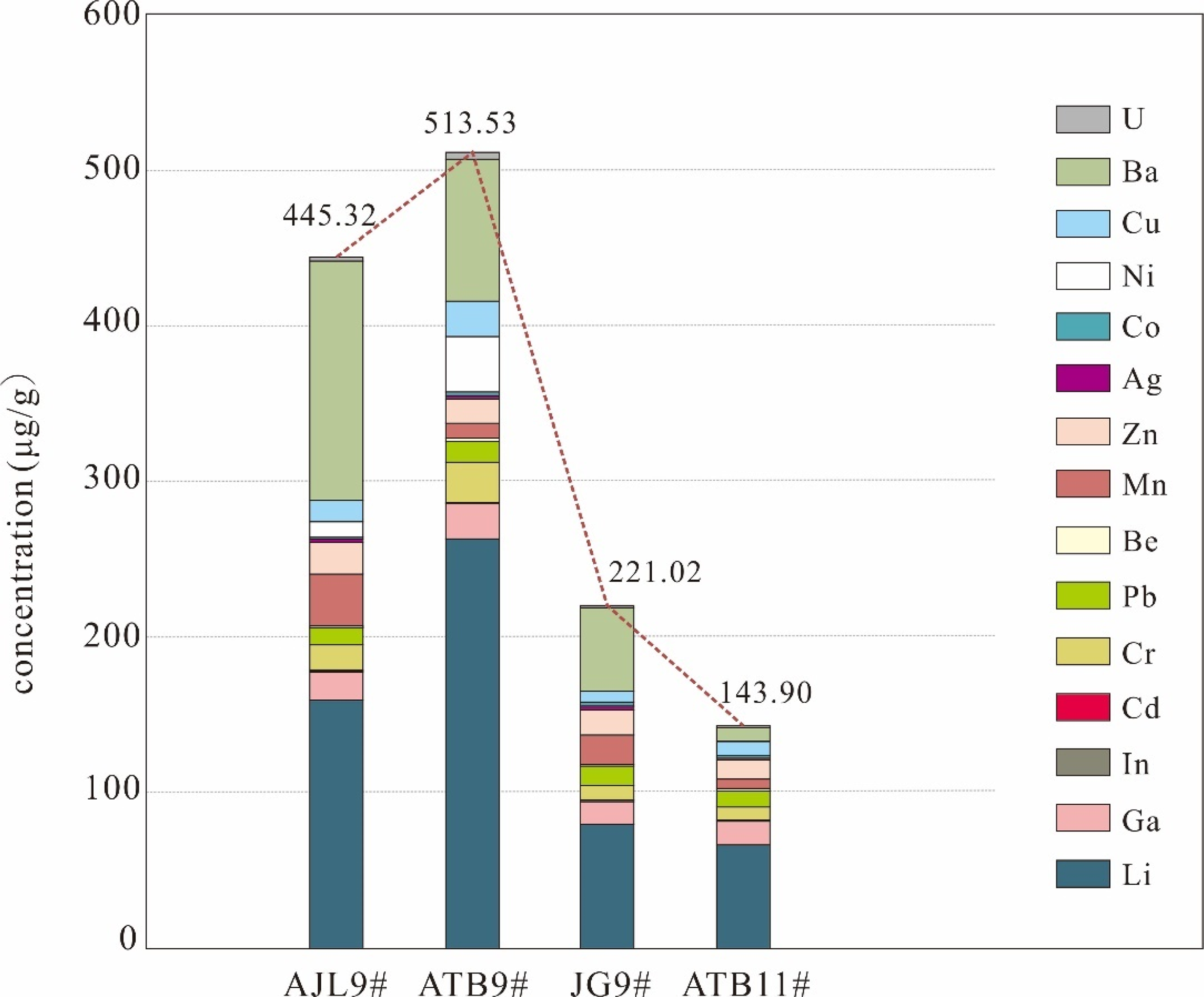
Content chart of hazardous trace elements in coal samples (The data of JG9# and ATB11# from Zhao, 2012).
Occurrence of harmful elements
Occurrence of harmful elements
The occurrence of harmful elements in coal are complex and diversified. Theoretically, all of these elements are related to organic matter as well as inorganic matter. In other words, organic matter and mineral is the main carrier of some trace elements. For example, the elements Ni and Mo in coal may occur in pyrite (Bouška et al., 2000) and organic matter (Finkelman., 1994; Prachiti et al., 2011; Swaine., 2000). Fluorine in coal is associated with not only minerals, e.g., mica, clay, apatite, fluorite, and tourmaline (Finkelman, 1995; Godbeer and Swaine, 1987), but also organic compounds (Bouška et al., 2000).
The major minerals generally found in coal are clay minerals (mainly kaolinite), quartz, sulfide minerals (mainly pyrite), and calcite (Ward, 2002). In this study, the XRD results indicated that the minerals in the samples were mainly pyrite, calcite, and clay minerals. The morphological characteristics of the minerals were shown in Figure 4. The results of SEM-EDX showed that Cu, Ag, Zn and Co presented in pyrite, and a small amount of Zn, Mn and Ni existed in calcite. Additionally, a small amount of Ba, Co, Zn and Be existed in the clay minerals. It illustrated that these harmful elements were associated to the minerals.
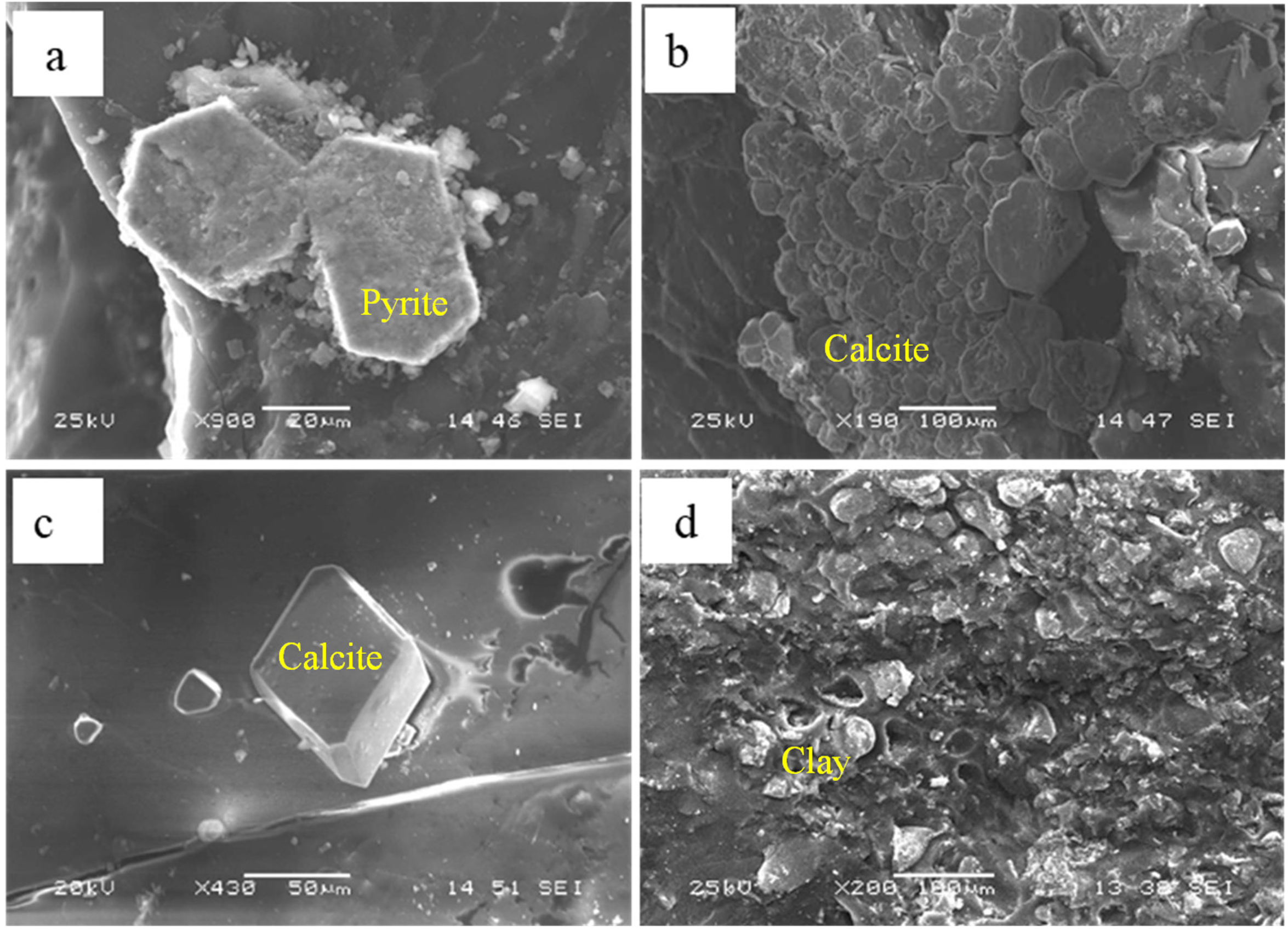
SEM images of pyrite, as well as calcite and clay.
Correlation of harmful elements
The correlation matrix (n = 15) was derived by standardizing the original data of harmful trace elements in coal seam. It can be seen that there were positive correlations between Be and In, Co and Cu, Co and U, Cu and Pb, Zn and Cd, Ga and Cd, Ga and In, Ga and Ba, Ag and Ba (Table 2). The correlation coefficients are 0.61, 0.61, 0.56, 0.72, 0.79, 0.72, 0.70, 0.68, 0.86, respectively. It indicated that these elements have similar geochemical behavior in the coal.
As shown in Figure 5, trace elements can be divided into five groups:
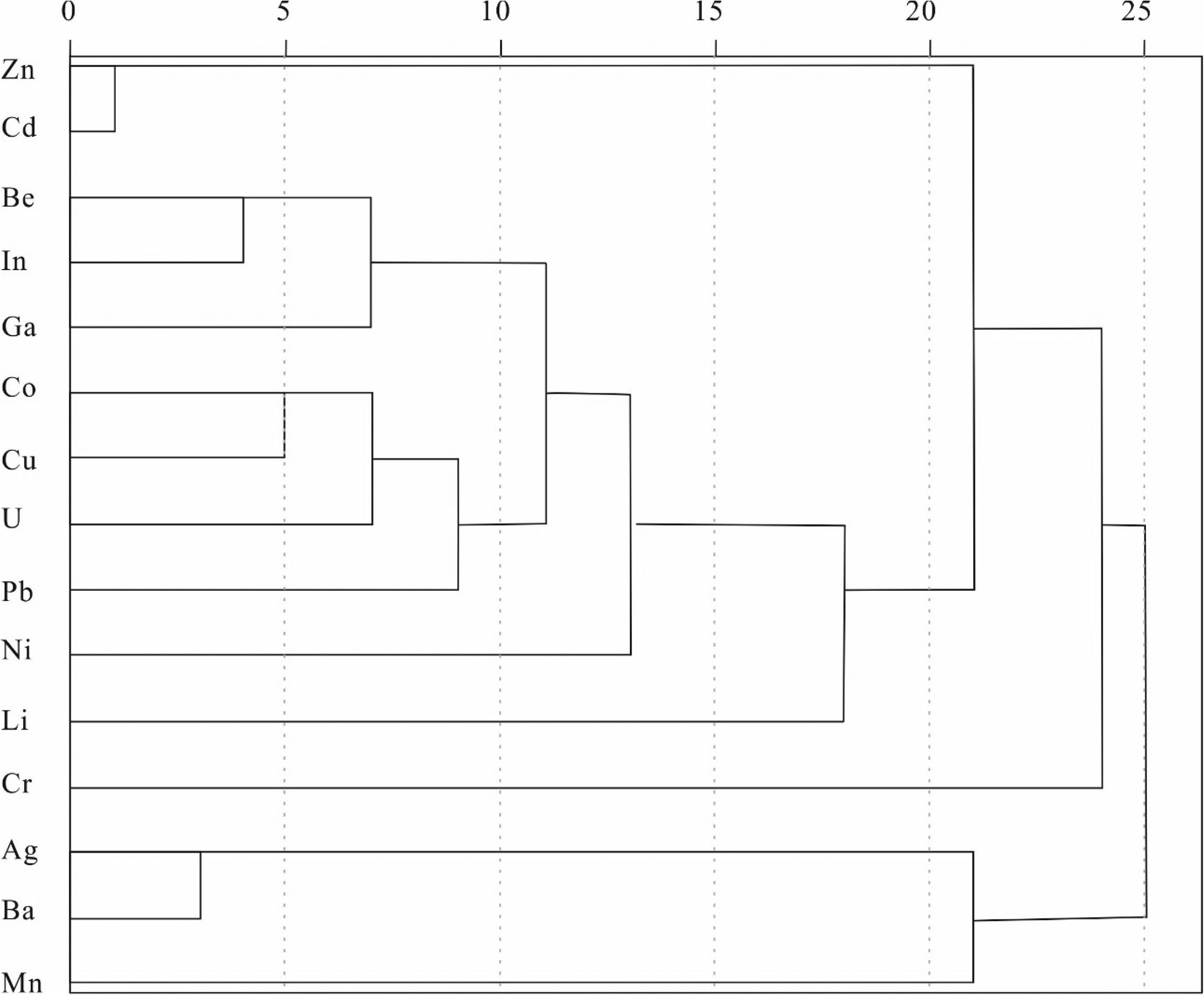
Cluster analysis results of selected trace elements in Pingshuo coal.
Group I. It included Zn, Cd, Be, In, Ga, Co, Cu, U, Pb and Ni. All of them are sulfophilic elements except Be and U, they are related to not only sulfide minerals, but also clay minerals and carbonates minerals. Zinc, Pb and Cu have strong sulfur affinity (Bouska, 1981; Finkelman, 1994; Valkovic, 1983). Cadmium was found to be mainly in bound silicon-aluminum compounds by sequential chemical extraction (Dai et al., 2003a). Clay minerals are prone to adsorb Be, and Al in clay minerals can also be replaced by Be, indicating that Be is distributed in clay minerals (Wang et al., 2003). Beside clay minerals, U is also related to pyrite (Fan and Fan, 2000; Wang et al., 1996), anatase, and guadarramite (Duan, 2017). Indium, Ga, Cu, and U can be associated with organic and inorganic phases in coal (Seredin et al., 2013; Tian et al., 2013). Cobalt is mainly occurred in the combined state of sulfides or silica-alumina compounds (Dai et al., 2003a). The sulfide minerals in coal generally contain Ni that can enter into clay minerals and also occur in silicate and carbonate minerals (Zhao, 2007).
Group II. Only one trace element Li was clustered in this group. Lithium has obvious lithophile affinity and correlate well with clay minerals (Sun et al., 2016).
Group III. Only one trace element Cr was clustered in this group. Studies have suggested that pyrite also contains a small amount of Cr (Bouska, 1981; Mukhopadhyay et al., 1998).
Group IV. This group included Ag and Ba. Silver mainly exists in the form of silver sulfide in coal and replace Fe in sulfide minerals by isomorphism (Huang et al., 2000). Barium was not only related to clay minerals, but also the sulfied minerals and carbonate minerals. It was found that Ba mainly occurs in clay minerals (Fan and Fan, 2000).
Group V. Only one trace element Mn was clustered in this group. Manganese mainly occurs in carbonate minerals, and is also related to organic matter (Zhao, 2007).
Table 3 shows the correlation coefficient between trace elements, ash and total sulfur. It can be seen from Table 3 that Zn, Ag and Cu in coal were all positively correlated with St.d with correlation coefficients of 0.61, 0.63, and 0.68, respectively. In addition, Cr, Co and Ni were positively correlated with total sulfur, while negatively (or poorly) correlated with ash, indicating that these elements in coal were mainly related to sulfide and organic matter. The elements Cd, Ba, and U were all positively correlated with ash yields, the correlation coefficients are 0.53, 0.57, and 0.37, respectively, suggesting an inorganic association. To sum up, the occurrence state of harmful trace elements in coal was related to minerals and organic matter. And the combined effect of clay minerals with adsortive effect and the depositional environment as organic matter in a reducing environment, which were the causes of affecting the enrichment of harmful trace elements in coal. It also indicated that harmful trace elements in coal not only affected by terrestrial input, but also by seawater.
Correlation coefficient among trace elements in coal, Ad and St. d.

Relationship between coal forming environment and harmful elements
The T-D-F diagram of coal facies adopt the formula (Bechtel et al., 2001) proposed by Diessel (1982), later modified by Marchioni and Kalkreuth (1991), among which, T = telovitrinite; D = detrovitrinite + sporinite + liptodetrinite + resinite (detrital) + cutinite + alginite + inertodetrinite + detrital minerals (clay minerals + quartz); F = semifusinite + fusinite. In order to better reflect the hydrological regimes, a GWI-VI (Groundwater Index-Vegetation Index) diagram (Calder et al., 1991) was used. Applying the two model to Pingshuo coal, which showed that the coal was mainly formed in wet forested swamps. Certainly, there are a little of samples were formed in the dry forested swamps and lowland swamps. For better understanding the sedimentary environment, we divided the samples into three types (Table 4). The results showed that the ratio of EF1/EF between 0.08–2.13 in dry forested swamps, EF2/EF in the range of 0.23–10.13 in lowland swamps and EF3/EF in the range of 0.12–7.62 in the wet forested swamps.
The content of trace element in different coal-forming environments.
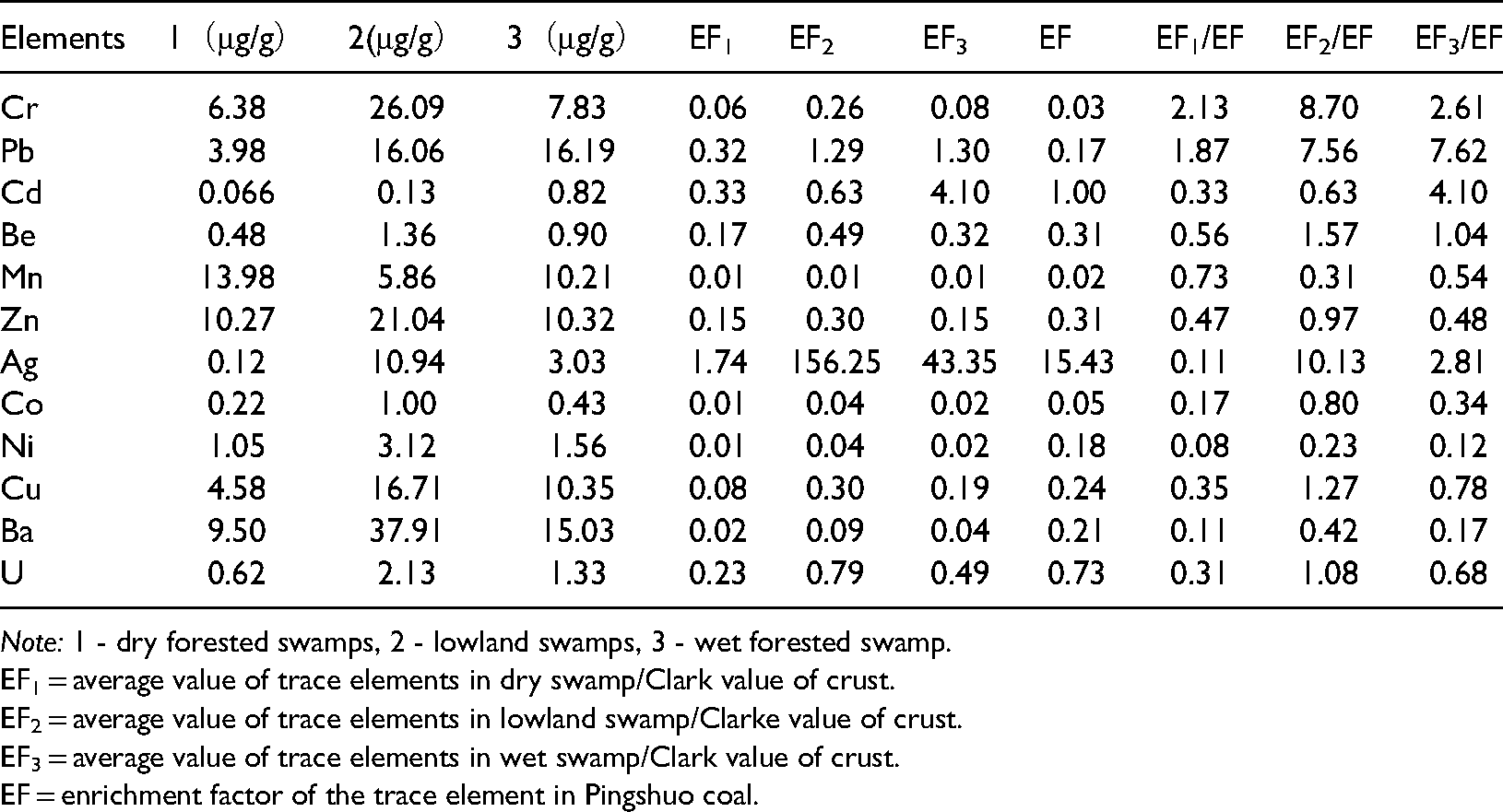
Note: 1 - dry forested swamps, 2 - lowland swamps, 3 - wet forested swamp.
EF1 = average value of trace elements in dry swamp/Clark value of crust.
EF2 = average value of trace elements in lowland swamp/Clarke value of crust.
EF3 = average value of trace elements in wet swamp/Clark value of crust.
EF = enrichment factor of the trace element in Pingshuo coal.
It can be seen from Table 5 that the ratios of the enrichment coefficients of Cr and Pb to the average enrichment factors of the trace elements in Pingshuo coal are greater than 1.2 in the dry swamp, indicating that the material source in the dry forest swamp was mainly terrigenous detrital. These elements were carried into the peat swamp by terrigenous detrital or adsorbed by clay minerals. The enrichment coefficients of Cr, Pb, Be, Ag, Cu, U and Cd in moist and low-level swamp are larger than the ratio in Pingshuo coal, especially the correlation coefficient of Ag, which is 10.13 times of the average. Chromium, Ag and Cu are mainly accumulated in pyrite, and Pb is also related to pyrite, which indicates that many harmful trace elements easily occurr in the form of pyrite under the reductive condition.
The concentration of trace elements in different coal-forming swamps.
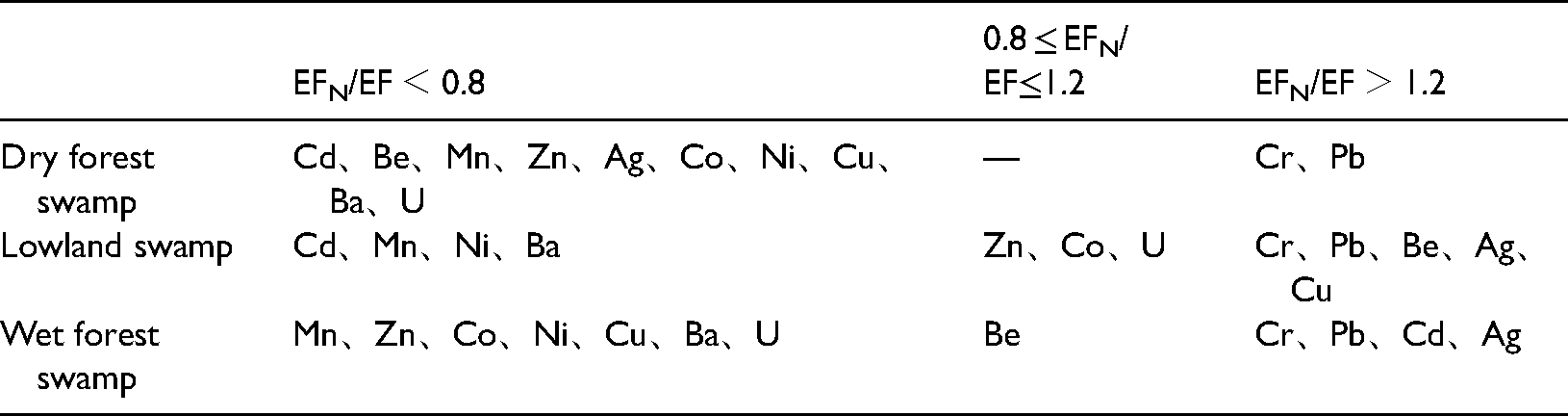
Compared with Pingshuo mining area, Chuancaogedan No. 5 coal in Jungar coalfield generally exhibits a higher content of harmful elements, mainly due to the strong reducing condition and high paleo-salinity of peat swamp affected by seawater at the end of the Late Paleozoic, resulting in the relative enrichment of Ni, Be, U and other elements in No. 5 coal (Lu et al., 2012; Yang, 2015.). The elements such as Ni, Be and U in Pingshuo mining area benefited from humid low-level swamp environment, thus their occurrence state had a certain relationship with minerals and organic matter. It can be concluded that terrestrial input together with materials from seawater intrusion resulted in accumulation of harmful trace elements, which could be responsible for the more enrichment of harmful trace elements in Pingshuo mining area.
Influence of harmful elements on ecological environment in mining area
According to Li (2006), the trace amounts of Cd and Cr exhibited significant toxicity while Pb, Zn, Ni and Cu had certain toxicity to environment and human health. In Pingshuo mining area, Therefore, we should be paid more attention to these elements.Cr, Pb, Hg, Cd and other harmful elements can be released into the atmosphere during coal combustion. It can lead to serious environmental pollution (Rajak et al., 2019). Moreover, the solid residue pile can also cause serious contamination even various diseases. For example, bone pain could be induced by Cd poisoning while lead poisoning leads to a series of endemic diseases such as delayed bone growth in children. In the process of large-scale coal combustion, a large number of impurity elements in coal are concentrated in slag and fly ash. If they are not disposed properly in the later stage, they are likely to become a source of pollution with chronic influence. (Sun, 1986).
Because the coal in Pingshuo mining area was formed in a relatively reducing environment, when it was excavated to supergene environment, some reductive minerals such as sulfide, would transform and produce a large amount of acid water on account of oxidation. This acidic water will appear in coal piles, coal gangue piles and coal seam outcrops. Some researches confirmed that this acidic water had an extremely strong leaching capacity, and can bring a large number of trace elements from coal into the environment and cause environmental pollution (Sun et al., 2009). Through the study of 12 harmful elements in Pingshuo mining area, it is found that the harmful elements in Anjialing Open pit mine are generally high, indicating potential detriment to local environment and human health. It is necessary to strengthen the management of coal resources in Pingshuo mining area, improve the ecological environment near the mining area and avoid the occurrence of endemic diseases. The study of harmful elements in coal not only of theoretical significance, but also of environmental significance and economic value (Zhao et al., 1998).
Circumvention measures
By studying the occurrence state and formation mechanism of harmful elements in Pingshuo coal, it can strengthen the separation and removal methods of harmful elements in coal combustion products, find out the effective methods to remove harmful elements in coal, and develop clean coal technology by extracting harmful elements from coal, improve the mining area environment (Huang and Yang, 1999). By enhancing the physical washing of raw coal in the study area, the content of harmful elements such as Cd, Cr and Cu in clean coal can be reduced.
In the processes of mining, storage, processing, transportation and utilization of trace elements in coal, harmful elements will be leached from coal and affect local environment. At the same time, we ought to strengthen the research and test on the differentiation and removal methods of toxic and harmful elements in coal combustion products, so as to provide a scientific theoretical basis for the release control of harmful trace elements and pollution prevention and control in the process of coal combustion.
Conclusions
(i) High concentrations of Li, Ga, Ni, U and Ag were identified in coals in Pingshuo mining area.
(ii) Different classifications were obtained according to various criteria selected in this paper. Overall, Li and Ag exhibited higher enrichment level among trace elements. Therefore, they may have an environmental impact in the process of coal mining and utilization.
(iii) In Pingshuo coal, Co, Ni, Zn, Cu, Ag and Cr showed sulfur and organic affinity, indicating that sulfides were their main carrier. Barium, Cd and U were related to clay minerals that were their main carriers. Manganese was mainly related to carbonate minerals while Pb and Be may be related to sulfide, clay minerals or organic matter. Enrichment of harmful elements in the process of coalification can be considered as combined outcome of terrestrial and marine input under reducing environment.
(iv) In the dry swamp environment, Cr and Cd were transported and deposited in the peat swamp in the form of terrigenous debris or adsorbed by clay minerals, and contents of Cr and Cd were higher than the average in Pingshuo coal. In the humid and low-level swamp, the coefficients of Cr, Pb, Be, Ag, U and Cd were relatively high, indicating that many harmful trace elements were easily accumulated in pyrite under the reductive condition of strong overburden water.
Footnotes
Acknowledgements
This research was supported by the Natural Science Foundation of Hebei (No. D2017402121) and the National Natural Science Foundation of China (No. 41330317). National Nature Science Foundation of Hebei Province (D2020402013). We are very grateful to Hebei Collaborative Innovation Center of Coal Exploitation, Hebei University of Engineering for their financial support.
Declaration of conflicting interests
The author(s) declared no potential conflicts of interest with respect to the research, authorship, and/or publication of this article.
Funding
The author(s) disclosed receipt of the following financial support for the research, authorship, and/or publication of this article: This work was supported by the National Natural Science Foundation of China, National Nature Science Foundation of Hebei Province, (grant number No. 41330317, D2020402013).
