




Abstract
Research on the spontaneous combustion of coal caused by sulfur has always been focused on pyrite in coal but has rarely considered the influence of organic sulfur. In this paper, coal samples, rather than model compounds, were used to study the influence of organic sulfur content in coal on its spontaneous combustion process. The results of X-ray photoelectron spectroscopy and thermogravimetry, differential scanning calorimetry, and mass spectrometry indicate that organic sulfur in Shuiyu clean coal exists in forms of mercaptan, thioether, sulfone (sulfoxide), and thiophene. With the decrease of organic sulfur content, the characteristic temperature points and the peak values of the exothermic curves in the process of coal oxidation spontaneous combustion all shifted toward higher temperatures. The ignition activation energy of coal also increased, and the initial and peak gas evolution temperatures of the oxidation products shifted toward higher temperatures. These findings suggest that the reduction of organic sulfur content can inhibit the oxidation process and spontaneous combustion tendency of coal. This effectively reveals the mechanism of the spontaneous combustion of coal and is of great significance to future studies in this field.
Introduction
Accidents caused by the spontaneous combustion of coal could be severe, and the resulting losses of high-quality coal are financially significant. In view of the serious harm caused by the spontaneous combustion of coal, scholars worldwide have extensively studied the mechanisms of this spontaneous combustion (Chou, 2012; Dacka SW et al., 1984; Deng et al., 2015a; Hu et al., 2015; Ma et al., 2019; Qi et al., 2018; Shen and Zeng, 2021; Zhao et al., 2021a; Zhao et al., 2021b; Zhou and Tang, 2018; Zhu et al., 2019). Sulfur is a harmful element in coal, and it not only produces hydrogen sulfide (H2S) and sulfur dioxide (SO2) in the combustion process, causing environmental pollution, but is also important in restricting the utilization of coking coal resources (Li et al., 2018). Sulfur components in coal may be divided into two categories: inorganic and organic. Inorganic sulfur, mainly in the form of mineral sulfur, such as pyrite, can be removed by washing. Organic sulfur is generally found within the molecular structure of coal in the form of carbon–sulfur (C–S) bonds. The removal of organic sulfur has always been a major problem in the field of clean coal utilization (Borah and Baruah, 1997; Huffman et al., 1985; Huggins et al., 1983).
As early as the 17th century, British Plot and Swedish Berzelius proposed the pyrite leading theory (Marzec, 2002), believing that spontaneous combustion of coal is caused by the exothermic reaction of pyrite (contained in coal seams) with water and oxygen. Historically, research has focused on the occurrence of inorganic sulfur in coal, the influence of inorganic sulfur on spontaneous combustion characteristics, and the spontaneous combustion period of coal (Deng et al., 2015b). However, the role of organic sulfur groups in the process of spontaneous combustion of coal have often been ignored. Few scholars have reported on the impact of organic sulfur on the spontaneous combustion of coal (Borah et al., 2001; Gorbaty et al., 1990). Through their temperature-programmed oxidation experiment, Zhang et al. (2015; 2018) found that the oxidative activity of organic sulfur functional groups was in the order of mercaptan> sulfide> thiophene. However, the reaction mechanism of spontaneous combustion caused by organic sulfur functional groups was not analyzed in depth, and the selection of organic sulfur model compounds was not comprehensive. Some researchers (Xia and Xie, 2017; Zhang et al., 2016) used a theoretical method to calculate the reaction mechanism between thiophenol, thiophene, and O2 in coal; however, their calculated results were not experimentally verified.
Because it is difficult to remove organic sulfur groups from coal, researchers commonly add organic-sulfur compounds to model compounds, such as molecular sieves, when analyzing the influence of organic sulfur groups on the spontaneous combustion characteristics of coal (Zhao et al., 2021b). This allows for the simulation of high-organic-sulfur coal samples with different sulfur groups and different organic sulfur contents. Because of the huge effect of steric hindrance and other chemical environments in the reaction process of organic sulfur groups, model compounds are selected to replace coal with high organic sulfur in experiments and in calculations. However, results generated from these substitutions cannot accurately reflect the influence of complex organic sulfur groups in coal on oxidative spontaneous combustion.
This study aims to reveal the actual influence of organic sulfur on the oxidative spontaneous combustion of coal. Considering the limitations when using model compounds, in this study, bromine water was used to remove part of the organic sulfur in coking coal to produce coal samples of the same type but with lower organic sulfur content. Then, the oxidative spontaneous combustion processes of coal samples with different organic sulfur contents were investigated using thermogravimetric (TG) and mass spectrometry (MS) experiments. Because the same type of coal was used, the influence of other factors on the spontaneous combustion process of coal was avoided.
Materials and methods
Coal-sample collection and treatment
The high sulfur coking coal samples used in our experiments were extracted from Shuiyu Coal Mine in Shanxi Province. To avoid the interference of inorganic sulfur on the process of oxidation spontaneous combustion of coal, it was removed from the coal by performing flotation in Taiyuan Coal Preparation Plant. After flotation, the clean coal was analyzed for sulfur content by Fenxi Coal Quality Testing Center (Table 1).
Sulfur elemental analysis of clean coal.

After flotation, the clean coal was divided and processed to produce five samples, each with a different sulfur content. The test was carried out with a liquid–solid ratio of bromine water (3%) to coal sample of 5:1, optimal reaction time of 5 min as fixed conditions, and repeated processes 1–4 times were carried out according to the above experimental conditions(Mu et al., 2021). After the reaction was terminated for each sample, the product was filtered and the chlorinated coal was washed to neutrality, dried, and then analyzed for sulfur content (see Table 2). The coal sample labeled 100 was unprocessed coal and contained the highest total sulfur content (2.19%). The coal sample labeled 101 was the first product of the reaction between coal and bromine water, while the sample labeled 104 was the forth product of the reaction between coal and bromine water (0.34%).
Sulfur content after treatment with bromine water.

Experiments
X-ray photoelectron spectroscopy (XPS) tests were performed on coal samples with different total organic sulfur contents to specify the forms of sulfur. These XPS tests were performed on an AXIS ULTRADLD with Al Kα radiation (with hʋ = 1486.6 eV), manufactured by Kratos, of the Ishazin Group. The sample analysis area was ∼700 × 300 μm. Other measurement parameters were 150 W working power, 160 eV full scanning transmissivity, 40 eV narrow scan transmission energy, 10−8 Pa vacuum, and 0.05 eV step size.
To investigate the influence of organic sulfur on the oxidative spontaneous combustion process of coal, thermogravimetric–mass spectrometry (TG-MS) experiments were performed on coal samples with different organic sulfur contents. A 10-mg sample was placed in an alumina crucible and tested with a Netzsch STA449F5-QMS403D instrument. In each test, the total flow rate of the carrier gas (80% N2 and 20% O2) was 50 mL/min, the heating rate was 5°C/min, and the temperature ranged from room temperature to 800°C.
Results and discussion
Forms of organic sulfur in coal
Results of sulfur analysis of the coal after flotation are shown in Table 1. This table shows that the total sulfur content in the coal after flotation was still high and formed mostly of organic sulfur, which is difficult to remove. Inorganic sulfur only forms about 10% of the total sulfur content, while organic sulfur accounts for the other 90%. Of the inorganic sulfur, 5% was sulfate and the remaining 95% was pyrite.
To analyze the forms of organic sulfur in Shuiyu coal, XPS tests were conducted on coal samples having different organic sulfur contents. The results were plotted (Figure 1) with respect to the strength of the electronic signal represented on the ordinate axis and the electron binding energy on the abscissa. By using the electron binding energy, organic sulfur forms in each sample were analyzed and their relative contents determined by examining the area under the fitting peaks. According to the measuring principle of XPS, the energy level of S 2p splits into two peaks of 2p3/2 and 2p1/2 due to the spin-orbital coupling when excited by X-rays. To guarantee the accuracy of sulfur form analysis, we applied curve fitting methods of 2p3/2 and 2p1/2 splitting peaks with relative areas of approximately 2:1, respectively, separated by 1.18 eV of energy according to an optimal Lorentzian–Gaussian percentage and full width at half maximum (Pietrzak et al., 2007).
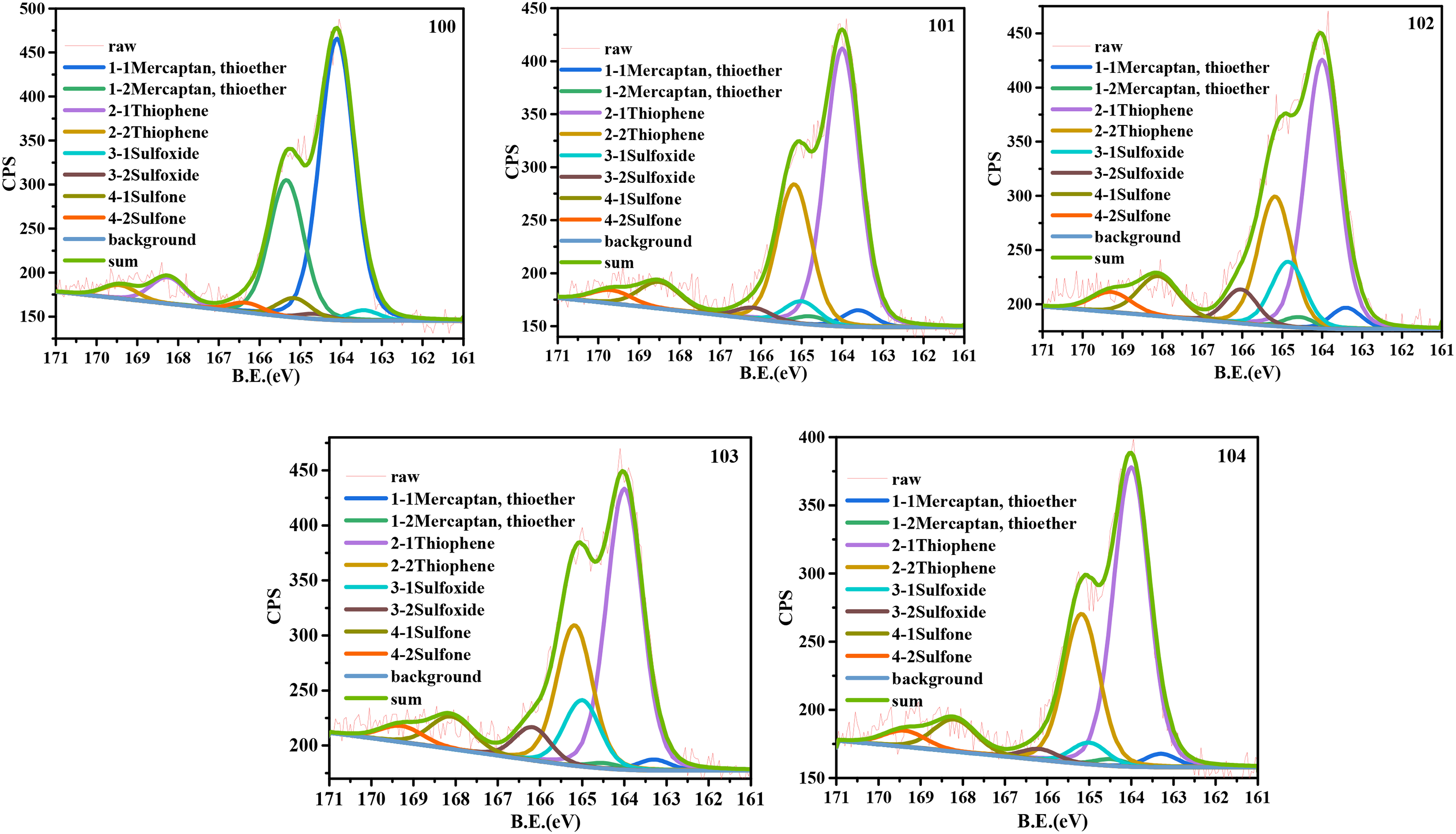
XPS spectrum of coal with different organic sulfur content.
By using this method, we fit six S 2p peaks. The binding energy of 162.1–163.6 eV is attributed to mercaptan, thioether, and pyritic sulfur. Binding energy of 164.0–164.4 eV of S 2p3/2 is reported as thiophenic sulfur. Sulfone and sulfoxide are reported at 165.0–166.0 eV. The binding energy of 168.7 eV is attributed to sulfonate, and >168.7 eV is reported as inorganic sulfur components containing sulfonate and sulfate (Zhang et al., 2015).
All XPS analysis results of the sulfur forms on the surface of these coal samples are shown in Table 3. The table shows that organic sulfur in the forms of mercaptan and thioether, thiophene, sulfoxide, and sulfate existed in each of the coal samples. Because Shuiyu coal is a kind of bituminous coal with a higher degree of coalification, the forms of organic sulfur in coal are similar to the occurrence environment of coal structure, so thiophene sulfur is the main form of organic sulfur. In the unprocessed clean coal sample (serial number 100), approximately 81% of the organic sulfur was in the form of thiophene. Mercaptan, thioether, and sulfoxide (sulfone) comprised approximately 9%, and the rest was sulfate sulfur.
Assignment and content of S 2p peak in coal with different organic sulfur content.
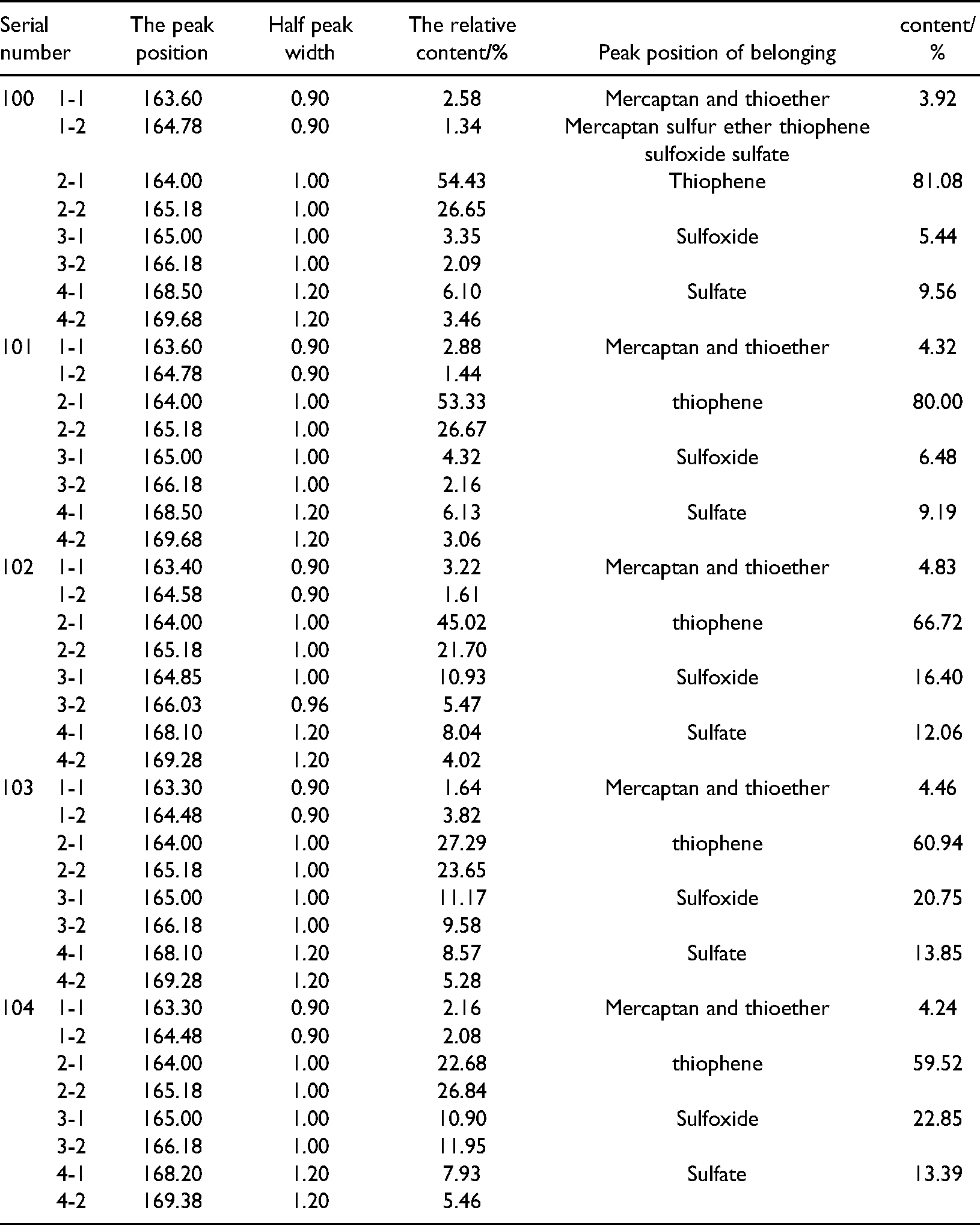
Comparison of the concentrations of the various organic sulfur forms in the different coal samples, as shown in Table 3, reveals changes in concentrations of those forms as a result of the desulfurization process. Concentrations of mercaptan and thioether remained relatively constant with the decrease of organic sulfur content. The relative content of sulfate and sulfoxide (sulfone) increased. The relative content of thiophene decreased significantly but was always the main form of organic sulfur in each coal sample. As the organic sulfur in coal was oxidized by bromine water, the content of the organic sulfur changed.
Influence of organic sulfur content on the oxidation spontaneous combustion process of coal
Coal samples processed by the bromine water treatment were analyzed using TG-DTG methods. The TG-DTG curves of the coal samples having different organic sulfur contents are shown in Figure 2. Because the structure of coal changes somewhat following bromine water treatment, only coal samples treated by bromine water were compared. No raw coal samples were analyzed for this comparison. Figure 2 shows that the variation trend of TG-DTG curves of coal samples having different organic sulfur contents was similar. According to the characteristic temperature points, the process of oxidation spontaneous combustion of coal may be divided into three processes as shown in Table 4.
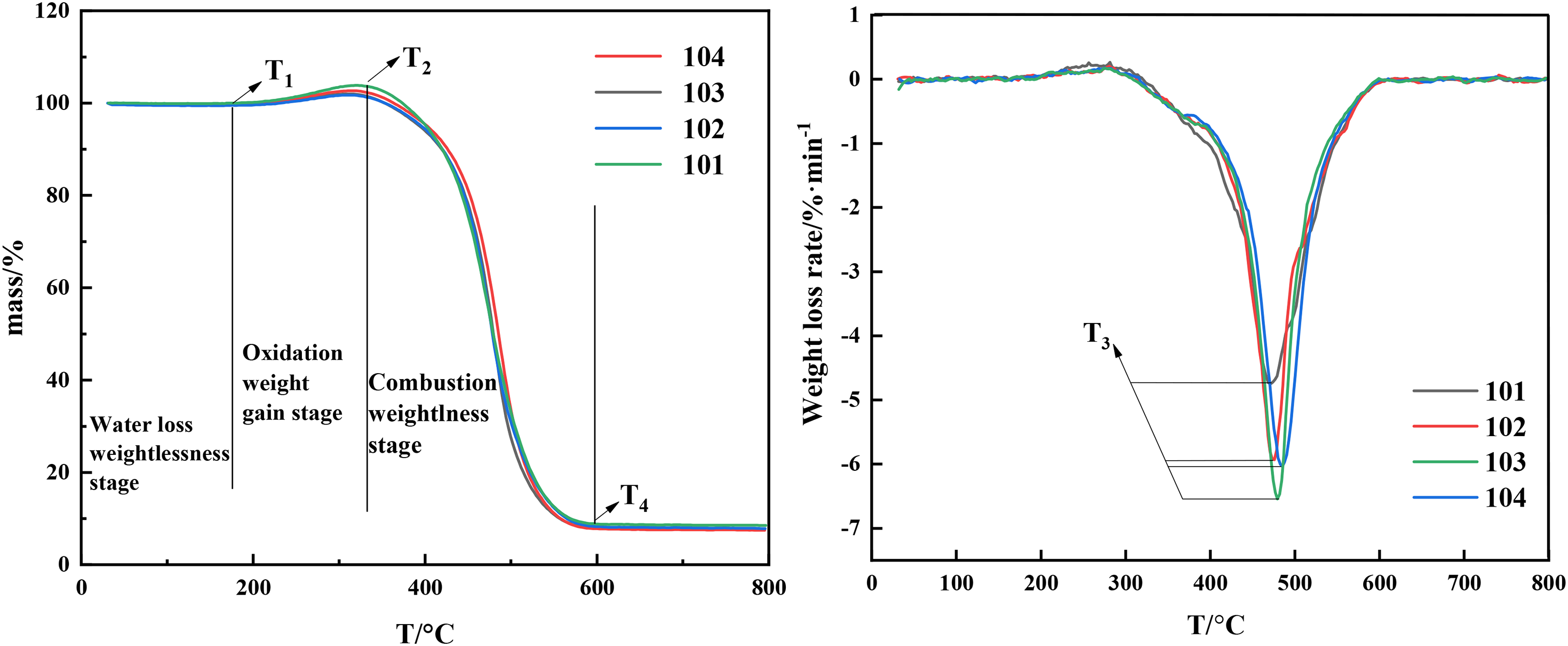
TG-DTG curves of coal samples having different organic sulfur contents.
Characteristic temperatures of coal samples having different organic sulfur contents.

From room temperature to temperature T1, coal experiences water loss and weight loss. At room temperatures, various gas molecules are adsorbed in the pores of coal through physical adsorption. As temperatures increase, water molecules and small gas molecules are desorbed out of the pores of the coal, and it begins to lose weight.
Between points at approximately T1 and T2, temperatures are still relatively low, and coal undergoes oxidation and weight gain. Through this range of temperatures, adsorption of O2 in coal changes from physical to chemical and the side chains and small molecular structures in the coal, as well as bridge bonds in polycyclic aromatic systems, begin to crack or depolymerize. As the temperature continues to increase, the reaction speeds up, increasing the number of active structures, which results in an increase in the coal's capacity to adsorb oxygen. The process is characterized by the coal sample weight changing from a decreasing to an increasing trend as more O2 is adsorbed. Temperature T2 is defined as the point where the weight gain of coal reaches a maximum value (see T2 in Figure 2). Reviewing the values of T1 for the four coal samples, reveals that the higher the organic sulfur content, the lower the value of T1. This indicates that the temperature at which coal enters the low temperature oxidation and weight gain stage decreases with increasing organic sulfur content.
The temperature range approximately between T2 and T4 is described as the rapid oxidation stage of coal. Aromatic ring and other active structures in coal begin to react rapidly, generating a large amount of gas products like CO and CO2 and releasing much heat. At this stage, coal again experiences weight loss. The final manifestation is that the rate of weight loss increases until it reaches a point of maximum weight loss rate (defined as temperature T3). This is shown as the lowest point on the DTG curve. Subsequently, the weight loss rate of the coal sample decreases gradually until the weight of the coal remains nearly constant and it reaches the burnout temperature point, T4. Table 4 shows that whether it is the maximum weight point (T2) or the maximum weight loss rate point (T3), the lower the organic sulfur content, the higher the characteristic temperature point value. This indicates that the temperature at which coal enters the rapid oxidation stage decreases with increasing organic sulfur content.
In summary, with the decrease of organic sulfur content, the three characteristic temperature points (T1, T2, and T3) of coal all shift toward higher temperatures. This demonstrates that as the organic sulfur content increases, coal is more prone to oxidation and combustion and its tendency for spontaneous combustion increases.
Ignition activation energy of coal having different organic sulfur contents
The thermogravimetric (TG) curve not only reflects the weight and temperature changes of coal during the oxidation reaction, but also may be used to study the kinetics of the oxidation reaction process. According to the Arrhenius equation, the approximate integral formula of Coats-Redfern was derived:
According to the double extrapolation method, the mechanism function −[ln(1−α)]3/2 was used as the most probable mechanism function of the coal oxidation reaction (Deng et al., 2013; Sun, 2008). On the graph, 1/T was used as the abscissa and ln[G(α)/T2] as the ordinate. As shown in Figure 3, the curve is approximately a straight line with a slope of −E/R. The ignition activation energy of coal (E) can be obtained from the slope of the line in the low-temperature oxidation stage. As shown by Figure 3, the experiment resulted in a good correlation. The activation energies calculated from the slopes (−E/R) are shown in Table 5.
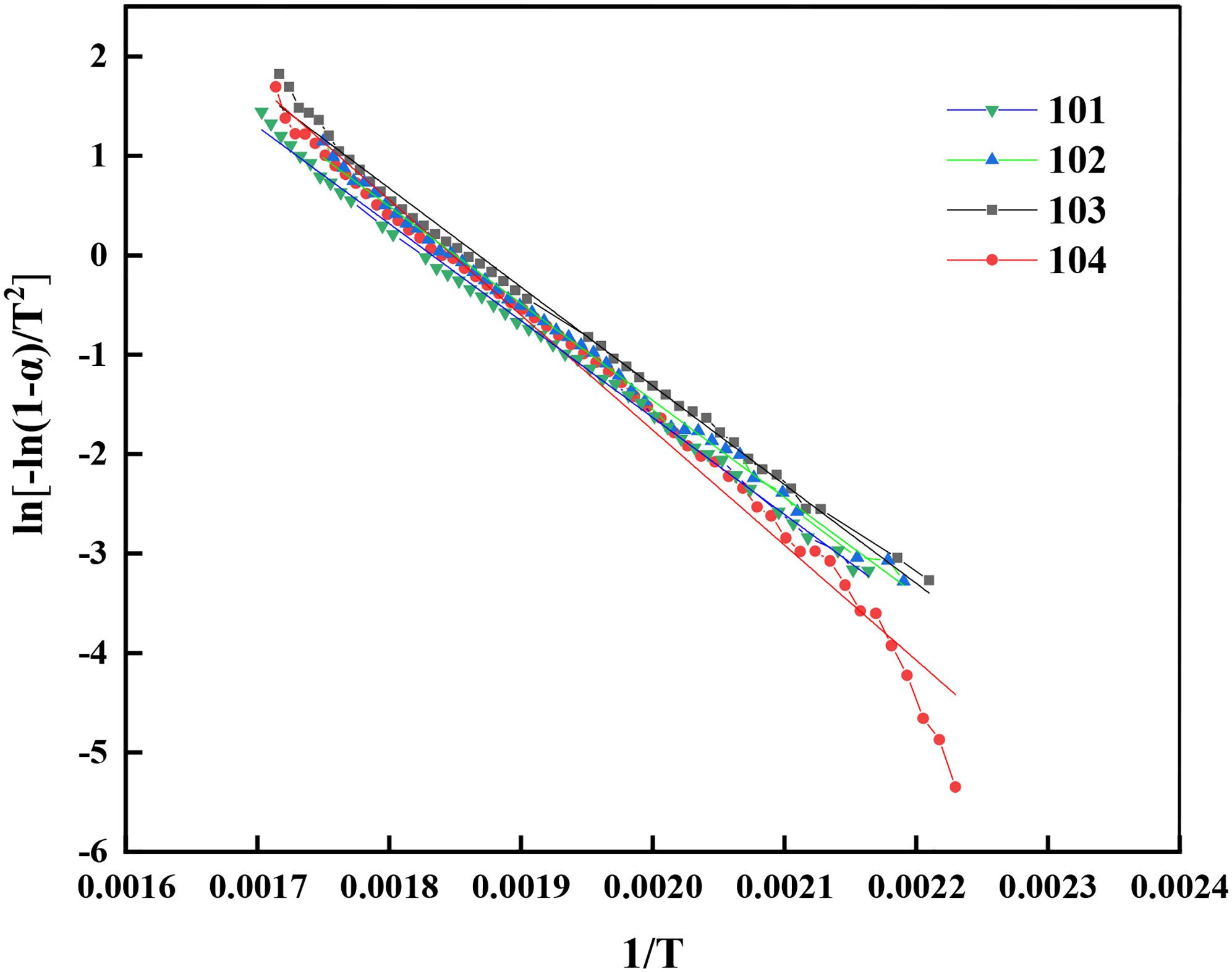
Fitting curve of activation energy of coal samples with different organic sulfur contents.
Ignition activation energy of coal samples with different organic sulfur contents.

The ignition activation energy of coal refers to the energy barrier that coal needs to overcome to adsorb and react to oxygen (including physical and chemical adsorption). This is the minimum threshold energy required for the coal oxidation spontaneous combustion reaction. This threshold value may be used to directly characterize the oxidation spontaneous combustion tendency of coal of different organic sulfur contents. Table 5 shows that among the four coal samples treated with chemical reagents, the activation energy of coal sample 101 (having the greatest organic sulfur content) had the lowest activation energy, and coal sample 104 (having the least organic sulfur content) had the highest The activation energy of coal varies inversely with organic sulfur content. Thus, the greater the organic sulfur content in coal, the lower the ignition activation energy, and the more the coal will be prone to oxidation spontaneous combustion. The spontaneous combustion tendency of coal is directly related to organic sulfur content.
Exothermic properties of coal having different organic sulfur contents
The exothermic curves of coal with different organic sulfur contents are shown in Figure 4. All differential scanning calorimetry (DSC) curves began to rise after 40°C, indicating the coal samples entered the exothermic phase above that temperature. As the temperature increased, the exothermic curve peaked around 480°C and then gradually decreased. This figure also shows that with decreasing organic sulfur content, the temperature at the maximum point of the exothermic curve shifted toward higher temperatures. Peak temperatures of the coal samples may be ranked as 101 < 102 < 103 < 104. Compared to coal sample 101, the peak temperature of the exothermic curve of coal sample 104 increased by 14°C. This indicates that the lower the sulfur content, the slower the oxidation process, and that the oxidation process of coal is inhibited with decreasing organic sulfur content.
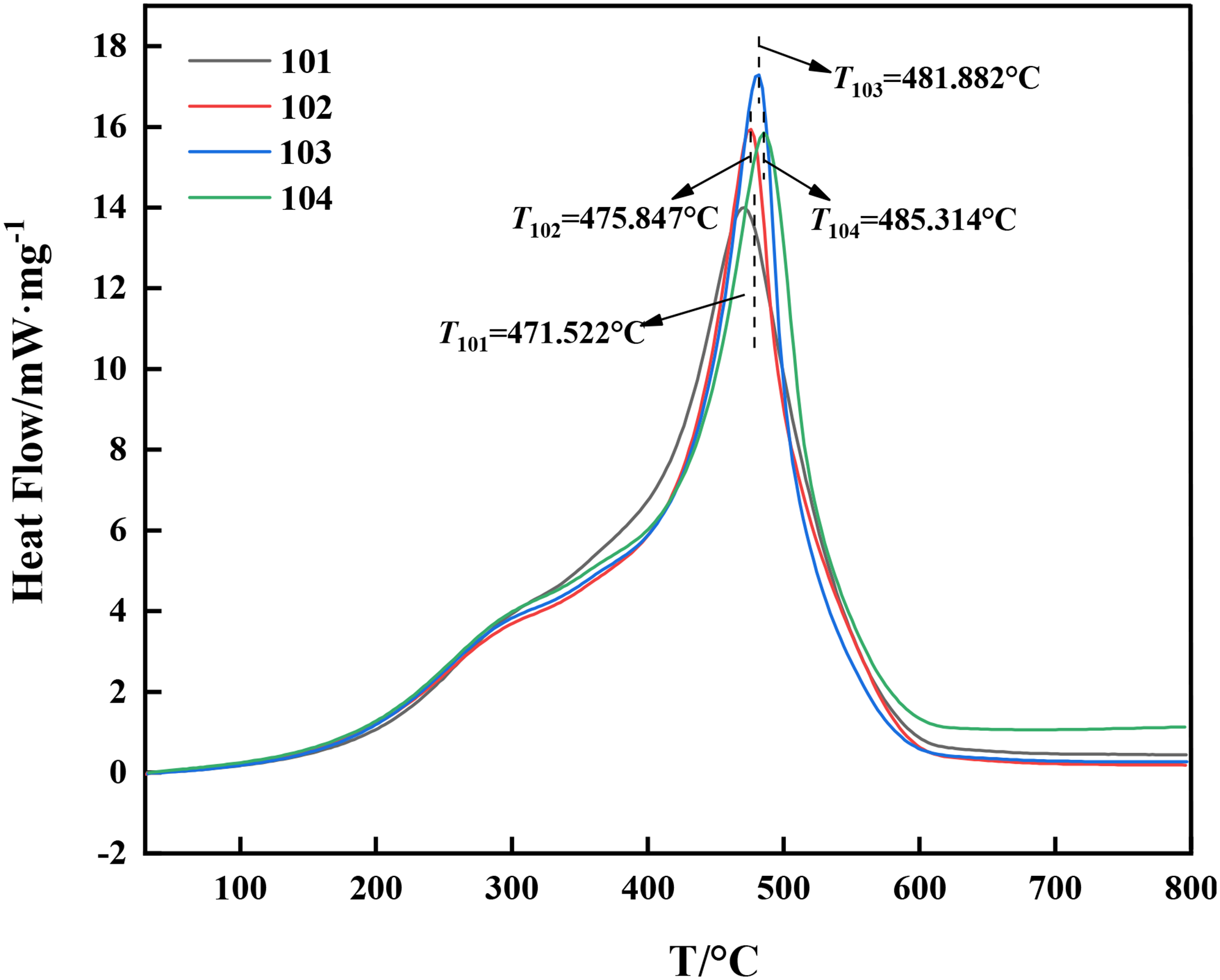
DSC curves of coal samples with different organic sulfur contents.
Release of regular oxidation products of coal samples with different organic sulfur contents
During the heating process of coal, three distinct stages occur: degassing, pyrolysis, and condensation. Gas products are mainly generated from the pyrolysis process as small molecular functional groups break off from the main chain of coal to form gas products.
The main gas products from pyrolysis of coal include hydrogen (H2), water (H2O), methane (CH4), and carbon dioxide (CO2), along with sulfur dioxide (SO2), hydrogen sulfide (H2S), and if the coal contains sulfur, small molecule organic sulfur (COS) (Liu et al., 2016). The mass spectrum (MS) of oxidation products produced during the oxidation process by coal samples with different organic sulfur contents are shown in Figure 5.
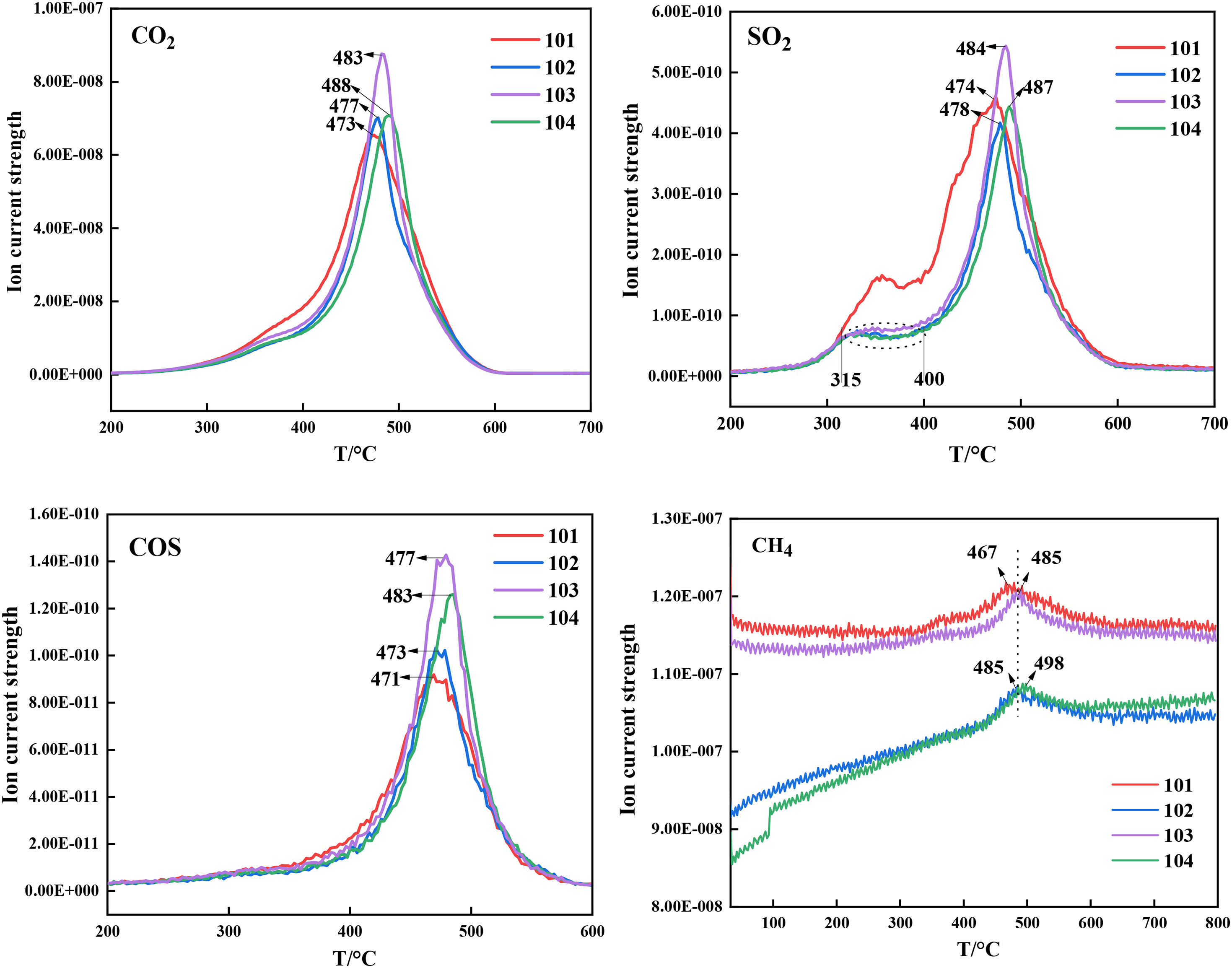
Mass spectrum of oxidation products of coal with different organic sulfur contents.
The release of SO2 during pyrolysis of coal can be divided into two stages. The first stage is at 400–600°C. The release of SO2 in this stage is mainly due to the organic sulfur in coal. The second stage is around 1000°C, where the release of SO2 is related to pyrite.
Because we investigated only the release of regular organic sulfur during the pyrolysis of coal, we only examined the peaks from 400–600°C. Figure 5 shows that the SO2 release curves of coal samples with different organic sulfur contents had different release peaks with different strengths around 480°C. Coal sample 101 had the lowest peak temperature (474°C), and coal sample 104 had the highest peak temperature (487°C). This indicates that the higher the organic sulfur content in coal, the lower the peak temperature. This rule can also be confirmed by the release of COS, a gas product generated by the thermal decomposition of organic sulfur groups during the pyrolysis of coal. The regular release of COS was similar to that of SO2. The different release peaks of the four samples also strongly indicate that with decreasing organic sulfur content, the initial and peak temperatures of COS evolution both gradually shift toward higher temperatures. It shows that as the organic sulfur content in coal increases, the sulfur-containing groups are more likely to react with oxygen to release COS and SO2; that is, the greater tendency of spontaneous combustion of coal.
The CO2 produced during coal pyrolysis mainly comes from the decomposition of oxygen-containing functional groups such as carboxyl groups and aldehyde groups in coal. The shape of the CO2 release peak is high and wide. Also, the maximum points of the CO2 release peak of the coal samples all appeared at 470–490°C.
Methane is generated by the chain scission of aliphatic or aromatic side chains containing methyl functional groups in coal. As shown in Figure 5, the ion current curves of methane mass spectrum show a single peak similar to the Gaussian distribution, and the shape of the peak is relatively wide, and the range of the peak is 450–500°C. Similar to the first two gases, with the decrease of organic sulfur content in coal, the initial precipitation temperature and the peak temperature of CO2 and CH4 gradually shift to the high temperature. It indicated that the higher the organic sulfur content in coal, the more likely the coal is to undergo thermal decomposition at a lower temperature to release CO2 and CH4, that is, the greater the spontaneous combustion tendency of coal.
As with SO2 and COS, with the decrease in the organic sulfur content in coal, the initial and peak evolution temperatures of CO2 and CH4 gradually shift toward higher temperatures. This indicates that the higher the organic sulfur content in coal, the more likely the coal will undergo thermal decomposition at a lower temperature, thus releasing CO2 and CH4. The spontaneous combustion tendency of coal increases with increasing organic sulfur content. This is consistent with the conclusions based on the TG-DSC curve and ignition activation energy analysis of coal.
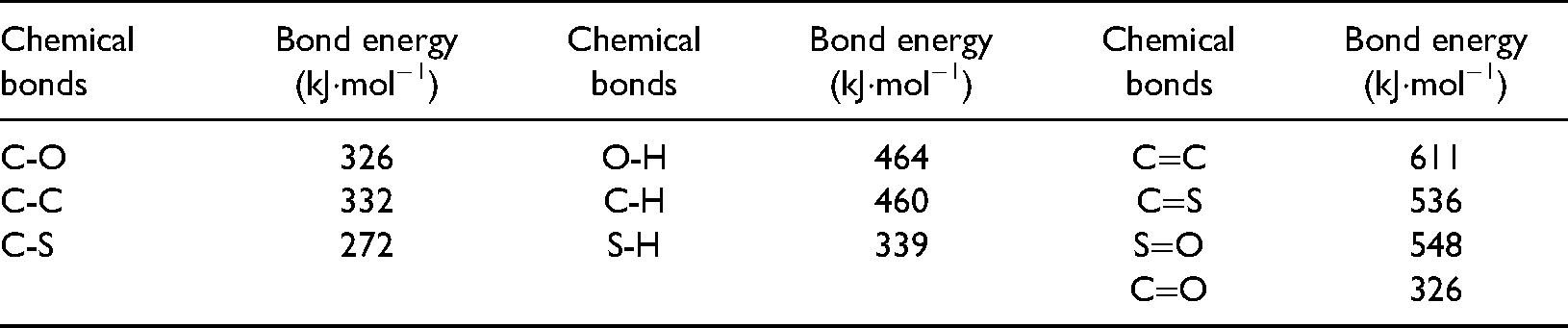
The reason for this phenomenon is related to the activity of organic sulfur groups in coal. The common chemical bonds and the bond energies involved in coal are shown in Table 6. Based on the XPS analysis, the organic sulfur groups in coal are mainly in forms of mercaptans, thioethers, sulfoxides (sulfones), and thiophenes. Compared with similar chemical bonds in other groups in coal, the chemical bonds in organic sulfur groups have lower bond energy and greater chemical activity. Therefore, it is easier to break the C–S bonds during the low-temperature oxidation process. The breakage of chemical bonds can release considerable heat, thus accelerating the oxidation spontaneous combustion of coal. In consequence, the spontaneous combustion tendency of coal is related to its organic sulfur content.
The energy of the common chemical bonds in coal.
However, the factors that can affect the spontaneous combustion of coal are varied, including volatile, moisture and other active groups in coal, such as hydroxyl and methyl, etc. Therefore, the sulfur content is one of the factors that affect the spontaneous combustion of coal. Even so, it can be seen from the experiment that the organic sulfur content has an irreplaceable effect on the spontaneous combustion of coal, because the coal samples for experiment are the same kind of coal and have the same treatment.
Conclusions
Organic sulfur in Shuiyu coking coal exists in forms of mercaptans, thioethers, sulfoxides (sulfones), and thiophenes. With the reduction of organic sulfur content in coal, thiophene remained the main form of organic sulfur in coal.
With decreasing organic sulfur content, the characteristic temperatures at which coal entered the weight gain stage (T1), entered the rapid oxidation stage (T2), and reached the maximum weight loss rate point (T3), all shifted toward higher temperatures, Furthermore, the ignition activation energy of coal and the peak temperature of the exothermic curve increased. It was shown that the reduction of organic sulfur content inhibited the oxidation process of coal.
The spontaneous combustion tendency of coal decreases with the reduction of organic sulfur content, and the initial and the peak evolution temperatures of oxidation products both shifted toward higher temperatures. This is consistent with the ignition activation energy analysis of coal.
Supplemental Material
sj-pdf-1-eea-10.1177_01445987211049045 - Supplemental material for Effects of organic sulfur on oxidation spontaneous combustion characteristics of coking coal
Supplemental material, sj-pdf-1-eea-10.1177_01445987211049045 for Effects of organic sulfur on oxidation spontaneous combustion characteristics of coking coal by Fei Gao, Zhe Jia, Mei-ling Qin and Xiao-gang Mu, Yi-fei Teng, Ying-di Li, Qi-hui Bai in Energy Exploration & Exploitation
Footnotes
Acknowledgements
This work was supported by the National Natural Science Foundation of China (51874161) and Youth Fund of Liaoning Province Education Administration (LJ2017QL001).
Author contributions
The paper was a collaborative effort among the authors. Fei Gao and Zhe Jia conceived and designed the experiments, authored the paper; Yafei Shan proposed the idea; Xiaogang Mu performed the experiments; Ruijie Sun and Qihui Bai analyzed the data; Yifei Teng and Yingdi Li modified the paper.
Data availability statement
The data used to support the findings of this study are available from the corresponding authors upon request
Declaration of conflicting interests
The authors declared no potential conflicts of interest with respect to the research, authorship, and/or publication of this article.
Funding
The authors disclosed receipt of the following financial support for the research, authorship, and/or publication of this article: This work was supported by the National Natural Science Foundation of China and Youth Fund of Liaoning Province Education Administration (grant number 51874161, LJ2017QL001).

Supplemental material
Supplemental material for this article is available online.