



Abstract
Organic matter heterogeneity exerts an important impact on the generation, evaluation, and exploitation of shale oil resources. In the past, only a limited number of analytical samples that represented the contribution or influence of high or low organic matter abundance intervals were used to represent an entire set of thick source rocks, and based on this limitation, occasionally researchers have reached incorrect conclusions. Here, the heterogeneity of organic matter and its significance to shale oil in the Triassic Zhangjiatan shale of the Ordos Basin were discussed based on sedimentary and geochemical analyses. Our results indicate that (1) the Chang 73 shale within the study area is characterized by high abundance, good quality, strong heterogeneity, and segmented enrichment in the vertical profile. The primary organic matter type was type II1, and this was followed by types I, II2, and III that exhibited three changing trends in the vertical profile. Organic matter maturity is primarily at the immature stage. (2) Additionally, we observed that the organic matter heterogeneity of Chang 73 shale was related to changes in lithology, sedimentary environment, paleoproductivity, terrigenous influence, and event action (such as volcanism and hydrothermal processes). The abundance of organic matter is the result of the coupling control of these processes. In the process of organic matter deposition, if volcano or hydrothermal activities occurred, the organic matter was abnormally enriched, and the total organic carbon content exceeded 20% and could even be as high as 40%. (3) Finally, we observed at least nine enrichment layers that were controlled by the coupling of different geological factors, and there were four potential target resource layers corresponding to the hydrothermal sedimentary area.
Introduction
Shale oil is abundant throughout the world, and it is considered to be a strategic alternative resource to solve the energy crisis in China (Guo et al., 2020; Zhao et al., 2020; Zou, 2017). There are abundant unconventional oil resources in the Chang 7 member of the Triassic Yanchang Formation in the Ordos Basin. According to previous research, the shale oil of Chang 71 and Chang 72 members has achieved scale benefit development, and the shale oil of the Chang 73 member has also experienced exploration breakthroughs, thus highlighting the exploration potential of Chang 73 in the Ordos Basin is huge (Fu et al., 2019, 2020a). However, based on core observations and previous studies, it was determined that Chang 73 shale (also known as Zhangjiatan shale) in the Ordos Basin possesses strong heterogeneity in both the vertical and horizontal directions (Li et al., 2016; Zhao et al., 2019; Zhu et al., 2003), and this makes it more difficult to evaluate, explore, and develop. According to previous studies, unconventional oil resources in the Chang 7 member of the Ordos Basin are primarily developed in the central and southern parts of the Yishan slope that is the main object of unconventional oil exploration in the basin (Fu et al., 2019). Li et al. (2019) believed that Chang 73 of the Triassic Yanchang Formation in the southwestern Ordos Basin possesses shale oil exploration potential. According to Yang et al. (2017), the southeastern Ordos Basin was identified as the best test area for evaluating the in situ conversion process/in situ upgrading process (ICP/IUP). If the low-maturity shale oil resources found in Chang 73 can achieve a breakthrough, vast oil resources will be produced (Fu et al., 2019). Therefore, it is of high significance to study the heterogeneity of the Zhangjiatan shale located in the southeastern Ordos Basin. In this study, based on centimeter-scale sampling, geochemical analysis technologies incorporating the use of carbon–sulfur detection, Rock-Eval analysis, stable carbon isotope, X-ray, and elemental analyses were used to determine the organic matter heterogeneity, genesis, and shale oil significance of the Chang 73 shale of the Hejiafang section in the Tongchuan area of the Ordos Basin (Figure 1). Intensive sampling can provide a highly accurate reflection of actual geological conditions. The results of this study will provide scientific guidance for the exploration of Chang 73 shale oil and also possess certain reference significance for the exploration and development of continental shale oil in China.
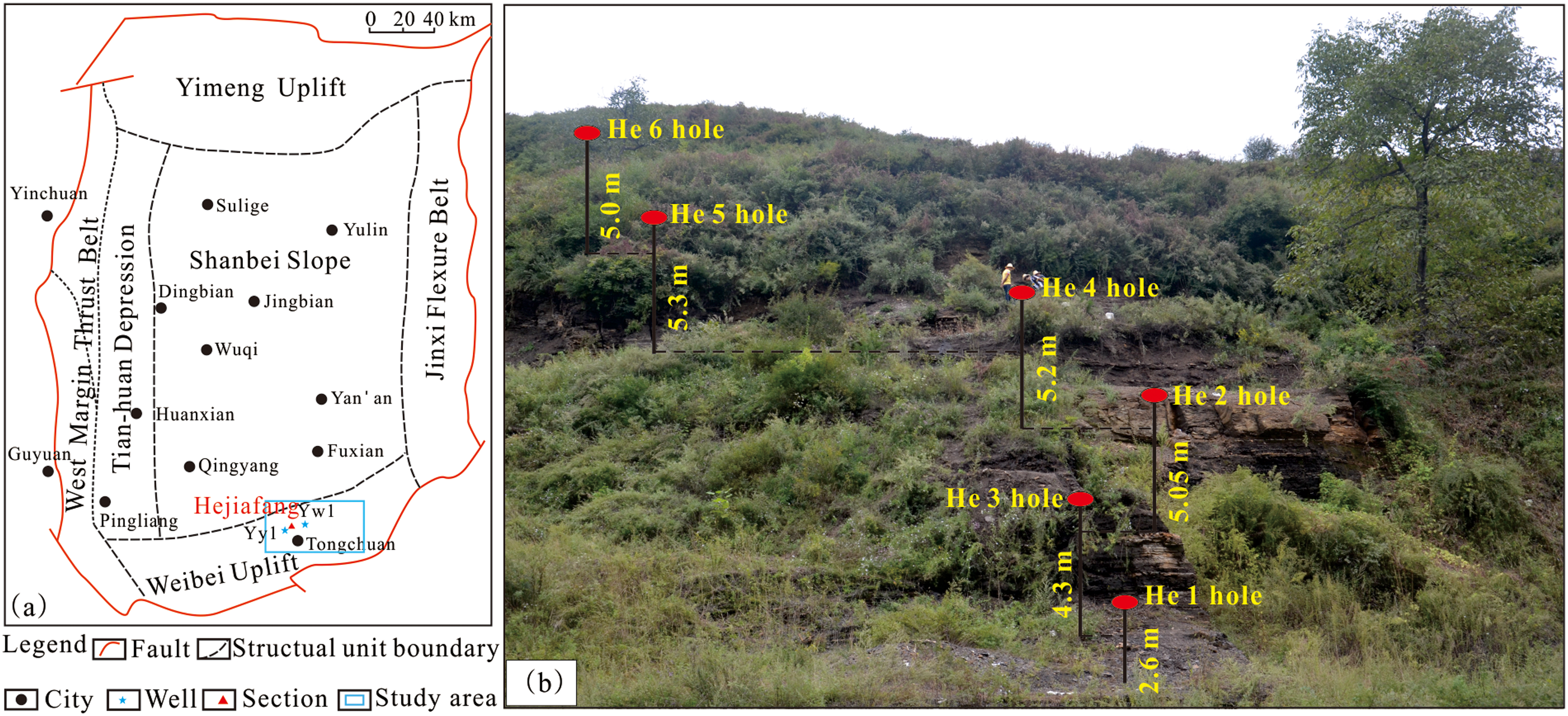
Location of the study area and sampling.
Geological setting
The Ordos Basin is the second-largest sedimentary basin and the largest oil and gas production base in China, and this basin exists as a continental depression basin that can be divided into six structural units according to their present structural form. The paleotopography of the Ordos Basin is high in the north and low in the southwest and southeast. The location of the lake basin sedimentation and sedimentary center is in close proximity to the southwest (Fu, 2018). As this basin is rich in unconventional oil and gas resources, shale oil resources are predominantly developed in the organic-rich shale formations in the Chang 7 member of the Triassic Yanchang Formation (Yang et al., 2013, 2016). During the deposition of the Yanchang Formation during the Late Triassic period, the Ordos Basin experienced a complete evolution process that included occurrence, development, and extinction. From top to bottom, it is divided into 10 reservoir members that are identified as Chang 1 through Chang 10 (Fu, 2018; Jiang et al., 2021). The sedimentary period of the Chang 7 member experienced the largest flooding event and can be divided into three subsegments that include Chang 73, Chang 72, and Chang 71. Chang 73 shales are commonly known as Zhangjiatan shale, and these shales are stable and widely distributed, rich in animal and plant fossils, and high in organic matter abundance (Zhang et al., 2017). The study area is located in the Weibei Uplift (Figure 1(a)), an area that is strongly affected by tectonic uplift and possesses a relatively complex structure and developed faults (Wang et al., 2018). The thickness of the residual strata of the Yanchang Formation in the south is relatively large, and the thickest stratum is located in the Fuxian–Huangling–Tongchuan area. In the later stage, due to the influence of the Weibei Uplift, the strata in this area were uplifted and experienced different degrees of denudation (Fu, 2018). Additionally, the burial depth was relatively shallow.
Material and methods
Material
In this study, six boreholes were drilled vertically from the surface using a portable drill in the Hejiafang section of the Ordos Basin (Figure 1(b)). A total of 171 samples were collected from the drilled rocks every 15–20 cm for laboratory analysis. All of the samples were from the Chang 73 shale of the Upper Triassic. This resulted in repeated sampling at the same layer in both boreholes, and the samples near the surface may be weathered. Considering the influence of weathering, samples at the same horizontal line from the two boreholes were compared. The samples near the surface at the top of one borehole were defined as weathered samples, and the corresponding samples in the other boreholes were defined as fresh samples.
Methods
A total of 171 samples were analyzed for carbon–sulfur detection, Rock-Eval analysis, and stable carbon isotope analysis. A total of 57 samples were analyzed for element and X-ray diffraction (XRD). Carbon–sulfur detection was conducted in accordance with the SY/T 5116-1997 standard of the Petroleum and Natural Gas Industry Standards of the People's Republic of China. The total organic carbon (TOC) and total sulfur (TS) contents were obtained by carbon–sulfur detection, which were measured by induction furnace combustion (LECO) with a CS344 analyzer after the samples were treated with 10% hydrochloric acid to remove carbonates, and the analysis precisions are ±0.5%. Rock-Eval analysis was conducted in accordance with the SY/T 5117-1996 standard of the Petroleum and Natural Gas Industry Standards of the People's Republic of China. The industry standard SY/T 5163-2018 was adopted for XRD analysis. The international standard GB/T 14506.28-2010 is adopted for the analysis of main elements. The international standard GB/T 14506.30-2010 was adopted for trace element analysis. All experiments were completed in the Oil and Gas Center of Northwest Institute of Eco-Environment and Resources, Chinese Academy of Sciences.
Results
Influence of weathering on the organic matter
The TOC values of weathered samples in the same layer were lower than those of the fresh samples (Figure 2(a) and (b)). The stable carbon isotope (δ13Corg) and TS contents of the weathered samples were also lower compared to those of the fresh samples. Weathering can reduce the abundance of organic matter, sulfur content, and carbon isotopic values. Therefore, 135 fresh samples were selected to establish the vertical TOC profiles (Table 1). As shown in Figure 2, the TS values of some samples were abnormally high. It was determined that the TOC (∼30%), S1 (∼10 mg/g), and S2 (∼200 mg/g) values were also very high. The following analysis revealed that these samples may be related to hydrothermal or other geological events.
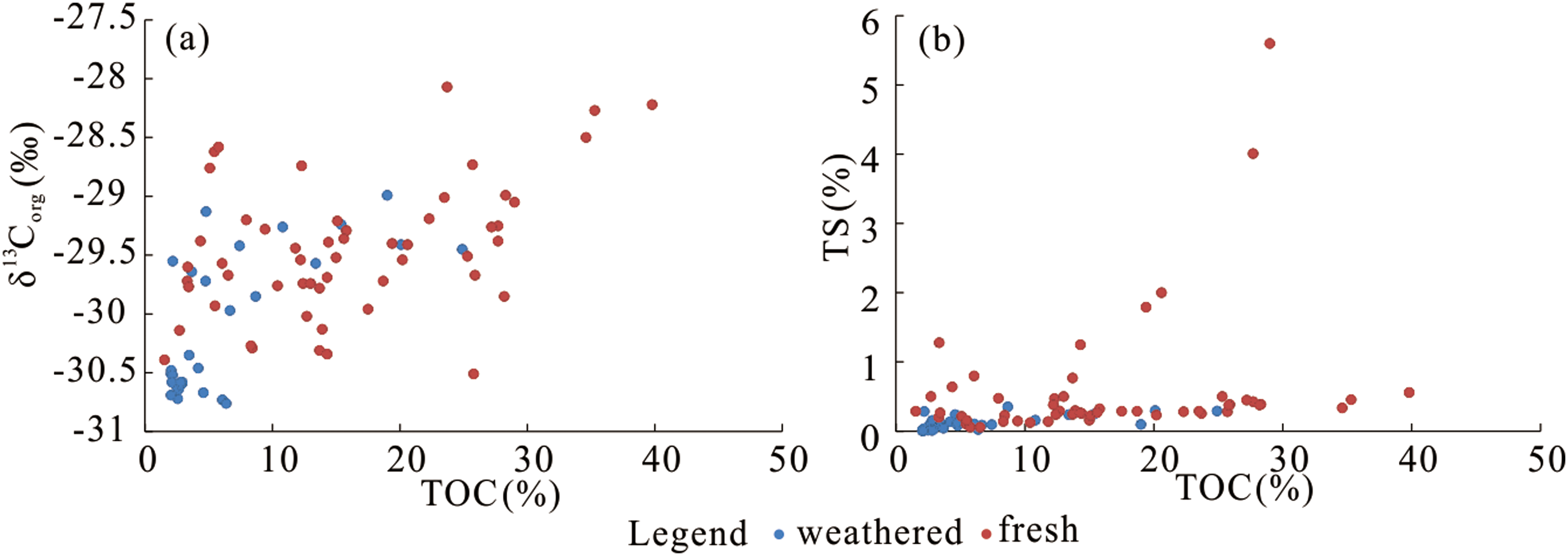
Correlation of TOC versus δ13Corg (a) and TS (b) of weathered and fresh samples in the study area.
Geochemical characteristics of Chang 73 shale in Hejiafang section, Ordos Basin.
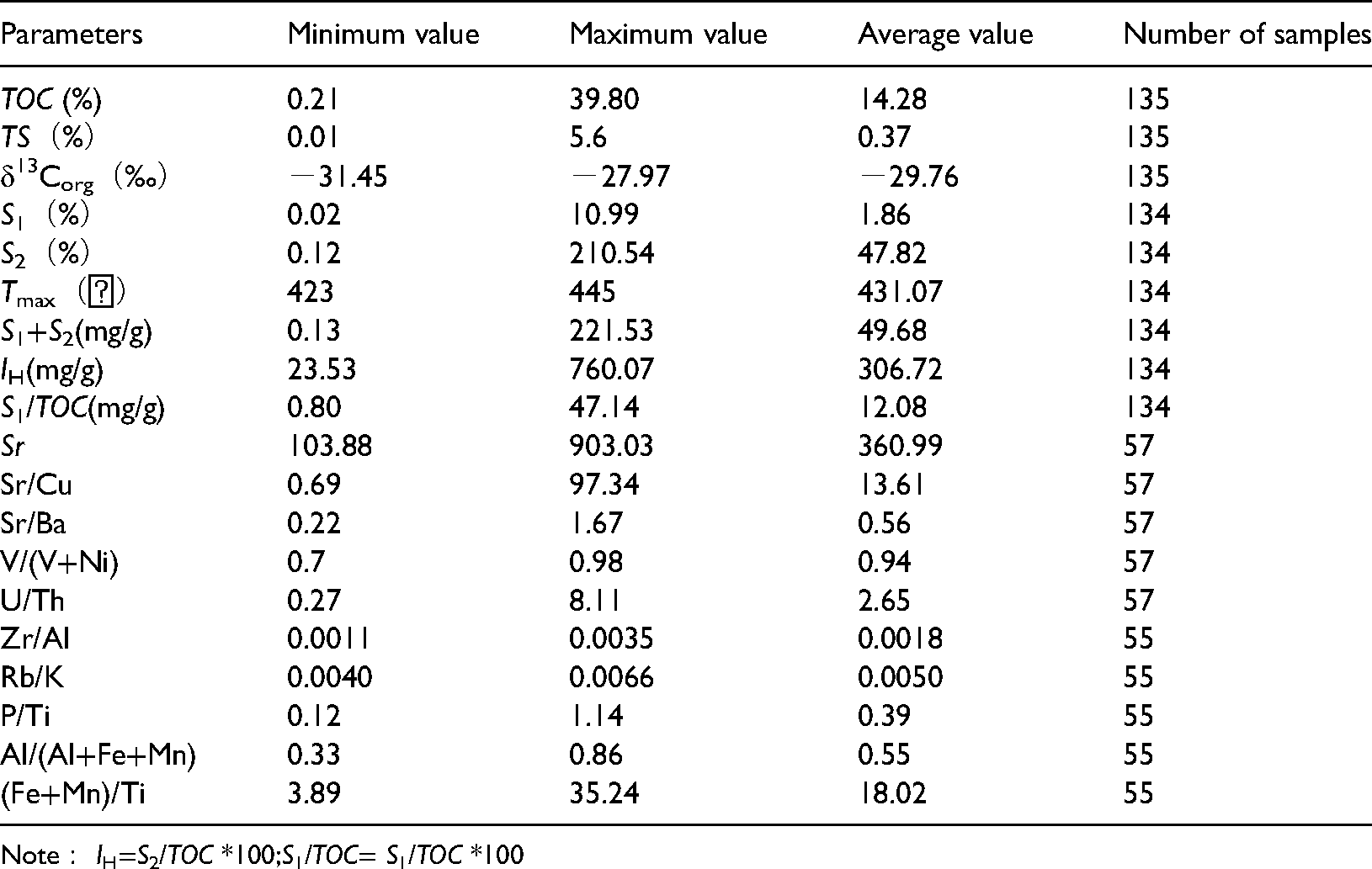
Note: IH=S2/TOC *100;S1/TOC= S1/TOC *100
Lithologic characteristics
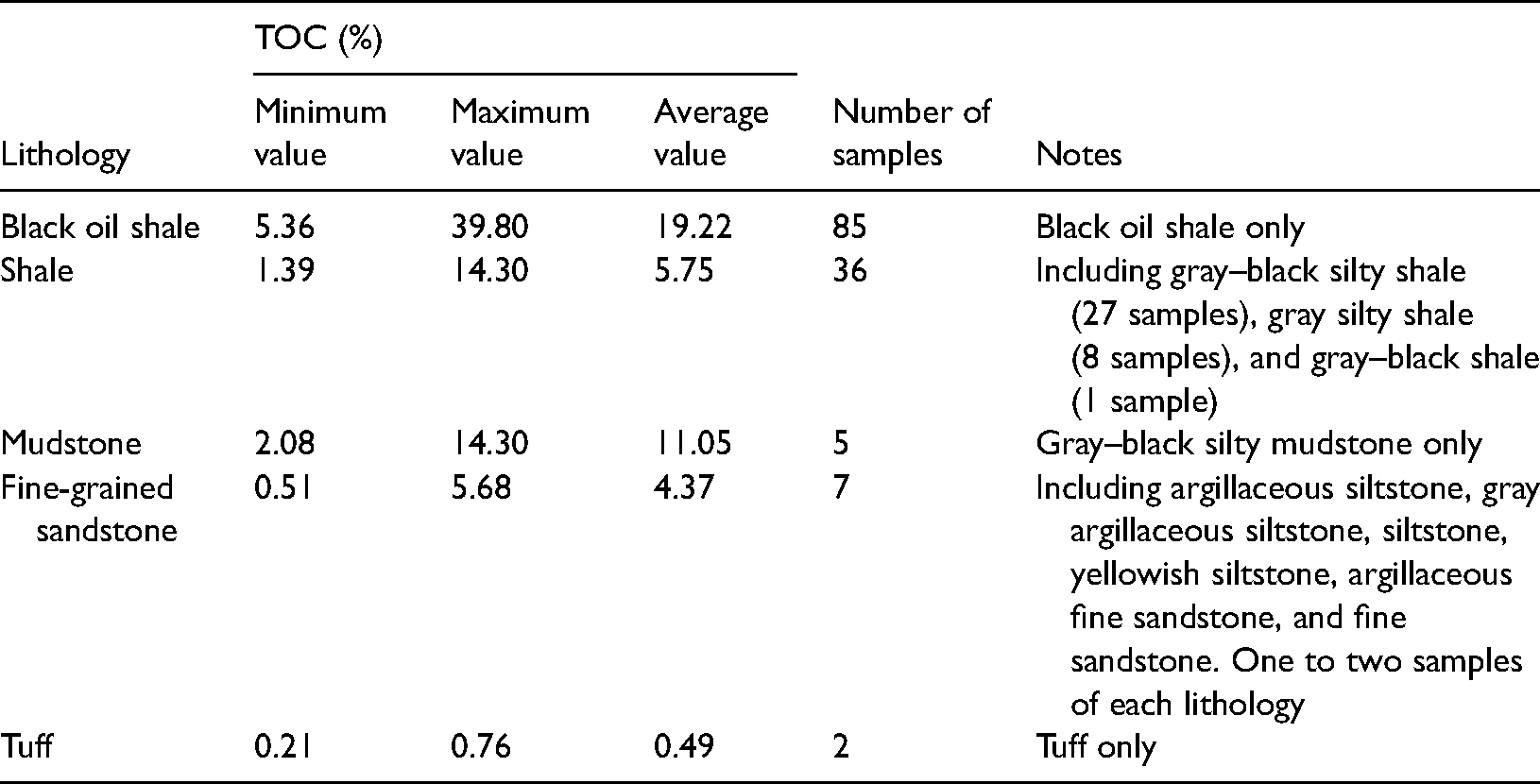
Core observations indicate that the Zhangjiatan shale is highly heterogeneous, and sedimentary structures such as cross bedding, wavy bedding, horizontal bedding, and bioturbation are visible (Figure 3). At each 15–20 cm interval used for sampling, black oil shale (85 samples) was the most abundant, and this was followed by thin silty shale (including gray–black silty shale [27 samples], gray silty shale [8 samples], and gray–black shale [1 sample]) and a small number of other thin intercalated samples. The lithology of the thin intercalated samples is gray–black silty mudstone, argillaceous siltstone, gray argillaceous siltstone, siltstone, yellowish siltstone, argillaceous fine sandstone, fine sandstone, and tuff. There were one to two samples for each lithology (Table 2). For the convenience of analysis and description, the lithology was classified into five categories that included black oil shale, shale, mudstone, fine-grained sandstone, and tuff (Table 2). Statistical analysis revealed that the TOC contents of the various lithologies were different.
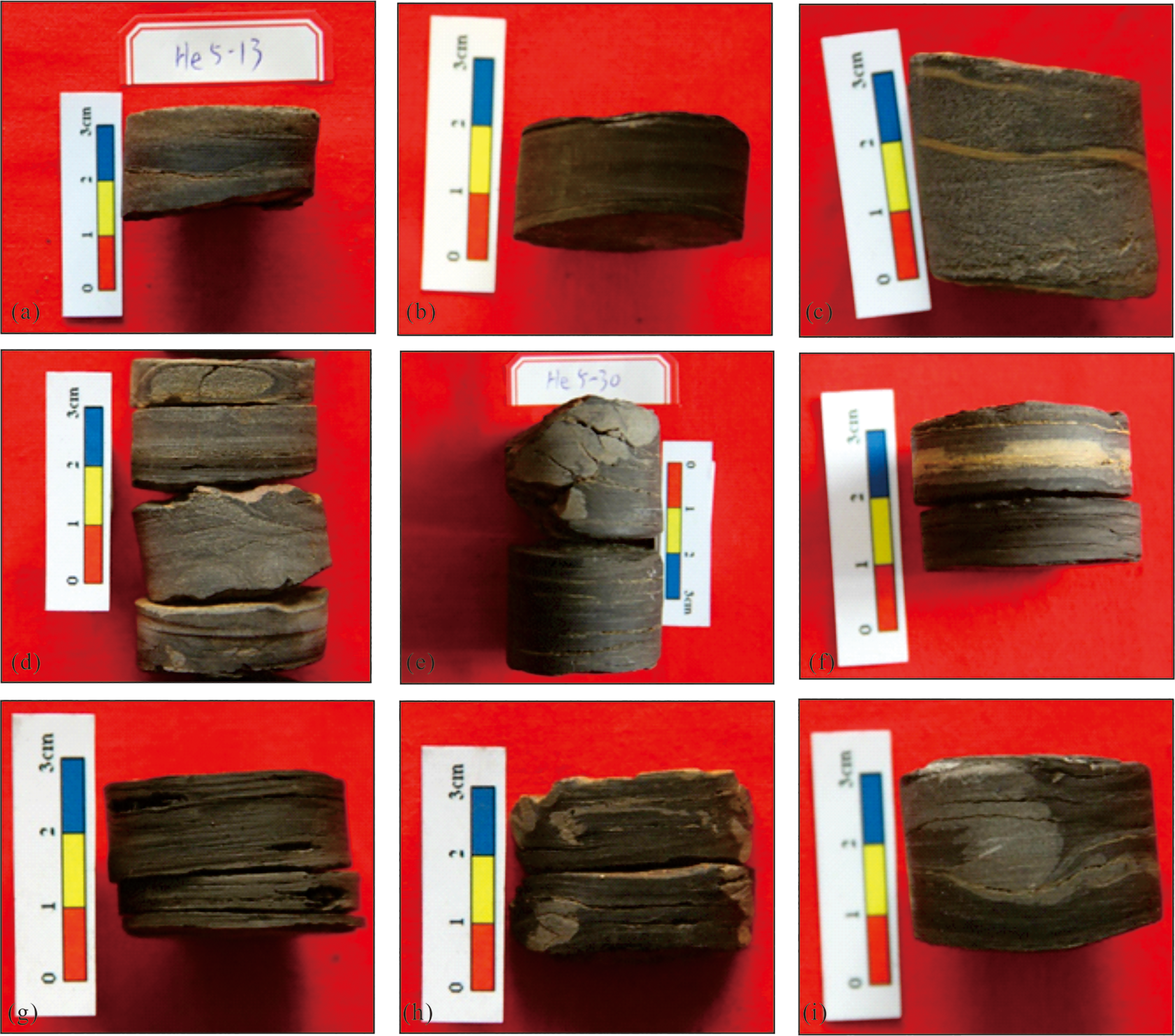
Heterogeneity characteristics of core photos of Chang 73 shale in the study area: (a) He5-13, black mudstone, TOC = 5.33%, depth 2.79 m, (b) He4-24, black oil shale, TOC = 9.43%, depth 7.75 m, (c) He4-25, dark gray argillaceous fine sandstone, TOC = 5.44%, depth 7.85 m, (d) He2-14, dark gray argillaceous siltstone, TOC = 7.59%, depth 10 m, (e) He5-30, black oil shale, TOC = 13.7%, depth 4.55 m, (f) He5-38, black oil shale, TOC = 13.9%, depth 5.35 m, (g) He 3-17, black oil shale, TOC = 24.2%, depth 14.30 m, (h) He 3-09, rolled sand ball in black oil shale, TOC = 15.4%, depth 13.08 m and (i) He 5-40, sandstone injection vein in black oil shale, TOC = 29%, depth 5.55 m. The depth is the corresponding depth in the TOC vertical profile.
Lithology classification and total organic carbon (TOC) characteristics of Chang 73 shale in Hejiafang section, Ordos Basin.
Geochemical characteristics
Organic matter content
It is generally established that the TOC content of shale oil exhibiting industrial recoverable potential is >2% (Burnaman et al., 2009; Curtis et al., 2012; Chen et al., 2015). The TOC content of Chang 73 shales in the study area was high, the organic matter abundance evaluation was excellent, and 98% of the samples met the commercial mining standard. The TOC content ranged from 0.21% to 39.80% with an average of 14.28% (Table 1). Five samples possessed TOC that was <1.8%, and 71% of the samples exhibited TOC of >8.0%.
The TOC content varied considerably among the different lithologies (Table 2). The TOC content of black oil shale was the highest and mainly ranged from 12% to 30%, and a small number of samples exhibited a TOC of close to 40%. The TOC content of shale, mudstone, and fine-grained sandstone samples was predominantly distributed between 1.8% ∼ 10%, and this was lower than that of black oil shale. The maximum TOC value (39.8%) was from black oil shale, and the minimum value (0.21%) was from tuff (Table 2). The TOC content varied within the same lithology (Figure 4). The organic matter abundance evaluation results (Figure 4) revealed that the black oil shale was primarily located in the region of the organic-matter-enriched layer. Shale was distributed at all levels from high-quality source rock to organic matter-enriched layers. Mudstone was primarily located at the level of the organic-matter-enriched layer, and fine-grained sandstone was predominantly located at the level of high-quality source rocks.
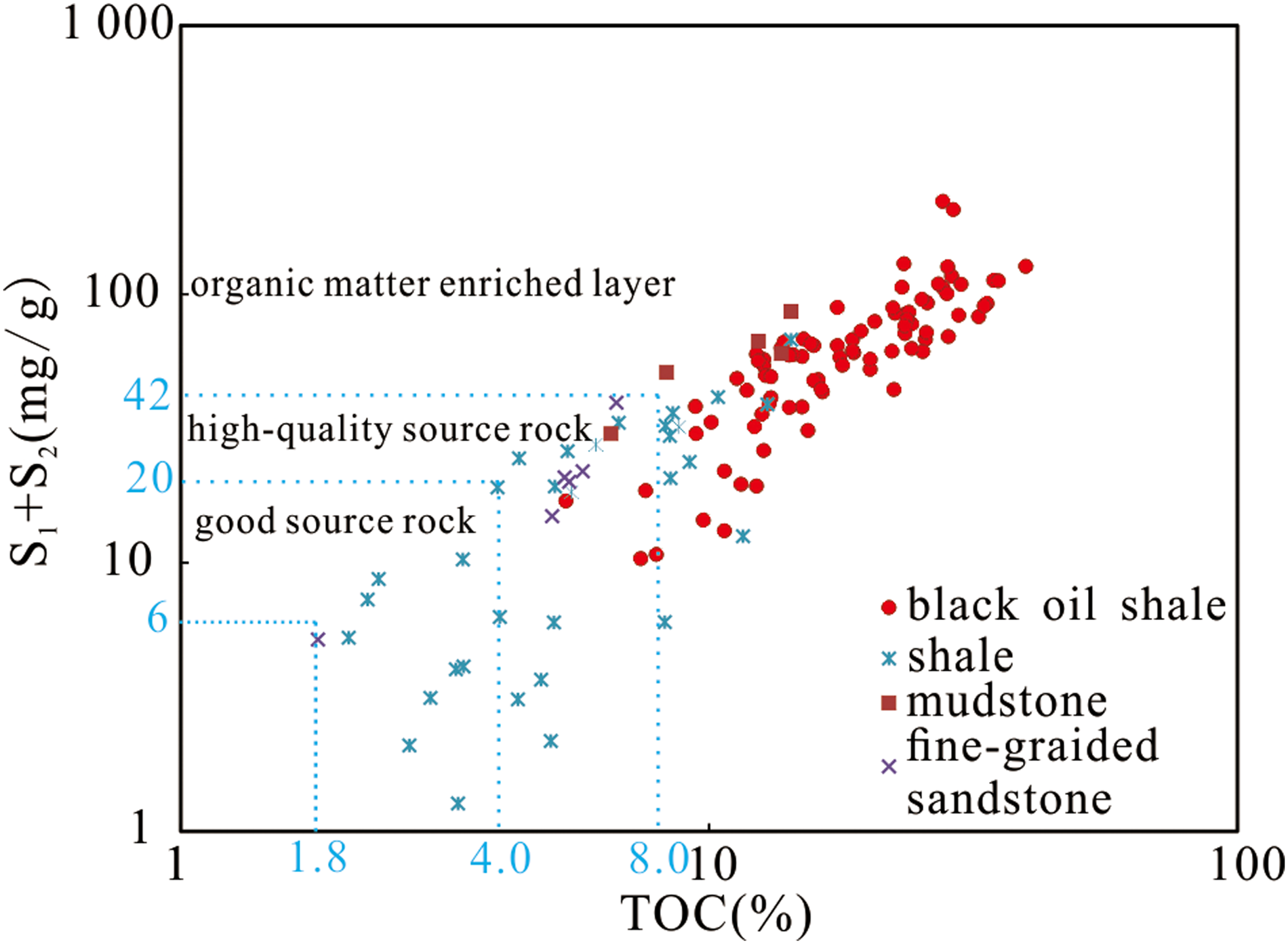
The evaluation of organic matter abundance of different lithology in the study area (organic matter abundance classification standard is according to Hou and Feng, 2011).
Organic matter types
Considering that the stable carbon isotope value can be reduced due to weathering, the pyrolysis parameters were primarily used to classify the organic matter types within the study area. According to Tmax and IH, the organic matter types were predominantly type II1, and this was followed by type I, type II2, and type III (Figure 5). The organic matter present in the study area was considered to arise from a mixed source. The organic matter types in the various layers were different, and this indicates that the terrigenous sources change constantly. The data presented in Figure 5 reveal that the organic matter types of black oil shale are predominantly type II1 with small amounts of types II2 and I. The organic matter types of shale were primarily types II1 and III with small amounts of types I and II2. The organic matter types of mudstone were mainly type I with a small amount of type II1. The organic matter type of the tuff was type III.
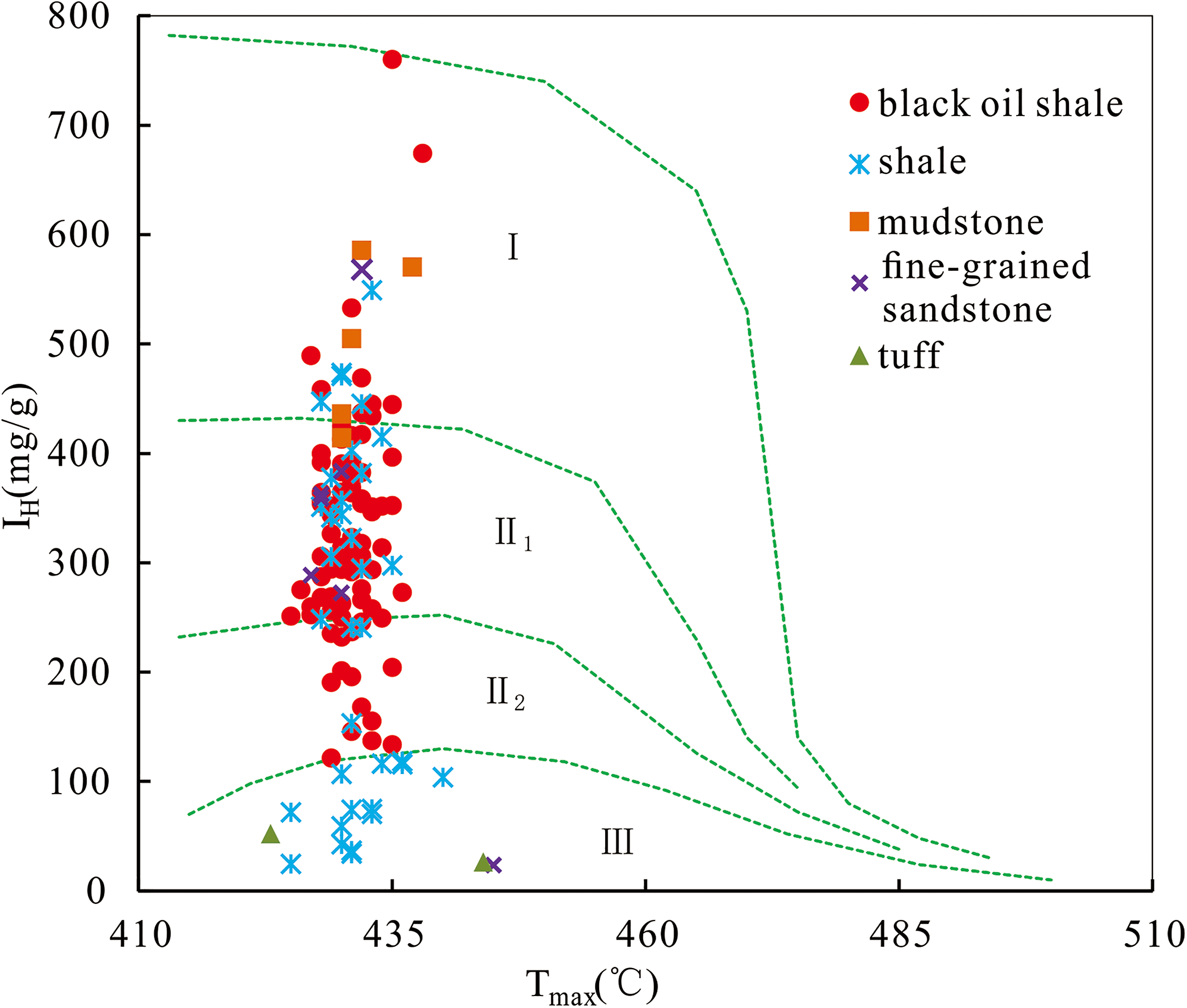
The organic matter types of Chang73 shale are based on the model of Tmax − IH.
Organic matter maturity
The Tmax in the study area ranged from 423 °C to 445 °C with an average of 431.07 °C (Table 1 and Figures 5 and 6). According to the standard SY/T 5735-1995, the organic matter of Chang 73 shales in the study area is predominantly at an immature stage (Tmax < 435 °C), and a small amount is present at a low mature stage (Tmax = 435 °C–440 °C ). This is consistent with the thermal evolution degree of the adjacent well YW 1 (Figure 1(a)) that exhibits an average vitrinite reflectance Ro of 0.59% (Wang et al., 2018). The heterogeneity of organic matter maturity in the vertical profile was also strong (Figure 6).
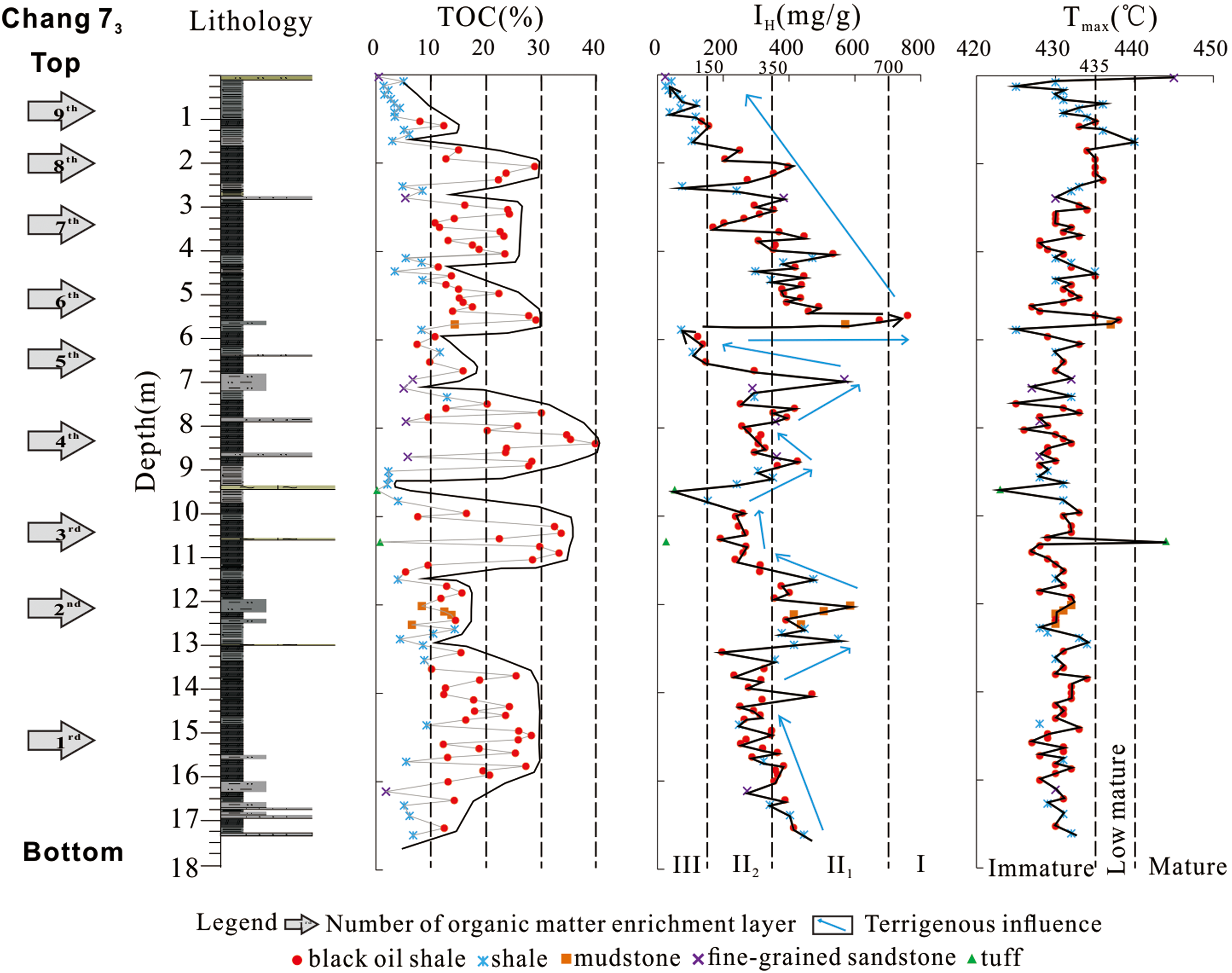
Vertical heterogeneity of organic matter of Chang 73 shale in the study area.
Heterogeneity of organic matter
Heterogeneity of organic matter content
The TOC content is strongly heterogeneous in the vertical profile and exhibits characteristics of segmented enrichment that can be roughly divided into at least nine enrichment layers (Figure 6). For example, the third enrichment layer can be subdivided into two sublayers, the fourth enrichment layer can be subdivided into three sublayers, and the first enrichment layer can be subdivided into six sublayers. The data presented in Figure 6 indicate that all black oil shales correspond to the high peak of TOC, while other shales correspond to low values of TOC. Tuff and a combination of shale and tuff are also characterized by low TOC.
Heterogeneity of organic matter types
The data presented in Figure 6 reveal that the organic matter types in each organic matter-enriched interval are quite different. The organic matter types possessing similar TOC peak values are also different, thus indicating that the influence degree of the terrigenous sources in regard to similar TOC peaks is also different. The organic matter types at the TOC peaks of each organic matter enrichment layer are also different (Figure 6), even if the same peak corresponds to different organic matter types. When TOCpeak ≈ 15%, the corresponding organic matter types are II1, II2, or III, and when TOCpeak ≈ 25% to 30%, the corresponding organic matter types are primarily type II1 and to a lesser degree type II2. When TOCpeak ≈ 35% to 40%, the corresponding organic matter types are predominantly type II2 and to a lesser degree type II1. The vertical profile of IH reveals that the organic matter types possess strong heterogeneity, and there are three changing trends (Figure 6). (1) From the bottom of the first enrichment layer to the bottom of the sixth enrichment layer, the terrigenous influence presents a wave-like increasing trend. (2) There is an abrupt change between the fifth enrichment layer and the sixth enrichment layer. (3) From the bottom of the sixth enrichment layer to the ninth enrichment layer, the terrigenous influence gradually increases.
Discussion
Influencing factors for organic matter heterogeneity
Lithologic alternation
The vertical profile (Figure 6) indicates that the TOC content in different lithological samples and within the same lithological samples exhibits strong heterogeneity. The maximum TOC content and minimum TOC content originate from different lithologies. When the adjacent lithology changes from black oil shale to fine-grained sandstone or silty shale, the TOC content difference can become >20%. Figure 6 reveals that the high TOC peak corresponds to the black oil shale, and the low TOC ebb corresponds to silty shale, silty mudstone, argillaceous siltstone, and either tuff or a lithologic combination. This demonstrates that the organic matter possesses characteristics of segmented enrichment (Figure 6). Therefore, the lithology cycle was the primary cause of the organic matter content cycle in the vertical profile.
The difference in the TOC content within the same lithology may be related to the rock structure, mineral composition, and occurrence state of organic matter. Li et al. (2020a) report examining the Well YY1 near the study area, shale with horizontal lamination possesses a dual structure of “clay + organic matter” or a ternary structure of “clay + organic matter + volcanic ash” that possesses a higher organic abundance and pyrite content. There are numerous pozzolanic components and a large amount of vein organic matter in the lenticular layered shale. The abundance of organic matter was as high as 32.6%, and there was a strong correlation between pyrite abundance and organic carbon content. The TS values of a number of samples are abnormally high, and samples with TS > 1 contain pyrite and highlight the correlation between TS and pyrite content (Figures 2(b) and 7(a)). Lin et al. (2017) proposed that the distribution of organic matter within the lithology is in a state of bedding enrichment and dispersed enrichment, and the TOC content of bedding enrichment was higher than that of dispersed enrichment. Lin et al. (2017) proposed that various clay minerals exhibit different affinities for organic matter, and the adsorption capacity of montmorillonite is ∼6-fold that of chlorite and 12-fold that of kaolinite. It can be observed in Figure 3 that the black oil shale possesses strong heterogeneity and is characterized by the development of lamina, rolled sand balls, and sandstone injection veins, and this may affect the TOC content. The analysis of black oil shale lacking an interlayer revealed that TOC is negatively correlated with quartz + feldspar content and positively correlated with clay content (Figure 7(a) and (b)).
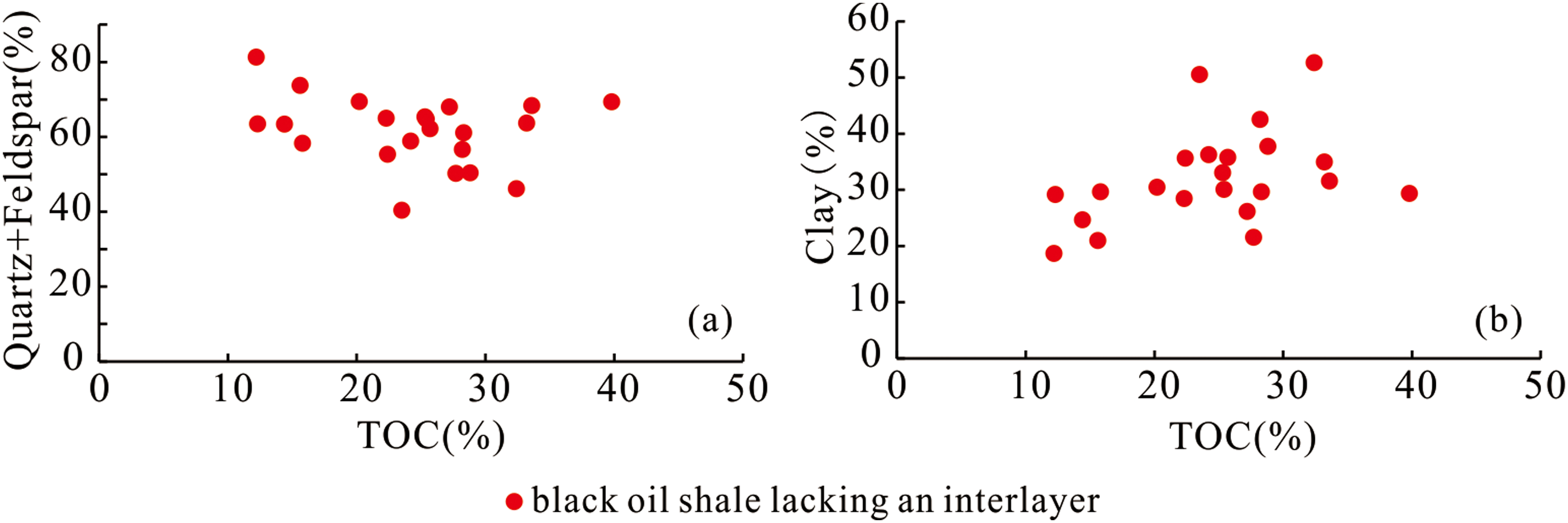
The relationship between total organic carbon (TOC) >10% and quartz + feldspar (a) and clay (b) of pure black oil shale in the study area.
According to previous studies, changes in lithology and organic matter content are controlled by the lake level cycle, and the lake level change is affected by the paleoclimate. According to a study by Er et al. (2016) examining the Chang 7 member, in the long-term base-level cycle, black shale and laminar mudstone are dominant above and below the maximum flooding surface, and low sandy content, high organic carbon content, and good organic matter types are present. In the late stage of long-term base-level decline, the supply of terrigenous clastic rocks is sufficient, and the sand content gradually increases to form silty mudstone lithofacies and argillaceous siltstone lithofacies, while the organic carbon content generally decreases. Zou et al. (2013) proposed that during the process of periodic fluctuation of the lake level, the depth of the water body and the input rate of sediment exhibited characteristics of the periodic change that led to a change in TOC within the sedimentary profile. At the boundary of the sequence, the depth of the water body was shallow, the accumulation speed of the sediment was rapid, the oxidation was active, and the minimum value of TOC often appeared on the profile. Wu (2010) proposed that paleoclimate cycles control the lake level rise and fall in a small scale and high-frequency manner. Wang et al. (2005) suggested that the paleoclimate change is the primary mechanism controlling the high-frequency cycle sedimentation of lake facies. Climate controls the proportion of accommodation space that is the basic control factor of lacustrine stratigraphy (Carroll and Bohacs, 1999). It can be observed from the lithologic section (Figure 6) that the thick black oil shale is developed mainly in the study area, and there are thin intercalations such as silty shale, argillaceous siltstone, argillaceous fine sandstone, siltstone, and fine-grained sandstone at the top and bottom of the thick black oil shale. Combined with the results of previous studies, our results indicate that it is likely that the cyclic variation of lithology and organic matter content is controlled by the paleoclimate.
Paleoclimate
Paleoclimates control rainfall and evaporation, and alternating changes control river water injection, sediment supply, and lake basin surface changes (Hou and Feng, 2011). It is the most widely controlling factor in regard to laminae formation, and it even affects water stratification and salinity. Bohacs (1998) noted that lakes are extremely sensitive to climate change. Fu (2018) reported that the paleoclimate of the Yanchang Formation in the southwest Ordos Basin was humid and warm, and the bottom water environment was a freshwater environment. Based on a study by Li et al. (2017b), the lithology change feature may indicate that Chang 73 is affected by the seasonal laminar cycles that are a paleoclimate feature of warm-humid and dry-cold alternation. The paleoclimatic feature was also verified by Ji and Zhu (2013) based on a biological perspective. Sr/Cu is a sensitive index reflecting the paleoclimate status. Typically, Sr/Cu > 10 indicates a dry and hot climate, Sr/Cu = 1–10 indicates a warm and humid climate, and Sr/Cu < 0.2 indicates an arid climate (e.g. Sun et al., 2021). Among the 57 samples tested in the study area, 36 samples possessed Sr/Cu values of 0.69–9.94 with an average of 5.43, and 21 samples exhibited Sr/Cu values of 10.18–97.34 that were indicative of dry and hot climate characteristics. From the vertical profile (Figure 8) of Sr/Cu, the upper portion of Chang 73 suggests a warm humid climate, and the lower portion suggests a warm humid and dry hot alternating climate.
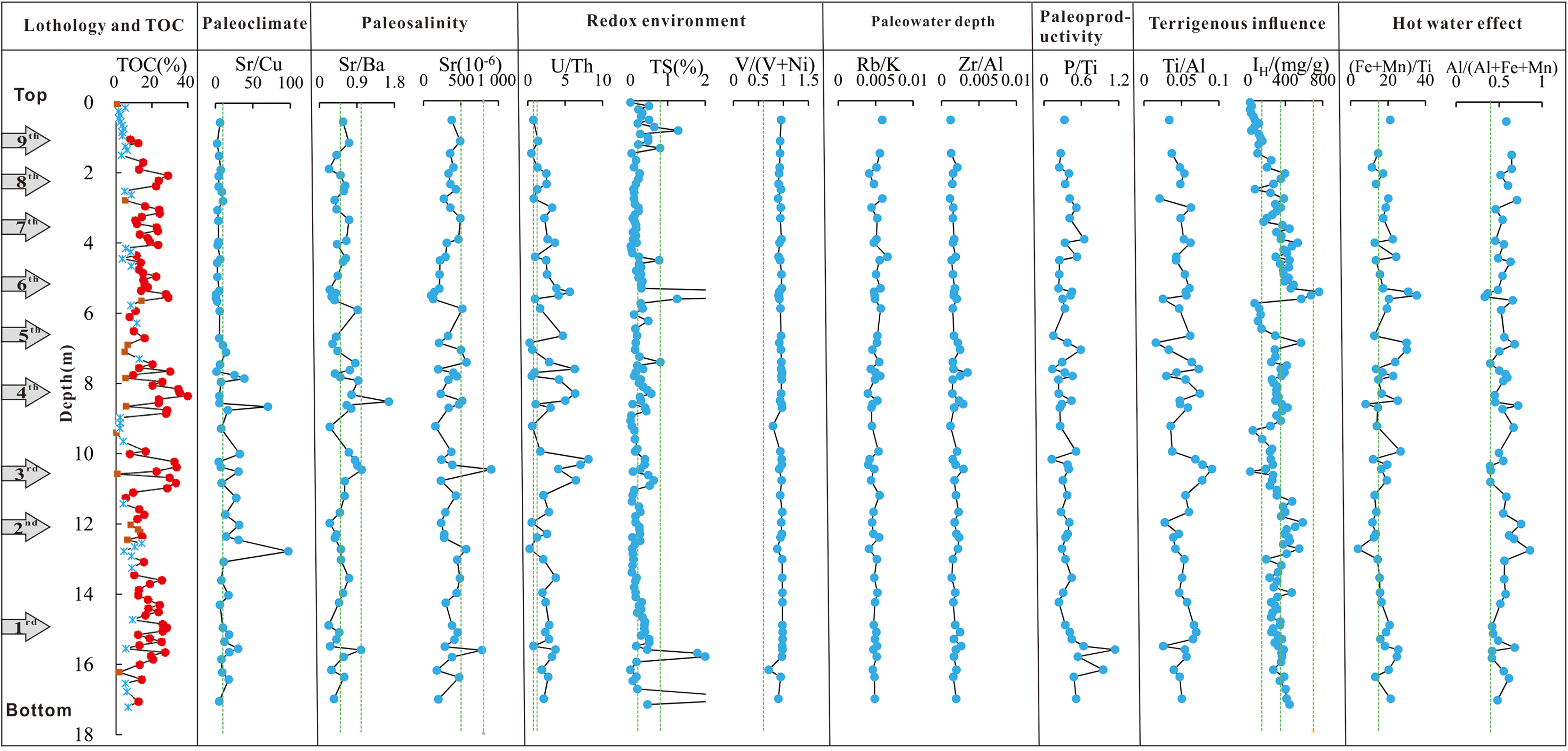
Total organic carbon (TOC) vertical profile and its relationship with major and trace elements in the study area (the TOC lithology legend in the TOC profile is the same as Figure 6).
Paleosalinity
Paleosalinity is a record of water salinity in ancient sediments. Transitional environments with periodic changes in salinity can cause periodic reproduction and death of different biological communities and can sometimes provide abundant organic matter deposition (Hou and Feng, 2011). Sr/Ba is typically used to indicate the salinity of the water. In general, Sr/Ba > 1 indicates a saline water environment, Sr/Ba = 0.6–1 indicates a brackish water environment, and Sr/Ba < 0.6 indicates a freshwater environment (e.g. Fan et al., 2019). Among the 57 samples, two samples exhibited a Sr/Ba > 1, 19 samples possessed a Sr/Ba = 0.6–1, and 36 samples yielded a Sr/Ba < 0.6. The values of Li ranged from 13.59–58.68 × 10⁻⁶, thus indicating a freshwater environment. A total of 51 samples possessed a Sr content of 100–500 × 10−6 that was indicative of a freshwater environment, five samples possessed a Sr content of 500–800 × 10−6 that was indicative of a brackish water environment, and one sample possessed a Sr content of >800 × 10−6 that was indicative of a saline water environment. The paleosalinity of the study area is predominantly freshwater, and this is followed by brackish water and occasionally salty water. The vertical section is characterized by the alternation of freshwater, brackish water, and saline water (Figure 8). Salty water may be related to volcanic or hydrothermal events.
Redox environment
Previous studies have performed in-depth analyses of the sedimentary environment and the factors controlling the organic matter enrichment of Chang 7 members (Li et al., 2017a; Wang et al., 2017; Yang et al., 2010; Zhang et al., 2017). However, a number of disputes remain regarding the sedimentary environment of the Chang 7 shale. Some scholars believe that the water body of the Chang 7 member is characterized by anoxic reduction (Li et al., 2017a; Yang et al., 2010), while others believe that water bodies are rich in oxygen (Chen et al., 2019; Zhang et al., 2017). Zhang et al. (2017) proposed that the bottom water of Chang 73 existed as an oxidation environment that later changed to a reduction environment due to the influence of hydrothermal activity. Yuan et al. (2019) also suggested that the bottom water of Chang 73 was an oxidation–suboxidation–intermittent reduction environment. Figure 9 reveals that the majority of the samples in the study area originate from the oxidation bottom water region, and a small number of samples fall originate from the suboxidation region. Among the 135 samples, 63 samples possessed a TS < 0.2% that was indicative of an oxidation environment, 65 samples possessed a TS of between 0.2% and 0.8% that was indicative of a weak oxidation–reduction environment, and seven samples exhibited a TS > 0.8% that was indicative of a strong reduction environment (Fan et al., 2019). The V/(V + Ni) values of 57 samples ranged from 0.7 to 0.98, and all were >0.6, thus indicating a strong reduction environment. Five samples possessed U/Th values of <0.75, thus indicating an oxidation environment, and eight samples exhibited U/Th values between 0.75 and 1.25 that were indicative of a weak oxidation–reduction environment. The remaining 42 samples yielded U/Th values that were >1.25, thus indicating a strong reduction environment. As TS is an element that is easily oxidized in the outcrop samples, it often becomes oxidized, and this can result in increased sample identification results within the oxidized area. Based on previous research results and the results based on the outcrop samples, it is likely that the bottom water environment in the study area is primarily a strong reduction environment, and a weak oxidation–reduction environment may exist locally. Figure 8 reveals that the bottom water environments of the various organic matter enrichment layers are different. From the bottom of each organic matter enrichment layer to the peak of TOC and then to the top, the sedimentary environment changes from a weak oxidation–reduction environment to a strong reduction environment and then to a weak oxidation–reduction environment, thus exhibiting characteristics of cyclic change.
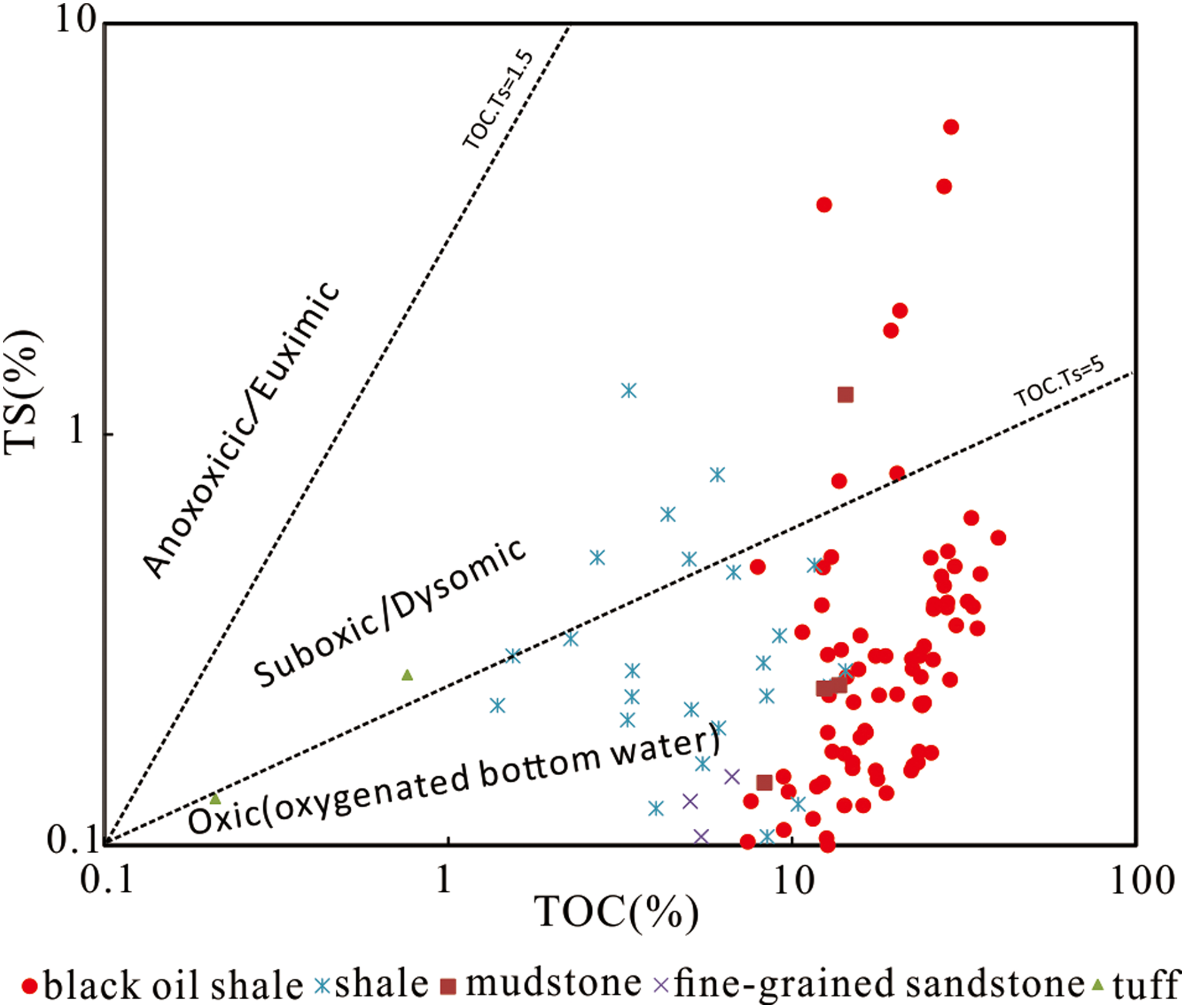
Redox environment of Chang 73 shale in the study area (base map according to Owusu et al., 2019).
Changes in the redox environment alter the preservation conditions of organic matter and affect the preservation of organic materials. A high organic matter content is formed in a reducing environment. At a higher degree of hypoxia, a higher enrichment of organic matter in sediment source rocks is observed (Fu, 2018). There are three abnormally high values for TS that may be related to a sudden increase in water depth or to event activities such as hydrothermal activity, volcanism, or other activities. These geological processes will increase the reduction degree of the water body (Zhang et al., 2017), and this is more conducive to the preservation of organic matter.
Paleowater depth
For lake facies, changes in lake levels directly lead to a change in oxygen content in the lake bottom water. The decrease in lake surface results in the enrichment of terrestrial higher plant-derived plant debris in the sediments, thus reducing the total amount of organic matter and altering the quality of organic matter. When the lake surface rises, there is a lack of oxygen at the bottom of the lake, and a large amount of hydrogen-rich organic matter accumulates and is preserved (Hou and Feng, 2011). Two indexes (Zr/Al and Rb/K) were selected to evaluate the paleodepth. The Rb/K value is often used to indicate changes in water depth (Zhang et al., 2020). As this value becomes larger, the body of water becomes deeper. The Zr/Al value can represent the change in the terrigenous components and water depth transported in a close range. Larger values are indicative of the offshore distance of the water and a deeper water depth (Zhang et al., 2020). According to Fu (2018), the collision between the Yangtze and North China blocks and the active regional tectonic activities in the Qinling Orogeny are the primary dynamic factors responsible for the largest lake flooding in Chang 7. This provides the basic geological conditions for the development of high-quality source rocks. Although the depth of water is the deepest during the deposition of Chang 7, it can be observed from the vertical profile of Zr/Al and Rb/K that the water depth of Chang 73 changed frequently and that the corresponding TOC content was also altered (Figure 8).
Paleoproductivity
Phosphorus is an important life element that can promote rapid growth of organisms. Phosphorus in sedimentary water is easily absorbed and metabolized by organisms, and eventually, it becomes buried with these organisms. Therefore, the abundance of phosphorous minerals in the strata is closely related to the number of organisms in the sedimentary period, and this reflects the organic matter productivity of the lake during the sedimentary period. To avoid the influence of exogenous phosphorus carried by terrigenous clasts on the test results, the P/Ti value was used to replace the absolute content of P as the evaluation index of paleoproductivity. A larger P/Ti value is indicative of greater productivity of ancient lakes, while a smaller P/Ti value is indicative of smaller productivity of ancient lakes (Li et al., 2020b). The vertical profile reveals that the paleoproductivity index is also wavy (Figure 8). However, TOC was not the highest when paleoproductivity was high, and this was also related to the depositional environment.
Terrigenous input
The organic matter types are predominantly type II2 or type III at low TOC values, and they are primarily type II1 and/or type II2 and can even reach type I at the high TOC peaks (Figures 6 and 8). This demonstrated that the Chang 73 shale deposits are influenced by terrigenous sources that possess mixed-source sedimentary characteristics. According to Sun et al. (2011), terrestrial plant sporophytes and hydrogen-rich amorphous forms are common in macerals, and this indicates that organic matter possesses both in situ and allochthonous sources. Under microscopic evaluation, marked angular plate-shaped feldspar clasts can be observed within the samples from the Tongchuan area, and these exhibit near-source characteristics (Sun et al., 2011).
The changes in the organic matter types within the vertical profile of IH identified three changing characteristics (Figure 8). At the bottom of Chang 73, the waveform of the terrigenous influence is altered, and there is a mutation surface with the least terrigenous influence in the middle. At the top of Chang 73, the terrigenous influence becomes gradually decreased. When the terrigenous influence was increased, the corresponding TOC content was also decreased. There is a high content of pyrite (∼17%) at the abrupt change surface of the terrigenous influence, and this indicates that there are a large number of sulfur sources that may provide evidence for transgression, lake bottom hydrothermal solution, volcanic eruption, and other processes. Figure 8 reveals that the abrupt change surface corresponds to a warm and humid climate, freshwater, a strongly reducing environment, and a relative increase in paleowater depth and paleoproductivity, and this can be characterized as a typical hot water activity area.
Hydrothermal activity
Hydrothermal activities can transfer the rich biological nutrients in the bottom water into the upper water body, thus causing biological explosions and high primary productivity. High productivity leads to rapid accumulation of organic matter, and hydrogen sulfide released in combination with hydrothermal activity forms an anoxic environment, thus preserving organic matter (Fu, 2018; Zhang et al., 2017). High productivity and the formation of hydrogen sulfide gas are important factors for the formation of an anoxic environment. Typical hydrothermal deposits exhibit characteristics that include Al/(Al + Fe + Mn) < 0.4 and (Fe + Mn)/Ti > 15 (e.g. Ji et al., 2021). These geochemical indicators have been widely used in the study of continental hydrothermal deposits in recent years (Ji et al., 2021). Among the 55 samples tested, there were 35 samples with (Fe + Mn)/Ti > 15 and four samples with Al/(Al + Fe + Mn) < 0.4. According to these two indexes, the sixth, fourth, and third organic matter enrichment layers should be affected by hot water activities (Figure 8). The corresponding TOC content is as high as 40%. You et al.’s (2021) research also show that the greater the hydrothermal input intensity is, the greater the TOC content of the oil shale is. In the lower portion of the first organic matter enrichment layer, Al/(Al + Fe + Mn) = 0.41; however, based on other conditions, we speculated that there may be hot water activity in this area. It is likely that there are four stages of hydrothermal activity.
Volcanism
There are abundant tuff laminae present in the Hejiafang section, and the thickness of the oil shale is >35 m (Zhang et al., 2009). Zhang et al. (2009) discovered that there are more than 180 layers of tuff laminae ranging from millimeters to centimeters in the Zheng 8 well near the study area. Frequent volcanic activities exert a great impact on the changes in biota types and primary productivity in the lake basin and can promote biological explosions (Yuan et al., 2019; Zhang et al., 2017). The development of large-scale volcanic ash contributes to the preservation of organic matter. Due to the injection of volcanic ash, a large number of algae have bloomed in the Chang 7 member. The lake possesses high productivity and developed lenticular layered shale with a TOC of >30% (Li et al., 2020a). Two tuff samples were collected for this study. The TOC value of certain black oil shale samples collected near tuff reaches 33%. This indicates that volcanism makes the organic matter more enriched. Wang et al. (2021) also suggested that a series of environmental effects, such as enhanced weathering of terrestrial sources, increased clastic influx, anoxic water, and productivity bloom, was likely caused by volcanic activity
Factors controlling organic matter heterogeneity
Based on the above research, it is likely that there are many factors that can affect the heterogeneity of organic matter in Chang 73 shale. The variation in TOC in the vertical section is primarily related to lithological variation. The TOC content varies greatly among different lithologies due to the changes in mineral composition, structural characteristics, and organic matter distribution, and the TOC content within the same lithology is controlled by the coupling of paleoclimate, paleosalinity, redox environment, paleowater depth, paleoproductivity, terrigenous influence, and hydrothermal and volcanic activities that are the result of the coupling superposition of numerous factors.
From the first to the ninth organic matter enrichment layers, the major controlling factors of organic matter enrichment in various intervals are different, and this results in the heterogeneity of the organic matter in the vertical section. When comparing the controlling factors of peak TOC from the first to the ninth organic matter enrichment layers, we observed that the lithology corresponding to all peaks was black oil shale, and the peak value of TOC varied greatly. This was related to the sedimentary environment type such as paleoclimate, paleosalinity, oxidation–reduction environment, and paleowater depth at the time of formation and also to the size of the paleoproductivity and the influence of terrigenous organic matter and volcanic and hydrothermal events.
The influencing factors of the peak TOC in the different organic matter enrichment layers are as follows (Figure 10):
The TOC peak values of the second and fifth organic matter enrichment layers were ∼15%, the corresponding paleosalinity was freshwater, the bottom water was a reducing environment, and the paleoproductivity was roughly the same. The second organic matter enrichment layer has a dry and hot climate, and the fifth organic matter enrichment layer possesses a warm and humid climate. The second organic matter enrichment layer is more weakly affected by the terrigenous source than is the fifth, and the sedimentary water may be deeper. The two TOC peaks in the seventh organic matter enrichment layer were ∼25%. The sedimentary environments were almost the same. The paleoproductivity of the peak above the seventh member is greater than that of the peak below; however, the terrigenous influence is greater than that of the peak below. The peak value of TOC in the first, sixth, and eighth organic matter enrichment layers was ∼30%. The peak TOC values of the sixth and eighth organic matter enrichment layers are both warm and humid, and the reducing environment, paleowater depth, and paleoproductivity are nearly the same. The eighth organic matter enrichment layer is brackish water, and this exerts a large terrigenous impact. The sixth organic matter enrichment layer is freshwater that exhibits strong reduction potential and exerts the least terrigenous impact. It is also impacted by hydrothermal activity. The peak value of TOC of the first organic matter enrichment layer exhibits a dry hot climate and brackish water environment, and this layer possesses high paleoproductivity and may be affected by hydrothermal activities. The peak value of the third organic matter enrichment layer is ∼35%, and the peak value of the fourth organic matter enrichment layer is ∼40%. Both layers exhibit a warm and humid climate, a reducing environment, brackish water, little change in ancient water depth, and paleoproductivity, and they possess similar terrigenous influences with hydrothermal activity and volcanism.
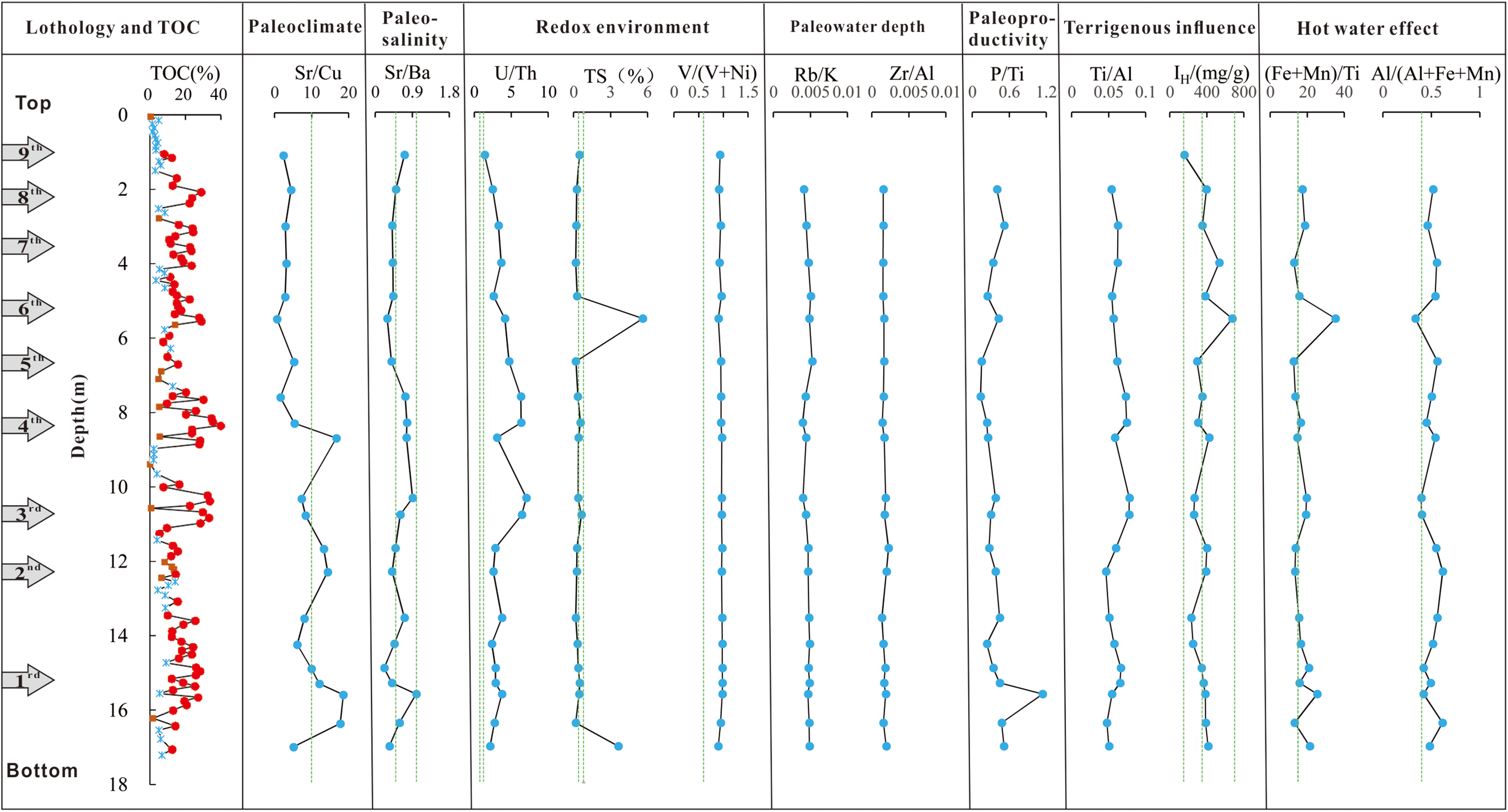
Coupling control factors of organic matter enrichment in different layers based on major and trace element analysis (lithology legend in TOC profile is the same as Figure 6).
In general, the enrichment of organic matter depends upon abundant sources of organic matter and favorable preservation conditions that are influenced by the coupling effect of many factors. These factors include (1) a warm and humid climate and moderate paleosalinity that are conducive to the formation of high paleoproductivity, (2) a deep water reduction environment that exerts little terrigenous influence and that is conducive to the preservation of organic matter, and (3) a superimposed influence of hot water and volcanic activity that not only improves paleoproductivity but also causes the water environment to be more reductive and thus more conducive to the preservation of organic matter.
Impact of organic matter heterogeneity on shale oil potential
According to previous studies, the arenaceous rocks in shale are oil-rich “sweet” spots (Fu et al., 2020b), and in the “organic-rich + tuff-rich lamina” binary laminae combination shale strata, the reservoir properties were poor in organic-rich shales, the oil saturation was relatively lower and mainly accumulated in the intergranular pores of interbedded thin-layered sandstones (Xi et al., 2020). It is of high significance to clarify the characteristics and causes of organic matter heterogeneity during shale oil resource evaluation. Figure 11 reveals that TOC exhibits a positive correlation with S1, S2, and S1 + S2. Figure 12 shows that the organic matter content in the study area possesses a strong positive corresponding relationship with S2 and that it is opposite to S1 in the first enrichment layers. Additionally, the vertical variation characteristics of S2 and S1 + S2 are the same. This indicates that the hydrocarbon generation potential depends upon S2, and this is consistent with a previous study by Lu (Lu et al., 2012). Figure 13 reveals that the potential for hydrocarbon generation varies with the content of organic matter in different lithologies, and the heterogeneity of TOC, organic matter type, and oil content in some organic matter enrichment layers is very strong. Therefore, the evaluation of shale oil should consider the vertical variation law of organic matter and make an objective evaluation. The sampling should be as intensive as possible, as large-scale sampling analysis will cause the evaluation results to be inaccurate.
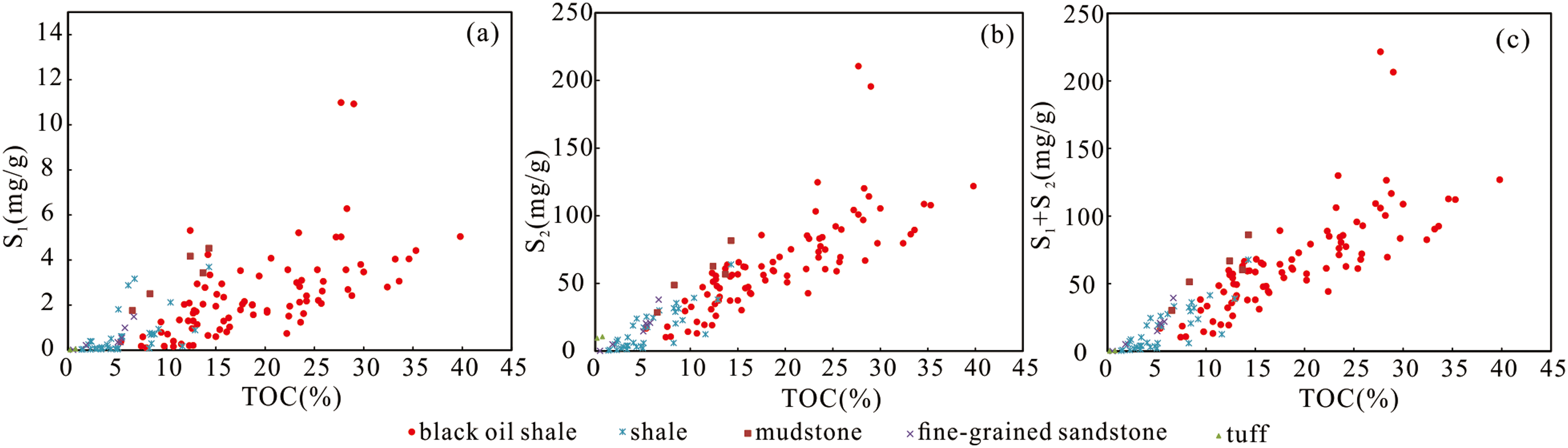
Correlation between TOC and pyrolysis parameters of Chang 73 shale in the study area: (a) S1, (b) S2, (c) S1 + S2.
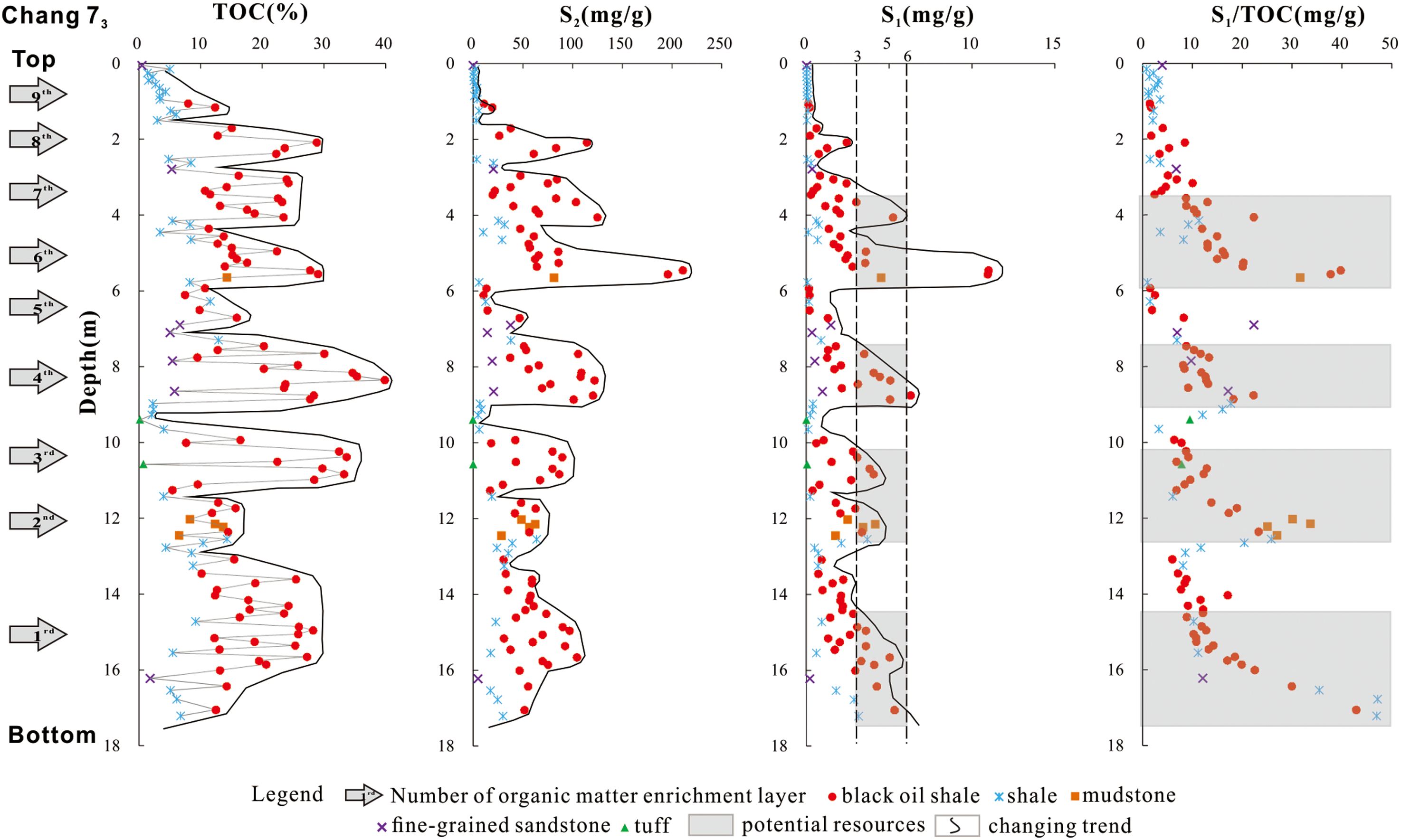
Heterogeneity of pyrolysis parameters and prediction of potential shale oil resources layers of Chang 73 shale in the study area.
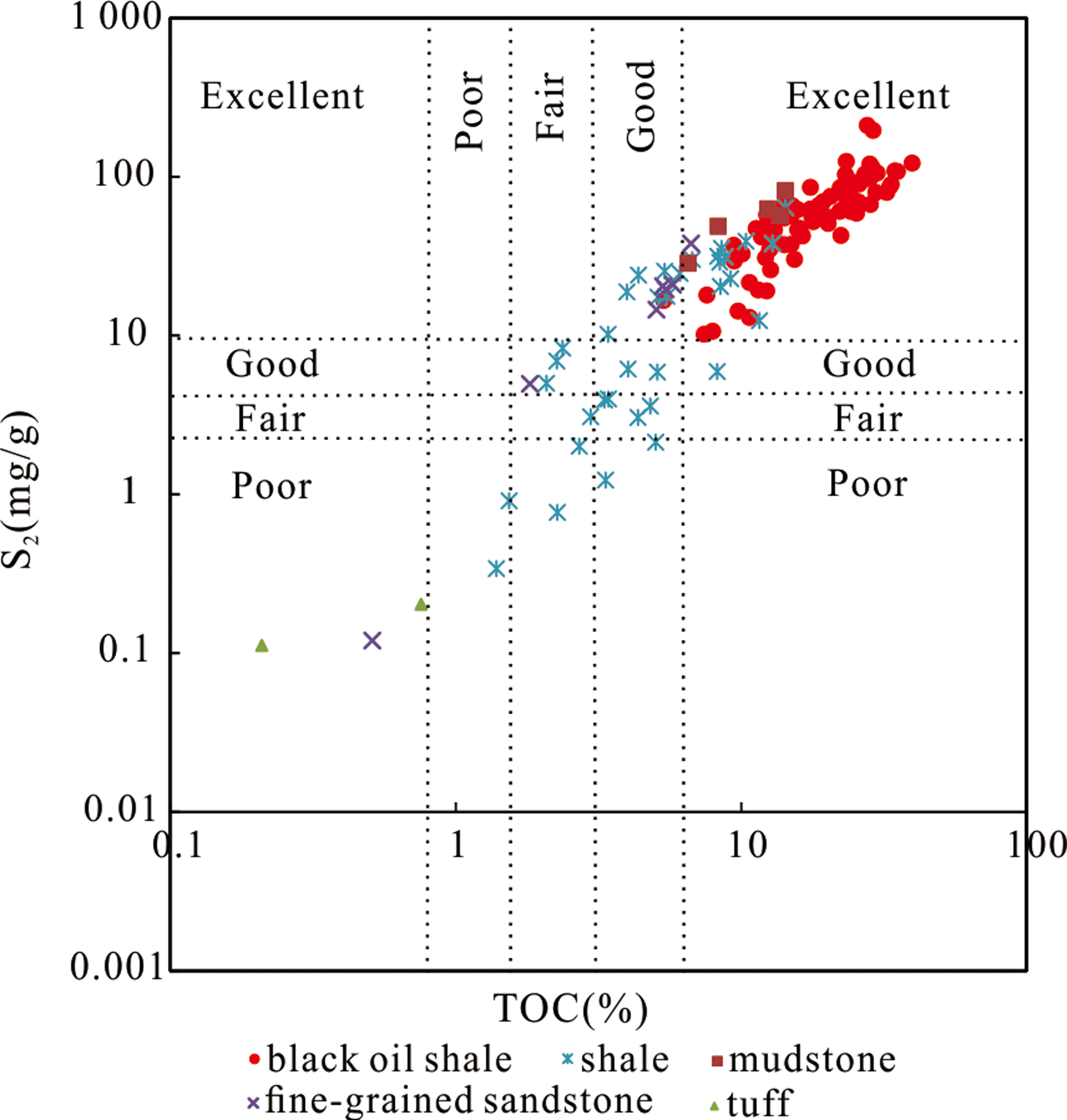
Hydrocarbon potential analysis of different lithology of Chang 73 shale in the study area (base map according to Owusu et al., 2019).
It is of great significance to the selection of the target layer, the optimization design of the development scheme of Chang 73 shale oil in Ordos Basin. The study area is located in the best test area of ICP/IUP technology (Yang et al., 2017) in Ordos Basin. The main lithology is black oil shale with oil saturation index (OSI) <50 mg/g (Figure 11). Huang et al. (2020) considered that the movable threshold (hydrocarbon expulsion threshold) of Chang 7 shale oil was 70 mg/g, and crude oil mobility was poor. This kind of black shale could be exploited by engineering technology such as in situ upgrading. Refer to the standard (Huang et al., 2020) for oil-bearing evaluation of shale series in Chang 7 member (oil-bearing with S1 = 3–6 mg/g, OSI < 70 mg/g can be evaluated as “high oil content, poor porosity, and potential resources”), combined with the change characteristics of lithology and the changing trend of OSI in the vertical section, four potential resource layers are predicted boldly. The common characteristics of the four potential layers are as follows: the lithologic association is mainly composed of black oil shale and thin interbedding of shale, sandstone, and volcanic rock; the bottom water environment is a reduction environment or an even strong reduction environment; the formation of a water body is relatively deeper, and the influence of terrigenous influence is weak to medium, or coupling with volcanic or hydrothermal events. According to Li et al. (2016), the multiple heterogeneities in the vertical direction have a direct impact on the design and implementation of a shale oil and gas development plan in the later stage, the selection of a high-quality development target interval, the selection of development well type, the deployment of a horizontal well section, and the design of long and short perforation clusters in the fracturing section. Therefore, according to the different characteristics of the organic matter enrichment layer, the mining scheme can be reasonably arranged.
Figure 12 reveals that the four potential resource layers in the study area correspond to the hydrothermal active layers, and the corresponding lithology is the thin interbedding of arenaceous rocks. This understanding is of high significance in regard to determining the most favorable layer of Chang 73 shale oil in the Ordos Basin.
Conclusions
The results of intensive sampling indicate that the TOC content of Triassic Zhangjiatan shale is highly heterogeneous in the vertical section and exhibits a “segmented” enrichment feature and that the TOC content of adjacent shale may differ by several orders of magnitude. The TOC content in the middle portion of Chang 73 is on average the highest. There is a strong relationship between the heterogeneous distribution of organic matter content within the profile and the alternation of lithology. The primary controlling factors of the various organic matter enrichment layers were different. This is the result of coupling superposition of paleoclimate, paleosalinity, the bottom water oxidation–reduction environment, the paleowater depth, the paleoproductivity, the terrigenous influx, and the volcanic and hydrothermal activities. In particular, when superimposed on hydrothermal and volcanic activities, the TOC content will be particularly elevated.
We have predicted that there may be four potential shale oil production layers that correspond to the hydrothermal active layers. The corresponding lithologic association involves the interbedding of black oil shale, silty shale, and argillaceous siltstone. The results of this analysis show that the S1 + S2 parameters of fine-grained sandstone indicate a high hydrocarbon content, which is the key interlayer of shale oil research. The optimization design of the development scheme of Chang 73 shale oil in the Ordos Basin is of high significance to the selection of the target layer.
The organic matter located within the study area exhibits strong heterogeneity in the vertical section; however, there is a certain variation law. The samples obtained in the study area are outcrop samples and based on this, it would be better to analyze and compare the drilling samples intensively. Therefore, in the study of shale oil exploration, development, and evaluation, intensive sampling should be performed as far as possible, as large-scale sampling analysis will cause the evaluation results to be inaccurate.
Footnotes
Acknowledgements
The authors thank Dr Ting Zhang and Dr Lewei Hao for improving the content of the manuscript, and Dr Chengfu Lv, Dr Junli Qiu, and Dr Shutong Li for helping with the experimental analysis!
Declaration of conflicting interests
The authors declared no potential conflicts of interest with respect to the research, authorship, and/or publication of this article.
Funding
The authors disclosed receipt of the following financial support for the research, authorship, and/or publication of this article: The authors greatly appreciate the financial support from the National Natural Science Foundation of China (Grant No. 41672127) and the National Natural Science Foundation for Young Scholar of China (Grant No. 41802160).
