




Abstract
Fine-grained sediments, capable of being transported into deep lacustrine basins via gravity flows, can form potentially high-quality shale oil reservoirs. Therefore, it is crucial to investigate the sedimentary characteristics of various fine-grained gravity flow sedimentation processes within lacustrine basins. This study examines the sedimentary features of fine-grained gravity flow deposits in the 73 sub-members of the Yanchang formation in the Longdong area of the Ordos Basin, utilizing core and thin-section observations, and well-logging characters. The findings reveal that the Chang 73 sub-member experienced a deep-lacustrine environment, where nine distinct lithofacies assemblages emerged under different sedimentation processes: the fine-grained quiescent sedimentation assemblage (LA1), the fine-grained mudflow sedimentation assemblage (LA2), the fine-grained debris flow sedimentation assemblage (LA3), the fine-grained slump sedimentation assemblage (LA4), the fine-grained turbidity currents sedimentation assemblage (LA5), the fine-grained concentrated density flow sedimentation assemblage (LA6), the fine-grained transitional flow sedimentation assemblage (LA7), the fine-grained surge-like turbidity flow sedimentation assemblage (LA8), and the fine-grained quasi-steady turbidity current sedimentation assemblage (LA9). These lithofacies assemblages were generated under three primary conditions: tranquil environments, slump events, and flood events. A comprehensive sedimentary model has been constructed based on the distribution of the siltstone bodies, illustrating the sedimentary processes and the spatial evolution of these lithofacies assemblages. The fine-grained sediments deposited in Chang 73 exhibit a notably high total organic carbon (TOC) content. The extensive distribution and the presence of multiple interbedded layers of organic matter-rich shale and fine-grained siltstone create a conducive environment for the generation and preservation of shale oil within the Chang 73 sub-member in the Longdong area.
Introduction
Fine-grained gravity flow sedimentation refers to the fine-grained sediments resulting from gravity flows, with a particle size of less than 0.0625 mm and a content greater than 50%. (Zou et al., 2023). Previous research has demonstrated that the gravity flows are the primary mechanism for the fine-grained sediments transport towards the deep-water area (Schieber and Southard, 2009), the study of this transportation mechanism and its genesis holds significant importance in the field of shale oil and gas exploration (Zou et al., 2022). As one of the major transportation methods for sediments transported into the deep-water basin, many researches were applied to the characteristics and properties of different types of deep-water gravity flows. The deep-water gravity flow sedimentary system have been a focal point in recent hydrocarbon exploration, with the underlying mechanisms of deep-water gravity flow sedimentation being one of the key research directions in sedimentology and paleogeography (Jin et al., 2019; Yang et al., 2023). The Ordos Basin exhibits is characterized by significant gravity flow sedimentation, particularly in the Chang 7 sub-member, which positions it as a focal point for the upcoming phase of oil and gas exploration and development efforts within the region. (Liu et al., 2022; Yang et al., 2021). Over the past several decades, lacustrine coarse-grained gravity flow sedimentation has been recognized as one of the main reservoirs for lithological hydrocarbon accumulations, achieving significant breakthroughs in deep-water lacustrine basin hydrocarbon exploration (Cao et al., 2021; Normark, 1970; Zou et al., 2012). The operational mechanisms of coarse-grained gravity flow sedimentation are primarily attributed to processes such as sliding, slumping, and flood action, leading to the formation of sandy debris flows, muddy debris flows, and turbidity currents (Jin et al., 2019; Shanmugam, 1996). On this basis, scholars have proposed various sedimentary models, including steep-slope confined channel nearshore basin floor fans and gentle-slope confined channel basin floor fans (Feng et al., 2013; Gu and Zhang, 2005; Normark, 1970). Previous studies on fine-grained gravity flow within lacustrine basins have focused on the transport and deposition processes of fine-grained gravity flows, as well as the relationship between fine-grained gravity flow systems and the development of sweet sections in shale oil and gas (Feng et al., 2021; Yang et al., 2018; Zavala and Arcuri, 2016; Zou et al., 2022, 2023). Nevertheless, research on the depositional types, processes, and sedimentary models of fine-grained gravity flow sedimentation within lacustrine basins remains relatively sparse. Furthermore, the identification of lithofacies and lithofacies assemblages within fine-grained gravity flow systems, interpretation of their depositional processes, construction of sedimentary models, and analysis of the controlling factors of these systems in lacustrine basins are of paramount importance. Such studies are crucial for enhancing our understanding of the depositional processes of fine-grained gravity flow systems and for more accurately predicting and assessing the potential of shale oil sweet spots.
During the sedimentation of the Chang 7 Member in the Ordos Basin, a set of fine-grained sedimentary strata with a variety of genetic progresses is extensively distributed within the lacustrine basin. It is widely acknowledged that the Chang 73 sub-member primarily consists of organic-rich mudstones, which were deposited under the deep, still water conditions of the lake. Recent studies have revealed that the Chang 73 sub-member is characterized by sediments dominated by mudstones interbedded with siltstones. The silty and muddy fine-grained sediments within this sub-member, aside from deep lake suspension deposits, are largely attributed to gravity flow sedimentation (Li et al., 2023b; Liu et al., 2023; Yang et al., 2021). Areas within lacustrine basins where transitional fluid gravity flow deposits are prevalent are likely to be rich in hydrocarbon potential and could be prime areas for the development of shale oil and gas “sweet spots.” The fine-grained sediments resulting from mixed gravity flow deposits constitute a favorable lithofacies assemblage that is particularly conducive to the development of sweet sections for unconventional oil and gas.
The widespread distribution of unusually high organic matter (TOC content ≥ 6%) shale in the Chang 7 member serves as the material basis for the substantial generation and accumulation of shale oil. The total organic carbon (TOC) content of the shale in the Chang 73 sub-member is relatively high, with an average value of about 8.21%, and in some areas, the TOC value can reach up to 13.8%. This indicates that the shale in the Chang 73 member is an important target formation for the exploration and development of shale gas in the Ordos Basin during the Mesozoic era. The organic matter in the Chang 73 sub-member shale is predominantly of the sapropelic-humic type, with a high content of sapropelic components in the organic micro-fractions, which is conducive to hydrocarbon generation. The organic matter in the shale exists in various forms, including striped, laminated, film-like, and dispersed blocky patterns (Du et al., 2022). The characteristics of the Chang 73 sub-member in the Ordos Basin, as well as the extensive development of shale oil, are closely related to its sedimentary background.
In the past decade, academic progress has been made in the field of fine-grained gravity flow sedimentation in the Ordos Basin, with research primarily focusing on the types of sedimentation and their characteristics (Lyu et al., 2018, 2022; Yang et al., 2014; Zhang et al., 2021), the dynamics of sedimentation, and the sedimentary models (Chen et al., 2023; Fan et al., 2018). However, the understanding of the genesis mechanism and sedimentary models of fine-grained gravity flows in the lacustrine basins is still understudied (Yang et al., 2021). Recently, several researchers have focused on studying the fine-grained sediments in the Longdong area, and proposed a mixed source fine-grained gravity flow sedimentary model, including the influence of volcanic activities and gravity flow (Wang et al., 2024). To focus on the fine-grained gravity flow sedimentation developed in the Longdong area, this study collected 101 samples from 16 selected wells (Figure 1) in the Longdong area and conducted centimeter-scale lithological descriptions of the cores from Chang 73 sub-member, applied several experiments, such as thin section observation, mineral composition analysis, TOC tests, and SEM analysis. With these analyses, the characteristics of the fine-grained gravity flow sedimentation and the sedimentary model can be developed, and the influence on shale oil sweet section formation can also be discussed.
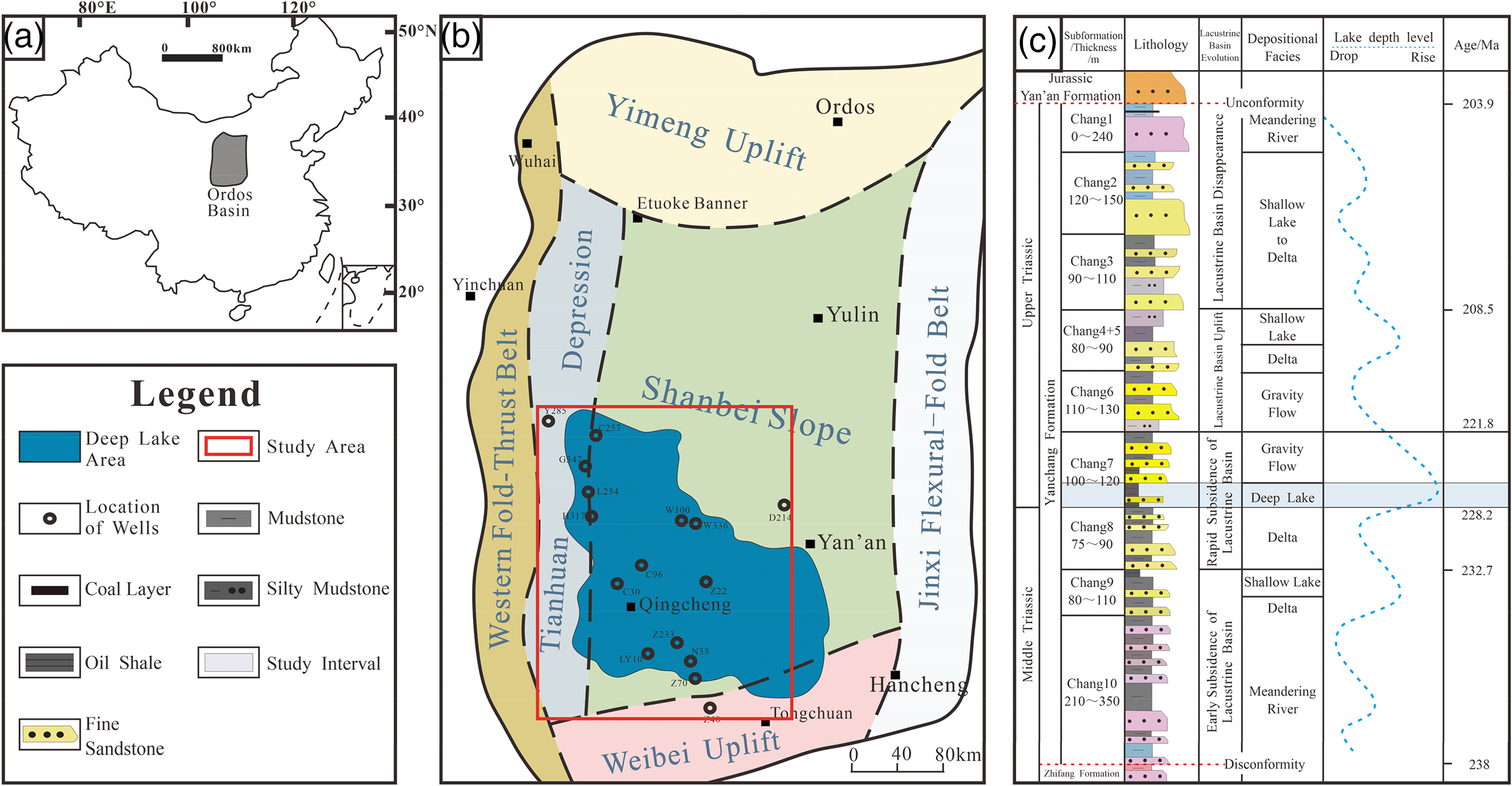
The structural division map and comprehensive diagram of Yanchang formation in Ordos Basin (Revised from Yang et al., 2014).
Geological background
The Ordos Basin is located in the western part of the North China Craton. It is the second largest hydrocarbon-bearing basin in China, rich in various petroleum and mineral resources such as oil, gas, coal, and uranium. The northern Paleo-Asian Ocean plate is the primary influence of the tectonic evolution. The Qilian-Qinling Trough and its derivative Helan Orogenic Belt along the southwestern and southern margins are also involved in the tectonic events (Li et al., 2023a; Zhao et al., 2020). The southwestern margin of the basin is affected by the southern orogenic belt, during the Late Triassic, the Indosinian orogeny forced a strong uplift of the Qilian-Qinling region, leading to rapid subsidence in the southern part of the basin and the formation of a large-scale-basin depression, creating an ancient topography characterized by a low southwest and a high northeast (Tian et al., 2011). Based on tectonic characteristics, the Ordos Basin can be roughly divided into six secondary tectonic units: the Yimeng Uplift in the north, the Weinan Uplift in the south, the Western Margin Thrust Belt in the west, the Jinxi Fold Belt in the east, the Yishan Slope adjacent to the western part of the Jinxi Fold Belt in the center, and the Tianhuan Depression to its west (Song and Wang, 2023) (as shown in Figure 1).
The study area of this research is called the Longdong area, which is located in the southwestern part of the Yishan Slope and the Tianhuan Depression, with an area of over 50,400 km2 (Liu et al., 2021a). The Yanchang formation was developed during the Middle Triassic to Late Triassic and can be divided into 10 members. During the Chang 7 depositional period, the lacustrine basin went through rapid subsidence (Chen et al., 2011; Zou et al., 2008, 2012). The Chang 7 member can be further divided into three sub-members: Chang 71, Chang 72, and Chang 73 sub-members from bottom to top (Fu et al., 2018). Due to the subsidence, the Longdong area turned into a semi-deep to the deep lacustrine environment during the Chang 73 sub-member. This study mainly focused on the Chang 73 sub-member of the Yanchang formation. The flood-formed scour surface and the extensive deep lake mudstone deposits can be regarded as the initiating markers of the Chang 73 sub-member (as shown in Figure 1).
Data and methods
For this study, core samples from 16 wells drilled from the Upper Triassic Yanchang Formation in the southwestern part of the Ordos Basin were selected, primarily focusing on the fine-grained sediments from the Chang 73 sub-member. Samples were collected based on distinct lithology and different sedimentary characteristics. Several analyses were applied to these samples, including thin section observation, lithofacies analysis, total organic carbon (TOC) analysis, and rock composition analysis.
Sedimentary lithofacies
The delineation of sedimentary lithofacies is of significant importance for distinguishing sedimentary processes and associated environments. Different criteria and standards can be selected based on the research objectives and the quality of the stratigraphic data while classifying the lithofacies. Parameters, obtained by bulk sample observation and thin section investigation by using of microscope, such as color, mineral composition, grain size, and sedimentary structures can serve as the basis for classification (Abouelresh and Slatt, 2012; Hickey and Henk, 2007; Wang and Carr, 2013).
This research first utilized the mineral composition to broadly classify the lithology types of the samples, then used the lithology, grain size, and sedimentary structures as the main criteria to refine the lithofacies classification. Based on the observation through cores and thin sections, plus XRD data, the lithofacies and their assemblages within the study area can be identified. The sedimentary processes and fine-grained gravity flow sedimentary model can be further interpreted through the distribution of the lithofacies assemblages.
Classification of fine-grained gravity flow sedimentary processes
The classification of deep-water gravity flows has been supplemented and revised since Dott proposed the first gravity flow classification by Dott (1963). Different from the marine basin, the lacustrine basin tends to have smaller depositional space and more complicated sediment sources (Katz, 2001; Song et al., 2022). The limited depositional space makes the water more sensitive to climate change, which can directly lead to the development of gravity flows. Regarding the Ordos basin, several researchers have put some work on the gravity flow sediments developed in other Yanchang intervals. Previous researchers categorized the gravity flows as sandy mudflow and, debris flow, turbidity currents and hyperspectral flow, etc. (Li et al., 2018). However, by carefully distinguishing the fine-grained gravity flow sediments developed within the study area, we realized that the classification is not specified enough to identify fine-grained sediments. To better distinguish the gravity flow types, we use a combination classification of Baas et al. (2009), and Mulder and Alexander (2001).
In this classification, the gravity flows are categorized based on the sediment density and its supporting mechanism (Figure 2). The turbidity-supported flows are quasi-steady turbidity current, surge-like turbidity flow, and turbidity flow-surge. The concentrated density flow possesses a more intricate support system, where the turbidity, grain interaction, and buoyancy forces can co-exist in a dynamic equilibrium. The Bass classification for transitional flows offers a nuanced understanding by categorizing the continuum between turbidity currents and debris flows into three distinct types, based on the interplay and relative positioning of clay and sand particles within the flow. The hyperconcentrated density flows are more grain-supported and can be distinguished through their grain size. The only matrix strength supported flow is the debris flow, which tends to have bigger-sized grains.
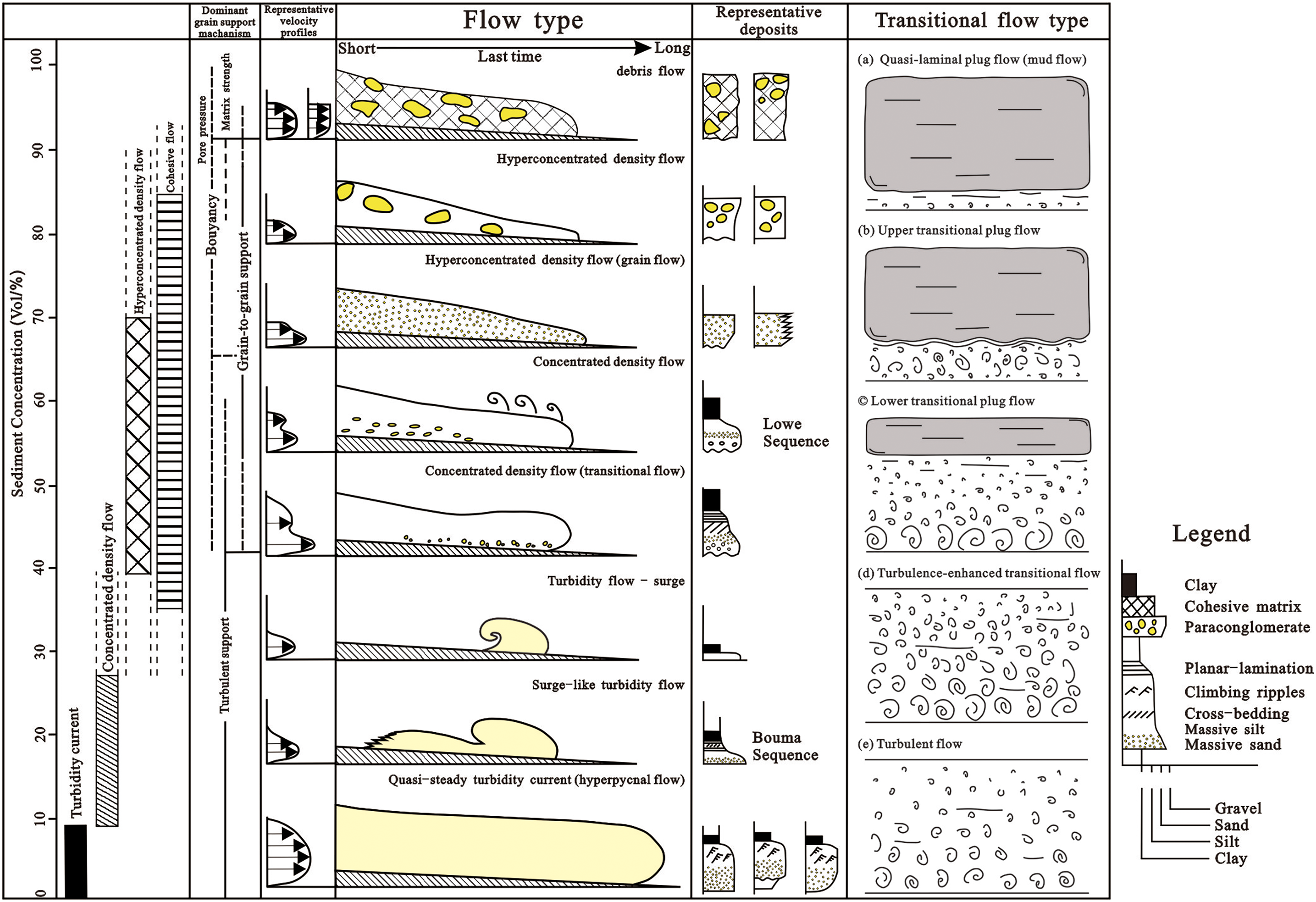
Classification of different gravity flow sedimentary processes (revised from Baas et al., 2009; Mulder and Alexander, 2001).
Results
Lithologies and lithofacies
Core and thin section observation shows that the samples are mainly fine-grained sedimentary rock, in which the content of the grains sized below 0.0625 mm is above 50%. Five categories of lithology were recognized, they are mudstone, silty mudstone, argillaceous siltstone, fine siltstone, and coarse siltstone. Through comprehensive analysis of the lithology and sedimentary characteristics, the five categories of lithology within the study area can be further defined into 26 types of lithofacies that can reflect various sedimentary processes (Figure 3). There are five lithofacies recognized in mudstone named by M1 to M5, five in silty mudstone named by SSM1 to SSM5, five in argillaceous siltstone named by ASS1 to ASS5, nine lithofacies in fine siltstone named by FSS1 to FSS9, and two in coarse siltstone named by CSS1 and CSS2. Based on the identification criteria developed with the basis of stratigraphic subdivision, summarization of depositional characteristics of the gravity flows, phase sequence models, and lithofacies variation patterns, flood-triggered and slump-triggered gravity flows were recognized in the research area (Cao et al., 2021; Zavala and Arcuri, 2016; Zhu et al., 2024).
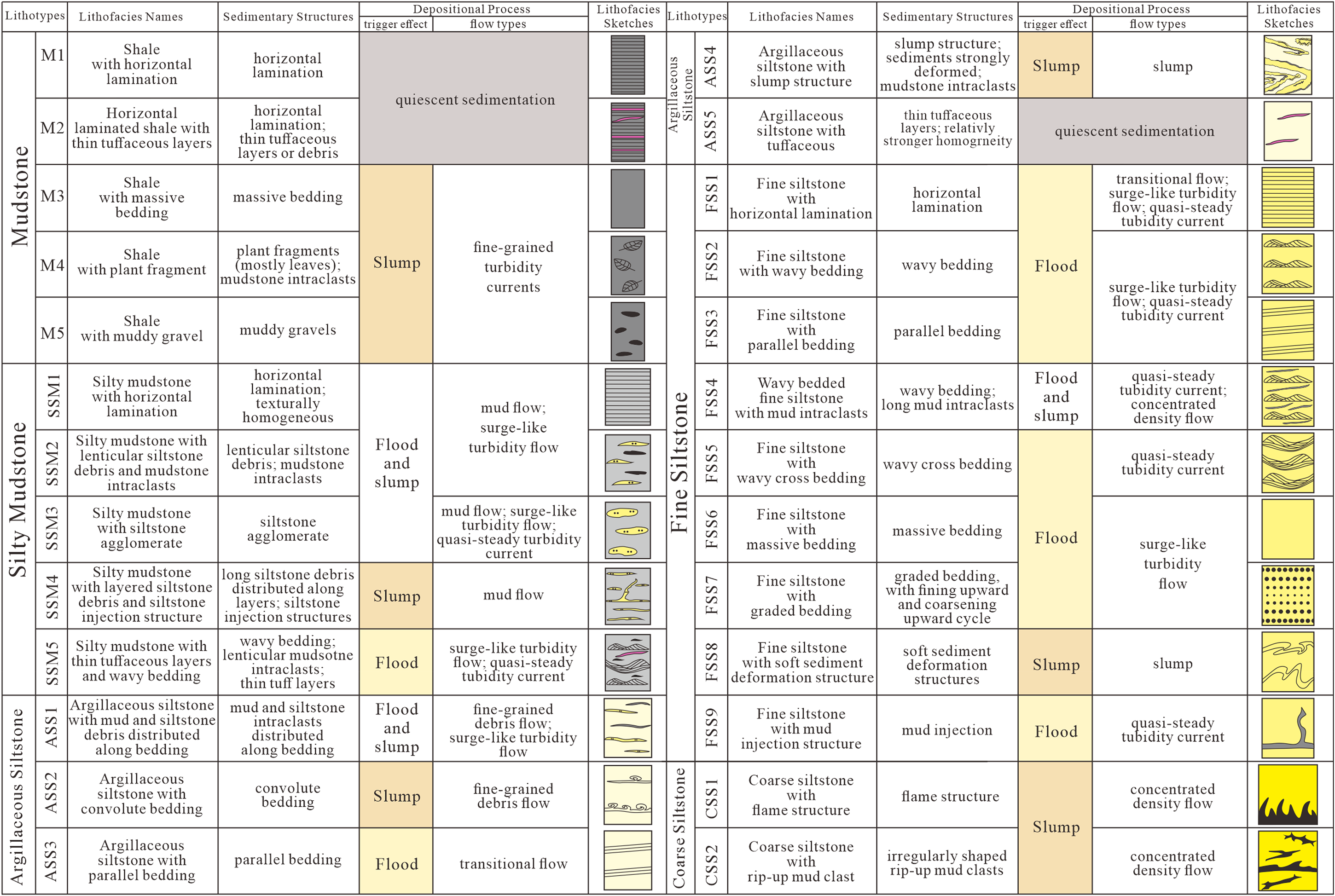
Sketch diagram of different lithofacies within the study area.
Lithofacies assemblages
Utilizing characteristics such as lithology, sedimentary structures, and grain size, in conjunction with the depositional processes and mechanisms, sedimentary response characteristics, and influencing factors of flood-type and slump-type gravity flows, a lithofacies division scheme suitable for this region is formulated. Through core observation and summarization, nine lithofacies assemblages are identified in the Chang 73 sub-member of the Yanchang formation. They are named fine-grained quiescent sedimentation (LA1), fine-grained mud flow sedimentation (LA2), fine-grained debris flow sedimentation (LA3), fine-grained slump sedimentation (LA4), fine-grained turbidity currents sedimentation (LA5), fine-grained concentrated density flow sedimentation (LA6), fine-grained transitional flow sedimentation (LA7), fine-grained surge-like turbidity flow sedimentation (LA8), and fine-grained quasi-steady turbidity current sedimentation (LA9) (Figure 4), which can reflect different depositional processes and gravity flow types.
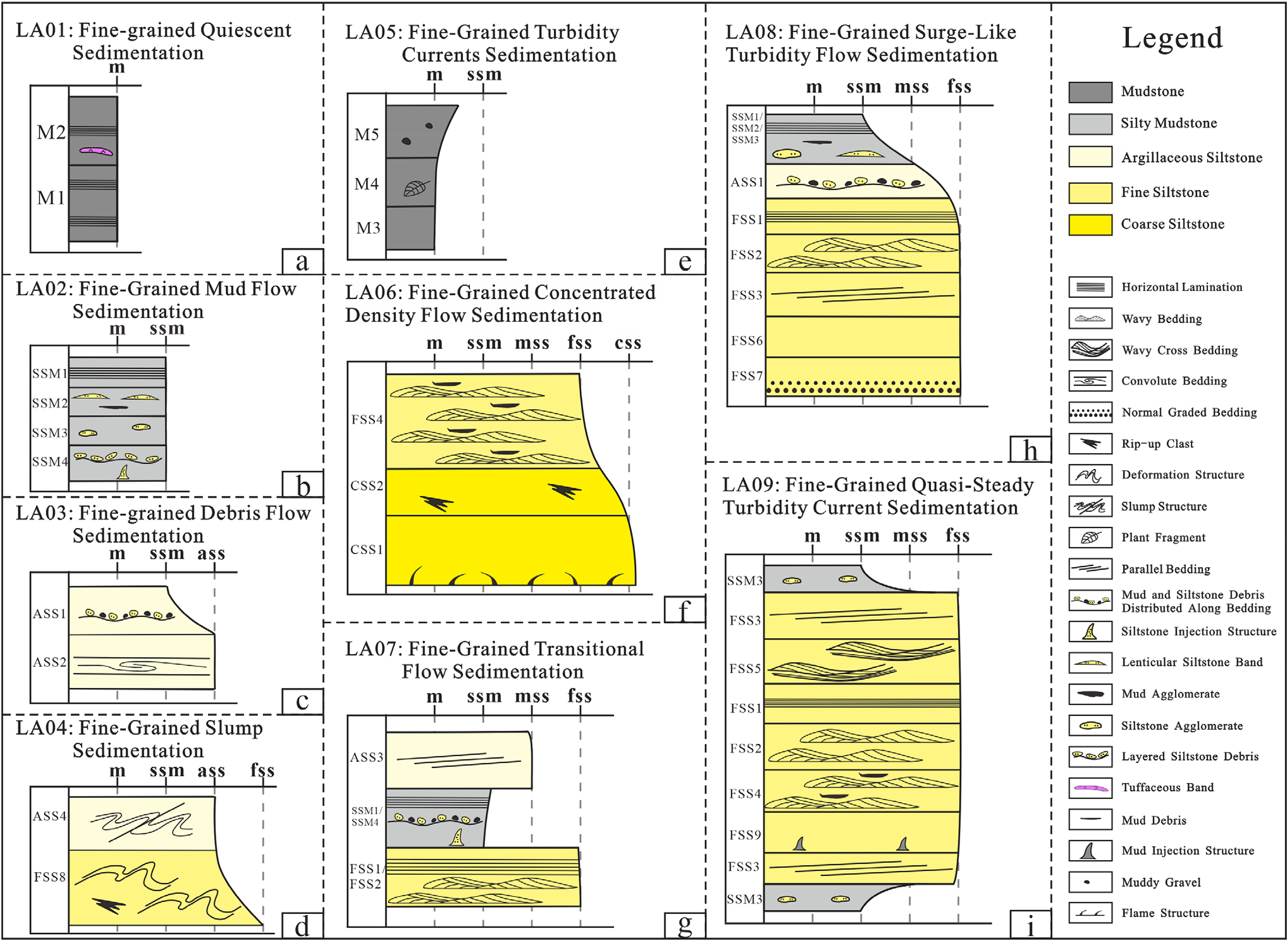
Schematic diagram of lithofacies assemblages, which can reflect different fine-grained gravity flow sedimentary processes.
Fine-grained quiescent sedimentation assemblage
The lithofacies assemblage is composed of shale with horizontal lamination (M1) and horizontal laminated shale with thin tuffaceous layers (M2) (Figure 4(a)). Both two lithofacies are organic-rich mudstones, whose average TOC content is over 6%. Lithofacies M1 develops thin laminations whose thickness is less than 1 mm, these laminations are horizontally distributed, indicating a suspended sedimentation process under tranquilconditions. Lithofacies M2 also develop horizontal thin laminations, thin tuffaceous layers, or clasts distributed along the laminations (Figure 5(a) and (b)).
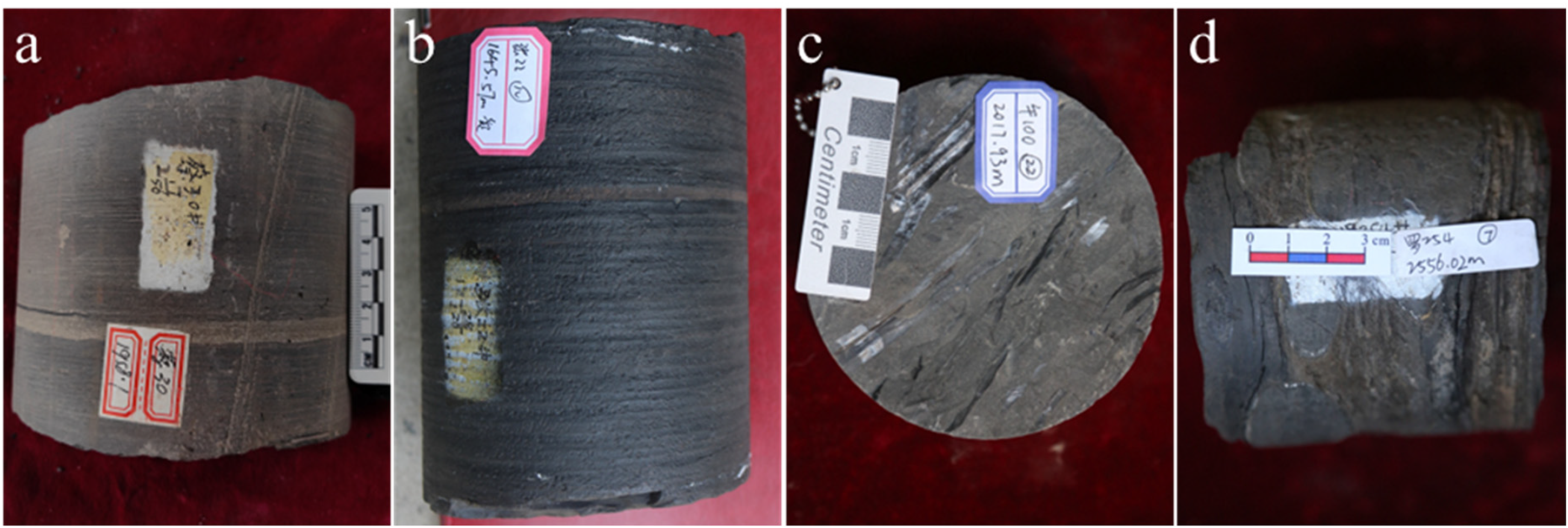
Mudstone lithofacies. (a) horizontal laminated shale with thin tuffaceous layers, (b) horizontal laminated shale with thin tuffaceous layers, (c) shale with plant fragment, (d) shale with muddy gravel.
During the depositional period of the Chang 73 sub-member, the volcanic activity was relatively intense, with volcanic ash from the Western Qinling Orogenic Belt falling into the deep lacustrine basin, forming a series of tuffaceous thin layers intercalated within the suspended mudstones. The grain size of the sediments is uniform, mostly clay-like. This kind of sediment is difficult to deposit under a turbulent environment without forming curly sedimentary structures, therefore, the fine-grained quiescent sedimentation assemblage (LA1) typically develops under calm water conditions, most likely in deep lacustrine basins.
Fine-grained mudflow sedimentation assemblage
The fine-grained mudflow sedimentation assemblage (Figure 4(b)) can develop silty mudstone lithofacies containing silty mudstone with layered siltstone debris and siltstone injection structure (SSM4) at the bottom (Figure 6(a) and (b)), forming silty mudstone with siltstone agglomerate (SSM3) and silty mudstone with lenticular siltstone debris and mudstone intraclasts (SSM2) upward (Figure 6(c) and (d)), and eventually develop silty mudstone with horizontal lamination (SSM1) at the top (Figure 6(e)). These four lithofacies are all silty mudstones, it's rare to identify the whole sequence at the same time, especially since the siltstone injection structure in SSM4 requires a relatively critical condition to form. However, this lithofacies assemblage shows a uniformed silty mudstone lithology with a silt clasts content decreasing upward sequence, which can be treated as a key character.
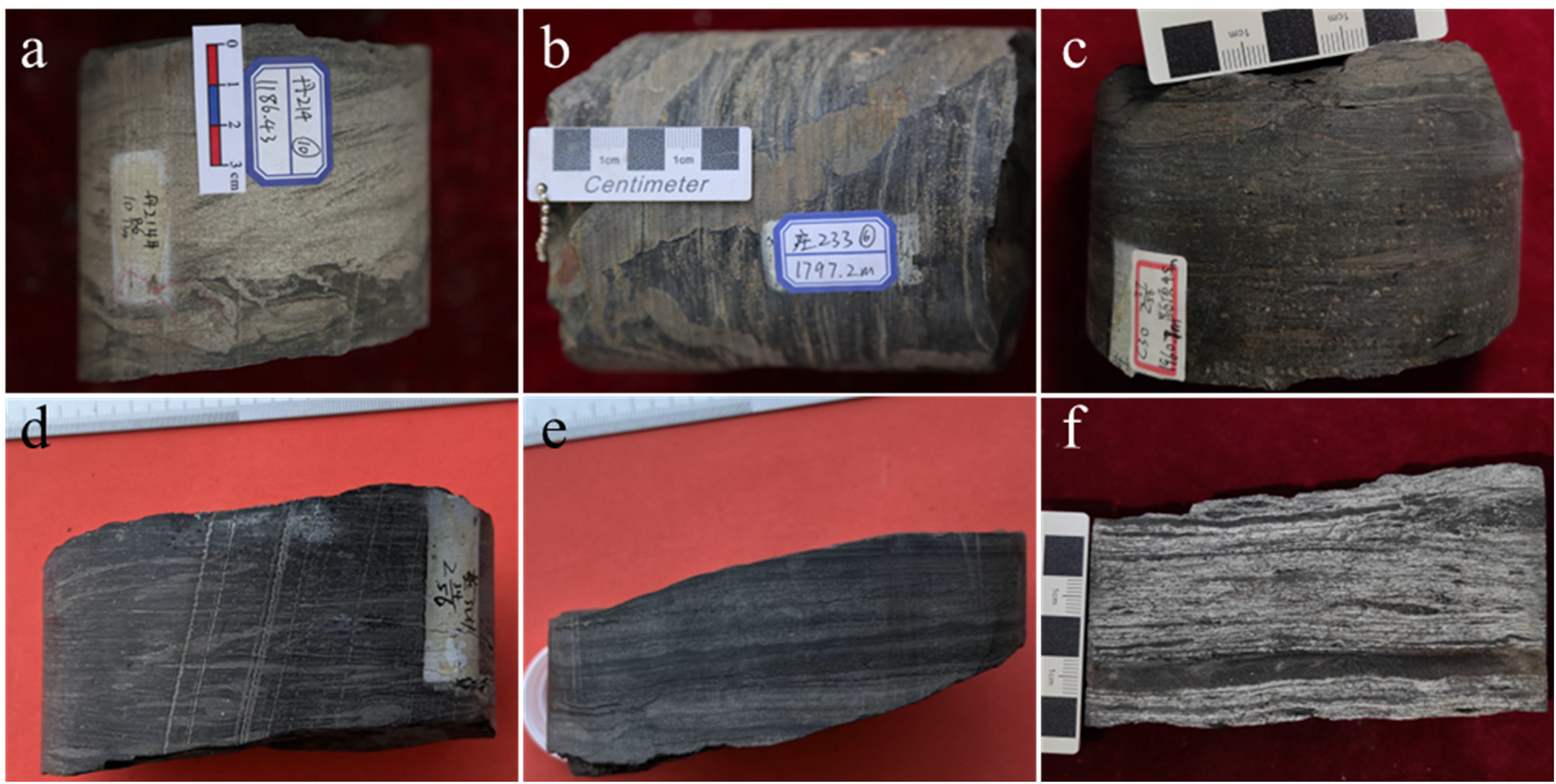
Silty mudstone lithofacies. (a) silty mudstone with layered siltstone debris and siltstone injection structure, (b) silty mudstone with layered siltstone debris and siltstone injection structure, (c) silty mudstone with lenticular siltstone debris and mudstone intraclasts, (d) silty mudstone with siltstone agglomerate, (e) silty mudstone with horizontal lamination, (f) silty mudstone with thin tuffaceous layers and wavy bedding.
This lithofacies assemblage can be interpreted as mudflow deposits. Mudflow is a type of cohesive flow, in which the gravel content is less than 5% and the mud-to-sand ratio is greater than 1:1 (Mulder and Alexander, 2001). Earthquakes, volcanic eruptions, and other tectonic forces can induce slope instability and cause slump collapsing in the lacustrine basin, further evolving into fine-grained debris flow and mudflow deposition in the deep lacustrine area (Shanmugam, 1996, 2000). Mudflow sediments within the study area contain an amount of argillaceous grains, the siltstone clasts formed in between the mud layers are quite narrow and shaped like spindle or lenticular. As a viscous fluid, mudflow sediments identified in the study area are clay-rich, which makes the sediments have relatively higher density. As the mudflow deposit, the water within the unconsolidated silts below was trapped. With thicker sediments deposited above, the pressure kept increasing. Therefore, the mixture of water and silt will eventually escape upward and form an injection structure, which is a significant feature indicating pressure difference between sediments.
Fine-grained debris flow sedimentation assemblage
This lithofacies assemblage typically develops two lithofacies (Figure 4(c)): argillaceous siltstone with convolute bedding (ASS2) and argillaceous siltstone with mud and siltstone debris distributed along bedding (ASS1). Silty mudstone with layered siltstone debris and siltstone injection structure (SSM4) can appear above the argillaceous siltstone under certain conditions. Convolute bedding is one of the key features found in lithofacies ASS2 (Figure 7(a)). The convolute beddings are relatively small, whose length is usually around 5 cm, which can be noticed through core samples. Lithofacies ASS1 exhibit an in-sequence distribution of silt and mud clasts (Figure 7(b)). The clasts are relatively long, indicating a traction process during transportation and sedimentation.
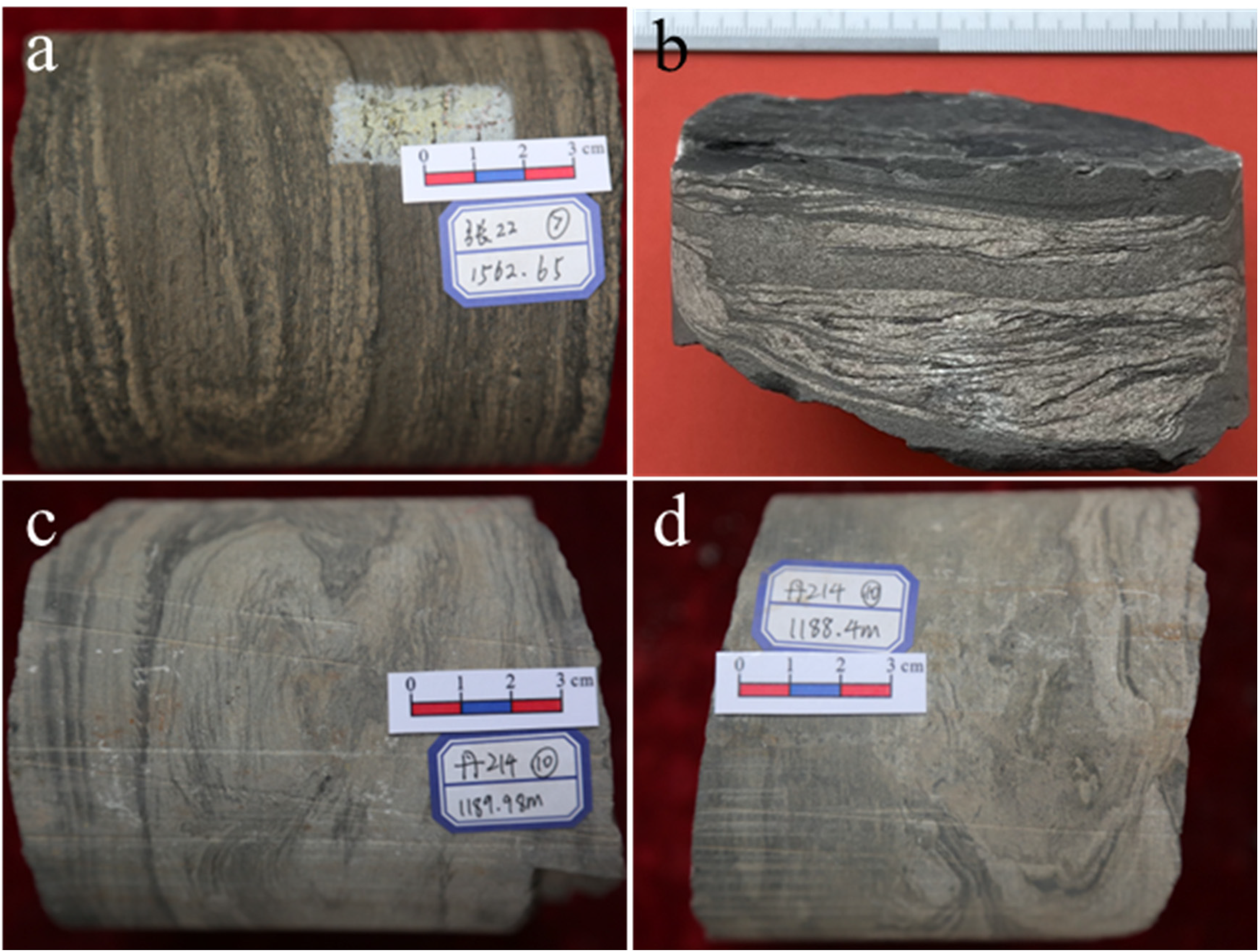
Argillaceous siltstone lithofacies. (a) argillaceous siltstone with convolute bedding, (b) argillaceous siltstone with mud and siltstone debris distributed along bedding, (c) argillaceous siltstone with slump structure, and (d) argillaceous siltstone with slump structure.
This lithofacies assemblage contains several sedimentary features that typically appear in debris flow. Debris flow is also a type of cohesive flow supported by a viscous matrix. However, the sorting of fine-grained debris flow sediments is poor, the grain size and mineral roundness are inhomogeneous, with gravel content typically over 5%, and also contain varying amounts of sandy, silty, and muddy components (Mulder and Alexander, 2001; Talling et al., 2012). This lithofacies assemblage shows a relatively turbulent sedimentary environment, the grain size doesn’t vary much from bottom to top, which indicates that the velocity of the flow is quite uniform vertically.
Fine-grained slump sedimentation assemblage
This lithofacies assemblage is predominantly composed of fine siltstone with soft sediment deformation structure (FSS8) and argillaceous siltstone with slump structure (ASS4). Both two lithofacies have the most identifiable features, the soft sediment deformation usually formed in a turbulent environment with a rapid sedimentation process. Rip-up mud clasts can be found along slump structures.
This lithofacies assemblage can be interpreted as fine-grained slump sedimentation (Figure 4(d)). As the most recognizable assemblage, the fine-grained slump sedimentation usually forms at the bottom of the slope breaks, with a thickness of around 20 to 30 cm. Fine-grained sediments can accumulate on the first and second slope breaks, which are easily collapsed due to tectonic activities. Slumping is a relatively rapid process, which can cause a chaotic fluid, forming a series of deformed and twisted silt strips, the orientation of the siltstone and mud particles is also disturbed. Due to the slope break collapsing, the flow will enter the basin at a relatively high angle. The energetic fluid tends to scoop up the unconcreted or semi-concreted mud and create mud clasts whose edges are irregular (Figure 8(a) and (b)). These mud clasts will then be mixed into the silt-rich flow, transported, and deposited into the deeper lacustrine basin. The high energy flow will also affect the unconcerned fine-grained sediments deposited before the flow arrives, creating soft-sediment deformation structures, which manifest as a silt and mud mixture with twisted patterns (Figure 7(c) and (d), Figure 9(a)).
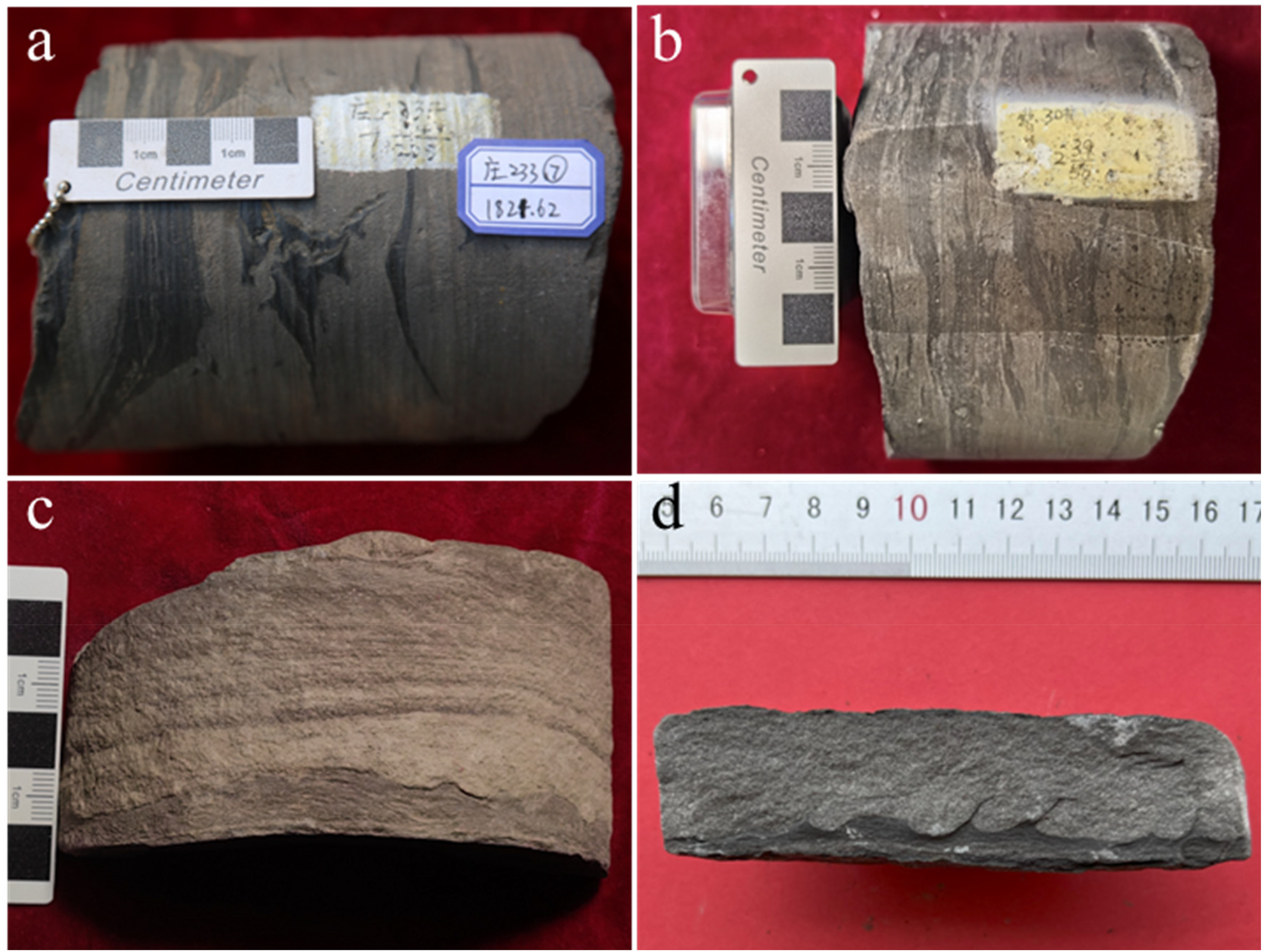
Coarse siltstone lithofacies. (a) coarse siltstone with rip-up mud clast, (b) coarse siltstone with rip-up mud clast, (c) coarse siltstone with flame structure, and (d) coarse siltstone with flame structure.
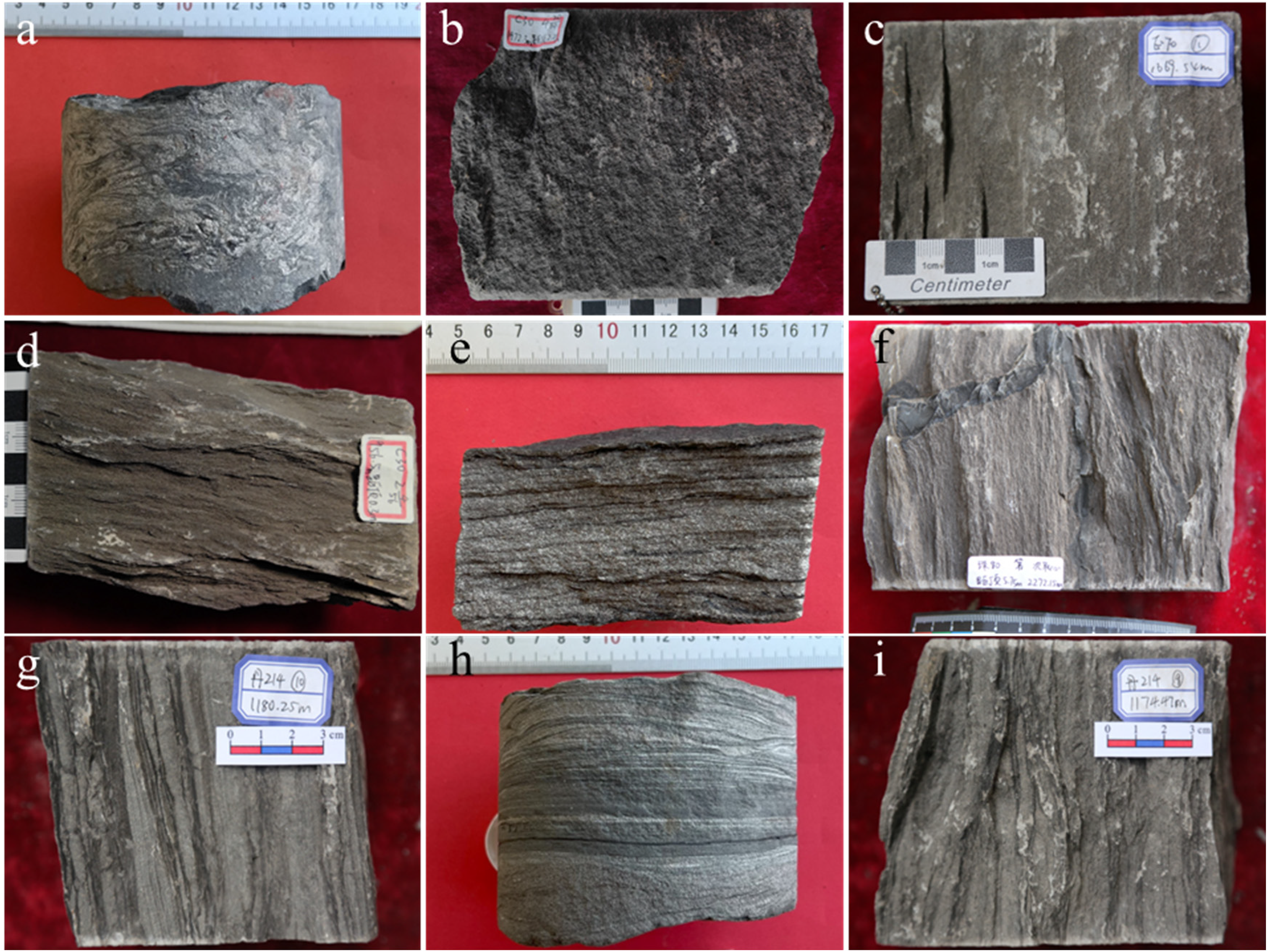
Fine siltstone lithofacies. (a) fine siltstone with soft sediment deformation structure, (b) fine siltstone with massive bedding, (c) fine siltstone with horizontal lamination, (d) fine siltstone with wavy bedding, (e) fine siltstone with parallel bedding, (f) fine siltstone with mud injection structure, (g) parallel bedded fine siltstone with mud intraclasts, (h) fine siltstone with wavy cross-bedding, and (i) parallel bedded fine siltstone with mud intraclasts.
Fine-grained turbidity current sedimentation assemblage
This lithofacies assemblage is mainly composed of mudstone, the bottom usually develops shale with massive bedding (M3), and the upper part can develop shale with plant fragments (M4) or shale with muddy gravel (M5). Lithofacies M3 has a massive sedimentary structure, the grain sizes are quite uniform; Lithofacies M4 contains observable plant fragments (Figure 5(c)); Lithofacies M5 contains muddy gravels distributed along layers (Figure 5(d)).
This lithofacies assemblage can be interpreted as fine-grained turbidity current sedimentation (Figure 4(e)). Turbidity currents are capable of transporting and depositing large volumes of muddy sediments rapidly, hence the massive structure is one of its typical sedimentary structures (Mulder and Alexander, 2001). The fine-grained turbidity current sediments in the study area are clay-rich, representing a dense fluid. Different from mudflow, the turbidity current contains less silt, with greater transport strength that can help transport heavier sediments like mud gravels and plant fragments. The massive bedding formed at the bottom shows that the fine-grained turbidity current sedimentation is rapid but stable, and the sediments are quite homogeneous.
Fine-grained concentrated density flow sedimentation assemblage
This lithofacies assemblage shows a fining-upward trend, with coarse siltstone with flame structure (CSS1) or coarse siltstone with rip-up mud clast (CSS2) at the bottom, and wavy bedded fine siltstone with mud intraclasts (FSS4) developed above. The flame structure and the rip-up mud clasts tend to develop due to shear force. The unconcreted mud deposited below was brought up by friction, forming rip-up mud clasts (Figure 8(a) and (b)). However, sometimes the shear force provided by the fluid is not strong enough to entirely tear off the mud clasts, and can only develop several pointed ends above the interface (Figure 8(c) and (d)). The wavy bedding and mud debris above indicate a water-energy decreasing pattern.
This lithofacies assemblage can be interpreted as the fine-grained concentrated density flow sedimentation (Figure 4(f)). The concentrated density flow is supported by a combination of particles, turbulence, and buoyancy force, in which the grain support is the major supporting mechanism. This flow contains high transporting energy. However, the energy will rapidly decelerate during deposition, forming relatively clean coarse siltstone blocks. Concurrently, the dense fluid erodes the substrate, producing rip-up mud clasts and mixing several clay particles into the fluid (Mulder and Alexander, 2001). The velocity model of this flow shows two ends vertically, which can help create a vertical separation within the flow itself (Figure 2).
Fine-grained transitional flow sedimentation assemblage
This lithofacies assemblage is composed of fine siltstone with horizontal lamination (FSS1) or fine siltstone with wavy bedding (FSS2) at the bottom, silty mudstone with horizontal lamination (SSM1) or silty mudstone with layered siltstone debris and siltstone injection structure (SSM4) in the middle, the argillaceous siltstone with parallel bedding (ASS3) develops at the top.
This lithofacies assemblage can be interpreted as fine-grained transitional flow sedimentation (Figure 4(g)). The thickness between the bottom siltstone and the middle silty mudstone can represent different stages of fine-grained transitional flow sedimentation. The thickness of the siltstone is thicker than that of the silty mudstone, their combination can be interpreted as lower transitional plug flow sedimentation; if the thickness of the siltstone is thinner, this combination shows an upper transitional plug flow sedimentation (Baas et al., 2011). Similar to the concentrated density flow, the velocity model of the transitional flow also contains two ends, but the velocity change in the vertical direction of the upper ends is more dispersed (Figure 2), which can create clay-rich sediment intervals (the silty mudstones), the thickness of the intervals depends on the degree of the dispersion.
Fine-grained surge-like turbidity flow sedimentation assemblage
The lithofacies assemblage is underlain by a large set of fine siltstones, which gradually transit upward into muddy siltstone and silty mudstone. The bottom of this lithofacies assemblage includes fine siltstone with graded bedding (FSS7) and fine siltstone with massive bedding (FSS6). The middle part includes fine siltstone with parallel bedding (FSS3), fine siltstone with wavy bedding (FSS2), and fine siltstone with horizontal lamination (FSS1). The upper part has finer grains, usually developing argillaceous siltstone with mud and siltstone debris distributed along bedding (ASS1), silty mudstone lithofacies containing silty mudstone with siltstone agglomerate (SSM3), silty mudstone with lenticular siltstone debris and mudstone intraclasts (SSM2), and silty mudstone with horizontal lamination (SSM1).
This lithofacies assemblage can be interpreted as surge-like turbidity current deposits (Figure 4(h)). Surge-like turbidity currents are a type of turbidity current that typically lasts for several hours and develops deposits similar to the b-d intervals of the Bouma sequence (Shanmugam, 1997). The velocity model of the surge-like turbidity flow shows a decreasing upward pattern, the velocity difference can create an uplift at the front of the flow (Figure 2). The fining upward sequence and the massive bedding (Figure 9(b)) formed due to rapid sedimentation. As the flow velocity slowly decreases, sedimentary structures such as parallel bedding, wavy bedding, and horizontal lamination start to develop (Figure 9(c)–(e)). The upper lithofacies contain more clay, and develop sand and mud debris formed along the layers, sometimes forming lenticular-shaped sand debris.
Fine-grained quasi-steady turbidity current sedimentation assemblage
This lithofacies assemblage develops from bottom to top as follows: silty mudstone with siltstone agglomerate (SSM3), fine siltstone with parallel bedding (FSS3), fine siltstone with mud injection structure (FSS9), wavy bedded fine siltstone with mud intraclasts (FSS4), fine siltstone with wavy bedding (FSS2), fine siltstone with horizontal lamination (FSS1), fine siltstone with wavy cross-bedding (FSS5), fine siltstone with parallel bedding (FSS3), and silty mudstone with siltstone agglomerate (SSM3).
This lithofacies assemblage exhibits a pattern of transport energy and density difference change from bottom to top, which can be interpreted as fine-grained quasi-steady turbidity current (hyperpycnal flow) sedimentation (Figure 4(i)). Quasi-steady turbidity current is one of the deepwater gravity flows caused by floods, usually lasting from several days to a week. The fine-grained quasi-steady turbidity current sediments generally exhibit a “fine-coarse-fine” grain size pattern, which can rhythmically reappear in vertical succession (Mulder et al., 2003). As shown in Figure 4(i), the lower part of this lithofacies assemblage is finer-grained but contains more silt clasts or silt clumps. As the flood energy increases upward, the sediment particles gradually coarsen, developing fine sandstone lithofacies.
The lower part of the lithofacies assemblage develops fine siltstones with parallel bedding, with rapid deposition of flood-transported sediments. Some mud is squeezed upward due to the pressure difference of the strata, developing muddy injection structures (Figure 9(f)). The middle part of the lithofacies assemblage is deposited in a turbulent environment, with many fine siltstone sub-members developing wavy bedding and mud clasts near the lower sub-members (Figure 9(g), (h) and (j)).
Due to the long duration of quasi-steady turbidity current, the water body does not always maintain high energy, hence there are also multiple “coarsening-upward and fining-upward” sequence combinations within the sediments. Within the study area, the fine-grained quasi-steady turbidity current sedimentation assemblage, there is widespread development of fine sandstone lithofacies with wavy bedding, horizontal laminations, and wavy cross-stratifications, which can be interpreted as small traction structures produced by the flood period density current on the bed and changes in the energy of the density current (Mulder and Etienne, 2014).
Vertical distribution of the lithofacies assemblages
To determine the distribution of the lithofacies assemblages, this study chose three wells located separately in the northern, middle, and southern parts of the Longdong area, and thoroughly identified their lithofacies assemblages. The delineation of sedimentary facies and microfacies can effectively determine the mode of sediment formation. By categorizing the sedimentary facies across multiple wells, it has been observed that fine-grained sediments in the study area are primarily developed within deep lake channel-lobe sedimentary systems and unconfined channel delta sedimentary systems (Figure 10).
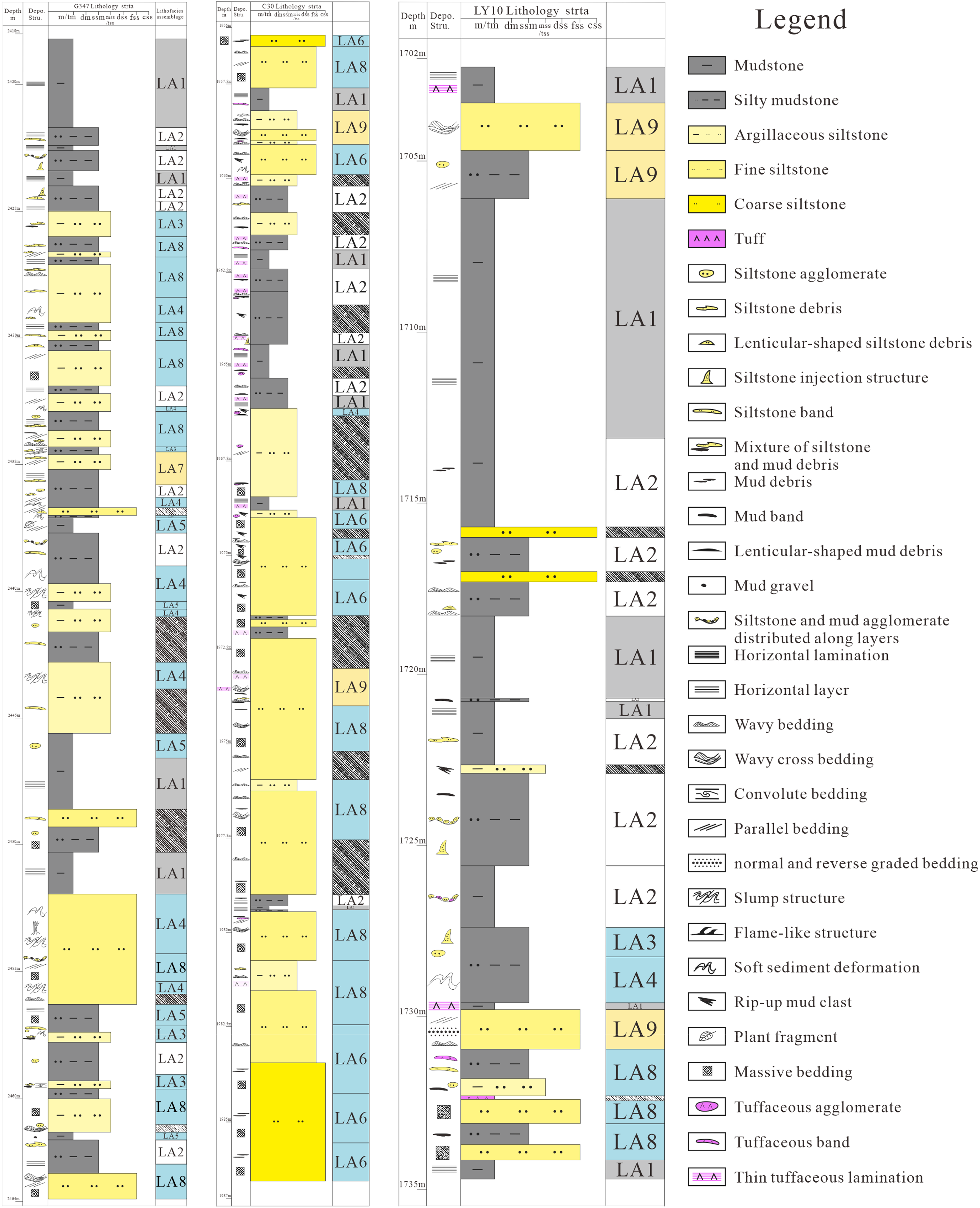
Lithofacies assemblage distribution of well G347, well C30, and well LY10.
Multiple types of fine-grained gravity flow sedimentation developed within the northern well G347, the most developed lithofacies assemblages are LA1, LA2, LA4, and LA8. Several periods of different fine-grained gravity flow sedimentations occurred during the Chang 73 sub-member, forming relatively thin silty layers. Mudstones with laminations tend to deposit in between the gravity flow sediments, which indicates quiet deep-water sedimentation. LA4 has the most unique sedimentary structure, the soft-sediment deformation structures were identified multiple times during this sedimentary interval, indicating several slumping activities occurred during this period. LA8 identified in this well tends to show an incomplete assemblage, which makes it relatively hard to distinguish. However, the fining upward sequence and the massive bedding structure can act as key characteristics during identification, because this combination indicates a transport velocity change in the vertical direction.
Well C30 is located close to the center of the deep lacustrine basin, the most developed lithofacies assemblages are LA2, LA6, and LA8. LA1 intervals are thinner compared to well G347. Most of the fine-grained sediments were transported through gravity flows, which can carry silty materials from the outer basin or shallow water. LA6 and LA8 are both slump-triggered gravity flows, which can carry more sediments, forming thicker layers. Wavy bedding and wavy cross bedding developed frequently during the Chang 73 sub-member. The amount of tuffaceous deposits that occur in this well, is usually associated with gravity flows, forming thin tuffaceous layers in between the sedimentary structures (Figure 6(f)).
Well LY10 is in the southern part, near the edge of the deep lacustrine basin region, where thick laminated mudstone layers developed quite frequently during the Chang 73 sub-member. LA2, LA8, and LA9 are the most developed fine-grained gravity flow sedimentation. LA8, the surge-like turbidity current, tends to develop during the earlier sedimentary stages. LA9, the hyperpycnal flow, can be identified at the bottom and top of the sedimentary interval, showing a “fine-coarse-fine” grain size change vertically.
Discussion
Fine-grained gravity flow sedimentary model
Various gravity flows developed in the Ordos basin during the Chang 7 member. Previous researchers mainly focused on the coarser gravity flow sediments formed in the upper two sub-members (Chen et al., 2011). In recent years, more researchers have started to study the fine-grained sedimentation developed during the Chang 73 sub-member (Liu et al., 2023). The Longdong area went through various sedimentary processes during Chang 73 sub-member, including volcanic ash importation, gravity flow transportation, and tranquil environment deposition (Liu et al., 2023; Zou et al., 2023).
The sediments deposited within the study area are predominantly transported from the southwest, south, and northeast directions. Through thin section and core observation on several representative wells, we identified the vertical distribution of different lithofacies assemblages in each well, and compared with the sand distribution of the Chang 73 sub-member, we proposed a fine-grained gravity flow sedimentary model (Figure 11). Thick mudstone layers with horizontal laminations were found at the bottom of well Z96 and well Z22, C30 also develops thick mudstone layers, which contain multiple thin tuffaceous layers. These wells are located near the center of the deep lacustrine basin, some within the deep depressions. The slump-triggered gravity flows, including debris flow, slump, turbidity current, concentrated density flow, and surge-like turbidity flow, developed both in the northern and southern parts of the study area. Y285 develops near the first slope break in the northern direction, and Z40 near the southern slope break. These two wells developed multiple slump-triggered gravity flow sedimentations. The slope breaks are relatively easy to collapse due to tectonic activities.
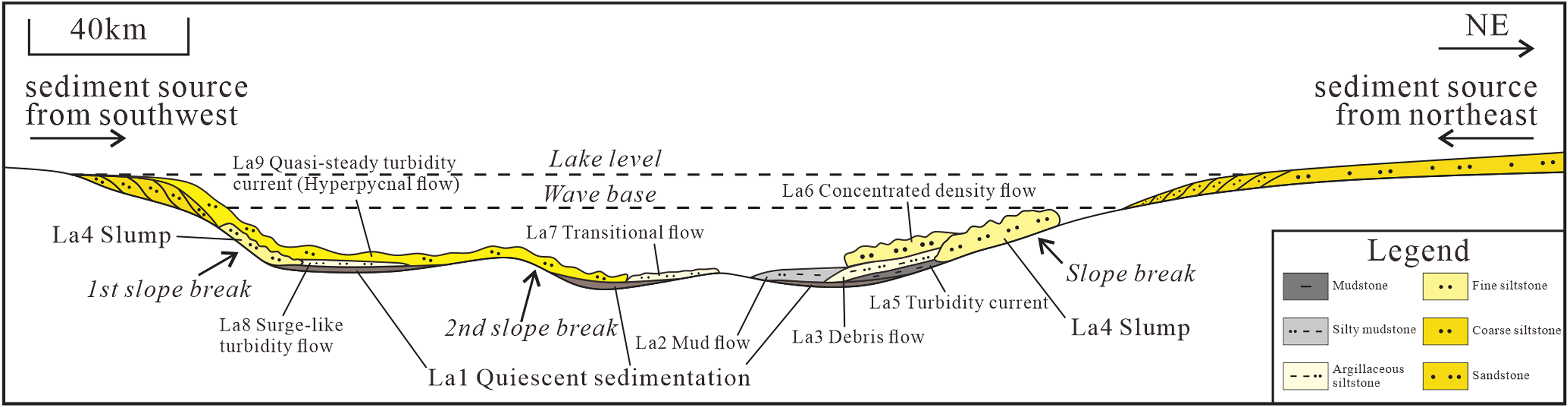
The fine-grained gravity flow sedimentary model.
The quiescent sedimentation tends to occur in the deep depressions of the lacustrine basin, which can be both at the center of the lacustrine basin or at the depression above the second slope break. The thickness of the shale layers depends on the depositional space. Slump can be found near the bottom of the first slope break, sometimes the wells near the second slope break can find small slump sedimentary structures.
Organic matter content and significance for shale oil sweet sections
Fine-grained gravity flow deposition plays a pivotal role in the transportation of silty sediments from shallow lake environments to the deep lake settings, where these sediments accumulate to form silty shale layers. Moreover, this process is instrumental in the conveyance of organic matter to the deep lake regions, facilitating its preservation and leading to the formation of organic-rich shale reservoirs, which are of significant importance for shale oil and gas exploration. (Zavala and Arcuri, 2016). Extraordinary high organic matter (TOC > 6%) shale is generally distributed within the Chang 7 member in the Longdong area, which is the material foundation of the shale oil generation and accumulation (Fu et al., 2021; Qiu and Zou, 2020). The sedimentation is controlled by a series of regional major geological events, including lake level change, earthquakes, volcanic and lake-bottom hydrothermal activities, and gravity flows (Li et al., 2018). Total organic carbon (TOC) content analysis of the obtained samples reveals that the Chang 73 sub-member in the study area has a relatively high overall TOC content, with the highest value reaching 22.9% and an average of 5.7%. To further determine the influence of different sedimentary processes on the TOC content, 101 samples from the research area were classified into five categories that can reflect different sedimentary processes, including two quiescent water sedimentation processes and three fine-grained gravity flow sedimentations (Figure 12). The Longdong area, significantly impacted by volcanic activities, witnesses the substantial influence of tuffaceous materials on total organic carbon (TOC) content. Consequently, we categorize the quiescent water sediments into two distinct groups based on their tuffaceous material content. Within the study area, gravity flows are delineated into two primary triggers: those initiated by floods and those by slumps. Notably, mudflows can evolve from both types. To mitigate this complexity, we separately quantify the TOC content within the mudflow sediments.
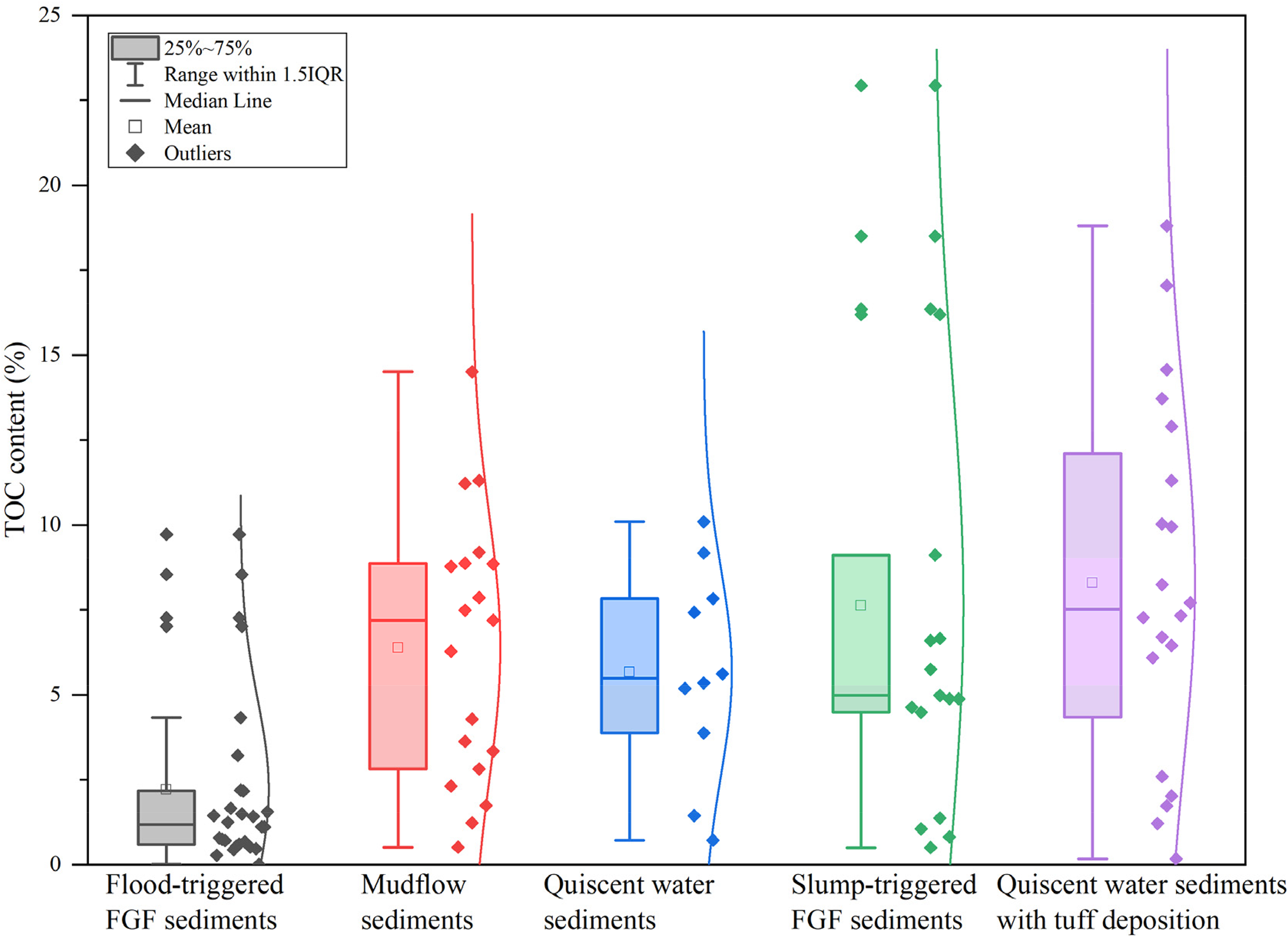
Box chart of TOC content distribution for fine-grained sediments deposited under different sedimentary processes.
Horizontal comparison shows that flood-triggered fine-grained gravity flow sediments have the lowest TOC content. The fine-grained sediments deposited under a tranquil environment have relatively higher TOC content, and the tuffaceous materials significantly improved the organic matter content. The TOC content of the slump-triggered fine-grained gravity flow sediments is dispersed, and the average data is similar to the non-tuffaceous quiescent sediments. Fine-grained mudflow sediments have the highest mean in TOC content (Figure 12).
Due to the fact that lacustrine basins, compared to ocean basins, often have smaller water surface areas and shallower water depths, the enrichment of organic matter in lacustrine basins is more susceptible to the influence of terrestrial detritus input from surrounding rivers and other sources. The flood-triggered gravity flows can increase the importation of the terrestrial detritus, which will create a dilution effect that can restring the enrichment of the organic matter. Previous studies have correlated the terrestrial input proxy (Ti) with total organic carbon (TOC) content, revealing an inverse relationship between the two (Liu et al., 2023). Therefore, the flood-triggered gravity flows have a negative influence on organic matter enrichment. The slump-triggered gravity flow tends to happen due to the collapse of the slope break, which can bring the shallow water deposit into the deep lacustrine basin. Algae and mineral nutrients can be transported to deeper waters, thereby promoting the enrichment of organic matter.
Through regression fitting of the TOC content and different mineral content, the pyrite content shows relatively higher consistency with the TOC content. Therefore, to better determine the effectiveness of different sedimentary processes, we separated the TOC vs. pyrite content results into four categories that can represent four major sedimentary processes (Figure 13). Both four results show a positive relationship, but the slope slightly changed. Mudflow sediments show a slope of 0.29, which is the lowest among these four. The slope of the quiescent sediments is 0.37, which shows a better coordination between these two parameters. However, the R-square of these two fittings is below 0.5, which indicates the data is quite dispersed, the fitting may not represent the trend accurately. The R-square of the slump and flood-triggered fine-grained gravity flow sediments are above, which means these two fittings are more reasonable. The slope of the slump-triggered fine-grained gravity flow sediments is 0.54 and the slope of the flood-triggered fine-grained gravity flow sediments is 1.03. The relatively positive correlation between TOC content and pyrite content in fine-grained gravity sediments implies that the depositional environment is favorable for TOC enrichment and further for the formation of pyrite based on the conclusion that the formation and transformation of organic matter is a prerequisite for the formation of pyrites (Bian, 2024; Liu et al., 2021b).
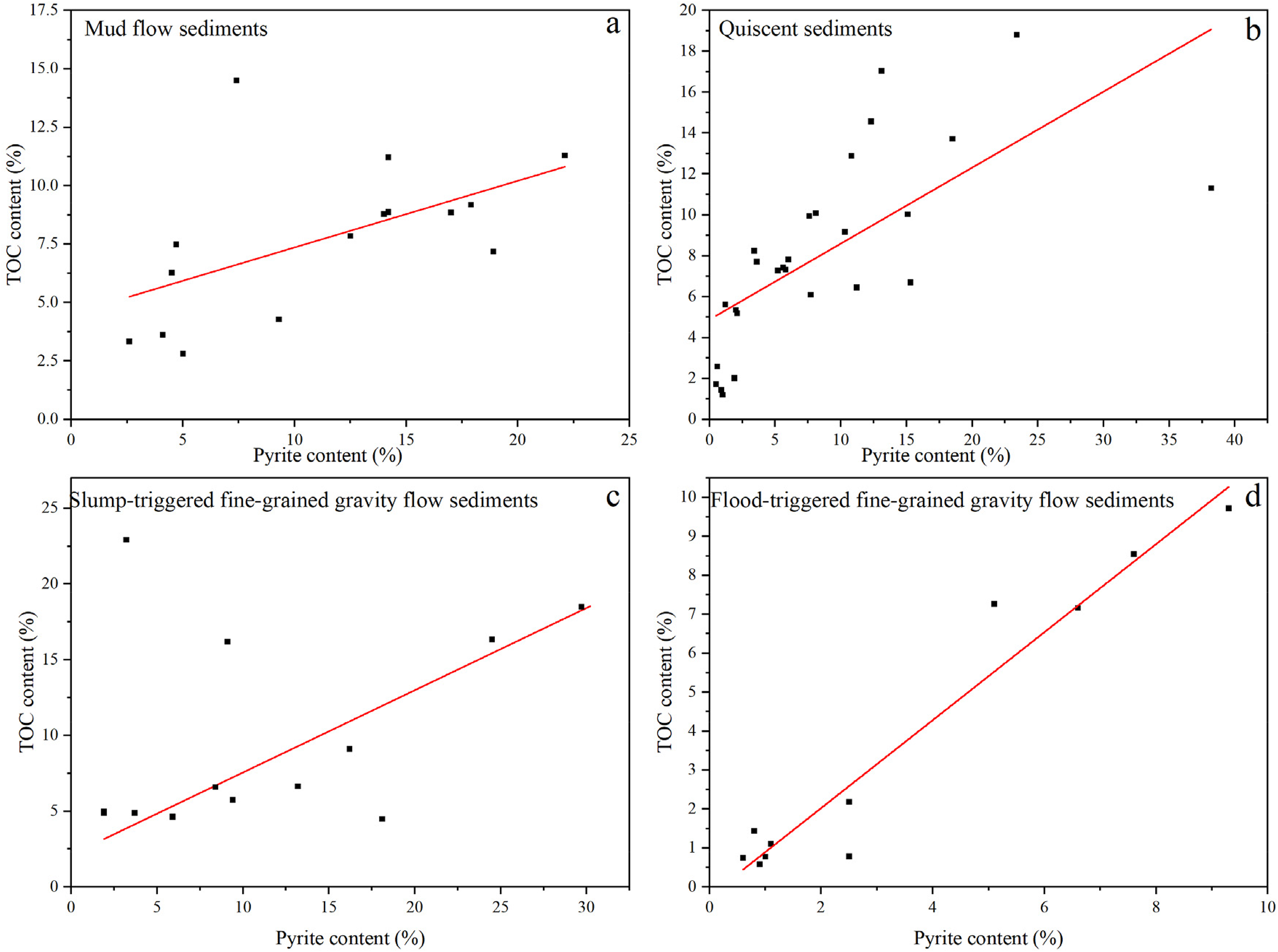
The relationship between the TOC content and the pyrite content under different sedimentary processes.
During the humid climatic period in the study area's Chang 73 sub-member, extensive organic-rich mudstone (shale) developed from deep-water suspension settling. Well H317 exhibits 20 meters of continuous deposition of tuffaceous organic-rich mudstone, and other wells also show extensive organic-rich mudstone sedimentation. These thick mudstone layers can serve as high-quality hydrocarbon source rocks for oil generation. There are 41 samples with TOC values greater than 6%, which are classified as high TOC sediments. Additionally, during drier periods, the Chang 73 sub-members in the study area developed a significant amount of fine sand and silty sedimentary bodies of fine-grained gravity flow origin. These sand bodies exhibit good porosity. Additionally, fine-grained gravity flow deposits can develop better feldspathic laminations, contributing to their enhanced porosity. Microfossils can also be observed in the fine-grained gravity flow deposits from Well Zheng 70, proving that fine-grained gravity flows can also increase the organic matter content of sediments by transporting shallow lake microorganisms. The alternation of humid and arid climates in the Chang 73 sub-member leads to the intercalated development of organic-rich mudstone-formed hydrocarbon source rock layers and fine-grained gravity flow deposit-formed reservoir layers. This can create multiple source-reservoir combinations and develop a suite of shale oil sweet spot intervals.
Conclusion
Based on the sedimentation processes and sedimentary characteristics, 5 lithologies containing 26 lithofacies were recognized in the fine-grained sediments from the Chang 73 sub-member. All the lithofacies could be classified into nine lithofacies assemblages, including the fine-grained quiescent sedimentation assemblage, the fine-grained mudflow sedimentation assemblage, the fine-grained debris flow sedimentation assemblage, the fine-grained slump sedimentation assemblage, the fine-grained turbidity currents sedimentation assemblage, the fine-grained concentrated density flow sedimentation assemblage, the fine-grained transitional flow sedimentation assemblage, the fine-grained surge-like turbidity flow sedimentation assemblage, and the fine-grained quasi-steady turbidity current sedimentation assemblage.
The fine-grained sediments within the Longdong area mostly developed under three conditions: LA1 usually formed under a quiet environment, forming horizontal laminations, usually developed in the center of the deep lacustrine basin; LA3, LA4, LA5, LA6, and LA8 developed due to slump, with significant sedimentary characters formed under high-energy environment, tends to form near the first and second slope breaks; LA7 and LA9 formed due to flood tends to be thicker, developed sedimentary characters such as wavy bedding and wavy cross-bedding, located in the semi-deep to deep lacustrine basin.
The sediments developed under a tranquil environment are thick and organic-rich, and can perform as potential shale oil resource rock. Fine-grained gravity flow sediments within the Longdong area developed widely within the basin and formed several sets of interbedded layers of organic matter-rich shale and fine-grained siltstone. The interbedded structures provide a proper ubiety for shale oil generation and preservation.
Footnotes
Acknowledgments
This research is supported by the Department of Science and Technology, PetroChina (grant no. 2021DJ18) and the National Key Research and Development Program of China (Grant No. 2023YFF0804303). The authors thank the Changqing Oil Field Branch Company, PetroChina for their support.
Declaration of conflicting interests
The authors declared no potential conflicts of interest with respect to the research, authorship, and/or publication of this article.
Funding
This research is supported by the National Natural Science Foundation of China (Grant No. 2021DJ18 and No. 2024DJ87) and the National Key Research and Development Program of China (Grant No. 2023YFF0804303). The authors thank the Changqing Oil Field Branch Company, PetroChina for their support.
