




Abstract
This study investigated the link between energy consumption (EC), foreign direct investments (FDI), urbanization (URB) and CO2 emissions in the emerging seven (E7) countries for the period 1991 to 2014. The exploration made a methodological contribution by employing modern econometric methods that are robust to the issues of cross-sectional dependence and slope heterogeneity, so as to obtain valid and reliable outcomes. From the results, the panel under consideration was heterogeneous and cross-sectionally correlated. Also, the series were first differenced stationary and cointegrated in the long-run. The DCCEMG and the DCCEPMG estimators were engaged to explore the long-run elastic effects of the covariates on the response variable, and from the results, EC and URB were key promoters of CO2 effusions in the countries. However, FDI mitigated the emanation of CO2 in the nations. Additionally, economic growth (GDP) and population growth (POP) escalated the emittance of CO2 in the E7. On the D-H causality test outcomes, a feedback causality amid POP and CO2 effusions; GDP and CO2 excretions; FDI and CO2 emissivities; and between URB and CO2 secretions were discovered. Finally, a one-way causation from URB to the effluents of CO2 was unfolded. Based on the verdicts, policy suggestions were proposed to help abate the rate of CO2 exudations in the countries.
Keywords
Introduction
Urbanization (URB) has been widely accepted as one of the preconditions for development in the World. However, this notion has proven futile due to the numerous consequences associated with URB of which CO2 emanations form a key part (Behera and Dash, 2017). Despite its countless demerits, URB has witnessed a noticeable surge of about 50% in the initial stage of the twenty-first century globally (Behera and Dash, 2017). With this massive rise in URB, factors like improper expansion of industries, spiraling demand for automobiles, rising income of the middle class and urban clusters have escalated world CO2 effusions through energy consumption (EC) (Behera and Dash, 2017; Dogan and Turkekul, 2016). According to Poumanyvong and Kaneko (2010), URB will surge the globe’s population to 4.6 billion by 2030. Half of this population living in urban areas are expected to consume more than 50% of the world’s energy, and escalate the emanation of CO2 by over 60% (Shahbaz et al., 2015). As indicated by Afridi et al. (2019), EC and URB are among the major causes of high CO2 effusions in both advanced and developing economies, of which the Emerging Seven (E7) countries are no exception. Also, foreign direct investment (FDI) has been established as a catalyst for economic development in the E7. However, its major contribution to environmental pollution in the nations cannot be overlooked.
Based on 2018 statistics, E7 nations accounted for 40% of the world’s EC and also witnessed a massive increase in URB and FDI inflows. These three variables contributed to the nations’ ranking among the top 20 emitters of global CO2 in that year (Tong et al., 2020). The above statistics suggest that, member countries of E7 are prone to threats emanating from climate change, due to the rapidly increasing levels of URB, EC and FDI influxes with their associated high CO2 effusions. Therefore, investigating the nexus amid the variables in the context of E7 to come out with recommendations to help mitigate the emanation of CO2 in the countries and the rest of the world was worthwhile. Also, URB, EC, FDI and CO2 excretions have been found to be inextricably related. However, consensus on the nature of association between the variables has not been reached, since URB, EC and FDI could promote, abate or exert no effect on the emanation of CO2. These contradictory affiliations imply, the debate on the nexus amid the variables is unceasing and warranted for further explorations like ours. The study makes several contributions to extant literature as follows; to the best of our knowledge, limited explorations have considered the combined effects of URB, EC and FDI on the emanation of CO2 in the E7 countries. However, E7 countries have all the characteristics required to witness a relationship of such nature. This study was therefore conducted to help fill that gap.
The study also made a methodological contribution by employing advanced econometric techniques like the DCCEMG and the DCCEPMG estimators. These techniques were adopted because they are robust to correlations in residual terms and heterogeneity in slope coefficients. Most explorations conducted on the member countries of E7, did not consider these vigorous econometric methods. Further, most investigations conducted on the E7 failed to consider the issue of omitted variable bias in their analysis. However, according to Sun et al. (2021), Musah et al. (2021a), Phale et al. (2021) and Musah et al. (2021b), omitted variable bias is detrimental because it leads to bias coefficient estimates that could result in erroneous tests of hypothesis. The study therefore catered for the above issue by controlling for economic growth (GDP) and population growth (POP). Finally, based on data properties, our model specification included the lagged response variable to account for dynamics, persistence and may be, the slow-moving nature of some of the indicators. Amazingly, many explorations on the E7 countries, failed to consider these essential attributes of data. This implies, the models in those studies were likely to be misspecified resulting in prejudiced and erroneous inferences.
The study is important because it provides grounds for a better comprehension of how URB, EC and FDI influence the effusion of CO2 in E7 countries. The study is also relevant because it comes out with concrete policies that could be used to minimize CO2 excretions in the E7. The exploration is finally essential since it serves as a reference material for further studies on this current topic. The next section of this report presents the methodology adopted to meet the focus of the research, while the results of the investigation are outlined in the third part. Detailed discussions on the outcomes of the research are presented in the fourth part, while the final portion displays the conclusions of the report.
Literature review
This aspect of the exploration reviews literature that supports the topic understudy. The reviews are grouped into three, comprising of urbanisation-CO2 emission nexus, energy consumption-CO2 emission nexus, and foreign direct investments-CO2 emission nexus as follows.
Urbanisation-CO2 emission nexus
A lot of studies on the nexus between URB and CO2 emanations have been conducted on different geographical environments. For instance, Ozatac et al. (2017) research on Turkey for the period 1960 to 2013, and discovered URB as a key promoter of CO2 effusions. Though this study is insightful, generalizing its findings for all countries is inappropriate, because it was confined to only Turkey. Also, the study was time series in nature. Its revelations could vary when the panel data approach was used. Our exploration, which is panel data in nature, is therefore essential since it could offer outcomes that could support or contrast the above finding. An investigation on India was undertaken by Franco et al. (2017). From the disclosures, URB promoted CO2 emittances in the country. This result collaborates that of Musah et al. (2020a), Wang et al. (2019) and Saidi and Mbarek (2016), but conflicts that of Lin et al. (2018) and Sadorsky (2014) who established an immaterial association between URB and the excretion of CO2 in 16 emerging economies. The contradictory findings imply, the debate on URB-CO2 excretion nexus is not over yet and demanded for further studies like ours. Ali et al. (2017) undertook an investigative study on Singapore, and discovered that, URB improved the country’s environmental quality. This revelation is in line with Sharma (2011), but contrasts those of Sun et al. (2018) and Sehrawat et al. (2015) who affirmed URB as a key promoter of CO2 emanations. The divergent discoveries imply, an in-depth analysis into the link between URB and CO2 secretions like ours was paramount, since it could come out with results that could improve upon the debate on URB and CO2 emissivities.
A study to examine the non-linear effects of URB on the emanation of CO2 in Chinese Provinces was undertaken by Xie and Liu (2019). From the discoveries, a “roller coaster” pattern between URB and the effluents of CO2 was unfolded. Though the outcome of the study is vital, its revelation was not fit for the purpose of generalization because of two reasons. Firstly, the study was limited to only Chinese Provinces. The results might not be the same if other Provinces, regions or counties in different jurisdictions, that are highly heterogeneous, were included in the analysis. Secondly, if the exploration was undertaken in a linear framework, the outcome might also be different from that of the above. McGee and York (2018) researched on the asymmetric affiliation between URB and CO2 excretion for less developed countries. It was uncovered that the connexion amid URB and the exudation of CO2 was asymmetrical, where a fall in URB led to a reduction in CO2 excretions than it improved it. The study is very insightful; however, its disclosure cannot be generalized because it was asymmetrical in nature. If the exploration was conducted in a symmetrical manner, the outcome could be different. The outcome of the study can also not be generalized for all countries, because it was confined to only nations that were not developed. If advanced nations were to be incorporated into the analysis, the result might have been different.
Energy consumption – CO2 emission nexus
Countless explorations on the link between EC and the effusion of CO2 have been performed with varied outcomes. For instance, Jian et al. (2019) conducted a study on China for the period 1982 to 2017 and discovered EC as a key promoter of CO2 secretions. Though this finding is very essential, the fact that the study was time series in nature implies, its result should be interpreted with caution. If the exploration was to be panel in nature, its outcome might have been different. A research on 10 SSA countries was undertaken by Ingleshi-Lotz and Dogan (2018). From the disclosure, NRE promoted the emanation of CO2, however, RE improved environmental quality. This disclosure is in line with Chen and Lei (2018) and Souza et al. (2018), but contradicted that of Farhani et al. (2014). These conflicting findings imply, the debate on the connection between EC and the exudation of CO2 is far from over and demanded for an exploration like that of ours. In Turkey, Karasoy and Akcay (2019) conducted a study and confirmed REC as a negative determinant of CO2 effluents. This exploration is very material; however, its discovery cannot be generalized for all nations in the globe because, it was solely conducted on Turkey.
If other nations had been included in the analysis, the finding could have been different. Our research is therefore relevant, since it was conducted on more than one country. Rahman et al. (2019) undertook an investigative study on NAFTA and BRIC countries, and confirmed coal and oil as key promoters of CO2 excretions. Though this finding is very essential, the study used only coal and oil as the proxies of energy. If other surrogates of energy were to be incorporated into the analysis, the finding could have been different. This therefore implies, the interpretation of the study’s results demands some caution.
On G7 countries, Bildirici and Gökmenoğlu (2017) undertook a study and confirmed energy from hydro as a negative predictor of CO2 effusions. This finding is very insightful; however, the fact that the study was limited to only hydro power implies, care should be taken when interpreting the results. Also, the fact that the exploration was skewed towards only G7 countries implies the generalization of its outcome for all nations is inappropriate. Udemba and Agha (2020) studied the nexus amid EC and the excretion of CO2 and validated EC as a major contributor of CO2 effusions. This disclosure collaborates those of Saud et al. (2019) and Ali et al. (2018), but conflicts that of Pata (2018). These contradictory revelations imply, the EC-CO2 emanation argument is not over yet and demanded for more investigations like ours. Chen et al. (2019) conducted a study on China and found out that RE abated the exudation of CO2 in the country. Though this study is vital, its discovery cannot be generalized for all countries in the world, because the study was confined to only China. If other nations were to be included in the study, the outcome might be diverse. Our study which considered more than one country is therefore significant because it adds to the unceasing debate on the connection between EC and CO2 excretions. On 74 countries, Sharif et al. (2019) studied the connection between EC and CO2 effusions and affirmed NREC as a key contributor of CO2 emanations, however, REC abated the excretion of CO2 in the nations. The conflicting results between the two proxies of EC implies, much research is needed on the connexion amid EC and CO2 effluents. Zoundi (2017) researched on some selected African countries and confirmed that, REC enhanced the countries’ environmental quality supporting those of Liu et al. (2017) and Yazdi and Beygi (2017). This research is very relevant; however, one should be cautious when interpreting its outcome because it was limited to REC. The discovery could have been different if energy from nonrenewable sources were included in the analysis.
FDI-CO2 emission nexus
Myriad of studies have been conducted to explore the affiliation between FDI and CO2 excretions. The findings have however been contrasting. For instance, Huang et al. (2019) investigated the connection between FDI and the emanation of CO2 in Chinese provinces. Discoveries of the study affirmed FDI as a negative determinant of CO2 emissivities. This revelation is very relevant, however, the fact that the investigation was limited to only Chinese provinces implies, the generalization of its findings for all countries is appropriate, because if other provinces, regions and counties in other jurisdictions were to be included in the study, the outcome might show a different picture. Minh (2020) undertook a study on Vietnam, and established FDI as a key contributor of CO2 effusions. Though this exploration is insightful, the interpretation of its finding warrants some caution, because it adopted the time series approach. If the study had adopted the panel data approach by including more countries into its sample, the outcome might differ. Our research which was panel data in nature is therefore vital, since it offers outcomes that adds to FDI-CO2 effusions debate.
On the OECD region, Ahmad et al. (2020) carried out an investigative study and confirmed FDI as a vital promoter of CO2 secretions. This finding supports that of Li et al. (2020a) and Minh (2020) for Vietnam, but contradicts that of Huang et al. (2019) for Chinese provinces. These conflicting revelations suggests that the debate on the connection between FDI and the emanation of CO2 is far from over and demanded for further explorations like ours. Sarkodie and Strezov (2019) researched on five developing economies. From the disclosures, FDI raised the rate of CO2 effusions in the countries. This study is very essential, however, its revelation cannot be generalized for all nations, because it was confined to only developing countries. If the exploration was to be conducted on developed nations, the outcome might differ. Dhrifi et al. (2020) also conducted a study on developing economies and confirmed FDI as a mitigator of CO2 emissivities. This discovery supports that of Zhang and Zhou (2016), but conflicts that of Dou and Han (2019). These conflicting findings imply, more investigations on FDI-CO2 secretions nexus are needed. Therefore, undertaken a study like ours was of much relevance. Guzel and Okumus (2020) researched on ASEAN-5 countries and found FDI as a key promoter of CO2 excretions. This disclosure is very insightful; however, the study was limited to ASEAN-5 countries only. Interpretation of the results therefore warrants some caution, because if other nations were incorporated into the analysis, the finding could differ.
Materials and methods
Model specification
In line with Abbasi et al. (2020), Ahmad et al. (2019) and Nathaniel (2019), the Stochastic Impacts by Regression on Population, Affluence, and Technology (STIRPAT) model proposed by Dietz and Rosa (1997) was adopted for this study. The STIRPAT model is based on the environmental impacts, population, affluence and technology (IPAT) framework discovered by Ehrlich and Holdren (1971). The IPAT model is stated as:

Even though the IPAT model is very useful, it has its inherent limitations. According to Dietz and Rosa (1994), the model assumes strict proportionality amid variables, and is also a basic mathematical equation that is not ideal for testing hypothesis. To help remedy the above limitations, Dietz and Rosa (1997) put forward a stochastic version of the IPAT model stated as:

Where I is the environmental impact proxied by CO2 emissions; P represent population; A denotes affluence surrogated by GDP; T represents technology; α is a constant term;

Where FDI denotes foreign direct investments. Also, without energy, economic activities like business expansion and industrialization cannot be accomplished. The energy used to undertake the above activities are however, not environmentally friendly, leading to more CO2 emanations (Martinez-zarzoso et al., 2007). Therefore, in line with Behera and Dash (2017) and Abdallh and Abugamos (2017), energy consumption (EC) was considered as a predictor of CO2 excretions. Finally, many people move to urban areas to search for better jobs and good living standards. This scenario increases the demand for EC leading to high CO2 effusions (Cole and Neumayer, 2004). Urbanization (URB) was therefore considered as a predictor of CO2 excretions, supporting the investigations of Nathaniel (2019) and Ahmad et al. (2019). The final extended STIRPAT model therefore became;

Where EC denotes energy consumption and URB represents urbanization. To help remedy data fluctuation and heteroscedasticity issues, all the variables were transformed into natural logarithms. The resulting log-linear model therefore became;

Where LnCO2, lnPOP, lnGDP, lnFDI, lnEC and lnURB are the log transformation of CO2, POP, GDP, FDI, EC and URB respectively; β1, β2, β3, β4 and β5 are the elasticities to be estimated; and

Where
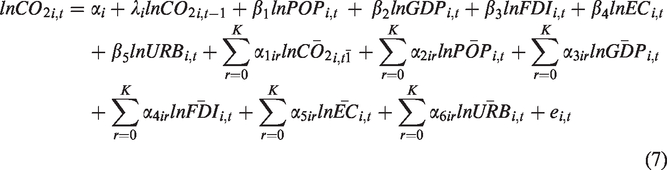
Where
Data source and descriptive statistics
A panel dataset covering the period 1991 to 2014 was employed for the analysis. The main reason for choosing the period 1991 to 2014 is that data was not fully available for some of the countries at certain periods. For instance, data on GDP for most periods below 1989 were missing for Russia, whilst the country’s data on EC for most periods below 1990 and above 2014 could not be found. Additionally, data on FDI for most periods below 1992 were also missing for the same country. Further, data on EC for Brazil, China, India and Indonesia for periods above 2014 were missing, whilst data on the same variable for periods above 2015 were missing for Mexico and Turkey. Finally, all the countries had missing data on CO2 emanations from 2017 to 2019. In order to work with a fully balanced data and also to have all the countries on board, the researchers viewed the period 1992 to 2014 as the most appropriate. Thus, the period was chosen based on the availability of data for the studied series. Further details on the series are shown in Table 1.
Description and measurement of variables.
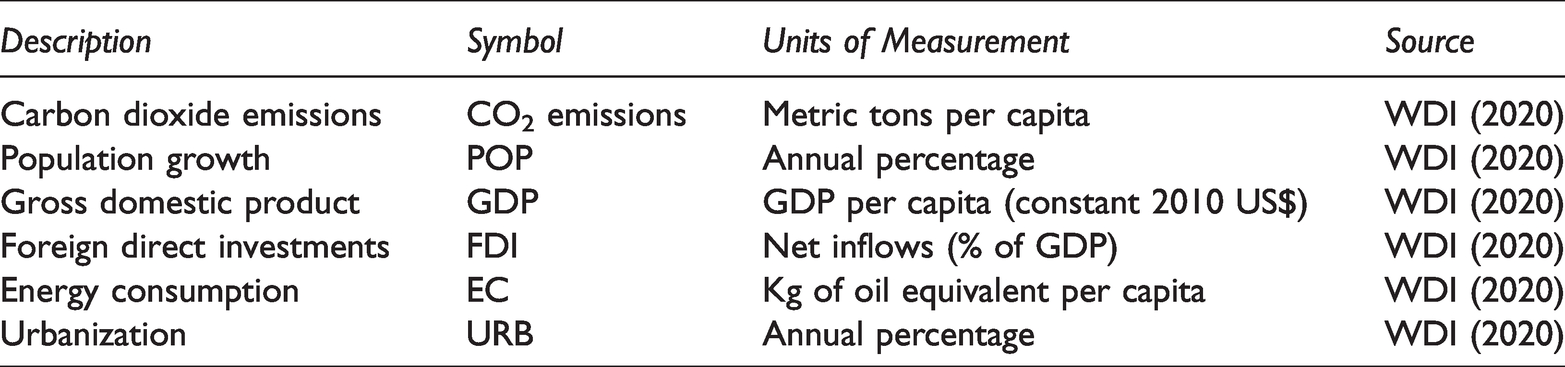
Table 2 displays the descriptive statistics of the series. From the table, GDP had the uppermost mean value, while POP had the least mean value. Also, the distributions of CO2, GDP and EC were positively flattered to the right, whilst that of POP, FDI and URB were negatively flattered to the left. Further, POP, GDP, FDI, URB had kurtosis values more than the standard 3, meaning their distributions were leptokurtic in shape, whilst that of CO2 and EC had kurtosis values lower than the standard 3, symbolizing that the shapes of their distributions were platykurtic. The kurtosis statistics vindicates the Jarque-Bera test outcomes that also confirmed the nonnormality of the variables’ distributions. Additionally, there was no multi-collinearity amid the covariates as per the tolerance and VIF tests. The correlation between the variables were also investigated. From the results depicted in Table 2, a surge in POP, GDP, EC and URB resulted in a surge in CO2 effusions and vice versa. However, an upsurge in FDI mitigated the countries’ CO2 emittances and vice versa. Finally on the Principal Components Analysis (PCA) shown in Table 3, POP, EC and URB loaded very well under Comp 1, whilst GDP and FDI had significant loadings under Comp 2. This finding indicates that the variables were very worthy of determining the excretion of CO2 in the countries.
Descriptive statistics and correlational matrix.
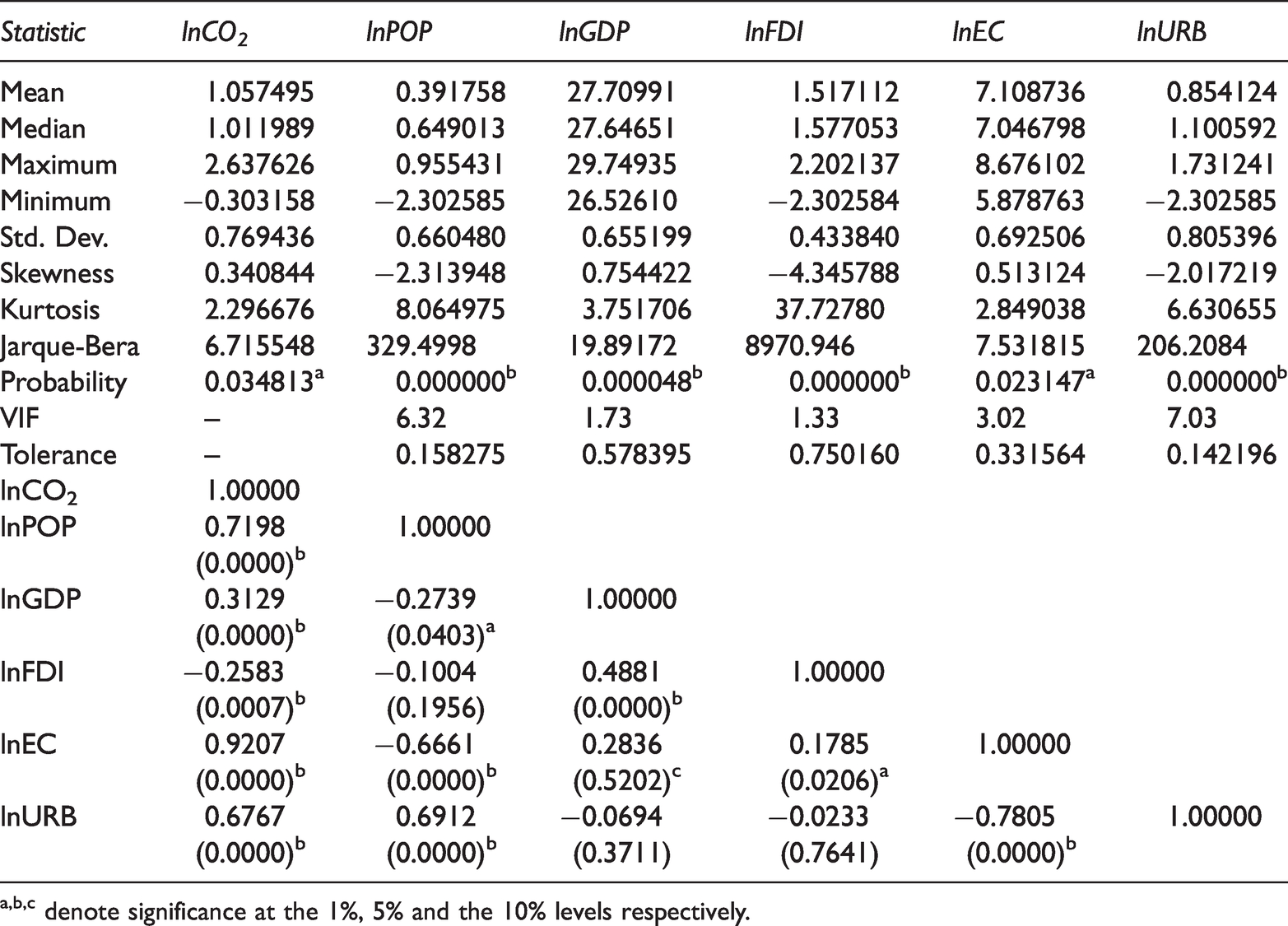
a,b,c denote significance at the 1%, 5% and the 10% levels respectively.
Principal components analysis (PCA).
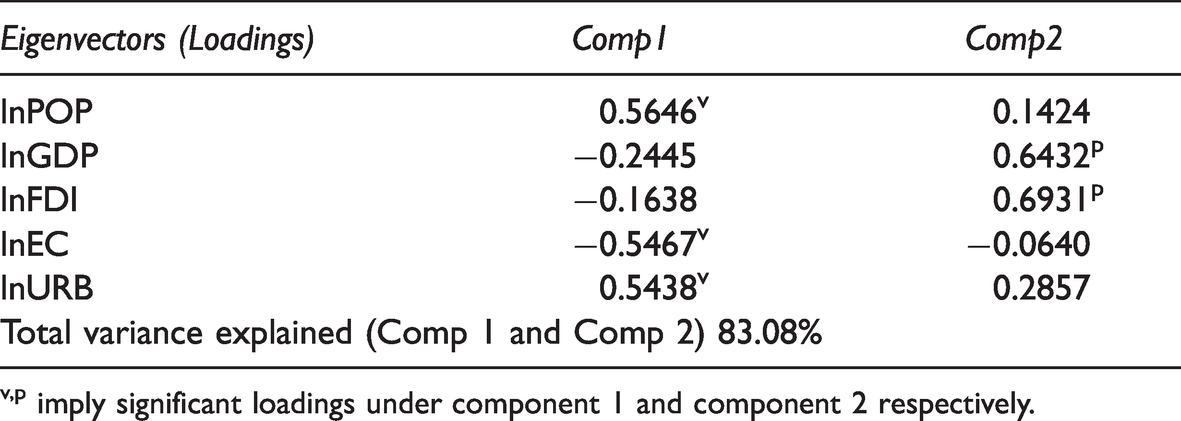
v,p imply significant loadings under component 1 and component 2 respectively.
Econometric techniques
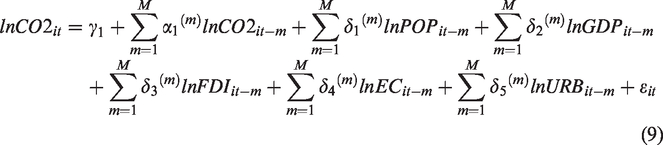
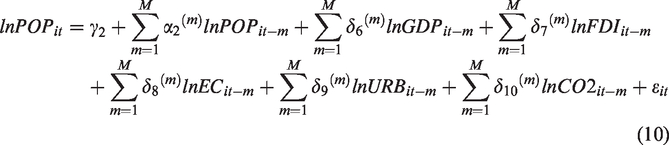
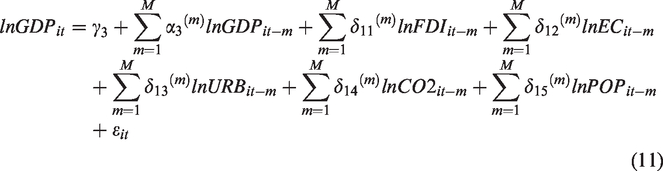
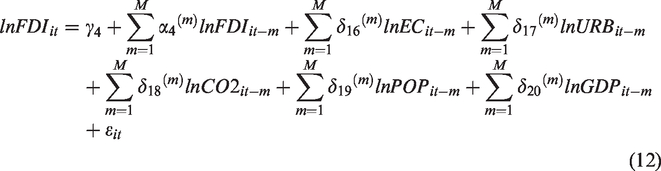
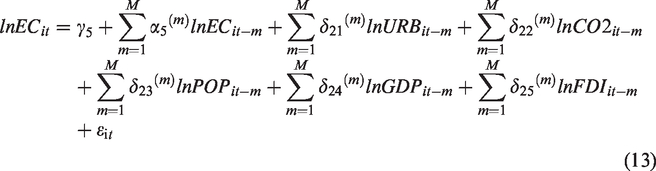
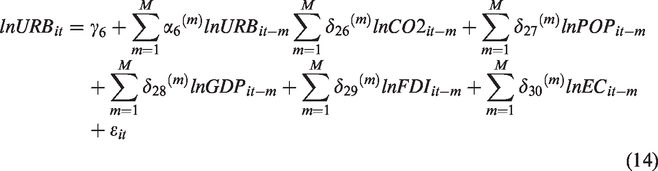
Heterogeneity and cross-sectional correlations are very vital for the choice of econometric methods to be used for further analysis. Therefore, the study first tested for correlations in the residual terms though the CD test of Pesaran (2015). Secondly, the heterogeneity assumption was tested through the Pesaran and Yamagata (2008) test. This stage was followed by the analysis of the variables’ integration attributes through the CADF and the CIPS stationarity tests, that are resilient to cross-sectionally correlated residuals. The Westerlund and Edgerton (2007) and the Durbin-Hausman tests were then performed to affirm the cointegration characteristics of the variables. At the fifth step, the DCCEMG estimator with the support of the DCCEPMG estimator were adopted to explore the long-run elasticities of the covariates. Finally, the Dumitrescu and Hurlin (2012) test which is robust to heterogeneous slopes and cross-sectionally correlated residuals was engaged to study the causal liaison between the variables. If X and Y are the input and the criterion variables correspondingly, then the D-H causality test could be expressed officially as;



Empirical results
Heterogeneity and cross-sectional dependence tests results
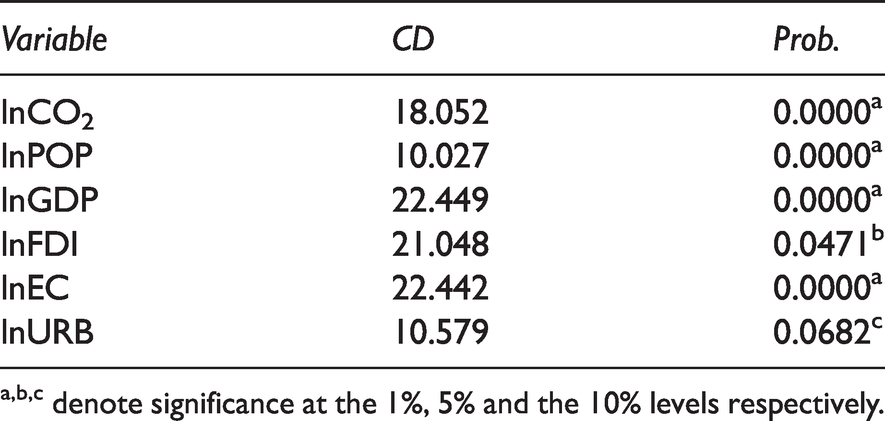
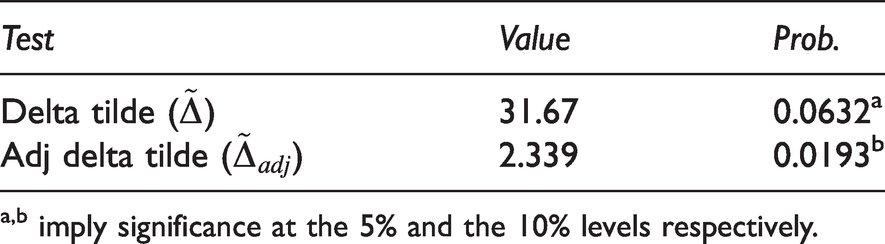
As indicated by Li et al. (2020b) and Mensah et al. (2020), dealing with models with cross-sectionally correlated regressors could yield bias and inaccurate results. Therefore, as a first step, the Pesaran (2015) cross-sectional reliance test was undertaken to examine correlations in the residual terms. With reference to the test’s revelations displayed in Table 4, the residuals of the model were embedded with dependencies. This indicates that there were strong economic bonds among the countries of concern. The outcome also signposts that any effect on a particular variable (say urbanization) in one country, was likely to affect the other countries due to their ties economically. Empirical investigations by Musah et al. (2020b) and Mensah et al. (2019) supports the above finding. Since the negligence of heterogeneity could lead to erroneous outcomes and inferences, the study tested for this assumption by employing the test displayed in Table 5. Disclosures from the test confirmed heterogeneity in the parameters. This implies, the acceptance of homogeneity could lead to the application of wrong econometric techniques. Studies by Erdogan et al. (2020) and Dogan and Aslan (2017) are in agreement with this discovery.
Pesaran (2015) cross-sectional dependence tests results.
a,b,c denote significance at the 1%, 5% and the 10% levels respectively.
Pesaran-Yamagata homogeneity test results.
a,b imply significance at the 5% and the 10% levels respectively.
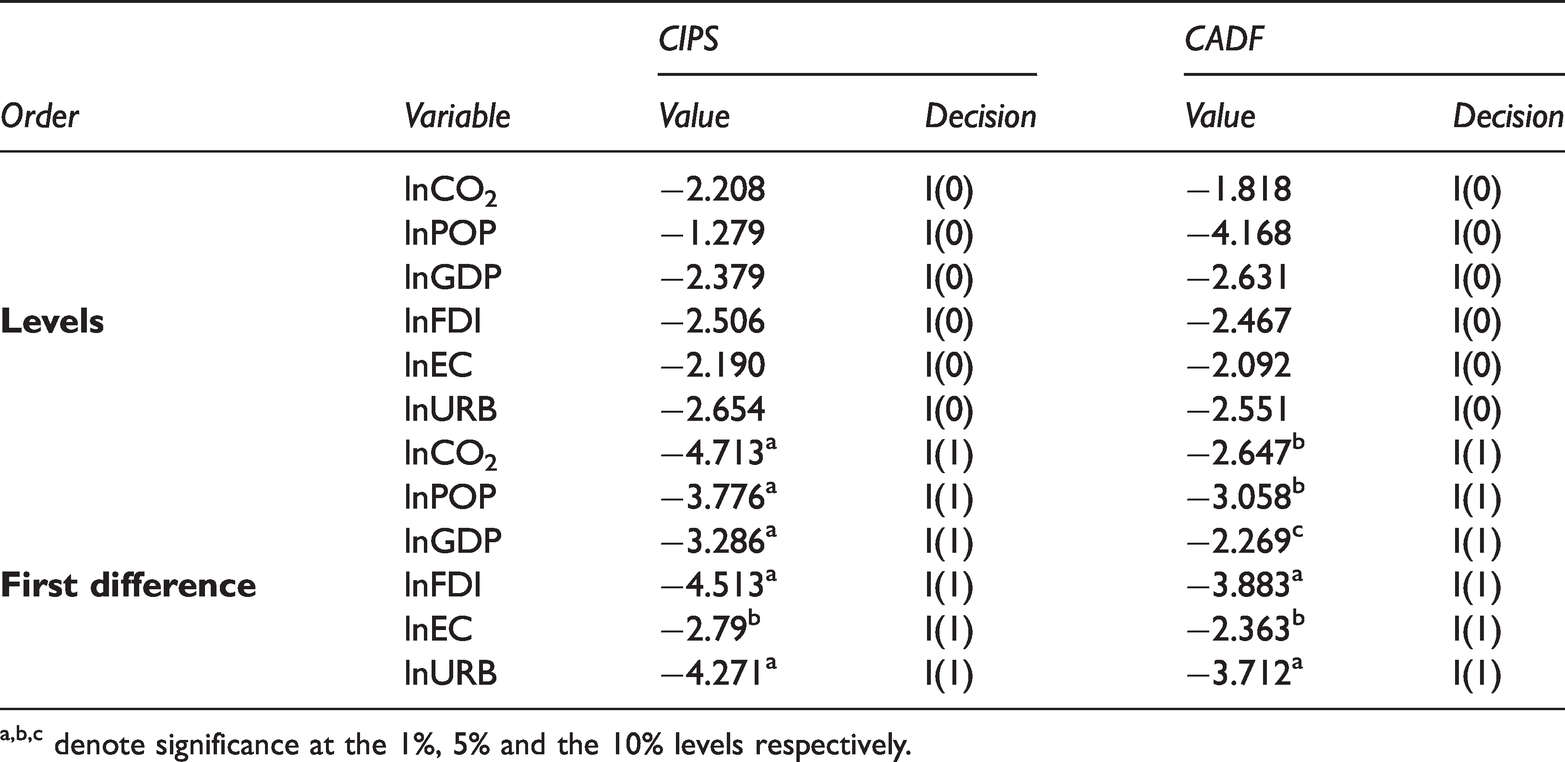
Unit root and cointegration tests results
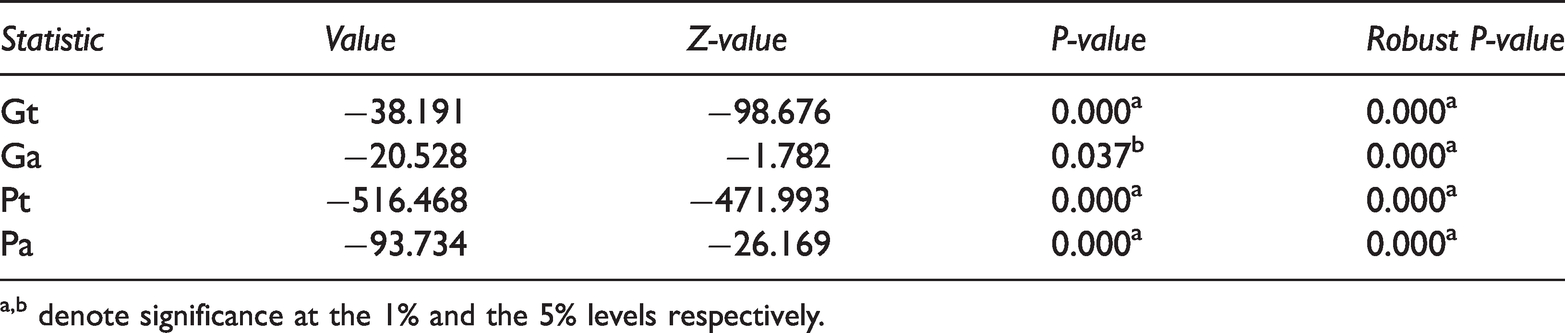
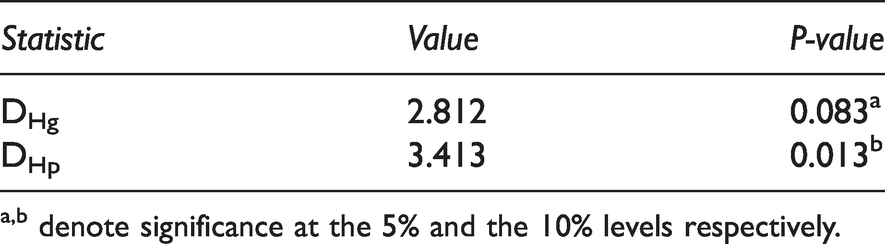
Econometrically, dealing with series with stationary order leads to accurate and reliable outcomes. Therefore, as a third step, the tests exhibited in Table 6 were performed to affirm the variables’ order of integration. From the discoveries, all the series became stationary after first difference collaborating that of Musah et al. (2020c). In the context of estimating the elasticities of the covariates, it was imperative to confirm the cointegration features of the variables. Therefore, as a fourth step, the tests exhibited in Tables 7 and 8 were conducted. From the results, the series were noticeably cointegrated in the long-term. This annuls the possibilities of biased and inaccurate estimates, thereby yielding correct conclusions. A by Faisal et al. (2017) is in support of this discovery, but that of Ozturk and Acaravi (2010) contradicts the findings of the study.
CIPS and CADF unit root tests results.
a,b,c denote significance at the 1%, 5% and the 10% levels respectively.
Westerlund ECM panel cointegration test results.
a,b denote significance at the 1% and the 5% levels respectively.
Durbin-Hausman panel cointegration test results.
a,b denote significance at the 5% and the 10% levels respectively.
Panel model estimation results
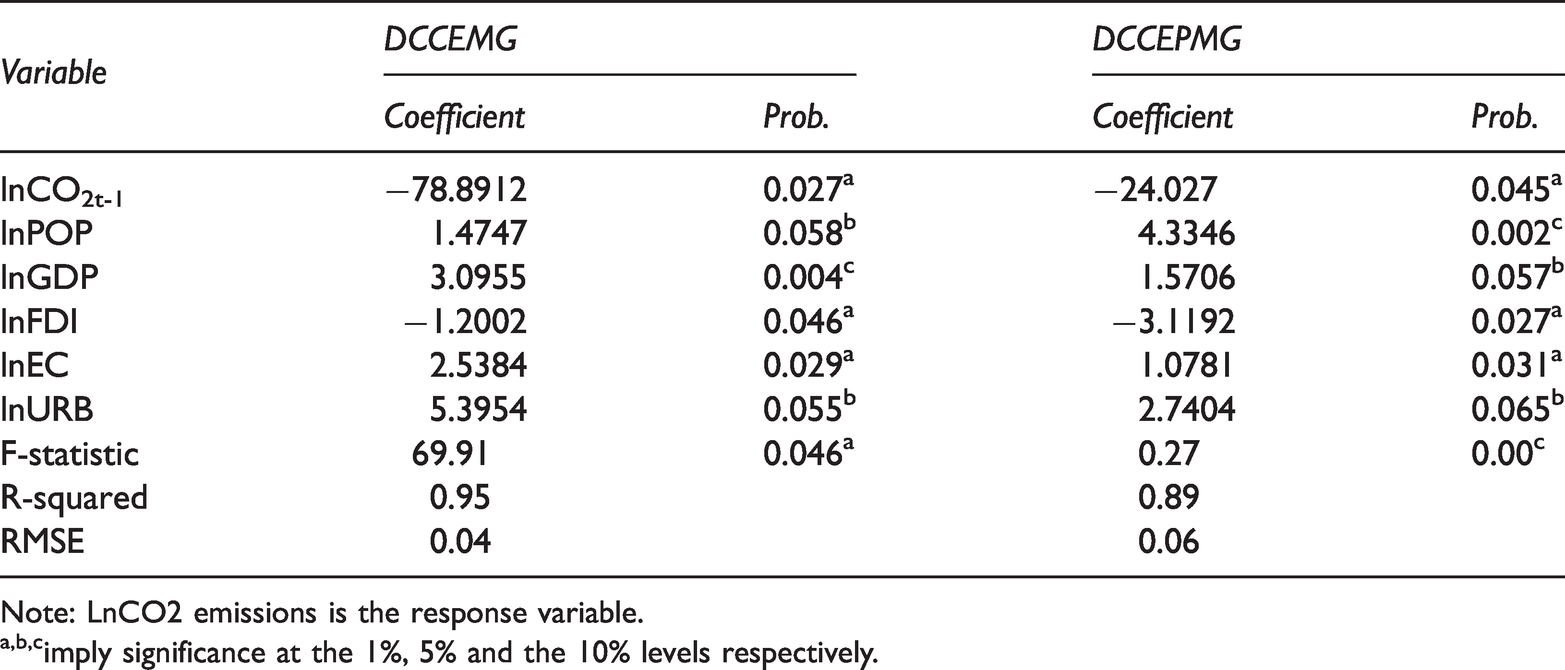
At the fourth phase, the elasticities of the covariates were first explored through the DCCEMG estimator. From the estimates depicted in Table 9, POP raised carbon excretions by 1.475% at the relevance level of 5%. Also, 3.096% of CO2 discharges was linked to the countries’ GDP. Additionally, EC surged CO2 exudations by 2.538% at the 5% material level. Similarly, URB escalated the rate of carbon effusions by 5.395% at the connotation level of 10%. Further, FDI abated the rate of CO2 spillages by 1.2% at the 5% significance level. Also, at the 5% level, the lagged response variable (CO2t-1) was negatively significant. This means the excretion of CO2 in the countries was corrected annually by 78.891% in absolute terms. Additionally, the R-squared value of 0.95 signifies that the explanatory variables accounted for 95% of the variations in CO2 emanations. The F-value was also material at the 5% level. This means the distribution of the variables fitted the model very well. Finally, the RMSE value of the estimated model was less than 0.08 (Hair et al., 2017). This indicates that the fitted model had a very high explanatory power. For the purpose of robustness, estimates of the DCCEPMG estimator were also computed, and the results were similar to that of the DCCEMG in terms of sign. Specifically, a percentage surge in POP, GDP, EC and URB, promoted the excretion of CO2 by 4.335%, 1.571%, 1.078% and 2.74% correspondingly. However, FDI improved the environment by 3.119% at the connotation level of 5%. The lagged dependent variable was also adverse and statistically material at the 5% level, suggesting that annual CO2 emanations was corrected by 24.027% in absolute terms. Similarity in the DCCEMG and the DCCEPMG estimates underscores the robustness of the results. The elastic effects of POP, GDP, FDI, EC and URB on CO2 emissions are displayed in Figure 1.
Panel model estimation results.
Note: LnCO2 emissions is the response variable.
a,b,cimply significance at the 1%, 5% and the 10% levels respectively.
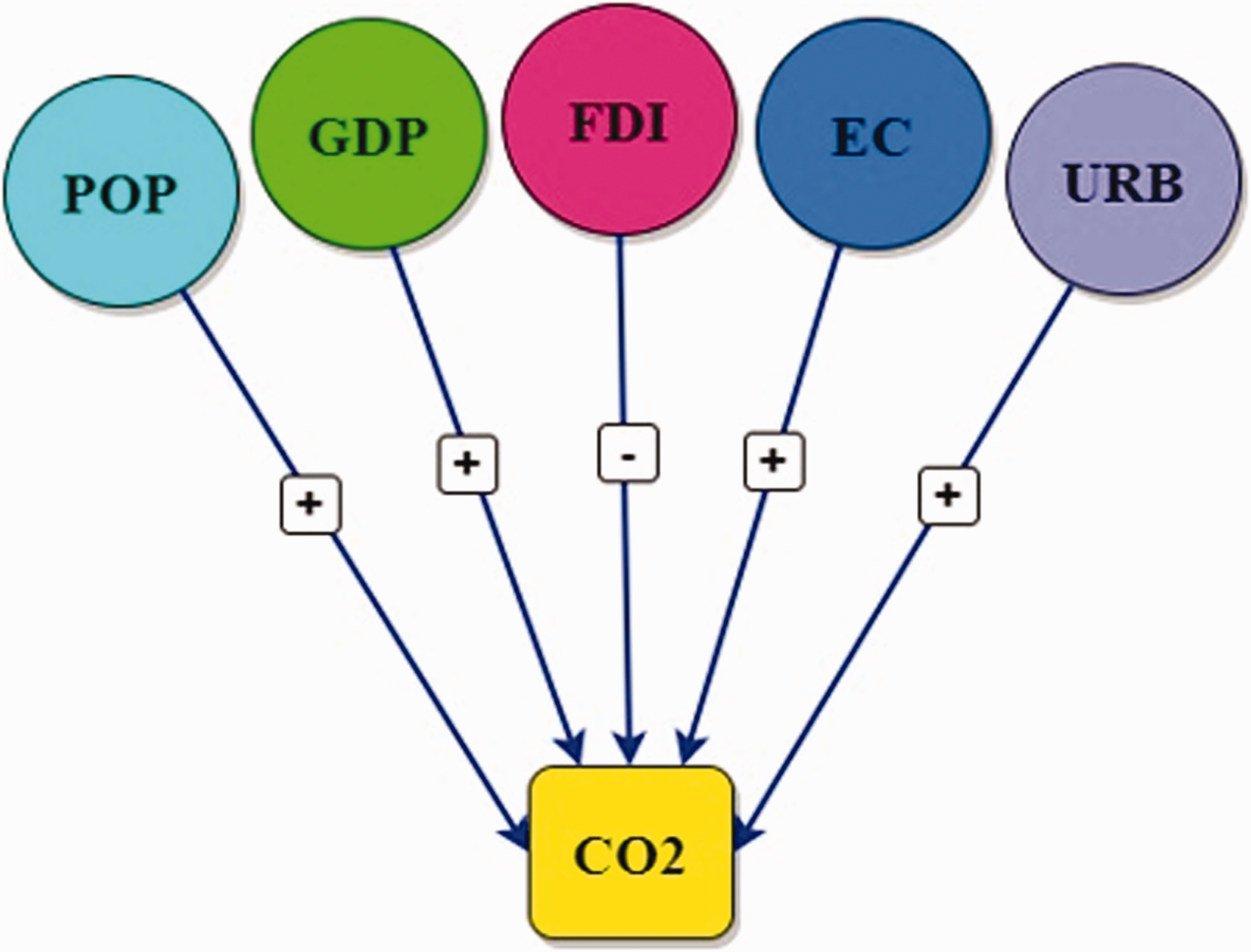
The elasticities of CO2 with respect to POP, GDP, FDI, EC and URB. Note: CO2 is the dependent variable, (+) denote positive influence on CO2, whilst (-) signifies negative influence on CO2.
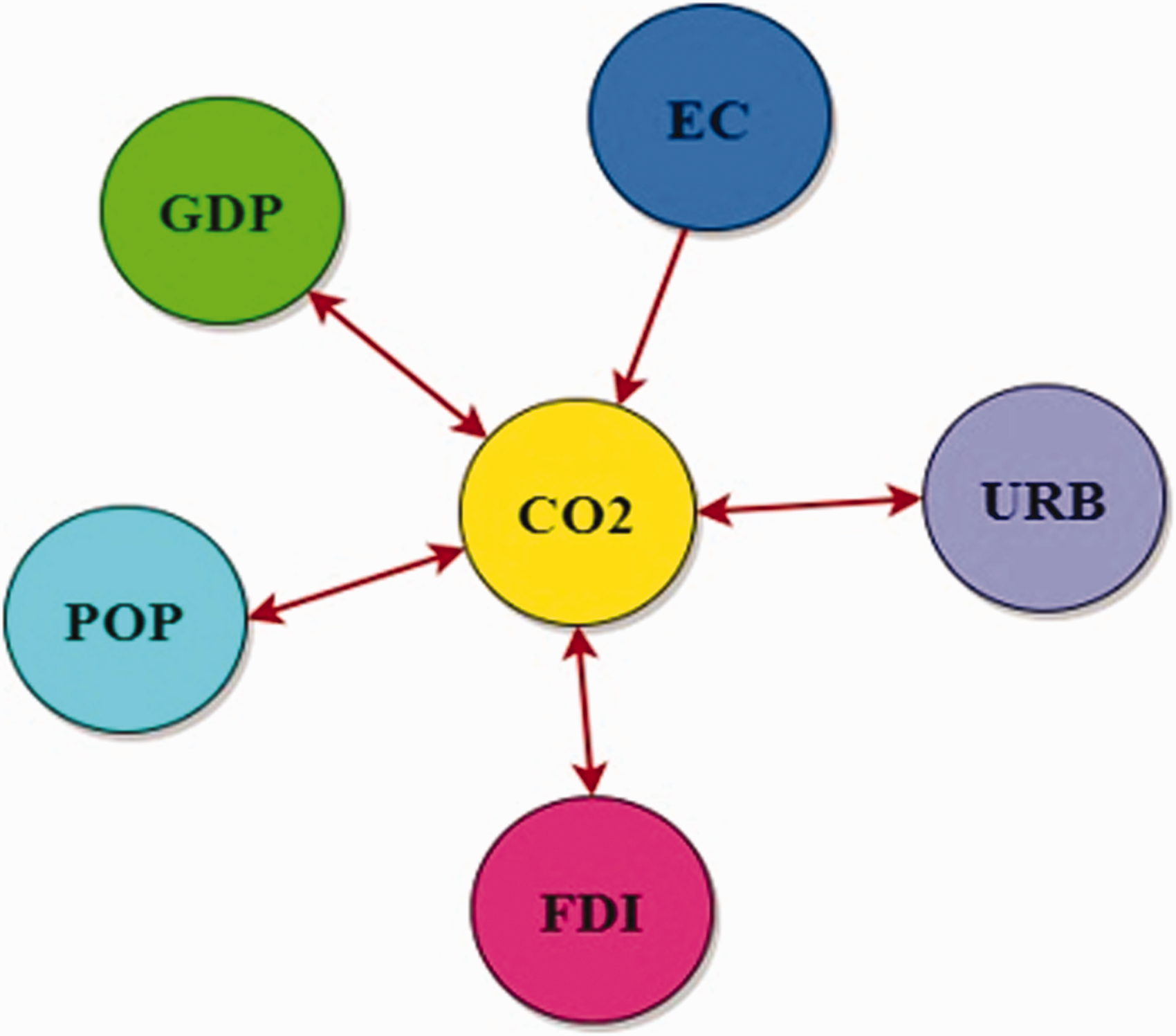
Direction of causalities between the explained and the explanatory variables. Note: CO2 is the dependent variable, ↔ signify a two-way causality between variables and ← denote a one-way causality from one variable to the other.
Causality tests results
Finally, the direction of causalities between the variables were examined through the D-H panel causality test. From the discoveries portrayed in Table 10 and Figure 2, a double-headed causal connection was found between POP and the emanation of CO2. Also, a feedback affiliation amid GDP and CO2 emittances was unfolded. Similarly, a mutual liaison was established between FDI and the emissivities of CO2. Additionally, a two-sided causal connexion amid URB and the emanation of CO2 was uncovered. Finally, the analysis established a unilateral causal relation moving from EC to CO2 emittances.
Pairwise Dumitrescu Hurlin panel causality tests results.
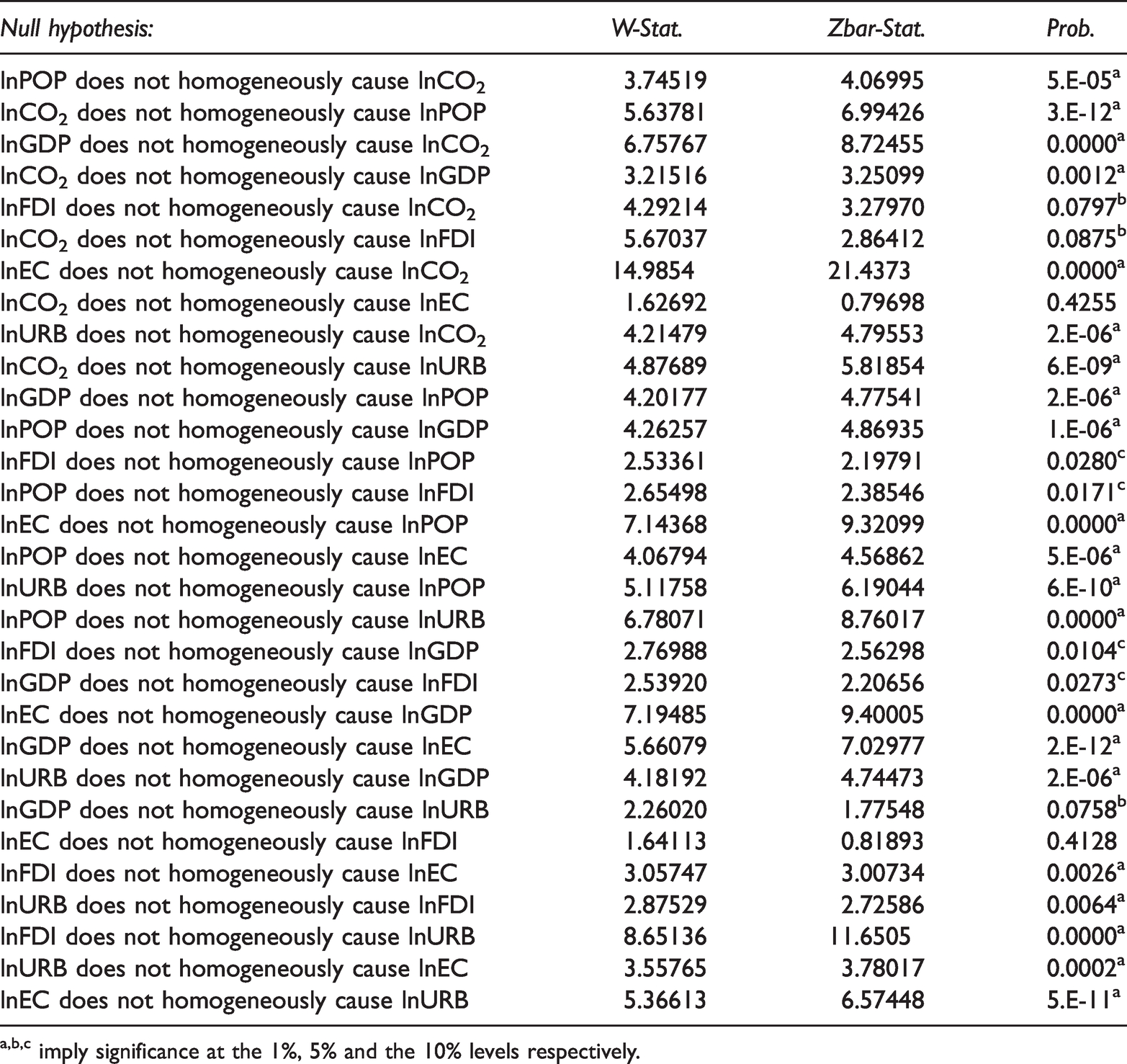
a,b,c imply significance at the 1%, 5% and the 10% levels respectively.
Discussion of the results
After establishing that the variables were materially related in the long-run, the elasticities of the covariates were computed through the DCCEMG estimator with the support of the DCCEPMG estimator. From the discoveries, POP raised CO2 effusions in E7 countries. This finding indicates that POP growth did not generate energy efficiency incentives that could mitigate the nation’s CO2 emissivities. Another plausible explanation for this finding is that individuals did not take issues of environmental sustainability seriously, as they spent more on environmentally unfriendly products and services. Additionally, the countries’ increase in production due to a surge in population also led to a momentous rise in the usage of energy, and subsequently high emittances of CO2. This outcome is in line with Mahmood and Chaudhary (2012), Acharyya (2009) and Wang et al. (2013), but conflicts that of Talukdar and Meisner (2001). Also, GDP promoted CO2 exudations in the nations. This revelation signposts that the countries’ economic activities are connected to the use of dirty energies that contribute to a rise in the emanation of CO2 in the countries. Another reason for this discovery is that, an upsurge in economic development might have influenced people to use appliances and automobiles that promote the exhalation of CO2 in the nations. This outcome agrees with Ito (2017), Mahmooda et al. (2020) and Antonakakisa et al. (2017), but is conflicting to that of Bekhet et al. (2017).
Additionally, FDI mitigated the effluents of CO2 in the E7. This discovery indicates that countries in E7 commited adequate resources to protect their environment, and also supported organisations in the field of green technology. FDI further helped to raise aware of the environment, thereby minimizing corporates’ and individual’s engagement in high polluting activities. The finding further suggests that there were strict environmental controls that made it difficult for high polluting entities to operate in the E7 countries. A study by Rafindadi et al. (2018) support this revelation, but that of Seker et al. (2015) contrasts the finding of this investigation. Further, EC escalated the excretion of CO2 in E7. This is not surprising because most emerging economies have a lot of industries, that are heavily reliant on high-polluting energy sources to drive their operations. Another potential reason for this finding is that, emerging economies all over the world undertake massive infrastructural activitivies for their citizenry. The execution of these activities are however dependent on the use of dirty energy that deteriorates the environment. The outcome agrees with Alemzero et al. (2020) and Udemba and Agha (2020), but contrasts that of Zafar et al. (2019). Lastly, URB promoted CO2 exudations in E7. This discovery is not shocking because a surge in URB demands the usage of high energy to makke major improvements in public infrastructural networks, leading to more CO2 effusions. An empirical investigation by Franco et al. (2017) is in support of this finding, however that of Sadorsky (2014) contradicts the above discovery.
The D-H causality test was employed to examine the causations between the variables. From the discoveries amid the explained and the explanatory series, there was a two-sided cause and effect affiliation between POP and CO2 discharges. This means that the variables were mutually reinforcing on each other. Thus, POP was reliant on the effusion of CO2, and the emanation of CO2 was also reliant on POP. Any attempt to reduce the level of POP will also lead to a reduction in the rate of CO2 emissivities. This finding agrees with Chung-Sheng et al. (2012), but conflicts those of Sulaiman and Abdul-Rahim (2018) and Begum et al. (2015). Also, GDP and the secretion of CO2 were bilaterally related in the countries. This discovery indicates that expanding economic activities will raise the countries’ rate of CO2 excretions. Likewise, any effort to create low-carbon economy will mitigate development activities in the countries. This finding agrees with Saud et al. (2019), but differs from that of Ssali et al. (2019). Additionally, a feedback liaison amid FDI and CO2 effluents was affirmed. This indicates that, the two series were predictive powers of each other. Thus, a surge in FDI influxes raised the rate of CO2 releases in the countries. Similarly, any effort to abate the level of FDI influxes, will diminish the countries’ level of CO2 effusions. An investigation by Omri et al. (2014) confirms this outcome, but those of Lee (2013) and Zhang (2011) differ from the study’s finding.
Further, a single-headed causal movement from EC to CO2 exhalation was demonstrated. This means that EC unilaterally reinforced CO2 spillages in the countries. Explorations by Cetin et al. (2018) and Shahzad et al. (2017) affirm this revelation, but those of Sun et al. (2018) and Afridi et al. (2019) contradict this discovery. Finally, a feedback connexion amid URB and CO2 effluences was uncovered. This means that the series were interdependent on each other. The discovery also insinuates that permanent or temporary reverberations from urbanization trigger the seepages of CO2 in the countries. Likewise, lessening the rate of urbanization will also mitigate CO2 discharges in the countries. The above revelation backs the verdicts of Khoshnevis and Dariani (2019) and Afridi et al. (2019), but contrasts those of Liu and Bae (2018) and Sehrawat et al. (2015).
Conclusions and policy recommendations
This study investigated the link between energy consumption (EC), foreign direct investments (FDI), urbanization (URB) and the emanation of CO2 in the E7 from 1991 to 2014. Taking into account the consequences of heterogeneity and dependencies in cross-sections, the study with the ambition of yielding valid outcomes, employed modern econometric methods that are resilient to the above issues. From the discoveries, the panel under consideration was heterogeneous and cross-sectionally correlated. Also, a cointegration association existed among the series after they had been affirmed as first differenced stationary. Further, the DCCEMG and the DCCEPMG long-run estimates affirmed EC and URB as key promoters of CO2 effusions in the countries, whilst FDI mitigated the countries’ level of emanations. In addition, economic growth (GDP) and population growth (POP) also escalated the emittance of CO2 in the countries. On the D-H causality test outcomes, a feedback causality amid POP and CO2 effusions; GDP and CO2 excretions; FDI and CO2 emissivities; and between URB and CO2 secretions were discovered. Finally, a causality from URB to the effluents of CO2 was discovered. Based on the revelations, the following implications and policy suggestions are proposed; Firstly, the analysis affirmed EC as a major driver of the effluents of CO2. This implies energy usage harmed the countries’ quality of environment. Therefore, energy usage strategies that do not aggravate the emanation of CO2 should be adopted by the countries. Also, governments in the various countries should set up projects that will provide sufficient energy supplies by raising the proportion of renewable energy resources across the entire energy supplies constantly. This is because to abate CO2 emanations, an upsurge in energy generation from renewable sources is required.
Secondly, URB raised the level of CO2 effusions in the countries. This means that urbanization is detrimental to environmental quality as urban population carry with them increased domestic energy demand for goods and services, thereby escalating the rate of CO2 emanations. As a recommendation, measures to help reduce the pace of urbanization in the countries should be instituted. This could be attained if authorities concentrate on enhancing rural-income policies. Also, given that urban stretch within E7 countries is often linked to higher demand for energy and greater environmental degradation, strategic planning involved in design, advancement and management is of prime importance in combating urban expansion, while increasing urban density. The advantage of urban density involves lower environmental damage followed by an effective transport network and infrastructure, particularly, public transport, that facilitates greater accessibility as well as energy supply and water management systems. Thirdly, FDI abated the emanation of CO2 in the countries. This signifies that FDI is part of the solution to rising environmental problems associated with the emanation of CO2 in E7. The result also suggests that FDI has helped to raise awareness of the countries’ environment. As a result, individuals are businesses have decreased their engagement in activities that are detrimental to the environment. As a recommendation, authorities should tighten the country’s FDI inflow regulations. This would help to reduce emission-related goods and services that could be moved into the nations. Also, companies in the countries should embrace new technologies in their undertakings, rather than archaic technologies that could worsen the quality of the environment.
Fourthly, GDP was a substantially positive determinant of CO2 effluents in the countries. This indicates that the countries should have a strong balance between economic growth and the quality of their environment, because they are on the road to improving their economies. It would therefore be counterproductive for them to compromise economic development for the quality of their environment. This means that unless clean energy technologies are adopted, the drive to improve the countries’ economic growth will not move at a faster pacce. Also, manufactoring and other entities that are characterized by high EC and CO2 effluents should be well monitored to help improve the environment. Lastly, POP is a major promoter of CO2 exudations in the countries. This suggests that a surge in population growth inhibits the countries’ environmental quality. As POP rates increase, households and companies consume more energy leading to more CO2 secretions. Authorities should therefore monitor the rate of POP in the countries. The increasing rate of POP also warrants improvements in the countries’ research and development (R & D) on low-carbon technologies.
Abbreviations
Energy Consumption (EC); Urbanization (URB); Foreign Direct Investments (FDI); Carbon Emissions (CO2 emissions); Group of Twenty (G20); Dynamic Common Correlated Effects Mean Group (DCCEMG); Dynamic Common Correlated Effects Pooled Mean Group (DCCEPMG); Cross-sectional Dependence (CD); Cross-sectionally Augmented Dickey-Fuller (CADF); Cross-sectional Im, Pesaran and Shin (CIPS); Dumitrescu and Hurlin causality test (D-H causality test).Renewable Energy Consumption (REC); Non-Renewable Energy Consumption (NREC).
Footnotes
Declaration of conflicting interests
The author(s) declared no potential conflicts of interest with respect to the research, authorship, and/or publication of this article.
Funding
The author(s) disclosed receipt of the following financial support for the research, authorship, and/or publication of this article: This study was funded by the Nature Fund 2020 (Project Approval Number: 71973054), Research Base of Human Resources Development in Jiangsu Province (Project Approval Number: 2017ZSJD002), Excellent Innovation Team of Philosophy and Social Sciences in Universities of Jiangsu Province (Team Name: Research on Employee relationship Management in China; Team leader: Hu Enhua, Nanjing University of Aeronautics and Astronautics), Jiangsu Postgraduate Research Innovation Program 2021(Team leader: Jingqin Zu), Jiangsu University Scientific Research Project Fund 2020 (Project Approval Number: 19C022), and Jiangsu University Undergraduate Training Program for Innovation and Entrepreneurship Fund 2020 (Project Approval Number: 202010299641X).
