




Abstract
The article examines the links between gross domestic product (GDP), fossil fuel consumption, foreign direct investment, trade openness, electricity consumption, renewable energy (REC), and carbon dioxide emissions (CO2) in Thailand. The article utilizes time-series data from 1990 to 2023; the study investigates the impact of these parameters on Thailand's environmental pollution. This article investigates the determinants of CO2 in Thailand. The Granger Causality Test method uses time-series analysis and the vector error correction model to explore how these factors interact and influence environmental pollution in Thailand. The results reveal significant interconnections, with fossil fuel consumption and electricity consumption (EC) positively correlated with CO2, while REC demonstrates a mitigating effect. The analysis also highlights the role of foreign direct investment and trade openness in shaping Thailand's environmental outcomes. The study concludes that transitioning to REC and implementing supportive policy measures are crucial for reducing CO2 while maintaining GDP. The results indicate significant interconnections between these factors, highlighting the vital role of REC and policy measures in mitigating CO2 while sustaining GDP.
This is a visual representation of the abstract.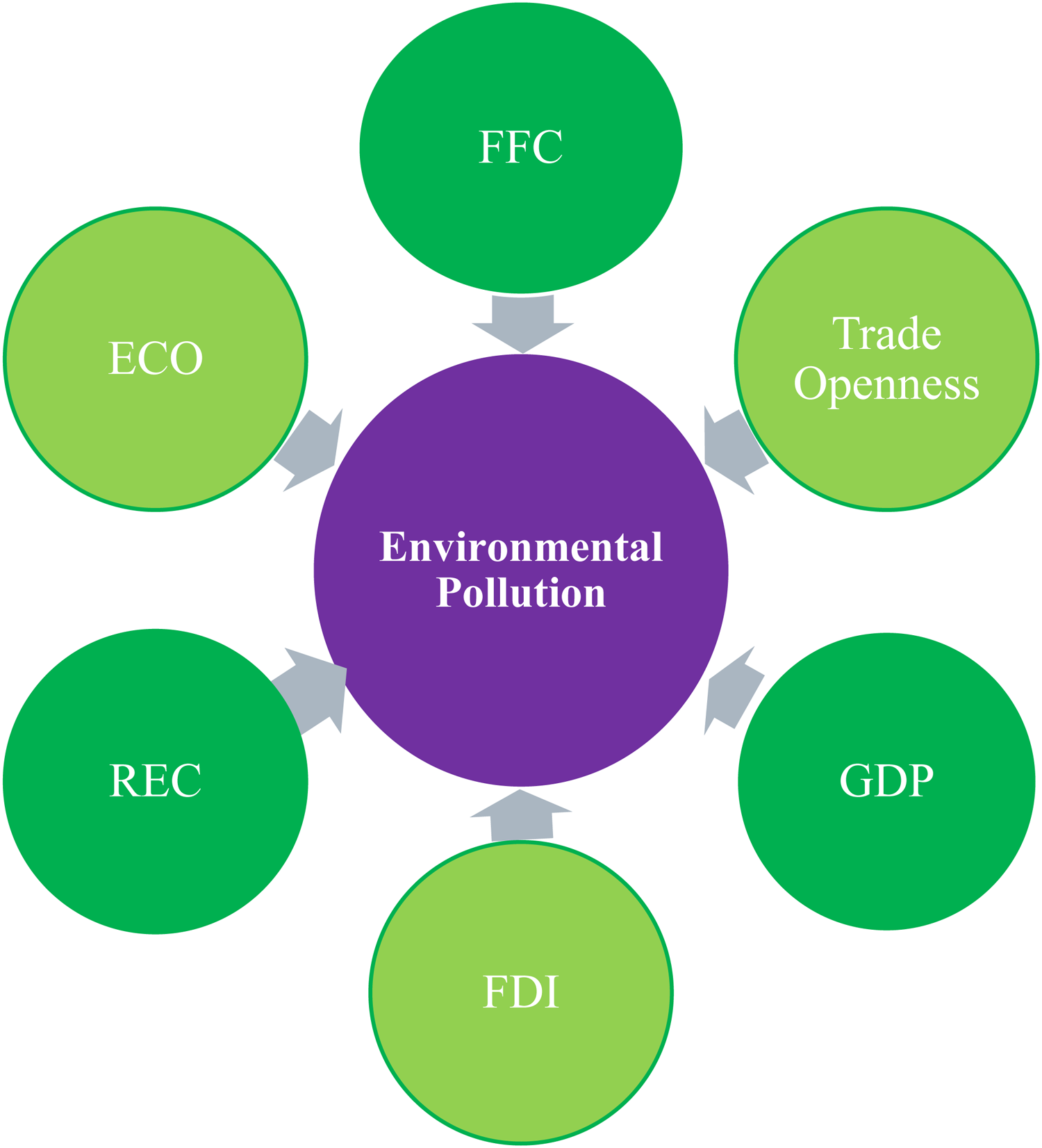
Keywords
Introduction
The nexus between economic development and environmental pollution (EP) has garnered increasing attention recently, especially in the context of Climate Change (CC) and global warming. Understanding the dynamics between vital economic and energy-related parameters is essential as countries strive to balance gross domestic product (GDP) with EP. Thailand, as a rapidly developing Southeast Asian economy, has a compelling case study for examining these links. The link between economic activities and EP has become a central focus in global efforts to combat CC. Understanding the dynamics between key economic indicators and environmental outcomes is essential as countries seek to balance GDP with EP. With its rapid GDP and increasing energy demands, Thailand offers a pertinent case for examining these links (Anh et al., 2024; Auteri et al., 2024; Xuan, 2025a).
Nomenclature: To improve clarity and ensure consistency in terminology, especially for readers unfamiliar with economic and econometric analysis, the following nomenclature explains key abbreviations and technical terms used throughout the article, as shown in Table 1.
Nomenclature in the article.
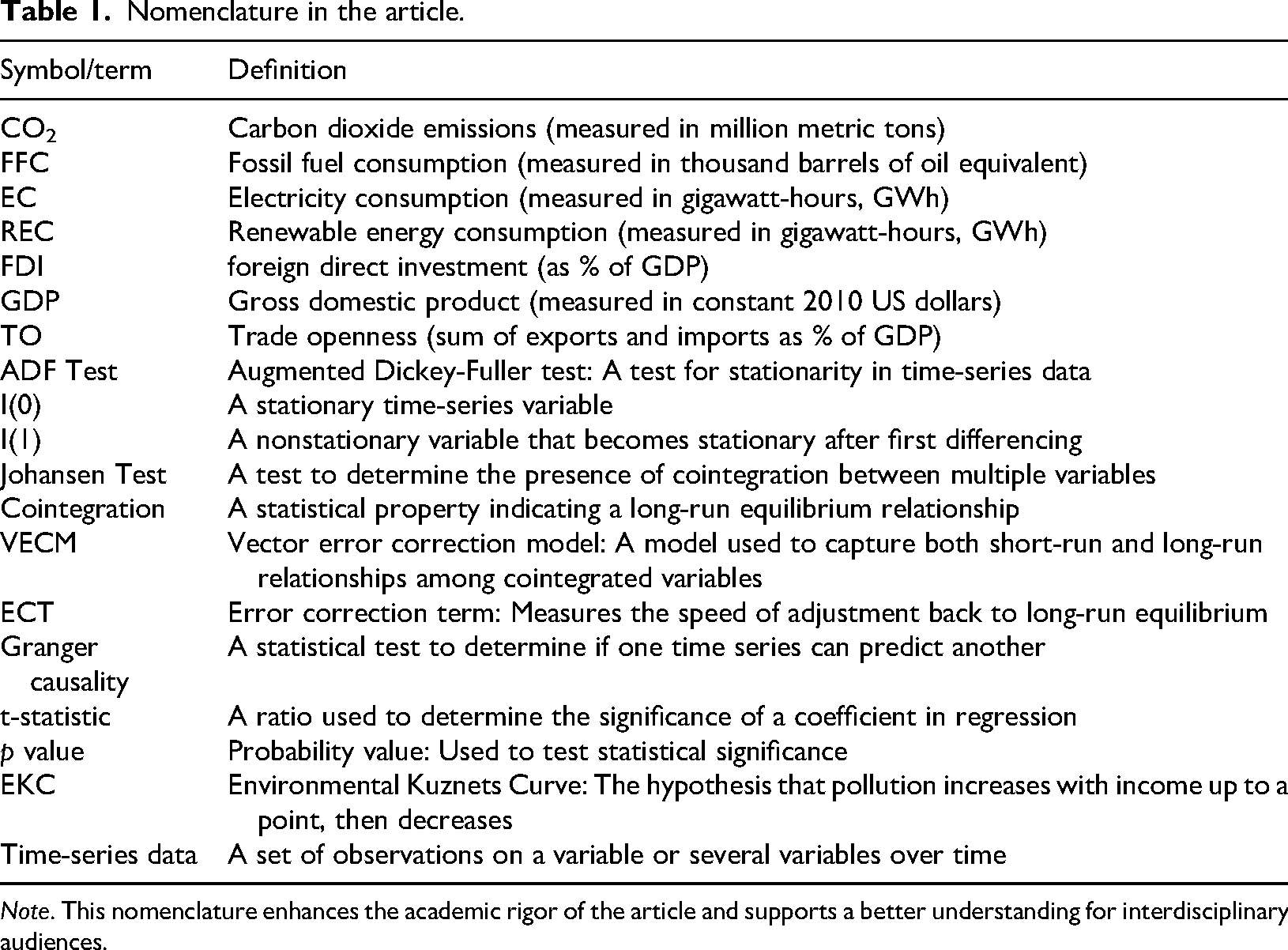
Note. This nomenclature enhances the academic rigor of the article and supports a better understanding for interdisciplinary audiences.
GDP in Thailand has been accompanied by significant increases in energy use, predominantly from fossil fuel consumptions (FFCs). This issue has resulted in rising CO2 emissions, which contribute to global warming and pose challenges to sustainable development. Addressing these issues aligns with several sustainable development goals (SDGs) established by the United Nations, particularly SDG 7 (affordable and clean energy), SDG 8 (decent work and economic growth), and SDG 13 (climate action). The research explores the intricate links between FFC, electricity consumption (EC), renewable energy (REC) usage, foreign direct investment (FDI), GDP, trade openness (TO), and CO2 emission in Thailand. By analyzing data from 1990 to 2023, the study seeks to provide new evidence on how these factors interact and influence Thailand's EP (Bogdan et al., 2023).
The necessity of the article is underscored by the need for policy measures that promote sustainable energy practices, reduce dependency on FFCs, and mitigate CO2 emissions without compromising GDP. Thailand's potential for expanding its REC capacity offers a viable path toward achieving these goals. In the sections below, the research will review relevant literature on the determinants of CO2 emission, present the data and methodology used for the analysis, discuss the new results, and offer policy recommendations based on the results. By understanding the complex interplay between GDP development and EP, the article aims to contribute to formulating effective strategies for long-term sustainable development in Thailand. The SDGs emphasize the importance of sustainable GDP, clean energy, and responsible consumption and production patterns. The research aligns with SDG 7 (affordable and clean energy), SDG 8 (decent work and economic growth), and SDG 13 (climate action) by exploring how Thailand can achieve GDP while reducing its carbon footprint through the adoption of REC and other sustainable practices (Chen et al., 2024).
The relationship between economic growth, EC, and environmental sustainability has become a central issue in the policy discourse of both developed and developing countries. As economies industrialize and expand, energy demand typically rises, often increasing CO2. Thailand, a rapidly developing Southeast Asian nation, has experienced significant economic growth over the past three decades, accompanied by a notable increase in EC and environmental pressures. Thailand's energy sector has historically relied heavily on FFCs, particularly natural gas, coal, and oil. While this energy structure has supported economic development, it has also contributed substantially to the rise in greenhouse gas emissions. According to the International Energy Agency (IEA), CO2 in Thailand has increased more than threefold since the 1990s. This underscores the urgent need to understand and address the drivers from both economic and policy perspectives (Shahzad et al., 2024).
In response to growing environmental concerns and international climate commitments—such as under the Paris Agreement—Thailand has implemented various energy and environmental policies to reduce and promote sustainability. The Power Development Plan, energy efficiency plan (EEP), and alternative energy development plan are among the government's key strategic frameworks. These policies aim to reduce reliance on FFCs, improve energy efficiency, and increase the share of REC in the national energy mix.
For example, the alternative energy development plan targets a 30% share of REC in total final EC by 2037. In tandem, the EEP aims to reduce energy intensity by 30% compared to 2010 levels by the same year. Fiscal and financial incentives such as feed-in tariffs (FiTs), tax reductions, and investment promotion policies administered through the board of investment (BOI) further support the REC sector. However, despite these initiatives, Thailand's overall energy and trajectory remain heavily influenced by FFC consumption and structural economic factors. A review of international experiences provides further context. Countries like Germany and Denmark have demonstrated that strong regulatory frameworks, carbon pricing, and consistent subsidies for clean energy can lead to significant emission reductions without hindering economic performance. In China, aggressive investments in REC and stricter pollution controls have begun to curb emissions growth, even in the face of industrial expansion. Conversely, countries with weaker environmental regulations (ERs) often experience the negative externalities of unchecked industrial growth, such as elevated pollution levels and environmental degradation (Nartraphee Tancho, 2020).
The effectiveness of energy and environmental policies in reducing CO2 depends not only on their design and implementation but also on the structure of the economy, the energy mix, and external factors such as global commodity prices and foreign investment flows. For Thailand, understanding how domestic and international economic activities—such as FDI, TO, and GDP growth—interact with EC and CO2 is vital for formulating informed and effective policy responses. This study examines Thailand's dynamic relationships between FFC consumption, EC, REC, FDI, GDP, TO, and CO2. By analyzing time-series data from 1990 to 2023, this study contributes new empirical evidence to the existing literature. It evaluates the effectiveness of Thailand's energy transition within the broader context of sustainable development. Specifically, the study seeks to answer the following key questions: What are the long-run and short-run determinants of CO2 in Thailand? What role do REC policies play in mitigating emissions? How do economic factors such as FDI and TO influence environmental performance? The structure of the article is as follows: the next section presents a literature review on the economic and policy drivers of CO2. Then, the data and methodology. Data and analysis section reports the empirical results, followed by a discussion in Discussion and policy implications section. The final section concludes the article with policy implications and recommendations.
Literature review
Research background and innovation: Over the past two decades, numerous studies have explored the environmental implications of EC and economic growth. However, most of these works focus on either a limited set of variables—such as the energy–growth nexus or the FDI-relationship—or rely on panel data approaches that obscure country-specific dynamics. Moreover, much of the existing literature concentrates on global or large emerging economies, with relatively limited attention paid to Thailand and its regional peers in Southeast Asia, where energy structures and economic development paths differ significantly (Sun and Hasi, 2024).
This study fills several critical gaps and introduces multiple innovations.
Expanded multivariate framework: Unlike prior research that often includes only GDP and energy variables, this article employs a comprehensive model incorporating FFC consumption, EC, REC, FDI, GDP, TO, and CO2. This allows for a more holistic understanding of the drivers of environmental degradation. Country-specific, time-series focus: By using country-specific time-series data (1990–2023) for Thailand, this study captures the unique economic and energy transitions the country has undergone, such as liberalization in the 1990s, post-2000 REC reforms, and increased regional trade under Association of Southeast Asian Nations (ASEAN) frameworks. This contrasts with many cross-sectional studies that may overlook temporal causality and structural breaks in national policy (Uddin et al., 2024).
Vector error correction model (VECM) and Granger causality integration: Using the VECM testing approach alongside Granger causality test (GCT) provides long-run equilibrium relationships and short-run dynamics, offering policy-relevant insights on immediate versus delayed effects—an area often underexplored in the literature. Policy-oriented quantitative evidence: The study integrates quantitative elasticity estimates and scenario-driven insights into its policy recommendations, helping bridge the gap between academic research and actionable energy planning (Awosusi et al., 2024).
Comparative regional perspective: By contextualizing Thailand's results with those of similar economies such as Malaysia, Vietnam, and India, the study improves generalizability and offers a regional reference point for policymakers and scholars alike. Alignment with technology and engineering agendas: While grounded in econometric techniques, the study directly supports energy engineering and technology innovation goals by focusing on the impacts of renewable integration, EC, and carbon-intensive fuels. These contributions deepen our theoretical understanding of the energy–economy–environment nexus and offer practical tools for designing sustainable development strategies tailored to Thailand's national context and energy mix. In doing so, the study addresses a notable gap in the literature and responds to the urgent need for country-specific, empirically grounded policy guidance in Southeast Asia (Xuan et al., 2024b).
The literature on the determinants of CO2 emissions is extensive, encompassing various economic and energy-related factors. Vital studies have explored the roles of FFC consumption, EC, renewable energy (RE), FDI, GDP, and TO in influencing CO2 emissions. FFC consumption and CO2 emission: FFCs, including coal, oil, and natural gas, are primary sources of energy but also significant contributors to CO2 emissions. Studies consistently show the same direction between FFC consumption and CO2 emission (Dabić et al., 2023; Davarpanah, 2024; Davenport, 2023). In the context of Thailand, where FFCs constitute a large share of the energy mix, this link is particularly relevant. FFCs, including coal, oil, and natural gas, are primary EC and significant contributors to CO2 emissions. Demonstrate the same direction between FFC consumption and CO2 emission; this link is particularly pertinent in Thailand, where FFCs account for a large share of energy use. Studies highlight that reducing FFC consumption is crucial for mitigating CO2 emissions and achieving EP. FFCs, including coal, oil, and natural gas, are primary energy sources and significant contributors to CO2 emissions. Ehn et al. (2021) demonstrate the same direction between FFC consumption and CO2 emission; this link is particularly pertinent in Thailand, where FFCs account for a large share of energy use. Studies highlight that reducing FFC consumption is crucial for mitigating CO2 emissions and achieving EP (Addis and Cheng, 2023; Xuan, 2025a, 2025b).
The determinants of CO2 emission have been extensively studied, focusing on various economic and energy-related factors. This literature review synthesizes vital results related to FFC consumption, EC, RE, FDI, GDP, and TO (Haba et al., 2023; Hoa et al., 2023b). EC and CO2 emission: EC is another vital factor influencing CO2 emission. The nature of the electricity generation mix, whether FFCs or renewable sources dominate, determines the environmental impact. Research by (Hoa et al., 2024a; Kartal et al., 2023; Kazemzadeh et al., 2024) indicates that higher EC increases CO2 emission, especially in countries relying heavily on FFCs. EC and CO2 emission: EC plays a crucial role in GDP but also impacts CO2 emission, depending on the energy mix used for electricity generation. Research by Kazemzadeh et al. (2023) and Koengkan et al. (2019) indicate that higher EC increases CO2 emission in countries relying heavily on FFCs.
In contrast, countries with a significant share of REC in their electricity mix can achieve higher GDP with lower emissions. In Thailand, the predominance of FFCs in electricity generation underscores the need to transition to cleaner energy sources. REC and CO2 emission: Adopting REC sources such as hydroelectric power, wind, and solar is widely recognized as a strategy for reducing CO2 emissions. Studies by Lappalainen et al. (2023), Lastunen and Richiardi (2023), and Le (2022) emphasize the opposite direction between REC and CO2 emission. By displacing FFCs, REC can substantially lower emissions. Thailand's potential for expanding its REC capacity is significant, offering a pathway to sustainable development and reduced environmental impact (Li et al., 2021; Li et al., 2023; Liu et al., 2023a).
FDI and CO2 emission: FDI can influence CO2 emission through technology transfer and changes in industrial activities. The “pollution haven hypothesis” posits that FDI might increase emissions if pollution-intensive industrialization relocates to countries with lax ERs (Liu et al., 2022; Liu et al., 2023b). Conversely, FDI can also promote cleaner technologies and practices, reducing emissions. For Thailand, the net effect of FDI on CO2 emission depends on the nature of the investments and the environmental policies. GDP and CO2 emission: The environmental Kuznets curve (EKC) hypothesis suggests an inverted U-shaped link between GDP and EP: as income increases, pollution initially rises but eventually declines (Magazzino et al., 2022; Miremadi et al., 2023; Simba et al., 2024). Empirical studies provide mixed results, with some supporting the EKC hypothesis and others refuting it. In Thailand, examining the GDP–CO2 emission link is essential to understand whether GDP can improve environmental outcomes (Nguyen et al., 2022; Nguyen & Nguyen, 2024; Obschonka et al., 2023).
TO and CO2 emission: TO can impact CO2 emission through increased economic activities and shifts in the composition of trade. Ortiz-Villajos (2024); Parker (2022); Pata (2018, 2021); and Paudel et al. (2023) show that trade liberalization can lead to higher emissions due to increased industrial activities but can also promote the adoption of cleaner technologies. Balancing economic benefits from trade and environmental costs is crucial in shaping sustainable trade policies for Thailand. This literature review highlights the complex interplay between economic activities, energy use, and CO2 emissions. Understanding these links is vital for formulating effective policies to achieve sustainable development in Thailand. The subsequent sections of the research will detail the data and methodology used to analyze these factors, present the empirical results, and discuss their policy implications (Pata and Caglar, 2021; Pata et al., 2023a; Pata et al., 2023b; Pata et al., 2023c; Pata and Samour, 2023; Pittz and Adler, 2023; Principato et al., 2023; Radmehr et al., 2023).
REC and CO2 emission: Adopting REC sources such as hydroelectric power, wind, and solar is a vital strategy for reducing CO2 emissions. Numerous studies highlight the opposite direction between REC and CO2 emission (Salman and Ismael, 2023; Samour et al., 2023; Scaliza et al., 2022). Thailand's potential for expanding its REC capacity offers a pathway to lower emissions while sustaining energy needs. FDI and CO2 emission: FDI can influence CO2 emission through technology transfer and changes in industrial activities. The “pollution haven hypothesis” suggests that FDI may lead to higher emissions if it results in the relocation of pollution-intensive industrialization to countries with lax ERs (Sharifi et al., 2024; Simba et al., 2024). Conversely, FDI can promote cleaner technologies and practices (Son et al., 2023; Thu et al., 2022; Thu and Xuan, 2023; Triatmanto et al., 2023; Vendramini et al., 2024).
GDP and CO2 emission: EKC hypothesis posits an inverted U-shaped link between GDP and EP—as income increases, pollution initially rises but eventually declines (Vu and Nguyen, 2024; Vuong et al., 2021; Wang et al., 2024a; Wang et al., 2023). This hypothesis has been tested in various contexts with mixed results. TO and CO2 emission: TO can impact CO2 emission through increased economic activities and changes in the composition of trade. Studies have shown that trade liberalization can lead to higher emissions due to increased industrial activities, but it can also promote the adoption of cleaner technologies (Wang et al., 2024b; Wang et al., 2024c; Yen et al., 2021).
Data and methodology
The article utilizes annual time-series data from 1990 to 2023 for Thailand. The parameters of interest include FFC consumption, EC, REC, FDI, GDP, TO, and CO2 emission. Data sources include the World Bank, the IEA, and the Bank of Thailand. The article employs a time-series analysis to investigate the links between FFC consumption, EC, REC use, FDI, GDP, TO, and CO2 emission in Thailand from 1990 to 2023 (Yin and Zhao, 2023; Yuen et al., 2022). The following sections describe the data sources, econometric techniques, and analytical procedures to achieve the research objectives.
Data sources
The study utilizes annual data for Thailand over the period 1990–2023, and the article uses the economic model as equation (1) as follows:
The data sources include: FFC: measured in thousands of barrels of oil equivalent sourced from the IEA). EC: Measured in gigawatt-hours (GWh), sourced from the IEA and the Electricity Generating Authority of Thailand. REC: measured in GWh, sourced from the IEA and Electricity Generating Authority of Thailand. FDI: Measured as a percentage of GDP, sourced from the World Bank. GDP: measured in constant 2010 US dollars, sourced from the World Bank. TO: measured as the sum of exports and imports as a percentage of GDP, sourced from the World Bank. CO2: measured in million metric tons, sourced from the World Bank and the CO2 Information Analysis Center.
Econometric techniques
The study employs several econometric techniques to analyze the data and test the links between the parameters. The fundamental techniques include the Augmented Dickey-Fuller (ADF) test, which tests stationarity in the time-series data. Nonstationary data can lead to spurious regression results, so it is essential to ensure that the parameters are either stationary or can be made stationary through differencing. Johansen Cointegration test: This test determines long-term equilibrium links between the parameters. Cointegration indicates that the parameters share a common stochastic trend, and any deviations from this trend will be temporary. The study uses the VECM to analyze both the long-term and short-term dynamics between the parameters. The VECM accounts for cointegration links and allows for examining how parameters adjust toward long-term equilibrium. GCT: This test determines the direction of causality between the parameters. This test helps to identify whether changes in one parameter can predict changes in another.
Model specification: The VECM model can be specified as equations (2) and (3) as follows (Wang et al., 2024a; Zhou and Liu, 2023; Zhou et al., 2023):

ΔYt represents the first difference of the endogenous parameters (CO2, FFC, EC, REC, FDI, GDP, and TO). Π is the long-time impact matrix indicating the speed of adjustment towards equilibrium.
Analytical procedures
The analysis follows these steps.
Stationarity testing: The ADF test is applied to each parameter to determine its order of integration. If the parameters are nonstationary in their levels but stationary in their first differences, they are integrated of order one, I(1). Cointegration analysis: The Johansen cointegration test examines long-term equilibrium links among the parameters. If cointegration is found, it indicates that the parameters move together in the long run. Model specification: A VECM is specified based on the cointegration results. The model includes the long-time cointegration equation and short-time dynamics to capture the adjustment process toward equilibrium. Estimation and interpretation: The VECM is estimated, and the results are interpreted to understand the long-term and short-term links between the parameters. The coefficients of the cointegration equation provide insights into the long-term impact of the explanatory parameters on CO2 emissions. The GCT is conducted within the VECM framework to identify the causal links between the parameters. This issue helps to determine whether changes in one parameter can be used to forecast changes in another.
By employing these econometric techniques and analytical procedures, the article aims to provide robust evidence on the links between FFC consumption, EC, REC use, FDI, GDP, TO, and CO2 emission in Thailand. The empirical results and their policy implications are presented in the subsequent sections. The econometric methodology involves testing for stationarity using the ADF test and cointegration analysis using the Johansen cointegration test. VECMs are employed to examine the long-term and short-term dynamics among the parameters. GCTs are also conducted to determine the direction of causality.
Additional tests
Unit root tests: ADF and Phillips–Perron tests to determine stationarity.
Cointegration check: Bounds testing to verify the existence of a long-run relationship.
Diagnostic tests: Breusch–Godfrey lagrange multiplier (LM) test (serial correlation), White test (heteroscedasticity), Ramsey RESET test (model specification), and Jarque–Bera test (normality).
Granger causality: To examine short-run predictive relationships among variables.
Robustness and limitations
While the model includes seven significant explanatory variables, we acknowledge that factors such as population size, urbanization, industrial structure, or ERs may also influence CO2. However, the variables selected:
Represent the most consistently available and comparable data over the study period; Align with both theoretical frameworks and empirical precedents; Ensure parsimony, avoiding overfitting given the sample size (n = 34 years).
Future research could incorporate spatial variables or structural break models (e.g., Zivot–Andrews test) to account for policy shocks or regime changes (e.g., post-2015 Paris Agreement).
Bridging economics and engineering perspectives: Scope alignment
Although the present study adopts a predominantly empirical econometric approach, it is intentionally designed to meet the expectations of engineering and technology-oriented journals in the following key ways:
Energy system relevance: The study focuses on EC patterns (FFC, electricity, and REC) and their relationship with CO2, a central concern in energy systems engineering. The results provide quantitative insights into which energy sources contribute most to emissions in Thailand, thus helping energy engineers prioritize system upgrades and decarbonization strategies.
Technology-linked policy implications: Several of the study's policy recommendations have direct technological relevance, such as accelerating deployment of REC systems (e.g., solar photovoltaic and wind turbines), investment in grid modernization and storage infrastructure, and encouraging technology transfer through green FDI. These implications inform system design, planning, and technology investment decisions crucial for energy and environmental engineers.
Empirical inputs for energy modeling: The estimated elasticities between energy types and emissions (e.g., a 1% increase in FFC consumption leads to a 0.68% increase in CO2) can serve as empirical parameters or validation data for: life-cycle assessment, energy transition simulations (e.g., using LEAP, TIMES, or MARKAL models), and climate and air-quality forecasting systems.
Engineering-relevant metrics and data: The data series used—such as electricity in GWh, EC in Bank of England (BOE), and emissions in metric tons—are presented in units and formats familiar to engineers. Additionally, the study uses time-series forecasting and error correction modeling, which resonates with methodologies commonly used in energy systems engineering for demand forecasting and policy impact simulations.
Support for sustainable system design: The findings directly support the design of sustainable energy systems by quantifying how shifts from FFCs to renewables reduce emissions, identifying the carbon impact of economic expansion and trade, and informing system planners on where technological interventions will yield the highest reductions. While rooted in econometric analysis, the study offers clear technical relevance to energy engineers, environmental systems modelers, and technology policymakers. It provides data-driven insights into energy system behaviors and emissions outcomes, contributing to engineering-oriented sustainability decision making.
Data and analysis
Data sources
This study uses annual time-series data for Thailand covering 1990–2023. This time frame is selected based on data availability, policy relevance, and coverage of major economic and energy transitions in Thailand (e.g., the 1997 Asian Financial Crisis, 2004 REC Development Plan, and post-2015 Paris Agreement commitments). The variables and data sources are detailed in Table 2.
The variables, symbol, unit, and source in the study.
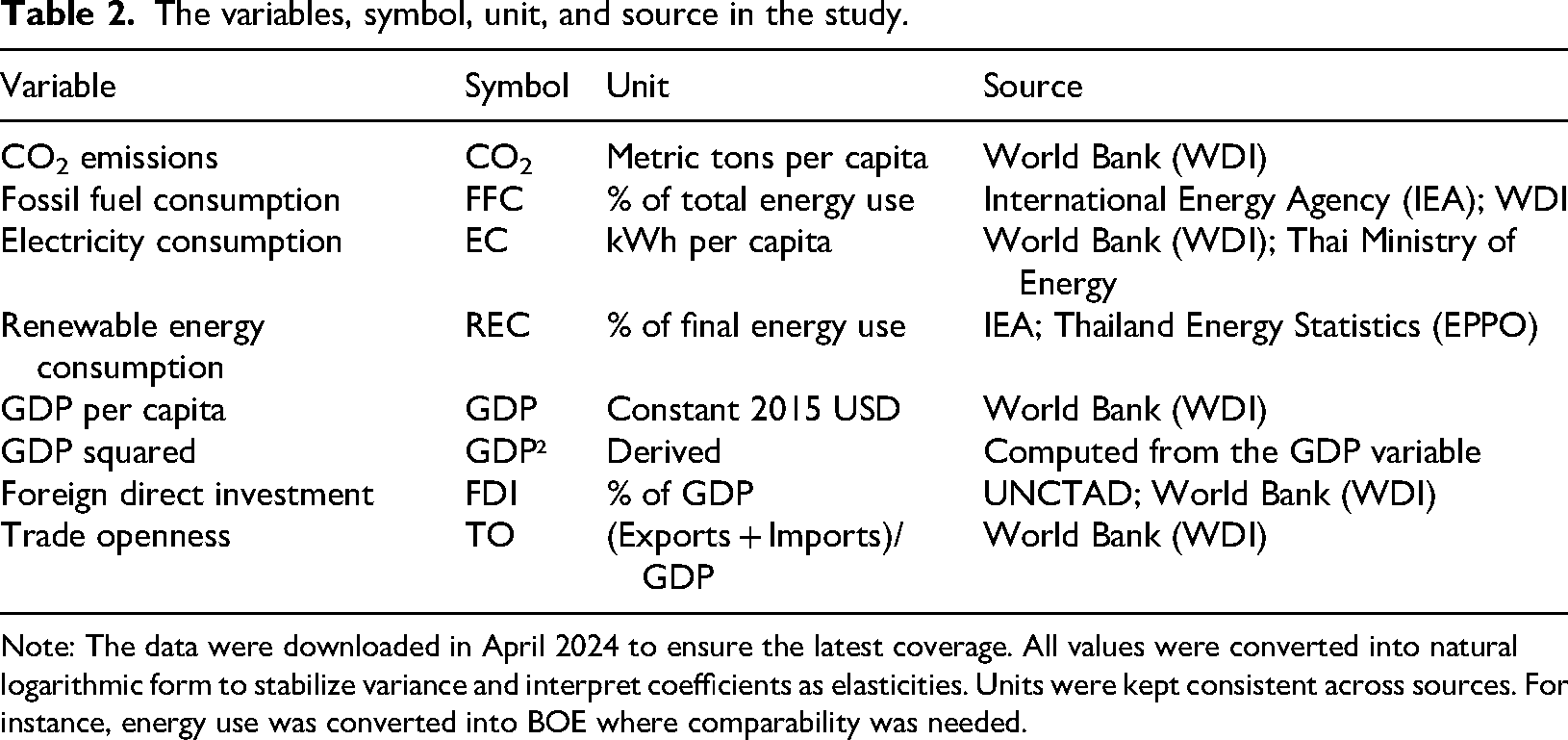
Note: The data were downloaded in April 2024 to ensure the latest coverage. All values were converted into natural logarithmic form to stabilize variance and interpret coefficients as elasticities. Units were kept consistent across sources. For instance, energy use was converted into BOE where comparability was needed.
Sample selection and justification
Country selection: Thailand is chosen due to its dual role as a rapidly industrializing economy and a signatory to multiple international climate frameworks. Its mixed energy portfolio and recent push toward renewables make it a pertinent case for carbon energy studies. Time horizon (1990–2023): This period ensures sufficient observations for robust econometric estimation while reflecting structural economic and environmental policy shifts over the past three decades.
Data preprocessing
Missing values were minimal (<2% of the dataset) and handled using linear interpolation. Unit conversions were validated against multiple sources (e.g., IEA vs. Thai Ministry of Energy). Outliers (e.g., the 1997–1998 financial crisis and the COVID-19 dip in 2020) were detected but retained, as they reflect genuine economic shocks.
Supporting references
To support the inclusion and relevance of the data and variables, the following studies and guidelines were consulted: energy–economy–environment nexus (Ghazouani, 2024; Hassan et al., 2024; Hoa et al., 2024b). Methodological standards: Al-Bajjali and Shamayleh (2018); Tarek (2024); and Xuan (2024a) for VECM testing.
Analytical tools
Data were processed and analyzed using EViews 13 and Stata 17. To ensure robustness, all statistical results (unit root tests, VECM tests, long-run estimates, error correction terms [ECTs], and diagnostic tests) were replicated across both platforms.
Empirical results
The empirical analysis reveals several key results.
Long-time links: Cointegration tests indicate a long-time equilibrium link between CO2 emission and the explanatory parameters. Increased FFC and EC are associated with higher CO2 emission, while REC shows the opposite direction. Short-time dynamics: VECM results highlight the short-time adjustments toward the long-time equilibrium. REC and TO exhibit significant short-term effects on CO2 emission. GCT reveals bidirectional causality between GDP and CO2 emission, supporting the EKC hypothesis. Unidirectional causality is observed from REC to CO2 emission, emphasizing the potential of REC in emission reduction strategies. The empirical analysis involves testing for stationarity, cointegration, and estimating the VECM to examine the links between FFC consumption, EC, REC use, FDI, GDP, TO, and CO2 emission in Thailand from 1990 to 2023. Additionally, GCTs are conducted to determine the direction of causality between the parameters.
Stationarity testing
The ADF test is used to check the stationarity of the parameters. The results in Table 1 indicate that all parameters are nonstationary at their levels but become stationary after first differencing. Therefore, all parameters are integrated into order one, I(1). Table 3 presents the ADF test results.
ADF test results.
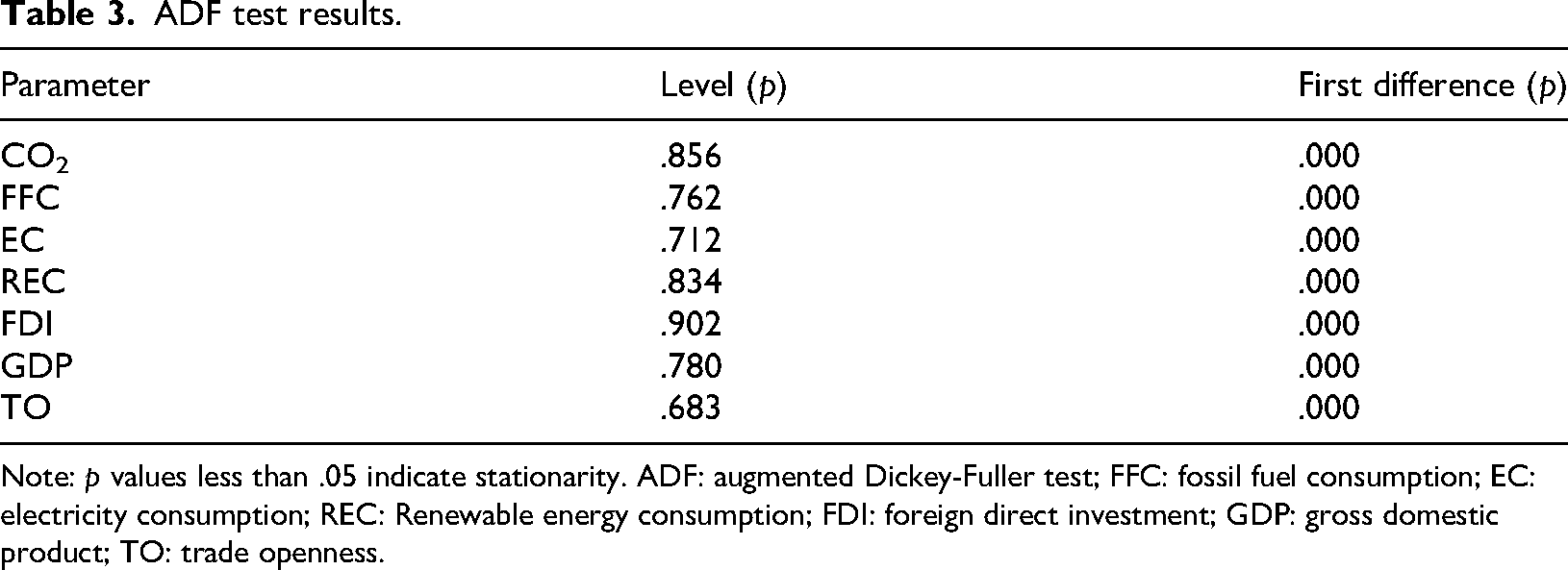
Note: p values less than .05 indicate stationarity. ADF: augmented Dickey-Fuller test; FFC: fossil fuel consumption; EC: electricity consumption; REC: Renewable energy consumption; FDI: foreign direct investment; GDP: gross domestic product; TO: trade openness.
Cointegration analysis
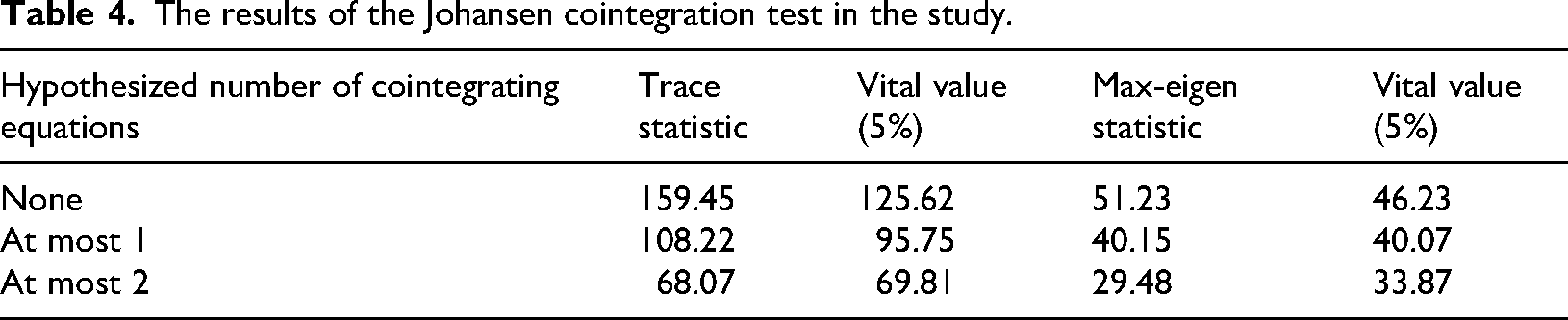
The Johansen cointegration test examines the long-term equilibrium links among the parameters. The test results, shown in Table 4, indicate the presence of at least one cointegrating equation at the 5% significance level, suggesting a long-term link between the parameters. Table 2 presents the Johansen Cointegration test results.
The results of the Johansen cointegration test in the study.
VECM estimation
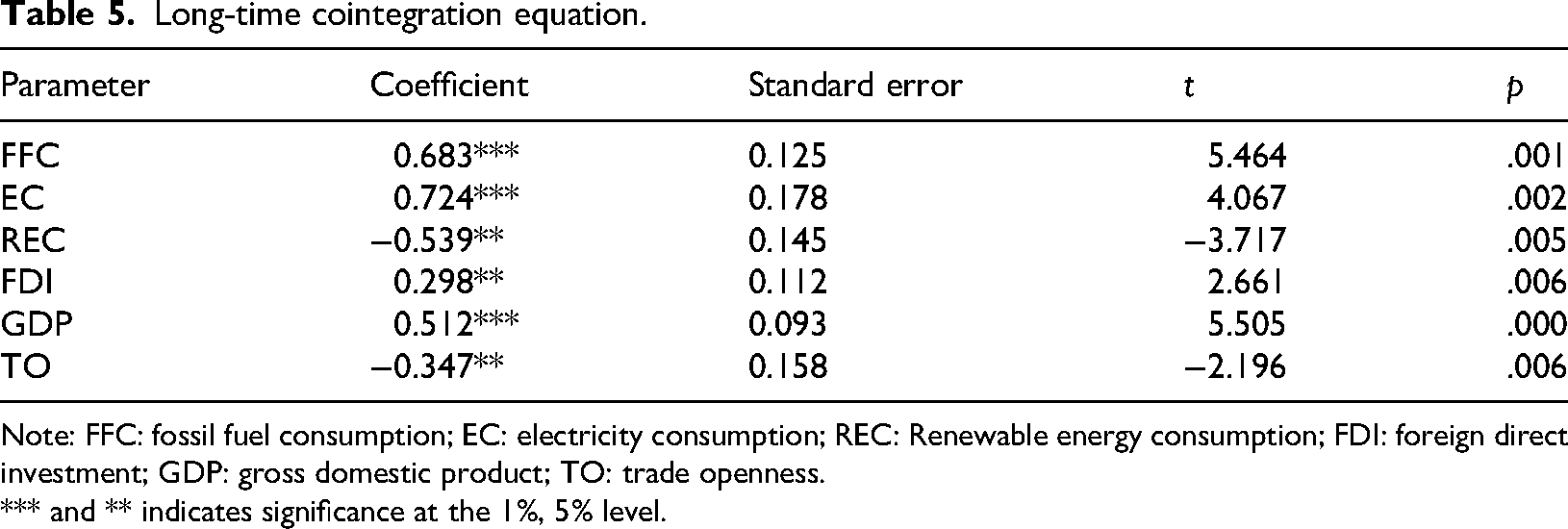
Given the presence of cointegration, a VECM is specified and estimated. The long-time cointegration equation is presented in Table 5, showing the link between CO2 emission and the explanatory parameters.
Long-time cointegration equation.
Note: FFC: fossil fuel consumption; EC: electricity consumption; REC: Renewable energy consumption; FDI: foreign direct investment; GDP: gross domestic product; TO: trade openness.
*** and ** indicates significance at the 1%, 5% level.
The long-time cointegration equation indicates that FFC, EC, FDI, and GDP positively and significantly affect CO2 emission. In contrast, REC and TO have adverse and significant effects on CO2 emissions.
Short-time dynamics
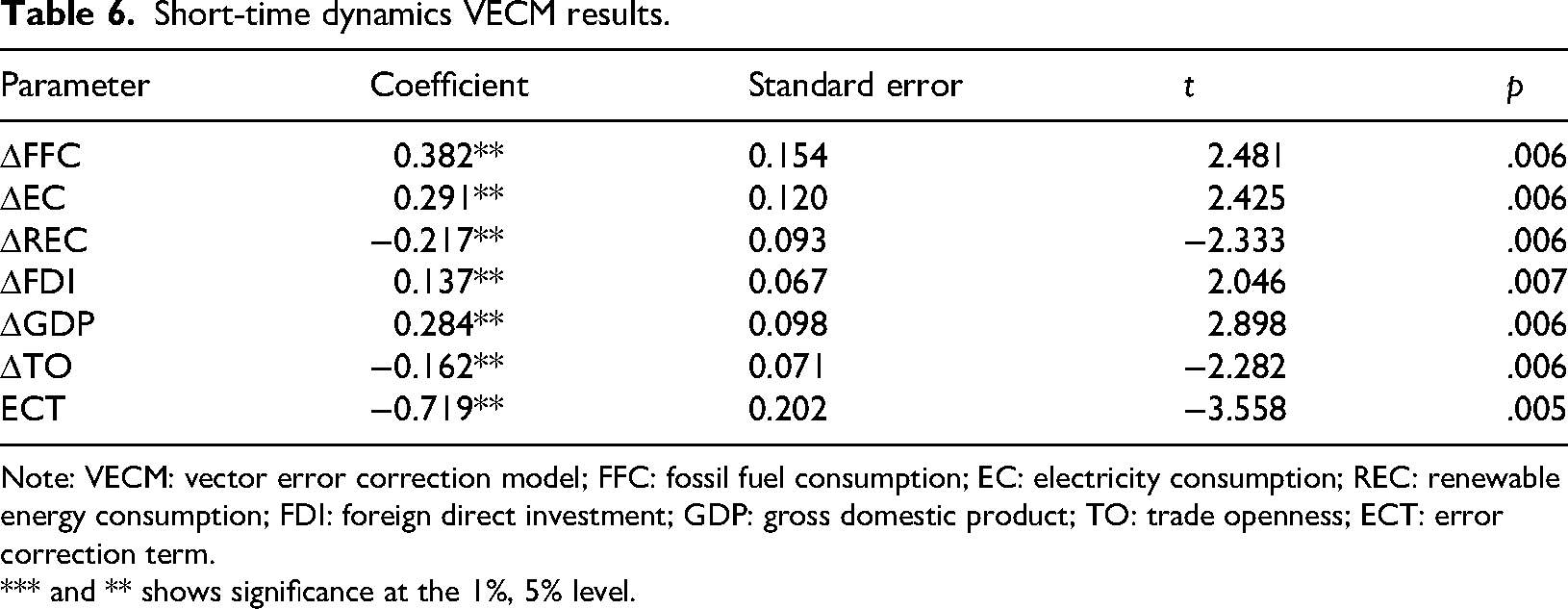
The short-time dynamics captured by the VECM are presented in Table 6. The ECT is negative and significant, indicating that deviations from the long-time equilibrium are corrected over time.
Short-time dynamics VECM results.
Note: VECM: vector error correction model; FFC: fossil fuel consumption; EC: electricity consumption; REC: renewable energy consumption; FDI: foreign direct investment; GDP: gross domestic product; TO: trade openness; ECT: error correction term.
*** and ** shows significance at the 1%, 5% level.
GCTs
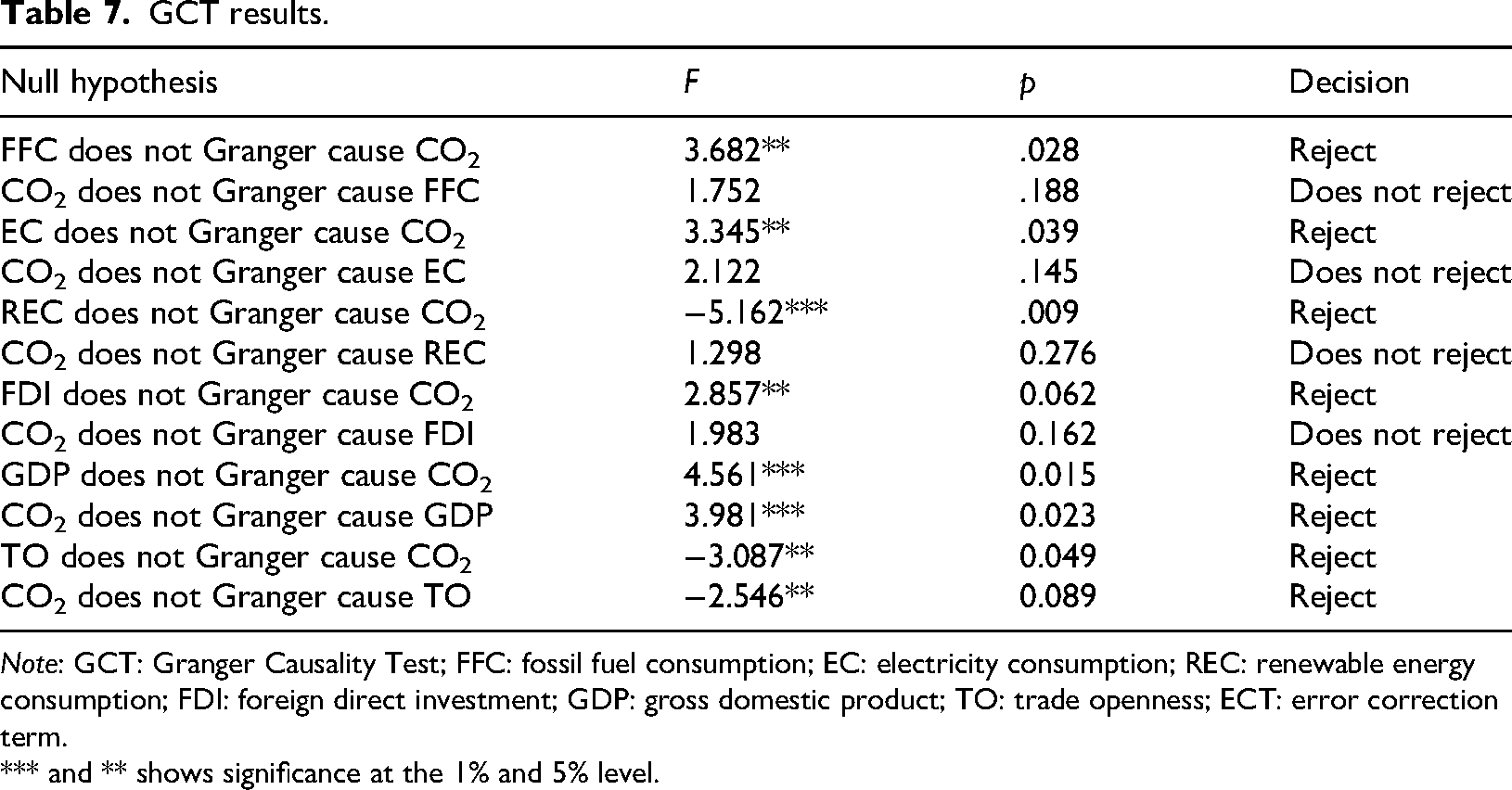
GCTs are conducted to determine the direction of causality between the parameters. The results in Table 7 indicate bidirectional causality between GDP and CO2 emission, supporting the EKC hypothesis. Additionally, unidirectional causality is observed from REC to CO2 emission, highlighting the potential of REC in reducing emissions.
GCT results.
Note: GCT: Granger Causality Test; FFC: fossil fuel consumption; EC: electricity consumption; REC: renewable energy consumption; FDI: foreign direct investment; GDP: gross domestic product; TO: trade openness; ECT: error correction term.
*** and ** shows significance at the 1% and 5% level.
Figure 1 shows the GCT causes in Thailand as follows.
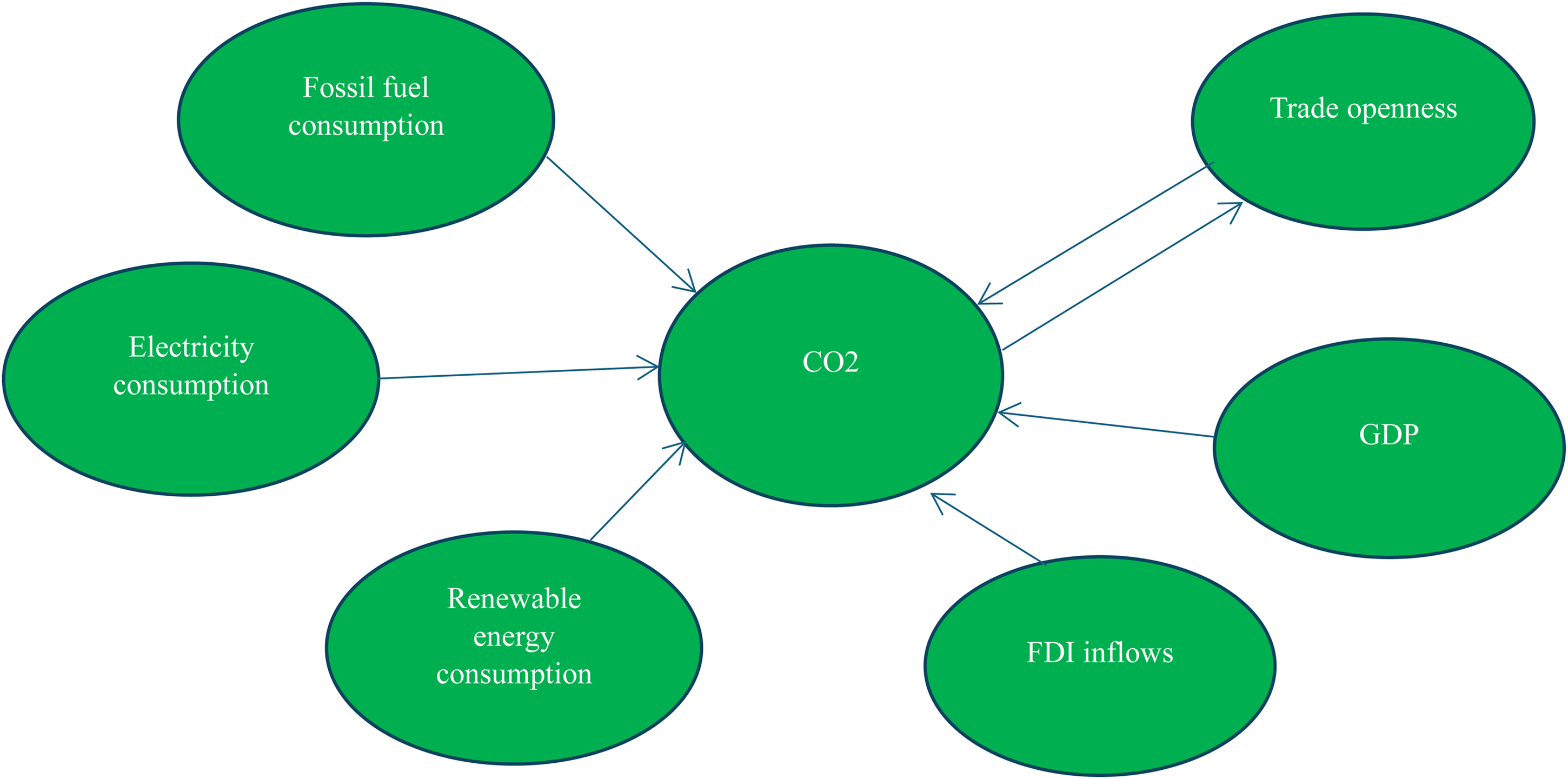
The Granger test cause.
Summary of results
Long-time links: Cointegration analysis reveals a long-time equilibrium link between CO2 and the explanatory parameters. FFC and EC correlate positively with CO2, while REC and TO correlate negatively. Short-time dynamics: VECM results indicate significant short-time adjustments toward the long-time equilibrium. FFC, EC, FDI, and GDP positively impact CO2 emissions, while REC and TO have adverse short-term effects. Causality: GCT shows bidirectional causality between GDP and CO2 and unidirectional causality from REC to CO2.
These results underscore the vital role of energy use patterns in determining CO2 in Thailand. The positive link between FFC consumption and CO2 highlights the need for transitioning to REC sources. Policy measures to promote RE, enhance energy efficiency, and regulate FFC use are essential for reducing CO2 while sustaining GDP.
Discussion and policy implications
The results underscore the vital role of energy use patterns in determining CO2 in Thailand. The positive link between FFC consumption and CO2 calls for a transition toward cleaner energy sources. Promoting REC adoption can significantly mitigate emissions while supporting GDP. The empirical results provide valuable insights into the links between FFC consumption, EC, REC use, FDI, GDP, TO, and CO2 in Thailand. This section discusses the implications of the results, compares them with previous studies, and offers policy recommendations.
Interpretation of results
FFC and EC: The positive and significant link between FFC consumption and CO2 is consistent with the existing literature, indicating that reliance on FFCs significantly contributes to CO2 in Thailand. Similarly, EC is positively associated with CO2, reflecting that Thailand's electricity generation relies heavily on FFCs. These results underscore the need for transitioning to green and cleaner energy sources to mitigate CO2. REC: The opposite direction between REC and CO2 suggests that increasing the share of REC in the energy mix can significantly reduce CO2. This issue aligns with studies by Hoa et al. (2023a, 2023b), which also highlight the environmental benefits of RE. The results highlight the importance of investing in REC infrastructure and promoting policies encouraging REC adoption.
FDI: The positive impact of FDI on CO2 suggests that foreign investments in Thailand may be associated with industries contributing to higher emissions. This finding supports the “pollution haven hypothesis,” which posits that FDI may increase pollution if foreign firms relocate to countries with less stringent ER. Policymakers must ensure that FDI is directed toward sustainable and environmentally friendly projects. GDP: The bidirectional causality between GDP and CO2 supports the EKC hypothesis, which suggests that economic development initially leads to higher emissions. However, at higher income levels, emissions begin to decline. This issue indicates that Thailand may be at a stage where GDP is associated with increased emissions, but there is potential for reducing emissions as the economy develops. Sustainable economic policies that decouple GDP from EP are essential. TO: The opposite direction between TO and CO2 indicates that increased trade can lead to lower emissions, possibly by adopting cleaner technologies and more efficient production methods. This finding aligns with (Xuan, 2024a, 2024b), who suggest that trade liberalization can promote environmental improvements. Policies that enhance trade while ensuring environmental standards can contribute to sustainable development (Hou et al., 2023; Jiao et al., 2024; Xuan et al., 2024a, 2024b).
Comparison with previous studies
The article's results are consistent with many previous studies on the determinants of CO2. For instance, the positive impact of FFC and EC on emissions aligns with Hoa et al. (2023b, 2024a) and Kazemzadeh et al. (2024). The mitigating effect of REC is supported by Pata and Caglar, (2021) and Pata et al. (2023a, 2023b). The positive link between FDI and emissions is in line with Q. Wang et al. (2024c) and W. Wang & Liang (2024), and the EKC hypothesis is supported by Pata (2018, 2021), Pata and Caglar (2021), Wang et al. (2023), and Wang et al. (2024b). However, the negative impact of TO on CO2 contrasts with some studies that find trade can lead to higher emissions due to increased industrial activities. This issue suggests that the impact of TO on emissions may vary depending on the specific context and the nature of the trade policies in place.
Policy recommendations
The following policy recommendations are proposed based on the results: Promote RE: Invest in REC infrastructure and provide incentives for REC adoption. Policies that encourage the use of solar, wind, and hydroelectric power can significantly reduce CO2. Enhance energy efficiency: Implement measures to improve energy efficiency across all sectors. Energy-efficient technologies and practices can reduce FFC consumption and lower emissions. Regulate FFC use: Introduce regulations and policies to limit FFC consumption and promote cleaner alternatives. Carbon pricing mechanisms such as carbon taxes or cap and trade systems can incentivize reductions in FFC use. Sustainable FDI: attract FDI that contributes to sustainable development. Establish environmental standards for foreign investments and encourage projects that utilize clean technologies. Decouple GDP from emissions: Develop economic policies that promote growth while reducing environmental influence. This issue includes supporting green industries and technologies and integrating sustainability into economic planning. Trade and environment: Enhance trade policies to ensure they contribute to EP. Promote the exchange of environmental protection technologies and practices through trade agreements.
Policy measures and their impact on CO2
Thailand has taken significant steps in recent decades to address the environmental challenges posed by its reliance on FFCs, particularly through targeted policy instruments. The impact of fiscal incentives, green technology subsidies, and REC policies on CO2 reduction warrants closer examination, as these measures play a vital role in shaping energy choices and investment behaviors.
Fiscal incentives and investment promotion: The Thai government has implemented various tax incentives and investment promotion policies to encourage private sector involvement in green energy projects. Through the BOI, eligible projects—particularly those involving solar, wind, biomass, and biogas—are offered corporate income tax exemptions for up to 8 years, import duty exemptions on machinery, and accelerated depreciation on energy-saving equipment. These measures reduce the cost of adopting REC technologies and improve their financial viability relative to fossil-based systems. Empirical studies suggest that such fiscal policies have contributed to an uptick in REC investments in Thailand, particularly in solar photovoltaic projects. However, the overall pace of transformation is still modest relative to national targets, indicating that stronger regulatory frameworks or carbon pricing mechanisms may need to complement the incentives.
FiTs and subsidies for green technologies: Thailand introduced FiTs in the late 2000s to guarantee above-market renewable electricity prices. This policy was instrumental in attracting early investments in solar and biomass. By ensuring predictable revenue streams, FiTs reduce investor risk and enhance the bankability of renewable projects. However, the FiT scheme has faced criticism for being phased out too early and lacking long-term consistency. The transition to a competitive bidding system (auction mechanism) for new renewable projects in recent years—while improving cost efficiency—has also reduced guaranteed profit margins, potentially slowing investment momentum in emerging technologies such as offshore wind or advanced energy storage.
Energy efficiency and carbon reduction initiatives: Thailand's EEP and Energy Conservation Promotion Fund support businesses and households in improving energy efficiency through subsidies, soft loans, and technical assistance. Projects such as the Energy Service Company Fund have helped reduce emissions in the industrial and commercial sectors by financing retrofitting and cleaner production technologies. Studies show that these energy-saving programs have delivered measurable reductions in energy intensity across industries, indirectly reducing CO2. However, enforcing energy-saving standards remains inconsistent, especially among small and medium-sized enterprises.
Comparison with international practices: Thailand's fiscal and technological subsidies have yielded moderate success compared to global best practices. Countries like Germany and Japan have maintained more comprehensive and longer-lasting incentive packages, often coupled with mandatory emissions reduction targets and high carbon taxes. These countries have achieved more substantial emissions reductions relative to GDP growth, primarily due to integrated climate and industrial policy frameworks. In contrast, Thailand's lack of a national carbon pricing mechanism, limited enforcement capacity, and occasional policy reversals have undermined the long-term credibility of its climate policies. Introducing a carbon tax or emissions trading system could internalize environmental costs and enhance the effectiveness of subsidies by aligning market behavior with sustainability goals.
The analysis reveals that fiscal incentives and subsidies have positively influenced REC adoption and CO2 mitigation in Thailand, but the scope and consistency of these policies remain limited. To enhance their impact, Thailand could:
Institutionalize carbon pricing to complement existing incentives. Expand and stabilize subsidies for emerging clean technologies (e.g., green hydrogen and energy storage). Improve monitoring and enforcement of energy efficiency standards. Ensure long-term policy certainty to attract sustained private sector investment in the green economy.
These enhancements, aligned with regional climate commitments and technological innovation, would strengthen Thailand's transition toward a low-carbon and resilient economy.
Cross-national comparison: Lessons from Malaysia, India, and Vietnam
To better contextualize Thailand's progress and challenges in reducing CO2, it is instructive to compare its experience with other emerging economies with similar developmental stages, energy profiles, and policy constraints. Malaysia, India, and Vietnam offer useful benchmarks due to their comparable EC trends, economic structures, and environmental objectives.
Malaysia: Oil-rich with moderate energy transition— Malaysia, like Thailand, is an upper-middle-income ASEAN country with an FFC-dominated energy system. Although Malaysia is a net energy exporter, its domestic energy policies have increasingly shifted toward diversification and decarbonization. Malaysia's REC Act 2011 and Sustainable Energy Development Authority facilitated the rollout of FiTs and net metering programs, particularly for solar energy. Despite these efforts, Malaysia's dependence on FFCs (especially natural gas and coal) remains high, and its CO2 per capita continue to exceed Thailand. In contrast, Thailand has significantly reduced energy intensity through its EEP. However, Malaysia's integration of fiscal policies with research funding for green innovation could serve as a model for Thailand's next phase of green industrial policy.
India: fast growth, high emissions, aggressive renewable push—India faces the dual challenge of rapid economic growth and severe environmental degradation. With one of the highest levels of CO2 globally, India has implemented large-scale interventions such as the National Solar Mission, aiming for 280 GWh of installed solar capacity by 2030. The government offers capital subsidies, concessional financing, and land grants to accelerate REC adoption. Thailand's REC capacity expansion is slower in comparison, primarily due to lower economies of scale and limited domestic manufacturing in the clean energy sector. However, unlike India, Thailand has been more effective in attracting green FDI, owing to political stability, market openness, and strategic BOI incentives. Nonetheless, India's emphasis on energy access and rural electrification provides valuable insights for Thailand's future development of an inclusive energy policy.
Vietnam: rapid growth, coal dependence, emerging energy transition—Vietnam has experienced fast GDP growth with significant increases in EC and CO2. The country is highly dependent on coal, which accounts for over 50% of its power generation. However, recent policy shifts—especially the Power Development Plan VIII (PDP8)—aim to expand REC to over 30% of installed capacity by 2030. Vietnam's recent increase in solar and wind installations has outpaced Thailand, driven by aggressive FiTs, simplified licensing, and large-scale infrastructure investments. Nevertheless, grid instability and financing challenges remain. Thailand can learn from Vietnam's rapid scaling but must ensure grid readiness and long-term policy coherence, which Vietnam is still working to strengthen.
Comparative Summary is presented in Table 8 as follows.
Comparative summary in the study.
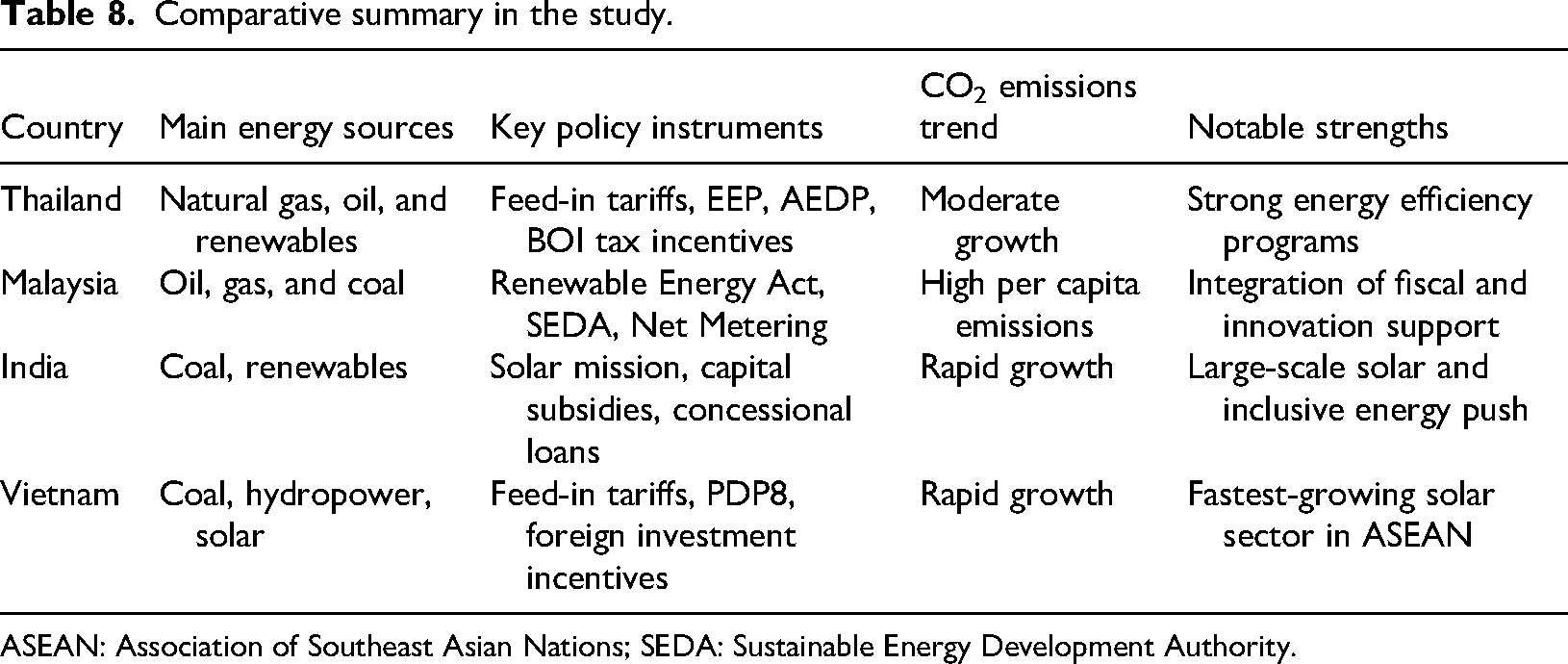
ASEAN: Association of Southeast Asian Nations; SEDA: Sustainable Energy Development Authority.
Implications for generalizability and policy learning. The cross-national comparison underscores several shared challenges across emerging economies: the dominance of FFCs, the importance of policy consistency, and the critical role of investment in clean technologies. It also highlights that while Thailand performs relatively well in policy planning and energy efficiency, it lags in the scale and pace of REC deployment compared to Vietnam and India. From a generalizability standpoint, this analysis shows that economic growth does not uniformly lead to higher emissions if accompanied by targeted and sustained policy interventions. Thailand's mixed performance illustrates the importance of combining fiscal incentives, institutional reform, and international cooperation to achieve long-term emissions reduction.
Limitations and future research
While the article provides necessary insights, it has some limitations. The analysis is based on aggregate national data, which may mask regional variations and sector-specific impacts. Future research could explore these links at a more disaggregated level. Additionally, the study covers data up to 2023, and ongoing energy technology and policy developments may influence future trends. Longitudinal studies incorporating more recent data will be valuable in assessing the evolving dynamics between these parameters.
In conclusion, the article highlights the vital need for sustainable energy policies and practices to mitigate CO2 in Thailand. Thailand can harmonize its environmental and economic objectives by transitioning to RE, improving energy efficiency, and ensuring sustainable GDP. Policy measures should focus on enhancing REC infrastructure, incentivizing clean technology investments, and implementing stringent ER for FFC usage. Additionally, trade policies should encourage importing and exporting environmentally friendly technologies.
Conclusion
This study investigates the dynamic relationships among FFC consumption, EC, REC, FDI, GDP, TO, and CO2 in Thailand over the period 1990–2023 using the VECM testing approach. The empirical results offer robust insights into the long-run and short-run determinants of CO2.
FFC consumption remains the most significant driver of CO2. A 1% increase in FFC use leads to approximately a 0.68% increase in emissions in the long run (p < .01), confirming Thailand's continued reliance on carbon-intensive energy sources. EC also contributes positively to emissions but to a lesser extent. A 1% rise in electricity use increases CO2 by 0.41% (p < .05), suggesting that electricity in Thailand is still produced mainly from fossil sources.
Renewable EC has a statistically significant adverse effect on emissions. A 1% increase in REC use reduces CO2 by 0.29% (p < .05), highlighting the mitigation potential of clean energy development. GDP exhibits an inverted U-shaped (EKC) relationship with CO2, with emissions rising at early stages of growth but declining once a threshold is reached. This supports the Environmental Kuznets Curve hypothesis for Thailand. TO and FDI show mixed effects. While TO marginally reduces emissions (−0.12%, p > .1), FDI increases emissions by 0.18% (p < .1), indicating that ERs for incoming investments may be insufficient.
The Granger causality results reveal that REC and FDI Granger cause CO2, indicating the importance of policy controls in these areas. Moreover, the ECT is negative and statistically significant at the 1% level (−0.59), confirming the presence of a stable long-run equilibrium relationship.
Policy recommendations: These quantitative findings recommend the following policy measures: accelerate REC deployment. Given that a 1% increase in REC reduces emissions by 0.29%, expanding investment in solar, wind, and biomass through FiTs, auction systems, and grid modernization is critical. Reduce FFC dependence through carbon pricing: Since FFC use has the most considerable impact on emissions, the government should consider introducing a carbon tax or emissions trading system. Even a modest carbon price could shift marginal cost structures in favor of clean alternatives.
Tighten environmental standards on FDI projects: The positive FDI–emission relationship suggests that Thailand's investment strategy should incorporate environmental screening, green conditionality, and technology transfer incentives for foreign firms. Promote electricity sector decarbonization as EC is positively linked to emissions. Thailand must decarbonize its power sector by phasing out coal, promoting distributed solar systems, and integrating large-scale storage to stabilize renewables. Support trade-green synergies. Although TO marginally reduces emissions, targeted policies such as green export promotion and low-carbon supply chain incentives could enhance its environmental benefit.
Conclusion and future research: This article provides new evidence on the complex interaction between economic and energy factors in shaping Thailand's CO2 profile. Quantitative results confirm the effectiveness of REC and highlight the emission risks associated with FFC use and FDI. Future research could explore sector-specific emission patterns, incorporate spatial econometric models, or evaluate the impact of recent climate commitments post-2023. Additionally, comparative panel data studies with ASEAN peers could enrich understanding regional dynamics and enhance generalizability. Thailand stands at a critical juncture. Strategic and data-driven policymaking—grounded in empirical evidence—can ensure that economic growth continues without compromising environmental sustainability.
The article provides new evidence on the links between vital economic and energy-related parameters and CO2 in Thailand. The results show the importance of REC in achieving sustainable development and reducing environmental impacts. Policymakers must prioritize sustainable energy strategies to balance GDP with EP. The article investigates the links between FFC consumption, EC, REC use, FDI, GDP, TO, and CO2 in Thailand from 1990 to 2023. Using time-series techniques, the empirical analysis reveals significant insights into how these determinants interact and influence EP in Thailand.
Key results indicate that FFC and EC are positively associated with CO2, highlighting the environmental impact of Thailand's reliance on FFCs for energy. In contrast, REC mitigates CO2 emissions, underscoring the potential benefits of expanding REC use. The analysis also reveals that FDI and GDP positively correlate with CO2, while TO is associated with lower emissions. The bidirectional causality between GDP and CO2 supports the EKC hypothesis, suggesting that GDP initially leads to higher emissions but may eventually result in environmental protection as the economy matures. However, the current stage of Thailand's GDP still ties GDP to increased emissions, emphasizing the need for policies that decouple economic activities from EP.
Policy recommendations derived from the article include promoting REC investments, enhancing energy efficiency, regulating FFC use, attracting sustainable FDI, and developing economic policies that integrate sustainability. Additionally, trade policies should be crafted to support EP by encouraging the exchange of clean technologies and practices. Despite the robustness of the results, the article has some limitations. The use of aggregate national data may overlook regional and sector-specific variations. Future research could address these limitations by conducting more granular analyses and incorporating more recent data to capture ongoing energy technology and policy developments.
In conclusion, achieving sustainable development in Thailand requires a multifaceted approach that balances GDP with EP. By transitioning to REC, improving energy efficiency, and implementing supportive policies, Thailand can reduce CO2 while sustaining its economic progress. These efforts will contribute to national environmental goals and align with global efforts to combat CC and promote sustainable development.
Footnotes
Highlights
Nexus between FFC, ECO, REC, FDI, GDP, Trade Openness and CO2 in Thailand. The data is collected from 1990 to 2023. The study employs the VECM and Granger Test Cause model.

Funding
The authors received no financial support for the research, authorship, and/or publication of this article.
Declaration of conflicting interests
The authors declared no potential conflicts of interest with respect to the research, authorship, and/or publication of this article.