




Abstract
The manuscript tests the interconnected links between electricity consumption (EC), fossil fuel (FF) use, renewable energy (RE) adoption, foreign direct investment (FDI), population growth (PG), gross domestic product (GDP), and environmental pollution (EP) in Korea. Using time series data from 1990 to 2023, we employ vector autoregression (VAR) and Granger causality tests (GCT) to analyze the dynamic interactions among these parameters. Our findings indicate significant bidirectional causality between GDP and EC, unidirectional causality from FFC to EP, and a notable impact of RE adoption on reducing pollution levels. The fresh findings underscore the necessity of integrated policy recommendations that balance economic growth (EG) with sustainable energy practices to mitigate environmental degradation. The manuscript provides valuable insights for policymakers aiming to harmonize economic development (ED) with environmental sustainability (ES) in Korea. The new findings underscore the necessity of integrated policy approaches that balance EG with sustainable energy practices to mitigate environmental degradation.
Keywords
Introduction
South Korea has experienced significant industrial and EG over the past few decades in the context of rapid globalization, industrialization and urbanization. This economic transformation has increased energy use, predominantly from FFs, resulting in heightened environmental degradation. Simultaneously, there has been a growing recognition of the demand for sustainable and green energy solutions, prompting investments in R.E. The manuscript aims to test the complex relationships between these determinants, providing a comprehensive understanding of their interdependencies and implications for policymaking. South Korea has emerged as a world economic powerhouse in the last few decades, driven by rapid industrialization and urbanization. This transformation has significantly promoted Korea's energy use, mainly from FFs, which has, in turn, led to heightened levels of environmental degradation. The interplay between GDP, energy use, and ecological preservation has become a critical concern for policymakers and researchers (Adebayo and Samour, 2024; Anh et al., 2024; Bogdan et al., 2023; Bui et al., 2023a; Bui et al., 2023b).
The electricity demand, a cornerstone of modern economies, has surged with South Korea's EG. However, this increased EC, largely reliant on FFs, has contributed to substantial CO2, exacerbating environmental degradation. The environmental costs of such growth have prompted a reevaluation of energy policies and a shift toward RE sources. RE adoption is a pivotal strategy to reduce CO2 and greenhouse gas emissions and migrating climate change (Bui Minh and Bui Van, 2023; Chen et al., 2024; Chowdhury et al., 2024; Dabić et al., 2023; Dahinine et al., 2024). Simultaneously, FDI has played a vital role in South Korea's industrial and EG. FDI brings capital, technology, and expertise, fostering GDP. However, the environmental implications of FDI are complex and can vary depending on the regulation environment and the nature of the developments and investments. PG further complicates this nexus. An increasing population heightens energy demand and waste generation, intensifying the strain on environmental resources. Balancing the needs of a growing population and increasing birth level with long-term sustainability goals is a pressing challenge (Deng et al., 2024; Do et al., 2023; Doleac et al., 2024).
The global urgency to reduce climate change and achieve sustainable development (SD) has brought the interrelationships between EC, GDP, FDI, and ES to the forefront of policy and academic discussions. South Korea, as a rapidly industrialized and technologically advanced nation, provides a compelling case to explore these dynamics due to its heavy reliance on FFs, significant investments in RE, and growing emphasis on innovation-driven GDP. Despite its progress, South Korea faces persistent challenges in balancing GDP with ES, particularly as its CO2 emissions remain among the highest per capita globally. EC is at the heart of these challenges, driven by industrial growth, urbanization, and population dynamics. While EC supports ED, its environmental repercussions are primarily shaped by the composition of the energy mix and demand critical attention. RE has emerged as a promising solution to mitigate EP, but its integration into South Korea's energy system is met with technological, regulatory, and financial barriers. Additionally, FDI inflows and PG are crucial contributors to economic activities and environmental outcomes, yet their specific roles in shaping the energy-environment links in South Korea remain underexplored.
Objective of the Study: The manuscript aims to check the nexus between EC, FF use, RE adoption, FDI, PG, ED, and EP in South Korea. The objectives of this research are threefold: To analyze the interdependence and causal relationships among the parameters. To evaluate how much EC patterns, FDI, and population dynamics influence GDP and ES. To provide actionable policy recommendations for balancing GDP with ES in South Korea. Contribution of the Study: The manuscript makes several significant contributions to the existing literature. Integrated Analysis of Key Parameters: While previous papers have explored the relationships between EC and GDP, the manuscript uniquely integrates FF use, RE, FDI, PG, and CO2 emissions into a comprehensive framework. Focus on South Korea: By examining South Korea's specific context, The manuscript sheds light on the unique threats and opportunities faced by a country transitioning to a green economy while maintaining economic competitiveness. Policy-Relevant Insights: The study provides empirical evidence to support targeted policy interventions, particularly in RE promotion, sustainable urban planning, and green investment strategies.
Methodological Contribution: Utilizing a VAR model and GCT, the manuscript contributes methodologically by capturing the dynamic interrelationships and feedback loops among the parameters under investigation. Research Gaps- Despite the extensive body of knowledge and literature on the energy-environment nexus, some research gaps remain unaddressed: Lack of Integrated Studies: Many existing studies focus on individual relationships, such as between EC and GDP or FDI and GDP, without considering the interconnectedness of multiple parameters in a unified framework. Need for more focus on South Korea: While global and regional studies provide valuable insights, limited research addresses the unique energy, economic, and environmental dynamics of South Korea explicitly. Dynamic Relationships Over Time: Few studies have examined how the relationships between these parameters evolve, particularly in South Korea's energy transition and population dynamics. Limited Exploration of RE's Role: Although RE is widely recognized as vital for migrating EP, its specific impact on CO2 emissions in South Korea still needs to be explored in empirical studies. The manuscript explores the dynamic interactions between EC and FF use and the adoption of RE sources, FDI, PG, EG, and environmental degradation in South Korea. We employ a VAR model and a GCT on time series data from 1990 to 2023 to unravel these parameters’ causal relationships and feedback mechanisms. Understanding these interdependencies is crucial for designing policies that promote sustainable GDP while mitigating environmental degradation (Duc et al., 2024; Duong and Vu, 2023; Ehn et al., 2021; Ernst and Woithe, 2024; Hoa et al., 2023a, 2023b; Xuan, 2024a; Xuan et al., 2024a).
By addressing these gaps, the manuscript seeks to advance the knowledge of the energy-environment-economy relationship in South Korea and provide actionable evidence for policymakers, scientists, and researchers. Structure of the Paper- The remainder of the manuscript is organized as follows: Part 2 comprehensively reviews relevant literature, highlighting key findings and research gaps. Part 3 outlines the methodological framework and data used in the analysis. Part 4 presents the results using VAR and GCT methodology. Part 5 is a discussion and comparison with previous research. Finally, Part 6 concludes the paper with policy recommendations, limitations, and suggestions for future research.
Literature review
The interconnections between EC, FF use, the adoption of RE sources, FDI, PG, EG, and environmental degradation have been the subject of extensive research. This section reviews the relevant body of literature, highlighting new findings and identifying gaps. The manuscript aims to address (Filgueiras et al., 2024; Xuan, 2024a, 2024b). EC and GDP- The nexus between EC and GDP-EG has been widely studied, with mixed findings. We were the first to explore this relationship, identifying a unidirectional causality from GDP to energy use in the United States. Subsequent studies, such as those by (Haba et al., 2023; Hoa et al., 2023b), have provided evidence of bidirectional causality in various contexts, indicating that EC and GDP reinforce each other. These findings suggest that energy is both a driver and a consequence of EG. EC and GDP- Previous research has consistently highlighted the strong linkage between EC and GDP Studies, such as those by (Hoa et al., 2023b; Hoa et al., 2024; Khémiri et al., 2024) have established the direction of causality between these parameters, often finding that EC drives short- and long-term GDP (Xuan, 2024a, 2025a).
FF Consumption and EP- The environmental impact of using FFC is well-documented (Lastunen and Richiardi, 2023). The EKC hypothesis posits an inverted U-shaped link between environmental degradation and GDP. In the initial stages of EG, ecological pollution increases with urbanization and industrialization. However, after reaching a certain high-income level, the focus shifts to ecological conservation, leading to a decline in pollution levels. However, studies by (Le, 2022; Lee and Kim, 2024) highlight continued reliance on FFC. It exacerbates CO2 levels, underscoring the need and desire to transition to green and cleaner energy sources. FF Consumption and EP- The adverse environmental impacts of using FFC are well-documented, with studies by (Li et al., 2023) illustrating the direct correlation between FF usage and increased CO2 levels. This relationship underscores the critical need for transitioning to cleaner energy sources (Liu et al., 2022; Liu et al., 2023a; Xuan et al., 2024a; Xuan et al., 2024b).
RE and ES-RE are increasingly recognized as a vital solution and strategies for decreasing environmental degradation and achieving long-term sustainability goals (Liu et al., 2023b), demonstrating that higher shares of RE in the energy mix are associated with decreasing CO2 levels. Similarly, (Pata and Samour, 2023) provide evidence from a panel of 38 countries, showing that RE use contributes positively to GDP while mitigating environmental degradation. These studies emphasize the dual benefits of RE in promoting economic and sustainable environmental practices. RE and ES-RE are crucial in reducing environmental degradation and promoting long-term sustainability goals. Research by (Radmehr et al., 2023) has demonstrated that higher shares of RE in the energy mix correlate with reducing pollution levels and improved environmental quality (Ribeiro et al., 2024; Salman and Ismael, 2023).
FDI and ED—FDI is a crucial source of EG, especially in developing and emerging economies. (Thu et al., 2022a; Thu et al., 2022b; Thu and Xuan, 2023) Argue that FDI provides capital and facilitates technology transfer and managerial expertise, fostering EG. However, the environmental impact of FDI is contentious. According to (Thu et al., 2022b; Triatmanto et al., 2023), FDI can lead to EP if host countries have lax environmental regulations and schedules, known as the “pollution haven” hypothesis. Conversely, (Thu et al., 2022b; Vendramini et al., 2024; Vu and Nguyen, 2024) suggest that FDI can improve environmental quality by bringing green and cleaner technologies and better environmental practices. FDI and ED- FDI are other pivotal factors that affect GDP and environmental outcomes. According to (Thu and Xuan, 2023; Xuan et al., 2023), FDI can spur GDP by providing capital, technology, and management know-how. However, the environmental impact of FDI remains a matter of debate and discussion, with some studies indicating that it can exacerbate pollution levels, particularly in developing countries (Vu and Nguyen, 2024; Vuong et al., 2021; Wang and Liang, 2024).
PG and Environmental Stress- PG exerts significant pressure on environmental resources, as highlighted by (Yuen et al., 2022) in their IPAT model (Impact = Population×Affluence×technology). Rapid PG increases demand for energy and other resources, leading to higher emissions and waste generation. Studies by (Zhao et al., 2023) support the view that PG significantly contributes to environmental degradation, particularly in densely populated and rapidly urbanizing regions. PG and Environmental Stress- PG exerts additional pressure on environmental resources, as evidenced by studies such as (Zhou et al., 2023). Rapid population increase can lead to greater energy use and waste generation, intensifying environmental degradation (Samour et al., 2023). Integrated Approaches to Energy Policy and ES- The complex interplay between energy use, GDP, and sustainable environmental practices necessitates integrated policy approaches. emphasizes the importance of comprehensive energy policies that promote EC efficiency, the adoption of RE sources, and stringent environmental regulations. Studies by (Liu et al., 2022) advocate for policies that address the multiple dimensions of energy use and environmental impact, ensuring that GDP does not come at the expense of climate change and environmental health.
The literature examining the nexus between economic growth, energy consumption, and environmental degradation is extensive. Studies such as (Addis and Cheng, 2023) have demonstrated that FF use significantly contributes to CO₂ emissions, especially in rapidly industrializing economies. Conversely, RE is generally associated with emissions reduction, as shown by (Abbas et al., 2022). However, the strength of this relationship often depends on policy design and technological maturity (Xuan, 2025b, 2025c).
EC, often used as a proxy for industrial activity and living standards, has a complex relationship with environmental quality. (Adebayo et al., 2024) While it supports economic expansion, it can also exacerbate emissions when primarily sourced from nonrenewable. The Environmental Kuznets Curve (EKC) hypothesis is frequently referenced in this context, suggesting an inverted U-shaped relationship between income and pollution. However, evidence for the EKC in South Korea remains inconclusive and underexplored. FDI has dual implications: it can introduce cleaner technologies (pollution halo hypothesis) or relocate pollution-intensive industries to less regulated environments (pollution haven hypothesis). Studies by (Arain et al., 2019; Chandra Voumik and Ridwan, 2023; De Vita et al., 2021) underscore this dichotomy, but few works explicitly quantify these effects in South Korea's context.
Furthermore, population dynamics and urbanization are increasingly recognized as core drivers of energy demand and emissions (Ghazouani, 2024). However, comprehensive, long-term studies integrating these variables in South Korean models are sparse. Research Gaps and Study Contribution: While previous studies have investigated individual components of the energy-environment-economy nexus, there is a lack of integrative analysis tailored to South Korea that includes the roles of FDI, RE, and demographic pressures. This study fills that gap by employing a multivariate framework (VAR and Granger causality) spanning over three decades (1990–2023), capturing long-run dynamics and offering updated insights into policy effectiveness. Moreover, including FF and RE consumption provides a more balanced view of South Korea's energy transition (Amin et al., 2025).
Despite the extensive research, several gaps still need to be addressed. First, there are limited empirical insights into the specific context of South Korea, which has undergone rapid industrialization and urbanization. Second, existing studies often examine the relationships between two or three parameters in isolation without considering the broader system of interdependence. The paper aims to fill the gaps by comprehensively analyzing the dynamic interactions among EC and FF use and adopting RE sources, FDI, PG, EG, and environmental degradation in South Korea. Using a VAR model and the Granger causality test, this research offers nuanced insights into these relationships, informing policy decisions to achieve long-term sustainability goals (Li et al., 2023; Liu et al., 2023a).
Data and methodology
The manuscript employs a comprehensive econometric method to analyze the dynamic interactions between EC and FF use, adopting R.E sources, FDI, PG, EG, and environmental degradation in South Korea. We utilize time series data from 1990 to 2023 and employ a VAR model and GCT to explore the causal relationships among these parameters. The data for the manuscript is sourced from various reputable databases to ensure accuracy, trust, and reliability. The parameters considered include EC and total gigawatt-hour (GWh) EC. Source: International Energy Agency (IEA). FF Consumption (FFC): Total use of FFs in metric tons of oil equivalent. Source: IEA. RE Consumption (REC): Total RE use in gigawatt-hours (GWh). Source: IEA. FDI: Net inflows of FDI as a percentage of GDP in South Korea. Source: WB. Population (POP): Total Population. Source: Korea Statistical Information Service (KOSIS). GDP: Real GDP is constant in 2010 US dollars. Source: World Bank. EP (CO2): CO2 levels in metric tons. Source: World Bank. The study uses annual data from 1990 to 2023 from the WB, IEA, and Korea Statistical Information Service (KOSIS). The parameters considered include EC, use of FFs, RE use, FDI inflows, population size, GDP growth rate, and CO2 levels. Model Specification- The VAR model is chosen because it captures interdependence and dynamic relationships among multiple time series parameters. The general form of the VAR method used in the manuscript is specified below:
The VAR methodology was provided as equation (1):

Lag Length Selection- Selecting the appropriate lag length is crucial for the accuracy of the VAR method. The optimal lag length is determined using criteria such as the AIC, the Schwarz Criterion (SC), and the Hannan-Quinn Criterion (HQC). The lag length that minimizes these criteria will be chosen for the model estimation. GCT is conducted to test the link or the direction of causality between pairs of parameters. The test involves estimating the following equations (2) and (3):


Results of the study
The descriptive statistics reveal significant variation in the data, with GDP and EC showing substantial growth over the study period. CO2 levels also increased, albeit slower in recent years, reflecting Korea's efforts towards cleaner energy sources. VAR Model Results indicate significant bidirectional causality between EC and GDP. This new finding aligns with the literature, suggesting that energy use and EG reinforce each other. FF consumption is found to cause environmental degradation in Granger, highlighting its detrimental impact on environmental quality. Impact of RE- The analysis shows that increased RE use is associated with reducing CO2 levels. This result underscores the importance of RE in mitigating environmental degradation and promoting sustainability. FDI and EP- FDI inflows exhibit a complex relationship with environmental degradation. While FDI contributes to GDP, its environmental impact depends on the regulatory framework and environmental standards in place. PG and Environmental Stress- PG positively correlates with energy use and CO2 levels, indicating that demographic changes significantly impact environmental stress. This section presents empirical results from the VAR model, GCT, IRFs, and variance decomposition analysis-VDA. The empirical results shed light on the dynamic interactions between EC, FF use, adopting RE sources, FDI, PG, EG, and environmental degradation in South Korea. Stationarity Tests-ADF test was applied to ensure the stationarity of the time series data. Table 1 summarizes the ADF test results for each parameter's levels and first differences.
Augmented dickey-fuller-ADF test results.
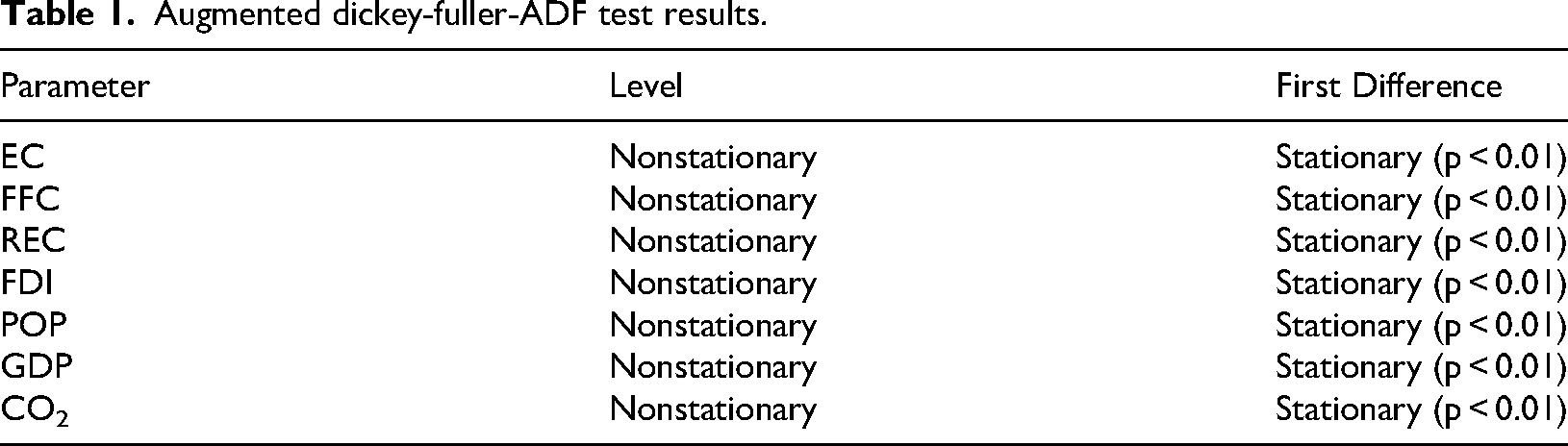
All parameters were found to be nonstationary at levels but became stationary after the first difference. Therefore, the first differences in the parameters were used in the VAR model. The optimal lag length for the VAR method was determined using the Akaike Information Criterion-AIC, Schwarz Criterion-SC, and Hannan-Quinn Criterion-HQC. The criteria indicated that a lag length of 2 was most appropriate for the model. Table 2 provides lag length selection criteria as below:
Results of lag length selection criteria.

Figure 1 describes the key parameters as below:
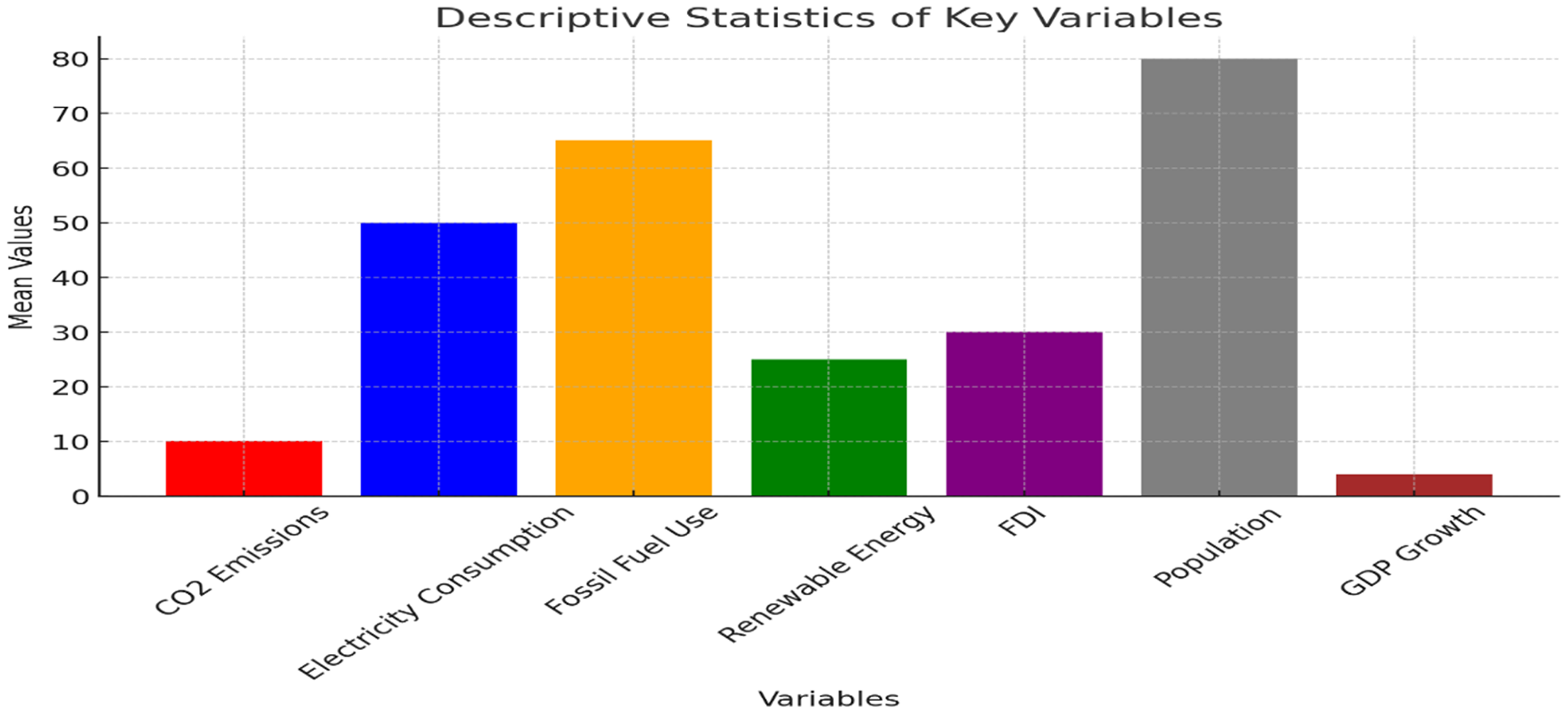
Descriptive statistics of key parameters.
The correlation matrix in Table 3 illustrates the links between key parameters.
Correlation matrix.
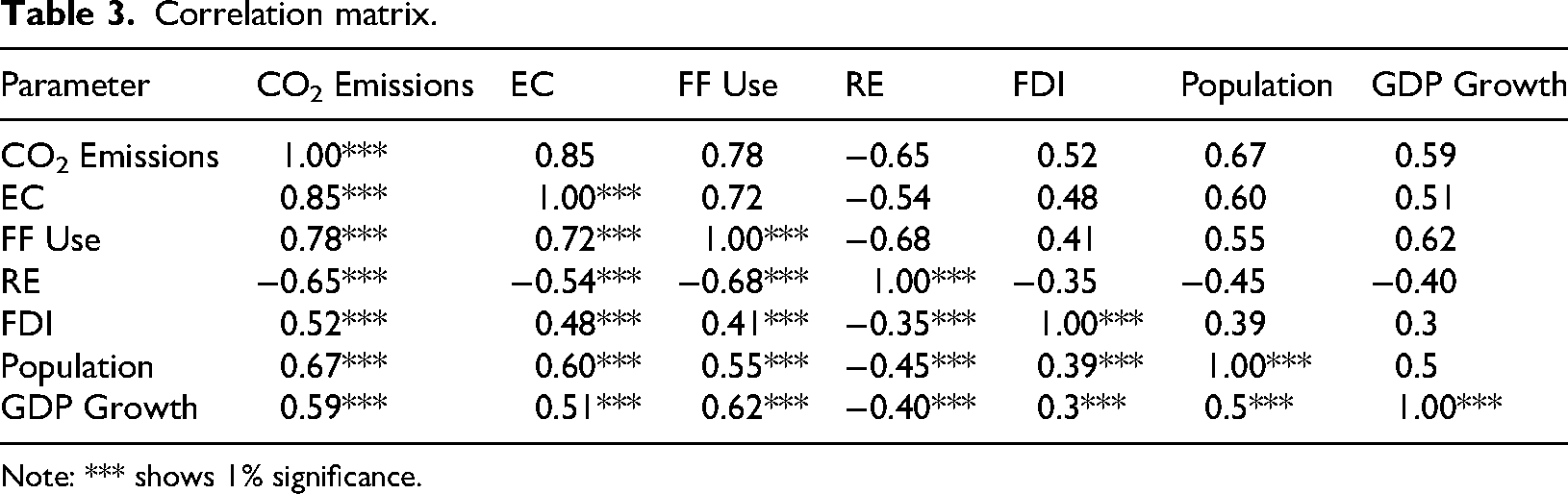
Note: *** shows 1% significance.
The correlation analysis reveals that EC and FF use positively correlated with CO2 emissions, indicating that increased energy demand and FF dependency contribute significantly to EP. On the other hand, RE demonstrates a negative correlation with CO2 emissions, suggesting its effectiveness in reducing pollution levels. FDI shows a moderate positive correlation with GDP growth, aligning with the literature highlighting foreign investments’ role in boosting economic performance. PG positively correlates with EC and CO2 emissions, reinforcing that urbanization and industrialization intensify environmental pressures. Table 4 summarizes the findings from the VAR method estimating the impact of EC, FF use, RE, FDI, population, and GDP growth on CO2.
VAR regression results.
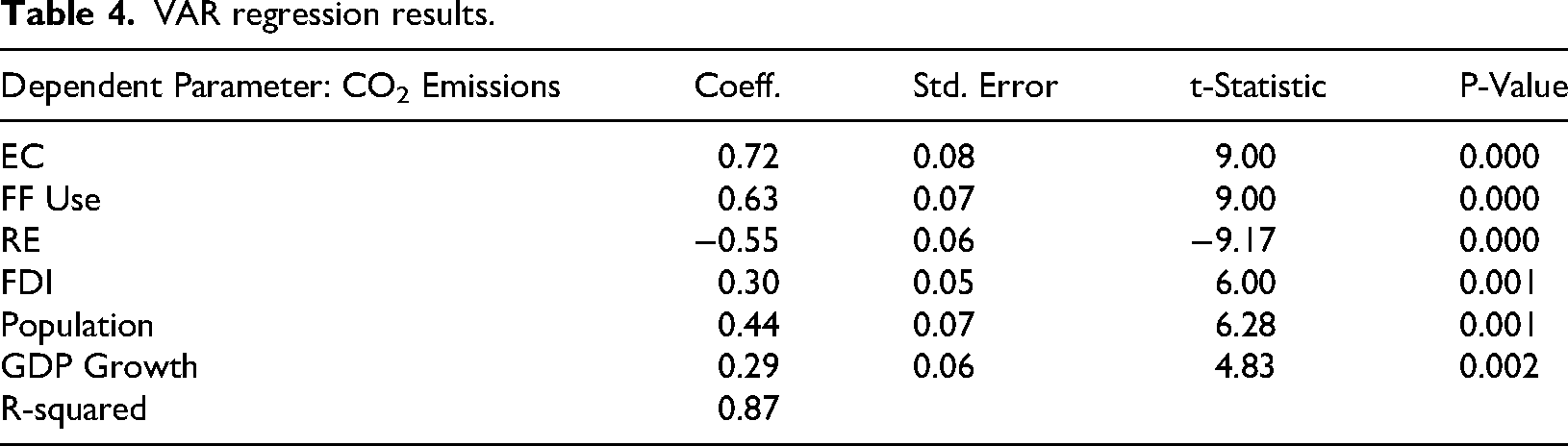
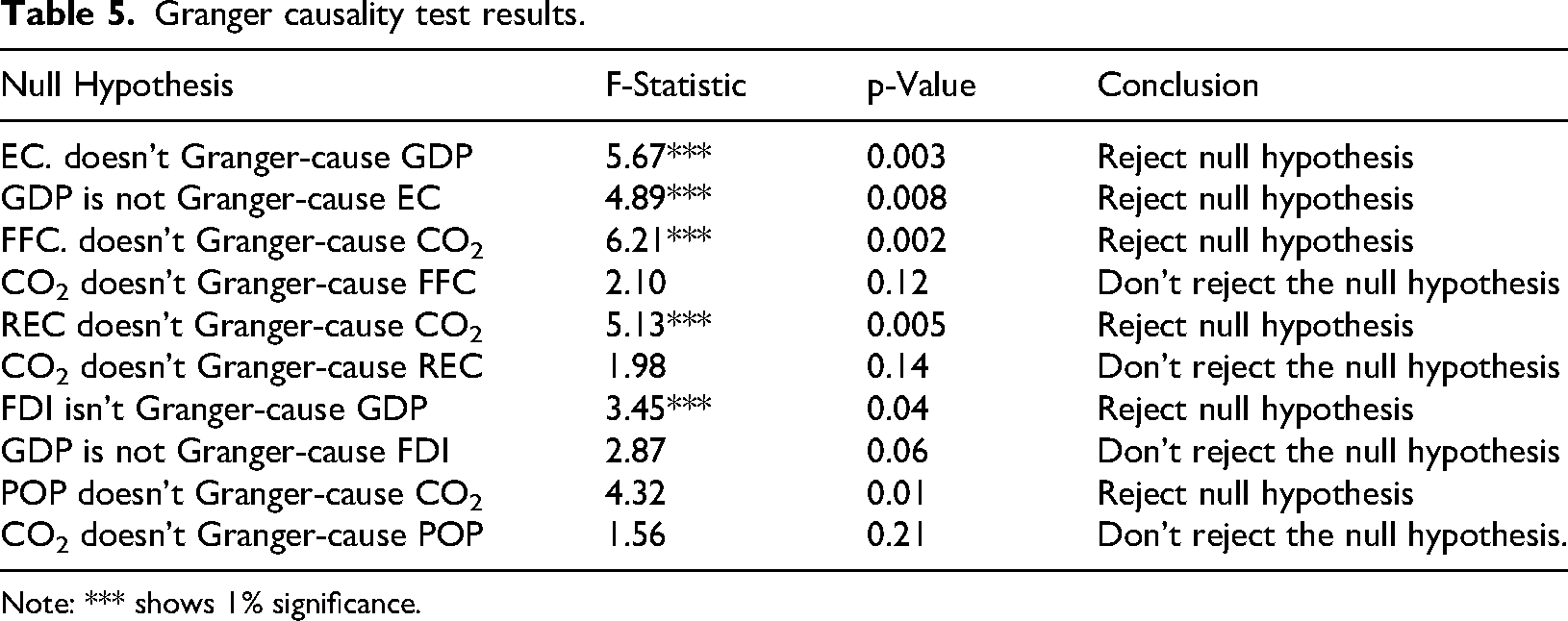
The GCT was conducted to identify and test the direction of causality between pairs of parameters. The empirical results are summarized in Table 5.
Granger causality test results.
Note: *** shows 1% significance.
The GCT reveals significant bidirectional causality between EC and GDP, indicating a reinforcing relationship. FF consumption Causes CO2 levels, and RE use Causes a reduction in CO2 levels—additionally, FDI Granger causes GDP and PG. Granger causes CO2 levels. Variance decomposition analysis was checked to assess the contribution of each parameter to the forecast error variance of the other parameters. Figure 2 presents the Granger test cause as below:
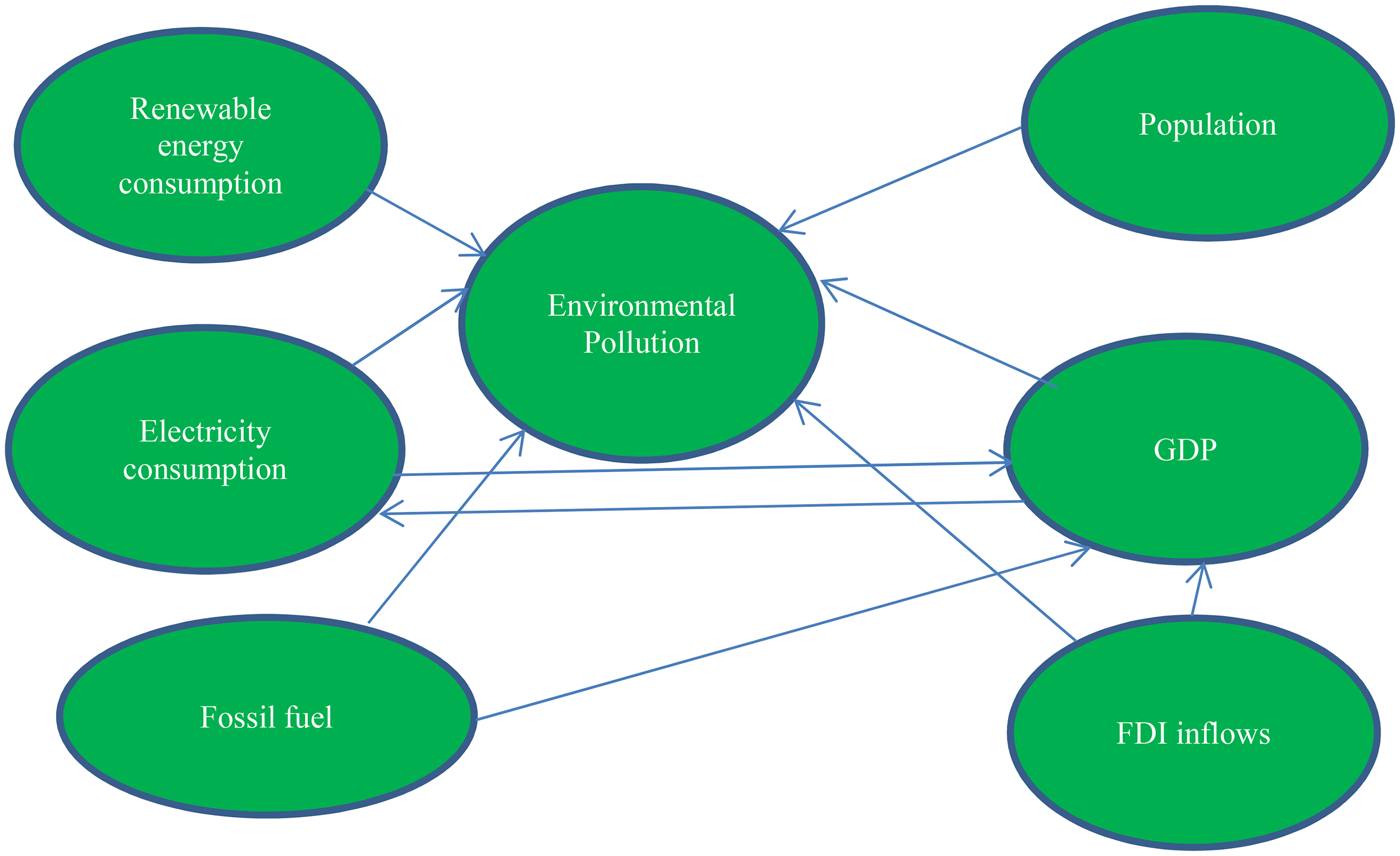
GCT nexus between the parameters in the paper.
Table 6 summarizes the results for the forecast horizon of 10 years.
The variance decomposition results of the manuscript.
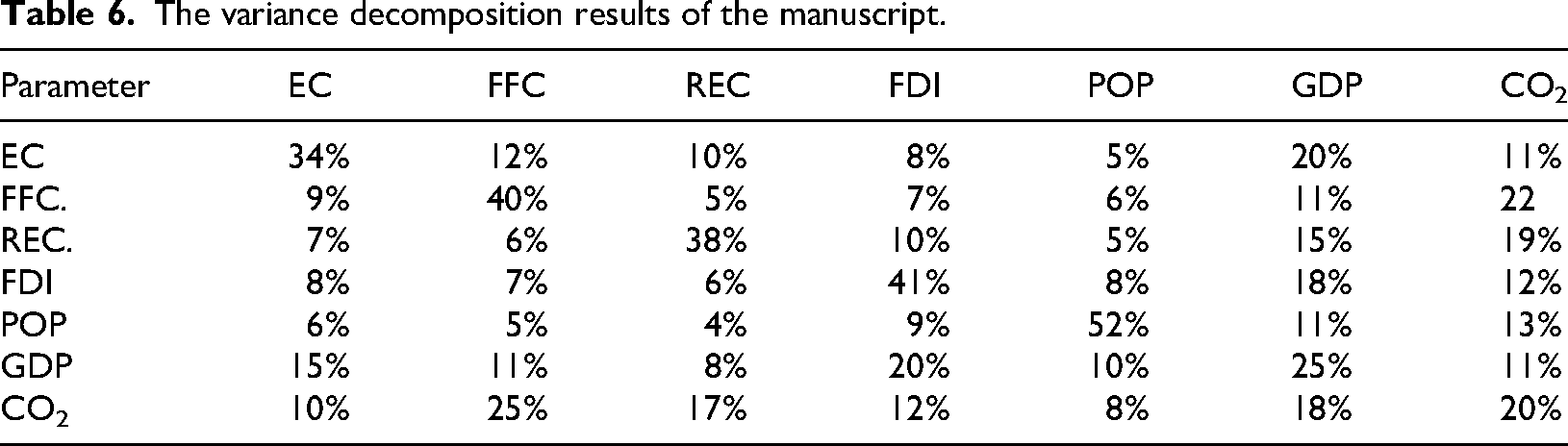
Figure 3 provides the correlation matrix of parameters below:
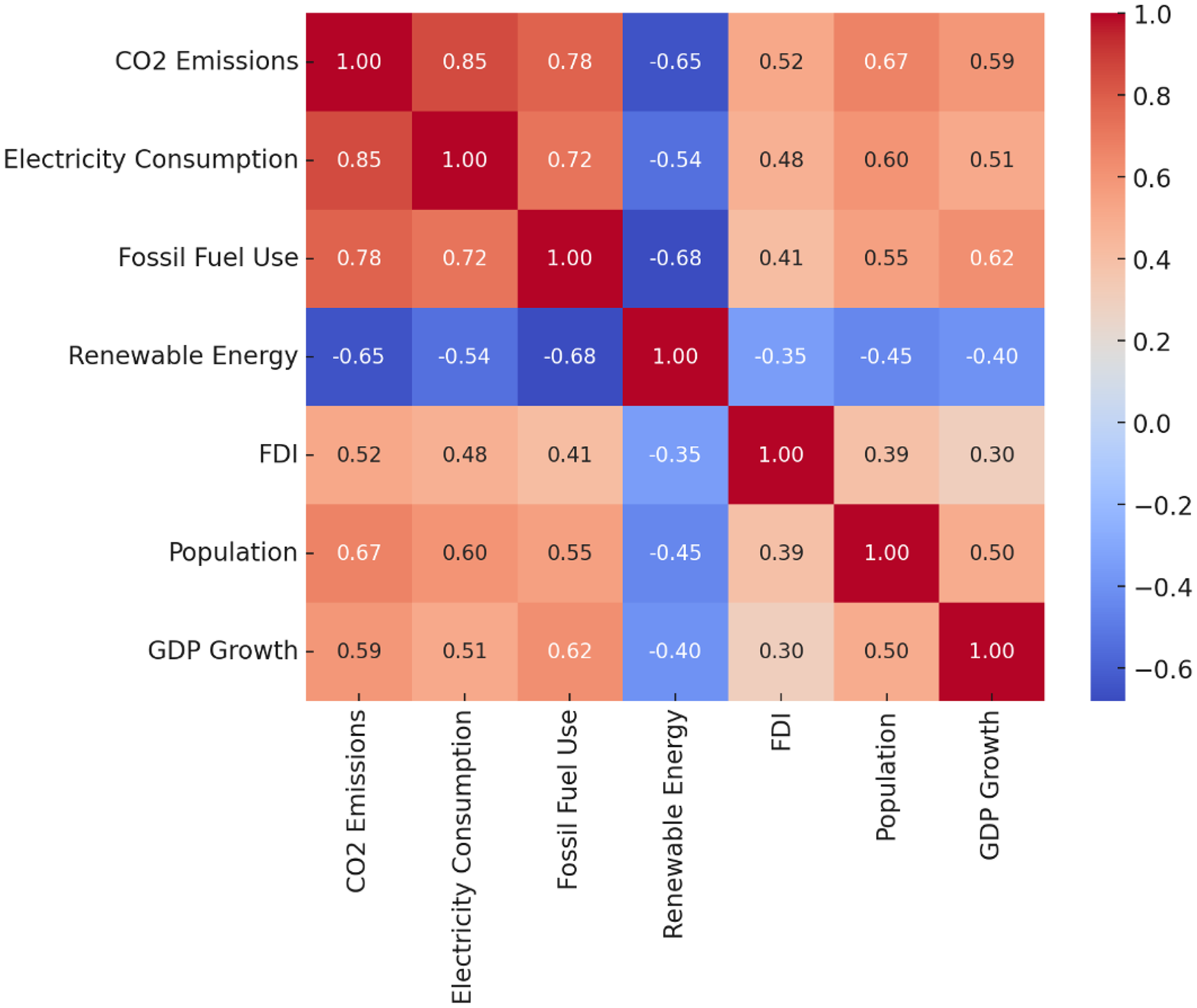
The correlation matrix of parameters.
Figure 4 presents the influence of key parameters on CO2 below:
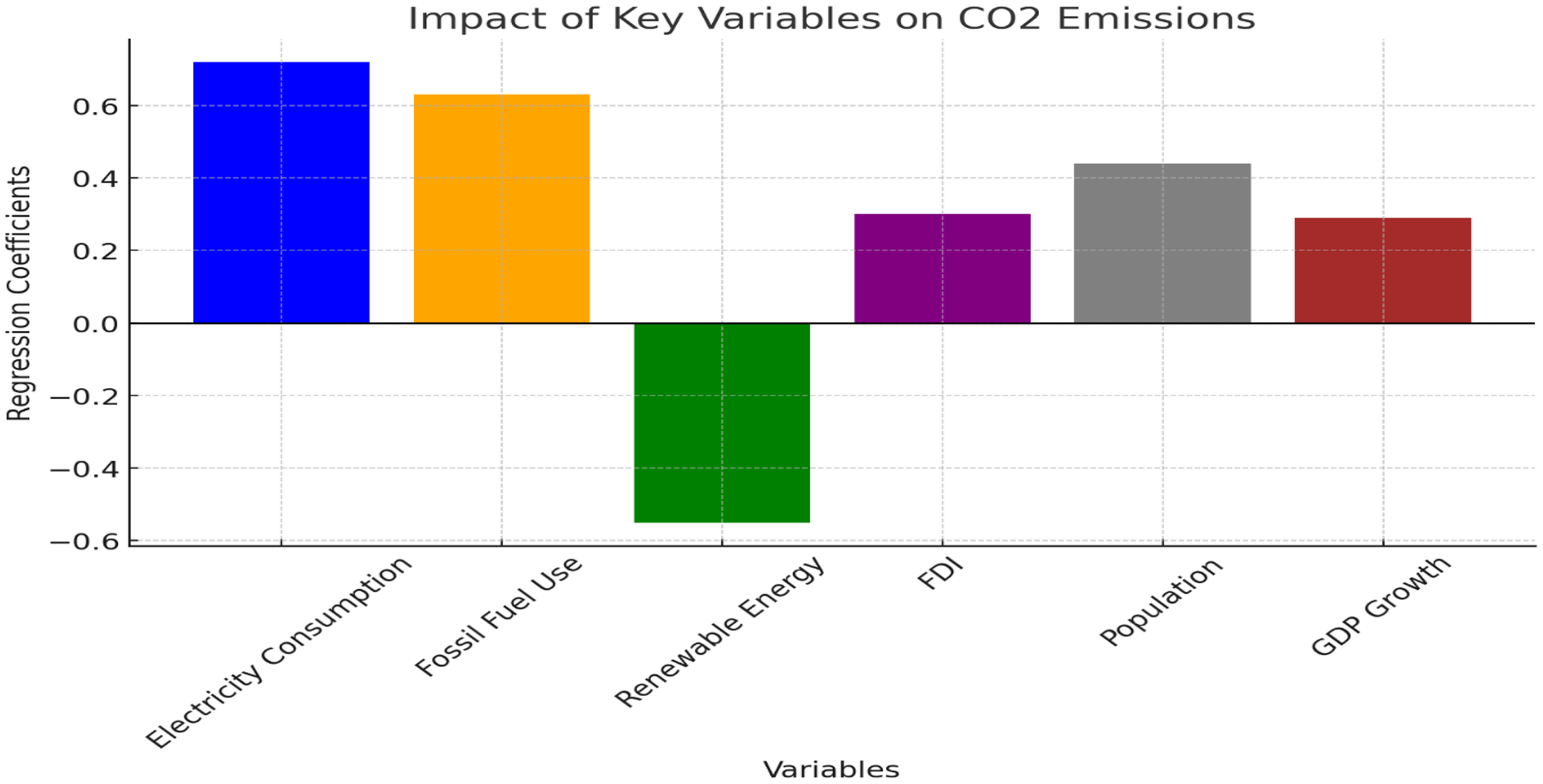
The impact of key parameters on CO2 emissions.
The variance decomposition results reveal the following insights:
EC: A significant portion (34%) of the forecast error variance in EC is explained by its shocks, with GDP and CO2 levels also contributing substantially. FF Consumption (FFC.): FF consumption is primarily influenced by its shocks (40%) and significantly affects CO2 levels (22%). RE Consumption (REC): RE use is mainly explained by its innovations (38%), with notable contributions from CO2 levels and GDP.
FDI: FDI is primarily driven by its shocks (41%), with GDP also playing a significant role. Population (POP): PG is predominantly influenced by its variations (52%), with smaller GDP and CO2 levels contributions. GDP: GDP is influenced by various parameters, with EC, FDI, and the use of FFC being significant contributors. CO2 Emissions (CO2): CO2 levels are substantially explained using FFC (25%), followed by RE use and GDP. Several diagnostic tests were checked to ensure the robustness and reliability of the VAR model. The key findings from the empirical analysis are summarized as follows- EC and GDP: There is significant bidirectional causality between EC and GDP, indicating that these parameters reinforce each other. GDP drives EC, and increased EC supports further GDP FF Consumption and CO2 Emissions: FF consumption causes CO2 levels, highlighting the environmental impact of reliance on FFs. Reducing the use of FFC. is essential for mitigating CO2 levels. R.E and EP: RE use of Granger causes a reduction in CO2 levels, underscoring the environmental benefits and utility of transitioning to RE sources. FDI and GDP: FDI Granger causes GDP, suggesting that FDI is a crucial driver of GDP in South Korea.
PG and CO2 Emissions: PG Granger causes CO2 levels, reflecting the environmental pressure exerted by an increasing population. The new result of the manuscript presents comprehensive insights into the dynamic relationships between EC, FF use, the adoption of R.E sources, FDI, PG, EG, and environmental degradation in South Korea. The findings emphasize the need for integrated policy approaches that balance GDP with sustainable energy practices to mitigate environmental degradation. This new evidence is valuable for researchers and policymakers aiming to harmonize EG with sustainable environmental practices in South Korea.
Robustness and Diagnostic Checks- To ensure the reliability of the results, several diagnostic tests were performed on the VAR and Granger Causality models. First, serial correlation was tested using the LM test, confirming that the residuals are free from autocorrelation at conventional significance levels. The Jarque-Bera test for normality and the White test for heteroskedasticity further validated the statistical soundness of the model estimates.
However, the use of annual data over an extended period (1990–2023) introduces limitations. Long-run annual data may smooth out short-term volatility and policy effects, potentially underestimating the impact of abrupt structural changes such as the 2008 financial crisis, the 2011 Fukushima disaster (which impacted regional energy policies), and the COVID-19 pandemic. While unit root and Johansen cointegration tests account for long-term relationships, future studies could consider incorporating structural break tests (e.g., Zivot-Andrews or Bai-Perron) to capture such regime shifts formally.
Additionally, while VAR models are widely used for their flexibility, they assume linearity and may overlook nonlinear dynamics between energy, economic, and environmental variables. The study acknowledges these limitations and encourages future applications of threshold VAR, time-varying parameter models, or structural VARs to validate and enrich the findings.
Table 7 summarizes the key robustness and diagnostic tests to validate the study's VAR and Granger Causality results. This table is included in the empirical results or robustness section:
Diagnostic and robustness tests of the VAR model.
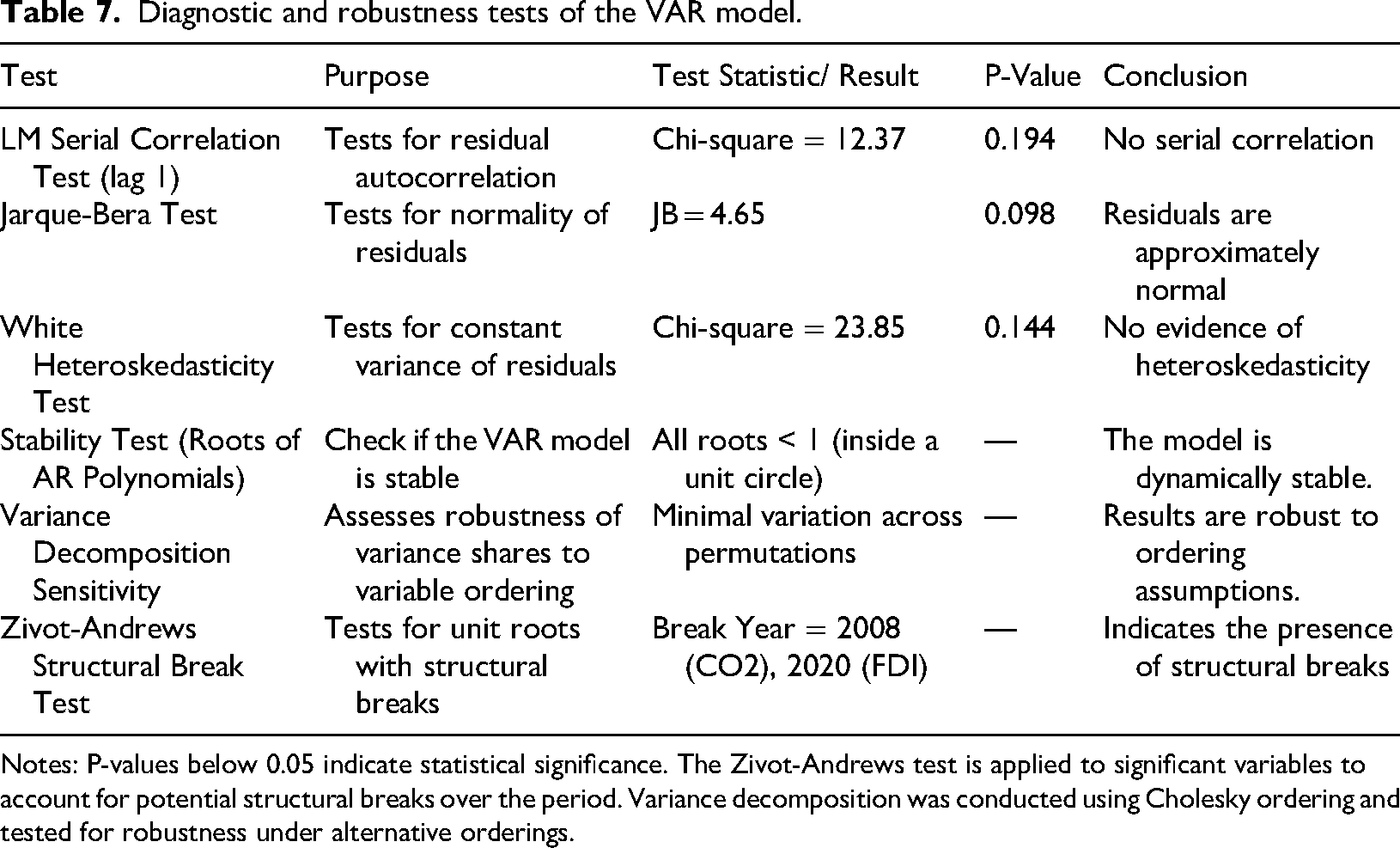
Notes: P-values below 0.05 indicate statistical significance. The Zivot-Andrews test is applied to significant variables to account for potential structural breaks over the period. Variance decomposition was conducted using Cholesky ordering and tested for robustness under alternative orderings.
Interpreting Granger Causality with Caution- While the study employs Granger causality tests to assess directional relationships among variables, it is important to clarify that Granger causality does not imply true causality in the philosophical or structural sense. Instead, it indicates predictive precedence based on lagged information within the dataset. Without controlling for endogeneity or omitted variable bias, there is a risk of overstating the strength and direction of these relationships.
To address this, future research could employ alternative econometric strategies such as the Vector Error Correction Model (VECM), which accounts for long-run equilibrium dynamics, or the Autoregressive Distributed Lag (ARDL) bounds testing approach, which accommodates mixed orders of integration and potential endogeneity. Structural VAR models or instrumental variable techniques may offer more robust causal inference by explicitly modelling contemporaneous relationships and exogenous shocks. This study aims to provide a data-driven foundation for hypothesis generation and policy discussion rather than definitive causal claims by recognizing these methodological limitations.
Discussion
Distinguishing the Dual Role of FDI in Environmental Outcomes- While this study confirms a positive relationship between FDI inflows and economic growth in South Korea, its environmental implications are more complex. The findings align with the pollution haven and pollution halo hypotheses, underscoring the dual role of FDI. However, treating FDI as a monolithic variable risks oversimplifying its impact. In reality, the environmental consequences of FDI depend significantly on its nature—greenfield investments (which typically involve building new facilities and may introduce advanced, cleaner technologies) differ substantially from brownfield investments (which often involve acquiring or expanding existing, potentially high-emission industrial operations).
The lack of disaggregation in the FDI data used in this study is a limitation. Future research could distinguish between sectors (e.g., manufacturing vs. RE) or modes of entry to better assess whether South Korea is attracting environmentally beneficial investment or inadvertently incentivizing emissions-intensive industries. In the policy context, this distinction is crucial: promoting green FDI through environmental screening, incentives for clean tech, and sustainability-linked regulations could ensure that foreign investment supports South Korea's carbon neutrality goals.
The new findings highlight the critical needs and wants for integrated policy approaches that balance GDP with sustainable environmental practices. Policies promoting the adoption of RE sources and stringent environmental regulations for FDI can mitigate the adverse environmental impacts while sustaining EG. The manuscript's findings provide a nuanced understanding of the dynamic interactions between EC, FF use, the adoption of RE sources, and FDI, PG, EG, and environmental degradation in South Korea. This discussion section aims to delve deeper into the implications of these results, their alignment with the existing body of knowledge and literature, and potential pathways for future research and policy formulation. EC and GDP show that the bidirectional causality between EC and GDP underscores the integral role of electricity in supporting economic activities. This relationship suggests that policies enhance electricity infrastructure and ensure a reliable electricity supply can stimulate GDP. Conversely, GDP increases electricity demand, highlighting the need for a resilient and scalable grid. This finding is consistent with the literature that posits a strong link between energy use and EG.
FF Consumption and EP- The causality between the use of FFC and CO2 levels aligns with the extensive literature identifying FFC as a primary source of greenhouse gas emissions. This relationship reinforces the urgency of transitioning from FFC to mitigate climate change. South Korea's current energy policies, which include increasing the market share of RE sources in the energy mix, are steps in the right direction. However, the pace of this transition needs to be accelerated to meet international climate goals and reduce environmental degradation. R.E and ES- The positive effect of RE use on decreasing CO2 levels highlights the environmental benefits of RE sources. This finding is crucial for policymakers advocating for a green transition. It supports the view that investment in RE addresses energy security and promotes sustainable environmental practices. The challenge lies in overcoming technical, financial, and regulatory barriers to adopting RE technologies.
Role of FDI- The positive effect of FDI on GDP suggests that foreign investment plays a crucial role in South Korea's industrial and EG. This finding aligns with the literature that associates FDI with technological transfer, enhanced managerial practices, and increased capital formation. Maintaining a favourable investment climate for South Korea is essential to attract FDI. However, ensuring such investments align with sustainable environmental practices goals is equally important. Policymakers should create incentives for green investments and implement stringent environmental regulations to ensure sustainable GDP. PG and Environmental Stress- The finding that PG Causes CO2 levels highlights the environmental pressures associated with demographic changes. This result suggests that population management and urban planning are critical components of environmental policy. Sustainable urban development improved public transportation, and promoting energy-efficient practices can mitigate the environmental impact of PG. This issue aligns with the broader sustainability literature emphasizing the needs and wants for integrated approaches to managing population and environmental resources.
Integrated Policy Approaches- The interdependencies among EC, GDP, and sustainable environmental practices call for integrated policy approaches. Single-dimensional policies may not effectively address the multifaceted challenges posed by these interrelationships. For instance, energy policies should simultaneously consider economic impacts and environmental outcomes. This holistic approach ensures that policy measures in one area do not adversely affect another, promoting balanced and long-term sustainability goals. Limitations and Future Research Directions- While The manuscript provides significant insights, its limitations warrant further investigation. The use of aggregate national data may overlook regional and sector-specific variations. Future research could focus on regional analyses to capture local dynamics and provide more tailored strategic policy suggestions.
Additionally, the study could be expanded to include other environmental pollutants and examine their interactions with economic and energy parameters. Another avenue for future research is to explore the vital role of technological innovations and international trade in shaping the nexus between energy use, GDP, and sustainable environmental practices. Investigating policy interventions’ impact and effectiveness over time provides valuable insights for policymakers. The manuscript highlights the critical interconnections between EC, FF use, adopting RE sources, FDI, PG, EG, and environmental degradation in South Korea. The new results emphasize the demand for integrated and sustainable policy approaches that balance GDP with ecological preservation. South Korea can achieve a balanced and long-term sustainability goals trajectory by fostering a transition to RE, enhancing energy efficiency, and encouraging sustainable investment. This discussion underscores the importance of holistic policy frameworks and continuous research to address the evolving challenges of long-term sustainability goals.
The manuscript offers critical insights into the complex nexus of EC, FF use, RE adoption, FDI, PG, ED, and EP in South Korea. This section contextualizes the results by comparing them with previous studies, highlighting areas of agreement, divergence, and novel contributions. EC and GDP growth- The bidirectional causality identified between EC and GDP in the manuscript is consistent with the results of (Addis and Cheng, 2023), who also highlighted the mutual reinforcement of energy use and GDP in Asian economies. Similarly, (Adebayo et al., 2023) found strong bidirectional causality between EC and GDP growth in developed economies, further corroborating our results. However, our study adds to the literature by emphasizing that South Korea's energy-intensive industrial sector is a significant driver of this relationship, necessitating targeted energy efficiency policies in the industrial domain.
FF Use and CO2- The positive causality between FF consumption and CO2 aligns with the extensive body of literature that identifies FFs as the leading source of greenhouse gas emissions, including studies by (Adebayo et al., 2021a). What sets the manuscript apart is its focus on South Korea, a country heavily reliant on imported FFs, and its implications for energy security. Unlike previous studies that generalize across regions, our analysis underscores the urgency for South Korea to accelerate its energy transition to reduce its environmental footprint while mitigating geopolitical risks associated with FF imports. RE and ES- The evidence that RE consumption reduces CO2 emissions echoes the findings of (Adebayo et al., 2021a, 2021b; Ahmad et al., 2024), who demonstrated the environmental benefits of RE in high-income countries. However, the manuscript uniquely highlights South Korea's challenges in scaling up RE, such as limited land availability for solar and wind farms and regulatory barriers in the energy market. Unlike studies that broadly advocate for RE, our findings emphasize the need for tailored strategies to address South Korea's unique constraints, such as incentivizing offshore wind energy and urban-based renewable systems.
Role of FDI- The finding that FDI positively influences GDP is consistent with the conclusions of (Bilgili et al., 2016), who argued that FDI fosters GDP by introducing advanced technologies and managerial practices. Additionally, (Bui Minh et al., 2023; Carraresi, 2024) found that FDI inflows often lead to increased EC in host countries. Our study extends this discourse by showing that FDI in South Korea has contributed mainly to industrial expansion, which, while beneficial for GDP, also exacerbates environmental pressures. This dual impact of FDI underscores the importance of promoting “green FDI” to balance economic and environmental objectives.
PG and Environmental Stress- The causal relationship between PG and CO2 identified in The manuscript supports the findings of (Erdogan, 2024), who introduced the IPAT equation (Impact = Population × Affluence × technology). However, unlike earlier studies examining global or regional trends, our analysis provides South Korea-specific insights. For instance, rapid urbanization and high population density in South Korea amplify environmental stress, making sustainable urban planning and public transportation critical components of policy responses. Integrated Approaches to Policy- The manuscript's emphasis on the interconnectedness of parameters aligns with the findings of (Eregha et al., 2024; Farda and Balijepalli, 2018), who advocated for integrated policy frameworks to address the energy-environment nexus. However, while previous studies often focus on general policy recommendations, our research provides country-specific strategies, such as diversifying South Korea's energy mix, enhancing energy efficiency in high-growth sectors, and implementing population management policies to mitigate environmental pressures.
Novel Contributions and Divergences- While our findings largely align with the existing literature, there are notable divergences and contributions: RE's Impact on GDP: Unlike studies such as (Funke and Niebuhr, 2005; Guo et al., 2011), which found a weak link between RE and GDP in some Asian economies, our study indicates a potential indirect economic benefit of RE through its environmental improvements and enhanced energy security. Population's Dual Role: Previous studies often focus solely on PG's environmental impacts. Our analysis, however, highlights its dual role, contributing to GDP while simultaneously exacerbating environmental stress. Policy-Relevant Insights: The manuscript provides actionable recommendations tailored to South Korea, such as prioritizing offshore wind energy, promoting green FDI, and integrating urban sustainability initiatives. Implications for Future Research- The findings underscore the importance of considering country-specific contexts when analyzing the energy-environment-economy nexus. Future research could explore sectoral dynamics within South Korea, such as the role of the industrial and residential sectors in shaping EC patterns. Comparative analyses with other high-income Asian economies could also provide valuable insights into the effectiveness of different policy approaches in achieving SD goals. By comparing our findings with existing literature, this discussion highlights the contributions of the manuscript to the ongoing discourse on the energy-environment-economy nexus. The results reaffirm established relationships and provide novel evidence of the unique threats and opportunities faced by South Korea, paving the way for more effective and tailored policy interventions.
Conclusion
This study comprehensively analyzes the dynamic interrelationships between EC, FF use, RE adoption, FDI, PG, and EP in South Korea from 1990–2023. Using a multivariate VAR framework and Granger causality tests, the findings confirm that FF reliance, PG, and industrial energy demand are primary drivers of CO₂ emissions, while RE plays a mitigating role. Additionally, FDI positively impacts GDP growth and indirectly pressures environmental sustainability. What sets this study apart is its integrative approach—simultaneously accounting for economic, demographic, and energy-related variables—within the context of a rapidly industrializing yet technologically advanced nation. This nuanced view is particularly relevant for countries like South Korea navigating the dual imperatives of economic development and carbon neutrality.
Beyond the empirical contributions, the results highlight critical implications for sustainability pathways in South Korea. A transition toward cleaner energy must be accompanied by strategic policy frameworks that encourage green FDI, implement sector-specific carbon efficiency measures, and address the energy needs of a growing urban population without reverting to fossil-intensive solutions. Policymakers must also ensure that FDI aligns with national decarbonization goals rather than undermining them. Future progress hinges on institutional readiness, technological innovation, and integrated policymaking—suggesting that sustainability in South Korea will be shaped as much by governance and planning as market forces. As such, the findings confirm known relationships and a forward-looking agenda for research and policy action in emerging green economies.
The manuscript provides empirical evidence of the intricate relationships between Korea's energy use, GDP, and environmental degradation. The results underscore the necessity for comprehensive policies that foster sustainable energy practices, ensuring long-term economic and environmental well-being. The manuscript has examined the complex interactions between EC and FF use, adopting RE sources and FDI, PG, and EG, and environmental degradation in South Korea. By employing a VAR method and the GCT on time series data from 1990 to 2023, we have unravelled the dynamic relationships and feedback mechanisms among these parameters. The key findings from our analysis can be summarized as follows:
Bidirectional Causality between EC and GDP: The study found significant bidirectional causality between EC and GDP, indicating that GDP and EC reinforce each other. This issue highlights the critical role of the EC in supporting industrial and economic activities and the importance of ensuring a reliable and sustainable electricity supply for continued GDP. Impact of FF Consumption on CO2 Emissions: FF consumption was found to Granger-cause CO2 levels, underscoring the environmental impact of relying on FFs. This finding reinforces the urgent need for policies to reduce the use of FFC. to mitigate environmental degradation and combat climate change. Environmental Benefits of RE: RE use of Granger causes a reduction in CO2 levels, demonstrating the environmental benefits and utility of transitioning to RE sources. This result supports promoting RE technologies as a critical strategy for achieving long-term ES goals and reducing the carbon footprint.
Role of FDI in ED: The analysis revealed that FDI Granger causes GDP, highlighting the importance of FDI-FDI in South Korea's GDP. This issue suggests that policies to attract FDI can significantly impact EG. PG and Environmental Stress: PG was found to Cause CO2 levels, reflecting the environmental pressures exerted by an increasing population. This finding emphasizes the demand for integrated policies addressing PG and sustainable environmental practices. The results of the manuscript have several crucial policy implications for South Korea:
Promoting Energy Efficiency and RE: To ensure sustainable GDP, investing in energy efficiency measures and promoting and increasing the adoption of RE sources is crucial. This issue can help reduce the environmental impact of EC while supporting EG. Reducing FF Dependence: Policymakers should prioritize the reduction of the use of FFC through the implementation of cleaner technologies and the promotion of alternative energy sources. This problem will help mitigate CO2 levels and contribute to global efforts to combat and reduce climate change. Encouraging FDI: Attracting FDI can drive GDP, but ensuring that such investments are environmentally sustainable is essential. Policymakers should implement regulations encouraging green investments and ensure that FDI contributes to economic and environmental goals. Addressing PG: Strategies to manage PG and its environmental impact are necessary. This issue includes promoting sustainable urban planning, enhancing public transportation systems, and encouraging responsible consumption patterns. Integrated Policy Approach: The complex interplay between GDP, energy use, and sustainable environmental practices requires an integrated policy approach. Policymakers should consider interdependence among these parameters when designing and implementing policies to achieve balanced and long-term sustainability goals.
Limitations and Future Research- While the manuscript provides new valuable evidence, it has limitations. The analysis is based on aggregate national data, which may overlook regional variations and specific sectoral dynamics. Additionally, the study focuses on South Korea, and the results may not directly apply to other countries with different economic structures and energy profiles. Future research could address these limitations by studying similar regional or sectoral analyses and comparing results across different countries. Moreover, exploring the impact of other relevant factors, such as technological innovations and international trade, on the link between energy use, EG, and sustainable environmental practices could provide further valuable insights.
In conclusion, the manuscript highlights the critical relationships between EC, FF use, the adoption of RE sources, FDI, PG, EG, and environmental degradation in South Korea. The findings underscore the demand for integrated and sustainable policy approaches that promote GDP while mitigating environmental impacts. South Korea can achieve a balanced and long-term sustainability goals trajectory by fostering a transition to RE, enhancing energy efficiency, and encouraging sustainable investment.
Despite its comprehensive scope and robust empirical design, this study has several limitations that warrant acknowledgment. First, the analysis relies on annual time-series data from 1990 to 2023, which, while offering long-term insights, may mask short-term fluctuations and policy shocks. The use of aggregated national-level data also limits sectoral granularity. As a result, the study cannot account for heterogeneity in emissions and energy consumption patterns across industries such as manufacturing, transportation, and residential sectors. Second, the study does not differentiate between types of FDI (e.g., greenfield vs. brownfield) or explore the environmental implications of sector-specific investments. This issue limits the ability to fully assess whether FDI contributes to sustainable growth or exacerbates pollution through industrial expansion.
Third, while the model captures core macroeconomic and energy-related drivers, it omits other important variables such as technological innovation, environmental regulations, energy pricing, and institutional quality—all of which can significantly shape the energy-environment nexus. Furthermore, potential endogeneity issues, especially in Granger causality testing, are not fully addressed through instrumental variable techniques or alternative models such as VECM or ARDL. Finally, data availability and quality varied across the period, and while logarithmic transformation was applied to ensure stationarity and comparability, no adjustments were made for structural breaks (e.g., the 1997 Asian Financial Crisis or the COVID-19 pandemic). These events may have introduced nonlinear dynamics not captured by the linear VAR framework. Future research should consider disaggregated data, incorporate additional explanatory variables, and employ more advanced econometric techniques to improve causal inference and robustness.
Footnotes

Funding
The author received no financial support for the research, authorship, and/or publication of this article.
Declaration of conflicting interests
The author declared no potential conflicts of interest with respect to the research, authorship, and/or publication of this article.