




Abstract
Investigation into the thermal regime of lithosphere is an essential part of geothermal research. The thermal state of lithosphere can be expressed as the vertical distribution of temperature. It has been found that the thermal regime of lithosphere can control the heat flow distribution and the geothermal mechanism of local geothermal fields. In this work, equilibrium temperature logs were obtained from 27 wells, and thermal conductivity and heat generation data were collected from 148 rock samples from different wells. Besides, 55 high-quality terrestrial heat flow values were extracted. Based on these data, the distribution of heat flow across Xiong'an New Area was mapped. Later, the thickness of the thermal lithosphere in Xiong'an and the deep crustal temperature were analyzed using the one-dimensional steady-state heat conduction equation. The crustal structure beneath this area was derived from the seismic wave velocity profile, and it was then used to illustrate the connection between the geothermal fields’ heat sources and regional tectonic setting. The results indicate that high heat flow is mainly distributed around the basement uplifts, such as Niutuozhen uplift and Rongcheng uplift. The average heat flux in the study area is 70.5 mW/m2, higher than the 61.5 mW/m2 in mainland China. The temperature-depth profiles show great temperature variation across the new area. At the depth of 40 km, the crustal temperature ranges from about 750°C to 1100°C. Despite the large temperature variation, this area shows high thermal state. The temperature variation with depth may be attributed to the heat flow variability and the high thermal state may be caused by the large residual heat flow from the lithosphere boundary. The average reduced heat flow in the new area is high at around 44.35mW/m2, which is associated with the high thermal state of this area.
Keywords
Introduction
Terrestrial heat flow, which can provide one important boundary condition, is a basic thermal parameter for analyzing the thermal regime of lithosphere. Heat generated by the decay of radioactive isotopes within the lithosphere and the heat flowing into the lithosphere across its base are the two main components of the surface heat flow. Recent tectonic movement can also have an impact on the heat flow (Furlong and Chapman, 2013). Thermal regime can describe the following thermal characteristics of lithosphere: the heat flow contributions of different crustal layers, the thickness of the thermal lithosphere, the temperature-depth distribution in different crustal layers, and the ratio of the heat generated within the lithosphere to the heat inflow across the base of the lithosphere (Heacock, 1971, 2013; Wang, 1986, 1996). By analyzing the lithosphere’s thermal regimes, we can gain knowledge about the thermal state of deep crustal layers, which is important for us to understand the tectonic movement and geodynamic evolution (Furlong and Chapman, 2013; Lewis et al., 2003).
The Xiong'an New Area sits in an oil and gas mining area, where many oil wells are available for geothermal research. Prompted by the discovery of underground hot water, geothermal research in this area began early in 1982. Research on the characteristics of the shallow geothermal field in this area has suggested that the geothermal gradient within the sedimentary layer is between 37 and 70°C/km. Underlying the sedimentary layer is a thermal reservoir composed of carbonatite, which is around 1 km deep and usually hotter than 50°C. The high enthalpy resources and rapid circulation of the reservoir fluid lead to the abundance of geothermal resources in this area. Geothermal energy and especially hot water from geothermal resources can be exploited for use in agriculture and shower (Chen et al., 1982). However, previous studies mainly focused on the Niutuozhen uplift area in the northeastern part of Xiong'an New Area, and the lack of temperature logging across this area impedes the development of the geothermal resources. According to the temperature measurements obtained between 2013 and 2015, the geothermal gradient in Niutuozhen uplift sedimentary cover is between 43.9 and 72.2°C/km, with an average of 51°C/km, and the heat flow ranges from 65 to 96 mW/m2; in Rongcheng uplift, the geothermal gradient varies between 31.4 and 41.1°C/km with an average of 37.1°C/km (Li et al., 2014). In order to have a detailed understanding of the thermal regime at different depths in Xiong'an New Area, this study provided a summary of existing methods (Chang et al., 2016; Chen, 1982; Qiu, 1998) and analyzed the thermal lithosphere of this area based on the basic thermal properties and structure of the lithosphere.
China plans to build Xiong'an New Area into a big urban district similar to the Special Economic Zone of Shenzhen and the Pudong New District of Shanghai. The building and subsequent development of this district require lots of energy. China’s heavy dependence on energy from fossil fuels has caused some problems, such as the shortage of fossil fuels and serious environmental pollution. Now Chinese government attaches great importance to renewable energy. Given the abundance of geothermal resources there, geothermal energy can be used as a renewable energy source for Xiong'an New Area. So, correct assessment of the area’s geothermal potential can help us make reasonable decisions on geothermal energy planning, exploration and exploitation. This paper offers an evaluation of the geothermal resources in Xiong'an New Area.
Regional geological setting
Xiong'an New Area is located in the northern part of Jizhong depression, a tectonic unit of the North China Craton (NCC). Its topography consists primarily of Rongcheng uplift, Niutuozhen uplift and Anxin low uplift. These uplifts are surrounded by some depressions, such as Langfang-Gu’an depression in the north, Xushui depression in the west, Raoyang depression in the south, and Baxian depression in the east. Figure 1(a) reveals that the bulk of Xiong'an New Area is situated within a basement uplift belt. This area is divided into several parts by a number of large faults, such as Niudong, Niunan, Anxin-Suicheng, Daxing, and Rongcheng Faults (Figure 1(a)). These faults, trending NE, EW, NNW, or NW are the product of the Yanshan movement and the Himalayan orogeny during the Mesozoic and Cenozoic. Besides, changes in the direction of the subduction of Pacific Plate in the Mesozoic were also responsible for their diverse trends. The superposition of tectonic movements, especially the Yanshan movement and the Himalayan orogeny, created alternating uplifts and depressions in the basement. Such basement structure controlled the distribution and development of the Cenozoic sedimentary layer. The non-horizontal basement is unconformably overlain by the Neogene and Paleogene strata (Figure 1(b)), which are composed mainly of mudstone, shale, sandstone, and glutenite, with the Cenozoic being totally missing. This is because the crust in the Xiong'an New Area began to undergo uplift driven by the Yanshan and Himalayan tectonic events before the Late Triassic, and the strata raised to the surface were then subjected to denudation, which resulted in the absence of late Palaeozoic-Mesozoic strata(Wang, 2009). The Neogene and Quaternary sediments consist mainly of sandstone, mudstone, clay, and siltstone, which form a sedimentary layer covering the bedrock. With low permeability, low porosity, and low thermal conductivity, these sedimentary rocks can prevent rapid heat loss. The Paleozoic and Proterozoic strata are composed primarily of limestone, sandstone and dolomite and form the basement in Xiong'an New Area. With great water-holding capacity and high permeability, the limestone and dolomite can promote heat transfer, thus resulting in high heat flow at the corresponding surface areas.
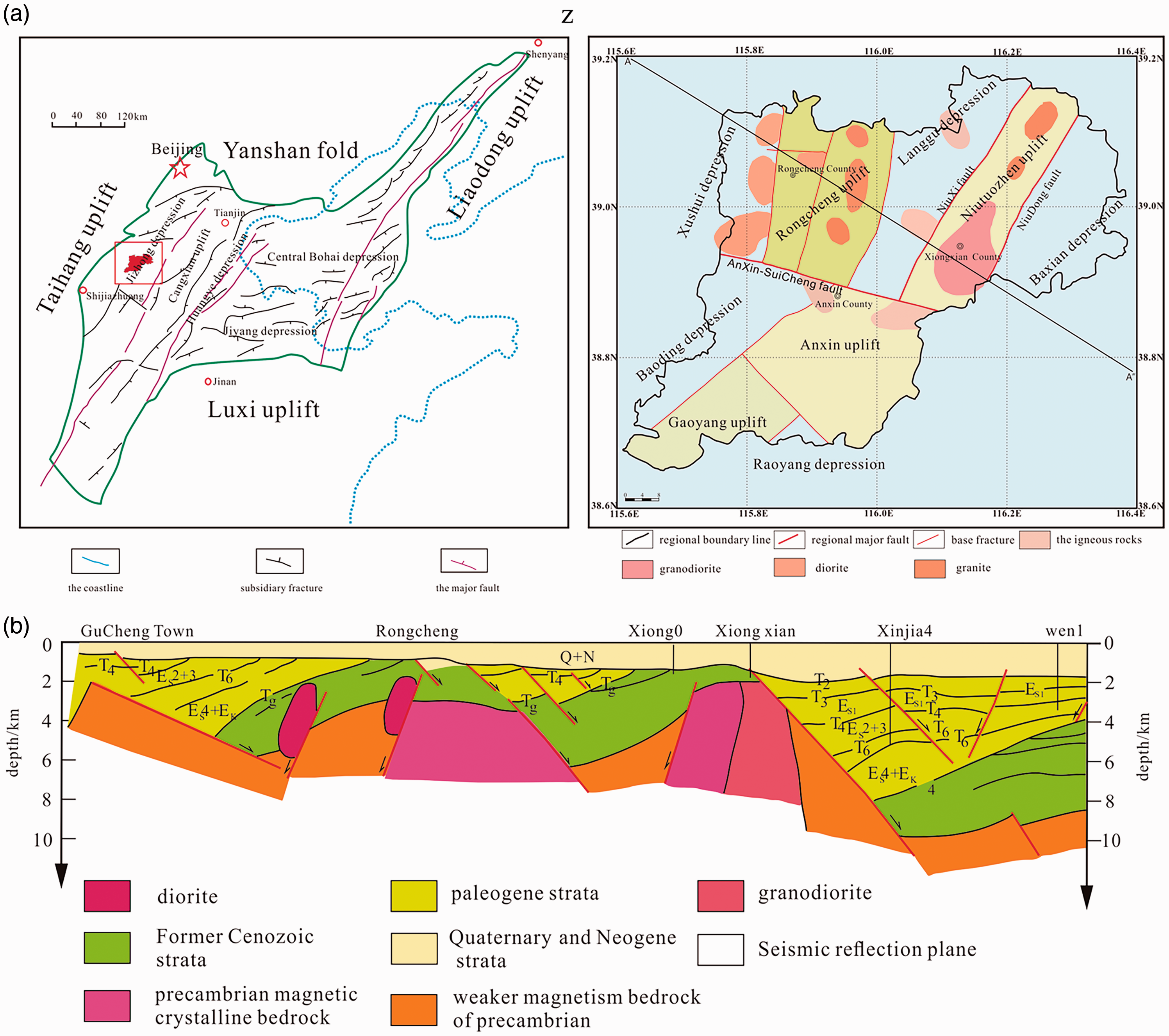
(a) Simplified tectonic pattern of Xiong'an New Area, (b) Geological profile A–A″ of the Xiong'an New Area (T2,3,4,5,6,g represent the unconformity surfaces). Location is show in (a) (Yu et al., 2017).
Deep geologic structures are investigated mainly by geophysical exploration. However, there is still a lack of detailed seismic velocity profile for Xiong'an New Area. An existing seismic velocity profile reveals that the crust in this area is about 28–30 km thick, and the sedimentary layer’s thickness is 6–10 km; the average seismic velocity across the crust is about 5.5–5.8 km/s. Such low average seismic velocity and small thickness of the crust are strongly associated with mantle upwelling, crustal extension, and lithospheric thinning, which have given rise to a low-velocity and high-conduction zone within the crust. According to previous research, the subduction of the Pacific Plate could trigger these dynamic processes (Xu and Kang, 2005).
Data information
Characterization of the thermal regime of lithosphere requires some basic thermal parameters, including the surface heat flow, thermal conductivity of different rock types, and the rates of radioactive heat generation in different layers. The methods for subdividing the thermal lithosphere and assigning values to these parameters will be detailed in this section.
Temperature logs
In this study, continuous temperature measurements were carried out for 27 wells in Xiong'an New Area, some of which were designed for geothermal energy production. Due to heat extraction, the rock formations may have not reached a thermal equilibrium state. Therefore, the temperature profiles in the production wells should be below the actual temperatures. The borehole temperature was measured by using a cable system consisting of a 42.9 mm diameter platinum sensor and a 5000 m long cable. This system has a sensitivity of 0.01°C and a precision of 0.1°C (Jiang et al., 2016a, 2016b). The platinum sensor was sent downward into each borehole at a slow rate of 7.6 m min−1, in order to give it enough time to respond.
High-resolution continuous temperature profiles are shown in Figure 2. The temperature profiles demonstrate that temperature increases linearly as depth increases from 100 m to around 1000 m (Figure 2). This suggests that the heat transfer in the sedimentary cover layers is dominated by heat conduction, and the disturbance from underground water is very weak. In some wells, such as wells Taihe1 and Wenzhao 1, the temperature increases rapidly with depth and even decreases with it within certain depth range, suggesting that the thermal energy in these wells is transported by convection. This is possibly because the faults allow the underground water to move more freely, especially at the junctions with other the faults. After removing the temperature profiles that indicate conduction, we found that the temperature in the rest changes irregularly with depth when the depth is less than 100 m. This may be attributed to multiple factors, such as seasonal variation, terrain, and groundwater. After the depth exceeds 100 m, the temperature increases linearly with depth. This critical depth is usually referred to as the depth of the constant temperature zone.
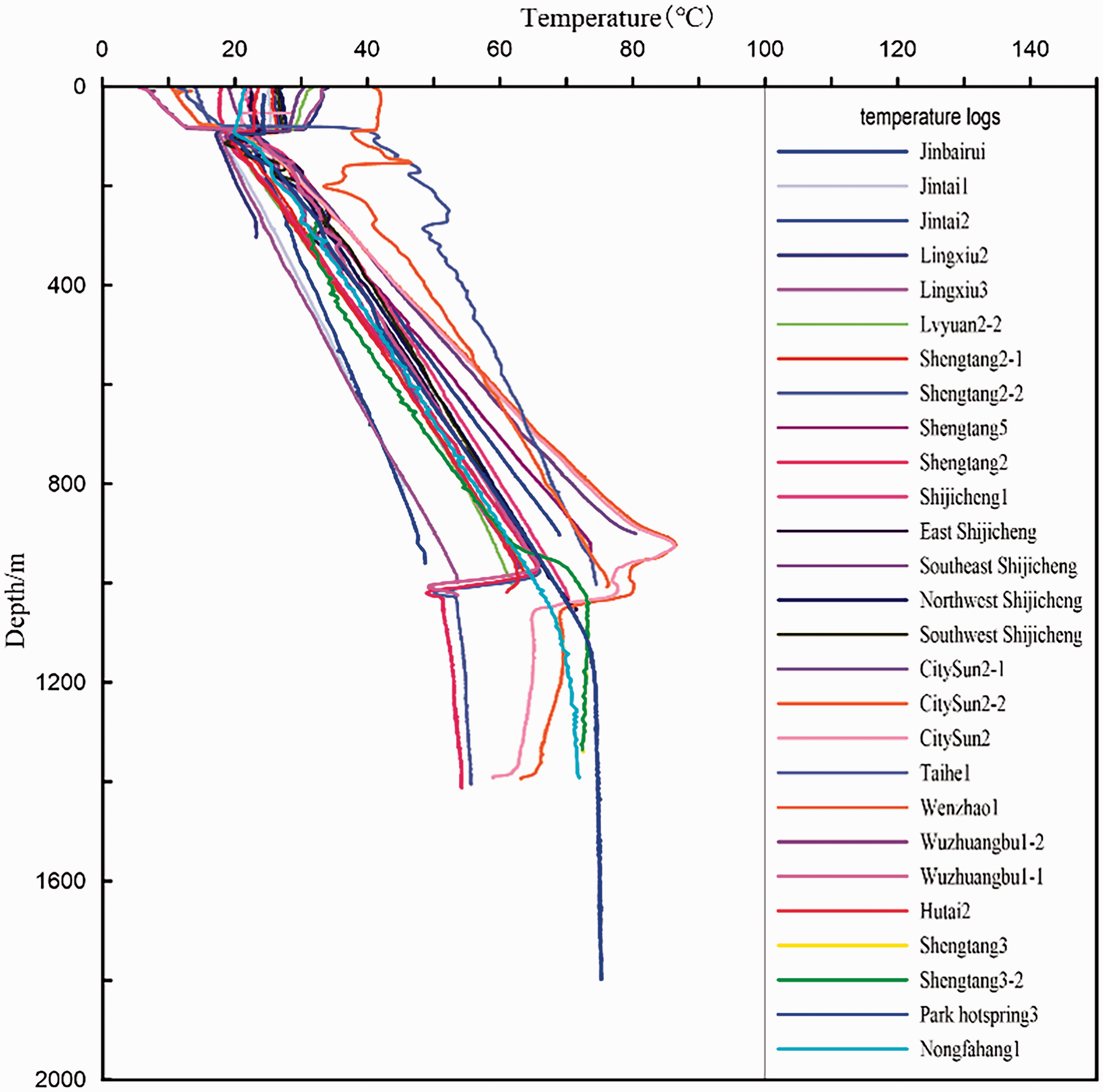
Temperature logs around Xiong'an New Area.
Geothermal gradient and heat flow
Using the linear least regression method (Powell et al., 1988), we calculated the geothermal gradient in two representative wells (Nongfahang 1 and Park hotspring 3) in Xiong'an New Area at depth intervals of 20 m. Figure 3 reveals that the temperature gradient in each well consists of two parts: the upper sedimentary cover section (0–1150 m) and the basement section (>1150m). For well Park hotspring 3, the temperature gradient ranges from −6.65 to 98.9°C/km, and average geothermal gradients in the sedimentary cover and basement sections are 49.6 and 2.1°C/km, respectively. The correction coefficients for the two parts were above 0.92, demonstrating that the fitting result is reliable. The temperature gradient in well Nongfahang 1 ranges from −38.4 to 81.1°C/km, and average values for the two parts are respectively 47.1 and 3.1°C/km. Abnormal values of geothermal gradient were mainly caused by the local groundwater activities and the variation of surface temperature. The conspicuous differences between the average temperature gradients in the upper and the lower sections are primarily due to the variation in thermal conductivity. Geothermal gradient also varies between sedimentary and basement rocks (Figure 3). A high rate of temperature change suggests a formation with low thermal conductivity. Conversely, a low geothermal gradient is indicative of a high thermal conductivity formation (Lashin, 2013). The main basement rocks are limestone and dolomite, which have very high thermal conductivity, high porosity, high permeability and water-holding capacity and are relatively homogeneous. In contrast, the overlying sedimentary cover layer is characterized by lower thermal conductivity, lower porosity and permeability, smaller water-holding capacity and heterogeneity. Due to these characteristics, the sedimentary cover can prevent heat loss and thereby promote heating of the thermal reservoirs.
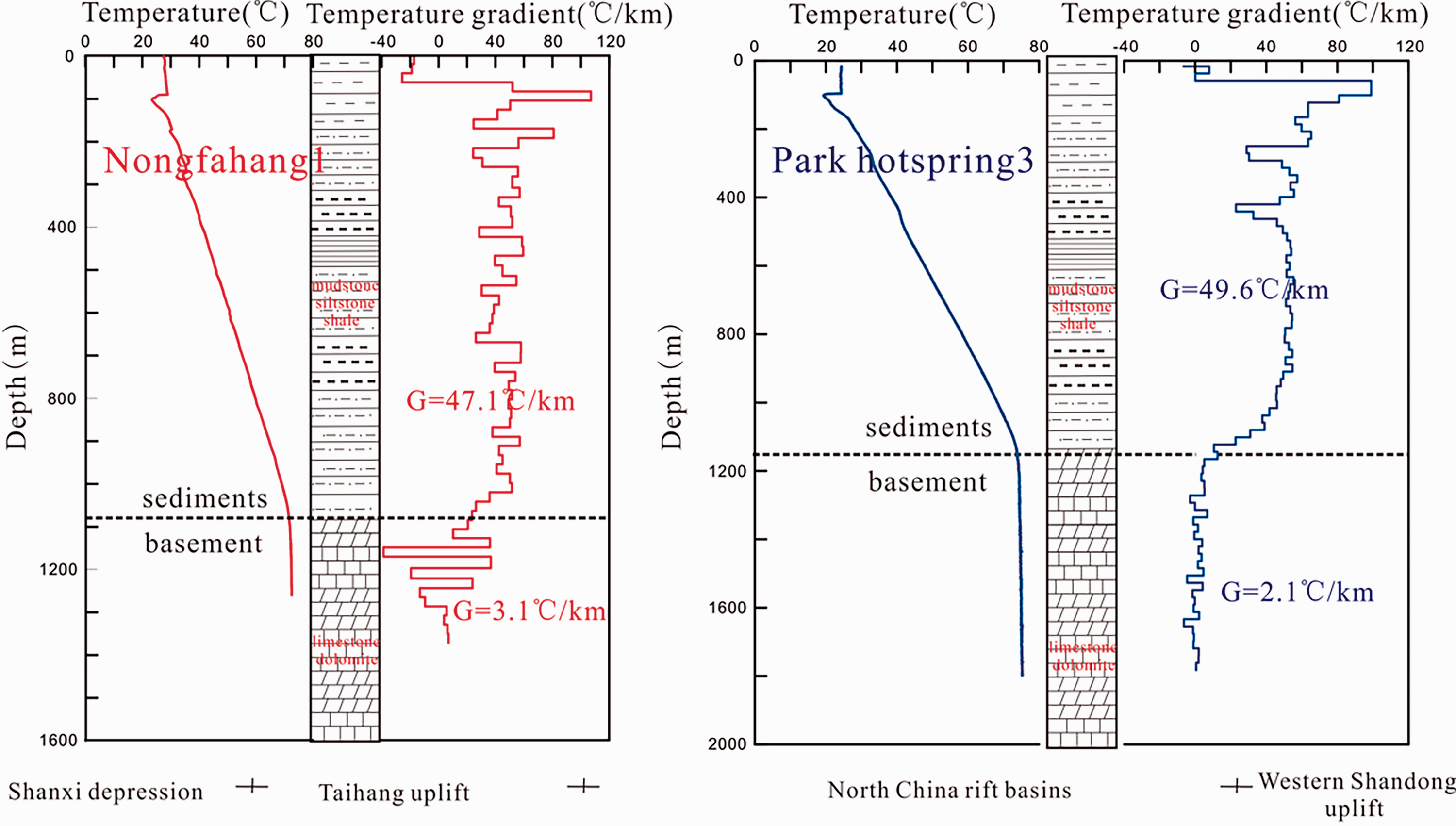
Relationship between temperature gradient with rock types.
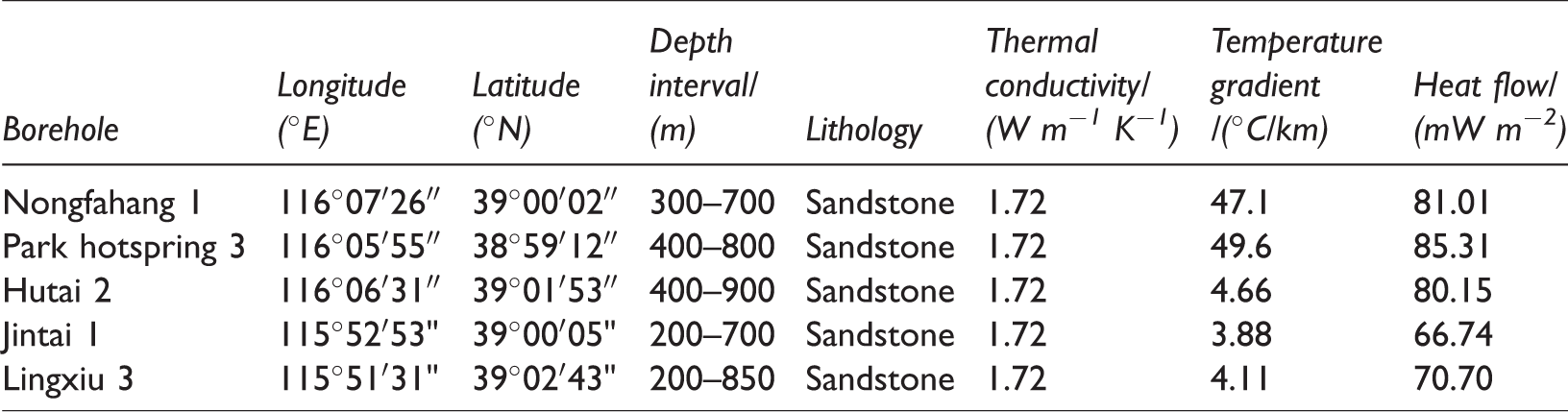
Surface heat flow is the most basic parameter for analyzing the thermal regime of the lithosphere and the calculated thermal structure of lithosphere is very sensitive to the surface heat flow (Wang, 1999). In this study, we collected 55 heat flow values, which fall within the range of 49.7–164.3 mW/m2. The localized high heat-flow density anomalies (higher than 100 mW/m2) could be attributed to the upwelling of thermal water in the deep-circulating geothermal system (Hu and Wang, 2000). After removal of the unusually high values observed around the faults influenced by the underground water flow, the heat flow in Xiong'an New Area ranges from 50.8 to 110 mW/m2, with an average of 70.5 mW/m2. The heat flow distribution across the study is very non-uniform, as indicated by the concentration of most data points in Niutuozhen uplift. This uplift exhibits average heat flows higher than the real levels. Five new heat flow values were calculated by multiplying the least-square temperature gradient with the thermal conductivity. Temperature gradient can be determined from the temperature logs, the thermal conductivity at depths from which no core samples was taken was given by the samples from the adjacent structural units that have the same lithology, detail information about the thermal conductivity selection will talk below, the obtained heat flow values can be seen from the following Table 1.
The calculated heat flow values of the boreholes in the Xiong'an New Area.
The thermal conductivity of different components of the lithosphere
The thermal conductivity of the lithosphere is governed primarily by its composition and also influenced by the in situ temperature, pressure, porosity and other factors, the thermal conductivity is usually calculated for different layers using the correction formula

Which can meet the rectification conditions for the thermal conductivity of deep crust, which has much higher temperature and pressure than the surface’s. In this formula, k0 is the thermal conductivity of the sedimentary cover, which was experimentally determined in this study; c is the temperature correlation coefficient, and b is a pressure correlation coefficient. Since the influence of pressure is negligible compared with temperature’s, c and b were set at 1.5 × 10⁻³ and 1.5 × 10⁻³, respectively, and at 1.5 × 10⁻³ and 1.0 × 10⁻⁴, respectively, for both the middle crust and lower crust (Furlong and Chapman, 2013). The thermal conductivity of the lithosphere can vary widely at surface temperature, generally ranging from less than 1 W/m·K for unconsolidated sediments to greater than 6 W/m·K for halite and quartzite. Thermal conductivity variations are mostly due to the presence of low conductivity fluids in pore space and high conductivity monomineralic rocks, which are typically found at relatively shallow depths (Morgan and Sass, 1984).
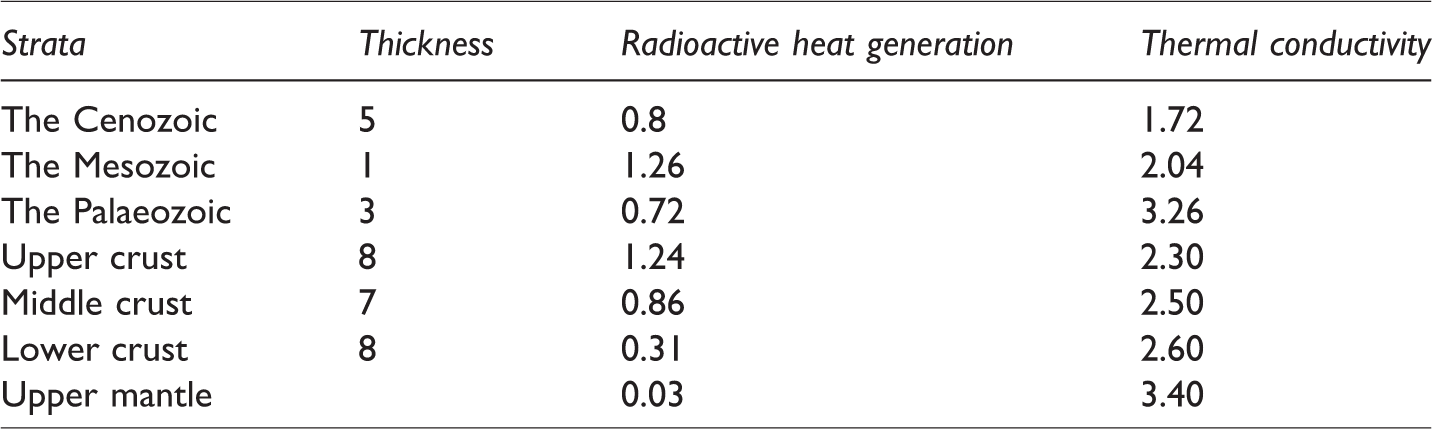
As the core samples were crushed during drilling in Xiong'an New Area, there were no in situ core samples for our research. Moreover, as the surface is covered by the Quaternary sediments, we did not take any sample from outcrop. So the thermal conductivity of the adjacent area that has the same lithology was used. A total of 105 thermal conductivity values were collected from three tectonic units of North China Craton: Jiyang depression, Jizhong depression, and Linqing depression. The results show that thermal conductivity depends mainly on rock type rather than on depth. The main rock types found in the sedimentary cover in Xiong'an New Area are sandstone, mudstone, and siltstone. These rocks have low thermal conductivity, while the limestone found in the bedrock thermal reservoir has very high thermal conductivity. So, we divided the lithosphere into three stratigraphic units based on rock type and chronostratigraphy. A thermal conductivity value was given for each parts, and the thermal conductivity of the Cenozoic, Mesozoic, and Palaeozoic was calculated at 1.72 W/m·K, 2.04 W/m·K, and 3.26 W/m·K, respectively. After rectification using formula (1), the thermal conductivity of 2.30 W/m·K was assigned to the upper crust thermal. The lower crust and the upper mantle were given constant thermal conductivity of 2.6 W/m·K and 3.4 W/m·K, respectively (Table 2) (Artemieva and Mooney, 2001; Chapman, 1986).
Selection of thermal property parameters in Xiong'an New Area (Chang et al., 2016; Gong et al., 2003).
Radioactive heat generation
Distribution of radioactive heat generation in the crust is very important for understanding the thermal state of the crust. Uncertainties in the thermal state of the crust in the lithosphere arise from the uncertainties in the heat production rate inside the Earth. So the radioactive heat generation rate is regarded as a key factor affecting the value of heat flow. Accurate estimate of heat generation rate is necessary for computing the temperature-depth profile in the lithosphere, the heat flow across both the Moho (the reduced heat flow) and the lithosphere-asthenosphere boundary (Hasterok and Chapman, 2011). The value of A can be determined by the formula

Three functional forms have been proposed for modeling the distribution of radioactive-heat-producing isotopes in the upper crust (Furlong and Chapman, 2013; Lachenbruch, 1970; Roy et al., 1968): a constant model, a linearly decreasing model, and an exponentially decreasing model. This study used the constant model to describe the heat generation distribution within the crust in Xiong'an New Area, because the composition of the lithosphere in North China Craton has been studied in detail. Relevant studies have analyzed plenty of crustal elements, including U, Th, and K, by testing samples of xenoliths and from outcrops of Precambrian basement, and sections of the crust (Chi and Yan, 1998; Gao et al., 1998; Shi and Han, 2000; Taylor and Mclennan, 1995). For the sedimentary layer, we collected 43 heat generation values from rock samples collected in the boreholes within Jiyang depression, including sandstone, mudstone, limestone, and siltstone from different geological eras. Then the equation (2) above was employed to calculate the rates of heat generation in different strata. The results show that the average heat generation rate is 1.43 µW/m3 in the Cenozoic, 1.51 µW/m3 in the Mesozoic, and 1.22 µW/m3 (only one sample) in the Palaeozoic. However, the Mesozoic strata, which should have higher radiogenic heat generation rate, were weathered more seriously in in Xiong'an New Area than in Jiyang Depression, and were almost completely eroded in Niutuozhen uplift. For this reason, the average rate of radiogenic heat generation in the sedimentary layer in Xiong'an may be lower than that in Jiyang Depression. After combining the radiogenic heat generation rate in Jiyang Depression with the radiogenic heat generation rate in Jizhong depression provided by a previous study (Qiu et al., 2015), we obtained the values of A using the above mentioned formula (Table 2). The analysis of the heat generation rate in the sedimentary layers reveals that the distribution of heat production is correlated with type, but heat generation rate changes irregularly with respect to depth (Clauser et al., 1997; Popov et al., 1999). The radiogenic heat generation rate in the crustal layers can be estimated using the above equation (2) (Chang et al., 2016; Gong et al., 2003). The results are as follows: the upper crust, 1.24 µW/m3; the middle crust, 0.86 µW/m3; and the lower crust, 0.31 µW/m3. The thicknesses of the upper, middle, and lower crustal layers in Xiong'an New Area, at 8, 7, and 8 km, respectively, were derived from the seismic velocity data (Table 2). Finally, the rate of radiogenic heat generation within the upper mantle was analyzed. Because the partial melting within the upper mantle carried away massive amounts of heat-generating elements, especially U, Th, and K, the upper mantle shows very low heat generation rate compared to the crust. The radioactive heat generation rate in the upper mantle, at 0.03 µW/m3, was calculated based on previous chemical analyses of mantle xenoliths (Hasterok and Chapman, 2011).
Division of the thermal lithosphere
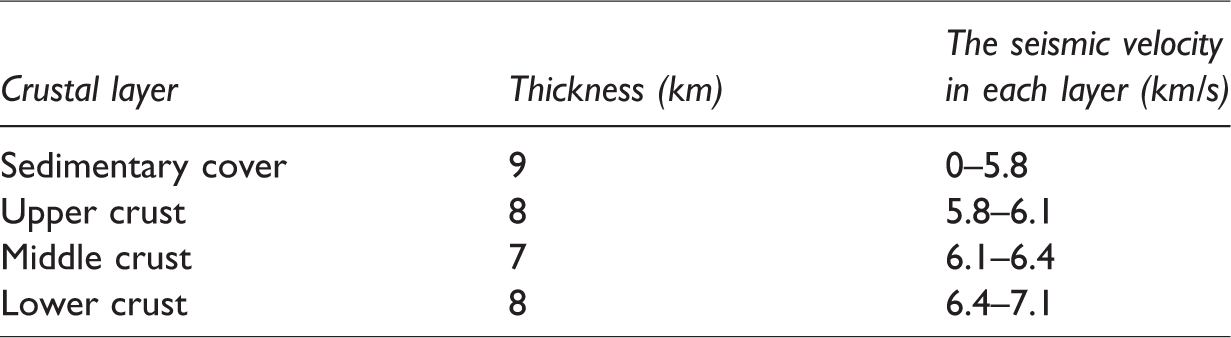
Data about the stratification of the crust and the thicknesses of different crustal layers are the fundamental parameters for analyzing the thermal regime of lithosphere. As borehole data only provides stratigraphic information of shallow part of the crust, detailed information about deep crustal layers needs to be extracted from seismic wave velocity profile. However, there was no available seismic velocity profile for Xiong'an New Area. Since this area is composed of several secondary structural units of Jizhong depression, it is reasonable to use the crustal structure in Jizhong depression to represent that of the study area. Based on previous research, Chen (1982) divided the crust in Jizhong depression into several parts (Table 3).
Thickness of lithosphere crust in different tectonic units of North China Craton.

The continuous improvement of geophysical techniques allows us to obtain new seismic wave velocity profile and develop a better method for subdividing the crust in Jizhong depression. The new seismic wave velocity profile (Figure 4) shows that the sedimentary cover ranges in thickness between 6 and 10 km and in seismic velocity from 1.5 to 5.2 km/s. The crust can generally be divided into three parts: the upper crust with wave velocity of 5.8–6.1 km/s, the middle crust with 6.1–6.4 km/s wave velocity, and the lower crust with 6.4–7.1 km/s wave velocity. The heterogeneity of wave velocity, as indicated by the presence of well-developed high- and low-velocity zones within the crustal layers, provides a new basis for subdividing the crust. As low velocity zones and high-conduction layer (the melting body) are widely distributed in the crust, the crustal layers show low average seismic velocity, at between 5.5 and 5.8 km/s. This characteristic may be closely related to the regional tectonic setting: thinning of the lithosphere due to extension of back-arc, upwelling of mantle materials and cracking and subsidence of the sedimentary cover (Jie and Gao, 2001). As can be seen in Figure 4, the wave velocity is lower in North China rift basins than in Western Shandong and Taihang uplifts. Besides, the seismic velocity also varies significantly across these rift basins in the horizontal direction, with the lowest velocity occurring in Jizhong depression (Figure 4). The horizontal variation in seismic wave velocity is evidence of the differential tectonic movement of Eastern China basin in the Mesozoic and Cenozoic (Xu and Kang, 2005).
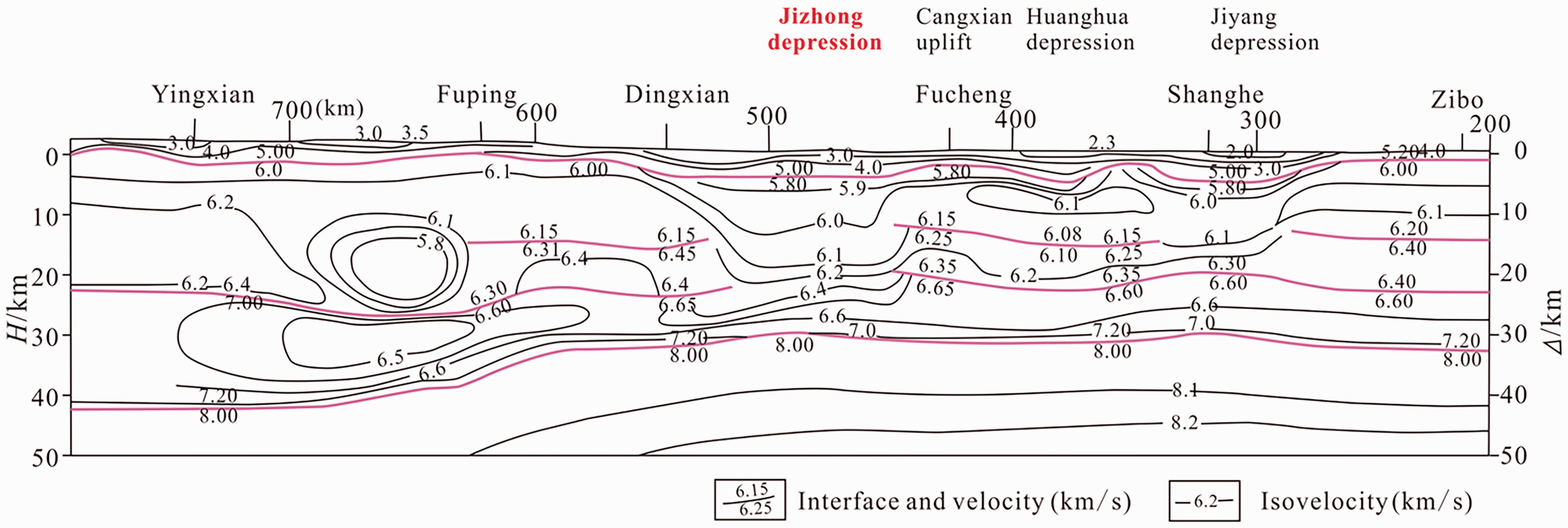
The crustal velocity structure of Zibo-Yingxian profile (Xu and Kang, 2005).
In this article, we divide the crust of Xiong'an New Area into four layers: sedimentary cover, upper crust, middle crust, and lower crust (Table 4).
The division of the crust layers about Xiong'an New Area.
Computing method
The thermal structure of lithosphere is critical for understanding the thermal state and the dynamic process in a particular place. It is affected by the surface heat flow, the crustal structure, and the thermal parameters of different crustal layers (primarily radiogenic heat generation and thermal conductivity), etc. Variations in these parameters across the crust should be taken into consideration when calculating the thermal state of the lithosphere. Based on these thermal parameters and the structure of the thermal lithosphere, the lithosphere’s thermal regime can be derived using the given boundary condition and the three-dimensional heat conduction equation (Song et al., 2016).
According to the Fourier’s law of thermal conduction, the thermal state of lithosphere can be calculated using the following equation

The initial value of T0 can be obtained from the constant temperature zone, and the surface heat flow Q0 can be determined by multiplying the thermal conductivity of a sedimentary rock by the corresponding temperature gradient. To solve the equation, we should first determine the three dimensional distribution of rock thermal conductivity, radiogenic heat production, lithology and other boundary conditions. Given the actual situation and the geological and geophysical data available, it is impossible to determine the three dimensional temperature distribution using the equation above. Therefore, a one-dimensional steady-state heat conduction formula was used as the theoretical basis for calculating the thermal structure of lithosphere as follows (Chapman, 1986; Correia and Ramalho, 1999)


Q0 represents the surface heat flow (mW/m2); Z is the thickness of a crustal or upper mantle layer; K is the thermal conductivity of a crustal layer, which is primarily governed by its composition and also influenced by the in situ temperature, pressure, and other factors. As long as the radioactive heat generation distribution within different crust layers is obtained, the heat flow contributions of different crustal layers can be calculated by equation (6)

Using the methods described above, we can determine the thermal properties of the lithosphere at different depths. The linear relationship between temperature and depth within the lithosphere can be derived from formula (4). The thermal lithosphere usually refers to the rigid outer shell of the Earth lying above a more plastic layer called the asthenosphere. It is characterized by low viscosity, high conductivity, and easy of deformation, and transfers heat predominantly by conduction. The thermal lithosphere is composed of the Earth’s crust and part of the upper mantle (Barrell, 1914; Koptev and Ershov, 2011; Song et al., 2016). The thickness of the thermal lithosphere refers to the depth of the point at which the temperature-depth profile intersects with mantle adiabatic or Dry basalt solid phase line (Morgan and Sass, 1984). Two adiabatic were used to determine the upper and lower limits (Artemieva and Mooney, 2002); the upper limit equation is defined as

While the lower limit equation is as follows

Results
Surface heat flow distribution
Based on the Kriging interpolation principles, a map was created to depict the heat flow distribution in Xiong'an New Area (Figure 5). As shown in the map, high heat flow occurs mainly around the basement uplifts, such as the Niutuozhen uplift and Rongcheng uplift, while low heat flow is largely distributed in the depressions, such as Baxian depression and Baoding depression. There are several factors responsible for such characteristics. First, the subduction of the Pacific Plate and the Himalayan orogeny in the Mesozoic and Cenozoic led to folding, thinning, destruction, and extension of the lithosphere, and consequently the unevenness of the bedrock. After receiving the deposition in Quaternary and Neogene, the sedimentary cover layer will vary widely in thickness, due to the lower thermal conductivity of sedimentary cover compared to the bedrocks in Xiong'an New Area. This suggests that the uplifts have lower thermal resistance than the depressions. Like water flows, heat flows also preferentially pass through the rock with the higher conductivity when rocks of contrasting thermal conductivities are juxtaposed on steep contacts, boosting the heat flow from depression to uplift under the sedimentary cover (Xiong, 1984), Second, development of faults is another factor contributing to the high heat flow in uplifts. Take Niutuozhen uplift for example. This uplift is bounded by Niunan Fault on the south, Niuxi Fault on the west, and Niudong Fault on the east. These fractures provide good channels for heat flows. Some faults extend downward to the crystalline basement, allowing intrusion of magma into the wall rocks. If the intrusion occurred in the Quaternary, the invasive body could be a good heat source. Lithology of the bedrock is another reason responsible for the high thermal state of the basement lifts. The bedrock primarily includes dolomite and limestone, whose high thermal conductivity can facilitate heat conduction. By comparison, the sedimentary cover, consisting mainly of sandstone, mudstone, and clay with very low thermal conductivity, can prevent rapid heat loss. These can also contribute to the high thermal state of the basement uplifts.
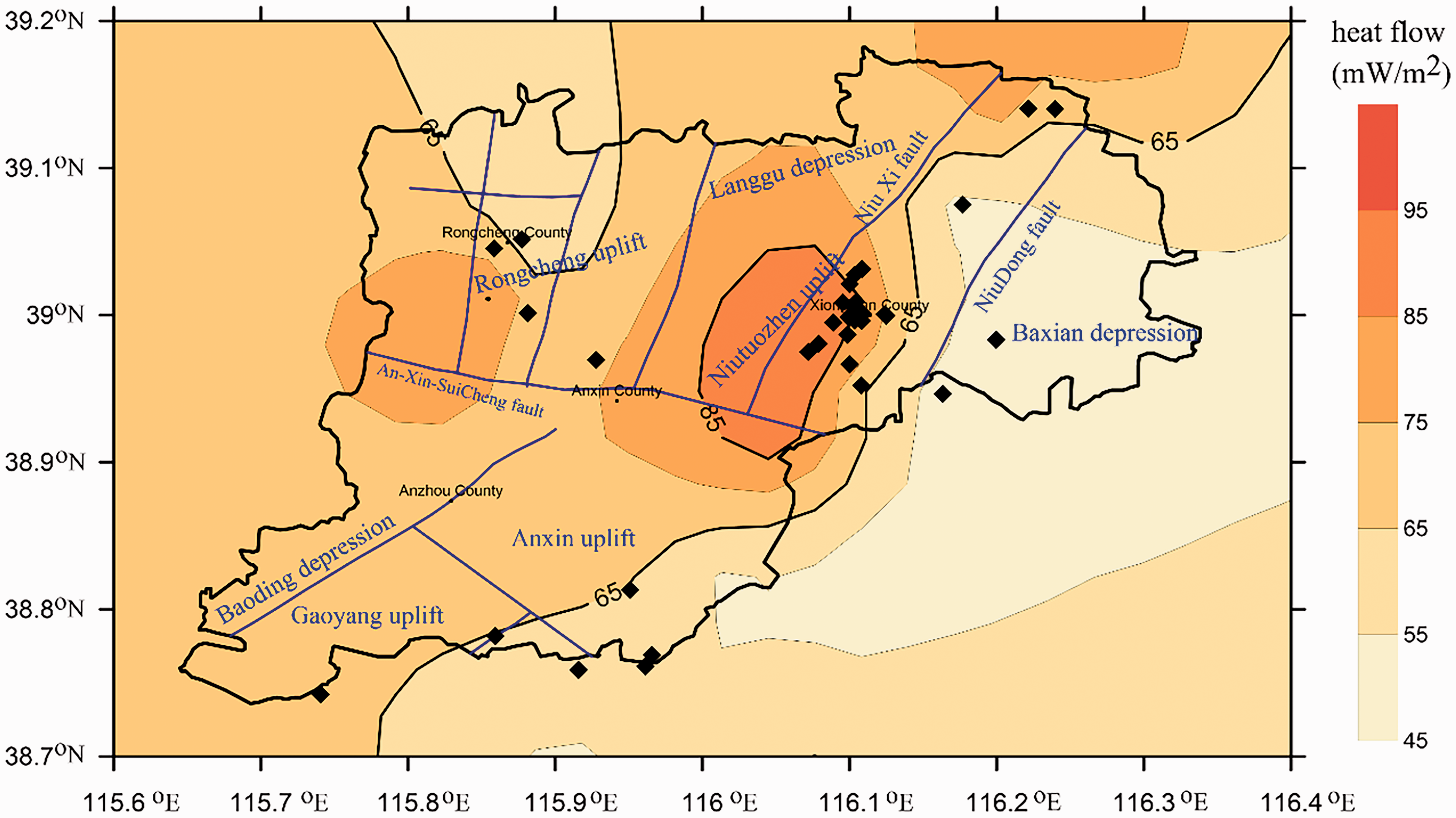
Heat flow distribution around Xiong'an New Area.
According to the latest compilation of heat flow in the continental area of China (Jiang et al., 2016a, 2016b), in generally, the heat flow value has a decrease tendency from east to west basin which is accordance with the characteristics of the heat flow distribution in the back-arc basin, from east Bohai Bay basin: 68.9 mW/m2 (the average heat flow value) to the middle Ordos basin: 61.6 mW/m2 and the Western Junggar basin: 43.1 mW/m2, the Bohai Bay basin shows a high thermal state, which the average heat flow value is 68.9 mW/m2 that is higher than the average heat flow value −61.5 mW/m2 in mainland China and the Bohai Bay basin has a large range of heat flow value which ranges from 43.5 to 113.9 mW/m2, but they are mainly concentrated between 50 and 75 mW/m2, which may represent the regional thermal background. The Xiong'an New Area is located in the Jizhong depression, one tectonic unit of Bohai Bay basin, so Xiong'an New Area shows a higher thermal state as one eastern structural unit, the average heat flow value of the area is 70.5 mW/m2. In some places, such as Niutuozhen uplift, the average heat flow values even reach 80 mW/m2, these values may be inaccurate, due to the lack of core samples and the influence of groundwater convection, but they can still reflect high background heat flow in Xiong'an New Area. Such thermal state of the Xiong'an New Area can be attributed to the Bohai Bay basin as a typical rift basin that has undergone several crustal extension, the upwelling of the asthenospheric material caused a high thermal state in eastern China. The high heat flow is regarded as one of the contributors to the abundant geothermal resources in the area.
Temperature distribution in deep crust and its thermal thickness
The temperature distribution in deep crust was modeled with the simple one-dimensional steady-state conduction formula, basing on the basic parameters presented above. The relationship between deep crustal temperature and depth was simulated. The points indicating the boundaries of the tectonic units were identified. Figure 6 demonstrates that the crustal temperature increases with depth overall, except for the a few unusually high temperatures due to variability in measured heat flow and heat generation rate within the regions (Lewis et al., 2003). T1 and T2 represent the mantle adiabatic we can use to determine the thickness of the thermal lithosphere. At the depth of 40 km, the crustal temperatures in the wells included in the calculation range from 750°C to around 1100°C. As the highest temperature may be affected by other factors, it is inappropriate to use the steady-state conduction model. But the other points of very high crustal temperature can lead to an inference that the crust in Xiong'an New Area is in a high thermal state. The temperature-depth profile in well Rong 2 was taken as the Dividing line. This well is located in a transition zone between an uplift and a depression, rather than within either, and thus its temperature can be used to represent the real average temperature of this area. The lines lying above the Rong 2 temperature-depth line (the solid lines) indicate areas of high crustal temperatures, such as Jinbairui, East Shijicheng, and Hutai 2 (which are mostly distributed around Rongcheng and Niutuozhen uplifts), while those below this line (the dashed lines) denote regions of lower crustal temperatures, such as wells Cha 2, Yan 50, Gao 20, and Gao 7 (which are found in the depressions).
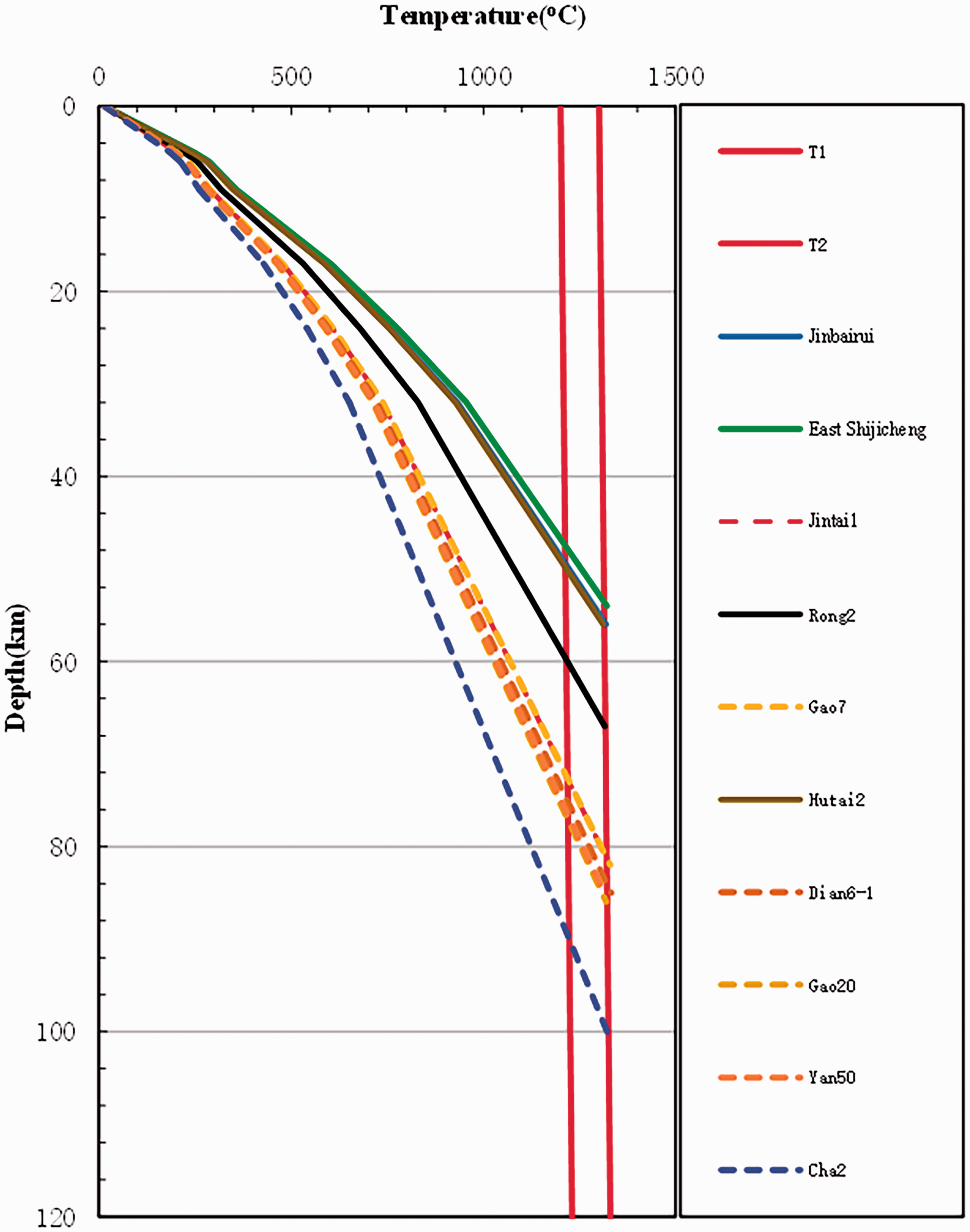
Lithosphere temperature-depth plots from conductive thermal model for Xiong'an New Area.
As we know that the crustal temperature can finally decide the thickness of the thermal lithosphere, the temperature of the bottom thermal lithosphere is around 1250°C, because the crustal temperature in Xiong'an New Area has a huge difference on each other; so, the thickness of thermal lithosphere should be as the same. Based on the data presented above, thermal thickness was calculated for all the heat flow points in Xiong'an New Area using the formulas (4), (7), and (8), where T0 set to 14.5°C and the depth of the constant temperature zone was set to 30 m (Li et al., 2014). For some points where the fracture activity under the sedimentary cover allows the underground water to move freely, they do not meet the steady-state heat conduction criteria and thus the calculated values for them are unreliable. After removal of the unusually high heat flow value and the corresponding thermal thickness, the thermal thicknesses left fall within the range of 75 to 95 km, and the average value is 77.36 km, far less than that of ancient cratonic basin (exceeding 100 km) (Artemieva and Mooney, 2001). The thermal lithosphere in uplift is much thinner than that in depression. The smallest thermal thickness was found at 60 km depth in Niutuozhen uplift, while the Baxian depression has a thermal thickness of around 100 km. This is characteristic of a rift basin and has close relationship with the subduction of the Pacific Plate, the deformation of the crustal layer and the upwelling of mantle material.
The ratio of mantle heat flow to crustal heat flow
This study divided the surface heat flow into two parts: the crustal heat flow (Qc) and the reduced heat flow (Qm). The heat flow distribution and the composition of the two parts (Qc, Qm) can determine the thermal structure of the lithosphere and are strongly associated with regional tectonic activity (especially the reduced heat flow) (Heacock, 1971, 2013; Qiu, 1998). After calculation of the crustal heat flow and reduced heat flow in Xiong'an New Area, we can obtain the value of the Qc/Q. The average value of Qc/Qm, at 0.655, is lower than those in the western cratonic basins such as the Tarim basin (1.20) and the Qaidam basin (1.10) and also lower than the that in the Ordos basin (0.76), but it is higher than that in the eastern Liaohe basin (0.62) (Qiu, 1998). The average reduced heat flow in Xiong'an New Area is 44.35 mW·m−2, much higher than those in the Tarim basin and the Qaidam basin. In general, from the west cratonic basin to east rift basin, the reduced heat flow tends to increase, while the ratio Qc/Qm declines. These suggest that in a tectonically active area the reduced heat flow accounts for a great part of the surface heat flow, while in the tectonically stable area the crustal heat flow becomes the dominant component. Xiong'an New Area exhibits a remarkably high reduced heat flow (Figure 7), which is closely associated with the subduction of the Pacific Plate. Such tectonic movement in the Cenozoic and Mesozoic contributed to a higher reduced heat flow and lower crustal/mantle heat flow ratio in this area.
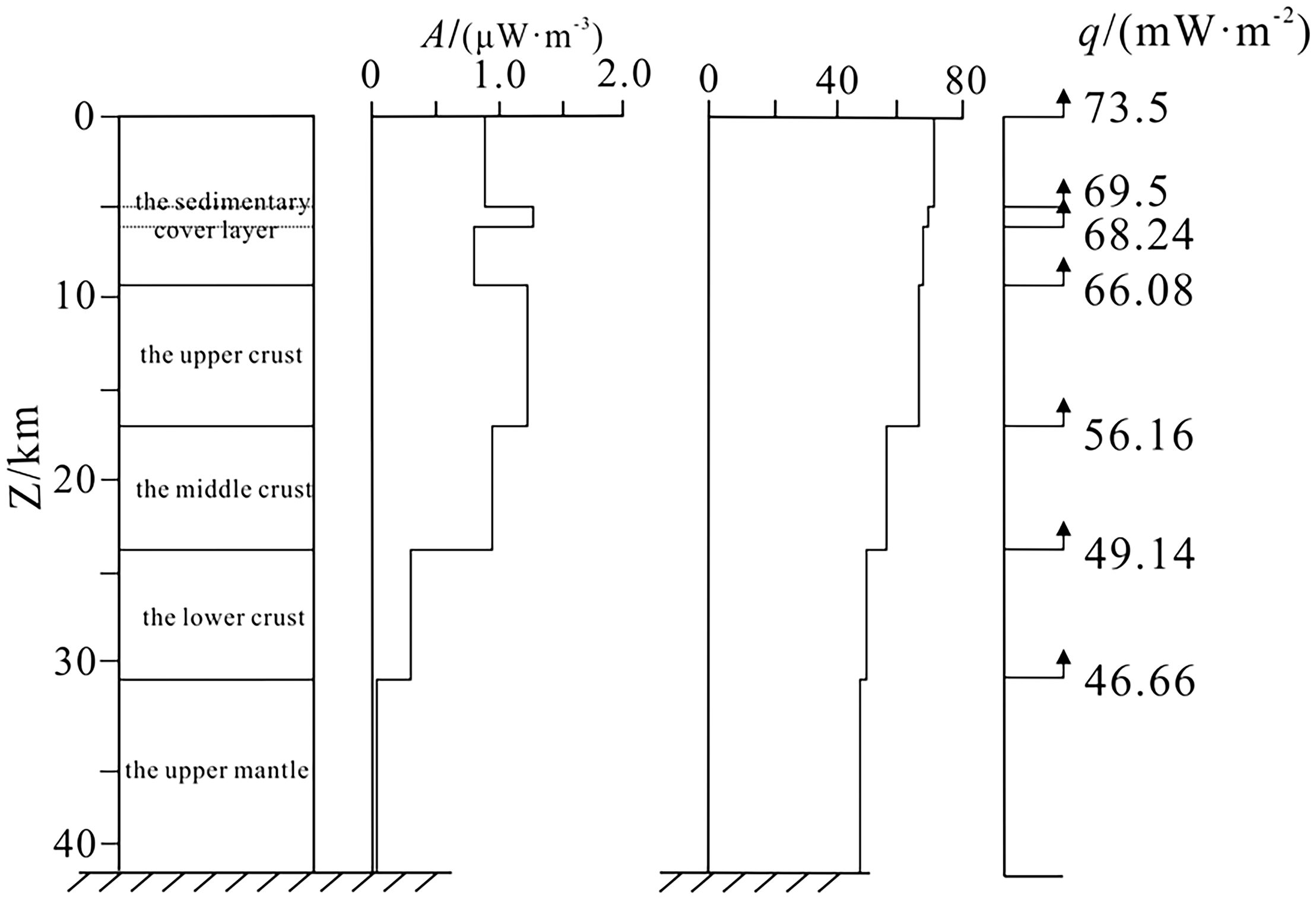
The crust structure, heat production model, and thermal structure of Xiong'an New Area.
Evaluation of geothermal resources in Xiong'an New Area
This part evaluates the amount of geothermal resources in Xiong'an New Area. There are two types of reservoirs in this area: (1) tertiary geothermal reservoirs and (2) Proterozoic thermal reservoirs. Tertiary geothermal reservoirs, an important reservoir type in this area, are comprised primarily of Neogene and Palaeogene permeable sandstone. The corresponding reservoirs are called the Neogene and Palaeogene thermal reservoirs. Proterozoic thermal reservoirs are composed mainly of high-permeability, high-temperature dolomite, and thinner sedimentary cover, and these reservoirs boast larger volumes and greater production capacity than other reservoirs in Xiong'an New Area. The burial depth and thickness of each thermal reservoir may vary between secondary structural units, and the variation in depth could finally cause the temperature variation in each thermal reservoir. However, the study found that the temperature changes in this area are too tiny to affect local geothermal resources. Take for example the dolomite reservoir that has the highest quality among the thermal reservoirs; this thermal reservoir is nearly 1200 m deep in the northern portion of this area and 2000 m deep in the south. As the geothermal gradient in the north (48°C/km) is much higher than that in the south (30°C/km) (Chang et al., 2016), the temperature of the dolomite thermal reservoir does not vary significantly. Detailed research is needed on the reasons behind. It is reasonable to use the temperature range for the dolomite thermal reservoir despite the dramatic change in its depth. The measured temperature profile provides the temperatures of thermal reservoirs at some depths. For the points from which no temperature measurement was obtained, the temperature of the thermal reservoir can be calculated by the following formula


Substituting this expression for G into equation (9) and rearranging yields the formula for calculating temperatures at any depth. The average burial depth of the middle thermal reservoir is 600 and 2000 m respectively for the Neogene geothermal reservoir and Proterozoic geothermal reservoir (Wang et al., 2016). The temperature at the average burial depth of the above two thermal reservoir was calculated, and the temperature contour maps were created for the two geothermal reservoirs (Figure 8). The Palaeogene geothermal reservoir is so small that it was excluded from the calculation. According to the previous studies, the amount of geothermal resources can be evaluated using the Volume method (Muffler and Cataldi, 1978); the formula is as follows

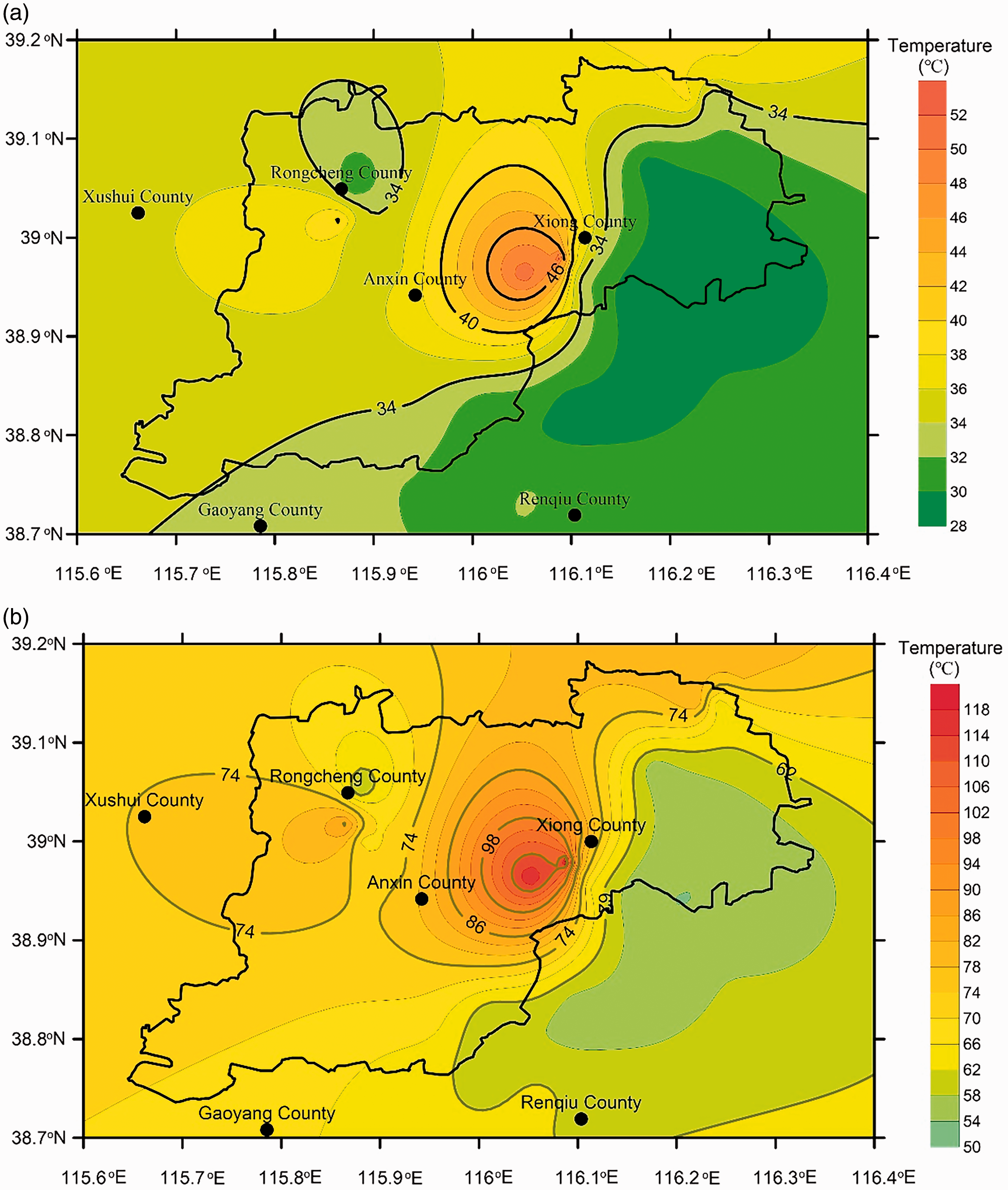
(a) The temperature contour map of the middle depth within the Neogene geothermal reservoir; (b) the temperature contour map of the middle depth within the Proterozoic geothermal reservoir.
The basic parameters for the geothermal resource assessment in Xiong'an New Area (Guo et al., 2017; Yin et al., 2008; Yu et al., 2017).
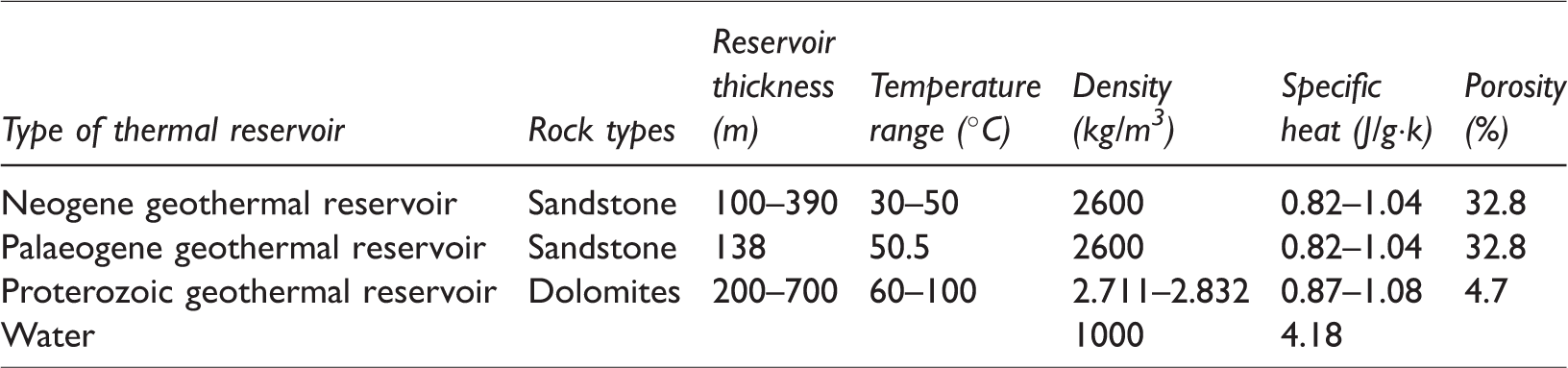
Based on the parameters listed above, the value of the geothermal resources was calculated through the Volume method. Considering the uncertainty of some parameters, we calculated the minimum and maximum geothermal resources. The minimum sum of the thermal resources is 64.8 ×10¹⁸J, with the dolomite thermal reservoir accounting for 55.1% or 35.6 × 10¹⁸J, the Neogene reservoir accounting for 34.3% or 22.3 × 10¹⁸J, and the Palaeogene reservoir accounting for 10.5% or 6.95 × 10¹⁸J. The maximum sum of thermal resources is 393.9 × 10¹⁹J, with the dolomite, Palaeogene, and Neogene thermal reservoirs contributing 297.9 × 10¹⁸J (75.67%), 25.3 × 10¹⁸J (6.43%), and 70.6 × 10¹⁸J (17.9%), respectively (Figure 9).
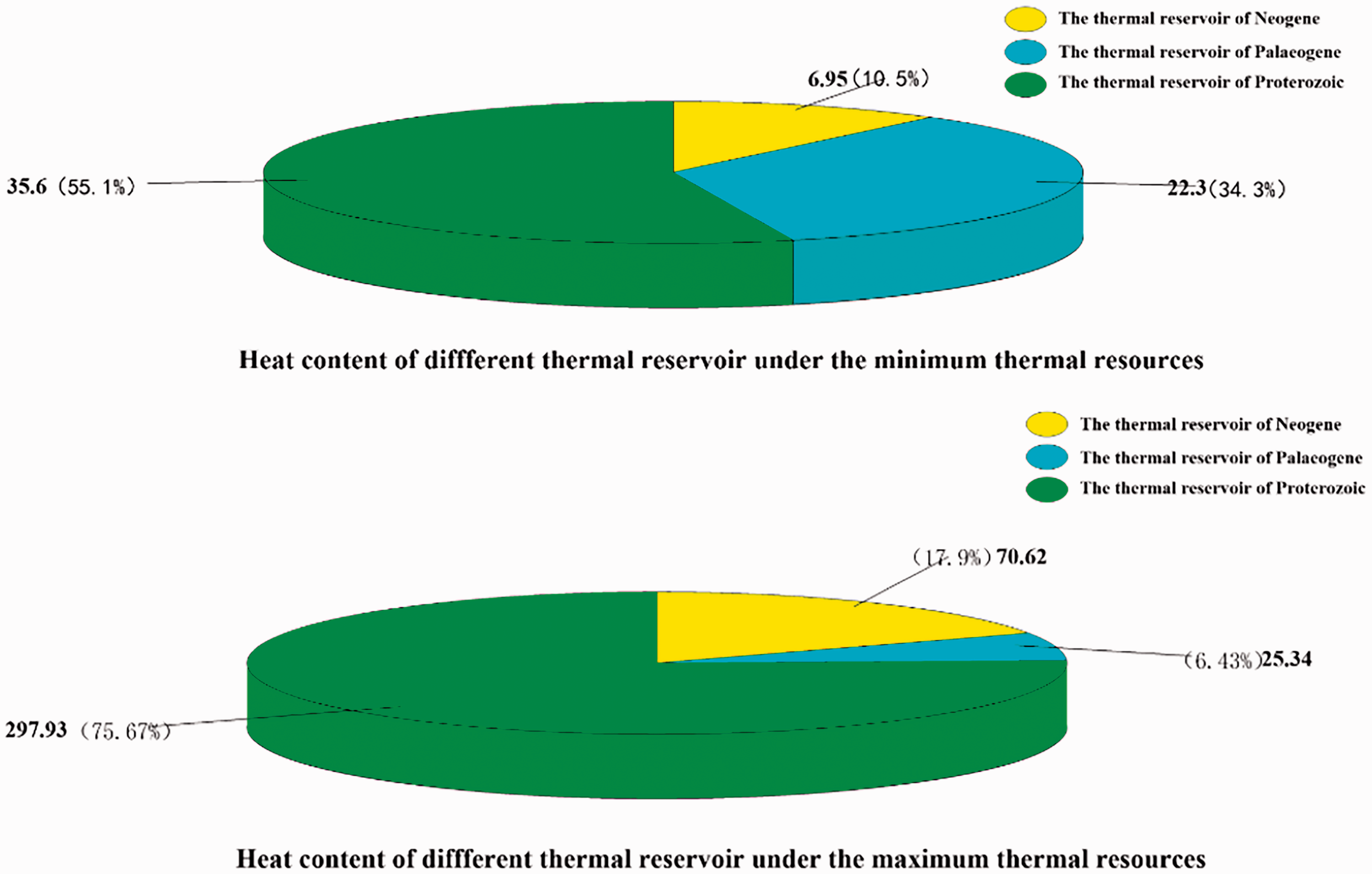
The distribution of thermal resources in different situation. The number in the bracket is the percentage of different thermal reservoir, and the number in the front of the bracket is the thermal content (1018 J).
As can be seen in Figure 9, the heat content of dolomite thermal reservoir accounts for more than 50% of the total geothermal resources in both situations. The high heat content is attributed to the reservoir’s high temperature and large thickness. The Neogene and Palaeogene reservoirs contribute small percentage of the thermal resources, because of their shallow depths.
Discussion
Influence of the special tectonic setting on the thermal regime of Xiong'an New Area
Research on thermal regime of lithosphere is an important extension of the geothermal research on the basin. The thermal structure of lithosphere was deeply affected by the recent tectonic movements, especially the tectonic activity during the Cenozoic and Mesozoic. Therefore, findings of the study can provide insight into the geodynamics of eastern China. Firstly, from the global tectonic, Xiong'an New Area, lying on Jizhong depression within North China Craton, is a part of the Pacific Rim tectonic belt. The Pacific Plate began to undergo subduction into eastern China no later than the Mesozoic. Meanwhile, the North China Carton was destroyed by the huge impact from the Pacific Plate subduction and experienced several crustal extension (Zhu et al., 2012). A remarkable feature of subduction zones is that despite the cooling effects of the subducting plate, the arc, and back-arc regions are extremely hot, no matter whether the crustal lithosphere has recently undergone extension and thinning (Currie and Hyndman, 2006). As a part of a back-arc basin, Xiong'an New Area also has this characteristic. Secondly, according to the tectonic divisions of the Bohai Bay basin, the New area belongs to Jizhong depression, the depression zone which is produced by rift valley usually has a higher heat flow background due to the higher degree of lithospheric thinning, which is confirmed by the average thickness of the lithosphere in this area is 77.36 km, the rising asthenospheric material contributed to the high thermal state of the area. Thirdly, from the perspective of secondary structural units of Jizhong depression, the New area is mainly composed of the basement uplift, because the entire Jizhong depression has a similar thermal background due to the similar tectonic setting; therefore, within the Jizhong depression, the basement uplifts exhibit higher thermal state than the depression. This is possibly because the lower rate of deposition and smaller thermal resistance in an uplift area boosted the heat flow from depression to uplift under the sedimentary cover. Based on these three aspects, we can conclude that it is the special tectonic setting that caused the high thermal state of the area.
Relationship between abundant geothermal resources with the mechanism of thermal reservoirs
When we discuss geothermal resources in a thermal reservoir, we usually focus on its mechanism, including heat sources, channels for heat transfer, reservoir properties, and impermeable cap rocks. Firstly, the heat sources for the geothermal fields. Because this area is located in a tectonically active zone, the intense tectonic stresses have created alternating uplifts and depressions in the basement and also induced well-developed fractures. It is reasonable to infer that the tectonic–magmatic zone can serve as a heat source for the geothermal fields. Evidence for magmatic activity in this area was found primarily in the Late Cenozoic basic eruptive rocks and the Mesozoic acidic igneous rocks (Liu, 1992). The interval between the two periods of magmatic activity is so long that the heat from residual magma cannot be a primary heat source. It follows that the geothermal fields have two primary heat sources: heat flow from the mantle (the reduced heat flow) and radioactive heat from the crust. Normally, reduced heat flow can make up 60% of surface heat flow (Pollack and Chapman, 1977). In Xiong'an New Area, the proportion of this component was calculated at about 65%, and the average reduced heat flow is 44.35 mW·m−2, higher than the normal value. According to a study on regional thermal history, the crust in the Bohai Bay basin is still receiving a high heat flow from the mantle and undergoing thermal attenuation (Pang et al., 2017; Zuo et al., 2013). This suggests that the geothermal fields are also supplied with radioactive heat produced within the crust, primarily from the decay of radioactive isotopes of U, Th, and K within the granite in the upper crust. Secondly, the well-developed faults. Influenced by the subduction of the Pacific plate, the background of the crustal extensional can be good for the development of the faults, in particular, the change of the subduction direction has largely controlled regional tectonic movement (Sun et al., 2007). For example, the motion of Tan-Lu Fracture Belt, which is interpreted as a right-lateral strike-slip fault, induced the well-developed extensional faults on both sides of the fault; these secondary extensional faults, such as the Niudong Fault, Niuxi Fault, and the Anxin-Suicheng Fault, can serve as good channels for the heat transfer to the surface. Another characteristic of these extension faults is that their fracture depth can reach the crystal basement, such as Niudong Fault and Niuxi Fault, so there is enough heat for the transmission. Besides, the extension and depth enough faults can provide passages for the upwelling and intrusion of magma, as indicated by the beaded intrusive rock bodies around the Niuxi Fault. The upwelling of the mantle can bring in considerable heat, which may contribute to the higher thermal state of this field. In term of reservoir properties, the thermal reservoirs, primarily the limestone and dolomite formations, have high thermal conductivity and favorable hydraulic characteristics (high permeability and drainage). As for cap rocks, the impervious sandstone and mudstone that form the sedimentary cover in Xiong'an New Area have lower thermal conductivity than the bedrock and thus can impede heat loss. The combined effects of all the factors described above have contributed to the existence of these geothermal fields.
Conclusions
Through the above discussion, the following conclusions can be obtained:
The high thermal regime of Xiong'an New Area can be attributed to the high reduced heat flow, for which average value is 44.35 mW·m−2 within the New area, and the convergence of the heat flow from the depressions to the uplifts under the sedimentary cover can explain the thermal anomalies under the background of high thermal state. The carbonate thermal reservoir is the most promising thermal reservoir in Xiong'an New Area. It is expected to provide 297.9 × 10¹⁸J of heat, which is equivalent to the heat content of about 10 billion tons of coal; therefore, heat extraction from this reservoir will promote the construction of environmentally friendly cities.
Footnotes
Acknowledgements
Thanks to the Sinopec Star Co., LTD, for providing the opportunity of temperature measurements. The Institute of Hydrogeology and Environmental Geology, Chinese Academy of Geological Sciences also supports this research by the academic exchange.
Declaration of conflicting interests
The author(s) declared no potential conflicts of interest with respect to the research, authorship, and/or publication of this article.
Funding
The author(s) received no financial support for the research, authorship, and/or publication of this article.