




Abstract
Under the background of China’s energy structure optimization, environmental protection, energy conservation, and rising pressure of emission reduction, geothermal, as a potential strategic replacement energy, has ushered in new opportunities and challenges. This paper systematically summarizes the domestic achievements in the exploration and development of geothermal resources, analyzes the endowment, distribution, and accumulation mechanism of geothermal resources in China, and points out the main problems existing in the exploration and development of geothermal resources in China. On this basis, it looks forward to China’s urgent geothermal exploration and development work and key technologies to be urgently developed, providing important guidance for China’s geothermal science and technology innovation and rapid industrialization development.
Keywords
Introduction
Industrial revolutions occur when new types of energy are discovered. The first industrial revolution was based on coal, the second industrial revolution was based on petroleum and natural gas, and the third industrial revolution is based on clean and renewable energy. Currently, coal, petroleum and natural gas, and renewable energy are the three dominant types.
As a country’s economy grows, its demand for energy also continuously increases. In the future, per capita energy consumption will increase, but carbon emissions must be lowered substantially (Wang et al., 2000). A recent economic study published by PricewaterhouseCoopers—The Long View: How Will the Global Economic Order Change by 2050—notes that China will escape from the “middle-income trap” in 2025 and have a total economic output surpassing that of the U.S. in 2030 and a per capita gross domestic product (GDP) of 40,000 USD in 2050, four times that of 2020. According to the International Energy Agency’s World Energy Outlook, China’s per capita energy consumption in 2050 will be close to that of the European Union and Japan in 2040, and China’s per capita power generation in 2050 will be close to the average level of the member countries of the Organization for Economic Cooperation and Development for 2040. In the first half of the 21st century, China will successfully separate energy consumption from economic growth. In the period 2016–2050, the increases in China’s total energy consumption and total power consumption will be only 19% and 39% of those in its GDP, respectively. China’s carbon dioxide (CO2) emissions will peak in 2021–2030 and will be more than 25% lower in 2050 than in 2015 if a large-scale application of carbon capture technology is not implemented. To meet the emissions reduction target by 2050, the magnitude of energy conservation over the next 35 years should be comparable to that of previous years. However, the transformation of the energy structure needs to be considerably strengthened, and its contribution to CO2 emissions reductions must exceed four times that of the previous 35 years. Hence, clean energy must play a significant role, and there is an urgent need for the energy structure to be transformed (Wang et al., 2012, 2015).
According to data from the Statistical Communiqué of the People’s Republic of China (PRC) on the 2015 National Economic and Social Development (National Bureau of Statistics (NBS) of the PRC, 2015), the 2015 China Energy Statistical Yearbook (Energy Statistics Department of the National Bureau of Statistics (NBS) of the PRC, 2016) and the British Petroleum Statistical Review of World Energy 2015, China’s nonfossil energy consumption increases every year, but its proportion of the world’s average is still relatively low level, at approximately 50%. China’s nonfossil energy consumption is expected to continuously and considerably increase in the future and exceed 45% of the total energy consumption by 2050, whereas the proportion of conventional coal consumption will drop to under 10%. Geothermal energy will contribute approximately 50% of the total amount of renewable energy.
Geothermal energy can play a vital role in China’s future energy restructuring. Based on the conditions of national resources, the Chinese government requires conventional and renewable energy to be simultaneously developed, clean utilization to be developed at a faster pace, both conventional raw mineral materials and new materials to be considered, and economical and intensive utilization to be concurrently conducted with development and innovation. The Energy Development Strategy Action Plan (2014–2020) proposes that China’s use of geothermal energy should reach the equivalent of 50 million tons of standard coal by 2020. China’s Geothermal Industry Development Plan for the Thirteenth Five-year Period (Exposure Draft) proposes that China’s geothermal energy consumption should account for 1.5% of the total primary energy consumption. Vigorous development and utilization of new sources of geothermal energy are important for the optimization of China’s energy structure. China has enormous geothermal resource potential. China’s annual amount of exploitable geothermal resources is equivalent to 70% of the coal consumption for 2015, but geothermal resources currently account for only 0.6% of the total energy consumption. Therefore, significant work is required to achieve the national goals. This article discusses China’s geothermal resources, the current conditions of and existing problems with its geothermal developments, the prospects for geothermal development and the tasks that urgently need to be performed.
Characteristics of China’s geothermal resources
There are three types of geothermal resources, namely, shallow geothermal energy (SGE), hydrothermal energy (geothermal groundwater), and hot dry rocks (HDRs). A survey and evaluation of China’s geothermal resources show that China has abundant but unevenly distributed geothermal resources.
SGE resources
SGE resources are widely distributed across China and exhibit enormous potential for development and utilization (Liu et al., 2015). The annual amount of exploitable SGE within the prefectural and larger level planning areas of 336 cities in China is equivalent to 7 × 10⁹ t of standard coal, which can be used to heat and cool a total building area of 3.20 × 10¹¹ m2. In general, the constant temperature zones in the shallow geothermal fields in mainland China are deep in the southeast and shallow in the northwest and northeast (Wang et al., 2018a, 2018b). In the mid-temperature zones (alpine zone), the temperatures are low, the constant-temperature zones are deep, and the period of heat supply is long. Based on the geological conditions, deep boreholes can be used in these areas. Southern China is warm, and the upper formations have low temperatures and can be primarily used for heat dissipation during the summer. In this region, shallow boreholes can be drilled. The rock and soil masses in most of the cities have comprehensive thermal conductivity coefficients of 1.89–2.55 W/mK. The structural characteristics of the formations and the hydrological conditions are the primary factors affecting the comprehensive thermal conductivity of the rock and soil masses.
There are 143 cities at or greater than the prefectural level in 13 provinces and directly administered municipalities in central and eastern China that are most suitable for developing and utilizing SGE, namely, Beijing, Tianjin, Hebei, Shandong, Henan, Liaoning, Shanghai, Hubei, Hunan, Jiangsu, Zhejiang, Jiangxi, and Anhui. The annual amount of exploitable SGE is equivalent to 4.6 × 10⁹ t of standard coal, which can be used to heat and cool a total building area of 2.10 × 10¹¹ m2 and thus essentially meets the regional heating and cooling demands.
Hydrothermal energy resources
China’s hydrothermal groundwater resources are equivalent to 1.25 × 10¹³ t of standard coal. The annual amount of exploitable underground hydrothermal resources is equivalent to 1.9 × 10¹⁰ t of standard coal, which represents 44% of China’s energy consumption in 2015. The hydrothermal energy resources in China are distributed into clear zones. China’s hydrothermal energy resources are generally unevenly distributed and are controlled by a number of factors, including the structure, magmatic activity, formation lithology, and hydrological and geological conditions. As shown in Figure 1, mid- and low-temperature hydrothermal resources are predominantly distributed in the North China, Songliao, Ordos, Northern Jiangsu, and Jianghan Basins, as well as in the mountainous and hilly regions along the southeastern coast and the Jiaodong and Liaoning peninsulas; the annual exploitable amount of these resources is equivalent to 1.85 × 10¹⁰ t of standard coal. These hydrothermal resources are mainly suitable for supplying heat and in farming, cultivation, and convalescence tourism and have a power-generating potential of only 1.50 × 10⁶ kW. High-temperature geothermal groundwater resources are primarily located in Taiwan and other regions in southwestern China, such as southern Tibet, western Yunnan, and western Sichuan. The high-temperature geothermal resources in southwestern China have a power-generating potential of 7.12 × 10⁶ kW and an annual amount of exploitable resources equivalent to 1.530 × 10⁷ t of standard coal. Cascade development and utilization of geothermal groundwater resources can meet the power consumption and heat supply demands of more than 50% of the population in the minority regions in western Sichuan and southern Tibet and can provide crucial support for the “Warming Tibet, Illuminating Tibet” project to alleviate poverty (Wang et al., 2017c).
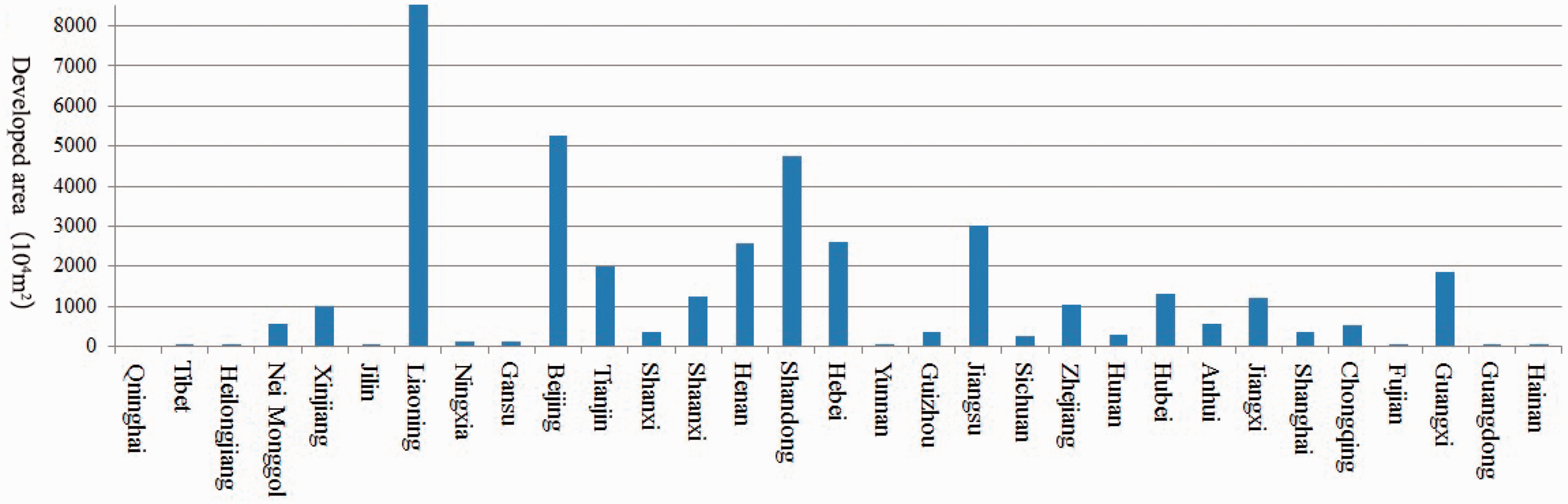
Statistics on the development and utilization areas of shallow geothermal resources in each province of China.
HDR resources
HDR are ubiquitous in the Earth’s interior. However, the HDR resources with the potential for development are located at the edges of plates and tectonic structures, such as in neo volcanic zones and in areas where the Earth’s crust is relatively thin. The HDR resources at depths of 3–10 km in mainland China are equivalent to 8.56 × 10¹⁵ t of standard coal, 2% of which can be considered exploitable according to the international HDR standard, which is 4000 times China’s total energy consumption in 2017. There are four types of HDR in China: modern volcanic HDR, which are distributed in the Changbai Mountains and Rehai in western Yunnan; sedimentary basin HDR, which are located in the Gonghe Basin (the sequence is composed of Cenozoic caprock above acidic rocks and a deep thermogenic crustal source); high heat flow granitic HDR, which are primarily distributed along the southeastern coast; and intense tectonic HDR, which are mainly located in the geothermal region of the Tibetan Plateau.
In 2014, the China Geological Survey (CGS), in collaboration with local governments, used drilling to identify high-temperature (181°C and 151°C) HDR at depths of 3000 m in the Qinghai Gonghe Basin and the Guide Basin, respectively (Liu et al., 2017, 2018). In 2015, the CGS drilled the first scientific borehole for HDR in China in Zhangzhou, Fujian. By 2016, five exploratory boreholes for HDR were successfully drilled in the Qinghai Gonghe Basin. These boreholes are 3000–3705 m deep and have bottom temperatures of 180–236°C. HDR have been retrieved from all five exploratory boreholes. The GR1 exploratory borehole is 3,705 m deep and has a bottom temperature of 236°C and an average geothermal gradient of 8.8°C/100 m below a depth of 3366 m.
Current conditions of and existing problems with geothermal development in China
Current conditions of geothermal resource development in China
Current conditions of the development and utilization of SGE
In recent years, the development and utilization of SGE in China have increased at an average annual rate of approximately 30%. By the end of 2017, the annual SGE resources used in China reached an equivalent of 2.04 × 10⁷ t of standard coal. SGE resources have been used to heat and cool a total building area of 5.5 × 10⁹ m2 (Figure 1), have reached an annual output of CNY 1.1 × 10¹¹, and have helped reduce annual CO2 emissions by 4.86 × 10⁷ t. SGE resources are predominantly distributed in densely populated urban areas, such as Beijing, Tianjin, Hebei, Liaoning, Shandong, Hubei, Jiangsu, and Shanghai. The Beijing–Tianjin–Hebei region has the highest development and utilization of SGE resources and the SGE resources used in this region account for approximately 20% of the total amount used in China (Zhu et al., 2018). There are more than 620 ground-source heat pump (GSHP) projects in Shenyang, which have achieved a building heating area of more than 36 million m2, accounting for 17% of the central heating area in Shenyang. SGE resources have replaced 1.62 × 10⁶ t of standard coal and their utilization has helped reduce CO2 emissions by 3.87 × 10⁶ t in Shenyang. SGE has also been satisfactorily used in major engineering facilities, such as the Beijing Olympic Village and the Shanghai World Expo Axis, and has performed well for many years (Wang et al., 2017c).
Current conditions of the development and utilization of hydrothermal energy
According to statistical data, China had 5818 geothermal water extraction wells and 2334 springs in 2016 and was ranked first in the world for the direct geothermal energy use, with an annual usage of 12,604.6 MW (equivalent to 4.15 × 10⁶ t of standard coal). Geothermal energy is primarily directly used in heating, convalescence tourism, farming, and cultivation. At the national level, geothermal groundwater supplies heat to an area of over 1.5 × 10⁹ m2 (mainly distributed in northern China). In Tianjin, geothermal groundwater supplies heat an area of 2.50 × 10⁷ m2, accounting for 6% of the total central heating area. In Xiong County, Hebei, geothermal groundwater already meets more than 90% of the heating demand, which replaces 9.0 × 10⁴ t of standard coal and helps reduce CO2 emissions by 225,000 t each year. Today, geothermal utilization in Xiong County is known as the “Xiong County model”. There are only four geothermal power plants in the country, namely, the Yangbajing and Yangyi high-temperature geothermal power plants in Tibet, the Fengshun mid- and low-temperature geothermal power plant in Guangdong and the Xian County mid- and low-temperature geothermal power plant in Hebei. The Yangbajing high-temperature geothermal power plant in Tibet produces a total annual power output of 1.1 × 10⁹ KW/h, which meets 40–60% of the power demand in Lhasa (Liu et al., 2018).
In 2015, China’s development and utilization of geothermal groundwater produced notable economic results and was valued at approximately CNY 7.40 × 10⁹, exceeding 1% of that year’s GDP. Additionally, as a result of the utilization of geothermal groundwater, CO2 emissions are reduced by 1.00 × 10⁷ t each year (Wang et al., 2017a, 2017b).
Current conditions of the development and utilization of HDR
Over more than 40 years of research, numerous countries, including the U.S., Germany, France, and Japan, have established 47 enhanced geothermal systems (EGS) globally and have made breakthroughs and accumulated experience in HDR development and utilization technology (Xu et al., 2010). Since 2013, the CGS has been organizing and conducting HDR prospecting and evaluation activities. Over many years of HDR prospecting, the CGS has achieved marked progress in several areas, such as in understanding the mechanisms of water–rock–gas–heat interaction mechanisms and in developing resource target region identification technologies, reservoir transformation technologies, tracing and monitoring technologies, and high-temperature drilling-related technologies. China’s HDR zones are categorized into four types (Gan et al., 2015). Twelve areas have been selected as the first prospecting and development areas (Figure 2), which mainly include the Gonghe Basin, the Guide Basin, the Leiqiong region, the Songliao Basin, southern Tibet, and eastern North China. China’s first HDR development demonstration facility is currently under construction in Gonghe County, Qinghai.
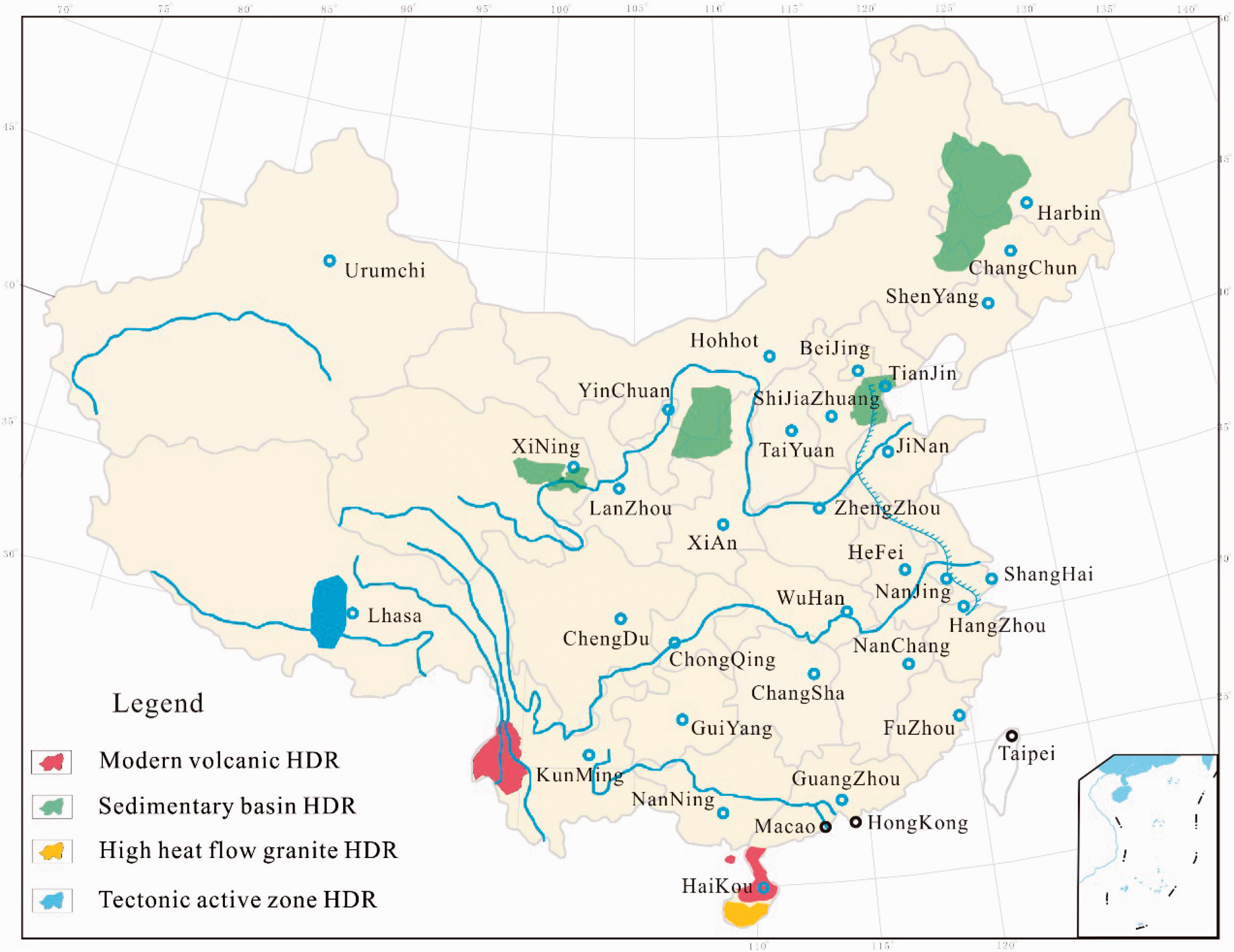
Preferred HDR resource prospects in China.
Existing problems with the development of geothermal resources in China
Extensive development and utilization of geothermal energy
Geothermal energy is primarily developed and used for power generation, heating, bathing facilities, agriculture, and industrial drying. Over the past decade, China has been ranked first in the world in the direct utilization of geothermal energy. Except for a few regions (e.g., Yangbajing in Tibet, Xian County, and Bazhou in Hebei) in which cascade development of geothermal resources is conducted for power generation, heating and greenhouse cultivation, geothermal resources are utilized relatively continuously. Such extensive utilization has led to a continuous decrease in water levels. For example, water levels in the geothermal wells in Xi’an have decreased by more than 200 m. In the winter, the discharge of tail water hotter than 35 °C from geothermal heating systems causes chemical and heat pollution and increases the cost of urban wastewater treatment.
Relatively low prospecting accuracy and unclear resources
The scale of surveys for geothermal resources is only 1:1,000,000 in most regions of China and reaches 1:250,000 only in Tianjin, Beijing, the North Shandong Plain, the Guanzhong Basin, the Pearl River Delta region, and the regions along the Qinghai–Tibet railway. The prospecting scale in a few geothermal fields, such as in Yangbajing, Yangyi and Xiong Counties, is 1:50,000. Regular geothermal prospecting has never or rarely been conducted in the key geothermal development zones. From the 1990s to the early 2000s, the Chinese government made essentially no investment in geothermal resource prospecting; instead, entities with various types of ownership participated in and performed geothermal prospecting, resulting in inadequate basic geothermal and geological prospecting and insufficient resources. Additionally, fewer than 100 geothermal fields have been approved by resource management authorities for further prospecting or development and utilization planning. The lagging prospecting and evaluation processes have led to an increasingly prominent conflict between supply and demand in the geothermal market and have severely affected the formation of geothermal resource prospecting and development plans, the utilization of geothermal resources and the healthy development of the geothermal industry.
Understanding of the formation, mechanism, and genetic model of geothermal energy
There is still a lack of a clear understanding of the formation, mechanisms and genetic models of geothermal energy. The effects of and interactions among several factors related to heat transfer in the development of SGE require further investigation. For hydrothermal energy, the correlations between geothermal measurements and terrestrial heat flow, between the deep thermal structure and thermal state, between the heat-controlling factors and the formation of geothermal energy, and between tectonic thermal activity and natural disasters have yet to be established. After decades of exploration, HDR research is still in the exploratory stage and there is an urgent need to investigate various aspects of its development and utilization (e.g., the mechanisms of formation and reservoir construction).
Insufficient monitoring network
During the development and utilization of geothermal resources, monitoring data, such as water levels and temperatures, are of great importance for understanding its utilization efficiency, sustainability, and scientific research. Currently, geothermal monitoring is not typically conducted in China. Except for Beijing, Tianjin, and Hebei, where monitoring is conducted relatively frequently, all of the provinces essentially lack monitoring data. Additionally, monitoring technologies lag behind other technologies, few items are monitored, no scientific monitoring system has been established, and the monitoring data are not sufficiently analyzed and studied.
Inadequate equipment
Geothermal equipment originates from the petroleum industry; however, the temperature and pressure resistance of geothermal equipment cannot meet the requirements of deep high-temperature geothermal prospecting and development. Numerous parameters of logging equipment cannot operate at the temperature of 175°C required for geothermal projects and monitoring equipment cannot operate at the required 100°C. Equipment manufactured in other countries has better technical parameters but is costly and difficult to obtain. In some cases, manufacturers do not sell equipment but only provide expensive technical services. Equipment for physical laboratory simulations (e.g., simulation equipment for triaxial rock fracturing, multiphase reservoir flow and heat extraction processes, and the formation and chemical stimulation of reservoirs) cannot be used at simulated environmental temperatures greater than 200°C, and conflicts exist between the high-pressure and specimen dimensions. In addition, the accuracy of the simulations needs to be improved. Moreover, there is a lack of geophysical prospecting equipment with which to explore for thermal resources, and there is an urgent need to improve several aspects of drilling tools, fluids, and guides, such as their resistance to high temperatures, high pressures, and hard rocks, as well as their drilling efficiency and safety.
Bottlenecks in key technologies
No mature “heat search” technologies have been developed. There is a lack of technical geothermal resource detection systems (e.g., drilling and completion, circulation fluid, logging, and well cementation) and evaluation methods (e.g., parameters and software). Additionally, there is a lack of large-scale, sustainable geothermal resource extraction technologies (reservoir development and underground heat transfer), and high-efficiency ground utilization technologies (power generation equipment, recharging, corrosion and scale prevention, and cascade utilization). Countries such as the U.S. and Japan have relatively mature basic theoretical technological systems for geothermal resource prospecting and reservoir formation, and they have developed high-temperature and pressure-resistant drilling bits and measurement equipment and high-temperature-resistant drilling fluids and other auxiliary equipment, which essentially meet the requirements for developing deep high-temperature geothermal resources. China is still in the early stage of developing key technological resources for deep geothermal resource prospecting and development and geothermal logging and geothermal reservoir development; difficulties in several of these technologies still need to be overcome.
The prospecting methods are limited. The physical and chemical prospecting and remote sensing methods are not used in combination for prospecting in anomalous geothermal zones. During geothermal development, multiple types of formations with complex geological conditions and unknown rock mechanical properties are encountered during drilling. There is an urgent need to establish a technical system to identify deep geothermal resources. HDRs are mostly present in acidic rocks (e.g., granite). These rocks have high temperatures and hardnesses and are thus difficult to drill. Therefore, there is an urgent need to develop additional high-efficiency drilling and completion technologies (e.g., high-temperature-resistant drilling fluids and high-temperature- and pressure-resistant drilling bits). Rock fracturing is difficult, and the formation mechanism of fractures remains unclear. There is an urgent need to develop sound deep geothermal reservoir transformation technologies.
Relatively weak workforce and low innovation capacity
China’s lack of talent and relatively limited research in the geothermal field are highly incompatible with the rapid development of geothermal resources. In the 1970s through the 1990s, China began geothermal developments and urgently needed talent in the geothermal technology field. Several hydrological and geological researchers began conducting geothermal research. Beginning in the 1980s, the United Nations (UN) geothermal training programs in New Zealand, Iceland, Japan, and Italy trained a group of technical staff for China, who later became core researchers for technical research on geothermal resource prospecting and development in China. During the “Twelfth Five-year Plan” period, through the national geothermal resource survey and evaluation programs offered by the CGS, several provinces and cities trained a group of workers in the geothermal and geological survey fields, and these workers subsequently led the rapid development of geothermal and geological surveys. In recent years, except for a very small number of workers who have been trained through the annual UN Iceland geothermal training program, China’s high-level geothermal technical experts have been trained through short-term training programs that focused on different areas. These programs are offered by organizations engaged in geothermal resource surveys, evaluations, and technical research, who collaborate with higher education institutions and key enterprises based on the needs for technical development. To date, of the more than 2000 higher education institutions in China, only one offers a program in geothermal energy. As a result, it has been difficult to establish an industry–university–institute cooperative program for training geothermal workers. Consequently, China’s research in geothermal technologies remains weak.
Prospects for geothermal development in China
Development trend of SGE
The main purpose of developing SGE is to heat and cool buildings. As the building heating area increases, the amount of energy consumed to meet the heating demand is expected to reach 3–4 × 10⁹ t of standard coal, which puts enormous pressure on energy consumption for heating and cooling buildings. The provision of conventional energy resources has already become difficult, and the resulting environmental problems, such as air pollution, are becoming increasingly prominent, resulting in great pressure for environmental protection. The Chinese government has advocated implementing green building plans and increasing the proportion of renewable energy used. As a result, SGE has become an important choice for heating and cooling buildings.
Rapid urbanization has resulted in a rapid increase in the building area and promoted the utilization of SGE
The development of SGE has increased rapidly in recent years. As urbanization progresses, the use of SGE could expand further. In the future, medium and small cities and towns may be the main areas for the utilization of SGE. According to the National New-type Urbanization Plan (2014–2020) published by the State Council of the PRC, the rate of urbanization of permanent residents in China is expected to reach approximately 60% in 2020. Rapid urbanization results in a rapid increase in the building area. According data for 2012 published by the China Real Estate Society, the new building area in China (approximately 2 × 10¹⁰ m2) accounts for approximately half of the total new building area in the world each year. The total building area in China was estimated to be 6.6 × 10¹¹ m2 in 2017. The urban per capita residential area is expected to reach 43 m2 by approximately 2040, when the civil building area will reach a peak of 92 billion m2. Heating the newly added building area can effectively facilitate the utilization of SGE. Based on the growth trend, the area heated and cooled by SGE is expected to reach 1.092 × 10¹⁰ m2 in 2020. The increase in SGE may peak during the “Fourteenth Five-year Plan” period.
China’s SGE development and utilization layout
SGE resources are widely distributed across China. Considering the climatic, hydrological, and geological conditions, the areas in which SGE is developed and utilized in China are categorized into the following four types (Figure 3).
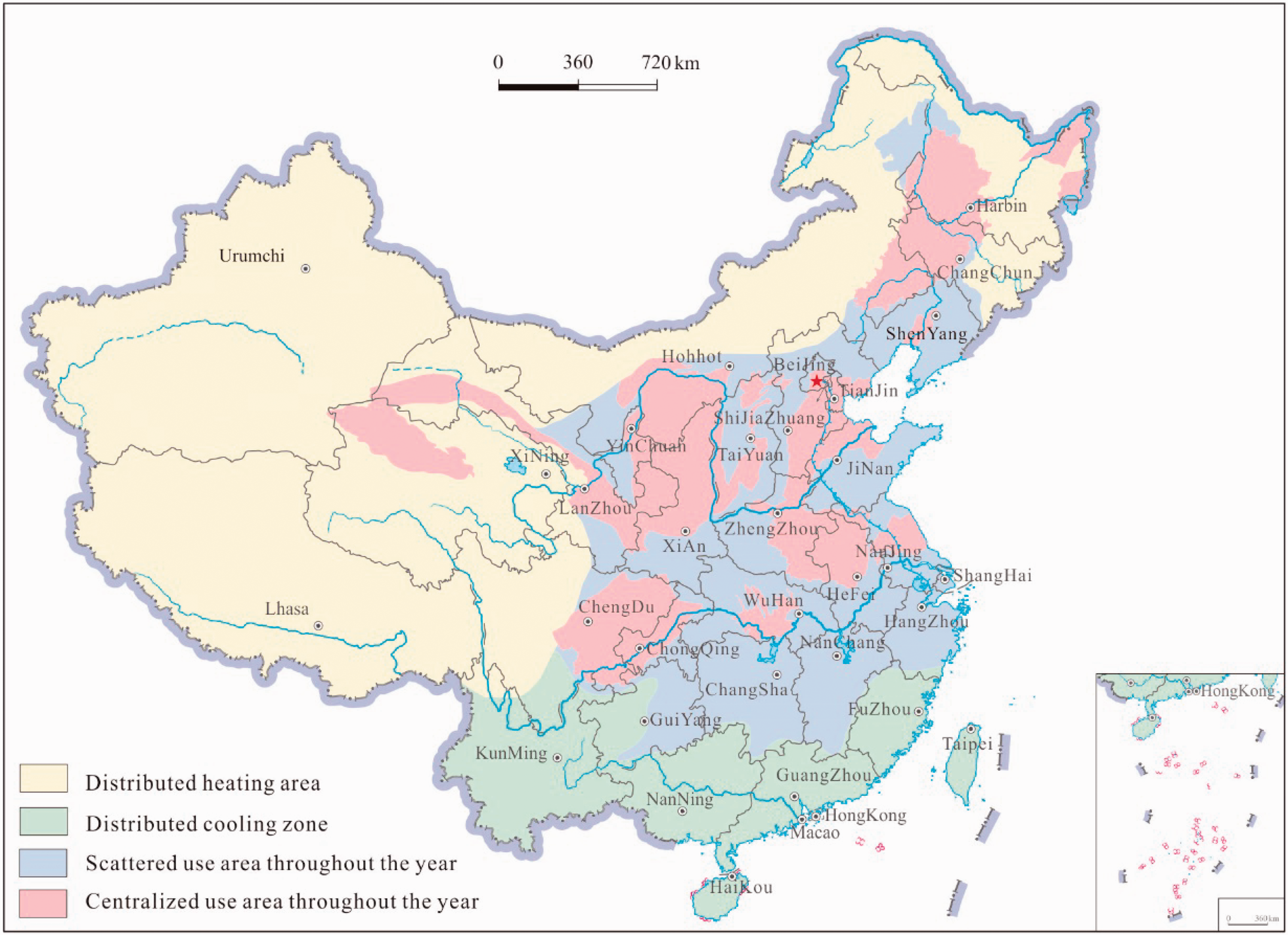
China’s SGE development and utilization layout.
Year-round central utilization zones
These areas are primarily located in regions with hot summers and cold winters, including Beijing, Tianjin, Hebei, Shandong, Henan, Liaoning, Jilin, Shaanxi, Shanghai, Hubei, Anhui, and Jiangsu and are mostly in plains, basins, and other regions with relatively rich water resources. In these areas, it is suitable to use SGE to centrally cool buildings in the summer and heat them in the winter on a large scale, as well as to provide hot water to buildings. Additional efforts should be made to promote SGE in these zones. For example, in Shenyang, GSHPs are used to heat a total building area of 3.60 × 10⁷ m2, and there are 620 urban GSHP projects. SGE has exhibited excellent heating and cooling performance, has notably helped conserve energy and reduce emissions and the amount used is still growing rapidly (Wang et al., 2015).
Year-round scattered utilization zones
These areas are mainly located in the mountainous and hilly regions of the aforementioned provinces and municipalities, such as the Taihang Mountain region. In these areas, SGE is suitable for heating buildings in the winter and cooling them in the summer at a small scale. Compared to year-round central utilization zones, year-round scattered utilization zones have a lower population density and are slightly economically limited. Considering the actual operating costs and performance, scattered development and utilization of SGE for single buildings should be promoted in these zones.
Scattered winter heating zones
These areas are primarily located in cold regions, such as Heilongjiang, Jilin, Inner Mongolia, Xinjiang, Qinghai, and Tibet. These areas have a high heating demand but an extremely low cooling demand. The development and utilization of SGE should be focused on providing heat during the winter. In the summer, auxiliary equipment, such as solar energy systems, can be used to replenish underground heat. In these areas, SGE is suitable for heating single buildings in a scattered manner.
Scattered summer cooling zones
These areas are mainly located in regions with hot summers and warm winters, such as Yunnan, Guangxi, Guangdong, Fujian, Hainan, and Taiwan. These areas have a substantial cooling demand, whereas their heating demand is negligible. In these areas, the development and utilization of SGE should focus on cooling during the summer. To maintain an underground heat balance, domestic hot water can be supplied in the winter based on the residents’ actual needs. SGE is suitable for cooling single buildings in a scattered manner in these zones.
Urgent SGE prospecting and development tasks
Surveys and evaluations of scattered development and utilization of SGE in rural areas. The surveys and evaluations of SGE should focus on rural areas in northern China that have a demand for heat, such as the Beijing–Tianjin–Hebei and surrounding regions. The development and utilization of SGE is generally suitable in these areas and can help conserve energy, reduce emissions, and mitigate smog problems. Surveys and evaluations of the efficient utilization of SGE in various forms in new urban areas. The surveys and evaluations should focus on the Yangtze River economic zone to address its winter heating problem. Investigations of innovative SGE utilization models in special areas. By considering the unique climatic conditions, innovative SGE utilization models in special areas (e.g., extremely cold and hot areas) should be investigated. Based on demonstration facilities, the problem of heat accumulation in single heat sources and in cold and heat sources should be addressed so that SGE can be used to help construction in special areas, such as military and civilian integration areas. Surveys and evaluations of SGE in key areas. A focus should be placed on prospecting and evaluating geothermal resources in certain areas, such as the subcenters of Beijing, the Beijing–Tianjin–Hebei cooperative development zone, the Yangtze River Delta along the middle and lower reaches of the Yangtze River and the Changsha–Zhuzhou–Xiangtan city cluster.
Development prospects of hydrothermal energy
Hydrothermal energy development trend
In hydrothermal energy prospecting, geophysical prospecting and interpretation are gradually becoming more highly accurate, quantifiable, and three-dimensional (3D). For example, 3D seismic data can be used to interpret the geological structure of geothermal zones, magnetotelluric and transient electromagnetic methods can be used to image 3D thermal structures, and combinations of geophysical methods can be used to evaluate geothermal resource prospects. The cascade utilization of geothermal energy and the development and utilization of geothermal energy under balanced extraction–injection conditions are gradually attracting attention. Additionally, the development and innovation of various single geothermal utilization technologies and systems, including for mid- and low-temperature geothermal power generation and heat exchanger enhanced heat transfer, are also garnering attention. Comprehensive and cascade development, utilization technologies, and numerical simulation technologies for multireservoir, multifluid, and multilayered geothermal systems have become new topics for research. Due to the importance of sustainable development, recharge has become an important step in the development and utilization of geothermal resources. Dynamic monitoring and prediction of the temperature and chemical fields in central recharge zones, particularly sandstone reservoir recharging technology, have become key technologies for geothermal development and utilization.
In recent years, the total area heated by geothermal water in China has increased at an average annual rate of 10%. China’s “Thirteenth Five-year Plan” notes that a 4 × 10⁹ m2 area heated by geothermal energy will be added by 2020 and the total geothermal heating area will reach 5.02 × 10⁹ m2. China has a high-temperature geothermal power generation potential of 7120 MW. The power output generated by high-temperature geothermal energy will increase to 530 MW during the “Thirteenth Five-year Plan” period but is currently less than 50 MW (Liu et al., 2019).
Urgent hydrothermal energy prospecting and development tasks
“Two areas, four zones and six points” development plan
Research on basic geothermal conditions should be strengthened. Research in two areas, four zones and six locations should be planned. The two areas refer to the Beijing–Tianjin–Hebei cooperative development area (this area contains underground resources and has demand for geothermal resources; the problem of the utilization model needs to be addressed) and the Songliao Basin (this area mainly contains Cretaceous sandstone and has unique resource storage and development conditions). The four zones refer to the Ordos geothermal zone, the Tancheng–Lujiang fault zone, the mid- and low-temperature superconvecting geothermal zone along the southeastern coast and the Yunnan–Tibet geothermal zone. The six locations refer to Yangbajing in Tibet, Huizhou in Guangdong, Xian County in Hebei, the Xiong’an New Area, Qiabuqia in Gonghe, and Changchun in Jilin. A characteristic location is established in each area and zone for developing prospecting and development technologies and constructing comprehensive utilization demonstration facilities, as well as for attracting commercial capital to promote the large-scale development of geothermal resources.
Strengthening research on heat source mechanisms and heat-controlling structures
The reasonable development and utilization of geothermal resources should be based on research and analysis of heat source mechanisms and heat-controlling structures. 1. Based on anomalous geothermal areas (zones), as well as regional structures, volcanic activity and the distribution of springs, the formation mechanisms, heat-controlling structures, heat storage types, and spatial distribution of various types of geothermal systems should be studied in detail. 2. It is necessary to study the mechanisms of the processes by which energy is released inside the Earth, to identify new methods for preventing and reducing disasters and to analyze the types and causes of the formation of geothermal resources.
Geothermal energy detection technology
It is necessary to develop geophysical and geochemical geothermal prospecting technologies, geothermal drilling technologies, and sustainable development and evaluation technologies for geothermal resources to improve the prospecting accuracy and to improve the technical evaluation system (Wang et al., 2017b).
Development and utilization technologies and demonstrations
It is necessary to develop reservoir transformation technologies, efficient heat exchange technologies, balanced extraction–injection technologies, cascade and comprehensive utilization technologies for geothermal energy, to improve the resource utilization efficiency and to realize sustainable development and utilization. Additionally, it is necessary to improve development and management methods for small scattered areas, establish a large-scale management model with geothermal fields as the basic unit, implement integrated prospecting and unify planning, development and monitoring to ensure the sustainable utilization of geothermal resources.
Development trend of HDR resources
Development trend of HDR resources
Since the first HDR project was conducted at Fenton Hill in the U.S. in 1972, HDR utilization technologies have gradually matured and have exhibited tremendous utilization value and good development prospects. It is expected that by 2050, the bottlenecks in HDR power generation technology will be overcome internationally, HDR power generation will be commercialized, and the development and utilization of EGS will result in the generation of 70 GW of electricity.
China was relatively late to begin HDR prospecting, development, and utilization (Liu et al., 2017). In the early 1990s, several research and development institutions participated in international cooperative studies on HDR. In the 21st century, due to the shortages of energy resources and a sustainable development strategy, HDR are considered replacing viable replacement for fossil energy and their prospecting and development have become a focus of attention. China started HDR prospecting during the “Twelfth Five-year Plan” period and the HDR resources in mainland China have been preliminarily evaluated. Additionally, favorable target zones have been located and high-quality HDR resources have been identified. Currently, HDR development experiments are underway and HDR demonstration facilities are under construction. It is hoped that by 2035, 1–2 demonstration facilities will be complete and a technical mining system will be established, thereby truly realizing HDR power generation. Subsequently, technologies will be further improved, costs will be reduced, and technical bottlenecks in prospecting and development of HDR resources will be overcome. Commercial popularization will be realized by 2050.
Urgent HDR prospecting and development tasks
It is necessary to adjust the approach and slow the pace of HDR research and development. HDR drilling, experiments, and development should be based on an understanding of the geothermal background conditions across the country as well as the characteristics of geothermal fields and the tectonic conditions of anomalous geothermal zones. Development of HDR should be conducted simultaneously in eastern and western China. Tasks should be preferentially planned for eastern China, where energy is in great demand. In addition, the livelihood of people in Yunnan, Tibet, and western Sichuan should be considered to allow an overall evaluation and coordinated development. It is necessary to establish prospecting standards and regulations for HDR resources at various levels of accuracy, integrate resources, construct HDR prospecting and development demonstration facilities, address core technologies, and form a technical system. “Three-step” strategy. The short-term goal (by 2020) is to achieve 2 MW of power generation and establish a relatively sound technical HDR prospecting and development system. The midterm goal (by 2025) is to achieve 50 MW of power generation and establish a sound technical HDR prospecting and development system. The long-term (by 2035) goal is to popularize HDR prospecting and development technologies, achieve the general goal of economic HDR power generation and eventually establish a mature technical HDR prospecting and development system that enables industrial-scale HDR power generation and allows China to play the leading role in HDR prospecting and development in the world (Ma et al., 2015a, 2015b). Promoting the construction of development demonstration facilities. An HDR resource prospecting and development demonstration project was implemented in the Qinghai Gonghe Basin in 2018. Based on existing HDR that are hotter than 200°C, this project will involve a series of studies, including a mechanism analysis, geothermal reservoir detection and reservoir transformation, as well as reservoir reconstruction, comprehensive evaluation, site exploration, environmental monitoring, and the development of comprehensive laboratory simulation technologies. This project will advance China’s development theories and engineering technologies for HDR prospecting, realize independent innovation in HDR prospecting and development and relevant technical equipment, and strongly support national energy restructuring.
Conclusions and outlook
Conclusions
China has systematically carried out nationwide exploration and evaluation of geothermal resources, clarified the distribution law of hydrothermal geothermal resources in different regions, revealed the mechanism of formation of hydrothermal geothermal resources and dry-hot rock geothermal resources, enriched and perfected the theory of geothermal resources formation, and evaluated the amount of geothermal resources in the country. The annual exploitable SGE within the planning areas of the 336 main cities in China is equivalent to 7 × 10⁹ t of standard coal and the annual exploitable geothermal groundwater resources in China are equivalent to 1.9 × 10¹⁰ t of standard coal. The prospective HDR resources at depths of 3–10 km in mainland China are equivalent to 8.56 × 10¹⁵ t of standard coal. In China, geothermal resources are being developed quickly and have great prospects. The development and utilization of SGE are increasing at an average annual rate of nearly 30%. The total area of buildings heated and cooled geothermally reached 5.5 × 10⁹ m2 at the end of 2017 and is expected to reach 1.092 × 10¹⁰ m2 by 2020. China is ranked first in the world for the total amount of hydrothermal energy used, with an annual amount of 12,604.6 MW; the total amount of hydrothermal energy used in China is still increasing at a rate of approximately 10%. Large and medium-sized HDR hotter than 200°C have been discovered in the Qinghai Gonghe Basin. It is expected that 1–2 HDR development demonstration facilities will be built by 2035 to realize HDR power generation and that HDR power generation will be commercialized by 2050. The existing problems in the development of geothermal resources in China are deeply analyzed. Low exploration precision, insufficient understanding of the formation mechanism and genetic model of geothermal resources, and delayed exploration evaluation have affected the development and utilization planning of geothermal resources. The development and utilization of geothermal resources are single and extensive, and the monitoring network is not perfect. The problems of thermal pressure and water level drop are prominent. Technical equipment is backward, and high-temperature drilling and high-temperature monitoring equipment need to be developed urgently. There is an urgent need to establish a complete deep thermal reservoir reconstruction technology.
Outlook
As the depth of detection continues to increase, the scope of geothermic research is further expanded, thus providing a broader platform for the research, development and application of new technologies, new methods and new equipment, and at the same time bringing new challenges. New development trends have emerged in the application and development of these technologies:
Geothermal exploration technology tends to combine geochemical and geophysical inversion. The temperature of geothermal reservoir is retrieved by geochemical method, and the scale and occurrence depth of geothermal reservoir are detected by geophysical method. Geophysical exploration technology is gradually developing towards high precision, quantification and 3D, and various new methods are gradually applied to geothermal exploration. For example, magnetotelluric sounding and transmission electron microscope methods are used to depict the three-dimensional thermal structure and combined geophysical methods are used to evaluate geothermal resources. With the development of deep geothermal exploration, high temperature drilling, completion, cementing, logging, wellhead and other equipment, materials and technologies are still the focus of geothermal research in the world. EGS reservoir fracturing, fracture development control technology, and thermo hydro mechanical coupled processes (heat flow solidification) numerical simulation technology have become frontier topics in thermal storage engineering. More attention has been paid to the high-quality development and utilization of geothermal resources. Recharge technology has become an important content of geothermal resources development and utilization, especially sandstone reservoir recharge technology has become one of the key technologies of geothermal development and utilization. The development and application of new technologies in geothermal power generation and direct utilization will promote the development and utilization of geothermal resources to a direction of high efficiency and low cost. Anticipation and prevention technologies such as corrosion, blockage, and scaling in the development and utilization of geothermal resources with complex water quality conditions are one of the key technologies to expand the application range of geothermal resources. Gravity heat pipe technology is probably the most subversive new generation geothermal energy development technology.
Footnotes
Authors’ note
Any underlying research materials related to my paper (for example data, samples or models) can be accessed.
Declaration of conflicting interests
The author(s) declared no potential conflicts of interest with respect to the research, authorship, and/or publication of this article.
Funding
The author(s) disclosed receipt of the following financial support for the research, authorship, and/or publication of this article: This project is supported by Natural Science Foundation of Hebei Province (No. D2019330003) and the Chinese Academy of Geological Sciences Fund (No.YK201611, No.SK201902, No. YK201803) and National Natural Science Foundation of China (No. 41672241).
