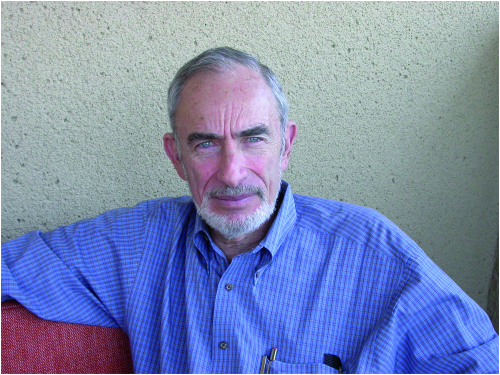
For more than five decades, Paul R. Ehrlich has been alerting people to the importance of ecological threats, including overpopulation, natural resource depletion, loss of biodiversity, climate change, and nuclear winter. His frequent appearances in the news media, along with his many popular books, have made him a household name among environmentally minded Americans—and a lightning rod for attacks by conservatives who do not share his views on the environment or politics. Although he began his career as an entomologist, much of Ehrlich’s work now focuses on the interactions between one species—Homo sapiens—and the rest of the natural world. His latest project is an interdisciplinary proposal that marries the natural sciences with the social sciences in an attempt to understand human behavior—and how to change it for the better. In this interview, Ehrlich explains the vision for the Millennium Alliance for Humanity and the Biosphere and why he believes that the social sciences can make an essential contribution to addressing problems such as climate change. He argues that a vast “culture gap” prevents modern humans from grasping scientific concepts essential to our survival. He points out that even the news media has failed to understand the non-linearity of population impacts, in which each new increment of population growth does more environmental damage than the same increment added in an earlier time. And he warns that the risk of nuclear winter, even from a “small” nuclear war, is as real as ever.
Paul R. Ehrlich is an American biologist whose work on ecology, evolution, and the environment is well-known not just among his fellow scientists but also the general public. Together with botanist Peter H. Raven, Ehrlich co-founded the field of coevolution: the genetic changes that occur as organisms exert selective pressures on one another—such as the evolving relationships between predator and prey, or host and parasite. Ehrlich has spent more than 50 years studying the structure, dynamics, and genetics of butterfly populations—and experimenting with ways to make human-disturbed landscapes more hospitable to butterflies, birds, and other organisms. Those studies are the cornerstone of his work on alerting the public to environmental problems, including overpopulation, resource depletion, extinction, and climate change. Although Ehrlich was not the first to call attention to population growth, his 1968 best-seller, The Population Bomb, brought the issue to a wide audience. The book was just one of more than 45 that Ehrlich has written, many in collaboration with his wife, Anne. In 1971, Ehrlich and John Holdren, now President Obama’s science adviser, spelled out the importance of population and two other factors in determining environmental impact, in their famous IPAT equation: Impact = Population × Affluence × Technology. An educator as well as an author and researcher, Ehrlich is the Bing Professor of Population Studies at Stanford University, where he is also president of the Center for Conservation Biology. He received his PhD from the University of Kansas in 1957 and has since received several honorary degrees and numerous awards including a MacArthur Prize Fellowship and the Crafoord Prize of the Royal Swedish Academy of Sciences (given in lieu of a Nobel Prize in areas where the Nobel is not given). He is a fellow of the American Association for the Advancement of Science and a member of the National Academy of Sciences. At Stanford, his group’s research on population and natural resources often explores global policy issues. Ehrlich is an outspoken and charismatic critic of the political and economic systems that are failing to rein in anthropogenic climate change and other environmental threats. Like the late climatologist Stephen Schneider, who was his close friend, Ehrlich devotes considerable effort to science communications and media outreach. His latest, and perhaps most ambitious, project is known as the Millennium Alliance for Humanity and the Biosphere, or the MAHB (pronounced “mob”). Ehrlich and his fellow MAHBsters contend that the natural sciences have already identified the problems of, and solutions to, catastrophic climate change and other environmental issues—but that what is not well-understood is why people do not act on this scientific knowledge. They envision the MAHB as a way to link the natural sciences with psychology, anthropology, economics, and other social sciences in an effort to understand—and change—human behavior. Ehrlich spoke to the Bulletin about his plans for the MAHB.
BAS: You and several other prominent scientists are working to create a new organization, the Millennium Alliance for Humanity and the Biosphere, or the MAHB, which has been described as a social-science counterpart to the Millennium Ecosystem Assessment and the Intergovernmental Panel on Climate Change. What is the MAHB doing?
Ehrlich: We’ve been reorganizing, getting a website up (http://mahb.stanford.edu), and changing the name, which was originally the Millennium Assessment of Human Behavior. We’re not just doing assessments, and many of the social scientists joining us did not like the term “human behavior.”
The Millennium Ecosystem Assessment said we’re in deep, deep trouble unless we change our ways. We’re going to lose ecosystem services, everything is going in the wrong direction, and so forth. It was a wonderful effort; it documented a lot of things globally that a lot of scientists knew from our own experience and pulled it all together. We don’t need any more global assessments of how fast things are going down the drain. Every environmental scientist should know that the environmental situation overall is getting worse continuously. What we really need is to focus on why the hell we’re not doing anything about it and to encourage society to move toward sustainability.
BAS: Will the MAHB be conducting original research on human behavior or simply looking for new ways to put social-science knowledge to good use?
Ehrlich: The idea is to create a whole new area of focus for a global discussion and a global social movement. Even at the crude level where we’ve started, we’ve got thousands of people interested. The first step is to form nodes in a network. The nodes ideally will start out with natural scientists, social scientists, and people from the humanities, and then bring in the public and decision makers as rapidly as possible, to discuss the big issues of the day that are not discussed in the media: What kind of society do we want? Is consumption the ultimate goal for human beings? How many people can the planet support and in what style? How do we get to a sustainable society? And so on.
BAS: Have you formed any nodes yet?
Ehrlich: A project is starting at the Stanford node, which will probably be the central node at the beginning, in collaboration with the World Business Council for Sustainable Development. The Council did an interesting back-casting exercise: They asked, “What kind of world would you like to have in 2050?” And then they asked what would be required to get there. What they produced, among other things, is a series of must-haves that is very impressive. The critical thing is that it provides a firm target. If you look at the United Nations development goals, they tend to be things like having fewer hungry people, fewer greenhouse gases in the atmosphere, and so on. The World Business Council for Sustainable Development, on the other hand, has very explicit goals and ways of measuring progress. The Stanford MAHB is looking at some of those goals to use them as a background for refining the vision. It’s a way of working together with industry on these issues. The basic idea is to shift the focus of the academic and world community to a totally different set of issues than the ones that are being discussed today. If you ask how it is going to be organized, the answer is, we don’t know, because it’s going to grow like Topsy. Other nodes are forming: For example, there is now one at the University of Adelaide’s Environment Institute.
BAS: But it would be organized geographically?
Ehrlich: One of the things we’ve discovered is that if you want to get interdisciplinary approaches to the world, one of the best things to do is to get people to be friends. That is, to take advantage of human social contacts. And so, it’s likely that many of the nodes will be local groups. It’s not clear yet how well we can use social media either to connect groups or to connect people to groups. We’re hoping many people will organize Skype nodes. We would like to generate a global discussion in which, say, people in Kansas get to talk to people in Al Qaeda and understand their differences and figure out ways to live satisfactorily on the planet.
BAS: You’re trained as a biologist, not as a social scientist. But you’re turning to the social sciences for solutions to climate change and other environmental problems?
Ehrlich: The answers to the issues that are interesting to biologists and natural scientists are already in hand. But we know that just telling people the scientific facts doesn’t necessarily create awareness or action. There are all sorts of other factors involved, and social scientists have found ways to get people to pay attention. A classic example is work by Bob Cialdini, a social psychologist at Arizona State University, who did a little experiment in which he got hotels to put signs on the towel racks that said, “Help save the environment,” and encouraged guests to reuse their towels. He found that about 38 percent of the guests reused their towels. If, however, the sign invited people to “Join your fellow guests in helping to save the environment,” and stated that almost 75 percent of guests at the hotel use their towels more than once, the reuse rate went up to 48 percent. If you want to get people to understand and do something, you convince them that their neighbors are doing it. The information itself doesn’t make the change; what matters are the social norms. That’s the sort of thing we’re trying to get decision makers to think about a lot more, relative to what’s going on in the environment.
BAS: Has the MAHB made inroads among social scientists?
Ehrlich: One of our successes was getting Bob Cialdini, along with a group of other social scientists, to come and talk to ecologists at the Ecological Society of America meeting last year. They liked it so much they did something similar again this year. In a short time, we’ve made much more progress than we expected in involving social scientists in environmental issues. Next July, the American Sociological Association will be holding its annual meeting in Denver and including, for the first time, major events designed to promote the MAHB and its basic agenda. There will be a plenary and an informal workshop introducing natural scientists to leading sociologists (hopefully with abundant wine and cheese), and many opportunities to listen to sociologists, interact with them, socialize, and build bridges.
On the other hand, we have little money. We’re doing this out of our back pockets. It’s a loose conglomeration at the moment.
BAS: Isn’t this something that could be done under the auspices of the United Nations or another big international group, similar to the IPCC effort?
Ehrlich: That immediately restricts what you can get done. For example, big foundations aren’t interested in this, because we’re saying the way the world is organized is wrong. Their boards are mostly rich people whose idea of change is helping out sick people somewhere a little bit, but not changing how the system works, because the system is what bubbled them to the top. MAHB is a bottom-up effort, and I think it needs to be.
BAS: Are you assuming that if people understand each other better, they will behave more responsibly? Isn’t it possible that people do understand that riding a bicycle is better for the planet than driving an SUV and that having two children is better than having four, but they’re simply unwilling to make different choices for the benefit of others?
Ehrlich: That’s one of the things we need social scientists to figure out: how you get people not just to understand better but also to take some form of action in response to their better understanding. We don’t really understand human behavior at anywhere near the level that we ought to.
BAS: Do you fault the media for failing to raise awareness about climate change?
Ehrlich: What is the story that you get in the news today if there’s no other big news item? The terrible price of gasoline. Now, even the dumbest economist knows that gasoline is underpriced not overpriced, because so many of the costs that society pays for its use are not captured in the price. And yet, you repeatedly see the news media talking about the high price of gasoline, a fuel that we should be transitioning away from as fast as possible. So one of the things we should be doing is taxing gasoline heavily to raise the price in order to move society in the right direction. What impresses scientists is that things are getting worse continuously and moving toward a collapse of civilization, but human behavior is not responding to the challenge, and the media are ignoring it. I sound like I’m coming down on the media, but having been a correspondent for NBC News for a number of years, I have seen the media from the inside—at least the mainstream media—and that mainstream unfortunately has become a sewer.
BAS: You and your wife, Anne, wrote a paper last year about a vast “culture gap” that compartmentalizes information and prevents most people from seeing signs of environmental deterioration or even understanding how their refrigerator works. Isn’t that just a matter of better education?
Ehrlich: I lived with the Inuit for a summer when I was a student, and every Inuit basically knew everything in their culture. The men didn’t use the ulu—the women’s knife—but they knew how. And the women did not traditionally squat over a hole in the ice for six hours to kill a seal, but if they had to do that, they knew how. But if I gave you, or you gave me, all the parts of a computer, I doubt if either one of us could put it together. Certainly even a computer geek couldn’t tell you how each part was manufactured and where the raw materials came from. You get a bunch of educated people together and they still don’t have a billionth of the cultural information that our society collectively has, whereas with the Inuit everybody had 98 percent of their culture. That’s a huge difference that’s come about largely in the last few hundred years. Obviously, all of us can’t possess all the information that society has, or even a tiny fraction of it, but there are certain things that everybody should know. For instance, everyone in the United States today should be aware that most of the additional greenhouse gases accumulating in the atmosphere are being put there by human beings. The problem in our society is, we haven’t picked out and emphasized those areas that everybody needs to know about. There’s no attempt to close the culture gap in critical places, and that’s not just in science. How many people in the US actually have read the Federalist and Anti-Federalist Papers? Many of the issues that came up in the debates over the Constitution are similar to ones that would have to come up if we’re ever going to have international governance to deal with problems humanity can’t handle nation by nation.
BAS: Although you are better-known as an ecologist and popular author, by training you are an entomologist. How have your studies of butterflies informed your work on climate change and other environmental issues?
Ehrlich: I started fooling with butterflies when I was a collector as a kid in New Jersey. They turn out to be a brilliant tool for studying all sorts of issues in ecology and evolution. But I found out, in the 1940s and ’50s, that places where I collected butterflies were being paved over for subdivisions, and then I couldn’t raise the butterflies because the plants that I brought into the house to feed to caterpillars usually had so much DDT on them that you couldn’t raise butterflies. So, early on, the butterflies connected me with both the population problem and the toxics problem. They’ve turned out to be a wonderful experimental system that I’m still working with, and climate change has a major role in their dynamics.
BAS: You and Anne made a big splash in 1968 with The Population Bomb. Since then you have written often about three factors that affect sustainability—not just population, but also affluence and technology. Do too many people see affluence and technology as positives for humanity rather than as potential threats to our survival?
Ehrlich: In a Science paper in 1971, John Holdren and I did the basic work on the IPAT equation [Impact = Population × Affluence × Technology]. It obviously isn’t just the number of people that matters, it’s how the people behave: how much each one consumes and what kind of technology they use. If you travel on a bicycle, that has a lot less environmental impact than driving a Hummer. The 1971 paper described something that still isn’t widely recognized: the non-linearity of population increase. Most people don’t understand that the next two billion people we add to the planet will do much more damage than the last two billion because we’ve already picked the low-hanging fruit—taken our water from the purest sources; put our farms on the richest land; and, in many cases, paved over the best farmland, because that’s where we settled originally and built our cities. But people still don’t grasp that nonlinearity, and I’ve never seen it mentioned in the mass media. Ever.
BAS: This is a question that the MAHB will maybe help answer: Why aren’t non-technological solutions, such as making birth control more widely available or raising gasoline taxes, discussed much? Those things seem cheaper and easier than launching giant sunlight deflectors or sequestering carbon underground, and yet they’re not where our attention is focused.
Ehrlich: Because you can’t make money on them. Look at all the people who would profit from designing and manufacturing sun screens to put into outer space. The things we really need to do, like stopping at a maximum of two children and learning to treat each other and the environment better, are unlikely to produce vast fortunes.
BAS: In 1984, you co-authored a book with Carl Sagan, Donald Kennedy, and Walter Orr Roberts about nuclear winter, The Cold and the Dark: The World After Nuclear War. The prospect of a nuclear winter that would be destructive to all life on Earth provided the impetus for arms reduction treaties between the United States and the Soviet Union. Have your views changed since then? Many people now believe that nuclear winter is no longer a threat or even that the theory behind it has been debunked.
Ehrlich: That’s utter nonsense. It now looks like a “small” nuclear war, which we didn’t envision at the time—say, between India and Pakistan—would screw us completely. The end of civilization as we know it.
BAS: Back in the 1980s, Carl Sagan and Stephen Schneider fought over the details of nuclear-winter modeling, and that may have created a public impression that the theory was in doubt. Is the same thing happening today with global warming, with scientists disagreeing over some of the details of the modeling and the public misinterpreting that as a lack of scientific consensus?
Ehrlich: This is part of the basic educational problem that the MAHB would like to help solve. Students are taught how to do experiments, not how science actually functions. You often hear, “We’re not going to do anything about global climate change until we can prove it’s going to be dangerous.” Science is never certain. You can’t prove that climate change is going to threaten the very basis of civilization. You can say the odds increasingly look that way, and here is why we think so.
BAS: You’re attacked by bloggers on almost a daily basis, on issues ranging from birth control to political reform. Many of your critics still can’t stop talking about the losing bet that you, along with physicists John Holdren and John Harte, made with economist Julian Simon in 1980, which your website describes as “one of the most misunderstood events in environmental politics.” Why are you such a lightning rod for criticism?
Ehrlich: The recent attacks are partly because John Holdren is Obama’s science adviser, and John and I wrote many things together for a long time. One of the things that Anne and I are attacked for is having written, in 1968, “The battle to feed all of humanity is over.” It’s clear that many of our attackers either don’t know, or can’t connect the fact, that there are almost a billion people hungry today. And of course, beyond that, another several billion are living lives that neither you nor I would care to trade for. I think what people don’t understand is that scientists don’t live by their reputations with the Julian Simons, the Michele Bachmanns, and the Rush Limbaughs of the world. We live by our reputations with our colleagues. My major professor is 92 years old now, and I am still nervous about giving a seminar in front of him. If he wrote to me and said, “Paul, I think you’re on the wrong track,” I would be really upset.