




Abstract
In this interview, Seyyed Hossein Nasr, a university professor of Islamic studies at George Washington University, talks with the Bulletin’s Elisabeth Eaves about Islam and the environment. Nasr turned to philosophy after first studying physics as an undergraduate, and began writing on environmental issues in the 1960s. He describes how both the Koran, Islam’s holy book, and the hadith, the recorded ways and sayings of Mohammed, make references to the need to protect nature. The Koranic verse most often cited on the environment, he says, is the one in which God chooses man as his khalifa, meaning “vice-regent,” making him the guardian of God’s creation. In Muslim countries, Nasr says, it’s mostly individuals and nongovernmental organizations that push environmental issues, rather than political or religious leaders. He observes that attitudes to water use are shaped by a dry climate, whether in Saudi Arabia or California, and relates how his recent trip to the Vatican came about.
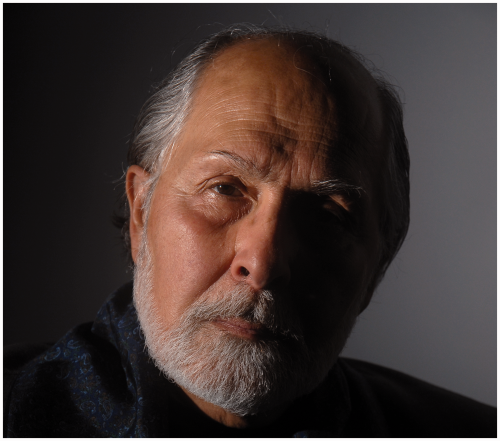
Nearly 50 years ago, Islamic philosopher Seyyed Hossein Nasr published The Encounter of Man and Nature: The Spiritual Crisis of Modern Man. Like conservationist Rachel Carson and historian Lynn White, who both wrote in the same era, Nasr identified an incipient environmental crisis afflicting the globe. In the decades since, he has written extensively on religion, science, and the environment, penning some 50 books. Today, at 82, he is a university professor of Islamic studies at George Washington University.
Nasr studied physics at the Massachusetts Institute of Technology—where he was the first Iranian student admitted as an undergraduate—before turning his attention to philosophy. He earned a master’s degree in geology and geophysics and a doctorate in the history of science at Harvard University. He returned to Iran, where he embarked on a distinguished academic career, but left again for the United States at the time of the Islamic Revolution in 1979. In 2007, Nasr was one of 138 Muslim thinkers to sign “A Common Word Between Us and You,” a letter addressed to Christian leaders that became the basis for ongoing Muslim-Christian dialogue.
Nasr’s own view is that reawakening a sacred concern for nature is required to halt global environmental degradation. “Islam is not only for human beings,” he said in a 2014 lecture. “It is a cosmic reality; all creatures participate in Islam.”
In this interview with the Bulletin, Nasr talked about what the Koran says on the environment, attitudes to climate change in Muslim countries, and leading a delegation to the Vatican, among other subjects.
The verse of the Koran that contemporary thinkers in the Islamic world dealing with the environment refer to over and over again is the one in which God chooses the human being as his khalifa: “We place man upon the earth as vice-regent.” The most outward political meaning of khalifa is “the person who rules over the Islamic world,” but that’s only one of its meanings. The real meaning is vice-regent, representative, someone who fulfills the function of someone else. That’s what khalifa means in the deepest sense. Since God is the creator and protector and preserver of his creation, by virtue of being God’s khalifa, humans must fulfill that function here on Earth. And so the human is the guardian of God’s creation.
As for the hadith—the sayings of the Prophet—there are numerous ones about how to treat animals well, how not to cut trees, how not to waste water, etc. It is forbidden to cut fruit-bearing trees. There are all kinds of hadiths that have a direct environmental bearing.
The concept of barakah is very, very important. It can be translated as “grace.” In Islam, barakah flows through the arteries of the universe; it is a flow of grace within God’s creation. In this sense, yes, Islam is unique. In other senses, there are many Islamic formulations of nature which are similar to those in Christianity and Judaism, as well as to those in Hinduism and Taoism.
Then, non-Western nations began saying that it was their turn to industrialize and become wealthy and so forth. These nations therefore said that taking care of the environment was a Western problem—the West created it and so should treat it.
This was the attitude until a few decades ago, and it was not unique to Islam. You could find the same attitude in India, among Hindus and Buddhists and so forth, and in China where there is Taoism and Confucianism.
Under communism, too, nobody accepted the idea of the environmental crisis. It was a thesis in communist countries that this was a capitalistic problem. Of course, they discovered the tremendous environmental catastrophes of the Soviet Union once it fell apart, but I will not go into that matter here.
In all Islamic countries, attention to the environment is a recent phenomenon as far as government policy is concerned. Moreover, in a lot of countries, it’s the nongovernmental organizations and the private groups that are now doing the most important work. Iran was one of the first countries in Asia to establish national parks, which it did before the revolution, so in some cases governments did have a role but it was not widespread.
But right now there are really no major religious or political leaders who are known for espousing the cause. It’s mostly individuals, professors, scholars, sometimes even engineers and others who are working in environmental organizations in the Islamic world.
The late philosopher Ivan Illich once said that if the whole world had Western toilets, the world’s water system would collapse. This sort of attitude—using water without even thinking about how much you use—was not in the mentality of traditional Islamic culture.
It’s like what is happening in California right now: If this drought continues for another 10, 20 years, people will have a complete change of attitude about water and grass and showering and washing your hands and everything else.
In countries that are oil-producing, like Saudi Arabia, of course they don’t want to think about the issue, although paradoxically, even in Saudi Arabia, there’s now an interesting environmental movement led mostly by women. There are a number of women there who are writing on the Internet, producing pamphlets and books, and giving talks about the question of the environment and the preservation of trees and water and so on. And it’s having some impact—not very much, but at least some impact. At least it’s being heard for the first time.
A tremendous response came from all groups except the Catholics. But the Catholics came in the end, and it was they whom we were addressing most of all. A number of meetings began to be held in the Vatican, led by some of the leading Islamic scholars as well as cardinals, monsignors, and Pope Benedict himself. I spoke on behalf of the Muslims.
When Pope Francis became pope, he wanted to revive this process. And so we went to Rome again last November. I again led the Muslim delegation, and Cardinal Tauran led the Catholic delegation. We discussed various issues, of course, but this time one of the important ones was the environment.
This put me in a deep spiritual and philosophical crisis. I began to read about Western philosophy, Eastern philosophy, religion, and mysticism while I continued to study at MIT, and in the end I decided I didn’t want to be a physicist. I turned to the study of philosophy and the history of science and tried to understand why it was that a purely materialistic science developed in the West as it did.