




Abstract
In this interview, Rutgers University climatologist Alan Robock talks with Elisabeth Eaves from the Bulletin about geoengineering and nuclear winter. He says that geoengineering is not the solution to global warming because of its many risks and unknowns. He notes that some of the technology that would be required to implement geoengineering has not been developed and that many socio-political questions would have to be resolved before it could be put into practice. The world would have to reach agreement on a target temperature and on what entity should do the implementing. Robock’s biggest fear with regard to geoengineering is that disputes over these questions could escalate into nuclear war which in turn could cause nuclear winter, producing global famine among other effects. He goes on to describe his meeting with former Cuban President Fidel Castro and discuss the role of the arts in addressing existential threats.
Keywords
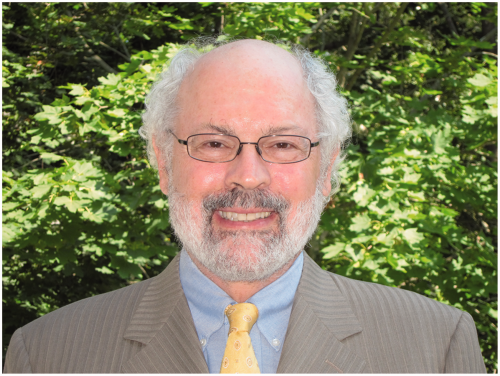
Alan Robock’s interest in climate science dates back to 1974, when his doctoral thesis advisor Edward Lorenz, the meteorologist known as the father of chaos theory, told him that “climate would be a good field to get into.” Robock took the advice, and today he is a distinguished professor of climate science in the Department of Environmental Sciences at Rutgers University, where he also directs the undergraduate meteorology program. He served as a lead author for the Intergovernmental Panel on Climate Change’s Fifth Assessment Report and is a vocal advocate for action on global warming.
Robock is an expert on the potential effects of geoengineering, those untried technologies aimed at manipulating the climate system in order to counter the effects of global warming. Interest in geoengineering has intensified since the National Academy of Sciences released a report (http://www8.nationalacademies.org/onpinews/newsitem.aspx?RecordID=02102015) in February recommending federal funding for more research, including into what it calls “albedo-modification techniques,” which would prevent sunlight from reaching Earth’s surface. Robock doesn’t think geoengineering is the right solution to climate change though, as he explains in this interview.
Robock is also one of the foremost experts on the potential climatic impacts of nuclear explosions. By producing smoke that blocks the sun’s rays, a nuclear war could cause a nuclear winter, cooling the planet catastrophically and causing global famine. He calls nuclear weapons a more serious threat to humanity than global warming.
In this interview, conducted by contributing editor Elisabeth Eaves in January, Robock talks about geoengineering and nuclear winter, his encounters with the CIA and Fidel Castro, and what movie stars he thinks could best get his message across.
If we try to compensate for warming with engineering projects on the only planet known to sustain intelligent life, it’s still just too scary. If you could put a cloud in the stratosphere and maintain it there, it could cool the planet and counteract some of the negative aspects of global warming. But there are risks that haven’t been addressed, such as how does the world decide what temperature it wants to be? What would happen if we started and then abruptly stopped, which could be catastrophic? Questions like these haven’t been solved.
There’s a new technique people are studying, which is to try to dissipate cirrus clouds to let heat escape. In theory, this doesn’t come with some of the negative aspects of blocking out the sun. For example, it doesn’t change precipitation patterns as drastically. But you would need fleets of airplanes to spray chemicals into the upper atmosphere, which is an undeveloped technology. I don’t know of anybody who has come up with an idea of how to do it safely.
The one thing called geoengineering that probably is a good idea is to take carbon dioxide out of the atmosphere. Unfortunately, it has the same name—geoengineering—as these other proposals, but it’s a completely different issue in terms of the technology, costs, and risks. If we could do it cheaply enough and find a place to store the carbon dioxide, that would take away the cause of global warming.
An even better idea, of course, is to not put the carbon dioxide in the atmosphere in the first place. You can do that by using energy more efficiently but also, if you’re going to burn fossil fuels, by capturing the carbon dioxide out of the smokestack. It has a much higher concentration right when it leaves a fixed source than it does once it’s free in the atmosphere, so it’s much cheaper to capture.
The greatest fear, which is also mine, was global nuclear war. Because if countries can’t agree on what the temperature should be, and somebody is mad at somebody else for controlling their climate, the situation could escalate into hostilities. And different countries have different interests. People at high latitudes, like in Canada or Russia or maybe even the United States, might want to exploit the Arctic and send ships. So some people don’t mind it a little bit warmer. But people in the Pacific, whose islands are sinking, want it to be cooler than it is today. They’re already suffering. So there’s a spectrum of different local impacts. I can’t imagine how the world could agree on where to set the thermostat.
Let’s say we get to the point where the feared emission of methane from the Arctic occurs, and the ocean starts bubbling up really fast, or there’s even more catastrophic melting in Antarctica and Greenland. There might then be calls to implement geoengineering until we get mitigation under control.
Once demand for geoengineering gets started, who’s going to implement the process? Remember that whoever ends up doing it will have a huge financial interest in continuing to do it. Would you trust the planet to the BP Geoengineering Corporation, for example? I can’t imagine the world agreeing.
Consultants for the CIA called me up four years ago and asked, “Could we detect somebody else trying to control our climate?” Well yeah, we could, because if somebody was creating a thin cloud in the lower stratosphere we could detect that with our current satellite and ground-based observational system. We can see the effects of various small volcanic eruptions. If somebody were sailing ships around the ocean brightening clouds, we could see the lines in the clouds with satellite imagery. And we could see the airplanes or the ships that were doing it. So it would be impossible to do it in secret.
Of course, what they were also asking is, “Can we control somebody else’s climate?”
There’s a big report on geoengineering [http://nas-sites.org/americasclimatechoices/public-release-event-climate-intervention-reports/] by the National Academy of Sciences that is being released. It was funded mainly by the CIA. The CIA asked several other agencies, like NASA and NOAA, to help fund it, so that the report would look like a joint effort, but I was told it was almost all the CIA, which goes by the “US intelligence community” in the report. What’s wrong with this picture? The CIA wants to figure out how to control the globe’s weather.
Outdoor geoengineering research, such as actually spraying stuff into the atmosphere to brighten clouds or to create a cloud in the stratosphere, needs to be regulated. If the scientists can show that the amount of material they’re going to spray is not going to be dangerous, is going to be very small, and is going to be a particular amount over a particular time, then that should be fine as long as their environmental impact statement is independently evaluated and monitored and they are sanctioned if they break the rules. Otherwise they could say, “Well, we didn’t get a really strong signal, so let’s just do it twice as long or put twice as much in or over twice the area.” And there is no organization currently that can regulate outdoor geoengineering research. This infrastructure doesn’t exist today. If you want to go out in the atmosphere over national territories there are environmental rules, but if you get over the ocean there are no rules.
The United States and Russia have enough nuclear weapons to produce nuclear winter. That is, the effects of smoke from burning cities and industrial areas could cause the temperature to go below freezing in the middle of the continents.
We did a scenario in which we looked at 50 Hiroshima-size atomic bombs being dropped on India and 50 being dropped on Pakistan on the targets that would produce the largest amounts of smoke. That’s much less than one percent of the current global nuclear arsenal. We found that these 100 bombs would produce enough smoke to block out the sun and cause temperatures to fall lower than any temperature in recorded human history, colder than the Little Ice Age of several centuries ago which produced famines and revolutions.
Nuclear weapons are also an easier problem to solve than global warming: just don’t use them. To solve global warming, you have to stop burning fossil fuels, and to do that you have to change the energy infrastructure of the planet and fight against very, very rich, well-funded multinational corporations that want to do business as usual.
As you know, Fidel fell down and broke his shoulder and his leg, and then he had these intestinal problems, and he was so sick he gave up power to his brother. But then he got better and he had free time on his hands that he never thought he would have. So somehow he discovered my work. He asked his son, Fidel Castro Diaz-Balart, to contact the head of the weather service, who contacted Juan Carlos, who contacted me and asked me to come.
He talked about the Bay of Pigs invasion. He talked about Nixon and Kennedy and what movies you should see and said to read Anatoly Dobrynin’s autobiography because that’s the best record of what happened during the Cuban Missile Crisis.
Ten days after my first meeting with him, he said in his blog, “We’ve got to get rid of all nuclear weapons.” And I was thinking, well, too bad he doesn’t have nuclear weapons to get rid of. On the other hand, it’s probably pretty good that he doesn’t have them. I just have to convince people who have them.
But unfortunately Putin is sort of ramping up the Russian nuclear establishment, building new submarines and ordering threatening flights. And in order to sign New START, Obama had to agree to this $300 billion modernization of US nuclear weapons. And so those things have to be addressed.
I’ve been working with a colleague to write a screenplay for a feature film where this Russian climate scientist falls in love with an American one, and they discover what the climate effects of nuclear war would be. Meanwhile, on the India-Pakistan border there’s an escalating conflict. I think you could write a screenplay with a little bit of sex. I’m not sure how to do the violence—whether to show the effects of what would happen in a dream, or let it really happen but not have a happy ending. I don’t know. But I think if we had some entertainment like that, that’s the way to educate people, not articles in the Bulletin of the Atomic Scientists or even TEDx talks.
Anybody who would be interested: If you know of any contacts who could write a movie about this, that would be great.
We worry about tipping points in the climate system but there are also tipping points in human behavior. If you look back at the United States 10 years ago, could you have imagined gay marriage or legalized pot or a black president?
These things have changed pretty rapidly, so I think it’s possible we can get to the point of solving climate change and nuclear weapons too. I’m sort of optimistic, and that’s why I keep working on them.