




Abstract
Despite the growing significance of customer luxury experience in tourism and hospitality, research on defining and measuring it remains scarce. Existing studies fail to distinguish luxury from ordinary experiences or rely on unidimensional approaches that overlook the complexity of customer luxury experiences. To address this gap, this study develops a multidimensional six-factor, 20-item customer luxury experience scale specific to luxury hospitality. Drawing on luxury and customer experience literature, three studies are conducted to develop and validate this scale. Study 1 collected and examined a large dataset of customer reviews from the Tripadvisor website to inform the domain specification and item generation process. Study 2 involved both academic and industry experts to validate the dimensions, as well as to review, refine, and suggest new items. Study 3 was a large-scale survey to calibrate and validate the scale. Findings suggest that luxury customer experience should be based on six dimensions: service quality, authenticity, escapism, exclusivity, status, and aesthetic refinement to elevate the overall perception of luxury experience. Tourism and hospitality managers can use this scale to assess and enhance customer luxury experience. This contribution enriches luxury tourism and hospitality, offering insights into how consumers perceive and experience luxury in hotels.
Introduction
The global luxury goods and experiences market has been growing rapidly and demonstrating remarkable resilience. Tourism and hospitality is the third most important segment of the luxury industry (Bain & Co., 2024), offering premium accommodation, food and beverage services, and experiences (Amatulli et al., 2021; Jain et al., 2023). Luxury services allow travelers to indulge in superior quality establishments and service, while signaling status, emphasizing interpersonal or self-enhancement benefits (Cohen et al., 2021; Kozak & Correia, 2025; Romagosa, et al., 2025; Seo et al., 2019). As consumers seek elevated experiences beyond traditional luxury goods (Boukis et al., 2024; Christodoulides et al., 2021) that provide meaning, pleasure, and happiness (Schmitt et al., 2015), the market reflects an evolving landscape of luxury offerings.
Luxury companies that initially focused on the personal goods market have extended their offerings into augmented tourism and hospitality experiences. For example, LVMH, the world’s largest luxury group, acquired Belmond in 2018, opened a new Cheval Blanc hotel in Paris in 2021, and announced the inaugural Louis Vuitton hotel set to open in 2026. Chopard opened a hotel in Place Vendôme in 2023 and Dior unveiled the Monsieur Dior restaurant within its renovated flagship store on Avenue Montaigne. Luxury experiences in multifaceted hospitality settings transfer important lessons into retail contexts to enrich their core business.
While there is universal consensus about the importance of the customer experience for the luxury industry, relatively little is known about what customer luxury experience is and how to measure it. In tourism and hospitality, only a few studies focus on luxury experiences in hotels (Correia et al., 2022; Jain et al., 2023; Kim & Baker, 2022; Leban et al., 2024; Luna-Cortés, et al., 2022). Following a systematic literature review, three gaps are identified. First, there is the lack of a consumer-centric conceptualization of customer luxury experience. Existing research largely adopts a managerial perspective, emphasizing the formation of luxury, rather than how consumers perceive and evaluate it holistically rather than episodically (Leban et al., 2024). Second, the limited studies that do explore customer luxury experience often fail to clearly distinguish between luxury and non-luxury hotel experiences. This gap highlights the need for a consumer-centered approach that captures the experiential dimensions of luxury hospitality. Third, there is no comprehensive, multidimensional scale for measuring customer luxury experience. Current measurement approaches are inadequate for capturing the complexity and diversity of luxury hotel experiences. Most studies apply generic customer experience scales that do not account for the idiosyncrasies of the luxury context, while others use unidimensional scales that overlook the multifaceted nature of luxury experiences (Shahid & Paul, 2022). Given that luxury experiences are inherently multidimensional–encompassing sensory, emotional, cognitive, and social dimensions–a more robust measurement tool is needed to assess customer luxury experience.
This study draws on two literature streams—luxury and customer experience—and adopts established scaling procedures involving multiple studies to develop and validate a scale for measuring customer hospitality luxury experience. This study’s research objectives are to first define the concept of customer luxury experience by distinguishing it from general customer experience and capturing its multifaceted nature within the hospitality industry; second, to identify and validate its key dimensions; and third, to develop and validate a reliable measurement scale for assessing customer luxury experience in luxury hotels.
This is the first systematic attempt to conceptualize and measure the customer luxury experience concept as a multidimensional construct by focusing on consumers’ overall evaluation in the context of hotels. The resulting scale contributes to the emergent stream of literature on luxury hospitality (e.g., Gupta et al., 2022) and luxury services (e.g., Boukis et al., 2024; Wirtz et al., 2020) by shedding light on the various dimensions that influence consumer perceptions and experiences. This ultimately enhances the understanding of how luxury is defined and experienced in tourism and hospitality and provides managers with a tool to manage and enhance customer luxury experience.
The paper begins with a systematic literature review to explore the meaning of customer luxury experience in hotels and arrives at a working definition of the construct of interest. The methodology uses Tripadvisor reviews (Study 1), expert opinions (Study 2), and extant literature to propose a framework for customer luxury experiences’ dimensionality and to derive the items used in the initial item pool. Finally, the study calibrates and validates the scale through data obtained from a large-scale survey (Study 3). The paper concludes with a discussion of the theoretical contributions and managerial implications of the study, along with suggestions for further research.
Literature Review
Customer Experience
The extensive literature review on customer experiences reveals no universally accepted definition (Lemon & Verhoef, 2016; Schmitt et al., 2015; Zhang et al., 2015). Initial efforts concentrated on the experiential perspective of consumption, aiming to identify customer experiences through their symbolic meanings, hedonic responses, and aesthetic aspects. Customer experience has been defined more abstractly as “a steady flow of fantasies, feelings, and fun” (Holbrook & Hirschman, 1982, p. 132). Pine and Gilmore (1998) defined (p. 99) customer experience as “inherently personal, existing only in the mind of an individual who has been engaged on an emotional, physical, intellectual, or even spiritual level.” Other researchers have focused on the significant role of particular events, defining customer experiences as “enjoyable, engaging, memorable encounters for those consuming these events” (Oh et al., 2007, p. 120). Hence, “the customer experience originates from a set of interactions between a customer and a product, a company, or part of its organization, which provoke a reaction” (Gentile et al., 2007, p. 397). More recent studies have defined customer experience as nondeliberate, spontaneous responses and reactions to offering-related stimuli embedded within a specific context, emphasizing a more “atomistic” understanding of the concept of customer experience (Becker & Jaakkola, 2020, p. 637).
Customer experience has been studied from different perspectives (e.g., management, employees, and customers; Assiouras et al., 2019; Kandampully et al., 2018; Mahrous & Hassan, 2017; Schmitt, 1999). Despite the diversity of actors involved in an experience, researchers tend to emphasize the customer as the core actor. They recognize that, regardless of how well the experience environment has been designed and developed to stimulate and accommodate customers, experiences are realized only through consumers’ involvement in and reactions to various encounters (Mossberg, 2007; Pine & Gilmore, 1998; Yuksel et al., 2010). Therefore, any effort to define the concept should put customers at the center of this process (Neuhofer et al., 2015; Rihova et al., 2018).
Customer experience is, therefore, a holistic, multidimensional, highly idiosyncratic, complex, and dynamic concept. It is constructed from customers’ interactions with and responses at different levels (rational, emotional, sensorial, physical and even spiritual) to all different clues encountered during their purchasing journey (Brakus et al., 2009; Gentile et al., 2007; Helkkula, 2011; Homburg et al., 2015; Kranzbühler et al. 2018; Verhoef et al., 2009).
In addition, most of the above studies offer detailed conceptual frameworks that aim to decode the formation of customer experience. De Keyser et al. (2020) draw on existing knowledge to provide the “TCQ” nomenclature, which links three core building blocks in the formation of a customer experience—Touchpoints (any interaction between customers and the brand/firm), Context (any internal and/or external situational resources available to the customer), and Qualities (attributes that reflect the nature of customers’ responses and reactions to interactions with the brand/firm). Together, these three elements result in customers’ value judgment about an experience. Qualities are formed through consumers’ participation and responses at different levels (Brakus et al., 2009; Lemon & Verhoef, 2016), the valence of these responses, the time flow across the customer journey (Durrande-Moreau & Usunier, 1999; Novak et al., 2000), and the ordinariness of the experience itself (Becker & Jaakkola, 2020). The latter adds important information about the nature of the experience, ranging from ordinary to extraordinary (Becker & Jaakkola, 2020; Tumbat & Belk, 2011). This distinction is not always easy; researchers agree that understanding ordinary and extraordinary experiences should be placed in a continuum ranging from standard, day-to-day experiences that are low in customer intensity (ordinary) to those that extend beyond everyday life, are novel, memorable, and unique, and involve a higher intensity on the customer side (extraordinary). Thus, the degree to which an experience is ordinary or extraordinary also impacts consumers’ overall evaluation of that experience.
The Meaning of Luxury
Luxury has been linked with the “extraordinary” across all studies and perspectives (Berry, 1994; Gurzki, 2020; Heine, 2012). Even from the word’s origins (i.e., the Latin words luxus and luxuria), luxury is defined as a deviation from usual standards (Gurzki, 2020) going beyond the ordinary (Heine, 2012).
Luxury definitions point to its holistic and intricate meaning (Gurzki, 2020). Luxury is perceived and understood through various lenses: materialistic, philosophical, economic, managerial, social, and individual. From a materialistic approach, luxury is linked mainly to goods, their characteristics and related experiences. Luxury goods are usually scarce, aesthetically refined, and of excellent quality, mainly due to the use of rare raw materials, craftsmanship, manufacturing expertise and uniqueness (Catry, 2003; Fuchs et al., 2015). Tourism luxury has been characterized as exclusive, expensive, high quality, conspicuous, and tangible (Romagosa et al., 2025; Yeoman & McMahon-Beattie, 2011). Tangible features and characteristics of servicescapes, such as their aesthetics, atmosphere, and décor, are used to describe luxury tourism, hotel and restaurant offerings (Heo & Hyun, 2015). However, research needs to move on from this materialistic perspective, which tends to objectify the meaning of luxury, to a more subjective approach that recognizes the fundamental differences between goods and services (Wirtz et al., 2020). From a philosophical perspective, luxury has been viewed as being closely intertwined with creating desire, pleasure, and hedonic value (Godey et al., 2013; Gurzki, 2020). This leads researchers to associate luxury tourism experiences with feelings of novelty, privacy, escape, authenticity, aesthetic appreciation, and safety (Iloranta, 2022) as well as personalization of services (Neuhofer et al., 2015; Tomczyk et al., 2022). Tourism researchers have stressed that luxury is expensive and highly valued (Godey et al., 2013; Han et al., 2018; Kim et al., 2011). Despite the traditional economic approach that links luxury and price, luxury cannot be defined only by price (Feng et al., 2018; Lee & Hwang, 2011). While price is a significant indicator of the positioning of luxury products/services, it neither defines nor determines consumers’ luxury consumption experience (Kapferer & Bastien, 2012).
The managerial view of luxury emphasizes its significance to customers, identifying luxury as an offering that must be managed and provided to them. This perspective views consumers as passive users of a well-designed luxury tourism product, connecting it to their behavioral outcomes, including intentions to revisit and repurchase (e.g., Han et al., 2018; Han et al., 2019; Hwang & Hyun, 2013). In contrast, luxury is determined by individuals and the social and cultural context/conditions associated with its creation, consumption, and distinct interpretation (Gurzki, 2020; Huang et al., 2025; Venkatesh & Meamber, 2006; Wiedmann et al., 2007). From a social perspective, luxury and its consumption encompass social signifiers. Signaling theory and conspicuous consumption have informed numerous studies (Bagwell & Bernheim, 1996; Han et al., 2010; Ko et al., 2019; Wiedmann et al., 2009). Luxury signifies status and wealth, allowing individuals to differentiate themselves from others, traditionally linking luxury consumption with the upper class (Dwivedi et al., 2015; Hemetsberger et al., 2012; Jacob et al., 2020). Furthermore, luxury is an aspirational experience that makes individuals feel unique (Gurzki, 2020), enhancing their identity (Elliott & Wattanasuwan, 1998). Luxury satisfies higher-order needs, offering recognition, prestige, and social status through personalized, emotional, and pleasurable consumption (Gurzki, 2020; Popescu & Olteanu, 2014; Yang & Mattila, 2017).
Hence, luxury signifies excellent quality, scarcity, aesthetics, excess, and high price (Bahri-Ammari et al., 2016; Dubois et al., 2001; Hanks et al., 2024; Keller, 2009; Ramadan, 2019; Yang & Lau, 2015). Its consequences focus on the value created for customers (Gurzki, 2020; Heine, 2012; Wiedmann et al., 2009). Thus, luxury is defined by differentiation, prestige, and status, making customers feel privileged, unique, and elite (Amatulli et al., 2020; Farmaki et al., 2021; Han et al., 2010; Kastanakis & Balabanis, 2014; Peng & Chen, 2019).
Customer Luxury Experience in Hotels
Defining customer luxury experience is one of the most challenging tasks in marketing and tourism literature (Hwang & Seo, 2016; Jung & Baloglu, 2025; Kandampully et al., 2018; Murray et al., 2024). This challenge likely arises from the comprehensive and complex nature of both customer experience and luxury concepts, encompassing nearly all aspects of customer interactions with the product/service provider during their purchasing journey (Brakus et al., 2009; De Keyser et al., 2020; Gentile et al., 2007; Homburg et al., 2015; Kranzbühler et al., 2018; Lemon & Verhoef, 2016; Oh et al., 2007).
Several studies have examined customer experience, often using luxury hotels merely as the application context. However, the literature remains fragmented regarding the meaning, dimensionality, and measurement of customer luxury experiences. Despite the importance of customer luxury experiences in tourism and hospitality, the literature needs thorough exploration (Iloranta, 2022; Wirtz et al., 2020).
A systematic literature review was undertaken to examine the current state of research on customer luxury experience in hotels. The following search terms were used on the Web of Science: “experience,” “customer experience” coupled with “luxury,” the whole written form “customer luxury experience,” “luxury experience,” and “luxury customer experience,” all combined with “hotel,” “hospitality,” and “tourism” (using both OR and AND functions). The search focused on conceptual and empirical research papers written in English (excluding any other document type and articles written in other languages) and did not apply any particular time restrictions. The search yielded 33 relevant academic papers in the broader field of tourism, with only 16 of these papers focusing on the meaning of luxury experiences in the hotel context.
Table 1 summarizes these studies and indicates that most did not provide a specific definition of customer luxury experience. Several studies adopt existing definitions of customer experience (e.g., Gentile et al., 2007; Schmitt, 1999; Verhoef et al., 2009) but do not make any clear distinction between ordinary and luxury experiences (Ben Lahouel & Montargot, 2020; Veríssimo & Loureiro, 2014; Wu & Gao, 2019). Several studies link customer luxury experience with other concepts, such as quality (Manfreda et al., 2023) or service experience (Le et al., 2021), to connect luxury experiences with other well-established research streams. Most studies focus on the essential elements required to build a successful luxury hotel experience as a product (Iloranta & Komppula, 2022) or service offering (Harkison et al., 2018). This partially explains why most of these studies are qualitative, aiming to decode how different actors’ perspectives are linked together to create a successful luxury experience. They mainly center on customer luxury experience as a complex building process, a holistic “blueprint” involving various direct or indirect interactions between the actors and their responses at different levels (e.g., cognitive, emotional, physical, sensorial, social) to guide the transformation of this process into a value creation one with multiple and significant benefits/outcomes (Harkison et al., 2018).
Studies on Customer Luxury Experience in Luxury Hotels.
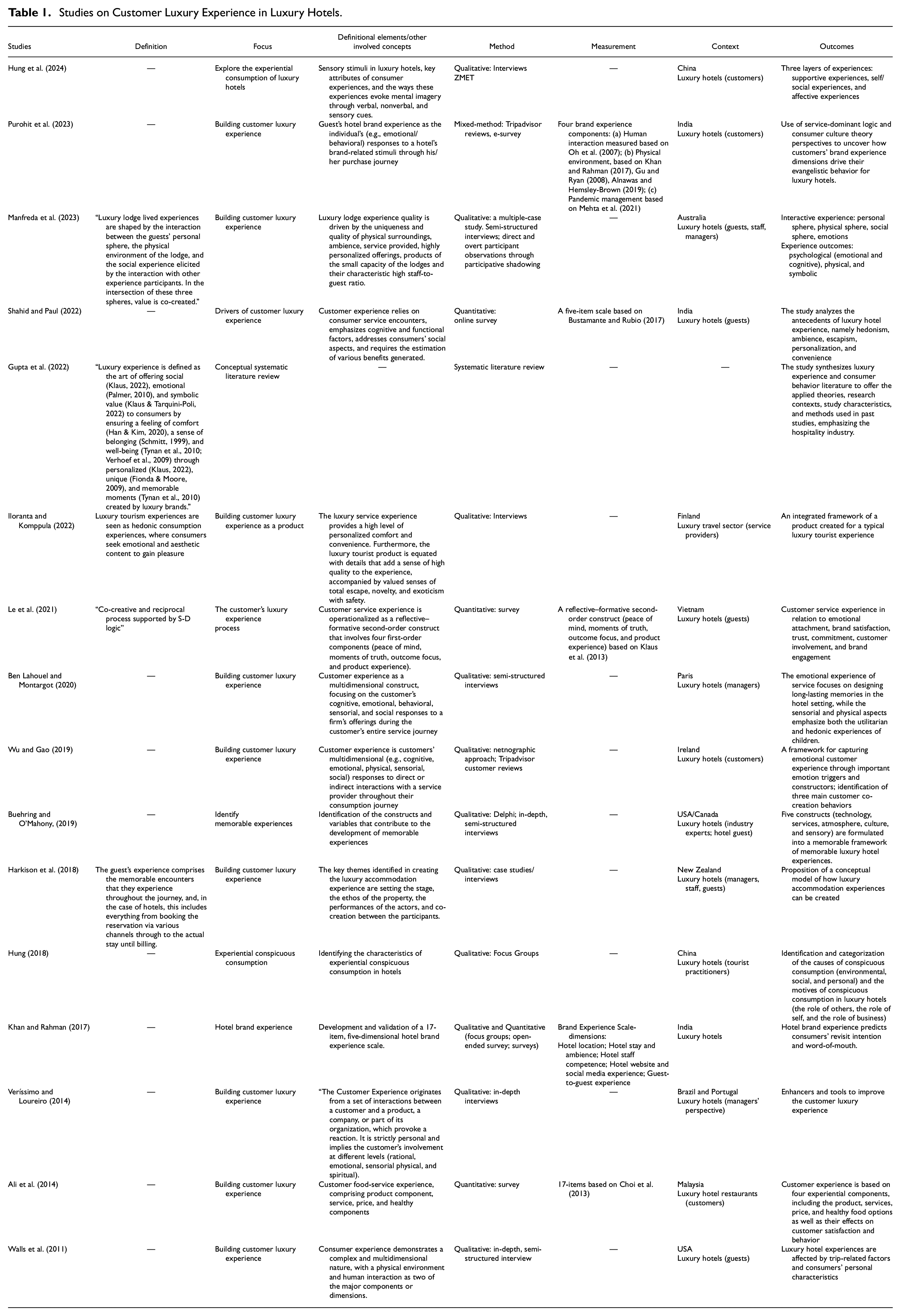
Gupta et al. (2022, p. 201) synthesize definitional elements from existing customer experience studies to define customer luxury experience as “the art of offering social (Klaus, 2022), emotional (Palmer, 2010), and symbolic value (Klaus et al., 2022) to consumers by ensuring a feeling of comfort (Han & Kim, 2020), a sense of belonging (Schmitt, 1999), and well-being (Tynan et al., 2010; Verhoef et al., 2009) through personalized (Klaus, 2022), unique (Fionda & Moore, 2009), and memorable moments (Tynan et al., 2010) created by luxury brands.” Despite this level of synthesis, additional issues arise as many of the noted definitional elements appear to be necessary but remain insufficient for distinguishing the concept’s definition. For example, feelings of comfort and a sense of belonging and well-being are structural elements of any customer experience. Thus, they cannot be used to sufficiently distinguish ordinary and luxury experiences. Most researchers agree that the luxury customer experience is a complex, highly personal, multifaceted, and interactive concept constructed based on the roles and participation of many actors (e.g., guests, staff, and managers). However, they do not offer clear direction about what it means or how to measure it (e.g., Manfreda et al., 2023; Prahalad & Ramaswamy, 2004).
Existing Measures of Customer Luxury Experience in Hotels
Despite the importance of measuring customer luxury experience in hotels, many studies depend on general customer or tourist experience measures (see Table 2), overlooking the specific aspects of luxury. Le et al. (2021) base their study on the conceptualization of Klaus et al. (2013) to measure customer service experience in luxury hotels in Vietnam. Shahid and Paul (2022) adopt Pine and Gilmore’s (1998) conceptualization, focusing on main tourist experience components in Indian luxury hotels (Ali et al., 2014). While other researchers (Purohit et al., 2023) adopt various scales to capture individual brand experience components such as human interaction (Oh et al., 2007), the physical environment (Alnawas & Hemsley-Brown, 2019; Gu & Ryan, 2008; Khan & Rahman, 2017; Ren et al., 2016), and pandemic management (Mehta et al., 2021). Khan and Rahman (2017) developed a 17-item hotel brand experience scale based on a sample of luxury hotels in India. Although the scale successfully captures elements of the tourist brand experience, it offers minimal focus on the unique meanings and nuances of luxury.
Core Existing Scales of Customer Experience in Tourism and Hospitality.
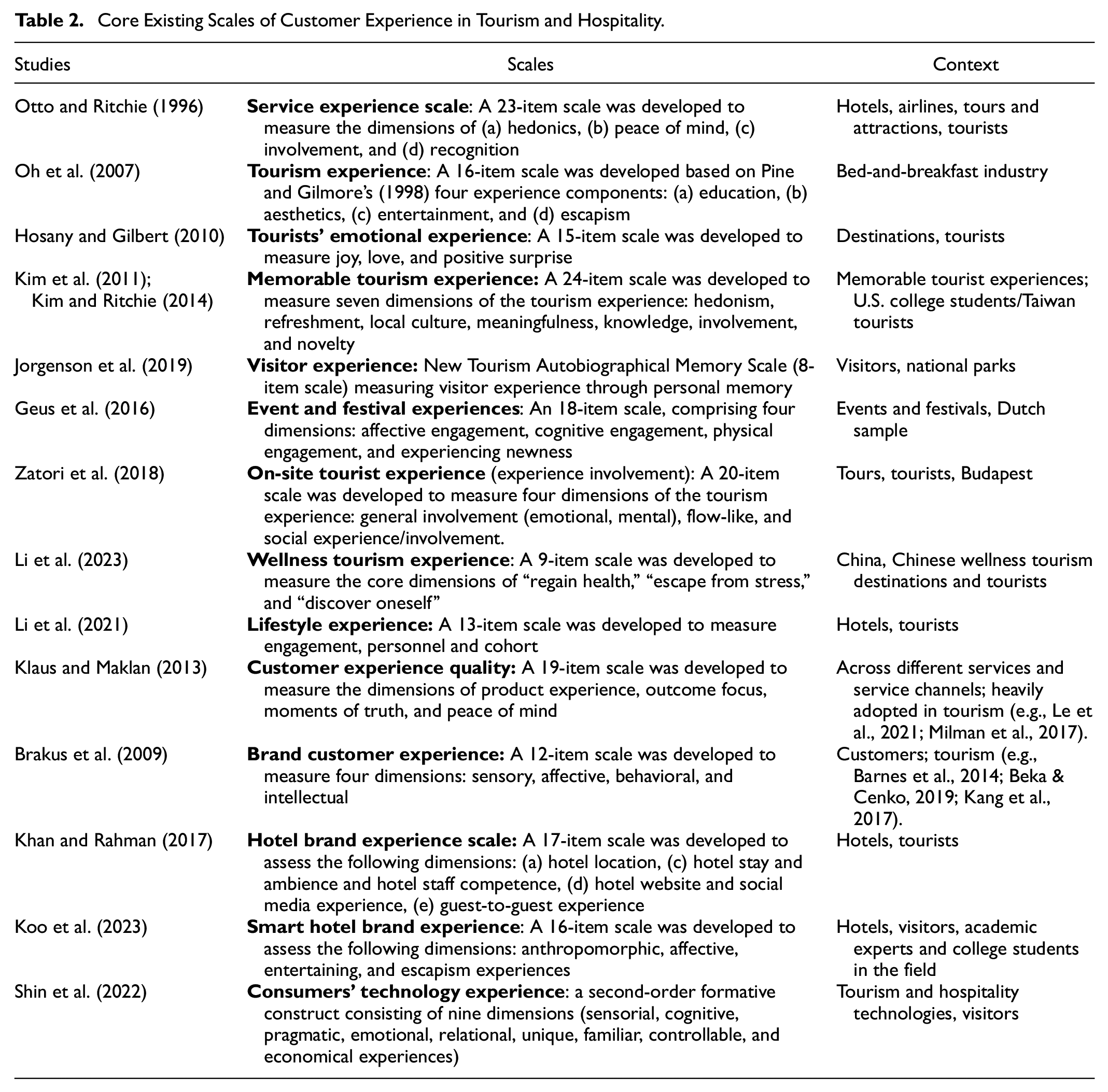
Therefore, despite the merits of the existing scales, none can capture the totality of the tourist experience in a luxury context. Luxury has been associated with various conceptualizations and attributes. Various researchers link luxury attributes to the physical aspects of accommodations. In this context, they highlight luxury features such as exceptional quality, distinctive facility designs, and the overall ambiance (Kang, 2018; Manfreda et al., 2023; Manthiou et al., 2018; Presbury et al., 2005; Qi et al., 2017). Conversely, some researchers emphasize the value of intangible elements, particularly how the role of human interactions (Solnet et al., 2019) differentiate between those among guests and those with staff during luxurious experiences (Brien et al., 2012; Chathoth et al., 2020; Harkison et al., 2018; Walls et al., 2011).
Another research stream links luxury experiences to the value consumers derive from them, influencing and enhancing their perception of luxury (Hennigs et al., 2012). In this context, researchers have explored several core value elements of luxury service experiences. These include experiential/hedonic value, which refers to how services evoke desirable experiences, emotions, and feelings in customers (Chen & Peng, 2014; Han & Kim, 2020; Kang, 2018; Nguyen & Vo, 2020; Wirtz et al., 2020; Zhang et al., 2020); functional value, relating to the quality and performance of experiences in luxury accommodations (Yang & Mattila, 2016; Wirtz et al., 2020); and symbolic value, which captures how service experiences convey recognition, social prestige, and opportunities for self-expression (Han & Kim, 2020; Yang & Mattila, 2016, 2017), including authenticity in self and self-image (Nguyen & Vo, 2020; Zhang et al., 2020). Additionally, individual value reflects a consumer’s personal orientation toward luxury. Consequently, various attributes of luxury experiences have been identified, including quality (Xiang et al., 2015); Yang & Lau, 2015), hedonism (Lu et al., 2015), extravagance, personalized services (Harkison et al., 2018), and escapism (Manthiou et al., 2020). Nevertheless, a consensus on the attributes of luxury experiences remains elusive, and measuring customer luxury experience as a comprehensive concept is still incomplete.
To fill this research gap, the current study aims to develop a reliable and valid scale for consumer luxury experience. It begins by ensuring that the luxury hotel context is the most suitable for assessing luxury experience. Luxury hotels represent an ideal setting for defining and evaluating customer luxury experience for several reasons. First, luxury hotels facilitate experiences that take place away from consumers’ everyday environment, thus enhancing their distinction from the ordinary. Second, they extend the opportunity for customers to keep luxury within a broader social and authentic cultural environment; thus, they offer depth and breadth of luxury experience interpretations. Finally, due to its diverse and multifaceted nature, hospitality exemplifies service management and offers valuable insights into customer luxury experience that could inform strategies in other industries, such as retail and healthcare.
Additionally, we recognize that measuring luxury experience is complex due to several factors: multiple stages (pre-purchase, consumption, post-purchase), different channels, numerous actors involved at these stages, and the diverse ways consumers respond (e.g., cognitive, affective, sensory, physical, relational). Therefore, as this process is highly dynamic, measuring customer luxury experience at one stage or within a particular experience or event may not reflect how consumers assess their luxury experiences at the end to inform future decisions, actions, and overall behavior.
Measuring tourists’ evaluations of their luxury experiences requires recognizing that their overall judgment is a calculative assessment, shaped by what they perceive as luxury and how it impacts them through the value in use received throughout their journey, from the initial purchase to the moment they are asked to evaluate it (Buehring & O’Mahony, 2019; Nilsson & Ballantyne, 2014; Walls et al., 2011). This evaluation may occur during, at the end of, or even after the experience itself. Despite managers’ efforts to deliver a luxury experience, it only becomes luxury if consumers perceive it as such—based on a cumulative assessment that integrates all sub-experiences.
Figure 1 diagrams how the combined previous perspectives provide the following abstract working definition of customer luxury experience that highlights the centrality of the customer perspective. Thus, customer luxury experience is defined as customers’ response at different levels (i.e., sensory, emotional, cognitive, relational) to all relevant cues/actors they interact with throughout their purchasing journey, allowing customers to cumulatively perceive their consumption as “what luxury is” (i.e., attributes/characteristics used by customers to define luxury) and “what luxury does for/to customers” or “how it is received and lived” (i.e., luxury values).
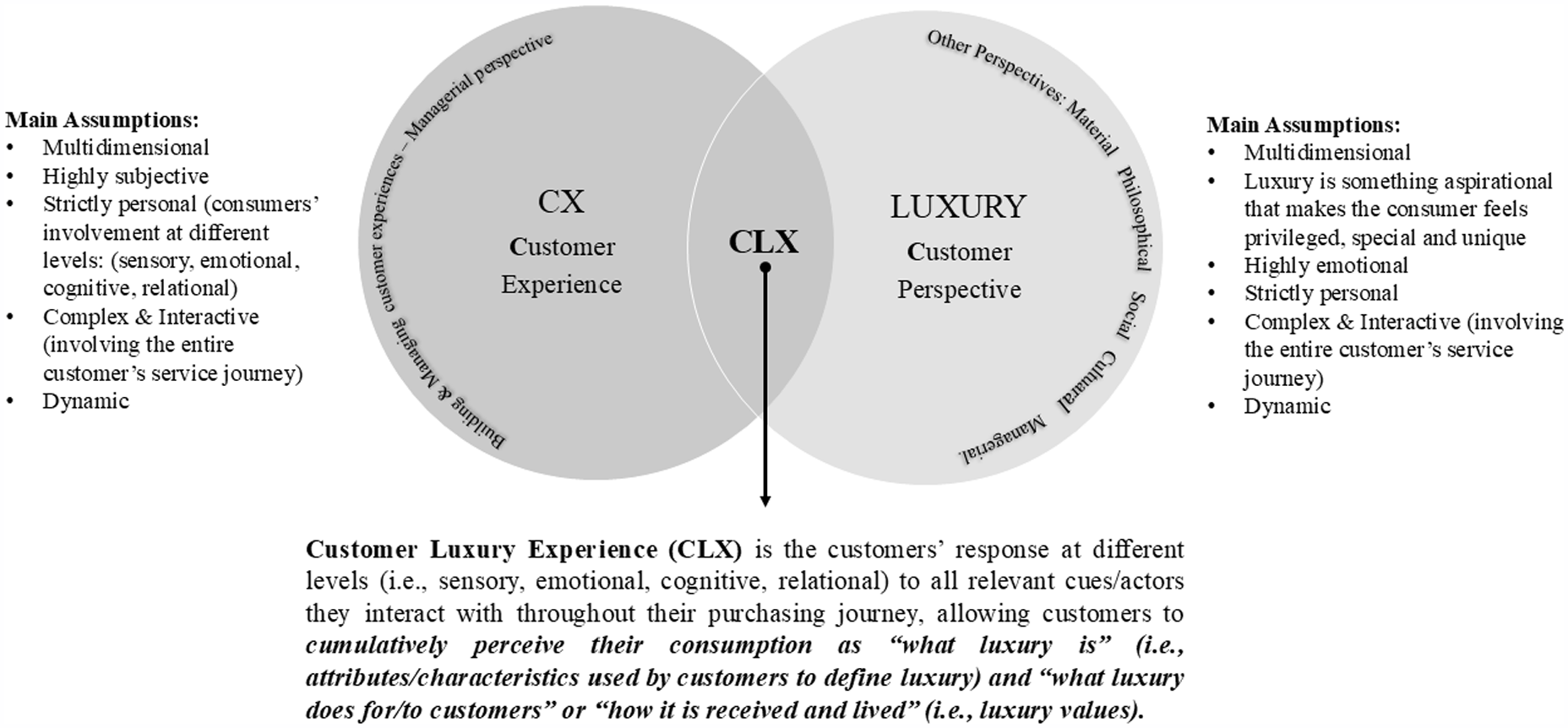
The customer, as the core experience actor, defines the luxury experience.
The following section outlines the analytical approach adopted in this research to refine the definition of customer luxury experience and to develop a reliable and valid scale for its measurement.
Methodology
Churchill’s (1979) guidelines for instrument development were adopted (e.g., Babin et al., 1994; Kim, 2014; MacKenzie et al., 2011; Parasuraman et al., 1988; Sweeney & Soutar, 2001). Three studies were conducted. Study 1 collected and examined a large dataset of customer reviews from the Tripadvisor website to inform the identification of dimensions measuring customer luxury experience and generation of items. Study 2 involved both academic and industry experts to review, refine and validate the dimensions and items identified and to suggest new items. Study 3 was a large-scale survey to calibrate and validate the scale from the consumers’ point of view. Figure 2 delineates the instrument development procedure, aligning the scaling methods with the individual studies conducted and illustrating the objectives and outcomes of each study.
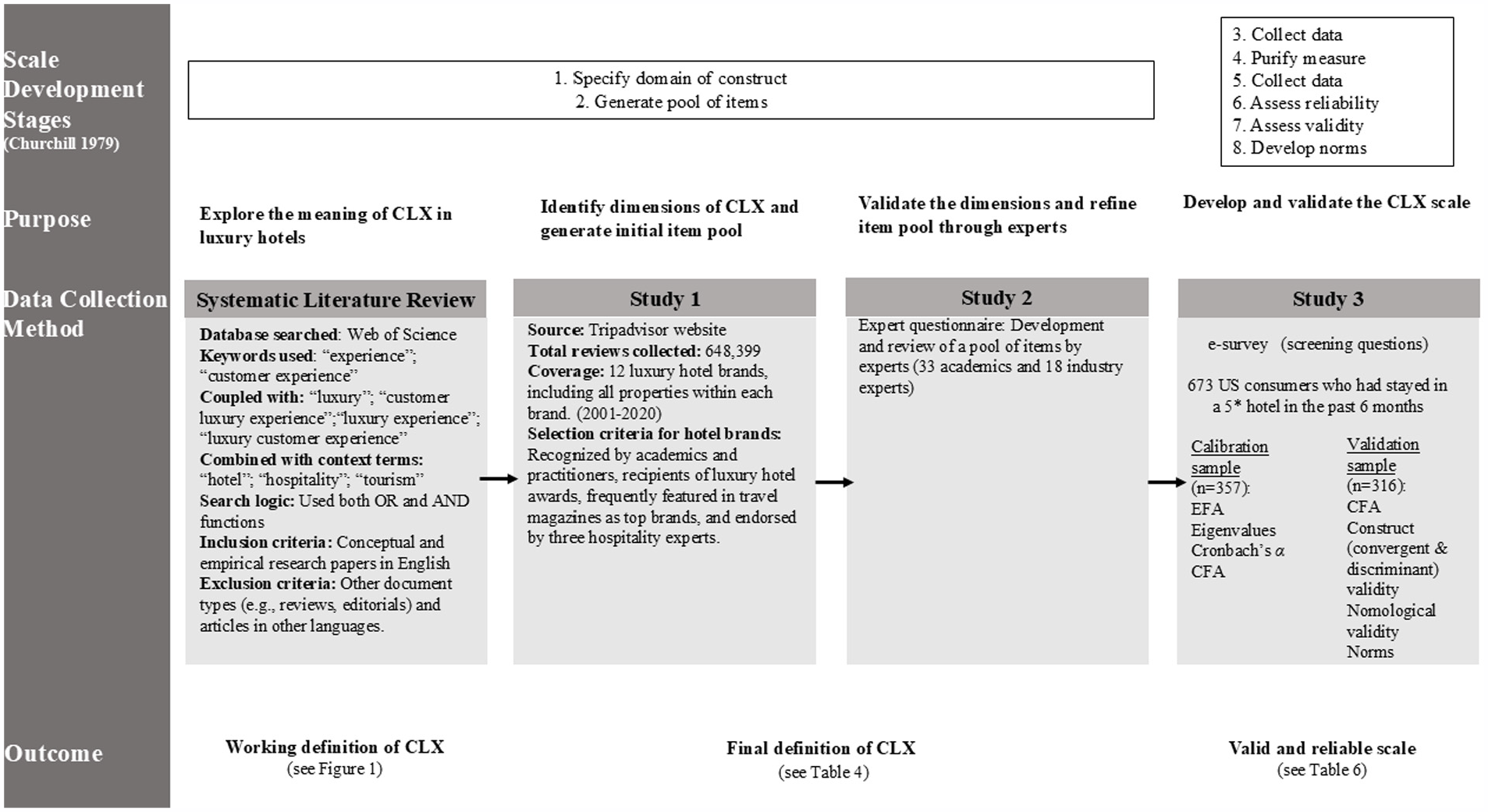
Instrument development procedures.
Domain Specification and Item Generation
This stage involved augmenting the definition identified through the systematic literature review on customer luxury experience in hospitality. To refine and clarify the attributes used by customers to define luxury in hotels as well as the luxury values, Study 1 was conducted. While in-depth interviews are commonly used to inform this stage of scale development, this study opted to analyze online reviews instead. The latter provided a rich and diverse dataset that captures unprompted customer experiences across a wide range of luxury hotel brands and global markets, making them a more comprehensive source of insights than a limited number of interviews. Online reviews help mitigate issues such as social desirability bias and memory recall biases, as they are typically written shortly after the stay and without the influence of an interviewer.
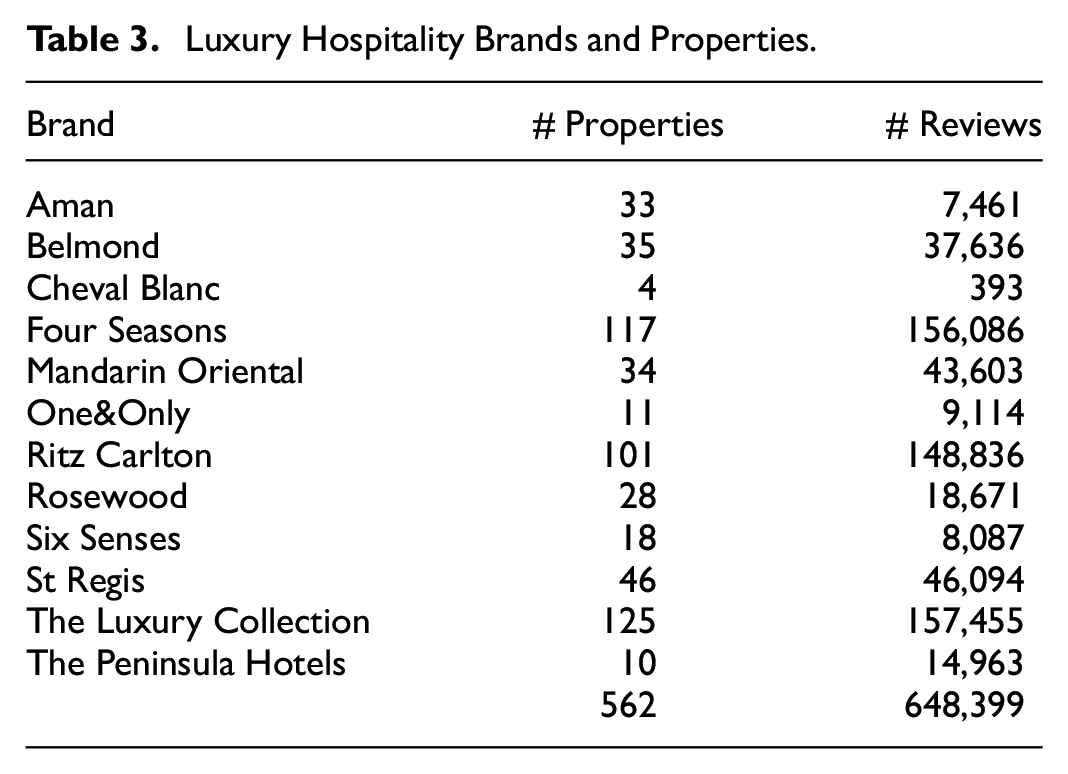
A total of 648,399 reviews of luxury hotels were collected from the Tripadvisor website, excluding reviews during the period of the COVID-19 pandemic from the analysis. Travel during the pandemic (when and where possible) and in the months after the pandemic generated Tripadvisor reviews that were often focused on travel restrictions, mask mandates, and cleaning procedures at hotel properties. The data encompass 12 brands (see Table 3) and all the individual hotel properties in each brand’s portfolio. These brands are widely recognized by academics and practitioners as representatives of hospitality luxury, they have received numerous awards in various luxury categories, and they are frequently featured in travel magazines as the top luxury hotel brands. They were also endorsed as luxury hotel brands by three experts.
Luxury Hospitality Brands and Properties.
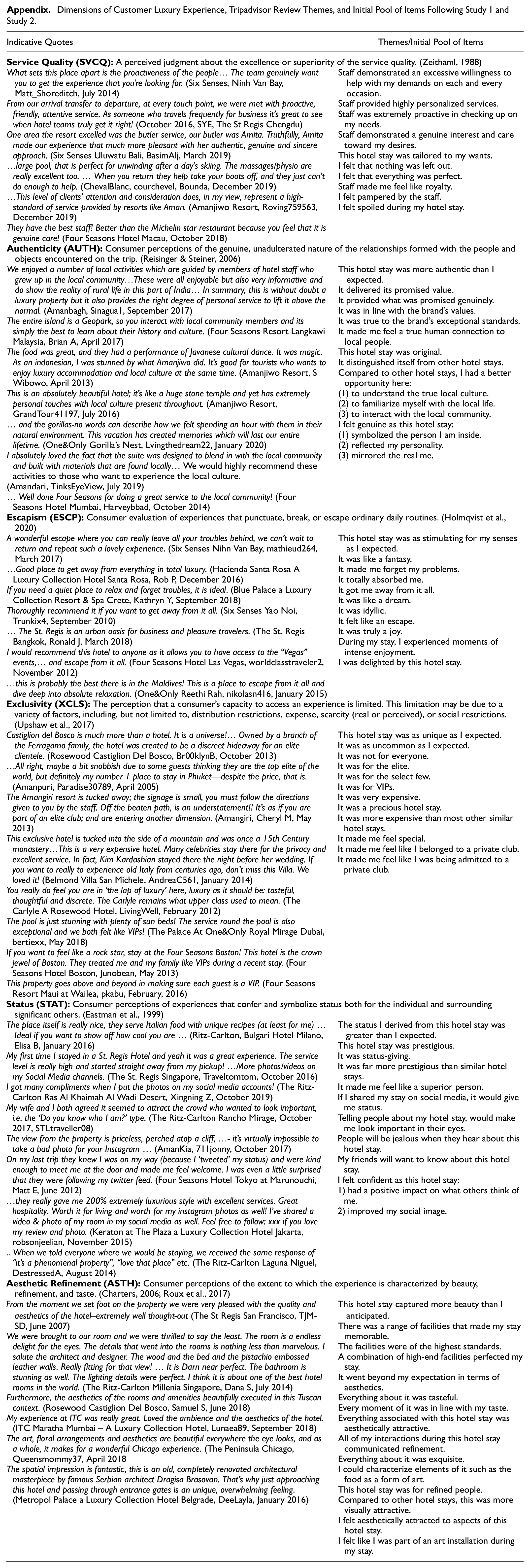
To identify the dimensions of customer luxury experience based on customer perceptions, the research team initially applied latent semantic analysis to Tripadvisor data. However, the output highlighted broad hospitality themes such as rooms, location, and food and beverage options, which overshadowed the specific luxury-related themes under investigation. Consequently, a non-automated approach was adopted, involving thematic analysis of a random sub-sample of reviews (12 brands × 3 properties × 50 reviews), conducted by three independent coders (Miles & Huberman, 1994). This process revealed six dimensions: service quality, authenticity, escapism, exclusivity, status, and aesthetic refinement. The next stage involved applying these codes to the full population of reviews to validate their relevance. Representative comments from tourists appear in the left column of the Appendix, with the resultant items appearing in the right column. Potential questions were phrased in multiple ways, with different shades of meaning, with the reading levels of respondents carefully considered, and with appropriate redundancy in the initial group of candidate items (Churchill, 1979; DeVellis, 2017).
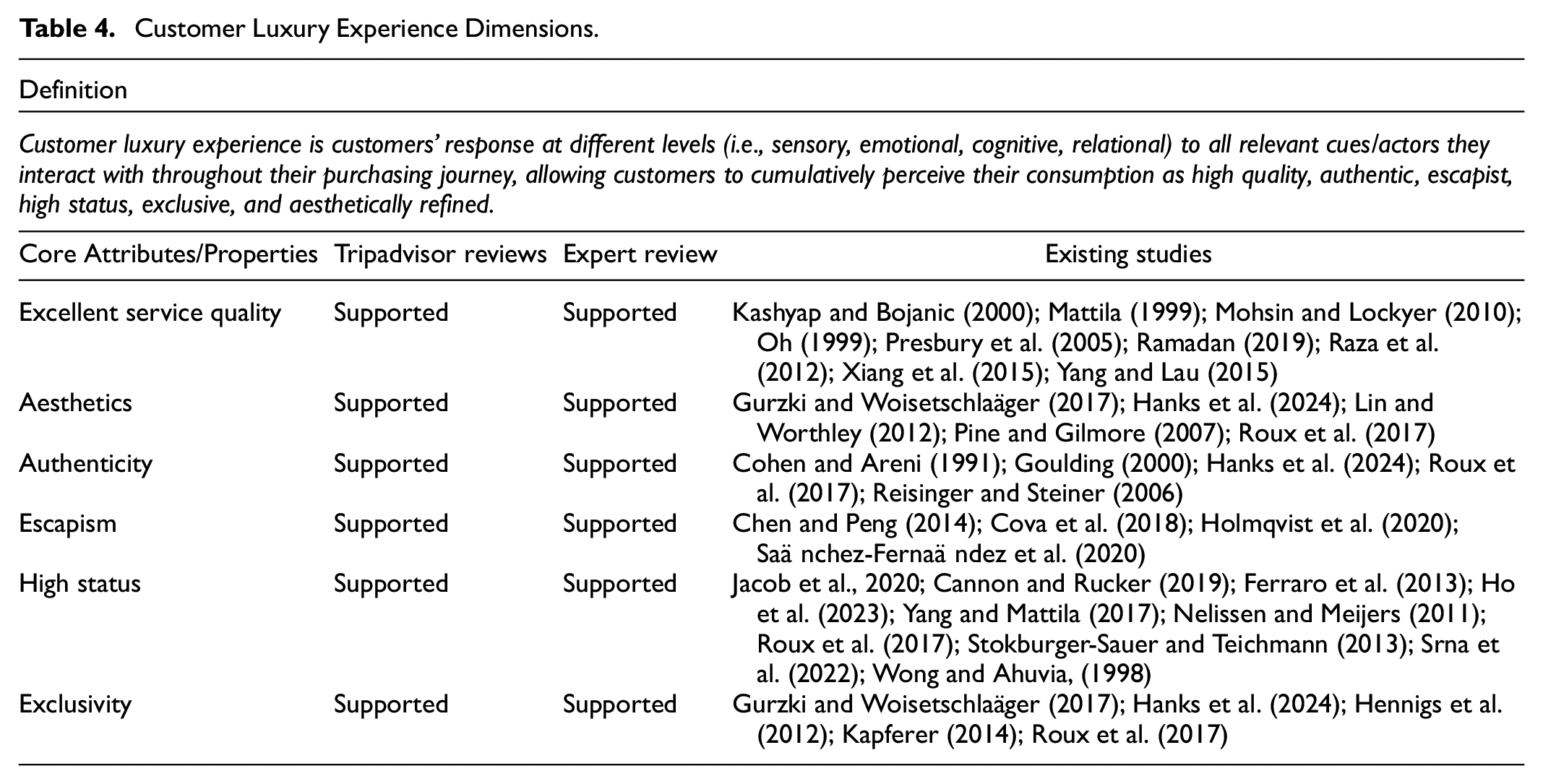
Study 2 was initiated after developing a list of potential items based on the literature review and Tripadvisor comments. The potential items were reviewed by 33 academic researchers who study customer luxury experience in the context of hotels and 18 industry experts (DeVellis, 2017, p. 135) to ensure face validity and content validity. The experts judged the following: first, the definition of the customer luxury experience; second, each dimension of the customer luxury experience and the extent to which it reflected the construct; and third, each item, assessing its clarity and representativeness in capturing the dimension of the customer luxury experience as defined in the paper. Unclear and unrepresentative items were excluded from further analysis (Hardesty & Bearden, 2004). Following the generation of items and subsequent refinement by experts, the research team re-examined the literature to ascertain whether the themes were present in extant literature. This theoretical matching confirmed the identified themes and provided additional input for the refinement of items. Dimensions and items are, thus, supported by customer comments in Tripadvisor reviews, expert reviews and the literature (see, Table 4). Table 4 also presents the final definition.
Customer Luxury Experience Dimensions.
This process yielded an initial item pool comprising 80 items (17 items for service quality, 14 for authenticity, 13 for escapism, 12 for exclusivity, 12 for status, and 12 for aesthetic refinement). This number is appropriate given that an initial pool of items can be as much as three or four times larger than the final scale (DeVellis, 2017, p. 113). Given our postulated six dimensions, if a final scale has approximately four questions per dimension, this would be 24 total items on the final instrument and 72–96 initial candidate items.
Data Collection
For Study 3, data was collected through a survey administered by Qualtrics, a reputable online survey company and opt-in panel service based in the US. Participants had to be US residents, older than 18 years and to have stayed in a 5-star hotel or resort within the previous 6 months. A gender quota was applied to approximate an even split of male/female respondents in line with the latest 2020 US census. All participants were required to enter the name and location of the hotel to screen out those who did not qualify and to stimulate their memory of the experience before completing the survey.
After completing the demographic questions, participants were presented with the 80 research items. A five-point Likert scale ranging from “strongly disagree” (1) to “strongly agree” (5) accompanied each research item. The survey was administered in English, and data were collected in the United States (n = 989). Attention filters embedded in the questionnaire helped prevent invalid responses resulting from consumer fatigue, leading to the termination of the questionnaire and the exclusion of the data from the analysis. To further ensure the integrity of the dataset, responses were manually examined to verify a 5-star hotel stay, with questionable responses removed, yielding 673 usable responses. Clear exceptions to the 5-star stay criterion (e.g., Best Western, Hilton Garden Inn, Airbnb) were removed. Debatable or indistinct responses (e.g., Hilton, Marriott) were also removed. Hotels from brands such as the Four Seasons, Mandarin Oriental, and Waldorf Astoria were retained. Where a boutique hotel or a hotel from a smaller brand was listed (e.g., The Knickerbocker in New York City), these responses were manually verified as 5-star hotels via web search to ensure the integrity of the data.
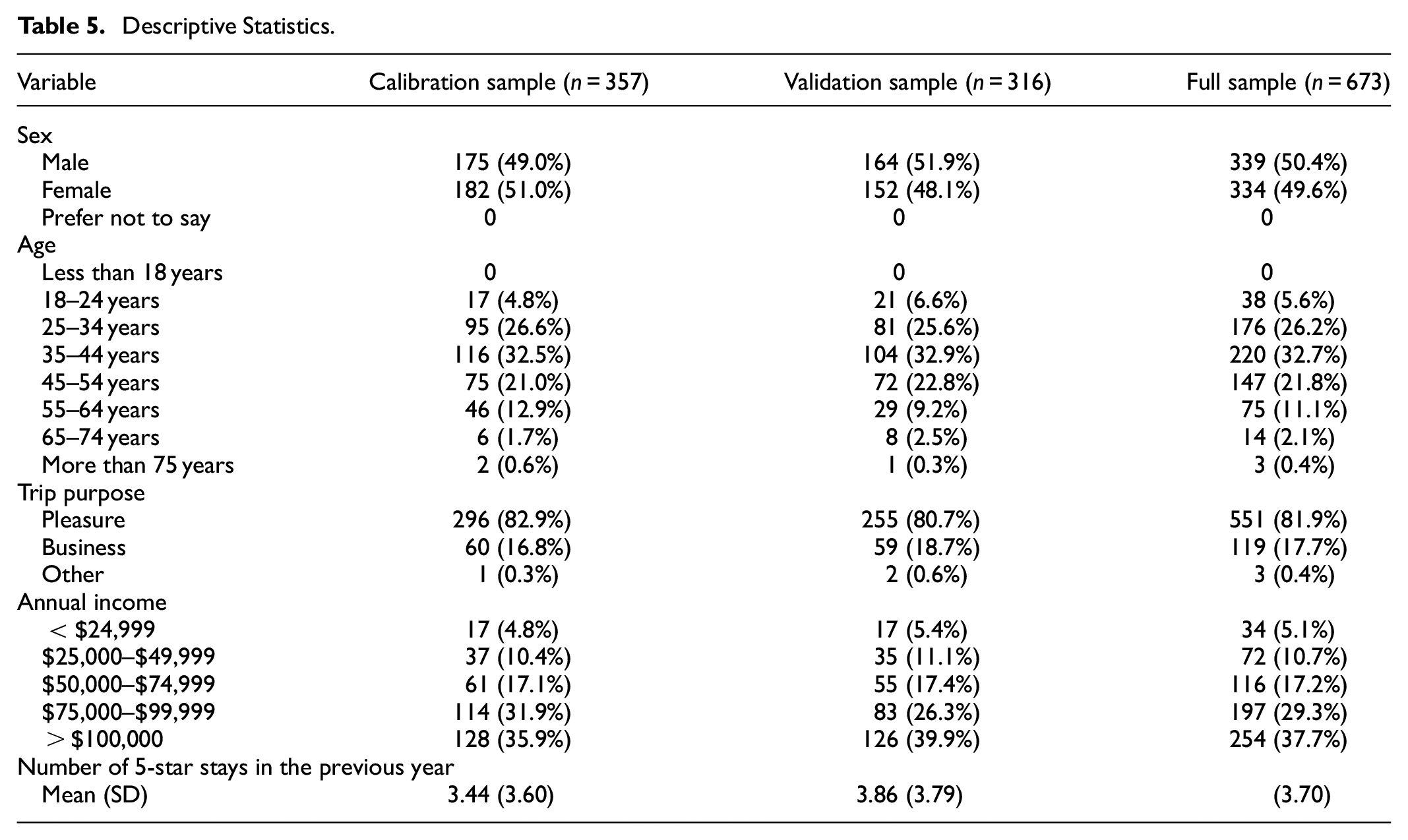
The responses were then randomly assigned to separate calibration and validation samples of n = 357 and n = 316, respectively (DeVellis, 2017; Hinkin et al., 1997; MacKenzie et al., 2011). The practice of splitting a single sample into two groups is often utilized (Bradley & Wang 2022; Pan et al., 2017) and offers the benefits of clearly representing the same population, having identical collection conditions, and removing any issues of temporality (DeVellis, 2017). Recommended minimum sample sizes range from 100 to 500 respondents (Comrey & Lee, 2013; DeVellis 2017; Gorsuch, 1983), and the ratio of respondents to items ranges from 3:1 to 10:1 (Cattell, 2012). Descriptive statistics for the demographic items in the calibration and validation samples appear in Table 5. All analysis was conducted in R.
Descriptive Statistics.
Item Purification
Churchill (1979) recommends initiating item purification by calculating coefficient α. The value of coefficient α ranged from 0.81 to 0.88 for the six proposed dimensions in the 80-item initial scale using the calibration data. Exploratory factor analysis was performed on the calibration sample to further examine the dimensionality of the scale and reduce the number of items. Before beginning the exploratory factor analysis, we calculated Bartlett’s test of sphericity and the Kaiser-Meyer-Olkin measure to ensure that the data had sufficient inherent correlations, with results indicating the appropriateness of exploratory factor analysis (0.94, and χ 2 = 13,775.53, df = 3003, p < .001, respectively).
Exploratory factor analysis was performed with an oblique rotation method because we expected some factors to correlate with one another (DeVellis, 2017). Items were removed if they exhibited a factor loading <0.4 if item-to-total correlations were < 0.3, if items exhibited a high factor loading on multiple factors, or if removing that item would not significantly reduce the reliability of the scale, as assessed using coefficient α (Hair et al., 2018). The extracted factors should account for 50% to 60% of the total variance (Hair et al., 2018; Streiner, 1994). After iterative rounds of exploratory factor analysis, a six-factor, 20-item solution was selected that accounted for 51% of the total variance.
Determining factor dimensions based on eigenvalues alone has been criticized as being not fully reliable and perhaps overly generous (Fabrigar et al., 1999). Thus, we examined the theoretical basis for the factors, as well as parallel analysis using scree plots (DeVellis, 2017) and eigenvalues, to arrive at the six-factor solution. All factors’ eigenvalues are greater than 1 (Kaiser, 1960), ranging from 2.16 to 1.13. Furthermore, coefficient α ranges from.59 to.82 for the six factors. While α for one construct (service quality) falls below the recommended value of 0.7, given the exploratory nature of the instrument development process, as well as the strong rationale in literature for this aspect of customer luxury experience, we retained the items at this point and subjected them to further analysis. Thus, the exploratory factor analysis results indicate adequate internal consistency for each dimension. The results of the exploratory factor analysis appear in Table 6.
Exploratory Factor Analysis Factor Loadings, Eigenvalues, Variance Extracted, and Cronbach’s α (Calibration Sample, n = 357).
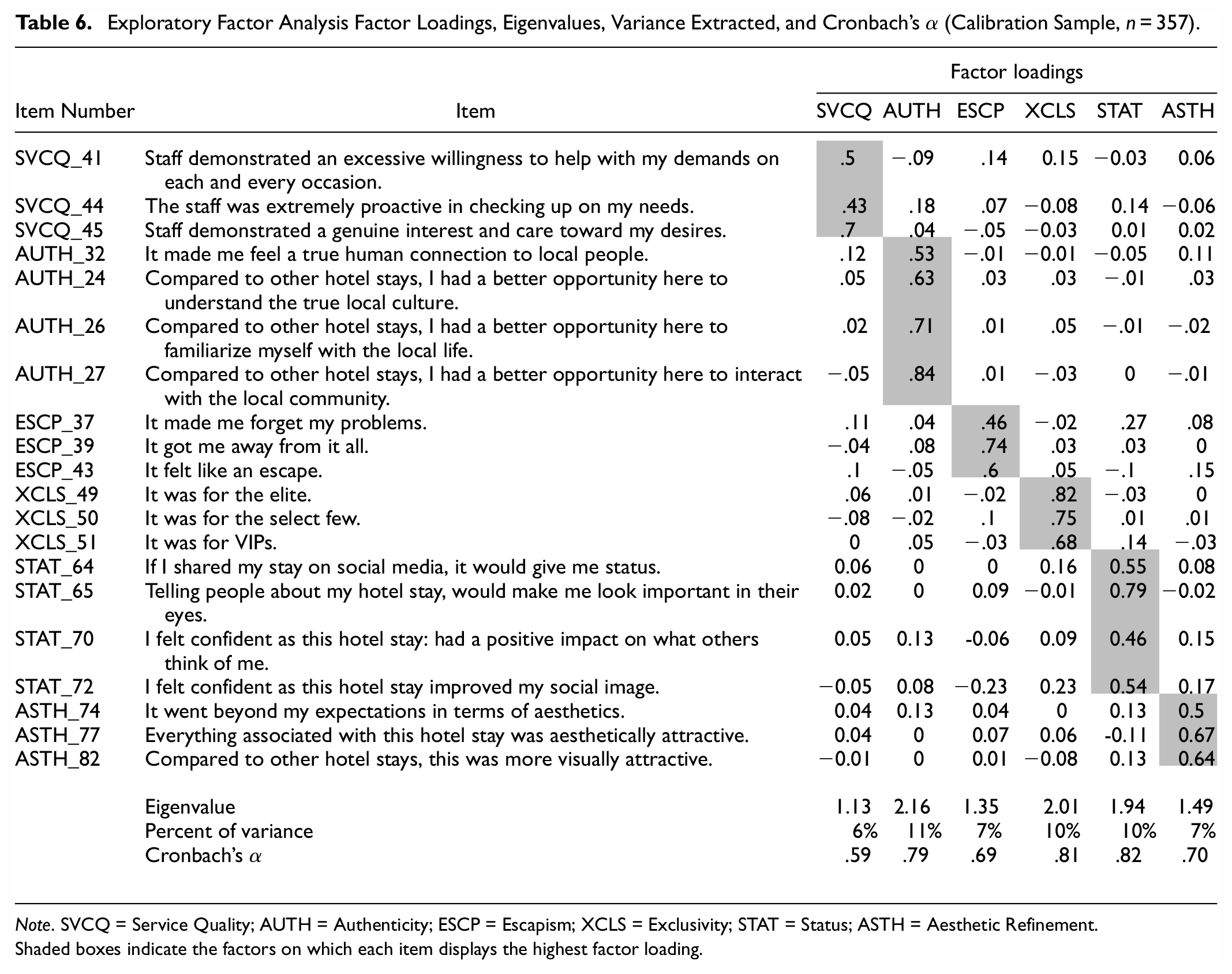
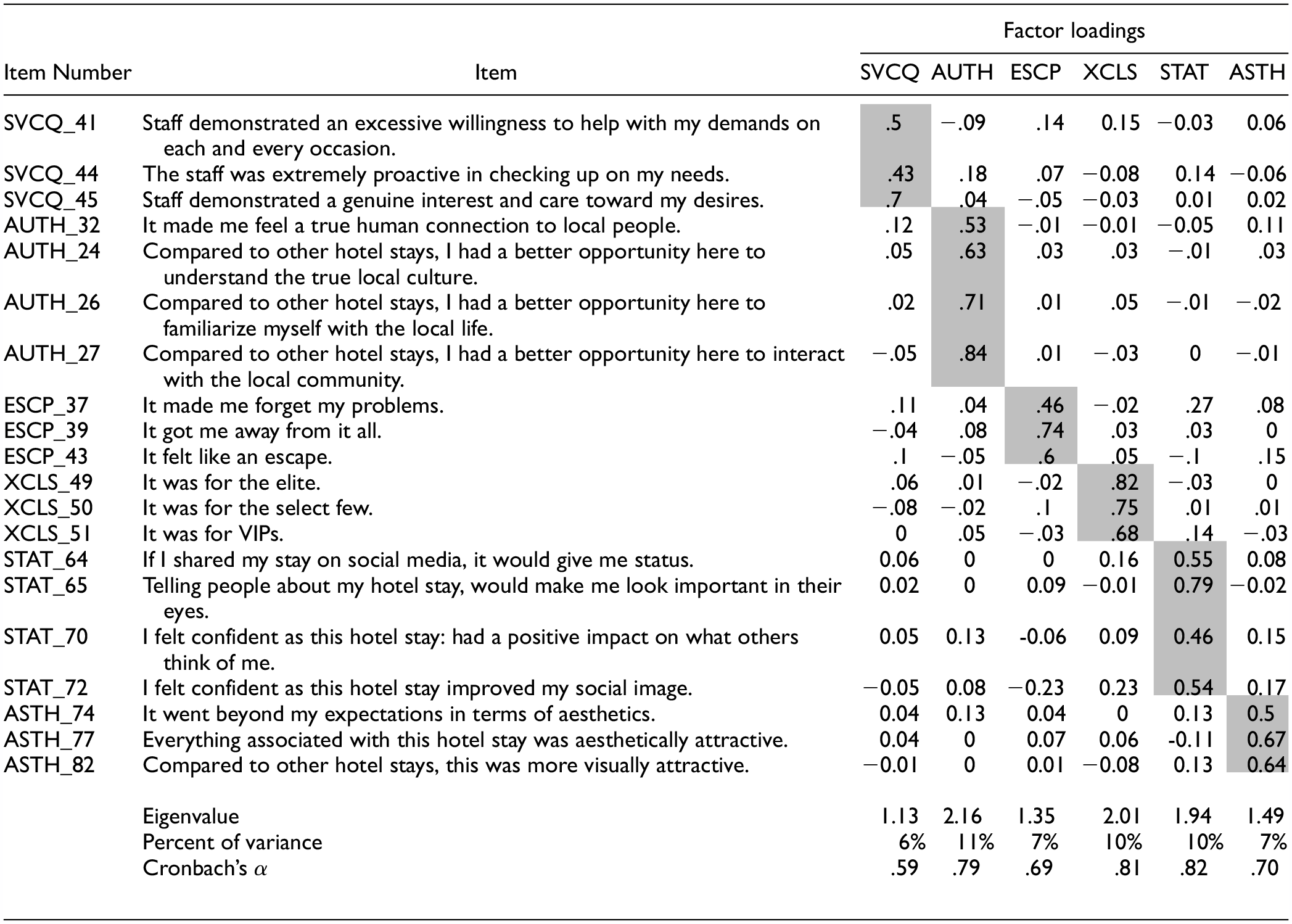
Note. SVCQ = Service Quality; AUTH = Authenticity; ESCP = Escapism; XCLS = Exclusivity; STAT = Status; ASTH = Aesthetic Refinement.Shaded boxes indicate the factors on which each item displays the highest factor loading
Data Collection
After an exploratory factor analysis, the purified set of items should be examined after collecting data from a sample that is independent of the first sample (Anderson & Gerbing, 1988; Churchill, 1979; Hinkin et al., 1997). Thus, the sample was divided into a calibration sample and a separate validation sample. This practice offers the benefits of clearly representing the same population, having identical collection conditions and removing issues of temporality (DeVellis, 2017). Descriptive statistics appear in Table 5.
Assessing Reliability
Reliability is defined as the internal consistency of indicators measuring the same underlying factor (Fornell & Larcker, 1981) and as the ability of a measure to yield the same results when used under the same conditions (Hair et al., 2018). It is most frequently measured using Cronbach’s α and composite reliability (ω). Confirmatory factor analysis using maximum likelihood for the validation dataset (n = 316) yielded satisfactory values for α (from.70 to.85 for the various dimensions) and for composite reliability (also from .70 to.85). Details appear in Table 7, along with factor loadings for each item.
Scale Reliability.
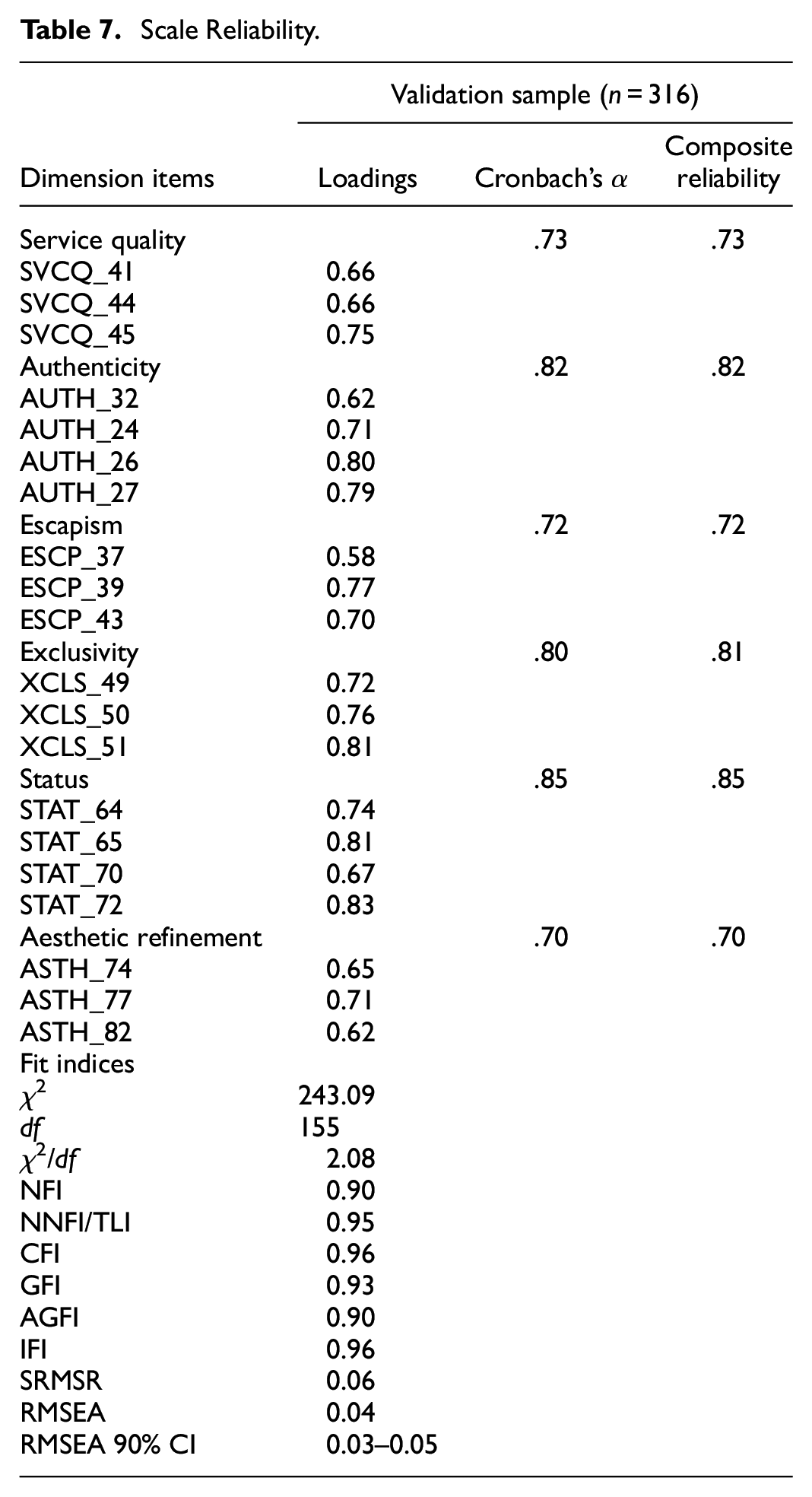
Fit indices include absolute, incremental, and parsimony fit measures (Boley & McGehee, 2014; Hair et al., 2018). Absolute fit measures include chi-square, normed chi-square, goodness-of-fit index (GFI), and root mean square error of approximation (RMSEA). We observed a χ 2 value of 243.09, with 155 degrees of freedom. The normed χ 2 value (χ 2/df) was 2.08. While χ 2 values are often significant for large datasets, normed χ 2 values less than 3 indicate adequate fit. Another common measure of absolute fit is RMSEA. The observed value of 0.04, including the full 90% confidence interval, is below the recommended cutoff of 0.06. Details appear in Table 7.
Incremental fit measures include normative fit index (NFI), nonnormed fit index (NNFI; also known as the Tucker–Lewis index [TLI] [Bentler & Bonett, 1980; Tucker & Lewis, 1973]), and comparative fit index (CFI). For our dataset, we observed an NFI value of 0.90, an NNFI/TLI of 0.95, and a CFI of 0.96. The recommended cutoff values are 0.90 for each of these indices. Adjusted GFI (AGFI) is the most commonly used measure for parsimony fit. In our data, AGFI was 0.90. Recommended values for model fit are RMSEA < 0.060, CFI > 0.90, NNFI > 0.90, GFI > 0.90, AGFI > 0.90, and χ 2/df < 3 (Bentler, 1992; Hu & Bentler, 1999). All measures meet the recommended thresholds.
Assessing Validity
Construct validity consists of several components, including theoretical validity, content validity, face validity, convergent validity, discriminant validity, and nomological validity. Theoretically, valid measures were created through a literature review, as well as theoretical matching with extant research and then refining candidate items from this base. Theoretical validity is closely related to content validity, in which multiple facets of a given construct are measured. Initial development of candidate items included items assessing expectations of the luxury consumer experience, perceptions of the experience itself, consumers’ comparative assessments of the luxury experience versus other/previous/similar relevant experiences, and affective responses to the consumer experience. Face validity was verified by asking industry experts and customer luxury experience researchers to review potential items. Convergent validity examines relatedness of the measures for a single dimension or construct. It is generally assessed by examining factor loadings for items, which should exceed 0.6, or perhaps 0.5 for exploratory studies (Bagozzi & Yi, 1988; Hair et al., 2018; MacCallum, 1995). All the items displayed in Table 7 demonstrate satisfactory loadings, ranging from 0.58 to 0.83.
Discriminant validity indicates the extent to which two factors are empirically distinct (Hair et al., 2018). This type of validity is established by observing the square root of the average variance extracted (AVE) and comparing it with the correlation coefficients of the other constructs. The square root of AVE should be higher than the correlation of all related constructs (Kline, 2015). Details appear in Table 8, where the square root of AVE appears on the diagonal and construct correlations appear in the bottom triangle of the table.
Convergent and Discriminant Validity—Correlations and AVE.
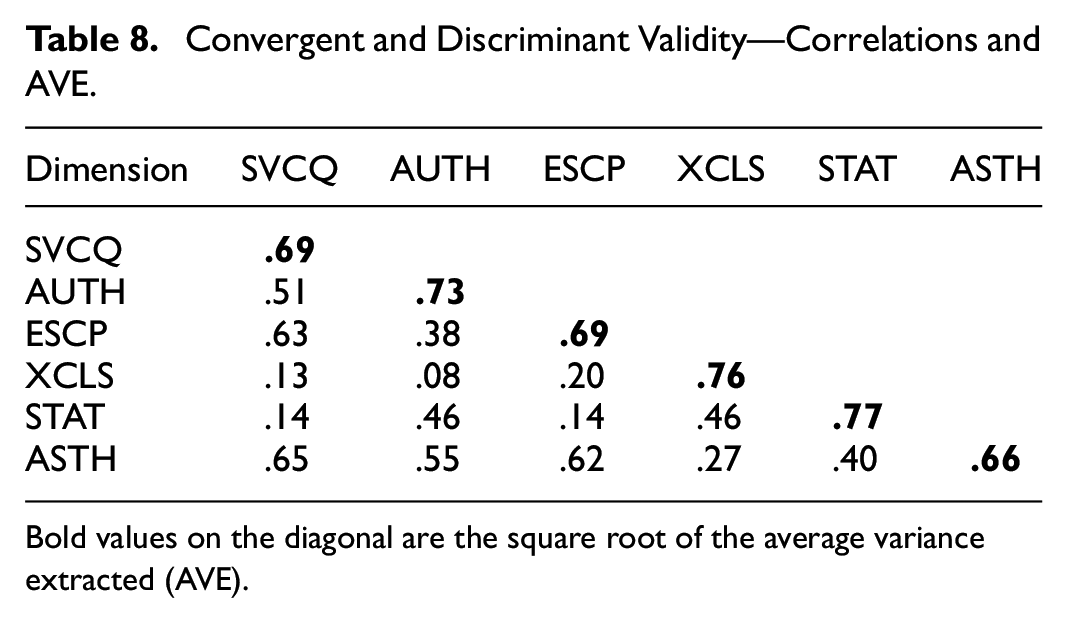
Bold values on the diagonal are the square root of the average variance extracted (AVE).
The Heterotrait-monotrait ratio of correlations (HTMT and HTMT2) was proposed as an alternative to Fornell and Lacker’s criterion for assessing discriminant validity (Henseler et al., 2015; Roemer et al., 2021; Voorhees et al., 2016). HTMT2 (rather than HTMT) is the more appropriate calculation in congeneric measurement models, where indicator loadings of a given construct are not equal, as is typical in most empirical studies (Roemer et al., 2021). Table 9 shows that all HTMT2 ratio scores are less than 0.85.
Discriminant Validity—HTMT2.
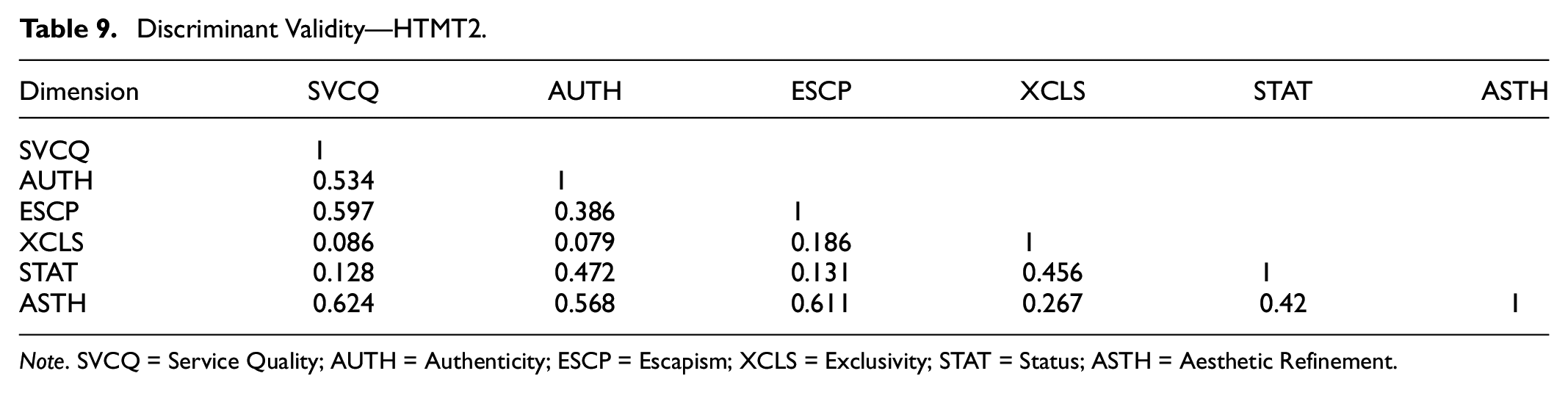
Note. SVCQ = Service Quality; AUTH = Authenticity; ESCP = Escapism; XCLS = Exclusivity; STAT = Status; ASTH = Aesthetic Refinement.
Criterion-related validity is established when a scale has an empirical association with some criterion or established measure (DeVellis, 2017). In this study it is assessed by adopting two criterion variables that are theoretically relevant in the customer luxury experience context: brand experience and brand luxury. The brand experience was measured with eight items adapted from Brakus et al. (2009): “This hotel made a strong impression on my visual sense or other senses,” “I found it interesting in a sensory way,” “It induced feelings and sentiments,” “This hotel was an emotional brand,” “I engaged in physical activity and behaviors when I stayed at this hotel,” “This hotel is action-oriented,” “I engaged in a lot of thinking during my hotel stay,” “This hotel stimulated my curiosity and problem-solving.” Brand luxury was measured with two items adapted from Miller and Mills (2012): “This hotel is a symbol of luxury,” and “This hotel is a symbol of prestige.”
The criterion validity of the scale was examined by measuring correlations between the six dimensions of customer luxury experience and the criteria of brand experience and brand luxury. The average value of the six dimensions of customer luxury experience was calculated and the result as the factor value. Similarly, the average value of the three criterion variables was calculated. Correlation coefficients of the six dimensions (service quality, authenticity, escapism, exclusivity, status, and aesthetic refinement) with brand experience were 0.41, 0.57, 0.36, 0.29, 0.56, and 0.57, respectively (all significant at the p < .001 level). Correlation coefficients of the six dimensions with brand luxury were 0.41, 0.33, 0.36, 0.29, 0.32, and 0.60 (again, all significant at the p < .001 level). These results support the criterion-related validity of the scale. To establish nomological validity, we have performed multiple regression analyses (Hosany & Witham, 2010; Hinkin, 2005; Netemeyer et al., 2003). Regression results (see Table 10) indicate that each of the six dimensions is positively and significantly related (all p < .001) to brand luxury. Similarly, each of the six dimensions is positively and significantly related (all p < .001) to brand experience. R 2 values for these regressions range from .079 to .363.
Nomological Validity (Based on Validation Sample, n = 316).
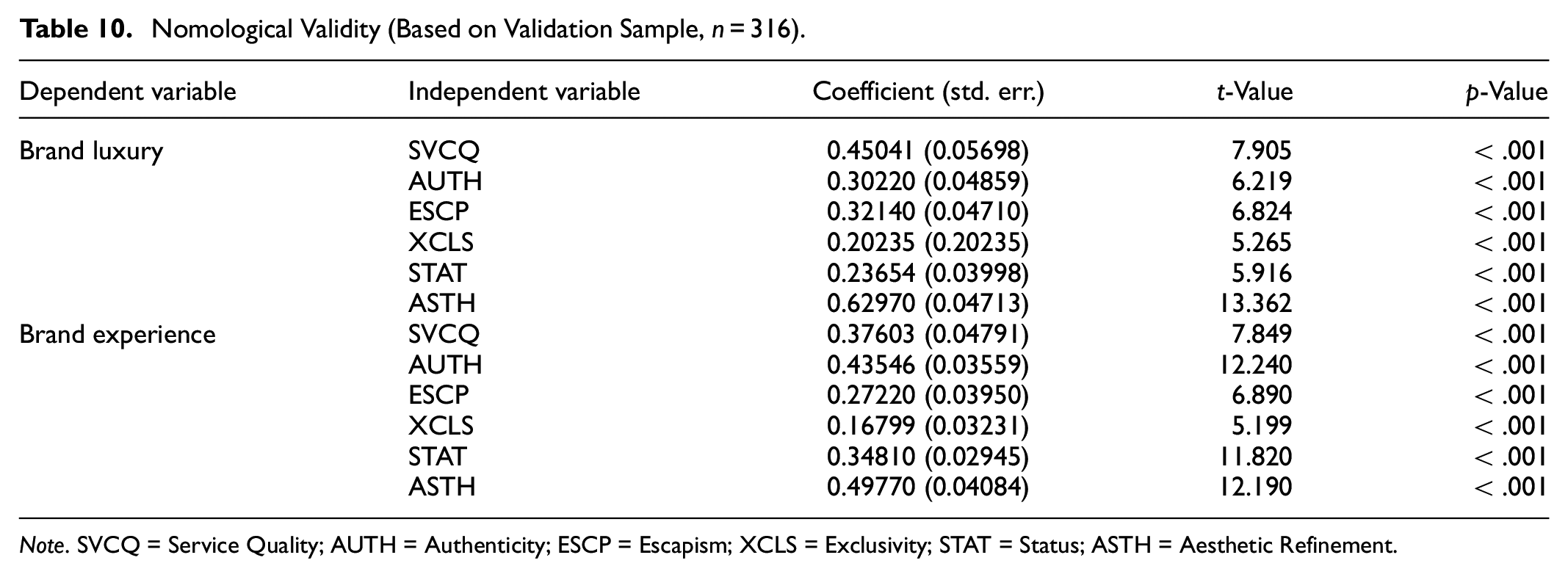
Note. SVCQ = Service Quality; AUTH = Authenticity; ESCP = Escapism; XCLS = Exclusivity; STAT = Status; ASTH = Aesthetic Refinement.
Developing Norms
The development of norms is the last step in the process suggested by Churchill (1979). While this study is exploratory and has the intended purpose of developing a measurement instrument, norms may be developed from the means and standard deviations of the items presented here. Table 11 shows the means and standard deviations for each of the items in the final survey instrument. This can help luxury hotels understand if they provide luxury experiences and/or whether they are exceptional (or deficient) in a particular area.
Norms (Based on Validation Sample, n = 316).
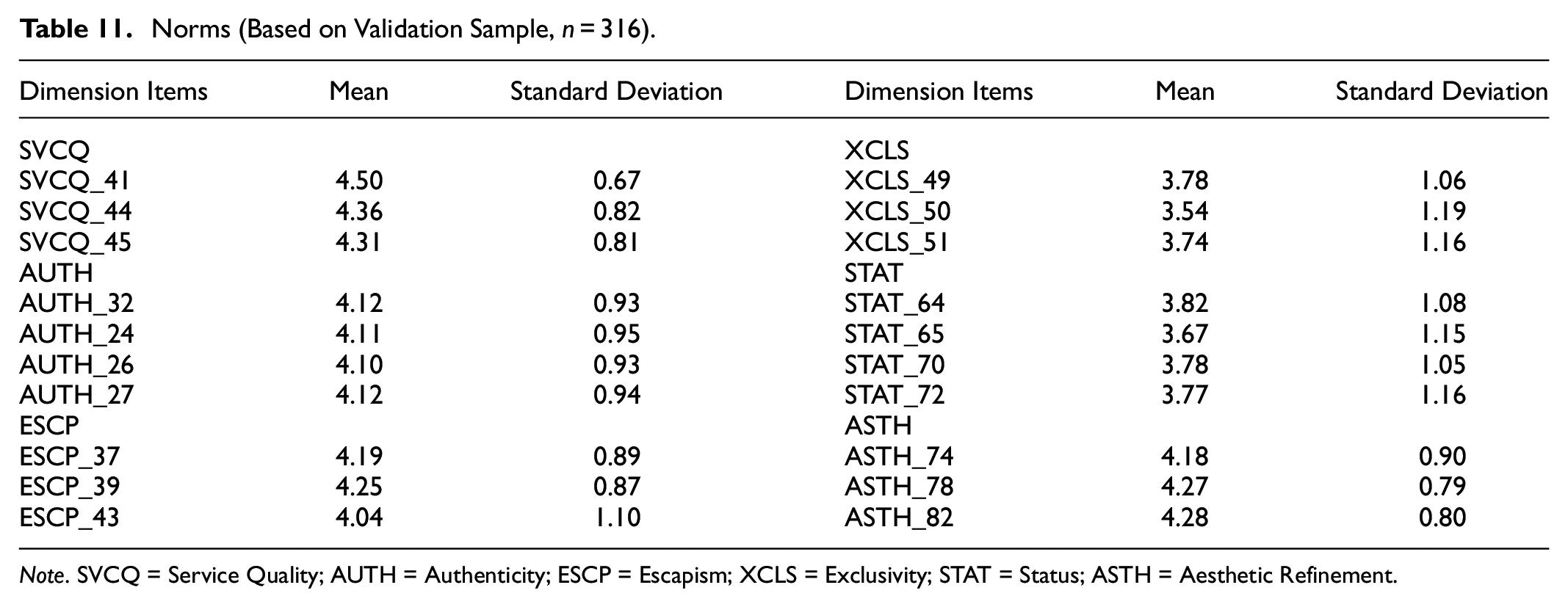
Note. SVCQ = Service Quality; AUTH = Authenticity; ESCP = Escapism; XCLS = Exclusivity; STAT = Status; ASTH = Aesthetic Refinement.
Discussion
This research investigates the customer luxury experience concept in the luxury hospitality context. Following established scaling procedures across three studies, this work developed and validated a scale to measure customer luxury experience in luxury hotel settings. The scale comprises six dimensions, including service quality, authenticity, escapism, exclusivity, status, and aesthetic refinement, collectively contributing to the overall customer perception of luxury. This contributes significantly to the existing body of research on luxury hospitality by addressing key gaps identified in previous studies. Table 1 highlights that prior research has primarily focused on conceptualizing customer luxury experience rather than offering a standardized, multidimensional measurement tool. A few studies (e.g., Harkison et al., 2018; Walls et al., 2011) have adopted qualitative approaches to explore the dimensions of customer luxury experience or have ad hoc identified focused on specific dimensions such as authenticity (e.g., Hanks et al., 2024) but have not provided an overall empirical instrument that captures its complexity.
This study introduces a validated scale that differentiates customer luxury experiences from ordinary hospitality experiences, offering a comprehensive framework for its assessment. The findings complement existing literature on the formation of the customer luxury experience in hotels, albeit from the perspective of tourist providers, by demonstrating that customers’ overall luxury experiences integrate elements from the physical, personal, and social spheres (Manfreda et al., 2023). The emerging dimensions align with these spheres as follows: aesthetic refinement and quality (physical sphere); status and exclusivity (social sphere); and escapism and authenticity (personal sphere). By formalizing these insights into a measurable construct, this research enhances the ability to analyze how different components of customer luxury experience interact and contribute to overall luxury perception. Whereas the majority of previous studies have adopted a single-stakeholder perspective, focusing either on managers or customers, or examining the luxury hotel experience within a narrow context, this research integrates insights from multiple sources and a wider context into a more holistic framework. By drawing on data from a large sample of global travelers who have stayed in luxury hotels (online reviews), academic and industry experts (experience survey), and a sample of US customers of 5-star hotels, this is the first study to adopt such a comprehensive approach to the examination of customer luxury experience.
Theoretical Contributions
This research makes several theoretical contributions to the luxury tourism and hospitality literature. First, it provides a definition of customer luxury experience that is integrative, incorporating elements from both luxury and customer experience literature. While existing definitions assume that customer luxury experience is either unidimensional or the same as an ordinary experience (e.g., Shahid & Paul, 2022), the proposed definition specifies that luxury experiences are complex and multifaceted phenomena distinct from ordinary customer experiences offered by nonluxury hospitality establishments.
Second, it provides substantial empirical support for the various dimensions of customer luxury experience, which include, but are not limited to service quality; experience authenticity, especially from a local culture point of view; escapism, which allows customers to briefly transcend reality; exclusivity, which enhances the appeal of the experience; status that is conferred upon customers through their experience; and aesthetic refinement, which elevates the overall perception of luxury in the minds of guests. While previous literature has largely focused on the formation of customer luxury experience from a management perspective, (e.g., Amatulli et al., 2020), this work provides rich insights into consumers’ perceptual mechanism underlying the evaluation of a hotel experience as luxurious or not.
Third, it develops and validates a scale with strong psychometric properties that capture the multifaceted dimensions of luxury, providing a more nuanced understanding of how consumers perceive and evaluate their experiences in luxury hospitality. From a measurement point of view, this scale represents a vital tool for researchers, laying the groundwork for future empirical studies to identify customer luxury experience drivers, outcomes, and boundary conditions.
Managerial Implications
The findings also hold valuable implications for hospitality practitioners who may focus on individual luxury dimensions to help design multifaceted experiences. In delivering exceptional service, luxury hotel brands should prioritize staff training that fosters genuine empathy, proactive attentiveness, and sincere engagement. Rather than relying on scripted exchanges, service encounters should create meaningful interactions that make guests feel personally acknowledged and valued. To strengthen authenticity, properties can offer thoughtfully curated experiences that connect guests with the destination’s local culture. These might include private excursions led by historians or cultural experts, partnerships with resident artisans, or locally inspired tasting menus that tell a regional story. Escapism should be integrated throughout the guest experience. Tranquil spa retreats, secluded garden suites, and personalized wellness rituals such as sound therapy or nature immersion can help guests disconnect from daily stress and become fully present in their surroundings. Exclusivity is conveyed through offerings that feel rare, personalized, and inaccessible to the general public. This might include invitation-only events, in-suite check-in, or bespoke itineraries designed by dedicated concierges. Luxury hotels can also reinforce status by embedding moments that elevate the guest’s social image. Limited-edition collaborations, exclusive merchandise, or visually iconic spaces that invite sharing on social media all contribute to this effect. Finally, aesthetic refinement should reflect a clear and consistent design style that aligns with the preferences of the elite segment the hotel seeks to attract. Whether minimalist and contemporary, as seen in Aman, or opulent and traditional, as with the Burj Al Arab, every visual and sensory element should support the brand’s identity and deliver a coherent experience across the property.
Hospitality managers can use this succinct diagnostic tool to monitor guests’ perceptions and track customer luxury experience levels. They can identify areas of strength and areas for improvement, and tailor their offerings to better meet the evolving expectations of their luxury clientele. They can also use this scale to make sure that their guests’ luxury experiences are comparable and consistently delivered not only across the broad array of services offered within a hotel (e.g., spa, bar, restaurants, gym) but also across branded properties in other locations. The data collected through this battery can be used to ensure alignment between the hotel’s positioning and luxury level (e.g., as an inaccessible luxury hotel) and the customer luxury experience level as assessed by guests. A potential misalignment between the two is likely to have a negative impact on the brand through dissatisfaction, disloyalty, and negative word of mouth. Because the level of luxury typically informs pricing strategies, and not vice versa (Kapferer & Bastien, 2012), this diagnostic tool can also inform pricing decisions that reflect the value perceived by guests, ensuring that the hotel remains competitive while maintaining its desired luxury status. At a broader level, hospitality and tourism managers can use this tool to design experiences that cater holistically for the luxury tourism segment, with the aim of positioning their destination as a luxury destination and ensuring the fulfilment of their mission.
Limitations and Directions for Future Research
Despite taking several steps to ensure a robust research design and effective execution of the study, certain limitations must be acknowledged. First, the context of this inquiry was solely on luxury hotels, thus excluding other increasingly popular types of luxury accommodation such as Airbnb Luxe, villas, private islands, or even luxury camping, all of which may offer different customer experiences and perceptions of luxury. Future work could expand the scope to include these alternatives, providing a more comprehensive understanding of the luxury accommodation market. The scope of this research may be expanded still further by investigating other types of tourism and hospitality experiences that include, but are not limited to, luxury wellness retreats, gourmet culinary experiences, premium transport, theme parks and cultural heritage. The working definition of the customer luxury experience proposed in this study may serve as a useful point of departure to help researchers identify contextually relevant dimensions and develop valid and reliable measurement scales in these related domains.
Second, tourism and hospitality are, by their nature, a global phenomenon, and the properties examined reflect this diversity. However, to isolate the impact of culture, the development and validation of the customer luxury experience scale was based on data from US consumers. Future studies could investigate the stability and applicability of the customer luxury experience scale across different cultural contexts and explore how cultural nuances influence consumer expectations and perceptions of luxury services. This could lead to a more nuanced understanding of how customer luxury experience is evaluated by consumers from different cultural backgrounds, adding a deeper understanding to the field of tourism and hospitality research.
Third, the concept of luxury is dynamic. However, the customer luxury experience scale relies largely on cross-sectional data, in line with established scaling procedures. Future research might examine the evolution of customer luxury experience over time by also focusing on longitudinal studies. Such an approach could capture shifts in how luxury is experienced in the context of hotels, reflecting, for example, technological advancements that may underpin this.
Footnotes
Appendix
Dimensions of Customer Luxury Experience, Tripadvisor Review Themes, and Initial Pool of Items Following Study 1 and Study 2.
| Indicative Quotes | Themes/Initial Pool of Items |
|---|---|
|
What sets this place apart is the proactiveness of the people… The team genuinely want you to get the experience that you’re looking for. (Six Senses, Ninh Van Bay, Matt_Shoreditch, July 2014) From our arrival transfer to departure, at every touch point, we were met with proactive, friendly, attentive service. As someone who travels frequently for business it’s great to see when hotel teams truly get it right! (October 2016, SYE, The St Regis Chengdu) One area the resort excelled was the butler service, our butler was Amita. Truthfully, Amita made our experience that much more pleasant with her authentic, genuine and sincere approach. (Six Senses Uluwatu Bali, BasimAlj, March 2019) …large pool, that is perfect for unwinding after a day’s skiing. The massages/physio are really excellent too. … When you return they help take your boots off, and they just can’t do enough to help. (ChevalBlanc, courchevel, Bounda, December 2019) …This level of clients’ attention and consideration does, in my view, represent a high-standard of service provided by resorts like Aman. (Amanjiwo Resort, Roving759563, December 2019) They have the best staff! Better than the Michelin star restaurant because you feel that it is genuine care! (Four Seasons Hotel Macau, October 2018) |
Staff demonstrated an excessive willingness to help with my demands on each and every occasion. Staff provided highly personalized services. Staff was extremely proactive in checking up on my needs. Staff demonstrated a genuine interest and care toward my desires. This hotel stay was tailored to my wants. I felt that nothing was left out. I felt that everything was perfect. Staff made me feel like royalty. I felt pampered by the staff. I felt spoiled during my hotel stay. |
|
We enjoyed a number of local activities which are guided by members of hotel staff who grew up in the local community…These were all enjoyable but also very informative and do show the reality of rural life in this part of India… In summary, this is without doubt a luxury property but it also provides the right degree of personal service to lift it above the normal. (Amanbagh, Sinagua1, September 2017) The entire island is a Geopark, so you interact with local community members and its simply the best to learn about their history and culture. (Four Seasons Resort Langkawi Malaysia, Brian A, April 2017) The food was great, and they had a performance of Javanese cultural dance. It was magic. As an indonesian, I was stunned by what Amanjiwo did. It’s good for tourists who wants to enjoy luxury accommodation and local culture at the same time. (Amanjiwo Resort, S Wibowo, April 2013) This is an absolutely beautiful hotel; it’s like a huge stone temple and yet has extremely personal touches with local culture present throughout. (Amanjiwo Resort, GrandTour41197, July 2016) … and the gorillas-no words can describe how we felt spending an hour with them in their natural environment. This vacation has created memories which will last our entire lifetime. (One&Only Gorilla’s Nest, Lvingthedream22, January 2020) I absolutely loved the fact that the suite was designed to blend in with the local community and built with materials that are found locally… We would highly recommend these activities to those who want to experience the local culture. (Amandari, TinksEyeView, July 2019) … Well done Four Seasons for doing a great service to the local community! (Four Seasons Hotel Mumbai, Harveybbad, October 2014) |
This hotel stay was more authentic than I expected. It delivered its promised value. It provided what was promised genuinely. It was in line with the brand’s values. It was true to the brand’s exceptional standards. It made me feel a true human connection to local people. This hotel stay was original. It distinguished itself from other hotel stays. Compared to other hotel stays, I had a better opportunity here: (1) to understand the true local culture. (2) to familiarize myself with the local life. (3) to interact with the local community. I felt genuine as this hotel stay: (1) symbolized the person I am inside. (2) reflected my personality. (3) mirrored the real me. |
|
A wonderful escape where you can really leave all your troubles behind, we can’t wait to return and repeat such a lovely experience. (Six Senses Nihn Van Bay, mathieud264, March 2017) …Good place to get away from everything in total luxury. (Hacienda Santa Rosa A Luxury Collection Hotel Santa Rosa, Rob P, December 2016) If you need a quiet place to relax and forget troubles, it is ideal. (Blue Palace a Luxury Collection Resort & Spa Crete, Kathryn Y, September 2018) Thoroughly recommend it if you want to get away from it all. (Six Senses Yao Noi, Trunkix4, September 2010) … The St. Regis is an urban oasis for business and pleasure travelers. (The St. Regis Bangkok, Ronald J, March 2018) I would recommend this hotel to anyone as it allows you to have access to the “Vegas” events,… and escape from it all. (Four Seasons Hotel Las Vegas, worldclasstraveler2, November 2012) …this is probably the best there is in the Maldives! This is a place to escape from it all and dive deep into absolute relaxation. (One&Only Reethi Rah, nikolasn416, January 2015) |
This hotel stay was as stimulating for my senses as I expected. It was like a fantasy. It made me forget my problems. It totally absorbed me. It got me away from it all. It was like a dream. It was idyllic. It felt like an escape. It was truly a joy. During my stay, I experienced moments of intense enjoyment. I was delighted by this hotel stay. |
|
Castiglion del Bosco is much more than a hotel. It is a universe!… Owned by a branch of the Ferragamo family, the hotel was created to be a discreet hideaway for an elite clientele. (Rosewood Castiglion Del Bosco, Br00klynB, October 2013) …All right, maybe a bit snobbish due to some guests thinking they are the top elite of the world, but definitely my number 1 place to stay in Phuket—despite the price, that is. (Amanpuri, Paradise30789, April 2005) The Amangiri resort is tucked away; the signage is small, you must follow the directions given to you by the staff. Off the beaten path, is an understatement!! It’s as if you are part of an elite club; and are entering another dimension. (Amangiri, Cheryl M, May 2013) This exclusive hotel is tucked into the side of a mountain and was once a 15th Century monastery…This is a very expensive hotel. Many celebrities stay there for the privacy and excellent service. In fact, Kim Kardashian stayed there the night before her wedding. If you want to really to experience old Italy from centuries ago, don’t miss this Villa. We loved it! (Belmond Villa San Michele, AndreaC561, January 2014) You really do feel you are in ‘the lap of luxury’ here, luxury as it should be: tasteful, thoughtful and discrete. The Carlyle remains what upper class used to mean. (The Carlyle A Rosewood Hotel, LivingWell, February 2012) The pool is just stunning with plenty of sun beds! The service round the pool is also exceptional and we both felt like VIPs! (The Palace At One&Only Royal Mirage Dubai, bertiexx, May 2018) If you want to feel like a rock star, stay at the Four Seasons Boston! This hotel is the crown jewel of Boston. They treated me and my family like VIPs during a recent stay. (Four Seasons Hotel Boston, Junobean, May 2013) This property goes above and beyond in making sure each guest is a VIP. (Four Seasons Resort Maui at Wailea, pkabu, February, 2016) |
This hotel stay was as unique as I expected. It was as uncommon as I expected. It was not for everyone. It was for the elite. It was for the select few. It was for VIPs. It was very expensive. It was a precious hotel stay. It was more expensive than most other similar hotel stays. It made me feel special. It made me feel like I belonged to a private club. It made me feel like I was being admitted to a private club. |
|
The place itself is really nice, they serve Italian food with unique recipes (at least for me) … Ideal if you want to show off how cool you are … (Ritz-Carlton, Bulgari Hotel Milano, Elisa B, January 2016) My first time I stayed in a St. Regis Hotel and yeah it was a great experience. The service level is really high and started straight away from my pickup! …More photos/videos on my Social Media channels. (The St. Regis Singapore, Traveltomtom, October 2016) I got many compliments when I put the photos on my social media accounts! (The Ritz-Carlton Ras Al Khaimah Al Wadi Desert, Xingning Z, October 2019) My wife and I both agreed it seemed to attract the crowd who wanted to look important, i.e. the ‘Do you know who I am?’ type. (The Ritz-Carlton Rancho Mirage, October 2017, STLtraveller08) The view from the property is priceless, perched atop a cliff, …- it’s virtually impossible to take a bad photo for your Instagram … (AmanKia, 711jonny, October 2017) On my last trip they knew I was on my way (because I ‘tweeted’ my status) and were kind enough to meet me at the door and made me feel welcome. I was even a little surprised that they were following my twitter feed. (Four Seasons Hotel Tokyo at Marunouchi, Matt E, June 2012) …they really gave me 200% extremely luxurious style with excellent services. Great hospitality. Worth it for living and worth for my instagram photos as well! I’ve shared a video & photo of my room in my social media as well. Feel free to follow: xxx if you love my review and photo. (Keraton at The Plaza a Luxury Collection Hotel Jakarta, robsonjeelian, November 2015) .. When we told everyone where we would be staying, we received the same response of “it’s a phenomenal property”, “love that place” etc. (The Ritz-Carlton Laguna Niguel, DestressedA, August 2014) |
The status I derived from this hotel stay was greater than I expected. This hotel stay was prestigious. It was status-giving. It was far more prestigious than similar hotel stays. It made me feel like a superior person. If I shared my stay on social media, it would give me status. Telling people about my hotel stay, would make me look important in their eyes. People will be jealous when they hear about this hotel stay. My friends will want to know about this hotel stay. I felt confident as this hotel stay: 1) had a positive impact on what others think of me. 2) improved my social image. |
|
From the moment we set foot on the property we were very pleased with the quality and aesthetics of the hotel–extremely well thought-out (The St Regis San Francisco, TJM-SD, June 2007) We were brought to our room and we were thrilled to say the least. The room is a endless delight for the eyes. The details that went into the rooms is nothing less than marvelous. I salute the architect and designer. The wood and the bed and the pistachio embossed leather walls. Really fitting for that view! … It is Darn near perfect. The bathroom is stunning as well. The lighting details were perfect. I think it is about one of the best hotel rooms in the world. (The Ritz-Carlton Millenia Singapore, Dana S, July 2014) Furthermore, the aesthetics of the rooms and amenities beautifully executed in this Tuscan context. (Rosewood Castiglion Del Bosco, Samuel S, June 2018) My experience at ITC was really great. Loved the ambience and the aesthetics of the hotel. (ITC Maratha Mumbai – A Luxury Collection Hotel, Lunaea89, September 2018) The art, floral arrangements and aesthetics are beautiful everywhere the eye looks, and as a whole, it makes for a wonderful Chicago experience. (The Peninsula Chicago, Queensmommy37, April 2018 The spatial impression is fantastic, this is an old, completely renovated architectural masterpiece by famous Serbian architect Dragisa Brasovan. That’s why just approaching this hotel and passing through entrance gates is an unique, overwhelming feeling. (Metropol Palace a Luxury Collection Hotel Belgrade, DeeLayla, January 2016) |
This hotel stay captured more beauty than I anticipated. There was a range of facilities that made my stay memorable. The facilities were of the highest standards. A combination of high-end facilities perfected my stay. It went beyond my expectation in terms of aesthetics. Everything about it was tasteful. Every moment of it was in line with my taste. Everything associated with this hotel stay was aesthetically attractive. All of my interactions during this hotel stay communicated refinement. Everything about it was exquisite. I could characterize elements of it such as the food as a form of art. This hotel stay was for refined people. Compared to other hotel stays, this was more visually attractive. I felt aesthetically attracted to aspects of this hotel stay. I felt like I was part of an art installation during my stay. |
Author Contributions
Declaration of Conflicting Interests
The author(s) declared no potential conflicts of interest with respect to the research, authorship, and/or publication of this article.
Funding
The author(s) received no financial support for the research, authorship, and/or publication of this article.
Author Biographies
Dr George Christodoulides is Associate Dean for Research and Innovation at the School of Business Administration and holds the Chalhoub Group Professorship in Luxury Brand Management. Recognized as a top 2% scientist globally according to Stanford/Elsevier list, his research focuses on brand management and luxury marketing. His work has attracted funding from prestigious external bodies such as the ESRC and the British Academy. A regular speaker at academic conferences, he has published in journals such as the British Journal of Management, Journal of Travel Research, Industrial Marketing Management, Journal of Business Research, European Journal of Marketing, and Psychology & Marketing. He is Associate Editor of International Marketing Review and has guest edited several special issues for reputable journals.
Dr Kalliopi Chatzipanagiotou is a Senior Lecturer (Associate Professor) in Marketing at the University of Glasgow. Her research focuses on Services Marketing, Tourism, and Branding, with broader interests in marketing models and the application of innovative methodological approaches in marketing. Her work has been published in leading academic journals, including the British Journal of Management, Tourism Management, Journal of Travel Research, Journal of Business Research, and International Business Review, as well as in proceedings of prestigious international conferences. Dr Chatzipanagiotou has contributed to numerous EU-funded research projects and has extensive experience in research, consulting, and executive training programs, collaborating with leading national and multinational organisations across various sectors. She serves on the Editorial Review Boards of the Journal of Business Research and the Journal of Product and Brand Management, and is an active reviewer for well-established marketing journals and conferences.
Jeff Baker received his Ph.D. in Management Information Systems from Texas Tech University. He worked as a Professor of Information Systems and Business Analytics at the American University of Sharjah for 15 years, before returning to the US to the University of Texas at Dallas. His research focuses on IT strategy, with emphases on strategic alignment, strategies in electronic commerce, and the business value of IT. His research has appeared in the Journal of the AIS, the Journal of Strategic Information Systems, Decision Support Systems, and other journals.
Professor Dimitrios Buhalis is Director of the eTourism Lab and Deputy Director of the International Centre for Tourism and Hospitality Research, at Bournemouth University Business School in England. He is a Strategic Management and Marketing expert with specialisation in Information Communication Technology applications in the Tourism, Travel, Hospitality and Leisure industries. He is the Editor in Chief of Tourism Review and the Editor in Chief of the Encyclopedia of Tourism Management and Marketing. Professor Buhalis has written and co-edited more than 25 books and 400 scientific articles. Professor Dimitrios Buhalis was recognised as a Highly Cited Researcher 2020, 2021 and 2022 by ClarivateTM. He is featured in the Stanford University's database of the world's top 2% of scientists. He is the 2nd most cited for tourism, 1st most cited for hospitality, 10th on strategy, and 24th in Marketing on Google Scholar with more than 90000 citations and h-index 122. Dimitrios works closely with United Nations World Tourism Organisation and the World Bank to ensure that his innovative research has relevance and impact to global communities. For more information, books, articles and presentations see  .
.