



Abstract
This study aims to examine how values (i.e., individual and social values) influence customer engagement after managing a service failure in the thermal spa hotel context, and the mediating roles of perceived justice and brand experience. The data was collected from a survey of guests of luxury thermal spa hotels in Portugal, and the research model was assessed using partial least squares structural equation modeling. The results show that individual values affect perceived justice and brand experience, which in turn contribute to a higher level of customer engagement. Brand experience is a better mediator of the relationship between individual values and customer engagement than perceived justice. The novelty of this study is highlighted by the mediating effects of perceived justice and brand experience on the relationship between individual values and customer engagement.
Introduction
The hospitality and tourism literature recognizes the importance of customer engagement (CE) and its positive influence on customer behavioral intentions (Romero, 2018). However, while considerable research has been conducted on the impact of perceived value on consumer behavior, there is limited empirical research on the way in which luxury values influence CE after managing a service failure recovery in the luxury hospitality context (see Wei et al., 2017). Luxury services are characterized by their exclusivity, uniqueness, scarcity, premium price, excellence in quality, notoriety, and social status (Prestini and Sebastiani, 2021).
According to the cognitive appraisal theory (Lazarus, 1991, p. 3), an appraisal can be defined as a “cognitive process (and) the way an individual defines and evaluates relationships with the environment”, which leads to emotional or affective response (Scherer et al., 2001). In this study, using the cognitive appraisal approach, the perception of justice and the brand experience serve as performance indicators that will influence the outcome (i.e., CE). Based on the literature, guests’ individual values (materialism, hedonism, and self-identity) and social values (desire to demonstrate the social status and represent the externalization of one’s image) are two important categories of luxury values (Loureiro and De Araújo, 2014; Wiedmann et al., 2009) that influence the way people evaluate (appraisal) experiences, events, and objects (Kim and Jang, 2016), which affects their perceived justice and experience with a hotel (Loureiro et al., 2013). Guests who perceive more justice and have a favorable brand experience will be more likely to engage with a service provider. In this vein, we argue that luxury values (i.e., individual and social values) are able to predict CE (i.e., purchases, referrals, influence, and knowledge/feedback) through the perception of justice and the brand experience.
Service companies are paying increasing attention to managing service failure (Da Silva Terres et al., 2020). Especially, in the hotel industry, a significant drop in the guest satisfaction level was observed during 2020 (Mehta et al., 2021). Perceived justice refers to the aggregate perceived fairness toward the specific outcomes of a hotel (i.e., its procedures in handling complaints and its way of treating guests). Extant research has considered perceived justice as a key factor in explaining customers’ evaluative judgment of a company’s service and performance (e.g., Chebat and Slusarczyk, 2005; DeWitt et al., 2008). However, the luxury hospitality context may contain unique service characteristics that influence customers’ perceptions of perceived justice. Perhaps, given the high level of service in luxury hotels, customers expect no service failures and, if they do occur, that the hotel will respond by offering satisfactory recovery/compensation (Kozub et al., 2014). Kim et al. (2009) show that perceived justice has significant effects on trust, word of mouth, and revisit intention through satisfaction with recovery in upscale hotels. If a service failure is properly managed, the firm can turn customers who complain into engaged customers (Van Doorn et al., 2010). Thus, perceived justice might influence guests’ intentions to engage in positive behaviors toward the firm, since satisfied customers are more likely to do so (Gupta et al., 2018).
Similarly, the customer experience of a brand has been identified as an antecedent to CE in the context of the services. CE is a broad concept that is “borne out of all forms of customer interactions, communications, and transactions regarding the service offerings, over time” (Kumar et al., 2019, p. 139). In the present study, we use the concept of brand experience to refer to a subjective, internal behavioral consumer response evoked by brand-related stimuli (Brakus et al., 2009). In the hotel industry, brand experience is positively related to other brand-related variables (knowledge, attachment, trust, prestige and loyalty) (Kim and Jang, 2016; Lin and Wong, 2020; Lo and Yeung, 2020). Thus, hotel guests are more likely to be engaged with a hotel if they experience positive feelings and sensations from their experience with the brand. However, empirical research on the association between brand experience and CE in the hotel industry context is scarce.
Based on the above rationale, the following research questions are addressed: (1) Do luxury values influence CE after a service failure is managed in the luxury hospitality context? (2) Do perceived justice and brand experience act as mediators between luxury values and CE in this context?
By seeking answers to these questions, this study contributes to answering the call for more studies exploring CE drivers in the hospitality field (Hao, 2020).
Hypotheses development
Luxury values and perceived justice
The concept of justice is derived from the literature on service failure based on justice theory, which was introduced by Adams (1963). Perceived justice refers to customers’ perceived fairness of the recovery outcome they receive after a service failure and how the company’s staff handles complaints (Tax et al., 1998). There are three dimensions within perceived justice: distributive, interactional, and procedural justice (Tax et al., 1998). Distributive justice refers to the perceived fairness of the specific outcomes of the company’s recovery efforts (e.g., discounts, refunds, and store credits) (Mattila, 2001), whereas procedural justice refers to the perceived fairness of the procedures with which the service recovery is conducted (Tax et al., 1998). Finally, interactional justice refers to the perceived fairness of the interpersonal treatments that are received during the enactment of procedures (Tax et al., 1998).
In the luxury hotels context service failures may refer, especially, to issues concerning the product, process, employee services, and price, among others (e.g., see Loo and Leung, 2018; Almeida et al., 2020). Perceived justice refers to the perception by which a guest evaluates the overall service provided by a hotel and whether recovery is fair or not when a failure occurs (Aguilar-Rojas et al., 2015; Wen and Geng-Qing Chi, 2013). Perceived justice affects the perception of satisfaction toward the service after a recovery (Chebat and Slusarczyk, 2005; Guchait et al., 2019; Mattila and Patterson, 2004). Guests could feel satisfied if a hotel’s manager and staff treat them well and handle their complaints correctly (Kim et al., 2009; Pacheco, 2017; Tsao, 2018). According to the cognitive appraisal theory, guests’ luxury values and beliefs influence the way they evaluate events (Lu and Ahn, 2022) and so guide them in evaluating the recovery provided after a service failure. This study assumes that luxury values are an aggregate concept formed from individual values, which aggregate self-identity, materialism, and hedonism, and social values, which are more oriented to the externalization of the self-image and show the social status to others (Loureiro and De Araújo, 2014; Wiedmann et al., 2009). Thus, we argue that individual and social luxury values affect the perception of justice (Li et al., 2012) and propose the following hypotheses:
Individual (H1a) and social (H1b) luxury values have positive influence on perceived justice
Luxury values and brand experience
Pine and Gilmore (1998, p. 98) have argued that “an experience occurs when the company intentionally uses services to the stage and the props to engage individual customers in a way that creates a memorable event.” Schmitt (1999) has proposed a multidimensional view of experience, comprising sensory (sense), affective (feel), cognitive (think), physical (act), and social-identity (relate) experiences. Customers could also receive experiences not only from products/services but also from brands (Brakus et al., 2009). These authors note that these experiences with brands include four different dimensions: sensory, affective, intellectual, and behavioral experiences.
The brand experience concept has also been utilized within the hospitality context (e.g., Ahn and Back, 2018; Loureiro, 2014). The hotel industry is experience-oriented, and it is critical to create unique and memorable experiences for guests (Sánchez-Casado et al., 2019; Yoon and Lee, 2017). This is also the case for luxury thermal spa hotels. Memorable experiences provided by these hotels for their guests would affect their behavior (Loureiro et al., 2013). The four dimensions of brand experience (sensory, affective, intellectual, and behavioral) are also evident in luxury thermal spa hotels (Ahn and Back, 2018; Brakus et al., 2009). The sensory experience is related to the aesthetics and sensations provided by a hotel and its spa (the hotel atmosphere, including visual, auditory, tactile, olfactory, and gustatory stimuli), whereas affective experience is related to the feelings and emotions that guests receive at luxury thermal spa hotels. Intellectual experience is related to intelligence and creative thinking about luxury thermal spa hotels (logical thinking and stimulation of curiosity), whereas behavioral experience is related to the physical action and lifestyle aspects of luxury thermal spa hotels (participation in the activities at the hotel).
One of the main objectives of a company is undoubtedly the creation of intense experiences. To maintain sustainable competitiveness in the hospitality industry, it is vital to better understand customers’ cognitive and affective needs (Yoon and Lee, 2017), particularly their individual values. Consumption experiences could be hedonistic (focused on the value to the consumer resulting from the experience of the purchase) or utilitarian (focused on the value of utility that the purchase has for the consumer and if it corresponds to their needs) (Addis and Holbrook, 2001). Understanding individual values will lead to the creation of better experiences (Loureiro and De Araújo, 2014; Wiedmann et al., 2009). In addition, social-benefits (e.g., feeling of connection and communication with others) positively influenced guests’ luxury brand experience at hotels (Ahn et al., 2021). Based on the cognitive appraisal theory, one can infer that values affect the perception and judgment of the experiences that guests receive in luxury thermal spa hotels. Thus, the following hypotheses are proposed:
Individual (H2a) and social (H2b) luxury values have positive influence on brand experience.
Perceived justice and customer engagement
CE represents a motivational state that occurs due to the experience of customers interacting with a particular agent (e.g., luxury thermal spa hotels) (Hollebeek, 2011) beyond purchase (Devereux et al., 2020; Romero, 2018; Van Doorn et al., 2010). Kumar and Pansari (2016) created a CE structure that encompasses four dimensions of CE: customer purchases or customer lifetime value (CLV), customer referral value (CRV), customer influencer value (CIV), and customer knowledge value (CKV). CLV refers to purchase behavior that is repeated or includes additional purchases, which customers contribute to the firm’s value (Gupta et al., 2004; Itani et al., 2019). CRV refers to new customers’ acquisition and recommendation. Customers who help firms to attract other customers that are not attracted by the traditional marketing channels are more profitable (Schmitt et al., 2011). CIV refers to the influence of some customers over others, increasing the acquisition and retention of customers through word of mouth. Finally, CKV represents customer behavior through feedback and suggestions for innovative ideas (Hao, 2020; Itani et al., 2019).
Previous research has demonstrated that perceived justice of service recovery efforts is a key factor in consumers’ evaluative judgments of a company’s performance (Tax et al., 1998). Similarly, in the hospitality industry, guests’ perception of justice influences their emotional responses, such as disappointment, happiness, and pleasure, which in turn influence their loyalty toward hotels (e.g., Chebat and Slusarczyk, 2005; DeWitt et al., 2008; Tsao, 2018). In addition, Namkung and Jang (2010) found that the perception of fairness is related to favorable emotions and behavioral intentions. Hence, CE relational behavior between luxury thermal spa hotels and guests can result from the favorable perception of fairness of the service provided by the hotel.
Following the cognitive appraisal theory, judgments lead to behaviors. Thus, if a guest perceives that the offered service is excellent and a service failure is handled effectively, he/she will be more willing to engage with the hotel (e.g., be more likely to be more active in interacting with the hotel manager or staff). Guests are more likely to be active in encouraging new guests to come, commenting favorably on social media, providing suggestions, and even returning to the hotel. Thus, the following hypotheses are proposed:
Perceived justice has a positive influence on CE: customer purchases (H3a), customer referrals (H3b), customer influence (H3c), and customer knowledge (H3d).
Brand experience and customer engagement
Ahn and Back (2018) found that brand experiences positively influence customers’ cognitive, affective, and behavioral brand engagement. Guests’ perceptions of sensory experiences (e.g., visual, tactile, auditory, or olfactory stimuli) provided by a hotel can influence their cognitive engagement. In other words, sensory stimuli may generate guests’ engagement because they could stimulate their senses in a way that guests think more often about luxury thermal spa hotels (Hao, 2020; Loureiro et al., 2013) and thus are inspired to recommend a hotel to others. For instance, they can encourage non-customers to become customers, give feedback and suggestions to help managers improve services/facilities, and return to establish a long-term relationship with a hotel once they are engaged with the hotel (Kumar and Pansari, 2016; So et al., 2014).
We argue that guests with positive feelings about a hotel, through sensory, affective, intellectual, and behavioral experiences with the hotel, will become more involved and engaged in relationships with the hotel’s staff and other guests. This argument is aligned with the cognitive appraisal theory. Indeed, guests who have positive experiences while staying at the hotel will be more likely to spend more money for the hotel (purchase), encourage new guests to stay at the hotel (referrals), actively talk about and discuss the hotel on social media (influence), and provide feedback and suggestions to help improve the services and facilities (knowledge). Thus, the following hypotheses are suggested:
Brand experience has a positive influence on customer engagement: customer purchases (H4a), customer referrals (H4b), customer influence (H4c), and customer knowledge (H4d).
The mediating role of perceived justice
This study postulates that luxury values are indirectly related to customer engagement (i.e., customer purchases, customer referrals, customer influence, and customer knowledge). Perceived justice is proposed as the mediating variable that increases customers’ tendency to engage with a brand after service failure due to two reasons. First, luxury values (i.e., individual and social values) affect customer engagement (i.e., intentions to recommend and pay more for luxury products) through customers' attitudes, behavioral control, and subjective norms (Loureiro et al., 2014). Second, it is found that perceived justice mediates the relationship between firms’ service recovery efforts and the customers’ forgiveness (Hill and Boyd, 2015). Customer forgiveness results in customers having a more favorable attitude toward future brand engagement initiatives. The customers may be more likely to visit the hotel in the future (purchase), urge their friends to stay at the hotel (referrals), share the hotel experience on social media (influence), and provide feedback on how to improve the hotel’s services (knowledge). The impact may go even further as previous research found that perceived justice mediates the impact of firms’ service recovery efforts on customer loyalty (Mody et al., 2020). Thus, the following hypothesis is proposed:
Perceived justice mediates the relationship between luxury values and CE: customer purchases (H5a), customer referrals (H5b), customer influence (H5c), and customer knowledge (H5d).
The mediating role of brand experience
Aside from perceived justice, brand experience is also proposed as the mediating variable in the relationship between luxury values and customer engagement after service failure. Luxury values indirectly impact customer engagement through several mechanism, one of which is customers' attitude (Loureiro et al., 2014). Brand experience is closely related to customers’ attitude as past research found a positive impact of brand experience on brand attitude (Zarantonello et al., 2013).
Brand attitudes are evaluative in nature and based on consumers' evaluations of what they like or dislike about certain products, experiences, services, or brands (Spears and Singh 2004). Therefore, when customers have positive experiences with a hotel, through sensory, affective, intellectual, and behavioral experiences with the hotel, they have a more positive attitude toward the hotel. When customers with luxury values experience service failures and the firms perform service recovery efforts, consumers might refer to their brand experience to form an evaluative judgment about future engagement with the hotel. Past research shows that brand experience has a direct effect on customer engagement (Prentice et al., 2019). We argue that customers with luxury values may have a higher intention to engage with the hotel after service failure through a high perception of brand experience. Thus, the following hypotheses are proposed:
Brand experience mediates the relationship between luxury values and CE: customer purchases (H6a), customer referrals (H6b), customer influence (H6c), and customer knowledge (H6d). Figure 1 shows the proposed conceptual framework.
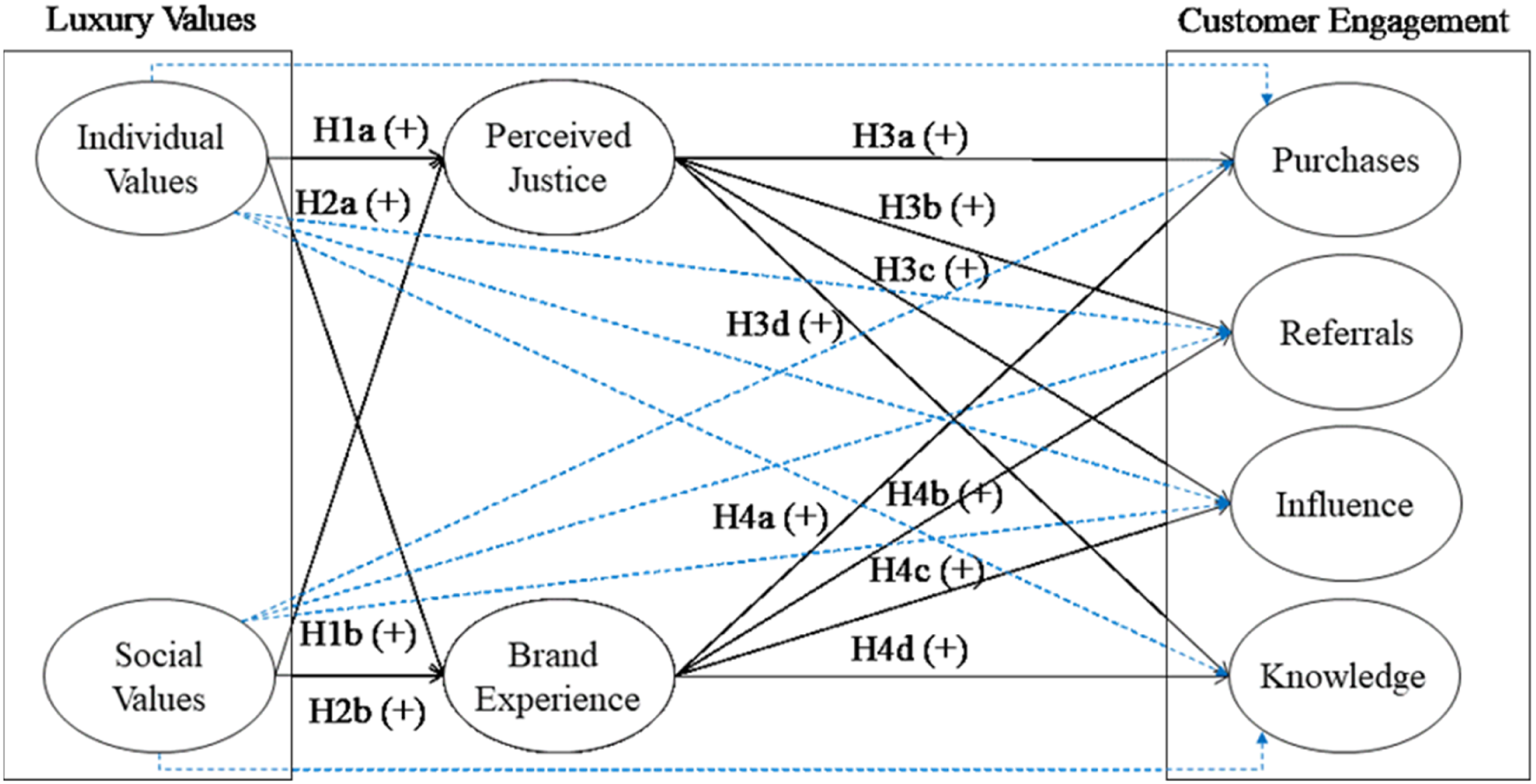
Research model.
Method
Measures
The measures were taken from previous studies (Appendix). The items were measured on a 7-point scale, ranging from ‘‘strongly disagree’’ (1) to ‘‘strongly agree’’ (7). Individual values were measured with three items, whereas social values used eight items adapted from Loureiro and De Araújo (2014). Overall perceived justice was measured using six items, following Kim et al. (2009). Brand experience was measured using seven items adapted from Brakus et al. (2009). Finally, CE was assessed following Kumar and Pansari (2016). Rather than measuring CE as a higher-order construct, it was measured on its four dimensions: customer purchases, customer referrals, customer influence, and customer knowledge. Each dimension was measured with four items.
Sampling frame and data collection
Starting with a list of thermal spa hotels from Termas de Portugal (TravelBI, 2022), the research team checked its characteristics to select those hotels that can be regarded as luxury, following the recommendations of Choi and Kandampully (2019) for luxury hotel characteristics. Then, twenty luxury thermal spa hotel units (almost 40% of the thermal spa hotels located in Portugal) (TravelBI, 2022) were randomly selected from a group of hotels with personalized services, 24 h room service, high-standard facilities, architecture, landscaping, and interior design (Choi and Kandampully, 2019). Following the same procedure as Loureiro et al. (2013), the research team contacted the hotels located across the country to explain the aim of the study, encourage managers to cooperate, and request permission to contact the guests (anonymously) in their databases. It is important for hotel managers to understand consumer behavior in the face of complaints and recovery efforts, so they provided access to databases of customers who had a service failure and recovery experience. Service failures include customer needs and requests that were not responded to immediately and adequately, failure to meet expectations and service delivery errors. Service recovery initiatives included oral and written apologies, immediate or deferred communications, troubleshooting, and amends. Customers were contacted by email, including access to an online questionnaire. A filter question – regarding failure service and recovery at the luxury spa hotel – was added in the first section of the questionnaire, which allowed us to select eligible participants to study. Qualified respondents were those who said they recalled a recent experience of service failure at a luxury thermal spa hotel in the past year, in which they were the recipient of recovery efforts in response to the failure. They were asked to write the name of the hotel and describe the service failure and recovery experience as a measure of recall control. Only qualified respondents proceeded to the remaining questions in the questionnaire. A total of 300 responses were collected (a response rate of 60%), however, only 220 responses were usable for analysis. Data were collected from July 2021 to March 2022.
Of the participants, 58.2% were female and 53.2% were married. In terms of age, 43.2% of the respondents were 18–34 years old, 41.0% were 35–55, and 15.8% were older than 55. Most of the respondents (68.2%) were highly educated, holding at least a bachelor’s degree. In terms of occupation, the largest group (31.8%) was highly qualified professionals (e.g., professors, lawyers, researchers, and doctors), followed by administrative or managerial workers (23.2%), self-employed workers (16.8%), sales or service industry-related workers (15.0%), and technical workers (6.8%).
Findings
Measurement model
A measurement model was built through the PLS algorithm procedure to assess the constructs’ reliability and validity using SmartPLS 3.0 software. PLS is used because it has less restrictive assumptions and is able to estimate complex model with many structural paths without normality assumptions (Hair et al., 2019). First, an item of customer purchases with a loading lower than 0.70 was removed (Hair et al., 2019). Then, the model’s goodness-of-fit was checked. The standardized root mean square residual (SRMR) is the only approximate fit criterion of the model implemented for PLS, with a cut-off value of 0.08 (Henseler et al., 2016); in this study, the SRMR value was 0.05, which shows that the model provided a satisfactory fit. Additionally, another approximate criterion could be the normed fit index (NFI), with a threshold value of 0.90 or higher (Byrne, 2008), but that it has to be used with caution with PLS (Henseler et al., 2016). In this study, the NFI value was 0.80 which is slightly lower than 0.90, but within an acceptable range between 0.5 and 1 (Lohmöller, 1989).
Descriptive statistics, reliabilities, correlations and validities.
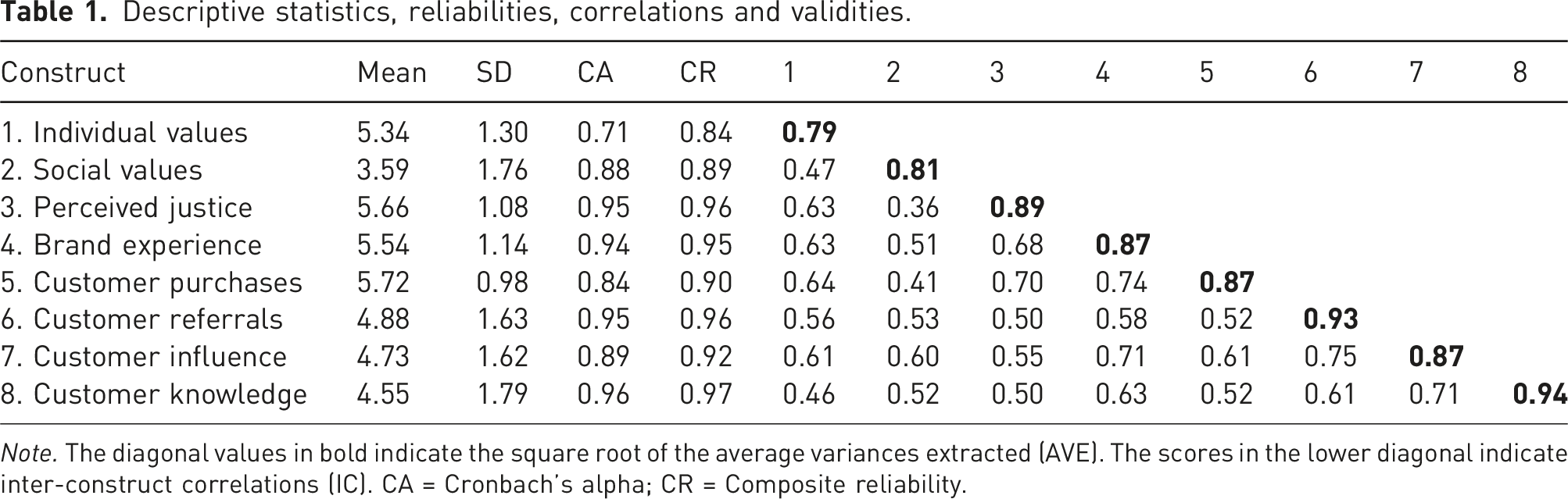
Note. The diagonal values in bold indicate the square root of the average variances extracted (AVE). The scores in the lower diagonal indicate inter-construct correlations (IC). CA = Cronbach’s alpha; CR = Composite reliability.
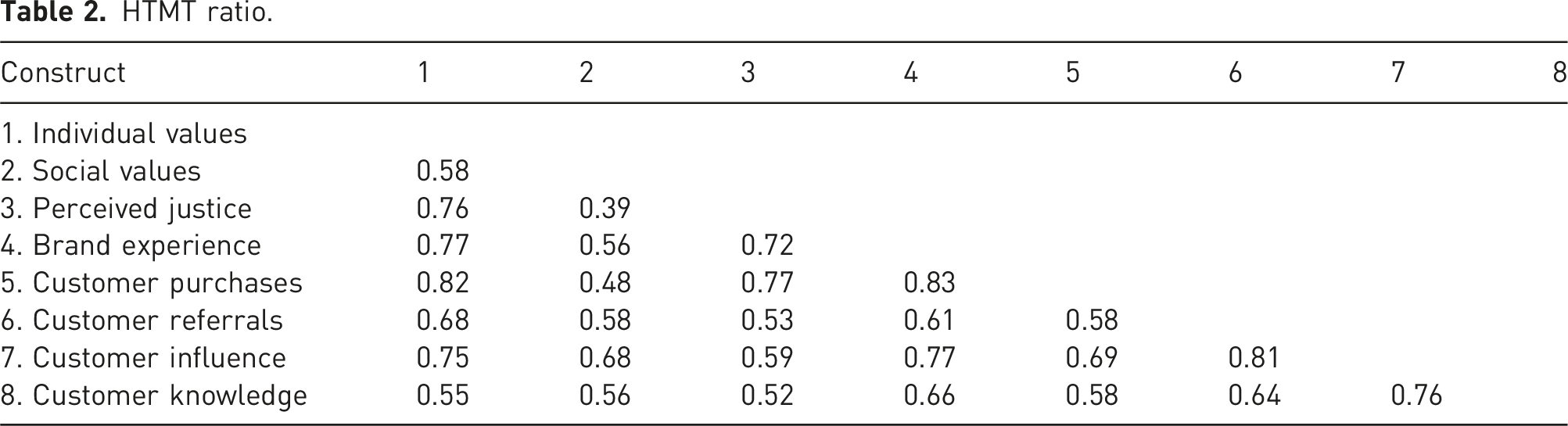
HTMT ratio.
Structural model
Result of structural equation analyses.
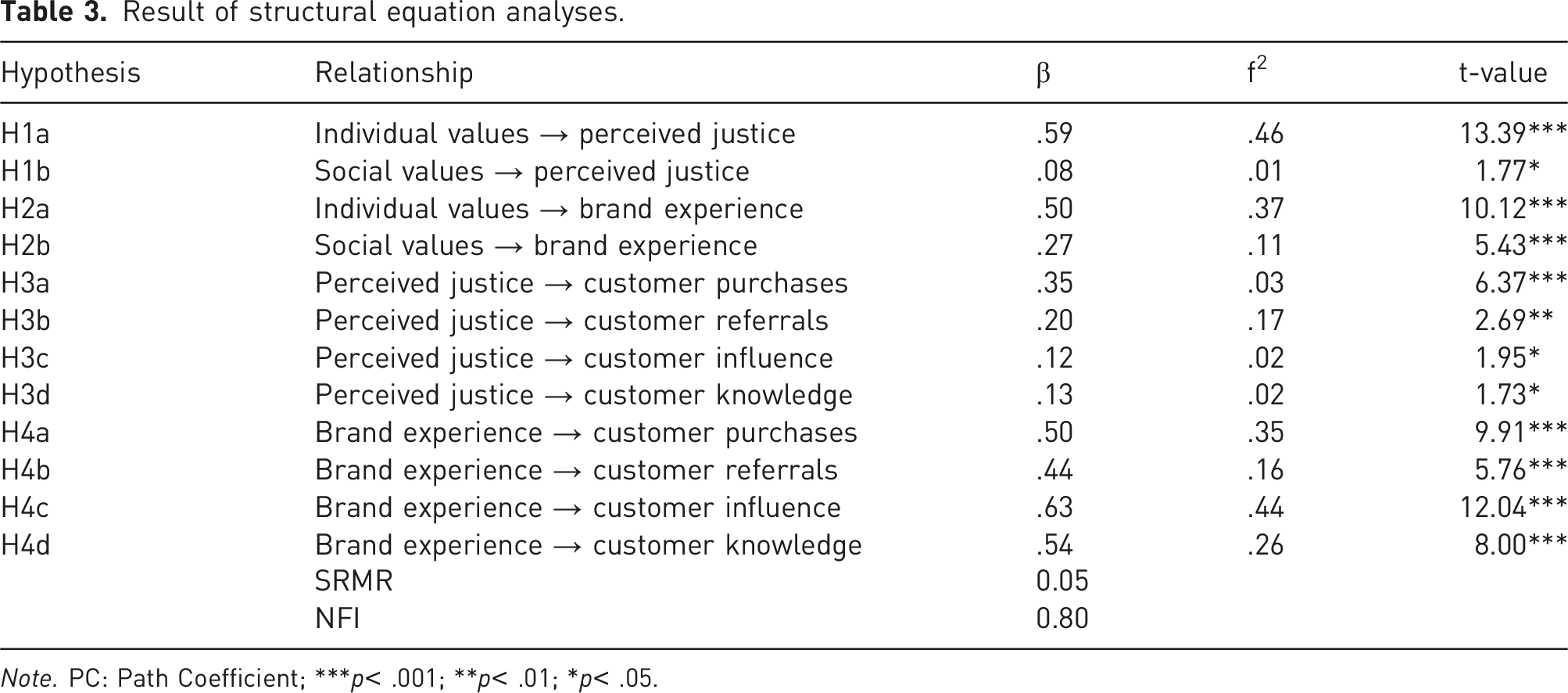
Note. PC: Path Coefficient; ***p< .001; **p< .01; *p< .05.
Mediation analysis
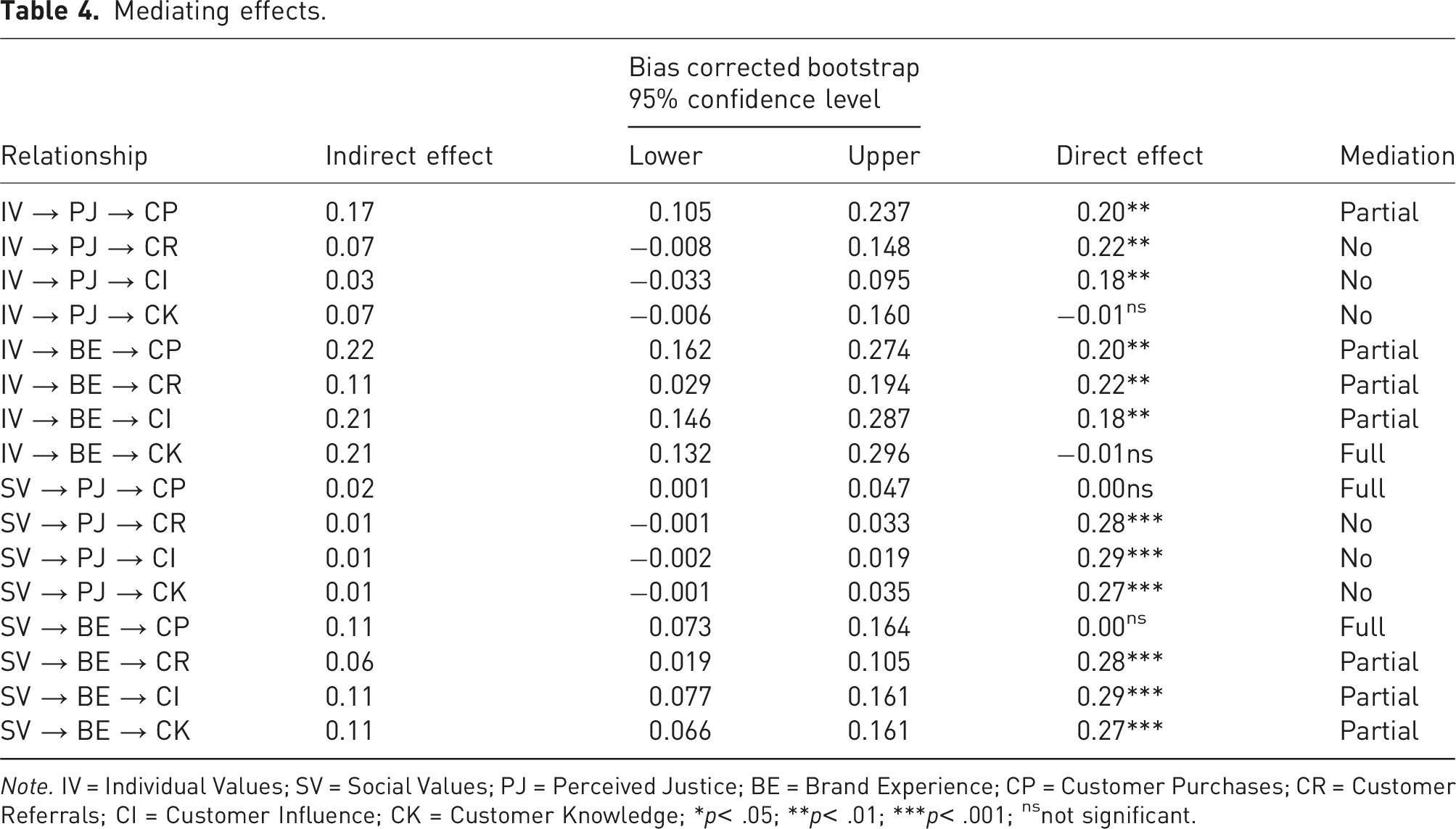
Mediating effects.
Note. IV = Individual Values; SV = Social Values; PJ = Perceived Justice; BE = Brand Experience; CP = Customer Purchases; CR = Customer Referrals; CI = Customer Influence; CK = Customer Knowledge; *p< .05; **p< .01; ***p< .001; nsnot significant.
The results show that perceived justice partially mediates the relationship between individual values and customer purchases since the indirect effect is significant (β=0.17, 95% CI: 0.105, 0.237) and the direct effect of individual values on customer purchases is also significant (β=0.20, p<.01). Regarding the mediating role of brand experience, the results show that individual values directly affect the customer purchases (β=0.20, p<.01), customer referrals (β=0.22, p<.01) and customer influences (β=0.18, p<.01). Thus, brand experience partially mediates the effects of individual values on customer purchases (β=0.22, 95% CI: 0.162, 0.274), customer referrals (β=0.11, 95% CI: 0.029, 0.194) and customer influence (β=0.21, 95% CI: 0.146, 0.287). Individual values have no direct effect on customer knowledge (β=−0.01, p>.05). Therefore, brand experience fully mediates the relationship between individual values and customer knowledge (β=0.21, 95% CI: 0.132, 0.296). Brand experience is a better mediator between individual values and CE than perceived justice.
Similarly, for social values, brand experience is a better mediator compared to perceived justice. Perceived justice only mediates the relationship between social values and customer purchases (β=0.02, 95% CI: 0.001, 0.047). It is a full mediation as the social values have no direct effect on the customer purchases (β=0.00, p>.05). On the other hand, brand experience fully mediates the relationship between social values and customer purchases (β=0.11, 95% CI: 0.073, 0.164) as there is no direct effect of social values on the customer purchases (β=0.00, p>.05). Social values also directly influence customer referrals (β=0.28, p<.05), customer influence (β=0.29, p<.05), and customer knowledge (β=0.27, p<.05). Therefore, brand experience partially mediates the relationships between social values and referrals (β=0.06, 95% CI: 0.019, 0.105), influence (β=0.11, 95% CI: 0.077, 0.161), and knowledge (β=0.11, 95% CI: 0.066, 0.161).
Conclusions and implications
Theoretical implications
This study makes a novel contribution to the literature by exploring the influence of luxury values (individual and social) on CE after recovery from service failure in the context of luxury hotels, which expands knowledge about the effects of perceived value on consumer behavior. Examining the link between luxury values and CE after managing a service failure recovery in the luxury hospitality context, this study attempts to fill an empirical gap in the hospitality literature and contribute to enhancing understanding of the mechanism of how luxury values can explain guests’ engagement. The present study proposes a framework that luxury values (individual and social) can explain guests’ engagement through perceived justice and brand experience. Regarding the first research question, the findings show that luxury values (individual and social) influence CE (purchase, referrals, influence and knowledge) after a service failure recovery in the luxury hotel industry, although the influence is only direct on some of the CE dimensions. Therefore, about the second research question, it can be argued that both perceived justice and brand experience partially mediates the relationship between luxury values and customer engagement in this context. Overall, the results show that luxury values affect perceived justice and brand experience, which, in turn, help in building CE. Hence, four aspects need to be further discussed.
First, both types of values—individual and social—are positively related to perceived justice and brand experience. This result extends the findings from previous studies that focused on perceived justice (e.g., Kim et al., 2009; Maxham and Netemeyer, 2003) and brand experience (e.g., Ahn and Back, 2018; Loureiro, 2014). Values are beliefs that guests bring to their experiences when they stay at a luxury thermal spa hotel. Depending on such values, guests judge the service provided, and the justice of remedying a failure occurs. Prior research has clearly demonstrated that the perception of justice affects the emotional state of the guest/tourist and the level of satisfaction (e.g., Chebat and Slusarczyk, 2005; Mattila and Patterson, 2004; Wen and Geng-Qing Chi, 2013). The current study adds to the literature by showing values as affecting the perception of justice. At the same time, values influence the way guests experience a hotel. Guests’ sensations, feelings, thoughts, and actions (Ahn and Back, 2018) are lived having values as an evaluation mechanism.
Second, the results show that brand experience is a stronger antecedent of CE than perceived justice. These results offer support to Ahn and Back’s (2018) findings that brand experience can enhance cognitive, affective, and behavioral engagement. Apart from brand experience, this study also displays that perceived justice is positively related to CE. Thus, this study extends the established findings within the literature that perceived justice can increase satisfaction (e.g., Siu et al., 2013) or contribute to a company’s performance (Tax et al., 1998). As experiences, perceived justice can trigger behaviors and engagement with a hotel. Roy et al. (2018) note that perceived justice can occur from the overall judgment of customer-provider relationships and not only from service failure. This reinforces the relevance of a positive judgment to engagement in a service failure and recovery context.
Third, values can directly affect the engagement process. From the findings, individual values alone do not directly influence customers’ knowledge, while social values alone do not directly influence customers’ purchases. The sensation of power to achieve what guests desire and their self-identification with a hotel environment and service seems not to be enough to lead them to be proactive in providing feedback/suggestions to hotel managers. Yet, when guests consider that giving feedback/suggestions will confer on their social position and status, then they will be engaged in providing such comments. By way of contrast, identification with a hotel’s features and service can be more effective as a reason to return than the motive of just impressing others (Kanagaretnam et al., 2009).
Finally, although luxury values can directly affect CE, considering the mediating effects of perceived justice and brand experience on the relationship between luxury values and CE is a pioneering proposal that represents a valuable contribution to the hospitality literature. Particularly relevant is the role of brand experience as a mediator in the relationship between individual values and customers’ knowledge and the partial mediation of perceived justice in the relationship between individual values and guests’ purchases. The vast majority of prior research on brand experience examined its impact on customer satisfaction and brand loyalty (Khan and Rahman, 2015). Other extensively examined other outcome variables including purchase intention (Gabisch, 2011), brand recall (Bauman et al., 2015), and brand equity (Kumar et al., 2013). We contribute to the literature by analyzing the impact of brand experience on consumer engagement, an outcome of brand experience that is important, yet rarely studied. In addition, only a few studies consider brand experience as a mediator (Khan and Rahman, 2015), including studies on the mediating role of brand experience in the relationship between customer engagement and brand equity (Chaohui Li and Qingjuan, 2014) and in the relationship between customer engagement and brand loyalty (Danhong Cai and Gong, 2016). We complement previous research by focusing on the importance of brand experience as a mediator between luxury values and customer engagement.
Regarding perceived justice, most of the previous studies examined the mediating role of perceived justice in the relationship between firms’ recovery efforts and consumer responses. Previous research shows that perceived justice mediates the impact of overcompensation on negative word-of-mouth (NWOM) intention (Noone, 2012). It also mediates the relationship between firms’ service recovery efforts and the customers’ forgiveness (Hill and Boyd, 2015) and customer loyalty (Mody et al., 2020). We advance the literature on the perceived justice in the service recovery context by examining more antecedents from consumers’ perspective (i.e., luxury values) and showing that customer perception of justice after service recovery efforts mediate the impact of individual and social values on customer purchases.
Managerial implications
Managers should first focus on individual values by designing a well-fitting experience and communicating the individual benefits of the service (relaxing, enjoyable, etc.). Moreover, although social values are weaker drivers, marketing strategies should also attract the attention of upscale market segments, not only potential customers but also family, friends, and colleagues, as customers take their opinions into account.
Second, managers should heighten the stimuli toward the four dimensions of brand experience (i.e., sensory, affective, intellectual, and behavioral). They should prepare experiences that aggregate emotions, affections toward the hotel and employees, and all the activities that can be experienced during the stay. Spa thermal hotels should also stimulate curiosity for the novelties and new activities provided, leading guests to actively think about and participate in such activities. For instance, using thermal water combined with other natural products differentiates and personalizes the activities while stimulating guests’ minds and bodies with smells, colors, textures, or flavors. Menus can be prepared with main courses that are linked to local history, and the health benefits of water can be creatively explained.
Third, as perceived justice and brand experience mediates the relationship between individual values and customer engagement, it is important for managers to ask for customers’ feedback regarding their perceptions of brand experience on a regular basis. It is also crucial to gather customer input regarding perceived justice after handling a service failure to develop a strategy for further engagement with the customer. For brands that have not been able to give a maximum experience (i.e., new luxury hotels and hotels with poor customer experience reviews), managers are urged to boost the perceived justice following a service failure. This can be accomplished by establishing a better policy (e.g., offering something unique and exclusive as a service recovery compensation), providing employees with greater flexibility to respond to service failures, and educating employees to demonstrate greater empathy and compassion while handling customer complaints. For brands that are perceived as providing a very good brand experience for customers, after handling service failures, managers are encouraged to not only engage customers by offering future services, but also to encourage customers to share their luxury brand experience on social media, refer their friends and family to the hotel, and provide suggestions to improve the performance of the brand.
Limitations and further research
The present study is not without its limitations. First, this study is limited to the context of luxury thermal spa hotels. It would be interesting to examine whether the model could be replicated for contexts with different cultural backgrounds and to analyze how demographic factors are associated with customers’ values (Ahn, 2020). Second, this study measures perceived justice and brand experience as unidimensional constructs. Further studies could measure these two constructs as multidimensional variables. It would be interesting to know which dimensions of brand experience (see Brakus et al., 2009; Lin and Wong, 2020) contribute more toward building higher CE. Similarly, it would be interesting to know which type of justice (i.e., procedural, distributive, or interactional) would lead to stronger CE. Finally, in this era where we are living in a different reality due to the Coronavirus, it will also be interesting to analyze the perception of safety and cleanliness of luxury thermal spa hotels. This perception could also act as a moderator in a situation of service failure.
Footnotes
Declaration of conflicting interests
The author(s) declared no potential conflict of interest with respect to the research, authorship, and/or publication of this article.
Funding
This study was supported by the Plan Andaluz de Investigación, Desarrollo e Innovación de la Junta de Andalucía (Spain) under grant number Grupo SEJ-567 and by Universitas Indonesia (Indonesia) under grant number NKB-1088/UN2.RST/HKP.05.00/2022.
