



Abstract
This study examines the effects of negative service cues on brand hate and hotel switching among five-star hotel guests. Data were collected via an online survey from guests of the five top-rated five-star hotels in Syria. A quantitative approach was employed, utilizing PLS-SEM to test the raised hypotheses. One-way ANOVA was used to compare switching intention across hotels, and logistic regression was used to quantify an actionable risk metric. Findings indicated that perceived deceptiveness, experiential dissonance, financial risk perception, and discrimination significantly influence brand hate. Brand hate mediates between these factors and switching intention. The proposed framework model advances theoretical contributions to the hospitality literature on predictors of negative service indicators. It also provides hotel managers with actionable recommendations for the competitive luxury market.
Introduction
Luxury hospitality depends on the ability to offer perfect service, as this is the way to preserve the brand’s prestige and ensure the guest’s commitment (Jung and Baloglu, 2025). The high customer expectations require consistent delivery of the guaranteed service experiences because discrepancies in service promise can diminish guest trust and cause dissatisfaction among guests (Al-Hyari et al., 2023). Service failures may lead to strong negative emotional reactions, including brand hate, prompting guests to switch to other upscale brands and hurting profitability. The mechanisms governing service failures that cause systemic attrition are poorly investigated (Touni et al., 2022). Nevertheless, the forces behind the growing service failures in the market are unclear, and they fail to inform focused strategies to curb guest defects in high-end markets.
Syria’s luxury hotel industry is operating in a post-war recovery, characterized by property damage and interruptions in electricity, fuel, and staffing, all of which increase the risk of service failure (Enab Baladi, 2022). In this low-trust environment, operational adjustments can be seen as unfair, and guests judge service based on the quality of outcomes, the fairness of procedures, and the treatment of staff. Wartime inflation and murky pricing have also made people more sensitive to value for money, so that financial failures are more likely to be interpreted as opportunistic or deliberate. Because only a limited number of Syrian five-star hotels are impeccably up to international standards, failures in this segment are more salient and more consequential for brand equity (Daher, 2024). As new hospitality investments are announced and demand is expected to grow, the Syrian context is a relevant setting for analyzing how service failures spiral into brand-level hate and switching.
Recent studies investigated service failures and negative brand responses in the hospitality and service industries, including dissatisfaction, negative WOM, avoidance, and other undesirable reactions from customers (Akarsu et al., 2023; Alnawas et al., 2023; Sarkar et al., 2021). In the luxury hospitality field, previous studies have also identified issues with service quality and dissatisfaction related to failures, but they have primarily focused on general service issues or single antecedents rather than a differentiated set of failure appraisals (Padma and Ahn, 2020; Wu et al., 2023).
Brand hate research has identified some antecedents, such as negative brand experiences and corporate-related triggers, but has largely treated brand hate as an outcome rather than a mechanism linking qualitatively different service failure appraisals to switching behavior (Attiq et al., 2023; Roy et al., 2022; Taqi et al., 2025). In the case of luxury hospitality, service failures are not psychologically equivalent, as some reflect expectation disconfirmation, while others reflect perceived unfairness (Oliver, 1980; Tax et al., 1998). However, previous research has not adequately explained how these different appraisal routes converge through brand hate and result in the same downstream consequence: switching intention (Alnawas et al., 2023; Curina et al., 2020; Sarkar et al., 2021).
This study aims to develop and validate a conceptual model that explains how negative service cues lead to brand hate and hotel-switching intention.
Thus, two analyses will be conducted to examine the relationships between variables and compare hotels based on switching intentions. Results are expected to contribute value to the theoretical literature on service failures and hotel switching intention, extending beyond traditional theories. It is also a practical tool for hotel managers to retain guests and profits in a challenging luxury sector market.
Literature review and hypotheses development
Theoretical foundations
This research integrates two perspectives: expectation–disconfirmation theory (EDT) and justice theory. EDT, introduced by Oliver (1980), explains evaluations in terms of comparisons between the level of performance (as perceived by the guest) and prior experiences. Negative disconfirmation occurs when performance falls short of expectations, leading to negative emotional responses. Justice theory (Tax et al., 1998) is based on the premise that individuals evaluate service encounters in terms of the fairness of outcomes, procedures, and interpersonal treatment, which then shapes their evaluations of the encounter and their future behavior as guests.
Together, these theories justify focusing on expectation shortfalls and perceived unfairness as mechanisms linking service failure to negative responses.
These theories have been used widely in the hospitality context. For example, EDT has been adopted to assess how hotel pricing strategies shape perceived value and influence hotel guest reviews through disconfirmation mechanisms (Lin et al., 2024), and to investigate how review dispersion and disconfirmation of expectations impact review outcomes for hotels (Zhang et al., 2021). While Justice theory was applied to analyze the guest values and engagement mediation by perceived justice and brand experience, and to evaluate the effects of perceived distributive, procedural, and interactional justice on satisfaction for hotel and restaurant experiences through the lens of service recovery (Chen and Kim, 2019).
To develop an integrated model of service failure antecedents to brand hate. This study focuses on four essential dimensions derived from the principles of EDT (Oliver, 1980) and Justice Theory (Tax et al., 1998), which represent the primary channels through which service failures occur: promise integrity (perceived deceptiveness), delivery quality (experiential dissonance), value fairness (financial risk perception), and respectful treatment (perceived discrimination). More precisely, deception and dissonance illustrate the promise-performance deficit characteristic of EDT, and financial risk and discrimination elucidate failure to meet levels of distributive and interactional justice, respectively.
Service failures in luxury hotels
Service failure appears when the service delivery does not meet guest expectations, creating performance-expectation gaps, leading to the development of negative evaluations/behavior (Sahaf and Fazili, 2024). The services quality characterizes luxury hotels; nevertheless, service failures in such hotels undermine the quality and essence of the category, i.e., high-quality service, customization, and a high level of emotional experience (Jung and Baloglu, 2025). They confirm a violation of the brand promise, eroding trust and loyalty and leading to significant financial losses. In luxurious operating environments, this involves functional failures, such as an air conditioning system that is not working, and expressive or affective failures, such as a lack of individualization/an inability to achieve the promised ambiance (Hemthong et al., 2025).
Empirical studies indicated that low room quality and inadequate relations with employees are the primary causes of dissatisfaction and negative WOM among guests of luxury hotels (Padma and Ahn, 2020). Other studies have observed that cleanliness issues in room settings are most common in five-star environments, significantly affecting sentiment in reviews and satisfaction rates (Tengilimoğlu, 2025). A study by Wu et al. (2023) found that the lack of delivery service and price-related factors are negatively correlated with guest ratings, further highlighting not only procedural flaws but also the inability to provide value. Moreover, guests who experience negative events are also more likely to be more strongly connected to perceived betrayal and active brand hatred, increasing the likelihood of retaliatory behavior (Rasouli et al., 2025). Research also emphasized that the extent of failure is a significant factor in brand forgiveness, but personality attributes, such as attachment patterns and reasoning tendencies, moderate this relationship (Alnawas et al., 2023). To exacerbate these problems, the incompetence of service recovery and the modern hyperbole of negative experiences shared on social media platforms profoundly affect the perceived quality of services (Akarsu et al., 2023). These interrelated dynamics emphasize the vital importance of all aspects of failure management in retaining guest relationships within the luxury hospitality industry.
Hotel brand hate
Brand hate transforms service failures into revenue- and reputation-damaging behaviors, such as avoidance, negative word of mouth, and non-purchase (Farhat and Chaney, 2021). Brand hate is a predictor of guest loss and complaints due to the bad service and the inability to connect the promise of a brand with what the guest experiences (Mushtaq et al., 2024). Higher expectations in the context of hospitality compound these effects, and the construct, therefore, is central in strategic recovery planning and loyalty management (Aziz and Rahman, 2022).
Brand hate refers to a hostile and unremitting attitude towards a brand that encourages distancing and sanctions beyond dissatisfaction (Curina et al., 2020). Failures felt as identity-expressive in luxury hotels lead to intensified avoidance, complaining, and exit behavior, and reinforce the route between adverse experiences and antagonistic motives (Pantano, 2021). Negative experiences, unfairness, and misaligned values are the primary drivers of brand hate in hotels, particularly in the luxury sector, where high guest expectations are prevalent. Roy et al. (2022) discovered that brand personality contradictions to those of consumers cause hate, which results in avoidance and complaints. Incivility of employees and substandard services promote brand hate in restaurants, which makes the opposition stronger and less forgivable (Mushtaq et al., 2024).
According to Zhang et al. (2025), destination brand hate triggers, such as operational vices, unclear pricing, and unfulfilled promises, are similar to hotel complaints, including undisclosed charges or unadvertised luxury services. Examples of antecedents include experience, individual, and context-related factors, which can be applied to hotels (Farhat and Chaney, 2021). Rasouli et al. (2025) discovered that betrayal in a luxury hotel results in passive and active hate, which mediates avoidance behaviors and attack-like behaviors, particularly among guests who had negative experiences in the past. Brand hate drives retaliation and reduced revisit intentions, with peer perceptions moderating these effects. Some negative attitudes and boycotts have been reported in hotels (Farhat and Chaney, 2021). Brand hate plays a mediating role in guests’ behaviors at luxurious hotels, and high expectations amplify its impact.
Perceived deceptiveness and hotel brand hate
In the hospitality industry, perceived deception occurs when guests believe a hotel has misrepresented its offerings (Hassan et al., 2024). This perception stems from either unnecessarily luxurious amenities over-promised or the discrepancy between guests’ perceived expectations and actual experience (Santos et al., 2024). This kind of deception weakens trust which is considered an important driver of guest satisfaction and engenders negative feelings (Rita et al., 2025). Feedback suggests that consumers strongly dislike the hotel brand and are highly displeased. These behaviors can be found in bad-mouthing, public criticism, and avoiding the brand (Attiq et al., 2023). Trust violations and guest frustration are mechanisms viewed as deceptive that can lead to brand hatred. Guests get angry and feel betrayed when they discover that they have been misled and trust has been violated (Aziz and Rahman, 2022). For instance, unmet expectations, such as a promised ocean view replaced by a parking lot, increase frustration when you believe the cause is a deliberate act rather than an error. Previous studies in the hospitality sector examined the antecedents and outcomes of brand hate (Mushtaq et al., 2024) looked the role of perceived deceptiveness in influencing brand hate. Addressing this relation will underscore the importance of hotel managers’ high transparency and accurate marketing to safeguard brand reputation and prevent disastrous results. Thus, we hypothesize.
Perceived deceptiveness positively influences hotel brand hate.
Perceived discrimination and hotel brand hate
Perceived discrimination is defined as “distinguishing judgments, or actions in favor of or against a person/group based on characteristics such as race, ethnicity, religion, gender, four sexuality/disability” (Oskooii, 2020). These perceptions shape hotel guests’ loyalty and beliefs in the hospitality sector. Anger, humiliation, and social exclusion are common emotions experienced by the guests who are not served equally based on their personal features (Min and Joireman, 2021). Many people see discrimination as a personal attack on their identity and dignity (Koburtay et al., 2025). When the source of discrimination is hotel staff, guests’ anger may lead to negative word of mouth that harms the hotel’s reputation (Nagar et al., 2022). Perceptions of unfairness come together to produce increasingly negative attitudes toward the hotel brand. When hotel employees deny service or treat guests differently because of their attributes, guests are likely to interpret this as willful and unfair (Peng et al., 2021). Accordingly, any violation of expectations leads to cognitive dissonance, which translates to disappointment and indignation. Few studies have examined discrimination against hotel guests (Nagar et al., 2022). No study has explained how perceived discrimination develops brand hate in the hospitality sector. Hence. We hypothesize.
Perceived discrimination positively influences hotel brand hate.
Experiential dissonance and hotel brand hate
Experiential dissonance refers to the emotional discomfort that guests experience when the services and environment provided by the hotel fail to meet the expectations established by the hotel brand (Järvi et al., 2020). Such dissonances frequently appear when the brand makes a promise and the experience of the guests is not connected to it, particularly in terms of its emotional appeal or sensory experience (Pelet et al., 2021). When guests develop such a discrepancy in expectations, they can become frustrated or betrayed, which can fuel dissatisfaction into a negative emotion, even hate towards a brand (Jamal et al., 2023). The sense of betrayal resulting from unmet expectations causes mistrust in the brand and its integrity. This resulted in the undesirable word-of-mouth and reputational consequences (Ahmad and Guzmán, 2021). The experiential dissonance hurts guest dissatisfaction, brand perception, and emotional disengagement within the marketing context (Anninou et al., 2024). Although Experiential dissonance has received sufficient literature coverage in the marketing context, its negative impact on guest-brand relations has been mentioned (Roy et al., 2022). To date, no research has examined the existence of experiential dissonance and brand hate within the hospitality industry. Thus, we hypothesize that.
Experiential dissonance has a positive influence on hotel brand hate.
Financial risk perception and brand hotel hate
Financial risk perception refers to the guest’s belief that the hotel may charge more than the value provided, impose hidden fees, charge the same fee as a competitor, or provide less value (Quan et al., 2022). The financial risk may affect powerful affective reactions, especially when guests feel exploited, leading to powerful negative feelings, frustration, distrust, and betrayal (Rasouli et al., 2022). The consequences of financial risk are more profound than simple dissatisfaction, as they generate a subtle, high-quality sense of injustice and personal loss, alongside adverse effects such as brand hate (Roy et al., 2022). Previous research has conceptualized financial risk perception as a precursor to brand distrust and negative brand evaluations (Jankuhn et al., 2025). So, for instance, negative emotions toward the brand are likely to increase when guests attribute financial injustice to the hotel’s actions. Few studies have examined financial risk in the hospitality sector (Wieczorek-Kosmala, 2021). However, no research has investigated the relationship between financial risk and brand hate in the hospitality sector (luxury hotel). Therefore, we hypothesize.
Financial risk perception has a positive influence on hotel brand hate.
The mediating role of brand hotel hate
Guest retention represents a key element of long-term success in the hospitality industry. While negative hotel experiences lead to switching intention, previous studies indicated that dissatisfaction is insufficient to explain intention to switch a hotel service (Haase et al., 2022; Lee and Kim, 2022). Brand hate tends to develop from several service failures or an especially emotional service failure, resulting in a lasting negative affective state (Sameeni et al., 2024). Consumers seek other options to avoid dissatisfaction and emotional harm once emotional bonds to the brand are broken (Bansal et al., 2004). Consequently, brand hate is an emotional bridge between service failure and switching intentions, turning accumulated dissatisfaction into sustainable behavior (repurchase intent). Previous studies have established the mediating role of brand hate in the relationship between negative WOM and avoidance behavior. No study to date has examined brand hate as a mediator between negative service attributions and switching intention in the hospitality sector (luxury hotel). Therefore, we hypothesize.
Brand hate mediates the relationship between the dimensions of failure service and switching hotels.
Figure 1 presents the conceptual model of the study. Conceptual model.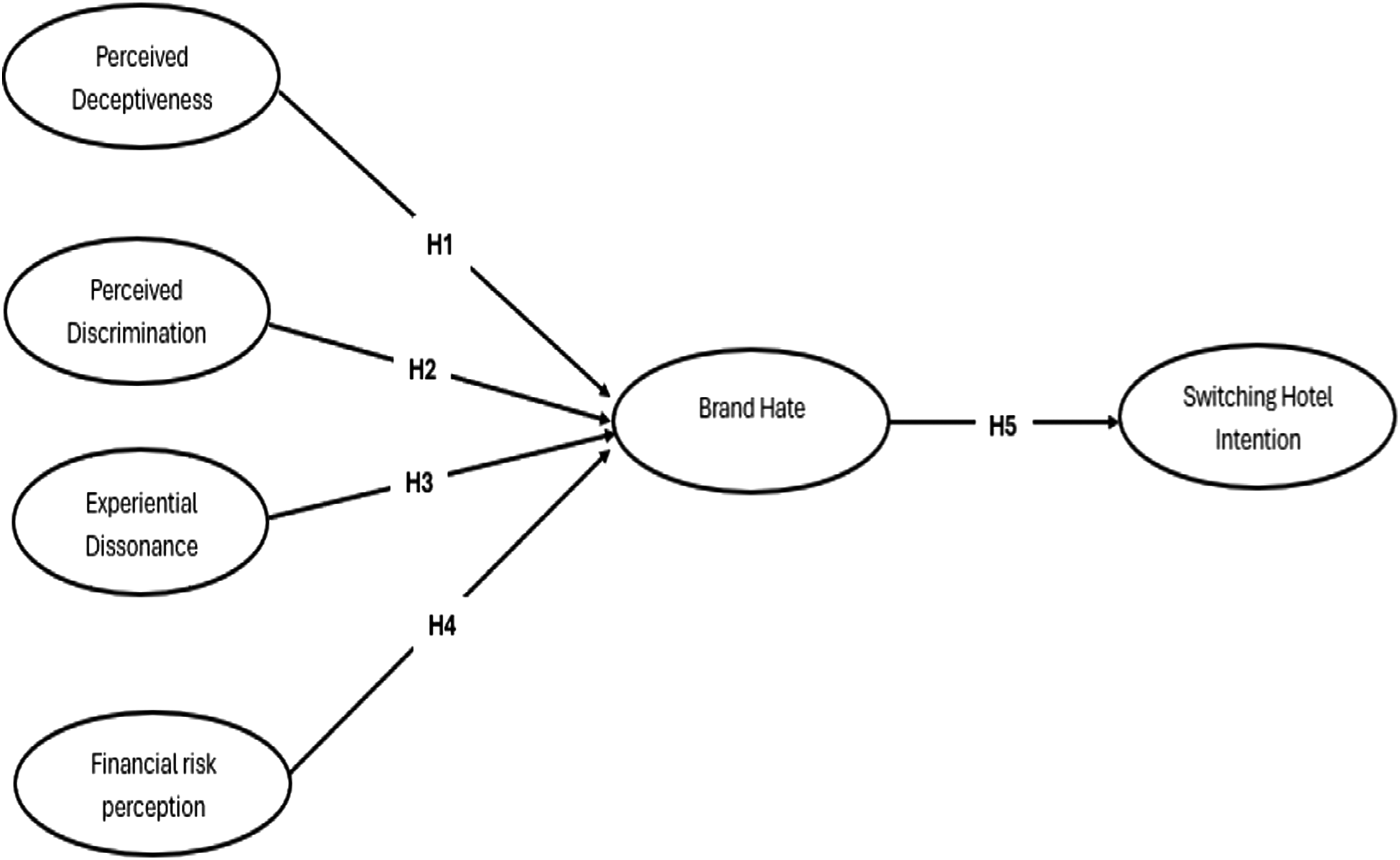
Methodology
Structural analysis
Research Design
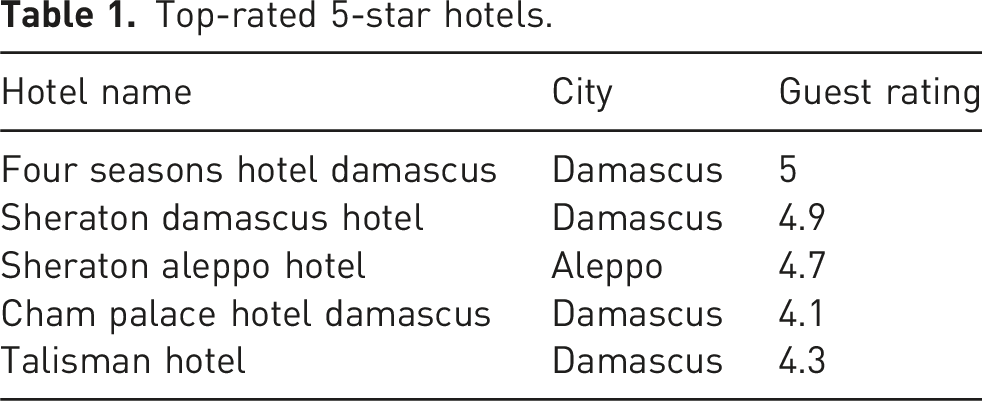
A quantitative, cross-sectional survey was administered to guests of Syria’s top five-star hotels. Partial least squares structural equation modeling (PLS-SEM) was used to test the hypothesized relationships between service failure dimensions, brand hate, and switching intention.
Data Collection
Top-rated 5-star hotels.
Measurements of constructs
All measurement scales were adapted from validated measures in previous literature. All constructs were measured on a five-point Likert scale. For the service failure dimensions and brand hate, response anchors ranged from 1 (strongly disagree) to 5 (strongly agree); whereas switching intention was also measured on a five-point scale (1 = very unlikely to 5 = very likely). The bilingual survey (in Arabic and English) was conducted using an online platform that allowed language selection via a drop-down menu at the start. Each construct was modeled as reflective, consistent with previous theoretical operationalization. Sources of each scale include Perceived Deceptiveness (Liu et al., 2020), Perceived Discrimination (Oskooii, 2020), Experiential Dissonance (Choi et al., 2022; Van Dijk and Kirk, 2007), Financial Risk Perception (Chan and Mogilner, 2017), Brand Hate (Hegner et al., 2017), Switching Intention (Dalimunthe, 2021; Sloot and Verhoef, 2008).
Pilot test
A pilot study was conducted before the large-scale survey, involving 35 individuals who had stayed in luxury hotels within the last 2 years. The researcher used convenience sampling to recruit participants via social media platforms and identified people with whom they had connections. The pilot study had three main functions: to test the clarity of the items and ensure adequate reliability of the question/message structure and response scale. Semantic minor modifications to the content were done at the team level as per the evaluation comments.
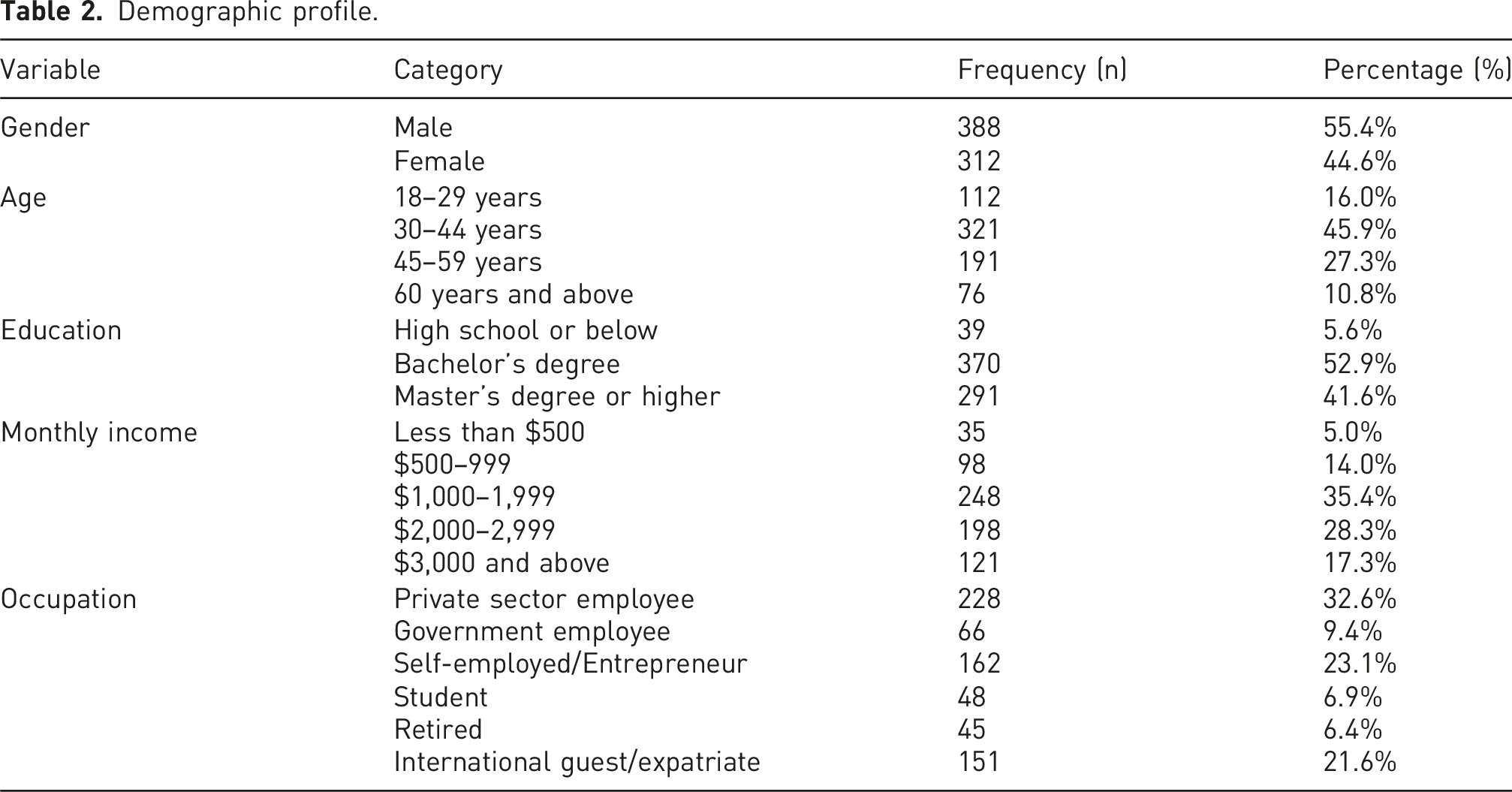
These hotels in Syria collaborated with the researcher on data collection. They contacted only those guests who had consented to marketing/research communications, in accordance with informed consent and ethical data privacy standards. They received 891 responses of 2,150 survey invitations, a 41.4% response rate. After ruling out cases where the answers were not provided or showed an uneven distribution, the analysis was performed on 700 cases, yielding a final valid response rate of 32.6%. A late-early respondent analysis was conducted to assess the possibility of non-response bias (Armstrong and Overton, 1977). These responses were grouped into two categories based on the time of submission (early or late). All key variables (e.g., switching intention or brand hate) were tested using independent-samples t-tests. The assessment criteria showed no significant difference (p > 0.05), indicating that nonresponsiveness did not affect the dataset’s validity.
Data analysis
This study adopted PLS-SEM. It offers a proper tool for connecting the theoretical framework and empirical data (Becker et al., 2023). It suits complex models with multiple latent constructs and indicators, and avoids strict distributional assumptions (Hair et al., 2019). Our key constructs are reflective and capture sensory and experiential attributes of the hotel encounter through respondents’ perceptions. PLS-SEM yields consistent path estimates and maximizes explained variance in reflective measurement models (Hair et al., 2020). The present study assessed the proposed conceptual model using SmartPLS 4, a software package for PLS-SEM analyses.
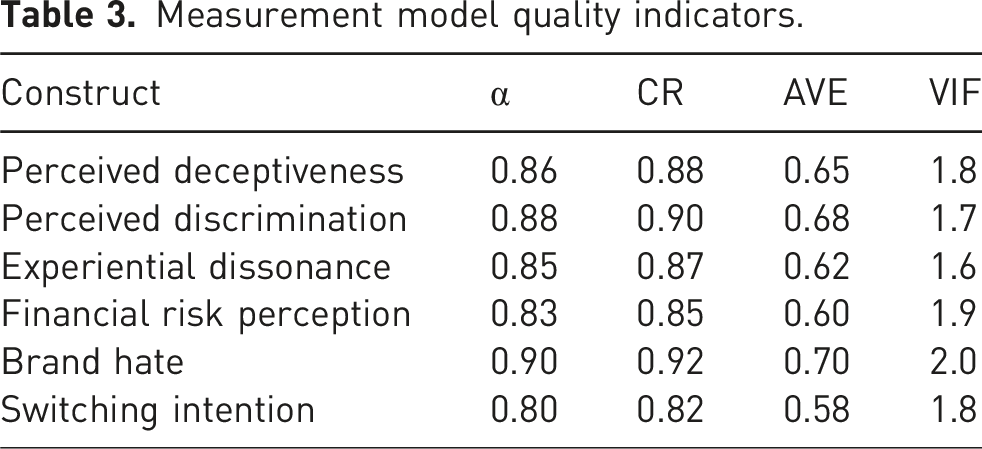
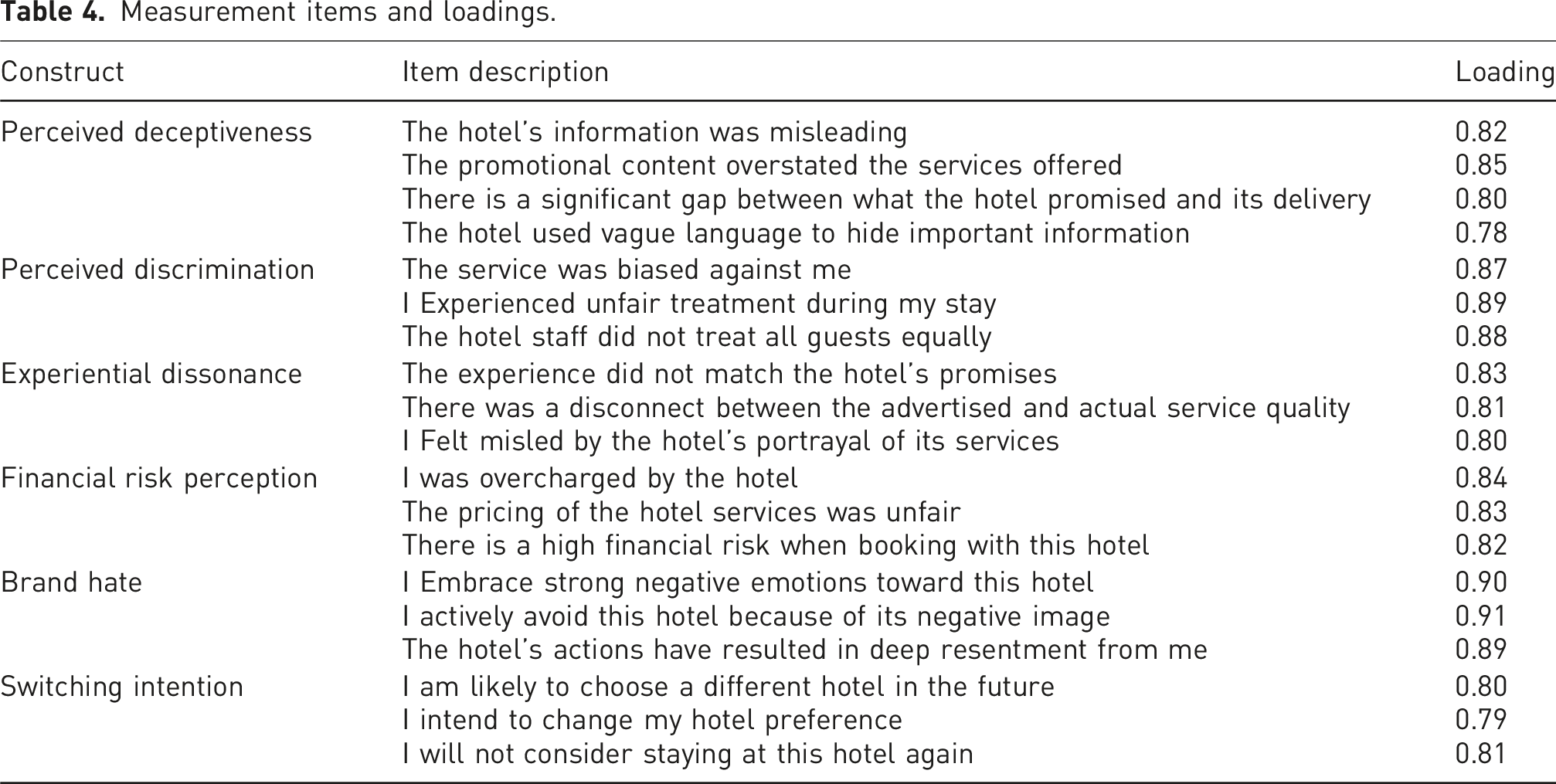
Following Hair et al. (2020), reliability was examined using Cronbach’s alpha (α) and composite reliability (CR) (thresholds: α > 0.70; CR >0.70). Convergent validity was established (loadings> 0.70; Average Variance Extracted (AVE) > 0.50). The Fornell-Larcker criterion was utilized to evaluate discriminant validity (threshold: √AVE > inter-construct correlations) (Fornell and Larcker, 1981). Also, the multicollinearity was checked with the help of the Variance Inflation Factor (VIF), (thresholds, inner VIF ≤3) (Hair et al., 2019).
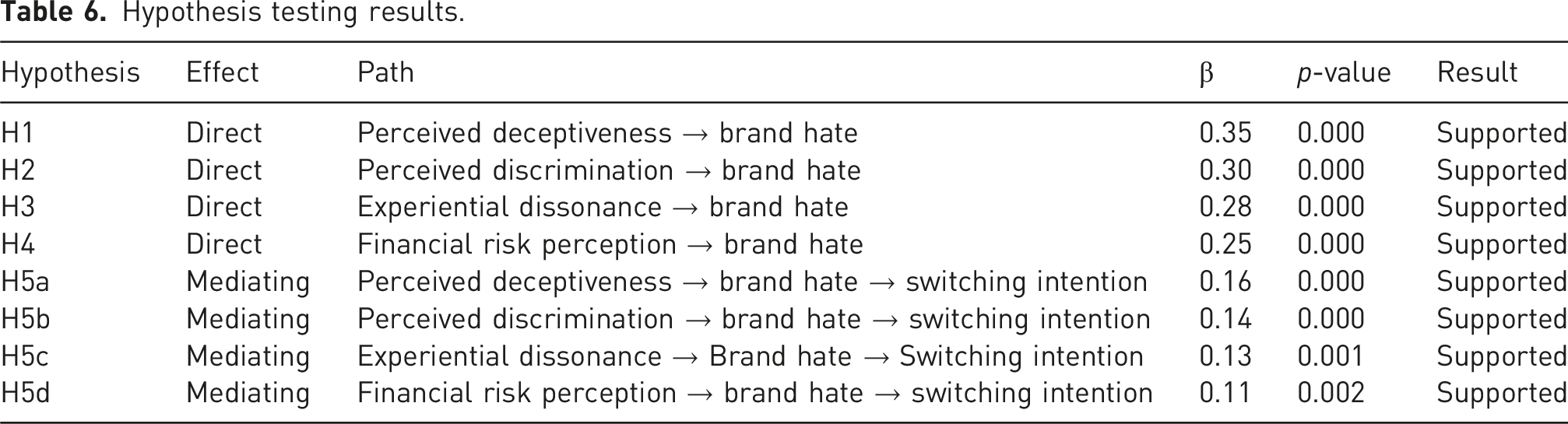
The structural model was tested via bootstrapping with 5,000 resamples to assess the hypothesized relationships.
Results
Sample profile
Demographic profile.
Measurement model results
Measurement model quality indicators.
Measurement items and loadings.
Fornell–larcker criterion.
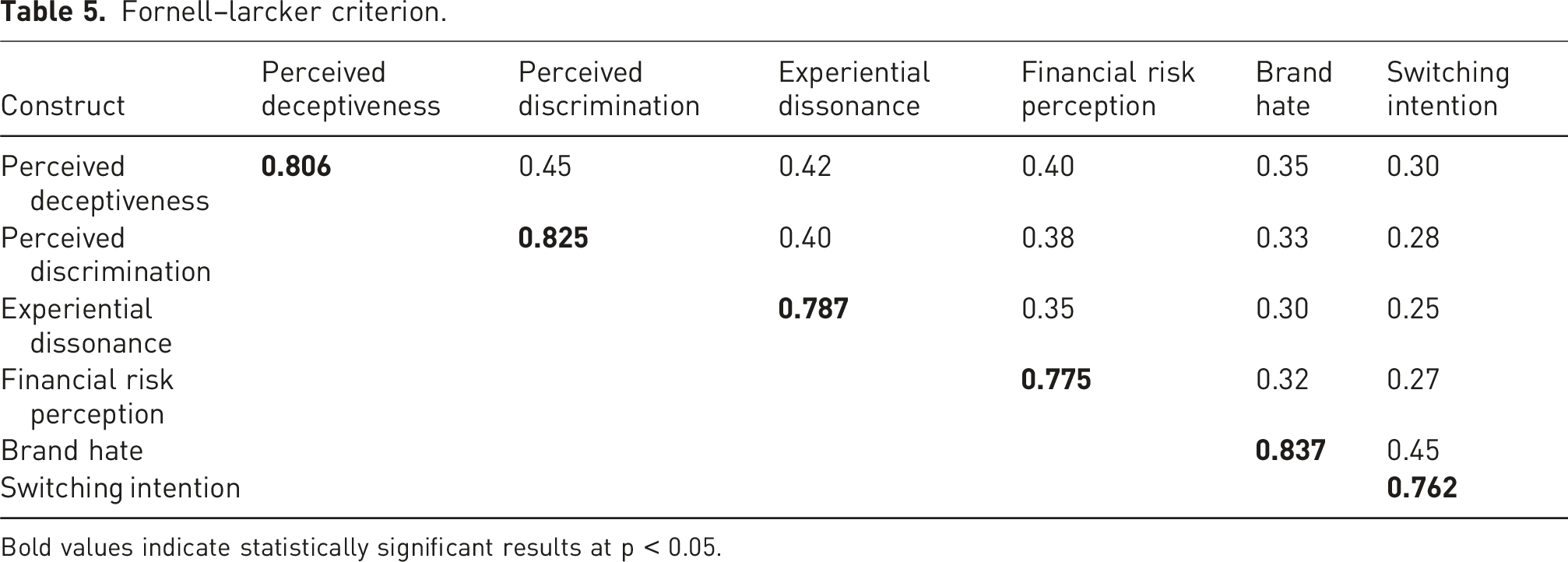
Bold values indicate statistically significant results at p < 0.05.
Structural model and hypothesis testing
The structural model explained 55% of the variance in Brand Hate (R2 = 0.55) and 40% of the variance in Switching Intention (R2 = 0.40), as per Hair et al. (2019) thresholds (about 0.25 weak, 0.50 moderate, and 0.75 substantial) indicate moderate explanatory power for Brand Hate and weak to moderate explanatory power for Switching Intention. Predictive relevance, assessed with Stone Geisser’s Q2 (> 0), was supported for both constructs: Brand Hate Q2 = 0.35 and Switching Intention Q2 = 0.25.
Hypothesis testing results.
ANOVA analysis and logistic regression
To assess the guest switching intention among the five hotels (Four Seasons Damascus, Sheraton Damascus Hotel, Sheraton Aleppo Hotel, Cham Palace Hotel Damascus, and Talisman Hotel), switching intention was measured on a 1-5 Likert scale (Higher score, indicate higher switching intention) and analyzed by one-way ANOVA.
Descriptive Statistics
Descriptive statistics.

Cham Palace Hotel Damascus exhibited the highest means (brand hate M = 4.10, SD = 0.70; switching intention M = 4.28, SE = 0.09), with Four Seasons Hotel Damascus also high (3.70, SD = 0.60; 4.12, SE = 0.10), whereas Sheraton Damascus (3.20, SD = 0.65; 3.40, SE = 0.11), Sheraton Aleppo (2.80, SD = 0.55; 3.20, SE = 0.12), and Talisman (2.90, SD = 0.60; 3.00, SE = 0.10) recorded lower levels.
ANOVA results
One-way analysis of variance (ANOVA) was used to test whether the mean switching intention differed across the five hotel groups. The ANOVA revealed that hotel membership had a statistically significant effect on switching intention (p < .001), indicating that switching intention differed across hotels. Post hoc Tukey tests revealed that switching intention was significantly higher for Cham Palace Hotel Damascus and Four Seasons Hotel Damascus than for Sheraton Damascus Hotel, Sheraton Aleppo Hotel, and Talisman Hotel (p < .01), which means switching risk was concentrated in these two hotels.
Logistic regression results
Logistic regression analysis predicting guest switching intention.
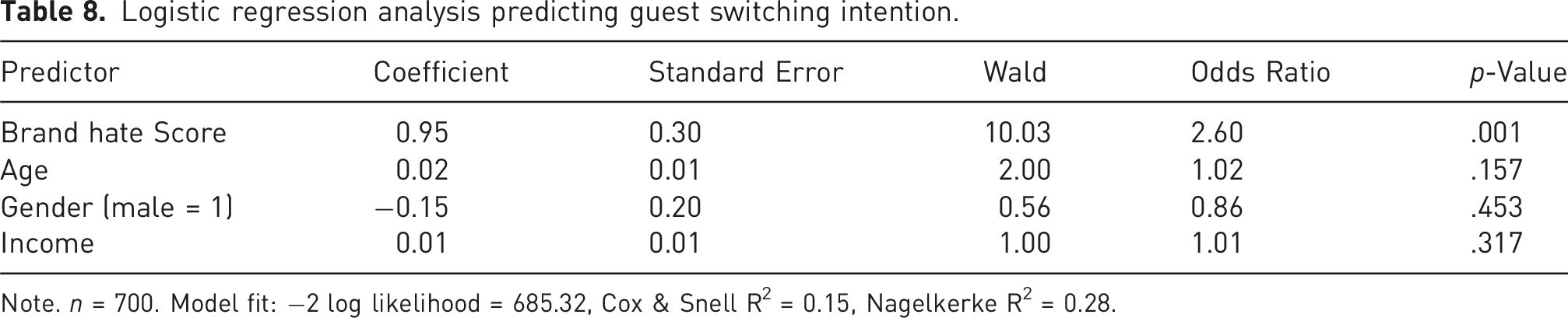
Note. n = 700. Model fit: −2 log likelihood = 685.32, Cox & Snell R2 = 0.15, Nagelkerke R2 = 0.28.
ANOVA results show that Cham Palace Hotel Damascus and Four Seasons Hotel Damascus have significantly higher switching intentions than the other hotels, indicating that switching risk is concentrated in these two properties. Consistent with this pattern, the logistic regression model demonstrates that higher brand hate scores are associated with a greater probability of switching, confirming that intense brand hate is directly linked to guests’ intention to change hotels. Brand hate, driven by perceived deceptiveness, experiential dissonance, perceived discrimination, and financial risk perception, therefore emerges as the main mechanism through which negative service triggers translate into guest movement and should be a primary focus of managerial interventions aimed at reducing guest loss and increasing satisfaction.
Discussion and theoretical implications
This study examined the effects of negative service cues (perceived deceptiveness, experiential dissonance, financial risk perception, and discrimination) on brand hate and hotel switching rates in five-star hotels.
The findings suggest that perceived deceptiveness positively influences hotel brand hate, indicating that misrepresentations in booking information can foster strong negative emotions toward the brand (Rita et al., 2025). This finding aligns with previous studies’ results that associate perceived deceptiveness with negative emotions, dissatisfaction, and brand avoidance (Hassan et al., 2024; Santos et al., 2024). This relationship stems from promise-performance gaps that can increase initial disappointment into brand hate. This pattern is consistent with EDT (Oliver, 1980), as misleading brand promises lead to negative disconfirmation and lower trust levels. However, our findings refine EDT in luxury hospitality by showing that perceived deceptiveness is not merely linked with dissatisfaction but can escalate into brand hate. This strong affective rejection can help explain subsequent switching intentions. This suggests that promise-performance gaps in high-expectation service contexts may elicit stronger affective reactions than typical gaps, as emphasized in conventional satisfaction-based applications of EDT.
Findings suggest that perceived discrimination has a positive influence on hotel brand hate. This indicates unequal treatment based on guests’ attributes, violates luxury hotel service standards, and fosters brand hate through interpersonal unfairness (Roy et al., 2022). This result is consistent with prior studies’ findings, which linked perceived discrimination to negative attitudes, reduced loyalty, and reputational harm (Min and Joireman, 2021; Zhou et al., 2022). This aligns with Justice Theory (Tax et al., 1998), describing the impact of perceived interpersonal unfairness on negative post-encounter evaluations and responses. Our results extend this view in luxury hospitality by showing that perceived discrimination is not limited to dissatisfaction or weaker loyalty but can escalate beyond these outcomes into brand hate. This intense affective rejection helps explain the intention to switch. This suggests that in high-contact luxury services, violations of interpersonal respect may elicit stronger affective reactions than those typically highlighted in standard justice-based service evaluations.
Results indicated that experiential dissonance has a positive influence on hotel brand hate. This indicates that mismatches between promised and actual luxury hotel experiences spark intense negative emotions (Senbeto and Hon, 2021). Failure to deliver advertised premium amenities or personalized service triggers brand rejection through sensory and emotional disconfirmation (Richards, 2021). This finding supports previous studies that link experiential dissonance to dissatisfaction, distrust, and emotional disengagement (Magdy, 2026; Prentice and King, 2011). Theoretically, it is consistent with EDT (Oliver, 1980), a theory that explains how unmet expectations lead to negative emotional responses. Our findings extend EDT in luxury hospitality by showing that sensory and emotional disconfirmation is not restricted to dissatisfaction/distrust, but can escalate into brand hate, which is a stronger affective response and helps explain switching intention. This implies that in situations where experiential promises are crucial to brand identity, disconfirmation might evoke more affective rejection than is usually emphasized in satisfaction-based applications of EDT.
Results indicate that financial risk perception significantly drives hotel brand hate, as guests who perceive inappropriate charges or poor value for money in luxury hotels experience a profound sense of unfairness, fostering intense negative emotions (Ahn et al., 2022; Roy et al., 2022). This finding aligns with previous studies that link financial risk perception to distrust, negative evaluations, and frustration (Maulana, 2024; Sun, 2014). High-priced services failing to deliver commensurate value trigger brand hate through violations of distributive justice (Chapman and Dilmperi, 2022). This pattern is consistent with Justice Theory (Tax et al., 1998), which describes how unfair outcomes in service encounters lead to negative evaluations and responses. However, our findings advance this perspective in luxury hospitality by indicating that financial unfairness is not confined to dissatisfaction or frustration but can escalate brand hate, which is a stronger affective reaction that helps to explain switching intention. This implies that in high-value service settings, there may be greater emotional rejection than is typically emphasized in standard justice-based service evaluations due to distributive injustice.
Findings suggest that brand hate significantly mediates the relationship between perceived deceptiveness, discrimination, experiential dissonance, and financial risk perception and hotel switching intention, channeling negative guest experiences into disengagement from the brand (Curina et al., 2020; Rasouli et al., 2022). When guests encounter deceptive practices, unfair treatment, unmet expectations, or financial exploitation, brand hate intensifies these negative perceptions, increasing guests’ intention to switch to competing hotels (Farhat and Chaney, 2021). Theoretically, this finding helps refine brand hate research in the hospitality context by identifying that brand hate is not only a negative affective outcome, but also a central mediating mechanism of the disparate service failure-related appraisals that lead to switching intention. This explains how heterogeneous negative appraisals might converge into a common affective pathway that leads to defection in high-expectation luxury service situations.
The discussion extends theory by explaining the mechanism rather than merely confirming the direction of effects. Specifically, the findings suggest that service failures in luxury hospitality should not be treated as a unitary phenomenon, as deceptiveness and experiential dissonance are associated with expectation-based appraisals. In contrast, discrimination and financial risk perception are associated with fairness-based appraisals. Although these appraisals vary in psychological content, they converge on brand hate and converge on the same downstream outcome: switching intention. Thus, the study refines the application of EDT and Justice Theory in luxury hospitality by providing a unifying explanation of guest defection, by showing how heterogeneous negative appraisals are translated into exit through a shared affective mechanism.
Our findings suggest that brand hate may channel heterogeneous failure appraisals into a common affective pathway leading to guest defection in high-expectation luxury settings. This interpretation is also consistent with an attribution-based perspective on consumer responses, in which guests may generalize a property-level failure to the broader chain by attributing a wider issue to brand-level standards, policies, or service consistency (Weiner, 2000). In chain-hotel contexts, for example, service failures at a particular property may lead to negative reactions towards the brand when they are seen as reflective of systemic brand standards or organizational practices rather than isolated incidents. Conversely, if the failure lies with local circumstances or individual staff behavior, negative reactions may be confined to the focal property.
This research was conducted in post-war Syria, where service failures were more extreme, and their emotional impact was magnified. The underlying mechanism may be relevant in other luxury hospitality settings. However, the magnitude of effects is likely to vary across contexts and may be stronger in high-stress environments than in more stable markets. The findings may provide a high-stress benchmark for managing expectations, ensuring reliable service delivery, facilitating prompt recovery, and fostering respectful interactions.
Practical implications
Hotel managers must ensure that marketing aligns with guests’ experiences to regain their trust. When managers follow guidelines for staff training, they should adopt a holistic approach to ensure staff are not discriminated against during training. Discrimination against guests based on their traits contradicts luxury hospitality standards and elicits the most significant adverse emotional reactions, which intensify over time. In the case of hotels such as the Cham Palace hotel Damascus and Four Seasons Damascus, where brand loyalty and switching is the order of the day, there is a need to ensure that strict supervision of service delivery is made to eliminate gaps between the promises and actual experiences such as outdated facilities that do not go with the promised quality leading to dissatisfaction by the guests. They should establish a systematic review of guests’ feedback, replacing online feedback and surveys, to address complaints such as unjustified prices and service lapses before they become ingrained as long-term dislikes. Managers should identify three risk categories based on levels of dissatisfaction and implement corresponding interventions. Hotels with high risk must be subjected to service recovery measures, while those with low risk should be provided with measures to maintain their current performance levels. Hotels must categorize their guests into three groups: loyal, skeptical, and reactive switchers. It is possible to implement certain strategies, like providing free upgrades to keep sceptical guests and to explore the possibility of winning them back, deviating. These requirements require organizations to abandon unproductive, imprecise practices and adopt evidence-based solutions that address the root causes of guest attrition. The steps that follow will help managers achieve enhanced employee retention, protect the brand image, and maintain profitability in the competitive luxury hospitality environment.
Conclusion
The study assessed negative service experiences, including perceived deception and discrimination, experiential dissonance, and monetary risk, which rise brand hate and lead to defection among guests of five-star hotels. The study confirmed the relevance of these negative aspects in contributing to brand hate as a basic affective reaction, in which a service failure is associated with the intention to switch hotels among guests. This model illustrates the relationship between negative hotel guest interactions, emotional responses, and the intention to switch hotels. It provides managers of luxury hotels with an efficient approach to reducing guest loss. The model affirms that services should be transparent, fairly treated, and meet standard expectations to reduce avoidance behavior. The negative effects should be overcome by redesigning the loyalty programs. The study utilized the EDT and justice theories as its theoretical framework in the context of luxury hospitality, drawing on novel research. Brand hate is a key factor influencing guest behavior, which explains why retention issues persist in competitive markets. The study offers hotel managers a guide to handling service failures while maintaining guest loyalty.
Limitations and future research
This research is limited in certain aspects. The research design is a limitation for the study’s results, as data collected at a single point in time would not be sufficient to establish a direct connection between negative service experiences, brand disdain, and guest turnover. A longitudinal research design will allow the researchers to track guests’ perceptions and conduct in-depth research on the evolution of the basic relationships between service failures and brand hostility, and how these perceptions change at different levels of contact. The researchers may have selected hotels rated highly on TripAdvisor, thereby giving them a chance to observe dissimilar patterns of behavior in hotels with poor scores. The next generation of researchers should consider increasing the number of hotels in cohort studies to include hotels with varying performance rates, thereby providing a deeper understanding of the determinants of brand hatred. The research identifies four main instances that lead to brand hate, although other major factors, such as service recovery and brand reputation, may also contribute to its formation. Future studies need to consider additional variables to refine the conceptual model and explain the development of brand hate in luxury hotels. In addition, the Syrian post-war context may reduce the transferability of effect magnitudes, and cross-context replication is required to assess the model’s robustness in more stable contexts.
Footnotes

Funding
The authors received no financial support for the research, authorship, and/or publication of this article.
Declaration of conflicting interests
The authors declared no potential conflicts of interest with respect to the research, authorship, and/or publication of this article.