




Abstract
In recent years, it has been well established that study abroad participation is a socially selective process. Today, scholars generally focus on single social markers, often using cross-sectional data. In this article, we instead adopt an intersectional and longitudinal approach to improve our understanding of the development of social selectivity in study abroad, with a particular focus on the intersection between socioeconomic background and gender. Our analyses are based on the Learning Conditions and Student Orientations (N = 49,931), a representative survey of German higher education students, and covers the period 1994 to 2016. Our analyses indicate that social selectivity in German study abroad programs increased in 2003 and remained stable afterward, which can be partly explained by differences in cultural, economic, and social capital. Finally, our analysis suggests that cultural capital also explains the gender imbalance in study abroad programmes.
Students from higher socioeconomic backgrounds are overrepresented in study abroad programs (see e.g., Bótas and Huisman 2013; Di Pietro 2020; Netz et al. 2021). Sociologists have linked this socially selective trend to processes of “education inflation” (Côté and Allahar 1996), whereby the expansion of tertiary education decreased the value of higher education degrees. Previously, privileged students could use higher education to achieve distinction, yet educational expansion led to more individuals obtaining similar degrees. Thus, students from higher social backgrounds have turned to study abroad as a new way to horizontally distinguish themselves from other students, leading to the reproduction of social inequalities (see Netz and Finger 2016; Reimer and Pollak 2010; Van Mol 2014; Waters and Brooks 2010).
Today, the rapidly growing literature on social selectivity in study abroad programs predominantly focuses on students’ social origin. Yet other social markers also play a role in study abroad processes (see Di Pietro 2022; Netz et al. 2021; Netz and Sarcletti 2021; Van Mol 2022). For example, in most of the Western world, female students participate more often in study abroad programs than do their male counterparts (Böttcher et al. 2016; Redden 2008). Recently, scholars have argued that our understanding of social selectivity processes in study abroad could be significantly improved through approaches that consider a broader set of social markers (Hurst 2019; Van Mol 2022). In this article, we aim to advance this perspective, using data from Learning Conditions and Student Orientations, a representative survey of German higher education students conducted between 1994 and 2016. We investigate the social selectivity of study abroad programs over time, looking at socioeconomic background and gender and the mechanisms explaining the general patterns. We focus on international student exchanges, in which students gain credits at a foreign institution for a delineated period of time within the framework of their German degree.
Our research contributions are threefold. First, we examine whether the social selectivity of study abroad programs in terms of socioeconomic background changed between 1994 and 2016. To date, only a few studies have examined the development of social selectivity in study abroad programs over time (Di Pietro 2020; Netz and Finger 2016). Nevertheless, as educational expansion and “education inflation” continue, longitudinal analyses are essential for advancing our understanding of how these larger processes influence the search for distinction. Second, drawing on theories of social reproduction, and in particular the work of Pierre Bourdieu, we aim to explain why students from higher social backgrounds and female students engage more often in study abroad programs. We focus on the role of social, cultural, and economic capital as predictors of study abroad participation. Finally, we address the intersection between socioeconomic background and gender, arguing that elite women are more socialized into “doing culture” compared to elite men. Hurst (2019) examined this phenomenon, but her study focused on liberal arts students in the United States, who are predominantly female and from higher social backgrounds. Here, we focus on a broader array of disciplines, which allows us to investigate whether Hurst’s explanation is transferable to other contexts.
Theory and Hypotheses
Educational Expansion and the Search for Distinction
Before the expansion of the educational system after World War II, privileged groups safeguarded their advantageous societal position by obtaining exclusive educational credentials, which facilitated the transition from education to prestigious jobs and positions. With educational expansion, however, elite groups had to find other ways to secure their social position, through what Bourdieu (1984) calls “the search for distinction.” Accordingly, when social practices lose (part of) their value, privileged groups will seek other, more exclusive practices to “signal their privilege” and “mark their distinction” (Ballatore and Ferede 2013:525). According to Lucas (2001), students from higher social classes responded in a twofold manner: vertically, via educational credentials that are valued more (e.g., by enrolling in more prestigious higher-education institutions), and horizontally, by choosing the most beneficial options within an educational level (Triventi 2013).
One strategy for horizontal distinction for students from higher social strata is to obtain international credentials (see Di Pietro 2020; Netz and Finger 2016; Reimer and Pollak 2010; Van Mol 2014; Waters and Brooks 2010). As Stuber (2011) notes, students from different socioeconomic backgrounds attach different expectations to study abroad participation. Whereas working-class students often consider studying abroad a distraction from their studies, elite students look to international experiences to secure a better bargaining position in the labor market. In a study on Denmark, France, and Sweden, Munk (2009) concluded that upper-class students, compared to lower-class students, are more likely to invest in informational (i.e., academic) capital in the fields of education, national contexts, and international settings.
Moreover, studying abroad may, on its own, signal social status. Considering the costs associated with studying abroad, Ballatore and Ferede (2013) argue that having a child who studied abroad may convey a family’s wealth. Indeed, studying abroad is costly, and students’ scholarships generally do not cover all the expenses (Souto Otero et al. 2013). Students from less privileged backgrounds are thus often discouraged from participating. Because of rising enrollment rates in higher education institutions and students from higher socioeconomic backgrounds using international experiences to horizontally distinguish themselves from the masses, we expect the social selectivity of study abroad participation has increased over time in Germany (Hypothesis 1).
How to Explain the Search for Distinction? Habitus, Capital, and Study Abroad
According to Bourdieu’s (1973) theory of social reproduction, educational success is predominantly determined by one’s early socialization, that is, habitus, and the rationale of the education system. Education systems are particularly sensitive to habitus, and students who are socialized in the right way are significantly rewarded. Higher education institutions are managed by people who are academically educated, and students who lack the appropriate habitus encounter difficulties adapting to the tacit rules and expectations of the field (Bourdieu and Passeron 1990). Collier and Morgan (2008) found, for example, that students with culturally endowed habitus are evaluated more positively by faculty members. In short, educational success is less dependent on effort and intelligence than it is on the appropriate habitus.
Previous studies have applied the perspective of habitus and social origin to study abroad participation. For example, Waters and Brooks (2010) note that students from higher social classes regard traveling as “normal,” and thus these students have more confidence when exposed to new cultures. In contrast, students from less privileged backgrounds are more likely to regard studying abroad as a “distraction” from obtaining a degree (Stuber 2011), and leaving one’s familiar social environment might amplify existing educational difficulties. Students from lower social classes have to overcome many hurdles to study abroad because they are often regarded as not “bright” enough or lack financial resources.
Studying abroad can be regarded as a game where students compete over a limited number of available spots. In A Social Critique of the Judgement of Taste, Bourdieu (1984) argues that individuals are continuously playing games in various fields, such as education and politics. When entering a game, individuals use strategies aligned with their habitus and shaped by their practices to achieve certain goals. Winning a game means dominating the other. Individuals take a particular position, and a better position increases the odds of winning. One’s position is influenced by two factors: habitus and (economic, social, and cultural) capital. First, individuals from higher social backgrounds occupy a more advantaged position in games compared to individuals from lower social backgrounds. Second, higher levels of capital are associated with greater chances to win the game. The combination of the right habitus and higher levels of economic, social, and cultural capital increases the chances for privileged students to study abroad.
Bourdieu’s forms of capital and their relation to study abroad participation are well documented in the literature on international student mobility. First, economic capital entails students’ own monetary resources and parental financial support in paying for study abroad programs. Empirical evidence suggests that students from higher socioeconomic backgrounds are more likely to receive parental financial support (Hauschildt et al. 2015). Moreover, abundant empirical evidence shows that having insufficient financial resources significantly decreases study abroad participation (for recent overviews, see Brooks and Waters 2021; Netz et al. 2021).
Second, social capital consists of relationships and networks that provide support and resources students can draw on in making study abroad decisions. Students from higher socioeconomic backgrounds are more likely to be embedded in social networks with international experience (Waters and Brooks 2010) and to have closer contact with faculty members (Finger 2014), which increases their odds of studying abroad. Students from lower socioeconomic backgrounds often lack these important networks and miss out on support and inspiration from fellow students (Simon and Ainsworth 2012).
Third, cultural capital in international student mobility manifests via prior international experience. This “mobility capital” (Murphy-Lejeune 2002) can be acquired in previous educational mobility or international orientation during childhood, such as family travels (Waters and Brooks 2010). Students from higher socioeconomic backgrounds generally have more international experience even before enrolling in higher education (Ballatore and Ferede 2013), and they are more likely to accumulate the necessary cultural capital, such as foreign language proficiency (DuFon and Churcill 2006) and involvement in extracurricular activities (Salisbury, Paulsen, and Pascarella 2011), during their studies. Another important aspect of cultural capital is confidence and ease in approaching academic staff and the ability to meet faculty members’ expectations. Students with more cultural capital have better negotiating skills to secure their stay abroad because they have the credentials, behaviors, and attitudes that are rewarded in the education system (Lamont and Lareau 1988). Furthermore, prior work shows that faculty members involved in the study abroad selection process are biased toward students with higher levels of cultural capital: Students from lower socioeconomic backgrounds do not match the ideal type of an international student that faculty members have in mind because they lack financial resources and international experience (Desoff 2006).
The dimensions of capital should not be regarded as separate entities with their own purposes. Bourdieu (1986:241) argues that “to understand the structure and functioning of the social world, capital in all its forms should be introduced.” In the context of study abroad participation, empirical evidence shows the importance of using all dimensions of capital. Green et al. (2015), for example, show that Australian students must use all the different types of capital to facilitate their study abroad participation. Adding to this, Salisbury et al. (2009) used an integrated choice model and argue that the various manifestations of capital have a cumulative positive effect on intent to study abroad. Their analyses reveal a complex interplay between the various types of capital. Therefore, we expect that students from higher social strata participate more frequently in study abroad programs because they have higher levels of economic (Hypothesis 2a), social (Hypothesis 2b), and cultural (Hypothesis 2c) capital.
Doing Culture and Study Abroad
Prior work repeatedly shows that female students are more likely than male students to study abroad (see e.g., Böttcher et al. 2016; Di Pietro 2022; Salisbury et al. 2010; Van Mol 2022). One recurring explanation for this gender gap is that it is largely due to students’ choice of major. Women tend to be overrepresented in social sciences and humanities, subjects that generally offer more possibilities for studying abroad, compared to more male-dominated subjects such as engineering and business (Böttcher et al. 2016; Di Pietro 2022). However, Redden (2008) finds that even in traditional “male” majors, women are about twice as likely as men to study abroad. To improve our understanding of the gender gap in study abroad, recent studies have argued that we must consider the interplay between gender and class (Hurst 2019; Van Mol 2022).
When considering Bourdieu’s framework, the importance of gender is particularly prominent in cultural capital, which Atkinson (2016) calls a “gendered capital.” Women often assign greater value to culture, and most importantly, women’s greater appetite for cultural consumption is not only dependent on their social origin or habitus (Christin 2012; Katz-Gerro 2006). However, habitus creates expectations and aspirations tailored to one’s social origin. Students from higher socioeconomic strata, for example, may consider enrollment in higher education as something logical and normal, whereas working-class students might consider it more aspirational. Hurst (2019:1243) argues that the gender gap in study abroad participation is not “a mere reflection on gendered tastes and interest,” but “foreign travel and study abroad are linked to a particular habitus and set of expectations.” Upper-class women are expected to travel and study abroad, whereas their male peers have a different set of expected traditions (Hurst 2019). Empirical studies on cultural consumption seem to confirm this idea, showing that upper-class women are generally more interested in cultural activities, such as visiting museums, philanthropy, and arts compared to men (Dumais 2002; Katz-Gerro 2006). Moreover, upper-class women are more likely to discuss culture and travel more often and have a stronger orientation toward self-actualization (Lamont 1992; Tilley and Houston 2016). Thus, while women in general have higher levels of cultural capital, previous research suggests upper-class women in particular are concerned with acquiring high amounts of cultural capital. According to Collins (1988, 1992), highbrow cultural participation is an importantmarker of status for the upper classes. Therefore, upper-class parents are more likely to encourage their daughters to become culturally engaged. These parents are not only more involved in their children’s education, but they also have more financial resources to pay for artlessons and other extracurricular activities (Currid-Halkett 2017).
Following these perspectives, we expect the overrepresentation of women in study abroad programs can be explained by their higher levels of cultural capital (Hypothesis 3a). However, because cultural consumption is also highly influenced by social class (Collins 1988, 1992), we expect that more female students from higher socioeconomic backgrounds participate in study abroad programs because they are equipped with the right habitus and have an internalized appetite for cultural activities (Hypothesis 3b). In other words, “studying abroad is another form of dominant cultural capital, one that elite women are tasked with acquiring while in college” (Hurst 2019:1244).
Data and Methods
Data
For this study, we use the representative cross-sectional survey of German higher education students, Learning Conditions and Student Orientations, spanning 1994 to 2016 (Georg and Ramm 2018). The survey covers six areas of performance measurements: efficiency, qualification, evaluation, socialization, selection, and placement. The core of the survey has remained stable over the years, which allows us to investigate study conditions at research universities and universities of applied sciences over time. The survey includes a wide range of topics, namely, access to higher education, choice of subject, course of studies, study requirements, quality of studies, contacts and social climate, experienced difficulties, internationality, wishes and demands, career choices, and values on social and political questions. The survey also includes an elaborate set of demographic variables, focusing especially on parents’ educational degree, vocational training, and occupational status. Participants are selected via a probability sample, and the survey is collected with a paper-based self-administered questionnaire.
Similar to Netz and Finger’s (2016) approach, we made some restrictions to the sample to increase comparability between survey waves. First, our sample does not include graduate and postgraduate students (Zweitstudium) for three reasons: We do not know when they entered higher education and whether these students studied abroad during their graduate or postgraduate studies. Moreover, postgraduate students often have different financial capacities for studying abroad, particularly if they are pursuing a PhD. Therefore, our analysis includes only undergraduate students. 1 A second restriction concerns the duration of enrollment. In Germany, students can keep their beneficial student status by continuously reenrolling, even after graduation. This was a common practice before implementation of the Bologna Process. We include students at research universities between their 1st and 22nd semesters and students at universities of applied sciences between their 1st and 18th semesters. The total sample size after applying the selection criteria was 52,100 cases. Our analytic sample comprises 49,931 cases after listwise deletion. 2
Measurement
Dependent variable
The dependent variable study abroad participation is a combination of study abroad behavior and intentions. Because the survey is administered to enrolled students, many participants are in the early stages of their program. Therefore, we created this variable in two steps. First, we have a variable that captures whether students studied abroad, 0 = no and 1 = yes. Second, we have a variable that measures students’ study abroad intentions with five categories. We merged this variable with the first variable, and the original categories 1 = no, 2 = maybe, 3 = probably, and 5 = not sure yet are coded as 0 = no (for a similar approach, see Cordua and Netz 2022). Students who reported definitely wanting to go abroad are coded as 1 = yes. We do this because previous work shows that aspirations to move abroad are a good proxy for actual movement in the future (Bjarnason and Thorlindsson 2006; van Dalen and Henkens 2012). Prior research indicates that female students and students from higher social backgrounds not only study abroad more frequently, but they are also more likely to intend to do so (Cordua and Netz 2022; Lörz, Netz, and Quast 2016).
Independent variables
Students’ socioeconomic background is captured by a binary variable, 0 = at least one parent had higher education (bachelor’s and/or master’s degree), 1 = no higher educated parent. This approach is similar to prior research investigating social selectivity in study abroad programs (see e.g., Di Pietro 2020; Netz and Finger 2016). As a robustness check, we conducted the analyses with parental occupation as a proxy for socioeconomic background. The results, which are only marginally different, are shown in Part B of the online supplement.
Economic capital is measured through an ordered variable that assesses parental financial support. Students could choose from 1 = no financial support, 2 = parents partially finance the studies, and 3 = parents pay most of the studies. We do not consider students’ own financial resources or their side jobs because having to work during college lowers students’ propensity to study abroad (Desoff 2006). In Germany, parents are legally required to finance their children’s study-related expenses, including higher education (German Civil Code §1601 GB). If financial resources are insufficient, students can apply to the BAföG (Bundesausbildungsförderungsgesetz or Federal Education and Training Assistance Act), which is a governmental aid program providing a combination of interest-free loans and state grants. Consequently, parental support is the main source for students to finance their studies (Schäferbarthold 1999). Given the lack of tuition fees for German higher education institutions, parents might be more willing to invest money in their children’s education by paying for their rent and through direct cash transfers. Despite the low absolute costs of studying, the relative costs are substantially higher for students from lower socioeconomic backgrounds. Social capital is captured by the degree of contact with international students: 1 = no contact, 2 = rarely, 3 = sometimes, and 4 = often. Students from higher socioeconomic backgrounds are more likely to have contact with international students through their social networks (Waters and Brooks 2010). 3 Our proxy for cultural capital is a binary variable indicating whether students have taken language courses offered by their home university (DuFon and Churcill 2006). Finally, gender is included as a binary variable, 0 = male and 1 = female.
Control variables and mediators
Our analyses include four control variables. First, duration of enrollment indicates the numbers of semesters in higher education and accounts for the variability in number of semesters (Netz and Finger 2016). Second, we control for age because “age is negatively associated with studying abroad” (Netz et al. 2021:33). Third, having children can also deter students from going abroad (see Netz 2015), so we control for this with a binary variable, 0 = yes and 1 = no. Fourth, we control for variation over time by including the survey waves. The survey was conducted every three years, in 1994/1995, 1997/1998, 2000/2001, 2003/2004, 2006/2007, 2009/2011, 2013/2014, and 2015/2016.
Prior research has also identified a number of important mechanisms that account for the overrepresentation of students from higher socioeconomic backgrounds and female students in study abroad programs. Therefore, we include the following mediators in our analyses. Type of higher education is a binary variable coded 0 = university of applied sciences and 1 = research university. We include this variable because students from higher social backgrounds are overrepresented in research universities (Reimer and Pollak 2010), and in Germany, universities of applied sciences offer fewer possibilities to study abroad compared to research universities (Di Pietro 2020). Second, we include students’ grades at secondary school to control for individual cognitive ability. This variable ranges from 10 to 60, with 10 being the highest grade. Lörz et al. (2016) found that students with a higher final grade at secondary school are more likely to study abroad, and students from higher socioeconomic backgrounds and female students have higher average grades (Meisenberg 2016; Ojima and von Below 2010; Roisch 2003). Third, we include subject major to control for the overrepresentation of female students in humanities and social sciences (Böttcher et al. 2016; Di Pietro 2022). Students could choose from 10 different subjects. Following a similar approach as Hurst (2019), we collapsed these subjects into three categories: 1 = traditional liberal arts, 2 = STEM, and 3 = other. 4 Table 1 presents an overview of the descriptive statistics.
Descriptive Statistics (N = 49,931).
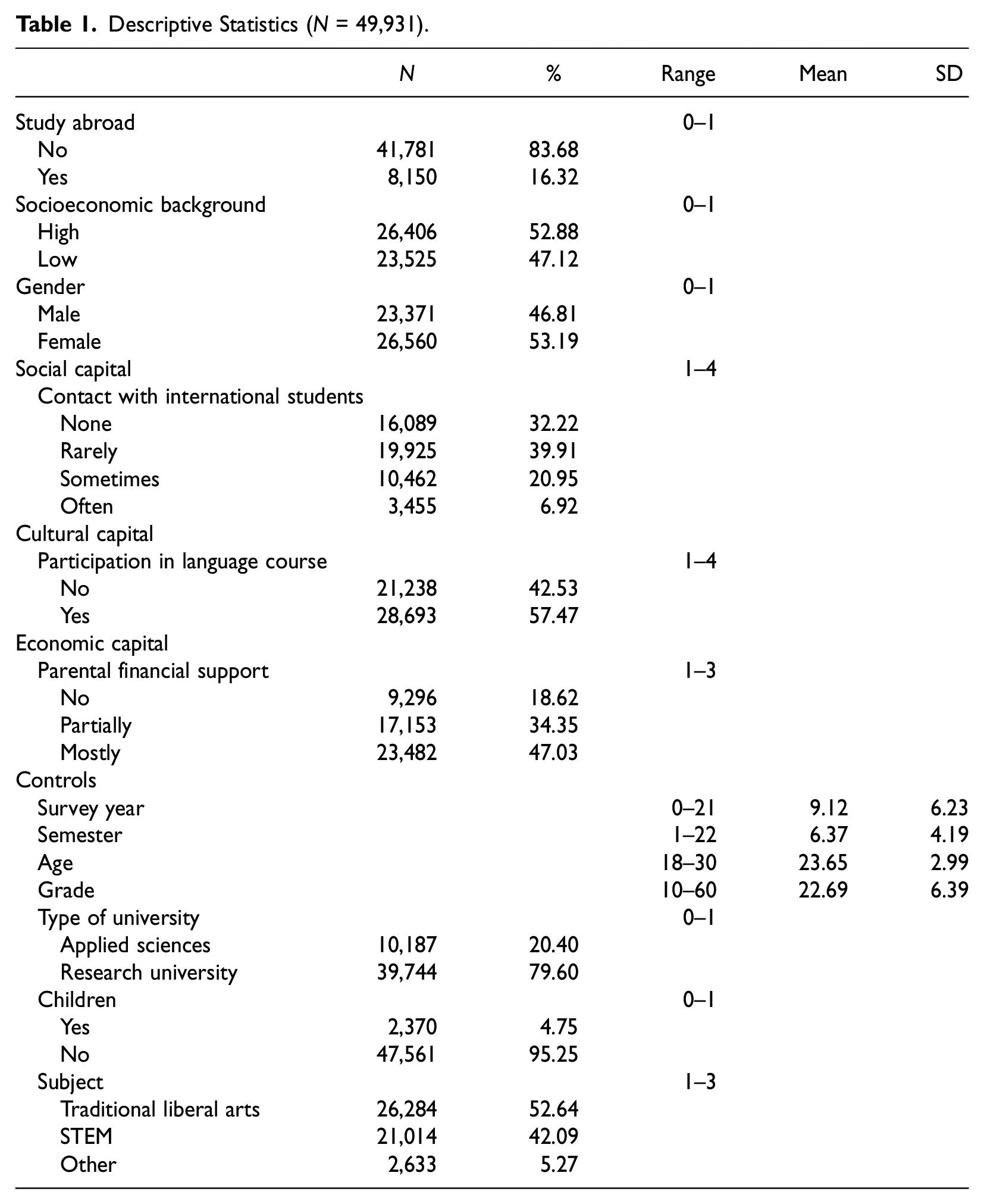
To test our expectations, Model 1 includes our main predictors, gender, and socioeconomic background and our control and mediator variables, and we fit a logistic regression. In Model 2, we estimate the interaction between survey wave and socioeconomic background to investigate the development of social selectivity in study abroad. We estimate the mediating effects of the dimensions of capital using the “mediation” package in R (Tingley et al. 2014), which allows us to conduct model-based causal mediation analysis. Two steps are required. First, two statistical models must be specified: one mediator model, in which the mediator is the outcome variable, and an outcome model for the dependent variable. Both models are fitted separately and are used as inputs for the “mediate” function, which is the second step. This function computes, among other quantities, the estimated average conditional mediation effect and the proportion mediated. Because our study abroad outcome is binary, the estimated effects are expressed as the change in the probability that a student participated in study abroad. Finally, we create an intersectional variable by combining socioeconomic background and gender to test our hypothesis that women from higher socioeconomic backgrounds are especiallylikely to participate in study abroad. Figure 1 illustrates our conceptual model.
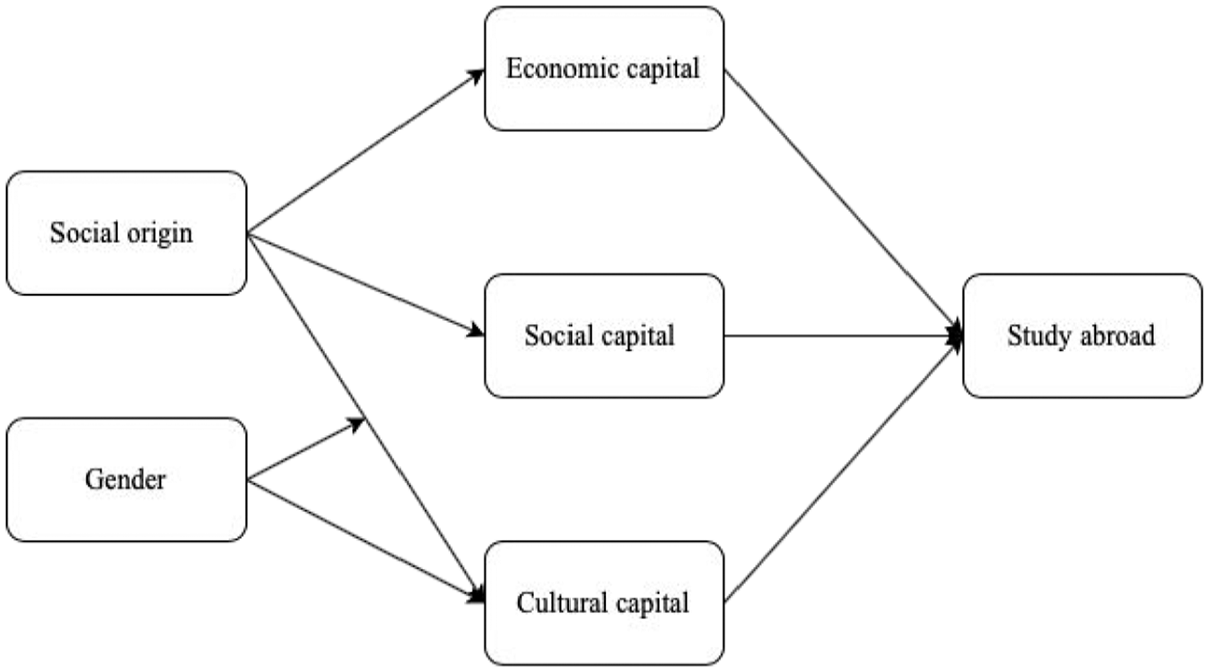
Conceptual model.
Results
Descriptive Results
Figure 2 presents the development of social selectivity in study abroad between 1994 and 2016. In line with our expectations, students with at least one higher educated parent are more likely to go abroad. Students from higher socioeconomic backgrounds are also more likely to engage in study abroad: The difference between low and high background students increases until 2003/2004, compared to the first wave in 1994/1995, and remains stable afterward.
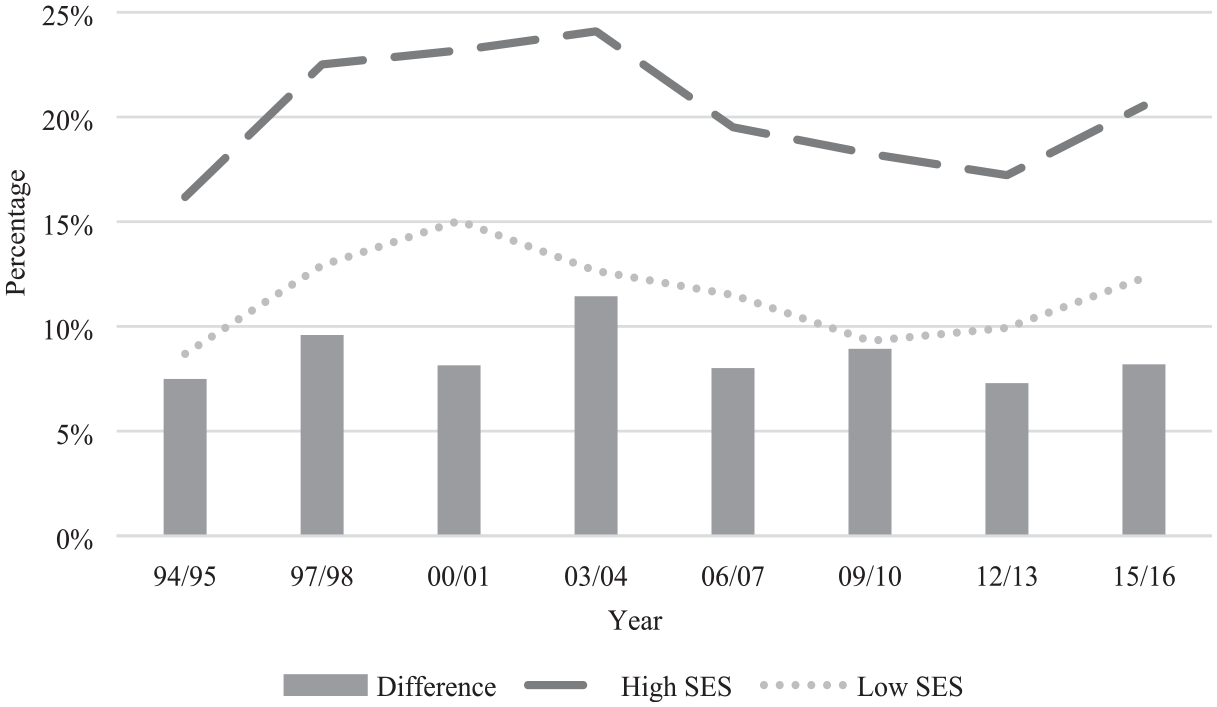
Social selectivity in study abroad among students in German higher education, 1994 to 2016.
Figure 3 plots the proportion of men and women in our sample who studied abroad or who definitely aim to study abroad. We see a stable trend whereby female students are more likely to study abroad over the whole period of analysis except for the last survey year (2015/2016) when the gender imbalance substantially decreased.
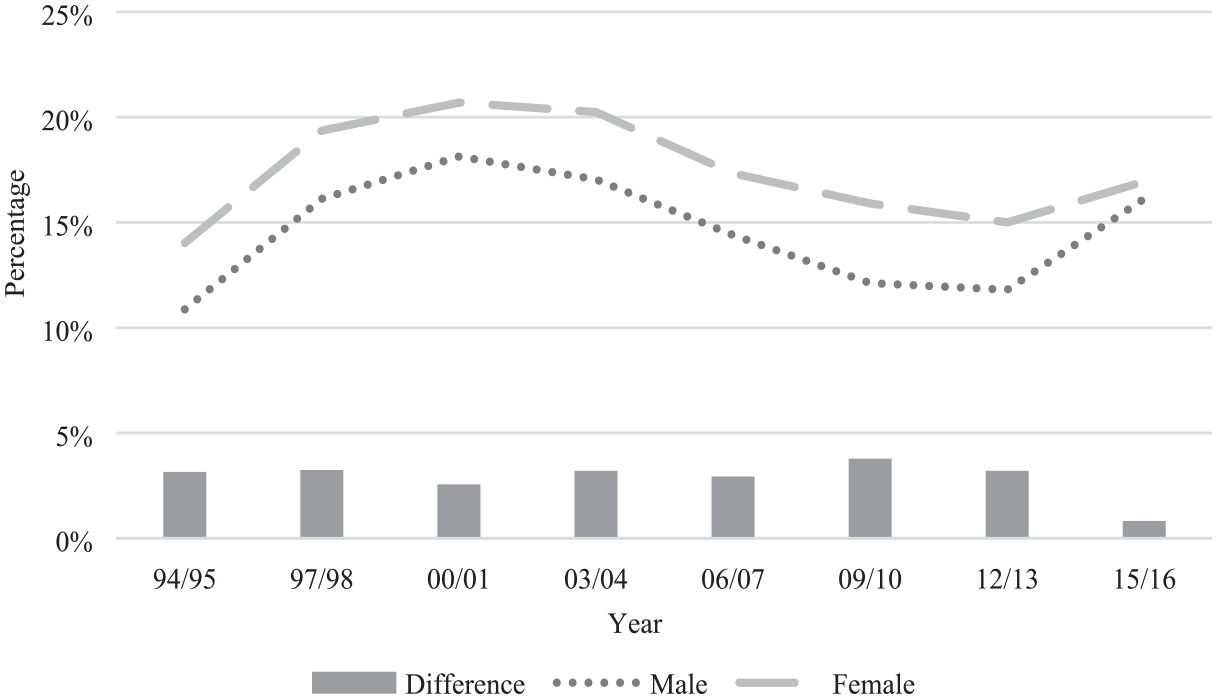
Gender selectivity in study abroad participation, 1994 to 2016.
Finally, Figure 4 presents study abroad participation of students in German higher education according to gender and socioeconomic background. This figure reveals that the decrease in gender selectivity for the last survey year can be attributed to male students from higher socioeconomic backgrounds catching up with female students from higher socioeconomic backgrounds.
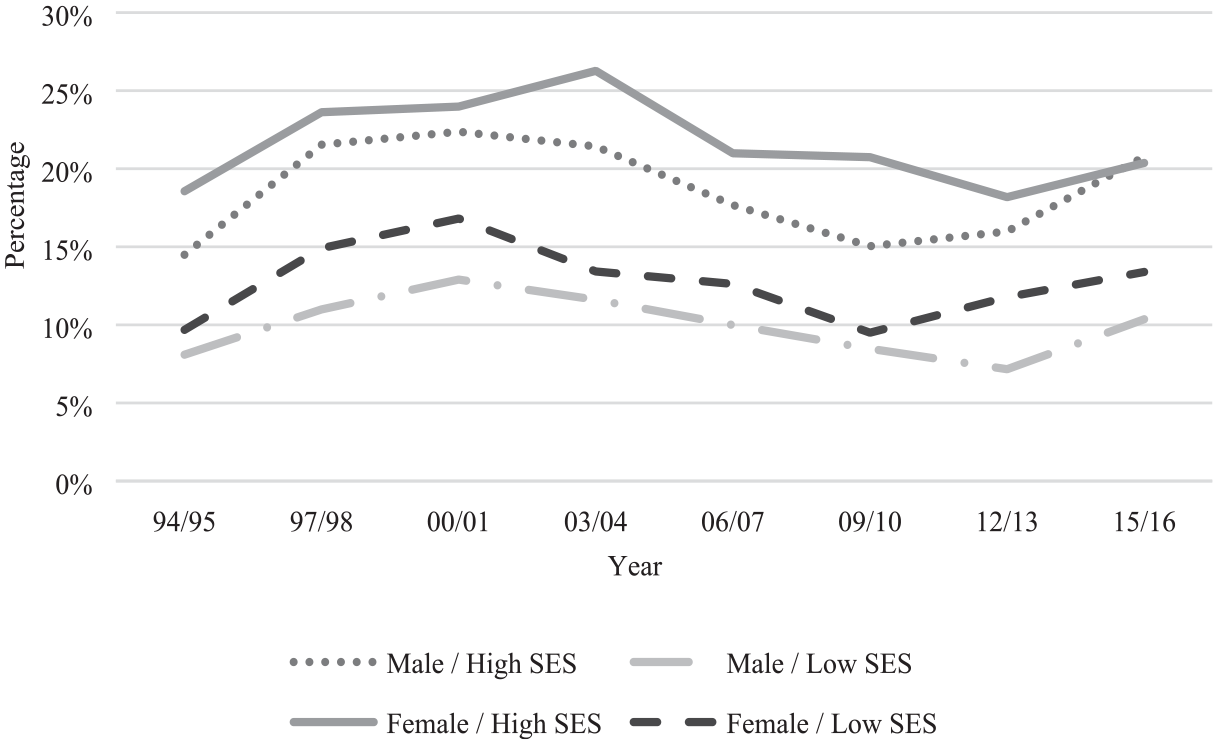
Study abroad participation of students in German higher education according to socioeconomic background and gender, 1994 to 2016.
Multivariate Results
The logistic regression results of Model 1 are depicted in Table 2 as average marginal effects. As expected, parental education level, the proxy for socioeconomic background, is significantly positively associated with study abroad participation. 5 The probability that students with at least one higher educated parent study abroad is 7.3 percent points higher compared to the probability that students with no higher educated parents study abroad. Interestingly, however, women are not significantly more likely to engage in study abroad programs. The absence of the significant effect is due to the inclusion of the mediator variables because we found a direct significant effect when control and mediator variables were not included in the model.
Logistic Regression Results of Social Background and Gender as Predictors of Study Abroad Participation (N = 49,931).
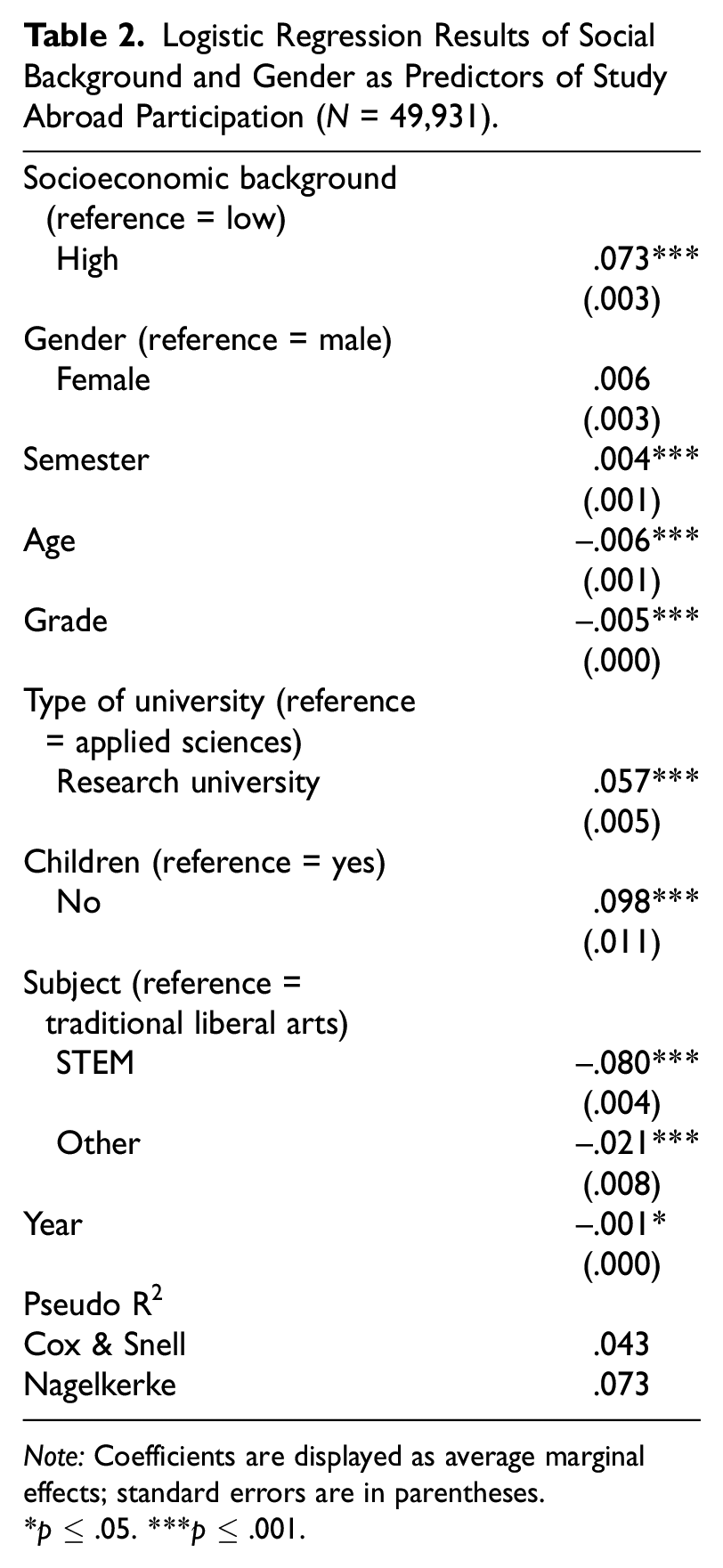
Note: Coefficients are displayed as average marginal effects; standard errors are in parentheses.
p ≤ .05. ***p ≤ .001.
In the next step, we examine the development of social selectivity in study abroad over time (see Table 3). Rather than fitting a logistic regression, we estimated our model using linear probability. According to Ai and Norton (2003), in nonlinear models, interpreting the marginal effect of an interaction term can be difficult, and in some situations, it can lead to misleading results (for a similar approach, see Di Pietro 2020). We recoded survey waves into dummy variables; the first wave (1994/1995) included in our model serves as the reference category. The interaction effects between parental education level and survey wave are not statistically significant, apart from the 2003/2004 wave. These findings are in line with our descriptive results, indicating that social selectivity remained stable over the years, with an increase in 2003/2004 compared to 1994/1995. Therefore, our first hypothesis, which expected that the social selectivity of study abroad participation in higher education increased over time in Germany, is confirmed.
Linear Probability Regression Results of the Interaction between Survey Wave and Social Background on Study Abroad Participation (N = 49,931).
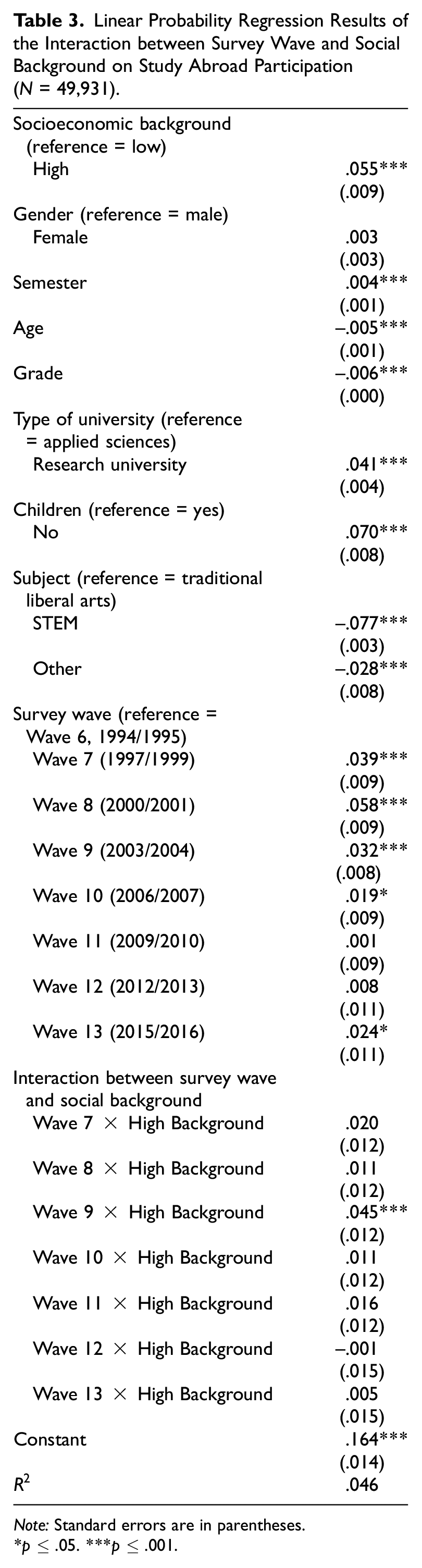
Note: Standard errors are in parentheses.
p ≤ .05. ***p ≤ .001.
Tables 4 to 6 present the results of the mediation analyses. We conducted separate regression analyses to estimate the effect of socioeconomic background on study abroad participation through economic, social, and cultural capital. The mediation package allows both outcome and mediator variables to be nonlinear. Thus, for our binary proxy of cultural capital, participation in language courses, we estimated the mediator outcome model with a logistic regression. We estimated the mediator outcome models for contact with international students and parental financial support with ordered logistic regressions. 6
Logistic Regression Results of Direct Effects of Dimensions of Capital on Study Abroad Participation (N = 49,931).
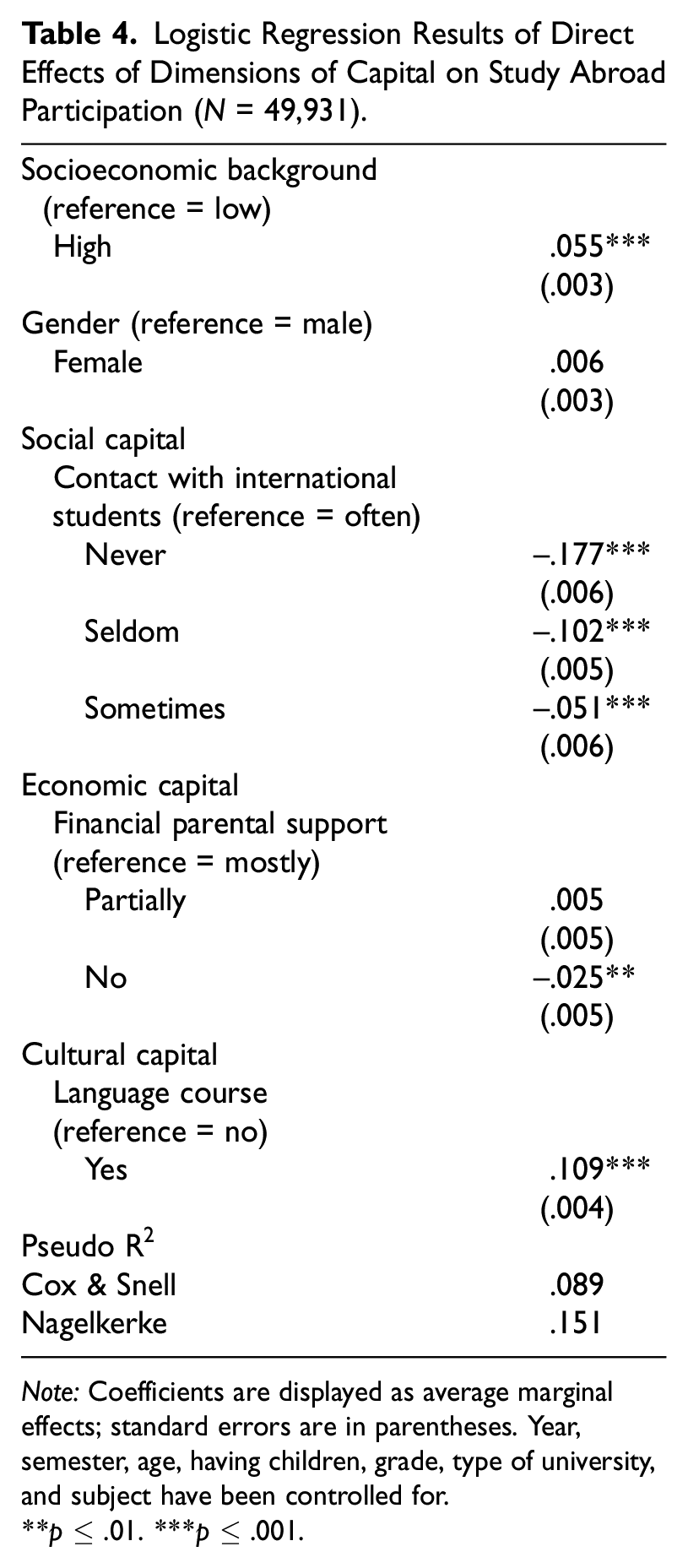
Note: Coefficients are displayed as average marginal effects; standard errors are in parentheses. Year, semester, age, having children, grade, type of university, and subject have been controlled for.
p ≤ .01. ***p ≤ .001.
Regression Results of the Effect of Gender and Socioeconomic Background on the Dimensions of Capital (N = 49,931).
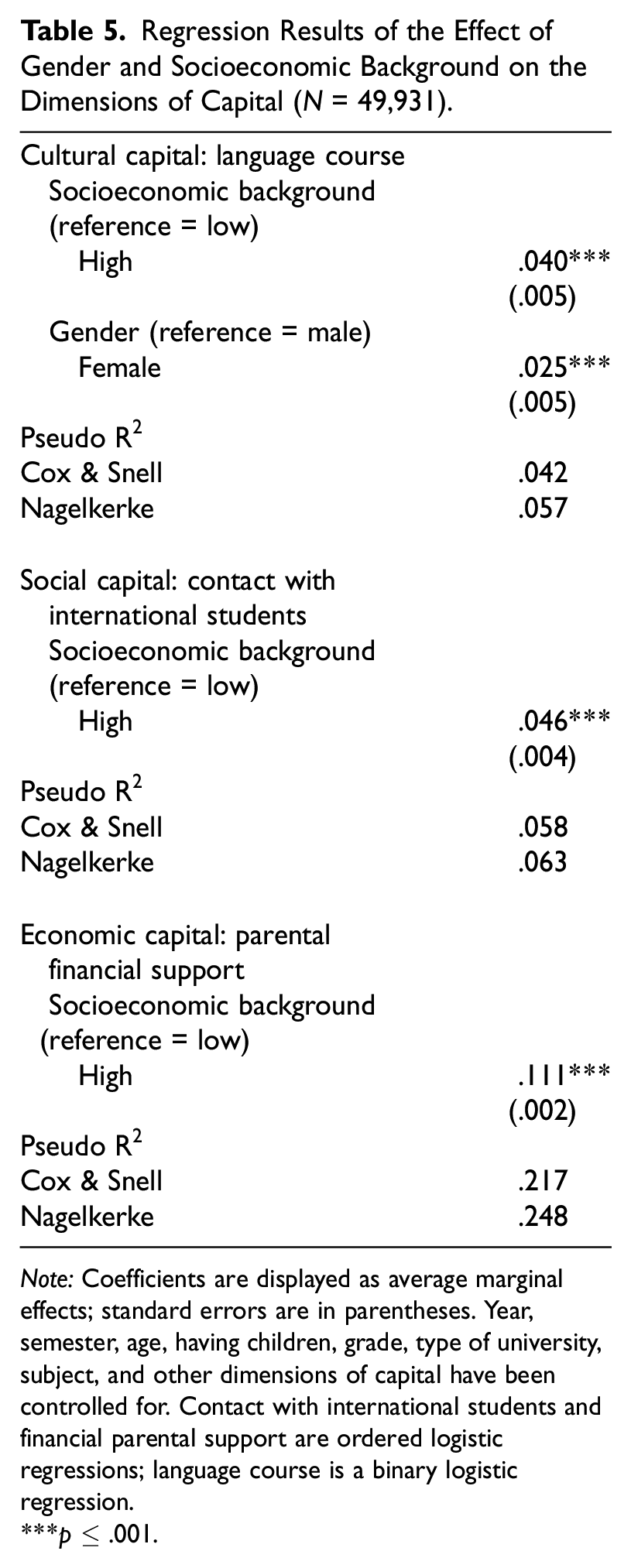
Note: Coefficients are displayed as average marginal effects; standard errors are in parentheses. Year, semester, age, having children, grade, type of university, subject, and other dimensions of capital have been controlled for. Contact with international students and financial parental support are ordered logistic regressions; language course is a binary logistic regression.
p ≤ .001.
Results of the Mediating Effects of the Dimensions of Capital on Study Abroad Participation (N = 49,931).
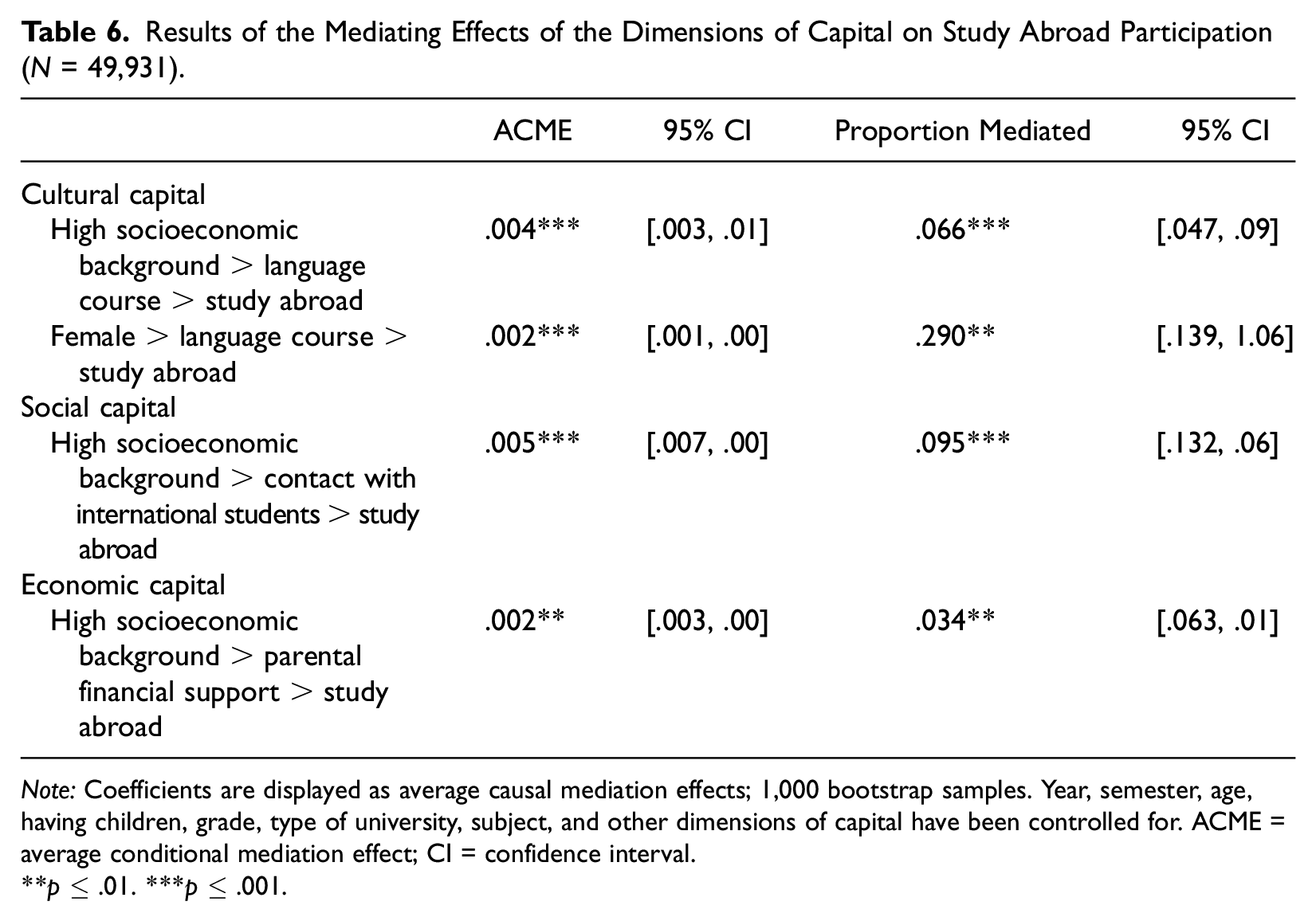
Note: Coefficients are displayed as average causal mediation effects; 1,000 bootstrap samples. Year, semester, age, having children, grade, type of university, subject, and other dimensions of capital have been controlled for. ACME = average conditional mediation effect; CI = confidence interval.
p ≤ .01. ***p ≤ .001.
Looking at Table 4, students who often have contact with international students, whose parents finance at least a part of their study-related costs, and who have participated in a language course have a significantly higher probability to study abroad. Table 5 shows that both women and students from higher socioeconomic backgrounds are significantly more likely to have taken a language course, our proxy for cultural capital. The estimates of the other two dimensions, social and economic capital, are also in the expected direction. Students with at least one higher educated parent have significantly more contact with international students, and their parents are most likely to cover the majority of their study-related costs.
Our final step, estimating the effects of gender and socioeconomic background on study abroad participation through the dimensions of capital, is shown in Table 6. Students with at least one higher educated parent have a 0.4 percent point higher probability to study abroad because they participate more frequently in language courses, confirming Hypothesis 2c. The proportion mediated is 0.066.
Turning to the effect of gender on study abroad participation, cultural capital, measured as participation in language courses, appears to significantly mediate this relationship. Whereas Baron and Kenny (1986) claim that a direct effect is necessary to establish mediation, Zhao, Lynch, and Chen (2010) argue that only a significant indirect effect has to be found because the zero-order effect between the predictor and dependent variable is mathematically equivalent to the total effect, thus including both direct and indirect effects. In other words, the results show that women are more likely than men to take a language course, and thus women are more likely to study abroad. Hence, our results provide evidence for Hypothesis 3a. The proportion mediated is 0.290.
The results for social and economic capital, contact with international students and parental financial support, are also in the expected directions. The indirect effect of parental education level on study abroad via contact with international students is statistically significant. Furthermore, the proportion mediated is nearly 10 percent. Parental financial support also mediates the relationship between parental education level and study abroad participation. The proportion mediated is 0.034.
To test our fourth and final hypothesis, we created an interaction variable differentiating between socioeconomic background and gender. This is a categorical variable with four levels: (1) female and high socioeconomic background, (2) male and high socioeconomic background, (3) female and low socioeconomic background, and (4) male and low socioeconomic background; the first category is the reference category. The analyses are similar to those used in our mediation analyses.
We expected that female students from higher socioeconomic backgrounds would be the most likely to engage in study abroad. Table 7 shows that female students with at least one higher educated parent are more likely to participate in study abroad compared to female and male students whose parents do not have such a degree. However, they are not significantly more likely to study abroad compared to male students with at least one parent with a higher education degree.
Results of Gendered Socioeconomic Background on Study Abroad Participation (N = 49,931).
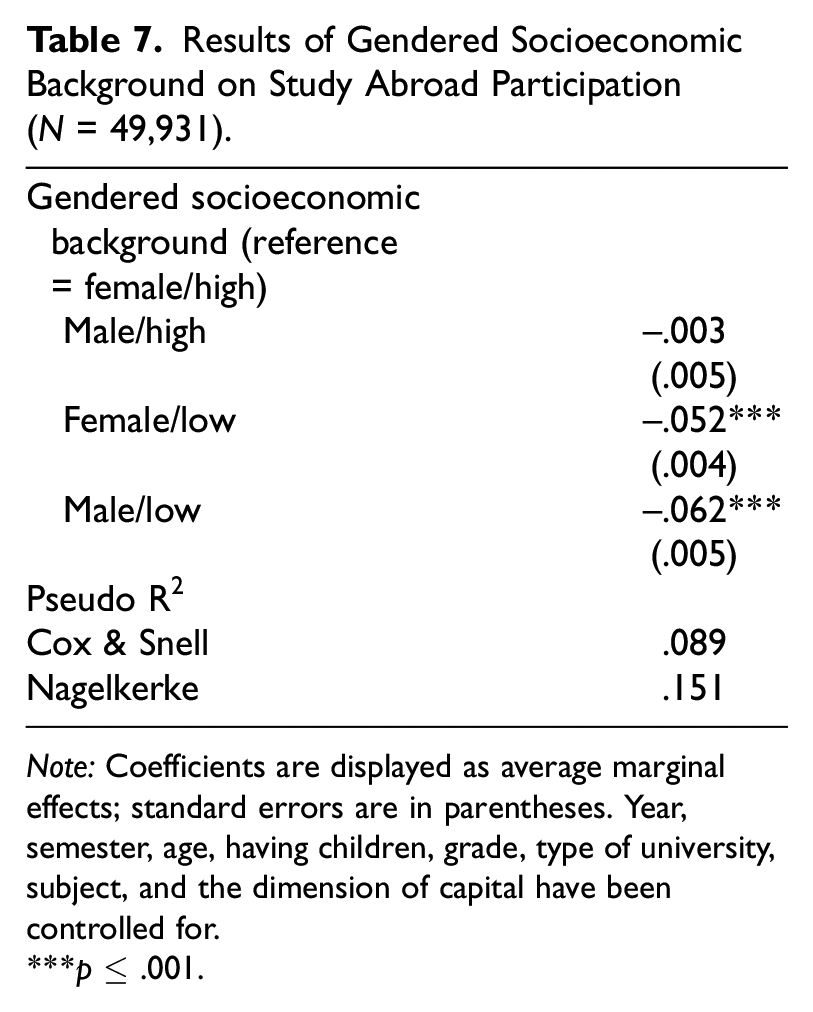
Note: Coefficients are displayed as average marginal effects; standard errors are in parentheses. Year, semester, age, having children, grade, type of university, subject, and the dimension of capital have been controlled for.
p ≤ .001.
Table 8 depicts the direct effects of the gendered socioeconomic background variable on participation in language courses. Female students with at least one higher educated parent are significantly more likely to participate in such courses compared to other students. The probability to participate in language courses ranges from −2.8 percent points for men with at least one higher educated parent to −6.4 percent points for men with no higher educated parents.
Results of Gendered Socioeconomic Background on Participation in Language Courses (N = 49,931).
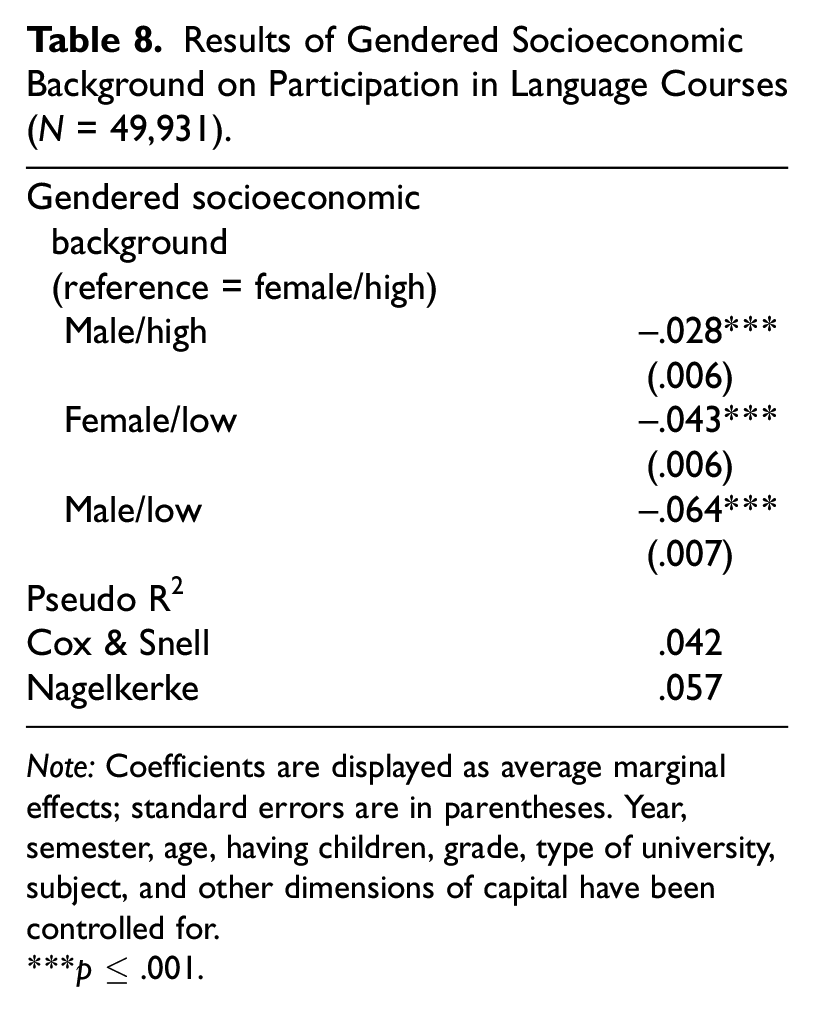
Note: Coefficients are displayed as average marginal effects; standard errors are in parentheses. Year, semester, age, having children, grade, type of university, subject, and other dimensions of capital have been controlled for.
p ≤ .001.
Finally, we hypothesized that cultural capital moderated by gender would mediate the relationship between socioeconomic background and the probability to study abroad. Table 9 shows the results of this moderated mediation. Female students from higher socioeconomic backgrounds are indeed more likely to engage in study abroad compared to male students from higher socioeconomic backgrounds and male and female students from lower socioeconomic backgrounds due to their more frequent participation in language courses. Put differently, the relationship between socioeconomic background and study abroad participation through cultural capital differs between male and female students. Hence, Hypothesis 3b is accepted. Despite these significant effects, the effect size is small, as the mediation effects range from a 0.3- to 0.5-percent points decrease in the probability to study abroad. The proportion mediated for male students with at least one higher educated parent is not statistically significant (42.9 percent), whereas it is significant for male and female students with no higher educated parents (7.6 percent and 9.3 percent, respectively).
Results of the Moderated Mediation with Participation in a Language Course.
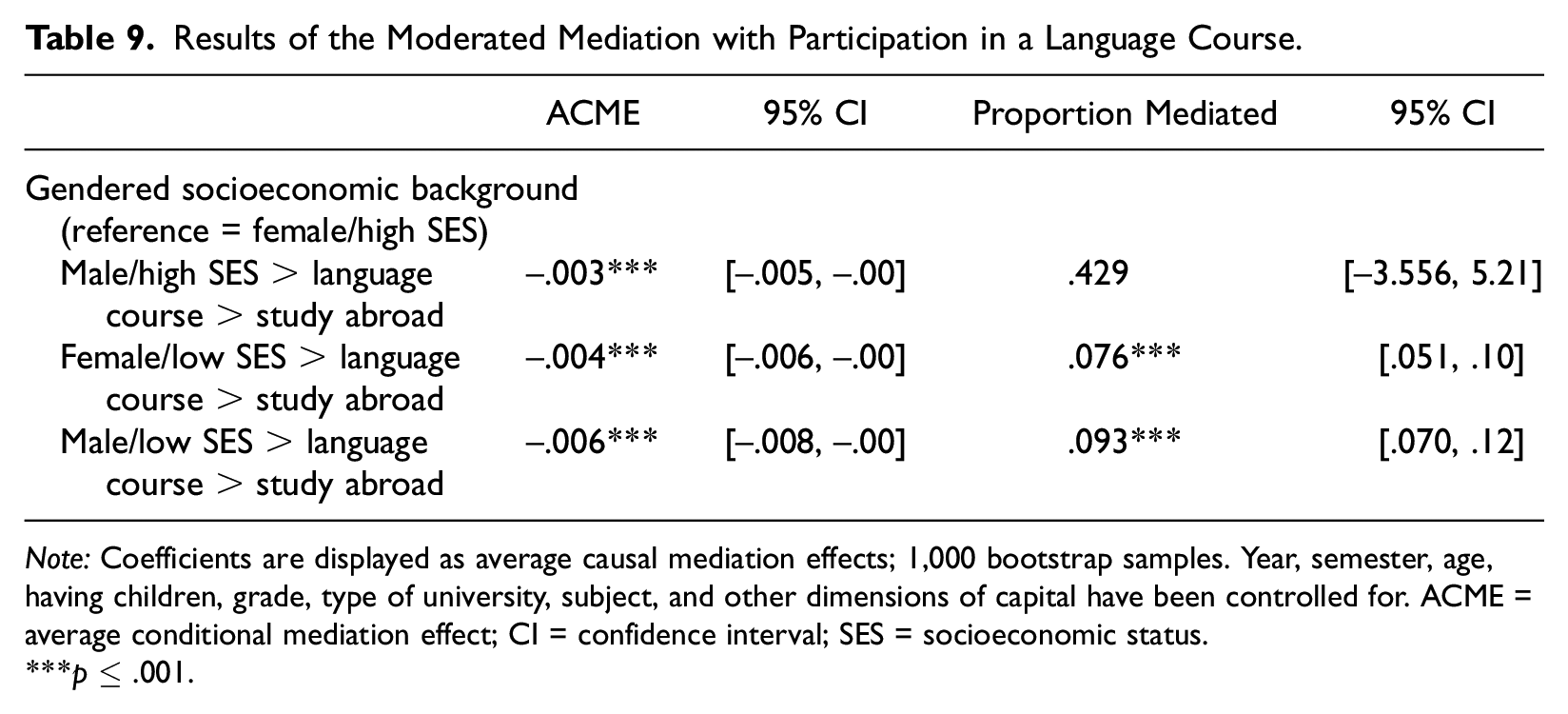
Note: Coefficients are displayed as average causal mediation effects; 1,000 bootstrap samples. Year, semester, age, having children, grade, type of university, subject, and other dimensions of capital have been controlled for. ACME = average conditional mediation effect; CI = confidence interval; SES = socioeconomic status.
p ≤ .001.
Conclusions and Discussion
In recent years, two possibly interrelated trends gained attention among scholars focusing on international student mobility: the overrepresentation of students from higher socioeconomic strata and a gender imbalance in study abroad programs. In this article, we connected both lines of research to investigate how different social markers might intersect in study abroad decision-making processes. Starting from the literature on social class and reproduction, we argued that study abroad can be a strategy of distinction for students from higher socioeconomic strata (Di Pietro 2020). Marked by their habitus and increased levels of cultural, economic, and social capital, we expected, in line with previous studies, that students from higher socioeconomic strata are more likely to study abroad. Starting from the emerging literature on the gender gap in study abroad (e.g., Hurst 2019; Van Mol 2022), we expected upper-class women to be overrepresented in study abroad programs because they are more socialized to “do” culture compared to upper-class men. The analyses lead to four key conclusions.
First, in line with earlier studies in the German context (e.g., Di Pietro 2020; Finger 2011; Lörz and Krawietz 2011; Netz and Finger 2016), our findings suggest that social selectivity in study abroad remained stable over time but increased in 2003. In line with social reproduction theory (Bourdieu 1973) and processes of “education inflation” (Côté and Allahar 1996), students from higher socioeconomic backgrounds appear to seek exclusive educational practices to increase the value of their degree and horizontally distinguish themselves from other students. The stable trend in social selectivity after 2003 might indicate that general measures to mitigate social inequality in higher education in Germany have had the desired effect on study abroad participation. In particular, the implementation of the German Student Aid Reform of 2001, which aimed to increase student aid to students from lower socioeconomic backgrounds and the number of eligible students, could explain this pattern. An alternative explanation as to why the social selectivity of study abroad programs remained stable after 2003 is that students from higher socioeconomic backgrounds chose more exclusive study abroad opportunities, such as a full degree abroad (Netz and Finger 2016; Raftery and Hout 1993), to distinguish themselves rather than participate in shorter-term international student exchanges, on which we focused here.
Second, and in line with prior literature, cultural, social, and economic capital explain the overrepresentation of students from higher socioeconomic backgrounds (see Desoff 2006; Green et al. 2015; Hauschildt et al. 2015; Netz and Finger 2016; Salisbury et al. 2010, 2011; Waters and Brooks 2010). These students enter tertiary education with higher levels of cultural capital (Ballatore and Ferede 2013; Waters and Brooks 2010), and they further increase their advantage by acquiring foreign language proficiencies (DuFon and Churcill 2006) and through participation in extracurricular activities (Salisbury et al. 2011). In addition, students from higher socioeconomic backgrounds more often have friends and family with international experience (Water and Brooks 2010), which increases students’ chance to study abroad because these networks provide useful information and mental support (Van Mol and Timmerman 2014). Finally, students from higher socioeconomic backgrounds receive more parental financial support to cover the costs related to their studies (Hauschildt et al. 2015). Ample empirical evidence suggests that having insufficient financial resources significantly decreases study abroad participation (for recent overviews, see Brooks and Waters 2021; Netz et al. 2021). The dimensions of capital may have a cumulative effect on the probability to engage in study abroad (Green et al 2015; Salisbury et al. 2009). Our results corroborate this because the individual effects of social, cultural, and economic capital all remained statistically significant when controlling for the other dimensions of capital. Our findings thus corroborate that the dimensions of capital cannot be viewed as separate entities.
Third, we aimed to provide an empirical explanation as to why women are more likely than men to participate in study abroad programs. Cultural capital, measured as participation in language courses, explained men’s and women’s different participation rates. Despite the absence of a statistically significant direct effect between gender and study abroad, we did observe a statistically significant effect of gender on study abroad via participation in language courses. This finding is in line with the assumption that cultural capital is a “gendered capital” (Atkinson 2016). Women often show a stronger interest in cultural activities and have higher levels of cultural capital (see Katz-Gerro 2006; Lamont 1992; Tilley and Houston 2016), which, in turn, explain women’s overrepresentation in study abroad programs. When investigating the intersection between socioeconomic background and gender through cultural capital, the analysis revealed that women from higher socioeconomic backgrounds are the most likely to study abroad because they have the highest levels of cultural capital. The findings indicate that the effect of gender through cultural capital is significantly different across socioeconomic backgrounds. Note, however, that despite their statistical significance, the effect sizes of the obtained results are rather small.
Finally, we note some limitations of our study. First, we measured cultural, social, and economic capital with single-item measures, which do not do justice to the complexity of these concepts. Future studies could investigate the role of these types of capital with latent variables, improving the overall validity of the presented findings. A second limitation concerns the sample. Many of the surveyed students were at the early stages of their studies, which might result in a biased estimate of students that studied abroad. However, prior literature indicates that intentions to move are good proxies for actual behavior (Bjarnason and Thorlindsson 2006; van Dalen and Henkens 2012), so we included respondents with strong mobility intentions in the group of students that went abroad. Therefore, we are confident that our study abroad measure did not affect the overall validity of our contribution.
Future studies could elaborate on this work by broadening the social inequality perspective and investigating the intersection between socioeconomic background, gender, and ethnicity. The handful of existing studies on the role of ethnicity in study abroad participation shows conflicting evidence (for an overview, see Netz et al. 2021). Netz and Sarcletti (2021), however, discuss how minority populations can use migration-specific experiences and competences to compensate for socioeconomic disadvantages. In addition, future research could also investigate more in-depth the role of study subject. Our results corroborate Hurst’s (2019) findings that female students from high socioeconomic backgrounds are more likely to study abroad. Hurst focused on U.S. liberal arts students, and we were able to extend her approach for German students enrolled in various subjects. Finally, our contribution highlights the need for more longitudinal research in different contexts across the world.
In conclusion, our results indicate that social selectivity of study abroad programs continued in Germany from 1994 to 2016. Today, the relationship between social origin and educational outcomes is stronger in Germany compared to other countries (OECD 2018). The higher amounts of cultural capital possessed by the upper-class partially explains the overrepresentation of these students, but it does not provide a full account of class differences in study abroad participation. Moreover, our analyses show cultural capital to be an important predictor of study abroad participation, explaining both differential participation rates between students’ gender and their socioeconomic background. Clearly, our findings call for more research into the subject, and we encourage scholars to further examine social selectivity and the gender gap in study abroad programs. More attention to early socialization and children’s cultural experiences could help explain why upper-class women are most likely to “do” culture and to participate in study abroad programs.
Supplemental Material
sj-docx-1-soe-10.1177_00380407231167087 – Supplemental material for Explaining Social Selectivity in Study Abroad Participation of German Students between 1994 and 2016
Supplemental material, sj-docx-1-soe-10.1177_00380407231167087 for Explaining Social Selectivity in Study Abroad Participation of German Students between 1994 and 2016 by Nathalie Aerts and Christof Van Mol in Sociology of Education
Supplemental Material
sj-docx-2-soe-10.1177_00380407231167087 – Supplemental material for Explaining Social Selectivity in Study Abroad Participation of German Students between 1994 and 2016
Supplemental material, sj-docx-2-soe-10.1177_00380407231167087 for Explaining Social Selectivity in Study Abroad Participation of German Students between 1994 and 2016 by Nathalie Aerts and Christof Van Mol in Sociology of Education
Supplemental Material
sj-docx-3-soe-10.1177_00380407231167087 – Supplemental material for Explaining Social Selectivity in Study Abroad Participation of German Students between 1994 and 2016
Supplemental material, sj-docx-3-soe-10.1177_00380407231167087 for Explaining Social Selectivity in Study Abroad Participation of German Students between 1994 and 2016 by Nathalie Aerts and Christof Van Mol in Sociology of Education
Footnotes
Research Ethics
This study has been reviewed and approved by the Ethics Review Board of the School of Social and Behavioural Sciences of Tilburg University (RP400). A data package with the dataset and syntaxes is stored at Surfdrive. The authors and the head of the Department of Sociology of Tilburg University have access to this package. The data, including sensitivity analyses, are available upon reasonable request.

Supplemental Material
Supplemental material for this article is available online.
Notes
Author Biographies
References
Supplementary Material
Please find the following supplemental material available below.
For Open Access articles published under a Creative Commons License, all supplemental material carries the same license as the article it is associated with.
For non-Open Access articles published, all supplemental material carries a non-exclusive license, and permission requests for re-use of supplemental material or any part of supplemental material shall be sent directly to the copyright owner as specified in the copyright notice associated with the article.
