



Abstract
This paper presents an experimental and simulation study of a novel hybrid technique for maximum power point tracking (MPPT) based on a modified PSO algorithm utilizing an intelligent artificial neural network (IANN) for partially shaded PV systems. The technique leverages experimental voltage and current data from the PV system, with filtered instructor feedback training the IANN-based optimization method. MATLAB-Simulink was used for analyzing and interpreting simulation results, as well as demonstrating the performance of the algorithm. In this hybrid approach, the IANN significantly accelerates MPP tracking by providing the PSO algorithm with more accurate initial particle positions, enhancing efficiency and data collection speed during rapid weather changes. Several algorithms, including P&O, Cuckoo, IANN, PSO, and the hybrid IANN-PSO, were implemented using a dual-core DSP F28379D card. The performance of the proposed technique was examined and compared with various algorithms such as PSO, Cuckoo, and IANN controllers. Compared to recent work published in the literature, the proposed hybrid technique shows superior results in various performance metrics, achieving a maximum power efficiency of 99.99%, a relative error of 0.000001, and a minimum tracking acceleration of 0.01 seconds. Additionally, electronic circuits (PCB boards) were developed and implemented to demonstrate the efficiency of the proposed system in real-world applications.
Keywords
Introduction
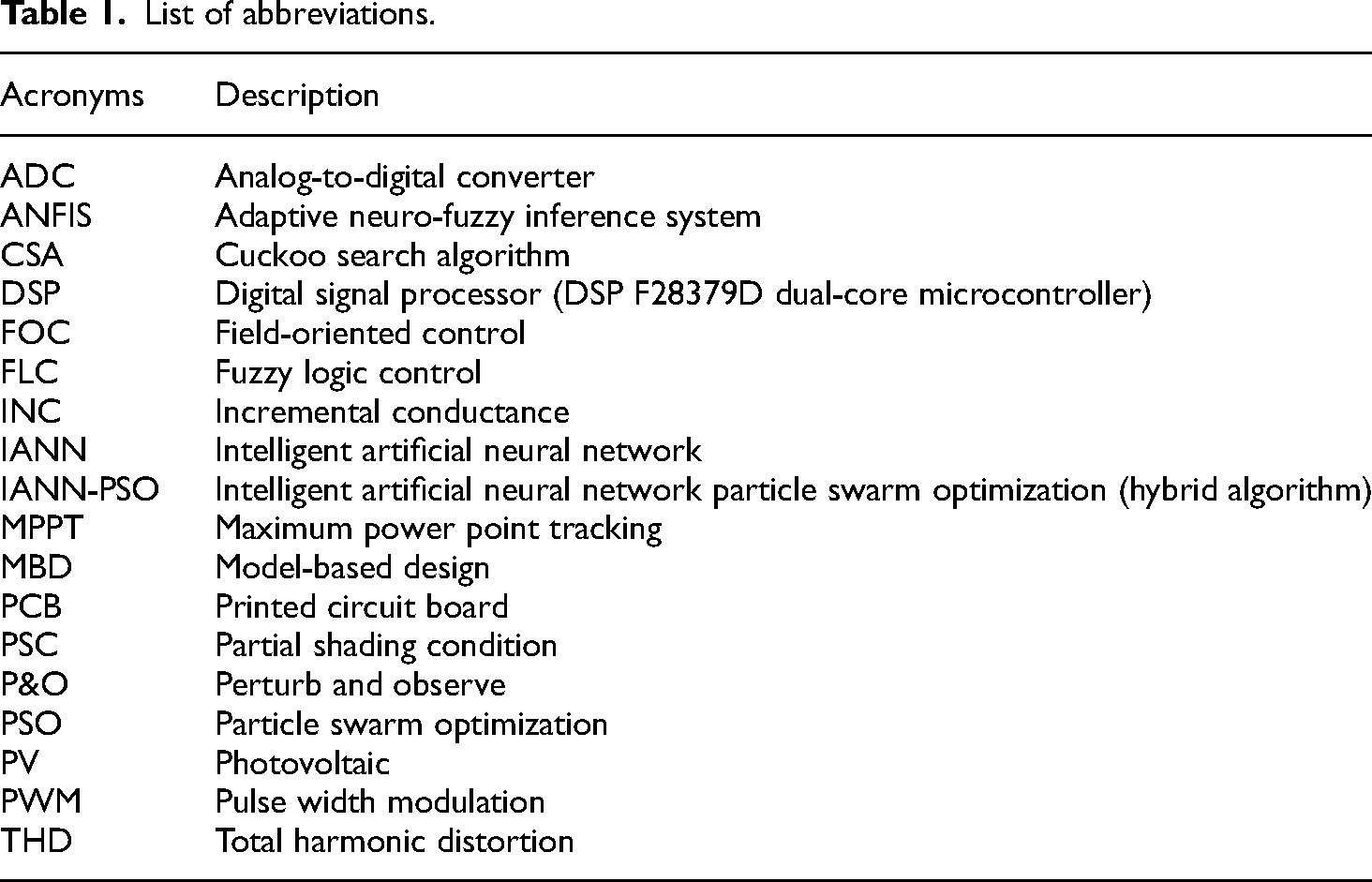
Renewable energy sources are gaining increasing popularity for their economic sustainability and environmental reliability. People are increasingly inclined to utilize renewable sources for power generation to mitigate CO2 emissions. Among these renewable options, photovoltaic (PV) systems are emerging as the top choice due to their cost-effectiveness and ease of implementation. Furthermore, the advancements in DC micro-grids and nano-grid systems are enabling the extension of electricity to rural areas. Nowadays, both rural and urban areas are transitioning towards sustainable and environmentally friendly solar systems. 1 However, the nonlinear characteristics of photovoltaic systems in response to changing environmental conditions pose challenges for PV system design. To address this issue, various MPPT methods are employed, enabling the effective tracking of maximum power across varying environmental scenarios. 2 Certain conventional techniques, such as P&O, Cuckoo, and incremental conductance methods, are employed. 3 Additionally, intelligent methods, including ANN and fuzzy logic, are utilized for this tracking objective. 4 However, another environmental constraint when designing MPPT for PV systems is partial shading. This represents one of the prevalent environmental challenges that occurs when specific PV strings experience partial shading. This partial shading can lead to a hotspot problem, potentially causing damage to the affected strings under such conditions. To mitigate the impact of partial shading, a bypass diode is incorporated in parallel with each PV module. However, the introduction of a bypass diode across the PV cell gives rise to a multiple local maxima issue. This abundance of peaks poses a challenge for many conventional methods in accurately tracking the true maximum power point (MPP) under partial shading conditions. 5 While PSC is used, stochastic search methods (particle swarm optimization) produce quite an exact search record. 6 Other conventional approaches fail to monitor true MPP. 7 Intelligent methods also fall short in accurately tracking the MPP. 8 Therefore, the application of particle swarm optimization proves to be more effective. 9 The PSO method’s primary drawbacks are its slow operation and significant oscillations. 10 The PSO approach has undergone a number of revisions to address significant oscillation issues. 11 These revisions have aimed at improving the stability and accuracy of the method. 12 Various modifications have been proposed to enhance performance under different conditions. 13 Researchers have developed techniques to mitigate oscillation and improve convergence rates. 14 Overall, the evolution of the PSO approach has led to more robust and reliable solutions. 15 Certain adjustments were implemented in the reinitiation process of the PSO algorithm. However, the standalone PSO method proved to be inadequate in swiftly detecting the maximum power point (MPP). To address this limitation and ensure both speed and reliability, it became imperative to explore an alternative approach. Given that PSO exhibited high reliability under partial shading conditions but was sluggish, modifications were introduced. These alterations involved incorporating other methods in parallel with the PSO technique within a hybrid structure. In, 16 a hybrid approach was introduced that merged the PSO with the perturb and observe method. This integration led to a notable reduction in the PSO's convergence time, from 3.75 seconds to 500 milliseconds, as the search window was narrowed. However, there was still a desire for further reductions in tracking time. Introducing artificial intelligent systems became imperative, as they exhibited swifter processing and possessed the capability to handle the nonlinearities present in the I–V characteristics of PV systems. In a previous study, 17 a combination of the perturb and observe method with artificial neural networks (ANN) was employed. Since both ANN and P and O demonstrated rapid tracking capabilities, this approach exhibited speed. However, it proved to be unreliable under partial shading conditions due to the presence of multiple peaks. While a previous study 18 compares enhanced gray wolf optimization (EGWO) and marine predator algorithm (MPA) for global MPP tracking under partial shading in PV systems, a study 19 proposes a transformerless DC–DC converter with battery storage and validates its performance through a simulation study. A study 20 integrated a fuzzy logic controller with the perturb and observe method. In another approach, 21 Priyadarshi introduced a different hybrid method, combining the adaptive neuro-fuzzy inference system (ANFIS) with the particle swarm optimization (PSO) method, especially effective under varying sunlight conditions. The reliability of the PSO method, coupled with the incorporation of ANFIS, rendered this approach both swift and dependable. In another study 22 A PI controller that has been adjusted via the gravitational search algorithm controls the DC link voltage. One of the widely embraced artificial intelligence systems is the artificial neural network (ANN). The increasing popularity of ANN can be attributed to its simplicity and straightforward implementation. When it comes to developing maximum power point tracking (MPPT) for PV systems under partial shading conditions (PSC), ANN assumes a pivotal role. ANN excels at providing a more precise prediction of the nonlinear behavior exhibited by PV systems. Therefore, integrating ANN with the PSO method holds the promise of enhancing tracking speed. 23 Furthermore, thanks to the inclusion of the PSO algorithm, this approach boasts a heightened ability to consistently identify the maximum power point (MPP) compared to other hybrid techniques. This paper will delve into a hybrid approach combining artificial neural networks (ANN) and PSO. Additionally, I will assess the performance of this novel hybrid method by comparing it with the standalone PSO method. Both the PSO and hybrid methods will be applied to the identical PV array configuration. The structure of this paper is organized as follows: In Section 1, a description of partial shading conditions is presented. While Section 2 outlines the design of the DC–DC boost converter architecture, MPPT under partial shading is described in Section 3. Section 4 presents the methodology used and implementation of different algorithms (such as indicated in Table 2) on DSP F28379D, and Section 5 presents results and discussion, finally concluding with a conclusion. All the abbreviations used in this paper are presented in Table 1.
List of abbreviations.
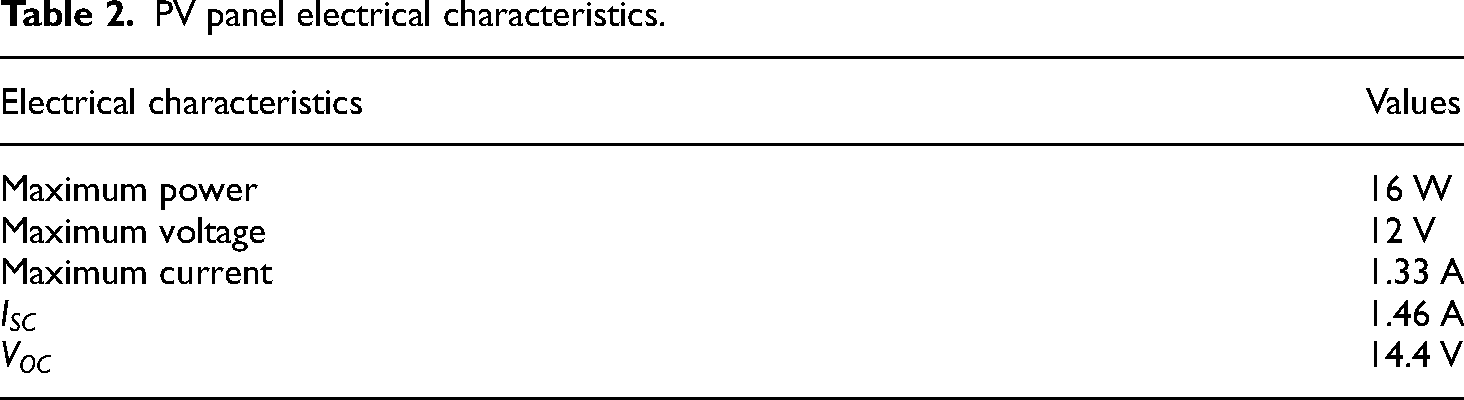
PV panel electrical characteristics.
Partial shading conditions
The individual PV module's output voltage falls below the system's voltage requirement. To elevate the system's voltage, PV modules are interconnected in series. Nevertheless, the entire PV array doesn’t consistently receive uniform irradiance levels. In situations where specific segments of the PV strings experience partial shading, whether due to dense cloud cover, buildings, or trees, the irradiance received varies from one module to another.
The efficiency of the photovoltaic array decreases even if only parts of the PV panels within the array are shaded. 24 The shaded cells draw electric power from the unshaded cells, leading to hot spots that can cause permanent damage to the PV cells. 25 The unequal distribution of sunlight among the strings gives rise to a hotspot issue within the shaded cell areas. Only the PV cells that receive full illumination produce a significant amount of energy, while the shaded cells absorb this energy and transform it into heat. This scenario, referred to as the hotspot problem, can potentially harm the partially shaded PV cells and subsequently decrease the PV module's lifespan. To mitigate the impact of partial shading, bypass diodes are integrated across each PV string, as illustrated in Figure 1. In situations of partial shading, the short-circuit current of each PV module connected in series may exhibit variation. Consequently, the bypass diode of the partially shaded cell becomes forward-biased, allowing current to flow through the bypass diode and thereby preventing the formation of hotspots.

Representation of panels in partial shading.
Nonetheless, the inclusion of the bypass diode introduces another issue, leading to the emergence of multiple peaks. Specifically, there are two types of peaks: the global peak (GP) and the local peak (LP), with the true maximum power point (MPP) residing solely at the GP on the P–V characteristic curve of a partially shaded PV array, as depicted in Figure 6. Due to the presence of multiple peaks, traditional methods such as PSO, IncCond, and ANN struggle to accurately identify the genuine global peak and often remain within the vicinity of local peaks. Therefore, an alternative MPP search approach is essential, one that can effectively pinpoint the global peak rather than becoming stuck around the local peaks.
DC–DC boost converter
The boost converter circuit is commonly utilized as an intermediary between the load and the PV panel, playing a crucial role in the system. In this setup, its primary function is to match the PV output with the load in order to achieve maximum power (MP). This converter accomplishes this by converting the input direct current voltages into variable direct current voltages, thereby adjusting their magnitude. Figure 2 illustrates the power circuit configuration of the boost converter applied in this study. This basic boost converter comprises essential components such as a switch, diode, capacitor, and inductor. The control of the output voltage produced by the boost converter circuit relies on the manipulation of the duty ratio.
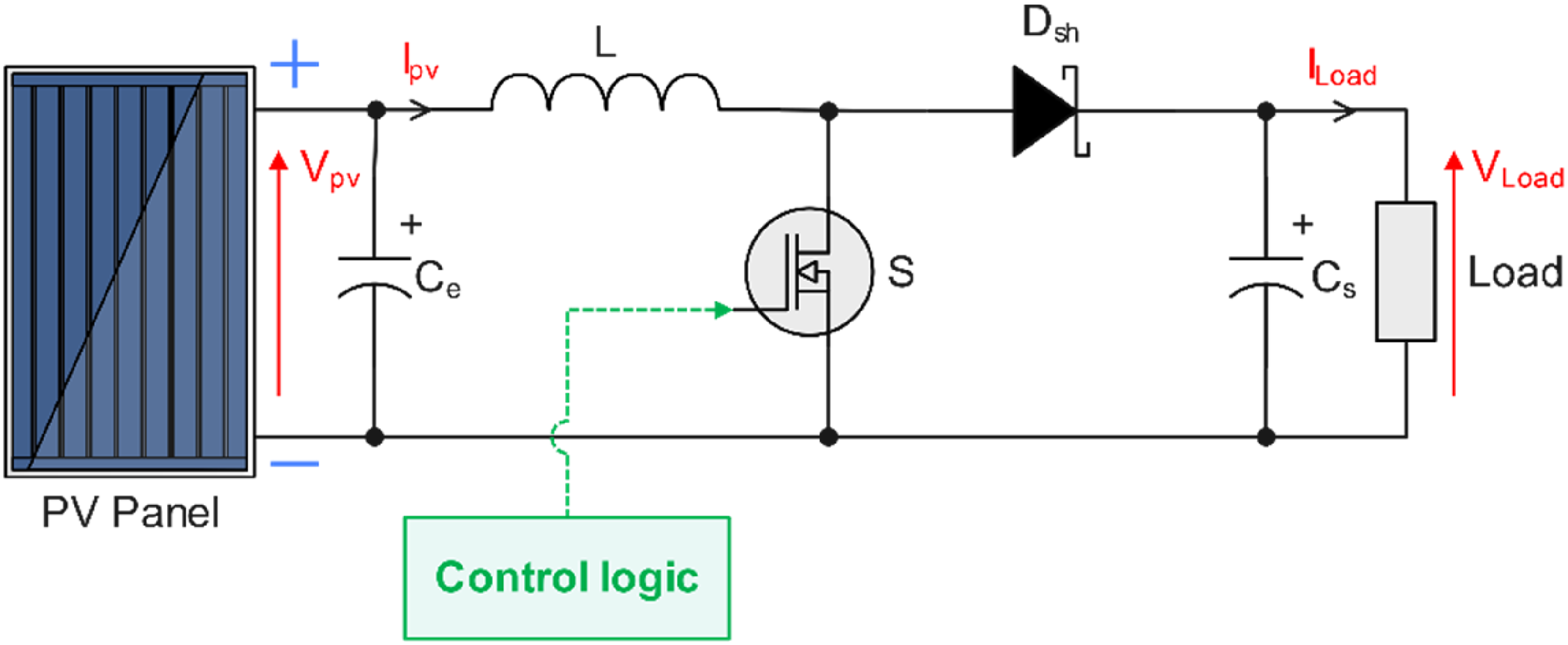
Boost converter topology with PV array.
The equation provides the crucial inductance value for the boost converter. D is the duty cycle.
with the approximate ripple current in the inductor as 40%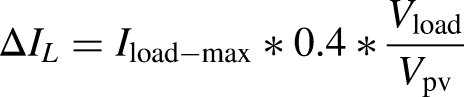

The provided equation determines the value of the input capacitor, accounting for constraints imposed by ripples.

MPPT methods under shading
In scenarios involving partial shading conditions, traditional algorithms such as P&O, IncCond, and ANN often struggle to effectively distinguish between the global peak and local peaks on the PV characteristic curve. Consequently, stochastic search methods like PSO are frequently deployed under these conditions, as they possess the ability to accurately identify the maximum power point (MPP). However, there is potential for improvement through the implementation of a novel hybrid intelligent method that combines PSO and ANN under partial shading conditions. This approach aims to expedite the search process. This paper will delve into both the PSO and the new hybrid method, comparing their performance in such conditions.
Particle swarm optimization (PSO)
In the presence of numerous local peaks resulting from partial shading, a stochastic search technique called particle swarm optimization (PSO) is utilized to identify the global peak, which represents the maximum power point (MPP) of the PV array. PSO is an optimization method that operates with a population of particles. Initially, these particles are randomly distributed within a specified search space using certain equations. Over time, these particles move toward the true MPP, ultimately converging to the optimal solution. This method proves highly effective and can be applied to optimize multivariable functions with multiple local extrema, making it a suitable choice for MPPT in this context. The PSO technique employs two operators: the particle position update operator (equation 7) and the velocity update operator (equation 6). Both operators are influenced by the power output of the PV module, which in turn affects the optimal particle position and velocity update. The algorithm's output, in this case, is the duty cycle for the boost converter's switch. Consequently, the determination of the duty cycle is based on the particle position and is represented by the variable D in equation 7. The following are the two expressions:

The PSO employs M particles or agents to search for the maximum power within the PV array. Increasing the number of particles enhances search accuracy but also prolongs the computational or tracking time. In this hybrid method, I select N = 8 particles. Each particle navigates through a designated search space with its own velocity, represented as
Given the dynamic variations in irradiance patterns, the PSO algorithm as depicted in Figure 3 requires periodic reinitialization whenever an environmental change occurs. This change is detected by comparing the power change with a critical threshold value. When

Flowchart of PSO method.
Hybrid IANN-PSO
PSO, as a stochastic search method, typically demands considerable time to track a global peak effectively. To address this challenge, certain adaptations were required. In the novel hybrid approach that combines intelligent artificial neural network (IANN) and particle swarm optimization (PSO), the ANN plays a crucial role by providing the initial particle position for the PSO method. This initial position (Iann) is reasonably close to the global maximum power point (MPP), thus restricting the PSO algorithm's search range. Utilizing this initial value, the PSO algorithm swiftly identifies the global MPP by determining the PV array's output current at this point. Furthermore, in the event of a sudden alteration in solar irradiance, the IANN detects this change and furnishes a fresh initial particle position (Iann) for the PSO algorithm. The flowchart illustrating this process is depicted in Figure 4.

Flowchart of the hybrid method.
In the PSO algorithm, a total of four particles are utilized, with one of their positions (
Methodology
PV system design
To illustrate the effects of partial shading, a PV panel array is necessary. To conduct this research, an initial step involves creating a Simulink model for the array. This array is composed of eight PV panels connected in series and parallel, with identical characteristics for all PV cells. Various irradiation patterns can be applied to this simulated PV array, allowing for the replication of real-world scenarios. With this array in place, both the PSO and the proposed hybrid method can be tested. Table 2 presents the parameters used for modeling a PV panel in Simulink.
The panels will be connected in both series and parallel configurations. To prevent any hot spot issues, a bypass diode is attached in parallel with each panel, and a blocking diode is linked in series with each series array. The Simulink model depicts the PV array, as illustrated in Figure 5 partial shading.

PV module parameters.
Partial shading scenarios
To represent the partial shading scenario, the array will be exposed to different irradiation patterns. In this study, I use three cases as shown in Table 3.
Partial shading patterns.
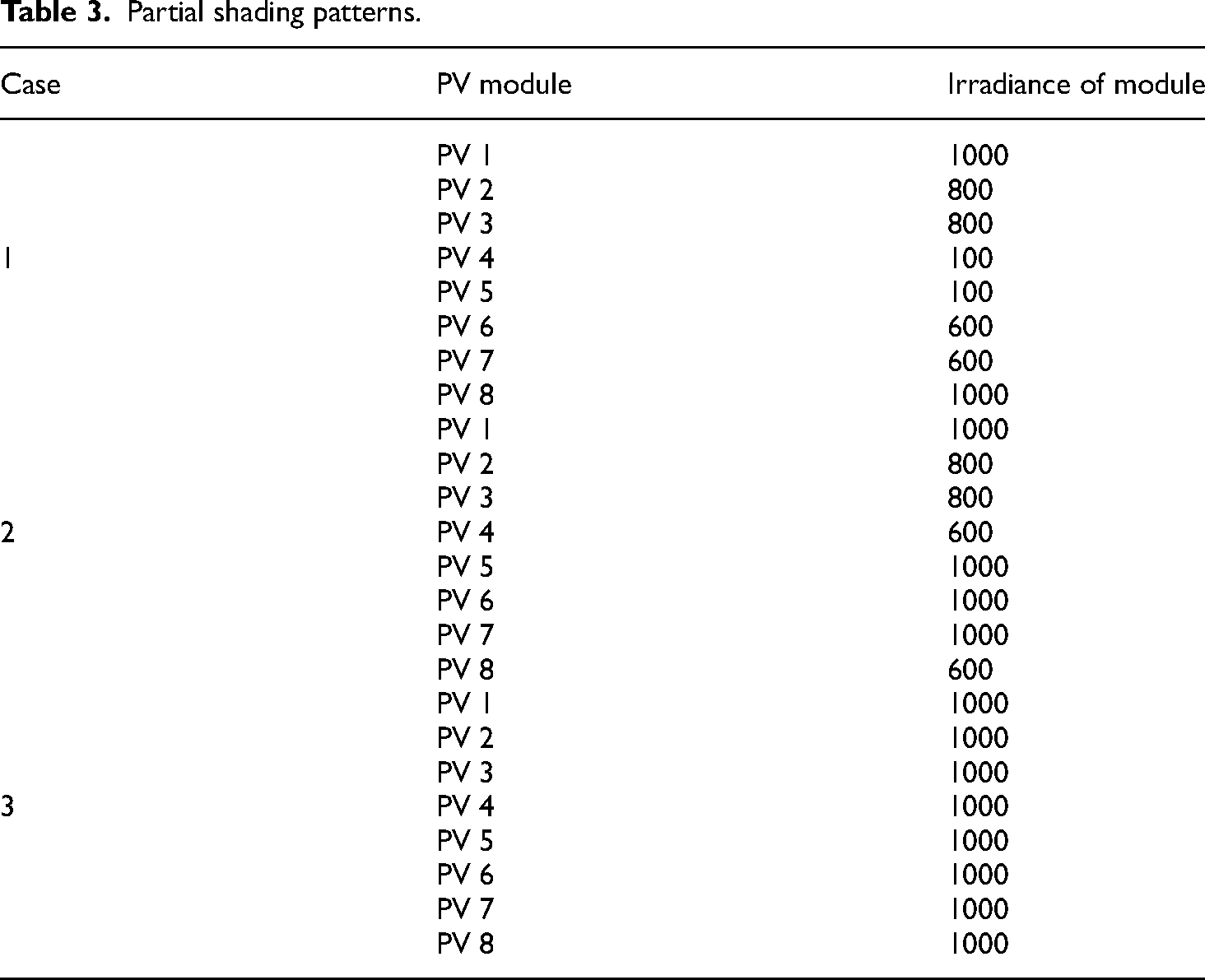
The PV array's P–V characteristics under three distinct cases are depicted in Figure 6. As shown in Figure 6, for the first array Serie, the MPP corresponds to 64 watts at 48 volts, and for the second array, the global peak is 64 watts at 48 volts. Both series arrays are connected in parallel in order for the global power of the system to be 128 watts. However, the MPPT algorithm should be capable of accurately detecting the MPP when transitioning from the first series and second series, disregarding the local peaks.
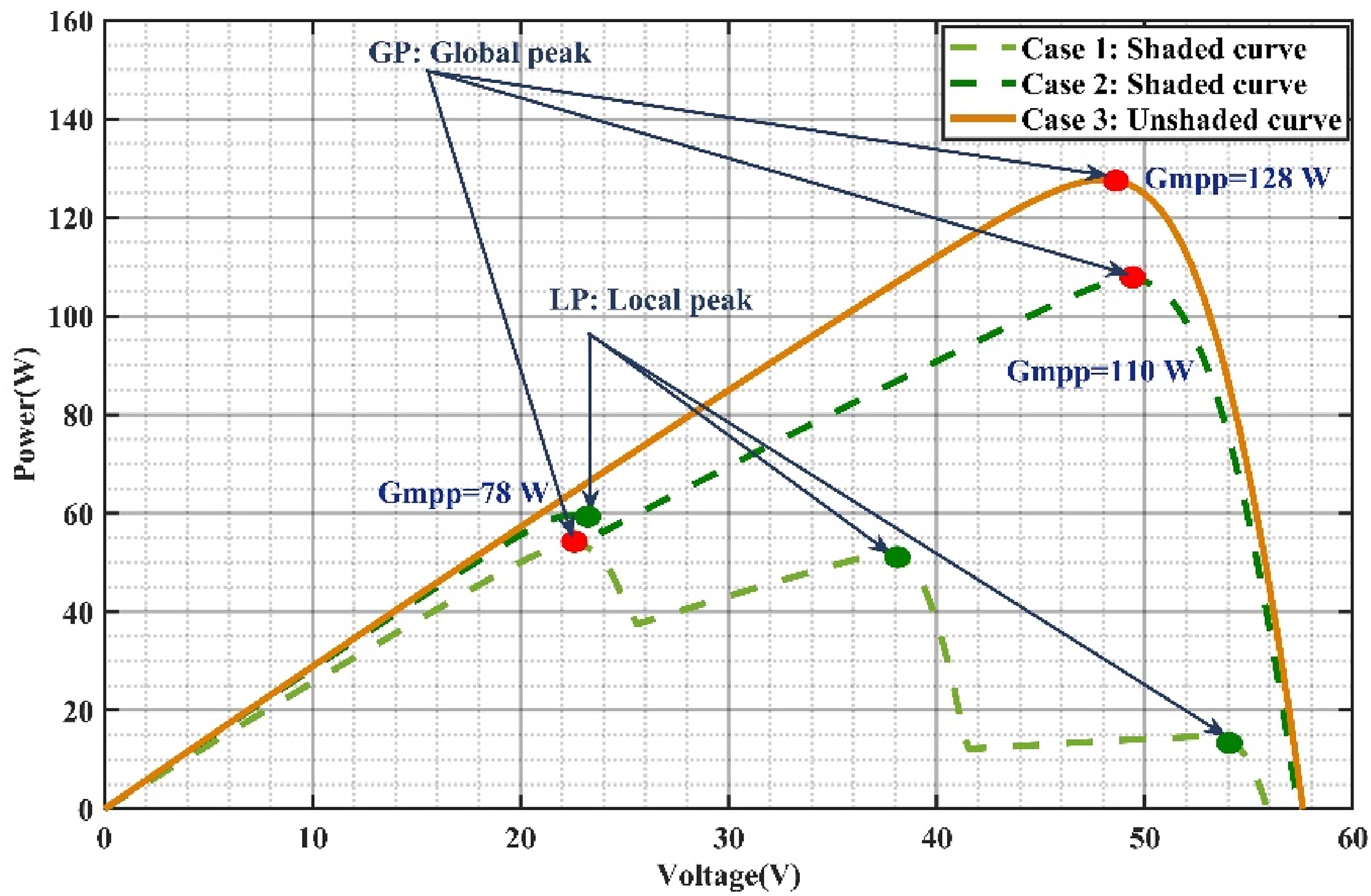
P–V characteristics of PV arrays.
Intelligent artificial neural network training
Concerning the training process of the artificial neural network (IANN) within the hybrid model, it utilizes irradiance levels and temperature data for each PV panel in the array as inputs to derive the initial particle position (
ANN training parameters.
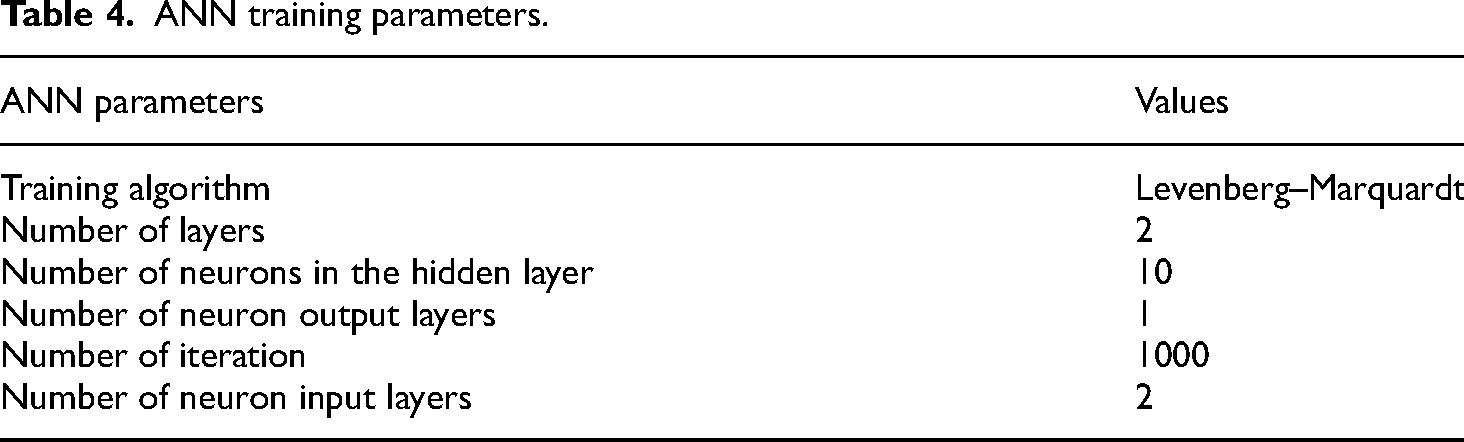
The training performance of the IANN is depicted in Figure 7, while the validation performance is illustrated in Figure 8. Examining the validation curve, it is evident that the optimal validation performance is achieved at 0.048906 during epoch 4.

Training performances of IANN.

Validation performances of IANN proposed.
Simulation of the suggested system
In the simulation model of the proposed hybrid MPPT approach as depicted in Figure 9, the array is connected to a boost converter. This converter's role is to capture the maximum power from the array, irrespective of the current conditions. The parameters related to the boost converter can be found in Table 5.

Simulation of the hybrid IANN-PSO in MATLAB-Simulink.
DC to DC boost converter parameters.

The core operation is performed by the switch, and its duty cycle is influenced by both the MPPT technique and the PID controller. This duty cycle, in turn, guides the pulse generator, which produces pulses for the switch at a frequency of 50 kHz. Furthermore, in the hybrid approach, I propose, the PSO technique is integrated with the IANN, Table 6 presents the parameters associated with the PSO technique.
PSO parameters.

Implementation in DSP board
Our experimental configuration features a conversion sequence that includes a photovoltaic (PV) module supplying power to a DC load through a boost converter. This converter is controlled by an IANN-PSO MPPT mechanism, guaranteeing that the PV output power matches the peak power generation. You can find an illustrative representation of this system in Figure 10.

Synoptic schema of realized PV system using DSP F28379D.
The primary measurement approach utilized in this test setup involves the collection of both current (I) supplied by the photovoltaic (PV) module and the voltage (V) across its terminals. These parameters, I and V, are acquired through current and voltage sensors linked to the inputs of the analog-to-digital converter, which boasts a 12-bit resolution. This converter is integrated into the DSP LAUNCHXL-F28379D board, a board equipped with two CPUs, each operating at a frequency of 100 MHz. Additionally, it offers the capability to transfer data through 16 ADC pins, with each pin capable of high-resolution data conversion up to 16 bits. This DSP board is programmed to function as an acquisition device, continually transmitting real-time acquired numerical values (Ipv, Vpv) to a computer via an RS232/USB serial converter. Figure 11 provides an illustration of the constructed practical system used to validate the hybrid IANN-PSO algorithm.
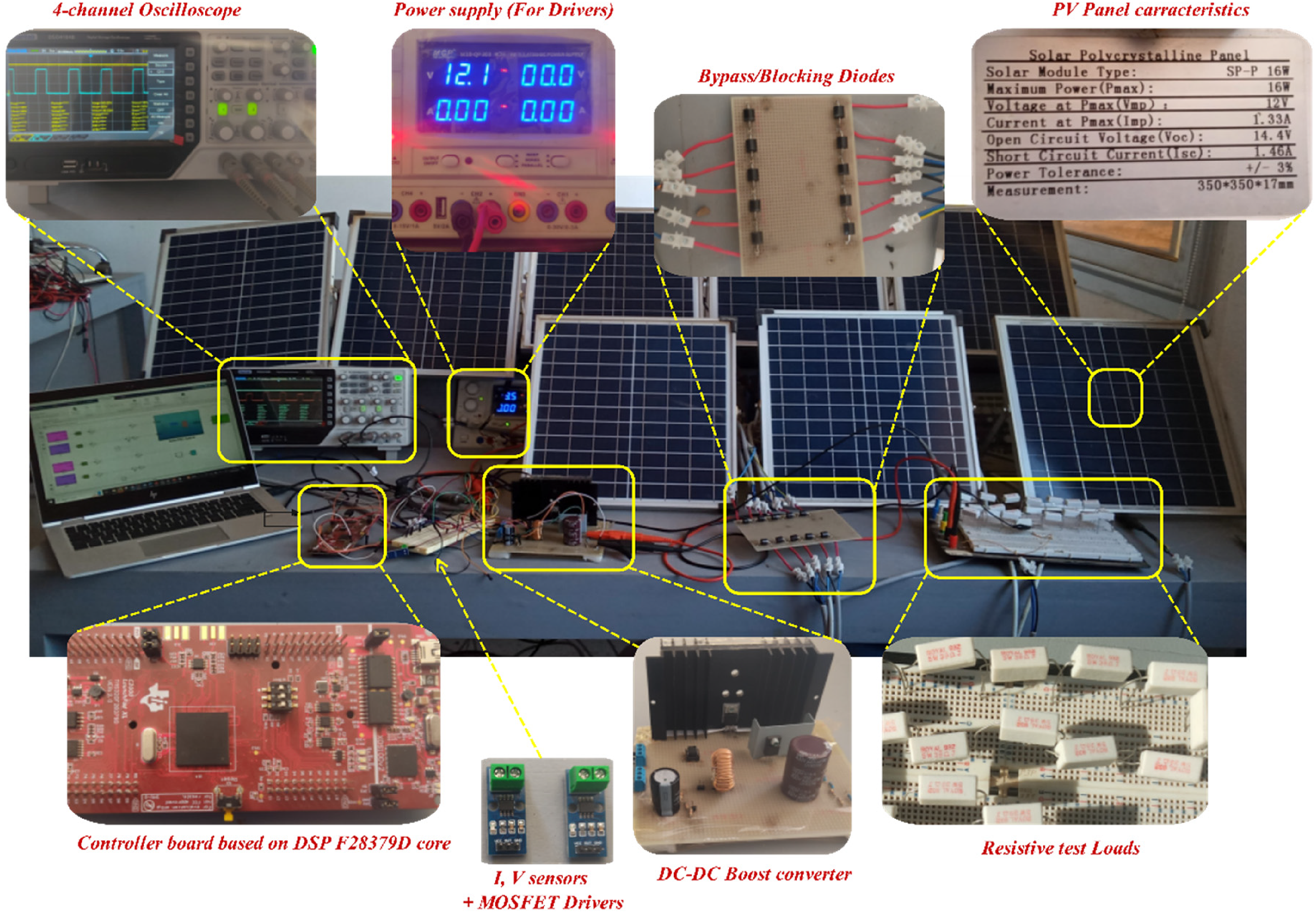
Practical realized PV system using DSP F28379D.
As for the processing unit, I have developed a program within the MATLAB-Simulink framework. This program is designed to gather data (irradiance, temperature, Ipv, Vpv), which will subsequently serve as inputs for the MPPT algorithms IANN-PSO to determine the optimal duty cycle for the DSP (F28379D). This, in turn, enables the generation of a pulse width modulation (PWM) signal. The PWM signal is then sent to a driver responsible for amplifying the current control of the MOSFET transistor in the boost converter.
Regarding the acquisition, storage, and processing of Ipv and Vpv measurements, Figure 12 illustrates the block diagram of the program that we’ve developed within the MATLAB-Simulink environment. This program facilitates the real-time visualization of attributes such as power under shading.

Acquisition program through the DSP F28379D and data processing under MATLAB-Simulink.
Figures 13 and 14 demonstrate the realized circuit of the DC–DC boost converter and its PCB circuit.

Realized DC–DC boost converter.

PCB circuit of realized DC–DC boost converter.
Results and discussion
To begin with, I employ the standalone PSO algorithm to assess the speed and effectiveness of the method within the specified partial shading conditions. This approach adeptly tracks the maximum power. Below, you will find the performance outcomes of both the standalone PSO MPPT approach and the innovative hybrid approach, encompassing power tracking, efficiency, and tracking duration. Table 7 presents the efficiency in tracking and tracking time of the PSO and IANN-PSO methods.
Comparative result of PSO algorithm and the proposed hybrid algorithm.

Upon comparing the performance of the PSO method with the new hybrid approach, a significant improvement in the speed of maximum power point (MPP) tracking becomes apparent. The hybrid method demonstrates greater speed and efficiency, as depicted in Figure 15. Meanwhile, Figures 16–18 present the outcomes of both methods in simulation mode. It's important to note that both methods underwent simulation using MATLAB-Simulink. This simulation involved varying temperature and irradiance conditions to facilitate a comparison between the PSO and IANN-PSO methods, particularly under partial shading scenarios.
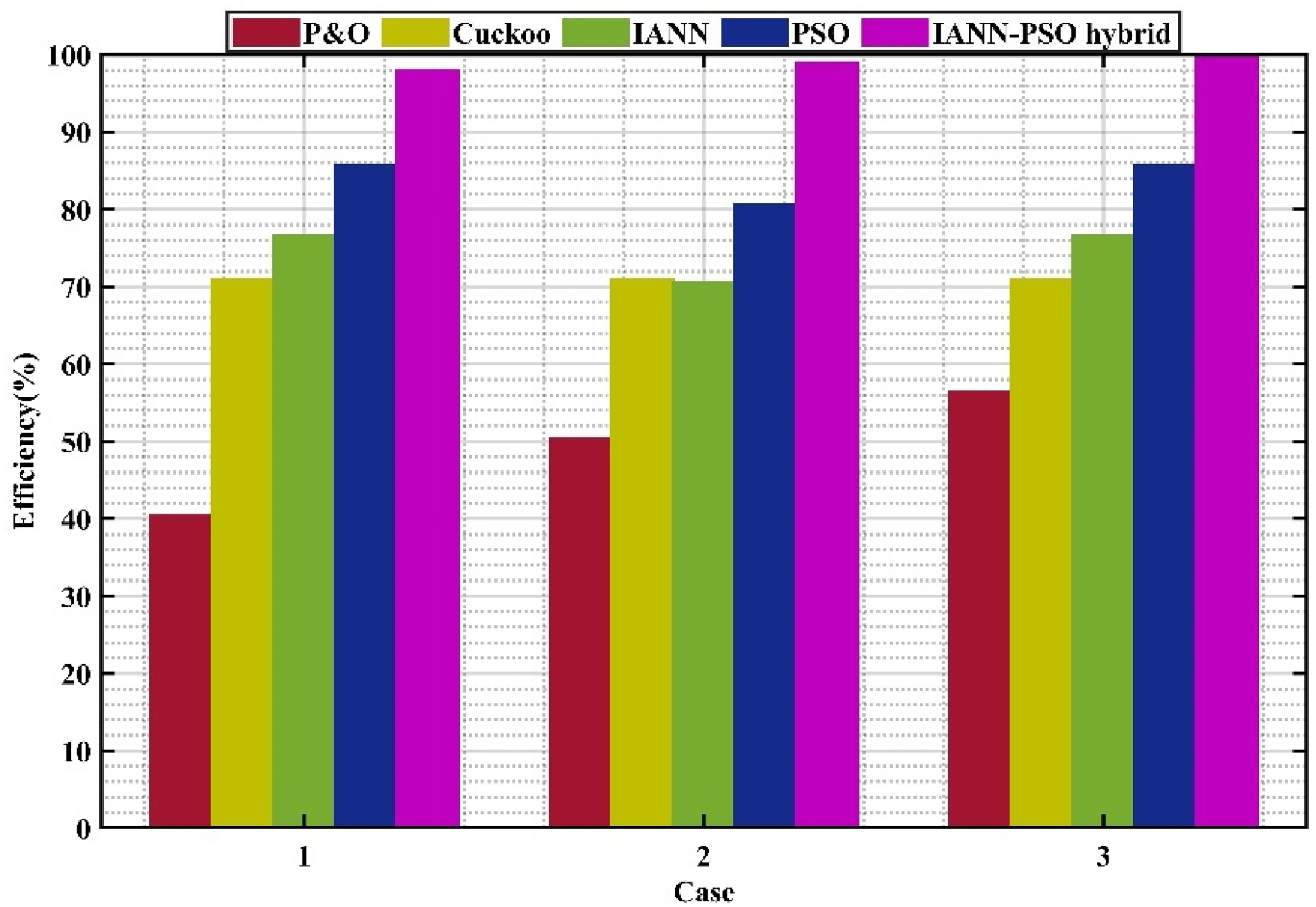
Efficiency system in three cases for different algorithms implemented.

Simulation result of output power of DC to DC converter using PSO and IANN-PSO hybrid method in case 1.

Simulation result of output power of DC to DC converter using PSO and IANN-PSO hybrid method in case 2.

Simulation result of output power of DC to DC converter using PSO and IANN-PSO hybrid method in case 3.
The power output under shading conditions is significantly lower when using the perturb and observe (INC) algorithm, whereas the PSO algorithm excels, particularly under varying weather conditions such as partial shading. However, it's worth noting that the PSO method's drawback is its extended response time. As shown in Figure 16, the time response of the PSO method is approximately 2.7 seconds, while the IANN-PSO method exhibits a much shorter minimum response time of just 0.1 seconds. In the case of the first scenario, both methods achieve a maximum power point (MPP) of 79 watts. This novel method stands out for its remarkable response time efficiency.
In Figure 17, we can observe the outcomes of the PSO method and the IANN-PSO method in simulation mode. As depicted in this figure, the power at maximum power point (Pmpp) remains consistent at 110 watts for both methods. However, there's a significant discrepancy in response times: the PSO method requires nearly 2.8 seconds, whereas the IANN-PSO method boasts a much faster response time of only 0.1 seconds.
In Figure 18, we can observe the power at maximum power point (Pmpp) for both the PSO method and the IANN-PSO method in simulation mode. It's evident from this figure that the PMPM remains consistent at 135 watts for both methods. However, there's a significant difference in response times, the PSO method takes approximately 2.8 seconds, whereas the IANN-PSO method demonstrates a much faster response time of only 0.1 seconds.
Table 8 depicts the comparison between the proposed hybrid algorithm and various hybrid algorithms from other studies.
A comparative study with various other studies.

The obtained results are notably realistic due to the system's ability to provide outcomes under actual hardware conditions, including factors like the MOSFET temperature in the boost converter, as well as irradiance and panel temperature. As depicted in Figure 19, the power at maximum power point (PMPM) is approximately 74 watts in the first case under partial shading conditions. In terms of response time, the PSO method requires 50 seconds, while the IANN-PSO method significantly reduces it to just 10 seconds.
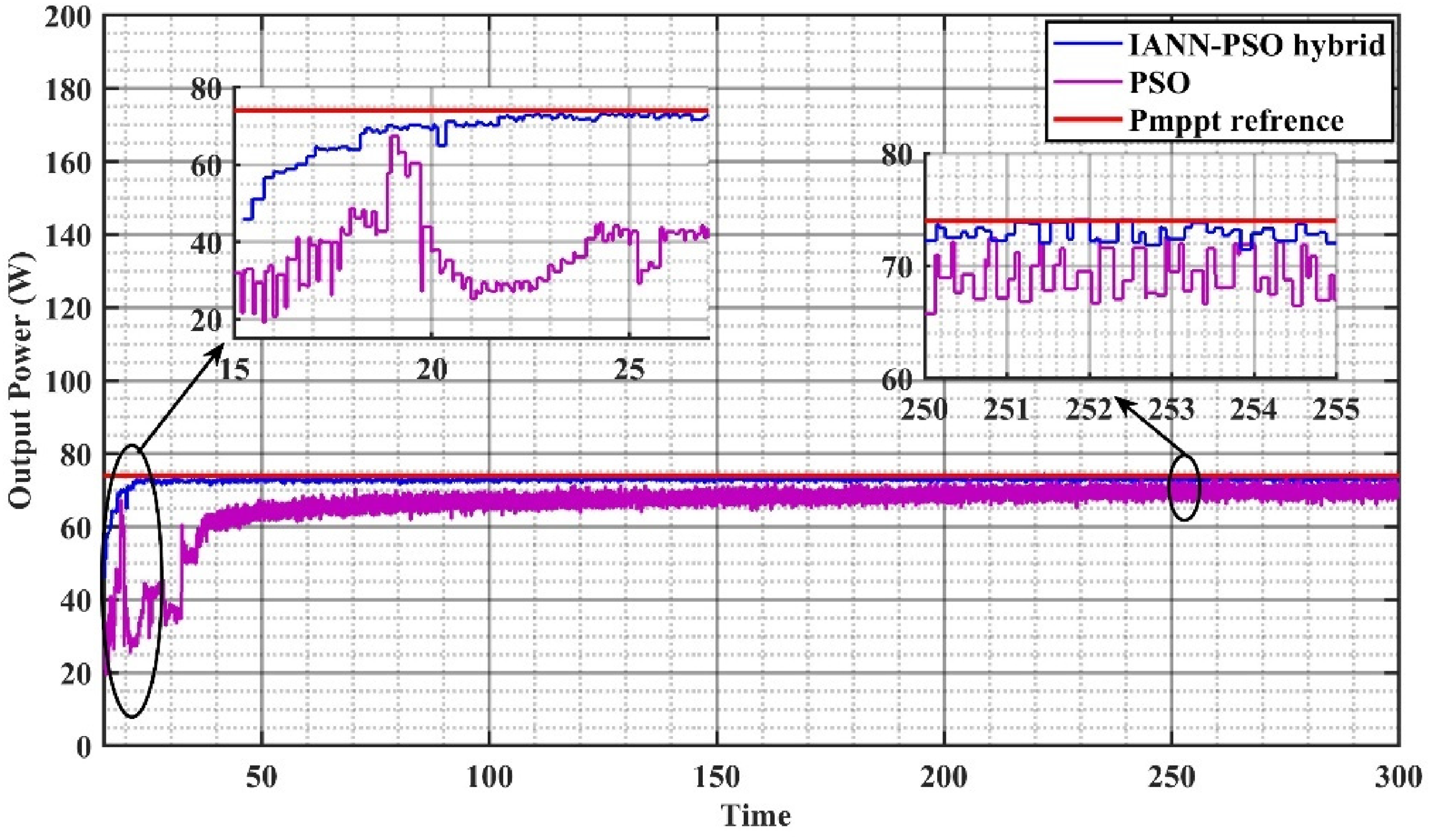
Practical result of output power of DC to DC converter using PSO and IANN-PSO hybrid method in case 1.
In Figure 20, it is evident that the power at maximum power point (MPP) is consistent at 110 watts for both methods in partial shading conditions. However, there is a notable difference in response time, with the PSO method taking approximately 35 seconds and the IANN-PSO method only requiring 15 seconds. Examining the power curve reveals the method's efficiency in tracking the maximum power point (MPP) under partial shading conditions (PSC). When faced with dynamic changes in environmental conditions such as irradiance and temperature, the method successfully reinitiates itself and accurately locates the true MPP within 40 seconds.

Practical result of output power of DC to DC converter using PSO and IANN-PSO hybrid method in case 2.
However, it's important to note that this method operates relatively slowly due to its extensive search space. The PSO method, in particular, requires a substantial amount of time to search for the true MPP within its search space, resulting in a significant delay, exceeding 40 seconds. Furthermore, as depicted in Figure 21, the power curve indicates that the new method can identify the maximum power output of 128.4 W during case 3 within a mere 10 seconds.

Practical result of output power of DC to DC converter using PSO and IANN-PSO hybrid method in case 3.
Conclusion
This research paper has introduced a novel hybrid approach that effectively combines both IANN and PSO methods, specially designed to operate efficiently under partial shading conditions. Furthermore, the performance of this hybrid method has been meticulously compared with that of the standalone PSO method. Notably, the hybrid method has demonstrated a significant reduction in tracking time compared to the PSO method. However, there are opportunities for further enhancement in this approach. Firstly, the method's speed could be further improved through more accurate IANN training data, leading to a reduction in mean square error. Consequently, this would allow for a further reduction in the search space for the PSO algorithm. Moreover, with a highly accurate IANN output, the need for a stochastic search method like PSO could potentially be eliminated, making it possible to employ faster search algorithms such as P and O and INC. Secondly, the IANN currently relies on input data from irradiance sensors placed on different modules. However, sensor inaccuracies may pose practical challenges. It might be possible to eliminate the need for irradiance measuring sensors by detecting irradiance patterns solely through observations of the PV current and voltage curves. To achieve this, a more extensively trained IANN would be necessary, given the myriad possible shading patterns that may occur. Despite these considerations, the remarkable tracking speed and efficiency exhibited by the proposed hybrid method suggest that it holds the potential to make valuable contributions to the advancement of solar energy technology.
Footnotes
Author contributions
Hajar Ahessab was responsible for the realization of the simulation results and the experimental results, which included the implementation of electrical circuits such as the boost converter, voltage sensors, and the bypass and blocking diode board, as well as the realization of the PV installation. She also handled the writing of the original draft and conceptualization. Ahmed Gaga revised the manuscript and addressed some hardware issues. Elhadadi Benachir assisted with hardware and conducted laboratory experiments to obtain results. All authors contributed to the study's conception and design. Material preparation, data collection, and analysis were carried out by Hajar Ahessab, Ahmed Gaga, and Elhadadi Benachir.
Declaration of conflicting interests
The authors declared no potential conflicts of interest with respect to the research, authorship, and/or publication of this article.
Ethical approval
Our institution does not require ethics approval for reporting individual cases or case series.
Funding
The authors received no financial support for the research, authorship, and/or publication of this article.
