



Abstract
To clarify the impact of moisture content and dry density on the strength of loess, the remolded loess samples with different moisture content and dry density were prepared, and the influence of moisture content and dry density on loess strength was explored from the macro level by direct shear test without suction control. On this basis, the mechanism of the influence of moisture content and dry density on loess strength was explored from the micro level by nuclear magnetic resonance method. The research results indicate that: In the case of low water content, there are peak points in the stress–strain curve of remolded loess, exhibiting strain softening characteristics. In the case of high water content, there is no obvious peak in the stress–strain curve, exhibiting strain hardening characteristics. Moisture has a significant impact on the shear strength of remolded loess. As the moisture content of the soil sample increases, the cohesion decreases significantly, and the change in internal friction angle is not obvious. As the moisture content continues to increase, the free water content continues to increase. Free water will continuously soften the soil particle structure, reduce the bonding force between soil particles, and cause the cohesion to decrease with the increase of moisture content. The change in dry density also has a significant impact on the shear strength parameters of remolded loess. As the dry density of the soil sample increases, the cohesion increases. The smaller the dry density, the larger the pore ratio, and the looser the contact between soil particles, weakening the bonding effect. The larger the pore ratio, the more bound water is converted to free water, and the strong bonding force between the water film and soil particles disappears. Both of these microscopic factors can lead to a decrease in cohesion with a decrease in dry density.
Introduction
According to recent practice and research, changes in saturation or water content can cause significant changes in the mechanical and engineering properties of loess, leading to instability of loess slopes and roadbed settlement, posing a great threat to engineering safety.1–8 With the extensive construction of high-grade highways in the loess region, the shear strength characteristics of loess affect the stability of slopes and embankments. The study of shear strength characteristics can guide correct engineering design and treatment measures. Therefore, conducting in-depth research on it has significant practical engineering significance.
Currently, many scholars have conducted extensive research on the strength characteristics of loess. Zhuang et al. 9 used flume and triaxial tests to study clay content's influence on the loess slope's failure process. The results show that the clay content in loess significantly impacts the failure process and strength of the loess body. Li et al. 10 studied the macropore structure of loess by X-ray computed tomography. The results show that the permeability of loess in the vertical direction is higher than that in the horizontal direction, which is easy to cause excessive permeability and preferential flow, thus causing the instability of the loess slope. Large pores lead to considerable water permeability, which is easy to induce loess slope instability. Xu et al.11,12 studied the influence of dry-wet cycles on the mechanical properties, crack development, and failure mode of loess under uniaxial compression using laboratory test methods. Hao et al. 13 used the indoor soil test method to clarify the macro behavior and micro mechanism of the impact of bound water on the shear strength of loess. The research showed that the bound water in loess would change the soil microstructure, resulting in a negative correlation between the water content of bound water and the shear strength. The particle size distribution of loess particles and aggregates is the key factor to determine the microstructure, strength characteristics, and deformation characteristics of loess. Zhou et al. 14 used scanning electron microscope to slice and scan the loess section, and comprehensively used image processing, geometric measurement, and statistical methods to quantitatively characterize and study the loess structure. The large pore structure has a crucial impact on the mechanical properties and permeability of loess. Wang et al. 15 used X-ray tomography technology to scan the macropore structure of remolded loess and, based on this, analyzed the influence of macropore structure on permeability and strength. Yuan et al. 16 also used X-ray tomography technology to scan the pore structure of loess, focusing on pore size, pore shape, pore arrangement, and pore connectivity. The results showed that two-dimensional scanning has many shortcomings in characterizing three-dimensional features. In order to clarify the mechanical mechanism of loess collapse deformation, Wei et al. 17 conducted microstructure research on Malan loess using indoor collapse tests, CT scanning technology, and mercury intrusion testing. The results showed that whether loess collapse mainly depends on the presence of concentrated intergranular pores and bridging forms of clay particles. When CT scanning is directly used in loess pore quantification, it faces the problem of insufficient resolution. Ning et al. 18 used high-precision micron CT combined with pore network model to carry out quantitative research on loess pores. The results show that loess pores, pore throats, and pore throat coordination number are log-normal distribution. In order to clarify the impact of unloading on the mechanical properties of loess, Pang et al. 19 used GDS triaxial apparatus to unload loess samples, and CT scanning image analysis technology was used to analyze the crack growth of samples after lateral unloading. The research results indicate that water content has a significant impact on crack propagation. The reliability of loess-related test results has a great relationship with the homogeneity of the samples used. In order to clarify the feasibility of taking the shear strength as an index to evaluate the homogeneity of loess samples, Yao et al. 20 comprehensively used direct shear test and scanning electron microscope tests to study the impact of the height of loess samples on the shear strength. The research results indicate that there is an inverse correlation between shear strength and height, and the larger the height, the more significant the difference in pore distribution. The greater the non-uniformity of shear strength. It is recommended to use the ratio of the shear strength at the top and bottom of the sample as an indicator of uniformity.
Based on existing research results, it can be seen that the shear strength characteristics of loess affect the stability of slopes and roadbeds in loess areas. The shear strength characteristics are closely related to the moisture content and dry density of the soil. Currently, research on the micro level of loess shear strength is mainly conducted through electron microscopy scanning21,22 and mercury injecting testing.23,24 However, ordinary electron microscope scanning samples must be dried, and drying of loess soil samples will have a significant impact on their mechanical properties. Environmental scanning electron microscopy can scan soil samples with different moisture contents, but its cost is too high. The testing process of mercury injecting test will cause a certain degree of damage to the structure of the loess sample, resulting in low reliability of the test results. Based on the slope project of Huangyan expressway, this paper selects the loess of Yangpoyao slope with large deformation, uses direct shear test without suction control to explore the macro mechanical properties of loess, analyzes the impact of different water content and dry density on the strength parameters of loess, and first uses nondestructive nuclear magnetic resonance technology25,26 to explore the internal mechanism of loess strength change from the micro level. According to the Unified Soil Classification System standards, the test soil is classified as low-plasticity clay.
The innovation of this study is mainly reflected in the use of direct shear tests without suction control and nuclear magnetic resonance methods to explore the influence and mechanism of moisture content and dry density on the strength of loess from both macro and micro levels. Understanding the influence and mechanisms of moisture content and dry density on the strength of loess is evidently of significant importance for engineering activities in loess regions.
Direct shear test without suction control
The shear strength characteristics of loess affect the stability of slope and subgrade in the loess area. The shear strength characteristics are closely related to the soil's moisture content and dry density. Through the preparation of remolded loess samples with different water content and dry density, the shear strength characteristics of remolded loess were studied through direct shear test without suction control and nuclear magnetic resonance test.
Basic physical property test
According to the specific gravity test 27 results, the average specific gravity of loess is 2.74. According to the results of the particle analysis test,28,29 the proportion of particles with particle size greater than 0.05 mm in the test soil sample is 11.9%, the proportion of silt particles with a particle size of 0.005 mm–0.05 mm is 71.5%, and the proportion of clay particles with particle size less than 0.005 mm is 19.31%. The main particle composition of the test soil sample is silt. According to soil samples’ limit water content test30,31 results, the liquid limit, plastic limit, and plastic limit index are 31.5%, 16.7%, and 14.8, respectively. The water content test 32 of soil is the ratio of the water mass lost when the sample is dried to a constant value at 105–110 °C to the dry soil mass after reaching a constant value, expressed as a percentage. Three groups of samples were taken for a parallel experiment, and the natural moisture content of the loess was 22.1%, and the dry density was 1.52 g/cm3.
Shear strength test of loess
The consolidation quick shear test is carried out by using the quadruple direct shear apparatus, and the strength characteristics of loess under different water content and dry density are tested and studied.
Testing process
The test sample is remolded soil in the direct shear test without suction control, and the test adopts the computer-controlled strain-controlled quadruple direct shear apparatus, as shown in Figure 1. Eighteen groups of soil samples were prepared with a water content of 14.1%, 16.1%, 18.1%, 20.1%, 22.1%, and 24.1%, dry density of 1.32 g/cm3, 1.52 g/cm3, and 1.72 g/cm3, respectively. Four ring knife specimens were prepared for each group of water content and dry density, and the rapid shear test was conducted at a shear rate of 0.8 mm/min under the conditions of applied vertical pressure of 100 kPa, 200 kPa, 300 kPa, and 400 kPa, respectively. In order to ensure that the test simulates the actual situation as much as possible and that the water content before and after the test remains unchanged, the test soil was prepared according to the initial water content of 8%, and then the dry density was controlled. The prepared test soil was made into a ring knife sample, the vacuum pumping was saturated, and then it was taken out for natural air drying. The mass was weighed at intervals. When the water content required for the test was achieved, the soil sample was placed in a sealed bag for 24 h, and then the direct shear test without suction control was carried out.33,34 The soil sample was subjected to vacuum saturation and an unconsolidated fast shear test was conducted. Considering that more attention is paid to the mechanical properties of loess within a 20 meter range below the surface in practical engineering, the vertical pressures used in the test are 100 kPa, 200 kPa, 300 kPa, and 400 kPa.
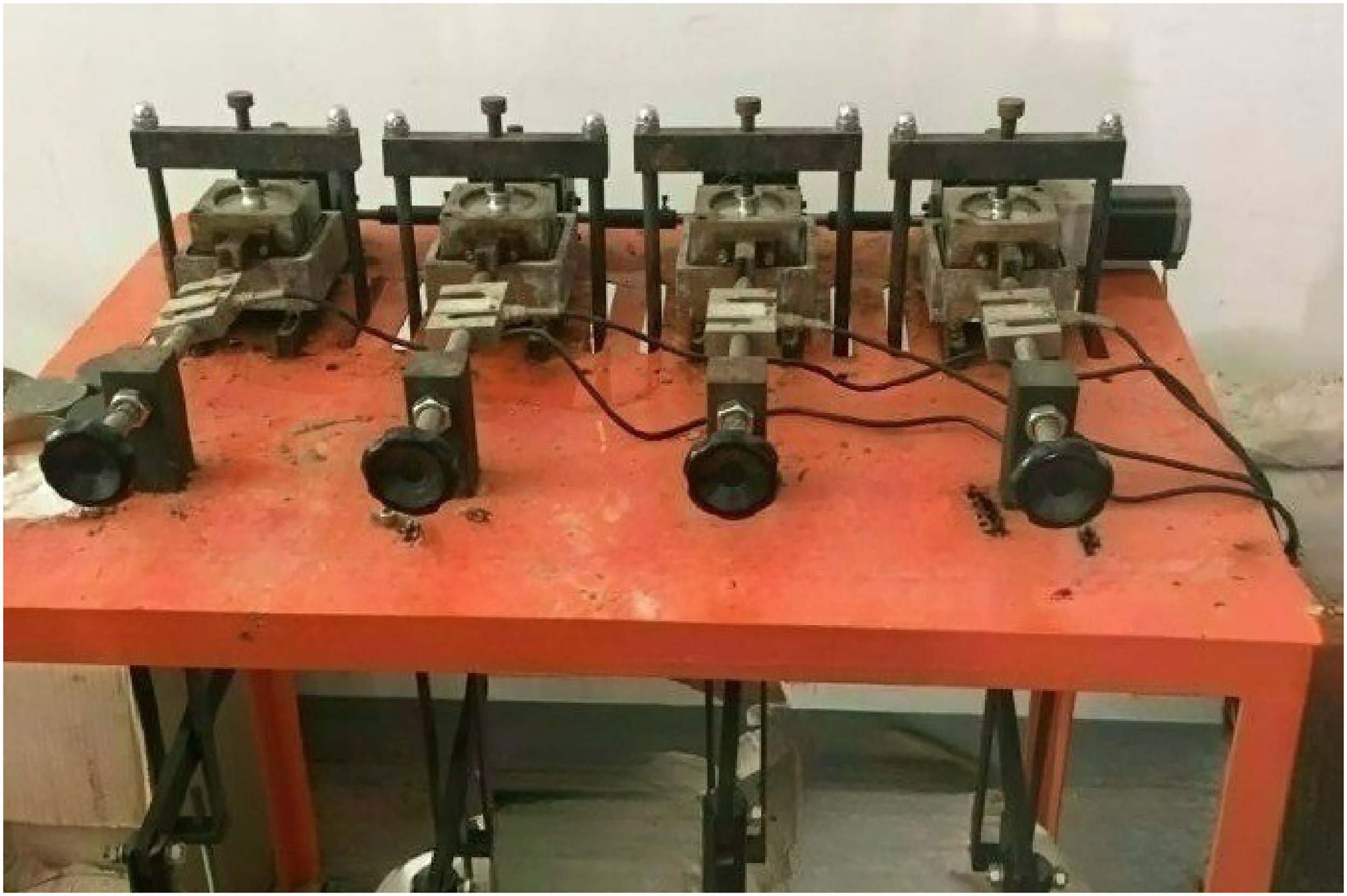
Quadruple direct shear.
Test result
In the direct shear test without suction control, the samples prepared with a dry density of 1.32 g/cm3, 1.52 g/cm3, and 1.72 g/cm3 were aspirated and saturated and then dried to the moisture content of 14.1%, 16.1%, 18.1%, 20.1%, 22.1%, and 24.1% respectively. The direct shear test data with a dry density of 1.52 g/cm3 were analyzed. Figure 2 shows the relationship curve between shear stress and shear strain of soil samples with different water content under the vertical pressure of 100 kPa. It can be seen from the figure that the stress–strain curve becomes slower and slower with the increase in water content. When the water content is low, the stress–strain curve has a peak point, showing the characteristics of strain softening. In the case of high water content, the curve shows a trend of strain hardening. With the increase in water content, the shear strength of soil samples gradually decreases, and the decrease is large, indicating that water content has an important impact on the shear strength of remolded loess. Guiyang red clay also has similar properties. 29

Stress–strain curve of a sample under different water contents.
The reason for the above phenomenon in the test curve is that the water in the soil mainly exists in the state of adsorbed water, capillary water, and free water. It can be seen from the particle analysis test results that the particle composition of the soil sample is mainly silt. Due to the small particle size, when the sample is made, the sample has more small and medium-sized pores and fewer large pores, which lead to more adsorbed water in the soil. In the range of low water content, the water content is mainly adsorbed water and capillary water. Various chemical forces (van der Waals force, capillary force, etc.) between soil particles make the sample show a relatively “hard” characteristic. When the sample is damaged, it appears a “brittle” property, showing the characteristics of strain softening. In the range of high water content, with the increase of water content, the adsorbed water film between soil particles becomes thicker and thicker, and free water gradually appears, which increases the lubrication effect between particles and makes the sample become “soft,” which leads to the destruction of the sample, showing the nature of “ductile” destruction. The softening phenomenon gradually weakens until it disappears.
Use the measured shear strength curves of samples with different water content to obtain the peak strength. If there is no obvious peak value, take the strength corresponding to 4 mm on the stress–strain curve as the failure strength. With the shear strength as the ordinate and the vertical pressure as the abscissa, draw the relationship curve between the shear strength and the vertical stress. The intercept on the ordinate is the cohesion value of the soil sample under different water content conditions, and the inclination is the internal friction angle value of the soil sample. The shear strength of soil samples with a dry density of 1.52 g/cm3 under different water content is shown in Figure 3.

Strength envelope line obtained from a direct shear test with different water contents.
The linear fitting result of the shear strength envelope of this direct shear test is good. The linear fitting coefficient of the sample is basically between 0.98 and 0.99 under different water contents, which shows that the remolded loess strength presents obvious linear characteristics under different water content. The relationship curve between shear strength parameters and water content can be obtained from the calculation of the shear strength envelope, as shown in Figure 4.

Relation curve between shear strength parameters and water content of a sample.
The change in dry density also has an important influence on the shear strength parameters of remolded loess. The test results of three groups of samples with different dry densities with a water content of 20.1% are analyzed as examples. It can be seen from Figure 5 that the stress–strain curves of three groups of samples with a dry density of 1.32 g/cm3, 1.52 g/cm3, and 1.72 g/cm3 have no obvious peak value. The shear stress with a shear displacement of 4 mm is taken as the failure strength, and each sample's cohesion c and internal friction angle φ are calculated by the failure strength.
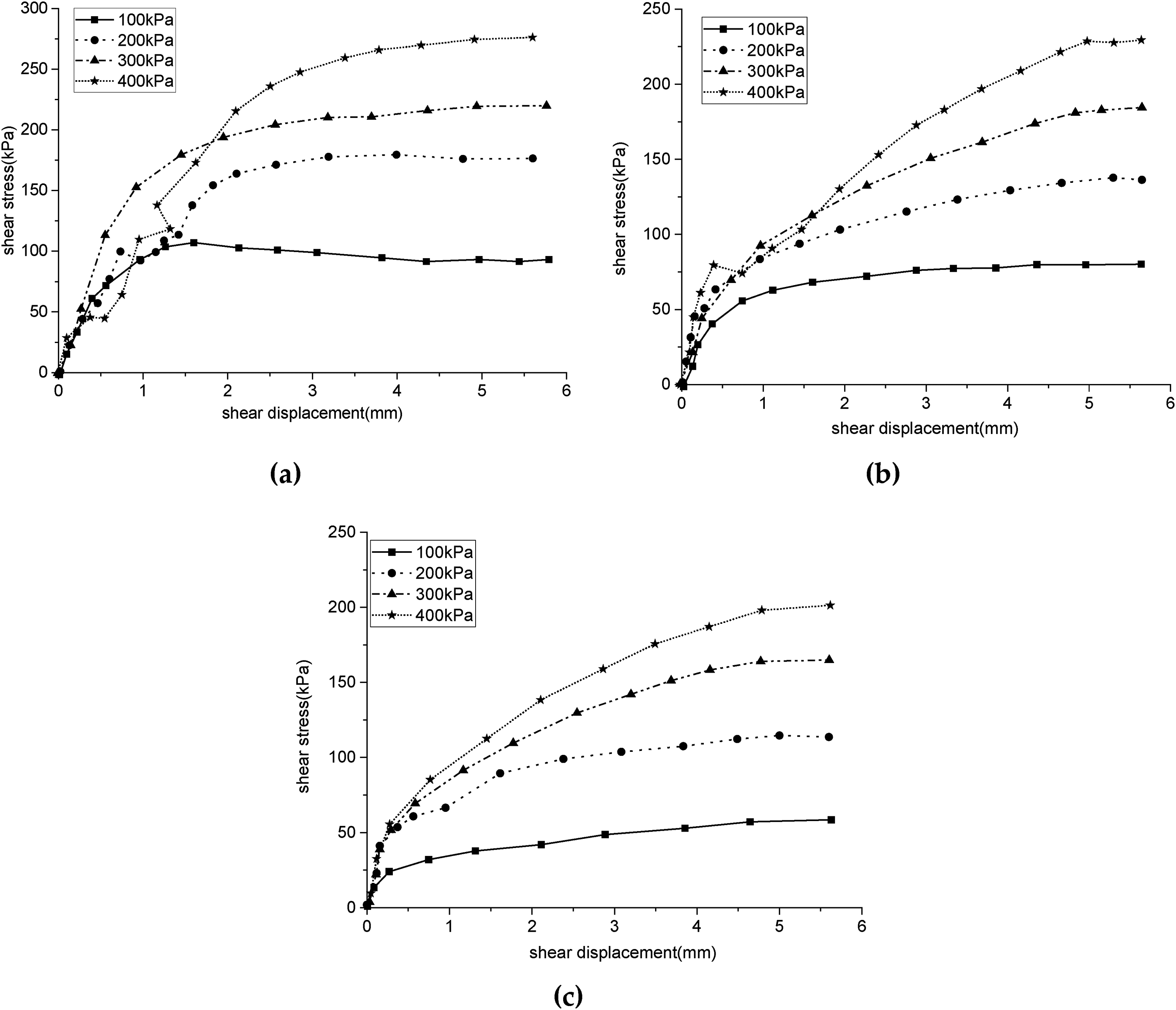
Stress–strain relationship of soil samples with different dry densities: (a) 1.72 g/cm3; (b) 1.52 g/cm3; (c) 1.32 g/cm3.
The change in dry density also has an important influence on the shear strength parameters of remolded loess. The test results of three groups of samples with different dry densities with a water content of 20.1% are analyzed as examples. It can be seen from Figure 8 that the stress–strain curves of three groups of samples with a dry density of 1.32 g/cm3, 1.52 g/cm3, and 1.72 g/cm3 have no obvious peak value. The shear stress with a shear displacement of 4 mm is taken as the failure strength, and the failure strength can calculate the cohesion c and internal friction angle φ of each sample. The calculation results are shown in Table 1.
Cohesion c and internal friction angle φ of samples with different dry densities.

Result analysis
Change characteristics of cohesion c: It can be clearly seen from Figure 4 that as the sample's water content increases from 14.1% to 24.1%, its cohesion continues to decline, with a significant decline. When the water content is 14.1%, the cohesive force of the sample is the largest, 79.89 kPa. When the water content increases to 24.1%, the cohesive force of the sample decreases to 12.39 kPa, with a decrease of 84.5%. According to the analysis of the test results, under the condition of low water content, the distribution of water in soil samples mainly exists in the form of adsorbed water and capillary water, the content of free water is low, and the cementation force between soil particles is strong. With the continuous increase of water content, the proportion of free water increases, and the free water contained in the soil sample particles continuously softens the soil particle structure and reduces the cohesive force between the soil particles. On the macro level, it shows that the cohesive force of the sample decreases with the increase in water content. The shear strength parameters of soil samples with different dry densities under the condition of 20.1% water content are shown in Table 1. With the decrease in dry density, the cohesion decreases from 51.56 kPa to 18.98 kPa. The reasons for the analysis of the test results are first, the smaller the dry density, the larger the void ratio of the soil sample, and the looser the contact between the soil particles, so the occlusive effect between the particles is weakened. Second, in the case of large dry density, the pore size of the soil sample is relatively small, and the water in the soil is tightly bound around the soil particles in the form of a water film. With the dry density decreasing and the pore ratio (the ratio of pore volume to solid particle volume in soil) increasing, the combined water is converted to free water, and the strong binding force between the water film and the soil particles disappears. The combined effect of the two results in a decrease of cohesion in the test results.
Change characteristics of internal friction angle φ: the natural moisture content of the soil sample is 20.1% according to the previous basic physical property test. As Figure 4 shows, when the water content is lower than 20.1% of the natural water content, the internal friction angle of the sample decreases with the increase in the water content. The internal friction angle change rule is not obvious when the water content is higher than 20.1%. It can be seen from the test results that under the condition of low water content, the weakening effect of water content on the internal friction angle is obvious, and under the condition of high water content, the influence of water content on the friction between soil particles is small. It can be seen from Table 1 that the change in the internal friction angle of remolded loess is not obvious with the change in dry density.
Nuclear magnetic resonance test
In recent years, the mercury intrusion test has been widely used in the pore test of soil samples and has achieved good results. 35 However, it also has many shortcomings. The sample preparation needs to be pretreated, which causes certain damage to the structure of the sample. At the same time, the skeleton structure of the sample is also damaged by the high-pressure mercury intrusion during the high-pressure mercury intrusion test, resulting in inaccurate test results. 35 The biggest advantage of the nuclear magnetic resonance technology used in this paper is that it can perform nondestructive testing. 36 At present, nuclear magnetic resonance technology is mainly used in the medical field.
Test principle
Hydrogen nuclei are widely distributed in nature, and the content of hydrogen nuclei is very rich in water and organic matter, and hydrogen nuclei have large magnetic moments, which can generate strong signals. So far, almost all nuclear magnetic resonance logging and nuclear magnetic resonance research in rock and soil is based on the measurement of hydrogen nuclei. The hydrogen nuclei spin produces two levels like magnets. According to Brown's law of motion, hydrogen nuclei move irregularly when there is no external constant magnetic field. After applying a constant magnetic field, the hydrogen nucleus makes regular directional motion. 36
There are two relatively important time variables in nuclear magnetic resonance technology. One is the longitudinal relaxation time expressed by T1, and the other is the transverse relaxation time expressed by T2. For the fluid in rock pores, there are three relaxation mechanisms: surface relaxation, free relaxation, and diffusion relaxation, and the relaxation time T1 and T2 of pore fluid can be expressed by the following formula
36
:

According to the existing research conclusions, free relaxation is the inherent relaxation characteristic of the fluid, which can be calculated from the following formula:




Test instrument and sample preparation
The instrument used in the test is a nuclear magnetic resonance instrument developed by the Wuhan Institute of Geotechnical Mechanics, Chinese Academy of Sciences, and Newman Company, and the instrument model is 23 MHz Mini NMR, as shown in Figure 6. The NMR testing system is mainly composed of three parts: a magnet unit, an RF system, and a data acquisition and analysis system. The main parameters of the test system are the magnetic field strength of the permanent magnet is 0.52 Tesla, and the magnet's temperature is controlled at 32 ± 0.01 °C to reduce the magnetic field fluctuation.
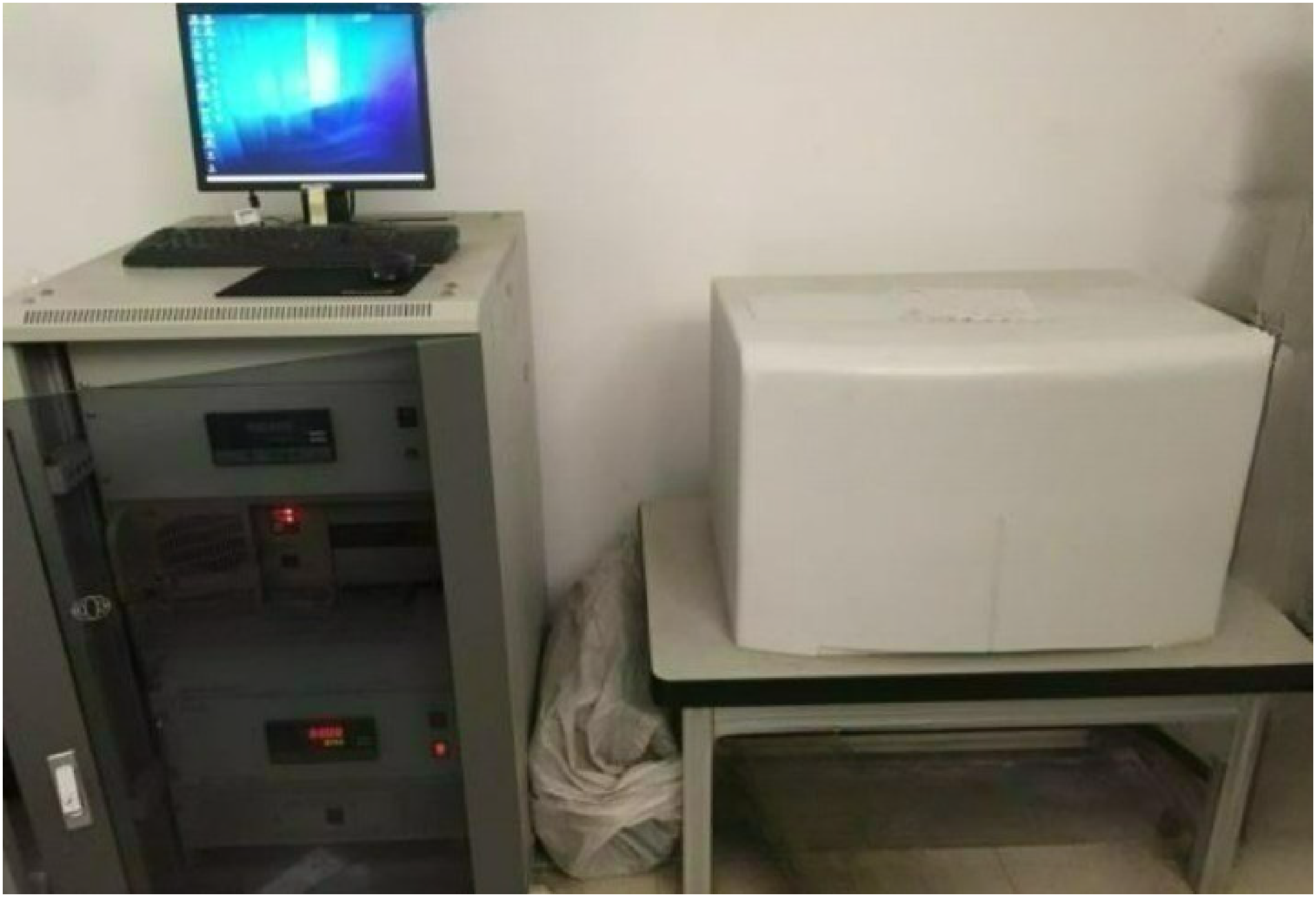
Nuclear magnetic resonance instrument used in the test.
The nuclear magnetic resonance sample preparation matches the previous direct shear test without suction control. Three soil samples with dry densities of 1.32 g/cm3, 1.52 g/cm3, and 1.72 g/cm3 are prepared. Each group of soil samples is prepared with a water content of 14.1%, 16.1%, 18.1%, 20.1%, 22.1%, and 24.1%, respectively, and then a total of 18 ring knife samples are prepared. Since the ordinary ring knife is made of stainless steel, in order to eliminate the interference of metal on the nuclear magnetic signal, the ring knife is made of polytetrafluoroethylene. The sample preparation process is the same as the direct shear test sample preparation process, and the water content should be accurately controlled.
Test results and analysis
A total of 18 sets of NMR tests were carried out. The samples are divided into three groups with a dry density of 1.32 g/cm3, 1.52 g/cm3, and 1.72 g/cm3. The T2 time distribution curve of each group under different water content is shown in Figure 7(a–c).

T2 time distribution curve of soil samples with different dry densities: (a) 1.32 g/cm3; (b) 1.52 g/cm3; (c) 1.72 g/cm3.
The T2 time distribution curves of samples with different dry densities and water content were used to obtain the peak intensity and sort out each sample's nuclear magnetic signal amplitude. With the sample's water content as the abscissa and the signal intensity amplitude as the ordinate, the relationship curve of the nuclear magnetic signal with water content is drawn, as shown in Figure 8.

NMR signal amplitude change curve.
It can be seen from Figure 8 that under the same dry density, with the increase of water content, the nuclear magnetic signal in the pores in the soil gradually increases. Taking the data with a dry density of 1.32 g/cm3 as an example, the water content increased from 14.1% to 24.1%, and the NMR signal amplitude increased from 82.64 to 128.98. The amplitude of the nuclear magnetic signal represents the content of free water and capillary water in pores. The larger the amplitude, the higher the content of free water. The nuclear magnetic resonance test results show that the free water in the remolded loess sample increases significantly. The free water lubricates the soil particles and greatly weakens the cementation of the soil particles. This also explains the law of the shear strength parameters changing with the water content from the microscopic perspective, which is consistent with the direct shear test results.
Under the same water content, it can be seen from Figure 7(a, b) that when the dry density is 1.32 g/cm3, there is a nuclear magnetic signal between 0.01 and 10 ms at T2 time. When the dry density is 1.72 g/cm3, the nuclear magnetic signal basically drops to 0 at T2 time 1 ms. Therefore, the greater the dry density, the smaller the distribution range of transverse relaxation time T2; that is, the smaller pores in the soil are dominant, indicating that under the same water content, the greater the dry density of the soil sample, the more water will be absorbed. At the same time, the greater the dry density, the smaller the amplitude of the nuclear magnetic resonance signal, indicating that the soil sample with the greater dry density has stronger water holding capacity and less free water in the soil sample, which explains the law that the shear strength of soil increases with the increase of dry density from the microscopic perspective through nuclear magnetic resonance test.
Discussion
Samples were taken for basic physical property tests, direct shear tests without suction control, and nuclear magnetic resonance tests on loess. Prepare reshaped loess samples, control the dry density and moisture content of the samples, and obtain the variation pattern of shear strength parameters of the soil samples through indoor direct shear tests without suction control. The results of the reshaped loess direct shear test without suction control show that under low moisture content, the stress–strain curve of the soil sample has a significant peak, showing a characteristic of strain softening. In the case of high moisture content, the stress–strain curve of the soil sample does not have a significant peak and exhibits the characteristic of strain hardening. This is similar to the mechanical properties of Guiyang red clay.29,34 The moisture content and dry density have a significant impact on the reshaped loess. As the moisture content increases, the strength of the reshaped loess sample decreases significantly, while as the dry density increases, the strength of the reshaped loess increases. The research results are basically consistent with the existing research results. 13 By using a nuclear magnetic resonance system to detect the distribution of moisture in the pores of the sample under constant changes in moisture content and dry density, the strength variation of remolded loess can be explained from a microscopic perspective. The corresponding research results are basically consistent with those of micrometer-level CT scanning and mercury intrusion testing.16,17
The research findings related to this paper can correctly guide the actual civil engineering construction process such as stacking loading, lateral excavation unloading, and lateral unloading and axial loading. It can ensure the safety and reliability of engineering construction. For example, in practical engineering, the dry density of loess can be increased by dynamic compaction, thereby increasing its shear strength. It is also possible to reduce the moisture content of loess and improve its strength by accelerating drainage.
However, this paper only studied loess in specific regions, and there are significant differences in clay content among loess in different regions. 9 Taking into account the water content comprehensively, it is very valuable to clarify the influence of clay content on the mechanical properties of loess. In addition, under certain dry density and moisture content, pore size and pore distribution also have a significant impact on the mechanical properties of loess, 10 and this direction is also worth studying. In addition, the loess samples studied in this paper are fixed in terms of dry density and moisture content. In practical engineering, loess is affected by wet-dry cycles.11,12 How to quantify the impact of wet-dry cycles on loess strength is also an urgent issue that needs to be addressed.
Conclusion
The remolded loess samples with different moisture content and dry density were prepared, and the influence of moisture content and dry density on loess strength was explored from the macro level by direct shear test without suction control. On this basis, the mechanism of the influence of moisture content and dry density on loess strength was explored from the micro level by nuclear magnetic resonance method. The main conclusions are as follows:
In the case of low water content, there are peak points in the stress–strain curve of remolded loess, exhibiting strain softening characteristics. In the case of high water content, there is no obvious peak in the stress–strain curve, exhibiting strain hardening characteristics. Moisture has a significant impact on the shear strength of remolded loess. As the moisture content of the soil sample increases, the cohesion decreases significantly, and the change in internal friction angle is not obvious. As the moisture content continues to increase, the free water content continues to increase. Free water will continuously soften the soil particle structure, reduce the bonding force between soil particles, and cause the cohesion to decrease with the increase of moisture content. The change in dry density also has a significant impact on the shear strength parameters of remolded loess. As the dry density of the soil sample increases, the cohesion increases. The smaller the dry density, the larger the pore ratio, and the looser the contact between soil particles, weakening the bonding effect; The larger the pore ratio, the more bound water is converted to free water, and the strong bonding force between the water film and soil particles disappears. Both of these microscopic factors can lead to a decrease in cohesion with a decrease in dry density.
This paper only studied loess in specific regions, and there are significant differences in clay content among loess in different regions. Taking into account the water content comprehensively, it is very valuable to clarify the influence of clay content on the mechanical properties of loess. In addition, under certain dry density and moisture content, pore size and pore distribution also have a significant impact on the mechanical properties of loess, and this direction is also worth studying. In addition, the loess samples studied in this paper are fixed in terms of dry density and moisture content. In practical engineering, loess is affected by wet-dry cycles. How to quantify the impact of wet-dry cycles on loess strength is also an urgent issue that needs to be addressed.
Footnotes
Acknowledgements
The authors are grateful to Dr Mayoral for her help with language polishing in this paper.
Declaration of conflicting interests
The authors declared no potential conflicts of interest with respect to the research, authorship, and/or publication of this article.
Funding
The authors disclosed receipt of the following financial support for the research, authorship, and/or publication of this article: This work was supported by the National Natural Science Foundations of China, Project of Yulin Science and Technology Bureau, National Natural Science Foundations of Shaanxi, (grant number 52368041, 1517-CXY202110602, 2020JM-626).
