




Abstract
This research aims to optimize the silk and wool dyeing process using natural dyes from Bixa orellana (annatto) through response surface methodology. Central composite design experiments highlight the significant enhancement of color outcomes achieved through microwave treatment. For silk, the optimal conditions (80 °C for 40 min) with annatto extract yield a color strength (K/S) of 17.8588, while wool achieves a K/S of 7.5329. Introducing eco-friendly bio-mordants, such as pomegranate peel and red sumac tannins, enhances color strength. Pre-dyeing treatments with 2% red sumac, 1.5% pomegranate peel, and weld flower extracts for silk produce high color strength, with K/S values of 16.4063, 16.3784, and 12.1658, respectively. Post-dyeing, the K/S values increase to 40.1178, 17.4779, and 21.6494. Wool yarn exhibits similar improvements, with pre-dyeing K/S values of 13.1353, 13.5060, and 16.3232, escalating to 10.5892, 15.3141, and 23.4850 post-dyeing. Furthermore, this research underscores improved colorfastness properties, including notable enhancements in light, wash, and rubbing fastness for both silk fabric and wool yarn. These findings underscore the efficacy of the proposed sustainable dyeing methods, offering valuable insights for eco-friendly textile production.
Introduction
The environmental implications of the industrial revolution were overwhelmingly negative, leading to a significant decrease in biodiversity. Human activities have played a significant role in the emergence of environmental contamination, with the textile sector standing out as a prominent contributor to this problem. 1 The textile industry contributes to environmental pollution and ecological imbalance through the discharge of toxic wastewater containing various chemicals, including dyes, surfactants, and heavy metal ions. 2 There is an increasing consumer demand for natural dye sources due to their environmentally sustainable, non-toxic, safe, and biodegradable characteristics. 3 Plant-based dyes offer a diverse spectrum of colors and possess numerous beneficial properties, including antiviral, antibacterial, antioxidant, deodorizing, antifungal, sun protection, and anti-UV effects.4,5 These natural colors were collected from various sources, including different plant and flower leaves, algae, fungi, lichens, minerals, insects, and microorganisms. In addition, natural dyes are popular in many areas, including agriculture farms, the cosmetics industry, pharmaceutical companies, the textile sector, and food production. 6
The use of environmentally friendly natural extractions as a colorant has increased in popularity, marking a new trend in the textile industry. It offers a wide range of advantages compared to synthetic chemical agents. 7 The use of plant-derived colorants produces unique, vibrant, and various colors. Moreover, many natural dyes show anti-allergic properties, making them safer for human skin and reducing the risk of allergic conditions. 8 The use of natural dyes not only shows sustainability but also possesses a health-benefits and environmentally sustainable approach to the dyeing industry. 9 There are various extraction methods of natural dyes have traditionally been carried out. 10 However, in recent years, microwave-assisted extraction (MAE) has gained popularity as a modern and highly effective approach for extracting natural colors. MAE requires no specialized equipment and involves subjecting raw materials, including natural colorants, to microwave irradiation. 11 This aids in rupturing cellular membranes, facilitating the release of color compounds. Compared to traditional methods, MAE improves extraction efficiency and reduces processing time. Moreover, the utilization of MAE offers additional benefits, such as reduced solvent usage, preservation of the chemical characteristics of the dye, and limited deterioration of the extracted components. 12 Consequently, MAE has emerged as a potentially environmentally sustainable method for acquiring natural dyes with improved efficacy and quality for diverse applications in industries like textiles, cosmetics, and food. 13
The seeds of Bixa orellana, commonly known as annatto, are widely used as a condiment in various food products, cosmetics, and the paint industry, owing to their ability to impart an orange-red hue (Figure 1(a)). The perennial annatto tree, native to tropical America but extensively cultivated in regions like Africa, can reach heights ranging from 3 to 9 m. 14 According to Raddatz-Mota et al., 15 approximately 14,500 tons (dry weight) of B. orellana seeds were expected to be produced worldwide each year. Two-thirds of this production was typically marketed as a colorant, with the remainder sold as dried seeds. Following Africa (27%) and Asia (12%) in terms of output, Latin America accounts for 60% of the total global production. The orange-red pigment in annatto (CI Natural Orange 4), referred to as bixin, consists of carotenoid, a highly unsaturated molecule soluble in vegetable oil (Figure 1(b)). When exposed to heat, bixin undergoes isomerization and destruction. Accounting for approximately 70% to 80% of the total composition, Bixin is a predominant component among natural colorants used in various industries such as food, cosmetics, and textiles. 16 It has also shown pharmacological activities, including wound healing, analgesic, hemostatic, antioxidant, and diuretic effects. 17 As a natural food color, annatto serves as a viable substitute for artificial food colorants. Annatto seeds are highly popular as a global natural dye, widely used in industries such as food, textiles, paint, and cosmetics. 18 The limitations imposed by the World Health Organization (WHO) on synthetic colorants in food and cosmetics have contributed to the increased popularity of annatto-based products. In addition, harvesting B. orellana seeds is environmentally safe due to sustainable cultivation practices, non-toxic nature, carbon sequestration, and minimal influence on natural ecosystems. 19 Recognizing its non-toxic properties and negligible impact on the nutritional composition of food, the WHO has acknowledged annatto dye as a noteworthy material.

Bixa orellana (a) annatto seeds, and (b) chemical constituent of coloring components (Trans-bixin and cis-bixin) (for R=CH3) or norbixin (for R=H). 20
Therefore, the research endeavors to revolutionize the extraction and application of colorants derived from annatto seed powder, with a keen focus on enhancing efficiency, quality, and sustainability within the textile dyeing process. The primary objective of this study is to enhance the extraction of colorants from annatto seed powder by carefully selecting an appropriate solvent. In the subsequent phases, the dyed silk fabric and wool yarn will undergo a comprehensive analysis to discern the physiochemical alterations induced by microwave irradiation. The optimization of dyeing conditions will be a focal point, employing a second-order response surface methodology (RSM) to systematically fine-tune the parameters. Additionally, the study will explore the application of both chemical and bio-mordants to facilitate the development of novel shades, aiming for not only vibrant colors but also ensuring good fastness properties. This multifaceted approach aligns with the broader goal of advancing sustainable and environmentally friendly practices within the textile dyeing process. The research aims to contribute valuable insights to the field, offering innovative solutions for the extraction and application of natural dyes with a focus on improving efficiency, quality, and sustainability standards in the textile industry.
Materials
B. orellana, commonly known as annatto, was supplied by Afzouneh company, Iran for its potential application as a natural dye. In the dyeing process, bio-mordants such as red sumac (Rhus glabra), pomegranate peel (Punica granatum), and weld flower (Reseda luteola) were meticulously chosen and purchased from the local market in Faisalabad, Pakistan, then processed to attain a mesh size of up to 20 grades. The raw material for dyeing purposes included silk fabric, obtained from the local market in Faisalabad, Pakistan. Additionally, wool yarn was provided by the Department of Organic Colorants, Institute for Color Science and Technology, Tehran, Iran.
Irradiation and extraction methodology
To achieve effective extraction and isolation of the natural colorant from annatto seed powder, two distinct extraction mediums were employed: aqueous (neutral) and acidic solutions. The extraction procedure involved mixing 4 g of finely ground plant powder with 100 mL of distilled water, followed by heating the mixture to its boiling point for 60 min post-extraction, the obtained extract underwent traditional filtration techniques to obtain a purified extract free of contaminants. Both silk fabric and wool yarn, along with the extracts, underwent MW irradiation using a high-power microwave irradiator. Microwave radiation was used to irradiate the silk fabric and wool yarn in an ordinary oven with settings dependent on orientation. The heating procedure lasted for 10 min. Treated and untreated extracts were utilized in dyeing silk fabric and wool yarn under controlled conditions, maintaining a consistent extract-to-fabric ratio of 1:25. The dyeing process was conducted at a temperature of 80°C for 60 min. The research was conducted at the Government College University Faisalabad, Faisalabad, Pakistan, where appropriate facilities and necessary equipment were available for the experiment.
Dyeing variables optimization
A central composite design approach was utilized, encompassing 32 experimental series, to optimize four crucial dyeing parameters: time, temperature, pH of extracts, and salt concentration. The goal was to achieve the maximum yield of colorant onto fabrics by systematically varying these parameters using a statistical model through Minitab 22 software, specifically the second-order RSM. Experiments were conducted across a temperature spectrum, ranging from 50 °C to 90 °C. The objective was to assess the impact of temperature on the dyeing process. Similarly, the optimization of dyeing time was explored through trials with fabrics for varying durations—30, 40, 50, 60, and 70 min. In another set of experimental series, the pH of the dye solution was adjusted to different values (3, 4, 5, 6, 7), tailored to the nature of the fabric. This pH variation aimed to achieve optimal dye exhaustion. To further enhance the dyeing process and attain maximum exhaustion, various salt concentrations ranging from 0.5 to 2.5 g/100 mL (using table salt) were tested. These parameters were systematically varied and formulated as displayed in Table 1.
Design of experiments for the optimization of dyeing variables by central composite design using irradiated extract of annatto seed powder applied on irradiated silk fabric and wool yarn.

Design of experiments for the optimization of dyeing variables by central composite design using irradiated extract of annatto seed powder applied on irradiated silk fabric and wool yarn.
New shades were achieved on silk fabric and wool yarn during the dyeing process with annatto seed powder extract at selected conditions. This was conducted both before (pre) and after (post) an environmentally friendly chemical treatment (mordanting), along with green mordanting at a temperature of 70 °C for 50 min, maintaining a mordant-to-fabric ratio of 25 to 1. In this specific scenario, aluminum (Al), iron (Fe), and tannic acid (TA) were incorporated at percentages ranging from 0.5% to 2.5%. Additionally, plant extracts serving as green anchors with bioactive compounds were introduced under the same conditions to optimize the process, aiming for enhanced fastness and subtler shades of color. Extracts were prepared for this purpose by combining 0.5 to 2.5 g of each powder with 100 mL of water, ensuring uniform particle sizes. The mixture was then brought to a boil and filtered. Subsequently, before and after the dyeing process, the respective filtrates were applied in appropriate proportions to the weight of the fabric, adhering to the designated conditions. The schematic representation of the dyeing and bio-mordanting process using microwave treatment is shown in Figure 2.

Schematic illustration of the microwave-assisted natural dyeing of the silk fabric and wool yarn using bio-mordant.
To assess the color strength (K/S) and tonal variations of the dyed fibers, an analysis was conducted using a Spectra flash SF600 (Data color, USA) at a D65 10° observer. The fabric's surface morphology was analyzed with a scanning electron microscope (SEM) both before and after irradiation. The images were taken and examined at a resolution of 1500× to evaluate any alterations in the fabric's structure. 21 Fourier transformed infrared (FTIR) spectroscopy was utilized to examine the alterations in chemical composition following exposure to radiation and dyeing. Following ISO standards, the color fastness properties were evaluated through washing (ISO105 CO3), light exposure (ISO105 BO2), and rubbing (ISO105 X-12) processes. Ratings were determined by comparing the various tones on a grey scale. 22
Results and discussion
With lifestyle advancements and increasing global health concerns, there is a growing awareness of the toxic effects associated with chemical-related products. Consequently, there is a rising demand for natural products across various sectors. To improve the quality of these natural products, modern tools are being employed. 23 Among these methods, microwave (MW) treatment is gaining popularity due to its ease of use, uniform action, and excellent mass transfer properties. 24 MW treatment plays a crucial role in the extraction of natural products, facilitating promising solid-liquid interactions. This process breaks clusters of dye molecules into smaller units, enhancing their efficient sorption onto materials such as silk, wool, and cotton. Another advantage of MW radiation is its ability to physically enhance the fiber surface without altering its inherent nature. 25 This physical modification, in the form of scale, adds more value to the sorption of smaller dye molecules, maximizing their extraction. Consequently, MW radiation reduces the solvent requirement for dye isolation and modifies the fiber surface to accommodate more dye, thereby minimizing pollution in the effluent. 26
In this study, MW rays, applied for up to 10 min, were applied to annatto (B. orellana) extract and materials (silk and wool yarn) to enhance their dyeing properties (Figure 3). The results indicated that, for silk, the color depth was initially low. However, after treatment for up to 6 min with silk fabric and the use of aqueous annatto extract, an improved extract yield was observed (Figure 3(a)). In the case of acidic extract, the yield was initially lower, but treatment for up to 8 min with silk resulted in a better color yield (Figure 3(b)). Thus, for silk, the aqueous medium was found to be suitable, and treatment for up to 6 min was optimized to study the dyeing properties of the extract towards silk fabric (Table 2).

Effect of microwave irradiation to irradiated and un-irradiated (a) aqueous extract of annatto on silk fabric, (b) acidic extract of annatto on silk fabric, (c) aqueous extract of annatto on wool yarn, and (d) acidic extract of annatto on wool yarn.
Color coordinates of silk fabric and wool yarn for dyeing before and after radiation in suitable medium by using annatto extract.

In the case of wool yarn, it was observed that before MW treatment, annatto displayed a low yield, whereas, with treatment up to 6 min in aqueous medium, the yield significantly improved (Figure 3(c)). Upon changing the medium, it was noted that the acidic extract, after 4 min of MW treatment, yielded significantly higher results (Figure 3(d)). Therefore, in comparison, for silk, aqueous annatto extract, and for wool, acidic annatto extract demonstrated excellent yields (Table 2). In the textile and dyeing processes, the relevance of color strength is of the utmost importance. Color strength is an essential measurement of the intensity and vibrancy of a color on a particular material. 27 The amount of dye that is absorbed by the fabric is directly correlated to the intensity of the color, which is a reflection of how successful the dye-fixation process was. According to the findings of the earlier researchers, the color strength value that was observed for both silk fabric and wool yarn fell within a range that was considered to be acceptable. 28
Figure 4 illustrates a detailed SEM investigation depicting the effects of MW radiation on the surface structure of silk fabric and wool yarn. Valuable insights into the structural alterations occurring in fibers under various conditions can be derived from the scanning electron micrographs. Figure 4(b) illustrates the smoother texture of MW-treated silk fabric compared to untreated silk fabric shown in Figure 4(a), as revealed by the scanning electron microscopy examination. Figure 4(d) presents the SEM analysis of irradiated wool yarn, aimed at assessing any surface changes induced by MW treatment. Conversely, Figure 4(c) depicts untreated wool yarn, serving as a baseline reference for the fiber's original structure prior to exposure to MW radiation and providing crucial insights into its initial condition. This comparison highlights the discernible influence of MW radiation on the fiber's surface, enhancing the ability to correlate morphological changes with treatment conditions and offering valuable insights into the effects of MW radiation on silk fabric and wool yarns. 29

Scanning electron microscopy images (a) untreated silk fabric, (b) MW-treated silk fabric, (c) untreated wool yarn, and (d) MW-treated wool yarn.
According to the Hirko et al., 30 bixin the color derived from B. orellana, imparts a range of red to yellow hues. UV–Visible spectroscopy analysis of B. orellana indicated absorption peaks at 470 and 500 nm in the presence of bixin. The analytical high performance liquid chromatography with photodiode array (HPLC-PDA) method exhibited superior performance compared to UV–VIS spectroscopy techniques, offering high-quality qualitative and quantitative results. Additionally, HPLC-PDA was employed to verify the color content (bixin and norbixin) in 21 commercial annatto formulations, particularly focusing on products with vivid coloration. 31 In this current research, the FTIR spectral analysis of the dyed silk fabric and wool yarn using annatto (B. orellana) dye extractions is shown in Figure 5. Microwave radiation does not alter the chemical properties of silk fabrics. Optimal results were achieved when the extract was irradiated for 4 min and the fabric surface was treated for 6 min, as demonstrated in Figure 5(a) and (b). The FTIR spectral images of irradiated and un-irradiated silk fabric indicate that the –OH peak at 3274 cm−1, C–O peak at 1220 cm−1, and C=O peak at 1507 cm−1 remained constant after exposure to microwave treatment for up to 6 min. In addition, the spectral peaks further validated the successful dyeing of silk fabric using annatto (B. orellana) dye extractions, aligning with previous research findings. 32 Moreover, Figure 5(c) and (d) presented the FTIR spectral images of wool yarn. The spectral peaks observed for un-irradiated wool yarn indicate the presence of the –NH2 group at 3270.70 cm−1 and asymmetric vibrations of the CH3 functional groups at 2924 cm−1. Additionally, spectral bands at 1633 cm−1 indicate the presence of C=O, while the band at 1516 cm−1 reveals vibrations of C–N and N–H (amide II). Following exposure to microwave radiation, these spectral features were not significantly shifted in position. Therefore, the FTIR spectra also confirmed the dyeing of wool yarn using the B. orellana dye extractions, which was aligned with previous studies. 33
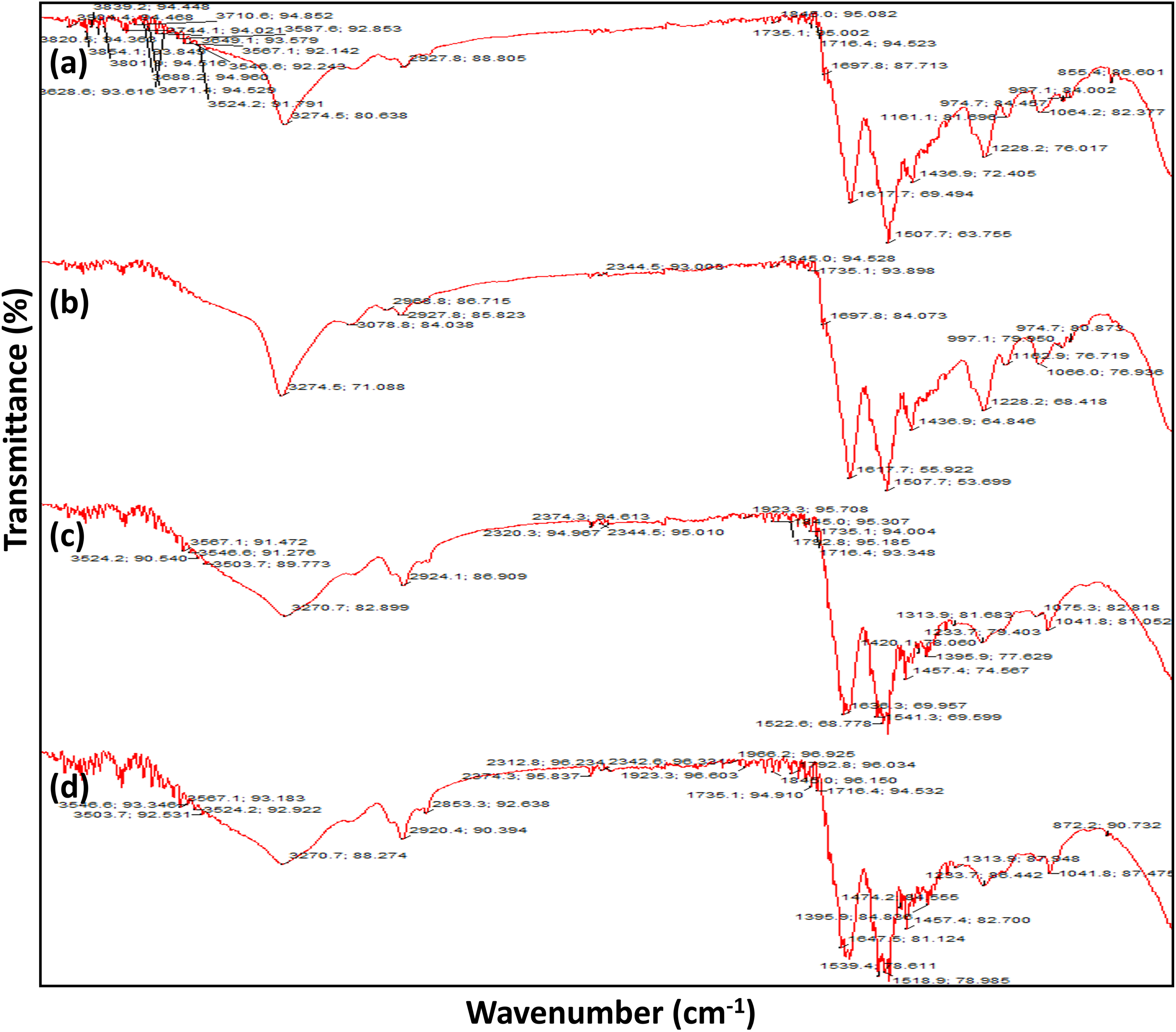
FTIR spectroscopic analysis of the (a) un-irradiated dyed silk fabric, (b) irradiated dyed silk fabric, (c) un-irradiated dyed wool yarn, and (d) irradiated dyed wool yarn using annatto (Bixa orellana) dye extractions.
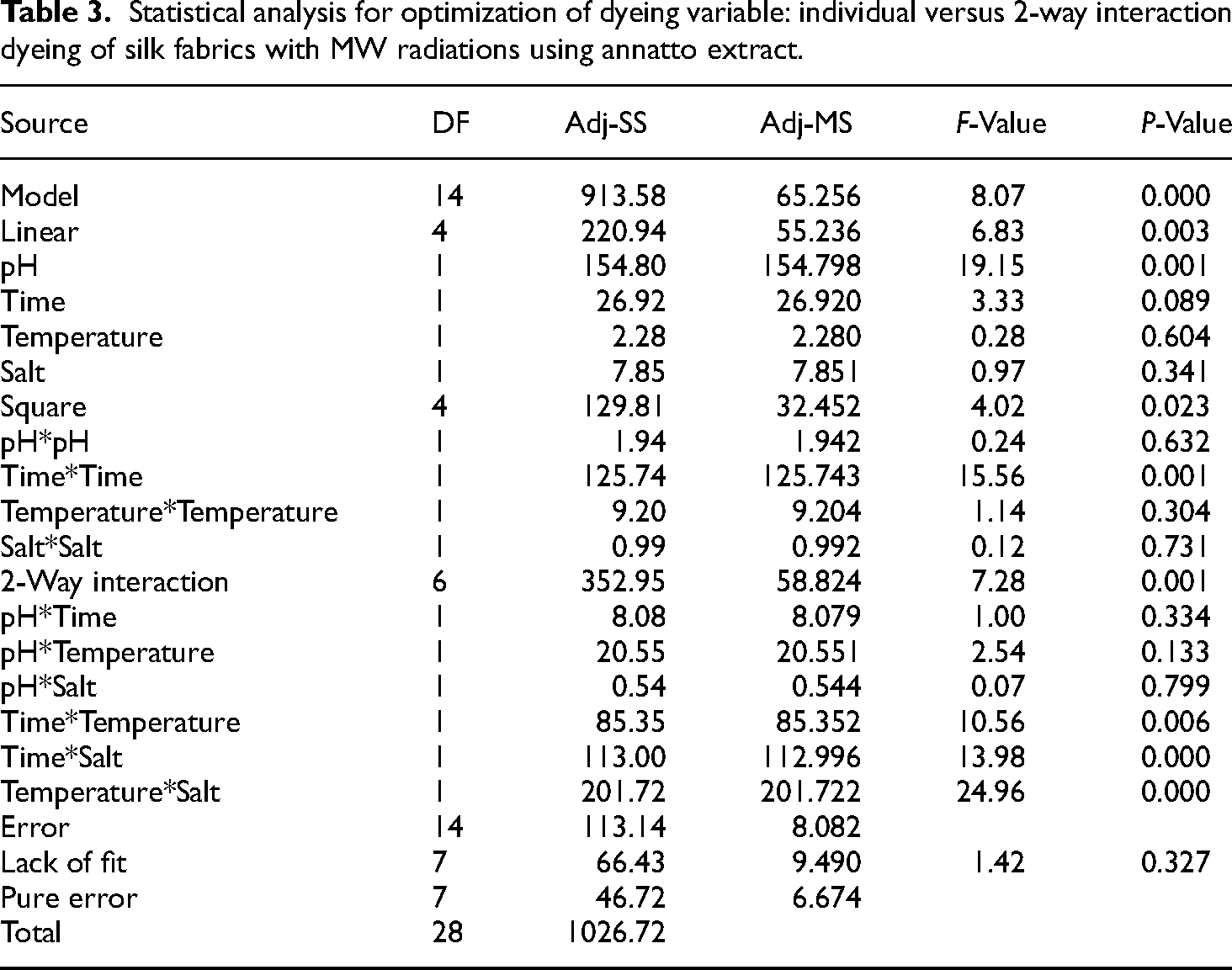
For dyeing proteinaceous fabrics such as silk and wool, the selection of parameters is crucial in natural dyeing processes. In the silk fabric studies using aqueous bixin from annatto, a statistical tool was employed. After conducting 32 experiments, it was determined that irradiated extract with a pH of 6, using 2 g/100 mL of salt as an exhausting agent to dye silk at 80 °C for 40 min, yielded excellent results for dyeing. Here, the extraction procedure, which involved mixing 4 g of fine powder with 100 mL of distilled water, resulted in the extraction of 100 mL of dye solution. The amount of extracted dye solution maintains a consistent extract-to-fabric ratio of 1:25. In Table 3, the model used for analysis is both fit (p = 0.00) and linear (p = 0.003). The role of dye bath pH (p = 0.001) and the contact time of the colorant with silk (p = 0.089) has proven to be significant. In the two-way interaction, these parameters were found to be highly significant (p = 0.001). The contact time of the fabric with the colorant in the presence of heat (temperature) and salt has also been deemed highly significant (p = 0.006, p = 0.000). Similarly, the heat contact (80 °C) and salt amount (2 g/100 mL) were found to be highly significant (p = 0.000). 26
Statistical analysis for optimization of dyeing variable: individual versus 2-way interaction dyeing of silk fabrics with MW radiations using annatto extract.
For wool yarn dyeing with annatto-based yellow natural dye, it has been determined that using an acidic extract with a pH of 6 and 1 g/100 mL of salt, up to 80 °C for 40 min, yields excellent results for dyeing. Statistical analysis in Table 4 revealed that the model used to analyze the results for obtaining optimum dyeing conditions is both fit (p = 0.000) and linear (p = 0.000). The role of extract pH (pH = 6) has been found to be highly significant (p = 0.000), and dyeing temperature (p = 0.067) and time (p = 0.031) have been found to be significant. Individually, these parameters played a significant role in achieving darker shades on wool yarn with annatto extract. In two-way interactions, these parameters were also found to be significant (p = 0.037), where the role of pH with dye bath temperature (80 °C) was found to be significant (p = 0.016). Similarly, the role of dyeing time (40 min) with salt (1 g/100 mL) was found to be significant (p = 0.041). Overall, it is evident that the amount of salt, dyeing time, and temperature have been reduced, suggesting that the extract should be treated with MW for effective results. The results also indicate that MW treatment is cost-effective, time-saving, and energy-efficient. 34
Statistical analysis for optimization of dyeing variable: individual versus 2-way interaction dyeing of wool yarn with MW radiations using annatto extract.

Mordants play a crucial role in natural dyeing as they are essential for fixing the colors of natural dyes onto fabrics in a stable and fast manner. Numerous electrolytes, including alkalis, tannins, non-metals, or metals, can be employed to achieve a variety of hues. 35 However, toxicological studies emphasize the importance of using only eco-friendly salts to avoid the generation of toxic effluents. 36 Following an extensive literature survey, our research group selected iron (Fe), aluminum (Al), and TA as mordants for use before and after dyeing.
The results demonstrate that, for silk, pre-dyeing with annatto, a combination of 2 g/100 mL of Fe, 1.5 g/100 mL of Al, and 1.5 g/100 mL TA yielded excellent results (Figure 6(a)). Similarly, post-dyeing, a combination of 2.5 g/100 mL of Fe salt, 2.5 g/100 mL of Al salt, and 1 g/100 mL of TA produced good color strength (Figure 6(b)). Remarkably, TA was found to contribute more sustainably to silk dyeing with annatto extract. This can be attributed to the interaction between the –OH groups of TA and the –HCO group of silk, as well as the –OH groups from bixin of annatto, forming hydrogen bonding. 37 Al and Fe form coordinate covalent bonds with the –HCO group of silk and –OH groups of annattos bixin, resulting in the observation of color-fast shades. 38 Therefore, the stable complex formation, nature of the fabric, extraction medium, and the characteristics of the colorant collectively play significant roles in achieving dark shades and excellent color fastness ratings.

Effect of color strength by (a) pre-chemical mordanting, (b) post-chemical mordanting, (c) pre-bio-mordanting, and (d) post-bio-mordanting on silk fabric dyed with Bixa orellana powder extract.
In recent times, a noticeable surge in interest has been observed in the utilization of biomolecules as bio-anchors to enhance the sustainability and environmental friendliness of natural dyeing processes. 39 This shift is particularly noteworthy as it replaces the use of toxic elements such as Cu, Co, and Ni with plant extracts containing herbal and biologically active molecules like tannin, flavonoids, anthraquinones, and other available plant waste. 40 In this study, tannin derived from pomegranate peel and red sumac, along with flavonoids from weld flowers, were employed. The results indicated that, before dyeing silk, a combination of 2% red sumac extract, 1.5% pomegranate peel extract, and weld flower extract yielded high strength (Figure 6(c)). Following the dyeing of silk, a combination of 2% red sumac, 2.5% pomegranate peel, and weld flower extract resulted in a high yield (Figure 6(d)). In a comparative analysis before dyeing silk fabric, red sumac was found to be more favorable as a mordant in the utilization of annatto-based bixin, within the yellowish range of dyes. Consequently, tannins have proven to be more sustainable and eco-friendlier mordants for silk when used in conjunction with bixin from annatto seeds. The color coordinates and shade of the dyed silk fabric using the selected high mordanted yield are shown in Table 5.
Selected dyed silk fabrics shade quality parameters with annatto seed powder extract before and after chemical and bio-mordanting.

The results presented in Figure 7(a) for wool yarn dyeing indicate that using 2 g/100 mL of Fe, TA, and 1.5 g/100 mL of Al salt before dyeing with bixin from annatto has resulted in a high yield. Similarly, after dyeing the wool yarn, 1.5 g/100 mL of Fe salt, Al salt, and 0.5 g/100 mL of TA gave a high yield (Figure 7(b)). In comparison, before dyeing, Al salt, and after dyeing, Fe salt produced dark and stable shades with good to excellent fastness. When employing bio-mordants, utilizing 1.5% red sumac before dyeing and 1.5 g/100 mL of red sumac after dyeing, 1.5 g/100 mL of pomegranate peel before dyeing and 1.5 g/100 mL of pomegranate peel after dyeing, as well as 1.5 g/100 mL of weld flower before dyeing and 1.5 g/100 mL of weld flower after dyeing for wool yarn, have yielded excellent results (Figure 7(c) and (d)). The color coordinates and shade of the dyed wool yarn using the selected high mordanted yield are shown in Table 6.

Effect of color strength by (a) pre-chemical mordanting, (b) post-chemical mordanting, (c) pre-bio-mordanting, and (d) post-bio-mordanting on wool yarn dyed with Bixa orellana powder extract.
Selected dyed wool yarn shade quality parameters with annatto extract before and after chemical and bio-mordanting.

Figure 8 depicts the mechanism of dyeing wool yarn and silk fabric using natural dyes derived from annatto seed powder extract. In the natural mordanting process, the natural dye obtained from B. orellana, primarily comprising bixin, interacts with protein fibers like silk and wool in the presence of natural mordants, particularly red sumac, weld and pomegranate. 41 Bixin, which contains –OH groups, forms hydrogen bonds with amino acid residues present in the protein fibers (Figure 8(a)). Additionally, covalent bonds may form between specific functional groups on bixin and the protein fibers, thereby enhancing the stability and adherence of the dye. In metal mordanting, metal ions such as Fe2+, Al3+ and TA form stable complexes by coordinating with bixin. These metal-bixin complexes adhere to the protein fibers, providing a foundation for coloring. Metal-bixin coordination occurs when metal ions interact with the carbonyl and hydroxyl groups of bixin to create coordination complexes. 42

Dyeing mechanism of protein fiber in the presence of (a) natural mordant and (b) metal mordant.
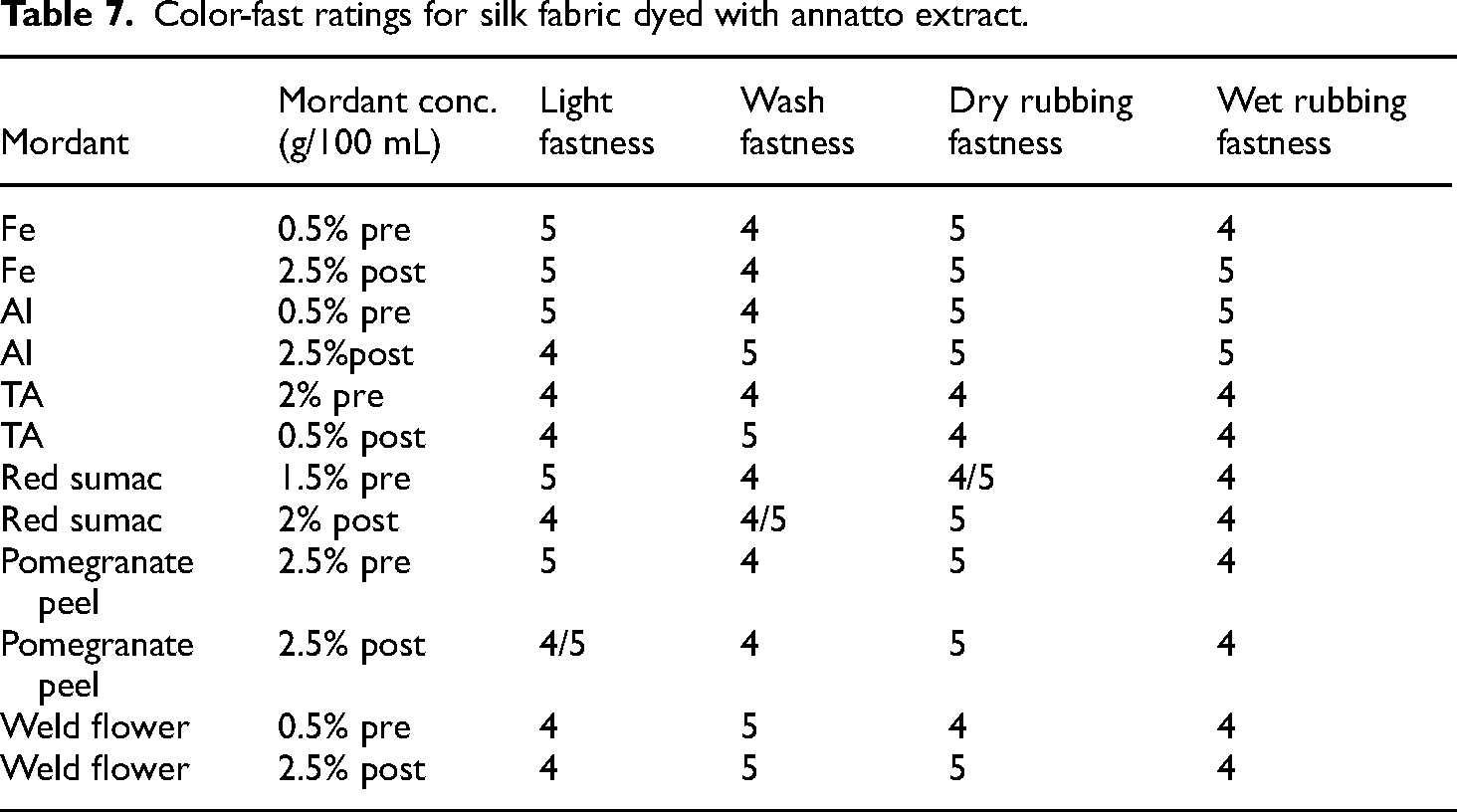
The colorfastness of silk fabric (Table 7) and wool yarn (Table 8), dyed and mordanted at their optimal levels, was investigated. The utilization of annatto seed powder extract for 45 min at 80 °C contributed to an improvement in the color rating and fastness characteristics of the products. The formulas for color analysis of fabrics can be found in the preceding tables. The data suggests that mordanting accelerated the development of shades, likely due to the enhanced dyeability of the colorant through MW irradiation. This process induced the colorant to migrate closer to the fabric's surface, establishing a robust bond between the fabric and the coloring component of the dye. 43 Bio-mordants were found to enhance the coloring and fastness characteristics of both wool yarn and silk fabric when subjected to various testing methods, including rubbing, exposure to light, and washing. This improvement is attributed to strong H-bonding and a stable dye complex, in contrast to corresponding chemical mordants. 44 The color rating and fastness of the natural dye, augmented by MW treatment, were employed in dyeing wool yarn and silk fabric. Consequently, bio-mordanting has been recognized as an innovative technology for shade production, contributing to the environmentally friendly and sustainable aspects of fabric dyeing.
Color-fast ratings for silk fabric dyed with annatto extract.
Color-fast ratings of wool yarn dyed with annatto extract.

The study investigated the efficacy of microwave radiation in enhancing the dyeing properties of annatto (B. orellana) extract on silk and wool yarn. The results indicated that applying aqueous annatto extract to silk fabric for a duration of 6 min significantly improved color intensity. Meanwhile, silk demonstrated enhanced results after being exposed to acidic annatto extract for 8 min with microwave treatment. After treating the wool yarn with MW in an aqueous solution for 6 min, it exhibited increased color strength. However, the increased color intensity resulted from a 4-min microwave treatment with acidic extract. Hence, the acidic annatto extract proved to be ideal for achieving high yields of wool yarn, while the aqueous solution was effective for silk fabric. Silk fabric and wool yarn have been enhanced to meet the required color strength levels, a crucial factor in determining the vibrancy of colors in textiles.
Optimizing the dyeing process for silk and wool involves fine-tuning various parameters to achieve the best results. Based on the data analysis, dyeing silk fabric with irradiation extract at pH 6, using 2 g/100 mL of salt as an exhausting agent, at 80 °C for 40 min, resulted in a higher color strength. However, a pH of 6 and 1 g/100 mL of salt were utilized in dyeing wool yarn with annatto-based yellow natural dye using an acidic extract. The dyeing process was conducted at a temperature of 80°C for a duration of 40 min, leading to improved results. According to the MW treatment, there were reductions in salt amount, dyeing time, and temperature, leading to improved efficiency, cost-effectiveness, time-saving, and energy-efficiency.
In addition to utilizing MW treatment, bio-mordants like tannin from pomegranate peel and red sumac, along with flavonoids from weld flower, were also incorporated. The bio-mordants enhanced the dyeing properties, particularly for silk fabric. The red sumac was discovered to be an effective mordant, enhancing sustainable and environmentally friendly silk fabric dyeing with annatto-derived bixin natural dyes. The silk fabric and wool yarn, dyed and mordanted at optimal levels, showed a marked enhancement in colorfastness properties. By establishing robust hydrogen bonds and stable dye complexes, bio-mordants enhance the color intensity and longevity of the dye.
Although the results are noteworthy, this study does have some limitations. The study primarily concentrated on a range of dyeing conditions, and it may not be applicable to different scenarios. Moreover, while bio-mordants show promise, additional research is necessary to comprehensively grasp their effects on fabric durability and environmental footprint. Overall, MW treatment and bio-mordants provide an innovative approach to eco-friendly fabric dyeing; however, further research is needed to fully grasp their capabilities and limitations.
Conclusion
The study emphasized sustainable and eco-friendly methods for textile dyeing, specifically using natural dyes derived from B. orellana (annatto) seeds. Through systematic experimentation and optimization using RSM, the research has identified various variables that influence the dyeing process, such as temperature, time, pH, and salt concentration. Using microwave treatment was crucial for enhancing the efficiency of both dye extraction and dyeing procedures. Utilizing bio-mordants, such as tannin-derived extracts from pomegranate peel, red sumac, and flavonoids from weld flower, has demonstrated excellent outcomes in producing vibrant and rich colors on silk fabric and wool yarn. In addition, the study examined the colorfastness and stability of dyed fabrics, revealing that microwave treatment and bio-mordanting had a positive impact on the quality and longevity of the colors. The results highlight the potential of these sustainable practices, providing both visually appealing outcomes and supporting environmentally conscious efforts in the textile sector. This study contributes to the growing body of research dedicated to promoting sustainable practices in textile dyeing, aligning with the industry's shift towards eco-friendly approaches.
Footnotes
Acknowledgements
The authors are thankful to the Deanship of Scientific Research at King Khalid University, Saudi Arabia, for supporting this work through a research group program under grant number RGP-2/576/44.
Author contribution
Dr Muhammad Yameen is the supervisor of the work who guided significantly to complete the research work, whereas Fariha Asghar conducted the experiments. Dr Shahid Adeel and Dr Aminoddin Haji guided for smooth running of the experiment, Dr Muhammad Imran has helped editing of the manuscript, whereas Dr Mahwish Salman and Rony Mia helped in analysis of data and writing the manuscript.
Consent to participate and publish
The authors give consent to publish the work a part of M.Phil. studies and is jointly contributed by all authors.
Data availability
The work is from M.Phil. studies.
Declaration of conflicting interests
The authors declared no potential conflicts of interest with respect to the research, authorship, and/or publication of this article.
Funding
The authors disclosed receipt of the following financial support for the research, authorship, and/or publication of this article: The authors are grateful to the Deanship of Scientific Research at King Khalid University, Abha, Saudi Arabia, for supporting this work through grant number RGP-2/576/44.

Author biographies
Muhammad Yameen is an associate professor of Biochemistry at Government College University, Faisalabad, Pakistan.
Shahid Adeel is an associate professor of Applied Chemistry at Government College University, Faisalabad, Pakistan.
Mahwish Salman is an associate professor of Biochemistry at Government College University, Faisalabad, Pakistan.
Aminoddin Haji is an associate professor in the Textile Engineering Department at Yazd University, Iran.
Fariha Asghar is an MPhil student of the Department of Biochemistry at Government College University, Faisalabad, Pakistan.
Rony Mia is a lecturer in the Textile Engineering department at the National Institute of Textile Engineering and Research, a constituent institute of the University of Dhaka, Dhaka, Bangladesh.
Muhammad Imran is from Department of Chemistry, Faculty of Science, King Khalid University, Abha, Saudi Arabia.