




Abstract
Making decisions about the design and implementation of a logistics network is crucial as it has long-term impacts. However, it is important to consider that demand factors and the number of returned items by customers may change over time. Therefore, it is necessary to design a logistics network that can adapt to various demand fluctuations. The main goal of this study is to calculate the quantity of products that should be sent at different times in a supply chain network to minimize the overall cost of reverse logistics and tardiness time. Accordingly, a multi-objective mathematical model is proposed that aims to optimize the total cost and the amount of delay in sending customer orders in a three-level logistics network, assuming that some parameters are uncertain. Additionally, the minimization of waiting time, considering the level of delay in sending, is applied as the second objective function. To handle the uncertainty in the reverse logistics network, a fuzzy approach is implemented, and the proposed model is solved using GAMS software. Furthermore, to solve the mathematical model in large dimensions, the Cuckoo Optimization Algorithm (COA) is applied in MATLAB software, and the results are compared to the global optimal solution. The outcomes show that the proposed algorithm has a desirable performance, as the total values sent to the manufacturer are equal to those obtained from the exact solution, and the objective function value decreases as the number of repetitions increases.
Keywords
Introduction
In today's uncertain and ever-changing business environment, a company's success hinges on its ability to effectively manage the intricate web of communication among supply chain members. Unfortunately, the high volume of manufactured goods being consumed has led to significant environmental damage, prompting concern among consumers and officials alike. As a result, reverse logistics management has become a critical area of focus in modern supply chain management. 1 Reverse logistics enables companies to seamlessly return goods and raw materials to suppliers, preventing inventory shortages and disruptions to production and distribution activities. Reverse logistics is highly advantageous for companies, driven by environmental laws, economic benefits, consumer awareness, and social responsibility. Properly designing the logistics network as part of supply chain planning is crucial, as it can positively impact cost reduction, responsiveness, and efficiency.2,3 To achieve these goals, a wide range of linear and nonlinear models can be employed, including complex multi-objective optimization problems. Given the complex nature of these issues, decision-makers must consider multiple objectives simultaneously, while factoring in any uncertainties related to the problem parameters.4,5
Considering the importance of reverse logistics and its role in the supply chain, in this research, an attempt has been made to design a logistics network that takes into account different objective functions in the reverse logistics optimization problem. Accordingly, two objective functions of operation time and cost have been considered. On the other hand, as an efficient logistics network must be designed in a way that can respond to uncertainties, the fuzzy theory is applied to deal with uncertain parameters.
The rest of the paper is organized as follows. In Section 2, the literature related to this research is reviewed. In Section 3, the fuzzy formulation for time and cost optimization in the reverse logistics network is presented. In Section 4, the bi-objective fuzzy mathematical programming model is presented. The Cuckoo Optimization Algorithm (COA) developed for the proposed mathematical model is presented in Section 5. In Section 6, the results related to the exact and meta-heuristic solution of the problem are reported. Finally, the conclusion and suggestions for future work are presented in Section 7.
Literature review
The primary objective of any supply chain is to meet customer demands most efficiently and cost-effectively possible. Structurally, a supply chain network comprises retailers, wholesalers, distributors, manufacturers, and suppliers, with each entity serving as the supplier for its downstream agent. Ultimately, the retailer satisfies the final customer's requirements. In this context, reverse logistics refers to the management of returned goods and the associated processes for reusing materials and products to enhance logistics organizations’ productivity, profitability, and efficiency. Proper handling of returned items is critical to achieving these goals.
In recent years, researchers have focused on cost modeling for reverse logistics. Zhou et al. (2020) proposed a mixed integer linear programming model for designing reverse logistics networks at the strategic level. This model determines the appropriate facilities for reproducing returned products. 6 Naderi et al. (2020) presented a mixed integer nonlinear programming model aimed at minimizing costs. To solve that model, the researchers developed a Benders Decomposition Algorithm and used a binary approach. 7
Hashemi (2021) developed a three-tier reverse logistics network using an integer programming model that minimizes the costs of reverse logistics. 8 Djatna et al. (2020) proposed a bi-objective mixed integer nonlinear programming model for the design of integrated forward and reverse logistics networks, which they solved using the NSGA-II algorithm and a dynamic local search mechanism to identify non-dominated solutions. 9 Various meta-heuristic methods, including the cuckoo optimization algorithm, have been proposed to solve complex problems. 10 Pooya et al. (2021) presented a mixed integer linear programming model for a multi-commodity, four-tier logistics network that determines the category of suppliers. 11 Using a multi-objective methodology of physical planning, Cao et al. (2021) redesigned the warehouse network structure to reduce costs. 12 Xu et al. (2022) developed a mixed integer linear programming model for direct logistics network design in a periodic chain with the objective of minimizing costs. 13 Ghobadi et al. (2022) proposed a mixed integer linear programming model for reverse logistics network design that minimizes costs and includes a pull system based on customer demand for reclaimed products. This study is one of the few that addresses this aspect of reverse logistics. 14 Finally, Li et al. (2022) presented an advanced bi-objective mixed integer programming model that integrates distribution centers with collection and recovery centers to design a closed-loop logistics network for third-party logistics service providers. Their proposed hybrid sparse search method minimizes costs while reducing customer service time, with repairs being the only mode of recovery considered. 15
Despite recent efforts, few studies have addressed the integrated design of direct and reverse logistics distribution networks simultaneously, as pointed out by Ding et al. (2023). 16 While some studies have made strides in this area, they have certain limitations. For example, they make use of exogenous models with a specific number of facilities without providing an explanation for their choices. Additionally, they fail to consider the various capacities of facilities, instead choosing a capacity level based on the ad hoc nature of the designed models. Such studies may not be generalizable to other cases and do not cover all categories of reverse logistics, particularly recycling and destruction centers. Other studies have focused on the mathematical modeling of logistics networks. Babaee et al. (2023) developed a bi-objective mixed integer programming optimization model for the inverse logistics design network problem, which considered outsourcing and third-party logistics. 17 Kannan et al. (2023) examined the impact of various cost scenarios on logistics network design and identified multiple optimal solutions to maximize supplier profit while minimizing delivery time. 18
In addition to the above studies, we can refer to other studies such as modeling reverse logistics activities at the end of the product life cycle, 19 designing reverse logistics for electronic equipment waste, 20 and outsourcing reverse logistics activities. 21
Li et al. 22 introduced a framework for a supply chain system that utilizes multiple agents and operates under a switching topology while facing uncertain demands. In order to establish consensus within the system, they devised a switching controller that takes into account both the production rate and a distributed consensus protocol. The authors provided adequate conditions that ensure consensus is achieved throughout the entire system while also effectively mitigating the bullwhip effect by utilizing an average dwell time approach. This approach allows for certain supply chain to be isolated during specific periods. Furthermore, the researchers presented a simulation example to demonstrate the efficacy of their proposed method.
Yang et al. 23 conducted an analysis of the logistics process of Matsutake and proposed optimizations for the dynamic monitoring and quality management systems specifically designed for post-harvest Matsutake in the cold chain. Their system involved real-time monitoring of micro-environmental parameters within the cold chain and utilized this data to identify the most effective preservation method. By analyzing the quality changes in Matsutake with different preservation packaging, the researchers were able to determine the optimal approach to maintain the desired quality of the Matsutake throughout the cold chain process.
Huang et al. 24 conducted a comprehensive examination of the application of flexible sensing technology as a substitute for rigid sensors in order to achieve high-precision sensing, multi-scale monitoring, and nondestructive detection of agri-food quality. The findings of this research demonstrated that current flexible sensors, which initially focused on single-parameter sensing, are progressing toward multimodal sensing capabilities. Furthermore, the development of emerging manufacturing technologies, novel device structures, emerging materials, and intelligent algorithms is anticipated to significantly enhance the efficiency of quality control in the cold chain management of agri-food products.
The existing literature reveals a critical research gap in the area of logistics network design, where there is a lack of studies that simultaneously optimize the total cost of the system and the delivery time for products, using efficient multi-objective meta-heuristic algorithms. Addressing this gap is of paramount importance, as it represents a fundamental aspect that directly impacts the overall efficiency and effectiveness of logistics operations.
To bridge this research gap, our study makes a substantial contribution by introducing a novel mathematical model designed to optimize both time and cost objectives within the logistics network, encompassing returning, processing, and producing centers. We have taken into account fuzzy parameters and considered the final recovered life of the product, adding a level of complexity and realism that has been overlooked in previous research. Moreover, we have carefully integrated the known quantities of producer demand and collected products with their final life for each period right from the outset, which enhances the model's practicality and real-world relevance.
To tackle the multi-dimensional complexity of our proposed optimization problem, we have employed the cutting-edge COA algorithm, which has not been previously applied in this specific field of study. The COA algorithm offers a unique and promising approach to dealing with such intricate logistics challenges and further strengthens the effectiveness and applicability of our proposed model within the context of reverse logistics optimization.
By incorporating multi-objective meta-heuristic algorithms into our research, we have unlocked the potential for exploring innovative approaches to achieve optimal solutions that balance both cost and delivery time, ultimately leading to improved logistics performance and heightened customer satisfaction.
In summary, our research paper significantly contributes to the field of logistics network design by introducing a comprehensive and advanced mathematical model, addressing real-world complexities, and leveraging the untapped potential of the COA algorithm. Through this endeavor, we aim to pave the way for more efficient and effective logistics practices, ultimately benefitting various industries and positively impacting the overall economy.
Problem statement
In the context of supply chain management, various factors are taken into consideration when proposing a reverse logistics design. The primary factors include the time and cost associated with recovering products from customers. Additionally, inventory control and distribution planning, which are fundamental support processes, have a significant impact on both the overall cost of the supply chain and customer service levels. 18 This study aims to present a fuzzy reverse logistics network design that incorporates two objectives: cost and time. The network consists of a customer area, multiple recovery centers, several processing centers, and a manufacturer responsible for delivering recovered products to customers through reverse logistics. The quality of service is determined by whether the recovered products reach customers within the expected timeframe, with satisfactory service denoted by timely delivery and unsatisfactory service if there are delays. When designing reverse logistics networks, there exists a trade-off between the total cost and shipping delay. In specific scenarios, increasing the number of processing centers can reduce shipping delays and maximize customer satisfaction; however, this leads to higher fixed opening costs. The central research question addressed in this study is: “How can a multi-objective mathematical model be developed to optimize costs and delay times in a three-level logistics network while considering the uncertainties associated with parameters?”
Research assumptions
In this research, a number of return centers have been considered for the return of returned and collected goods, as well as a number of processing centers for the purpose of recycling and products that have been discontinued (for example, due to the emergence of new technologies or returns) and at the end of their useful life. They are themselves and are still valuable, they are also considered a product with a restored final life. The assumptions related to the two-objective fuzzy mathematical programming model in the reverse logistics system are as follows
The reverse logistics network is considered with three levels of returning, processing and producing centers, In order to consider the uncertainty, the input parameters of the problem are in the form of fuzzy numbers, Only one type of product is considered, The amount of producer demand and the number of products with the final life collected in each period are known at the start of the planning horizon, A fixed cost is considered for reopening the processing centers, The maximum capacity is specified for both the return and processing centers, The cost of maintaining the inventory of all processing centers is constant.
Proposed mathematical model
Indices
Parameters and decision variables
The first objective function of the mathematical model proposed in Eq. (1) is to minimize the overall cost of the reverse logistics network. This cost encompasses fixed expenses related to reopening processing centers, transportation costs between centers, and inventory maintenance costs. The second objective function, as described in Eq. (2), aims to minimize supply chain tardiness, which is measured by the delay in shipping customer orders. Meeting delivery deadlines for customers poses a significant challenge in reverse logistics, mainly due to the uncertain rate at which end-of-life products are recovered. Reducing waiting time by incorporating shipping delays is proposed as the second objective function to address this challenge. This objective function takes into consideration the shipping time from the return center to the processing center, from the processing center to the manufacturer, the processing time of reusable products at the processing center, and the anticipated shipping time as perceived by the customer.






Fuzzy multi-objective modeling
Complex optimization problems encountered in real-world scenarios are often influenced by uncertain factors, such as the delivery time of a product, which is contingent on various conditions.
25
Therefore, the objective of this study is to develop a more realistic model that incorporates all problem parameters as non-deterministic. Different approaches have been explored to address uncertainty, including probabilistic, fuzzy, and robust models. In this study, the fuzzy set theory approach is employed due to its efficiency and lower computational complexity.
26
By utilizing a fuzzy scheduling algorithm, a flexible system can be established, especially in situations where parameters exhibit uncertainty. Decision-makers prefer the fuzzy approach as it offers increased certainty within an interval of uncertain parameters, mitigating the risks associated with decision-making and allowing for the confident acceptance of uncertainty in real-world conditions.
27
Specifically, trapezoidal fuzzy numbers are employed in this study, and the fuzzy set of reference X is defined as a set of ordered pairs as described in Eq. (9).


The selection of trapezoidal fuzzy numbers in this research paper is driven by their ability to encapsulate and process a greater amount of information compared to triangular fuzzy numbers. Consequently, trapezoidal fuzzy numbers are capable of yielding more precise and accurate results that align with real-world complexities.
Trapezoidal fuzzy numbers in the quadruple form are


Trapezoidal fuzzy number.
Possibility, necessity, and credibility
According to the definition by,
26
the possibility value of the trapezoidal fuzzy variable will be in the form of Eq. (12).















Based on the presented concepts of uncertainty in the reverse logistic optimization problem, fuzzy set theory, and credibility approach, this section presents the fuzzy two-objective mathematical model. To develop a more realistic model, all input parameters of the problem have been considered non-deterministic and of the trapezoidal fuzzy number type, as stated in the assumptions of the problem. Therefore, the proposed two-objective fuzzy mathematical model is as follows:






According to the presented de-fuzzification method, depending on the type of parameter, Eqs. (25)-(27) are used and the fuzzy mathematical model of the two objectives of time and cost in the reverse logistics system is reformulated as follows:

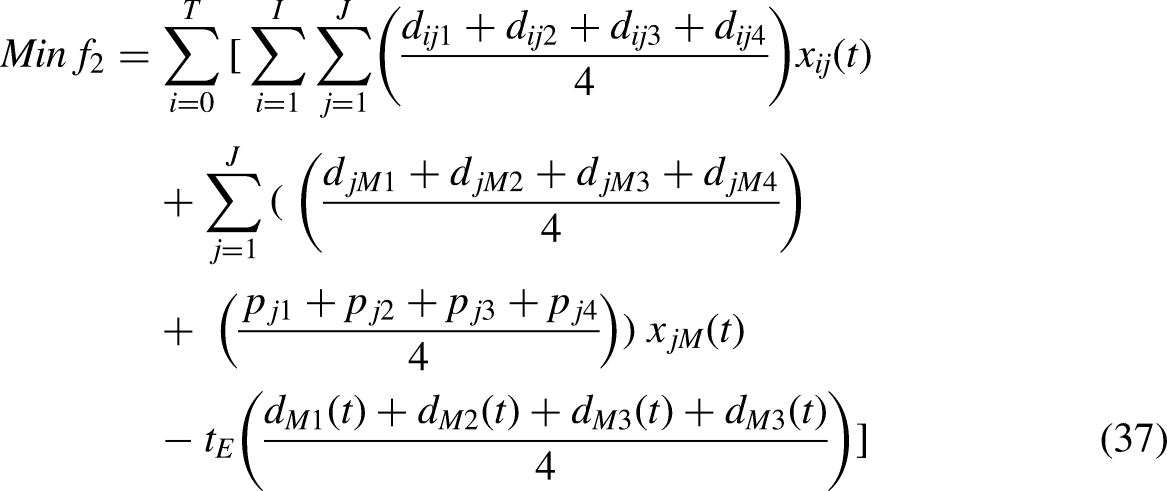



Developed cuckoo optimization algorithm
As previously discussed in this paper, logistics network design problems with high dimensions are difficult to solve using exact methods, necessitating the development of heuristic and meta-heuristic methods. To optimize both time and cost in the fuzzy multi-objective model, a cuckoo optimization algorithm is developed in this study. The algorithm is inspired by the behavior of certain birds that lay their eggs in the nests of other birds, avoiding the effort of nesting and parenting duties. Cuckoo chicks hatch earlier and grow faster than the host bird's eggs. The algorithm's flowchart is presented in Figure 2, and it sets the egg allocation limits for different iterations between 5 and 20, following the cuckoo's habit of laying eggs. Moreover, the algorithm integrates the cuckoo's maximum Egg-Laying Range (ELR), determined by various factors such as the total number of eggs and the upper and lower limits of problem variables. Eq. (41) is utilized to calculate the maximum laying range.34–37
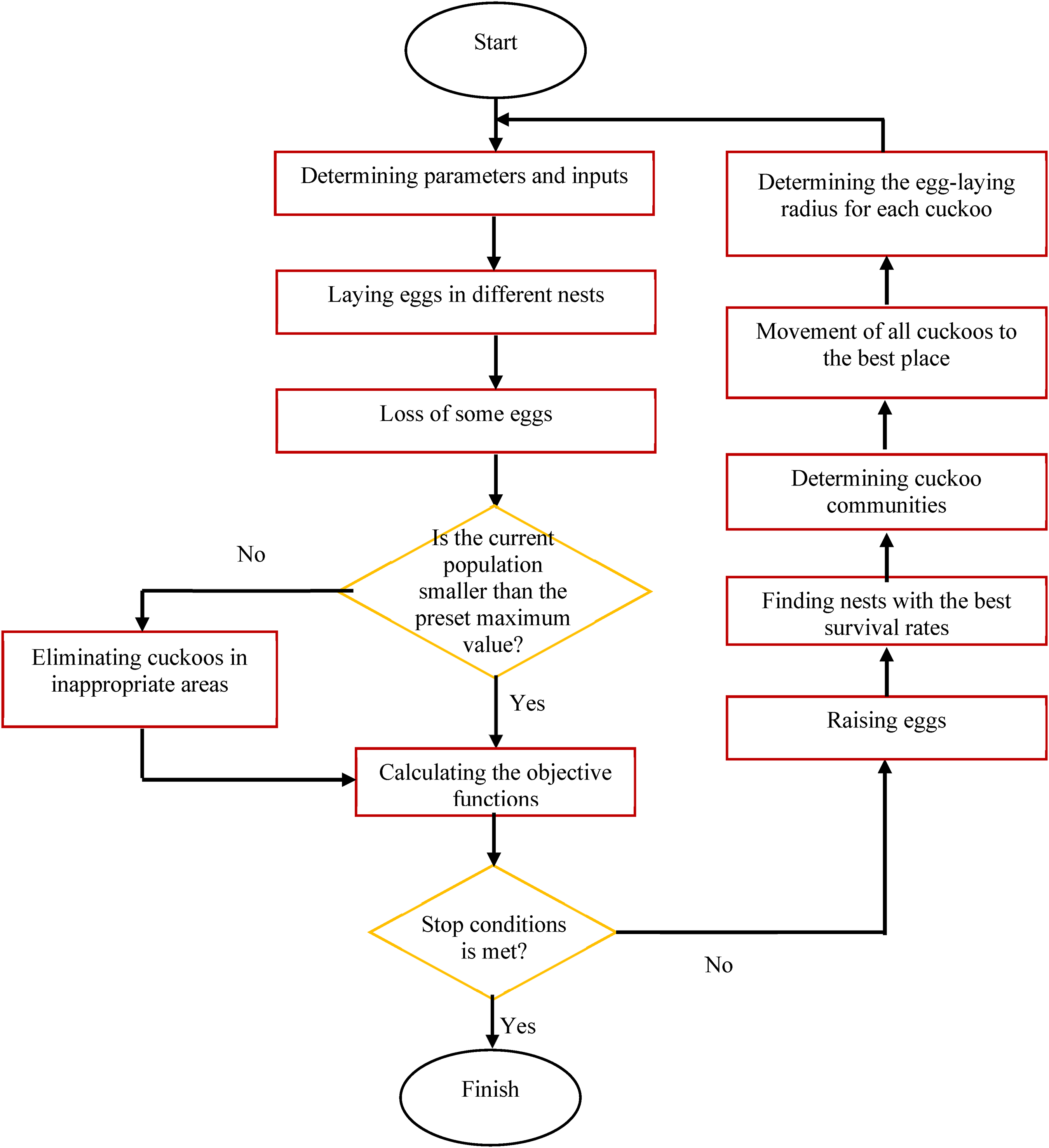
Proposed COA algorithm flowchart.

In Eq. (41), α represents the parameter that sets the maximum ELR value, while
When migrating to a target point, cuckoos do not travel the entire distance in a direct path, but rather deviate from it. This mode of movement is depicted in Figure 2, where each cuckoo travels only λ% of the total path towards the current ideal target and has a deviation of φ radians. These two parameters enable cuckoos to search more of the environment. 37
To design the proposed cuckoo optimization algorithm in this study, λ is generated as a random number between 0 and 1, while φ is generated as a number between π/6 and -π/6. The upper and lower limits of the variable in the ELR calculation are taken as 1 and 0, respectively. Additionally, the maximum number of cuckoos is set at 100, and the initial population is kept at 10 cuckoos. Finally, the number of repetitions in this algorithm is set to 50.
Numerical results
In order to assess the effectiveness of the proposed mathematical model and the meta-heuristic algorithm, the model is executed on a computer system equipped with 4GB RAM and a 2.4 GHz CPU, specifically the Core i5 processor. The mathematical model is implemented using the GAMS programming language, while the COA (Constrained Optimization Algorithm) is coded in MATLAB R2019a.
Subsequently, data pertaining to a food supply chain located in Chongzuo City, China, is gathered for the purpose of analysis. This particular supply chain comprises four return centers, three processing centers, and a single producer. The planning horizon considered for the study spans two time periods.
Information about the processing center includes the capacity of each center (
Information about processing centers.

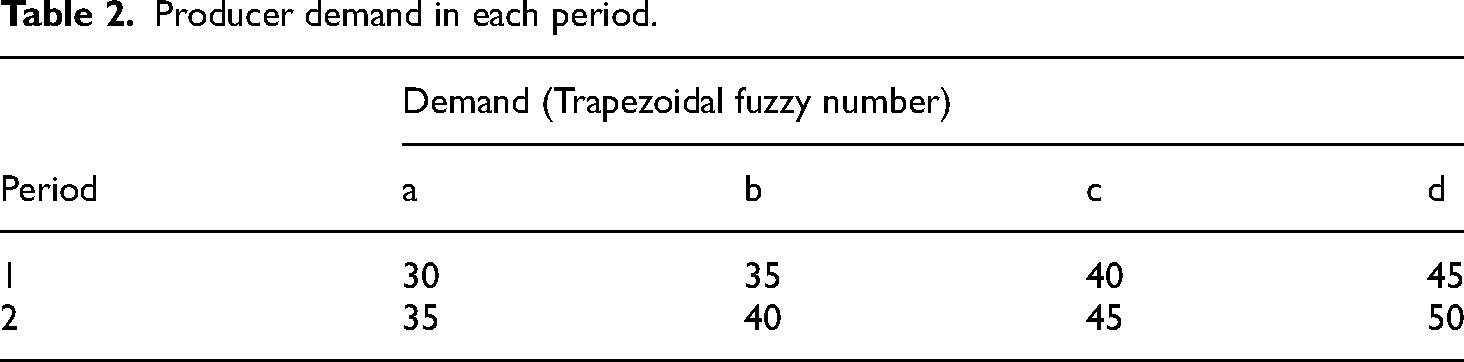
Producer demand in each period.
In addition, the amount of transportation cost and sending from return center i to processing center j (
Shipping cost and shipping time between return and processing center.

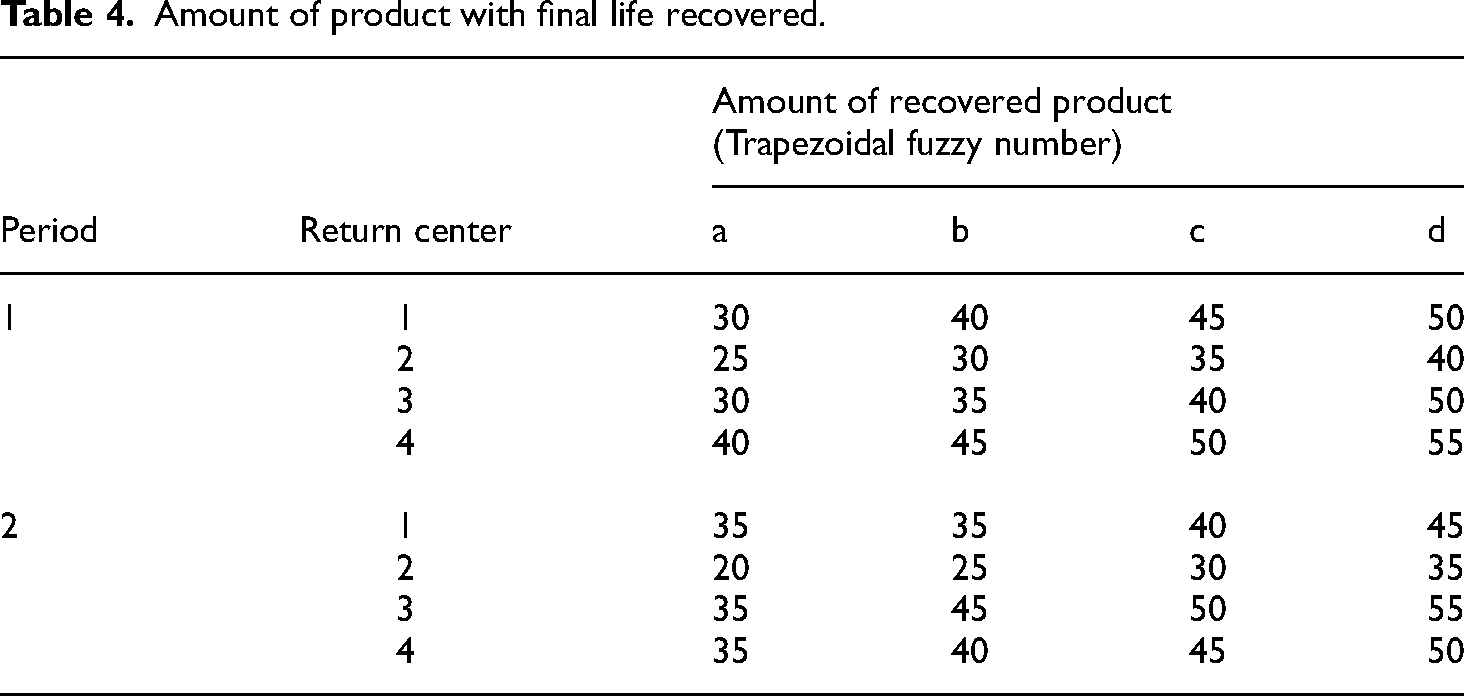
Amount of product with final life recovered.
Solution methods evaluation
The GAMS software and MATLAB software with the COA algorithm was utilized to solve the mathematical model, requiring less than 20 s or both software. The solutions obtained were 6480.125 and 6496.958 units of cost, respectively, as verified by referring to the solutions. The algorithm was observed for all values, and the de-fuzzified values of time and total cost for all responses were lower than the aforementioned values, confirming the model's validity. It is worth noting that the objective function of time was converted into cost using a coefficient of 1000 currency units per minute. Additionally, based on the opinions of logistics experts in Iran, a higher weighting coefficient than the average of their opinions was assigned to costs. Ultimately, all three processing centers were utilized. Further outputs can be found in Tables 5 to 7.
Amount of inventory sent to processing centers.

Table 5 displays the results obtained from solving the mathematical model, revealing that no inventory was sent to processing center 1 in the first period. However, 46 units of inventory were dispatched to processing center 1 in the second period. Additionally, the amount of inventory sent to the other two centers is also presented. In contrast, the COA algorithm solution suggests that the inventory dispatched to the processing centers in the first period is significantly lower than the amount sent in the second period. Table 6 depicts the quantity of products with final life sent from the return center i to the processing center j in each period.
Amount of product sent between two return and processing centers.
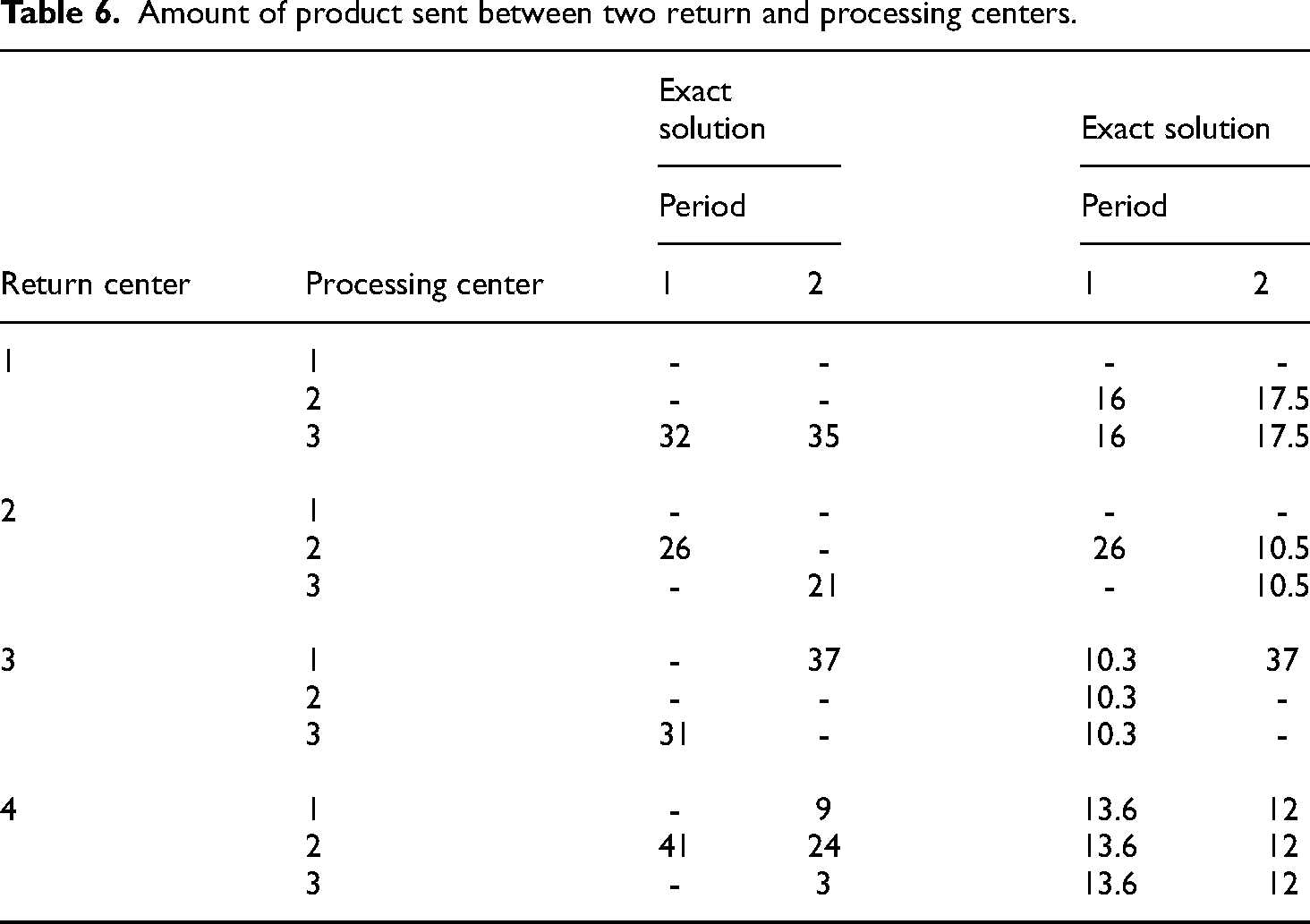
Based on the solution obtained from the mathematical model, return center 1 did not send any products to processing centers 1 and 2 in two periods. In the first and second periods, 32 and 35 units of products were, respectively, dispatched to processing center 3. The quantity of products dispatched in each period is also presented. Similarly, the COA algorithm solution indicates that return center 1 did not send any products to processing center 1 in two periods. Instead, 16 and 17.5 units of the product were dispatched to processing centers 2 and 3 in the first and second periods, respectively. The amount of product sent in each period is also indicated. Notably, the total product sent from the return center to the processing centers in each period is equivalent to the amount derived from the exact solution, indicating an accurate calculation of this variable in the cuckoo algorithm. Finally, Table 7 highlights the amount of product dispatched from the processing center to the manufacturer. Figure 3 shows the amount of product sent from return centers to processing centers and producers in each period.
The amount of product sent to the producer.


The schematic form of product shipment in the proposed reverse logistics.
Sensitivity analysis
The number of manufacturer demands plays a crucial role in the domain of reverse logistics, and its impact on the design of a new logistic system is examined in this research paper. To capture this influence, a proposed mathematical model incorporates the parameter

The effect of the number of manufacturers on the total demand of supply chain.
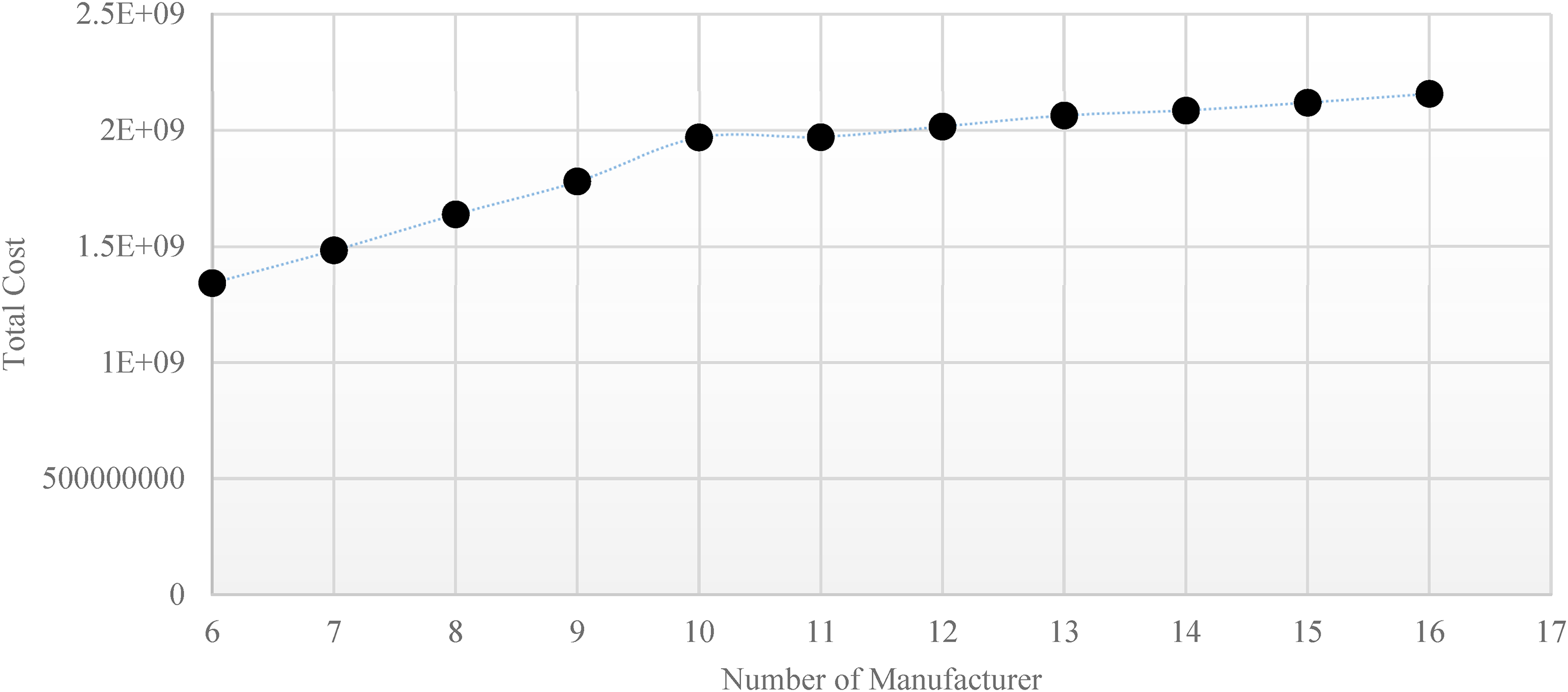
The effect of the number of manufacturers on the total cost of supply chain.
The results of sensitivity analysis.
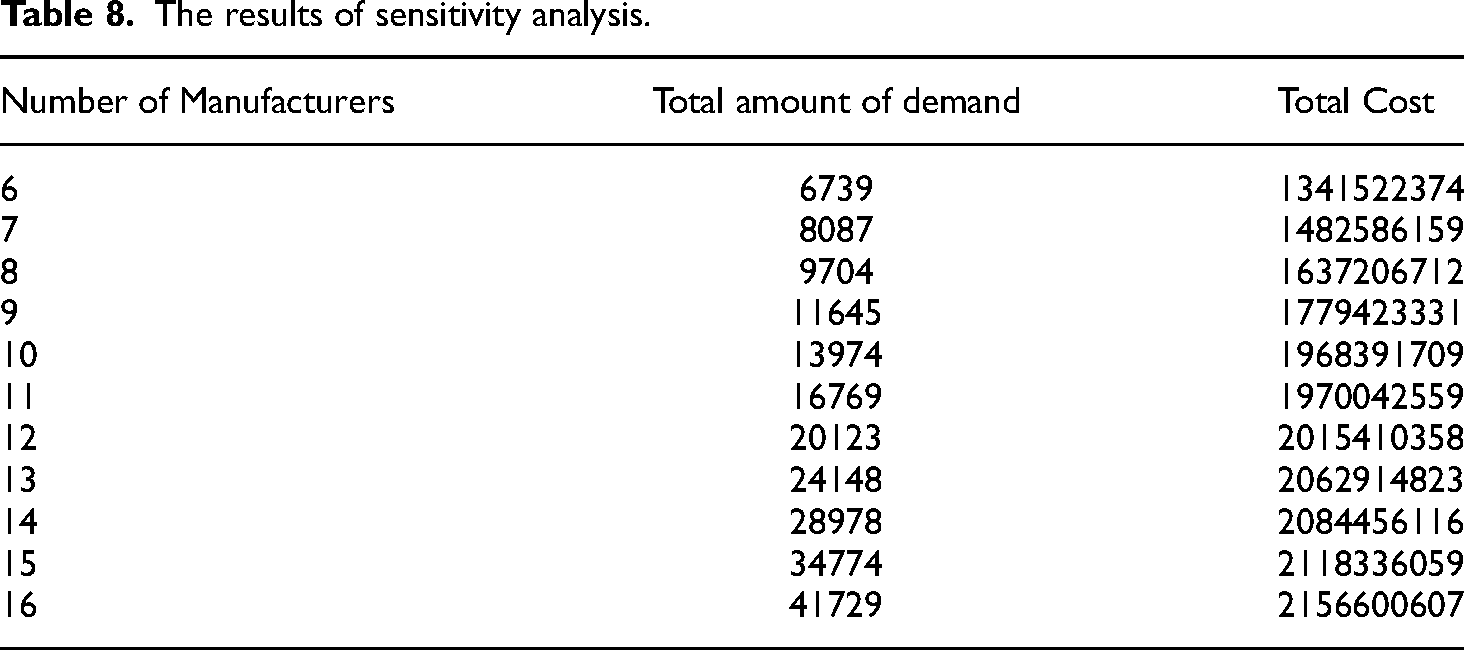
The findings depicted in Figure 4 demonstrate a clear relationship between the number of Manufacturers and the total demand of the supply chain. As the number of Manufacturers increases, there is an evident upward trend in the overall demand. However, the corresponding Figure 5 reveals that the total cost of the supply chain also experiences an increase. This phenomenon can be attributed to the fact that an increase in the number of Manufacturers amplifies the complexity of supply chain operations. Consequently, additional costs associated with transportation, inventory holding, and other factors are incurred, contributing to the overall rise in supply chain costs. The observed trend underscores the importance of effective planning and management of the logistic network when accommodating an expanding number of Manufacturers. By implementing appropriate strategies and optimizing the logistical processes, organizations can mitigate the potential cost escalation resulting from increased manufacturer participation in the supply chain.
Conclusion
This research paper introduces a novel fuzzy two-objective optimization model for reverse logistics systems, with the primary aim of minimizing both the total cost and delay time by determining the optimal quantity of product exchanges between centers over time. To accurately represent the complexities of the system, factors such as shipping time, processing time, and customer expected shipping time were incorporated into the model. To address parameter uncertainty, a fuzzy credibility approach using trapezoidal fuzzy reasoning was adopted. The research also formulated a mathematical programming model based on the fuzzy two-objective optimization framework and utilized the cuckoo optimization algorithm for efficient solution search.
By combining these elements, this study offers a comprehensive and innovative approach to addressing challenges within reverse logistics systems. The proposed model, supported by fuzzy reasoning and optimization algorithms, provides a promising avenue for enhancing the overall efficiency and performance of reverse logistics networks. By minimizing costs and delay times, organizations can achieve more streamlined operations and improved customer satisfaction, ultimately leading to enhanced competitiveness in the industry.
Managerial insights
The findings and insights derived from the proposed model have significant managerial implications for reverse logistics systems. Firstly, the model offers valuable insights into determining the optimal number of return centers and processing centers within the network. By accurately calculating these quantities, managers can make informed decisions regarding the placement and distribution of these centers, optimizing resource allocation and operational efficiency.
Secondly, the model provides insights into the amount of product that should be moved between the centers, as well as the quantity to be sent back to the manufacturer. This information is crucial for managing inventory levels and ensuring timely and cost-effective product returns. Managers can utilize these insights to streamline the flow of products within the reverse logistics network, minimizing delays and reducing overall costs.
Furthermore, the efficiency and accuracy demonstrated by the proposed approaches highlight the potential of using advanced optimization techniques in reverse logistics decision-making. By leveraging such approaches, managers can achieve optimal solutions that align with the organizational goals of minimizing costs and improving customer service.
Lastly, the performance verification of the proposed algorithm, which showcases a decrease in the objective function value with an increase in repetitions, emphasizes the robustness and reliability of the model. This insight can guide managers in selecting appropriate optimization algorithms for solving complex reverse logistics problems, ensuring consistent and reliable results.
Overall, the managerial insights from this research underscore the significance of employing mathematical models and optimization techniques in reverse logistics decision-making. By leveraging these insights, managers can optimize the design and operation of their reverse logistics networks, leading to improved efficiency, cost savings, and customer satisfaction.
Limitations of this research
This research has several limitations that could be addressed in future studies. Firstly, the assumption of static demand and product returns throughout the planning horizon may not accurately reflect real-world dynamics. To overcome this, researchers can incorporate dynamic demand forecasting techniques and adaptive models that adjust to changing conditions. 38 Additionally, considering transportation constraints and regional-specific factors in the logistics network design could enhance the model's practicality. 39 Integration of geographical information systems (GIS) data and network optimization techniques can optimize transportation routes and account for regional disparities.40,41 Engaging stakeholders and industry experts can also provide valuable insights into practical constraints and preferences, leading to more relevant and implementable solutions.
Furthermore, the current model's deterministic nature may not account for uncertainties in logistics operations. To improve robustness, future research can embrace probabilistic or fuzzy modeling approaches, including uncertain factors such as processing times, demand variations, and product quality. The utilization of uncertainty analysis and robust optimization techniques would equip the logistics network to handle unforeseen circumstances better and ensure greater resilience. Lastly, broadening the performance evaluation criteria to include sustainability indicators, customer satisfaction metrics, and environmental impact would offer a more comprehensive view of the proposed logistics network's effectiveness and long-term viability. By considering these limitations and incorporating proposed outlines, future research can significantly enhance the practicality and applicability of logistics network design.
Future outlooks
In future research, there are promising opportunities to enhance reverse logistics systems through the exploration of advanced meta-heuristic methods and multi-objective approaches. Researchers can investigate the effectiveness of algorithms like the gray wolf optimizer and water droplet evaporation algorithm to improve optimization capabilities. Additionally, incorporating multi-objective techniques such as NSGA-II and MOPSO can enable the simultaneous optimization of multiple conflicting objectives, leading to more balanced and diverse solutions. Addressing uncertainty through possibilistic programming and robust scenario-based methods offers potential for developing logistics models that account for real-world uncertainties and improve risk management. Expanding the scope to include remanufacturing and recycling can contribute to a more comprehensive approach to reverse logistics, fostering a circular economy and minimizing waste. As a foundational study in the field, this research can serve as a basis for future investigations, paving the way for more efficient, sustainable, and innovative logistics practices. Embracing diverse perspectives and uncharted territories will collectively advance the field and have far-reaching implications for various industries, benefiting society and the environment.
Footnotes
Declaration of conflicting interests
The authors declared no potential conflicts of interest with respect to the research, authorship, and/or publication of this article.
Funding
The authors received no financial support for the research, authorship, and/or publication of this article.

Author biographies
Hongyu Tang is a Associate Professor in Logistics. His area of research is Intelligence Logistics, Cross border logistics.
Amruth Ramesh Thelkar, an Indian National, obtained his PhD (Electrical & Electronics -Solar Engineering -Artificial neural networks and Optimization), MTech (Industrial Electronics) and BE (Electrical & Electronics Engineering) Shri Jagdish prasad Jhabarmal Tibrewala, Jhunjhunu, Rajasthan and Visvesvarya Technological University, Belgaum, India. He has a 14 years and 6 months of the total experience of which 12 and half years is in teaching and one and a half year is in industry. Currently he is in Jimma University teaching undergraduate, postgraduate, and PhD students and handles subjects like Artificial Intelligence systems, Neural networks and fuzzy systems, Micro and Nano Systems, Linear System Theory, Real-Time Operating System and Embedded systems, Modern Control System, Digital Control Systems, Process Control Systems, Introduction to control system analysis, Basic Electrical Engineering, Transformers and induction machines, Analog Electronics Circuits, Linear IC's and Its applications, Logic Design, VLSI circuits & Design, Microcontrollers, Control systems, Embedded systems, Signals & systems, Control systems, Programmable Logic Controllers (PLC & SCADA), Auto CAD. Some of the other research interests are in the areas of Renewable energy resources, VLSI Circuits and design, Embedded Systems, Power Electronics, and Control systems. Guided UG, PG students for some of the projects of L&T, REI- electronics Pvt. Ltd and Guiding two PhD students. He served in NIE-IT for four and a half years. Further, he takes an active part in serving the institute not only in academics but also in co-curricular activities of the college. This includes Student Welfare Officer, Placement Coordinator, conducting workshops and seminars for students and teachers. He attended various faculty training programs conducted at different institutions like Advanced Auto-CAD, Renewable Energy, Applications of MATLAB, CMOS VLSI, etc. He guided various projects for UG and PG students. He had published 32 technical papers in national and international conferences and journals. Some of them have been awarded the Best Paper. He presented the technical talk at the Institute of Engineers Mysore on Solar power optimum utilization and efficiency improvements (Power Converter-CMOS Technology). Worked in various areas such as Design and implementation of Electronic Power Steering, sine wave inverters, and other embedded system projects such as controlling BLDC and DC motors.