




Abstract
Objectively recognizing and improving the sustainable development resilience of China's natural gas industry will help achieve the low-carbon transformation goal of China's energy system. Taking 31 Chinese provinces as the research area, this paper measures the sustainable development resilience (SDR) of China's natural gas industry based on the Drive-Pressure-State-Impact-Response (DPSIR) model and entropy method, and integrates the gravity correction model and social network analysis methods to identify the spatial linkages and network patterns among core regions, and further explores the development trend of the SDR of China's natural gas industry using grey model (GM(1,1)) moderated by a variable-weight buffer operator. The results show that: (1) There are significant regional differences in the SDR of the natural gas industry across Chinese provinces. The SDR is a high priority in Shanghai, Shaanxi, Sichuan, Xinjiang, Guangdong and Shandong, while it is low major in Tibet, Yunnan, Guangxi, Guizhou and Ningxia. (2) The spatial connection network density is low in China's natural gas industry, and the network correlation between provinces is poor. In detail, Jiangsu, Guangdong and Shandong are the core of the entire network and the connection lines between provinces are mainly basic in the whole region with poor connection strength, but there is a trend for the better. (3) The changing trend is significantly different in the SDR of Chinese provinces, and the prediction results show a trend of “polarization” in the SDR index of the provinces in the resource endowment area.
Keywords
Introduction
In recent years, energy consumption has continued to rise to promote rapid economic growth in China. Due to the constraints of resources, environment, society and other aspects, the sustainable growth capacity of the economy has received more and more attention, and it is proposed to achieve sustainable energy-saving economic development. 1 As the primary factor in promoting economic growth, energy consumption plays an important role in the process of sustainable economic development. In 2020, coal consumption accounted for 56.8% of total energy consumption, which is more than twice the consumption of clean energy. Under the background of the new normalization and the requirements of the “carbon neutrality” goal, based on the greening of energy consumption, the energy consumption structure is facing the challenge of transformation to make up for the irreversible impact on the Chinese ecological environment. The 2030 Global Agenda for Promoting Clean Energy Development calls for the implementation of official policies related to sustainable development, and China commits to achieving the goal of an energy structure focusing on non-fossil energy and natural gas by 2030. 2 As the cleanest fossil energy, natural gas has significantly improved national security, global warming, air quality and economy. 3 The Chinese government vigorously advocates low-carbon and green energy consumption, and natural gas production has greatly increased in recent years. 4 However, there is still a lot of room for improvement in the sustainable development capacity of the natural gas industry in terms of the number of original resources, the standardization of the mining process and the rationalization of post-mining utilization and reserve allocation. In addition, the capacity of natural gas for sustainable development has been hampered by a shortage of resources, environmental pollution, market fluctuations and changes in the industry's development environment, and SDR has become an important assessment indicator for the natural gas industry to safely overcome risks. The natural gas industry boosts the development of a low-carbon economy, improves regional environmental quality, and creates sustainable development resources. Strengthening the efficient development of the natural gas industry has become an important measure to promote the sustainable development of the Chinese economy and resources. In this context, increasing the proportion of clean energy and strengthening the SDR of the natural gas industry have become important topics in current research.
As low-cost green energy, natural gas has received extensive attention, development, and utilization were performed in various countries. In recent years, research in the natural gas industry has focused on thinking about the development status, gas safety, market development analysis and future development potential. For example, Chen et al.5,6 provided a detailed analysis of the current situation of natural gas resources and the market. Chai et al.7,8 have characterized and specifically evaluated the development situation of natural gas security and further explored the deeper development dynamics. Wang et al.9,10 targeted the refined aspects of market development and made relevant rational suggestions. Arshad et al. 11 briefly described the gas potential of Pakistan for transition to a low carbon future. Campos et al. 12 explained the opportunities and challenges facing the Brazilian national gas industry. All of the above studies have focused on a particular aspect with different focuses and distinctive contents. There is still a high degree of uncertainty in the extraction, supply and demand of natural gas in China. 13 The sustainability of the natural gas industry has attracted more and more attention and research based on the dual objectives of “double carbon” and building a community of human destiny. For example, Huang et al. 14 have explored the coordinated development of the natural gas industry chain in Sichuan Province based on a sustainable development stance, and Qiu et al. 15 have conducted an in-depth discussion on the sustainable supply aspects of natural gas and put forward relevant policy recommendations. At present, China is rich in unconventional gas reserves, but it relies too much on exploration technology, geological characteristics, and policy support with strong uncertainty. 16 It can be seen that in addition to the economic growth brought about by the realization of green energy development, the appropriate mining methods and strong development resilience are conducive to improving the efficiency of resource utilization, realizing resource complementarity, and timely supply. It also can focus on promoting balanced investment among technology, human, environmental, and social capital. 17 The natural gas industry bears the burden of sustainable energy and economic development in China. Promoting the healthy development and the SDR of the natural gas industry are closely related to local demand, resources, infrastructure construction, and national energy policies. 18 The above-mentioned studies have explored natural gas extraction, sustainability influencing factors and development directions, providing some theoretical support for the study of sustainable development in the natural gas industry. However, few articles have explored in detail the current situation and spatial correlation characteristics of the natural gas industry, taking the SDR as a starting point.
SDR is critical to the future direction and progress of the industry, and its accurate measurement is a prerequisite for deeper analysis in the natural gas industry. Natural gas is mainly transported by pipeline to end-consumption, and spatially linked networks are created between regions due to resource sharing, but changes in the SDR of the natural gas industry in each region have an impact on the entire network of regions. Based on this, it is important for the SDR of the natural gas industry to effectively measure the values, accurately characterize its spatially linked network and forecast the development trend. At present, the commonly used methods for measuring the development resilience index include principal component analysis method, 19 life cycle method, 20 entropy method,21,22 etc. As the main method of index weighting, the entropy method is suitable for objective evaluation and avoids the influence of subjective human factors. The comprehensive evaluation can effectively cover the effect of each index on the explained variable, and the entropy method can comprehensively and objectively calculate the SDR index. In space research, radar maps, 23 global Moran index and local Moran index24,25 are often used. The research content is relatively simple, and it stops at the level of whether the research objects have a spatial correlation. On this basis, the spatial network characteristics further study the overall regional network density and correlation and clarify in detail the degree and direction of the correlation between the comprehensive influence of the research unit's internal area and other regions, which has become a new focus of current research. As a research method of spatial network characteristics, social network analysis has been applied in many research fields.26,27 Commonly used prediction models include fractal time series method, 28 logistic model, 29 GM(1,1), 30 etc. There are many methods, but the scope of the application is different. Among them, GM(1,1) is suitable for short-term forecasting and meets the objective setting of this paper, but the model is difficult to effectively solve the forecasting problem of trend abrupt change data. To address this limitation, Lee et al. introduced a buffer operator into GM(1,1), which not only makes GM(1,1) parameters better optimized and reduces the prediction error to a certain extent, but also increases the adaptability of the model to small sample data.31–33 At present, China's natural gas market is in a period of rapid development, showing good growth resilience. However, in recent years, the focus on energy consumption has shifted, and the development potential of natural gas is interconnected or different due to the distance and economic relations between regions. To clarify the core node areas in the spatial correlation network of the natural gas industry, this study measures the spatial correlation strength of the natural gas industry between regions based on the SDR measurement results, and clarifies the regional hierarchical echelon of the spatial linkage of the natural gas industry and predicts its potential development trend, to provide a theoretical basis for promoting the orderly development and utilization of natural gas resources and linkage development between regions.
The contributions of this study are as follows: Drawing on the existing literature, this study uses the Drive-Pressure-State-Impact-Response (DPSIR) model to construct an evaluation index system for the SDR of China's natural gas industry and comprehensively evaluates the current development of the Chinese natural gas industry. Explore the characteristics of the SDR network of the natural gas industry among provinces in China, identify the core regions with excellent natural gas industry development, and clarify the inter-regional correlations. A comprehensive assessment of the current development of the natural gas industry in China. Based on the background of the “carbon neutrality” goal, the current status is clarified for the SDR of the natural gas industry and the future development trend is predicted of China's natural gas industry.
Research methods and data
Selection of evaluation indicators for SDR in China's natural gas industry
The natural gas industry is an emerging green energy industry, which is closely related to many factors, so it's weak for the reliability of simple indicator representation. We developed the following indicator selection basis in order to explore in depth the characteristics of the spatial linkage network of regional natural gas development. First, drawing on the research of Li et al.,2,34 the evaluation indicators of the SDR of the natural gas industry are constructed from the five aspects of the “DPSIR,” taking into full consideration the economic, resource and social factors involved in the development of the natural gas industry. Second, we diagnose the covariance problem among the indicators and eliminate the indicators with variance inflation factor (VIF)>10. Finally, we obtained the SDR evaluation index system of the natural gas industry (Table 1) and measured the SDR index of the regional natural gas industry through the entropy method.
Evaluation index system for SDR in China's natural gas industry.

In detail, a driver is the basic driving force for the development of the natural gas industry, covering the three aspects of economy, resources and society. The indicators are selected from the regional development level, 35 energy structure, 36 and population distribution. 37 Pressure is the limitation of natural gas industry development mainly in resources and environment, manifested in resource consumption and major pollutant discharge. 38 The status reflects the current state of development of the natural gas industry, as expressed in the actual state of both resources and society as a result of economic and policy changes, all of which are highly relevant indicators for the natural gas industry. 34 The impact is the impact of the current development of the natural gas industry on personnel and resources, which is mainly reflected in the changes in the number of workers employed in the industry and the gas storage capacity. 34 The response is an improvement made to enhance the SDR of the natural gas industry, which mainly involves technological progress and environmental regulation, including the flow of funds and the improvement of the environment. 39
Entropy method
The SDR of China’s natural gas industry is affected by multiple factors. Considering the existing contribution of each index, the entropy method is used to give objective weights, and the comprehensive index value is calculated. 40 The calculation process is as follows:
Step 1: Data standardization: 


Gravitational correction model
The gravitational model is derived from Newton's theory of universal gravitation, which is used to measure the interaction and characterize the degree of connection between regions. Due to the distance decay theory, the distance between two places is currently used as the strength of the connection between regions, but the simple straight-line distance is not enough to reflect the actual connection between regions. Therefore, this paper attempts to introduce the concept of economic distance: the difference in economic scale between the two places is regarded as the economic distance. Specifically, the interaction of natural gas industry development is closely related to inter-regional natural gas pipeline transportation. However, considering the data availability, this paper used the dual gravitational results of geographical distance and economic distance to enhance the accuracy of the inter-regional interaction results as much as possible.41,42 MATLAB software is used to calculate the final gravitational matrix. The calculation formula of the gravitational correction model is as follows: 
Social network analysis
Social network analysis is based on social measurement methods, considering the overall characteristics of the study and the role of internal units in the whole by collecting and analyzing relevant data of each unit.43–45 This paper first analyzes the overall network characteristics of the spatial connection of China's natural gas industry and then analyzes it in depth from the basic elements of the spatial connection network, namely the “node-connection line.” The overall network characteristics are measured by network density and relevance, which represent the tightness and accessibility of the network, respectively. Node features measure the role and status of each province in the network by degree centrality, betweenness centrality and closeness centrality. The characteristics of the association line mainly use ArcGIS software to draw a spatial association network map to reflect the connection strength and transmission direction between regions.
GM(1,1) with buffer operator adjustment
GM(1,1) finds the law of change by identifying the degree of difference in the development trend of the original data indicators and establishing a correlation analysis and combining the differential equation model to predict the development trend. It is suitable for short-term predictions with small samples and unclear structural relationships and operating mechanisms.46–48 Since it is not fully applicable to time series data with sudden change trends, it needs to be optimized by using a variable weight buffer operator for adjustment and introducing the idea of new information first into the construction of the buffer operator to improve the prediction accuracy.33,49,50 This paper is short-series data, we use the variable weight buffer operator proposed by Wang for regulation according to the research results of Ye et al. and advanced calculation analysis. 51 The calculation procedure of GM(1,1) based on the adjustment of the variable-weight buffer operator is as follows:
Step 1: Forming the original sequence: n is the number of years.


Step 3: Generate a first-order cumulative sequence 

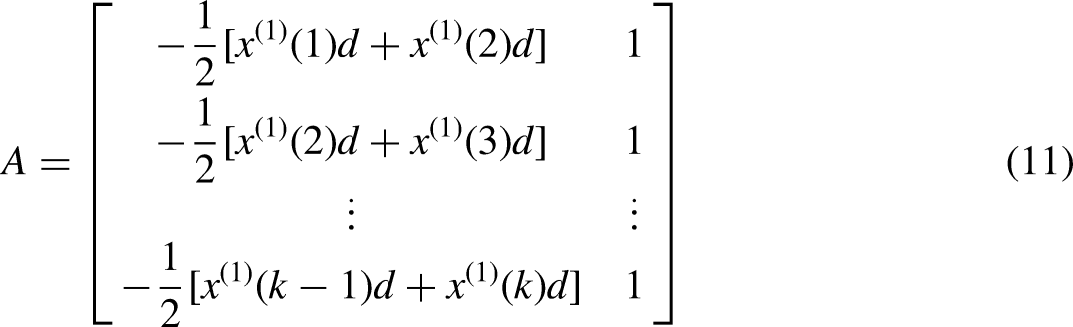
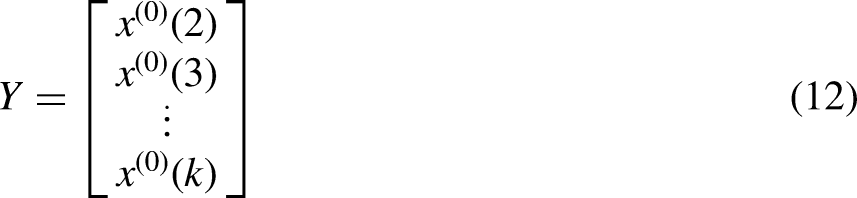



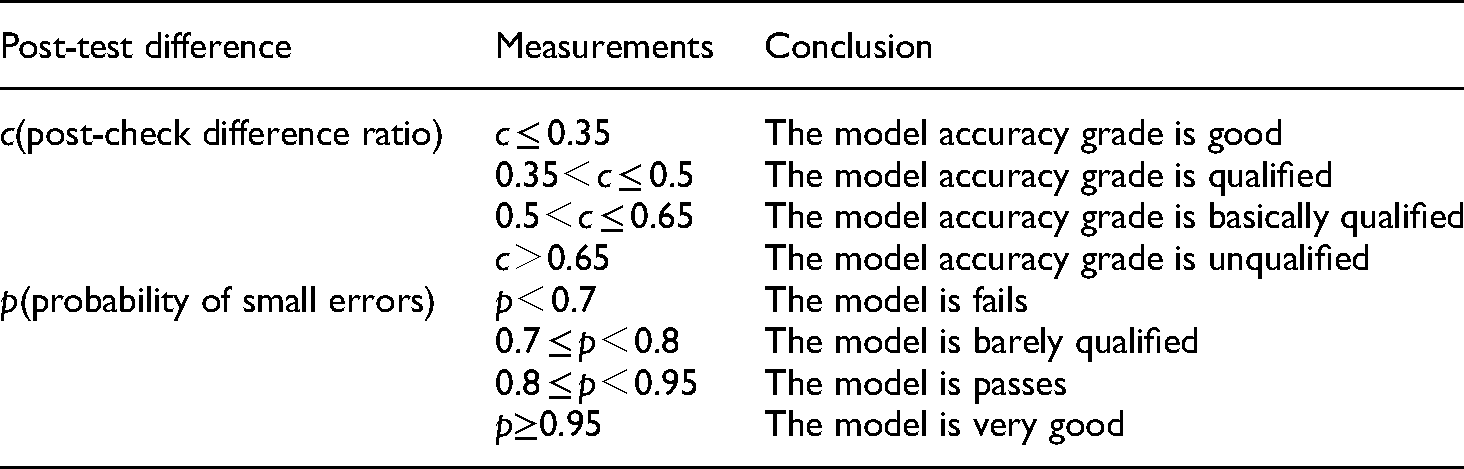
Reference standard worthiness for posterior test.
Data description
The data comes from China Statistical Yearbook, China Energy Statistical Yearbook, China Urban Statistical Yearbook and the statistical bulletins of various provinces and cities from 2016 to 2020. A small amount of data comes from the statistics of relevant government departments and research institutes in China. The descriptive statistics for each indicator are as follows (Table 3).
Descriptive statistics of variables.

Results
Spatial analysis of the SDR of China's natural gas industry
The SDR index of China's natural gas industry is calculated with the help of the entropy method, and a bar chart is made for spatial distribution characteristics analysis from 2016 to 2020 (Figure 1).

SDR in China's natural gas industry.
As can be seen in Figure 1, there are no major fluctuations within each province during the study period, but there are large differences in height between regions, indicating that there are significant differences in the SDR of the natural gas industry between Chinese provinces. In detail, Shanghai, Shaanxi, Sichuan, Xinjiang, Guangdong and Shandong provinces have a high SDR index for the natural gas industry. Shanghai has a good economic development, attaches high importance to the development of oil and gas fields, and encourages work related to clean energy supply, which is conducive to enhancing the SDR of the natural gas industry. China's large and medium-sized oil and gas resources are primarily found in the provinces of Shaanxi, Sichuan, Xinjiang, Guangdong, and Shandong, which have clear advantages in resource endowment and quick development in local natural gas extraction and supply. After years of research and drilling, natural gas extraction and pollution control technologies are advanced, and strategic collaboration between enterprises is valued to ensure a steady supply of clean energy. Natural gas production and consumption have undergone a relatively high degree of greening, and the effects of pollution emission control are relatively clear. Tibet, Yunnan, Guangxi, Guizhou, Ningxia, and Gansu have low sustainability resilience indexes for the natural gas industry. Among them, the number of oil and gas fields in Yunnan, Guangxi, and Guizhou is relatively small, gas production is low, extraction technology is relatively backward, and the development of the gas industry is limited. Tibet, Ningxia, and Gansu are rich in natural gas resources because of the distribution of more large oil and gas fields but have low SDR It may be due to geographical location, transportation, talents and capital, limited exchanges with other developed regions for natural gas extraction, lack of attraction of outstanding talents and development of relevant natural gas extraction and pollution control technologies, leading to setbacks in the development of the natural gas industry. These regions should focus on strengthening exchanges and cooperation with relevant enterprises in neighboring gas fields, actively learning relevant management practices, and enhancing research and development of green technologies to improve the resilience of the natural gas industry for sustainable development.
Overall network characteristics of spatial linkages in China's natural gas industry
The overall network characteristics of spatial linkages in the Chinese natural gas industry were analyzed in terms of overall network density, network relevance, and the number of network relationships. The network density and network relevance were obtained with the help of Ucinet's Density and Reachability tools, and the number of network relationships was measured using the Netdraw visualization tool (Table 4). Considering the maximum validity and practical significance of the data analysis, the analysis here focuses on the specific case of the most recent year, 2020.
Network Density
Density and relevance of spatial connection network in China's natural gas industry.

It can be seen from Table 4 that the number of network relationships is 163 among provinces in China's natural gas industry and the network density is 0.175. The low overall network density indicates that the tightness of inter-regional spatial connection is not high, the overall spatial connection of the whole region is weak, the inter-regional linkage effect is insufficient and the spatial connection density needs to be strengthened.
Network relevance
It can be seen from Table 4 that the inter-provincial network relevance of China's natural gas industry is 0.288 and the network relevance is low, indicating that the accessibility of the regional spatial connection network is poor. It may be due to the natural resource endowment, geographical location, transportation development and economic development level, there is an intermediate barrier and the degree of network connection is somewhat limited. Or it may be because the national emphasis on the natural gas industry has increased significantly in recent years, and the transformation of the energy structure has not yet fully reached the greening goal. The natural gas industry has not yet reached a fully stable state of development and has not yet had time to form a strong enough network of relationships.
Node characteristics of spatial connection network in China's natural gas industry
The degree centrality, betweenness centrality and closeness centrality of each province are calculated with the help of the Ucinet software Centrality tool and sorted by value to examine the attractiveness and radiation of each region. We can clarify the degree of control and directness of the region to other regions and identify core regions. Again, the year 2020 is used here as an example for specific analysis.
Degree centrality Betweenness centrality
From Table 5, it can be seen that Jiangsu, Guangdong, Shandong, Henan, Zhejiang have a strong comprehensive ability of external radiation and attractiveness, while Tibet, Yunnan, Anhui, Guangxi, Hainan have weaker radiation and attractiveness. Specifically, the in-degree of Jiangsu, Guangdong, Shandong and Zhejiang are significantly higher than the out-degree, indicating that the attraction to other regions is significantly stronger than the radiation force. The in-degree of Henan, Jiangxi, Beijing, Anhui, and Shaanxi are slightly higher than the out-degree, indicating that the attractiveness is slightly better than the radiation force. Except for a few provinces with the same in-degree and out-degree, the out-degree is greater than the in-degree. For example, Heilongjiang, Gansu, Ningxia, and Xinjiang have significantly stronger radiation than attractiveness. Such regions are less affected by other regions, mostly due to the abundant resources of the local natural gas industry, which has developed rapidly in recent years and driving the common development of other regions through edge radiation.
Spatial centrality of China's natural gas industry.

From Table 5, it can be seen that Guangdong, Jiangsu, Shandong, Henan, Shaanxi, and Sichuan have a strong role in controlling inter-provincial connections with a significant core position, which is conducive to the overall formation of a relatively robust network, and promoting connections between regions can avoid the phenomenon of “structural holes.” However, Heilongjiang, Anhui, Yunnan, Tibet, and Xinjiang are difficult to play a dominant role due to the influence of key nodes and belong to a subordinate position.
Closeness centrality
From Table 5, it can be seen that Jiangsu, Guangdong, Zhejiang, Shandong, Jiangxi, and Tianjin have stronger direct connections with other regions, so they belong to the center of the network. They can immediately get in touch with other regions, the transfer of elements is more convenient, and it belongs to the role of “central actor.” However, the provinces of Heilongjiang, Yunnan, Tibet, Xinjiang, Jilin, and Liaoning have weak direct links with other regions and long shortcut distances, making it difficult to transfer elements spatially, which are “marginal actors” in the network.
From the comparison of the results of degree centrality, betweenness centrality and closeness centrality, the ranking of provinces is different, and the regions at the core of the contact network are not necessarily the core of the entire contact network. In general, Jiangsu Province, Guangdong Province, and Shandong Province show stronger network regional connections attracting radiation comprehensive ability, controlling ability, and elements transmission ability, which belongs to the core area of the whole research field.
Correlation line characteristics of spatial connection network in China's natural gas industry
A spatial connection network diagram of the SDR index of China's natural gas industry is created using the data management visualization tool of ArcGIS software. In view of the large difference in the calculated connection strengths between regions, the connection lines with a connection strength greater than the mean value are selected for analysis based on all results, while the other connection lines are hidden. The natural interruption point method was used to divide it into four classes. The results are presented and analyzed with comparison to clarify the connection strength between provinces (Figure 2).

Spatial correlation network of China's natural gas industry.
The baselines with association strength less than 5.000 accounted for 84.393%, 81.818%, 80.000%, 78.571%, and 74.847%, respectively, which are greater than 50% and the proportion gradually decreases. Together with the obvious increase in the lines with association strength at 5.001–20.000, the lines with strength at 20.001–50.000 are less and have an insignificant growth trend. These results indicate that the strength of the linkage between provinces is weak and has a trend of continuously getting better, but it still has not reached a higher intensity level. Specifically, Jiangsu and Shanghai, Jiangsu and Anhui are the highest association strength during the study period. The association strength between Shanghai and Zhejiang has increased to the highest association strength in 2018, and the rest of the regions have a small degree of change, but none of them have reached the highest level of association.
Considering the high degree of similarity in the strength of association between provinces and the representativeness of the years, this paper provides a detailed analysis for 2020. The provinces that belong to the highest association strength relationship classification are Jiangsu and Shanghai, Jiangsu and Anhui, Shanghai, and Zhejiang. Among them, the correlation strength between Shanghai and Jiangsu is the highest, indicating that the strength of the connection between the two provinces is the largest Jiangsu and Anhui are in the middle of the row. Jiangsu is the main natural gas supplier in Anhui and is promoting the reform of the natural gas market to reduce the cost of gas consumption for enterprises and promote in-depth exchanges between the two provinces. Shanghai is adjacent to Zhejiang, with convenient communication, and they are both coastal regions. Similar location structure, pipeline control measures and convenience of information exchange have strengthened the connection between the two provinces. The correlations in the range of 20.001–50.000 are between Shandong and Tianjin, Hainan and Guangdong, Jiangsu and Shaanxi. The similar geographical advantages between provinces, the convenience of factor exchange between neighboring provinces, and national policy support for all help to improve the flow of talents, information and resources between regions, and the consideration and formulation of relevant policies such as mining technology, pipeline control, and natural gas distribution are similar. The proportion of correlation lines is 94.479% in 5.001–20.000 intensity and less than or equal to 5.000 intensity, mainly in Guangdong, Jiangsu, and Shandong as one of the endpoints, further confirming the core position of the three provinces.
It should be noted that the SDR of natural gas industry is high in Sichuan, Xinjiang, and Shaanxi. However, the spatial connection strength with other provinces is poor due to geographical location, economic situation, relevant development policies, environmental conditions, etc. It is necessary to change the way of information communication on time. They can increase the development and exchange of a series of related activities such as mining technology, on-site control and natural gas utilization by expanding the information transmission effect and dynamically updating the relevant dynamics of the natural gas industry in real-time. They also can attract the cooperation of outstanding talents and enterprises, and affects the SDR of natural gas with the same characteristics or neighboring provinces through the diffusion effect to achieve the common improvement of sustainable development.
Overall analysis of the forecast results of SDR in China's natural gas industry
Following the introduction of the “carbon neutrality” target, China is acutely aware of the far-reaching impact of the energy consumption structure on resources and the environment, and encourages the development of clean energy to facilitate sustainable development of resources. This report provides a clear understanding of the resilience of China's natural gas industry since the introduction of the “carbon neutrality” target, as well as the development trend in recent years, and provides some reference for the formulation of policies related to the development of the natural gas industry.
We calculated the prediction results of the development trend of the sustainability resilience index of China's natural gas industry with the help of GM(1,1) with a buffer operator (Table 6). After calculation, the posterior difference ratios and small error probabilities for each province were found to pass the tests, and the relative error and magnitude deviation tests were also passed, so further validating the applicability of the forecasting model and the accuracy of the forecasting results.
Prediction results of the SDR index for China's natural gas industry.

Taken together, 54.839% of the provinces in China's natural gas industry showed an upward trend in SDR, more than half of the overall. The total value of change was positive, indicating that the overall sustainability of China's natural gas industry is improving. Specifically, the provinces predicted to develop on the upside include Shanghai, Hunan, Shandong, Jiangxi, Zhejiang, Qinghai, Ningxia, and Shanxi, which have strong feedback on government policies and obvious advantages in the development of the natural gas industry. Predicted development downside is areas such as Shaanxi, Guangdong, Heilongjiang, Xinjiang, Hainan, Hubei, and Jilin, where a large number of oil and gas fields are distributed. But their development trend is declining, indicating that there are disadvantageous factors in the process of natural gas extraction, supply, use, and storage, and it is important to focus on research and development of extraction-related technologies and policy support.
Analysis of the forecast results of SDR in typical Chinese regions
From the above, it can be seen that there are significant differences in the changing trends of the SDR index. It is also noted that Shandong, Shanxi, Sichuan, Inner Mongolia, Shaanxi, Heilongjiang, Xinjiang, Guangdong, and Liaoning have large-scale oil and gas fields, but the prediction results of the SDR index show a trend of “polarization.” Now, Shandong Province, Shanxi Province, Xinjiang Uygur Autonomous Region, and Liaoning Province are selected as typical regions, and we made their SDR index model fitting prediction diagrams (Figure 3) to analyze the reasons for this development trend in detail.
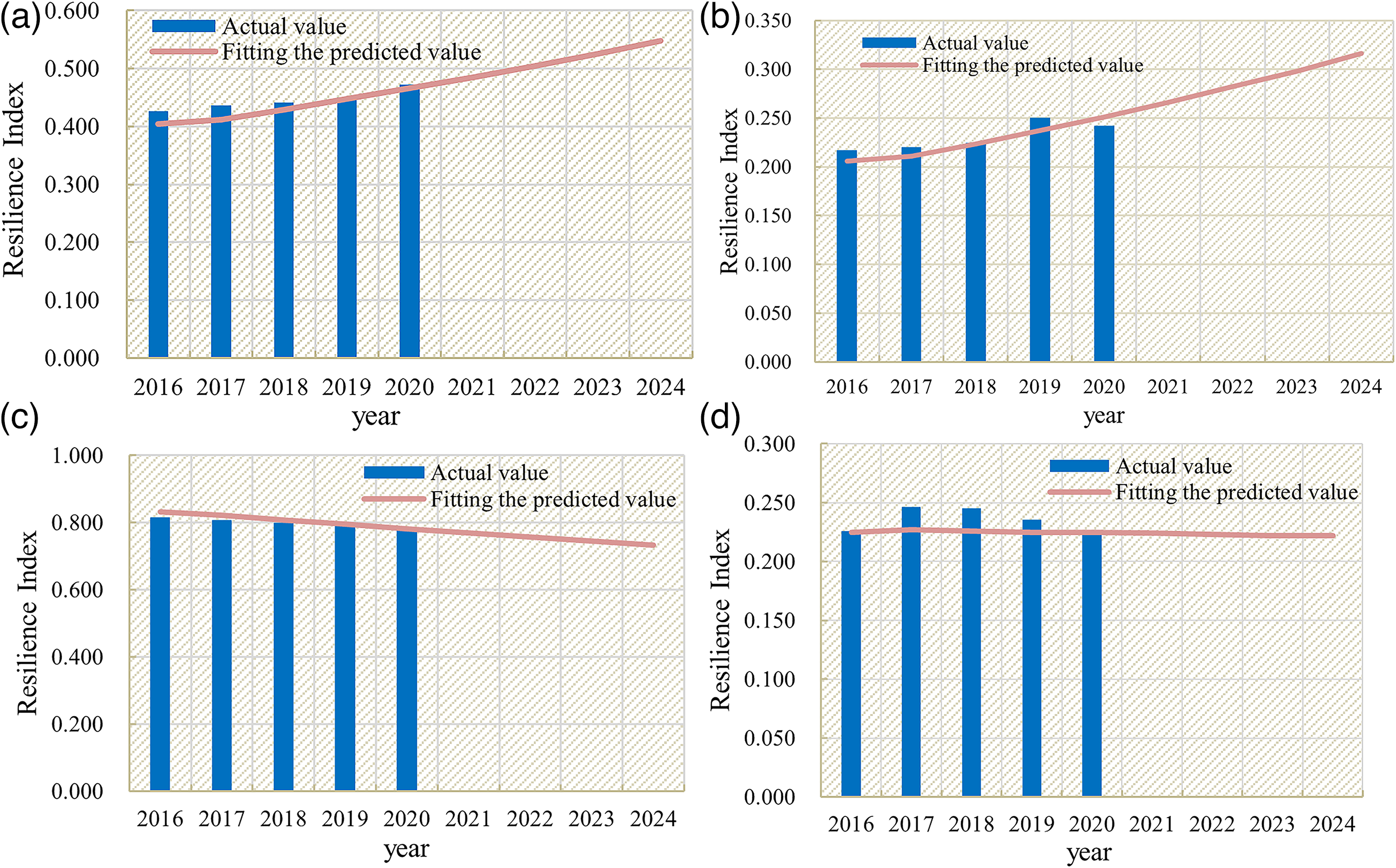
Fitted prediction graphs of SDR index models for typical regions.
Shandong Province is located on the east coast of China, with obvious geographical advantages, convenient pipeline transportation and a developed economy. As shown in Table 5, Shandong, Jiangsu, and Guangdong, as the core regions of the resilience network of China's natural gas industry, are closely related to other regions and have strong network connection control ability and factor transmission ability. However, the construction of natural gas storage stations in Shandong Province started relatively late compared to Jiangsu Province and Guangdong Province, and the natural gas storage capacity is insufficient. As the main energy source for heating in winter, the government attaches great importance to the threat to the social life of residents. It begins to give corresponding policy support, advocates the overall integration of social resources, expands supply channels, builds gas storage bases, improves the entire industrial chain of natural gas supply, storage and sales, and activates diversified investment. In addition, it encourages complementary advantages in natural gas infrastructure construction with surrounding areas, gradually making up for shortcomings. The natural gas SDR index shows a clear upward trend.
Shanxi is a typical loess plateau with complex terrain but rich natural gas resources. The SDR index of the natural gas industry in Shanxi Province has increased and then decreased in recent years, and the development trend is predicted to be significantly higher. Currently, the natural gas industry in Shanxi Province is in a rapid development stage with increasing proven reserves, obvious resource endowment advantages and a comprehensive provincial gas pipeline network. As a pilot province of the national energy revolution reform, Shanxi Province is making efforts to change from an “integrated” dominant model to a “transmission and marketing” model. The natural gas industry is receiving key attention and policy support from the state, and the development trend is positive.
Xinjiang is located in the northwest frontier of China, accounting for one-sixth of the total land area. In recent years, the energy industry structure of Xinjiang has always been dominated by oil, natural gas and other resources, supplemented by new energy. With the proposal and implementation of the “dual carbon” goal, Xinjiang relies on its own natural advantages to vigorously develop new energy such as wind, light and water, and opens a clean, low-carbon and convenient development model, the flow of factors is gradually tilted towards the new energy industry. The local natural gas resources are abundant, but it is limited by the current development focus, environment, transportation, talents, funds, etc. The natural gas SDR index has an obvious downward trend.
As one of the three eastern provinces in China, Liaoning Province is adjacent to the Bohai Sea and the Yellow Sea, with complex terrain and developed heavy industry. It also has the third largest oil field in China, the Liaohe Oilfield, with convenient transportation. However, in recent years, natural gas production has declined, the contradiction between supply and demand has become more prominent, and clean energy resources have become increasingly scarce. The natural gas SDR index has shown a downward trend.
With the increasingly prominent advantages of clean energy in terms of ecological environment, economic cost and social welfare, China has actively carried out publicity activities to vigorously support the development of the natural gas industry, and the use of natural gas in cities and towns has basically achieved full coverage. It also provides certain financial support to rural households who actively use natural gas. At present, the natural gas service rate in rural areas is steadily increasing. The distribution areas of large and medium-sized oil and gas fields have obvious resource advantages. On the basis of maintaining local gas consumption, natural gas can be regularly delivered to other resource-poor areas to ensure the daily needs of Chinese residents. The mining enterprises provide a large number of jobs for the local area and drive local economic development. At the same time, the sustainable development of natural gas should strengthen its ability to manage and control risks as an important helper for sustainable economic development. On the basis of resource endowment advantages, actively strengthen the research and development of green technology for resource extraction, limit the pollution discharge during the extraction process, and build safe and efficient transportation pipelines to promote stable development, efficient delivery and effective consumption of local resources. Based on this, Xinjiang, Liaoning, Shaanxi, and Heilongjiang should promote the common improvement of closely connected regions while ensuring the SDR of their own natural gas industry.
Conclusion and suggestion
Conclusion
Starting from the SDR of China's natural gas industry, this paper used the entropy method to measure the SDR index and used social network analysis to study the spatial network characteristics of SDR We predicted the development trend of the SDR of China's natural gas industry with the help of GM(1,1) moderated by a buffer operator. The following main conclusions are drawn:
The resilience index of the natural gas industry varies significantly among Chinese provinces showing a spatial distribution pattern with a high index of “resource endowment area” and a low index of “resource deficient area.” The overall spatial connection of China's natural gas industry is weak in the whole region, the accessibility is poor for the spatial connection network, and the degree of network connection is limited. Specifically, Jiangsu Province, Guangdong Province and Shandong Province have a strong comprehensive ability to connect with regions in the network and are the core regions of the entire network. The strength of the network connection line is mainly the basic line less than 5.000, and the network connection between regions needs to be strengthened. On the whole, the SDR of China's natural gas industry is looking good for the next few years. Specifically, the development of resource endowment areas shows a significant trend of “polarization.” Shanghai, Shandong Shanxi and Jiangsu have developed transportation and obvious geographical advantages, and the SDR index has increased. Shaanxi, Heilongjiang, Xinjiang and Liaoning have underdeveloped transportation and restricted geographical locations, and the SDR index has declined.
Suggestion
Based on the research findings, the following policy suggestions are put forward:
The SDR index of the natural gas industry varies greatly among provinces in China. The natural gas industry has not brought about substantial economic growth as a non-mainstream industry in a low-index “relatively resource-deficient area” and should avoid becoming a late-stream industry for green energy development. They should timely learn the relevant mining technologies of the natural gas industry, strengthen the ability of pipeline deployment and control, and appropriately increase the construction of gas storage bases. They also can try to break down the barriers of traditional mechanisms and systems, ensure the social needs of local residents, and promote the steady improvement of the resilience index of the natural gas industry. China's natural gas industry has weak regional spatial connections and poor network accessibility. Local governments should strengthen inter-provincial cooperation and information sharing, and build an all-round and multi-angle cooperation and exchange platform to improve the SDR of China's natural gas industry. On the one hand, inter-governmental cooperation should be adopted to promote the trans-regional coordinated development and gradually form a perfect spatial correlation network of China's natural gas industry. On the other hand, the government should give full play to the core advantages and leading role of Jiangsu, Guangdong and Shandong provinces, pay attention to the changes in inter-provincial connectivity, and further promote the cooperation and exchange mode of industrial interconnection, resource sharing and problem-solving. Third, it is necessary to fully tap advanced mining technologies and R&D techniques, strengthen the willingness for cross-regional cooperation and promote deeper cooperation between provinces that already have spatial connections, consolidate the existing network of relationships and further strengthen regional connections. The SDR of China's natural gas industry is positive, but the provinces in the “resource endowment region” show a clear trend of “polarization.” Downward trending provinces should strengthen local infrastructure development, actively create a suitable environment for natural gas development and improve the initiative of resource market layout. Appropriately increase the construction of pipeline networks and storage depots to safeguard the daily supply of natural gas, and integrate human, financial and technological resources to develop diversified businesses and improve the ability to cope with risks.
Footnotes
Declaration of conflicting interests
The author(s) declared no potential conflicts of interest with respect to the research, authorship, and/or publication of this article.
Funding
The author(s) disclosed receipt of the following financial support for the research, authorship, and/or publication of this article: This work was supported by the National Natural Science Foundation of China, Fundamental Research Funds for the Central Universities, Graduate Education Reform Project of China University of Mining and Technology, China Postdoctoral Science Foundation, Carbon Neutrality and Energy Strategy Think Tank Project of China University of Mining and Technology, Humanity and Social Science Fund of the Ministry of Education of China (grant numbers 71974191, 71874191, 2020ZDPYSK05, 2021YJSJG059, 2020M681783, 2021WHCC01, 21YJC630115).

Author biographies
Yanmin Zhao is a PhD candidate at China University of Mining and Technology. Her main research interests are energy economics and management.
Di Wang is an Associate Professor of Economics and Management at China University of Mining and Technology. His main research interests are energy economics and management.