



Abstract
Agricultural activities have a lot of effects on the environment so that water conservation measures help produce crops and consume water resources sustainably. The present research mainly aimed to explore farmers’ water conservation behaviour using the comprehensive action determination model (CADM). The research was conducted on the farmers in the Kavar plain in Fars province, Iran (N = 4000). The sample including 351 farmers was taken by the stratified random sampling technique. The measurement instrument was a questionnaire whose face and content validity was confirmed by a panel of experts. To check its reliability, a pilot study was conducted to calculate Cronbach's alpha and composite reliability (CR). The results showed that the indicators used to measure the research variables properly fitted the factor structure and the theoretical framework of the study. Based on the results, social norms (β = 0.26), personal norms (β = 0.22), attitude (β = 0.33), objective constraints (β = 0.38), and subjective constraints (β = 0.29) affect farmers’ water conservation intention positively and significantly. Also, farmers’ behaviour is influenced by their intention (β = 0.6), as well as their subjective (β = 0.73) and objective constraints (β = 0.58). It can be concluded that farmers’ water conservation behavior is shaped by a process that involves their normative process, habitual process, situation, and attitudes.
Keywords
Introduction
Not only is water a necessary component of all activities in human society so that all societies need water for survival and economic development but water resources can also be consumed for agricultural, industrial, and environmental applications.1–3 The agricultural sector, which accounts for 63–70 percent of global water consumption, 4 is responsible for food security on the one hand5,6 and is the main water consumer on the other.7–9 The analysis of water consumption indicators in the agricultural sector shows high rates of water loss in this sector, which is partially unavoidable but a significant part of it can be prevented. 10 In current conditions, the most essential way of meeting global water and food security seems to be optimal management of agricultural water.8,11,12
Many factors are involved in the crisis of water scarcity, which can broadly be divided into natural and human factors.13,14 Human factors are of high significance, 15 and many environmental issues and degradation of water resources are associated with human behaviours.16–19 Therefore, resolving the crisis of water scarcity is mainly tied to the study of human behaviours with water resources. 20 Given the population growth and the consumption of resources, human activities severely affect the environment and destroy it.19,21 Climate change has caused the use of various environmental resources, but these resources have dramatically been degraded and depleted due to their unwise and irresponsible consumption by humans.1,19
Fars province in Iran is one of the provinces in which over-abstraction from groundwater tables and lack of proper management have had catastrophic consequences so that the groundwater budget is negative in 87 plains out of the 90 agricultural plains of this province and the agricultural sector is struggling with serious issues in the water supply. The Kavar plain, which is one of these plains, has been affected by consecutive droughts. The modern irrigation systems and modern irrigation and drainage networks are not developed in this plain. However, the aggravation of the crisis of water scarcity and drought can be avoided by soundly planning for changing farmers’ behaviours and adopting water conservation strategies.
New strategies are required in the agricultural sector for water-saving. In particular, to promote productivity in this sector and reach sustainable food security, it is imperative to scrutinize different issues related to farmers’ behaviours regarding water saving and the protection of water resources.22,23 So, the management of agricultural water supply and demand seemingly needs understanding not only the attitudes and values of water use by farmers but also the relationships among the behavioural and psychological dimensions of its use. 24 Indeed, farmers’ use of modern irrigation technologies and proper agronomical practices for reducing water consumption 25,26 is the focal point of the environmental programmes that seek to protect water resources. Thus, understanding the process by which farmers’ behaviours are formed and the factors that underpin it is an integrated and inevitable part of efforts to develop sustainable environmental programs 27 so that it is necessary to develop and manage water resources in the agricultural sector optimally 28 and motivate farmers to protect water resources.29,30
The term water conservation behaviour refers to measures for water protection and encompasses behavioural aspects of the management of demand for water resources (Russell and Fielding, 2010). 31 Indeed, water conservation includes reducing or usefully modifying water consumption, which is attainable by reducing demand for water and preventing its loss, or in other words, by improving water use performance in different sectors, especially the agricultural sector. 32 In other words, the conservation of water resources means protecting, controlling, and developing water resources and preventing their pollution. 31 Water conservation behaviour is composed of two groups of behaviours – those for increasing water productivity and those for saving water consumption.31,33,34 Water conservation, as the most important strategy for future water planning and management, has gained superiorities across the world and shows one of the major pro-environmental activities.35–37
The point to consider regarding sustainable management and conservation of water resources is that the effectiveness of all measures and solutions depends on understanding multidimensional aspects of water issues, 38 the acknowledgment of the need for water conservation, 10 the conservative attitudes and behaviours of stakeholders or water users, and the understanding of how behavioural changes can be influenced.39,40 Environmental sociologists argue that the natural, social, economic, and cultural environments 41 are comprehensively understandable only if they are viewed as integrated components of a whole that are in interaction with one another.42,43 The agricultural sector is a component of an environment that is itself composed of ecological and social sub-sections. The social sub-section refers to human interactions and relations, which can determine the outcome of resources consumption behaviour.44,45 Some scholars 46 state that one of the solutions to improve water resource management is to examine the views and realities constructed by farmers of water resources and related management styles before carrying out water resource management projects. Therefore, the human-natural ecosystem relationship has recently become an integral part of policymaking and programmes for the comprehensive management of water resources, and social studies have focused on understanding human behaviour in conserving different environmental resources, e.g. water, so researchers are attempting to identify and explain the process of behaviour formation and the factors influencing it.47–52 So, when adopting policies for the conservation of water resources by farmers, the psychological and behavioural factors should be considered besides all other factors. Given the importance of farmers’ environmental behaviours and the need for motivating them to apply water resources conservation strategies, it is necessary to analyze their behavioural process in this respect. So, the present research aims to conduct a socio-cognitive analysis of the water conservation behaviours of Iranian farmers.
Theoretical framework
In recent years, various theories and models have been used to account for and predict pro-environmental behaviours in general and water conservation behaviours in particular. Different contextual and behavioural factors influence the exhibition of pro-environmental behaviours.31,53 The contextual factors refer to people's contextual characteristics and physical environment. 54 These factors affect behaviour in different ways so that they may facilitate or limit behaviours. 53 The contextual factors include social, economic, technical, environmental, and institutional contexts, acquired skills, immediate personal conditions, economic resources, capabilities, regulations, and so on. 53 The social, economic, and technical factors have been found to be important in predicting water use. 2 The environmental factors refer to geographical experiences, which are associated with collaborative learning, 55 and the institutional factors include institutional relations 56 between water users and water-supplying systems and regulations.57,58
The behavioural factors are regarded as decisive factors that may influence people's behaviours immediately. They are also actions and habits that can be directly observed and are factors that affect people's mentality. 53 In addition to these factors, the literature has investigated the effect of intra-personal factors on ecological behaviour. This approach can be broadly classified into three theoretical fields: moral, rational choice, and non-rational choice. 59
In the first group, i.e. the moral theories, the most famous one is the value-belief-norm (VBN) theory. 60 The VBN theory is regarded as a comprehensive moral theory in which environmental values are the key driver of behaviour as automatic behavioural responses. This theory has resulted from integrating the new environmental paradigm (NEP) 61 and the norm activation model (NAM) 62 based on the factors related to social motives. The proponents of NAM argue that altruism is the cause of ecological behaviour. So, awareness of consequences and determination of responsibility are strong motives for pro-environmental behaviours. Then, VBN considered the effect of beliefs in association with the NEP worldview for the activation of responsibility and consequences of activities, which, in addition, affects their ecological behaviours.
The second group fits the reasoned action theories dominated by the theory of planned behaviour (TPB) 63 in which attitudes account for ecological behaviour in the contexts of self-interest and reasoned action. The basic premise of the theory is that behaviour needs intention to do, which is, in turn, predicted by the positive attitude towards the behaviour. This theory expresses two ways to achieve behaviour: subjective norms, which represent the expectations of other people, i.e. social pressure, and perceived behavioural control, which is the feeling of the ability to do the target behaviour.
The third group belongs to the non-rational choice theories in which habit forms the normal behaviour level. The theory of interpersonal behaviour (TIP) 64 recognizes humans’ non-rational behaviours and expands TPB to cover four dimensions of intentions, effects, habits, and facilitating conditions. In this regard, behaviour is influenced by moral beliefs, and its effects on emotional motives and cognitive limitations are moderated.
Since ecological behaviour is a multidimensional phenomenon, the main strength of the comprehensive action determination model (CADM) is that it integrates these three groups of theories, i.e. TPB, NAM, and VBN, since each has its own drawbacks. For instance, TPB does not consider personal norms, whereas NAM and VBN overlook non-normative effects. In CADM, the normative and non-normative constructs are integrated directly and the contextual and habitual impacts are integrated indirectly to predict ecological behaviour.65,66
CADM posits that personal norms can interfere with or support non-ethical motivational constructs, e.g. attitudes. Personal norms are felt as ethical considerations for doing a behaviour and are a direct predictor of intentions in addition to TPB. According to NAM and VBN, the theoretical assumption in CADM is that personal norms should be activated before they can influence pro-environmental intentions and behaviours. They are activated when the individual gets the awareness of the negative consequences of his/her behaviour for the environment and takes responsibility for these consequences. Both awareness and responsibility, along with social norms, activate the ethical commitments felt for a certain behaviour.2,67
CADM has been practically used in research on a wide range of topics including the purchase of fuel-efficient cars, 68 the prediction of automatic recycling behaviour, 69 the installation of wood pellet heaters, 70 the selection of trip state, 66 pro-environmental behaviours at work station, 71 energy-saving behaviour, 72 the reduction of personal clothing consumption, 67 promotion of biofertilizer, 73 and psychological and behavioural factors in domestic water conservation and intention. 2 It has also been used in a modified version in research on sustainable seafood consumption 74 and recycling behaviour in the workplace. 75 Another study on energy saving and automobile use has supported this model. 65
As depicted in Figure 1, four groups of variables are influential on behaviour exhibition in CADM: normative processes (including personal norms, social norms, awareness of consequences, and awareness of need), habitual processes (schemata, heuristics, organizational associations), intentional processes (intention and attitude), and situational constructs (situation and constraints). Indeed, intention in this process is the last step preceding behaviour.
66
In this framework, the normative predictors include personal and social norms, as well as awareness of needs and awareness of consequences. Social norms describe perceived social pressure to do or not to do an environmental behaviour.
76
Personal norms reflect the moral commitment to an environmental behaviour, whereas awareness of needs perceives the shortage of certain resources. Awareness of consequences implies that people take the consequences of their behaviour seriously.
62
To activate the moral obligation for an environmental behaviour, the individual should feel pressure from his/her social environment to a certain extent, should be familiar with the need for the behaviour, and should be aware of the consequences of his/her behaviour. Normative factors lead to the behaviour through two extra variables, i.e. intention and habit. Here, the habit is defined as an automatic behaviour in frequent similar situations in the past in which a certain behaviour has been exhibited.
76
In other words, the habitual process is related to how behaviours are performed with minimum cognitive effort.
71
CADM also includes situational factors such as perceived behavioural control and access to behaviour. Perceived behavioural control refers to the perceived capacity for doing an action,
76
while access to behaviour shows the availability of these actions. Situational factors reflect the environment and perceived infrastructure and act as the direct and indirect predictors of behaviour.
66
Therefore, evidence shows that the variables of normative processes, habitual processes, intentional processes, and situational constructs can be important predictors of water conservation behaviour.2,31,77 Finally, given the theoretical framework of the study (Figure 1), the research addresses the following hypotheses.
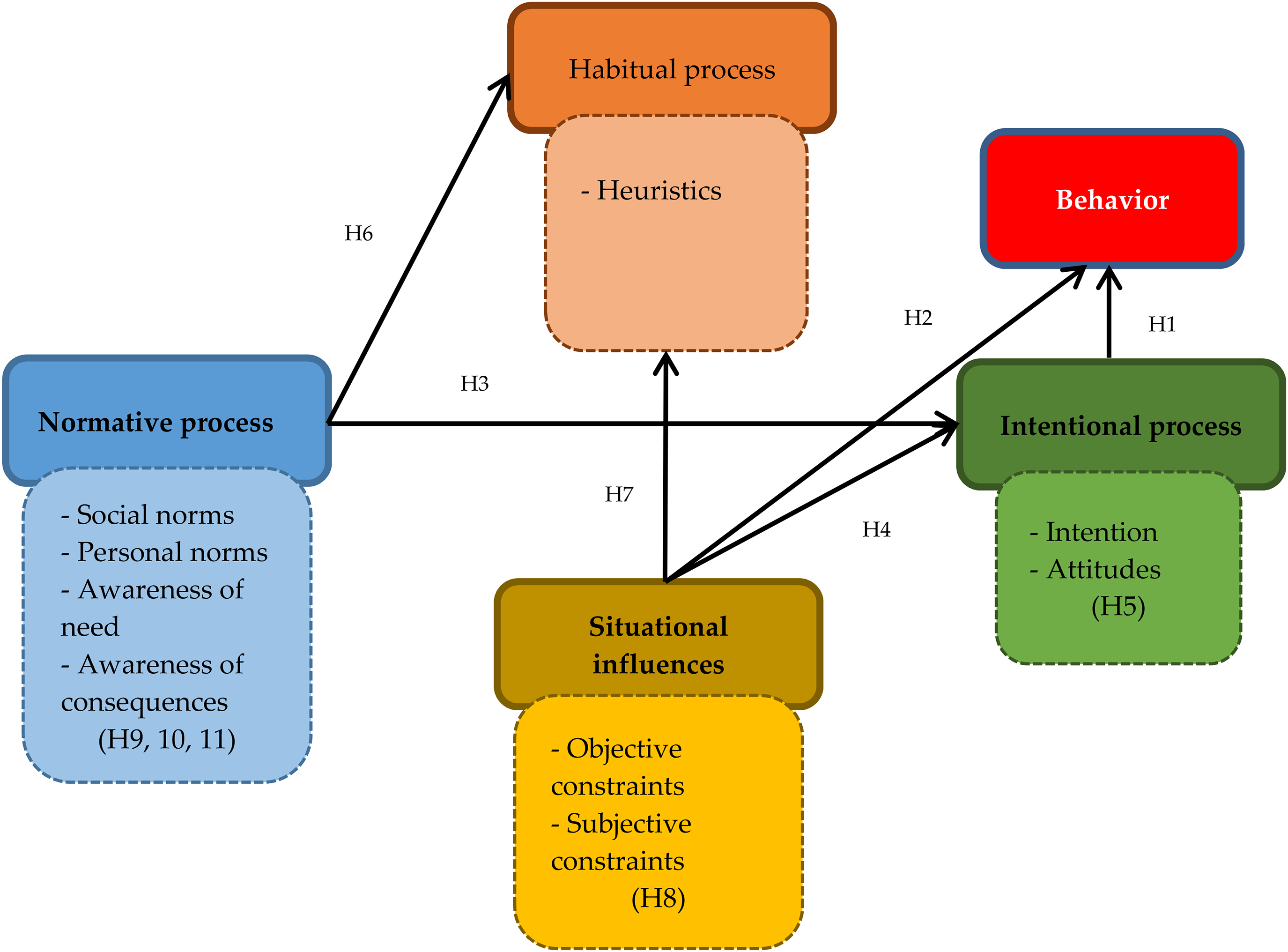
The comprehensive action determination model (CADM). 66
Methodology
In terms of paradigm, this research is a quantitative study, and in terms of variable control, it is non-experimental which data were collected on present events. Also, it is a causal-relational and descriptive-correlational study in terms of statistical operation in which the survey technique was used for data collection. The research is also applied in goal as its results can be used for agriculture development policy-making. The research population was composed of all farmers in the Kavar plain located in Fars province, Iran (N = 4000). The population was sampled by the stratified random sampling technique. The sample volume was determined to be 351 farmers using Krejcie and Morgan's table. 78 The sampling strata were the villages in the plain.
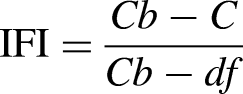
Data were collected with a self-designed questionnaire that was composed of two sections – a section for the behavioural theory (intentional processes, normative processes, habitual processes, and situational influences) and another for the farmers’ demographics. The research variables were measured on a five-point Likert scale (from completely disagree to completely agree). The face and content validity of the questionnaire was confirmed by a panel of experts and academic teachers and its diagnostic validity was supported by average variance extracted (AVE). To check the reliability of the research instrument, a pilot study was conducted on 30 farmers outside the research sample and its Cronbach's alpha and composite reliability (CR) were estimated. The data were analyzed in SPSS23 and AMOS23. The theoretical framework of the study was validated by confirmatory factor analysis, and structural equation modelling (SEM) was employed to explore the components influencing farmers’ water conservation behaviour. The conceptual model of the research was assessed using chi-square per degree of freedom (χ2/df), NFI, IFI, GFI, CFI, and RMSEA. The formulas for calculating the indicators are presented below.


Study site
Kavar is a triangular plain covering an area of about 48,000 ha enclosed by calcareous mountains. The Qareh Aghaj River flows from the west to the east on the south of the plain, dividing it into two asymmetrical parts. The right bank of the river has ups and downs with a high slope where some parts are irrigated with springs and Qanats. The northern part of the plain or the left bank of the river has level and fertile lands that have traditionally been irrigated with a combination of a huge stream (branching from the Qareh Aghaj River) and wells drilled by farmers.
The arable lands on the left bank of the river are divided into two basins by the topographical slope. The first is the Qareh Aghaj basin where the arable lands have a west-east slope leading to the thalweg of the basin that starts at the south of Akbarabad Village and continues to Qasira Village. The second is the Maharlu basin whose lands have a relatively low slope and are level. These lands stretch from the south to the north and their slope leads towards the thalweg of the basin from Tasouj Village to Baghan Village. There are nine villages in this region, including Qaleh-ye Now-e Kavar, Galeh-ye Kavar-e Kohneh, Dashtak, Qaleh Mirza, Zijerd, Arbabi-e Sofla, Qasr-e Ahmad, Akbarabad, and Nowruzan.
The Kavar plain has a mean elevation of 1510 metres from sea level and mean annual precipitation of 386.9 mm. The mean annual temperature of the plain is 17.8°C. The maximum temperature happens in July and the minimum in January. The recorded absolute maximum and minimum temperatures have been 42°C and −5°C, respectively. According to meteorological indicators, the plain has a mean relative humidity of 41.9 percent and it has a semi-arid climate (Figure 2).

The location of the study site.
Results
Respondents’ demographics
Based on the demographic information, 81.5 percent of the farmers were male and 18.5 percent were female. The farmers in the Kavar plain were in the age range of 30–75 years with a mean age of 51.09 years. In terms of experience in farming activity, the respondents had an average of 29.81 years of experience in farming. So, the majority of the research sample was experienced farmers. Also, 12.8 percent were single and 87.2 percent were married. In terms of the educational level, 11.4 percent were illiterate, 20.8 percent had basic literacy, and 19.9, 12.3, 7.1, 17.9, 8.3, and 2.3 percent had intermediate school certificates, diplomas, associate's degrees, bachelor's degrees, master's degrees, and PhD, respectively. The farmers’ mean farm area was 13.49 ha. Regarding land ownership, 73.2 percent were owners of their lands, whereas 26.8 percent had leased lands. The main water supply source was irrigation channels for 62.1 percent of the farmers, wells for 30.2 percent of the farmers, and other resources (e.g. springs and well-channel) for 7.7 percent. The farmers’ main source of revenue was farming, horticulture, and animal farming accounting for the main source of 36.8, 57.3, and 6 percent of the farmers, respectively.
Exploration of the causal model of farmers’ water conservation behaviour
SEM was employed to analyze the components that influenced the farmers’ water conservation behaviour. Accordingly, the measurement part of the model was first assessed to check to validity and reliability of the variables, and the structural part was then assessed to confirm the theoretical relationships of the variables included in the research framework. Furthermore, the overall fit of the model was examined by different indices to evaluate the consistency and overall agreement of the model with empirical data.
The research used CR and AVE to measure the reliability and validity of the questionnaire, respectively. The constructs whose CR is >0.6 are reliable enough. The closer it is to 1, the higher the reliability is. 79 Also, the constructs whose AVE is >0.5 are valid enough. 80 To check the validity of the model, it is necessary to explore the level of significance of the paths between the individual latent variables with their relevant indicators. Confirmatory factor analysis was applied to test the hypothesis as to whether the indicators used to account for the latent constructs or variables were really their indicators and how precisely the selected indicators fitted the latent variable. Since parameters with a value of >1.96 are statistically significant, 81 the results show that the indicators used to measure the studied latent variables well fitted the factor structure and the theoretical framework of the research (Table 1).
Measurement coefficients and significance levels of the confirmatory factor analysis as well as the validity and reliability of the variables.

Based on the values reported for the fit indices of the model in Table 2, χ2/df is equal to 2.73, reflecting the good fit of the model. To check how well a model performs, especially in comparison with the other possible models, in accounting for a set of data, the alternative models examination indices (NFI, IFI, IGFI, GFI, and CFI) were used, which were estimated at 0.91, 0.94, 0.90, 0.93, and 0.94 in the present study, respectively. Finally, RMSEA was applied to check how the conceptual model of the research combined fitness and saving. Its value was obtained to be 0.06, showing the control of the measurement error in the model. Accordingly, the reported indicators had acceptable values for the overall fit of the model. It can, therefore, be said that the model was generally consistent with the data used.
The fitness indices of the research model.

Based on the structural model of the research, the normative processes influence the habitual processes directly and the farmers’ water conservation behaviour directly and indirectly. The effect of the farmers’ attitude is direct on their intention for water conservation. Also, the farmers’ intention has a direct impact on their water conservation behaviour.
According to the results, the farmers’ intention had a positive and significant effect on their water conservation behaviour (β = 0.6, P < 0.01). So, hypothesis 1 is supported. It was also found that subjective constraints (β = 0.73, P < 0.01) and objective constraints (β = 0.58, P < 0.01) influenced the farmers’ water conservation behaviour positively and significantly, meaning that hypothesis 2, i.e. situational influences affect farmers’ water conservation behaviour positively and significantly, is confirmed. The effects of personal norms (β = 0.22, P < 0.05) and social norms (β = 0.26, P < 0.05) were positive and significant on the farmers’ water conservation intention. This supports hypothesis 3 regarding the positive and significant effect of normative processes on farmers’ water conservation intention. The results revealed that subjective constraints (β = 0.29, P < 0.01) and objective constraints (β = 0.38, P < 0.01) influenced the farmers’ water conservation intention positively and significantly. So, hypothesis 4 (situational influences affect farmers’ water conservation behaviour positively and significantly) is supported. The results revealed the positive and significant effect of the farmers’ attitude on their water conservation intention (β = 0.33, P < 0.05), which confirms hypothesis 5. However, the farmers’ personal norms had no significant impact on their habitual processes. This refutes hypothesis 6 according to which personal norms affect farmers’ habitual processes positively and significantly. The results showed that the farmers’ habitual processes were influenced by subjective constraints (β = 0.30, P < 0.01) and objective constraints (β = 0.58, P < 0.01) positively and significantly. Accordingly, hypothesis 7 (situational influences affect farmers’ habitual processes positively and significantly) is supported. Furthermore, the results showed that objective constraints had a positive and significant effect on the farmers’ subjective constraints (β = 0.17, P < 0.05). Therefore, hypothesis 8 (objective constraints affect farmers’ subjective constraints positively and significantly) is confirmed. However, social norms had no significant effect on the farmers’ personal norms. This refutes hypothesis 9, i.e. social norms affect farmers’ personal norms positively and significantly. The effect of the awareness of consequences was also positive and significant on the farmers’ personal norms (β = 0.49, P < 0.01). So, hypothesis 10 is confirmed. Finally, the results revealed the positive and significant effect of the awareness of needs on the farmers’ personal norms (β = 0.46, P < 0.01). This confirms hypothesis 11 (Figure 3).

The structural model of the study.
The results showed that the coefficient of determination (R2) was calculated at 0.219 for the farmers’ personal norms, meaning that 21.9 percent of the variance in their personal norms is related to social norms, awareness of needs, and awareness of consequences. Also, R2 was found to be 0.721 for the farmers’ water conservation intention, so 72.1 percent of the variance in this variable is accounted for by normative processes, attitude, and situational influences. R2 was estimated at 0.773 for habitual processes, so it can be argued that 77.3 percent of its variance is related to personal norms, objective constraints, and subjective constraints. Furthermore, R2 was found to be 0.62 for the farmers’ water conservation behaviour, showing that 62 percent of its variance is predicted by farmers’ intention, subjective constraints, and objective constraints.
Discussion
The SEM results meet the expectations and fit the theoretical structure of the research. This finding has important implications for the use of rigorous theoretical frameworks, e.g. CADM, when trying to understand water conservation behaviour. The results showed that most socio-cognitive factors that were expected to predict the farmers’ water conservation intention and behaviour were significant. The best-fitting model provides a better understanding of how these socio-cognitive factors mediate farmers’ water conservation behaviour.
The intention is the immediate prelude to behaviour, integration of attitudes, social and personal norms, and objective and subjective constraints. Our results reveal that farmers feel social pressure for water conservation. Personal norms were also increased as a feeling of moral commitment and responsibility for farmers to take water conservation actions. The hypothesis that social and personal norms reinforce farmers’ water conservation intention was supported, which corroborates with other studies.46,65,75,83 This means that when designing interventions for the conservation of water resources, people's social and normative influences should be targeted. Furthermore, farmers’ water conservation attitude impacts their intention to adopt water conservation strategies. Many studies 53,74,82,84 have proven that attitude towards a certain behaviour is the individual's overall assessment of the behaviour and can improve people's intention to performing the behaviour.
Objective and subjective constraints were also influential on the farmers’ water conservation intention and behaviour. The farmers felt that they had strong control over the use of different water conservation strategies. Availability, usability, and situational conditions are the main aspects of situational constructs. The farmers believed that they could better do measures for water conservation because they had the ability to apply water conservation strategies at their farms and the required equipment was available and easily accessible. The presence of factors that may facilitate the behaviour, the ease of doing the behaviour, and the perceived control of the behaviour are the main constituents of this psychological construct. Other researchers have argued that the feeling of control at the workplace is important for behaviour change, so efforts to design and implement any intervention should focus on creating a sense of empowerment and control.2,3,58 Another factor that affected the farmers’ water conservation behaviour was behaviour intention. Many scholars 23,67,68,75 have pointed out that an individual's behaviour is determined by his/her behavioural intention. In other words, behavioural intention predicts the individual's behaviour. If farmers intend to use water conservation strategies at their farms, they will be more likely to perform water conservation behaviour.
The results indicated that the farmers’ habits were influenced by situational influences. A behaviour that is regularly repeated may turn into a habit and become automatic and determine future behaviour automatically. Some researchers 2,72,85 argue that habits are not consistent behavioural patterns that are performed everywhere and every time, but they are behaviours that are performed in relatively stable conditions – in one environment and in the same conditions. Furthermore, farmers who are aware of the consequences of water conservation and the implications of the degradation of water resources will shape personal norms toward water conservation. This is consistent with the reports of many studies.75,86–88
Conclusions
By drawing on the paths and variables that change water conservation behaviour, this research provides a better understanding of the mechanisms behind farmers’ behaviour changes at their farms. Furthermore, this research examined which psychological factors would predict water conservation intention and behaviour. In other words, this study assumed that the water conservation is done regarding the improvement of the psychological attributes of farmers. According to the findings, it can be concluded that psychological attributes (such as intentional process, habitual process, situational influences, and normative process) lead to water conservation by farmers. Therefore, this assumption is confirmed. So that farmers’ psychological attributes play an important role in the water conservation. The results show that the main characteristics and predictors of water conservation intention and behaviour are situational influences, attitude, social norms, and personal norms. These relations express that to increase water conservation behaviour, farmers should understand more behavioural control. In addition, social and personal norms should be shaped, but their effect is mediated by the intention to perform a behaviour. These findings support the selected conceptual framework and indicate that CADM fits the data by providing a good description of the factors influencing water conservation behaviour.
The research recognized personal and social norms as two decisive factors that should be considered in intervention strategies. Based on the results, the increase in perceived personal norms can potentially be accompanied by focused signals, e.g. environmental influence (awareness of need), and these influences can be decreased by using modern irrigation methods (outcome efficacy). The awareness of needs can be enhanced by providing information, for example, through large-scale advertisement campaigns. To establish a connection with outcome effectiveness, the content is better to be specific. For instance, information on how water and energy can be saved by modern irrigation methods or proper cropping patterns can increase the understanding of outcome effectiveness, so it is valuable in potential intervention strategies. Policy or intervention strategy designers who pursue these paths toward increasing water conservation intention and behaviour should remember that the effect of intention on behaviour may be limited. More strategies that facilitate the conversion of intention into behaviour should be adopted, e.g. targeting, implementation objectives, developmental and spatial programmes, and strategies derived from the self-regulation theory.
Some limitations should be considered when interpreting the results. Since self-reporting methods were used, the possibility of biases should be considered given data reliability and water conservation behaviours reported by the farmers should be treated more carefully. Farmers raise their arguments based on positive self-information, so when relying on their own knowledge of the positive effects of water conservation, they may overestimate their actions. Future research on different geographical settings and cross-cultural research will be useful.
Footnotes
Declaration of conflicting interests
The author(s) declared no potential conflicts of interest with respect to the research, authorship, and/or publication of this article.
Funding
The author(s) received no financial support for the research, authorship, and/or publication of this article
Ethics approval
Our institution does not require ethical approval for reporting individual cases or case series.
Informed consent
Verbal informed consent was obtained from the participants for their anonymized information to be published in this article.

Author biographies
Pouria Ataei has a degree in Agricultural Extension & Education (2009) from the Shiraz University, and an MSc (2012) and a PhD (2019) in Agricultural Extension & Education from the Tarbiat Modares University. He has participated in numerous conferences, more than 100 published papers, worked as a lecturer and also developed his career as an environmental and agricultural extension consultant for 10 years, most of them in Consulting Engineering Company. His research interests are environmental sociology, sustainable agriculture, rural sociology, environmental critical issues, rural health, modern technologies in agricultural education, and sustainability learning transfer and innovation adoption.
Hamid Karimi is assistant professor of Department of Agricultural Extension & Education, University of Zabol, Iran. He has more than 60 peer reviewed international publications and has delivered numerous oral and posters presentations in numerous international meetings. His research interests are modern technologies in agriculture sector, higher education, sustainable agriculture, entrepreneurship education, human resources development, and training in sustainable agriculture.
Seyed Reza Es'haghi has a PhD degree in Agricultural Extension & Education at the College of Agriculture, University of Tehran, Iran. He has published numerous research articles in journals, national and international conferences. Her current research interests include water conservation, farmers' behavioral change, water resources management, and rural development.