



Abstract
Objective
This study aimed to evaluate how Internet of Things (IoT) technologies can enhance nutrient efficiency, water management and sustainability in agriculture through real-time control and monitoring systems. Specifically, it compared IoT-managed greenhouse systems with traditional farming to determine their effectiveness in macro and micronutrient delivery, soil water control and plant growth performance.
Methods
A comparative experimental design was implemented in Chinsali District, Zambia, using an IoT-managed greenhouse and a traditional control plot. The IoT setup included sensors for soil moisture, temperature and humidity, all controlled by an Arduino microcontroller. Data were collected over 120 days, and paired-sample t-tests were used to assess statistical differences in plant height, nutrient retention from controlled efficient water use.
Results
The IoT-managed system maintained stable gravimetric water content and improved nutrient balance in the soil, with higher retention of Fe, Mn, Ca, Mg and Zn compared to traditional methods. Tomato plants in the IoT greenhouse exhibited significantly greater height (mean difference = 0.356 m; p = 0.001) and improved pH stability, demonstrating more efficient nutrient uptake and growth.
Conclusions
The IoT-driven precision agriculture enhances macro and micronutrient efficiency, soil water control and crop performance, while minimising resource wastage and environmental degradation. These findings highlight IoT's potential for sustainable and climate-resilient agriculture, particularly in developing regions. The study aligns with the Sustainable Development Goals (2 and 12) by promoting responsible resource use and food security innovation.
Introduction
This study was conducted in Zambia, Chinsali District, which has mainly loamy sand soils, and it explored the potential benefits and impacts of integrating Internet of Things (IoT) technologies in precision agriculture to revolutionise the management of both macronutrients and micronutrients, water and soil acidity (pH) management. The IoT-based precision agriculture model can be adapted for diverse agroecological conditions, for instance, research in Southeast Asia has shown that real-time moisture monitoring enhances rice productivity in flooded paddy fields. 1 Other studies in arid regions of Australia suggest that IoT sensors optimise irrigation efficiency for drought-resistant crops. 2 Future research should explore IoT scalability across varying climates and soil compositions to ensure wider applicability across regions.
The macronutrients under focus in this study were nitrogen (N), phosphorus (P) and potassium (K), commonly referred to as NPK and the micronutrients that were examined in the study included iron (Fe), zinc (Zn), copper (Cu), manganese (Mn), calcium (Ca), magnesium (Mg) and sodium (Na). This study used tomatoes as its case study in its inquiry. This plant requires various micronutrients aside from the macronutrients (NPK) to thrive and produce high-quality fruits. Consequently, the few micronutrients which were selected were based on their documented contribution to plant health, like:
Iron (Fe) is essential for chlorophyll synthesis, respiration and photosynthesis, and it also helps in enzyme activation. Zinc (Zn) helps in enzyme activation, hormone production and growth regulation. Where it's in insufficient quantities, a plant has stunted growth, yellowing between leaf veins, and small, misshapen leaves. Copper (Cu) contributes to photosynthesis, protein metabolism and reproductive growth. Manganese (Mn) aids in photosynthesis, enzyme activation and aiding in nitrogen assimilation. Calcium (Ca) assists plants with structural support to cell walls. Magnesium (Mg) influences the intake of other essential nutrients plants need from the soil and the transport of phosphates in plants. Sodium (Na) is important for the metabolism and synthesis of chlorophyll.
A central aspect of the study leaned most on maintaining consistent gravimetric water content (GWC), relative to the water holding capacity of soil, by controlling water addition using hygrometer sensor readings. The GWC is regulated within a preferred minimum and maximum range to ensure optimal nutrient dissolution. This controlled approach contrasts with traditional agricultural practices, where GWC is often unmanaged due to factors such as:
Overwatering leads to water loss through evaporation and evapotranspiration, which are accelerated by unrestricted airflow. Nutrient runoff, when excess water drains away, carrying dissolved nutrients and depleting the soil. Rapid topsoil drying, especially after heavy irrigation, disrupts nutrient availability for plant uptake. And rapidly altering the soil pH.
For this study, the electronic GWC (eGWC), in equation (1), was hypothesised to correspond to the following formula calculation, using the readings for the hygrometer (the soil moisture sensor). The
Equation (1): Electronic GWC

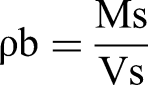
The bulk density was calculated as in equation (2).
Equation (2): Bulk density
Equation (3): Volumetric water content

Equation (4): Gravimetric water content

In addition to maintaining controlled soil moisture and pH levels, the study evaluated plant health and growth rate by measuring the plants’ height. These metrics help assess the effectiveness of IoT-based systems in managing agricultural activities, particularly in greenhouse environments, compared to traditional practices.
The study's major aim was to analyse and compare the macro and micronutrient dynamics, pH variations and nutrient efficiency in IoT-managed greenhouses in comparison to traditional farming systems. The researchers sought to develop and implement IoT-based frameworks for real-time monitoring of agricultural systems, ensuring precision nutrient delivery and efficient water management. Furthermore, the study evaluated the environmental and economic sustainability of IoT-driven nutrient and pH management practices, with a particular focus on runoff reduction and resource optimisation.
The research further sought to answer several key questions. It investigated how nutrient dynamics and pH levels differed between IoT-managed greenhouses and conventional farming systems. It also examined the impact of IoT technologies on nutrient efficiency, pH balance and crop growth compared to traditional agricultural methods. Additionally, the study explored how IoT-based frameworks could be designed to enable real-time monitoring of pH and NPK levels. The extent to which IoT technologies mitigated nutrient runoff and reduced environmental degradation in agriculture was also assessed. The research further analysed how IoT-enabled nutrient management contributed to resource optimisation and sustainability in agricultural systems. Finally, it examined the adaptability of IoT-driven agricultural systems in addressing varying environmental conditions and crop-specific nutrient needs.
Several hypotheses were tested throughout the study. It was hypothesised that IoT-managed greenhouses exhibited significantly enhanced macro and micronutrient balance, improved pH stability and greater nutrient efficiency compared to traditional farming methods. Additionally, researchers proposed that crop health and growth quality were superior in IoT-managed greenhouses due to precise control of nutrient and pH levels through advanced water management strategies. It was also assumed that real-time IoT monitoring systems improved the accuracy of micro and macronutrient delivery, reducing nutrient wastage while maintaining optimal pH conditions. The study further hypothesised that IoT-driven precision agriculture techniques optimised sustainable farming practices, leading to more efficient nutrient uptake by crops. Another hypothesis suggested that IoT-enabled nutrient management minimised nutrient runoff and leaching, thereby reducing environmental degradation and enhancing long-term resource efficiency. Lastly, the research proposed that IoT-based nutrient management solutions could be effectively scaled and adapted across diverse agricultural systems, improving nutrient utilisation under varying climatic conditions.
The findings of the study demonstrated how IoT technologies can optimise nutrient management, water use and pH levels, thereby improving crop growth, reducing resource wastage and mitigating environmental impacts through the use of IoTs to manage agricultural daily plant needs tasks. This research contributes to the growing body of knowledge on precision agriculture and promotes sustainable farming practices from the same.
Although IoT adoption promises substantial benefits, its economic feasibility for smallholder farmers remains a challenge due to high initial setup costs and digital literacy gaps. The present study also assesses potential scalability models for broader adoption in low-resource settings.
Related works
Agriculture has undergone significant advancements with the integration of modern technologies such as the IoT and machine learning (ML). These technologies contribute to precision agriculture, enhancing crop yield prediction, greenhouse monitoring, irrigation control and decision support systems. This section reviews relevant literature on these advancements, highlighting key findings and methodologies from various studies.
Talaat 6 highlights the challenges in predicting crop yields, which are crucial for decision-making at international, regional and local levels. The study proposes the Crop Yield Prediction Algorithm (CYPA), which leverages IoT techniques to enhance precision agriculture. The CYPA model integrates climate, weather, agricultural yield and chemical data to anticipate annual crop yields. The study employs five ML models, among which the DecisionTreeRegressor achieved a score of 0.9814, the Random Forest Regressor scored 0.9903, and the Extra Tree Regressor obtained the highest accuracy at 0.9933. The study also introduces an active learning-based algorithm to improve CYPA's performance by reducing the amount of labelled data required for training, thus improving efficiency and accuracy in crop yield predictions.
Benyezza et al. 7 discuss the impact of communication technology on agricultural automation. Their study presents an intelligent IoT-based platform for monitoring and controlling greenhouse climate and irrigation. The system uses a low-cost wireless sensor network with radio frequency communication to collect and transmit environmental data, such as temperature, humidity and soil moisture, to a processing unit based on Raspberry Pi. A fuzzy logic controller processes the collected data, optimising decisions for climate and irrigation management. The platform also integrates a Human Machine Interface via IBM's Node-RED server, enabling remote monitoring and control. The research findings confirm the system's effectiveness in maintaining optimal greenhouse conditions.
Ibrahim Mohammad Abuzanouneh et al. 8 explore the role of IoT and ML in precision irrigation, a key aspect of Agriculture 4.0. The study presents an IoT and ML-enabled smart irrigation system that utilises various IoT sensors, including soil moisture, humidity, temperature and light sensors, to monitor farmland conditions. The data is processed using an artificial algae algorithm (AAA) combined with a least squares-support vector machine (LS-SVM) to classify irrigation needs. The AAA optimally tunes the LS-SVM model parameters, enhancing classification accuracy, which reaches a maximum of 0.975. The study demonstrates the effectiveness of ML in optimising water resource usage and automating irrigation decisions.
Maraveas and Bartzanas 9 provide an extensive review of IoT applications in greenhouse optimisation. The research analyses IoT systems’ ability to mitigate climate change's adverse effects on agriculture. The study discusses advancements in sensor technologies for frost prevention, remote crop monitoring, fire hazard detection and nutrient control in soilless farming. The review also highlights challenges such as sensor accuracy (ranging from 2% to 25%), high costs and limited IoT infrastructure, particularly in developing countries. The findings suggest that while IoT can significantly enhance agricultural sustainability, its widespread adoption is hindered by financial and infrastructural constraints.
Saranya et al. 10 present a comprehensive analysis of deep learning (DL) applications in precision farming. The study reviews DL techniques for pest, disease, weed and yield detection. Additionally, the research explores IoT architecture, sensor categorisation and the use of unmanned aerial vehicles in smart agriculture. The article proposes a bootstrapping approach using Transfer Learning, where a fine-tuned VGG16 model is fused with optimised fully connected layers for pest detection. Experimental results show that the proposed model outperforms conventional classifiers, achieving an accuracy of 96.58% with a loss of 0.15%. The study underscores the potential of DL in transforming agricultural practices through automation and enhanced data analysis.
Gaurav Bawankule et al. 11 examine the implementation of IoT-based precision agriculture using Tinkercad simulations. The research integrates temperature, soil moisture, NPK and humidity sensors within a simulated agricultural environment. The study describes sensor calibration, data collection over 30 days and automated control actions based on predefined thresholds. The findings demonstrate that IoT simulation provides valuable insights for optimising crop management, conserving resources and reducing environmental impact. The research highlights the potential of IoT in precision agriculture by ensuring timely irrigation, nutrient management and long-term environmental analysis.
While the reviewed studies showcase the transformative potential of IoT and AI in agriculture, they also highlight existing challenges. Maraveas and Bartzanas 9 emphasise infrastructural and financial constraints limiting the widespread adoption of IoT-based agriculture in developing countries. Similarly, Benyezza et al. 7 and Ibrahim Mohammad Abuzanouneh et al. 8 underscore the need for cost-effective and scalable solutions to enhance smart agriculture adoption.
While existing works (7–12) emphasise automation, climate data integration and water optimisation, few focus on micronutrient balance in loamy sand soils under tropical climates. This study contributes by combining IoT-based nutrient, pH and humidity control with empirical validation in Zambia, offering context-specific insights into soil and crop nutrient dynamics.
Methodology
Study area and research design
The study was carried out at Kapasa Makasa University, Mulakupikwa, Chinsali District. A comparative experimental design was employed to assess the impact of IoT-driven precision sustainable agriculture systems on micro and macronutrient efficiency and sustainability, pH control, water holding capacity and control as well as plant growth and plant growth rate, as compared to traditional farming methods. The study integrated both quantitative and observational methods for a comprehensive understanding of the subject matter.
The soil samples for both the experimental group and control group were tested for a full soil chemistry profile and a full soil physics profile at the Zambian Agriculture Research Institution, Mount Makulu, Chilanga, Zambia. All laboratory tests were conducted following the Zambia Agriculture Research Institute's (ZARI) standard procedures for soil chemistry and physics profiling.
Experimental design and treatments
The experiment was conducted over a 120-day growing period. Two treatments were established on loamy sand soil to ensure comparable baseline soil conditions for plants grown in a controlled IoT-managed greenhouse system (experimental group) against plants grown with a traditional farming system (control group). The same tomato variety was used for both treatments, the tengeru select and the same soil preparation procedures and planting density were used in both treatments to minimise variability.
Implementation of the traditional farming system (control group)
The traditional farming served as the control treatment and was implemented under open-field conditions without the use of automated sensing or control technologies. Soil preparation involved manual tilling to a depth of approximately 15 cm. Irrigation on the control was carried out manually by hired labour using watering cans and hoses, based on visual assessment of soil dryness. No predefined irrigation schedule or soil moisture thresholds were applied, and it was fully exposed to natural rainfall, ambient temperature fluctuations and natural humidity variations throughout the experimental period.
No automated temperature, humidity or soil moisture monitoring was conducted in the control plot. Fertility relied on the native soil nutrient status, and no additional nutrient regulation or runoff control measures were applied beyond standard traditional practices.
Implementation of the traditional farming system (control group)
The experimental treatment consisted of a greenhouse equipped with an IoT-based monitoring and control system. The system included soil moisture sensors, pH sensors, temperature and relative humidity sensors and actuators controlled by a microcontroller. Irrigation and ventilation were automatically regulated based on real-time sensor readings.
The temperatures were kept at a maximum of 30°C, with the humidity at 80%, before venting was initiated in the greenhouse, for temperature and/or humidity to drop below the maximum set levels. The soil moisture was kept at a soil-moisture sensor reading of 690 on a 0–1023 scale (67.4%) average. And the environmental data (soil moisture, temperature, humidity and pH) was recorded.
Implementation of the traditional farming system (control group)
Tomato seedlings of uniform age and size, 21 days after sowing, approximately 10–15 cm in height with 4–6 true leaves, were transplanted into both treatments, consistent with recommended tomato transplanting practices for greenhouse cultivation.12,13 Seedlings were planted at a spacing of 40–50 cm within rows and 80–100 cm between rows, which is standard for greenhouse tomato production to ensure adequate light interception, ventilation and uniform plant growth. 12 All plants were grown under identical initial soil conditions without the application of chemical growth regulators. Plant health was monitored visually, and no disease control measures were applied across both treatments.
Greenhouse IoT system architecture
The IoT system used in this experiment comprised of the devices in Table 1.
Software: Arduino IDE (C/C++) for control logic. Power was supplied by an array of four (4) 6 V 160 mA monocrystalline solar panel modules. Each connecting to the actuators, microcontroller and sensors through a CN3065 mini lipo lithium battery charger module (uninterruptible power supply unit)
Greenhouse IoT system devices.

Data acquisition for environmental variables of water content, humidity and temperature occurred every 30 min. Together with the control of watering and ventilation, which was automatic through servo motors connected to the Arduino microcontroller based on what was sensed, as illustrated in Figure 1.
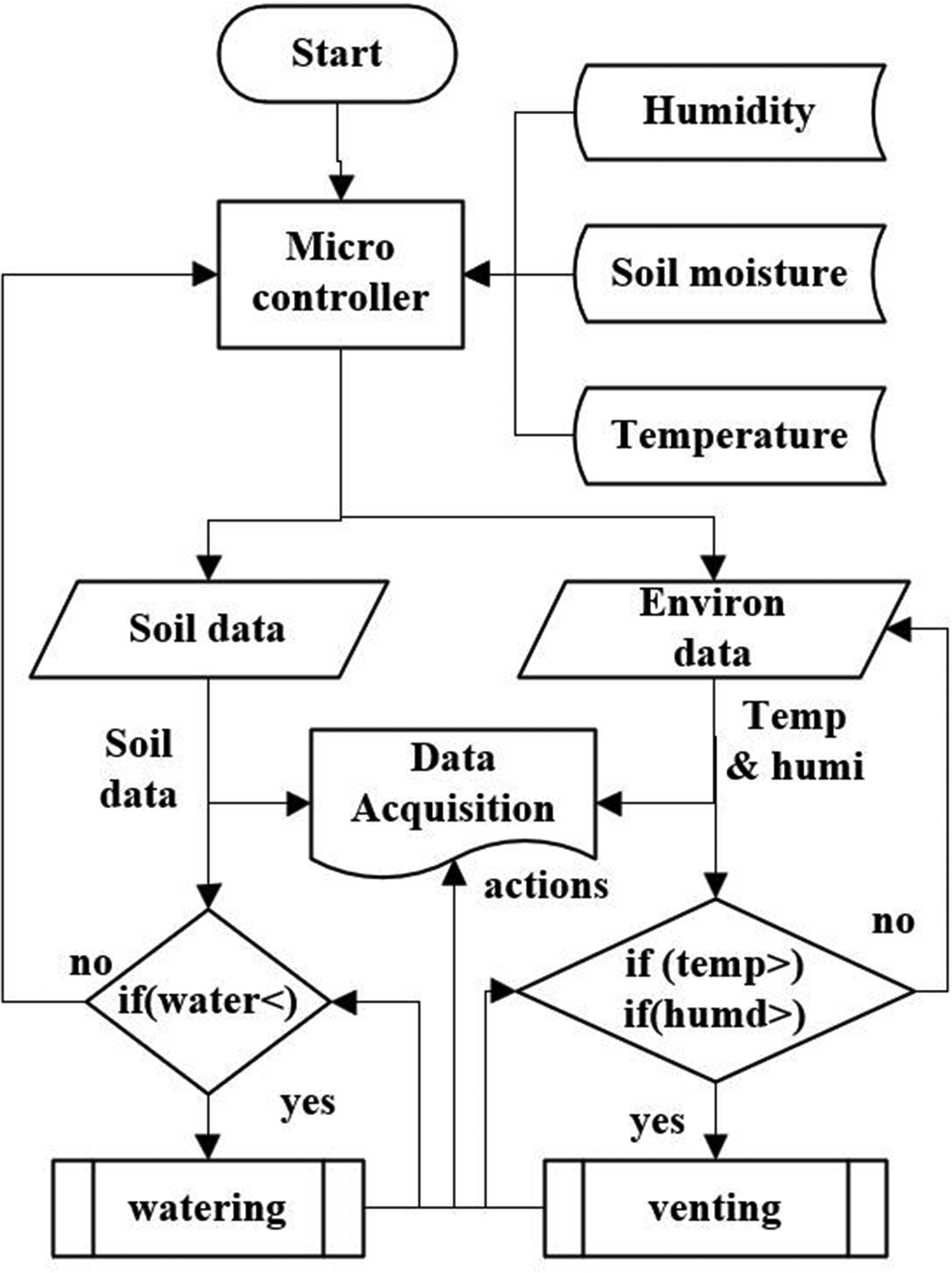
Greenhouse IoT system architecture.
Data collection methods
Data collection involved field trials and experiments. The study involved two main groups: an IoT-managed greenhouse (experimental group) and traditional farming systems (control group). Data was collected on micro and macronutrient levels, pH levels, crop growth and environmental factors such as soil moisture, soil water content, greenhouse temperature and humidity, using IoT sensors and laboratory tests of the soil samples for each group. Regularly, heights of each plant for each group of the field trials were physically recorded using a simple homemade clinometer.
Soil sampling and laboratory analysis
The composite soil samples were collected from both treatments prior and post to planting. Samples were collected from the root zone at a depth of 0 cm to 15 cm. The soil samples were analysed at the ZARI, Mount Makulu, Chilanga, Zambia, following standard soil chemistry and physics protocols. Measured parameters included soil pH (CaCl₂), organic carbon, nitrogen (N), phosphorus (P), potassium (K), calcium (Ca), magnesium (Mg), sodium (Na), iron (Fe), zinc (Zn), manganese (Mn), copper (Cu) and cation exchange capacity.
Plant growth measurements
Plant growth measured height at 16 time points over the experimental period. Plant height was measured from the soil surface to the topmost part using a clinometer. Measurements were taken at irregular intervals, with an average interval of approximately 6 days between successive observations. Each sampling date recorded the plant heights for all surviving plants within each treatment, and the mean values were computed for statistical analysis.
Reproducibility and experimental controls
To make sure that reproducibility is attainable, both treatments:
Used the same soil type and tomato variety Followed identical planting procedures and spacing Were monitored over the same experimental duration Were subjected to the same laboratory soil analysis methods
The primary experimental variable was the presence or absence of IoT-based environmental monitoring and automated control.
Ethical considerations
This research study does not involve any person. And it will not use or interact with any animal life.
Statistical analysis
Data normality was verified using the one-sample Kolmogorov–Smirnov test, and the paired-sample t-tests (two-tailed, α = 0.05) were performed using SPSS version 27 for the plant height between the plants in the control (Control-H) and the plants in the IoT greenhouse environments (IoT-MGH-H). Descriptive statistics (mean, standard deviation, standard error) were calculated for each variable, and the statistical significance was established at p < 0.05.
Results
Soil water content control
The soil type in the study area for both the experimental group and control group was sand loamy soil, with a soil particle size of 0.002 mm to 0.05 mm, and a limited water holding capacity of 21%, as tested in the soil physics laboratory. On the control, the soil water quantity was managed by hired labour, to tend to it like any other normal tomato garden, and watering was not regulated, coupled with rainwater as well. In the IoT-managed greenhouse, the soil moisture was maintained at a minimum of a soil moisture sensor reading of 690 ohms, or 67.449% reading on a scale of 1023 electrical resistive levels. This was equivalent to an eGWC of 16.188%, calculated in equation (5).
Equation (5): Electronic GWC real-time calculation
Equivalent to the classical GWC of equation (6).
Equation (6): Classical GWC
Elemental concentration levels in soil
The data regarding soil elemental concentrations was obtained through laboratory testing of the composite samples collected from the virgin soil, control and the IoT greenhouse environments. The soil test results are detailed in Table 2.
Elemental concentrations in soil.

Soil chemical properties measured from composite soil samples collected from virgin soil, traditional control plots and the IoT-managed greenhouse. Various values represented laboratory-measured concentrations expressed in parts per million (ppm), percentage (%) or milliequivalents per 100 g soil (me%). Each value represented the mean of three independent composite soil samples (n = 3) per treatment, analysed at the Zambia Agriculture Research Institute (ZARI), Mount Makulu, following standard soil chemistry procedures. pH was measured in CaCl₂ solution, and the critical levels indicated the threshold values for optimal tomato growth.
Cacl: calcium; CEC: Cation Exchange Capacity (the measure of the amount of negative charge); Cu: copper; Fe: iron; K: potassium; Mg: magnesium; Mn: manganese; N: nitrogen; Na: sodium; Org C: organic carbon; P: phosphorus; pH: level of acidity; Zn: zinc.
The pH of the tested soils after 60 days showed that both environments lie in acidic media and are lower than the stipulated critical levels. Most contents in these soils were higher than the critical levels, with the IoT greenhouse being above the control environment. The tests for organic C, N, Ca, Mg, Mn, Fe and Zn revealed that the concentrations of the elements were higher in IoT greenhouse samples than in the control samples, but lower than the critical levels. This indicates a good supply and retention of nutrients to the plants inside the IOT greenhouse-controlled environment. However, P, K and Na were slightly higher in the samples from the control environment, with a subtle difference in comparison to the IOT greenhouse sample results.
Plant height
The average plant height can be understood as caused by three variations regarding the environmental impact that may have impacted the growth and conditions of the targeted plants in the different environments under observation. These factors include nutrient runoff, the micro-climate and the controlled watering. Table 3 shows the result of the tomato plants’ heights in the control, which is the “Control-H”, and those of the experimental group, which is “IoT-MGH-H”, graphically represented in Figure 2.

Plant heights: average tomato plant height (m) trends for IoT-managed greenhouse (IoT-MGH-H) and traditional control (control-H) systems over 120 days.
Average Plant Height in meters.

The average tomato plant height (m) for the IoT-managed greenhouse (IoT-MGH-H) and traditional farming system (control-H). Values represent mean plant height calculated from measurements of all surviving plants per treatment at each sampling date. Plant height was measured from the soil surface to the apical of the plants. Measurements for up to 16 independent repeated observations (N = 16) per treatment with each having at the initial count with 92 plants per treatment, which formed the average values in meters (m).
From Figure 2 and Table 3, the plants in the IoT group stay alive more than those in the control group, thus recording zero height mean only in the last data collection cycle period.
The results were further analysed for descriptive statistics and estimation for paired differences as well, as indicated in Table 4.
Descriptive statistics.

Descriptive statistics for tomato plant height (m) in the IoT-managed greenhouse (IoT-MGH-H) and traditional control (control-H). N represents the number of paired observations (N = 16). Mean values indicate average plant height.
StDev: standard deviation, SE mean: the standard error of the mean.
From Table 4, the plants in the experimental group had a mean height of 0.731 m, against the control group, with 0.375 m, which is a mean of 0.356 m lower than the experimental group (IoT-MGH-H). And the estimations for the paired differences, in Table 5, show that the mean difference between the plants in the experiment (i.e., IoT-MGH-H) was 0.3564 units taller than the plants in the control (i.e. Control-H), with a 95% confidence interval that the mean difference was between 0.1806 and 0.5323.
Estimation for paired difference.

The estimated paired differences in plant height (m) between the IoT-managed greenhouse and the traditional control system. Values represent the mean difference, standard deviation (StDev) and standard error of the mean (SE Mean). The 95% confidence interval (CI). The analysis was based on 16 paired observations (N = 16).
With Table 6, the null hypothesis was that the mean difference between the plants in the control and the plants in the IoT greenhouse environments is zero (0).
Paired t-test for IoT-MGH-H and Control-H.

The results of a paired-sample t-test comparing tomato plant height between the IoT-managed greenhouse (IoT-MGH-H) and the traditional control (control-H). The analysis was conducted using 16 paired observations (N = 16). The statistical significance was evaluated at α = 0.05.
The test was conducted to evaluate whether the difference in the plants’ height is statistically significant, and the results indicate that the t-value was 4.32, which is quite a high t-value. Suggesting a strong difference with a p-value of 0.001, much lower than 0.05, suggesting a very significant difference between the treatments as seen in Table 6.
While the test for normality shown in Table 7, shows that the data for both the plants in the control (Control-H) and the plants in the IoT greenhouse environments (IoT-MGH-H), are normal as the significant two-tailed values were <0.05, that is, 0.007 for the IoT-MGH-H and 0.000 for the Control-H.
One-sample Kolmogorov–Smirnov test.

The results of the one-sample Kolmogorov–Smirnov test used to assess data normality for plant height measurements in both treatments. Asymp. Sig. stands for Asymptotic significance, while N indicates the number of observations (N = 16).
Discussion
A paired sample t-test was conducted to compare plant height variations in the IoT-managed greenhouse and traditional farming system across different time points. The results indicated a significant difference in the plants’ height with a p-value of 0.001 in the growth rate, implying that we reject the null hypothesis. This confirms the efficacy of real-time moisture and nutrient monitoring, as the difference in height of the plants in the experimental group and the height of the plants in the control is statistically significant, with the plants’ height in the experiment being significantly greater with a mean difference of 0.3564 as compared to the control group which was shorter on average by the same mean margin.
The results are consistent with those reported by Benyezza et al. 7 and Ibrahim Mohammad Abuzanouneh et al. 8 where IoT-based systems showed improved irrigation efficiency and coupled with nutrient control in our study. However, unlike these studies, our system integrated both macro and micronutrient management, offering more comprehensive soil–plant interaction control in loamy sand soils. Maraveas and Bartzanas 9 noted that cost and infrastructure remain key adoption barriers, which our findings reaffirm in the Zambian context, as most of these devices needed to be imported.
These results showed how tomato plants in the experimental group performed better as compared to the plants in the control. Much of that performance is attributed to nutrient-reduced runoff, which goes hand in hand with the degradation of soil quality through reduced presence of nutrients in the soil, coupled with the watering control methods, which influenced the efficient uptake of nutrients by plants and the micro-climate of the experimental group, against the control group.
The experimental group had a temperature–humidity-controlled environment, with a controlled supply of water and a good retention of the macro and micronutrients, which encouraged a good plant growth rate throughout the experiment period. In addition, the plants in the experimental group, that is, the IoT-managed greenhouse, continued to record plant height almost a month after the control group had shown no plant height in the record. This was partly attributed to the controlled supply of water 5 on the sand loamy soils, which had a soil particle size of 0.002–0.05 nm. These soils had a limited water holding capacity of 21%, making them vulnerable to leaching of nutrients when the use of poor and classical farming practices is used. In our case, the soil moisture was maintained at an eGWC of 16.188% in the IoT-managed greenhouse, unlike in the control, where everything was manually handled.
Furthermore, the concentration of most micronutrients, Ca, Mg, Mn and Fe, as indicated in the results, supported the IoT-managed greenhouse plants’ growth in various ways. Firstly, Ca aided the plants with cell wall structural support and membrane stability under both non-stressed and stress conditions; it also served as an intracellular messenger for several developmental and physiological processes in the plant, including the response of plants to biotic stress.14,15 While Mg influences a wide array of fundamental physiological and biochemical processes in plants, from the intake of other essential nutrients needed by the plants from the soils. Mg plays an important role in the transport of phosphates in plants, chlorophyll synthesis, production, transportation and utilisation of photo assimilates, enzyme activation and protein synthesis. 16 Mn helped to sustain the metabolic roles within different plant cell compartments, acting as a cofactor for the oxygen-evolving complex, aiding in photosynthesis, enzyme activation and aiding in nitrogen assimilation and catalysing the water-splitting reaction in photosystem II. 17 Whereas Fe was essential for chlorophyll synthesis, respiration and photosynthesis, and it also helped in enzyme activation, it is essential for the maintenance of chloroplast structure and function. 18 Zn helps in enzyme activation, hormone production and growth regulation, and when it is in insufficient quantities, a plant has stunted growth, yellowing between leaf veins, and small, misshapen leaves. 19
The experiment vented air in the greenhouse when the temperatures reached 30°C and the humidity at 80% to keep the environment not too hot or too humid, which promoted more plant growth than in the control. 20 investigated the effects of the interactions between daily extreme temperatures and high humidity levels on plant growth, and they similarly observed that increasing humidity in a high-temperature environment was beneficial to the growth of tomatoes. According to, Tibbitts 21 humidity influences the rate of transpiration, water loss from plants and stomatal apertures, thereby regulating the photosynthetic rates, tissue temperatures, plant water potentials and concentrations of minerals in certain plant tissues. Higher temperatures and humidity control water taken in by tissues through condensation and direct vapour uptake by leaves. Higher humidity conditions help plants’ leaves to keep their stomata open to maintain the photosynthesis process and minimise evaporation processes. 22 With relation to Chia and Lim 22 work, an increase in the air's relative humidity relatively increased the plant's leaf size, leading to an increased carbon dioxide uptake and photosynthesis rate.
Economic feasibility
The prototype IoT-managed greenhouse system cost approximately US$124.35 (ZMK 2984.4), including actuators, sensors, microcontrollers and power supply as shown in Table 8, with reference to Table 1 (Greenhouse IoT System Devices). Based on yield gains and reduced water use observed, the payback period was projected for a single planting cycle. However, initial costs and limited technical skills among rural farmers hinder large-scale deployment.
Expanded IoT setup costs.

The average costs of components required to implement the prototype IoT greenhouse monitoring and control system.
However, adoption among smallholder farmers remains limited due to high initial investment, limited technical skills, knowledge barriers and infrastructure constraints, suggesting the need for government subsidies, cooperative access models and digital agricultural training programs. 23
Limitations
Although the study demonstrated improvements in nutrient efficiency, water management and plant growth through the use of IoT-controlled greenhouse systems, several limitations were noticed and among these include:
Firstly, despite the initial costs being low, there are limited technical skills among rural farmers in Zambia, which hinder large-scale deployment, coupled with little digital training, which could accelerate the adoption of technology. Secondly, the experimental duration was limited to 120 days, covering only one major tomato growth cycle, restricting conclusions on long-term soil-plant nutrient dynamics in relation to seasonal effects. Thirdly, the study experiment was conducted on a single soil type, which was sandy loamy soil and under controlled greenhouse conditions. Fourthly, the economic evaluation was based on prototype-level cost estimates, which may vary in full-scale implementations due to regional market differences and technology availability. Moreover, most of the electronic devices used are not manufactured locally, implying the prices vary less in other countries. Lastly, the IoT framework used a limited number of sensors and did not integrate predictive analytics or ML algorithms for decision support.
Recommendation and future directions
Despite the studies’ benefits, the adoption of IoT-based agriculture remains limited due to infrastructure challenges, initial investment costs and digital illiteracy among smallholder farmers in most parts of third-world countries. To facilitate large-scale implementation, governments should consider subsidising sensor-based monitoring systems and integrating digital literacy programs into extension services.
Future research should also extend the system to multi-sensor networks and incorporate data-driven models to enhance scalability, resilience and long-term sustainability. They also need to consider the exact economic break-even per given square meter for such models, integrating ML models for predictive nutrient and irrigation optimisation, linking soil sensor data with climate forecasts.
And extending trials across multiple soil types and incorporating vertical and/or multi-crop systems, long-term sustainability assessment, multi-season and cross-regional, as this would also improve generalizability.
Conclusion
This study has a potential application for optimising nutrient delivery and reducing water wastage, aligning with Sustainable Development Goal 2, to end hunger and Goal 12, to achieve sustainable production. The ability to monitor soil conditions minimises excessive water and nutrient application, thereby reducing nutrient runoff and mitigating environmental degradation. The IoT's role to play in climate resilience agriculture, by maintaining certain constant soil water levels, is a critical adaptation strategy for regions experiencing climate variability, significantly enhancing macro and micronutrient efficiency as compared to traditional farming.
The analysis of elemental concentrations in soil indicated that the IoT-managed greenhouse exhibited higher retention of essential micronutrients, which played vital roles in plant growth, contributing to improved photosynthesis, enzyme activation and structural support. The ability to regulate temperature and humidity in the greenhouse further enhanced plant growth by reducing stress and maintaining optimal conditions for nutrient uptake and metabolic processes.
The study also demonstrated superior plant growth rates, with tomato plants continuing to develop long after those in the traditional farming system had stagnated due to the controlled microenvironment.
This research highlights the potential of IoT technologies in transforming agricultural practices by increasing efficiency, reducing environmental impact and promoting long-term sustainability.
Footnotes
ORCID iDs

Ethical considerations
This study did not involve any human or animal subjects in any stage of the experiment or study.
Author contributions
Jephter Pelekamoyo conceptualised the study and let the team all the way up to the submission of the manuscript. He also designed the IoT system, consolidated the data collected, had the data analysed and drafted the manuscript. Lukundo Nakaona collected data and designed the greenhouse structure, collected soil samples for testing and contributed to the drafting of the manuscript. Jacob Mwitwa and Arthertone Jere mobilised the resources needed in the study, from the purchase of the IoT devices, the plastic used for the greenhouse, the metal structure of the greenhouse and the transportation of the samples to the soil specialist facilities for testing. They also advised on the parameters to focus on and equally edited the article. Stephen Kambone conducted the financial feasibility of the IoT greenhouse system. He also advised on the type of plants to use in the system. Emmanuel Nkweto provided the tomato plants and was in charge of maintaining the plant health from the initial stage to the last stage, in relation to disease and fungi control. Lameck Nsama and Ngula Walubita edited the document for grammatical and typo errors.
Funding
The author(s) received no financial support for the research, authorship, and/or publication of this article.
Declaration of conflicting interests
The author(s) declared the following potential conflicts of interest with respect to the research, authorship, and/or publication of this article: The materials in the article are meant for research and educational purposes and contribute to the body of knowledge. This was original research, conducted to contribute to the body of knowledge. All authors have participated in conception and design, analysis, interpretation of the data and drafting the article. This manuscript has not been submitted to, nor is it under review at, another journal or other publishing venue.
Data availability
The authors agreed to make available the data and materials supporting the results and analyses of the data that resulted in this article. 24 Any other data will be made available on reasonable request.