




Abstract
Implementation of the 3Rs (Replacement, Refinement and Reduction) in animal studies is a legal requirement in many countries. In The Netherlands, animal welfare officers (AWOs) are appointed to monitor the welfare of laboratory animals. As part of this task, AWOs give advice to researchers and can therefore have an influential role in implementing 3R methods in research. A national survey was conducted to gain more insight into how Dutch AWOs obtain and apply 3R information in their daily work. Nearly half of the AWO population filled out the questionnaire (15/32; a response rate of 46.9%). Two-thirds of the respondents pointed out that finding 3R information is not an easy task and more than half of the respondents believed that information on possibilities to implement the 3Rs is regularly being missed. The respondents indicated that most 3R information is obtained directly from colleagues and other AWOs. Special online 3R databases are rarely used. All the responding AWOs feel that they contribute to Refinement (15/15), nearly one-third of the respondents feel they contribute to Reduction (4/15), and one AWO feels he/she contributes to Replacement (1/15). According to the respondents, better exchange of knowledge can contribute to more successful implementation of the 3Rs. How this knowledge exchange can best be established and facilitated needs further exploration. To this end, the authors make suggestions for a 3R-integrated evidence-based approach.
As in many other countries, Dutch law only permits animal experiments if existing 3R (Replacement, Refinement and Reduction) methods have been considered and, if feasible, implemented. This means that, if possible, experiments have to be performed without animals (Replacement), with fewer animals (Reduction) and/or with less pain/distress for the animals (Refinement). 1 Nowadays, improved welfare, for example through cage enrichment, is also considered to be part of Refinement. Information about and expert knowledge of the 3R principles are necessary for effective application of these principles in research. To facilitate the retrieval of information regarding the possibilities for implementing the 3Rs in a specific research field/study, a lot of effort has been put into the development of specific 3R databases 2,3 and of guidelines on how to search for 3R information. 4 –7 An earlier survey by Leenaars et al. revealed that, despite all these developments, there is still much room for improvement in the way scientists currently retrieve information about the 3Rs (from databases). 8 From this survey, it was concluded that searching for the 3Rs is not considered to be an integral part of the research process (and thus is not funded), knowledge of 3R databases is minimal, and search skills in general are limited.
Scientists, however, are not the only people playing a role in implementing the 3Rs. In The Netherlands, each licence holder (a legal or natural person possessing a licence to conduct animal experiments at their institution) has to appoint an animal welfare officer (AWO). The task of this officer is to monitor the welfare of laboratory animals before, during and after experiments (Dutch Experiments on Animals Act, in Dutch; Wet op de Dierproeven, Article 14). 9,10 In general, the role of an AWO is comparable with the work of a FELASA category D officer. 11 The AWOs have a pivotal role in ensuring the proper conduct of animal experiments. They are in direct contact with scientists designing animal studies as well as with the animal care staff and technicians, who actually handle the animals and carry out the biotechnical procedures (such as drug administration or operations). The AWOs are required, by law, to give their advice about laboratory animal science-related topics in all research protocols that are assessed by the animal ethics committees (AECs), including advice on implementation of 3R information. The AWOs can therefore play a crucial role in influencing the quality of the design and conduct of animal experiments as well as in safeguarding the implementation of the 3Rs.
At present, we do not know how AWOs gain their knowledge on 3R possibilities, how this knowledge is implemented or whether obstacles and/or possibilities exist for the improvement of 3R implementation. In order to answer these questions, a survey was designed and sent out to all AWOs in The Netherlands. Similar surveys were sent out to scientists who were involved in animal-based research 12 and members of AECs (unpublished observations).
Materials and methods
From April to June 2009, a national survey was conducted among AWOs in The Netherlands, in order to study their views on the use and implementation of 3R knowledge. An online questionnaire was developed and distributed among all Dutch AWOs.
Questionnaire design
The outline of the questionnaire was developed by the second author (YC) and was based on: (1) a previously conducted survey among researchers involved in animal-based research at the Radboud University Nijmegen Medical Centre 8 and (2) in-depth semi-structured interviews with five researchers, two AEC members and one AWO. The survey was descriptive in nature and included both qualitative and quantitative questions. Three AWOs, a communication expert, and a knowledge management specialist assisted in optimizing the questionnaire. The questionnaire was tested by three AWOs and adjusted on the basis of their feedback. The use of closed-ended questions ensured that respondents were consistent in their answers. There was room to give additional comments to questions, in case a respondent did not consider the provided set of answers exhaustive. Some questions allowed for multiple answers, e.g. on information sources. The language of the original questionnaire was Dutch; an English translation of the complete questionnaire can be requested from the authors.
Questionnaire distribution
A link to the online questionnaire was distributed among all AWOs in The Netherlands, with the help of the AWO group of the Dutch organisation for Laboratory Animal Science (Nederlandse Vereniging voor Proefdierkunde; NVP). The Dutch inspectorate sent out a letter to all licence holders in The Netherlands, asking them to encourage participation in this survey within their institutes.
Data analyses
All answers given by the respondents were in Dutch. Despite the efforts of the authors, some misinterpretations and/or small translation errors cannot be ruled out. To safeguard anonymity and to exclude potential bias, the survey data were disconnected from the respondents’ backgrounds and contact details. The results were analysed per question. The closed-ended multiple answer questions, the Yes/No questions, and the questions with scaled answers were analysed through counting frequencies in Excel. The answers to open questions were listed and categorized by inductive analysis. The data were analysed by the first (JvL) and second (YC) authors.
Results
Response
At the time of the survey, the Dutch professional association of AWOs consisted of 42 members, of whom 32 were actually appointed as AWOs by a licence holder. Fifteen AWOs filled out the questionnaire (response rate 15/32 = 46.9%). The affiliations of the responding AWOs were as follows: universities (6/15), knowledge institutes (3/15), industry (3/15), contract research organisations (CROs) (2/15), and the government (1/15).
Views on the 3R principles
General view on the 3Rs.
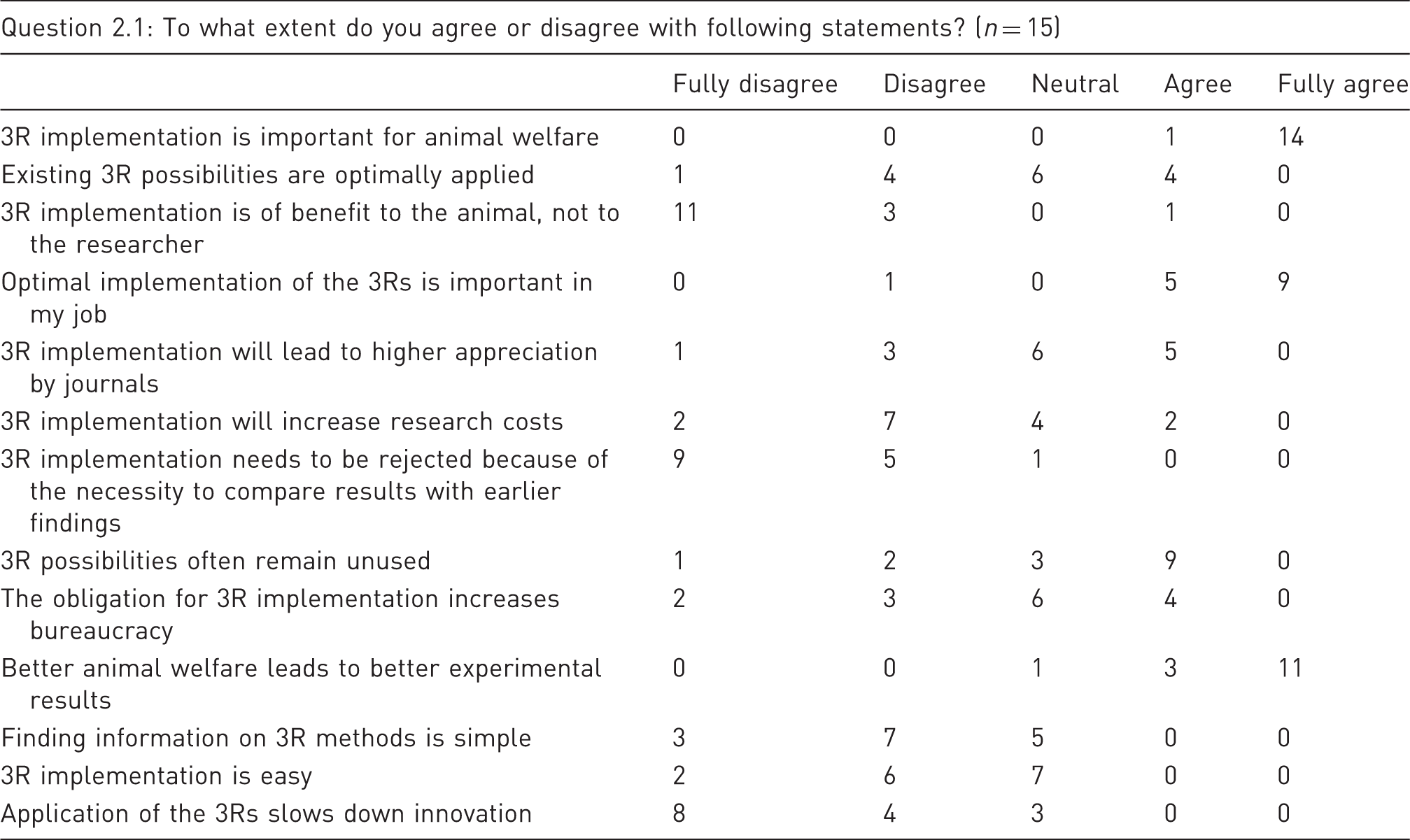
Information sources contributing to the AWOs’ own knowledge about the 3Rs in general
Information sources contributed to general 3R knowledge.
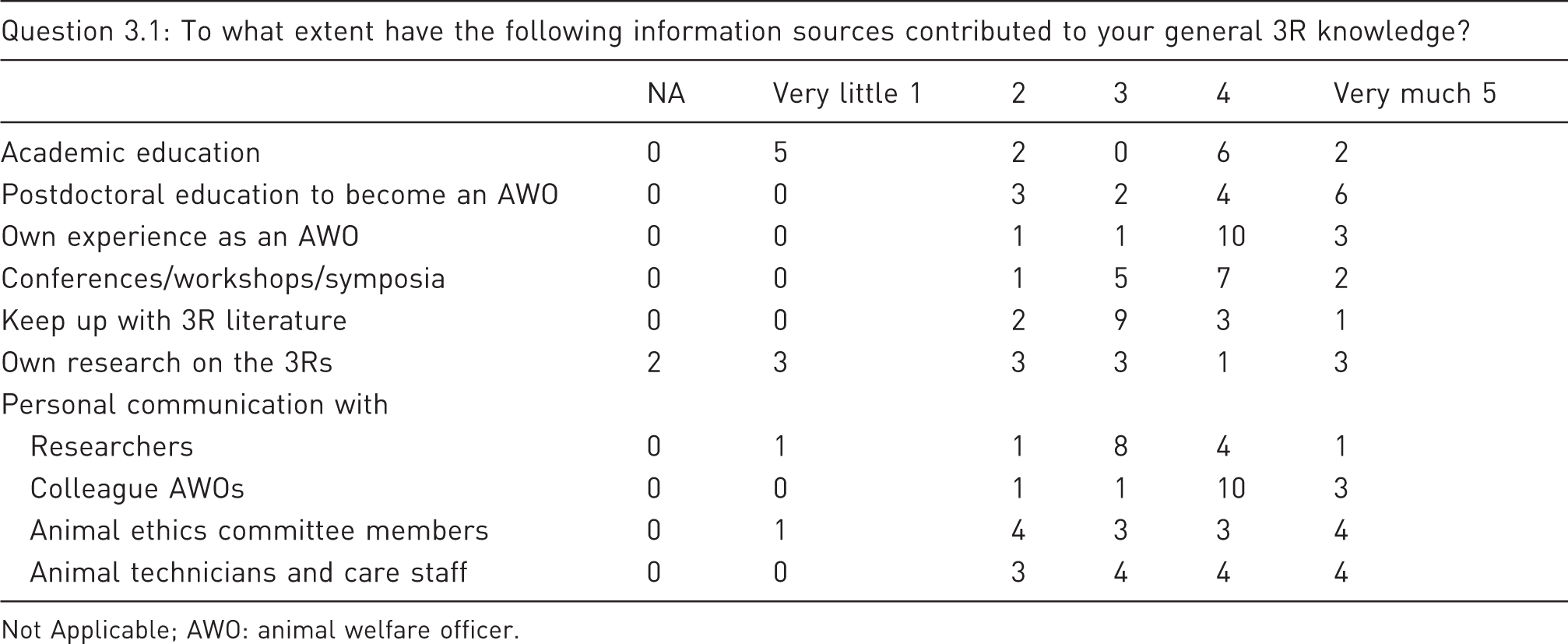
Not Applicable; AWO: animal welfare officer.
Information sources for 3R information requests
What sources do you consult to get 3R information to help you formulate a specific advice?
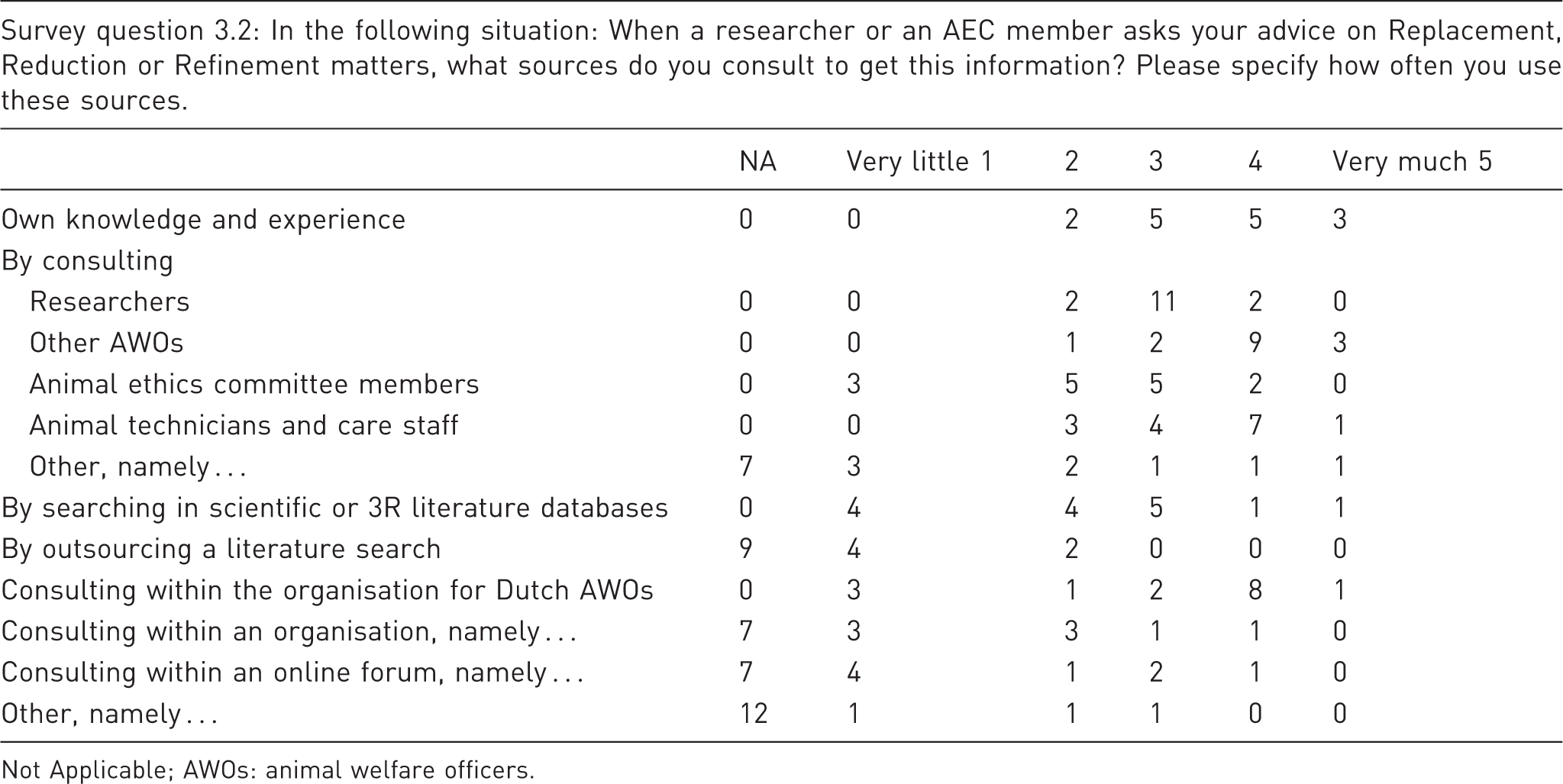
Not Applicable; AWOs: animal welfare officers.
Acquaintance with and use of databases for 3R search
Question 3.3. Participants were asked which databases, websites and search engines for finding information on 3R methods they were familiar with. The best known databases, websites or search engines were: PubMed 13 by 15/15, Google 14 by 14/15, NCA 15 by 12/15, NC3Rs 16 by 10/15, Agricola 17 and FRAME 18 by 8/15, Altweb 19 by 7/15 and ZEBET 20 by 5/15. Web of Science, 21 AWIC 4 and NORINA 22 were known by four of the 15 respondents and three of the 15 respondents were familiar with Embase 23 and TOXNET. 24 Two respondents were familiar with Go3R 25 and one respondent knew the website Altbib. 26 None of the respondents indicated familiarity with UCCAAI 27 or AVAR. 28 Three respondents used the option to add extra online 3R information sources. The sources they added were: CompMed, 29 Laboratory Animals 30 and FELASA. 31
Question 3.4. When respondents were asked which databases, websites and search engines they most frequently used to find relevant 3R literature (score 4 or 5, where 5 is ‘very often’), the majority answered: PubMed (12/15) and Google (10/15).
Question 3.5. Nearly half (7/15) of the respondents considered their own skills to search for information on 3R methods in online databases, websites and search engines to be insufficient. Another group of seven respondents answered ‘indifferent’ to the question about the sufficiency of their search skills. Only one respondent believed himself/herself to have sufficient search skills for retrieving information on relevant 3R methods.
Evaluation of online 3R information sources
Questions 3.8, 3.9 and 3.10. Forty percent (6/15) of the AWOs were dissatisfied (score 4 ‘much’ or 5 ‘very much’) with the availability of 3R information and another 6/15 answered ‘neutral’ (score 3). A small majority (8/15) was dissatisfied (score ‘much’ or ‘very much’) with the accessibility of information and 5/15 answered ‘neutral’ (score 3). Nearly half (7/15) of the respondents were dissatisfied (score 4 or 5) with the balance between search effort required and retrieved 3R information.
Experience with 3R advice
Animal welfare officers’ advice on the 3Rs.
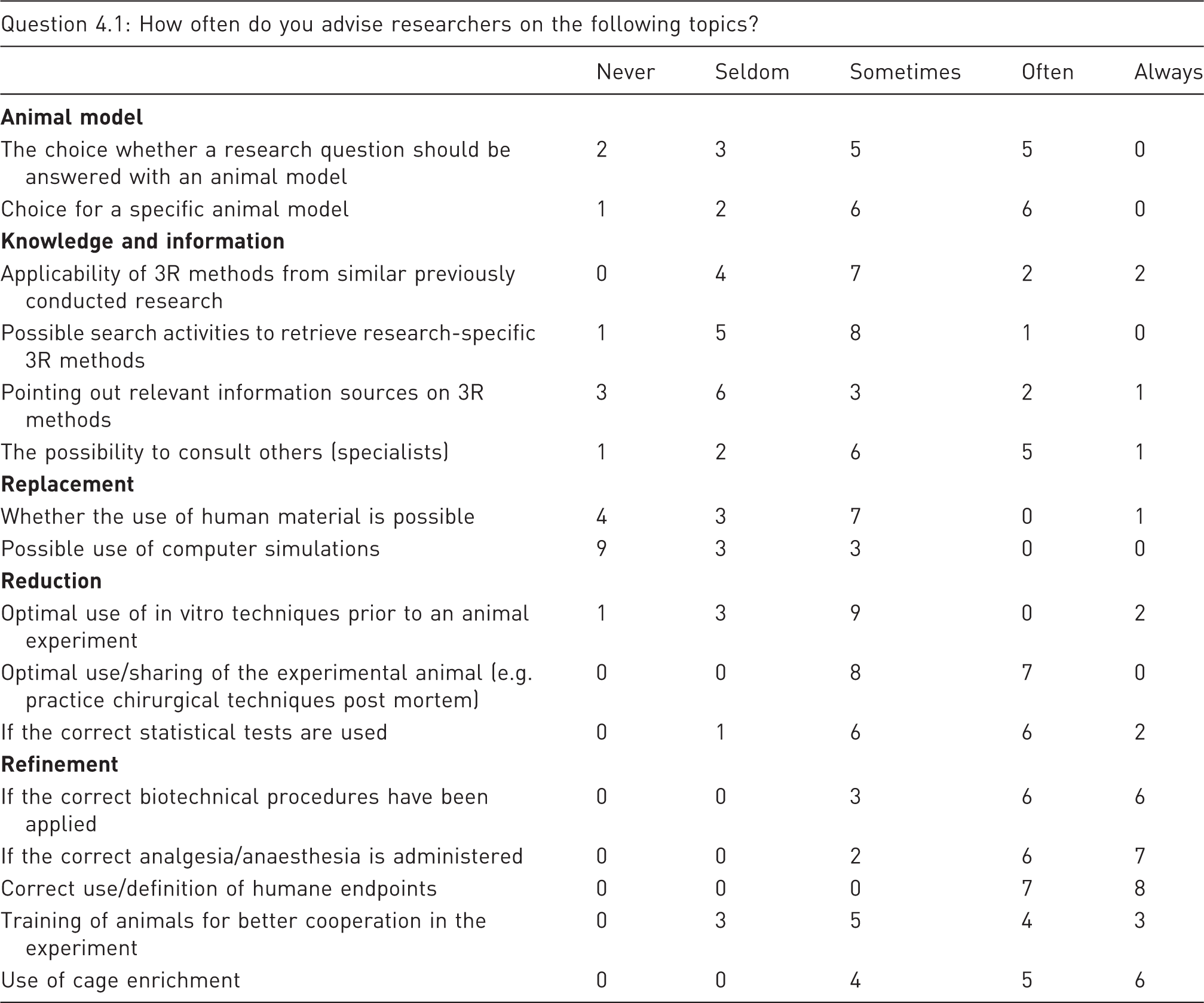
Preferences and possibilities regarding giving advice to the AEC
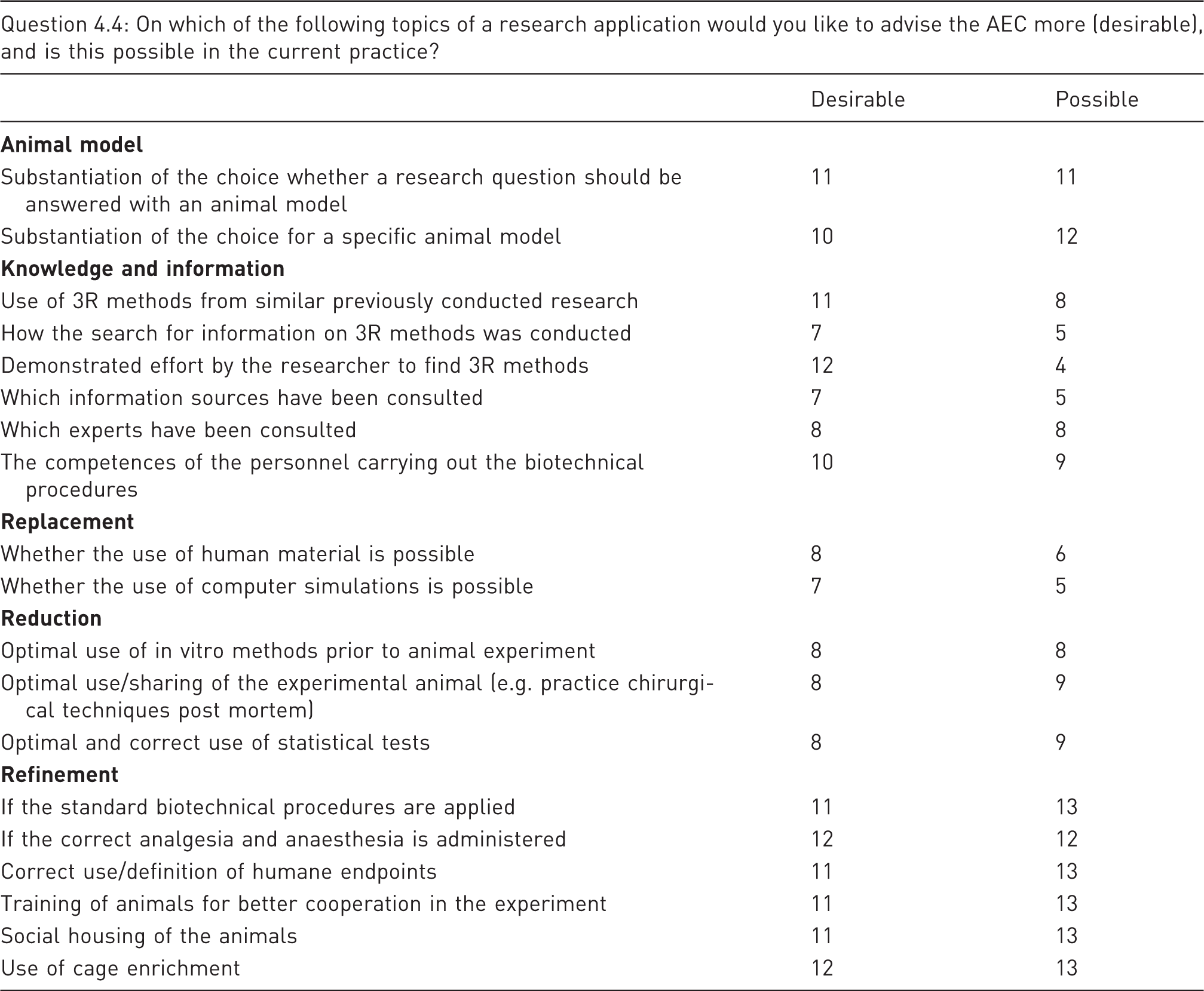
Topics on which animal welfare officers would like to advise the animal ethics committee (AEC) more.
AWOs’ influence on the 3Rs
Question 4.10,
Figure 1
. All 15 respondents consider their influence on the implementation of Refinement to be ‘high’. The influence on the implementation of Reduction is considered ‘high’ by 4/15 respondents, ‘medium’ by 7/15 and ‘low’ by 4/15 respondents. Influence on Replacement is considered ‘low’ by 11/15 respondents and ‘medium’ by 3/15 respondents. One respondent indicated that his/her influence on Replacement is ‘high’.
Bar chart of the level of perceived influence of animal welfare officers on the implementation of the 3Rs.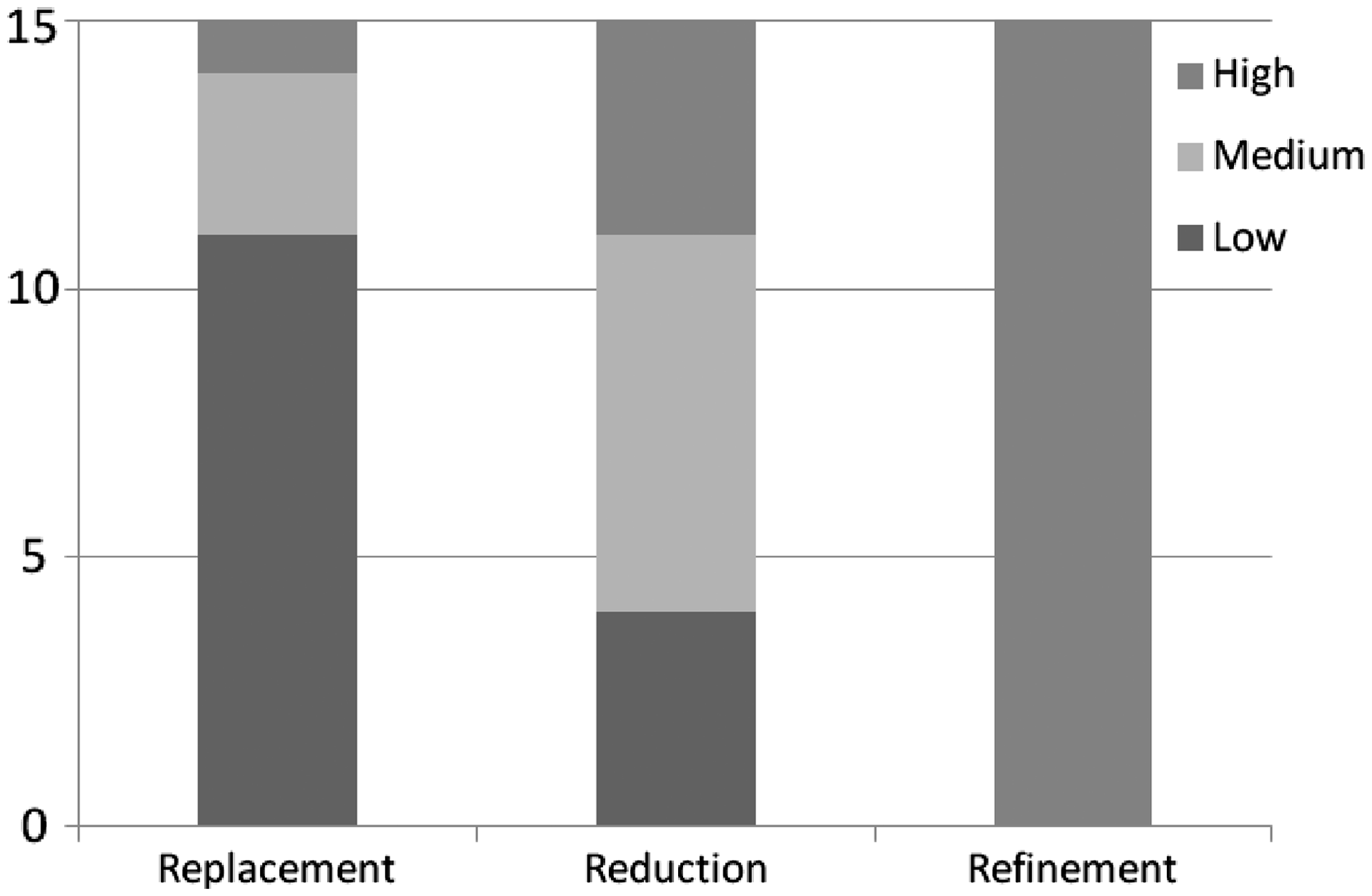
Factors inhibiting implementation of 3R methods
Question 4.12. The majority of the respondents (8/15) answered that information on 3R methods is ‘regularly’ missed in an information search. Six respondents think that this information is missed ‘often to always’, and one respondent thinks that this information is missed ‘sometimes’. Question 4.13. The frequency of not implementing potentially suitable 3R methods is: ‘sometimes’ according to 4/15 respondents, ‘regularly’ according to seven and ‘often’ according to three respondents.
Question 4.13. AWOs were asked to elaborate on the possible reasons for missing information on 3R possibilities. They were not specifically questioned about their own role in this matter or about the role of the researcher or the AEC member. Frequently mentioned reasons for missing relevant 3R information were: ‘unaware of or unfamiliar with the possibilities’, ‘lack of knowledge on how and where to search’, and ‘lack of interest or priority’.
Question 4.14. A similar question followed concerning the possible reasons for not implementing known 3R possibilities. Frequently mentioned reasons were: ‘lack of time, resources and knowledge on how and where to search for 3R information’, ‘the necessity to compare results with earlier findings’, ‘difficulties with “prescriptive legislation” (legally required animal testing)’ and/or ‘difficulties with accessibility of 3R information’.
Stimulating factors for 3R implementation according to AWOs
Question 4.15. AWOs were asked to elaborate on what they regard as stimulating factors for successful implementation of 3R methods. Eight of the 15 respondents mentioned in their answer ‘the positive attitude/willingness of the researcher towards the 3Rs’ as a stimulating factor. Other frequently given answers were: ‘advice from AWOs and AECs’ (5/15), ‘good cooperation and preparation’ (4/15) and ‘enthusiastic and motivated animal care staff and technicians’ (3/15). Also ‘support from management’ (2/15) and ‘sufficient time and experience’ (2/15) were mentioned as stimulating factors.
Question 4.16. Respondents were given the opportunity to give additional comments on their personal experience with 3R information in practice. Some of the individual comments were: ‘Researchers should know the added value of implementing the 3R principles’, ‘More publicity and exchange of information is needed’, ‘The researcher is responsible for the implementation of the 3R principles’, ‘There is insufficient knowledge about experimental design among researchers, AWOs, AEC members, editors and referees; this needs to be improved by training and supervision/quality control’.
Ways to facilitate the optimal use of current knowledge on the 3Rs
Suggestions and priorities for improving 3R use.
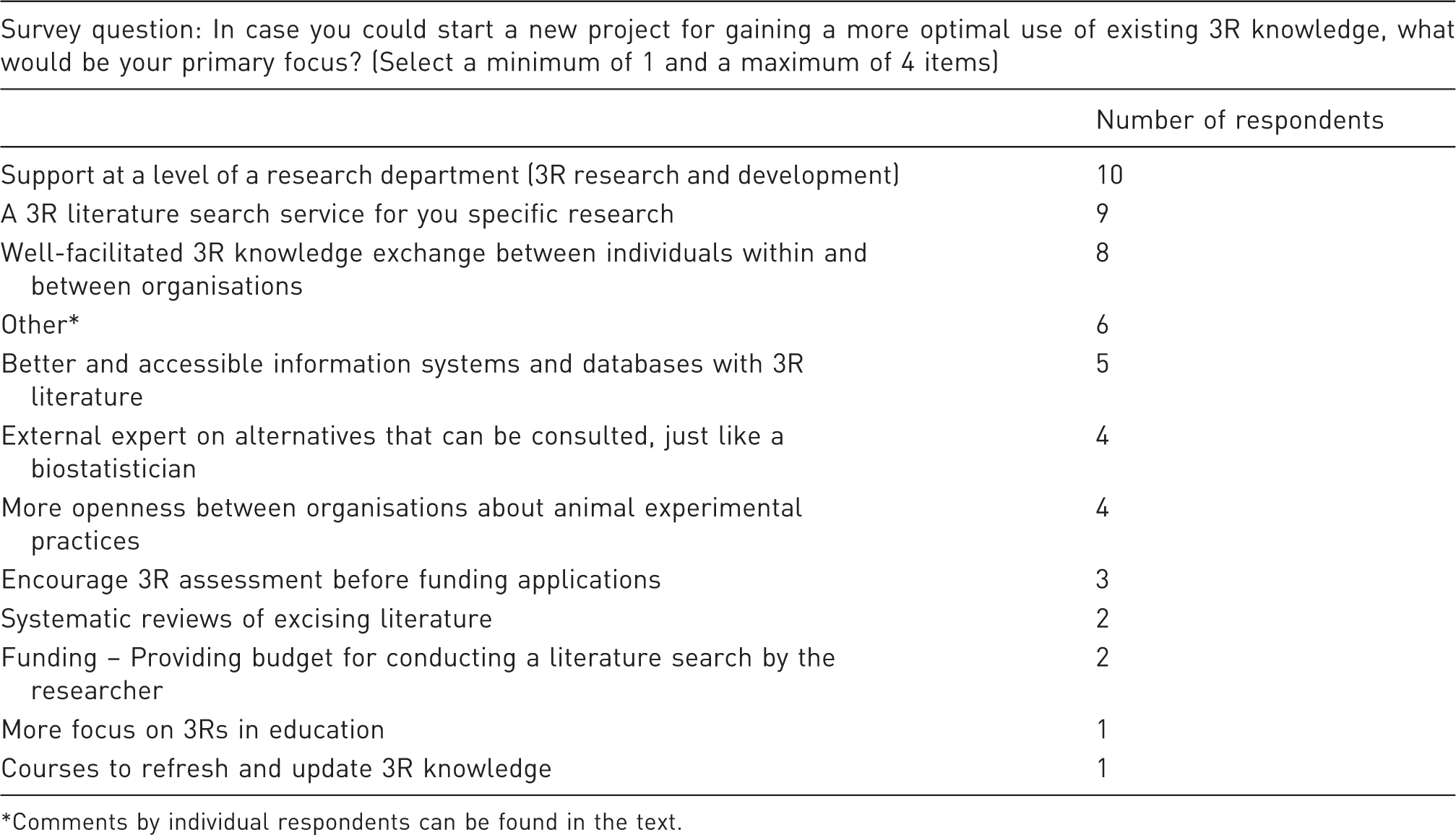
Comments by individual respondents can be found in the text.
Six individual respondents selected the option ‘other’ and added the following comments: ‘Each organisation should appoint an expert on alternatives, at the same regulatory and organisational level as an AWO’, ‘Funding of small projects without bureaucracy’, ‘The first question on the research plan (AEC form) should be: Why an animal experiment? What did you do and which sources did you consult to optimally apply the 3Rs in your animal experiment?’, ‘ONE information system, not 17!!’, ‘One national research centre, funded by users, that executes literature studies as well as practical 3R research and development (data sharing, surveys, common goals and joining forces, advice, publications)’ and ‘Information exchange to encourage sharing’.
Not presented data
Answers to Questions 3.6, 3.7, 3.11, 4.2, 4.3, 4.5, 4.9 and 4.11 are not presented for one or more of the following reasons: the answers to these questions were too ambiguous for meaningful interpretation, the questions did go into too much detail for the scope of this manuscript, and /or the questions are too specific for the Dutch situation. For these reasons, the answers to these questions were considered to be of less relevance for an international audience and are therefore not shown and discussed.
Discussion
In this survey, the views of the Dutch AWOs, and their perceived influence, on the implementation of the 3Rs were investigated. The AWOs perceived the search for 3R information to be a difficult task and acknowledged that 3R possibilities were sometimes missed and, in consequence, not implemented in research. Given that the main task of an AWO is to monitor the welfare of the laboratory animals before, during and after experiments, 9 it is not surprising that nearly all the respondents agreed that implementing the 3Rs was important in their job. In practice, they advised most frequently on Refinement matters and also considered their influence on the implementation of Refinement methods to be the highest concern, compared with Reduction and Replacement.
According to the survey by van Luijk et al., 12 scientific researchers consider AWOs and colleague researchers to be the most important sources for obtaining 3R information. In consequence, AWOs should acquaint themselves with 3R information sources and advise researchers on where to find relevant 3R information. Responding AWOs knew more online 3R information sources than the responding AEC members and researchers. On average, the AWOs were familiar with 6.9 sources, whereas the AEC members were familiar with 3.7 sources (unpublished data) and the researchers were familiar with an average of 3.4 online information sources. 12 Nevertheless, searching these online sources remains a difficult task as there are over 100 different databases and it is almost impossible to perform an effective and adequate search across all of these. 8 This could imply that specifically searching for 3R information is not the most fruitful way of accumulating relevant 3R information. 8,12 Strengthening personal communication between researchers, AWOs and other experts seems a better way to go, as this is already perceived to be an important source of 3R information. This might be achieved by forming 3R expert groups, which would include an AWO, a statistician and possibly a Replacement expert. However, relying solely on personal communication may introduce the risk of information remaining local or becoming outdated. Instead of collecting 3R information in separate databases or websites, it would be more useful to have this information incorporated in scientific papers. We would suggest that 3Rs should not be addressed as a separate part of each experiment, but be incorporated as best practice in the broad endeavour of finding answers to a research question; for example by conducting a comprehensive search as seen in the systematic review (SR) methodology. A comprehensive search is a thorough and transparent way of accumulating all available relevant publications. De Vries et al. conducted a comprehensive search in PubMed, EMBASE and 3R databases to produce an overview of the possibilities of using tissue-engineered constructs as a Replacement of laboratory animals. Most relevant information was found in the PubMed and EMBASE search (238 primary articles) compared with the 3R databases search where six relevant primary studies were found that did not come up in the PubMed or EMBASE search. 32 One should note that the search strategy for 3R databases is more difficult to design as these databases do not usually have the option of searching for thesaurus terms and are often less structured. 8 Collecting and combining all available evidence helps to make ethically and scientifically sound choices when designing a new line of animal-based research, e.g. on the choice of the most appropriate animal model. 33,34 Additionally, a more transparent search process can assist AWOs and AEC members in advising researchers, as it provides them with better insights into how and where researchers have searched for information. According to the answers to question 4.4 of this questionnaire, this type of insight is highly desirable, but hardly achievable in current practice. The conduct of a comprehensive search requires the participation of a team of experts such as a librarian or information specialist, a laboratory animal scientist and an expert in the field. The inclusion of these multiple fields of expertise can have a positive influence on the personal communication and thus implementation of 3R methods. The SR methodology is common practice in the field of clinical research. 35,36 Even though animal studies often form the basis of clinical research, SRs of animal experiments are still very scarce. 34,37 SRs of animal experiments need consideration as they have the potential to improve the scientific quality of animal experiments, to make decision-making (e.g. choice of animal model and study design) more transparent, to lead to Reduction by preventing unnecessary duplication of animal experiments, and to improve animal welfare. 33,38,39
A weakness of this survey is that the main focus was on the 3Rs as a whole instead of on each R separately. A few respondents commented that they would have liked to specify their answers per R. Unfortunately this was sometimes not possible due to the design of the questionnaire and the formulation of the questions. This may have led to ambiguity in the answers and thus may have weakened the results. On the basis of the results of this questionnaire, it can be concluded that future surveys on the 3Rs should address Replacement separately from Reduction and Refinement.
AWOs already make an important contribution to the implementation of Refinement methods in animal-based research. In order to enhance the quality of animal-based research and welfare of laboratory animals, other strategies, next to the 3R principles and in compliance with them, need to be developed such as the facilitation of personal communication related to 3R methodologies and compressive search strategies for retrieving written 3R information.
Without underestimating the value or the importance of the 3Rs, one can say that a specific 3R literature search may not be the most effective way of retrieving information for 3R implementation. Instead, combining multidisciplinary expert collaboration and a synthesis of scientific evidence may be a more fruitful way forward and should therefore be considered and explored.
Footnotes
Acknowledgments
The authors would like to thank the respondents, the board of the organisation for AWOs in The Netherlands and Rita From of the Dutch inspectorate for their help in distributing and promoting this survey. Also many thanks to Dr Rob de Vries, Caroline van Oostveen and Radboud in’to Languages for their assistance in revising the manuscript.
Funding
This project was funded by ZonMW ‘dierproeven begrensd II’, project number 114000092.
References
Supplementary Material
Please find the following supplemental material available below.
For Open Access articles published under a Creative Commons License, all supplemental material carries the same license as the article it is associated with.
For non-Open Access articles published, all supplemental material carries a non-exclusive license, and permission requests for re-use of supplemental material or any part of supplemental material shall be sent directly to the copyright owner as specified in the copyright notice associated with the article.
