




Abstract
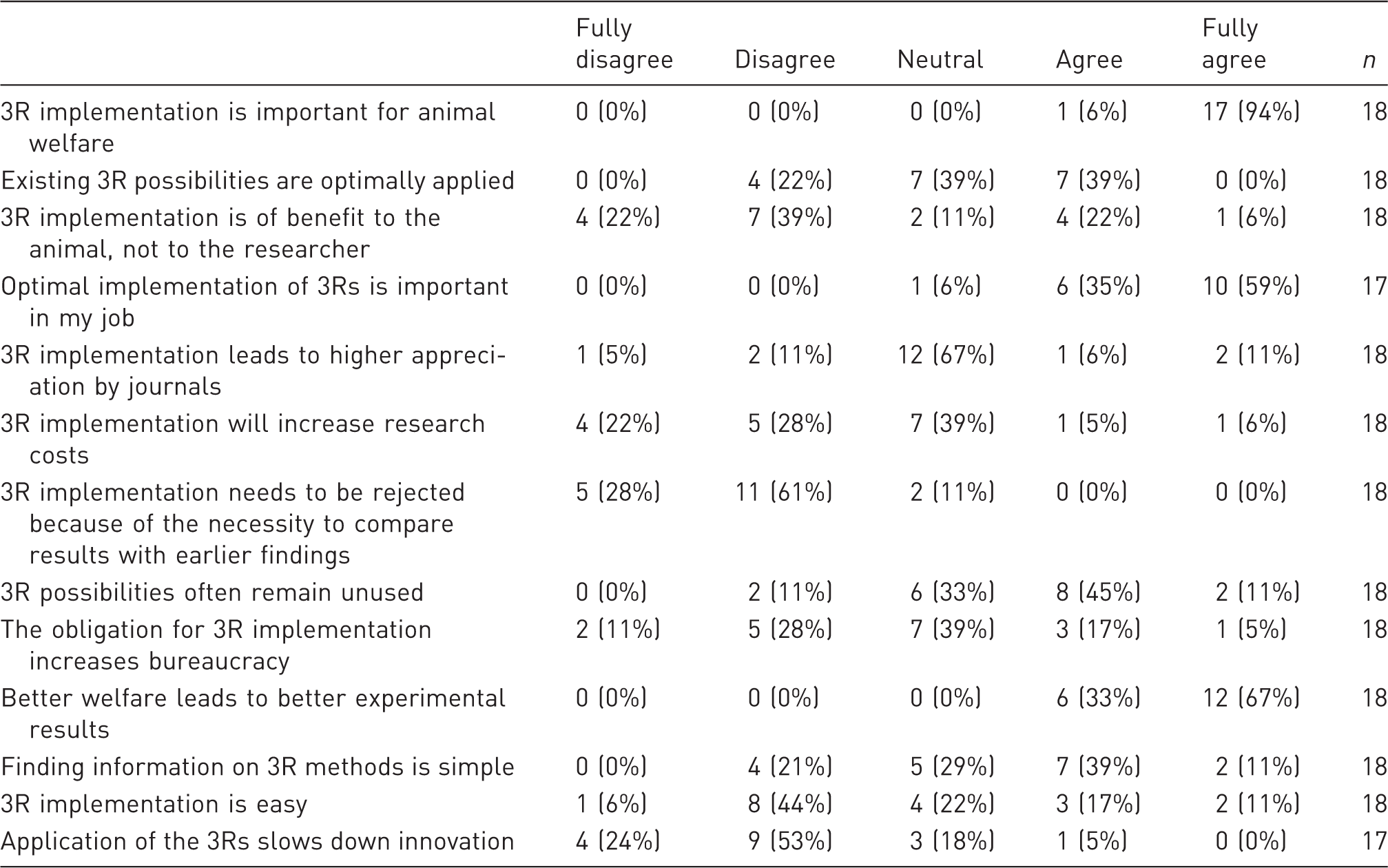
Acceptance of the concept of replacement, refinement, and reduction (the 3Rs) and the need for their implementation is widespread in the research community, and is also backed by local governance requirements in many key jurisdictions. Yet concerns about underutilization of these concepts and practices remain. From a survey of animal welfare officers (AWOs) in Australia, the attitudes to, and the adoption of, 3Rs in Australian public universities is explored. The survey finds that Australian AWOs have considerable concerns about 3R uptake, with 44% agreeing that ‘3R possibilities often remain unused’. At the same time, these officers see access to relevant information, and the implementation of the 3Rs, as comparatively easy. Thus, a problem of under-implementation appears to exist. A number of explanations for this are put forward. AWOs are comparatively junior professional staff in the Australian university system, constrained from going beyond basic regulative functions and to the training and promotion of the 3Rs. When compared with their international counterparts, Australian AWOs spend less time providing information and advice on the 3Rs to researchers working in their institutions. Significantly, while AWOs tend to see themselves as being well supported institutionally, they have comparatively poor relationships with active researchers who are using animal models. The implications of this are examined, with recommendations for research institutions, as well as for further research.
As have many countries, Australia has adopted formal positions that promote the development of scientific research which are in line with the existing 3R (replacement, refinement, and reduction) precepts and methods. The Australian code for the care and use of animals for scientific purposes (8th ed, 2013) (‘the Code’) states, as its first principle, that ‘Respect for animals must underpin all decisions and actions involving the care and use of animals for scientific purposes. This respect is demonstrated by … (v) applying Replacement, Reduction and Refinement (the 3Rs) at all stages of animal care and use’. 1 Adherence to the Code is a prerequisite for public funding from the National Health and Medical Research Council of the Australian Research Council. This national government agency provides most research funding to Australian universities, 2 which makes the Code a significant governance instrument in the welfare of research animals in Australia.
Irrespective of this requirement, the extent to which 3R concepts are implemented in practice is contested. The use of animals in research has been increasing overall, rather than declining. 3 Knight has argued that ‘resistance to the use of alternatives remains considerable in some governmental, academic, and commercial sectors’. 4 The origins of this resistance are various, and include perceptions about the necessity for animal models to ensure effective research (however defined), institutional pressures to use animal models as a better guarantee of research funding outcomes, 5 and anthropological factors in the formation of researcher identities and social processes that lead to the weeding out of conscientious objectors from professional practice. 6
By contrast, a number of factors are encouraging the uptake and implementation of state-of-the-art techniques for the minimization of animal suffering in research. These include developments within various scientific disciplines leading to refinements in research practice, laboratory and related professional organizations which promote improvements in animal welfare within the broader context (the Australian and New Zealand Council for the Care of Animals in Research and Teaching [ANZCCART]; and the Australian and New Zealand Laboratory Animal Association [ANZLAA]), as well as advocacy from organizations either opposed to the use of animals in research (for example, Humane Research Australia) or which promote technologies and methodologies that dispense with the need for animal models. In the latter category, Australia is home to the Medical Advances Without Animals (MAWA) Trust, a charitable foundation that supports researchers who develop and employ techniques that replace animals in the research process.
In addition to these sources of information, training, and advocacy, the Code itself requires the formation of institutional mechanisms within animal research facilities that oversee ethics and advance 3R adoption (section 2.1.5). These include the appointment of senior administrative staff, the formation of animal ethics committees (AECs), resourcing, training and promotion, and ‘considering the appointment of an officer with veterinary or other appropriate qualifications, who is authorized by the institution to ensure that activities proceed in compliance with the Code and the decisions of the AEC’ [italics added for emphasis]. Such an authorized officer tends to be personified in the role of the animal welfare officer (AWO). AWOs tend to be the key staff in the administration of Code compliance within the Australian higher education sector. However, as is indicated in the qualifier ‘considering’, the exact composition and focus of this role is more variable in Australia than in other jurisdictions. This is the result of both a preference for (i.e. a meta-policy of) self-regulation and Australian federalism. Animal cruelty legislation comes predominantly under the purview of state and territory governments, leading to a wider range of variability in governing frameworks than might be expected in a country of the population size of Australia. Thus, while the role of Australian AWOs has been compared with that undertaken by named veterinary surgeons (NVSs) in the UK, 7 there are considerable differences in practice, stemming from the lack of a consistent legislative basis for these staff. AWO roles, remuneration, and professionals tend to be far more variable than those of NVSs.
At present, there is limited knowledge of how AWOs operate and promote their work in Australia. Understanding of the work of AWOs is a critical component in understanding the effectiveness of the Code, as well as in understanding how the propagation of the principles and technologies of the 3Rs – now over 50 years old – are operating in key research contexts in Australia. In order to address some of these questions, a survey of Australian AWOs was undertaken, based on comparative work carried out in Europe. The objective of this survey is to better understand the work and working conditions of these key proponents of animal welfare, and to provide insight into the practical implication of the 3Rs in Australia.
Materials and methods
From October to December 2014, a national survey was conducted among AWOs in Australia, in order to study their views on the implications of 3R knowledge, institutional supports for their work with welfare standards, and perceptions of threats to researchers from animal activists. A paper-based survey was developed and distributed to those Australian AWOs working at public universities for whom contact information could be obtained.
Questionnaire design
The questionnaire was developed by the author, and was based on an earlier instrument, namely a previously-conducted survey and interview research of Dutch AWOs published in 2009 8 and which had been subjected to peer review. The original instrument was modified: (1) by being simplified and by the addition of space for inclusion of a wider range of topics, and (2) by the inclusion of new questions. The resulting hybrid survey was descriptive in nature, and included both qualitative and quantitative questions. There was also room for additional unstructured comments. A former manager of animal research at a major Australian university, who continues to consult on research into animal welfare, provided input into the development of this modified instrument. A copy of the instrument can be requested from the author.
Questionnaire distribution
Because the modified instrument asked candid questions about the AWOs’ relationships within their workplace and with their employer, an anonymous paper-based instrument was sent directly to the sampled AWOs, whereas the original Dutch instrument was distributed via email. The instrument and research strategy had been reviewed and approved by the Human Research Ethics Committee of the University of Sydney (protocol number 2014/798).
Data analysis
By design, no personally-identifiable information was collected with the paper instrument. The results were analysed per question. Quantitative analysis was undertaken using LibreOffice software (The Document Foundation, Berlin, Germany). Given the small population and sample, additional descriptive statistics are included to indicate the characteristics of the sample distribution. Where possible, comparisons with the 2009 Dutch results are included. A survey of NVSs conducted in the late 1990s was identified, but this was considered to be too old to allow effective comparison. 9
Results
Response
A mailing list of 39 individual AWOs working at Australian universities was prepared. These individuals were operating under a variety of titles, ranks, and employment relationships, and the title ‘Animal Welfare Officer’ is not a standard designator in Australia. The identification of individuals who are tasked with the AWO role is not always easy, reflecting a decision of some institutions in Australia to opt for ‘security through obscurity’. 10 Eighteen responses were received (46%) and were subjected to analysis. The locations of these respondents were as follows: capital city metropolitan (14, 78%), other metropolitan city (2, 12%), and regional city (1, 5%). Non-response to this question was 5% (1). This reflects the general distribution of universities in Australia. Responses came from the majority of Australian States.
Characteristics of respondents
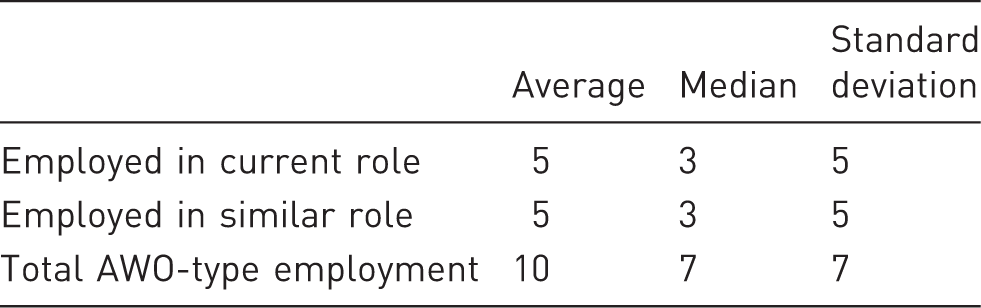
Years of employment experience of animal welfare officers (AWO) in Australia (n = 18).
Animal welfare officers’ ranked work activities in order of primacy of activity.
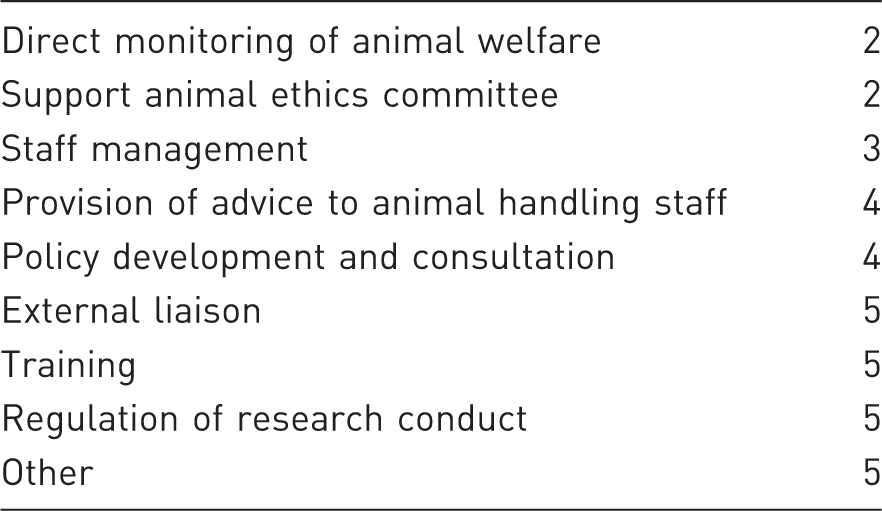
Low = most frequent on a nine-item ranking scale (n = 18).
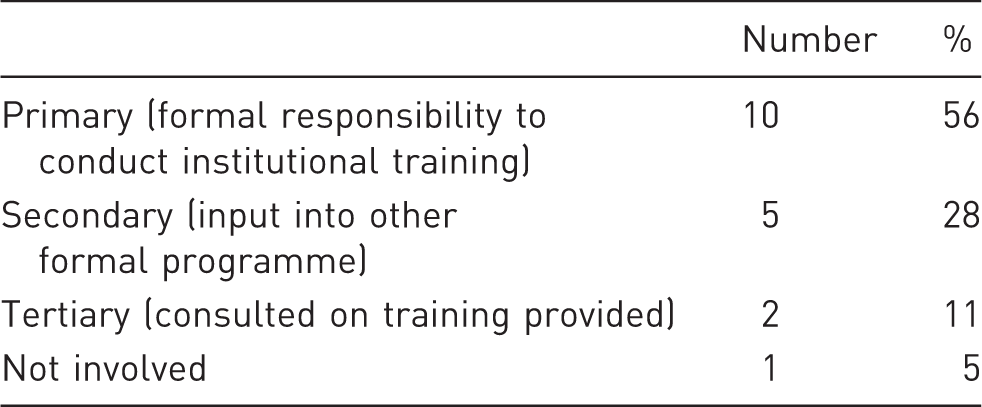
Animal welfare officers’ degree of responsibility for provision of welfare training to staff at their employing university (n = 18).
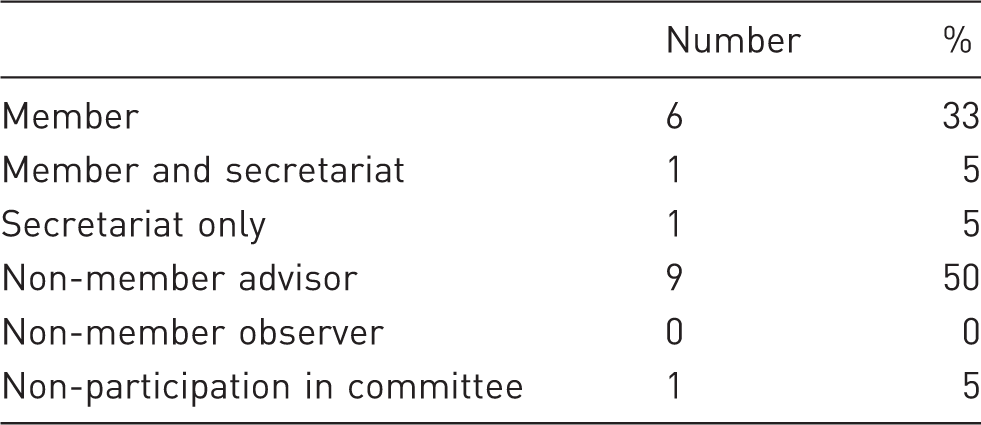
Relationship of animal welfare officers with institutional animal ethics committee (n = 18).
Types of animals used in Australian university research
Species used in research during the last three years by animal welfare officers’ employing University (n = 18).
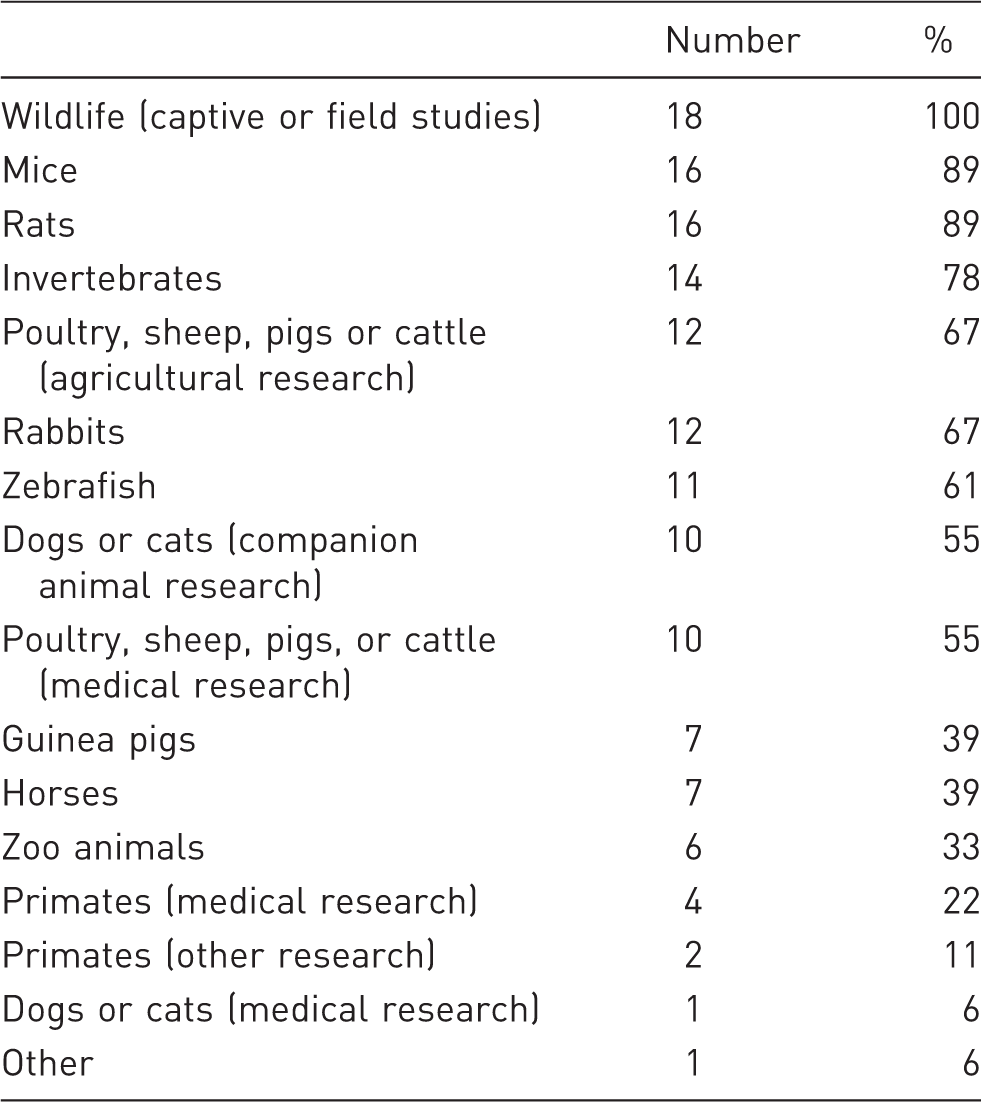
This leads to a number of observations. The tendency of critics in the Australian context to focus on medical research and higher primates 13 does not necessarily correspond to the research most commonly undertaken and which uses animals. To some extent this reflects a general tendency for information about the use (and ultimate research outcomes) of animal models in Australian universities to be concealed from the wider public, irrespective of ongoing calls for increased transparency. 14 To some extent this may be changing: in 2015–2016 reports on ‘waste’ (surplus and non-competitive) greyhounds from the racing industry in parts of Australia led to a subsequent focus on the large numbers of these dogs going into medical research. 15 However, a systematic understanding of the diversity of animals-in-use, and the uses to which they are put, remains elusive. Significantly for the AWOs however, the large diversity highlighted in Table 5, combined with their small organizational capacity, may indicate likely difficulties in effective oversight and training.
Views on the 3R principles
General view on importance of, and implications of, the 3Rs (replacement, refinement, and reduction) by animal welfare officers.
Involvement in research implementation of 3Rs
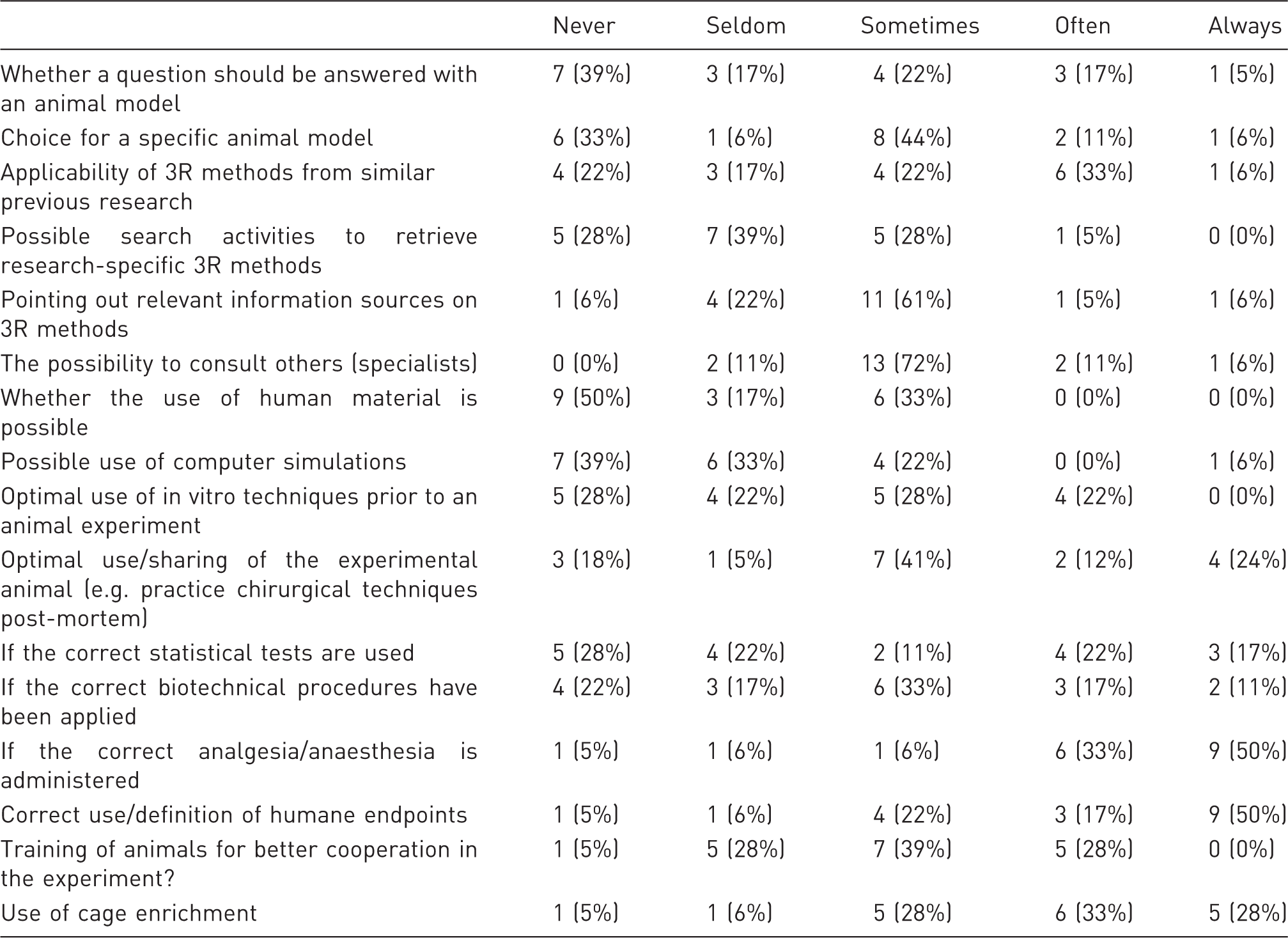
Frequency animal welfare officers provide advice on specific elements within the 3Rs (replacement, refinement, and reduction) (n = 18).
Institutional characteristics
Support for the animal welfare officer role from key stakeholders.
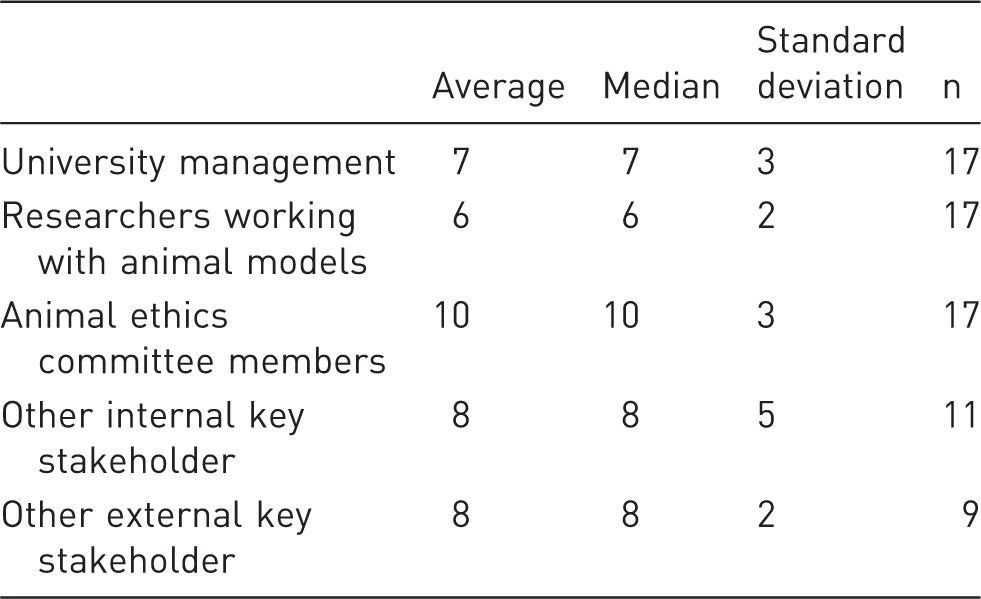
Likert scale: 1 = extreme hostility to role, 5 = neutral: neither support nor hostile, 10 = maximum support for the role.
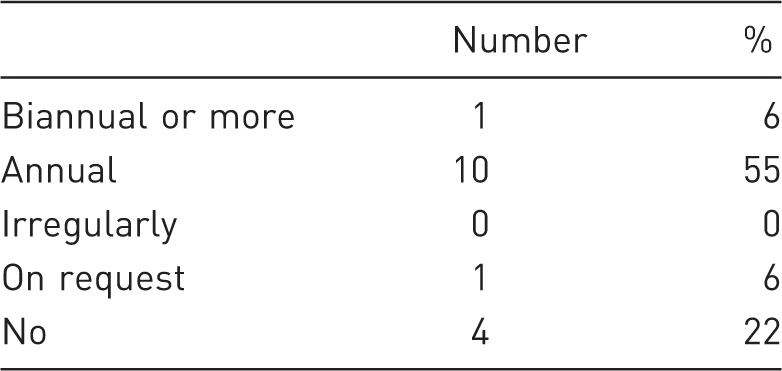
Provision of training (allocation of time, travel and funding) to the animal welfare officers’ role by university employer (n = 18).
Importantly, in the understanding of the policy-implementation gap, it appears that AWOs had the poorest relationship with researchers who directly used animal models in their research. This was a key observation, and helped explain (or may have been the result of) lower levels of engagement with researchers in the provision of advice, as discussed above. The question of causality here is important, and triangulated research with researchers, management, and AWOs is needed.
Interestingly, the AWOs’ involvement with the regulation and monitoring of the use of animals in teaching may also reflect an area of significant disconnection between 3R advisors and academic practice. When asked if their institution had a conscientious objection policy for students, 10 (56%) reported ‘Yes’, two (11%) ‘No’, and six (33%) ‘Did not know’ (n = 18). This is an interesting result given that animals are used in teaching across Australian universities. Given that only one question focused on teaching, further investigation on this topic is required.
Perception of risks from activists
In addition to the examination of attitudes to, and the implementation of, the 3R concepts and techniques, the 2014 survey instrument also examined questions of risk perception by AWOs, and their assessment of risk perception among their colleagues. This set of questions was introduced into the survey instrument in response to anecdotal evidence that Australian researchers using animal models experience fear of animal activist protest and direct-action activities, particularly of threats or violence directed towards the researchers. Certainly, researchers operating in the UK 16 and the USA 17 have recently expressed significant concerns about their safety, and about their capacity to engage in research using animal models in the face of a number of high-profile militant actions by anti-vivisectionists.
Reported risk perception of key stakeholders.
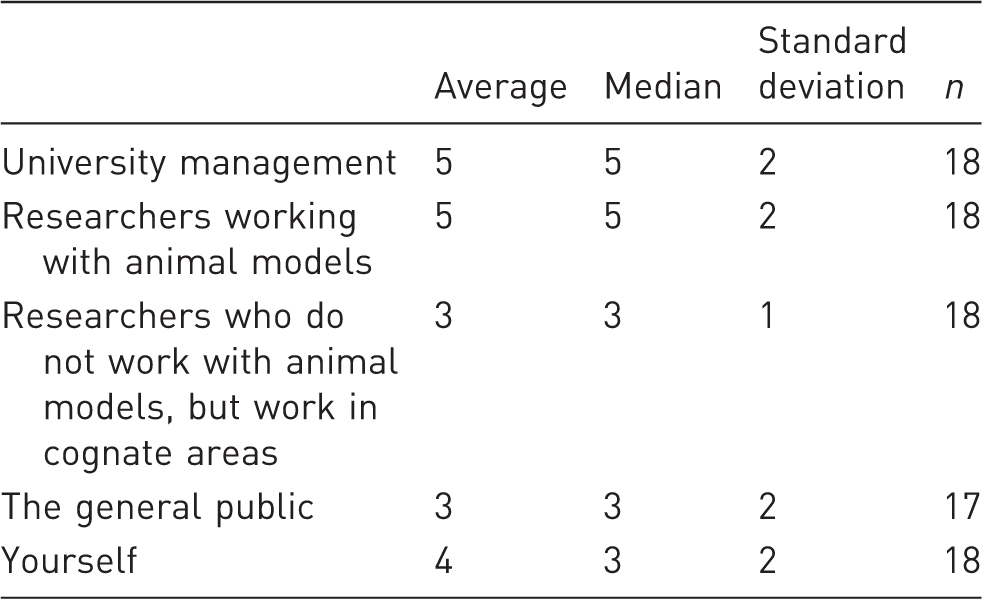
Likert scale: 1 = negligible, 3 = minor, 5 = moderate, 7 = serious, 9 = extremely serious.
Given that fear is a subjective concept, it is difficult to determine if these levels of risk are accurate. However, published research indicates that Australia, when ranked with comparative jurisdictions, faces comparatively low levels of illegal direct action against animal-using industry of all kinds (and not specifically animal research). 5 Based on an analysis of activist media, Australia has been identified as the 19th highest nation for self-reported direct action events in the world. However, compared with global ‘leaders’, such as the USA and particularly the UK, the number of incidents reported in Australia is quite low in both relative and absolute terms. Australian animal activists report less than 5% of the number of direct-action events than their counterparts in the UK. This should not be too surprising, as Australia – with the significant exception of relations with its indigenous population – does not have a violent political culture.
Given the data presented in Table 9, it would appear that AWOs may have higher perceptions of risk than the political context of Australian animal activism would warrant. Direct-action campaigns aimed at named individual researchers in Australia were last reported in the mid- to late-1980s. 18 However, it is important to recognize that risk perception may not be contained nationally, but may move through professional networks. Therefore this level of risk perception may best be explained by Scherer and Cho’s social network contagion theory of risk perception, 19 and may be a function of information about experiences within the UK and USA being communicated through professional and social information channels into the Australian context, rather than a reflection of an accurate perception of risk.
Discussion
Reporting on this small survey provides some interesting observations about organizational commitment to, and the implementation of, the 3Rs. Australian AWOs appear to have considerable commitment to these principles, but areas of underperformance are identified as a key finding from the survey results.
The instrument permits a number of drivers to be identified that may be relevant in explaining the gap between desire and performance, which are located in a number of different parts of the wider research context. These include the role descriptions of AWOs, the orientation of these staff towards regulatory behaviour over research support, institutional diversity and the AWOs’ under-capacity, and comparatively tepid relationships between AWOs and the researchers who work (research and teach) with or on animals.
It would appear that the emphasis of AWOs on the research ethics committee process may create strains with the implementation of the 3Rs through education and internal consulting. In brief, there is a focus on regulation over voluntary attitudinal and behavioural changes. It is recognized that organizations and professionals tasked with both regulatory and educative functions experience tensions in performing these dual roles, and subtle institutional design is needed to ensure that attitudinal change and education are supported by accountability measures, as opposed to encouraging oppositional or tokenistic responses. 20 This may require a 3R centric view of ethics implementation and management, where AWOs are only one component in a self-supporting system of ethical practice. Interestingly, in terms of its own standards regulation (educational standards), the higher education sector in Australia has recognized that regulatory and performance improvement functions may have problems when combined into a unified agency. 21 So these lessons may have already been learned by university management.
There is also literature that characterizes universities as ‘small communities’ and highlights tensions that professionals experience in these settings, where they have both service provision and legislatively mandated regulatory functions. 22 AWOs appear to have experiences similar to those of university-based freedom of information (FOI) officers with regards to variable support from management, and their relation with other university staff with whom they have educative and regulatory relationships. 23 Therefore, drawing lessons from the wider body of FOI professionals may be appropriate for this small group of staff, with their unique but comparable roles.
Australian–Dutch comparisons
This leads to the question about how Australian AWOs compare with their Dutch counterparts. This is a relevant question, considering researchers who use animals exist in multiple regulatory communities: their local governance context (regional, national and [as in Europe] supra-national) and the global community of scholars in particular academic disciplines.
Similarities and differences with The Netherlands findings are interesting. Central to the question of 3R implementation are two differences: Australian AWOs are more likely than their Dutch counterparts to agree that the 3Rs are optimally applied (39% compared with 27%) and less likely to agree that 3R possibilities often remain unused (44% compared with 60%). This may be because Australian respondents believe more strongly that accessing information about 3R is simple (50%), and – perhaps correspondingly – are more likely than their Dutch counterparts to see 3R implementation as ‘easy’ (28%).
Inhibiting 3R adoption in the Australian context, Australian AWOs disagree considerably less-strongly with the proposition that ‘3R implementation is of benefit to the animal, not to the researcher’ than their Dutch counterparts. This indicates that Australian AWOs are more likely to accept a view that there is a trade-off between competing human and non-human animal interests in the adoption of the 3Rs. In addition, they are more likely than their Dutch peers to be ambivalent to the proposition that ‘3R implementation leads to higher appreciation by journals’, a significant problem given the key role that publishing plays in defining researchers’ professional performance in the Australian context of university managerialism.
Australian AWOs are considerably less likely to be involved in providing advice about the correct use of statistical tests and biotechnical procedures than their Dutch counterparts. Reflecting the differences in attitudes about access to relevant information, Dutch AWOs are more likely to suggest ‘possible search activities to retrieve research-specific 3R methods’ but less likely to ‘point out relevant information sources on 3R methods’ in equal measure.
In terms of the overall quantum of advice provided to researchers, Australian AWOs appear less engaged than their Dutch counterparts with their institutional researchers. Converting the results reported in Table 7 into 100 point scale (0 = never consulted across these 16 items, 100 = always consulted across these 16 items), Australian AWOs score 46 compared with the Dutch 56. While there is a lack of comparative data from the original Dutch study, it may appear that the Australian AWOs spend more time in compliance and bureaucratic activities than working with their institutional research community directly in the development and implementation of the 3Rs in projects.
Study design limitations
It must be acknowledged that the survey instrument provides only a partial view: that of the AWO. Therefore to develop a greater understanding of the veracity of the observations made in this paper, triangulated studies of the ethics–research–management context are required. Significantly, the attitudes of researchers who work with animal models in Australia would need to be explored in considerable detail, partially to identify the realistic likelihood that increased AWO capacity would flow through into practice if it were provided institutionally.
Footnotes
Acknowledgements
The author would like to thank Judith van Luijk, Yvonne Cuijpers, Lilian van der Vaart, Tineke Coenen de Roo, Marlies Leenaars and Merel Ritskes-Hoitinga for the Dutch instrument adapted for this study; the Australian respondents and informants; and Malcolm France for his input into the research design and instrument. This paper has been revised based on the kind input of the editorial and review team, for which the author is very grateful.
Declaration of Conflicting Interests
The author(s) declared no potential conflicts of interest with respect to the research, authorship, and/or publication of this article.
Funding
The author(s) received no financial support for the research, authorship, and/or publication of this article.