




Abstract
Scholars and policymakers have consistently argued for the importance of coherence in teacher education (TE). Despite this attention to coherence, challenges of fragmentation and disconnect remain, and little research exists on how study program leaders (SPLs) in TE work to achieve coherence. This article explores how SPLs in two selected TE institutions in Norway perceive coherence and what strategies they use to create coherent TE programs. The two case studies use an ethnographic approach and report on repeated qualitative interviews with seven SPLs, supported by short-term observations over a period of one academic year. The analysis contributes to the small but emergent literature on how SPLs conceptualize coherence and identifies six strategies that SPLs use to navigate persistent barriers within a diverse and autonomous faculty in their ongoing efforts to strengthen coherence in TE programs. Implications for study program leadership in TE are discussed.
Keywords
Introduction
A recurrent problem in teacher education (TE) is its fragmentation and disconnect from practice, both internationally (Hammerness et al., 2020, 2023) and in Norway (Advisory Panel for Teacher Education, 2020; Evaluation Group for Teacher Education Reform, 2015; National Council for Accreditation of Teacher Education [NOKUT], 2006; Steinnes & Haug, 2019). TE programs are complex organizations with faculty members from different academic traditions and various practical experiences, and some programs may include partners from collaborating schools with less academic experience (Lunenberg et al., 2014; Smith, 2022). Research indicates divergent views of what knowledge is required across the practical and theoretical components of TE programs (Becher, 2022) and of what being a teacher-educator entails (Ulvik & Smith, 2016).
Thus, scholars and policymakers have long argued for the importance of coherence in TE (Floden et al., 2021; Hammerness et al., 2020). The concept of coherence involves creating TE programs that promote learning opportunities that are aligned and constitute a coherent whole (Floden et al., 2021). Concepts such as a common vision (Tamir, 2014) and structural and conceptual coherence (Feiman-Nemser, 1990; Hammerness, 2006) are often used to identify features of coherence and strong TE programs. Thus, national authorities and TE programs globally have enacted reforms to target coherence in TE (Goh et al., 2020; Hammerness, 2006; Hammerness et al., 2020), which is also the case in Norway (Jenset et al., in press; Ministry of Education and Research, 2017).
Despite this attention to coherence, the challenges of fragmentation and disconnect remain. Researchers have recently emphasized the need to view coherence as a dynamic process rather than as an end product in itself (Gagné et al., 2013; Honig & Hatch, 2004; Richmond et al., 2019). Approaching coherence as a process underscores the importance of continuous work and collaboration within and across faculties (Floden et al., 2021; Levine et al., 2023; Richmond et al., 2019), which implies that study program leaders 1 (SPLs) might be crucial in fostering coherence in TE programs. However, research on how SPLs in TE work to achieve coherence remains scant (Cavanna et al., 2021; Hermansen, 2020). This study fills this gap by investigating two related research questions (RQs):
This study is part of a larger case study of two TE institutions in Norway and is inspired by institutional ethnography (D. E. Smith et al., 2022). The first author followed the institutions over a period of 10 months (approximately one academic year) in short-term ethnographic fieldwork (Pink & Morgan, 2013). Seven former and current SPLs participated in the study. This paper primarily reports on interview data and presents observation data as secondary data to support the analyses.
Coherence and Study Program Leadership: A Conceptual Framework
What Is Coherence, and Why Does It Matter for Teacher Candidate Learning?
Scholars have long advocated for the importance of coherence in TE, and research has increasingly contributed to unpacking the concept (Grossman et al., 2008). For instance, scholars have highlighted that different stakeholders within a program must share a common understanding of teaching and learning or hold a shared vision for what a fully trained teacher should be and be able to do (Feiman-Nemser, 2001; Hammerness, 2013, 2012). The term “conceptual coherence” applies when a shared vision permeates a program and faculty members agree on central concepts across the program (Feiman-Nemser, 1990; Hammerness, 2006). Conceptual coherence across various parts of a program can contribute to “program coherence” (Floden et al., 2021; Hammerness et al., 2020) or “structural coherence” (Feiman-Nemser, 1990; Hammerness, 2006; Hammerness et al., 2020) when constituent parts of the program are aligned and create a coherent whole. This situation implies that the different courses and learning activities across the program build upon and relate to each other and that faculty are knowledgeable about what happens in different parts of the program. Hammerness et al. (2023) argued that coherence implies going beyond the campus site of TE and acknowledging that candidates learn from the faculty of the collaborating schools, as well as from the children and parents they meet in these schools. Importantly, coherence does not mean that TE programs should be totally streamlined and lack room for exploration and conflicting ideas (Buchmann & Floden, 1991; Darling-Hammond & Bransford, 2005; Floden et al., 2021).
Researchers increasingly point to the importance of recognizing coherence as perceived by teacher candidates (Canrinus et al., 2017; Hatlevik, 2014). Planning for a coherent program structure and aligned learning opportunities is important, but a program is coherent only when the candidates perceive it as such. Further, a coherent program helps new teachers develop a deep understanding of what good teaching looks like and enables candidates to understand the essential ideas of that vision because it introduces a set of aligned foundational ideas that undergird that vision (Hammerness, 2006). Coherence and a better connection between theory and practice in TE can affect teacher candidates’ learning outcomes (Floden et al., 2021; Hatlevik, 2014; Smeby & Heggen, 2014). Hammerness et al. (2023) argued for the importance of coherence for equitable teacher learning. Further, coherent TE programs can improve teacher candidates’ teaching practice and their students’ learning (Boyd et al., 2009). Importantly, studies have indicated that teacher candidates who experience coherent TE programs tend to stay longer in their professions (Tamir, 2014).
Research on Strategies Used by Educational Leadership to Create Coherence in TE
Acknowledging the importance of coherence for teacher candidate learning indicates the importance of SPLs and the strategies they use to create coherence. TE institutions are generally characterized by a lack of formal or decision-making authority, combined with diverse and autonomous faculty members, strong national regulations, and detailed steering documents (Heggen, 2010; Munthe et al., 2011; Stensaker et al., 2019). However, we identified only three studies within the context of TE that examined leadership in TE. Levine et al. (2023) noted that creating coherence demands working with inherently conflicting views and understandings within the faculty to redesign the process of TE. As such, they argued for “pathway flexibility” (p. 13) within the program design to provide room for individual faculty members to adapt redesign changes to their own courses. In one cross-case study, Cavanna et al. (2021) highlighted the importance of program directors in (a) facilitating the development of a clear vision of teaching and learning in their programs, (b) communicating that vision across all actors in the program, and (c) making the vision permeate the constituent parts of the program. They argued that TE instructors need structured support to create aligned learning experiences for their teacher candidates. For instance, they require frequent opportunities for discussions with their program director, other faculty, and school-based colleagues—as well as more formal communication and coordination—to align with the program’s vision (Cavanna et al., 2021). Hermansen (2020) noted that SPLs must pay attention to creating a common vision among faculty as well as work on broader contextual issues, including how the vision aligns with “political interests, epistemic orientations and organizational processes, [and the program’s] cultural and historical context” (p. 950). Hermansen (2020) further illustrated how SPLs work toward coherence by restructuring courses, recommending pedagogical approaches, and fostering teacher-educator identities among all involved faculty. In that study, SPLs used documents, guidelines, and common meetings in this process. The program directors pursued coherence by transforming advice and recommendations into formal decisions, which might imply working with timetables across institutions or working for institutional backing by “lobbying a dean, a department head or the university rector” (Hermansen, 2020, p. 946).
On an organizational level, Fullan and Quinn (2015) developed a framework for coherence for school leaders that emphasizes four essential components: (a) focusing direction (i.e., a few meaningful goals that have an impact); (b) cultivating collaborative cultures (i.e., creating a culture of growth, and creating opportunities to learn for all to ensure systematic and sustainable changes); (c) deepening learning (i.e., focusing on student learning—and working on effective teaching practices); and (d) securing accountability (i.e., creating cultures of internal accountability and relating to external accountability). This framework on coherence relates well to the existing research on coherence in TE and might point to useful strategies for SPL in creating coherent TE programs.
Based on the aforementioned findings, our conceptual framework highlights the importance of coherence for teacher candidate learning and the role that SPLs can play in fostering this coherence (see Figure 1).
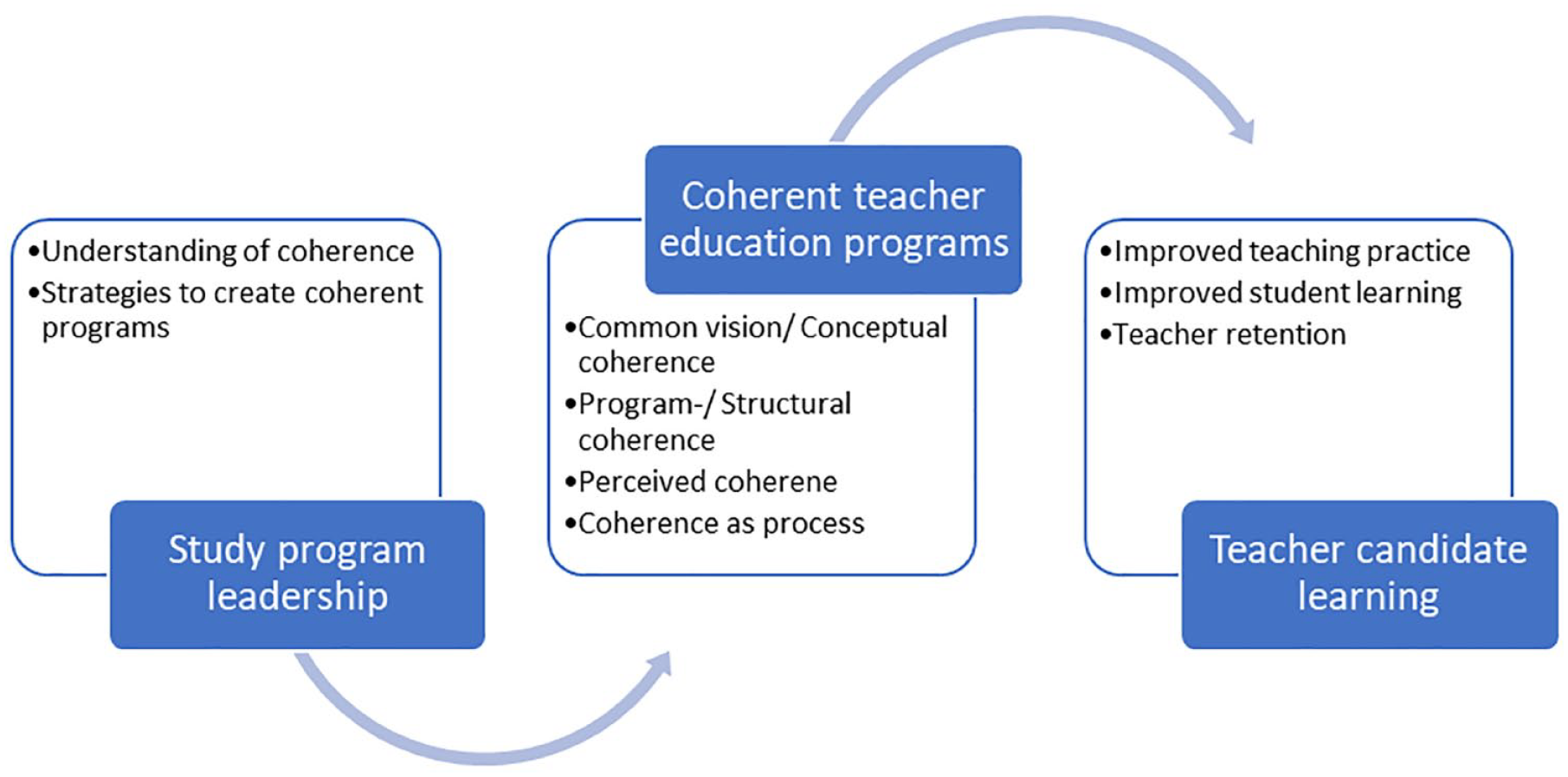
Conceptual framework.
The Norwegian TE context
Norway offers four main pathways for becoming a teacher: a 1-year add-on program following a master’s degree, a 5-year integrated program for teaching levels 8 to 13, and two 5-year integrated primary and lower secondary TE, one for grades 1-7 and one for grades 5-10. When discussing TE in this article, we focus on the two 5-year integrated primary and lower secondary programs, and we do not distinguish between them.
Against the backdrop of national and international critiques of TE, the Norwegian context is particularly interesting for researching TE, as Norway has prioritized TE over the last few decades. Starting in 2017, all Norwegian teacher candidates must undergo a master’s program, and a new national curriculum for TE was introduced at all levels (Ministry of Education and Research, 2016a, 2016b). Primary and lower secondary TE in Norway transitioned to general TE in 2006, and since then, two reforms have been enacted: the TE reform in 2010 and the transition to a 5-year integrated master’s education in 2017. Both reforms emphasize creating coherence between and within subjects, between school subjects and pedagogy, and between the TE institutions and the field of practice. The latest reform also emphasizes the importance of profession-oriented and research-based education with progression across the 5 years (Ministry of Education and Research, 2016a, 2016b). The national curriculum for TE also states that teacher candidates should address interdisciplinary topics, such as Sami culture and rights and research and development (R&D) competence (Ministry of Education and Research, 2016a, 2016b).
Further, over the past decade, Norwegian TE has been influenced by structural reforms in the university and university college sectors (Ministry of Education and Research, 2014-2015, 2016-2017), where several higher education institutions have merged to create fewer institutions. Thus, many TE institutions are organized across previous institutions and geographical campuses. Some researchers argue that Norwegian TE is among the higher education programs most influenced by external interests and politics (Elstad, 2020).
Norway has also pursued additional national initiatives and an increase in resources allocated to the sector, indicating an emphasis on Norwegian TE (Munthe et al., 2011; NOKUT, 2006; Østern, 2016). For instance, a center of excellence in TE (ProTed) was established in 2010 (Lund et al., 2015), and there is a national emphasis on creating effective partnerships with schools (Lund & Eriksen, 2016; Rørnes, 2015). Further, there are no designated programs for becoming a teacher-educator or an SPL in Norway, as is also mostly the case internationally (Kelchtermans et al., 2018). A graduate school for research in TE was indeed established to increase the quality of Norwegian TE (Østern, 2016; K. Smith, 2022), but research on Norwegian TE nevertheless corroborates international research in that the programs include several different actors from many backgrounds and epistemological standings (Smeby & Heggen, 2014), and teacher-educators and SPLs take on a variety of roles (Lunenberg et al., 2014; K. Smith, 2022)—as also indicated in our sample below.
Methods
Research Design and Sampling
Thirteen institutions in Norway provide primary and lower secondary TE for grades 1-7 and 5-10. The role and mandate of SPLs in TE and how the institutions are organized differ across the institutions. This study focused on two strategically sampled case institutions that were followed by the first author over a period of 10 months (approximately 1 academic year). The study design was inspired by institutional ethnography and short-term ethnographic fieldwork (Pink & Morgan, 2013), and the overall study included a range of data sources, such as a national screening (by survey or phone) of organizational and leadership structures across all 13 institutions; national and local document data (i.e., national curriculum for TE, local steering documents, meeting plans, role descriptions, and curriculum); observations; and interviews and logs (i.e., small, daily digital reports on SPLs’ use of time, etc.). This paper primarily reports on interview data, with observations presented as secondary data sources.
The two cases were chosen because they were central to the development of the new 5-year master’s program for TE in Norway and therefore were deemed interesting cases to study. The study participants were former (n = 4) and current (n = 3) SPLs in the two cases. 2 In both cases, the current SPLs were relatively new to their positions and had no direct staff responsibilities. However, the role of the SPLs varied between the two organizations, as described below.
Engstad University
Engstad University was organized as a pure matrix model (NOKUT, 2006)—that is, teacher training was spread across different departments on campus, and subjects were taught in these departments by faculty members who specialize in the discipline. The university had one coordinating unit that functioned as an administrative unit for all TE programs on campus (preschool, grades 1-7, 5-10, and 8-10). This unit primarily managed administrative tasks for all TE programs. Such tasks included supporting the SPLs, who had their own teams responsible for coordinating school practice and other student-related issues. The SPL also collaborated closely with program coordinators from different disciplines situated in other departments but with special responsibility for coordinating faculty who delivered content to the TE programs. The current SPL (Emma) was responsible for both programs, including grades 1-7 and 5-10, with approximately 800-900 candidates. Emma was recruited externally in a 4-year temporary position and had a master’s degree in leadership, as well as experience as a teacher and school leader in both primary and secondary schools. Emma had a full-time position as an SPL and had no teaching or time set to do research. As Emma was relatively new to this role, an additional SPL (Elisabeth) functioned as support for approximately half the position during the transition period.
Riverton University
As a result of structural reforms, Riverton University’s TE program was organized across two geographically separated campuses. Riverton was a smaller program than Engstad, with approximately 500-600 candidates and, until recently, used a department model, in which all subjects and faculty used to be organized in one unit (NOKUT, 2006). In this model, one of the former SPLs (Roger) had staff responsibility for all faculty and both programs in the department. Riverton had reorganized into a matrix model the year before data collection; thus, it was in transition, with long experience with the department model and fresh experience moving toward a matrix model. We also interviewed the assistant head of the department and the former SPL (Richard). After the reorganization, Riverton had one SPL for TE for grades 5-10 (Rosa), and another for grades 1-7 (Ruth). The SPL position took up 40% of the person’s time, with 40% teaching responsibility (courses in the TE program) and 20% research time. SPLs were also responsible for the decentralized TE program for grades 1-7 and 5-10, located on a separate campus a significant distance from the main campus. Both Rosa and Ruth were new to their positions as SPLs, and they were internally recruited in 4-year temporary positions. They both had previous teaching and leadership experience in different types of schools. Due to the reorganization from the department model to the matrix model, much of the management resources were delegated to the department heads and program coordinators within each department. Unlike the program coordinators at Engstad, those at Riverton had a more formal leadership position with staff responsibility in their departments, and they were responsible for the content delivered to all TE programs, not only for grades 1-7 and 5-10. The administrative support for SPLs was simultaneously centralized in a so-called top desk, a centralized administrative unit for all study programs on campus. The study program also had its own school practice coordinators, who collaborated closely with the SPLs.
Data Sources and Analyses
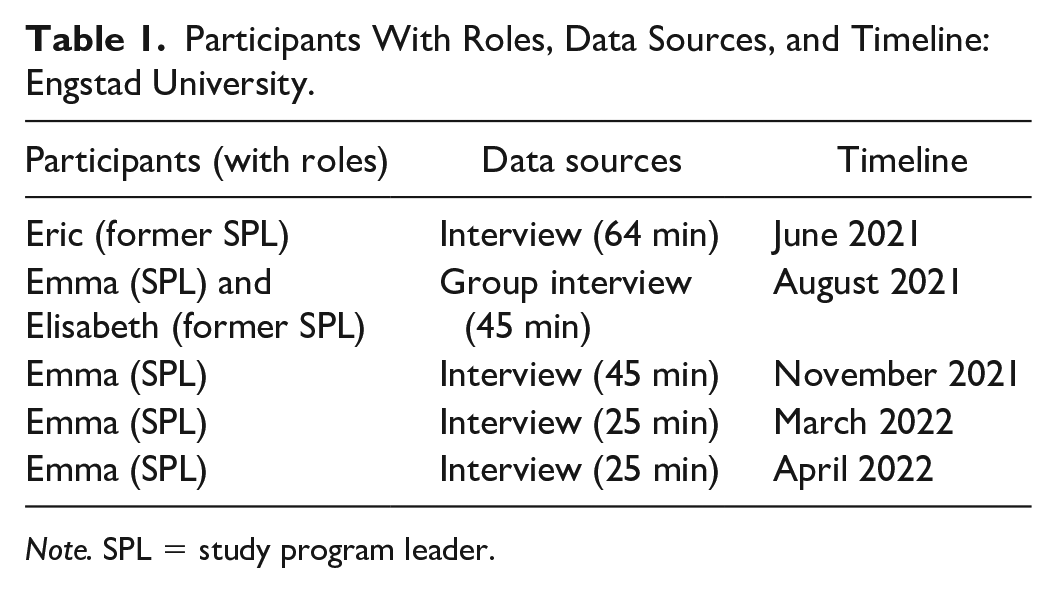
The range of data sources sampled in the overall case study provided a cumulative design (Aase & Fossåskaret, 2014; Yin, 2014) for the collection and analysis of the data reported in this paper. The investigations steadily developed based on immediately available data. This paper primarily reports on qualitative interview data with all seven participants. At Engstad University, five qualitative interviews were conducted with the former (Elisabeth and Eric) and current (Emma) SPLs (see Table 1).
Participants With Roles, Data Sources, and Timeline: Engstad University.
Note. SPL = study program leader.
Elisabeth and Emma worked as a team in a transition period; thus, the first interview was a group interview, as outlined in Table 1. The other four were individual interviews. One of the interviews was held with the former SPL (Eric), who had been in the position for 8 years before the present SPLs. The interviews lasted between 25 and 64 min, and all interviews were audio-recorded and transcribed. The quotes in this paper have been lightly edited for clarity in English.
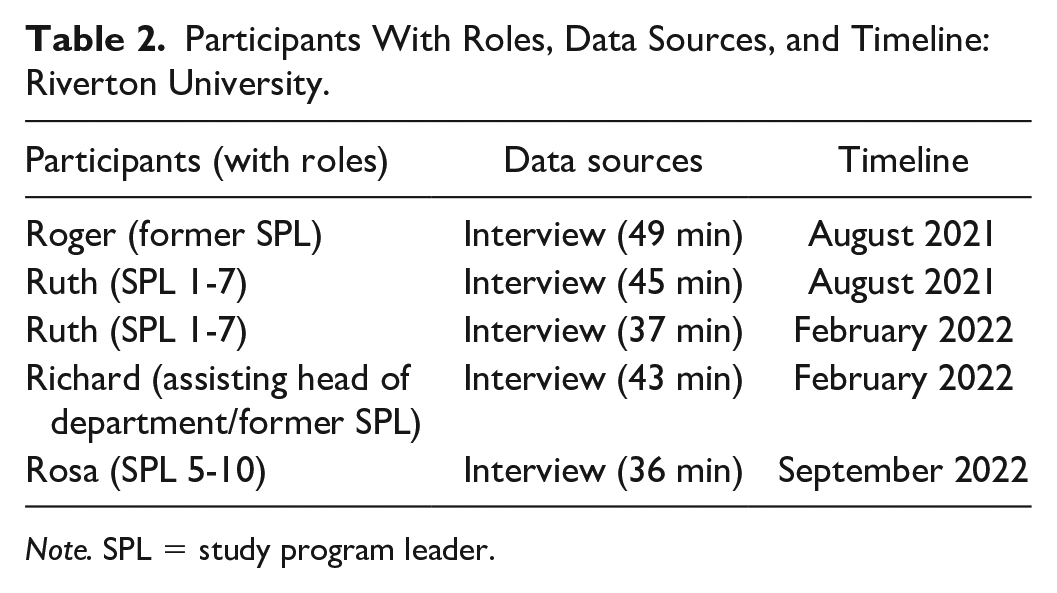
At Riverton University, we interviewed the two current SPLs (Ruth and Rosa), one of the former SPLs (Roger), and the present assisting head of the department (Richard, who was also formerly an SPL at the same institution) (see Table 2). Riverton had recently undergone significant organizational changes, and the current SPLs were relatively new to their roles.
Participants With Roles, Data Sources, and Timeline: Riverton University.
Note. SPL = study program leader.
As Table 2 shows, five qualitative interviews were conducted with former and current SPLs at Riverton University. All interviews lasted between 36 and 49 min, and all interviews were audio-recorded and transcribed. The interview guides were semi-structured and were initially informed by research on coherence and study program leadership, as outlined above, to examine how the SPLs conceptualized and worked to create coherence. Due to the cumulative design, the first interview guide was designed openly. Over time, however, the interviews were informed by findings from previous interviews, observational data, and logs. The interviews thus became increasingly narrow in scope.
For this specific study, we included observation data as secondary data sources to nuance our findings from the interview data (see Table 3).
Overview of Observation Data (Secondary Data).
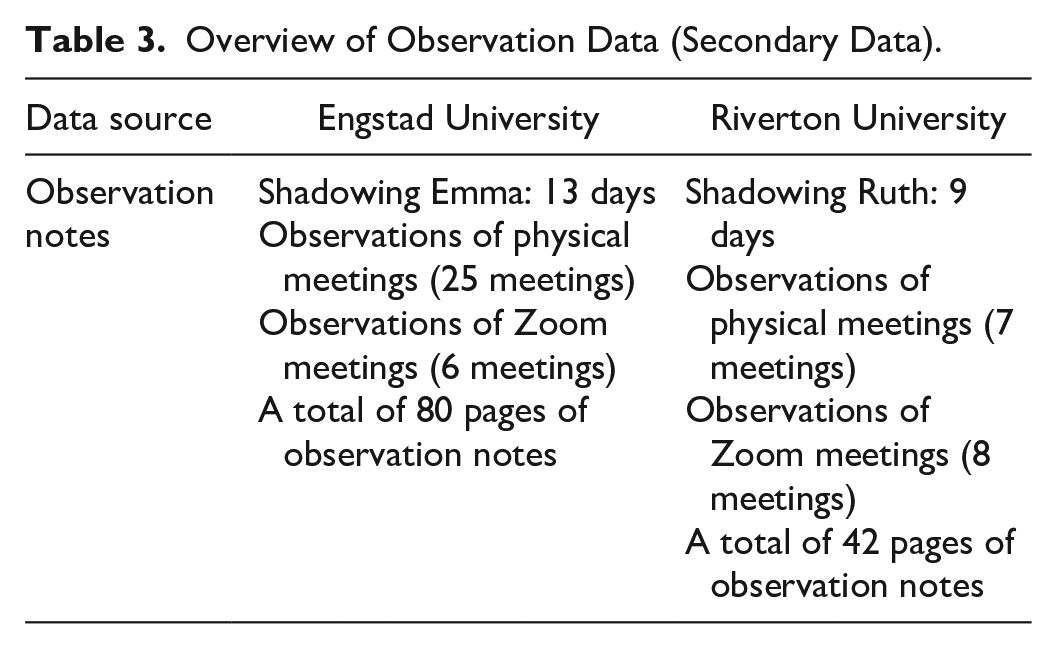
The observation notes were taken during the 10 months of shadowing the present SPLs and consisted of summary and conceptual notes (n = 122 pages) written directly after meetings or conversations with participants (n = 22 observation days in total). Shadowing at Riverton was limited and was somewhat characterized by a range of observations rather than shadowing. This was partly due to the COVID-19 pandemic, which affected the timing of site visits. The informants were thus partly preoccupied with the ongoing reorganization as well as starting the semester and were not as available as the SPL at Engstad. Thus, the amount of data differed slightly between the institutions.
Data Analyses
The recorded interviews were listened to several times and then transcribed and read multiple times before they were systematically analyzed. The analysis related to RQ1 was theory-driven, informed by the concepts from the research literature on coherence outlined above (perceived coherence, structural coherence, and conceptual coherence). First, all utterances from the former SPLs were analyzed to identify whether they provided information about their understanding of coherence. Second, we applied codes to indicate the types of coherence represented by the information. We did not need to create additional codes beyond the theoretically derived ones. As a final step, we looked across and within the two cases to identify similarities and differences in their understanding.
Given the scant knowledge in the literature about strategies applied by SPLs, we performed the analyses related to RQ2 inductively. First, we identified all instances that we deemed to be a strategy for creating coherence and assigned it an initial and data-driven code, for example, “Using the national curriculum.” Following a cumulative design (Aase & Fossåskaret, 2014), the accumulated knowledge from ongoing interviews and observations contributed to collapsing and evolving these initial codes in a stepwise deductive, inductive approach (Tjora, 2019), ending up with final codes such as “using steering documents as leverage to create a common vision,” for instance. Additional final codes are outlined in the Findings section. Finally, we probed the cases to identify their similarities and differences. All data were analyzed using the qualitative analysis software MAXQDA.
We checked our findings from the interview data with information from the observations. Thus, the secondary data were not analyzed as data sources in themselves but rather functioned to nuance and give more depth to our findings from the interview data. For instance, when analysis of the interview data pointed to the strategy of using steering documents, we searched across the observation data for evidence of the use of this strategy, and for information about what this strategy looked like. The observation data are shared as illustrative vignettes in the findings section.
Limitations
This study focuses on SPLs and their understanding of and work toward coherence. Thus, it sheds light on SPLs’ perspective rather than the perspective of teacher candidates or actors from collaborating schools. This is an important limitation of this study, as we, for instance, know the importance of aligning coursework and practice. Further, the first author’s background as a study program leader of TE gave him an insider perspective (Adler & Adler, 1987), with its associated benefits and drawbacks. We believe that this background provided access to the field and yielded openness from our participants, but his previous knowledge of the field also brought the danger of bias. We have sought to reduce this threat by extensively discussing interview guides, analyses, and conclusions.
Findings
SPLs’ Perceptions of Coherence
Regarding RQ1 and the SPLs’ perceptions of coherence, our findings indicate that the SPLs in both case institutions shared similar understandings of coherence and that their understandings accorded with the research literature on coherence outlined above, as elaborated below.
Asked to describe what coherence meant in TE, all the SPLs expressed that coherence should be seen from a teacher candidate’s perspective. One SPL described this perspective as creating “a common thread” throughout the whole program: They should experience coherence; that’s the most important thing for us. (. . .) That it’s not fragmented and divided, but that there’s a common thread, so they can look back after five years and see, “Okay, that’s why we did it, and now I understand the connection”—Emma, current SPL, Engstad.
The SPLs discussed this topic mostly related to the different courses on campus but also to the importance of alignment between their experiences during coursework on campus and their learning opportunities during school placements:
However, in relation to RQ2, they were quick to indicate organizing meetings as a strategy for contributing to this goal. Here, they also pointed to coherence as conceptual coherence, since meetings were a way to create a shared understanding, or vision, across the faculty. Discerning these two conceptualizations of coherence was often difficult since the conceptual and structural aspects of coherence are so intertwined. For instance, Roger at Riverton stated, “You have to sit together . . . to get a common understanding of what the education actually entails.”
Even though all SPLs emphasized the importance of meetings in creating a shared understanding in their programs, our findings indicate that most of the SPLs also acknowledged differences in backgrounds among faculty that could lead to various disagreements and challenges: There are people who have a mathematical education, the discipline, and are professors—but they’ve never set foot in a Norwegian school. So they bring other qualities into their work with the candidates. But it’s also important that they understand the kind of reality our candidates are entering and how they can best utilize their mathematical competence in schools—Elisabeth SPL support, Engstad.
Elisabeth acknowledged these differences in the process of creating coherence. The former SPL related this to the importance of having a teacher-educator identity: How can we tie [everything] together in a good way (. . .) within the disciplinary subjects, where you have those with a strong teacher-educator identity, while others have an identity related to their discipline or other study programs, but they’re also supposed to contribute to teacher training?—Eric, former SPL, Engstad.
Elisabeth saw this teacher-educator identity as necessary for creating a common understanding of the profession the candidates qualify for.
Although the SPLs shared similar and research-based understandings of the concept of coherence, they operationalized the concepts in different ways in their programs, partly related to their program vision. In both programs, they often pointed to their work with new interdisciplinary topics to exemplify their understanding of coherence. At Riverton, however, they also emphasized their work on designing a new R&D subject as a way to create coherence, and as a way to promote teacher candidates with an inquiry stance to their own teaching. At Engstad, they were more concerned about their work of creating connections with their partner schools and saw this as a strength in their own program.
SPLs’ Strategies to Strengthen Coherence
Regarding RQ2, our analyses revealed that the SPLs in both cases used six main strategies to strengthen coherence in their TE programs:
Using steering documents as leverage to create a common vision;
Using interdisciplinary topics and designing integrated courses to stimulate collaboration;
Using study models to illustrate coherence and to create a common vision;
Using organization structures and meetings to create a shared understanding across actors and teacher-educator identity;
Nurturing relations;
Using evaluations and assessments to monitor candidates’ perceptions of coherence.
However, we noted slight variations in how the SPLs operationalized these strategies within their own institutions, as elaborated below.
Strategy 1: Using Steering Documents as Leverage to Create a Common Vision
The interview data indicated that one prevalent strategy was the active use of national steering documents (i.e., TE policy documents or national policy documents that lay out key features of curriculum and requirements). The steering documents were new and indicated a clear direction for change. The SPLs thus saw some of these policy documents as helpful tools to legitimize their priorities and decisions when meeting faculty or collaborating schools. Eric at Engstad exemplified this by pointing to the clear expectations in these documents on the importance of building on relevant research on TE work to enhance collaboration across disciplines and between TE institutions and partner schools.
We eventually were helped (. . .) from the national level, with policy documents (. . .) that created a new awareness in the organization about teacher training. That created momentum for development—Eric, former SPL, Engstad.
According to Eric, these steering documents functioned as leverage in meetings with faculty, contributing to an increased understanding of how the different elements in the program had to be connected and a willingness to contribute to the interdisciplinary topics. It also created room for the heads of departments to create structures that could strengthen collaboration between faculty, such as pointing out program coordinators within each subject.
Similarly, the SPLs at Riverton used national guidelines to prioritize the development of a designated R&D course. While the concept of R&D was supported among faculty, there was some resistance regarding the prioritization and allocation of resources that had to be taken from their respective subjects. The SPLs also pointed to challenges with turnover in faculty, which underlined the need for continually presenting and using these steering documents and guidelines when meeting with faculty.
Observation data supported the prevalence of the use of steering documents as a strategy, as they were frequently used in meetings with faculty and in meetings with school leaders from collaborating schools, as illustrated in Engstad during one of the meetings with the school leaders. Here, Emma emphasized the national guidelines and strategic plans at the outset of the meeting. She set clear expectations for collaboration between universities and partner schools by explaining how school practice was strictly regulated, with a specific number of days each year, progression throughout the year, criteria for assessments, and connection to subjects and relevant research at the master level.
Strategy 2: Using Interdisciplinary Topics and Designing Integrated Learning Opportunities to Stimulate Collaboration
Our SPLs reported using interdisciplinary topics and other integrated learning opportunities for the candidates to stimulate collaboration between faculty. This was, for instance, the case with the designated R&D subject at Riverton. Both Richard and Ruth at Riverton stated that the development of the subject had been a topic of discussion. However, the SPLs saw the R&D subject not only as an important tool for stimulating collaboration and coherence in the program. According to one former SPL, this approach also helped to create a common understanding of what TE should imply: We have the ideal that everyone should agree on what kind of teachers we’re preparing, but that doesn’t really happen—there are all kinds of fads, but we have to start somewhere. The R&D subject is one place to start—Richard, former SPL, Riverton.
Both institutions also regarded the candidates’ master’s theses as a way of increasing collaboration and, therefore, coherence. This was especially the case because supervision of the master theses involved faculty across disciplines, and because the practice schools were involved in identifying topics for the theses that could also be relevant for the schools.
Observation data confirmed the attention to interdisciplinary collaboration, as the following vignette from Riverton illustrates:
A whole-day seminar designated for the new interdisciplinary topics in the national curriculum had on the agenda to discuss what interdisciplinarity is (as opposed to multidisciplinary), and faculty from three different disciplines had also been asked to present how they incorporated interdisciplinary topics into their teaching. During the discussions, the faculty seemed genuinely interested in interdisciplinary approaches, and they expressed a willingness to look beyond their own disciplines. They also discussed how the introduction of interdisciplinary themes could impact teacher candidate learning. However, they also expressed a need for further discussions on how the different courses could implement the specific topics, as the subject of pedagogy until then had served as a central hub for interdisciplinary themes.
Strategy 3: Using Study Models to Illustrate Coherence and Create a Common Vision
In both institutions, SPLs reported using the study model (i.e., a TE program of study or coursework and placement in schools) as a tool in their ongoing work with coherence in TE. They specifically pointed to variations in a “master staircase,” which is a study model that is widely used across Norwegian TE programs. Variations of the model visualize how programs’ elements (i.e., subject-specific, didactical and pedagogical courses, R&D elements, practical training) are connected and how they provide (stepwise) progression throughout the 5 years. At Engstad, the SPL emphasized that their version of the master staircase was used in meetings with faculty to create awareness of the individual faculty members’ roles and place in TE: raising awareness is the goal (. . .) What should be interdisciplinary, and what responsibilities do I have beyond my subject? You enter a professional program that has a few other things, in addition to just the subject—Emma, SPL, Engstad.
Ruth at Riverton also explained how she used the study model to create a better overview of the program in a meeting with the candidates. The model was typically used in sessions at the beginning of each semester to provide detailed descriptions of learning outcomes, syllabi, and readings for all subjects, as well as the connections between them. The SPLs thus reported a constant need for updated program plans and models.
Observation data support the prevalence of the use of the study models, although there were also instances where this proved insufficient, as the illustrative vignette from Engstad below shows.
In a seminar with faculty from all courses in TE, the Engstad master staircase was used to illustrate how the topic of R&D connects different elements of the program and builds progression throughout the years. The model visualizes how R&D should be connected to subject pedagogy, school practice, and interdisciplinary topics. During the seminar, one faculty member raised the need to clarify who was responsible for teaching the candidates academic writing related to R&D, and at what point in the program. The emphasis was on how to ensure progression, rather than overlap, across the different courses and the 5 years.
Strategy 4: Using Organization Structures and Meetings to Create a Shared Understanding Across Actors and Teacher-Educator Identity
Both former and current SPLs in both institutions highlighted that they actively used the existing structures within the organization to create a shared understanding of the content and goals of the program. Both institutions had a program board consisting of faculty representatives, teacher candidate representatives, and representatives from collaborating schools. These boards met periodically and had the overall mandate to ensure coherence in the program, particularly in terms of the connection between campus-based activities and school practice.
At Engstad, the SPLs established a team of program coordinators from each discipline to secure coherence within the courses and throughout the program. These coordinators were often selected from their commitment to TE and were considered significant assets: A program coordinator (. . .) has a strong teacher educator identity and is responsible for facilitating internal development within the subjects. For example, a program coordinator in mathematics should contribute to developing mathematics as a subject of teacher education, thereby contributing to profession-oriented teacher education—Eric, former SPL, Engstad.
Another organizational structure that SPLs viewed as important was the establishment of various structures to connect actors from the schools and faculty at the university. Both institutions had designated practice coordinators who served as vital links between the two settings. They were responsible for planning and monitoring teacher candidates’ progress during their school practice. At Engstad, the SPL also emphasized the importance of split positions for faculty members and teachers in collaborating schools. In recent years, Engstad had recruited a significant number of teachers for such split positions.
Both institutions also pointed to the use of a range of meetings to create coherence. Whereas Engstad had a well-established structure in its matrix model, Riverton (which was in transition between two organizational structures) was less settled, and the different roles were somewhat unclear for the SPLs. As a result, the number of new leaders in the organization could be confusing. Ruth reported that “we’re still trying to figure out who’s responsible for what.” In this sense, they were using meetings to get to know each other and to share information among the participants in the program.
Across both institutions, however, the structure of the different types of meetings was quite similar. For instance, the SPLs strove to facilitate meetings on different levels with faculty regularly. They saw these meetings—both internal, with faculty members, but also external, with representatives from partner schools—as tools for building a professional learning community in TE. Both institutions also held regular meetings between SPLs and student union representatives to gain feedback from the candidates about their experience of coherence in the programs. The meetings thus served different functions, with some focusing on administrative tasks and others on program development and coherence. Most importantly, the SPLs at both case institutions pointed to whole-day seminars with the entire faculty involved in TE, which they often used to work with overarching ideas for the program and to connect the faculty. A former SPL highlighted the importance of continuity of these meetings, and of using and building upon the results from previous seminars: Facilitating a continuous dialogue is challenging when you meet once or twice a year (. . .). Historically, there have been events like this, and [someone will say] “This time we’ll discuss assessment,” and next year everyone’s forgotten about assessment, and then we talk about something else (. . .) but what the study program leaders are now proposing seems to be much more long-term thinking than what we’ve done before, and that’s necessary. They say, among other things, that what they collected from the group work they’d use as a basis for the next seminar—Richard, former SPL, Riverton.
The observation data confirmed that meetings constitute a vital component of the SPLs’ work, simply because of the high frequency of meetings. We also observed that the meetings typically revolved thematically around issues of coherence, as the following vignette from Engstad illustrates:
In year-level meetings with faculty at Engstad, Emma (the SPL) stated that one of the goals for these meetings was to learn from each other’s practices and to discuss how they relate to the overall goals of the program. Since faculty members served several programs, not only TE, they were challenged to present examples of how they worked with attention to TE within their disciplines. Typically, the program coordinators shared examples of how they set up regular meetings to discuss collaboration regarding TE within the department; others shared examples of how they prepared the candidates for school practice, for instance in mathematics where the candidates engaged in rehearsals, taking the role as a teacher in turns.
Strategy 5: Nurturing Relations
Among all SPLs at both institutions, nurturing relations was among the most prevalent strategies, which they described as a never-ending and time-consuming task. Riverton University not only was transitioning to a new organizational model but had also recently merged with one other higher educational institution (HEI) after the structural reform. Ruth thus expressed the need for nurturing relations with faculty at the decentralized campus, and the SPLs thus prioritized being physically present at that campus one day a week. Notably, not being present as much because of geographical distance could be problematic in their work toward a coherent program. However, although the TE program at Engstad was organized on only one campus, participants reported organizational distance to the faculty as a barrier, and the need to nurture relations remained important.
Emma at Engstad also pointed to the importance of having informal small talk before and after meetings. Similarly, Roger at Riverton argued that nurturing relations implied “small” things, such as making sure food and coffee were available for meetings “to lubricate the machinery.” Roger further highlighted the importance of nurturing relations with key personnel, who could be faculty leaders and subject coordinators, as well as “enthusiasts” who were especially committed to TE. Eric at Engstad also emphasized the importance of nurturing relationships with partners in schools, pointing to their role as equal partners and teacher-educators: We refer to the “practice-based teacher educator”; now I say it deliberately like that, and not the “practice teacher.” I say the “practice-based teacher educator” and the “campus-based teacher educator”; they should ideally be equal to colleagues—Eric, former SPL, Engstad.
Observation data confirmed the attention to nurturing relations, as illustrated by this vignette from Engstad:
Emma seemed constantly aware of her colleagues, and open for questions or a talk. As she moved across campus to various meetings, she always carried her own coffee cup in her purse. In that way, she was always prepared for coffee and conversations with faculty if the opportunity appeared.
Strategy 6: Using Evaluations and Assessments to Monitor Candidates’ Perceptions of Coherence
Finally, our findings revealed that all SPLs in both institutions considered program and course evaluations to be important tools for creating coherence. Some of these evaluations were part of the nationally regulated quality assessment system, with questions targeting coherence as perceived by the candidates, for instance, asking them about how prepared they were from university coursework before entering school practice.
Both institutions also had local course evaluations, evaluations of school practice, and overall program evaluations. For instance, Riverton University had developed an evaluation system in which every course had an evaluative survey, with questions providing information about how and to what extent the teaching and assessment methods of the subject were adapted to and contributed to the candidates’ prescribed learning outcomes (i.e., being able to identify reading and writing difficulties and facilitate differentiated instruction). The lecturers follow up with the candidates to discuss the results from these evaluations, and finally, they submit a written report for the SPL to include in the overall program evaluation. At Engstad, both the national quality assessment and the local evaluations were thoroughly examined by SPLs in meetings with faculty and representatives of teacher candidates. Eventually, the results from these evaluations were summarized in a yearly study program quality report, which also contained suggestions for improvement. For instance, feedback from candidates who stated that they did not feel fully prepared for school practice led to the following suggested measures in the yearly report: “Improve the work on campus related to expectations, information, preparation, and follow-up of student internships.” However, the report did not indicate how to improve these elements.
Observations from Riverton confirm the emphasis on creating evaluation systems, as indicated in the following vignette:
In meetings with study program leaders across programs, the SPLs discussed how to create common evaluations across all TE programs. They discussed that program evaluations should concern questions that the course evaluations could not answer. The idea was that program evaluations should measure the candidates’ overall experience of coherence in the program, targeting, for instance, issues such as coherence between the different elements in the program, the program’s relevance to the teaching profession, the candidates’ experience with assessments and exams during the program, and overall satisfaction with the program. However, the SPLs found that differences between the programs posed challenges when designing questionnaires for all TE programs because of the uniqueness of each program. For instance, early childhood education had quite different learning outcomes, study length, and national guidelines than TE programs for grades 1-7 and 5-10.
Discussion and Implications for TE Leadership
We set out to investigate how study program leaders understand the concept of coherence, and what strategies they use to create coherent TE programs. Overall, we found that the SPLs shared a similar understanding of coherence—one in accordance with the research literature on coherence. We also identified six main strategies they reported using to create coherence. In the following sections, we discuss the contributions of these findings and their potential implications for TE leadership.
Research-Informed Study Program Leadership
Some might perceive the persistent criticism of the lack of coherence in TE (e.g., Hammerness et al., 2020) as wearisome. One promising development is that the SPLs in our study seemed very aware of this challenge, and they seemed knowledgeable about what coherence meant to them, and what a coherent TE program might look like, adapted to their own context and program visions. We interpret their understanding of coherence as a research-informed approach to their leadership since they used research to “inform the design and structure of TE programs” (British Educational Research Association [BERA], 2014, p. 5). Attention to the lack of coherence in Norwegian TE has been immense for the last few decades, as has concurrent attention to professionalizing the field. Our findings indicate that these efforts have had an impact, in that coherence as a concept was familiar to our participants, as they were preoccupied with and able to discuss it. We see this as a promising finding for the future of TE in Norway.
In line with this argument, the study programs’ perceptions of “coherence-as-process” (Floden et al., 2021; Levine et al., 2023) indicate that they see the importance of long-lasting (or never-ending) work for coherence and their responsibility for creating opportunities and structured support (Cavanna et al., 2021) for faculty members to take part in that work. Indeed, Floden et al. (2021) argued that seeing coherence-as-process in TE programs demands a broad approach as well as discussions across the various instructors and mentors in the program. This view was clearly shared by our SPLs, which is also promising, as the situation might indicate a devotion to hard work toward change.
This view of coherence-in-process also incorporates challenges related to faculty diversity. Although the SPLs in our sample, to some extent, had a program vision (Feiman-Nemser, 2001), faculty members have different backgrounds and experience levels, which might lead to varying views about program goals. This scenario necessitates that the SPLs facilitate discussions among faculty in the organization to unveil these conflicts and disagreements, but in a way that will help enhance the quality of the program rather than creating undesired fragmentation (Richmond et al., 2019). Aware of this idea, the SPLs in our study emphasized the need for dialogue and structural opportunities for discussion by establishing arenas and meeting points in TE.
Persistent Barriers and Promising Strategies?
The organization and leadership structures in TE with diverse faculty and lack of authority might be seen as persistent barriers that make study program management in TE particularly challenging. Compared to the scant research on the “black box” of strategies used by SPLs, this study’s identification of six strategies is a modest contribution to understanding more about how SPLs navigate these challenging circumstances. Interestingly, and corroborating Hermansen’s (2020) findings, the SPLs noted the use of steering documents as a helpful strategy for creating coherence, since such documents can be used as leverage for desired change. As stated earlier, Norwegian TE is typically characterized by its strong regulations and detailed steering documents (Munthe et al., 2011). Previous researchers have argued that obtaining enough room to maneuver for SPLs while managing TE programs can be challenging (Heggen, 2010; Stensaker et al., 2019), and strong national regulations have indeed been the subject of criticism because of institutions’ lack of autonomy (Advisory Panel for Teacher Education, 2020). Although our participants also addressed this issue, they saw the advantage of using steering documents to influence and convince their faculty, a situation that might indicate that national regulations leave some room for navigation. Within an organizational context where the disciplines involved in TE are organized in individual departments, fragmentation and “silo” thinking without seeing the whole picture may easily result. The variety of strategies reported by our participants—such as actively pointing to the study model, emphasizing the common planning of interdisciplinary topics, and using meetings strategically—seem to be ways to overcome such organizational and institutional barriers. We consider the use of meetings to be an exceedingly important strategy for fostering coherence in TE, warranting further examination in subsequent analyses.
Notably, all SPLs pointed to nurturing relationships as their primary strategy, which can be seen as decisive in establishing collaborative cultures with shared responsibilities (Fullan & Quinn, 2015). Nurturing relations also meant that the SPLs leaned on certain people who showed a commitment to TE and had what they called a TE identity. These people saw opportunities for collaboration beyond their own courses (Floden et al., 2021) and may therefore be important assets for SPLs in their work to create program coherence. In line with Hermansen (2020), we also found that the SPLs reported striving to create a common understanding and a dedicated teacher-educator identity among all faculty members.
Overall, the strategies we identified in this study relate to what Hermansen (2020) referred to as “soft governance,” which could be considered leadership based on lobbying, involvement, and discussions to strive for some sort of consensus on what TE should entail. Nevertheless, because of the different epistemological beliefs and backgrounds among faculty and instructors, SPLs will have to acknowledge the instructors’ diverse interpretations of what skills and knowledge are needed in the teaching profession, and be open to “pathway flexibility” (Levine et al., 2023, p. 13) to balance faculty members’ autonomy and the need for common solutions.
Organizational Structures and Leadership Strategies
Regardless of the persistent barriers to leadership and the work toward coherence in TE, SPLs have a formal mandate and an overall responsibility to create coherence in TE (Ministry of Education and Research, 2016-2017). Thus, they need to navigate the system and the context in which they are and employ leadership strategies to achieve what is demanded from them. Despite SPLs’ external formal mandate, they must balance that mandate with the need for establishing a collaborative culture that enables sustainable change (Fullan & Quinn, 2015), and that seems to require legitimizing decisions and nurturing relations (Hermansen, 2020).
In this study, we followed SPLs in two similarly organized institutions, albeit different in the facilitation of SPLs’ roles. Although slight variations, our findings indicate striking commonalities across these two cases, both in their understanding of coherence and in the strategies they reportedly use to create coherence. Nevertheless, our findings indicate slight differences in how SPLs use or think about the strategies. In future studies, we will further investigate the relationship between the organizational context in which the leaders are set, the challenges they encounter, and the opportunities for leadership they experience.
Footnotes
Declaration of Conflicting Interests
The author(s) declared no potential conflicts of interest with respect to the research, authorship, and/or publication of this article.
Funding
The author(s) received no financial support for the research, authorship, and/or publication of this article.
