




Abstract
Reintegrating ex-combatants back into society is one of the most challenging, yet fundamental components to building sustainable peace. While previous work has extensively evaluated the reintegration trajectories of ex-combatants, there is still little understanding of how citizens think about reintegration. In this article, we systematically analyze which former fighters people prefer to reintegrate into society. Based on theories of threat and justice, we develop a heuristic framework that explains how information about the motivations and behavior of ex-combatants shapes public preferences about whom to reintegrate. We test this framework using a conjoint experiment conducted among approximately 2,000 (former) university students in Nigeria. We find that our respondents are more forgiving towards former fighters who were forced to join the insurgency and expressed remorse afterwards, while being less willing to reintegrate more militant and less repentant offenders. Similar informational cues shape respondents’ evaluations of how successful the reintegration process would be and what punishment would be appropriate. Taken together, the results underscore the importance of perceptions of risk and fairness in driving attitudes towards reintegration. Finally, subgroup analyses revealed that these heuristics are broadly held across different demographic and conflict-related fault lines. While caution is warranted when generalizing these results, insights gained in this specific context are nonetheless an important step towards advancing our understanding of reintegration processes in conflict-affected countries.
Reintegrating former fighters, particularly when they have joined so-called terrorist organizations, is a controversial undertaking often causing a public backlash (Renard & Coolsaet, 2018). For example, on 25 July 2020, the Nigerian army announced that about 600 ex-Boko Haram members would be reintegrated back into society. This decision caused widespread concern across Nigeria and many Nigerians expressed fierce opposition to it (Ogunlade, 2020). Nigeria is not the only country facing this challenge, however. In recent times, many fighters disengaged from the Islamic State of Iraq and the Levant (ISIL) in the Middle East, the Revolutionary Armed Forces of Colombia (FARC), or the Forces Nouvelles de Côte d’Ivoire (FNCI) in Ivory Coast. As a result, various governments and communities worldwide are currently struggling with what to do about these ex-fighters (Speckhard, 2020; Steadman, 2020). 1
Notwithstanding manifold challenges, the conflict resolution and peacebuilding literature has long argued that successfully reintegrating ex-combatants is fundamental to preventing conflict recurrence and building sustainable peace (Knight & Özerdem, 2004). As a result, previous work has extensively evaluated the reintegration trajectories of ex-combatants and demonstrated how post-conflict reintegration is extremely complex, multidimensional, and context-dependent (Knight & Özerdem, 2004; Humphreys & Weinstein, 2007; United Nations, 2014; Gilligan, Mvukiyehe & Samii, 2012; Blattman & Annan, 2016; see also Tellez, 2019a for a similar argument). Social reintegration, in particular, poses unique challenges caused by the interactions and relationships between the ex-combatants and community members (Kaplan & Nussio, 2018: 133). Interestingly, although public acceptance of ex-combatants is often recognized in this respect as a sine qua non for social reintegration to be successful, very little research has systematically investigated this issue. Moreover, what we know is predominantly based on descriptive accounts or perceptions of acceptance reported by the ex-combatants themselves (e.g. Humphreys & Weinstein, 2007; Pugel, 2007). Consequently, existing scholarship can tell us little about the determinants of public acceptance of different types of former fighters (but see Kao & Revkin, 2021).
To fill this void, this article examines how information about the motivations and behaviors of ex-combatants – during the entry, engagement, and exit phase of involvement in an insurgent group – shapes people’s attitudes towards the reintegration of those ex-combatants. 2 Building on theories of threat and justice from across the social science literature, we argue that these informational cues will determine which ex-combatants are seen as more dangerous or, conversely, more deserving to be reintegrated. Such safety considerations and fairness perceptions, in turn, jointly shape citizens’ willingness (or lack thereof) to reintegrate ex-combatants. We test this heuristic framework using a conjoint experimental design, fielded among approximately 2,000 (former) university students in Nigeria. Respondents were shown pairs of ex-Boko Haram members and were then asked which ex-fighter they would prefer to reintegrate back into the Nigerian society, how successful they thought the reintegration process of both ex-fighters would be and which punishment they would consider appropriate for both ex-fighters.
We find that citizens were less willing to reintegrate those former fighters who voluntarily decided to join the Boko Haram insurgency, while being more forgiving towards those ex-fighters who proactively ended their involvement in the insurgency and subsequently contributed to reconciliation. Similar informational cues shaped respondents’ assessments about how successful the reintegration process would be, and which punishment would be appropriate. Altogether, these results suggest that perceptions of risk and fairness are key to our understanding of people’s attitudes towards the reintegration of former fighters. Although our findings are based on a specific sample at a specific point in time, 3 this article nonetheless makes substantial inroads into our theoretical understanding of social reintegration processes and offers preliminary insights into how policymakers might design and ultimately communicate reintegration programs tailored to the needs of the society-at-large.
Returning to society
Disarmament, demobilization, and reintegration (DDR) programs have become the standard peace-building strategy to dismantle militant organizations and bring ex-combatants back into civilian life (Berdal, 1996). Following disarmament and demobilization, the ultimate goal is for ex-combatants to establish a peaceful and sustainable livelihood (i.e. economic reintegration), to leave behind violent political action and abide by the laws and norms of society (i.e. political reintegration), and to become accepted by and, ideally, involved in the communities where they settle (i.e. social reintegration; Gilligan, Mvukiyehe & Samii, 2012; United Nations, 2014; Kaplan & Nussio, 2018). So far, DDR programs have mainly been evaluated with respect to how far they have resulted in meaningful attitudinal and behavioral changes among enrolled ex-combatants (e.g. Humphreys & Weinstein, 2007; Pugel, 2007; Blattman & Annan, 2016). Taken together, this literature suggests that these programs may be effective to some extent in achieving economic reintegration, yet much more uncertainty exists regarding political and social reintegration.
In this respect, the United Nations (2014: 157) has highlighted that ‘economic aspects, while central, are not sufficient for the sustainable reintegration of ex-combatants. Serious consideration of the social and political aspects of reintegration […] is [also] crucial for the sustainability and success of reintegration programmes’. Social reintegration, in particular, poses unique challenges given its ‘interactive nature’ (Kaplan & Nussio, 2018: 133, emphasis added). Scholars and practitioners alike have therefore argued to carefully engage all parties in the reintegration and reconciliation process – including the warring groups, direct and indirect victims, and general public (Lederach, 2012; United Nations, 2014). However, while the practice of incorporating community members into DDR programs is becoming increasingly common (Kaplan & Nussio, 2018: 135), empirical evidence on public attitudes towards reintegration is still scarce.
This academic void is surprising, as citizens play a vital role in shaping policies (e.g. Tomz, Weeks & Yarhi-Milo, 2020) as well as in consolidating post-conflict settlements (e.g. Dyrstad & Binningsbø, 2019; Tellez, 2019a). Regarding reintegration, public acceptance of ex-combatants is also seen as a crucial precondition for reintegration to be successful (Knight & Özerdem, 2004). Feeling accepted by one’s community, for example, is found to reduce the risk of conflict recurrence as it diminishes ex-combatants’ need to maintain social connections with former combatant companions and leaders (Kaplan & Nussio, 2018). At the same time, one might expect serious resistance among community members and the general public against ex-combatant reintegration. Individual and collective traumas and feelings of victimization may, if not properly assessed and addressed, create animosity and lay the groundwork for future episodes of unrest (Roe, 2007). This might be particularly true in contexts grappled by extremist or terrorist violence as such groups engage more often in large-scale campaigns of violence against civilians (Abrahms, 2020), are less likely to engage or be involved in peace negotiations and agreements (Toros, 2008), and receive more nation-wide and heavily framed media coverage (Iyengar, 1991; Entman, 2003). Concerning the latter, such groups are often associated in public and political discourses with radicalization and indoctrination processes (Speckhard, 2020). All of this may, in turn, reinforce wariness and public resistance against reintegration.
In sum, given both the general importance of popular buy-in for the success of reintegration and the specific challenges associated with the reintegration of former members of violent extremist or terrorist groups, it is surprising that our understanding of the micro-foundations of reintegration support remains fairly limited. The current study aims to fill this gap.
Danger and deservingness heuristics
Citizens may wonder and worry about a myriad things when faced with the issue of reintegration. Building on theories of both threat and justice, we argue that danger- and deservingness-relevant cues serve as particularly prominent heuristics shaping civilian attitudes towards reintegration. 4 In what follows, we first delineate these two proposed heuristics in general, before outlining their implications for social reintegration processes in particular.
First, threat has been a remarkably prominent feature across much of the social science literature. In general, several scholars have argued that threat motivates avoidance-oriented reactions designed to reduce risk (for an extensive theoretical review of people’s reactions to threat, see Jonas et al., 2014) and that this tendency to avoid actual and potential danger is based on basic survival instincts (Boyer & Bergstrom, 2011). In the realm of conflict studies, threat perceptions and safety maximization are similarly hypothesized to shape public attitudes towards war and peace in general (e.g. Huddy et al., 2005; Hirsch-Hoefler et al., 2016) and towards conflict resolution and reconciliation processes in particular (e.g. Beber, Roessler & Scacco, 2014; Grossman, Manekin & Miodownik, 2015; Nussio, Rettberg & Ugarriza, 2015; Tellez, 2019b). Tellez (2019b: 1055), for instance, shows how the basic human need to reduce risk shapes civilian preferences for conflict-termination policies, with citizens more affected by violence being more willing to grant concessions but less willing to live alongside demobilized ex-fighters.
Second, theories of justice are also frequently applied to explain public support for particular policies and processes, including redistribution and social welfare policies (e.g. Van Oorschot, 2000; Petersen et al., 2011; Laenen, 2020), criminal and transitional justice mechanisms (e.g. Hart, 1968; Feather, 2002; Gibson, 2002), and – more recently – peace agreements (e.g. Tellez, 2019a). Most broadly, this literature argues that people expect law and norm violations to be punished and constructive efforts to be rewarded (Milne, 1986; Moore, 2010). As a result, civilians often base their opinions about specific policies on the intentionality and responsibility of the recipients rather than on particularities or the complexity of the policy itself (Feather, 2002; Petersen, 2015). Concretely, citizens are shown to be reluctant to extend policy benefits to those recipients perceived as being guilty of poor behavior, and hence, to blame for their precarious situation, as well as to those unwilling to contribute to a societal good (such as peace). As with risk assessments, this deservingness heuristic is thought to operate effortlessly as it is automatically activated by informational cues (Petersen et al., 2011; Petersen, 2012).
How threat and justice shape reintegration attitudes
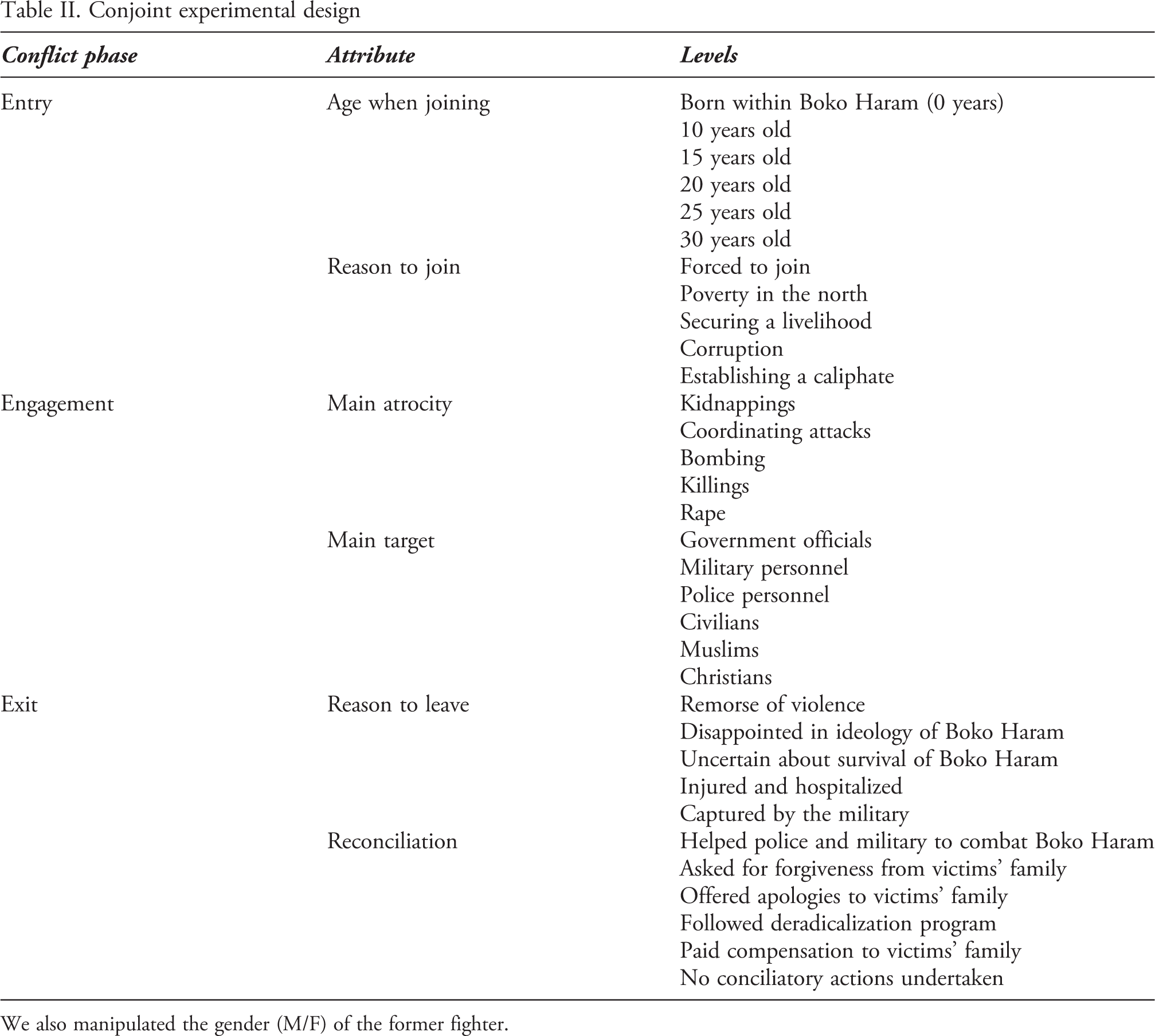
In this article, we posit that these two mechanisms – that is, prospective assessments of risks and perceptions of fairness – will jointly determine civilian attitudes towards reintegration. More specifically, we expect citizens to use these heuristics when they reflect on three key questions. These questions pertain to (1) why and how someone has joined the insurgency (entry phase), (2) what atrocities have been committed, if any (engagement phase), and (3) why and how someone has left the insurgency (exit phase). Ex-fighters’ motivations and behavior during these three phases convey important information about their intentions, efforts, and responsibility which, in turn, shapes people’s reintegration attitudes by influencing risk assessments and fairness perceptions.
First, regarding the entry phase and building on the importance of perceived responsibility (Feather, 2002; see also Petersen, 2010; Gibson & Gouws, 1999), civilians are expected to prefer the reintegration of ex-combatants who are judged less responsible for their participation in a militant organization (e.g. those who were born within or abducted by the insurgency group). 5 In the same vein, criminal law prescribes that immaturity mitigates the criminal liability of minors (Zimring, 2000) and research in criminology shows that civilians perceive young offenders as less responsible for their criminal acts. Accordingly, people want to punish juveniles less severely even when they committed serious offenses (Scott et al., 2006). By contrast, we expect respondents to resist the reintegration of those who are judged more responsible for their involvement in an insurgency group. For example, joining to fight for the caliphate may reinforce the idea that someone made an explicit choice to join the insurgency voluntarily and, thus, bears more responsibility.
Second, regarding the engagement phase, work in social psychology on interpersonal reconciliation suggests that more severe transgressions are more difficult to forgive (Fehr, Gelfand & Nag, 2010). Interestingly, in this field of study, harm severity is theorized to influence forgiveness via the same two mechanisms proposed here – that is, by reinforcing (1) the idea that an offender is undeserving of forgiveness and (2) the desire to avoid similar harm in the future (McCullough, Fincham & Tsang, 2003; Fehr, Gelfand & Nag, 2010). In the realm of war and intergroup conflict, several scholars similarly find that past participation in more abusive factions and activities, such as civilian targeting (Nussio & Oppenheim, 2014), decreases ex-combatants’ self-reported levels of community acceptance (Humphreys & Weinstein, 2007), stimulates blame attributions (Gibson & Gouws, 1999), and increases civilian wariness and vengeance (Kao & Revkin, 2021). Kao & Revkin (2021) explain how the specific actions of collaborators 6 during the conflict inform perceptions of culpability which are, in turn, key to post-conflict public opinion (see also Gibson & Gouws, 1999).
Third, regarding the exit phase, we build on the assumption that ending engagement in a violent organization is seen as a positive outcome. Therefore, civilians are expected to reward ex-combatants showing signs of constructive effort during the conflict termination phase. Particularly, more deliberate decisions to end engagement, as well as post-engagement conciliatory gestures, are thought to positively affect public support for reintegration (Hussain, 2018; Littman et al., 2020). Again, information about post-engagement motivations and actions provides cues about the likelihood of future harm as well as the extent to which an ex-fighter deserves a second chance. By conveying remorse, being attentive to victims’ suffering, and apologizing, offenders can be perceived ‘as people deserving of forgiveness rather than malicious evildoers deserving of vengeance’ (Fehr, Gelfand & Nag, 2010: 898).
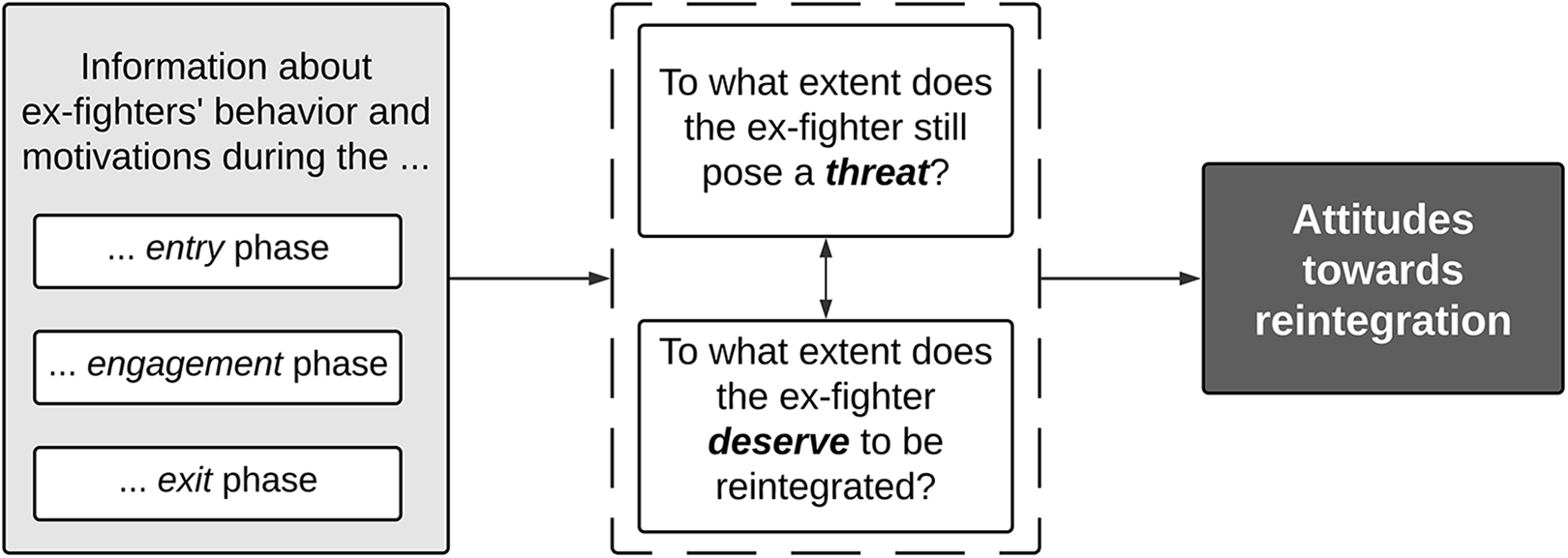
Heuristic model on public attitudes towards reintegration
Taken together, in Figure 1, we visualize our proposed heuristic model of civilian attitudes towards reintegration. At its core, the model proposes that information about ex-combatants’ motivations and behavior – during all phases of their involvement in a violent organization – provide important signals to evaluate the extent to which ex-combatants (1) still pose a danger and (2) deserve to be reintegrated. Such risk assessments and fairness perceptions, in turn, jointly shape civilian attitudes towards reintegration. Based on this heuristic framework of threat and justice, we formulate the following hypotheses:
Hypothesis 1 (entry phase): Citizens will prefer to reintegrate ex-combatants who joined the insurgency less voluntarily (H1a) and at a younger age (H1b).
Hypothesis 2 (engagement phase): Citizens will prefer to reintegrate ex-combatants who committed less abusive atrocities (H2a) aimed at non-civilian targets (H2b).
Hypothesis 3 (exit phase): Citizens will prefer to reintegrate ex-combatants who left the insurgency voluntarily (H3a) and, afterwards, contributed to conflict resolution and reconciliation (H3b).
Before detailing our empirical design, three things are worth noting. First, due to a lack of relevant research, it remains unclear whether information about one particular conflict phase will be more important for shaping citizens’ attitudes towards reintegration. Rather than speculating about the relative weight of the different conflict phases, our study is designed to provide original empirical insights into this issue. Second, we focus on the effect of information about certain actions and motivations of ex-combatants (i.e. independent variable; light grey box in Figure 1) on reintegration attitudes (i.e. dependent variable; dark grey box) and provide only preliminary evidence regarding the two underlying mechanisms (i.e. white boxes). Consequently, we refrain from stating any expectation concerning the danger and deservingness heuristics. Third, we see these heuristics as concurrent mechanisms, often operating in opposite directions. That is, higher threat assessments are often, but not always, accompanied by lower deservingness perceptions. We will come back to this issue later.
Nigeria as an instructive case-study
We test our framework by conducting a conjoint experiment in Nigeria. The Boko Haram insurgency has been terrorizing Nigeria, and the wider Lake Chad Basin, for over a decade now 7 and has caused over 50,000 deaths, displaced more than 2.5 million people, and triggered a large-scale humanitarian crisis across the region (Campbell, 2019). In 2015, Benin, Cameroon, Chad, Niger, and Nigeria formed the Multinational Joint Task Force to fight Boko Haram, which eventually succeeded in reclaiming most territory. Many combatants were captured during these clashes with the security forces or turned themselves in, causing a pressing need to develop effective strategies to punish, disengage, and ultimately reintegrate former fighters. At the time of writing, Nigeria had the most developed and extensive defectors’ program in the region, called Operation Safe Corridor (OPSC). 8 In fact, Nigeria is unique in this respect insofar as it has been managing and has been able to draw on another important reintegration program (i.e. the Niger Delta DDR program). As a result, Bukarti & Bryson (2019: 3) have argued that ‘countries in sub-Saharan Africa and beyond should draw on the experience of Nigeria’s deradicalization programmes, which offer important lessons for the global challenge of dealing with former fighters of extremist groups’. Chad, Cameroon, and Niger, particularly, face very similar challenges as they are dealing with people who were motivated by the same religious doctrines, pushed by similar socio-economic and political factors, and have gone through similar experiences when fighting with Boko Haram. Nevertheless, several Western countries are equally struggling with the issue of returning foreign fighters who are indoctrinated by similar exploitations of Islamic teachings (Bukarti & Bryson, 2019). 9
One of the key lessons learned from early evaluations of the OPSC is the pressing need to prepare communities to receive deradicalized defectors (Bukarti & Bryson, 2019). Journalistic accounts are not particularly conducive in this regard, suggesting Boko Haram fighters are not capable of repentance (Linetsky, 2016) and may radicalize others in the community or become ‘spies to their former terrorist masters’ (Adibe, 2020). Another point of criticism is a lack of transparency and information about who is being released, and why (Brechenmacher, 2018; Adibe, 2020). All these factors have recently instigated a nationwide push-back against reintegration, and community retribution has caused some violent incidents in which authorities were forced to take released ex-combatants back to the rehabilitation camps. These descriptive accounts suggest that Nigerians are not eager to accept former fighters back and little is done by the authorities to prepare them. Consequently, scholars have urged the Nigerian government and its partners to start working on preparing local communities and the general public alike for this crucial reintegration phase (Bukarti & Bryson, 2019; Adibe, 2020). Our analyses build upon this anecdotal evidence and aim to contribute to policymaking by theorizing about and experimentally examining factors that might help to prepare the public to receive former Boko Haram fighters.
Data and methods
Sample
Data were collected through a web self-administered questionnaire (WSAQ) with about 2,000 Nigerian (former) university students between November and December 2018. 10 The 2018 survey constituted one wave within a larger panel study that started in 2015 as part of another research project (i.e. an evaluation of Nigeria’s National Youth Service Corps, see Schroyens, 2019). In 2015, university students (N = 6,830), who originated from all over Nigeria, were selected using a multistage sampling procedure to participate in an in-class paper-administered self-interview (PASI, Langer et al., 2016). From this PASI, an online panel was created. More details on the exact sampling mechanism, including response and attrition rates, are available in the Online appendix A. Online appendix A also contains information about the measures taken to minimize harm and risks for both our respondents and researchers.
Sociodemographic and conflict-related characteristics of the sample
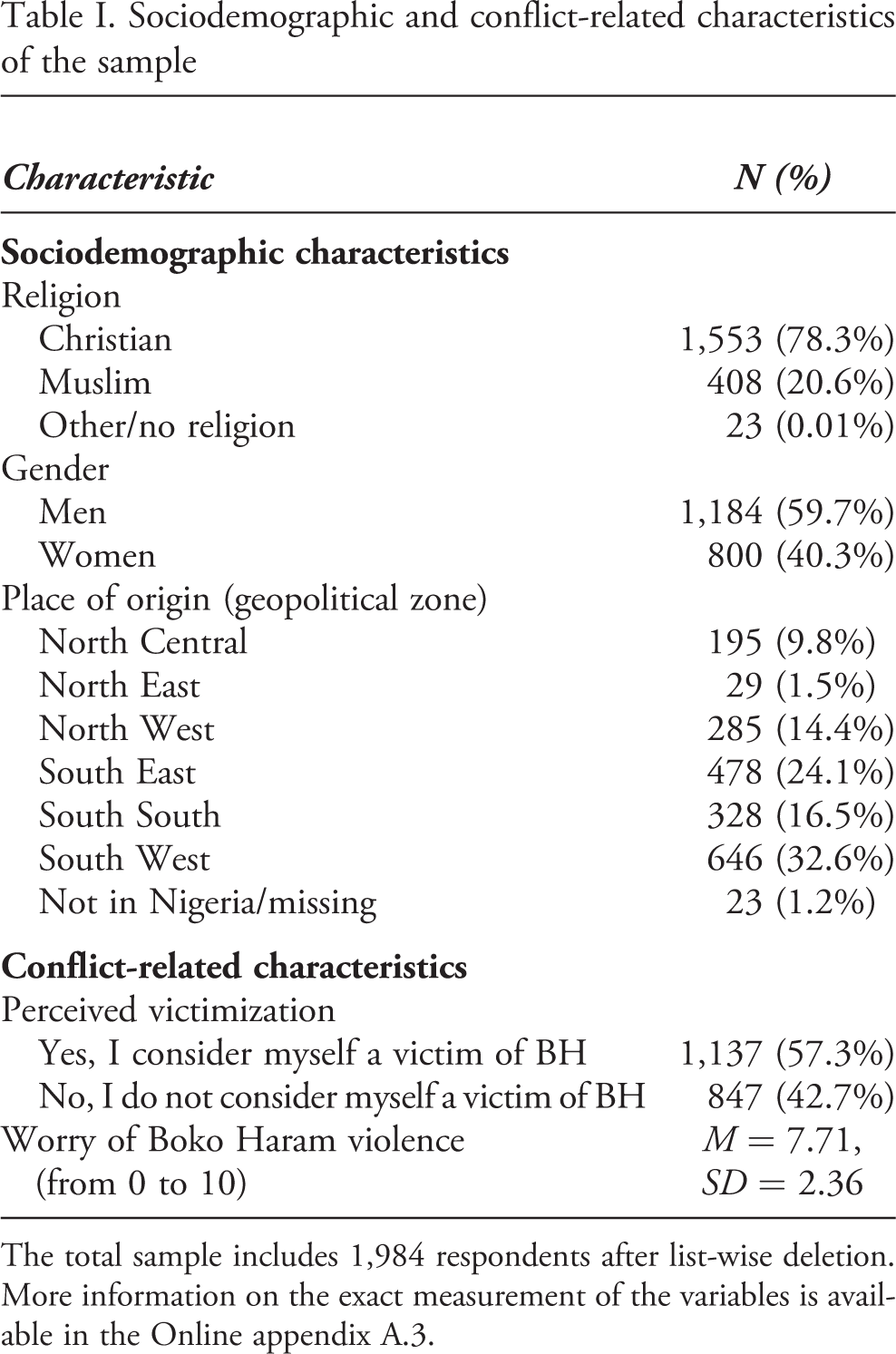
The total sample includes 1,984 respondents after list-wise deletion. More information on the exact measurement of the variables is available in the Online appendix A.3.
Experimental design
Conjoint experimental design Conjoint experimental design We also manipulated the gender (M/F) of the former fighter.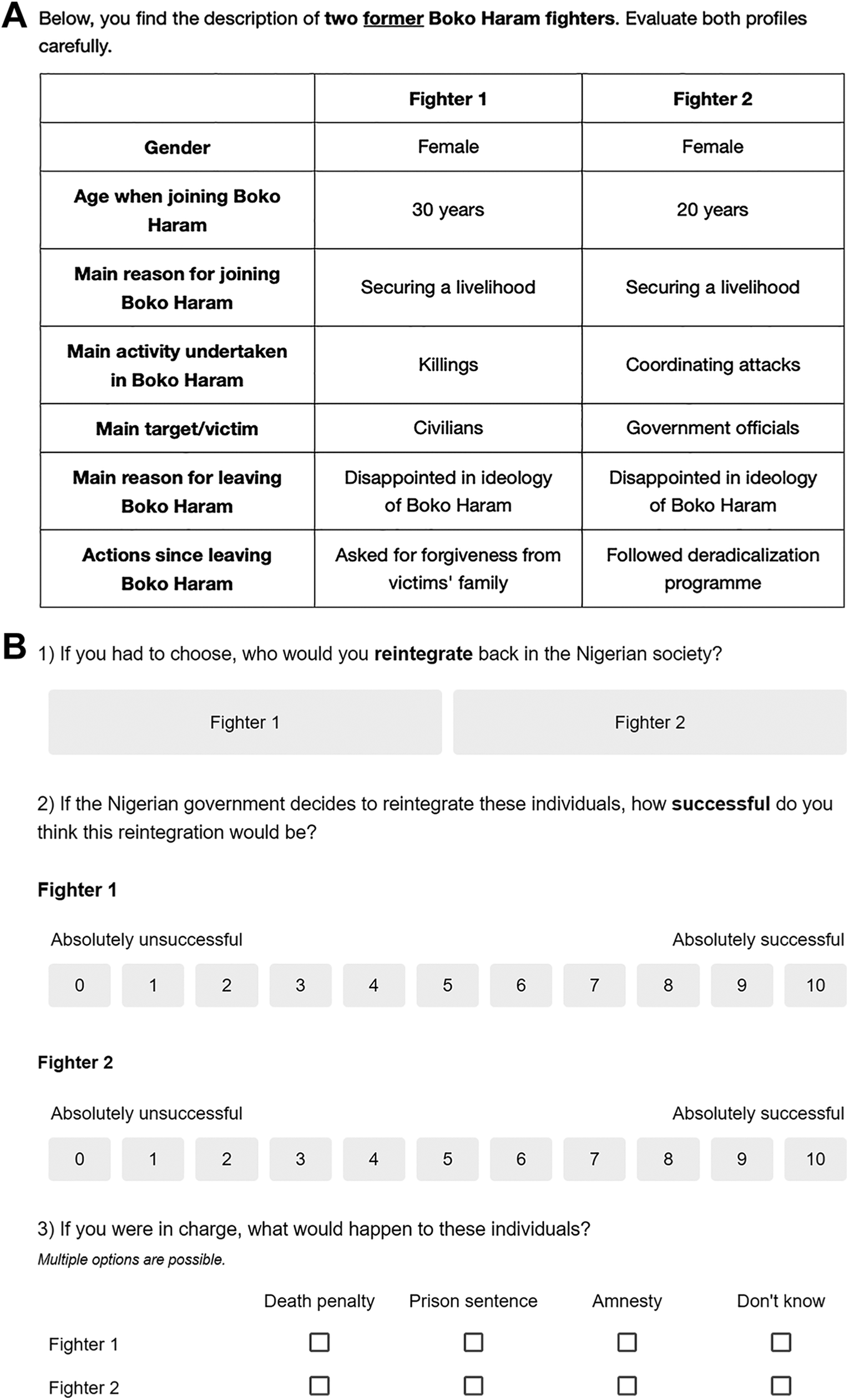
Furthermore, we also asked respondents to what extent they thought the reintegration process of all displayed ex-fighters would be successful (on a 0–10 Likert scale) and what punishment they think would be appropriate (using a multiple-choice question). Regarding the latter question, we focus on whether respondents would grant amnesty to or, conversely, sentence former fighters to death as these outcomes closely relate to the notions of forgiveness versus revenge in the criminal justice and reconciliation literature (Gibson & Gouws, 1999; Fehr, Gelfand & Nag, 2010; Kao & Revkin, 2021). These secondary outcomes serve as a preliminary test of observable implications of the mechanisms rather than a test of the mechanisms as such. 15 Although people’s assessment of reintegration success is believed to be more closely related to perceptions of risk and their choice of punishment to perceptions of deservingness, it is important to note that both outcomes (and their underlying constructs) are thought to be closely intertwined. For example, it is likely that amnesty is considered more appropriate for those ex-combatants found to deserve it, but at the same time considered as posing the lowest threat (for empirical evidence, see also Table III below). A highly interesting avenue for future research could be to systematically examine how threat perceptions relate to justice considerations, by directly and separately manipulating both concepts and using more fine-grained measures.
Estimation and interpretation
The two most popular quantities of interest to estimate when using a conjoint experiment are average marginal component effects (AMCEs; Hainmueller, Hopkins & Yamamoto, 2014) and marginal means (MMs; Leeper, Hobolt & Tilley, 2020). While AMCEs have a causal interpretation (i.e. the degree to which a certain attribute level increases or decreases the observed selection probability or favorability relative to the baseline), MMs have a more descriptive interpretation (i.e. the observed selection probability or favorability towards a given feature over alternative values of each feature). 16 This difference between AMCEs and MMs becomes especially important when testing heterogeneous treatment effects because interactions using categorical variables are sensitive to the reference category used in the analysis. When the subgroups differ in their preference vis-à-vis the reference category, differences in AMCEs can be incorrectly interpreted as differences in subgroup preferences (Leeper, Hobolt & Tilley, 2020). Hence, in the following, we report AMCEs and MMs when estimating main effects, but only conditional MMs when exploring heterogeneous treatment effects. We account for the conditionally independent randomization by calculating quantities of interest over the completely observable portion of the feature of interest (Leeper, Hobolt & Tilley, 2020). 17 Alpha levels of 0.05 are used throughout this article to test the null hypotheses.
Results
Figure 3 depicts both the estimated AMCEs and MMs along with their 95% confidence intervals (see Online appendix Tables B1 and B2 for the corresponding numerical results). Overall, the results support our heuristic framework based on risk and fairness assessments, and more ‘forward-looking’ information appears to be more influential than knowledge about an ex-combatant’s past behavior during the insurgency. 18 Regarding the entry phase, the probability to be selected for reintegration decreases more or less monotonically with the age at which someone decided to join the insurgency. For example, a Boko Haram fighter who was born within the insurgency is about 17% more likely to be selected for reintegration compared to a fighter who joined the insurgency at age 30 (p < 0.001). In a similar vein, people who were forced to join the insurgency are most welcome (MM = 60.66%). Joining Boko Haram for the establishment of a caliphate, on the other hand, is particularly detrimental for reintegration given that all other reasons significantly increase the probability of selection (by 6 to 21%; all p’s <0.001).
Regarding the engagement phase, the specific atrocities committed while enrolled in Boko Haram do play a significant, yet less substantial, role in affecting reintegration attitudes. Compared to rape, kidnappings (AMCE = 0.07, p =0.001) and the coordination of attacks (AMCE = 0.05, p =0.017) slightly increase the probability to be Estimated average marginal component effects (AMCEs, left) and marginal means (MMs, right)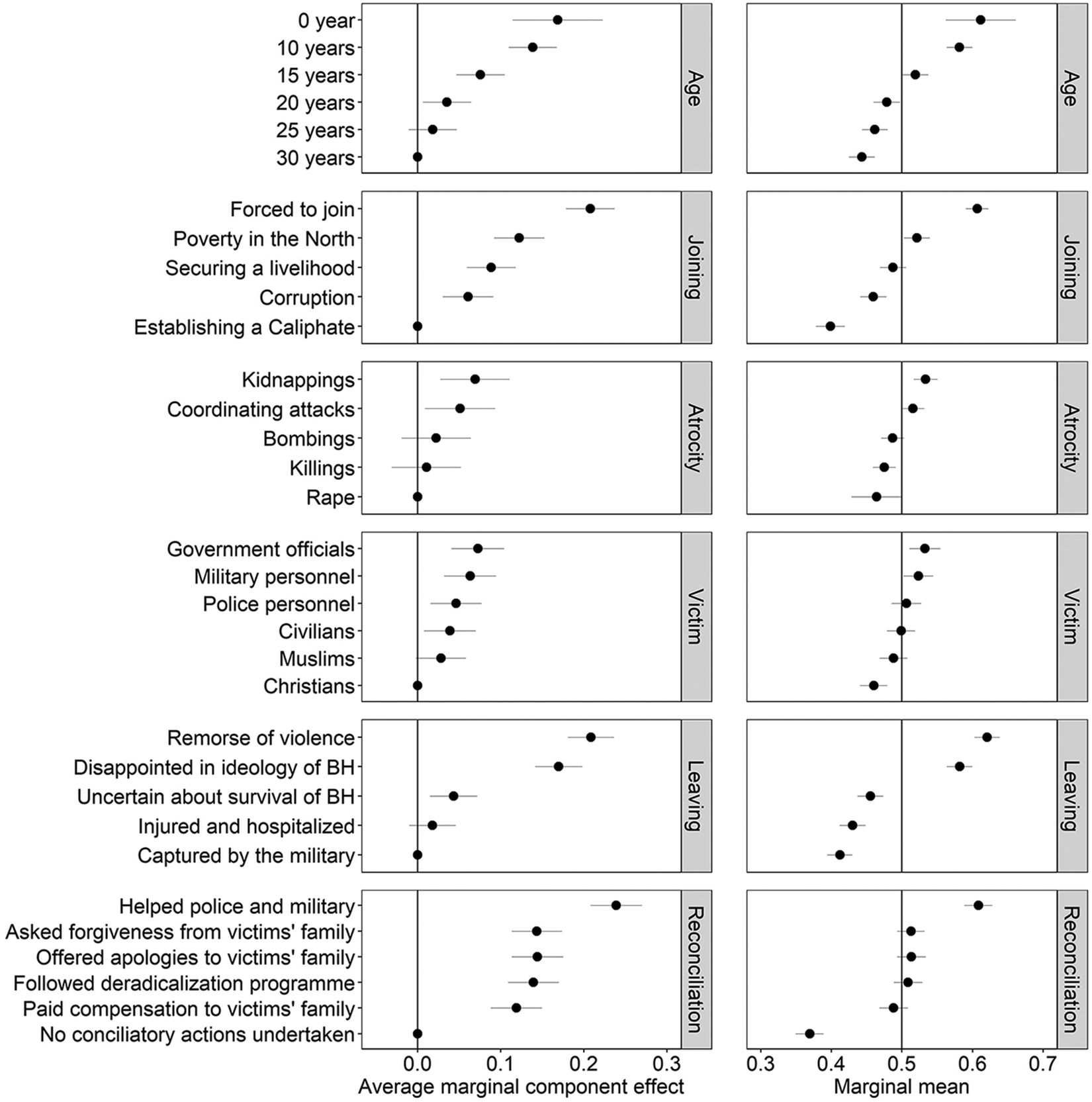
Regarding the exit phase, the observed probability to be selected for reintegration largely depends on ex-combatants’ intentions and efforts. Fighters deliberately and voluntarily abandoning Boko Haram out of remorse for their violent behavior or disagreement with the ideology of Boko Haram are more often selected for reintegration (MM = 62.07% and 58.18%, respectively), whereas fighters who were injured and hospitalized or captured by the military are less likely to be selected (MM = 43.00% and 41.20%, respectively). In a similar vein, post-engagement reparations are also key to reintegration acceptance. Even more, offering both help in defeating Boko Haram and reparations for victims display some of the largest effects on the probability that an ex-fighter is selected for reintegration (all AMCEs >0.12). Still, compared to doing nothing, helping the police and military to defeat Boko Haram outweighs conciliatory gestures or following a deradicalization program (AMCE = 0.24 versus roughly 0.14, respectively; all p’s <0.001). 19
Exploring implications of the mechanisms and moderators
Implications of the mechanisms
As explained earlier, we also asked respondents to what extent they thought the reintegration of all six fighters would be successful (M = 5.46, SD = 2.42) and which sentence they would prefer for the shown fighters (with amnesty granted to 34.4% of the fighters and 19.9% sentenced to death). We now explore whether similar factors are driving success ratings and punishment preferences, and the results suggest that this is indeed the case (Figures B1, B2, and B3 in Online appendix B). Our respondents have more faith in the reintegration process of fighters who joined the uprising less intentionally, left out of remorse or disagreement, and subsequently showed conciliatory gestures (again, in particular helping the police and military to combat Boko Haram). Likewise, these fighters are also the ones more likely to be granted amnesty, whereas their ‘undeserving’ counterparts – particularly those not showing any willingness towards reconciliation – are more often sentenced to death. The atrocities committed did not significantly impact our respondents’ ratings of success nor their preferred punishments and the impact of the specific target of these atrocities was not consistent. Furthermore, as Table III shows, people’s reintegration success ratings and their preferred punishments are closely intertwined. Indeed, when people fear that reintegration might fail, they are more likely to sentence ex-combatants to death, χ 2(3) = 884.6, p <0.001. By contrast, people are more likely to grant amnesty to ex-combatants when they believe in the success of their reintegration process, χ 2(3) = 1,795.9, p <0.001.
Association between success ratings and preferred punishments
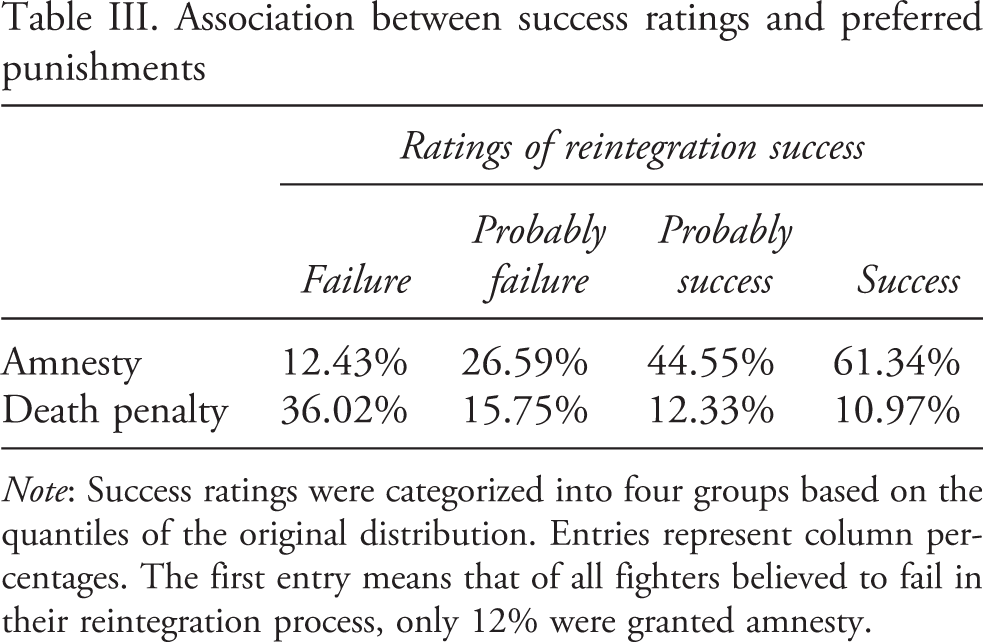
Note: Success ratings were categorized into four groups based on the quantiles of the original distribution. Entries represent column percentages. The first entry means that of all fighters believed to fail in their reintegration process, only 12% were granted amnesty.
Moderators
Finally, we explore to what extent drivers of reintegration attitudes are broadly held across subgroups. To do this, we estimate a series of models interacting the treatment with respondents’ religion (i.e. Christian vs. Muslim), region of origin (i.e. South vs. North), feelings of victimization (i.e. victim vs. no victim), and perceived concern regarding Boko Haram violence (i.e. high vs. low levels of concern). 20 We selected these moderators on the following grounds. First, given that we rely on a convenience sample, we want to assess whether underrepresented groups (particularly Muslims and Northerners) react in similar ways to our experiment. Second, religion is one of the main fault lines structuring political, economic, and social life in Nigeria, besides being the fault line Boko Haram capitalizes on (Langer, Godefroidt & Meuleman, 2017). It is therefore plausible that religion also structures the responses to our experiment. Third, these models allow us to assess how two more prominent factors in (post-)conflict public opinion research – exposure to violence (Hirsch-Hoefler et al., 2016) and intergroup biases (Dyrstad et al., 2011) – affect our results.
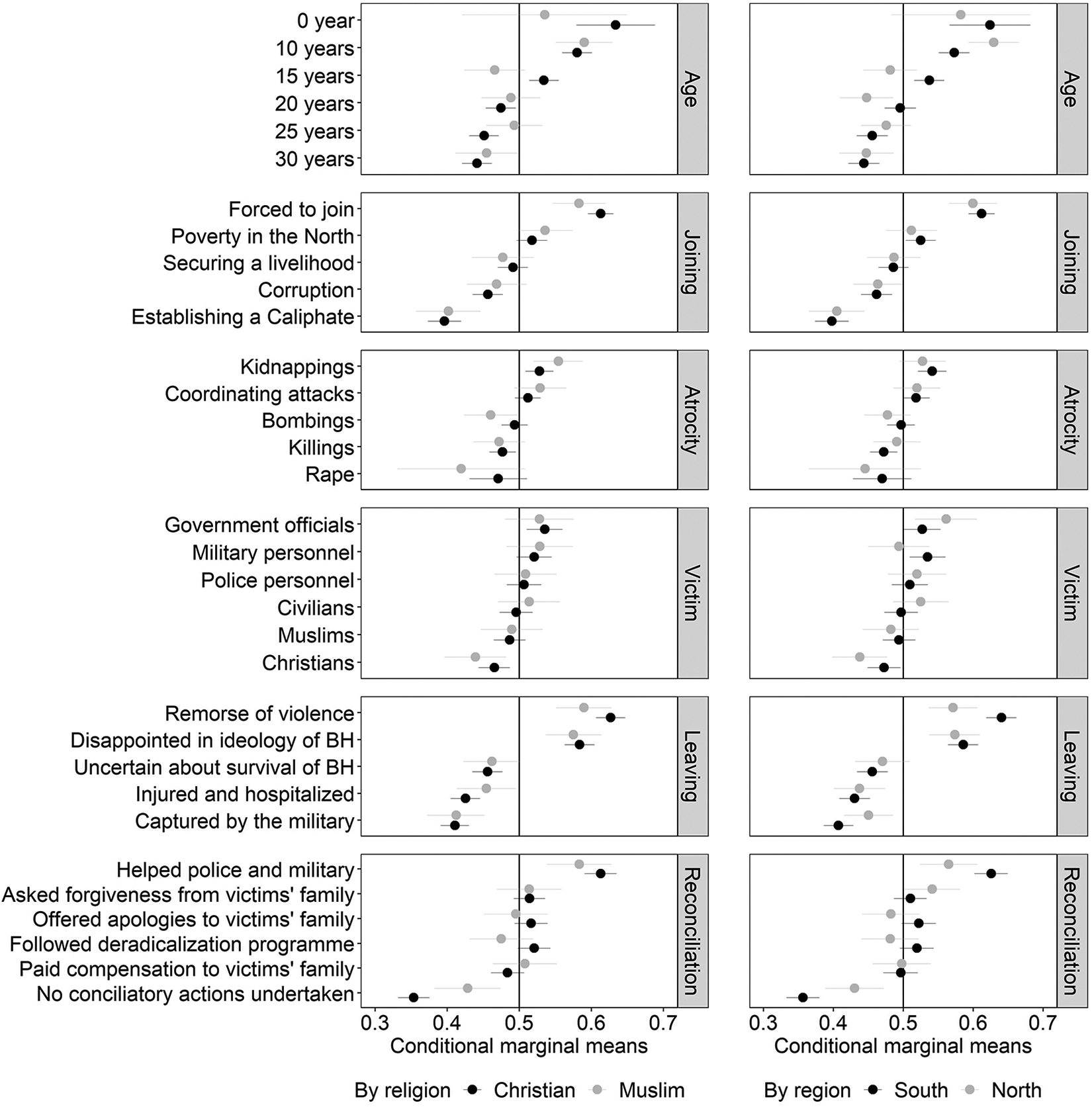
Marginal means conditioned by respondents’ religion (left) and region of origin (right). Only marginal means (descriptive estimates) are displayed as average marginal composite effects (causal estimates) are sensitive to the reference category selected
All conditional marginal means are displayed in Figure 4 (for religion and region) and Figure 5 (for victimization and concern), and we formally test subgroup differences by comparing a regression with and without interaction terms between the subgrouping covariate and feature levels. We find that respondents’ religion (F = 1.41, p = 0.020) and region of origin (F = 1.50, p = 0.007) impacts the results of the experiment to a small but significant extent, but that interaction models with feelings of victimization (F = 1.30, p = 0.055) and levels of concern (F = 1.28, p = 0.069) do not reach the conventional level of significance of alpha < .05. Figure 4 displays the limited impact of religion and region. That is, the linear trend in observed selection probabilities based on age disappears in our Muslim and Northern subsample, with Muslims and Northerners being slightly less likely to select the youngest former fighters for reintegration. In addition, Muslims and Northerners are more forgiving towards ex-combatants who have not (yet) made conciliatory repairs, while Christians attach more importance to offering help in the fight against Boko Haram and signs of remorse during the exit phase. Interestingly, Muslims and Christians react in very similar ways to the specific targets victimized by the ex-Boko Haram fighters. In other words, respondents are not more likely to punish (vs. forgive) those ex-fighters that targeted their religious in- Marginal means conditioned by respondents’ perceived victimization by Boko Haram violence (left) and concern about Boko Haram violence (right). Only marginal means (descriptive estimates) are displayed as average marginal composite effects (causal estimates) are sensitive to the reference category selected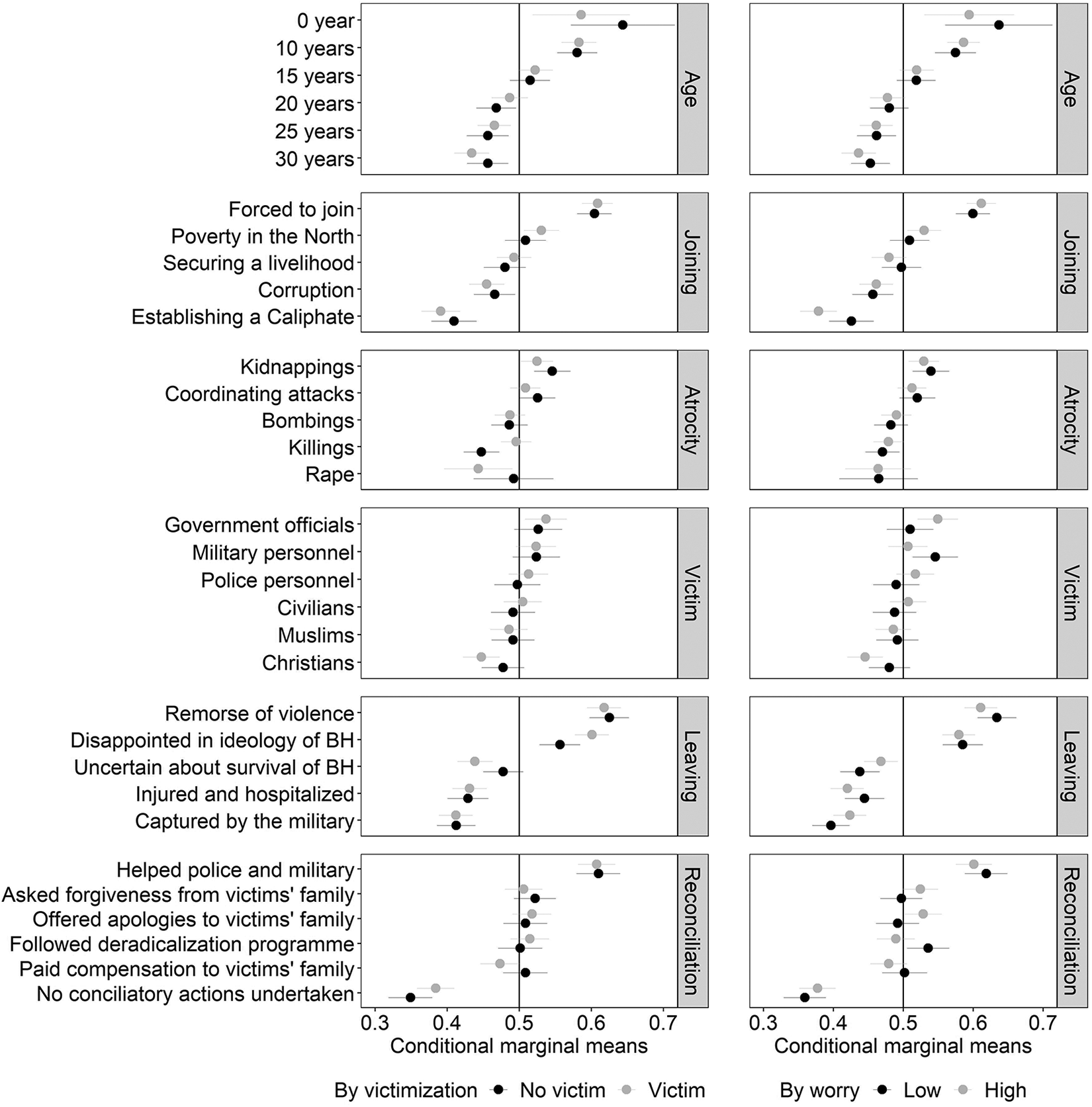
Conclusion
Making peace with one’s enemies is anything but easy. While conventional wisdom holds that former fighters are unwelcome ‘social pariahs’ (Annan et al., 2011: 881), research on how the general public thinks about ex-combatant reintegration is still sparse, and even less has been quantitatively or causally studied. We complement previous work, which has predominantly focused on the reintegration trajectories of ex-combatants (e.g. Gilligan, Mvukiyehe & Samii, 2012; United Nations, 2014; Blattman & Annan, 2016), by examining citizens’ attitudes towards the reintegration of former fighters. The article, therefore, speaks to the more general literature highlighting the influential role played by citizens in shaping policies (e.g. Tomz, Weeks & Yarhi-Milo, 2020), including recent work arguing that post-conflict settlements are prone to conflict recurrence when they fail to incorporate civilians and civil society actors (e.g. Dyrstad & Binningsbø, 2019; Tellez, 2019a). We also contribute to the literature by employing an innovative experimental design within an understudied context. Specifically, we conducted a large-scale conjoint experiment among (former) university students in Nigeria – a context characterized by a large-scale deradicalization and reintegration program, while simultaneously facing fierce nationwide resistance against the reintegration of ex-Boko Haram fighters.
Empirically, the experiment yielded three main findings. First, we identified key dimensions related to the returning ex-fighter that drive popular support for reintegration. Our Nigerian respondents were more willing to reintegrate former Boko Haram fighters who had been forced to join the group, who intentionally fled Boko Haram out of remorse or disappointment with its ideology, and who had undertaken conciliatory acts (especially actively helping the police and military in their fight against Boko Haram). In contrast, they were significantly less willing to reintegrate ex-combatants who had joined the insurgency out of religious beliefs, who had been captured by the military or were forced to leave Boko Haram due to injury or hospitalization, and who did not show any willingness towards reconciliation. The same factors also determined how successful respondents thought the reintegration process of ex-combatants would be and whether they wanted to grant them amnesty or, conversely, sentence them to death. Second, these results collectively provide preliminary evidence for the two hypothesized heuristics that drive reintegration attitudes: Prospective threat assessments and fairness perceptions. Third, we failed to find consistent evidence in our study that these preferences are moderated by respondents’ demographic characteristics or conflict-related experiences, which suggests that the uncovered heuristics might be broadly held.
These empirical findings hold important implications for policymakers who must make choices about how to design and ultimately communicate reintegration programs to their public. For example, the results highlight a possible tension for conflict resolution: One of the factors most strongly inducing support for reintegration (i.e. helping the police and military to defeat Boko Haram) might be the most difficult one for warring actors to yield concessions on as it implies indisputably turning on former comrades. At the same time, our study suggests that making reintegration or amnesty conditional upon the disclosure of particular information may not only help to further combat Boko Haram but also contribute to public acceptance of reintegration – if this is properly communicated to the public, of course. Indeed, at its core, this study emphasizes the importance of information campaigns tailored to the needs of the society at large. In that regard, while acknowledging the impact of past behavior of ex-combatants, focusing on more forward-looking mechanisms (especially conciliatory gestures) might particularly facilitate reintegration processes. Above all, by highlighting deservingness in addition to emphasizing safety and security, authorities may be able to increase local support for the reintegration of repentant fighters.
Like any other study, these conclusions require some caution. Most importantly, our empirical approach limits the generalizability of our findings. To what extent are our findings applicable beyond our specific sample, to other types of insurgencies, and across time? In general, we expect prospective risk assessments and fairness perceptions to shape attitudes towards reintegration in other contexts as well, but that their relative weight might differ across contexts. First, regarding generalizations across populations, we have mainly studied the opinions of Christians from areas where Boko Haram fighters are unlikely to be seeking reintegration. Emerging research suggests that public perceptions of offenders’ intentionality and culpability are also key to reconciliation in post-ISIS Mosul (i.e. the epicenter of ISIS in Iraq; Kao & Revkin, 2021) and that safety maximization might be even more important for citizens from those communities to which ex-combatants effectively return (Littman et al., 2020). Second, we focused on a domestic, Jihadist group. When studying attitudes towards returning foreign terrorist fighters (FTFs) in western countries, perceived culpability behind the actions of FTFs is likely much higher (since FTFs typically traveled overseas to fight for the caliphate) and physical safety is less at risk. As a result, the justice heuristic might become even more important in this context. Also, joining to fight for the caliphate was one of the strongest predictions of resistance against reintegration and support for revenge, but it remains unclear whether fighting for the ideology of an insurgency group generally lowers support for reintegration or whether this is true for Jihadist groups only. Third, the relative weight of our proposed heuristics might also depend on the course of a conflict with risk assessments being more important at the height and fairness perceptions in the wake of a conflict. Hence, interesting avenues for future research include further exploring the importance and relative weight of the danger and deservingness heuristics across different populations, types of insurgencies, and timeframes.
In addition to issues regarding generalization, we only varied a small number of ex-combatants’ motivations and behaviors. For example, we only included violent atrocities which might explain the limited effect of this factor. As Kao & Revkin (2021) demonstrate, non-violent forms of collaboration (such as paying taxes to or being a janitor for an insurgency group) encourage forgiveness and reduce revenge, especially when these acts are perceived as involuntary. These findings corroborate with the heuristic framework proposed in this article. Finally, other contextual or institutional considerations might come into play in the real world as well (such as the extension of vocational training to community members; Muggah & O’Donnell, 2016). Such macro-level factors, in conjunction with the individual-level drivers unraveled in this article, warrant further investigation to eventually design and communicate reintegration programs in such a way that it lays the foundation of sustainable peace in the long run.
Footnotes
Replication data
The ReadMe.txt file, dataset, and R-script for the empirical analyses in this article, along with the Online appendix, can be found at http://www.prio.org/jpr/datasets and at  . All analysis were conducted using R 4.0.5.
Acknowledgments
We would like to sincerely thank the Associate Editor, two anonymous reviewers, Graeme Blair, Kristin Kao, Mara R Revkin, Maarten Schroyens, Rebecca Wolfe, and all conference and seminar participants for their constructive feedback on earlier drafts of this work. We are also grateful to all the Nigerian students who participated in our surveys.
Funding
The authors disclosed receipt of the following financial support for the research, authorship, and/or publication of this article: Amélie Godefroidt acknowledges the financial support of the Research Foundation Flanders—FWO (#11B5717N).