




Abstract
Apologies by political leaders to the citizens of a victimized country have attracted attention in recent years as a means of improving relations between nations. Existing studies have identified several elements that make such an apology effective, but from the politician's point of view, it is difficult to issue a statement containing all these elements, and they must then be chosen while considering domestic backlash and relations with countries other than the victimized one. However, it is not sufficiently clear how the victimized country's citizens weigh the elements of the apology when they accept it and how the nature of the harm caused changes this. Therefore, we conducted a survey experiment in Japan, adopting a conjoint design using scenarios depicting fictional US presidential apologies to Japan. Our experiment demonstrated three attributes particularly regarded as important in determining whether people would accept an apology: the reparation amount, whether the apology was official (formality), and the voluntariness of the apology. However, when something that people consider “sacred” has been harmed, reparation proposals are counterproductive, and the optimal apology form may depend on the nature of the harm.
Introduction
Reconciliation between states over past and ongoing wrongdoings is a serious challenge in today's world. As evident in East Asia, even with close economic and cultural ties, political relationship between countries can be easily undermined by countries’ mutual antagonism stemming from past wrongdoings. Even between countries with a history of friendship, one incident, such as a crime committed by stationing soldiers, may cause negative sentiment toward the perpetrator country to spread in the victimized country and sever diplomatic relations. What then can political leaders do to appease a foreign public's resentment about past and ongoing incidents?
One increasingly common strategy is for the political leader of the perpetrator country to apologize. Indeed, the last two decades have witnessed a great number of political apologies, leading scholars to declare that we now live in the “age of apology” (Brooks, 1999; Gibney et al., 2009; Okimoto et al., 2015). However, political apologies do not always work, as is shown by the Japanese government's repeated apologies that people in the countries victimized during World War II refused to accept.
Therefore, scholars have investigated key attributes of apologies that improve the victimized people's feelings toward the perpetrator country. Some studies were carried out by international relations scholars (e.g. Kitagawa and Chu, 2021; Lind, 2011; Long and Brecke, 2003; Minow, 2002) and others by social psychologists (e.g. Blatz et al., 2009, 2014; Hornsey and Wohl, 2013; Okimoto et al., 2015; Paez, 2010; Philpot and Hornsey, 2008, 2011; Wohl et al., 2012, 2013). The former studies were inclined to identify what attributes effective apologies must possess through extensive analyses of historical cases; the latter, on the other hand, examined the effectiveness of individual attributes using experimental methods but their findings were mixed.
Although these studies have identified elements of apology necessary for reconciliation and improved relations, they have not adequately covered an important point in the study of international apologies: the dilemma that politicians face when issuing an apology. Politicians are in the seat of power, backed by their domestic support base, and they must consider relations with not only the victimized country but also other nations. Therefore, the apology most acceptable to the victimized country's citizens is not always the best one for the politician because, as Kitagawa and Chu (2021) and Lind (2011) have pointed out, an apology acceptable to these citizens may cause domestic backlash or negatively affect relations with other countries. In political apologies, therefore, the key issue is not limited to being aware of the effects of apology elements, but includes the importance of each apology element and whether the importance changes according to context, such as the nature of the harm. However, previous studies have not clarified these points.
Another issue relates to methodological differences between international relations and social psychology: the former examines the comprehensive effects of an apology comprising multiple elements by focusing on real-world examples of apologies and carefully analyzing them, while the latter tends to investigate the effects of individual apology elements in hypothetical situations. To bridge these two approaches, we aimed to obtain knowledge with greater external validity and policy relevance by examining the effects of apology elements while using the actual interstate relations between Japan and the US as material.
To that end, this paper examines the impact of multiple apology elements on the acceptability of apologies and their relative importance in a real-world context using conjoint analysis. In particular, we examine the relative significance of multiple attributes of an international apology, namely, the reparation amount, the novelty of apology, the voluntariness of an apology initiative, and the irrevocability of the apology, building on the insights of existing works (Long and Brecke, 2003; Ohtsubo et al., 2020). Once we can identify the importance of apology elements, it is possible for an apology-making leader to select the most efficient message to the victim that could avoid domestic backlash and negative reaction from other countries. 1
We use an online panel of Japanese nationals and hypothetical apologies made by the US president to Japan. Their close interaction in the past and present allows us to fabricate a variety of hypothetical contexts in which political apologies might be issued. Namely, we consider presidential apologies for five issues: the use of A-bombs, air raids during World War II, a sexual crime committed by a US soldier, an accident involving a US merchant ship, and the US president accidentally breaking a national treasure (teacup) at an official dinner.
Considering apologies for various harmful acts, we found that people's demands for an apology do not necessarily arise in terms of political accountability—they do not seem to demand an apology because the president is accountable for the harmful act as a politician, but rather seem to regard the US and its citizens as one group and demand an apology from the president as an agent responsible for the group. Accordingly, people have vociferously demanded that the president apologize for harmful acts committed by private US companies as well. This finding suggests that political leaders need to take appropriate actions to maintain or improve relationships with other countries when their country is viewed as a perpetrator, even if the government is not directly responsible for it. Thus, political apology can be a tool of public diplomacy, if not reconciliation. 2
The conjoint analysis demonstrates that apologies incurring costs and demonstrating commitment are more effective, which echoes Long and Brecke (2003). For instance, respondents were more willing to accept apologies associated with a larger amount of reparation. Additionally, apologies conveyed through official channels and initiated by the political leader of the perpetrator country were more likely to be accepted. However, we also found that the ideal combination of apology attributes depended on the issue at stake: people were unwilling to accept an apology accompanied by monetary compensation for harm to something they considered “sacred,” such as a national treasure.
Theories on political apology
The last two decades have witnessed a dramatic increase in the number of political apologies for the past wrongdoings of countries and governments. Referring to this trend, Gibney et al. (2009) called the present era the “age of apology.” Accordingly, a growing number of scholars are paying attention to political apologies and examining their effect on victims’ perceptions of the perpetrator group. Some studies have been based on in-depth qualitative analysis of historical cases (Lind, 2009, 2011; Long and Brecke, 2003), but the majority of studies are quantitative (Blatz et al., 2009, 2014; Hornsey and Wohl, 2013; Kitagawa and Chu, 2021; Okimoto et al., 2015; Paez, 2010; Philpot and Hornsey, 2008, 2011; Wohl et al., 2012, 2013).
These studies have identified various factors to explain why some apologies are successful while others are not. Comparing apologies made by Germany and Japan for their wrongdoings during World War II, Lind (2011) argues that an apology triggering a backlash is ineffective because denials of past violence fuel distrust of and a threat perception of the perpetrator country among the victimized population. Long and Brecke (2003) studied eight cases of international reconciliation to identify characteristics of successful reconciliation initiatives, namely those that promote peace between two countries in a long-standing conflict. They found that a reconciliation initiative which serves as a costly, novel, voluntary, and irrevocable signal substantially improved interstate relations.
Psychological research has also examined various aspects of political apologies, such as the victimized groups’ perception/acceptance (e.g. Ohtsubo et al., 2021; Okimoto et al., 2015; Wohl et al., 2013), the perpetrator group's perception/acceptance (e.g. Karunaratne and Laham, 2019; McGarty et al., 2005; Mifune et al., 2019; Ohtsubo et al., 2021; Wohl et al., 2013), and apology effectiveness (e.g. Blatz et al., 2014; Brown et al., 2008; Kirchhoff and Čehajić-Clancy, 2014; Philpot and Hornsey, 2008). Most relevant to the present study is the mixed evidence on the effectiveness of political apologies. For example, Brown et al. (2008) made use of the Tarnak Farm incident, in which four Canadian soldiers were accidentally killed by a US fighter jet bombing in Afghanistan in 2002. Brown et al. (2008) manipulated the presence of an apology in a bogus newspaper article and found that Canadian participants showed higher forgiveness when the apology was present. In contrast, Philpot and Hornsey (2008) manipulated the presence of an apology in interpersonal harm scenarios and found that political apologies failed to promote forgiveness but did increase the perpetrator group's perceived remorsefulness and satisfaction with the apologies. To integrate these insights, Hornsey and Wohl (2013) proposed a trust-based model for responses to political apologies, which assumes that victims’ trust in the perpetrator group is a crucial moderator of the effectiveness of political apologies: political apologies promote intergroup forgiveness only when the victimized group members trust the perpetrator group.
These studies provide important insights into the nature of apologies. One missing perspective, however, is the dilemma facing politicians in international apologies. Incorporating many elements that improve sentiment toward the perpetrator may enable a more effective apology statement for reconciliation with the victim. However, such an apology may not be optimal considering domestic politics and relations with countries other than the victimized one. Several studies, for example, have pointed out that certain apology elements are prone to spark a backlash from the perpetrator country's citizens, mainly from those who are high in social dominance orientation, which then reduces the apology's effectiveness (Kitagawa and Chu, 2021; Lind, 2011; Mifune et al., 2019; Ohtsubo et al., 2021). Therefore, in analyzing international apologies, it is also important to consider how significant each apology element is for the victimized country's citizens. However, a factorial experiment simultaneously testing the effects of five factors would yield 32 experimental conditions, which is not feasible. In contrast, conjoint analysis enables us to examine a greater number of attributes within a single study, thus allowing simultaneous handling of many variables without encountering confounding effect problems.
Whether or not relationships between such apology elements vary depending on the nature of the harm is another question that cannot be ignored when applying existing findings to actual policy. The real world does not have many instances of apologies being issued for different harmful acts in the same perpetrator–victim pair of countries, so answering this question requires ingenuity in research methods.
Regarding research methods, most international relations scholars, through comparative case studies, have investigated why some past apologies were successful in promoting reconciliation between states while others were not. While it is not easy to tell which elements were effective in actual apologies with complex compositions, this method facilitates more realistic and policy-oriented research. Social and political psychologists more often rely on an experimental approach whereby some critical aspects of political apologies are manipulated in hypothetical vignettes. Although this approach somewhat sacrifices reality, it is a successful way to isolate and examine individual elements of effective political apologies. The findings of studies employing these two methods have so far not been fully integrated because they have been published in journals in different fields. A study that bridges the two methods is necessary, and this paper therefor makes a new contribution to this research field by positing scenarios for several real or extremely realistic harmful acts in the context of Japan–US relations and measuring the effect of apology elements for each. This will lead to a better understanding of apology as an important new policy tool in international politics.
Hypotheses
Insights from research by international relations scholars and social psychologists converge on the importance of the credibility of political apologies. Within-country opposition to political apologies made Japanese apologies ineffective because it undermined Japan's sincerity as perceived by the victimized people (Lind, 2011). Long and Brecke (2003) argue that successful reconciliation initiatives are those that enhanced the credibility of the perpetrator country's commitment to the better future relationship through elements of costly signals (also, Brecke and Long, 1999). The trust-based model (Hornsey and Wohl, 2013) maintains that suspicion about the perpetrator group's motivation undermines the effectiveness of political apologies.
Building on these insights, this study investigates the effects and relative importance of attributes enhancing the credibility of an international apology. Therefore, our hypotheses directly draw on the seminal work by Long and Brecke (2003) who argue that a successful reconciliation initiative after an international war must possess the following attributes: costliness, novelty, voluntariness, and irrevocability. According to their comparative case studies, successful reconciliation initiatives were characterized by costliness (e.g. then-Chancellor of West Germany Willy Brandt promised huge financial assistance to the Soviet Union and Poland), novelty (e.g. no Egyptian president before Anwar Sadat had visited Israel), voluntariness (e.g. the reconciliation between El Salvador and Honduras was mediated by the Organization of American States, and thus cannot be considered voluntary), and irrevocability (e.g. initiatives made in public, such as Brandt's promises and Sadat's visit to Israel, often cannot be easily withdrawn). 3 We examine if their insights apply to apology statements publicized by the political leader of a perpetrator country and to a pair of countries, namely the US and Japan, that are not included in their study.
We expect that each of the above attributes makes international apologies more likely to be accepted. Although previous research has focused on various consequences of apologies, including an improved perception of the perpetrator country and better bilateral relationships, we focus on whether the members of the victimized group are willing to accept an apology. This is because the act of accepting an apology is an important step toward forgiveness and reconciliation. In addition, although improvement in bilateral relations is an important theme from the perspective of international relations, inter-state relations are influenced by factors other than national sentiment; therefore, we focus on whether or not the victimized country's citizens accept the apology as the first step in improving relations.
Regarding the costliness of apology, we manipulate the amount of reparation. Studies on interpersonal apologies demonstrate that financially costly apologies signal the perpetrator's sincerity and modify the victim's punitive actions (e.g. Ohtsubo and Watanabe, 2009). This effect was recently replicated in the context of group apologies, such as from organizations (Ohtsubo et al., 2020). In the context of international relations, reparation offered to the victimized country or group would naturally serve as a costly signal.
The remaining hypotheses are quite straightforward, and are as follows:
In addition to testing these individual hypotheses, we also explored each element's relative importance. Moreover, since harmful acts can take various forms in the modern international community with complex relations between nations, we assumed several acts with different natures and investigated in an exploratory way whether the elements the apology must contain differ according to the nature of the harm. For instance, we wanted to answer the question of whether people prefer similar apologies for harmful acts during past wars and for accidents and criminal acts in the modern age.
Research design
We tested our hypotheses using online survey experiments and conjoint analysis. 5 For measuring the value that people place on attributes of international apologies, a commonly used factorial design experiment would be inappropriate because the combination of multiple attributes would necessitate an unmanageable number of study scenarios. To avoid this problem, we employed conjoint analysis with simulations of real-world situations where citizens receive apologies from a foreign political leader. Although admittedly citizens rarely choose between two apology profiles in the real world, we use conjoint analysis as a first step toward identifying the structure of people's multidimensional decision-making regarding international apologies.
Our experiments explored the attributes of transnational intergroup apologies that are associated with greater acceptance by members of a victimized group, in the hypothetical context of the US president apologizing to Japan. We chose Japan as the focal country for two reasons. First, US apologies to Japan allows us to compare the importance of different apology attributes. Psychological studies suggest that people have a strong tendency not to search for and accept information that contradicts their existing belief system (Darley and Gross, 1983; Klayman and Ha, 1987; Nickerson, 1998; Wason, 1960). Accordingly, studies show that public diplomacy by a country seen in a negative light is ineffective (Kohama et al., 2017). Similarly, Hornsey and Wohl (2013) argue that political apologies may foster the recipient group's forgiveness only when the victims trust the perpetrator group (Hornsey and Wohl, 2013). In other words, if we examined the effectiveness of political apologies between two countries lacking mutual trust, the floor effect might prevent us from comparing the effectiveness of different types of political apology. Therefore, we decided to take advantage of the relatively stable, friendly relationship between the US and Japan as a first step to test the effects of different elements of political apologies. 6
Moreover, because of their past as bitter enemies and their current strong alliance, the Japan–US relationship provides a diverse range of contexts for examining an apology, ranging from the use of A-bombs during World War II to problems involving US troops stationed in Japan. Our experiment uses a combination of real and hypothetical incidents as the context for hypothetical apologies; details of the scenarios are explained in the next section.
We collected data from 1368 Japanese nationals aged from 20 to 69. They voluntarily registered to an online panel that we co-administered with Nikkei Research Inc. Data collection was conducted between March 4 and 11, 2020. The sample's demographics are summarized in Table 1. 7
Summary statistics: sample demography.
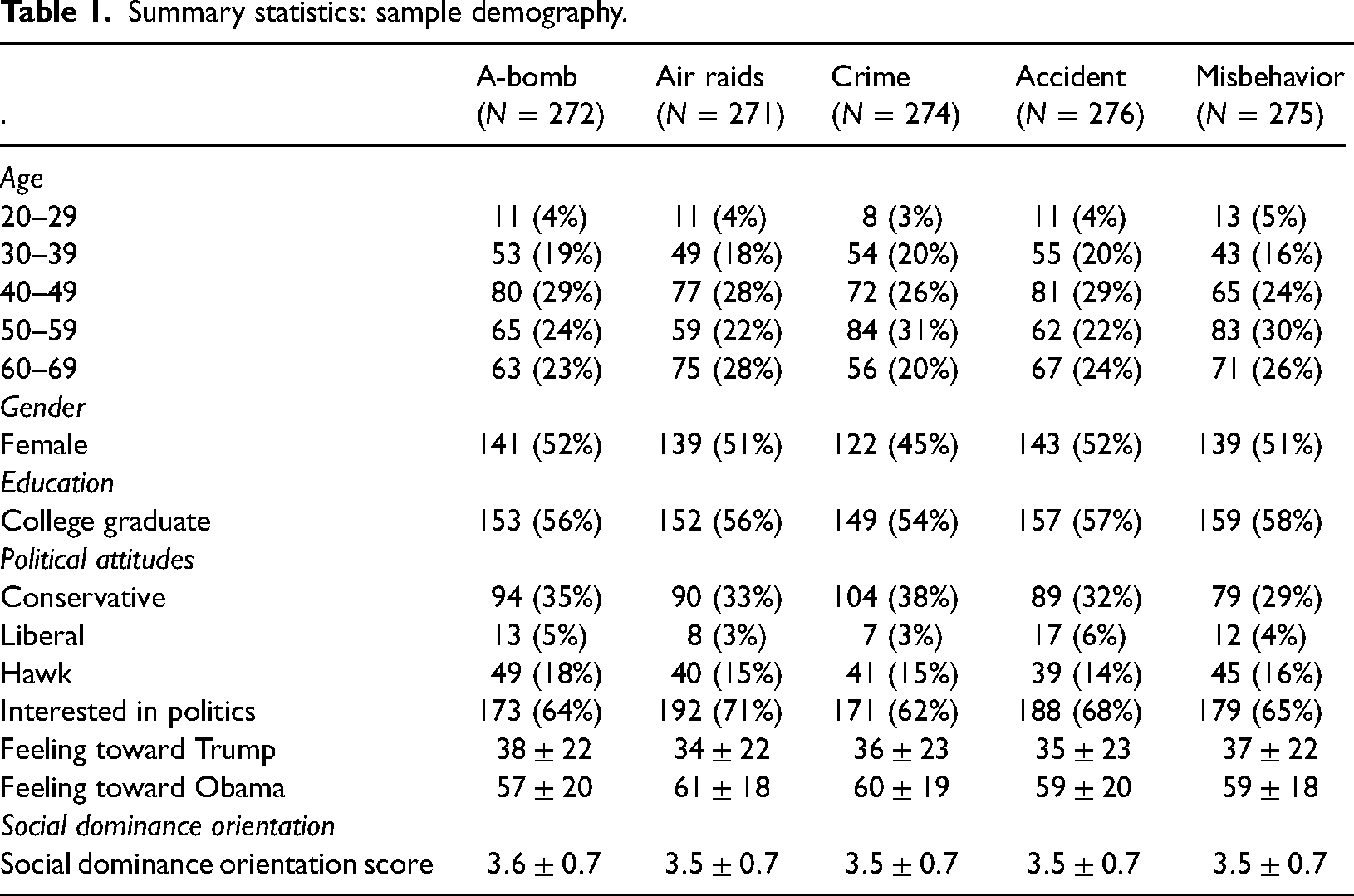
Our study started with questions on demography and on attitudes toward various political leaders, including former President Trump and former President Obama. Then, each participant was randomly presented with one of the five scenarios described in the next section.
Scenarios: US apology to Japan
We considered five scenarios in each of which the US or an American is the perpetrator and Japan is the victimized country. Two of the scenarios were associated with World War II: the use of nuclear weapons and air raids on Japanese cities. Three other scenarios depicted hypothetical harmful incidents in contemporary contexts: a sexual assault against a Japanese woman by a US soldier stationed in Japan, a maritime accident caused by a US merchant ship in Japanese territorial waters, and the president damaging a precious (kokuho-kyu) teacup at an official dinner.
These scenarios vary in terms of the US government's accountability. The government has full responsibility for military decisions during war. It should also be accountable for a sexual assault by a US soldier because the government controls the actions of serving military personnel. In contrast, the maritime accident in our scenario is caused by a private company, for which the government is not responsible. Lastly, the president himself, and not the government, is liable for damaging the teacup. This range of scenarios allows us to examine the degree to which contextual factors affect citizens’ evaluation of international apologies.
We randomly assigned one of these five scenarios to each respondent and then asked them the extent to which they thought the US president should apologize for the incident. Specifically, they reported their assessment of the need for a presidential apology on a four-point scale (“His apology is …” 1 = “necessary,” 2 = “desirable,” 3 = “nonessential,” 4 = “unneccesary”). We did not mention the name of the president at this stage. Thus, this question measured respondents’ baseline evaluation of each incident.
The experiment
The main part of the survey consisted of five choice tasks on US apologies issued (hypothetically) by President Trump. 8 We presented a pair of apology profiles to each respondent and asked them to choose the one they would be more likely to accept. 9 For each task, a pair of randomly generated apology profiles was presented on a separate screen. Each respondent completed five choice tasks. 10
Survey respondents were shown randomly chosen values of the five attributes of apologies. The first attribute was the amount of reparation offered by the US president to the Japanese government for handling the aftermath of the incident (testing Hypothesis 1). This treatment took five values (none, an apology gift, JPY 30 million, JPY 300 million, and JPY 3 billion). Offering no reparation was the base category. Giving a gift to show the sincerity of remorse is a common custom among Japanese, but less costly than reparation. Although the amount of reparation takes a wide range of values in the real world, we need to select a set of realistic values to obtain externally valid estimates in a conjoint analysis. One illustrative case is the collision between the submarine USS Greeneville and the Japanese-fishery high-school training ship Ehime Maru in 2001. Shortly after the collision, the Ehime Maru sank and nine people, including four high school students, were killed. The US government agreed to pay approximately JPY1.7 billion (US$13.9 million) to survivors and the families of victims. A more recent and widely reported case in Japan involved the Japanese government providing JPY1 billion for the elderly care of Korean “comfort women” survivors in 2015; this might have been used as a reference point by our respondents.
The second attribute was the novelty of the apology, represented by the number of precedents of the US president apologizing for a similar incident (testing Hypothesis 2). It took three values (none, once, and four times), and no precedent was the base category. We explicitly indicated that the preceding apologies, if any, were made for similar incidents, rather than the exact event that respondents were asked to consider. We used this wording to avoid deceiving respondents because the US government has never issued an apology for using A-bombs and conducting air raids during the war. We expected that respondents might think of other similar incidents, including nuclear tests and radiation accidents (e.g. the US$2 million restitution paid by the US government in response to the accidental irradiation of the Japanese fishing boat Daigo Fukuryu Maru (Lucky Dragon No. 5) and the Three Mile Island accident).
The third attribute that we examined was the formality of how an apology was made. This attribute represented the level of the apology's revocability (this is for testing Hypothesis 3). Apologies that are the most difficult to revoke are those made in a formal manner. Accordingly, we considered five methods of apology with varying degrees of formality: an official interview, an official document, an interview on a TV news program, an announcement made by the assistant to the president, and via the social networking services (SNSs) such as Twitter and Facebook. Using an SNS was considered the least formal method of apology. The base category was the official interview.
The fourth attribute was the voluntariness of the apology (testing Hypothesis 4). Apologies may be made voluntarily by the president or as a result of pressure by others. Therefore, we considered four different cases where different persons or institutions took the initiative in making or encouraging the apology. The base category was the case where the president himself took the initiative. The other categories were, in descending order of voluntariness, the president being advised to apologize by the US Congress, the British prime minister, and the Secretary-General of the United Nations.
The last attribute was included as a filler (Bansak et al., 2021) and to inform respondents about the political cost that the president incurs by apologizing. Long and Brecke (2003: 20) hypothesized that an apology making a political leader vulnerable would be more successful in bringing about reconciliation. However, they found that political vulnerability did not affect international reconciliation when a comparative case study was conducted; it was only relevant in reconciliation processes in the context of a civil war. Accordingly, this information might be an appropriate filler. We considered the backlash from the domestic public and repercussions for other countries that make the president politically vulnerable. Some Americans would strongly disapprove of their president apologizing for the use of A-bombs, considering that 56% of them in a 2015 poll said that the attacks were justified to achieve early termination of the war, although support for this position is declining in general (Stokes, 2017). Moreover, following a series of apologies by US government officials, including President George W. Bush, for the Ehime Maru incident, an op-ed in The Washington Post expressed resentment and claimed that “[t]he United States […] has become the most apologetic of nations. We are sorry for just about everything,” and “it's hard to apologize for an accident” (Cohen, 2001). In the international arena, countries that have similarly endured similar airstrikes or crimes perpetrated by individuals associated with the US military might express discontent if the US president apologized only to Japan. A US apology for historical issues might also have repercussions for international society, especially among Asian countries, considering that imperial Japan inflicted unbearable suffering on other countries and regions during World War II. Likewise, for contemporary events, the president may be concerned that apologizing could increase an incident's salience and invite further criticism from international society. In sum, this attribute took four values: none, a backlash from the domestic public, a backlash from countries facing similar issues, and a backlash from international society. The situation with no backlash was the baseline category.
We generated a pair of apology profiles, combining the randomly chosen value of the five attributes: reparation (costliness), precedents (novelty), method (formality), initiative (voluntariness), and backlash (vulnerability). The order of attributes was also randomly chosen but fixed throughout the tasks for each respondent. We presented the randomly generated apology profiles to each respondent and asked them to choose which one they were more willing to accept. Respondents completed five choice tasks in total, with a new pair of apology profiles randomly generated for each task.
After completing the tasks, respondents answered post-experimental questions regarding their political attitudes and social dominance orientation (Mifune and Yokota, 2018; Pratto et al., 1994). They were debriefed at the end of the survey.
Results
Pre-attitudes about apology
We first present a descriptive analysis of respondents’ attitudes on the need for a presidential apology in their randomly assigned scenario. As shown by the results in Table 2, respondents demanded a presidential apology more strongly for some particular harms. Regarding the use of A-bombs, over half of the respondents (51%) answered that a presidential apology is necessary or desirable. The number decreased to less than half (40%) for the air raids during World War II. In contrast, when asked about a sexual crime by a US soldier and an accident involving a US merchant ship in Japanese waters, 75% of respondents answered that the president should apologize. The number reached almost 80% when respondents were asked about the president's personal wrongdoing.
Pre-attitude toward apology.
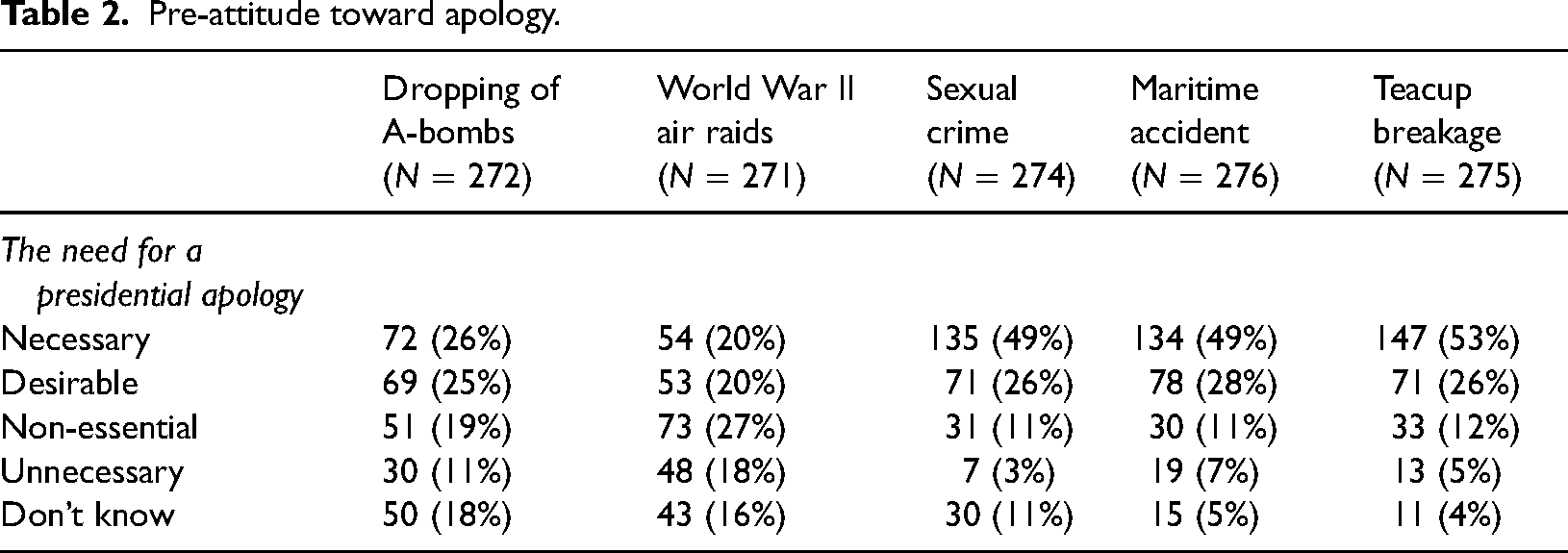
Although we lack comprehensive poll data on Japanese attitudes toward a US apology for its actions during World War II, in the Japan Times survey of over 600 self-selected Japanese immediately after President Obama announced his visit to Hiroshima in 2016, 38% of respondents said that he should apologize (Osumi and Kikuchi, 2016). The higher demand for an apology in our study might be explained by our response scale allowing respondents to choose partial agreement and the younger generation (particularly respondents in their twenties) being underrepresented in our sample.
Notably, we found no clear differences in apology demand between groups assigned the following three incidents: a soldier's crime, an accident involving a merchant ship, and the president's mishap. These incidents varied in the degree to which the US government was responsible for the harm. The president is clearly liable for the damage caused by his own action, and as commander in chief is ultimately responsible for problems caused by US troops. Conversely, the administration is not directly accountable for the accident involving a private company. Nevertheless, a substantial majority of respondents demanded a presidential apology in the maritime accident scenario. To be fair, we must admit that this is not the only difference in the three scenarios. The following argument should not be seen as a definitive conclusion that we can draw from the data. Further experimental studies on the demand for apology is expected to clarify this point.
Nevertheless, this observation suggests that respondents viewed an international apology through the lens of intergroup relationship, rather than in terms of political accountability. From respondents believing the president should apologize even for the maritime accident, we infer that they perceived the US as the target of collective blame. Studies on intergroup relations show that members of the victimized group blame and punish individuals who belong to the same outgroup as the wrongdoer, even though they are not directly involved in negative events (Denson et al., 2006; Lickel et al., 2006). Such folk notions of collective responsibility arise when the outgroup has high entitativity (Campbell, 1958; Denson et al., 2006). Because the perception of group entitativity is grounded in social interdependence among group members (Lickel et al., 2000) and sharing similar traits (Yzerbyt et al., 2001), we argue that the Japanese respondents perceived the US as a unified entity, despite the enormous diversity within the country.
The notion of collective responsibility provides one possible explanation, besides the peculiar nature of harms during wartime, for respondents’ greater demands for an apology for the three “ongoing” issues than those related to World War II. People blame other members of an outgroup for wrongdoings by an individual member because they infer that other members indirectly encouraged the act (commission), failed to prevent it (omission), or otherwise share a negative disposition associated with the perpetrator (Denson et al., 2006; Lickel et al., 2003, 2006). If collective blame is based on inferences of commission, omission, and/or disposition, it is more likely to be triggered by wrongdoers at the present time than those in the historical past. Moreover, a recent experiment by Delton and Krasnow (2017) shows that individuals punish an outgroup perpetrator for harming an ingroup member because they infer that they may be the next target and so are driven to deter the perpetrator. Applying deterrence theory (from social psychology) to an apology, it is suggested that recent wrongdoings invite more severe reactions than historic harms. 11
Influence of apology attributes on the likelihood of acceptance
We now test our hypotheses on the effects of attributes of an international apology. Figures 1–5 graphically present the results of a series of conjoint analyses for each scenario of a US presidential apology. For each scenario, we tested the effect of the following attributes: reparation (costliness), precedents (novelty), method (formality), initiative (voluntariness), and backlash (vulnerability). The attributes and their values are listed on the vertical axis. The horizontal axis indicates the average marginal component-specific effects of each attribute on the probability that a presidential apology is accepted, as opposed to the base level of the attributes. 12
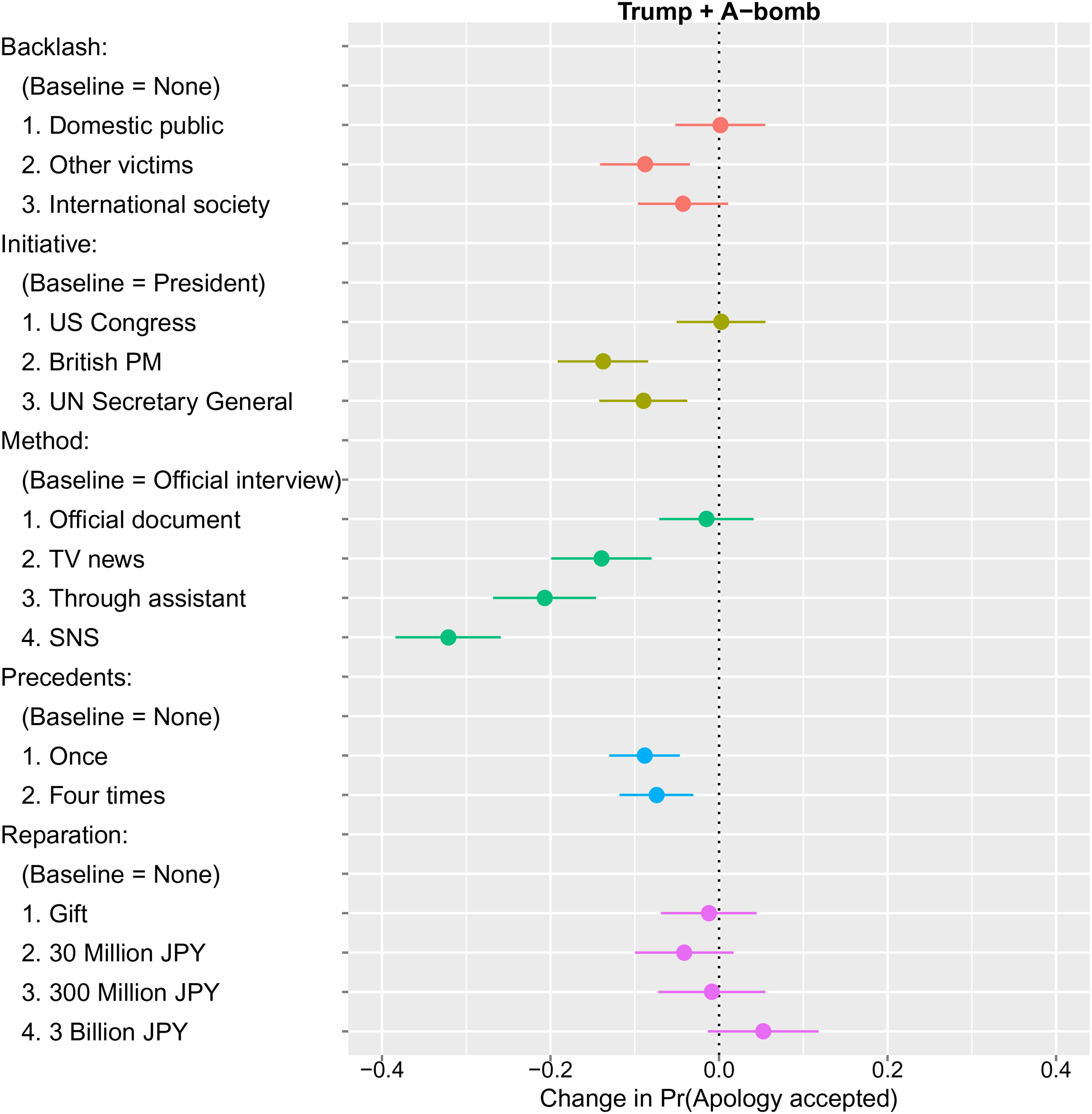
Impact of attributes on the probability of an apology for use of A-bombs being accepted.
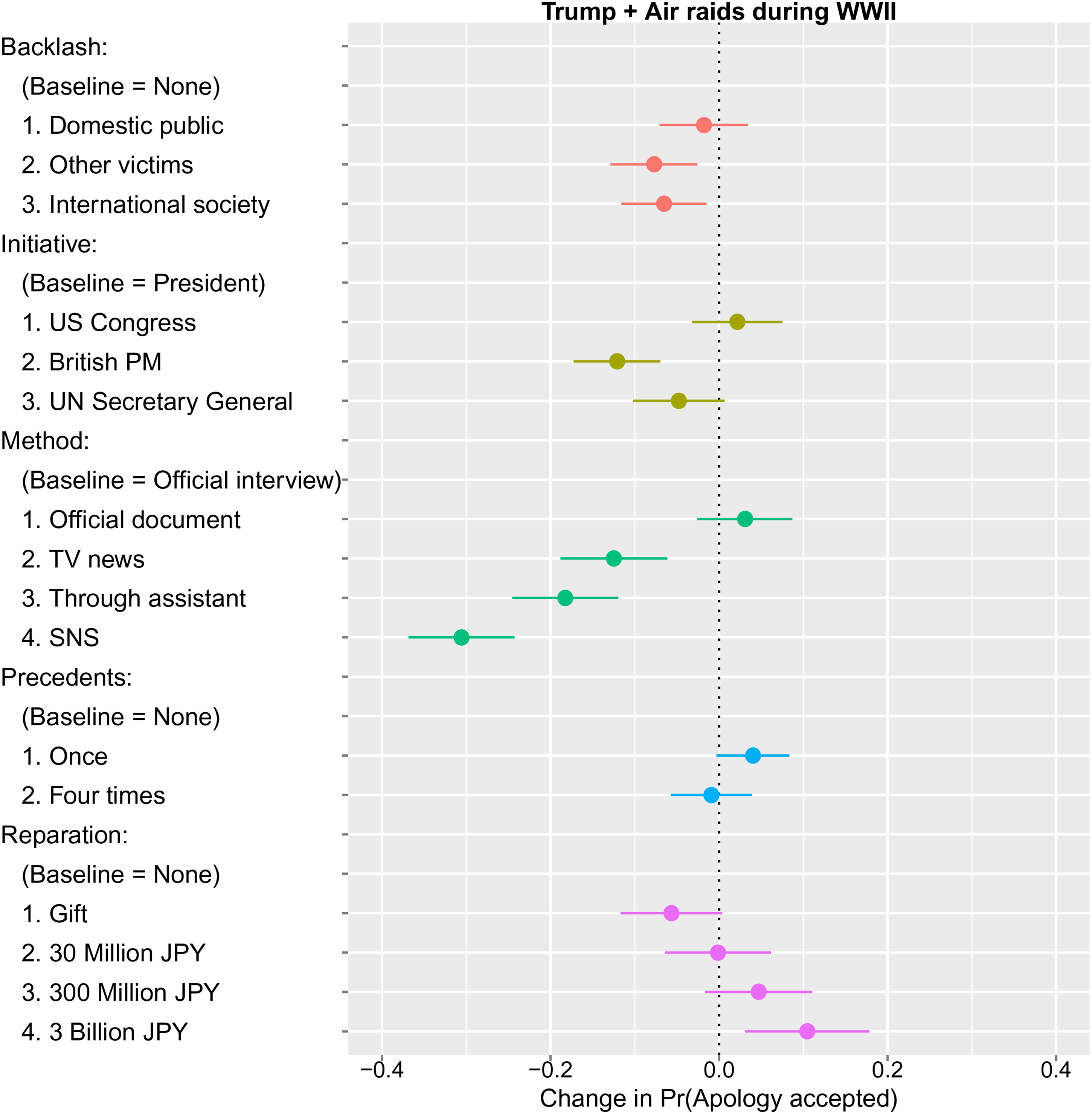
Impact of attributes on the probability of an apology for World War II air raids being accepted.
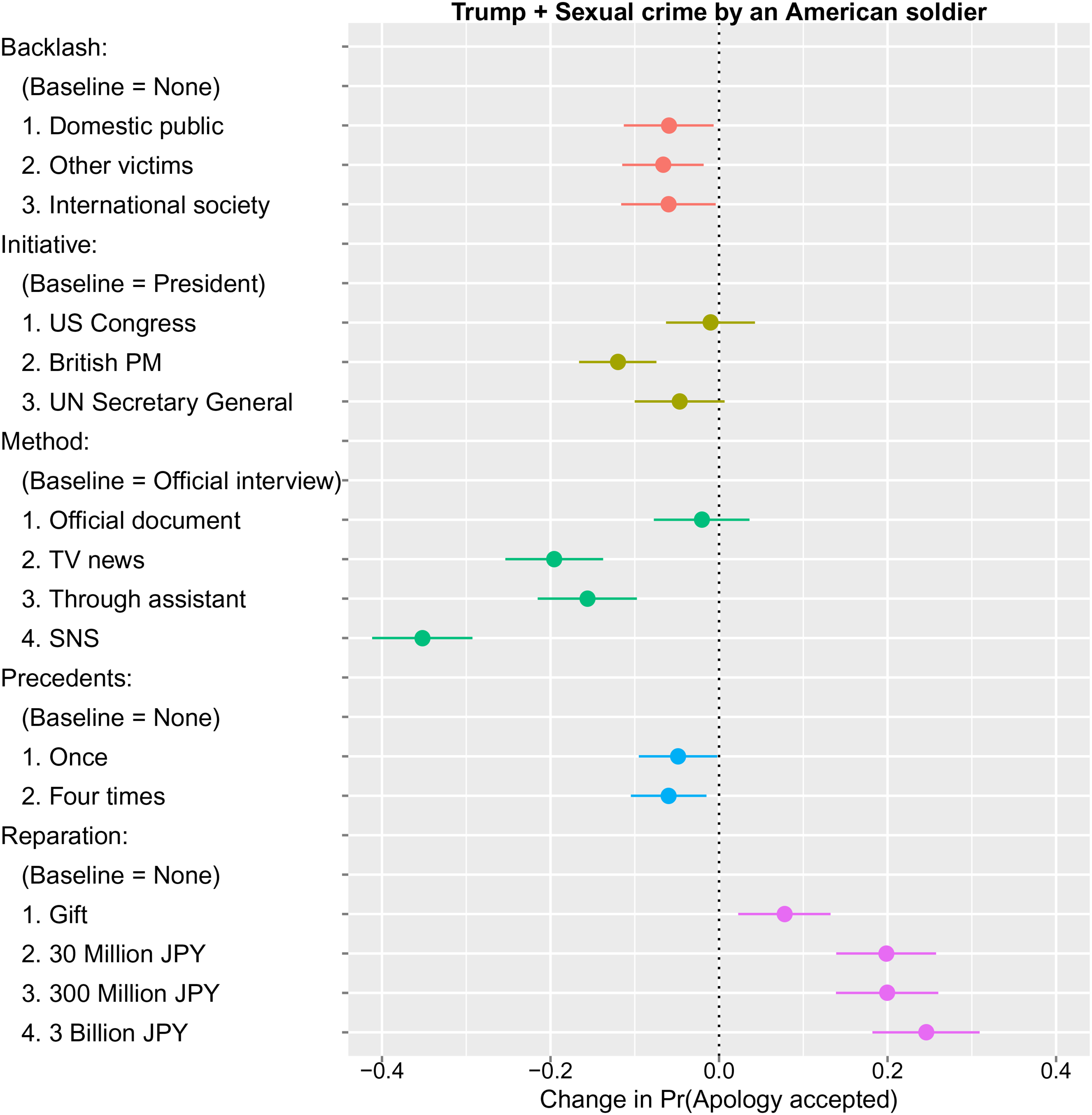
Impact of attributes on the probability of an apology for the soldier's crime being accepted.
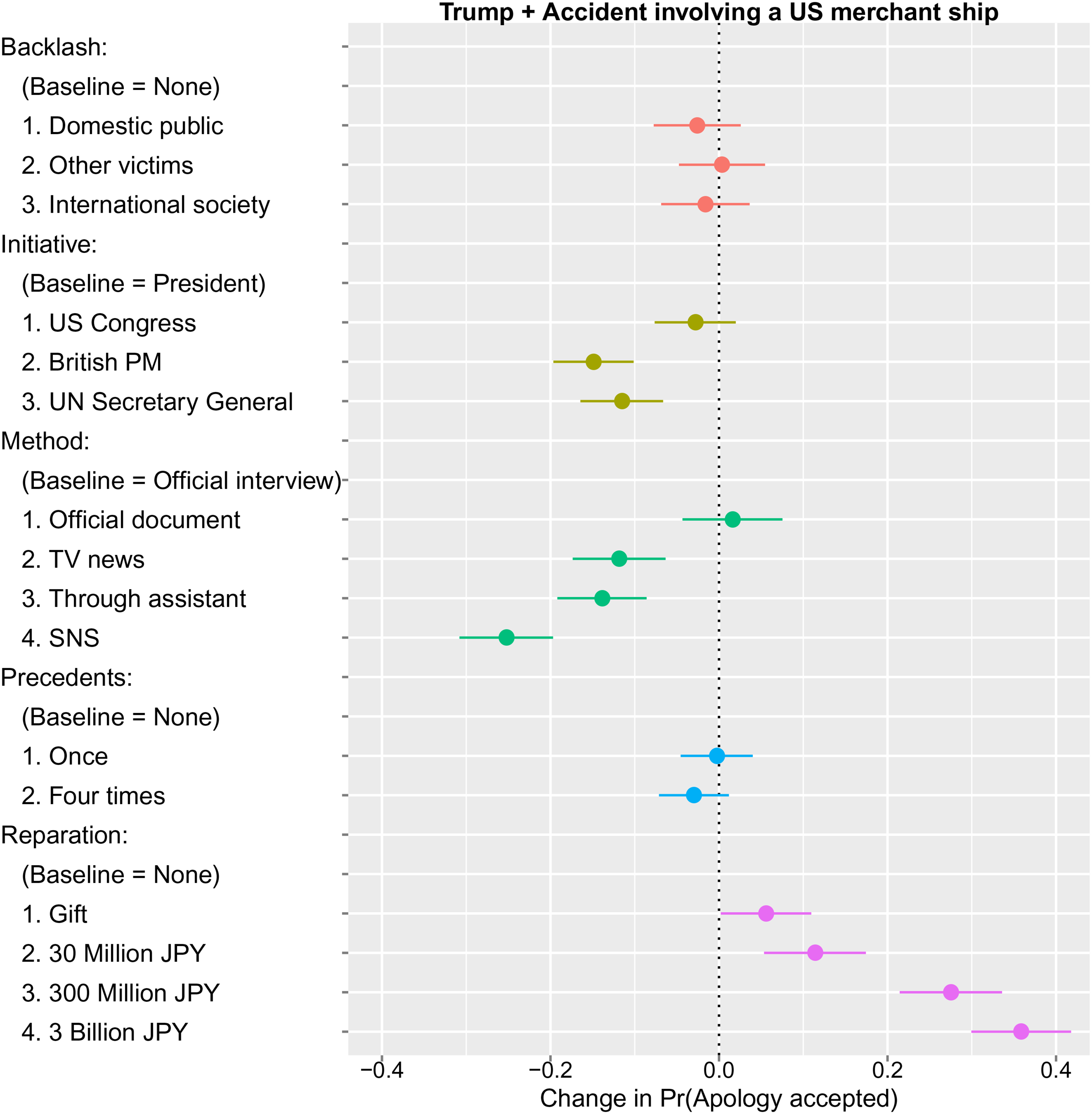
Impact of attributes on the probability of an apology for the maritime accident being accepted.
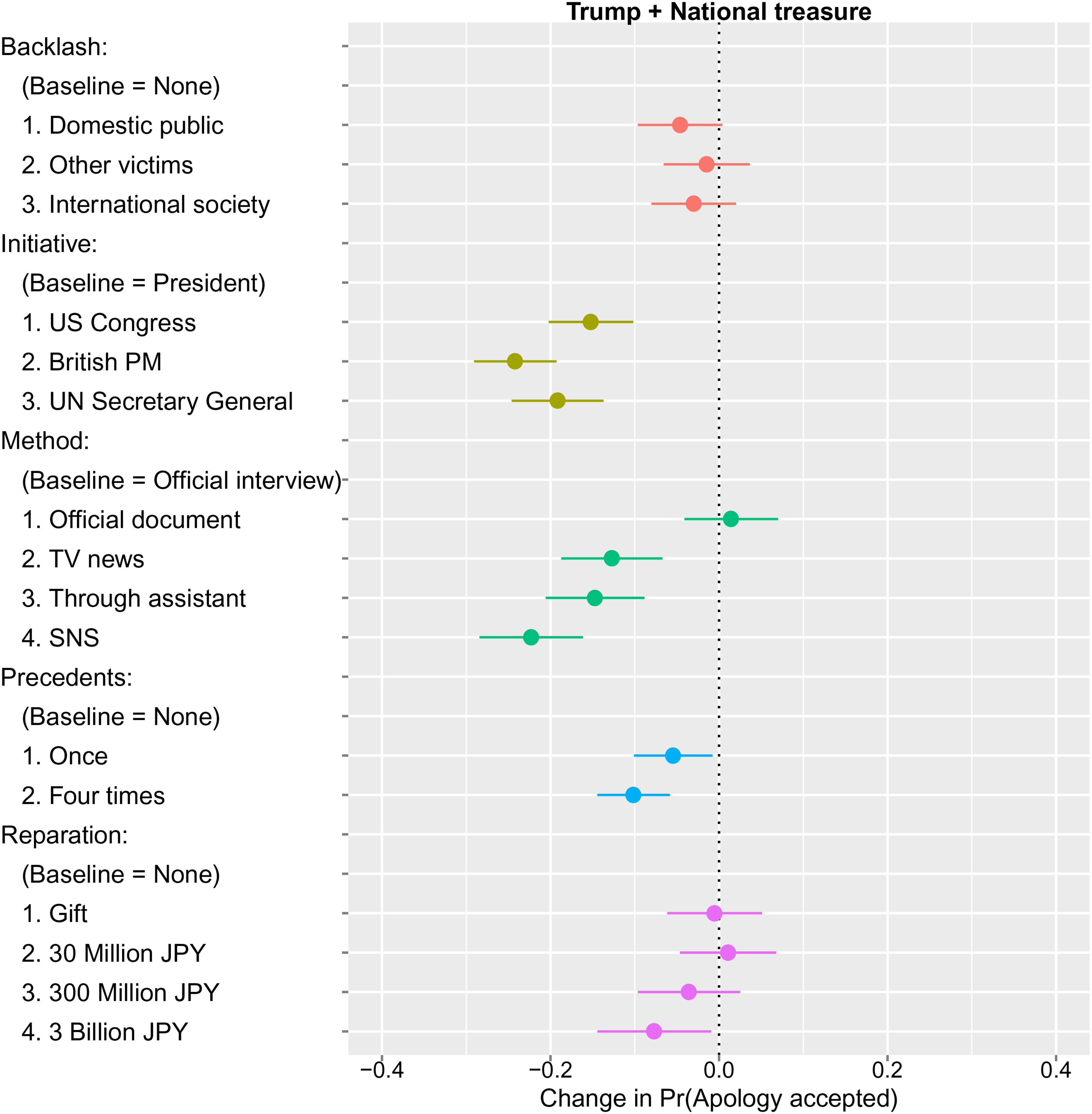
Impact of attributes on the probability of an apology for damaging the teacup being accepted.
We found that the respondents generally preferred apologies coupled with a larger amount of reparation (Hypothesis 1). This tendency was observed in the air-raid scenario (Figure 2), the soldier's crime (Figure 3), and the maritime accident (Figure 4). In these cases, an apology with a larger amount of reparation was more likely to be accepted. 13
However, the amount of reparation had no positive effect on the likelihood of acceptance for an apology for the use of A-bombs (Figure 1) and for damaging a national treasure (Figure 5). Regarding the use of A-bombs, we suspect that the amount of reparation offered was perceived as too small given the magnitude of the destruction. Still, although the effect of reparation was not distinguishable from zero, it followed the same pattern as in other scenarios: the higher the reparation offered, the more respondents were willing to accept the apology. 14
In contrast, offering monetary compensation for damaging a national treasure (even JPY3 billion) backfired (Figure 5). This result echoes the insights of Atran et al. (2007) and Ginges et al. (2007), who demonstrated in the context of the Israel–Palestine conflict that people expressed outrage when asked to accept material compensation for damage to their sacred valuables. Although most national treasures are not perceived as sacred, they are not amenable to economic exchange mediated by money. Therefore, respondents might have found monetary compensation inappropriate for damage to a national treasure and were thus less likely to accept an apology accompanied by a reparation payment. 15
Regarding Hypothesis 2, we expected that the more novel an apology, the greater the likelihood of its being accepted. Somewhat supporting our expectation, respondents preferred an unprecedented apology for the use of A-bombs, the soldier's sexual crime, and the damage to a national treasure. However, for the World War II air raids and the maritime accident, the number of previous apologies for similar incidents did not affect the likelihood of apology acceptance. This difference might stem from respondents’ knowledge that US presidents have never apologized for the air raids or soldiers’ crimes.
Consistent with Hypothesis 3 on the publicness and formality of an apology, respondents were more willing to accept an apology made formally, such as in an official interview or official document. Apologizing in a TV news program was less favored, as was delivering an apology through an assistant, which respondents probably perceived as indicating a lack of commitment. The least effective way of apologizing was clearly using social media.
The voluntariness of an apology was also found to influence the likelihood of acceptance, as predicted by Hypothesis 4. Respondents appreciated the president taking the initiative in making an apology, but were less likely to accept an apology made under external pressure. Interestingly, for four of the five incidents (the exception being damage to national treasure), advice from the US Congress did not undermine the value of an apology in comparison with one made on the president's own initiative. This finding suggests that respondents conceived the perpetrator as a group; that is, a US soldier, a US merchant ship, the US Congress, and the US president constituted one perpetrator group, even though they might be in dispute with one another in the domestic political arena. This group-based thinking also underlies the general tendency to expect a presidential apology for an incident involving US perpetrators despite the apparent lack of government liability. However, in the scenario where the president personally caused harm, respondents expected the president to apologize on his own initiative, and so were less likely to accept an apology advised by the US Congress.
The last attribute, backlash, was inserted as filler information but our findings warrant consideration. An apology might be more likely to be accepted when it incurs political costs for the president, which serve as a costly signal of his sincerity. Contradicting this supposition, a backlash from other countries discouraged respondents from accepting the president's apology. 16 One possible explanation is that respondents received a cue from the criticism by other countries and international society (e.g. Kuklinski and Hurley, 1994; Lupia and McCubbins, 1998). Another possibility is that, as hypothetical victims, they might have doubted the perpetrator's commitment to reconciliation, suspecting that strong opposition from other countries might cause the president to withdraw his apology. Interestingly, opposition from the domestic public did not significantly undermine the value of a presidential apology. This finding is surprising, given the prior argument that domestic opposition spoils a reconciliatory initiative (most importantly by Lind, 2011). One possible explanation is that the positive and negative effects of domestic opposition canceled each other out here. On the one hand, as domestic opposition undermines the president's reputation at home, it signals the personal sincerity of the president. On the other hand, it could provoke doubt about the goodwill of the perpetrator's group.
Discussion
One question that arises is whether the above results can be generalized or were induced by the idiosyncratic personality of President Trump. To address this issue, assuming that conservative Japanese have a more positive attitude toward Trump, we first replicated the above analyses after dividing our sample into conservatives and others. 17 The findings remained consistent across groups, and we found little difference between them. 18
For a more direct comparison, we repeated the experiment replacing President Trump with President Obama. In the follow-up study, we collected 1358 respondents and asked them to assume that President Obama was still in office and would make the apology. Aside from changing the identity of the president, the entire experimental procedure was unchanged.
The major findings remained consistent. 19 For instance, we found that an apology delivered by social media was least likely to be accepted, showing that this method was generally perceived to lack seriousness regardless of the president's personal traits. Although this finding may seem obvious, we believe that confirming a widely accepted yet hardly tested claim is one of the major contributions of this article. Overall, although there were minor differences in findings between the two studies, we feel safe in asserting that our findings were not affected by factors that specifically relate to President Trump.
Another issue is whether preferences on apology attributes depend on people's pre-attitude toward the need for apology. To investigate this possibility, we conducted an analysis of apologies for the use of A-bombs and World War II air raids, dividing our sample into those who demanded and those who did not demand a presidential apology. 20 We found little difference in attribute preferences between those who considered that the president should apologize and those who did not. 21
Conclusion
This article investigated the attributes that make an international apology more likely to be accepted by the victimized group. Our conjoint analysis demonstrated three key attributes of an effective international apology. First, the victims are more likely to accept an apology accompanied by a larger amount of reparation. The reparation amount is the most obvious expression of the costs incurred by the perpetrator, and so signals the perpetrator's sincerity in seeking reconciliation with the victims. However, reparation is not omnipotent: we found that it may backfire when offered to compensate for something not amenable to the market economy.
The second key attribute is the formality of apology, which we found to have the largest effect on the likelihood of acceptance by victims in most scenarios examined. An official apology is the most preferred method, whereas delegating the apology to an assistant or making it on social media significantly reduces the likelihood of acceptance. An official apology is seen as particularly valid because it reduces suspicion that the reconciliatory action might be revoked in the future.
The third key attribute to appeal to victims is that the political leader of the perpetrator's country takes the initiative in making an apology. We found that an apology made under pressure from a third party was perceived less favorably. Voluntariness is appreciated because it signifies the sincerity of the perpetrator group. An important implication of this finding is that third-party mediation may not work and may even backfire, even if the mediator is genuinely peace-motivated. Although conflict management and resolution literature argues that a mediator can help adversaries to share information and strike a bargain (Beardsley, 2011; Beber, 2012; Kydd, 2003, 2006), it seems that third-party intervention may not be desirable for achieving reconciliation at the emotional level.
This article makes two significant contributions to the literature and practice. First, to the best of our knowledge, this is the first study to identify which attributes of an international apology are most important using a conjoint analysis approach. We found that the amount of reparation, irrevocability, and voluntariness are the most important factors in encouraging the victims to accept a foreign political leader's apology. That is, apologies incurring costs and demonstrating commitment are more effective. This finding reveals that an international apology is future oriented: as well as healing past wounds, it is an important policy tool for building trust and a better relationship among countries.
Second, this article helps policy-makers to better understand the mechanism through which an international apology is accepted and so craft more effective apologies, when necessary. The most effective apology is made on the initiative of the political leader of the perpetrator country, delivered in an official manner, and accompanied by the offer of a substantial amount of reparation. An important caveat is that offering reparation for harm to a “sacred value” may be counterproductive. Fortunately for politicians, the factors we found important are those they can manipulate, although they cannot manipulate the number of preceding apologies or how other countries react. More precisely, these three factors are vital because they can be manipulated by the perpetrator's group and hence can convey its will.
In addition, the experiment described in this paper suggests that people view international apologies not through the lens of political accountability, but in the framework of collective guilt—in the experiment, people demanded an apology from the president not just when he was politically responsible but also for things that at first glance did not seem to be the president's responsibility; the accident by a private US company is such a case. In other words, it can be inferred that people regard the US and Americans as one group and think that the president should apologize on its behalf. In addition, the idea of intergroup relations seems to be the reason why people demand apologies more strongly for current harmful acts than for past ones. Incorporating this viewpoint of intergroup relations may be beneficial for future international relations research.
The reported study has some inherent limitations owing to its methodology. To single out individual elements that increase/decrease acceptability of political apologies, we relied on the conjoint analysis. However, this approach necessarily sacrificed the reality of the materials, which were after all “hypothetical” political apologies. Accordingly, one may question whether the results of this study can be generalizable to the realistic political settings. Future studies need to compare the present findings with outcomes of the real-world political apologies, which are, however, not ideal to assess the effects of individual elements. Therefore, from a different point of view, this limitation points to a fruitful ground for cross-fertilization between the international relations and social psychology approaches.
We also admit that our study exclusively focused on the US–Japan relationship, which has been friendly after World War II, and thus may not readily extend to more antagonistic contexts. However, the relative ease of vignette studies (including the conjoint analysis approach) allows researchers to conduct comparable studies in different contexts. Whether the findings of this study can be extended to other contexts, such as Israeli–Palestinian conflict and post-civil war reconciliation, is an empirical question that future studies need to address.
Footnotes
Acknowledgements
The authors thank Ayano Tajima for her excellent research assistance; Charles Crabtree, Yusaku Horiuchi, Risa Kitagawa, Jennifer Lind, the anonymous reviewers, and the panel participants at the Asian Politics Online Seminar Series and the Center for Experimental Research in Social Sciences at Hokkaido University for their insightful feedback; and JSPS KAKENHI (17H06189) for their financial support.
Declaration of conflicting interests
The authors declared no potential conflicts of interest with respect to the research, authorship, and/or publication of this article.
Funding
The authors disclosed receipt of the following financial support for the research, authorship, and/or publication of this article: This work was supported by the Japan Society for the Promotion of Science, (grant number 20K20278).

Supplemental material
Notes
References
Supplementary Material
Please find the following supplemental material available below.
For Open Access articles published under a Creative Commons License, all supplemental material carries the same license as the article it is associated with.
For non-Open Access articles published, all supplemental material carries a non-exclusive license, and permission requests for re-use of supplemental material or any part of supplemental material shall be sent directly to the copyright owner as specified in the copyright notice associated with the article.
