




Abstract
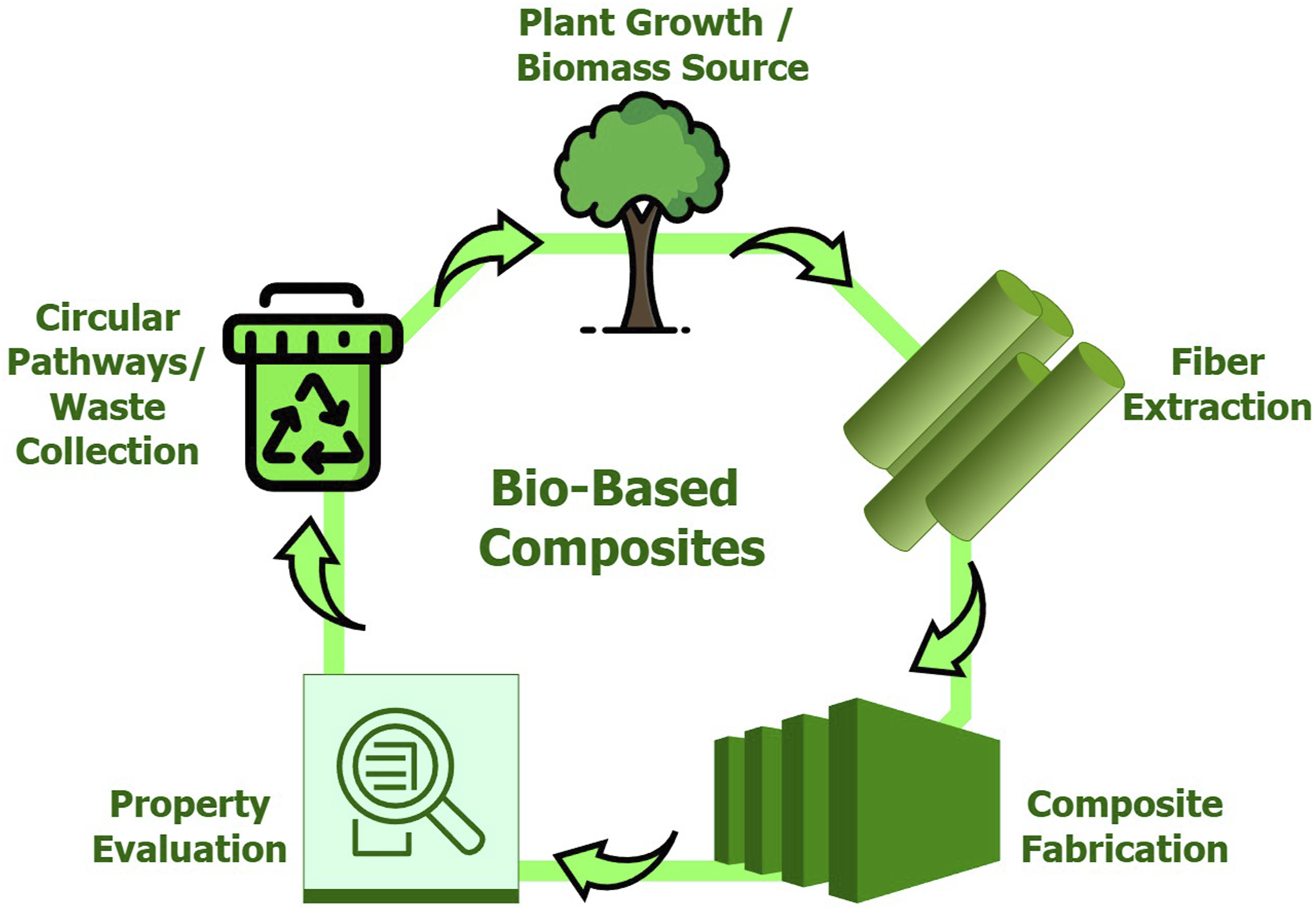
Growing environmental awareness and the depletion of fossil fuel sources have propelled the development of sustainable, bio-based composite materials as competitive options to traditional synthetic composites. This review offers a detailed examination of recent advances in their classification, manufacturing processes, properties, and applications. The combination of natural fibers with biodegradable matrices, along with innovative manufacturing methods such as compression molding, injection molding, and automated fiber placement, has significantly improved the mechanical and structural qualities of bio-based composites. Their environmental advantages are assessed through life cycle analyses, highlighting lower carbon footprints and biodegradability. Various uses of sustainable bio-composites are also explored. Despite notable progress, challenges such as moisture absorption, mechanical variability, and raw material consistency remain. The review concludes with emerging developments in hybrid composites, nanomaterial integration, and future prospects to enhance scalability, performance, and alignment with circular economy principles.
Keywords
Get full access to this article
View all access options for this article.