



Abstract
Grand challenges require coordinated and integrated responses that draw on different occupational communities’ competencies that might otherwise remain in isolation. We theorize how grand challenges can be tackled by mobilizing landscapes of practice – a totality of local communities that constitute a ‘living knowledge area’ within a given domain. The landscapes of practices concept helps to understand the deployment of participatory architectures, which in the current literature is considered essential for addressing grand challenges. To this end, landscapes of practice emphasize the mutual accountability between networks and communities across informal and institutional settings and the need to learn about the landscapes of practice rather than focusing only on developing local competencies. Thus, landscapes of practice mobilization is complex and requires collective practical judgment while facing the arising socio-political tensions. Drawing on a study focused on Australian mental health care, we propose four pillars enabling the mobilization of landscapes of practice, and constituting general guiding principles – determining and legitimizing the landscapes of practice’s purpose, deploying landscapes of practice-based governance structures, motivating and connecting membership across the landscapes of practice, and demonstrating the value of the mobilized landscapes of practice. Thereby, we propose a framework of mobilizing landscapes of practice that serves as a reference for network leaders and managerial practice while advancing the academic debates on grand challenges and situated learning.
Introduction
Societies are increasingly faced with complex, large-scale, and impactful challenges such as healthcare pressures, rising inequalities, political crises, and climate change. In the management literature, such complex and multifaceted challenges are labelled as grand challenges (GCs) or meta problems (Whittington and Yakis-Douglas, 2020). Although GCs differ from one another, it is recognized that they all require coordinated responses at the institutional and inter-organizational levels (Burgelman et al., 2018; Jarzabkowski et al., 2019). The pursuit of GCs can involve different actors, including advocacy groups (Olsen et al., 2016), whistleblowers (Whittington and Yakis-Douglas, 2020), as well as local citizens, professionals, and international volunteers (van der Giessen et al., 2021). Scholars have also focused on unpacking the strategies required for addressing GCs (Berrone et al., 2016; Williams and Whiteman, 2021). For example, authors have explored the coordination of multi-level stakeholders across different jurisdictions (George et al., 2016) and how the responses to GCs entail collective sensemaking and thereby enact organizational actors’ situations (van der Giessen et al., 2021).
In this article, we add to these debates as we develop an argument that the deployment of participatory architectures and joint action strategies (Ferraro et al., 2015) require further problematization in terms of the socio-political tensions and demands they may impose on organizations across practice boundaries. Existing research has talked about ‘multi-stakeholder partnerships for solving complex problems’ (Gray and Purdy, 2018), ‘intersistial spaces’ as informal occasions of engagement across institutional fields that can lead to the emergence of practices (Funrari, 2014), ‘collective environmental entrepreneurship’ that centres on joint partnerships oriented at adapting to GCs (Doh et al., 2019), and the temporal considerations relevant to similar complex collaborations (Jarvenpaa and Välikangas, 2022). Our contribution to understanding participatory architectures in the context of GCs is by adapting the situated learning perspective (Lave and Wenger, 1991) and the related concept of landscapes of practice (LoPs) (Wenger-Trayner et al., 2015). LoPs is a complementary concept to communities of practice (CoPs) that are close-knit (Rennstam and Kärreman, 2020), and networks of practice (NoPs) that are loose social learning formations (Brown and Duguid, 2001; Vaast and Walsham, 2009) because it refers to the totality of communities representing the same ‘living knowledge area’, such as nursing (Wenger-Trayner et al., 2015). This means that LoP is a suitable unit of analysis when adopting the situated learning lens for addressing large phenomena such as GCs, and it does not replace CoPs and NoPs but encompasses them (Pyrko et al., 2019).
LoPs point to the mutual knowledge-based accountability of dispersed practitioners who may not know each other but rely on the knowledgeability of the structure of the LoP and their collective competence and professional wisdom in order to carry out their jobs (Wenger, 1998). Developing occupational networks and communities spanning organizational boundaries is essential for addressing complex and interrelated problems (Gherardi and Nicolini, 2002; Kirkman et al., 2013). Instead of simply acquiring more knowledge, networks and communities can connect the ‘right people’ with the ‘right knowledge’ (Barley et al., 2018; Kuhn and Jackson, 2008). And yet, working across practice boundaries (Bechky, 2003) and managing inter-organizational networks and communities has proven challenging (Currie and White, 2012; Nicolini et al., 2022), and the formed networks can suffer from stalling and siloing (Välikangas and Jarvenpaa, 2021). While responding to GCs is located across the LoP, effective mobilization of LoPs can translate into a more intentional and better-informed tackling of GCs.
Empirically, our discussion is grounded in a two-year study of Mental Health Networks (MHNs) in Australia to coordinate activities and knowledge across the LoP of mental health. We identify four pillars that characterize the critical guiding principles concerning the mobilization of LoPs: (i) determining and legitimizing the LoP’s purpose, (ii) deploying LoP-based governance structures, (iii) motivating and connecting membership across the LoP, and (iv) demonstrating the value of a mobilized LoP. With respect to these pillars, we set out to answer a practical and theoretical question: “how can LoPs be mobilized to support participatory architectures and joint action strategies for addressing GCs?”
While addressing this aim, we observe that working across LoPs means that practitioners and organizational leaders are exposed to ambiguous and bewildering situations, which is in line with the literature emphasizing the sheer complexity of GCs (Williams and Whiteman, 2021; Wright and Nyberg, 2012). As Shotter and Tsoukas (2014b: 380) note, ambiguous and bewildering situations require the exercise of judgment to navigate ‘the inner landscape of available possibilities’ in practice. GCs, as a consequence of their inherent complexity, face an exceptionally high range of available possibilities – thus calling for sound practical judgment to be exercised (Jarzabkowski et al., 2019). To this end, we adopt a performative view of phronesis (Antonacopoulou and Sheaffer, 2014; Contu, 2022; Shotter and Tsoukas, 2014a, 2014b). As Tsoukas (2018) elaborates, phronesis entails navigation through practices that is not merely an intellectual activity but constitutes an essential relational and moral structure – how to engage with other people to build a better future and well-being for everyone. Therefore, in our study, phronesis explains how collective leadership in LoP mobilization entails managing socio-political tensions and possibly conflicting demands within a dynamic context. These dynamics are shown in the model of mobilizing LoPs to address the GCs, which is central to our contribution.
In the following section, we review the literatures concerned with situated learning, GCs, and phronesis. Then, after presenting our methodology, we show the findings of our study with MHNs in Australia and outline the framework of mobilizing LoPs to address GCs. Next we discuss ‘what can go wrong’ during such endeavours from the socio-political perspective. In effect, we develop an argument for why and how, LoPs, when mobilized, can serve as a valuable concept in deploying robust action strategies for solving GCs of today.
Theoretical foundations
In this section, we characterize LoPs as a fertile lens for investigating how to address contemporary GCs. To this end, we demonstrate that the understanding of the joint action strategies for managing GCs, in particular participatory architectures (Ferraro et al., 2015; George et al., 2016), can be helpfully sharpened using the LoP concept. LoPs account for the organic learning, knowledge sharing, and practice dimension entailed in working across teams, communities, and organizations, when tackling GCs (Wenger, 1998; Wenger-Trayner et al., 2015). Therefore, we problematize the socio-complexity tensions in mobilizing LoPs within the GC initiatives and emphasize the need for exercising phronesis. As a result, we achieve a richer picture of the problems that arise when collaborating on GCs across LoPs – demonstrating that knowledge sharing and collaboration do not necessarily go hand-in-hand and may lead to conflict or tensions. This conceptual framing, in turn, serves as the foundation for our subsequent discussion regarding the four pillars for mobilizing LoPs to address GCs and its practical and theoretical implications.
Situated learning as a foundation for landscapes of practice
The idea of LoPs has its roots in the formulation of situated learning by Lave and Wenger (1991). Building on Lave’s former anthropological research, these authors propose a view on learning that essentially entails an investment of identity and a social formation of a person. Therefore, learning and knowledge are considered integral elements of people’s everyday lives, observed when interacting with others or using social products that carry knowledge representations such as books or other forms of materiality. A key element of situated learning is the idea of legitimate peripheral participation, which portrays the importance of gaining meaningful access to practice to become socialized as a competent practitioner (Beane, 2019; Kellogg et al., 2021; Spanellis et al., 2021).
Lave and Wenger's immediate result was the formulation of communities of practice (CoPs) – groups of people who interact regularly and develop a local practice that is a property of their community (for a detailed review, see: Nicolini et al., 2022). CoPs were famously introduced to the management literature by Brown and Duguid (1991) and elaborated further by Wenger (1998), effectively translating into numerous academic debates that have continued in the leading management journals and beyond (e.g. Pyrko et al., 2017; Rennstam and Kärreman, 2020; Thompson, 2005). In addition, situated learning and CoPs have informed the literature concerned with knowing within the practice perspective (Nicolini, 2012). This literature emphasized the relational and performative understanding of knowledge as a process rather than as content transferred between people and organizations in a relatively non-problematic way (Corradi et al., 2010; Gherardi and Nicolini, 2000).
Further developments have shown the need to account for more temporary, broader, and dispersed social formations connected within the boundaries of interrelated practices (Amin and Roberts, 2008). Researchers have introduced NoPs, which are looser social learning formations where people are connected with the same practice but are not necessarily mutually engaged (Brown and Duguid, 2001; Vaast and Walsham, 2009). More recently, academics have explored landscapes of practice, which refers to a totality of communities representing the same living knowledge area, such as nursing or computer programming (Pyrko et al., 2019; Wenger-Trayner et al., 2015). Thus, while NoPs connect practitioners in loose social formations, LoPs account for the living knowledge and the meta-community in which practitioners become accountable to one another (Wenger, 1998).
Hence, there is an increasing appreciation that knowing and learning are situated locally, but they are also trans-situated and distributed across multiple contexts that are inevitably accountable to one another (Nicolini et al., 2017). In combination, NoPs and LoPs, build on the ideas of the smaller size and scope CoPs (Pyrko et al., 2019). And at the same time, by scaling the situated learning across localized contexts, they afford a language for theorizing how situated learning can be operationalized to tackle large phenomena such as GCs that call for inter-organizational and inter-institutional responses.
Operationalizing situated learning and its socio-political complexities
The promise of operationalizing situated learning in organizational settings, and different types of networks and communities, was one of the primary reasons for the rapid growth in this field’s popularity in the late 1990s and throughout the 2000s (Nicolini et al., 2022). In particular, CoPs have been incorporated into the knowledge management consultants’ toolbox (Barley et al., 2018) with the expected benefit of improved innovativeness, performance, and more effective sharing of knowledge (Liedtka, 1999). However, the prescriptive approach to facilitating organizational communities has been riddled with significant difficulties resulting from socio-political tensions and complexity. Such socio-political tensions have been observed within communities (Currie and White, 2012) and between managerial attempts at developing professional communities and self-governed situated learning (Huysman, 2016). To this end, it must be noted that the relations within CoPs are not necessarily harmonious, and consensus about what matters in practice is continuously renegotiated. Communities can distrust each other’s competencies (Heizmann, 2011) as they experience conflicting identities and rivalry (Hong and O, 2009). Networks and communities are also likely to use power to marginalize other networks and communities (Contu and Willmott, 2000, 2003; Macpherson and Clark, 2009) and less experienced practitioners (Ferlie et al., 2005; Mørk et al., 2010).
As part of the tensions between managers and communities, managers and consultants can be prone to use CoPs more as a rhetoric device (Swan et al., 2002) instead of an activity within which to invest resources in legitimizing sustained and regular communities as well as situated learning activities (Macpherson and Clark, 2009; Roberts, 2006). Prescriptive managerial initiatives can be detrimental to self-governed learning in communities (Harvey et al., 2013; Thompson, 2005). As a result, authors like Duguid (2008) and Lave (2008) have lamented the departure of the situated learning literature from its descriptive and analytical character toward a prescriptive orientation, being seen as a managerial tool. Nonetheless, some degree of managerial support is possible in coordinating situated learning and communities, but it requires adjusting managers’ formal obligations to account better for practitioners’ learning needs (Valentine, 2018). While situated learning entails an investment of identity, strategic goals change faster than identities, and therefore it is important to strike a balance between strategic direction and communities’ organic purpose and rhythm (Macpherson and Antonacopoulou, 2013). Therefore, managers can design strategic goals and activities that inspire engagement and a sense of identification from practitioners participating in professional communities (Macpherson et al., 2020). Such balance is developed through reflective managerial practice and the development of phronesis – practical judgment that is tacit and rooted in experience (Antonacopoulou and Sheaffer, 2014; Shotter and Tsoukas, 2014a; Vaara and Whittington, 2012). This, in turn, leads our discussion to the question of judgment and fine balancing acts when addressing GCs.
The role of judgment in mobilizing landscapes of practice to address grand challenges
GCs are, by definition, problems that are large, complex, overwhelming, and ‘wicked’. GCs may not even be entirely solvable but still require coordinated responses to mitigate their ramifications (Williams and Whiteman, 2021). Meanwhile, the endeavour of LoP mobilization requires coordinating across different teams, occupations, and CoPs – and such multi-partner coordination is often riddled with difficulties (Nicolini et al., 2022). Since LoPs represent groups of people who may not know one another, are used to doing things differently, and speak distinct technical languages, connecting and mobilizing these distinct groups poses a challenge in its own right (Pyrko et al., 2019; Wenger-Trayner et al., 2015). As a result, mobilizing LoPs to address GCs can be bewildering, and navigating through such difficult situations in practice calls for practical judgment (Jarzabkowski et al., 2019).
As pointed out by Vaara and Whittington (2012: 314), highly complex organizational environments call for a stronger engagement with the role of judgment. However, there are different outlooks on judgment in the management literature. Some authors follow a ‘rationalist’ view of judgment, where judgment is seen primarily as a deliberate assessment of options and information to make a better decision (Feiler et al., 2013; Kraan and Bedford, 2005), an evaluation of fairness or consistency (Young et al., 2013), or prediction of future scenarios (Phadnis et al., 2015). Nonaka and Takeuchi (2011) write about collective and distributed judgment or organizational wisdom that is akin to a wise collective judgment and the creation of ideas. However, Shotter and Tsoukas (2014a: 227) criticize the fact that these authors’ view of judgment remains mainly deliberate and oriented at efficient problem solving, which is different from judgment understood as wayfinding through organizational practices (Chia and Holt, 2009). Following these authors, we draw on the understanding of phronesis, which derives from the ancient works of Aristotle, and adapt it to the debates on the practice-view of organization and strategy (Solomon, 2004). Shotter and Tsoukas (2014b: 388, our emphasis) describe it as tacitly sensing the situation: [The judgment] . . . of resolving on a line of action, is not at all like carrying out a calculation, or of making a decision or choice among a set of already clear alternatives. It is quite different. It involves moving around within a landscape of possibilities, and in so doing, being spontaneously responsive to the consequences of each move, and assessing which one (or combination of moves) seems best in resolving the initial tension aroused in one’s initial confusion. Judgment is involved because we are operating here only in the realm of possibilities, not that of actualities that can be named and formalized.
Therefore, returning to the bewildering nature of GCs and the coordinating work to address them, phronesis, as a collective skill (Contu, 2022; Kristjánsson, 2021), can be regarded as essential for navigating and operationalizing LoPs. The mobilization of distributed intra-organizational practices spans across formal (institutional) and informal (emergent relations) sides of organizations, each with different purposes and demands (Orlikowski, 2002; Tsoukas, 2005) – thus calling for the exercise of judgment and sensing the complexity of the situation (Shotter and Tsoukas, 2014a). The CoP literature communicates that knowledge sharing in practices and institutional collaboration can be aligned, but they may also be in direct opposition (Harvey et al., 2013; Rennstam and Kärreman, 2020). Such situations can lead to tensions between knowledge sharing and collaboration when operationalizing the ‘robust actions strategies’ for addressing GCs.
As Ferraro et al. (2015) argue, robust action strategies include: (i) participatory architectures (sustained multi-stakeholder engagement), (ii) multivocal inscription (joint exploration and negotiation of the possible courses of action), and (iii) distributed experimentation (testing actions in practice for ‘small wins’). However, as the GC literature observes, there is a lot that ‘can go wrong’ when putting such joint action strategies into practice, thus calling for balancing acts and the exercise of judgment of leaders and practitioners. Authors have noted that the scope and size of GC partnership membership should be carefully managed to ensure enough variety of perspectives and a sufficient degree of alignment (Grodal and O’Mahony, 2017). Moreover, the acceptance of the GC agenda can be undertaken at the rhetoric and discursive framing level, while the commitment to tackling the challenge can become diluted as stakeholders realize the cost and sacrifice that it can demand from their business (Wright and Nyberg, 2017). And, organizations may resist engaging in collaboration with external stakeholders for fear of scrutiny of the quality of their practices (Desai, 2018). Thus, such situations are too fluid and complex to be ‘fully rationally’ calculated and require the judgment of leaders and practitioners who draw on their experience and tacit knowledge to wayfind through the challenges faced as they unfold in their everyday experience of organizational life (Chia and Holt, 2006, 2009).
Consequently, the LoP perspective offers promise for unpacking the complexity of working on GCs owing to the nuanced social learning, community coordination, and socio-political tensions involved. Meanwhile, different actors within a mobilized LoP need to be motivated and their sense of purpose reinforced (George et al., 2016), and thus, they may require adequate forums and guiding principles for negotiating a consensus around their goals. Such guiding principles, in turn, shall be explored as four pillars of LoP mobilization identified in our study while appreciating that their implementation is not non-problematic and is a matter of good leadership and judgment developed in practice.
Methodology
Scope and structure of the empirical design
Our argument concerned with mobilizing LoPs to tackle GCs is substantiated by a qualitative empirical study of Mental Health Networks (MHNs) in Australia. The Australian Department of Health resourced the research, and one of the two mental health network co-leads was part of the research team providing access to data and context. MHNs aim to serve as interdisciplinary networks that can connect practitioners with different expertise, such as carers, nurses, GPs, or psychiatrists, together to help one another diagnose and treat mental health illnesses. While incorporating the concepts of LoP and GCs as being focal in our study, we must also note the boundary conditions of our use of the term GC. In other words, is LoP mobilization applicable to all GCs? While we appreciate the various types and forms of GCs (van der Giessen et al., 2021; Wright and Nyberg, 2012), the mental health GC includes a number of characteristics that make it relevant to the engagement of a LoP. First, the mental health area in Australia comprises many disconnected communities working within a vaguely defined field that would immediately benefit from mutual engagement because of their mutual accountability to similar problems at work and professional knowledge (Pyrko et al., 2019; Wenger-Trayner et al., 2015). Second, mental health is a ‘gradually unfolding’ chronic stress rather than an acute shock, which means the LoP mobilization and infrastructure have more time to be set up. Whereas for acute shocks, like the Covid-19 pandemic, the LoP infrastructure would already need to be in place before the acute shock happens as otherwise, there would be not enough time for LoP mobilization. Third, LoP mobilization requires commitment and energy from practitioners to its cause – thus a ‘bottom-up’ drive – as purely top-down and prescriptive initiatives are unlikely to succeed (Harvey et al., 2013; Rennstam and Ashcraft, 2014), and many of those in the network are deeply committed. Finally, mental health in Australia has the potential for inter-organizational legitimization in initiatives, programmes, conferences, and partnerships, thus accounting for mobilizing the LoP in terms of local communities and institutional engagement (Pyrko et al., 2019; Tsoukas, 2005). Therefore, we do not argue that LoP mobilization is a ‘silver bullet’ for all GCs, but the conditions mentioned can support the case for considering such an approach when working on addressing the given GC.
Our empirical study was conducted in two stages: (i) a series of exploratory interviews with MHN experts, and (ii) facilitating and observing workshops with subnetworks within the MHNs, followed by another series of reflective and consolidating interviews. The initial theoretical framing was broadly assuming the orientation in situated learning and mobilizing organizational networks, thus entailing an inductive theory-building approach (Corbin and Strauss, 1990; Glaser and Strauss, 2000) as, for example, seen in the recent article by Burke et al. (2022). Moreover, our combination of workshop observation data, workshop outputs, and semi-structured interviews resembles the approach taken by Oborn and Dawson (2010).
Conducting exploratory interviews with Mental Health Network leaders
In the first stage of the study, we interviewed senior managers, policymakers, peak body leads (e.g. carer and consumer representatives) and senior clinicians who led the development and design of MHNs in Australia. For this purpose, a careful review of those who had the experience of setting up and being involved in a MHN was conducted using snowball sampling. The interviewees were based in Western Australia, New South Wales, Victoria, Tasmania, and Queensland (five of the six states in Australia). This coverage would allow the researchers to elicit insights from a wide range of networks while retaining a single context – Australian mental health – and a more generalized perspective. The MHN co-lead member of the research team influenced the snowball sampling selection as her MHN experience enabled access to individuals and provided valuable insight into an initial list (she sought to contact ‘movers and shakers’ in MHNs). The review resulted in a list of 20 interviewees experienced in mobilizing networks across LoPs (although they were not explicitly using the technical term of LoPs) and comprised six senior managers, two policy makers, eight clinicians and four carer-consumer advocates with a gender mix of 12:8 male/female.
The interview questions were structured to understand better the motivation, challenges, practical actions, and dilemmas that participants associated with making MHNs work well. A preliminary literature review influenced the interview questions and a priori codes and included background reading of the mental health literature to understand the context better and lead the interview more effectively. Each interview, involving two of the researchers, lasted around one hour and typically was undertaken at the interviewee’s place of work or a location chosen by them. During the 20 interviews, emergent themes began to appear, such as those relating to tokenism and resource challenges. This initial code identification followed standard qualitative data analysis practice (Miles and Huberman, 1994). The process was highly iterative and akin to what Tracy (2018) calls the ‘phronetic iterative approach to qualitative research’ owing to the initial focus being placed on a focused practical matter (mobilizing LoPs in the context of GCs) while also informing the analysis with existing literature (see also, Antonacopoulou, 2017). A descriptive set of codes encompassing a mix of a priori (derived from the exploratory mental health literature review) and emergent (derived from the interview data) was produced using thematic coding and seeking triangulation between data sources.
To ensure a sufficient degree of inter-coder reliability, four interview transcripts were coded independently by two of the research team (one who had conducted the interviews and one who had not). The content analysis initially yielded a set of 20 first-order codes (themes) – each substantiated by the raw data from the interviews (in the form of quotes).
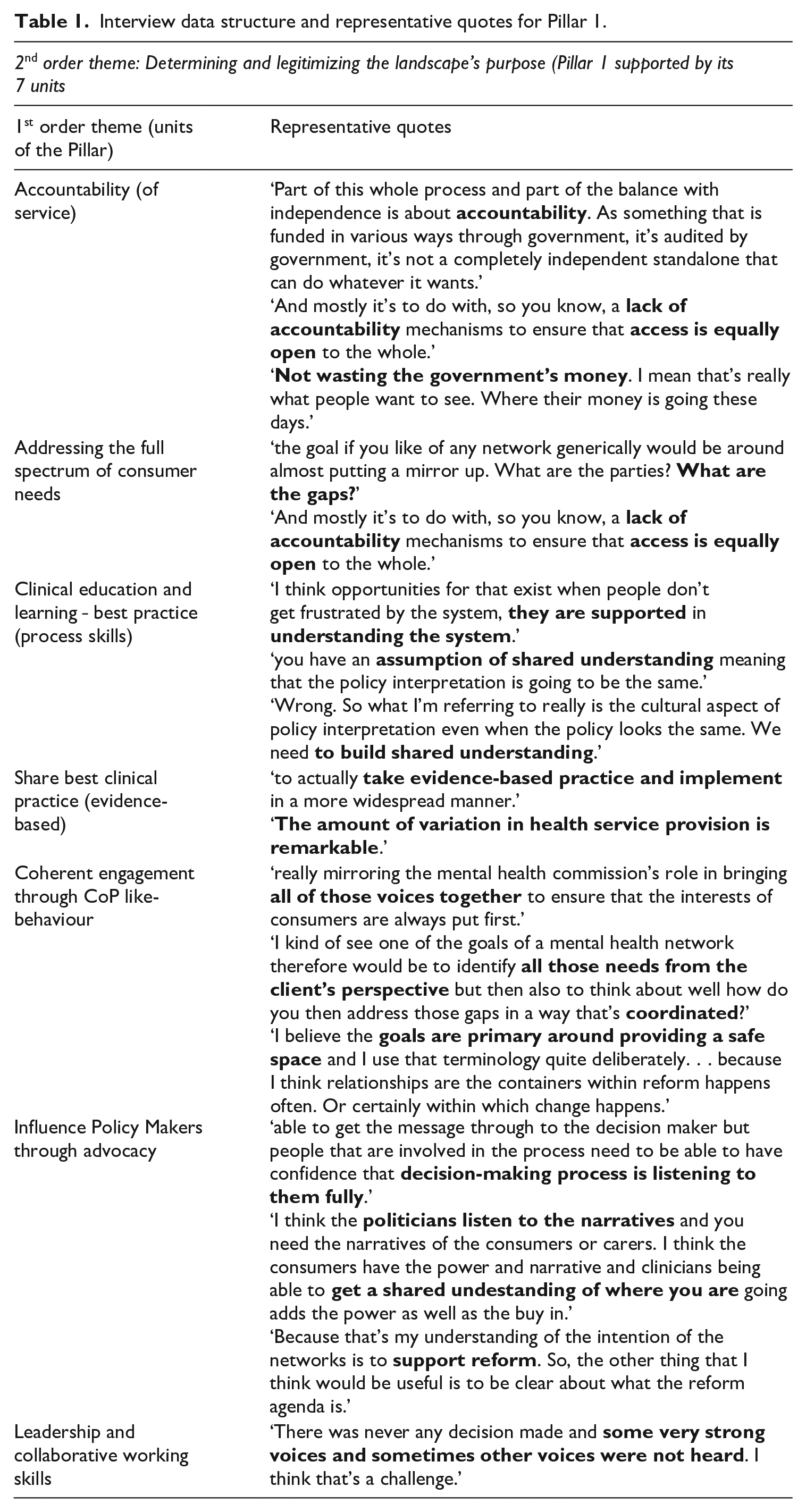
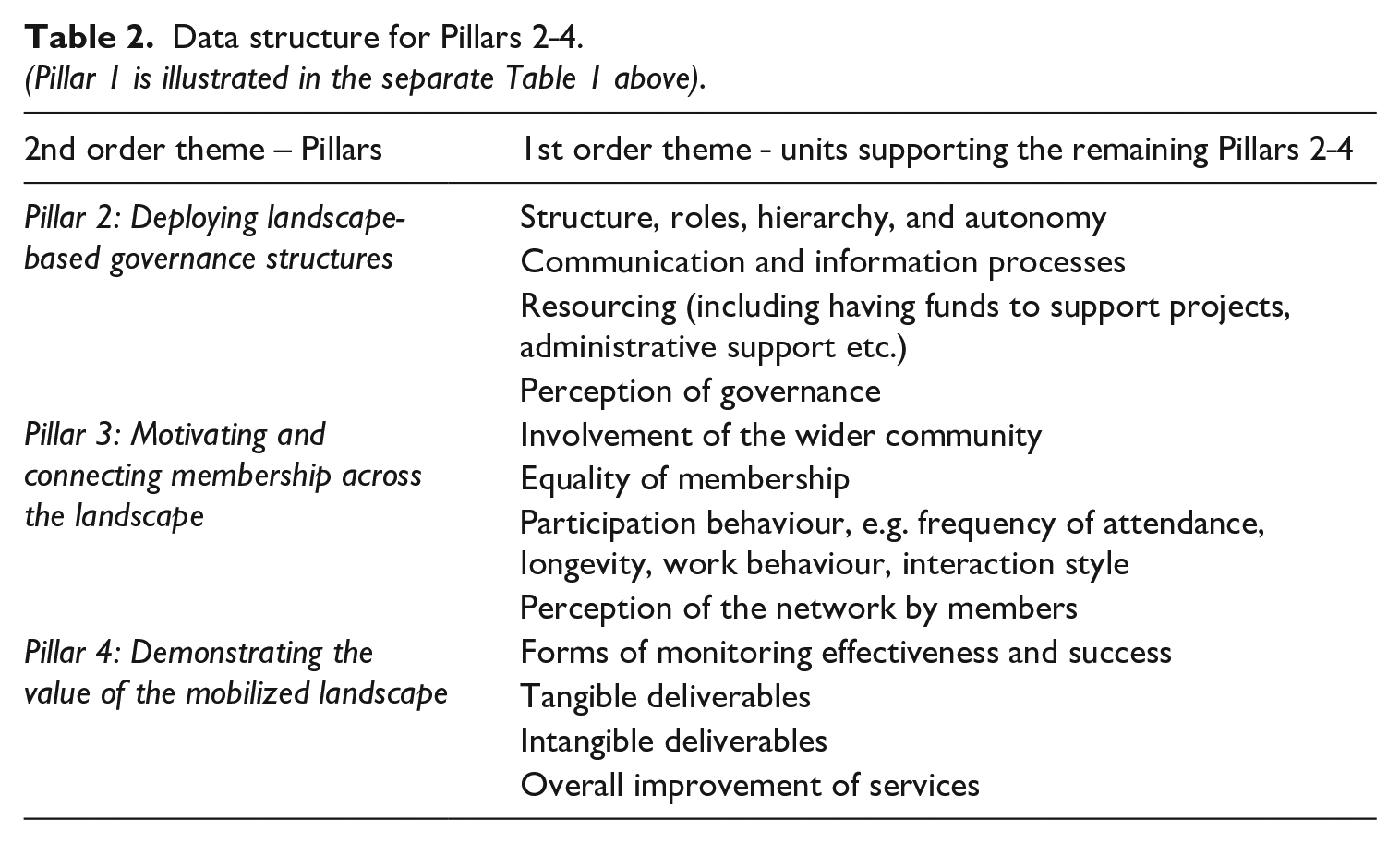
These were reviewed against the source data and reviewed literature, allowing for a set of higher-order themes to emerge – which we then theorized as the four pillars of mobilizing LoPs to address GCs. Examples of first-order themes were: ‘Influence Policy Makers through advocacy’, ‘Perception of governance’, ‘Participation behaviour’, or ‘Forms of monitoring effectiveness and success’. The four pillars are the focal point of discussion in the subsequent Findings section. As an illustration, in Table 1 below, we present Pillar 1 with its first-order themes (which we called units) and representative quotes supporting the findings. Also, in Table 2 below, we show the remaining three pillars and their data structures (first-order themes).
Interview data structure and representative quotes for Pillar 1.
Data structure for Pillars 2⎼4.(Pillar 1 is illustrated in the separate Table 1 above).
Observing a series of workshops and the second round of interviews
In the second stage of our study, we extended the scope of participants from senior managers to a broad range of MHNs participants, including carers, psychiatrists, and mid-tier network leaders seeking to elicit a wider range of views. In addition, we were interested in exploring best practice ‘in action’ – elaborating the insights gained from the interviews potentially comprising more espoused views. We organized 10 half-day workshops for that purpose, which included 39 senior managers, 55 clinicians, 22 carers/consumers, and 13 representatives of allied organizations – thus totalling 129 participants with a gender split of 34:95 male/female. The workshop format was chosen as the mechanism to manage the breadth and scope of the MHN, focusing on the 10 subnetworks. These subnetworks comprised age cohorts (e.g. older adults, youth), geographical cohorts (e.g. Peel, Rockingham and Kwinana), and clinical cohorts (e.g. development disorder), and enabled practitioners to come together and chart a path through the entire mental health LoP while focusing on a more manageable ‘chunk’.
The workshops were designed to help the subnetworks navigate their future in relation to mobilizing their LoP and provided an effective means of exploring and validating the initial codes and themes observed in the first set of interviews. To meet the workshop needs calling for a high degree of interaction from participants, we employed a group support system (GSS) following the procedure by Ackermann and Eden (2011a), which entails supporting the group discussion with a transitional object projected on a shared screen – an interactive causal map. This GSS facilitation method by Ackermann and Eden helped support three elements of joint robust action strategies needed for addressing GCs outlined by Ferraro et al. (2015) – participatory architectures, multivocal inscription, and distributed experimentation. All three joint action strategies were supported by the anonymity provided by the GSS as inputs could be entered in private via the provided laptops, thus reducing conformity pressures and increasing a sense of psychological safety. In addition, direct entry increased productivity as it was possible for simultaneous contribution in the form of anonymous statements and causal links signifying ‘may lead to’ relationships, potentially reducing the dominance of voices (Bryson et al., 2004). As a result, following Ferraro et al. (2015: 374), the workshops incorporated participatory architectures, the first element of joint robust action strategies for tackling GCs, allowing ‘diverse and heterogeneous actors to interact constructively’. The design also sought to attend to the fact that ‘actors with divergent interests require a structure where they can interact and engage’. This approach closely aligns with the requirement of GCs related to coordinating stakeholder goals, needs, and motivations, as discussed by George et al. (2016).
Moreover, anonymity and causal mapping enable participants to move from divergence to convergence using the model as a transitional object and thus enabling multivocal inscription (Ackermann and Eden, 2011b), a second element of addressing GCs in addition to participatory architectures noted above. The ability to play with the captured material, explore it from different perspectives, analyze the maps, and continually refine and amend them was thought to also attend to the distributed experimentation strategy – thereby attending to the third of the three GC joint action strategies (Ferraro et al., 2015). In the workshops, one of the researchers facilitated, helping the group engage in discussions around the opportunities, challenges, and ‘best practices of leading and contributing to MHNs’ across the LoP. Participants were asked to consider the challenges and opportunities facing their subnetwork’s remit to capture their practice ‘landscape’ from different perspectives tapping into the wisdom and experience of all. An example of a segment of the causal map developed in the workshops and its coding is shown in Figure 1 below.
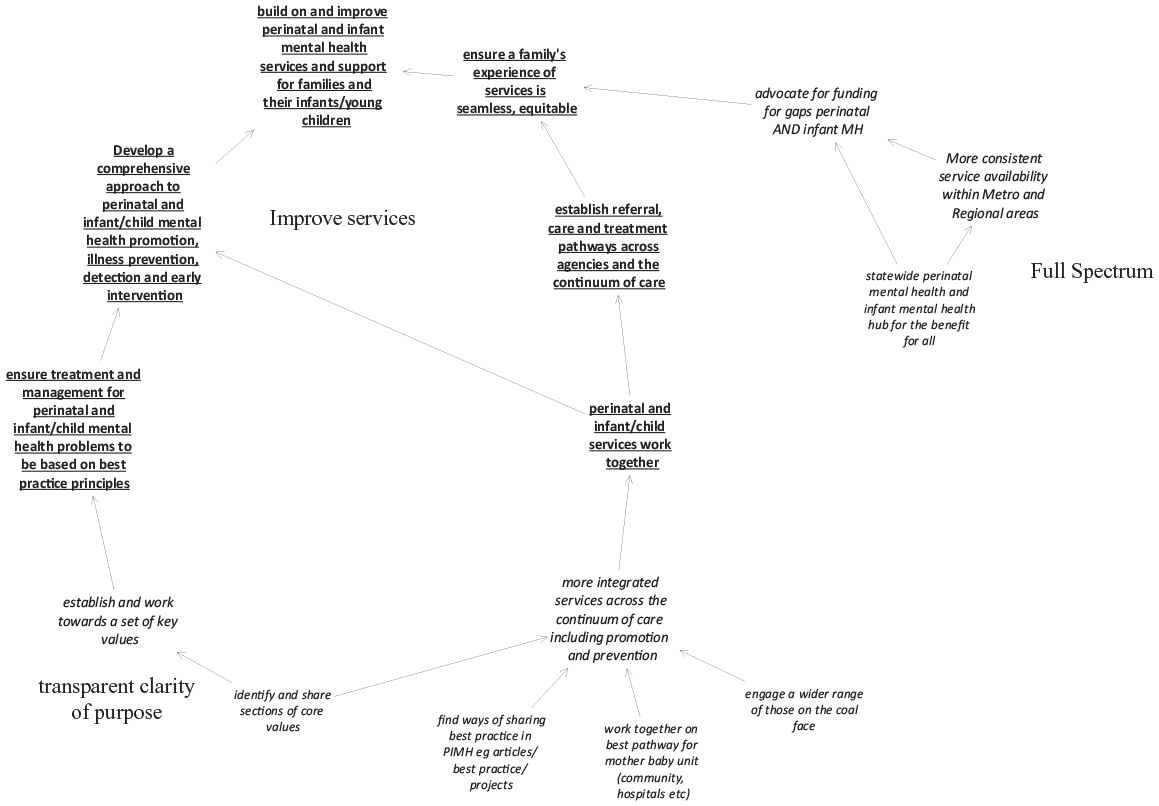
A segment of the map from the workshops representing the purpose of the landscape of practice.
Furthermore, the workshops were opportunities to gather observation data. The other researcher, an overt observer, took detailed field notes of the workshops, including the conversations and interactions. As an example of the field notes, during the co-lead introduction and question and answer session, it emerged that participants saw:
. . .challenges in the learning – it isn’t just differences between psychiatrists and carer-consumers but also across mental and physical health, across different spectrums, e.g. youth, and geographical region and disorder. We are starting to understand pathways which are often very idiosyncratic.
This note-taking continued throughout the workshop, capturing comments such as the need to ‘resolve the lack of clarity regarding funding routes and transitions’ and ‘Too many demands, e.g. we have not met for 6 months’. The detailed field notes amounted to 95 pages of text, and the 10 causal map models, each comprising between 70–100 items, supplemented our initial interview findings. That data enabled us to refine the second-order, and first-order themes identified, although no major changes to the data structure were made.
Finally, following the facilitation and observation of the workshops, we conducted a second series of 19 interviews with MHN leaders and co-chairs comprising 10 clinician and nine carer-consumer advocates and a gender split of 6:13 male/female. The purpose of these additional interviews was to understand better the views on mobilizing LoPs as expressed by people in charge of implementing MHNs and putting them to work. Such interviews would allow us to see how the workshops supported the ‘strategy in practice and situated learning’ aims and provide further insight into the views of those at the coal face seeking to provide care. Consequently, based on the participants’ inputs, we could refine the codes further, embellish our findings and confirm them as the four pillars for mobilizing LoPs that we present and discuss in the following sections of this article. These four pillars, in effect, represent the learnings and insights that we were able to gather at all levels of MHNs, including senior managers, network leads, as well as network participants.
Findings: A qualitative study of the Mental Health Networks in Australia
The empirical study indicated a number of significant themes and insights concerned with the practicalities, challenges, dilemmas, and expected opportunities in mobilizing LoPs. These findings are of significance for managers and policymakers who are interested in tackling GCs such as mental health. Our findings are organized around the four pillars of mobilizing LoPs: (i) determining and legitimizing the LoP’s purpose, (ii) deploying LoP-based governance structures, (iii) motivating and connecting membership across the LoP, and (iv) demonstrating the value of the mobilized LoP.
Determining and legitimizing the landscape’s purpose
During the interviews, defining the purpose of the MHNs emerged as a critical yet nuanced theme. This observation is not surprising, given that a clear understanding of the purpose is essential to ensure the alignment of different types of practitioners within the deployed networks in the LoP and legitimize the mobilization of the LoP as something worthwhile for them and their organizations. The significance of agreeing on a clear purpose also emerged in the workshops, adding richness to the interview material and reflecting the literature concerned with aligning situated learning in communities with strategic objectives (Macpherson and Antonacopoulou, 2013; Macpherson et al., 2020). However, while study participants saw the clarity of purpose as fundamental, they also found significant obstacles. They emphasized the need to ‘ensure all received the service’ and that the service is of high quality and evidence-based. As Carer 2 commented: ‘goals of an MHN should be firmly focused on being beneficial to all people using mental health services and their families’. However, it became apparent during the workshops that, in some instances, this was not the case. Instead, it was a lottery, with participants lamenting, ‘your postcode determines the amount and type of support and care you receive’. Thus, participants observed a tension between idealistic and realistic objectives. Another participant noted that ‘a Swatch watch was needed, not a gold Rolex’, reflecting the need to be realistic about what can be achieved with the available resources. As participants contemplated this issue, there was a sense that the purpose of the MHN required continuous negotiation owing to the changing membership of the networks. High-quality service (best clinical practice), the purpose of the MHN, was concerned with providing social-psychological support as well as clinical support. This purpose, in turn, required working across silos and coordinating across occupational boundaries, akin to participatory architectures in the GC literature (Ferraro et al., 2015).
That said, working across the silos to agree on a shared purpose was a challenge. As one workshop participant noted: ‘a couple of meetings were very focused on only one aspect of our work which is the dementia care aspect’ [rather than taking a more comprehensive view of the mental health landscape]. Consequently, MHN leaders required a subtle balance of focusing on the specialized hot topics while also attending to the breadth of service demand. Such a delicate balancing act resembled the practical judgment of phronesis – sensing the situation ‘as a whole’ and trying to understand the right course of action (Contu, 2022). Phronesis was important considering that the LoP’s purpose was shifting as the competing perspectives and their knowledge domains were changing with the rapid advancements in practice and science. Thus, there was no time or space for a ‘fully rational’ evaluation of the different options that were in flux, as illustrated through comments such as ‘I think we’ve never been clear on what the goals were. They’re very vague, they’re constantly changing.’
A reoccurring proposed purpose within the MHNs was sharing knowledge and best practice. Knowledge sharing required safe spaces and psychological safety, members being able to say what they wanted and be heard, and ensuring that all voices were respected. As viewed by our study participants, knowledge sharing entailed developing learning partnerships and collaborating across silos while simultaneously learning from one another. As such, knowledge sharing was in line with interlocked indwelling (Pyrko et al., 2017) – that is, sharing tacit knowledge indirectly by attending to the same real-life problems. Moreover, achieving high-quality care was strongly influenced by the level of resources available and the degree of political support. This highlighted another potential purpose articulated during the interviews and workshops – that of influencing policy. In the interviews, comments such as ‘one of the issues that comes up for the mental health network is the question of, are we just a lever of the mental health branch in terms of ensuring that policy is implemented’ (Clinician 4).
Deploying landscape-based governance structures
The second pillar of mobilizing LoPs is concerned with deploying LoP-based structures, roles, and processes for improved coordination of activities. As commented by Carer 2: ‘I think clarity in governance, knowing who to go to for what is really important.’ One source of frustration was regarding the resourcing (to manage the network), and some participants worried whether the LoP mobilization was a substitute for more extensive funding of specific local projects. Participants wanted to clarify resource availability for LoP-based initiatives early on through the LoP mobilization to avoid wasted effort. Additionally, participants required clear communication across the MHN subnetworks and timely responses to their feedback and queries. A further source of frustration was the lack of clarity concerning LoP facilitation roles: ‘I think having some guidelines around what are the roles of the different people involved. So, what is the role of being one of the two co-chairs?’
Owing to the significant complexity of the composition of the LoP, participants needed administrative support in navigating through the MHNs – for example: ‘I think having clear guidelines and at the very beginning asking for clearer guidelines on what is feasible for us to do in the network helps determine what is actually achievable’. However, too much bureaucracy and formality were also seen as discouraging, which can be explained by the self-governed nature of CoPs (Thompson, 2005). Hence, MHN facilitators had to exercise practical judgment regarding the balance between the structure to be productive while not stifling learning in a LoP. This need was reflected in observations that a ‘one size fits all’ approach was not necessarily the most suitable as the network comprised 10 different geographically dispersed groups.
Thus, effective LoP-based leadership was necessary to mobilize MHNs and manage the balance of the structure and discretionary space for participants (linking with the second-order theme of perception of governance – Pillar 2). However, this consideration required that volunteer leaders had leadership capabilities and could handle the workings of the LoP’s subnetworks to members’ satisfaction. The MHN leaders sometimes exerted more control than members would like to see–for example:
. . .the level of control over the subnetwork – I found it quite difficult. We’ve got a mental health newsletter. And if I wanted to have a corner in the newsletter, which was the subnetworks steering group update, I needed to run it past the co-chairs first because they wanted to know what was going on.
In addition, our field notes showed a balance to be had between the exchange of knowledge, making progress, and fostering inclusivity. Co-chairs found themselves struggling at times between encouraging and supporting a sharing of views while also making progress – as illustrated by comments such as: ‘There comes the point where you just say ‘let’s stop asking questions about this and let’s start asking a question like what will it take to get this resourced? Who’s responsible?’ Finally, participants expected leaders to indicate a sense of gradual achievement and demonstrate energy and enthusiasm for the LoP mobilization. And, since LoP leadership was rotational, participants expected succession planning and handing over responsibilities as the governance structures deployed.
Motivating and connecting membership across the landscape
The third pillar addresses the creation of the MHN as a vehicle to assist landscape navigation and the processes and energy required for maintaining and sustaining the network. One particularly significant aspect of this pillar was ensuring membership equality because, as reflected in the situated learning literature (Mørk et al., 2010), some groups and communities can become marginalized by others. For example, one of the carers commented: ‘there needs to be far more balance of clinicians and carers and consumers’. Carer and Consumer Advocates were not the only group singled out. On taking on sponsorship of the MHN, the sponsoring organization sought to ensure a representative from the organization was part of each subnetwork to enable communication to flow smoothly. However, sponsors’ representatives were not engaged in providing care, and their presence was not always welcomed by other participants, who treated them with suspicion. This was illustrated by one participant commenting to another: ‘I don’t know whether it was a good thing that the [sponsoring organization] rep was at our workshop.’
And yet, there were also positive signs in building membership equality. Many MHN participants enjoyed exposing their opinions and ideas to the broader practitioner community and its leaders. Participants often displayed a willingness to talk to each other and noted their appreciation for the diversity of MHNs. For example, at the end of a workshop, a participant noted the MHN meetings provided a ‘safe space for members – absolutely safe space. I think everybody feels very comfortable, and you know it’s quite surprising me [that it’s] being a safe space.’ This comment further reinforces the need for psychological safety (Edmondson, 2019) in mobilizing LoPs as it helps members trust one another, open up, and listen to one another. Psychological safety thus ensures a more comprehensive set of views and aids with commitment, as reflected in the interviews: ‘I would say that there needs to be shared decision-making and so I would have imagined that there’s a bottom-up and top-down meeting of minds’ (Carer 1).
In terms of connecting LoP membership, another balancing act required from the leaders was including the wider community and deciding whom to invite to the MHNs. Choosing who the ‘right people’ are, is open to interpretation and is a matter of judgment. This consideration reinforces the role of phronesis in LoP mobilization. One interviewee noted that ‘traditionally in mental health, we have focused on motivation and interest and not really focused a great deal on skillset and competency’ (Senior Management/Clinician 5). This view was echoed by those in the workshops with comments such as having ‘a range of experience brings an important balance to the subnetwork’, and another saying, ‘okay how do we make sure we’ve got the right folks at the table?’.
However, the workshops also revealed a challenge to the broadening of expertise, as illustrated by one of the co-chairs noting: ‘because we are trying to sort of interface and represent all the stakeholders that interface with us, we’ve almost lost older adult mental health representation on the steering group you know’. Clearly, there is a tension between breadth and depth, as well as growth and retaining focus. One way that the subnetworks sought to manage this was encouraging those with many hats to join – ‘when we were setting up our steering group, of about 15 members, we were trying to get as many hats represented as possible within those 15 members’. While this worked for some, there were challenges, as one participant despairingly commented ‘I’m representing a bit too much’, and another participant added:
I think when we first set this out we picked people with multiple hats, I get the importance of doing that, but I think one of the criteria has to be a willingness to sort of actually take on the projects.
Thus, the membership pillar reflected competing pressures of balancing the core jobs with the MHN participation. Membership in LoP initiatives enabled learning more about what went on in the mental health landscape in Australia, who was involved, and what services were provided, thus allowing the practitioners to be more productive and effective at their jobs. Membership also reflected considerable investment in time, financial resources, and mental energy. Members had to learn to work effectively with one another, respect one another’s world views and negotiate the issue of wearing multiple hats and representing numerous organizations within the LoP.
Demonstrating the value of a mobilized landscape
The final pillar concentrates on performance measures and demonstrating the value of the LoP mobilization to its members and sponsors. In that respect, participants observed intangible and tangible benefits. Intangible benefits touch directly on the other three pillars, including building new learning partnerships, developing a new generation of leaders, improving communication and knowledge sharing across silos, and learning ‘who was who in the zoo’ – that is, learning about the LoP’s composition. Participants made comments such as: ‘I actually think what our subnetwork has done in the presence of so many moving parts is actually really good. We get good participation, people are still engaged, they get together.’ Moreover, tangible benefits focused on seeing visible progress in mobilizing the LoP–for example: ‘measures such as the provision of deliverables, such as resources, position statements, advice papers, opinion papers’ (Senior Manager/Clinician 5). Interviewees believed that it was essential to have appropriate measures for assessing the benefits of LoP mobilization: ‘if you look across state mental health networks, then having some measures of how people experience participation is key’ (Senior Management/Clinician 5). This view was replicated in the workshops, with participants sharing the achievements of their subnetworks and feeling very much encouraged by them.
And finally, when considering performance measures, it was noted that in order to demonstrate progress against goals, determining priorities was key – for example: ‘if you've got four or five [possible aims] you say this is what we want to focus on over the next five years and you can actually measure what happens to it’ (Clinician 2). This suggests that it is important to focus energy on a few key goals to make progress and that performance should be aligned with the goals, which resonates with the literature (Macpherson and Antonacopoulou, 2013; Macpherson et al., 2020). Progress against goals would ensure the improvement of services and thus the credibility of the network: ‘people have clearly joined because they want to see change’ (Carer 3) and ‘if we look at some more innovative measures to see what happens in terms of outcomes, where people can actually see that it is making a difference, then we are likely to get somewhere’ (Senior Management/Clinician 6).
Thus, it was evident that study participants saw the importance of making progress. Participants in workshops were heard to comment that ‘monitoring is a really important one. It helps demonstrate progress against goals’ and ‘I guess it is the sort of feeling that it’s useful’. Participants were also curious about how much progress had been made and how they were being evaluated. Some participants asked one another, ‘what the outcomes have been? And how do you measure them? What do you want?’ reflecting some uncertainty. Others were interested in how assessing progress ties in with governance – for example: ‘Monitoring performance is really important. Are we actually doing anything? And what are the governmence structures? What’s our tie back into everything?’ In some cases, participants were curious about how the other subnetworks were doing, commenting: ‘well actually, we’ve been able to achieve this, do this and know that – those are measurable against other subnetworks. I suppose it’s that benchmarking thing as well.’
The framework of mobilizing landscapes of practice to address grand challenges
In this article, we have approached the need to tackle GCs, such as mental health, by mobilizing LoPs. In this section, we theorize a framework of mobilizing LoPs to address GCs before discussing its implications for research and practice (Figure 2). Central to this framework are the four pillars described in our findings that contribute toward addressing GCs by supporting the three elements of joint robust action strategies: participatory architectures, distributed experimentation, and multivocal inscription (Ferraro et al., 2015; George et al., 2016). As seen in our findings, the mobilization of LoPs to address GCs leads to socio-political tensions and dilemmas, such as aligning multiple goals into one direction, balancing the exchange of knowledge and making progress while fostering inclusivity. Thus, the required mechanisms for LoP mobilization are the exercise of practical judgment as part of collective leadership (Contu, 2022; Quinn and Worline, 2008; Shotter and Tsoukas, 2014a) and the interlocked indwelling (Hadjimichael and Tsoukas, 2019; Pyrko et al., 2017) that sustains motivated and connected participation in the face of GCs. Drawing on Figure 2, we now unpack our theoretical framework and its implications.
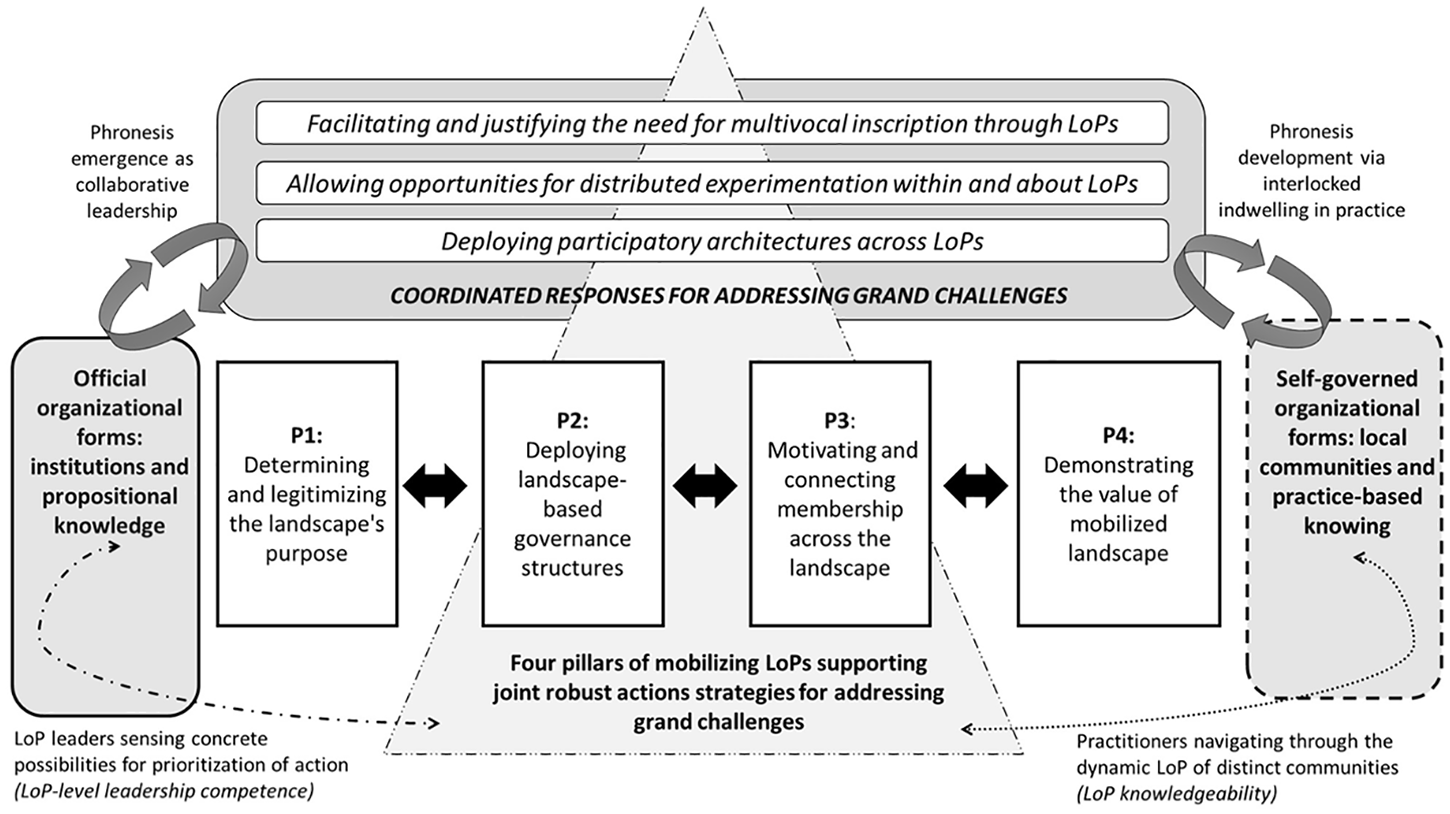
The framework of mobilizing landscapes of practice to address grand challenges.
As depicted in Figure 2, the four pillars at the base of the framework support the three joint action strategies at the top of the diagram through several mechanisms manifested in the socio-political tensions between the intended and designed collaboration on the one hand and the organic knowledge sharing and learning interests in communities, on the other hand. Similar tensions are observed extensively in the situated learning literature (Contu and Willmott, 2003; Harvey et al., 2013; Rennstam and Kärreman, 2020). The socio-political tensions derive from the complexity of local practices, with different practitioners and local communities having their own goals that, to a larger or smaller extent, can be aligned with the strategic objectives of the resolution of the GC – in our case, that of mental health (Macpherson and Antonacopoulou, 2013; Valentine, 2018). As a result, the four pillars inevitably touch on two distinct ‘forms of knowledge and forms of life’ – the formal and informal sides of organizing (Orlikowski, 2002; Tsoukas, 2005). This situation can be explained by the fact that LoP mobilization cannot be performed solely through non-coordinated, organic learning owing to its significant scope. The formal side of LoPs can be seen as the LoP infrastructure – for example, dedicated websites, conferences and events, informational resources, and official networks (Pyrko et al., 2019). The LoP infrastructure is purposed to connect the isolated occupational communities, the informal side of organizations, that rely upon one another’s competencies and require such intentional coordination to capitalize on the potential of learning from one another (Wenger, 1998).
In addition, the link between the four pillars and deploying participatory architectures is with respect to sharpening the understanding of what it means to support sustained multi-stakeholder engagement. LoP as a unit of analysis is different from networks or local communities, and owing to its broad scope, it is a particularly relevant lens for understanding GCs. Unlike networks of practice, LoP is a totality of different communities relevant to a given knowing area, such as the GC of mental health, and it does not need to be connected directly – at least before the mobilization efforts (Wenger-Trayner et al., 2015). Therefore, intentional LoP mobilization allows different professionals whose expertise is important to one’s daily practice to connect and engage with one another. For example, our participants emphasized that MHNs’ work enabled them to look at mental health beyond clinical or medical views and appreciate better the socio-psychological view of diagnosing and treating mental health problems (Pillar 3). The determination of LoP’s purpose (Pillar 1) also helped direct the energy and enthusiasm from across the LoP toward a roughly common direction: improving mental health services and their wider access in Australia.
Moreover, the deployment of governance structures via set roles or communication methods (Pillar 2) built the foundations for multivocal inscription. Participants used those LoP-based structures to pursue joint exploration and negotiation of the possible courses of action (thus also linking to Pillar 1 concerned with a shared purpose). Thirdly, the multi-stakeholder engagement (Pillar 3) combined with the appropriate structures (Pillar 2) created space for distributed experimentation – testing actions in practice for ‘small wins’. Such small wins are shown in our data in the examples of creating and testing new tools, concepts, and guidelines that are the products of joint learning and collaboration across the LoP. Supporting the three joint action strategies ultimately leads to tangible and intangible benefits, such as developing a new generation of leaders and improving communication and knowledge sharing across silos (Pillar 4).
As the pillars are deployed, practitioners navigate through the LoP and the multitude of communities. Therefore, it is essential to target ‘the right people with the right problems’ and help them to ‘think together’ to interlock their indwelling across the LoP, by engaging with the objectives and a sense of purpose that they can genuinely commit to (Pyrko et al., 2017). Interlocked indwelling is illustrated in our data, where MHN practitioners care about developing learning partnerships rather than simply acquiring information from others (Kuhn and Jackson, 2008). Hence, interlocked indwelling is a form of engaged knowledge sharing where one accepts the need to transform themselves as practitioners by learning closely from others in the network – particularly evidenced by Pillars 1 and 2. Such interlocked indwelling in practice allows members to develop deeper knowledgeability of the LoP – that is, build a stronger awareness of the composition of the LoP (in our case, mental health) via first-hand learning interactions. Interlocked indwelling also enables the acquisition of tacit knowledge that can then be translated into phronesis development, as revealed by sensing the complexity of the situation and making distinctions in practice (Chia and Holt, 2009; Shotter and Tsoukas, 2014a). Our participants expressed a similar search for a practical judgment in attempts to understand the fuller picture of the mental health LoP, as seen in Table 1 (e.g. ‘get a shared understanding of where you are’, ‘how do we influence policymakers?’).
Our study has shown that phronesis is an element of collective LoPs leadership (left side of Figure 2). Integrating the formal and informal sides of organizing within the LoP requires leaders and facilitators to apply knowledge of managing delicate balancing acts – for example, opening the network’s scope while keeping it focused, aligning people around objectives while giving them enough discretionary space. Such sensing of concrete possibilities in complex and dynamic situations resembles Shotter and Tsoukas’s description of phronesis. As Contu (2022: 23) notes, phronesis entails ‘the relational perspective of leadership’ because practical judgment requires sensitivity to the context that is learnt over time. Since context changes and is never fully grasped by one person alone (as in the case of mental health), phronesis requires openness to learning other peoples’ views – how they speak, what they do, and how they make sense of the situation (Pillar 3). Therefore, for LoP leaders sensing concrete possibilities for prioritization of action is a form of LoP-level competence. Such leadership competence is enacted when the LoP is mobilized, and LoP leaders are faced with opportunities to engage with the initiative and work with them. Meanwhile, in a LoP, with different communities and jurisdictions, the complex context then calls for collaborative leadership and collective emergence of practical judgment (Quinn and Worline, 2008; Kristjánsson, 2021) by actively seeking mutual learning partnerships across the landscape and trying to capitalize on one another’s strengths and wisdom (Pyrko et al., 2019; Wenger-Trayner et al., 2015).
As a result, our framework in Figure 2 presents LoP mobilization for GCs as a profoundly collective endeavour where individuals have to learn not only how to deal with the GC itself but also become knowledgeable about the composition of their LoP, what that LoP texture means for meeting the GC, and what are the good ways to mobilize the LoP – which are the questions learnt in practice and requiring the gradual development of judgment as a form of tacit knowledge discovered through collective indwelling on real-life problems (Pyrko et al., 2017). In turn, as we discuss in the next section, this framework helps shed new light on the joint action strategies, especially participatory architectures and multi-stakeholder partnerships, in addressing GCs, while advancing the debates about the role of LoPs in contemporary management research and practice.
Discussion and implications
Contribution to the grand challenges literature
Our article offers two contributions in terms of theory development. First, we add to the GC literature by explaining how LoPs can be mobilized to address GCs and what tensions and problems such efforts imply. In particular, drawing on LoPs and situated learning theory, we elaborate on deploying participatory architectures, which is considered the key element in the GC literature (Grodal and O’mahony, 2017; Jarvenpaa and Välikangas, 2022). We problematize the socio-political complexities of making participatory architectures work when learning demands and organizational goals require mutual interplay (Ferraro et al., 2015; George et al., 2016). We also argue that participatory architectures should be considered within the context of LoPs, which entails mutual accountability to the knowledge distributed across the field of practice seen through the lens of situated learning (Wenger-Trayner et al., 2015). As a result, we improve the conceptual understanding of addressing GCs from the situated learning perspective, which translates into practical insights and recommendations represented by the pillars for mobilizing LoPs.
To that end, we acknowledge that the literature is rich in explaining strategies for setting up and coordinating participatory architectures and multi-stakeholder partnerships to address complex problems and GCs (Funrari, 2014; Gray and Purdy, 2018). However, incorporating LoPs, with its strong conceptual foundation in situated learning theory (Kellogg et al., 2021), adds novel insights into debates by appreciating the local networks and communities' mutual accountability to a shared practice (Pyrko et al., 2019). The LoP perspective helps to appreciate that both competence (local expertise) and knowledgeability (navigation through the complexities of the landscape) matters in building productive participatory architectures (Wenger-Trayner et al., 2015). At the same time, practitioners’ competencies can be widened by regularly participating with local work-based communities, sharing ‘best practices’, integrating different disciplinary knowledge structures or negotiating cross-site translation (Oborn and Dawson, 2010; Swan et al., 2002). Similar competence development is crucial in robust joint actions for addressing GCs (Ferraro et al., 2015; George et al., 2016) – it is a part of deploying participatory architectures and testing new solutions through experimentation in practice.
In addition, LoPs help to understand that deploying participatory architectures for addressing GCs means learning how to learn across the landscape, talk and understand the different technical languages, and navigate different organizational interfaces. Thereby, as practitioners mutually engage across the LoP, they interlock their indwelling and sensitize themselves to the distinctions in the LoP environment when faced with GCs – in other words, they develop their mutual capacity for phronesis (Contu, 2022). For example, our participants observed: ‘we are able to understand better how to navigate the different organizational interfaces and systems’, ‘we are beginning to understand how to manage churn of leaders’, as well as learning ‘how to accommodate the different speeds and rhythms of learning’.
Another implication deriving from our study is the need to pay attention to the tensions between learning in a LoP with a need for LoP-based governance, structure, and support. In other words, LoP mobilization for GCs requires resources, and resources are tied to agendas and hence multiple, often conflicting goals have to be married together. In such a sense, our argument adds to the literature about designing strategic goals and activities that encourage engagement from CoPs rather than discourage their participation (Macpherson et al., 2020). Thus, practitioners need to identify and prioritize problems within the LoP – the GC agenda around which they can interlock their indwelling and commit to sharing knowledge (Pyrko et al., 2017) while still justifying the contribution to their organizations’ strategies (Valentine, 2018). For example, while our study participants looked for immediate value for their work from sharing knowledge across the mental health LoP (Pillar 1), they also were concerned about making sure that the overall progress of the MHNs is achieved at the inter-organizational level through improvements to the national quality of care (Pillar 4).
There are apparent tensions between the informal emergence of networks advocated by communities of practice (CoPs) and the perceived imposition of a structure. Since LoP sponsorship is associated with managerial behaviours to ensure the effective use of resources, it links with the discussion on balancing between the informal and formal sides of organizing (Macpherson and Antonacopoulou, 2013; Tsoukas, 2005). With respect to such tensions, the application of phronesis is needed from LoP leaders – the gradual testing of the balance between the informal engagement and managerial structure is needed, reflecting the experimentation strategy – one of the joint actions of addressing GCs (Ferraro et al., 2015).
LoPs need to learn how to negotiate the extensive range of pressures and priorities, hopes and agendas. In our findings, there are links to the role of learning, as many commented, ‘we are working at different speeds and rhythms’, and ‘there is a frustration we are not moving fast enough’. The plurality of priorities is well known as a challenge for multi-stakeholder partnerships, and hence George et al. (2016: 1881) argue that ‘GCs, by their very nature, require coordinated and sustained effort from multiple and diverse stakeholders toward a clearly articulated problem or goal’. Navigating clarity requires understanding what the priorities are. Thus, the navigation of pressures and priorities in a LoP illustrates the negotiated interplay between collaboration (concerned with achieving strategic goals) and learning (concerned with developing competencies and sharing knowledge) and the need for continual refinement.
Contribution to the situated learning and Communities of Practice literature
Secondly, we add to the situated learning literature and CoPs as we continue the debate started by Pyrko et al. (2019) about the role of LoPs in contemporary organizations. While Pyrko et al. argue that LoP mobilization requires triple-legitimization at the level of communities, landscapes, and institutions, our article advances this conversation by elaborating on the LoP mobilizing infrastructure while retaining the focus on value. Participants in the reported research emphasized that the mobilization of the LoP was not taking place in ‘the blue sky’, but it was happening in the context of numerous existing jurisdictions such as The Royal Australian & New Zealand College of Psychiatrists. Therefore, the LoP infrastructure’s expansion was shaped by the existing jurisdictions' requirements, standards, and power struggles. And, although the growth of the LoP initiative is needed to increase its reach, such growth can distract the cohesion of the CoPs and NoPs involved (Thompson, 2005). Thus, balancing the scope and progress of LoP's coordinated work is an example of another tension requiring the exercise of phronesis in collective leadership for LoP mobilization.
The expanding LoP infrastructure needs to observe its formal and informal sides and manifest LoP-level leadership while appreciating the needs and experiences of individual participants. The ambition to expand the LoP mobilization has to go hand-in-hand with proving value to the parties involved, especially the practitioners engaged in knowledge sharing and interlocked indwelling. These observations reflect the practical judgments regarding balancing competing priorities – reflected in the different values – through establishing a direction that encompasses the values of plurality and reciprocity. After all, ‘GCs are likely to be comprehended in multiple ways, depending on actors’ identities and field positions’ (Ferraro et al., 2015: 365). Value needs to be considered at the individual level, as illustrated in the tensions members felt when choosing between time spent engaged in network activities (long term strategic) versus time spent ‘on the job’ (immediate and operational). As one subnetwork co-chair commented, ‘it’s a constant battle, time spent on the network is the time taken from seeing customers’ and consequently ‘we have not met for 6 months’. These competing pressures on network members often resulted in the sense of burnout, disillusionment and weary perseverance. The perceived insufficient value would then decrease engagement in the LoP mobilization. At the organizational level, value was reflected in the resources made available (or not), and with competing pressures on scant resources, erosion of promised funds was not uncommon. The value of the network was not perceived to be as significant when compared with alternative activities. Small wins proved to be essential to LoP mobilization, highlighting the need for navigating the socio-political complexities surrounding LoPs and their interactions with the formal sides of organizations. Ultimately, our study reinforces the recent debates that observe situated learning as having considerable potential for adding value to organizations, but it has to be observed carefully as it can easily become ‘derailed’ and unproductive when not integrated well with organizations and their material and socio-political context (Beane, 2019; Kellogg et al., 2021).
Furthermore, our article advances the situated learning area by bringing to this literature the concept of phronesis. As seen in the proposed theoretical framework derived from our study (Figure 2), phronesis plays an important role in exercising judgment with respect to GCs when mobilizing LoPs. GCs entail a moral element of working for the common good (Wright and Nyberg, 2017) and, at the same time, can be too complex to be rationally analyzed and solved. Therefore, LoP mobilization can entail sensing the changing situation, learning about one another and the context, and exercising collective leadership about the ‘right’ course of action toward the common good. On this basis, LoP mobilization is the setting where not only the good exercise of phronesis is essential, but it provides opportunities to tacitly develop the capacity for such practical judgment by reflecting on one’s own and other practitioners’ wisdom at work across their ‘typical’ work contexts and occupational communities (Contu, 2022; Kristjánsson, 2021).
And finally, LoP mobilization questions the role of situated learning and its associated constructs when it comes to its bearing on contemporary research and practice. Over 30 years ago, situated learning helped to reorient the debates about knowledge and learning to its current form – as an integral, everyday activity that enacts and occurs in organizational practices (see: Nicolini et al., 2022). That perspective proved valuable in enriching the debates about practice, knowing, identity-making, tool affordances, and strategy-making. In the present times, situated learning and LoPs can be called upon again, but this time in an effort to better understand today’s GCs and how these complex problems can be tackled and approached. Hence, in the face of complex problems, we require complex and better theories, and LoPs, with their solid foundations in situated learning, can be a step toward understanding such large phenomena from a perspective of practice.
Footnotes
Acknowledgements
We acknowledge the extensive support of Dr Helen McGowan (Clinical Co-Lead, WA Mental Health Network at WA Mental Health Commission).
Funding
The author(s) disclosed receipt of the following financial support for the research, authorship, and/or publication of this article: This research was supported by the Department of Health, Western Australia, Contract Number: 10729.
