



Abstract
High school student-athletes are at risk of sleep disturbances due to a shift in circadian rhythms that delay their bedtimes and wake up times. The present study aimed to investigate sleep patterns, sleep loss, social jetlag, sleep quality, sleep disturbance and time spent on electronic devices (E-devices) at bedtime in high school student-athletes of different chronotypes. A total of 158 high school athletes (M = 17.4 years old, standard deviation [SD] = 0.64) from five schools in Singapore completed the Munich Chronotype Questionnaire, and additional questions on use of bedtime electronic devices, chronotype, sleep quality and frequency of staying up late. Multiple two-way multivariate analysis of variances and a two-way analysis of variance were conducted to examine the differences between chronotype (Morning, Intermediate and Evening) and gender. School student-athletes reported (mean [SD]) 5:36 (1:07) hr of sleep on school days and 7:58 (1:33) hr on free days. No student-athletes slept >8 hr and 23% slept <5 hr during school days. Student-athletes with an evening chronotype had later bedtime, sleep onset during school days and free days, as well as higher sleep loss, social jetlag, frequency of staying up late and use of bedtime E-devices. No gender differences were found. The findings highlight the need for schools to prioritise the implementation of sleep hygiene awareness programmes specifically tailored for high school student-athletes. By addressing these issues, schools can help improve the overall well-being and performance of their student-athletes.
Introduction
Sleep is a crucial component of both physical and psychological recovery, which, in turn, is important for optimal athletic performance (Fullagar et al., 2015; Samuels, 2008). Despite its importance, research indicates a high prevalence of sleep difficulties among athletes (Robert et al., 2019). This has prompted an expert consensus panel to provide a narrative review on research evidence for sleep and recommendations for practice for athletes (Walsh et al., 2021). The issue on sleep is worst for student-athletes who need to combine the roles of a student and an athlete (Litwic-Kaminska & Kotysko, 2020). Ungaro and De Chavez (2022) found that 79% of high school student-athletes failed to sleep more than 8 hr per night. In addition, sleep quantity and sleep quality, particularly prior to competition, has also been reported as suboptimal for student-athletes (Mah et al., 2018). This could be due to academic stress and demanding training and competition schedules alongside competition pressure (Cantāo et al., 2024; Cosh & Tully, 2015). The lack of sufficient and quality sleep has been linked to negative outcomes, including impaired athletic performance, mood disturbances and cognitive deficits (Chase et al., 2017; Jarraya et al., 2014; Meier-Ewert et al., 2004; Wilson et al., 2025). It is important to identify factors that affect sleep quantity and quality among student-athletes to enhance their well-being and performance.
In determining the risk factors in sleep disruption among elite athletes, research has highlighted societal factors and sport-specific demands as two broad areas of influence. Societal factors include demographic characteristics (e.g. age, gender), family, work and study commitments and social influences. Sport-specific demands may include training and competition schedule, pre-competitive stress and frequent travel demands (Bonnar et al., 2018; Walsh et al., 2021). However, most sleep research focuses on elite athletes and university student-athletes (Litwic-Kaminska & Kotysko, 2020; Monma et al., 2025; Resza et al., 2024), while research on high school student-athletes aged between 16 and 19 years is rare. It is important to bear in mind that there are rapid changes to the circadian rhythm that occur during adolescence, which may disrupt sleep patterns. For example, post-pubertal adolescents take longer time to fall asleep, typically from 10.30 pm to 2.30 am (Taylor et al., 2005). For more mature adolescents, the sleep pressure accumulation process decelerates, meaning they can stay awake longer, but the recovery process does not change (Campbell et al., 2011; Carskadon, 2011). Consequently, adolescents tend to have later bedtimes on school nights, but their wake-up times remain stable or becomes earlier as they progress to high schools (Carskadon et al., 1998). Delaying school start time seems to be one of the main solutions to help adolescents achieve better sleep, health and academic outcomes (Bowers & Moyer, 2017; Minges & Redeker, 2016). Studies conducted in Singapore showed that most adolescents are not sleeping a minimum of 8 to 10 hr as recommended (Lo et al., 2018; Wang et al., 2025). These findings highlight a serious sleep deprivation issue among Singapore high school students.
Adolescents’ sleep health is influenced by a complex interaction between individual factors and environmental factors (Hale et al., 2020). In a recent systematic review and evidence map of 515 studies involving nearly 750,000 college and university students from 60 countries (Bjørnnes et al., 2021), it was found that the majority of the sleep health studies focused on individual factors such as chronotypes, gender and mental health. Among the environmental factors, technology use was the most researched area. However, few studies examined the combination of individual and environmental factors.
The reason use of technology is among one of the most researched environmental factors is because electronic devices (E-devices, such as smartphones, tablets, laptops), used in the evening influence sleep patterns among adolescents (Bartel et al., 2015; Rafiques et al., 2020). Blue light emitted from these devices has been shown to suppress the nocturnal increase in melatonin, a hormone that regulates sleep, thereby disrupting sleep patterns (Wood et al., 2013). In addition, emotional aspects (e.g. cognitive arousal) of engaging with digital media may also influence sleep patterns (Kortesoja et al., 2023).
Although many studies have investigated the relationship between sleep duration and E-devices usage (Arora et al., 2014; Jones et al., 2019), there is limited research on how chronotype affects this relationship. Recent studies have begun to consider the role of chronotype in influencing the use of E-devices at bedtime and sleep patterns among adolescents (Kortesoja et al., 2023) and chronotype and sleep patterns among university student-athletes (Resza et al., 2024). However, no studies have focused on high school student-athletes. Understanding how chronotype impacts sleep in the context of E-device use could provide valuable insights into improving sleep interventions for high school student-athletes.
Chronotype is a biological trait that influences the timing of physiological and behavioural functions governing sleep patterns from childhood through late adolescence (Merikanto et al., 2021). Chronotypes are broadly categorised into morningness and eveningness, with some studies classifying them into morning, intermediate and evening chronotypes (Monma et al., 2025). During adolescence, there is a shift in sleep–wake timing towards eveningness. For adolescents with an evening chronotype, the desired bedtime may be too early for their innate circadian rhythm (Estevan et al., 2018). The use of bedtime E-devices can push back the sleep onset even further (Hysing et al., 2015). Studies have shown that adolescents with an evening chronotype are particularly susceptible to the negative effects of late-night E-devices use, such as later sleep onset, shorter sleep duration during school days, higher sleep loss and social jetlag, poorer sleep quality and more sleep disturbance (Kortesoja et al., 2023; Lin et al., 2021), compared to those with morning and intermediate chronotypes.
The interplay between chronotype, electronic device use and sleep is complex and warrants further investigation to develop targeted interventions that can mitigate the adverse effects on sleep and, by extension, athletic performance. The present study aimed to investigate sleep patterns, sleep loss, social jetlag, sleep quality, sleep disturbance and time spent on E-devices at bedtime in high school student-athletes of different chronotypes. Gender differences were also examined but not included in the hypotheses, as the findings among gender differences were ambiguous in previous studies (Benjamin et al., 2020; Carter et al., 2020).
In the light of previous studies, the following hypotheses are proposed:
Methods
Participants
Cross-sectional data were gathered from 158 high school athletes from 5 junior colleges in Singapore, aged 16 to 20 years (mean age = 17.4 years, standard deviation [SD] = 0.64 years). The sample consisted of 52.3% males and 47.7% females. Participants were distributed across two academic years, with 66.7% in Year 1 and 33.3% in Year 2. Singapore adopts a 4-year secondary school and 2-year junior college system. These athletes are physically fit and attended sport training for at least 2 hr a week and played sport for at least 3 hr per week. The data were collected as part of a study on factors influencing sleep among 2,732 adolescents from 5 junior colleges, 3 polytechnics and 3 technical education institutions.
Procedure
The study was conducted in accordance with ethical guidelines and the university’s Ethical Review Board granted permission to conduct the study (IRB-2020-11-001). Permission to conduct research in school was sought and granted by the school leaders. Although the participants were minors, the ethics committee granted waiver of parental consent as no sensitive information were collected. Arrangements were made with the teacher-in-charge of each junior college, and a quiet classroom was provided for data collection by the research team. All participants provided informed consent prior to participation, and they were told that participation was voluntary, and they were allowed to withdraw from the study at any time without penalty, and that their response would be kept strictly confidential.
Measures
Munich Chronotype Questionnaire
The Munich Chronotype Questionnaire (MCTQ) for Children and Adolescents (Roenneberg et al., 2003) was used to assess athletes’ sleep patterns include bedtime, time spent in bed awake before deciding to turn off the lights (preparation for sleep), how long they take to fall asleep (sleep latency), wake-up (sleep offset) time and getting out of bed time. The questions were accompanied by iconic drawings that represent each of these stages. Sleep onset was calculated by adding sleep latency to the time of sleep preparation. The sleep patterns include go to bed time, sleep onset, sleep offset and getting out of bed time. Sleep duration was computed by sleep offset minus sleep onset. This set of questions was asked separately for school days and free days. The MCTQ allows for computation of chronotype as represented by the sleep-corrected midpoint of sleep time on free days (MSFsc); however, the MSFsc can only be computed when people do not use an alarm clock to wake up on free days. In the previous study, it was found that almost 50% of the Singaporean students used an alarm clock to wake up during free days (Wang et al., 2025); thus, using this variable would result in a significant loss of data. Therefore, this variable was not used in this study as this study only involve a small sample. Weekly sleep loss and social jetlag were computed for each athlete. MCTQ is a validated tool that measures individual differences in sleep–wake patterns (Roenneberg et al., 2003).
Chronotype
A separate item was used to assess chronotype and the participants self-reported their chronotypes according to three categories: morning, intermediate and evening.
Sleep Quality
The participants were asked to rate their sleep quality in the last 2 weeks using a four-point Likert scale (1 = Good, 2 = Okay, 3 = Bad, 4 = Very bad).
Staying-up Frequency
Participants rated their frequency of staying up till 3:00 am or later in the last 2 weeks using a 3-point scale (1 = Never, 2 = Once or twice, 3 = Several Times).
Use of Bedtime E-Devices
There were two items measuring time use of bedtime E-devices on a typical school night. The participants reported average time of time use of bedtime E-devices (include smart phone, tablets, computer, etc.) in the final 2 hr before they went to bed and while lying in bed before they fell asleep. Only the second item was used in this study.
Athletic Status
The participants’ athletic status was extracted from the Modified Self-Administered Physical Activity Checklist (Kee et al., 2018; Marshall et al., 2002). These athletes attended sport training for at least 2 hr a week and played sport for at least 3 hr per week.
Data Analysis
The descriptive statistics of the main variables were computed using IBM SPSS Version 29.0 for Windows, New York. These variables included sleep patterns, sleep duration, sleep loss, social jetlag, sleep quality, frequency of staying up late and time spent on bedtime mobile devices. To identify significant differences in the key variables across different chronotypes (morning, intermediate and evening) and genders, four sets of two-way Multivariate Analysis of Variance (MANOVA) were conducted on sleep patterns, sleep duration, weekly sleep loss and social jetlag, sleep quality and staying up late. The separate MANOVAs were necessary to ensure that the assumptions of MANOVA were met (such as absence of multicollinearity, equal variances and independence). Follow-up ANOVAs presented specific comparisons between groups and post-hoc analyses using Tukey tests were conducted to examine the pair-wise comparisons between groups. One separate Analysis of Variance (ANOVA) was conducted to examine differences between chronotypes and gender on the time use of bedtime E-devices.
Results
Table 1 presents the descriptive statistics of the overall sample.. On a typical school day, the student-athletes went to bed at 23:45 (SD = 1:15) and slept at 0:30 (SD = 1:08). They woke up at 6:10 (SD 0:31) and got out of bed at 6:17 (SD = 0:31). During free days, the student-athletes went to bed at 0:40 (SD = 1:45) and slept at 1:29 (SD = 1:38). They woke up at 9:27 (SD = 1:56) and got out of bed at 9:46 (SD = 2:03). On average, student-athletes slept 5:36 (SD = 1:07) during school days and 7:58 (SD = 1:33) during weekends. Further analysis of the descriptive statistics revealed that none of the student-athletes slept for more than 8 hr and 23% slept less than 5 hr during school days. During free days, about 40% slept more than 8 hr. 26% of the student-athletes were morning chronotypes, 49% were intermediate chronotypes and 25% were evening chronotypes.
Descriptive Statistics of Sleep Patterns and Key Variables.
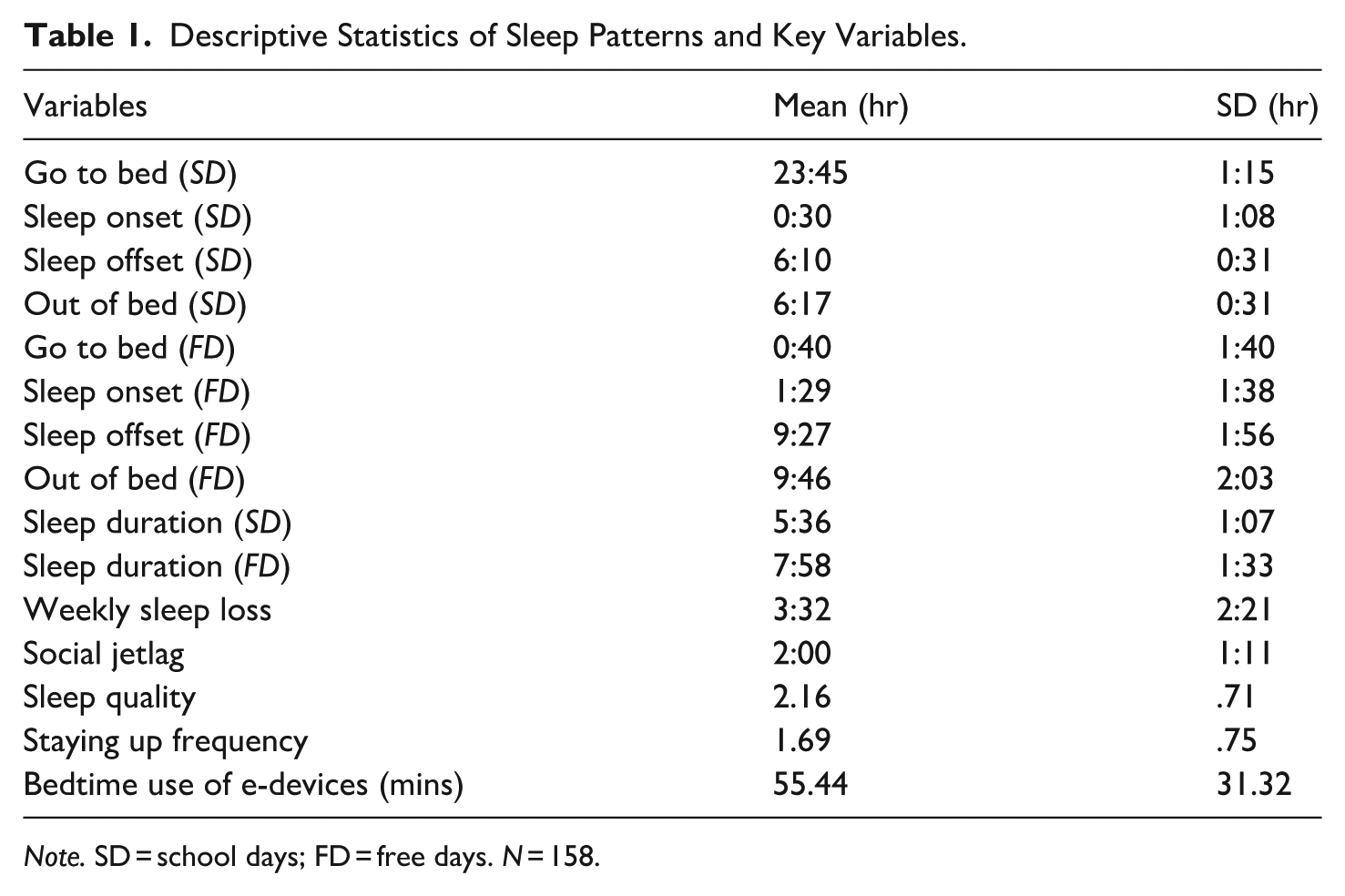
Note. SD = school days; FD = free days. N = 158.
Table 2 presents the descriptive statistics of the sleep patterns of student-athletes during school days and free days by the three chronotypes, and Table 3 shows the descriptive statistics by chronotype and gender. Post-hoc pairwise comparisons showed that during school days, student-athletes with evening chronotypes had later bedtime and sleep onset compared to the other two chronotypes, there were no differences between the morning and intermediate chronotypes. During free days, student-athletes with evening chronotype also had later bedtime, sleep onset, sleep offset and get out of bed time compared to the other two chronotypes, there were no differences between the morning and intermediate chronotypes (see Table 2).
Descriptive Statistics of Sleep Patterns During School Days and Free Days by Chronotype (Overall Sample).
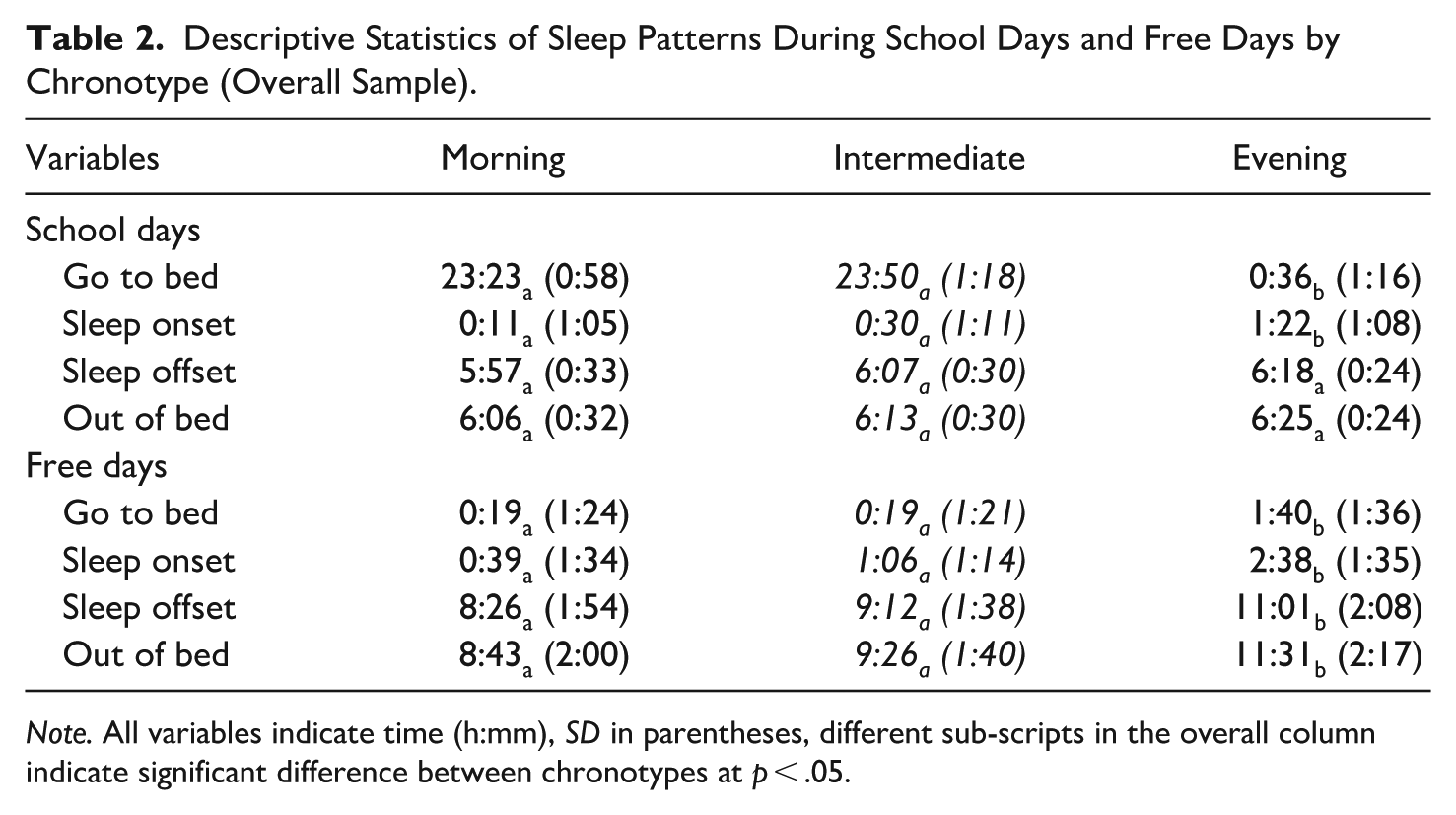
Note. All variables indicate time (h:mm), SD in parentheses, different sub-scripts in the overall column indicate significant difference between chronotypes at p < .05.
Descriptive Statistics of Sleep Patterns During School Days and Free Days by Gender and Chronotype.
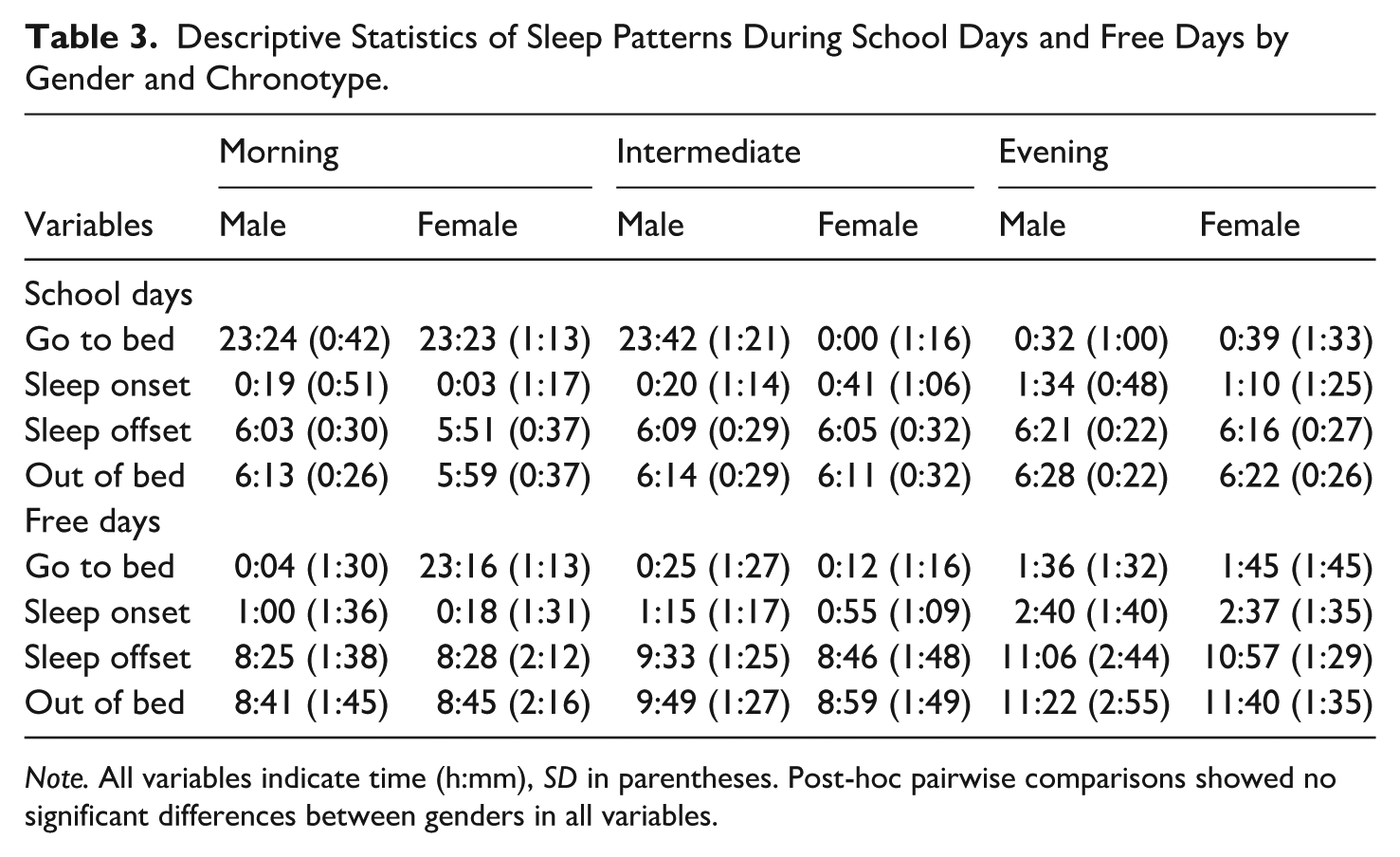
Note. All variables indicate time (h:mm), SD in parentheses. Post-hoc pairwise comparisons showed no significant differences between genders in all variables.
The results of the first two-way MANOVA on sleep patterns during school days and free days indicated significant multivariate main effects on chronotype, but no gender and interaction effects [Wilk’s Λ = .675, F (16, 176) = 2.39, p < .01, η2 = .17 for chronotype, Wilk’s Λ = .866, F (8, 88) = 1.70, p = .11, η2 = .13 for gender and Wilk’s Λ = .773, F (16, 176) = 1.51, p = .10, η2 = .10 for interaction effects].
Follow-up ANOVA tests found that among the student-athletes with three different chronotypes, there were significant different in school days go to bed time [F (2, 95) = 5.87, p < .01, η2 = .11], school days sleep onset [F (2, 95) = 6.51, p < .01, η2 = .12], free days go to bed time [F (2, 95) = 11.91, p < .001, η2 = .20], free days sleep onset [F (2, 95) = 12.56, p < .001, η2 = .20], free day sleep offset [F (2, 95) = 12.19, p < .001, η2 = .20] and free day out of bed time [F (2, 95) = 13.53, p < .001, η2 = .22] (see Table 2).
Table 4 presents the descriptive statistics of the key variables by chronotype, and Table 5 shows the descriptive statistics by chronotype and gender. The results of the second two-way MANOVA on sleep duration during school days and free days indicated no significant differences among the three chronotypes, no gender effects and no interaction effects [Wilk’s Λ = .935, F (4, 232) = 1.97, p = .10, η2 = .03 for chronotype, Wilk’s Λ = .997, F (2, 116) = .17, p = .84, η2 = .01 for gender and Wilk’s Λ = .945, F (4, 232) = 1.65, p = .16, η2 = .03 for interaction effects]. (see Table 4).
Descriptive Statistics of Computed Variables by Chronotype (Overall Sample).
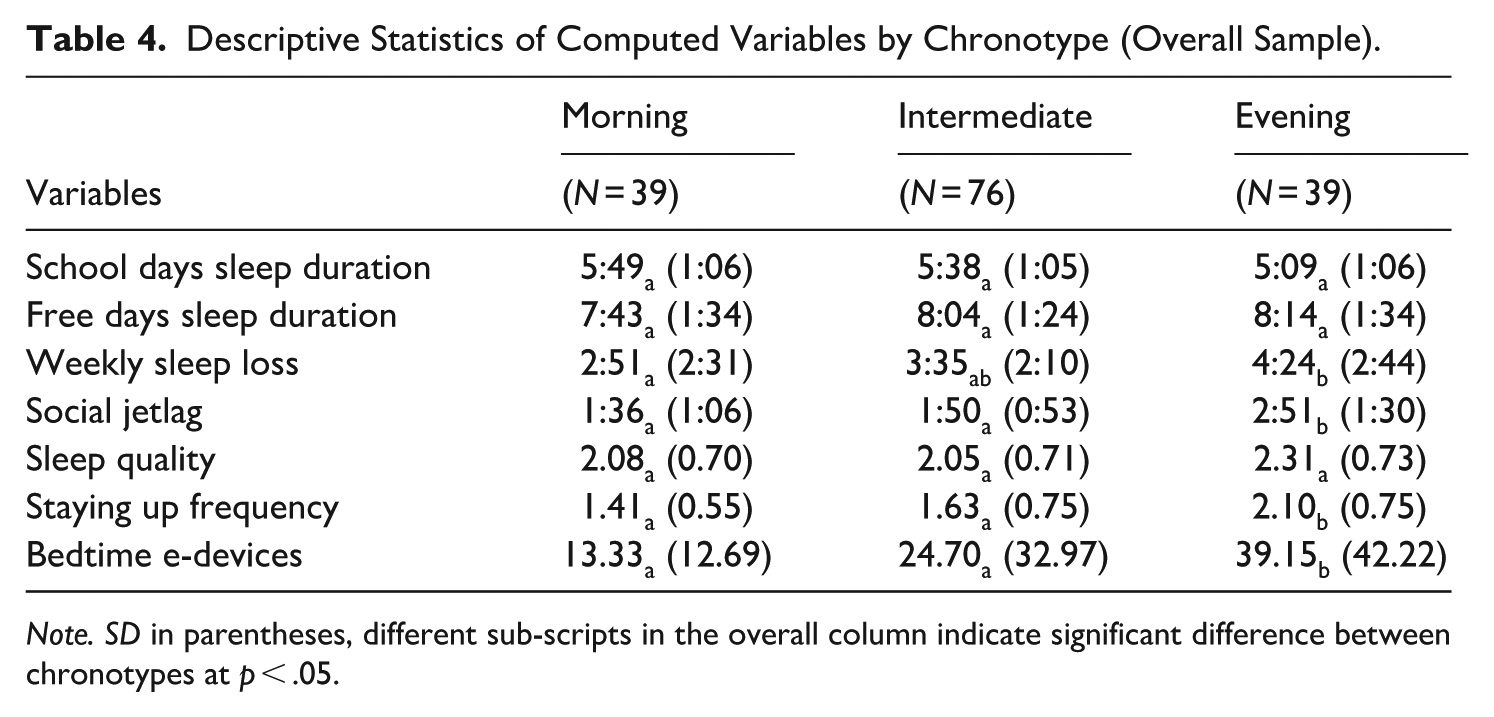
Note. SD in parentheses, different sub-scripts in the overall column indicate significant difference between chronotypes at p < .05.
Descriptive Statistics of Computed Variables by Gender and Chronotype.
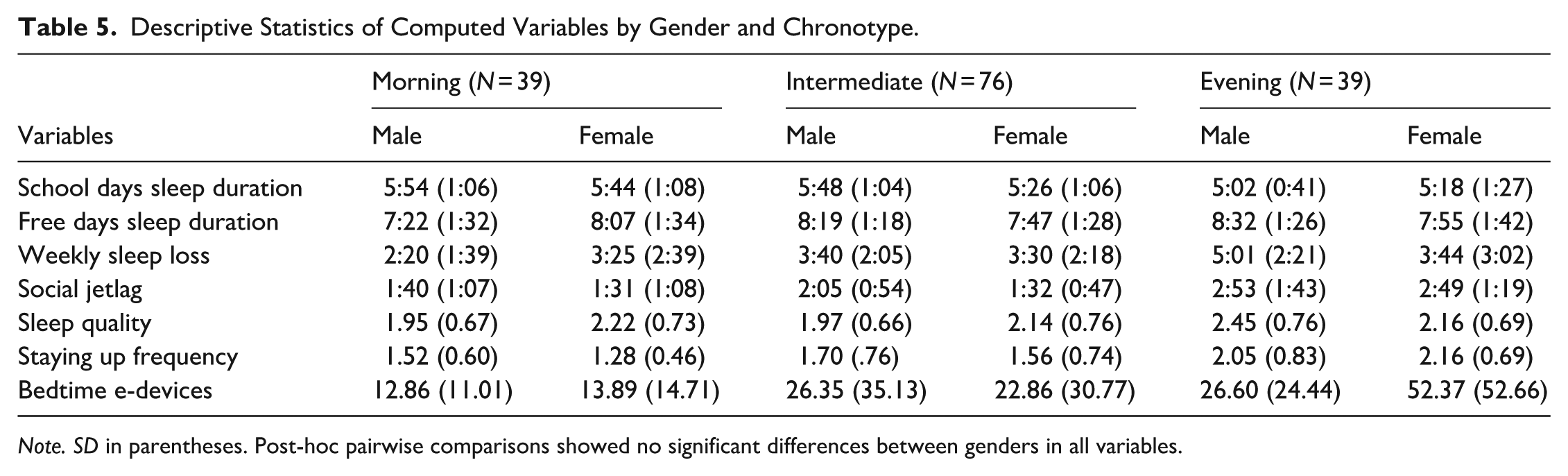
Note. SD in parentheses. Post-hoc pairwise comparisons showed no significant differences between genders in all variables.
The results of the third two-way MANOVA on weekly sleep loss and social jetlag showed significant multivariate main effects on chronotypes, but no gender and interaction effects [Wilk’s Λ = .831, F (4, 232) = 5.63, p < .001, η2 = .09 for chronotype, Wilk’s Λ = .987, F (2, 116) = 0.75, p = .48, η2 = .01 for gender and Wilk’s Λ = .950, F (4, 232) = 1.49, p = .21, η2 = .02 for interaction effects].
Follow-up ANOVA tests found significant differences in weekly sleep loss and social jetlag among the three chronotypes, [F (2, 117) = 3.14, p < .05, η2 = .05] for weekly sleep loss and [F (2, 117) = 11.08, p < .001, η2 = .16] for social jetlag. Post-hoc pairwise comparisons showed that student-athletes with evening chronotypes had higher weekly sleep loss compared to the morning chronotypes (all p-values < .05), and they also had higher social jetlag later compared to the other two chronotypes (see Table 4).
In terms of sleep quality and frequency of staying up late, the results of the last MANOVA showed significant multivariate main effects on chronotype, but no gender and interaction effects [Wilk’s Λ = .870, F (4, 294) = 5.30, p < .001, η2 = .07 for chronotype, Wilk’s Λ = .994, F (2, 147) = .45, p = .64, η2 = .01 for gender and Wilk’s Λ = .962, F (4, 294) = 1.44, p = .22, η2 = .02 for interaction effects]. Follow-up ANOVA tests found significant differences in frequency of staying up late, [F (2, 148) = 10.27, p < .001, η2 = .12], but not sleep quality. Post-hoc pairwise comparisons showed that student-athletes with evening chronotypes had higher frequency of staying up till 3 am compared to the other two chronotypes (all p-values < .01; see Table 4).
The final ANOVA tests on time use of bedtime E-devices found significant differences among the three chronotypes in time use of bedtime E-devices, [F (2, 148) = 6.66, p < .01, η2 = .08], but neither gender nor interaction effects. Post-hoc pairwise comparisons showed that student athletes with evening chronotypes had higher time use of bedtime E-devices compared to the other two chronotypes (all p-values < .05; see Table 5).
Discussion
It is known that many adolescents globally are not getting the recommended 8 hr of sleep (Gariepy et al., 2020; Lo et al., 2018; Wang et al., 2025). The use of E-devices at night could further delay sleep onset, reduce sleep quality and result in inadequate rest and decreased cognitive functioning. This could be even more detrimental for high school student-athletes, as they may not have enough recovery time to assist them to perform optimally, both physically and psychologically (Monma et al., 2018). Although previous studies have examined the relationship between sleep and the use of bedtime E-devices (Bartel et al., 2015; Rafiques et al., 2020), the role of chronotype in influencing sleep patterns and the use of bedtime E-devices, which is the current focus of this study, has been less studied. The present study aimed to investigate sleep patterns, sleep loss, social jetlag, sleep quality, staying up late and time spent on E-devices at bedtime in high school student-athletes of different chronotypes. Five hypotheses were tested.
The findings of the current study confirmed that the high school student-athletes in Singapore are not sleeping enough according to the recommended guidelines, supporting H1. However, it was surprising to find that of the sample we examined, all (100%) of the student-athletes were not sleeping at least 8 hr during school days and 23% of them were sleeping less than 5 hr. Their social jetlag was 2 hr behind and weekly sleep loss was at 3 hr and 32 min. According to a recent survey of 43 cities worldwide (Global-Is-Asian Staff, 2023), Singapore was the third most sleep-deprived city, and sleep deprivation has been classified as a public health crisis. It appears high school student-athletes are not spared. High school student-athletes face many challenges in meeting the recommended sleep hours due to demands from training, competition, academics and changes in their circadian rhythms (Ungaro & De Chavez, 2022). The consequences of inadequate sleep could lead to adverse outcomes such as injury, poor sports and academic performance, depression or increased risk-taking behaviours (Gaultney, 2010; Milewski et al., 2014; Silva & Paiva, 2019). This study was the first to investigate sleep patterns among Singapore high school student-athletes, and our findings suggest that sleep inadequacy among the high school student-athletes is a concern.
The second hypothesis examined whether chronotype affects the sleep patterns of student-athletes. The findings of the current study confirmed that the sleep patterns of student-athletes varied according to their chronotypes. Student-athletes with an evening chronotype had later bedtime, sleep onset and sleep offset compared to those with intermediate and morning chronotypes. This indicates that the issue of sleep deprivation in student-athletes with evening chronotypes may be particularly acute and pronounced. Previous studies among university student-athletes have shown that later chronotypes had a higher prevalence of poor sleep quantity and quality (Monma et al., 2025; Resza et al., 2024; Zhang et al., 2022). This study confirms that a later chronotype impacts sleep patterns of high school student-athletes as well.
It was hypothesised that student-athletes with an evening chronotype tend to sleep less compared to those with intermediate and morning chronotypes (H3) during school days and free days, however, this was not supported by the findings. There were no significant differences in sleep duration between chronotypes and sleep duration during school days and free days.
This study found that student-athletes with an evening chronotype reported higher sleep loss and social jetlag, as well as a higher frequency of staying up late, compared to their intermediate and morning chronotype counterparts. However, there were no differences in sleep quality; thus, H4 is largely supported. The lack of a statistically significant difference in sleep quality could be due to small differences in between group and within group variances (Kim, 2014). Previous studies have found that elite athletes and university student-athletes with later chronotypes tend to report poorer sleep quality, higher sleep loss, social jetlag and sleep disturbances (Bender et al., 2018; Lim et al., 2021; Monma et al., 2025). There are a few possible reasons for this. Firstly, student-athletes with evening chronotypes tend to have unhealthy lifestyle habits such as skipping breakfast and using bedtime E-devices (Fossum et al., 2014; Teixeira et al., 2018). Secondly, evening chronotypes work best at night and tend to sleep later and wake up later compared to morning and intermediate chronotypes. However, their fixed academic schedules are not adjusted to accommodate their preference, which may lead to poor sleep quantity and quality as indicated by sleep loss, social jetlag and frequency of staying up late. Finally, some studies have found that perceived stress is a significant mediator between chronotypes and sleep quality (Litwic-Kaminska & Kotysko, 2020). This was not measured in the current study.
The finding of the current study supported the final hypothesis, showing that student-athletes with an evening chronotype spent more time before bed using E-devices, compared to those with intermediate and morning chronotypes (H5). In particular, student-athletes with evening chronotypes spent significantly more time (up to three times more) than those with morning and intermediate chronotypes using bedtime E-devices.
Overall, the findings from the current study align with global trends indicating that most adolescents in high schools are not getting sufficient sleep (Gariepy et al., 2020). The use of bedtime E-devices is a significant factor contributing to insufficient sleep among high school students. Previous studies have shown that blue light emission from E-devices may interfere with circadian rhythms by delaying melatonin production and increasing sleep latency (Cajochen, 2011). In addition, the use of bedtime E-devices may be associated with increased arousal which delays sleep onset (Bhat et al., 2018). While most studies on student-athletes have examined the relationship between use of bedtime E-device and sleep quantity and quality, less is known about the influence of chronotype on this relationship. This study highlighted that student-athletes with evening chronotypes are particularly vulnerable to poor sleep hygiene practices. Among all the hypotheses tested, no gender differences were found among the key variables.
The study’s findings that student-athletes with evening chronotypes spend more time using electronic devices before bed and experience higher sleep loss and social jetlag are consistent with global research. For instance, adolescents with later chronotypes are more vulnerable to sleep disturbances and poor sleep hygiene practices (Bender et al., 2018; Lim et al., 2021). This is a concern not only in Singapore but also in other parts of the world, where the prevalence of electronic device use and the pressures of academic and athletic commitments contribute to sleep deprivation.
This study raises important questions about the challenges associated with sleep difficulties among high school student-athletes globally, particularly those with evening chronotypes. Parents, teachers and coaches could work together hand in hand to address this issue. Some practical strategies include educating the student-athletes on sleep hygiene and the importance of sleep in athletic performance and academic achievement. Parents could establish consistent sleep routines, help monitor their children’s sleep and wake times and limit the use of E-devices during bedtime at home. Teachers could avoid setting tight homework deadlines for student-athletes, especially during competitive season. Coaches could adjust the training schedules and encourage napping during the day to help student-athletes recover from sleep deficits.
This study had several limitations. Firstly, this was a cross-sectional study that relied on questionnaires, it cannot establish causal relationships between chronotypes, sleep and the use of bedtime E-devices. It is plausible that use of bedtime E-devices may mediate the relationship between chronotypes and sleep (Kortesoja et al., 2023). Future studies should explore this mediating role. Secondly, as the response from questionnaires may be inaccurate or biased, future studies should incorporate objective measures of chronotype, sleep patterns, daily routines and E-devices usage, as indicated by screen time. Thirdly, there may be other factors influencing sleep in student-athletes that were not considered in this study. Conducting qualitative interviews or focus group discussions in future research could provide additional insights. Lastly, future studies should consider employing a longitudinal design to better understand sleep patterns and the factors associated with sleep across different periods of the academic school year and sports season.
Conclusion
In conclusion, this study underscores the significant issue of sleep deprivation among high school student-athletes in Singapore. It also reveals that student-athletes with a later chronotype tend to exhibit poorer sleep hygiene, sleep quality and are more likely to engage in bedtime E-devices. These insights highlight the need for schools to strengthen sleep hygiene education, with particular attention for programmes to meet the needs of student-athletes. By addressing these issues, schools can help improve the overall well-being and performance of their student-athletes.
Footnotes

Ethical Considerations
The study was approved by the university’s Ethical Review Board (IRB-2020-11-001). Permission to conduct research in school was granted by the respective school leaders.
Consent to Participate
The students provided informed consent. Parental consent was waived by the ethics committee.
Consent for Publication
Consent for publication has been obtained through the institutional consent form.
Author Contributions
John Wang is the Principal Investigator for the project and contributed to all aspects of the manuscript. Steven Burns and Wei Peng Teo contributed to the conception and design of the study and the review of manuscript. Chian Lit Khoon and Tin Sumarta contributed to the data collection.
Funding
The authors disclosed receipt of the following financial support for the research, authorship, and/or publication of this article: This research is funded by the Ministry of Education, Singapore Education Research Funding Programme OER 11/20 JWCK.
Declaration of Conflicting Interests
The authors declared no potential conflicts of interest with respect to the research, authorship, and/or publication of this article.
Data Availability Statement
The data underlying this article will be shared on reasonable request to the corresponding author with permission of the data owner.