





Abstract
Introduction:
Common bile duct stones (CBDS) may occur in up to 3%–14.7% of patients for whom cholecystectomy is performed. 1,2 CBDS may cause some symptoms such as biliary colic, jaundice, cholangitis, or pancreatitis. Different treatments may be used for the treatment of CBDS. Endoscopic retrograde cholangiopancreatography (ERCP) is the first choice. ERCP may be problematic due to altered anatomy in patients who underwent gastrectomy. 1 Laparoscopic or open surgical bile duct exploration may be needed because of unsuccessful ERCP attempt.
Case:
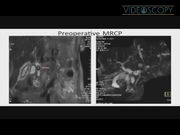
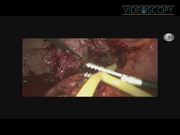
An 82-year-old woman with the complaints of abdominal pain, fever, and jaundice was admitted to our emergency ward. In physical examination, right upper abdominal sensitivity and 10-cm midline incisional hernia were observed. Laboratory findings were leukocytosis, increased alkaline phosphatase, total bilirubin, and gamma glutamyl transferase levels. In her history, she was operated for gastric cancer 6 years ago and ERCP was not feasible. She was diagnosed as T3N0. Gallbladder was stomatised to the abdominal wall to control sepsis. After the stabilization of the patient, the surgery was planned. During the exploration, we observed dense adhesions and the transverse colon was adherent to the abdominal wall. The fundus was hung and the dissection was carried out to the Hartman's pouch. Freeing and mobilization were carried out with sharp dissection. Choledochotomy was done after the Calot triangle was exposed and dissected. The stone was extracted without breaking or spillage within a bag. The patient was externed after full enteral feeding was tolerated and the first year follow-up was uneventful.
Discussion:
Our case is an example of a laparoscopy patient with a history of open surgery (extended lymph node dissection and total gastrectomy), which was also done by us. ERCP was not feasible in this patient. A good anatomical dissection was mandatory because any problem could lead the procedure to choledochoduedonostomy, which would complicate the outcome by leading to cholangitis that may be fatal in an old woman. Even in the presence of dense adhesions due to previous major operations, videoendoscopic techniques should be attempted as the first intervention. Laparoscopic exploration is associated with successful stone clearance rates ranging from 85% to 95% and a mortality rate of 0%–2%. 3,4 Common bile duct stones can be treated successfully by laparoscopic technique in patients in whom common bile duct stones cannot be treated by ERCP. Although there are risks of bleeding, visual contamination, or visceral perforation, laparoscopy is safe in experienced hands due to high level of exposure, magnification, and minimal invasiveness.
No competing financial interests exist.
Runtime of video: 8 mins 32 secs

Keywords
Get full access to this article
View all access options for this article.
References
Supplementary Material
Please find the following supplemental material available below.
For Open Access articles published under a Creative Commons License, all supplemental material carries the same license as the article it is associated with.
For non-Open Access articles published, all supplemental material carries a non-exclusive license, and permission requests for re-use of supplemental material or any part of supplemental material shall be sent directly to the copyright owner as specified in the copyright notice associated with the article.
