





Abstract
Introduction:
Common bile duct stones (CBDS) appear in ∼10%–33% of patients with symptomatic cholelithiasis. 1 For many years, open cholecystectomy (OC) with choledochotomy or sphincteroplasty and exploration of the bile duct were the common practice to treat both pathologies. Since laparoscopic cholecystectomy (LC) replaced OC in the treatment of biliary lithiasis and the development of endoscopic retrograde cholangiopancreatography (ERCP), the endoscopic/surgical treatment alternatives for patients with CBDS have increased. 2 Preoperative ERCP followed by LC is the most common strategy employed in most centers. 3,4 The three options for these patients are the single-stage treatment, laparoscopic treatment with intraoperative ERCP (rendezvous), or the two-stage treatment with pre/postoperative ERCP. Although no option is favored by evidence, intraoperative ERCP is becoming more popular due to good results although it appears to be demanding logistically. 5,6 It can also be an appropriate choice for treating CBDS after an unsuccessful preoperative ERCP. 7 In this video, we present the case of a patient with CBDS who was treated with the rendezvous approach.
Case Report:
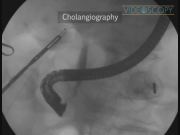
A 72-year-old female with symptomatic microlithiasis and two episodes of cholangitis underwent magnetic resonance cholangio pancreatography (MRCP). The test showed large duodenal diverticula and dilatation of the CBD. She was initially scheduled for ERCP, followed by LC. The ERCP was unsuccessful, due to inability to locate the papilla. The patient was rescheduled for LC and intraoperative ERCP with the rendezvous technique. Cannulation of the papilla was guided by an endoscopic wire advanced distally through the cystic duct.
Results:
The patient had an uneventful recovery and was discharged 2 days after surgery.
The authors state that they have no financial or other ties, or any conflicts of interest to disclose.
Runtime of video: 8 mins 3 secs


Keywords
Get full access to this article
View all access options for this article.
References
Supplementary Material
Please find the following supplemental material available below.
For Open Access articles published under a Creative Commons License, all supplemental material carries the same license as the article it is associated with.
For non-Open Access articles published, all supplemental material carries a non-exclusive license, and permission requests for re-use of supplemental material or any part of supplemental material shall be sent directly to the copyright owner as specified in the copyright notice associated with the article.
