






Abstract
Abstract
Introduction:
Paragangliomas are neuroendocrine neoplasms that originate from paraganglia of the sympathetic and parasympathetic nervous systems. The optimal treatment is complete surgical removal of the tumor to ensure long-term cure. The anatomic location of the mass dictates the operative approach and technical difficulty. This video demonstrates the utility of a robot-assisted transabdominal approach to remove a para-aortic paraganglioma.
Case Presentation:
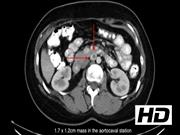
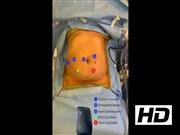
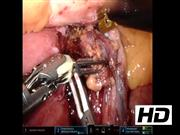
A 33-year-old female patient with a history of pheochromocytoma status post-open right adrenalectomy through a subcostal incision at age 9 years presented with new para-aortic paraganglioma. Her symptoms included intermittent tachycardia, palpitations, and dizziness. Her father, paternal aunt, uncle, and grandfather all carry the diagnosis of pheochromocytoma. Genetic testing was recommended, but the patient deferred testing. Plasma-free normetanephrine was 1.61 (reference range: 0.00–0.89), and plasma-free metanephrine was 0.11 (reference range: 0.00–0.49). The patient received adequate preoperative alpha followed by beta blockade before undergoing surgery. In the operating room, the patient was intubated and placed in the supine split-leg position. Laparoscopic access was obtained through an optical trocar just right of the umbilicus. Three additional 8 mm robotic ports, one 5 mm, and one 12 mm laparoscopic assist ports were placed under direct observation. Inspection of the peritoneum did not identify any metastatic disease. The robot was docked. Using blunt forceps, the transverse colon was lifted, and the duodenum was mobilized to expose the mass, which was 1.7 × 1.2 cm and located in the aortocaval station. Using fenestrated bipolar forceps and hook electrocautery, the mass was circumferentially dissected free of surrounding structures, whereas keeping the capsule intact. Small feeding vessels were carefully ligated, taking care to avoid injury to the duodenum and inferior mesenteric vein. The specimen was removed en bloc using a specimen bag. The pathology analysis demonstrated a well-encapsulated paraganglioma. The patient was discharged home on postoperative day 2 without complications.
Conclusions:
This video illustrates the technical details of a robot-assisted resection of a para-aortic paraganglioma. The robotic approach conferred several advantages that include enhanced observation using the robotic endoscope, dexterous instrument arm/wrist articulation in a tight space, and the ability for the operating surgeon to control multiple instruments. This allowed for precise and safe dissection in an otherwise difficult-to-access anatomic location.
The authors declare no conflicts of interest
.
Runtime of video: 5 mins 51 secs
Get full access to this article
View all access options for this article.