




Abstract
The binding of platelet glycoprotein (GP) IIb/IIIa to fibrinogen is the final common pathway in platelet aggregation, a process known to play a key role in the pathogenesis of ischemic brain damage. We compared the effects of FK419, a novel nonpeptide GPIIb/IIIa antagonist, with recombinant tissue plasminogen activator (rt-PA) on middle cerebral artery (MCA) patency and ischemic brain damage in a thrombotic stroke model in squirrel monkeys. FK419 not only inhibited in vitro platelet aggregation (IC50: 88 nmol/L), but also showed disaggregatory activity to aggregated platelet (EC50: 286 nmol/L). FK419 dose-dependently reduced the time to first reperfusion and total occlusion time of MCA blood flow when administered immediately after the termination of photoirradiation. FK419 reduced cerebral infarction and ameliorated neurologic deficits with similar dose-dependency. Although rt-PA reduced the time to first reperfusion, total occlusion time, and cerebral infarction, it did not significantly ameliorate neurologic deficits and induced petechial intracerebral hemorrhages. These results indicate: (1) FK419 restored cerebral blood flow after thrombotic occlusion of MCA, (2) FK419 reduced ischemic brain injury by its thrombolytic actions in a non-human primate stroke model, and (3) FK419 has superior antithrombotic efficacy and is safer than rt-PA.
Introduction
Stroke represents the third most common cause of death and hospitalization. Although the ratio of death by cerebrovascular disorders in advanced nations has been reduced by emergency care systems, cerebrovascular disorders remain one of the most important problems in neurologic disease in terms of the patient's quality of life. However, there are no drugs that have satisfactory effects in acute stroke. In acute stroke, thrombolysis with intravenously administered recombinant tissue plasminogen activator (rt-PA) is the only available treatment with proven clinical efficacy (NINDS, 1995). Several clinical trials have shown that rt-PA is effective in improving clinical outcomes at 3 months, as long as the patients received treatment within 3 hours after the onset of stroke symptoms. This narrow therapeutic time window and the risk of formation of intracerebral hemorrhage restrict its usage for stroke patients. Furthermore, rt-PA often fails to lyse large clots (del Zoppo et al, 1992), arteries reocclude in about a third of cases (Alexandrov and Grotta, 2002), and flow may remain stagnant in the microcirculation despite clot lysis (del Zoppo et al, 1991). These deficiencies necessitate exploring new therapeutic strategies or agents for acute ischemic stroke.
Platelets play an important role in the pathophysiology of acute myocardial infarction, unstable angina, and ischemic stroke. Enhanced platelet activation is observed after the onset of ischemic stroke (Koudstaal et al, 1993; van Kooten et al, 1994; Grau et al, 1998; Zeller et al, 1999). Two major trials of aspirin in acute ischemic stroke (International Stroke Trial and Chinese Acute Stroke Trial) revealed that early aspirin use produces a small but definite benefit (International Stroke Trial Collaborative Group, 1997; Chinese Acute Stroke Trial Collaborative Group, 1997; Chen et al, 2000). Thus, antiplatelet therapy may be useful in acute ischemic stroke.
The final common pathway leading to platelet aggregation is the binding of fibrinogen to activated platelets via the surface receptor glycoprotein (GP) IIb/IIIa. Therefore, inhibition of this interaction may provide potent antiplatelet effects and better therapeutic intervention compared with that of aspirin. Recently, abciximab, an antibody directed to GPIIb/IIIa receptor, was found to have beneficial effects in acute ischemic stroke (AbESTT Investigators, 2003). FK419 ((S)-2-acetylamino-3-[(R)-[1-3-(piperidin-4-yl)propionyl]piperidin-3-ylcarbonyl]amino]propionic acid trihydrate) is a novel nonpeptide GPIIb/IIIa receptor antagonist with strong antiplatelet efficacy (Mihara et al, 2004). Furthermore, it has been demonstrated that FK419 effectively dispersed aggregating platelets and improved neurologic deficits and reduced brain damage in guinea-pig thrombotic middle cerebral artery (MCA) occlusion model (Moriguchi et al, 2004b).
Animal stroke models in rodents are easy to conduct and ischemic outcomes are generally uniform, allowing for robust detection of neuroprotective efficacy; however, human strokes exhibit considerable heterogeneity in terms both of time course and area of infarction. After the many failures of clinical trials for stroke, it is highly desirable to evaluate the efficacies of candidate drugs not only in rodents but also in larger animals such as nonhuman primates (STAIR, 1999). A photochemically induced MCA thrombosis model in squirrel monkeys was recently reported (Kaku et al, 1998, 1999). In the present study, we established an experimental model of thrombolic MCA occlusion in squirrel monkeys and examined the effects of FK419 on MCA patency and ischemic brain damage as compared with those of rt-PA.
Material and methods
Animals
The studies were performed on male squirrel monkeys (Saimiri sciureus) with weights ranging from 500 to 840 g (Hamri, Ibaraki, Japan). Animals were housed at 23°C ± 1°C, 55% ± 5% humidity, under a 12-hour light/dark cycle (lights on at 7:00). All animal experimental procedures were performed under the guidelines of the Animal Experiment Committee of Fujisawa Pharmaceutical.
Reagents
FK419 synthesized at Fujisawa Pharmaceutical (Osaka, Japan) was diluted with electrolyte solution (lactec, Lactec, Kyowa Hakko, Tokyo, Japan). Recombinant tissue plasminogen activator (Alteplase, Activacin, Kyowa Hakko, Tokyo, Japan) was dissolved in lactec and then diluted with physiologic saline. Adenosine diphosphate (ADP) was purchased from Sigma (St Louis, MO, USA). Rose bengal was obtained from Wako Pure Chemical (Osaka, Japan). All other chemicals and solvents used were commercial products and of analytical grade.
Platelet Aggregation and Disaggregation Studies In Vitro
Blood was collected in 0.38% sodium citrate anticoagulant from abdominal aorta of squirrel monkeys under anesthesia by intramuscular injection of 25 mg/kg ketamine hydrochloride. Platelet-rich plasma (PRP) was prepared by rapid centrifugation (Model 5100 with Swing-rotor RS720, Kubota, Tokyo, Japan) of the blood samples at 160g for 10 mins at room temperature. Platelet-poor plasma (PPP) was obtained from the remaining blood after removing PRP by centrifugation at 1,000g for 10 mins at room temperature. Platelet aggregability and drug-induced disaggregation were assessed using MEBA1 aggregometer (PAM-8T, Mebanics, Tokyo, Japan). Adenosine diphosphate was used as an agonist at a final concentration of 20 μmol/L. For the aggregation assay, PRP was preincubated with FK419 for 2 mins. After 2 mins, the agonist was added and the change in light transmission was monitored for 10 mins. Results were expressed as the percent decrease in maximum platelet aggregation during 10 mins normalized to that of saline-added control. When drug-induced disaggregation was assessed, various concentrations of test compounds were added at 1 min after the addition of the agonist, and platelet aggregation was monitored. The percent decrease of aggregation at 9 mins after addition of the drugs compared with that just before drug addition.
Photochemically Induced Thrombotic Middle Cerebral Artery Occlusion
Surgery: Squirrel monkeys were lightly anesthetized by intramuscular injection of 10 mg/kg ketamine hydrochloride. Endotracheal intubation was performed and anesthesia maintained with isoflurane at a concentration varying between 0.5% and 1.5% in a mixture of air and 30% O2. Catheters were inserted in the femoral artery and vein for the measurement of blood gases, continuous recording of blood pressure and heart rate, and for administration of rose bengal or test drugs. The transorbital approach to the right MCA was performed according to the methods of Hudgins and Garcia (1970) and Kaku et al (1998). The orbital contents were dissected and excised. With the help of a Zeiss operating microscope, orbital craniotomy was performed using a dental drill to open an oval bony window. This permitted visualization of the intracranial dura and the right MCA could be observed without cutting the dura mater. Thrombus was induced by a photochemical reaction according to the method of Umemura et al (1993). Briefly, the window was irradiated with green light (wave length 540 nm, 2,500,000 lx) achieved by the use of a xenon lamp (L4887, Hamamatsu Photonics, Hamamatsu, Japan) with a heat-absorbing filter and a green filter. The irradiation was directed by a 3-mm diameter optic fiber mounted on a micromanipulator. The probe of a pulsed Doppler flowmeter (Model PDV-20, Crystal Biotech America, USA) was placed on the MCA to measure MCA blood flow. When a steady baseline flow was obtained, 10 mins of photoirradiation was started, and intravenous rose bengal (20 mg/kg) injection for 6 mins was simultaneously initiated. The MCA was considered to be occluded when the flow monitor indicated that blood flow had completely stopped. The test compound was injected from the end of photoirradiation. Blood flow in the MCA was continuously monitored for 3 hours from the start of drug administration. A typical recording and quantitative analysis of MCA blood flow is presented in Figure 1. The time from injection of rose bengal to the cessation of blood flow was recorded as the MCA occlusion time. The time to first reperfusion after drug initiation, the sum of time intervals during which MCA blood flow was not detected (total occlusion time), and the number of cyclical flow reductions (CFRs) were calculated. After monitoring MCA blood flow, the dura was covered with a moist gelatin sponge, the wound was closed, and the eyelids were sutured together. Animals were intramuscularly administered buprenorphine hydrochloride (4 μg/kg), allowed to fully recover from anesthesia, and returned to their home cage. During surgery and MCA blood flow monitoring, rectal temperature was maintained at 37.4°C to 38.6°C with a heating-pad (TR-100, PS-100, Fine Science Tools, North Vancouver, Canada).
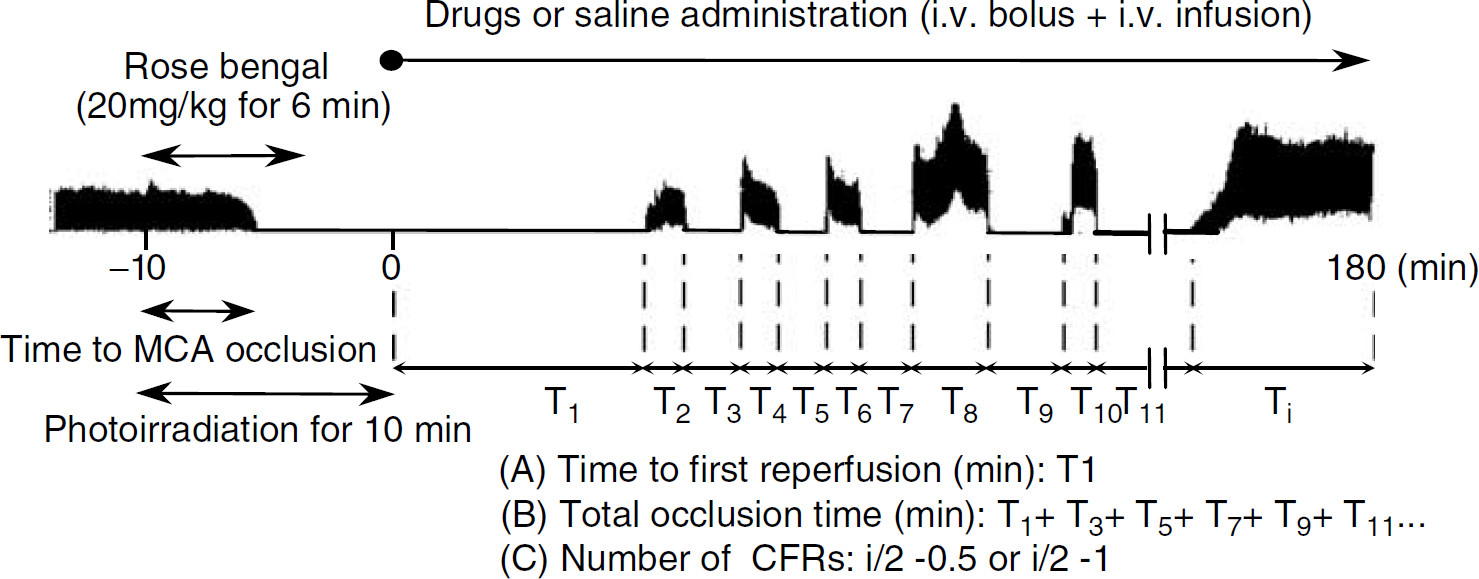
Typical recording and quantitative analysis of middle cerebral artery (MCA) blood flow. Middle cerebral artery blood flow was quantified during drug administration. Drugs or vehicle were administered from end of photoirradiation for 3 hours. Time to MCA occlusion was approximately 4 mins and not statistically different among the groups.
Drug treatments: FK419 was administered by bolus injection (2 mL/kg) followed by continuous infusion for 3 hours (1 mL/kg per hour). In the case of rt-PA, 10% of the total dose of rt-PA was intravenously injected as a bolus, which was followed by continuous infusion of the remaining 90% over a period of 1 hour. Lactec was administered to control animals for 3 hours, and rt-PA-treated animals for 2 hours, from the end of rt-PA infusion.
Physiologic parameters: Femoral arterial blood pressure and heart rate were measured. Blood was sampled through a femoral arterial line before, and 1.5 and 3 hours after thrombotic occlusion. pO2, pCO2, pH, hematocrit, hemoglobin, and blood glucose were measured using pH/blood gas analyzers (I-statsystem, i-STAT Corporation, Princeton, NJ, USA).
Platelet aggregation: Blood samples were collected into 3.8% sodium citrate (9:1 v/v) from the femoral artery 3 hours after initial bolus dosing of FK419. Platelet-rich plasma (PRP) and PPP were obtained by centrifugation and platelet aggregability was measured. Adenosine diphosphate (ADP) was used as an agonist at a final concentration of 20 μmol/L.
Neurologic examination: Monkeys were examined for their neurologic deficits 24 hours after MCA occlusion. Deficits were graded using a simple six-point scale according to the method of Crowell et al (1970). Grade 0 (no deficit): normal climbing. Grade 1 (mild deficit): abnormal climbing and decreased dexterity of the contralateral hand. Grade 2 (moderate deficit): cannot climb and abnormal walking. Grade 3 (severe deficit): cannot walk and abnormal standing. Grade 4: cannot stand. Grade 5: death. Neurologic deficits were video-recorded and another experimenter confirmed the score.
Volume of infarction: After examination of neurologic deficits, surviving monkeys were anesthetized by intraperitoneal injection with sodium pentobarbital and transcardiac perfusion was performed with physiologic saline. Brains were removed and the cerebrum was sectioned at 7 coronal positions (4 mm intervals) using a brain matrix. These coronal sections were immersed in 10% neutral-buffered formalin/PBS for at least 5 days. Each specimen was embedded in paraffin wax, and 14 sections (10-μm thickness) were made with 2 mm intervals and stained with hematoxylin-eosin. The neuronal damage in each section was defined (Osborne et al, 1987) and the area of neuronal damage was measured using a computerized image analysis system after correction for brain edema. We measured the area of necrotic damage, which was identified as exhibiting pyknosis, karyorrhexis, and cytoplasmic eosinophilia or loss of hematoxylin affinity. The brain damage in each animal was expressed as a percentage of the sum of the damaged area compared with the sum of the whole area of the cerebrum, and the volume of ischemic brain damage was calculated according to the trapezoid method (Rosen and Harry, 1990).
Plasma concentration of FK419 and rt-PA: Blood samples were collected into 3.8% sodium citrate (9:1 v/v) from the femoral artery 5, 30 and 180 mins after dosing of FK419 and rt-PA. Plasma concentration of FK419 was measured by high-performance liquid chromatography. Plasma concentration of rt-PA was measured by ELISA (Affinity Biologicals, Ontario, Canada).
Statistical Analysis
All values are expressed as mean ± s.d. Significance of difference between groups in stroke model, except neurologic score, was tested using Student's t-test or one-way ANOVA followed by Dunnett's multiple comparison. Kruskal-Wallis followed by Dunnett's multiple comparison test or Wilcoxon rank sum test was used for neurologic score. P-value less than 0.05 was considered significant.
RESULTS
Platelet Aggregation and Disaggregation Studies In Vitro
FK419 concentration-dependently inhibited ADP-induced platelet aggregation with an IC50 value of 88 ± 25 nmol/L (n = 5) (Figure 2). The addition of FK419 to a suspension of aggregating platelets produced a rapid decrease in platelet aggregation, indicating that FK419 also showed the concentration-dependent disaggregatory action with an EC50 value of 286 ± 146 nmol/L (n = 4).
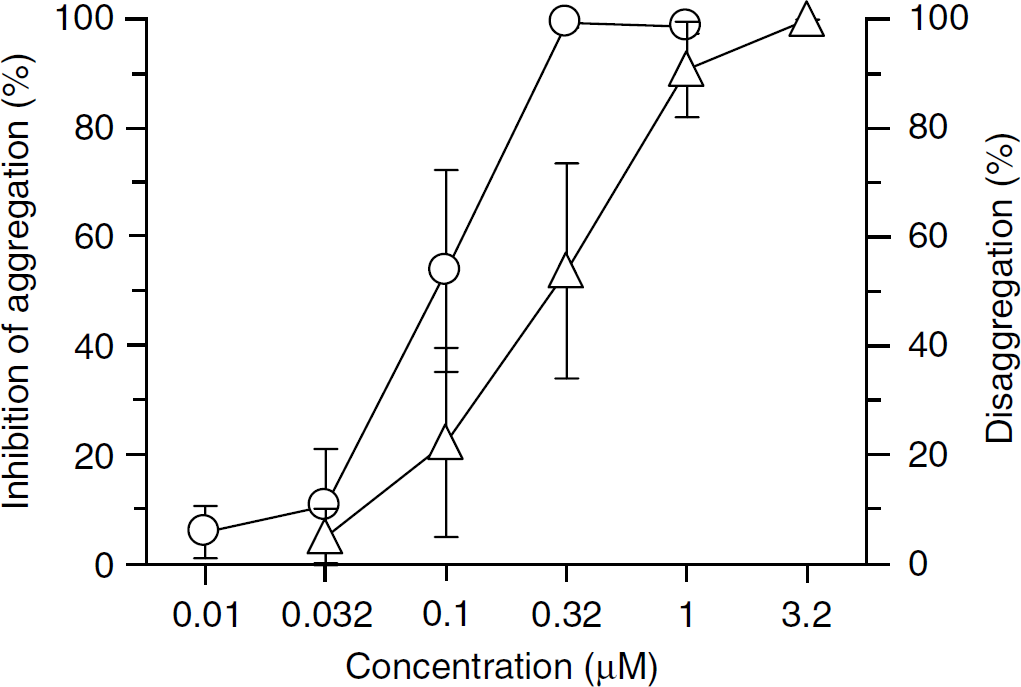
Inhibitory and disaggregatory effects of FK419 on adenosine diphosphate (ADP)-induced platelet aggregation in vitro in squirrel monkeys. Platelet aggregation (circle) and disaggregation of aggregated platelet (triangle) were conducted using ADP (20 μmol/L). Values are expressed as the mean ± s.d. of four or five monkeys.
Photochemically Induced Thrombotic Middle Cerebral Artery Occlusion
Physiologic parameters: In the present experimental condition, physiologic variables were mostly stable and no meaningful change was observed after drug treatments. pH was significantly lower in the rt-PA-treated groups at 1.5 hours after MCA occlusion (control: 7.397 ± 0.005, rt-PA: 7.375 ± 0.020, P<0.05, n = 6 to 7). In all groups, including the saline-treated group, mean arterial blood pressure and heart rate decreased slightly at 1.5 and 3 hours after MCA occlusion (77 ± 11 mm Hg and 225 ± 50 beats/min before MCA occlusion, 70 ± 8 mm Hg and 183 ± 37 beats/min at 1.5 hours after and 67 ± 11 mm Hg and 177 ± 29 beats/min 3 hours after MCA occlusion). Other parameters did not change in any group and at any time. The control values before MCA occlusion were as follows: pO2 (146 ± 19 mm Hg), pCO2 (37.7 ± 2.9 mm Hg), hematocrit (46% ± 5%), hemoglobin (16 ± 3 g/dL), and blood glucose (98 ± 24 mg/dL).
Platelet aggregation: Platelet from vehicle-treated animal aggregated at 37%. FK419 dose-dependently inhibited ADP-induced platelet aggregation. Platelets from 0.01 mg/kg + 0.0032 mg/kg per hour and 0.032 mg/kg + 0.01 mg/kg per hour showed 30% and 3% aggregation. Complete inhibition was achieved at 0.1 mg/kg + 0.032 mg/kg per hour.
MCA patency: Middle cerebral artery blood flow decreased to zero approximately 4 mins after initiation of photoirradiation. Visual inspection through surgical microscopy revealed that the lumen of MCA was occluded by a platelet-rich thrombus at the irradiated site. Middle cerebral artery patency for all animals is shown in Figure 3. We observed spontaneous reperfusion after the primary occlusion, with repeated reocclusions and recanalizations, known as CFRs, in some control animals. FK419 administration dose-dependently improved MCA blood flow and reduced the incidence of reocclusions. In contrast, although rt-PA administration rapidly restored MCA blood flow, poorer efficacy for prevention of reocclusions was observed. FK419 decreased the time to first reperfusion dose-dependently, although it did not reach statistical difference, and rt-PA also decreased this parameter (Figure 4A). The time of first reperfusion in control was 106.5 ± 67.7 mins and reduced to 38.7 ± 64.3, 35.5 ± 65.4, and 32.2 ± 29.6 in middle and high doses of FK419 and rt-PA, suggesting that FK419 and rt-PA had similar thrombolytic efficacies. FK419 not only reduced time to first reperfusion but also prevented the reocclusion dose-dependently as depicted in Figure 3: numbers of reocclusion after reperfusion in control, low, middle and high doses of FK419 and rt-PA were 5.3 ± 6.3, 1.5 ± 1.6, 2.3 ± 4.9, 0.0 ± 0.0 and 3.3 ± 2.0. Total occlusion time, which reflects thrombolytic action and prevention of rethrombosis, was dose-dependently decreased in FK419-treated groups (Figure 4B). Recombinant tissue plasminogen activator also decreased the total occlusion time, though its efficacy was limited.
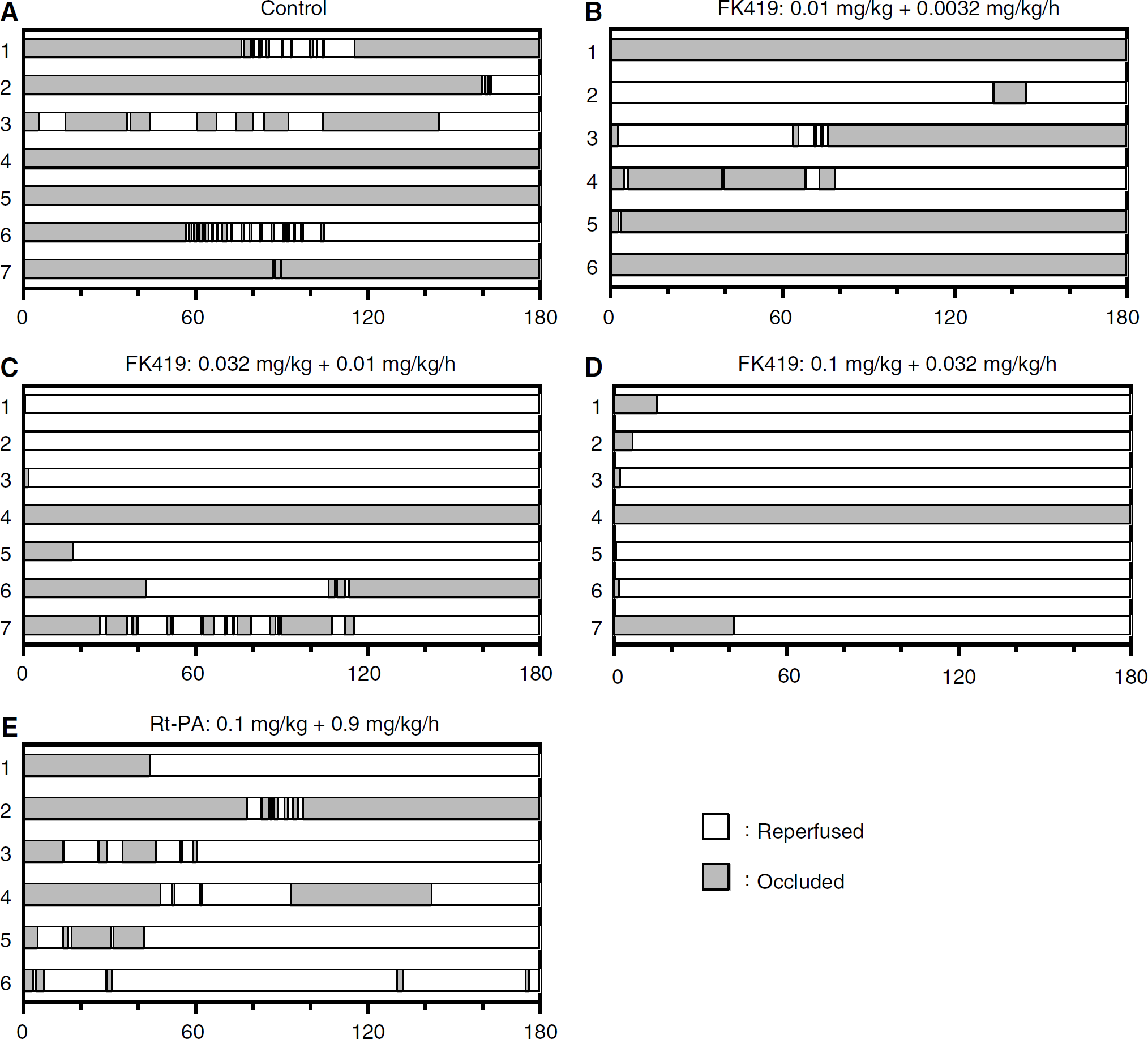
Schematic representation of the patency status of middle cerebral artery (MCA) in the individual animals after photochemical reaction.
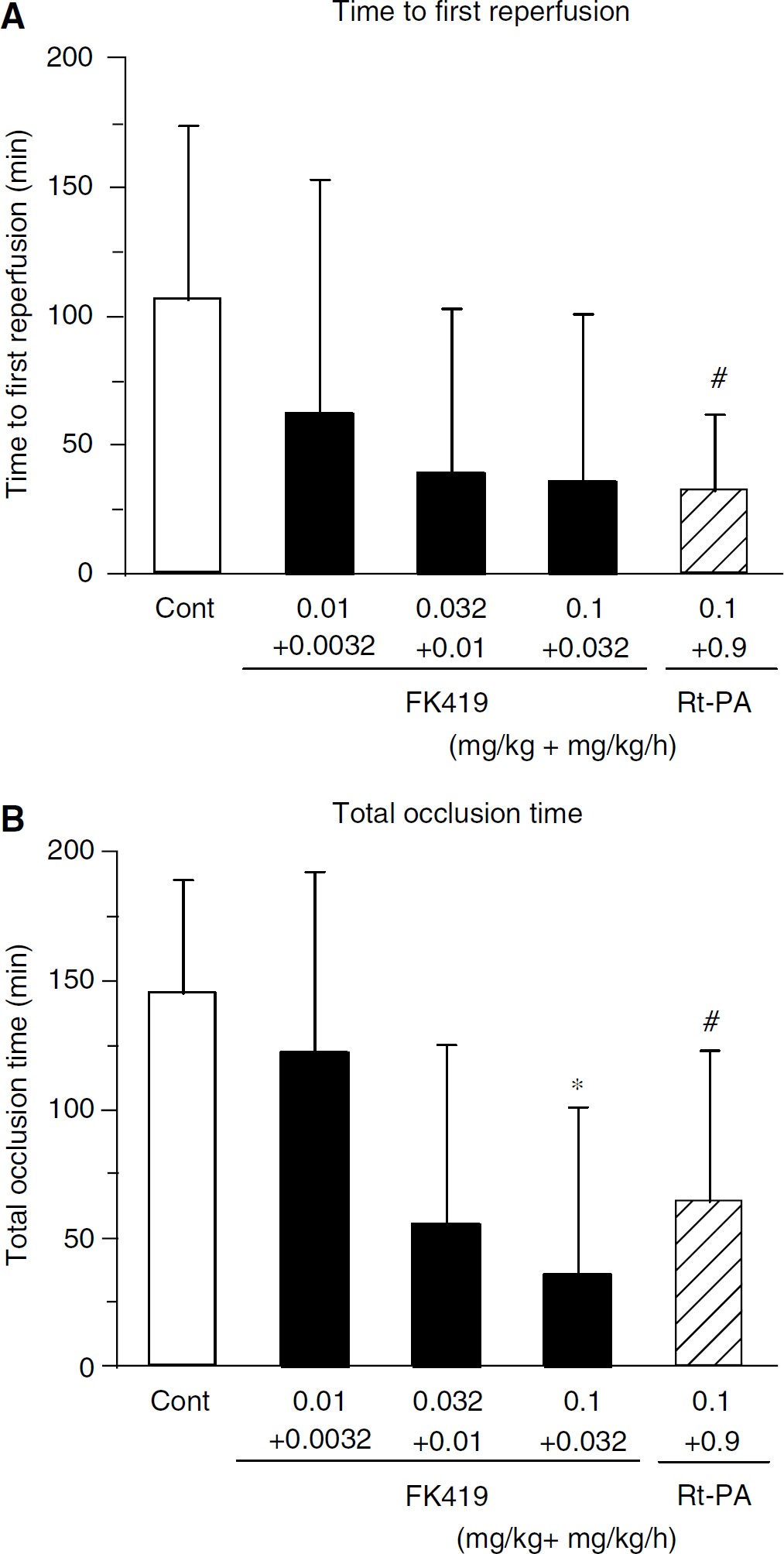
Thrombolytic effects of FK419 and recombinant tissue plasminogen activator (rt-PA) after middle cerebral artery (MCA) occlusion by photochemical reaction. (
Neurologic outcome: Vehicle-treated animals displayed severe neurologic deficits at 24 hours after photoirradiation. FK419 dose-dependently improved the neurologic deficits (Figures 5A and 5B). The percentage of animals graded 0 or 1 was increased from middle dose of the FK419-treated group. In contrast, no overall improvement was observed in the rt-PA-treated group. Recombinant tissue plasminogen activator improved scores in some animals, but one death occurred, possibly because of severe brain edema.
Volume of infarction: After neurologic outcome scoring, the infarction of monkeys that survived was examined and we found it mainly in the cerebral cortex, including the precentral gyrus, superior temporal gyrus, insular cortex, and medial temporal gyrus (Figure 7A). The basal ganglia and white matter, including the internal capsule, were also damaged extensively. FK419 dose-dependently reduced the infarction, especially in the cortex (Figures 6 and 7B). Reduction of infarction was also observed in the rt-PA-treated groups, although the significant effect was only observed in white matter. Histologic examination of the cortex around fossa lateralis cerbri and basal ganglia revealed that microthrombi in the vessels of cortex and basal ganglia had occurred in most of/all of vehicle-treated monkeys and some of them had petechial intracerebral hemorrhages (Figure 7). Fewer microthrombi were detected in the cortex and basal ganglia of FK419- and rt-PA-treated animals. Many petechial hemorrhages were observed at the basal ganglia in three out of six rt-PA-treated monkeys whose MCA thrombis were resistant and neurologic scores were not improved.
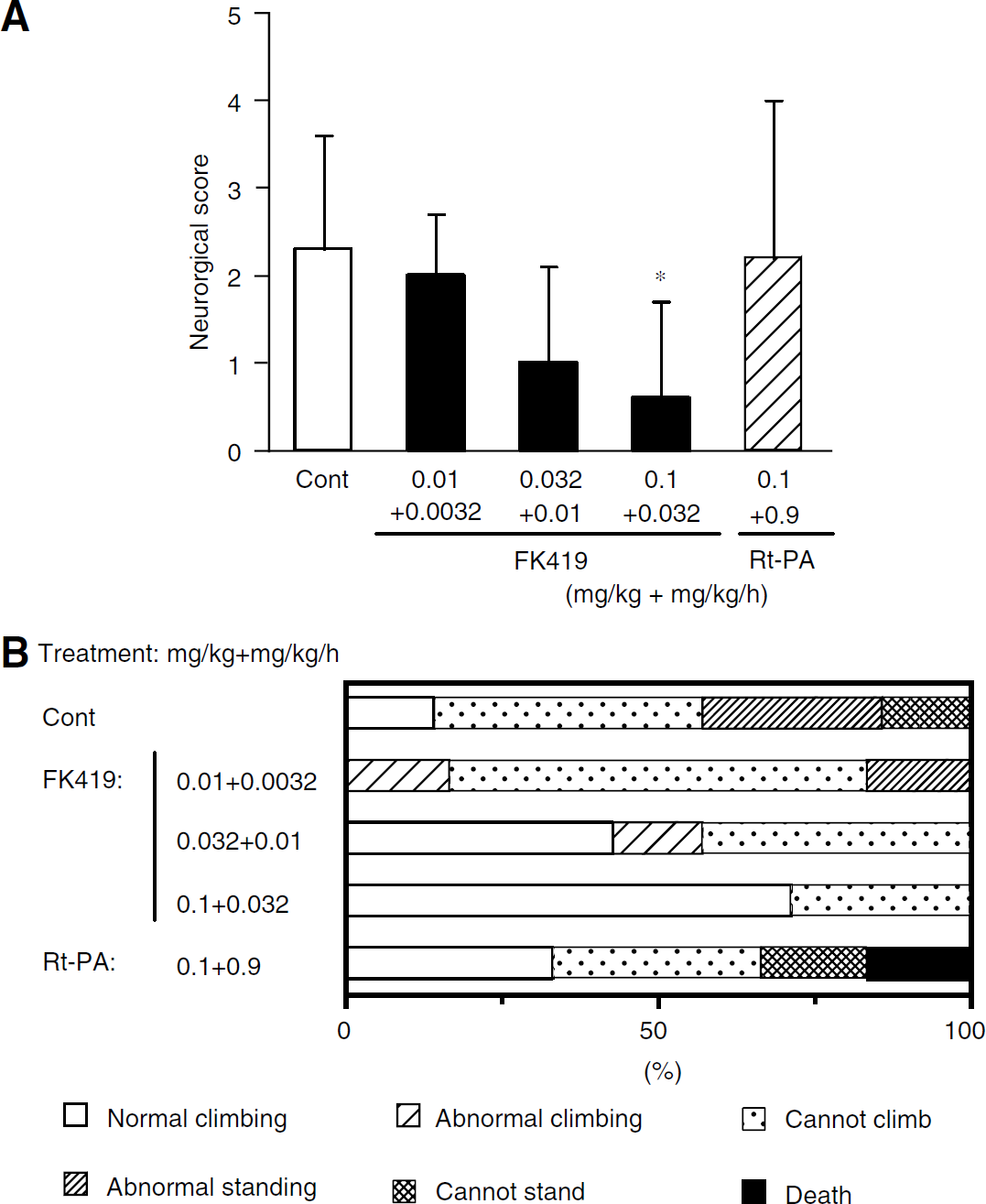
Ameliorative effect of FK419 and rt-PA on neurologic deficits in squirrel monkeys 24 hours after photochemically induced middle cerebral artery (MCA) occlusion. (
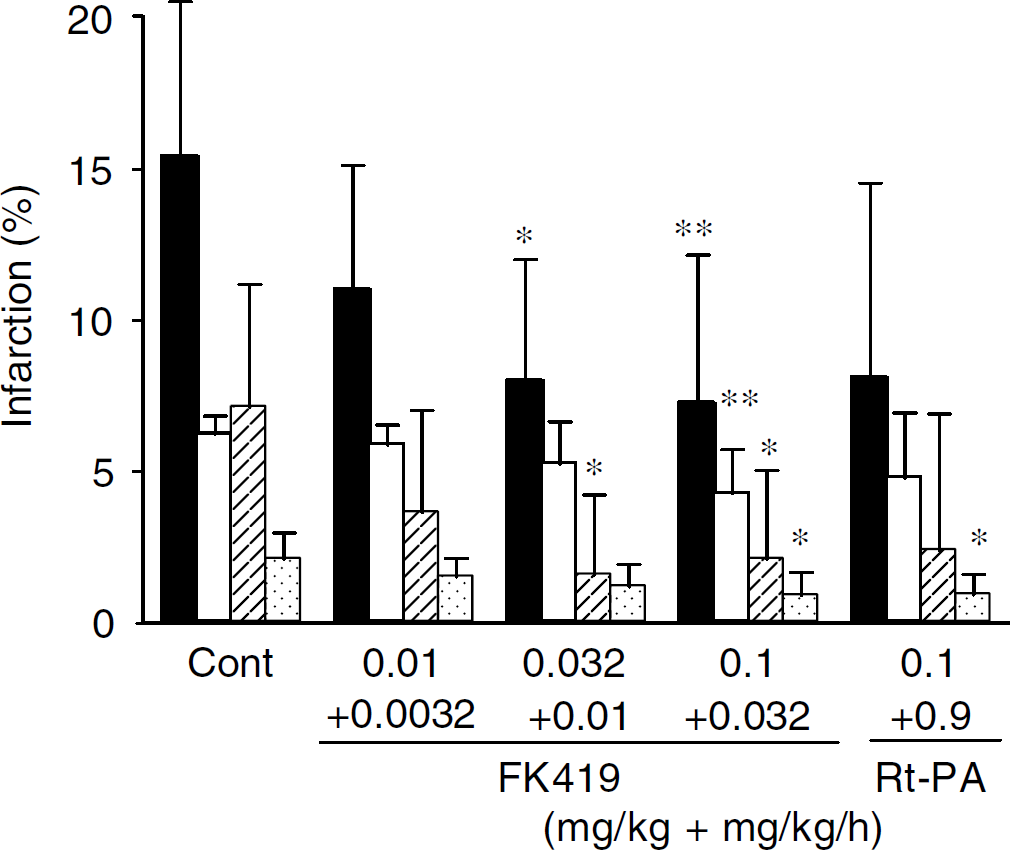
Effect of FK419 and recombinant tissue plasminogen activator (rt-PA) on ischemic brain damage in squirrel monkeys 24 hours after photochemically induced middle cerebral artery (MCA) occlusion. Percentage of total (solid), basal ganglial (open), cortical (slashed), and white matter (dotted) infarcted area per total brain area are calculated. Each column represents the mean ± s.d. of five to seven monkeys per group. *P<0.05, **P<0.01 versus control (one-way ANOVA followed by Dunnett's multiple comparison test).
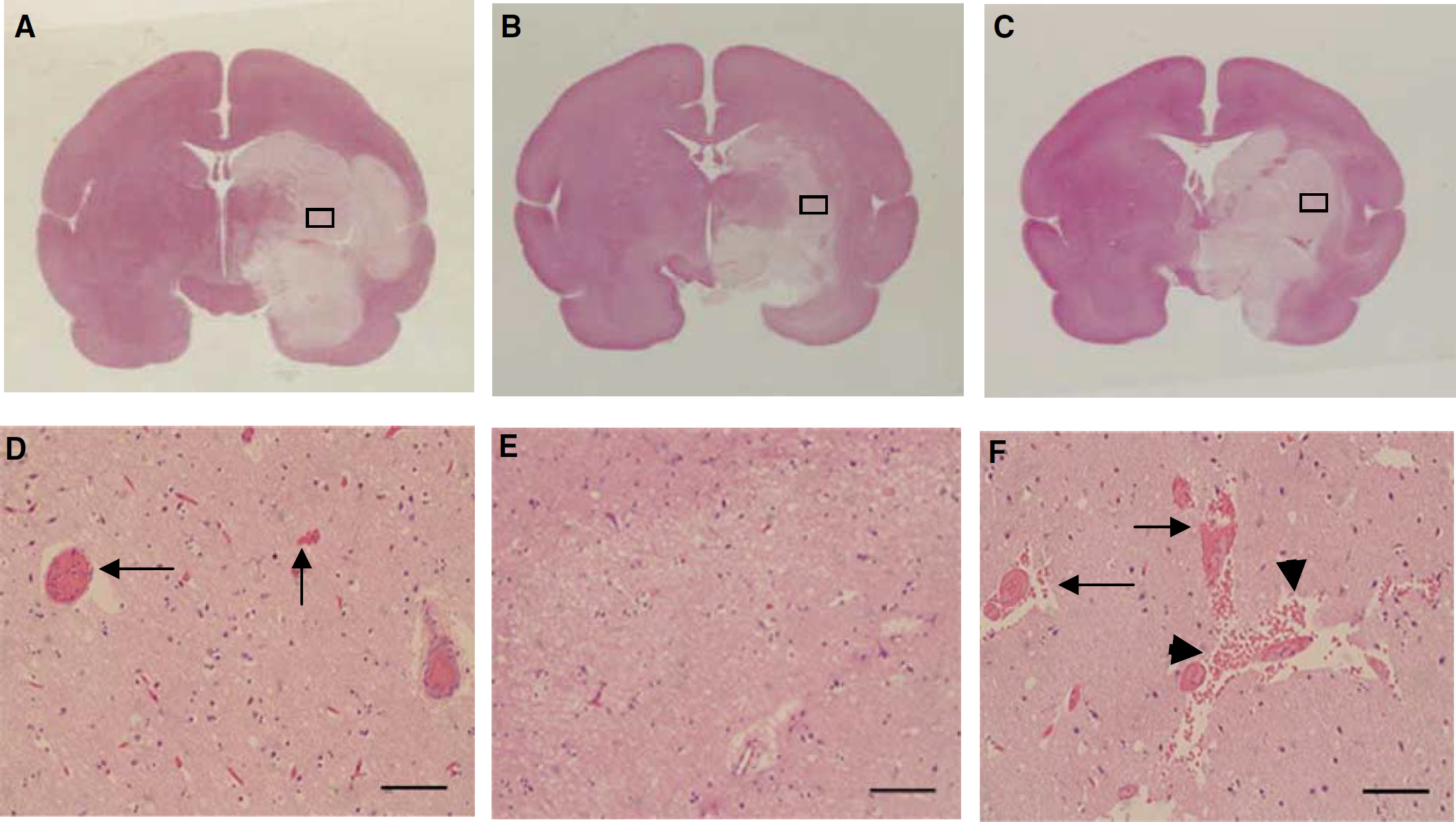
Photomicrograph showing hematoxylin-eosin (H&E) staining in the monkey cortex 24 hours after photoirradiation. Vehicle-treated (
Plasma concentration of FK419 and rt-PA: Plasma concentration of FK419 was dose-dependently and linearly elevated in stroke animals (Table 1). Plasma concentration of FK419 was highest at 5 mins after dosing and it gradually declined. Plasma concentration of rt-PA increased from 5 to 30 mins and declined at 3 hours after dosing.
DISCUSSION
In the present study, we compared the thrombolitic activity of FK419 to rt-PA in an MCA thrombosis model in squirrel monkeys. The major finding of the present study is that FK419, as well as rt-PA, dose-dependently thrombolysed occlusive thrombus in the MCA and improved ischemic brain damages in non-human primate stroke model. FK419 also improved neurologic deficits with a similar dose dependency. The thrombolytic action on FK419 might be mediated by its disaggregatory action on aggregated platelets, as the effective plasma concentration of FK419 reached the concentration at which FK419 showed the disaggregatory activity. FK419 significantly improved both MCA patency and ischemic brain damage, whereas rt-PA improved MCA blood flow but minimally improved neurologic deficits and caused petechial intracerebral hemorrhaging. We recently reported that FK419 dose-dependently prevented the reocclusion of MCA after recanalization in photothrombotic MCA occlusion model in guinea-pigs (Moriguchi et al, 2004a). FK419 was found not only to prevent reocclusion but also to thrombolyse the obstructive thrombus in a similar model (Moriguchi et al, 2004b; Moriguchi et al, 2005). However, the clinical predictive value of this model is limited because numerous compounds that were active in rodent models have failed in clinical trials. Like most GPIIb/IIIa antagonists, FK419 inhibited platelet aggregation less strongly in guinea-pigs compared with its efficacy in humans, but it is equally active in squirrel monkeys and in humans. Furthermore, the brain structure of monkeys seems to be more relevant to that of humans compared with guinea-pigs, particularly the microvascular collateral circulation and the abundant white matter (Gillilan, 1968). Therefore, the present study with non-human primates better ensured the potential activity of FK419 in stroke patients.
In the present study, not only FK419 but also rt-PA thrombolysed MCA thrombus, suggesting that FK419 could thrombolyse the fibrin-containing thrombus. While the efficacy of both drugs looked comparable, FK419 had no effect on fibrinolytic system in guinea-pigs and humans in vitro (Moriguchi et al, 2004b; unpublished observation). Thrombolytic efficacy of FK419 might be mediated by its stronger disaggregatory efficacy of aggregated platelets. Thrombolytic actions of GPIIb/IIIa antagonists have been reported in coronal and femoral arteries (Mousa et al, 1994; Gold et al, 1997; Domanovits et al, 1998) and cerebral artery (Yang et al, 2001). The mechanism has been supposed to be related to platelet disaggregation (Mousa et al, 1994; Marciniak et al, 2002). The present study supports the involvement of disaggregatory action of FK419 for thrombolytic activity. Plasma concentration of FK419 in the middle-dose group at 5 mins was high enough to achieve disaggregatory activity of aggregated platelet. Inhibition of plasminogen activator inhibitor-1 (PAI-1) secretion was also reported to be involved in the thrombolytic action of GPIIb/IIIa antagonists (Tsao et al, 1997). FK419 dose-dependently inhibited secretion of PAI-1 from human activated platelets at similar concentration at which FK419 inhibited platelet aggregation in vitro (unpublished observation). While the secretion of PAI-1 was not measured in this study, inhibition of PAI-1 release could be involved in the thrombolytic mechanism of FK419. Because FK419 has thrombolytic action via a different mechanism from that of rt-PA, FK419 may provide a new and additional therapeutic agent for the treatment of acute ischemic stroke.
The pattern of MCA blood flow patency revealed that FK419 not only shortened the time to first reperfusion, but also prevented the reocclusion after reperfusion. FK419 was found to prevent reocclusion after reperfusion in the guinea-pig stroke model (Moriguchi et al, 2004a). Because CFRs are known as important factors for progression of the pathophysiologic changes after stroke, the prevention of reocclusion might play a role in the beneficial action of FK419 in this model. In contrast, poorer efficacy for prevention of reocclusions was observed in rt-PA-treated animals, a phenomenon which is also observed in successfully thrombolysed rt-PA-treated patients (Alexandrov and Grotta, 2002; Heo et al, 2003). These data suggest that platelets are important factors in reocclusion, and that inhibition of platelet aggregation is useful even in the acute stage of stroke.
While rt-PA improved the MCA blood flow and reduced cerebral infarction, it minimally ameliorated the neurologic deficits in the present study. While the reason is not totally clear, this finding is unlikely to be related to the dose of rt-PA used. Although thrombus in squirrel monkey is a little resistant to rt-PA compared with human in vitro and equally responsive to that in baboon (Lijnen et al, 1984), reduction of α2-PI and fibrinogen occurred after intraveneous injection of 0.1 and 1 mg/kg rt-PA to squirrel monkeys (Ishikawa et al, 1997), and almost similar dosage was used in the experiments using baboons (Herijgers and Flameng, 1991; Kohmura et al, 1993). Individual analysis showed the tendency that the animals whose MCA blood flow was restored earlier by rt-PA (recanalized at 3.5, 5.2, 14.2 mins) showed light neurologic deficits, but those whose MCA thrombus was resistant to rt-PA (recanalized at 44.2, 48, 78.2 mins) had severe neurologic deficits and petechial intracerebral hemorrhages. Recombinant tissue plasminogen activator induced hemorrhagic transformation when administration was delayed (Kano et al, 2000). Efficacy of rt-PA was mainly examined using embolic stroke model, and also observed in photothrombosis model in rats (Matsuno et al, 1993; Maeda et al, 2002). However, the efficacy of rt-PA in primate stroke models has not been confirmed, and petechial hemorrhage was detected in many animals (del Zoppo et al, 1990). Our data are in good accordance with these reports and suggest that rt-PA easily induced intracerebral hemorrhage and showed minimal efficacy in primates compared with rodents. Because the increased risk of hemorrhagic transformation limits the clinical use of rt-PA (Jaillard et al, 1999), FK419 is expected to exert benefits with greater safety than rt-PA. Another more likely possibility is the different efficacy on microcirculation. Microvascular obstruction after stroke and continued hypoperfusion occurred and were responsible for progression of neuronal injury after stroke (del Zoppo et al, 1991; Zhang et al, 2001; del Zoppo and Mabuchi, 2003). These events can result from extrinsic compression and intravascular events, including leukocyte-platelet adhesion, platelet-fibrin interaction, and activation of coagulation. Microvascular occlusion formation after reperfusion was prevented by GPIIb/IIIa antagonist, TP9201, in a baboon stroke model (Abumiya et al, 2000). Another GPIIb/IIIa antagonist, SDZ GPI 562, reduced microvascular thrombosis and cerebral infarction by inhibition of accumulation of platelet and fibrin on the affected side of the cerebral hemisphere after reperfusion in a mouse model of focal ischemia (Choudhri et al, 1998). Restoration of microvascular patency by FK419 was observed in a guinea pig thrombotic focal ischemia model (Moriguchi et al, 2005). Glycoprotein IIb/IIIa antagonists inhibited platelet-mediated thrombin generation triggered by tissue factor (Herault et al, 1998). Reduction of thrombin generation by abciximab was observed during percutaneous coronary intervention (Dangas et al, 1999). Present results support the view that formation of microthrombi after stroke was an important progressing factor and its prevention might exert substantial benefits. Because rethrombosis in microvessels is one of main reasons for failure of fibrinolytic therapy (Alexandrov and Grotta, 2002), GPIIb/IIIa antagonists might show the benefits in the stroke patients who were not rescued by rt-PA treatment.
Plasma concentration of FK419 and rt-PA in photochemically induced MCA occluded squirrel monkeys
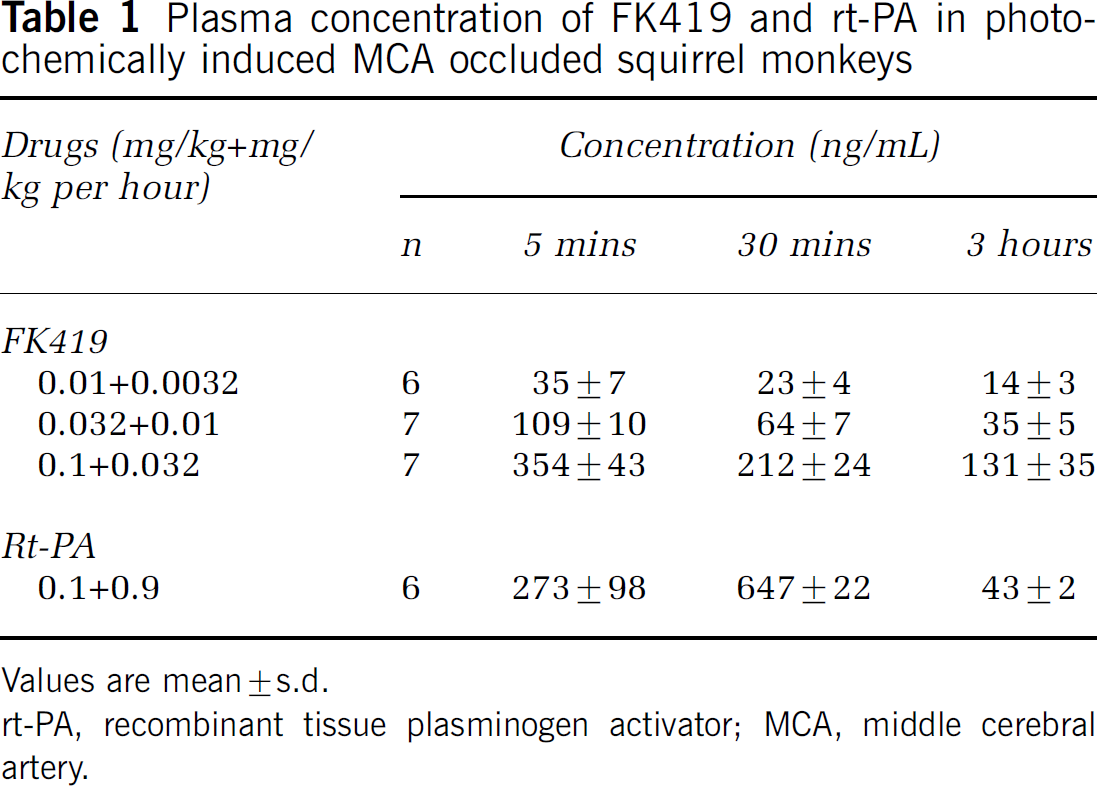
Values are mean ± s.d.
rt-PA, recombinant tissue plasminogen activator; MCA, middle cerebral artery.
In the present study, we examined the thrombolitic activity of FK419 in the photochemically induced thrombosis model in squirrel monkeys by injecting the test compounds from just after termination of irradiation, approximately 10 mins after occlusion. Several further studies will be needed to ascertain the possible clinical efficacy of this compound. First, performing delayed treatment is critical for clarifying the possible therapeutic time-window. This will provide us not only an accurate estimation of the clinical efficacy, but also help to understand the temporal profiles of physiologic changes of the thrombus in our model. Second, investigation of the efficacy in other types of thrombosis models will be important for predicting clinical responders. The thrombosis induction method used in this study causes the formation of active oxygen species that damage the endothelium. Platelets adhere to and aggregate on the damaged vessel, and then coagulate to induce a platelet- and fibrin-rich thrombus which involves red blood cells in rat model (Umemura et al, 1993). Thus, clotting in this model is considered to be more closely relevant to atherothrombosis than thromboembolism. Glycoprotein IIb/IIIa antagonists are indeed reported to be effective when treated after ischemia, not only in a photochemical thrombosis model in rabbits but also a thromboembolic model in rats in a delayed treatment (Kawano et al, 2000; Yang et al, 2001; Shuaib et al, 2002). Finally, as the best stroke recovery model has been recommended to be performed with gyrencephalic species, efficacy would ideally be examined in the other non-human primates, such as baboon or cynomolgus monkey (STAIR, 1999).
In conclusion, we demonstrated that FK419 effectively thrombolysed the obstructive thrombus in MCA to the same extent as rt-PA, but ameliorated neurologic outcome and ischemic brain damage in a safer manner than rt-PA. These findings suggest that FK419 would be an attractive intervention for the treatment of acute ischemic stroke. While further studies are needed, especially to determine the therapeutic time-window of FK419 in this model, this evidence encourages us to investigate FK419 in the acute ischemic stroke.
Footnotes
Acknowledgements
The authors thank Dr Raymond D Price for his helpful comments in preparing the manuscript.