




Abstract
The antithrombotic efficacy of FK419, a novel nonpeptide platelet glycoprotein IIb/IIIa antagonist, was compared with tirofiban in guinea-pigs. FK419 and tirofiban similarly inhibited platelet aggregation in vitro (IC50 values: 0.43 ± 0.076 and 0.41 ± 0.053 μmol/L) and dispersed aggregated platelets (EC50 values: 2.3 ± 0.88 and 2.0 ± 0.81 μmol/L). FK419 inhibited retention of platelets and neutrophils in a collagen-coated bead column with greater potency than tirofiban (IC50 values of 0.90 ± 0.133 and 2.4 ± 0.21 μmol/L for platelet retention and 0.32 ± 0.078 and 0.57 ± 0.180 μmol/L for neutrophil retention). When FK419 or tirofiban were administered after photochemically induced middle cerebral artery (MCA) occlusion in guinea-pigs, they dose-dependently improved MCA patency. FK419 reduced neurological deficits and ischemic brain damage in a dose-dependent fashion, whereas tirofiban did not. Reduced regional cerebral blood flow in the striatum gradually returned to the preoccluded level with FK419 treatment; however, no restoration was observed with tirofiban even though the MCA was recanalized. These results indicate that FK419 ameliorates ischemic brain damage by not only lysing the obstructive thrombus in MCA but also preventing or restoring microcirculation deficits after occlusion/reperfusion, suggesting that FK419 would be an attractive intervention for the treatment of ischemic stroke patients.
Introduction
Platelet activation plays an important role in vascular thrombus formation. Prolonged antiplatelet therapy can be effective in the secondary prevention of serious vascular events such as ischemic stroke (Antiplatelet Trialists' Collaboration, 2002). Moreover, enhanced platelet activation is observed after the onset of ischemic stroke (Koudstaal et al, 1993; van Kooten et al, 1994; Grau et al, 1998; Zeller et al, 1999). Recently, two major trials of aspirin in acute ischemic stroke revealed that early aspirin use produces a small but definite benefit (International Stroke Trial Collaborative Group, 1997; Chinese Acute Stroke Trial (CAST) Collaborative Group, 1997; Chen et al, 2000). Thus, antiplatelet therapy might be useful in acute ischemic stroke.
Platelet activation triggered by a variety of agonists leads to platelet aggregation in which the final step is mediated by binding of activated glycoprotein (GP) IIb/IIIa (integrin αIIbβ3) and its ligand fibrinogen (Pytela et al, 1986). Therefore, inhibition of this interaction might provide more effective antiplatelet activity and therapeutic potential than aspirin. In addition to aggregation, platelet activation results in adhesion and/or interaction with vascular endothelium and other blood cells including leukocytes, secretion of several mediators, and activation of coagulation, and some GPIIb/IIIa antagonists were reported to inhibit these responses (Dickfeld et al, 2001). Accumulating evidence suggests that even after recanalization of large intracerebral arteries, not only transient and permanent reocclusions but also microthrombosis associated with high mortality rates frequently occurs due to a sustained accumulation of fibrinogen and platelets in the microcirculation (Alexandrov and Grotta, 2002; Heo et al, 2003). GPIIb/IIIa antagonists are expected to be effective in these phenomena, and abciximab, a monoclonal anitibody, and tirofiban, a nonpeptide antagonist, have been clinically evaluated for their efficacy in acute stroke patients (Junghans et al, 2002; AbESTT Investigators, 2003; Seitz et al, 2003; Straub et al, 2004). We have recently identified FK419 ((S)-2-acetylamino-3-[(R)-[1-[3-(piperidin-4-yl) propionyl]piperidin-3-ylcarbonyl]amino]propionic acid trihydrate) as a novel nonpeptide GPIIb/IIIa antagonist with high affinity for the GPIIb/IIIa complex (Mihara et al, 2004). Selective ligand inhibition by FK419 enabled almost complete inhibition of platelet aggregation without prolongation of bleeding time in dogs (Aoki et al, unpublished observation). These features might be advantageous for the treatment of ischemic stroke, in which intracranial hemorrhage by antithrombotic agents is the most lethal complication.
Photochemically induced middle cerebral artery (MCA) thrombosis models are widely used to examine the effects of antithrombotic agents (Umemura et al, 1993; Nishiyama et al, 1994; Kaku et al, 1998). This model involves a photochemical reaction between rose bengal and transluminal light irradiation, leading to endothelial injury followed by platelet adhesion, aggregation, and a formation of occlusive platelet-rich thrombus at the irradiated site (Saniabadi et al, 1995). FK419 improved brain damage not only by preventing reocclusion of MCA but also by lysing the obstructive thrombus in both the guinea-pig and primate photochemical thrombosis model (Moriguchi et al, 2004a,b; Maeda et al, 2005). FK419 showed a superior profile in the MCA thrombosis models compared with that of common antithrombotic agents, including recombinant tissue plasminogen activator, aspirin, ozagrel, heparin, and argatroban. In the present study, we evaluated the in vitro antiplatelet profile and efficacy in a guinea-pig photochemically induced MCA occlusion of FK419 to clarify its potential for the treatment of acute ischemic stroke in comparison with tirofiban which is well-evaluated GPIIb/IIIa antagonist.
MATERIALS AND METHODS
Animals
Male Hartley guinea-pigs weighing 362.6 to 565.6 g purchased from Japan SLC (Shizuoka, Japan) were used. The animals were purchased at least 1 week before the experiments. They were given free access to food and water and maintained on a 12-hour light/dark cycle in a controlled temperature (23°C ± 1°C) and humidity (55% ± 5%). All experiments were carried out in accordance with the guidelines provided by the Animal Ethical Committee of Fujisawa Pharmaceutical (Osaka, Japan).
Chemicals
FK419 and tirofiban were synthesized at Fujisawa Pharmaceutical (Osaka, Japan). Adenosine diphosphate (ADP) was purchased from Sigma (St. Louis, MO, USA). Rose bengal was purchased from Wako Pure Chemical (Osaka, Japan). All other chemicals and solvents used were commercial products and of analytical grade. FK419 was used as an anhydride form and dissolved in saline. Tirofiban was also dissolved in saline. Each drug was intravenously bolus injected in a volume of 1.5 mL/kg, followed by infusion at a volume of 5 mL/kg per hour.
Platelet Aggregation and Disaggregation In Vitro
Blood from the abdominal aorta of ether anesthetized guinea-pigs was collected in 0.38% sodium citrate anticoagulant, and platelet-rich plasma (PRP) was prepared by rapid centrifugation (Model 5100 with Swing-rotor RS720, Kubota, Tokyo, Japan) of the blood samples at 160g for 10 mins at room temperature. Platelet-poor plasma (PPP) was obtained from the remaining blood after removing PRP by centrifugation at 1,000g for 10 mins at room temperature. Platelet aggregability and drug-induced disaggregation were assessed using NBS HEMA TRACER 801 T-4A (Nikobioscience, Tokyo, Japan). Adenosine diphosphate was used as an agonist at a final concentration of 1 or 20 μmol/L. For each aggregation assay, PRP was incubated with various concentrations of test compounds for 2 mins. After 2 mins, agonist was added and changes in light transmission were monitored for 7 mins. Results were expressed as the percent decrease in maximum platelet aggregation during 7 mins compared with that of saline added control. When drug-induced disaggregation was assessed, various concentrations of test compounds were added at 1 min after the addition of the final concentration of 20 μmol/L of ADP, and monitoring was continued for 9 mins. The maximum decrease of aggregation compared with that of just before the addition of test compounds was calculated.
Platelet and White Blood Cell Retention to a Collagen-Coated Bead Column
Blood was collected from the abdominal aorta of guinea-pigs and a final concentration of 10 IU/mL of heparin was added. One-tenth volume of test compound solution was added and allowed to stand at room temperature for 5 mins. The blood sample of 1.5 mL was passed through a collagen-coated bead column (PLA Beads Column, ISK, Tokyo, Japan) comprised of spherical copolymer-plastic beads (diameter 0.4 to 0.6 mm) coated with porcine type I collagen packed into a polyvinyl tube (internal diameter 2 mm) for 90 secs for measuring platelet retention and 150 secs for measuring white blood cell retention with a syringe pump (model 777, ISK, Tokyo, Japan). The counts of platelet and white blood cell were measured with a blood cell counter (K-4500, Sysmex, Kobe, Japan or ADVIA120, Bayer, New York, NY, USA) before and immediately after passage through the column.
Platelet Aggregation Ex Vivo
Guinea-pigs were anesthetized with isoflurane (2% for induction, 1% for maintenance) in a mixture of air and 30% O2. A catheter was inserted into the left jugular vein for the administration of drugs. After recovery from anesthesia, FK419 or tirofiban was administered and blood samples were collected into 3.8% sodium citrate (9:1 v/v) from the abdominal aorta at 5 mins, 1 or 3 hours after dosing. The PRP and PPP were similarly prepared and platelet aggregation was measured.
Photochemically Induced Middle Cerebral Artery Occlusion in Guinea-pigs
The left MCA was photochemically occluded according to the method of Moriguchi et al (2004a,b). Briefly, animals were anesthetized with isoflurane (2% for induction, 1% for maintenance) in a mixture of air and 30% O2. A catheter for the administration of drugs or rose bengal was inserted into the left jugular vein. After a left temporal incision, the temporal muscle was removed by an electric cauterizer. A subtemporal craniotomy was performed using a dental drill under an operation microscope to open a 6-mm-diameter oval bony window. The main trunk of the MCA was observed without cutting dura matter. The head of a 3-mm-diameter optic fiber mounted on a micromanipulator was placed on the MCA segment proximal to the olfactory tract for photoirradiation. A pulsed Doppler flow probe (HHP-20; Crystal Biotech, Northboro, MA, USA) connected to a pulsed Doppler flowmeter (PD-20; Crystal Biotech, Northboro, MA, USA) was placed on the distal part of the MCA to measure blood flow for 90 mins after the start of dosing. Photoirradiation was conducted using a xenon lamp (L2859–03; Hamamatsu Photonics, Hamamatsu, Japan) with a heat absorption filter and a green filter. When a stable baseline blood flow was obtained, rose bengal infusion (20 mg/kg for 6 mins) and photoirradiation with green light (wavelength 540 nm, intensity 600,000lx for 15 mins) were simultaneously started. The MCA was considered to be occluded when blood flow had completely stopped. FK419 or tirofiban was administered from the end of photoirradiation. Saline was given to control animals at the same volume. Body temperature was maintained at 38°C by a heating pad during the surgery and dosing. Ninety minutes after beginning drug administration, the skin incision was closed, and animals were allowed to recover from anesthesia. The drug administration was continued for another 90 mins. The following parameters were measured to evaluate MCA blood flow: (1) time to first reperfusion after the start of dosing and (2) sum of time intervals during which MCA blood flow was not detected (total occlusion time).
Animals were examined for neurological functions 24 hours after photoirradiation with a slight modification of the method of Bederson et al (1986). Circling was checked by lifting up their waists slightly. Forelimb paralysis was checked by examining whether they retracted their forelimbs when their forelimbs were drawn forward. Hindlimb paralysis was checked by examining whether they put their instep back when their heels were turned over. Resistance to lateral push was checked by pushing the body. Each parameter was scored as follows: 0 (normal), 1 (slight to moderate deficit), 2 (severe deficit). The sum of each score represented total neurological score.
After examination of neurological function, animals were killed for analysis of ischemic brain damage by cardiac perfusion with saline under pentobarbital anesthesia (50 mg/kg, intraperitoneal) and their brains were removed. The brain was coronally sectioned at eight preselected positions using a microslicer, and stained with 1% 2,3,5-triphenyltetrazolium chloride (TTC) at 37°C for 10 mins. The TTC-stained sections were photographed and brain damage was calculated using image analysis software (NIH image, v1.61, Bethesda, MD, USA). The brain damage in each animal was expressed as the percent of the sum of the damaged area to the sum of the whole area of the cerebrum.
Regional Cerebral Blood Flow Regional Cerebral Blood Flow in the Striatum
Guinea-pigs anesthetized with sodium pentobarbital (25 mg/kg, intraperitoneal) were placed on a stereotaxic device (David Kopf Instruments, Tujunga, CA, USA). Their skulls were exposed and a hole was made to implant a tip that could be connected to the probe of a laser Doppler flowmeter to the center of the striatum, using coordinates 3.0 mm lateral to the midline, 3.0 mm anterior to the bregma, and 5.0 mm ventral from the dura. After fixing the tip with dental resin, the incisions were sutured and the animals were returned to their homecages. Two to four days after the implantation of the tip, animals were anesthetized with isoflurane and underwent the photochemically induced MCA occlusion described above. The tip was connected to the probe of laser Doppler flowmetry (Omegaflow, FLO-N1, Neuroscience, Osaka, Japan) and regional cerebral blood flow (rCBF) in the striatum was monitored from before to 3 hours after occlusion. Patency of MCA stem blood flow was also monitored as mentioned above.
Physiological Variables
Physiological variables were monitored in FK419- or tirofiban-treated photochemically MCA-occluded animals in another set of experiments. Animals were prepared as mentioned above, except for insertion of a catheter into the left femoral artery for the measurement of blood pressure and blood sampling. A medium dose of FK419 and the highest dose of tirofiban were administered for 3 hours from the end of photoirradiation. Saline was given to control animals at the same volume. Arterial blood pressure and heart rate were recorded until the end of drug administration. Arterial blood (210 μL) was collected immediately before, 90 and 180 mins after photoirradiation to analyze blood gases, hematocrit, total hemoglobin, and blood glucose (ABL615; Radiometer Medical A/S, Copenhagen, Denmark). Rectal temperature was monitored as an index of brain temperature.
Statistical Analysis
Results are expressed as the mean ± s.d. All data except for in vitro studies and neurological score were statistically evaluated by one-way analysis of variance (ANOVA) followed by Dunnett's multiple comparison test. Kruskal-Wallis test followed by Dunnett's multiple comparison test was used for neurological score. A P-value <0.05 was considered to be a significant difference.
RESULTS
Platelet Aggregation and Disaggregation In vitro
FK419 and tirofiban concentration-dependently inhibited 1 μmol/L ADP-induced platelet aggregation in guinea-pigs with IC50 values of 0.43 ± 0.076 and 0.41 ± 0.053 μmol/L, respectively (Figure 1A). The addition of FK419 or tirofiban to a suspension of aggregating platelets produced a rapid decrease in the intensity of the light transduction, indicative of platelet disaggregation. Both the rate and extent of disaggregation were dependent on the concentration of the drugs. To obtain a stable aggregation, a higher concentration of ADP at 20 μmol/L was used in the disaggregation study. FK419 and tirofiban showed concentration-dependent disaggregatory activity with EC50 values of 2.3 ± 0.88 and 2.0 ± 0.81 μmol/L, respectively (Figure 1B). FK419 and tirofiban inhibited 20 μmol/L ADP-induced platelet aggregation with IC50 values of 1.0 ± 0.10 and 0.88 ± 0.102 μmol/L, respectively. Therefore, they exerted disaggregatory activity at approximately two times higher concentration than their IC50 values for inhibiting platelet aggregation.
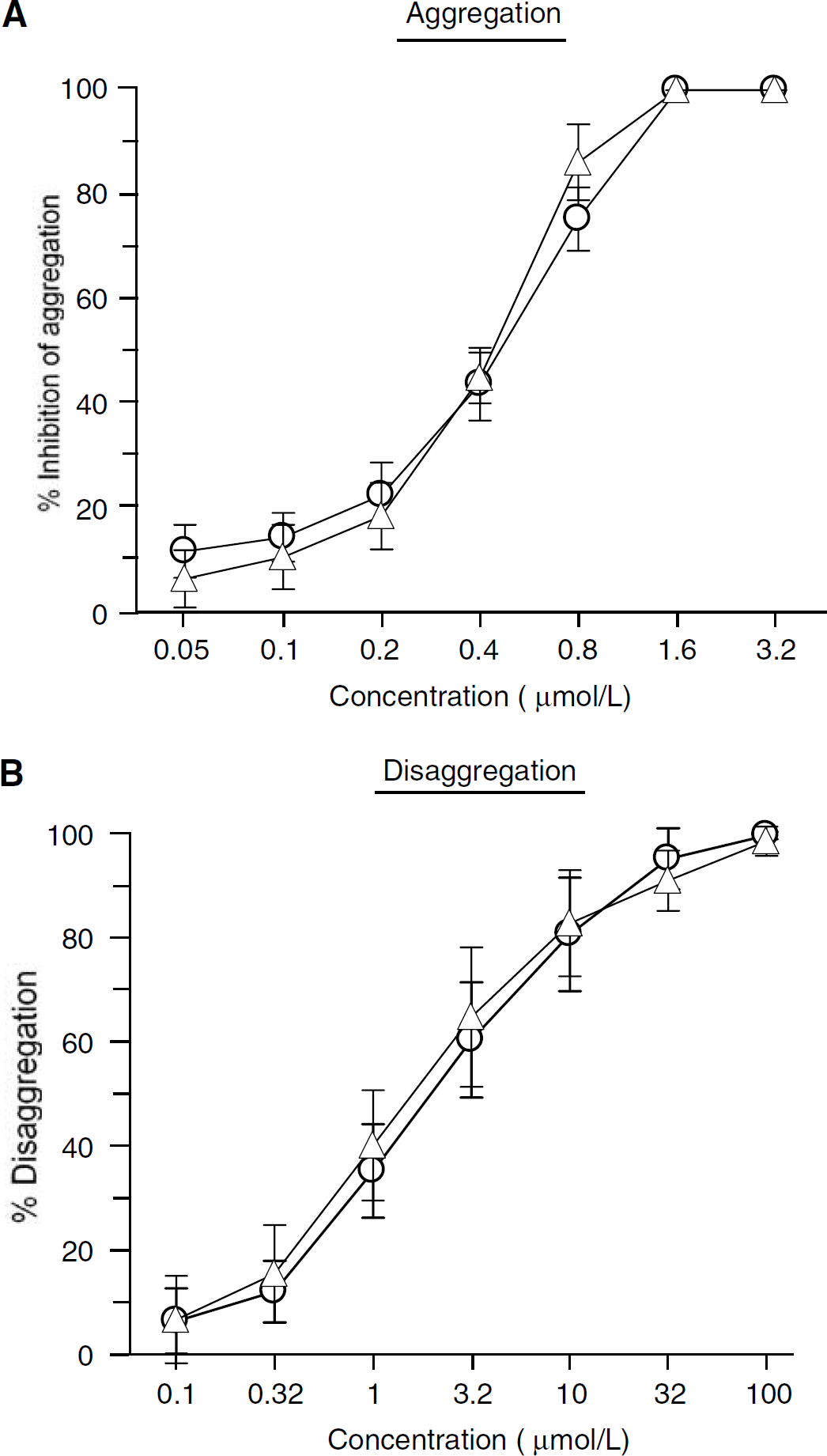
Inhibitory effects of FK419 (circle) and tirofiban (triangle) on platelet aggregation and disaggregatory effects of aggregated platelet in guinea-pigs. Each point represents the mean ± s.d. of 5 animals for aggregation and 8 to 10 animals for disaggregation.
Platelet and White Blood Cell Retention in the Collagen-Coated Bead Column
The extent of retention of guinea-pig platelets and white blood cells to the collagen-coated bead column was dependent on the column passage time. When blood was passed through slowly, more platelets and white blood cells were trapped in the column (Figure 2A). Platelets were almost completely retained at 120 secs, and white blood cells reached a maximum retention of approximately 30% to 40% at 150 secs. Most of the white blood cells retained were neutrophils, which constitute approximately 35% of white blood cells. FK419 and tirofiban concentration-dependently inhibited platelet and neutrophil retention (Figures 2B and 2C). IC50 values of FK419 and tirofiban against platelet retention were 0.90 ± 0.133 and 2.4 ± 0.21 μmol/L, respectively. IC50 values against neutrophil retention were 0.32 ± 0.078 and 0.57 ± 0.180 μmol/L, respectively. Thus, FK419 inhibited both retentions with comparable potency to inhibition of platelet aggregation, but tirofiban inhibited both retentions weaker and did not inhibit platelet retention even at concentrations where 80% inhibition of platelet aggregation was achieved (Figures 2D and 2E).
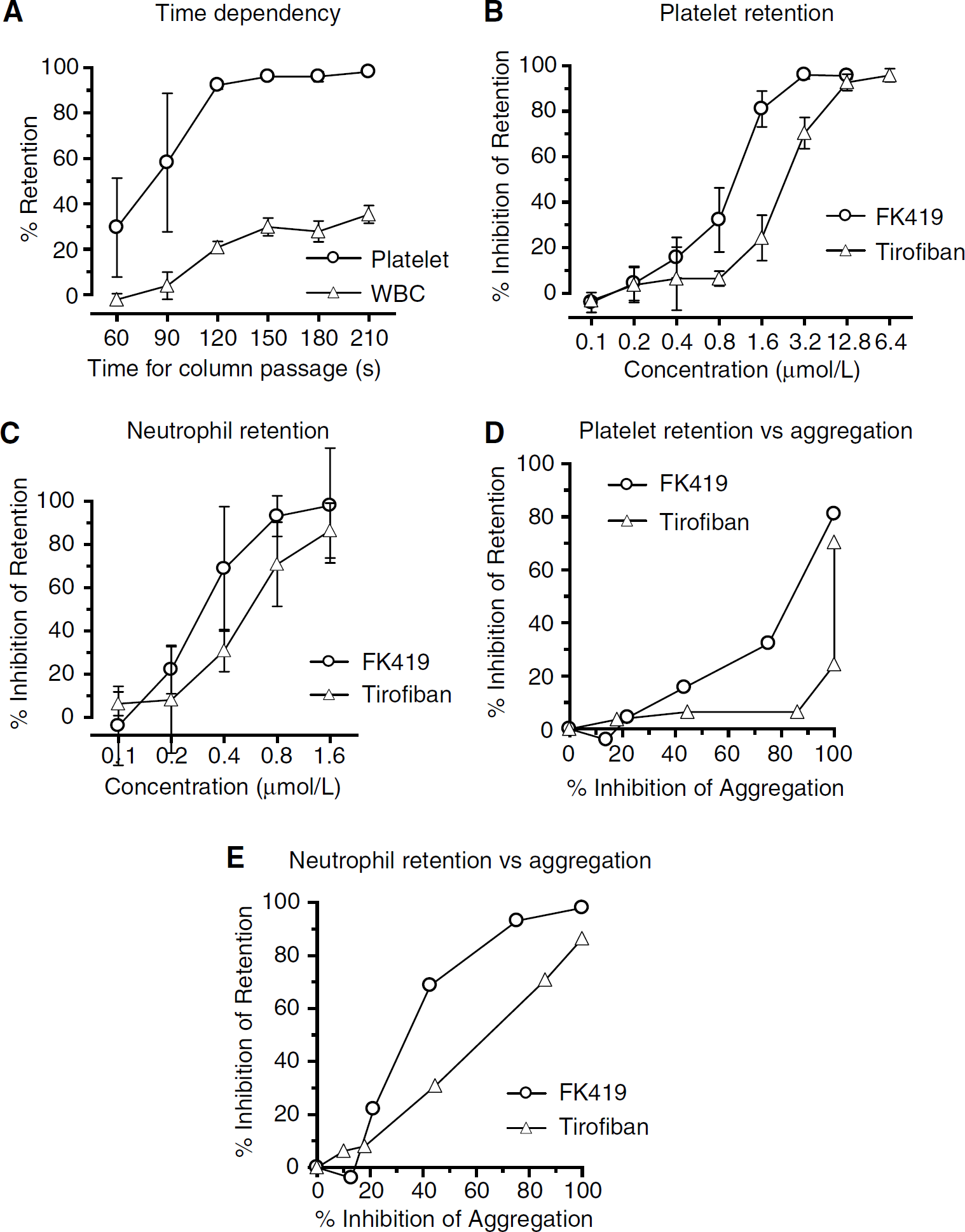
Retention of platelet and white blood cells to a collagen bead column. Column passage time dependency (
Platelet Aggregation Ex Vivo
FK419 and tirofiban dose-dependently inhibited ADP-induced platelet aggregation at each time point, and a constant antiaggregatory effect was obtained during the observation period at all doses tested (Figure 3). Low doses of both drugs achieved approximately 40% to 50% inhibition, middle doses of both drugs achieved about 70% to 85% inhibition, and high doses of both drugs achieved complete inhibition.
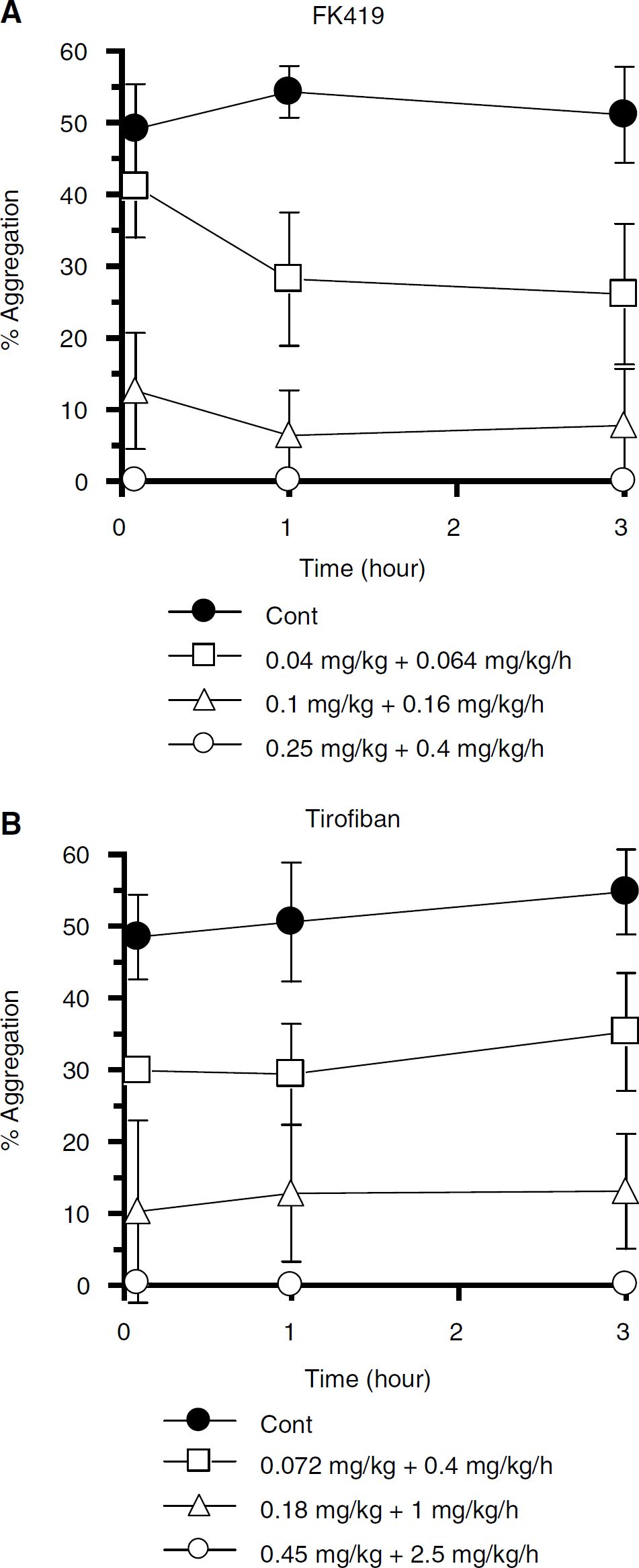
Antiplatelet effects of FK419 (
Photochemically induced Middle Cerebral Artery Occlusion in Guinea-pigs
The effects of highest doses of FK419 and tirofiban on physiological variables are shown in Table 1. Although a slight increase in blood pressure at 2 hours in the tirofiban-treated group and time-dependent decreases in hematocrit and total hemoglobin were observed in all groups, there were no meaningful physiological effects measured at any time in FK419- and tirofiban-treated animals.
Thrombolytic Efficacy: Middle cerebral artery blood flow decreased to zero approximately 5 mins after photoirradiation. Surgical microscopy revealed that the lumen of MCA was occluded by a platelet-rich thrombus at the irradiated site. In our experimental condition, most of the animals showed spontaneous reperfusion after the primary occlusion within 90 mins after the end of photoirradiation, followed by reocclusion and reperfusion of the MCA. FK419 and tirofiban dose-dependently reduced the time to first reperfusion, suggesting that the drugs have thrombolytic action (Figure 4A). Significant improvements were obtained from a medium dose of FK419 and at the highest dose of tirofiban. FK419 significantly shortened the total occlusion time from the medium dose, while tirofiban showed significant effects at the highest dose (Figure 4B).
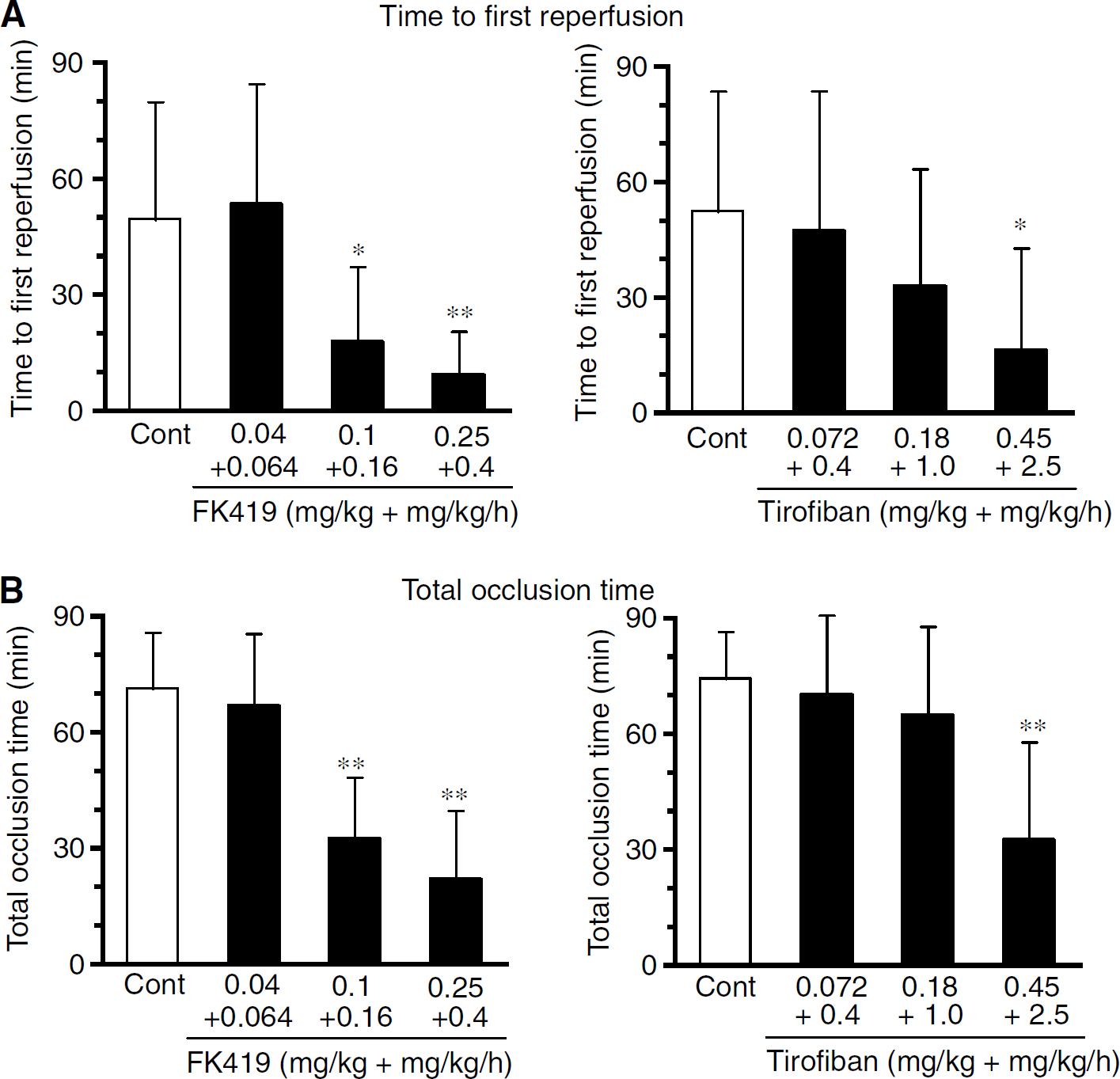
Antithrombotic effect of FK419 and tirofiban after photochemical reaction. Time to first reperfusion (
Physiological variables before and after FK419 and tirofiban treatment in photochemically induced middle cerebral artery (MCA) occlusion model
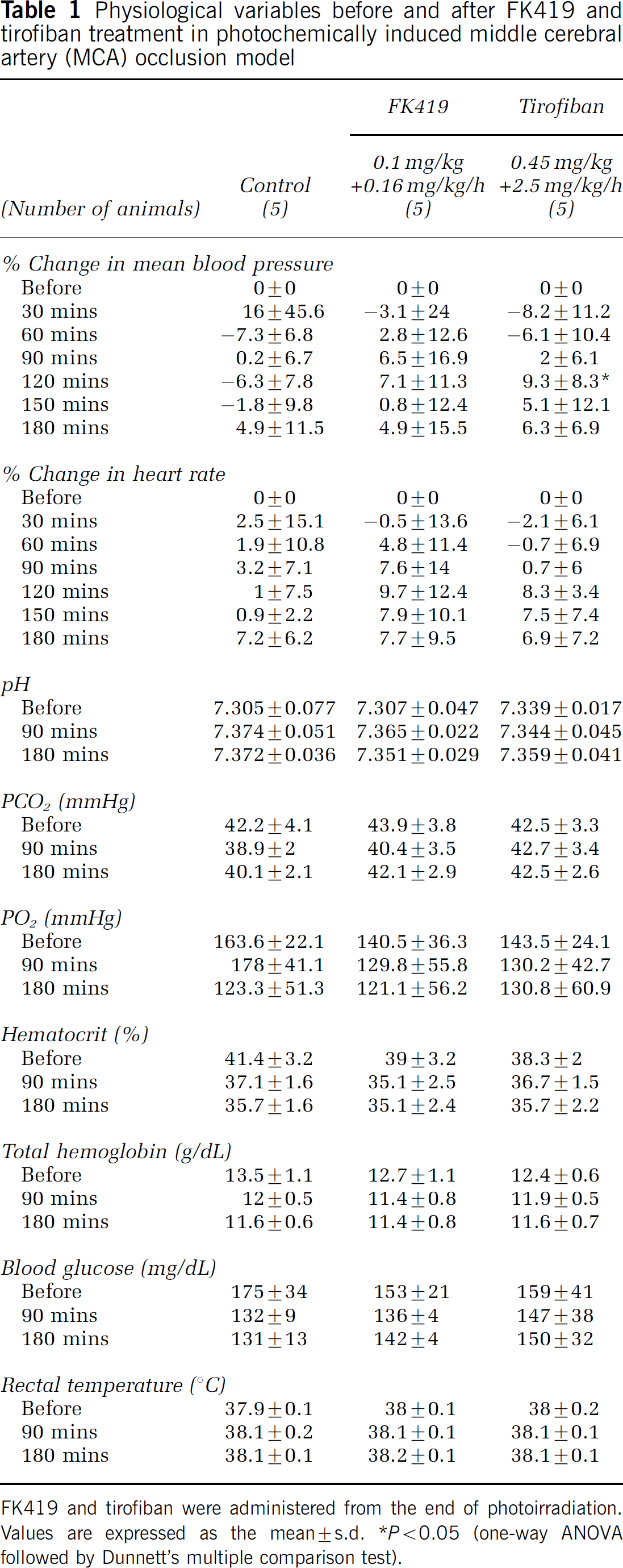
FK419 and tirofiban were administered from the end of photoirradiation. Values are expressed as the mean ± s.d.
P<0.05 (one-way ANOVA followed by Dunnett's multiple comparison test).
Ischemic Brain Damage: As shown in Figure 5, neurological scores were dose-dependently improved by FK419 treatment, with statistically significant improvement at higher dosages than the medium dose. However, tirofiban did not ameliorate neurological outcome. FK419 reduced ischemic brain damage in a dose-dependent fashion (Figure 6). Significant ameliorating effects of FK419 were observed in total (cerebral cortex + striatum), cerebral cortex, and subcortex infarction from the medium dose. Percent reductions in ischemic brain damage in total and cerebral cortex were: low dose, 18% and 32%; middle dose, 55% and 56%; high dose, 47% and 53%. In contrast, tirofiban showed only a slight tendency to ameliorate ischemic cortical brain damage, which did not reach statistical significance.
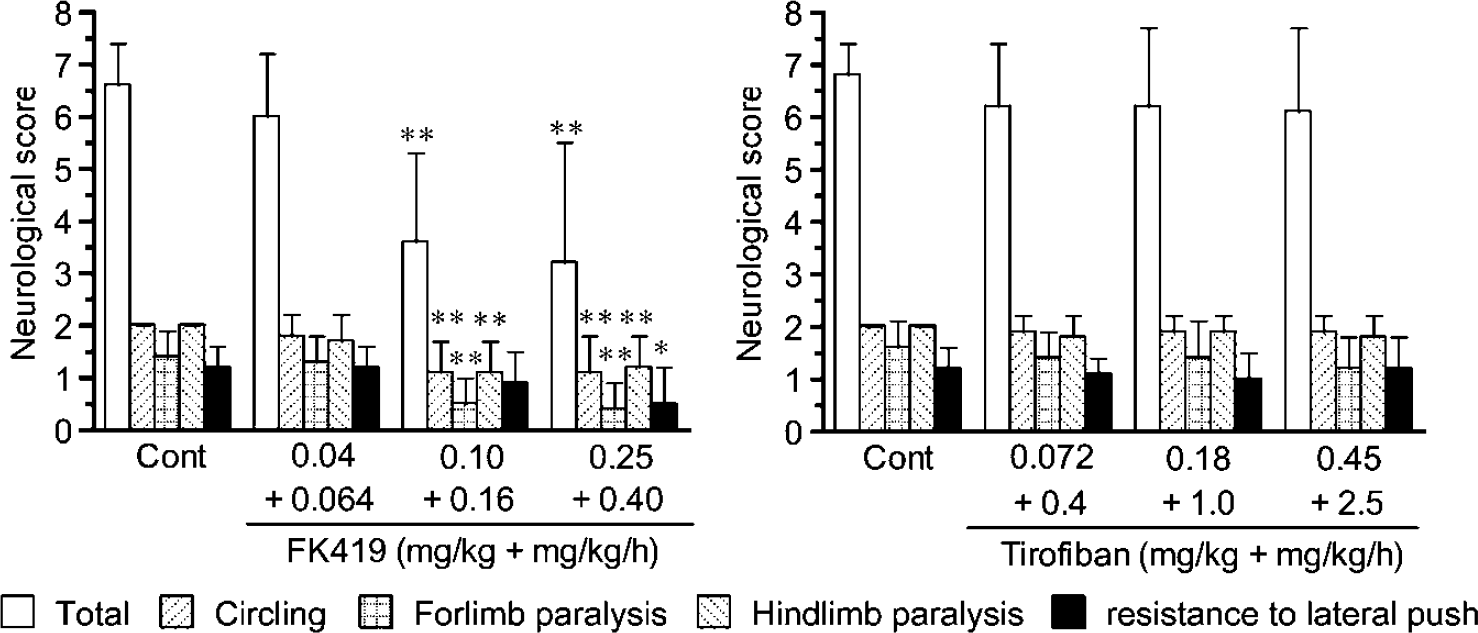
Effect of FK419 and tirofiban on neurologic deficits in guinea-pigs 24 hours after photochemically-induced middle cerebral artery (MCA) occlusion. FK419 or tirofiban was administered from the end of photoirradiation. Circling (open column), forelimb paralysis (hatched column), hindlimb paralysis (dotted column), and resistance to lateral push (closed column) were scored as follows: 0 (normal), 1 (slight to moderate deficit), 2 (severe deficit). The sum of each score represents total neurological score (striped column). Each column represents the mean±s.d. of 9 to 11 animals. *P<0.05, **P<0.01 versus control (Kruskal-Wallis test followed by Dunnett's multiple comparison test).
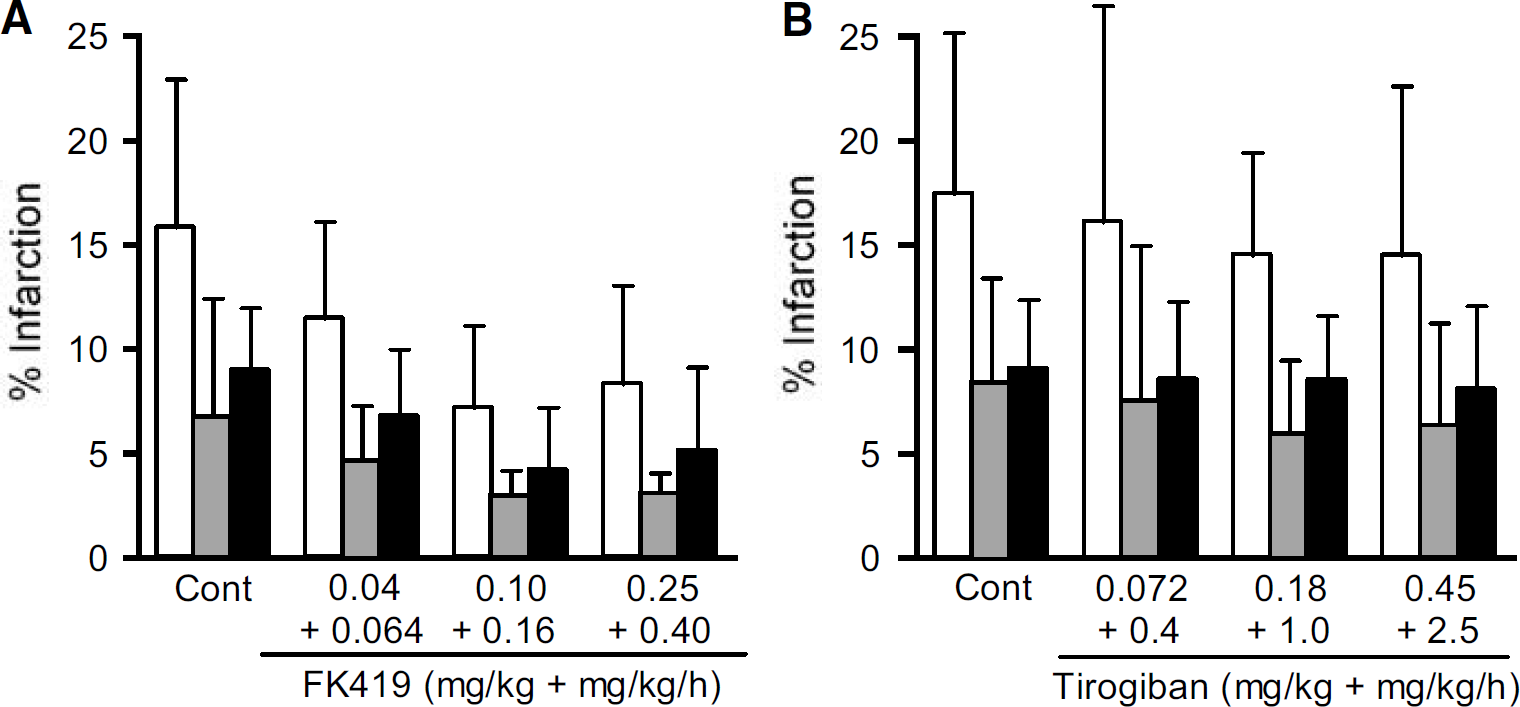
Effect of FK419 and tirofiban on ischemic brain damage in guinea-pigs 24 hours after photochemically-induced middle cerebral artery (MCA) occlusion. FK419 or tirofiban was administered from the end of photoirradiation and the volumes of total (open), cortical (dotted), and subcortical (black) infarction were measured 24 hours after. Each column represents the mean±s.d. of 9 to 11 animals. *P<0.05, **P<0.01 versus control (one-way ANOVA followed by Dunnett's multiple comparison test).
Regional Cerebral Blood Flow in the Striatum: To understand the differences in the efficacy of FK419 and tirofiban in the stroke model, changes in rCBF in the ischemic core (i.e., the center of the striatum) were measured. We evaluated the effects of a medium dose of FK419 and a high dose of tirofiban since these doses showed similar improvement in MCA patency. Schematic presentations of the patency of MCA and changes in rCBF in the striatum of individual animals are shown in Figure 7. In control animals, rCBF in the striatum decreased to 10% to 30% immediately after MCA occlusion, and remained constant until spontaneous reperfusion occurred. Most of these animals showed reocclusion and reperfusion; rCBF of three out of five animals remained low, but rCBF recovered in the other two, one of which showed hyperemia. In FK419-treated animals, the MCA thrombus was lysed and patency restored within 30 mins. Regional cerebral blood flow in the striatum decreased to the same level as that of control animals immediately after occlusion of MCA, but then gradually returned to normal levels. Tirofiban similarly lysed the MCA thrombus and restored patency within 30 mins, but in contrast did not restore rCBF in the striatum.
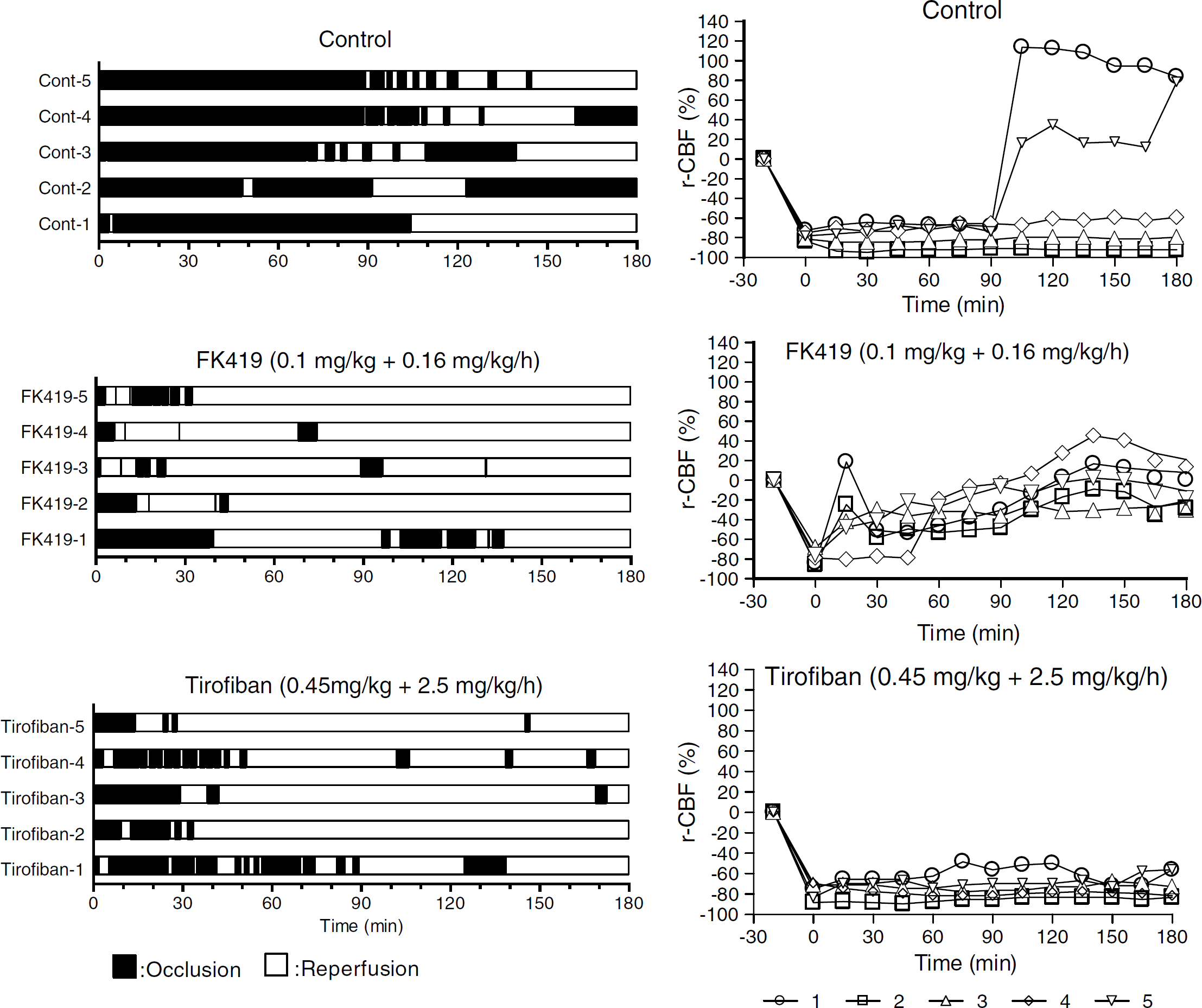
Schematic presentation of the patency of middle cerebral artery (MCA) stem (
DISCUSSION
We have previously reported that FK419 showed a superior profile in a photochemically induced MCA thrombosis model in guinea-pigs, compared with that of common antithrombotic agents, and that the beneficial effects of FK419 might be mediated by its disaggregatory action (Moriguchi et al, 2004b). In the current experiments, FK419 was evaluated to confirm and clarify the beneficial action of GPIIb/IIIa antagonism in the thrombotic stroke model in comparison with tirofiban, whose profile in vitro is slightly different from that of FK419. The activities of both compounds on platelet aggregation and disaggregatory curves in vitro were similar. However, their inhibitory curves of platelet and neutrophil retentions in collagen bead columns were different. Although FK419 showed similar potency for inhibiting platelet and neutrophil retentions and inhibition of aggregation, tirofiban was weak to inhibit neutrophil retention and platelet retention. Dosages of both compounds used in the stroke model were chosen based on dosages necessary to inhibit ADP-induced platelet aggregation ex vivo, with efficacies of approximately 40% to 50%, 80% to 90%, and 100% at low, medium, and high doses, respectively. As expected, both compounds showed thrombolytic activity against obstructive thrombus in MCA. However, only FK419 ameliorated neuronal deficits and ischemic brain damage and tirofiban failed to affect the deficits. Measurement of rCBF in the ischemic core region revealed that the no-reflow phenomenon occurred after occlusion/reperfusion in some of the control animals, and that FK419 but not tirofiban improved the no-reflow phenomenon, suggesting that not only an obstructive thrombus but also an impairment of microcirculation plays a pivotal role in the outcome after thrombotic MCA occlusion.
One of the important findings in the study was that microvascular obstruction after stroke and continued hypoperfusion occurred rapidly and was responsible for progression of neuronal injury after stroke. This can be attributed to extrinsic compression and intravascular events, including leukocyte-platelet adhesion, platelet-fibrin interaction, and activation of coagulation (Kirchhofer et al, 1997; Massberg et al, 1999; Petty and Wettstein, 2001; del Zoppo and Mabuchi, 2003). Impairment of microcirculation in the center of the striatum, which was considered the core region of ischemia, was observed in both control and tirofiban-treated groups. Middle cerebral artery blood flow recovered after approximately 90 mins in the control group and 15 mins in the tirofiban-treated group, indicating that microvascular obstruction occurred rapidly. Accumulation of platelets at the site of the embolus occluding the MCA was detected 1 hour after ischemia in the rat embolic MCA occlusion model, suggesting an important role for post-occlusive distal platelet deposition in the pathophysiology of stroke (Zhang et al, 2001). Microthromboemboli in acute infarcts were also detected in stroke patients (Heye and Cervós-Navarro, 1996). The present study supports the implication that formation of microthrombi after stroke could be an important progressing factor and its prevention might exert substantial benefits. Because Doppler flow measurement provides only a qualitative measurement of rCBF relative to preocclusion conditions, and only measures rCBF from a restricted region, a study measuring rCBF by other techniques such as positron emission tomography (PET) or nuclear magnetic resonance (NMR) will provide further information.
GPIIb/IIIa antagonists were known to have a variety of characteristic activity, such as inhibition on the inflammatory activity of platelets, blocking platelet-leukocyte adhesion, inhibiting thrombin formation, and releasing of P-selectin (Spangenberg et al, 1993; Wang et al, 2002; Goto et al, 2003). While the mechanism by which FK419, but not tirofiban, improved microcirculation is not fully clarified and warrants further studies, inhibition of platelet and leukocyte adhesion to the vascular wall or platelet/leukocyte interaction might be involved, because these are major causes of the no-reflow phenomenon. Since FK419 inhibited retentions of platelets and neutrophils with similar potency, but tirofiban had slightly weaker inhibitory activity for neutrophil and much weaker for platelet retention, different mechanisms might be involved in these retentions. In our experimental conditions, aspirin did not inhibit platelet or white blood cell retention at concentrations up to 640 μmol/L (data not shown), suggesting that retention in the column was mainly mediated by platelet adhesion and the interaction of platelets and neutrophils, but not by platelet aggregation. Regarding the mechanism of human platelet retention in the collagen bead column, GPVI and GPIIb/IIIa, but not the GPIb-von Willebrand factor interaction, are mainly involved in platelet retention (Kaneko et al, 2003). Thus, FK419 might be a more potent GPIIb/IIIa inhibitor for platelet adhesion than for aggregation compared with tirofiban, or alternatively FK419 might have additional activity on platelet adhesion. Some GPIIb/IIIa antagonists, including tirofiban, are known to have platelet agonistic activity (Peter et al, 1998; Dickfeld et al, 2001). Furthermore, some GPIIb/IIIa antagonists inhibit platelet-mediated thrombin generation triggered by tissue factor (Herault et al, 1998). Reduction of thrombin generation by abciximab was observed during percutaneous coronary intervention (Dangas et al, 1999). These actions might also be involved in the different outcome of FK419 and tirofiban in vitro and in vivo. A GPIIb/IIIa antagonist reduced microvascular thrombosis and cerebral infarction by inhibition of accumulation of platelet and fibrin on the affected side of the cerebral hemisphere after reperfusion in a mouse model of focal ischemia (Choudhri et al, 1998). Microvascular occlusion formation after reperfusion was prevented by a GPIIb/IIIa antagonist in a baboon stroke model (Abumiya et al, 2000). Even if one is successful in lysing the thrombus in the major vessel, if distal microvascular thrombosis is extensive there may be little clinical benefit. Dynamic accumulation of platelets at the site of the occluded MCA may contribute to time-dependent resistance to fibrinolysis. Downstream platelet thrombus formation and leukocyte deposition in the microvasculature occur faster and may produce ischemic damage, even if there is lysis of the inciting thrombosis (Alexandrov and Grotta, 2002), FK419 may show benefits in stroke patients who were not rescued by rt-PA treatment.
The present study demonstrated that GPIIb/IIIa antagonists had thrombolytic activity, and that their activity was well-correlated with their platelet disaggregatory actions. Although plasma concentrations of these agents were not measured, they may reach the concentrations that are sufficient for their disaggregatory actions achieved at effective dosages estimated from ex vivo platelet inhibition studies. Thrombolytic actions of GPIIb/IIIa antagonists were proposed to be related to platelet disaggregation (Mousa et al, 1994; Gold et al, 1997; Wallace et al, 1997; Domanovits et al, 1998; Marciniak et al, 2002), as well as inhibition of plasminogen activator inhibitor-1 (PAI-1) secretion (Tsao et al, 1997). FK419 and tirofiban dose-dependently inhibited secretion of PAI-1 from human ADP-activated platelets at similar concentrations of inhibition of platelet aggregation in vitro, whereas aspirin did not (unpublished observation). Although inhibitory action for the secretion of PAI-1 was not confirmed in guinea-pig platelets, inhibition of PAI-1 release could be involved in their beneficial effects in the stroke model. Because GPIIb/IIIa antagonists have thrombolytic action whose mechanism is independent of that of rt-PA, GPIIb/IIIa antagonists may provide a new and additional therapeutic agent for the treatment of acute ischemic stroke.
In conclusion, we demonstrated that FK419 effectively improved not only MCA blood flow but also microcirculation in ischemic tissue and ameliorated neurological outcome as well as ischemic brain damage, whereas tirofiban did not. These findings suggest that platelets and neutrophils are key mediators in the pathogenesis of microvascular thrombosis and cerebral injury in stroke and that FK419 would be an attractive intervention for the treatment of acute ischemic stroke. While further studies are needed to determine the detailed mechanism, the present finding encourages investigating FK419 in acute ischemic stroke.
Footnotes
Acknowledgements
The authors thank Dr Raymond D Price for his helpful comments in preparing the manuscript.