






Abstract
Striatal medium-sized spiny neurons (MSNs) are highly vulnerable to ischemia. A brief ischemic insult, produced by oxygen and glucose deprivation (OGD), can induce ischemic long-term potentiation (i-LTP) of corticostriatal excitatory postsynaptic response. Since nitric oxide (NO) is involved in the pathophysiology of brain ischemia and the dopamine D1/D5-receptors (D1-like-R) are expressed in striatal NOS-positive interneurons, we hypothesized a relation between NOS-positive interneurons and striatal i-LTP, involving D1R activation and NO production. We investigated the mechanisms involved in i-LTP induced by OGD in corticostriatal slices and found that the D1-like-R antagonist SCH-23390 prevented i-LTP in all recorded MSNs. Immunofluorescence analysis confirmed the induction of i-LTP in both substance P-positive, (putative D1R-expressing) and adenosine A2A-receptor-positive (putative D2R-expressing) MSNs. Furthermore, i-LTP was dependent on a NOS/cGMP pathway since pharmacological blockade of NOS, guanylate-cyclase, or PKG prevented i-LTP. However, these compounds failed to prevent i-LTP in the presence of a NO donor or cGMP analog, respectively. Interestingly, the D1-like-R antagonism failed to prevent i-LTP when intracellular cGMP was pharmacologically increased. We propose that NO, produced by striatal NOS-positive interneurons
INTRODUCTION
An important feature of ischemic brain damage is the selective vulnerability of specific neuronal populations. Striatal neurons are particularly vulnerable to ischemia1–3 and medium-sized spiny neurons (MSNs), representing the large majority of the entire striatal neuronal population, are rapidly lost during ischemia and excitotoxic injury.
Nitric oxide (NO) is involved in the pathophysiology of brain ischemia8–11 as well as in the formation of activity-dependent synaptic plasticity.12,13 Accordingly, inhibition of nitric oxide synthase (NOS) attenuated anoxic LTP in the hippocampus. 14 The NOS family consists of three isoforms: neuronal NOS (nNOS), endothelial NOS (eNOS), and inducible NOS (iNOS).15,16 Since nNOS and eNOS have been suggested to play a role in activity dependent and i-LTP in the hippocampus,17,18 we hypothesized that the blockade of the striatal NO production would also affect striatal i-LTP.
In the striatum ischemia causes a large increase of dopamine (DA) levels 19 that may become neurotoxic, either directly or by interacting with the glutamatergic system.20,21 The role of D1-like-R/cAMP/PKA intracellular pathway appeared to be critical in MSN i-LTP induction. 22 Ischemia induces long-lasting increase of the amplitude of postsynaptic potentials (EPSPs), however, pharmacological blockade or genetic inactivation of the D1-like-R/cAMP/PKA pathway, rather than D2-like receptor pathway, prevented this increase. Since the selective expression of D1-like-R in a subpopulation of MSNs23–25 is still matter of debate, the mechanism by which D1-like-R stimulation mediates i-LTP induction in the entire MSN population is far from being clear.
Within the striatum, D1-like-Rs are also expressed by NOS positive GABAergic interneurons, cells representing less than 5% of the total striatal neuronal population and virtually projecting to all MSNs. These neurons express both DA D1/D5 receptor mRNA and protein26–28 and a relation between D1-like-Rs and the release of NO by NOS striatal interneurons has been demonstrated.
29
In fact, administration of D1-like-Rs agonists increased striatal NO efflux in an
It has been suggested that the biochemical pathways activated by the ischemic insult might mimic the molecular key steps required for the induction of activity-dependent synaptic plasticity, finally causing,
Nevertheless, the involvement of NO in corticostriatal i-LTP has not been demonstrated yet. Therefore, we aimed at investigating the involvement of the NO/cGMP intracellular pathway in MSN i-LTP and we explored the mechanism by which D1-like-R stimulation mediates i-LTP formation in both MSNs of the direct and indirect pathway.
METHODS
Electrophysiology
All the experiments were conducted in conformity with the European Communities Council Directive of November 1986 (86/609/ECC), in accordance with a protocol approved by the Animal Care and Use Committee at the University of Perugia and with the ARRIVE guidelines. Two- to three-month-old male Wistar rats (Harlan) and 5- to 6-week-old male C57BL/6J-Swiss Webster mice were used. Preparation and maintenance of corticostriatal slices (270 to 300
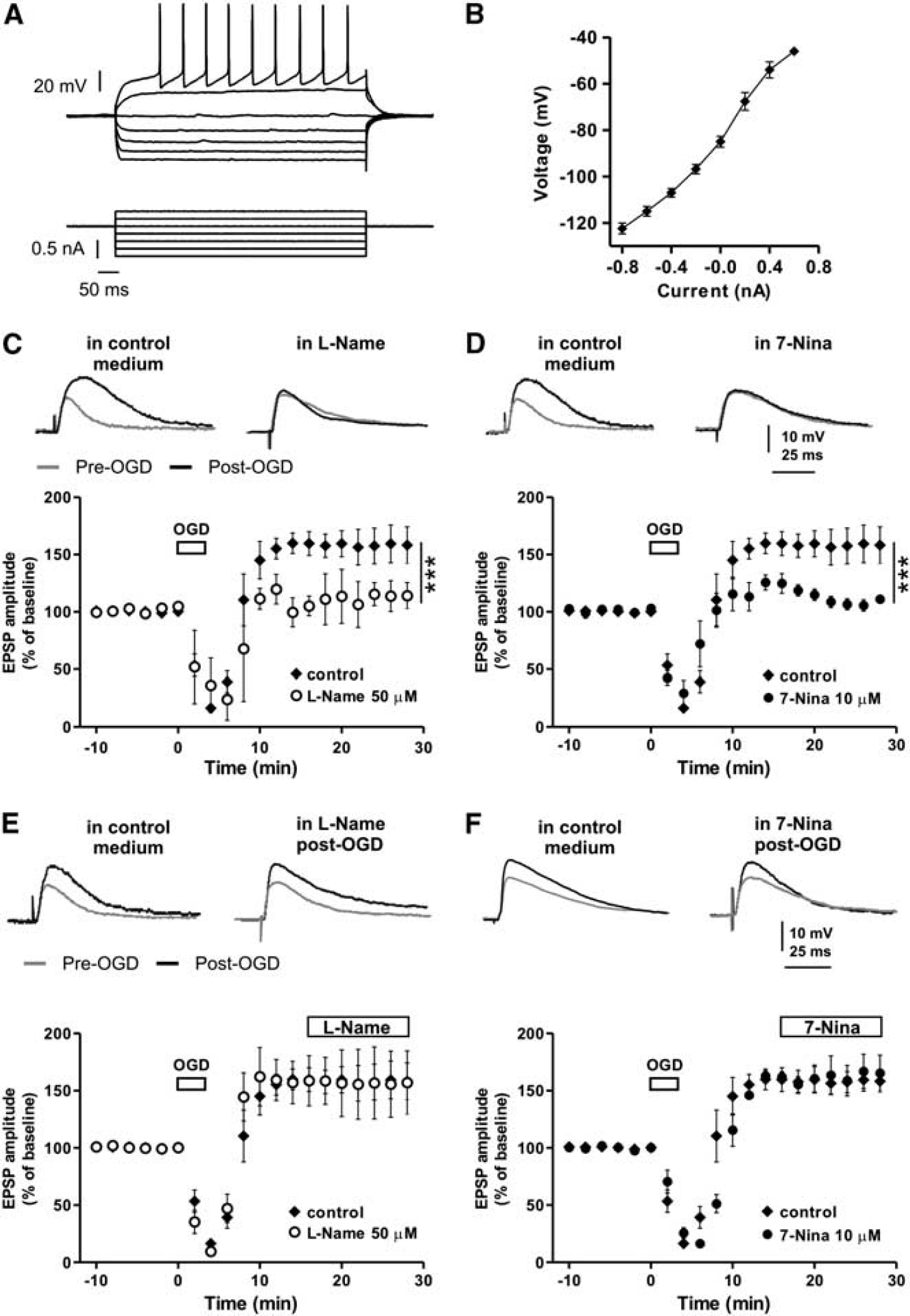
Inhibition of NOS affects the induction but not the maintenance of striatal i-LTP. (
Tissue Processing and Double Immunofluorescence
Corticostriatal brain sections were postfixed overnight at 4°C with 4% paraformaldehyde in saline solution and then cryoprotected in phosphate buffer (PB 0.1 M) with sodium azide 0.02% for 48 hours at 4 °C. The sections filled with biocytin (during electrophysiological recordings) were incubated with streptavidin-Cy3 (Sigma) diluted 1:600 in PB-TX-100 0.3% for 2 hours at room temperature (RT) to verify the presence of cells filled with biocytin. Sections (from each group) were preincubated with a primary antibody goat anti-SP (Immunological Science) or rabbit polyclonal anti-adenosine A2A receptor (A2AR) (Alexis) to label the medium spiny projection neurons that are component respectively of the ‘direct’ or ‘indirect’ basal ganglia pathway.32–34 The primary antisera were used at a concentration of 1:400 for SP and 1:250 for A2A in 0.1 M PB containing Triton X-100, 0.3% and sodium azide, 0.02% for 24 hours at RT and 48 hours at 4°C. Sections were then rinsed three times for 15 minutes at RT, and subsequently incubated with a cocktail of anti-goat Cy2 and anti-rabbit Cy5-conjugated secondary antibody (Jackson Immunoresearch) for 2 hours at RT. All the secondary antibody were used at 1:200 concentration. Tissue was mounted on gelatin-coated slides, coverslipped with GELMOUNT and all the images were acquired with a Confocal Laser Scanning Microscope (CLSM) Zeiss LSM700 with 40 × oil magnification. To acquire the inserts showing the branched dendrites a 100 × oil zoom 6 magnification was used.
6-Hydroxydopamine-Induced Lesion
Procedures for obtaining rats with 6-hydroxydopamine (6-OHDA)-induced striatal DA denervation have been previously given in detail.35,36 In brief, deeply anesthetized rats were unilaterally injected with 6-OHDA (12
Drugs
Drugs were applied by dissolving them to the desired final concentration in the Krebs' solution and by switching the perfusion from control solution to drug-containing solution. Picrotoxin, SCH23390, 7-nitroindazole (7-Nina), NG-nitro-L-arginine methyl ester (L-Name), 1H-[1,2,4] Oxadiazolo[4,3-a] quinoxalin-1-one (ODQ), 8Br-cGMP, Rp-8Br-PET-cGMP, S-Nitroso-Nacetylpenicillamine (SNAP) were purchased from Tocris. Drugs were applied in the recording chamber for at least 10 minutes before OGD and maintained throughout the experiment. In some patch-clamp experiments 8Br-cGMP or Rp-8Br-PET-cGMP was added to the internal solution.
Statistical Analysis
Data analysis was performed off-line using Clampfit 10 (Molecular Devices) and Microcal Origin software. Values given in the text and figures are mean ± s.e., n representing the number of recorded neurons. Only one neuron per slice was recorded. Changes of EPSP or EPSC amplitude after i-LTP induction is expressed as percentage of the baseline, the latter representing the normalized EPSP or EPSC mean amplitude acquired during a stable period (10 to 15 minutes) before the OGD onset. Two-way ANOVA was used for statistical analysis. The significance level was established at *
RESULTS
Nitric Oxide Synthase Inhibitors Prevent the Induction but not the Maintenance of Ischemic LTP in Striatal MSNs
Striatal MSNs are highly vulnerable to ischemia1–3 and a brief ischemic insult can produce i-LTP, the pathological form of long-term potentiation of synaptic transmission.4,22 In order to explore the mechanism by which i-LTP occurs in the striatum we recorded electrophysiologically identified MSNs with sharp electrodes. The main characteristics of these cells have been described in detail previously.
37
As shown in Figures 1A and 1B, they were silent at rest and showed tonic firing activity during a long-duration depolarizing pulse. Ischemic LTP was induced by
NO is known to be involved in the pathophysiology of brain ischemia
8
and we previously reported its pivotal role in mediating hippocampal i-LTP.
17
In order to test whether i-LTP was mediated by a NO-activated pathway in the striatum, we recorded EPSPs from MSNs from striatal slices in the presence of 50
Ischemic LTP Requires Nitric Oxide involving the Activation of a Postsynaptic Guanyl Cyclase, cGMP Dependent Intracellular Pathway, and PKG
In order to confirm that inhibition of NOS prevented i-LTP in MSNs by reducing striatal NO levels, we explored the role of NO on striatal i-LTP by recording MSNs in the presence of the NOS inhibitor L-Name co-applied with the NO donor, SNAP. We firstly measured the effect of 100
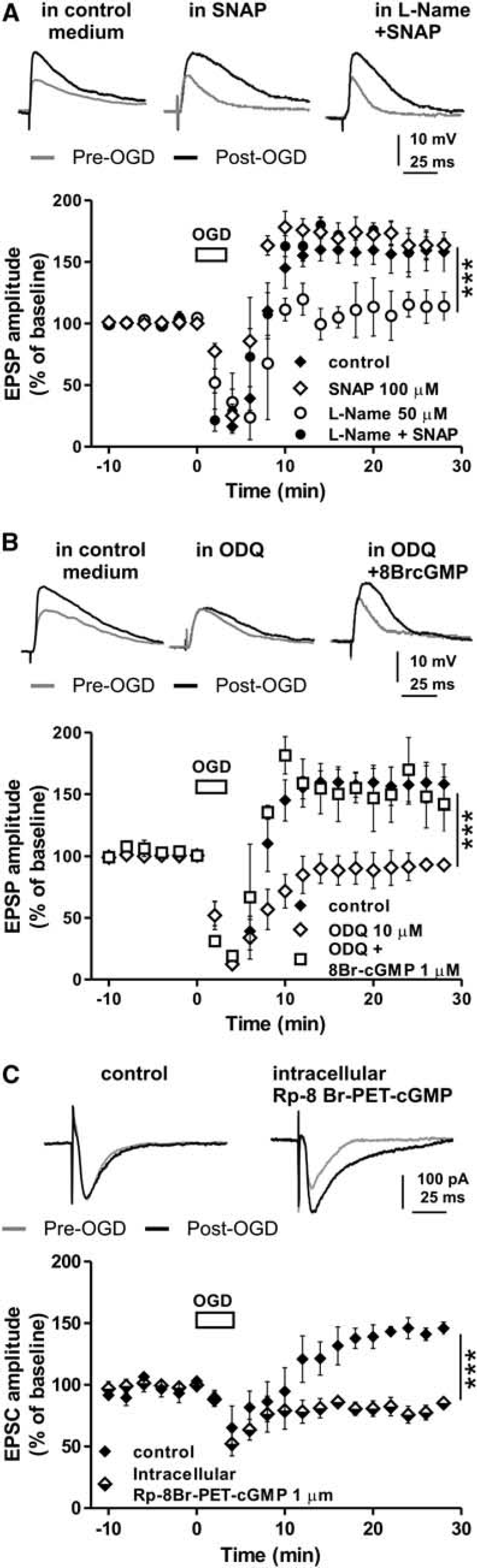
Exogenous NO or enhanced levels of intracellular cGMP restores striatal i-LTP abolished by inhibition of NOS or by inhibition of the soluble guanylate cyclase, respectively, whereas i-LTP is prevented by inhibition of PKG. (
Thus, NO seems to have a key role in the i-LTP induction, most likely by activating soluble guanylate cyclase (sGC) and increasing cGMP synthesis into neurons.17,38 Therefore, this intracellular messenger might be involved in the induction of striatal i-LTP. To test for this possibility, we recorded MSNs in the presence of the sGC inhibitor, ODQ.
38
Interestingly, we found that i-LTP induction was prevented by 10
In addition, we tried to establish the possible target of cGMP during an ischemic episode. Since PKG represents a protein kinase that can be directly activated by cGMP, we tested whether this kinase could be activated by an OGD insult inducing i-LTP. In patch clamp experiments,
4
MSNs were therefore injected with the PKG inhibitor Rp-8Br-PET-cGMP
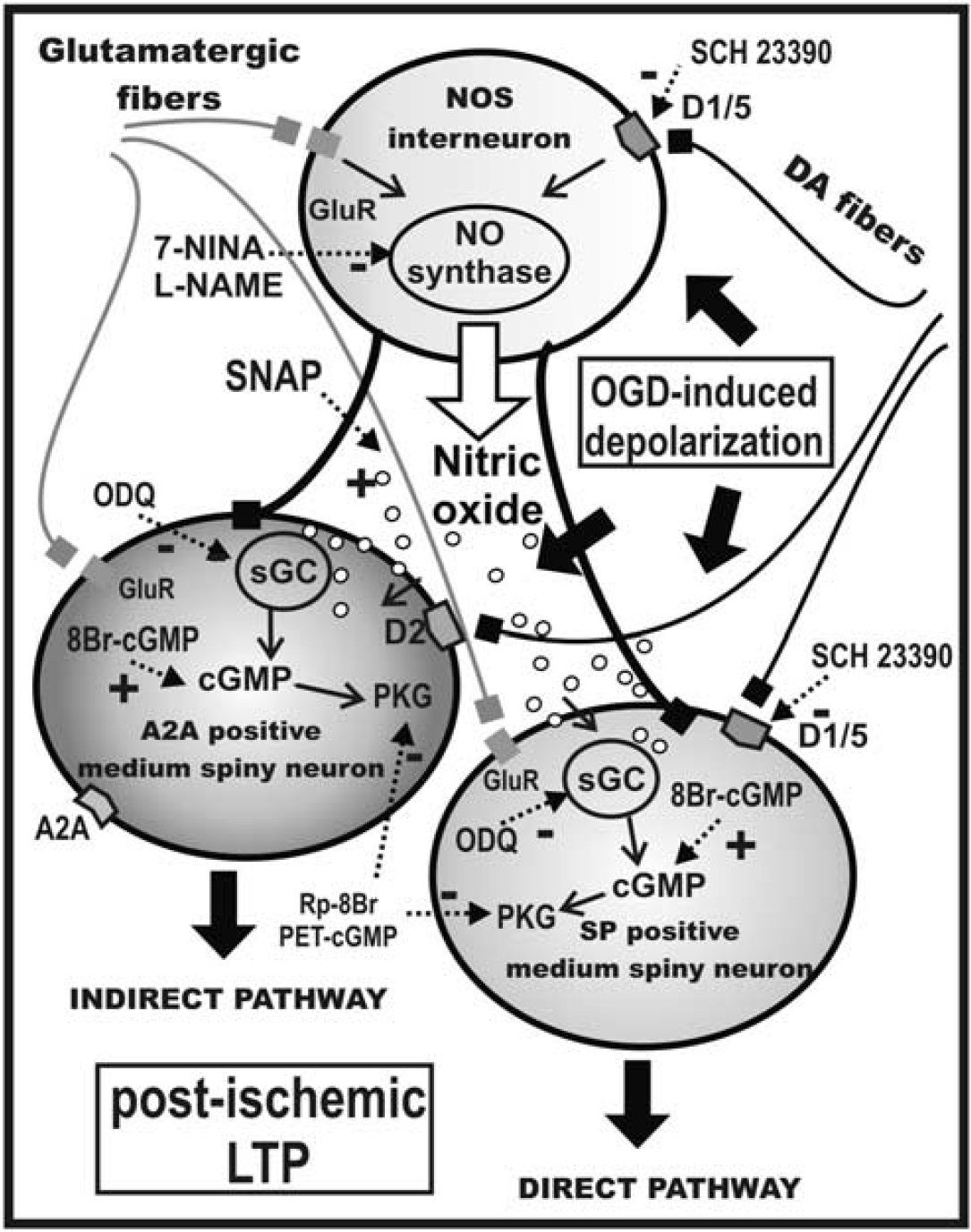
Model of the intrastriatal network during OGD. The scheme represents the involvement of the NO/cGC/cGMP signaling pathway in the ischemic LTP in the striatum. A D1-like-R-mediated activation of nitric oxide synthase (NOS) in NOS positive interneuron determines nitric oxide (NO) production. NO increases cGMP levels within MSNs of the direct and indirect pathways by activating intracellular sGC. D1-like-R antagonism (SCH23390) or inhibition of NOS (7-Nina or L-Name) prevented i-LTP induction, while a NO donor (SNAP) restores i-LTP of both the A2A- and the SP-expressing MSNs. Ischemic LTP is prevented by inhibiting sGC with ODQ, or inhibiting PKG with Rp-8Br-PET-cGMP, and restored by application of the c-GMP analog 8Br-cGMP in medium spiny neurons.
Ischemic-LTP is Prevented by D1-Like Receptor Antagonism in Both Substance P or A2A Receptor Expressing MSNs
Within the MSN striatal population D1-like-R and D2-like-R are thought to be segregated into distinct neuronal subpopulations and we have previously shown a critical role only for D1R stimulated pathway in striatal i-LTP, but not for D2R. 22 Therefore we explored whether a D1-like-R-dependent form of striatal i-LTP could be observed in MSNs of both the direct (expressing D1Rs) and indirect (expressing D2Rs) basal ganglia pathway.
After obtaining EPSCs of stable amplitude of patch clamped MSNs, the standard solution was switched to the ischemic solution (OGD) for 3 minutes. In order to distinguish direct and indirect pathway neurons, MSN were filled with biocytin during the recordings and immunofluorescence double labeling was performed
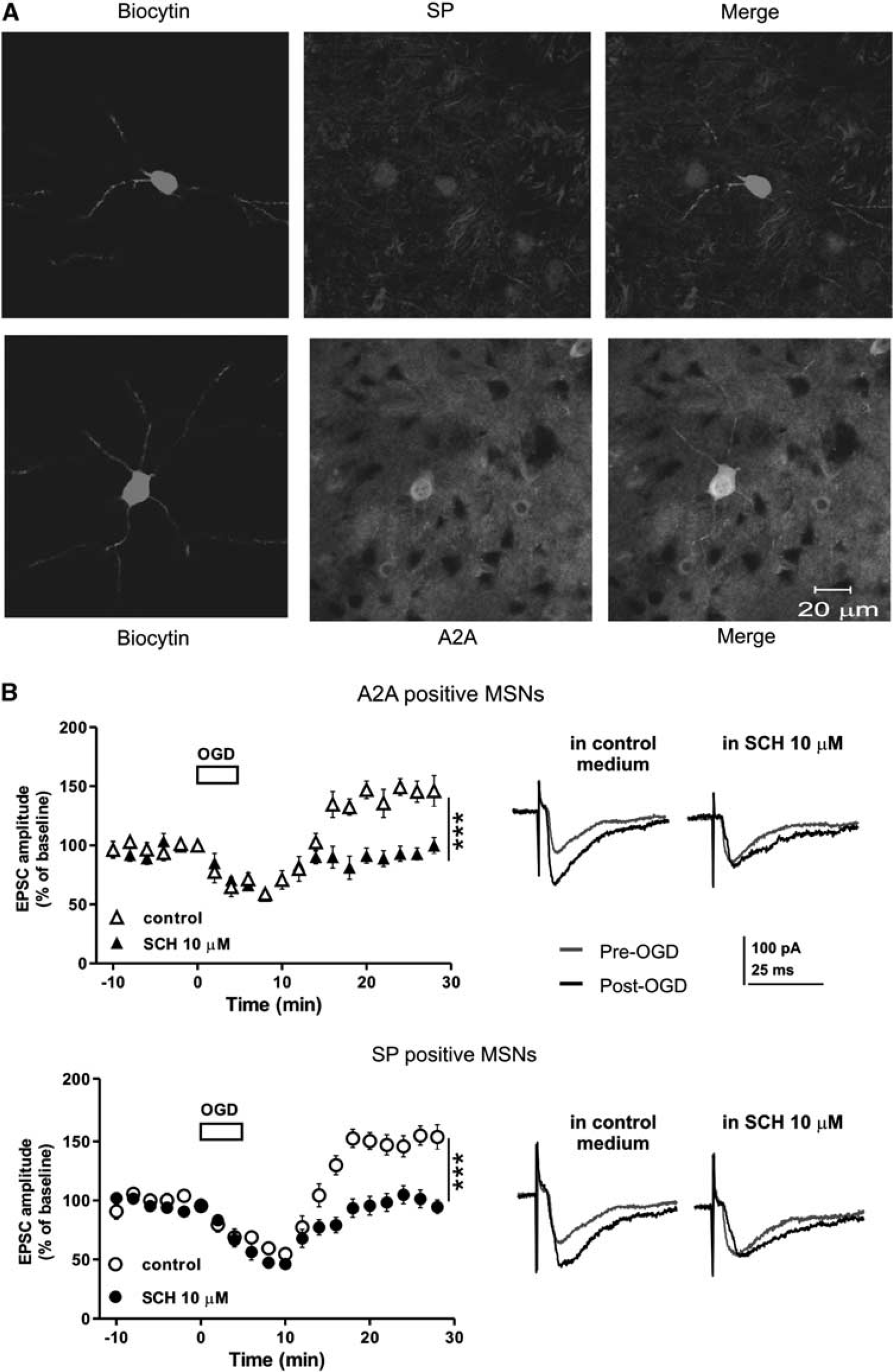
Antagonism of D1-like receptor blocks i-LTP induction in both A2A receptor- and substance P-expressing striatal medium spiny neurons. (
A group of MSNs loaded with biocytin was also recorded in the presence of 10
Exogenous Nitric Oxide or a cGMP Analog Restores i-LTP during Pharmacological Blockade of D1-Like Receptor or in DA-Denervated Slices
D1R stimulation of striatal tissue increases NO production and cGMP levels29,39 and we have shown that either inhibition of NO/cGMP pathway (Figures 1 and 2) or blockade of D1-like-R (Figure 3) prevented i-LTP of striatal MSNs. Thus, we explored whether the blockade of i-LTP by D1-like-R antagonism was mediated by a NO dependent pathway in striatal MSNs.
An OGD containing solution was applied for 3 minutes on striatal slices in the presence of either the D1-like-R antagonist SCH23390 or in the presence of SCH23390 plus the NO donor SNAP. Similarly to what observed in patch-clamp experiments (Figure 3B), 10
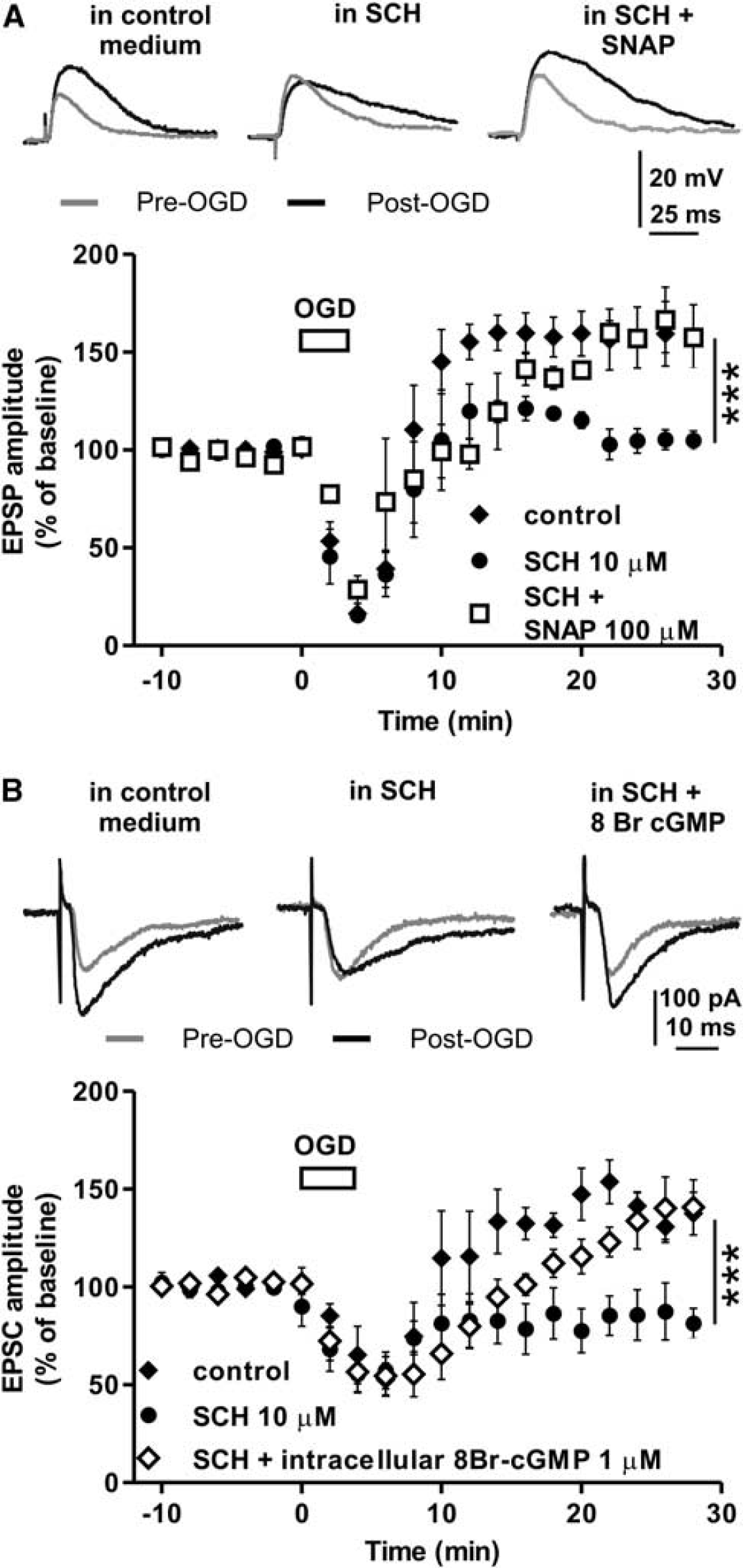
Exogenous NO or enhanced cGMP levels restore i-LTP abolished by D1-like receptor antagonism. (
To further confirm the role of NO in the D1-like-R mediated i-LTP we performed patch-clamp recordings of MSNs injecting 1
In order to confirm the role of D1-like-R stimulation in NO mediated i-LTP in the striatum we also used DA-denervated rat slices obtained by injecting animals with 6-OHDA, a neurotoxin that destroys dopaminergic projections to the striatum by preferentially targeting DA neurons located in the
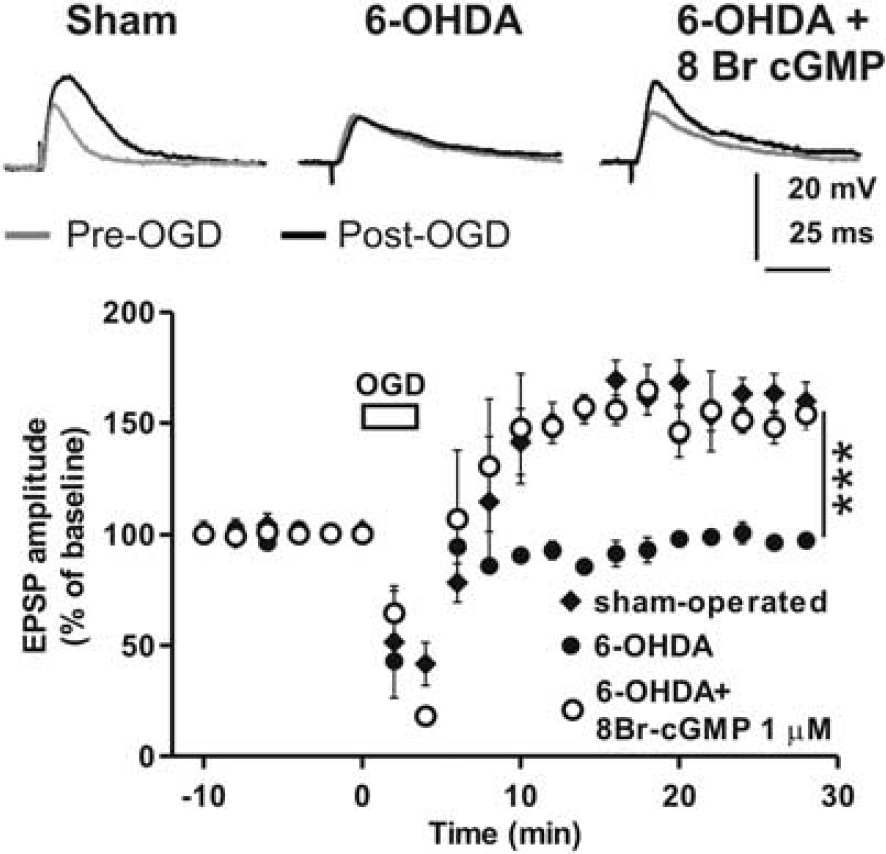
8Br-cGMP restores i-LTP in 6-OHDA DA-denervated slices. Time-course plots and example EPSP traces showing the effect of OGD in striatal MSNs recorded from sham-operated and 6-OHDA DA-denervated rats. Note the lack of i-LTP in the 6-OHDA DA-denervated group. Bath application of 1
DISCUSSION
This study represents the first demonstration that NO/cGMP pathway plays a pivotal role in post-ischemic long-term potentiation of excitatory transmission in the striatum. We demonstrated that NO, possibly produced by striatal NOS-positive interneurons, via the stimulation of D1-like-Rs located on these cells, is critical for i-LTP induction. Our protocol for i-LTP induction involved the use of a nominally magnesium-free external solution in order to better unmask the NMDA receptor component for the measure of postsynaptic response. This condition was reported to initiate seizure-like activities in other brain structures such as the hippocampus. 40 However, in MSNs recorded in our slice preparation no seizure-like activities could be observed. Accordingly, MSNs have been characterized as ‘silent’ and ‘non-bursting’ neurons. 41 In fact, although they possess slow conductances for inward currents which they share with other mammalian central neurons, their oscillating and bursting activities are suppressed by the high resting membrane potential and the effective potassium currents present in MSNs. 41
Based on outcomes from double labeling studies, it is likely that i-LTP induction occurs in a majority of both direct and indirect pathway MSNs and that the magnitude of the effect is similar in these populations.
NO plays a physiological role in neuronal cell signaling, in particular for ischemic tolerance induced by transient ischemia, an effect involving the activation of sGC and the production of cGMP. 42 Moreover, NO overproduction may cause the formation of oxidant species, such as peroxynitrite, and neuronal energy impairment leading to neurodegeneration. 9
The overproduction of NO is involved in the pathophysiology of brain ischemia
8
as well as in the formation of activity-dependent synaptic plasticity.12,13 It has been suggested that NO may be protective or destructive depending on the stage of evolution of the ischemic process and on the cellular source of NO.
43
However, the mechanism by which NO is involved in i-LTP has never been explained so far. In the present study, by using an
NO is a diffusible neuronal messenger that activates sGC and increases intracellular cGMP levels during an ischemic episode in the brain. 46 Accordingly, we found that inhibition of sGC by ODQ, and of PKG by Rp-8Br-PET-cGMP prevented i-LTP induction. However, this pathological form of synaptic plasticity was not prevented by the blockade of sGC when ODQ was applied in the presence of a cGMP analog such as 8Br-cGMP.
It is well known that a massive DA release occurs during ischemic events in the striatum and that endogenous DA amplifies neuronal damage caused by excitotoxicity and energy deprivation. 47 We have previously reported the involvement of D1R in i-LTP of MSN. 22 Interestingly, here we show that antagonism of D1-like-R by SCH23390 prevents i-LTP in both SP positive and A2A positive MSNs, as confirmed by the experiments utilizing the neuronal sub-type identification by immunofluorescence (Figure 3A). Thus, our study provides evidence that i-LTP is mediated by D1-like-R activation, NO production, increased cGMP levels and PKG activation in a majority of both direct and indirect pathway cells.
Considering that striatal MSNs represent a heterogeneous population in terms of DA receptor expression, and that the prevailing view is that D1Rs and D2Rs are segregated into separate subpopulations, we suggest a pivotal presynaptic role of D1-like-R in the release of NO by NOS positive interneurons. In fact, striatal NOS interneurons express DA D1/D5 mRNA and D1R protein26–28 and D1R agonist administration increases striatal NO efflux via a NOS- and D1R-dependent mechanisms.29,48 Interestingly, our study suggests that, during a brief ischemic episode, DA neurotransmission may modulate striatal NO signaling
NO/cGMP signaling has numerous effects on protein kinases and phosphodiesterases in striatal MSNs
49
which ultimately modulate membrane excitability and corticostriatal transmission. 30,50 Striatal MSNs have been shown to express high levels of intracellular sGC and proteins associated with cGMP signal transduction pathways
51
and we have shown that the cGMP-activated protein kinase (PKG) exerts a critical role in i-LTP induction. Thus, it is plausible that the release of NO, modulated by D1-like-R located on NOS positive interneurons, is involved in MSN i-LTP during an ischemic episode. Our experiments support this hypothesis, in fact, the cGMP analog 8Br-cGMP, applied into MSNs
The role of DA stimulation and NO/cGMP pathway in striatal i-LTP were confirmed by the experiments performed in DA-depleted conditions obtained by utilizing slices from 6-OHDA DA-denervated rats. In these conditions we showed that i-LTP did not occur. Accordingly, striatal NOS activity was found to be depressed in 6-OHDA lesioned animals52,53 and patients with PD.54,55 Interestingly, our experiments show that i-LTP could be induced when the cGMP analog 8Br-cGMP, was applied in these DA-denervated slices. Therefore, we suggest that DA has a major role in striatal i-LTP by stimulating D1-like-Rs in NOS positive interneurons. We also suggest that the diffusion of NO would activate the NO/sGC/cGMP/PKG cascade in the MSNs of both the direct and indirect basal ganglia pathways (Figure 6). Further studies are required to elucidate the mechanism through which D1-like-R pathway modulate NO-cGMP signaling for the treatment of ischemic stroke and other neurological disorders.
DISCLOSURE/CONFLICT OF INTEREST
Dr Calabresi serves as an editorial board member of Lancet Neurology, the Journal of Neuroscience, Movement Disorders and Synapse; receives research support from Bayer Schering, Biogen, Boehringer Ingelheim, Eisai, Merck Chemicals, Novartis, Lundbeck, Sanofi-Aventis, Sigma-Tau, and UCB Pharma; and from Ricerca Corrente IRCCS, Ricerca Finalizzata IRCCS [European Community Grants SYNSCAFF and REPLACES], the Italian Minister of Health and AIFA (Agenzia Italiana del Farmaco). All other authors reported no biomedical financial interests or potential conflicts of interest.