Abstract

In Japan, the status of “microbiology” in terms of clinical laboratory testing is quite low: i.e., many people have negative images of this field, describing it in such terms as “out-of-date”, “deficit finances” and “useless”. Compared with such an advanced field as clinical chemistry, clinical microbiology has fallen behind by 10∼20 years. For instance, one of the most serious problems with microbiological tests performed in clinical laboratories is that more than 3 days are required for doctors to obtain a full report, so effective treatment cannot be performed quickly. This is mainly due to a depletion of human resources and academic activity in this field: i.e., Japan does not have a proper system of “competition” because of idiosyncratic and cultural customs. The “seniority” and the “lifetime employment” systems are typical examples. In other words, criteria for “evaluation” of achievements and personality have never been established, and the principals of “peace at any price” and “horizontal positioning” are most favored in our country [1].
Therefore, we are obliged to start a “revolution” in order to resolve all of the problems which have been left by unproductive and “antiquated” person. We developed a highly automated laboratory system, where bacterial identification and drug susceptibility tests could be completed within 6 and 4h, respectively. An outline of all the systems is schematized in Fig.1. In addition, full-colored pictures (e.g., Gram stained specimens) are attached to the test reports to enhance understanding. Furthermore, we have devised a quick medical reference (QMR) system to support antimicrobial chemotherapy. This is a unique and epoch-making system in Japan that will help doctors provide effective therapy for patients.
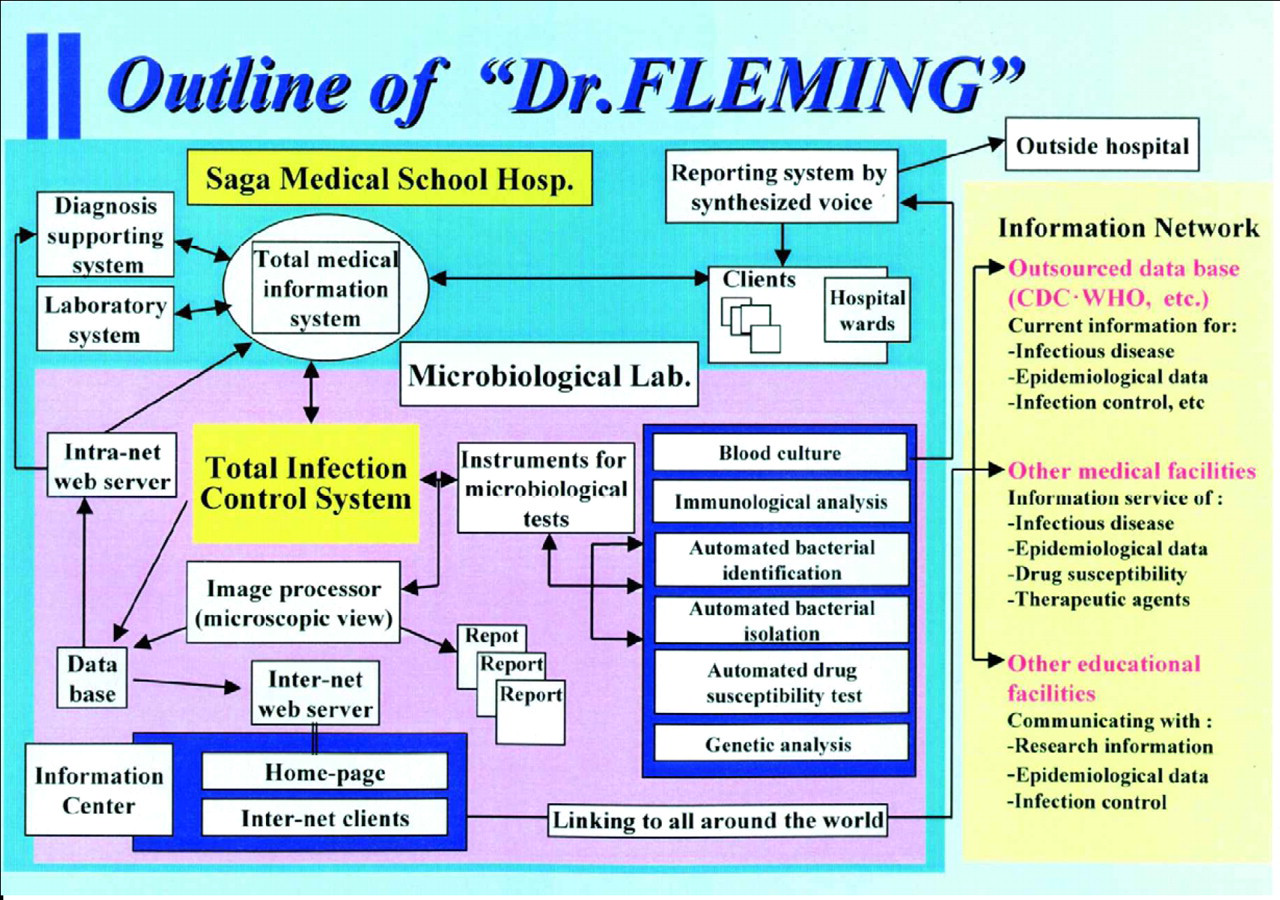
Outline of “The Total Infection Control System”
LABORATORY AUTOMATION
Laboratory automation is essential to release technicians from simple routine work and facilitate them making more valuable products to gain higher reliance from doctors. Accordingly, we chose the system components very carefully, and developed original instruments by collaborating with manufacturers (marked by “*”), when ready-made ones were commercially unavailable. Next, we succeeded in halving the turnaround time to help doctors and patients (see also http://www.icl.hsp.saga-med.ac.jp/).
Fully automated bacterial isolation system1)* (Fig.2): This apparatus can inoculate bacterial specimens onto agar media for isolation culture and quantitative culture.
Fully automated bacterial isolation system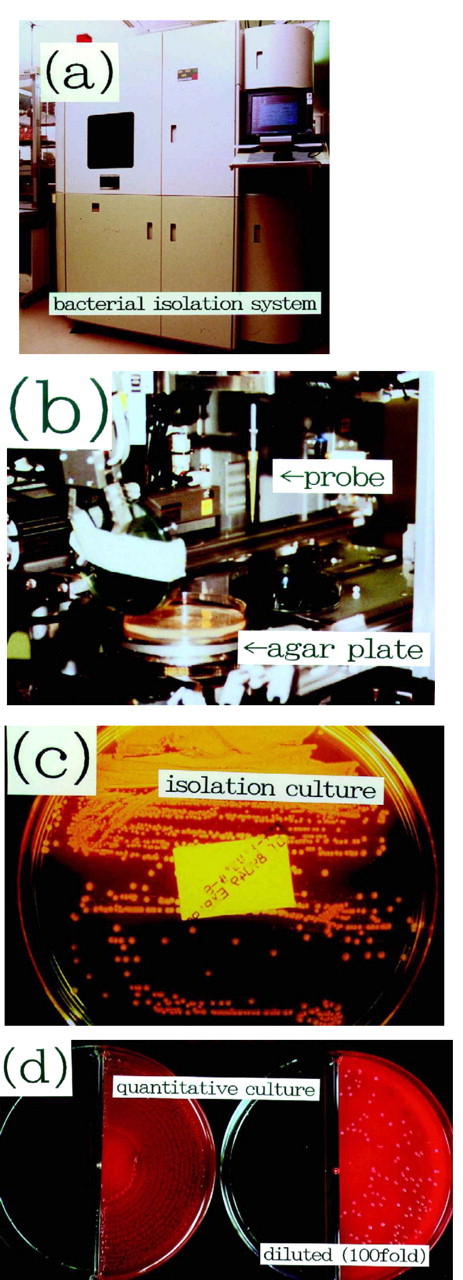
Fully automated drug susceptibility test system1)* (Fig.3): This apparatus inoculates bacterial specimens into culture media, where drug susceptibility is determined by the broth dilution method using a microtiter plate. The inoculator can treat both plate types with frozen-medium and dried-medium, and can also perform special culture procedure (e.g., measurement of serum bactericidal titer). After inoculation, the materials are incubated automatically.
Fully automated drug susceptibility test system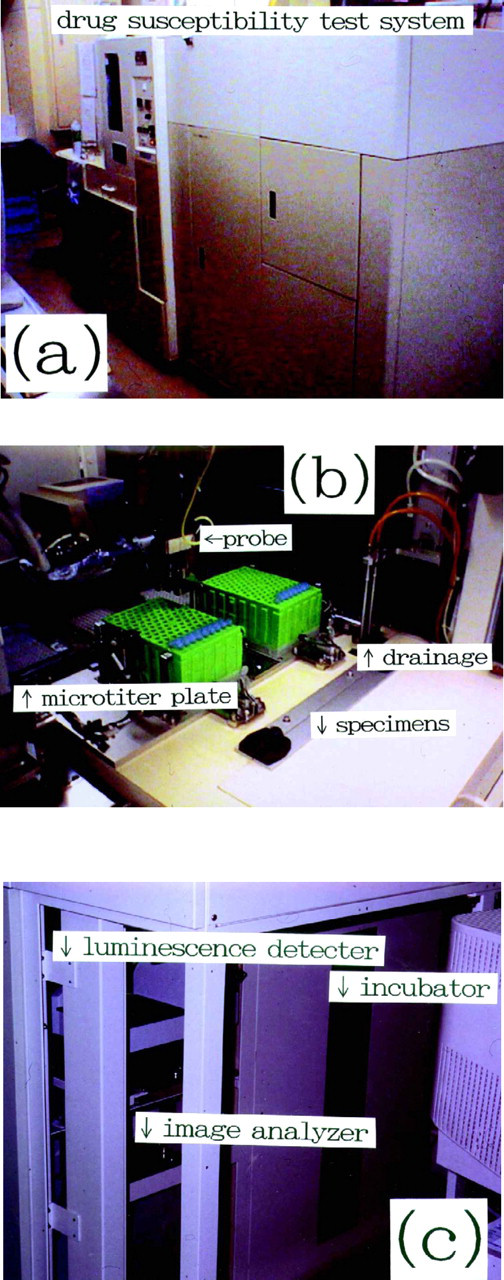
Fully automated measurement system2)* (Fig.4): This apparatus determines drug susceptibility by image analysis of the microtiter plate, improving the accuracy of the measurement. It is also possible to reconfirm the test results by eye, since the result is preserved as a digitalized file. By using a different determination parameter for each bacterial species, the reading accuracy has become much higher. In addition, we can measure drug susceptibility within 4h3) by a chemiluminescence reaction after a bacterial colony is isolated (will be published elsewhere). Furthermore, this machine can also measure photoabsorbance, making other tests such as drug susceptibility of fungus possible.
Fully automated measurement system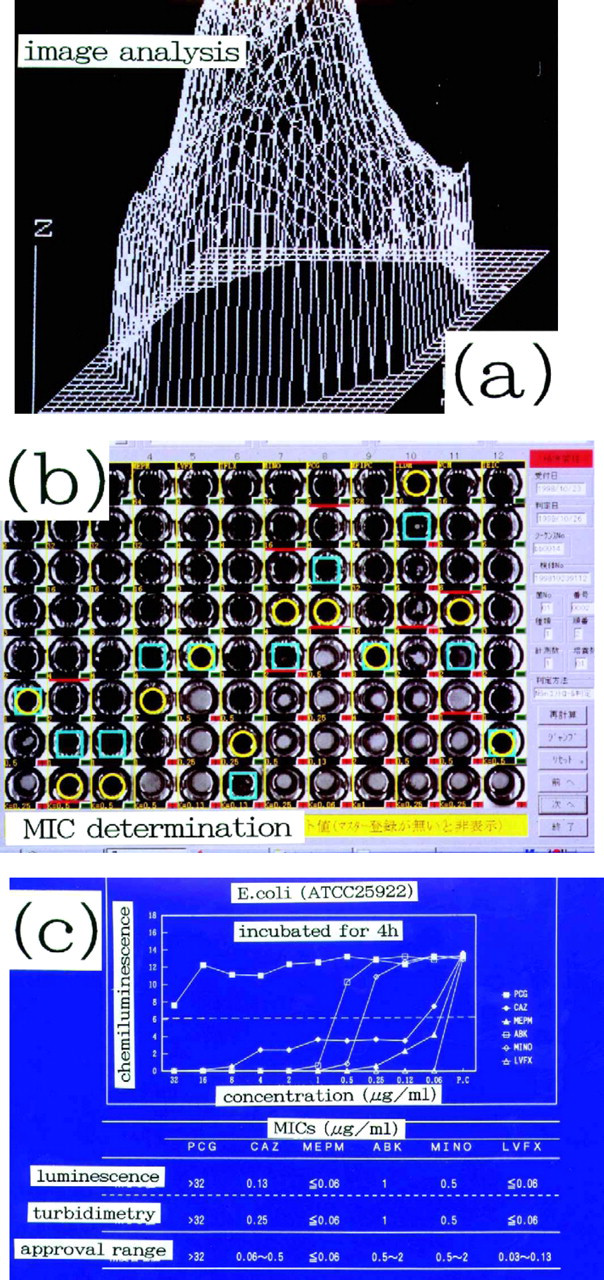
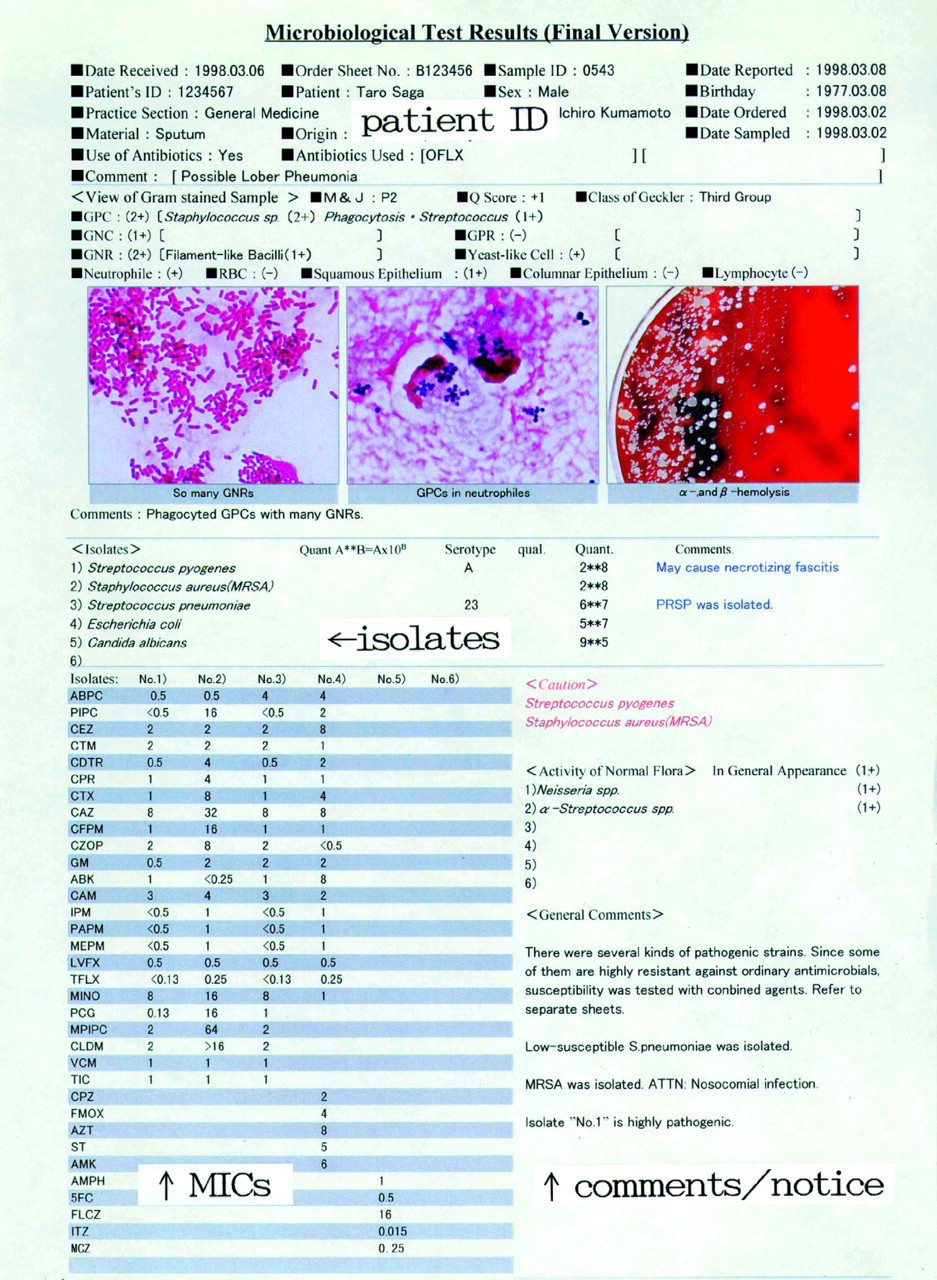
Image processor2,4)* (Fig.5): This apparatus captures all microscopic views (e.g., Gram stained specimens), as well as macroscopic images, to make a full-colored test report with highly useful comments/notice. Therefore, doctors in our hospital can obtain useful information of causative agents by checking this image from a hospital monitor even before getting the full report.
(Facing page) A representative test report from our hospital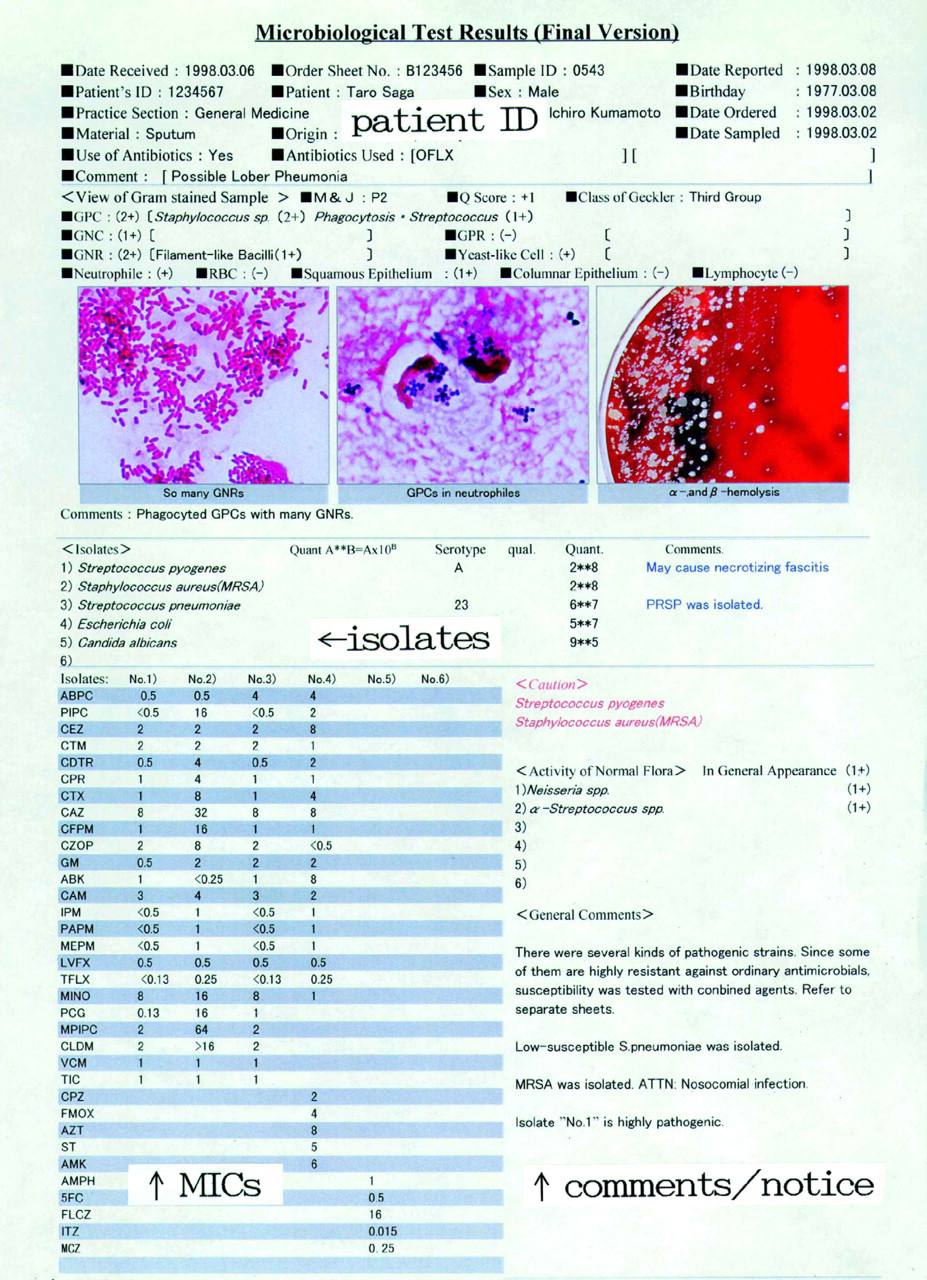
Blood culture instrument2,5)*: An operation guide (navigator) is attached with this apparatus so that doctors/nurses can apply specimens at any time. Furthermore, this apparatus can inform the doctors of test results by telephone with a synthetic human voice.
Computer servers6)*: This apparatus provides much useful information to doctors through a hospital network.
Fully automated bacterial identification system (VITEK II5): We can identify most bacterial species within 6h by using fluorometric techniques.
Others: Equipment for endotoxin measurement7), automated DNA extraction8), capillary electrophoresis9), pulsed-field electrophoresis9) and immunological detection5) are included in the system.
Yoshikawa Industry; Ogura, Yahata-Higashi-Ku, Kita-Kyuushuu 805–8501, Japan.
Kouden Industry; Ohmori-Nishi, Ohta-Ku, Tokyo 143–0015, Japan.
Eiken Chemicals; Ryougoku, Sumida-Ku, Tokyo 103–0026, Japan.
KS-Orympus; Hongou, Bunkyou-Ku, Tokyo 113–0033, Japan.
BioMérieux-Vitek; Marcy-l′Étoile, France.
Nagase Medical Software; Nihonbashi, Chuuoh-Ku, Tokyo 103–0001.
Wako Pure Chemicals, Dosyoh, Chuuoh-Ku, Osaka 541–8605, Japan.
Organon Teknika; Durham, North Carolina 27704–0969, USA.
Bio-Rad Laboratories; Hercules, California 94547, USA.
SERVICE ACTIVITY
Since the Japanese government started to control expanding medical costs, hospital management, which was previously a highly profitable undertaking, has gradually become difficult. Some hospitals have become bankrupt. Furthermore, the recent economic slump in Japan is getting more serious, and many private enterprises have begun to cut wages and to lay off unproductive personnel. In order to survive under such circumstances, a “mind revolution” is necessary: we should make the test results highly valuable.
Thus, we have started to offer the following service to help doctors, patients and ourselves.
Establishing a rapid measurement system is the best present from us to doctors and patients (see
The second best present is that doctors can get highly valuable suggestions from our computer server regarding effective therapy (Fig.6): e.g., estimation of the causative agents, and how to make empiric therapy.
Information system (Quick Medical References, QMR)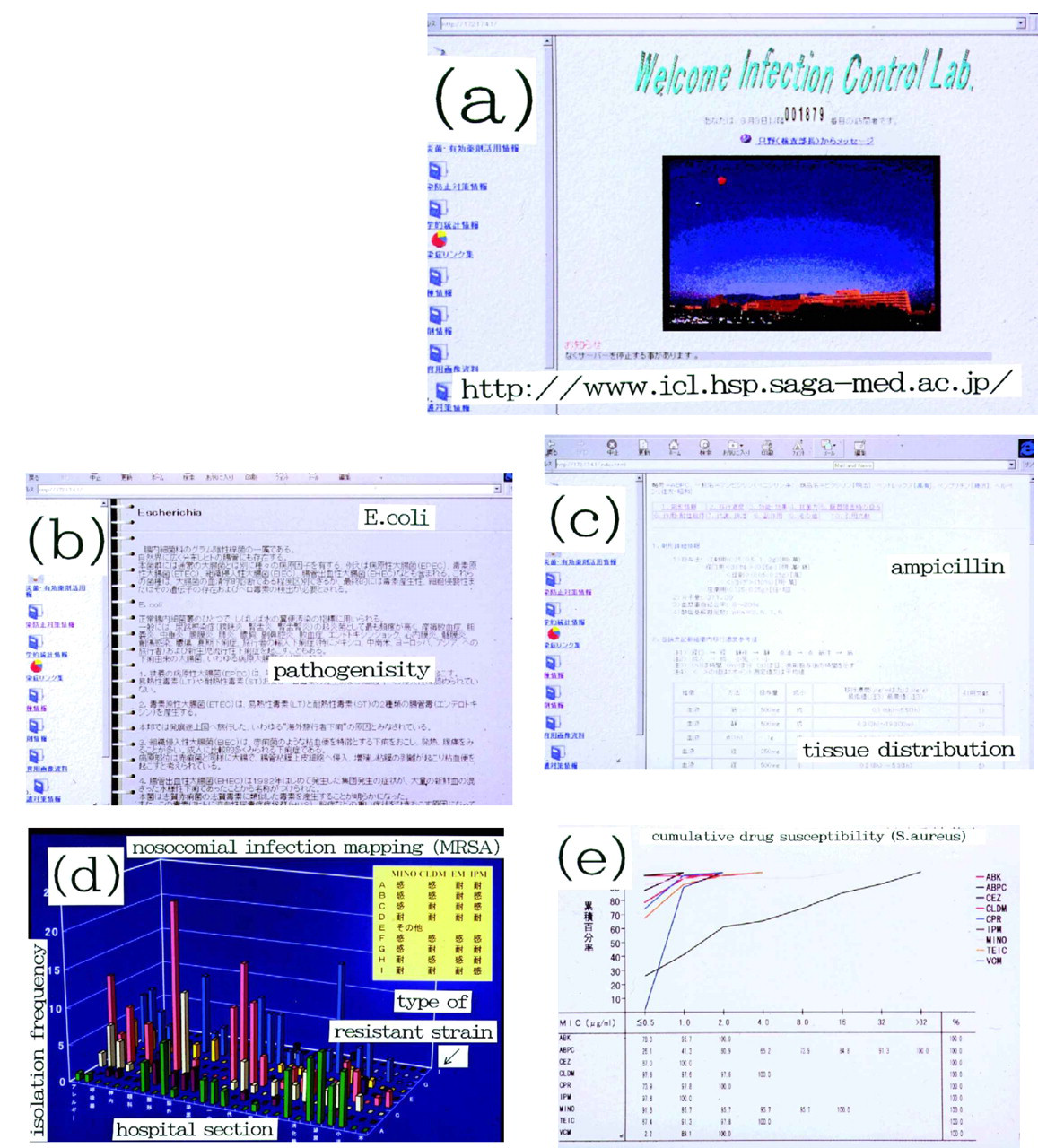
An information/expert system is also provided to enrich the intellectual productivity of all medical staff. Parts of this information system are offered to doctors at other medical facilities through the internet as a social service (http://www.icl.hsp.saga-med.ac.jp/). Because of an “education” effect, which had already been produced by a prototype system, we have succeeded in reducing expenditure for antibiotics by more than $ 200,000 per year (more than $ 1,000,000 until now) [1]. This is also a big bonus to Japanese financial resources.
We will offer special culture procedure including measurement of serum bactericidal titer, drug susceptibility test with combined antimicrobials, and drug susceptibility of fungus.
In addition, a special room is kept open to all medical staff, as an information center, where various information sources (e.g., internet) are freely available to access useful data bases such as WHO and CDC.
The status of nosocomial infection is easily informed as an “infection map”: e.g., patients suffering from specific pathogens are listed by every doctor/nurse and hospital section, which is very useful for finding a “key person” and preventing the nosocomial infections from spreading throughout the hospital.
Microbiological Test Result (Final Version)