



Abstract

Beckman Coulter has recently announced a new, proprietary microarray technique that is flexible, accurate and easy to use. The A2 Protein MicroArray Platform enables the simultaneous quantitation of up to 13 different analytes or proteins that are expressed in a cell culture, plasma or serum sample within a single well of a 96-well plate. Ideal for the measurement and quantitation of multiplexed immunoassays, the A2 Protein MicroArray Platform can deliver more than a thousand results from a single microplate in less than five minutes.
The new Beckman Coulter platform is automation-friendly and provides speed and flexibility. It overcomes many of the shortcomings of current microarray technology, including complicated sample handling and limited throughput. The high-throughput A2 MicroArray System, part of Beckman Coulter's ProteomeLab™ family, is ideal for drug discovery applications and for research into diseases and their pathways.
The A2 MicroArray chemistry uses a familiar and highly sensitive fluorescent sandwich immunoassay technique (very similar to the ELISA technique), but instead of analyzing a single protein per assay, it can analyze up to 13 proteins in a single well of a 96-well microplate. The complete system includes prespotted A2 96-well plates, new Universal Linker Kits and the new A2 Plate Reader and software. The A2 platform can also be automated on a robotic liquid handling system for even higher throughput.
The success of the technique lies in the A2 MicroArray. Each well of the 96-well A2 Plate has been prespotted with 13 different oligonucleotide sequences (ssDNA). Their complementary strands are provided as individually bottled reagents in the Universal Linker Kit. These reagents allow users to attach their antibody to the complementary oligo. Once synthesized, each oligonucleotide-antibody conjugate will bind to only one of the 13 oligonucleotide sequences attached to the bottom of the well, which will then capture only one of the 13 analytes of interest. The captured analytes are labeled with a second biotinylated antibody. Finally, detection is carried out with the use of a streptavidin-fluor, visualized on the A2 Plate Reader.
The A2 technique can be completely customized by the user, allowing for the addition of virtually any protein to the assay. One of the advantages of using an oligo is that the reactions are done off the surface of the microtiter plate and performed in solution, for increased sensitivity when detecting analytes within a cell culture, serum or plasma sample. Because the oligonucleotides, rather than the antibodies, are provided on the plate, the format offers a unique degree of flexibility. Researchers may develop their own assays by choosing from a range of antibodies, including their own custom antibodies. In many cases, customers have unique and proprietary protein targets and antibodies that are closely-held. This system will give these customers the flexibility and freedom to design and set up their own series of experiments. Future plans for this platform will enable other applications such as protein-protein, enzymatic, protein-DNA, post translational modification, DNA and RNA analysis.
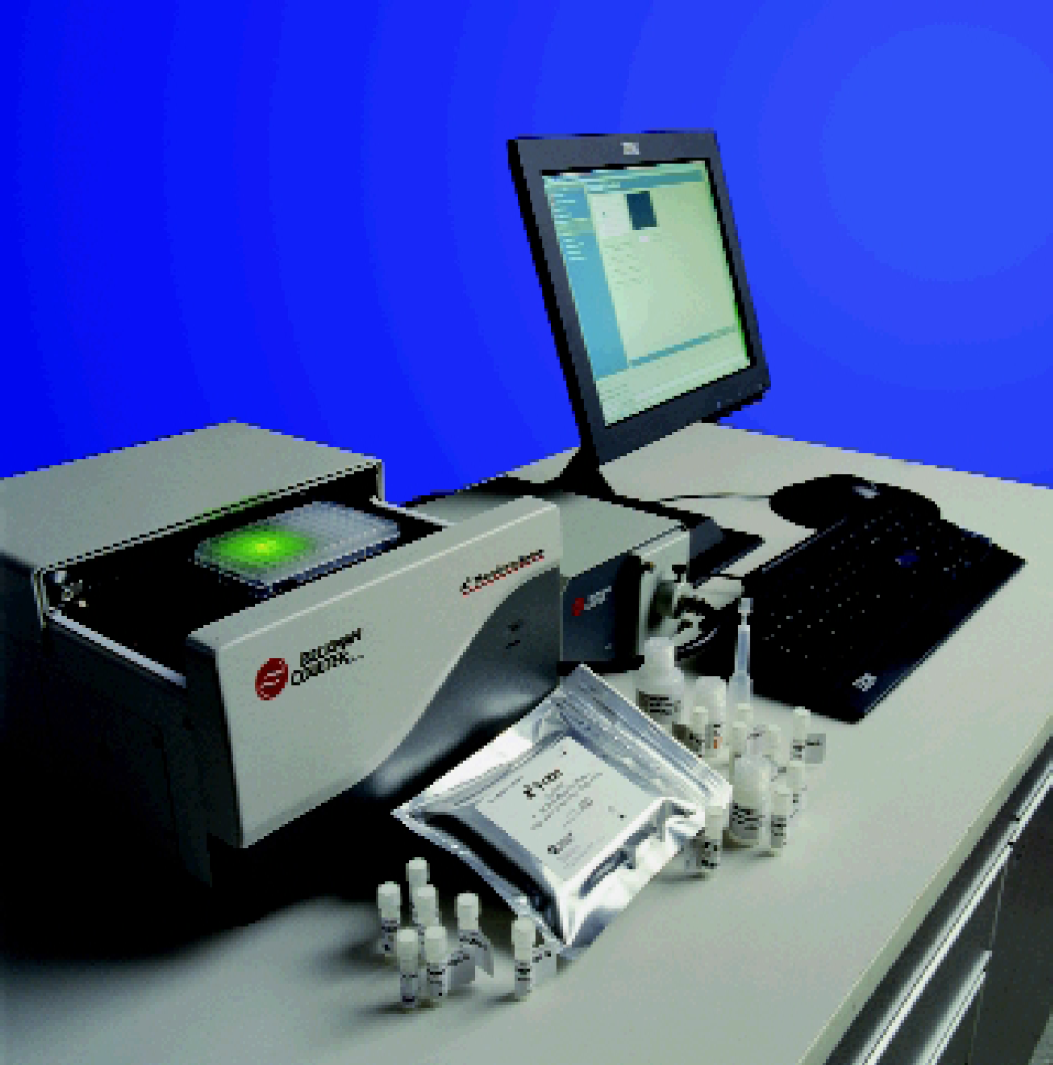
The A2TM Microarray System for multiplex immunoassays can deliver more than a thousand results from a single microplate.
To ensure the reliability of the assay, each of the 13 different analyte-specific oligonucleotide sequences and a 14th reference spot have been printed on the plate in triplicate, for a total of 42 spots per well. The oligonucleotides are arranged in a 6 × 7 spot array at the bottom of each well with the reference spots positioned in three of the four corners.
The A2 Plate Reader was specifically designed for optimum performance with the A2 Universal Linker Kits. The A2 Plate Reader and built-in software provide high-performance digital imaging and analysis. The reader features a cooled CCD camera capable of imaging a 96-well plate, one well at a time, in less than five minutes. The 12-bit CCD camera is enclosed to ensure a dark environment for the quantitative imaging of a variety of samples. Future applications of the A2 Plate Reader will include complete systems integration with Beckman Coulter's Biomek® platforms, for automation of the assay from start to finish. This will enable researchers to go from cells to results with minimal manual intervention.
The reader is a key element of any assay, and often represents a process bottleneck. With this entirely new approach of creating an array within a microtiter well, we can automate the sample preparation process as well as the detection and measurement of the analytes, with little or no manual intervention.
The flexibility and multiplexing capacity of the A2 MicroArray products take ELISAs to a new level. The platform is ideal for researchers in assay development and validation, secondary drug screening and clinical research. It is particularly well-suited for applications working in a 96-well format where customization and flexibility are required. A2 MicroArray technology will enable researchers to create panels of interest which could include assays such as cytokines, apoptosis, signal transduction, cell signaling and proteasomes.
Besides providing a system for multiplexed analysis, Beckman Coulter plans to offer additional plate formats with other spot densities. In the future, this system will enable researchers to study protein-protein interactions, protein-DNA reactions, post translational modifications, enzymatic reactions, protein-drug interactions, RNA and DNA.
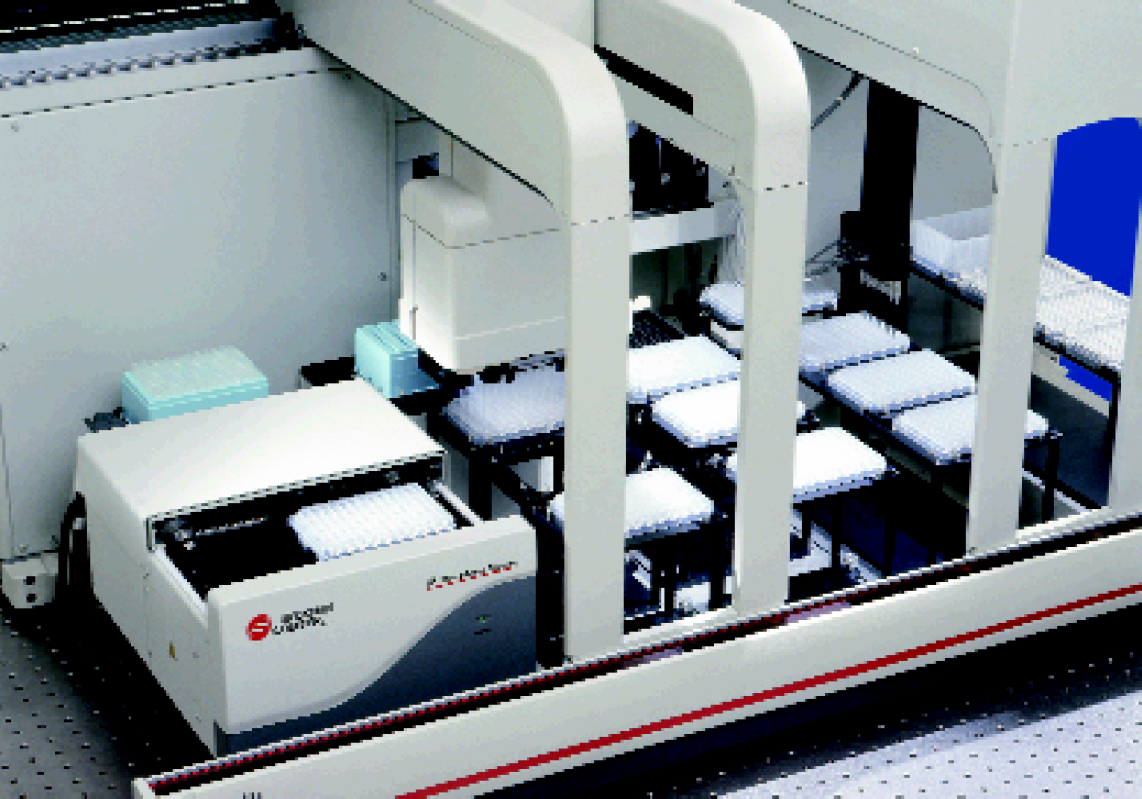
The A2TM Microarray Reader automatically quantitates hundreds of protein analytes on the A2 MicrArray Plate.
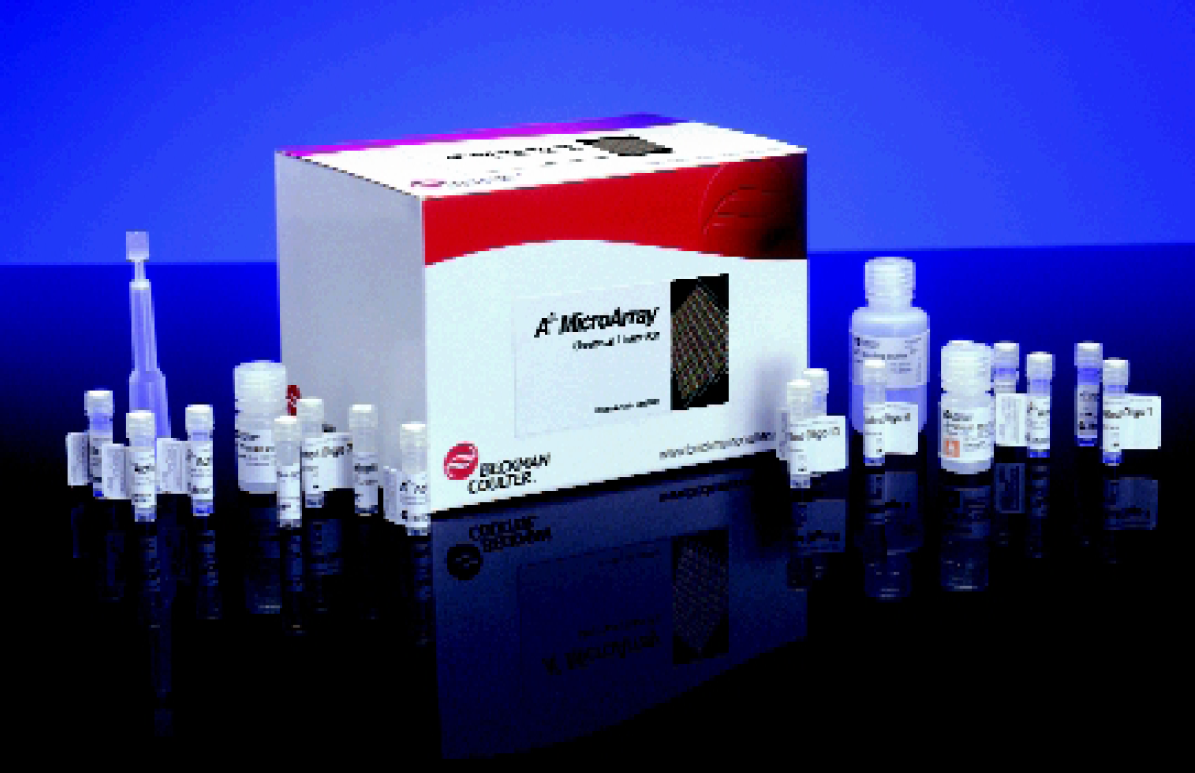
The A2TM Universal Linker Kit provides multiplexed identification and quantitation of proteins.