Jingshen Xiaoke decoction (JS) was prepared by studying the classic prescriptions of famous scholars in the past dynasties to prevent and treat diabetes. The related mechanism of JS against hyperlipidemia has yet to be revealed.
OBJECTIVE:
To investigate the mechanism of action of JS in treating diabetes mellitus by using bioinformatics methods.
METHODS:
A database was used to search the active ingredients and targets of the JS and targets for type 2 diabetes mellitus (T2DM). The protein interaction between the intersection targets, and the constructed the PPI network diagram was analyzed using the STRING database. Furthermore, the gene annotation tool DAVID was used to enrich the intersecting targets for the Gene ontology (GO) function and Kyoto encyclopedia of genes and genomes (KEGG) signaling pathway. Finally, Maestro software was used for molecular docking to verify the binding ability of the active ingredients to the core target genes.
RESULTS:
A total of 45 active ingredients in JS were screened out corresponding to 239 effective targets, of which 64 targets were potential targets for treating T2DM. The analysis of PPI network diagram analysis revealed that the ingredients’ active components are quercetin, -sitosterol, stigmasterol, luteolin, and 7-Methoxy-2-methyl isoflavone. GO functional enrichment analysis indicated 186 biological processes (BP), 23 molecular functions (MF) and 13 cellular components (CC). KEGG pathway enrichment analysis revealed the enrichment of 59 signal pathways. The molecular docking results demonstrated that the active ingredients and core targets had a good docking affinity with a binding activity less than 7 kcal/mol. Finally, the western blotting illustrated that JS could up-regulate the liver PI3K/AKT-signaling pathway.
CONCLUSION:
JS can regulate glucolipid metabolism, reduce the inflammatory response, improve insulin resistance and modulate the immune response through PI3K/AKT signaling pathway treating of T2DM and its complications effects.
Diabetes mellitus (DM) is a condition in which the body produces insufficient insulin or is insulin-resistant due to endocrine abnormalities, resulting in high blood glucose symptoms [1, 2]. It is divided into type 1 diabetes mellitus (T1DM) and type 2 diabetes mellitus (T2DM). Diabetes prevalence has increased significantly in China, mainly due to T2DM, with improving people’s living standards [3, 4]. T2DM is caused by a combination of factors that lead to abnormal insulin signals and reduced sensitivity of peripheral tissues to insulin, ultimately leading to an increased in blood glucose. Diabetes mellitus patients frequently exhibit symptoms of “three more and one less,” such as drinking more, eating more, urinating more and losing weight. Additionally, long-term hyperglycemia can lead to complications, such as dyslipidemia, fatty liver, and hypertension [5]. These chronic complications can spread to the vital body organs, leading to macrovascular and microvascular pathologies and other serious threats to human health [6]. The currently available glucose-lowering drugs for T2DM are biguanides and thiazolidinediones, but most glucose-lowering drugs are chemical or biosynthetic. Long-term use may cause different adverse reactions and drug resistance [7]. Chinese medicine has the advantages of multi-component, multi-target, multi-channel, and few adverse reactions compared to western drugs. At present, Chinese medicine is now widely used in treating diabetes mellitus, with remarkable clinical efficacy, and has become a research hotspot in recent years.
According to traditional Chinese medicine, diabetes is a “thirst disorder”, characterized by “Yin deficiency” as the basis, dryness, and heat as the standard [8]. Therefore, herbs with the effect of “nourishing Yin and moistening dryness, generating body fluid and quenching thirst” should be selected. Jingshen Xiaoke decoction (JS) mainly includes Codonopsis Radix (Franch.) Nannf (Dangshen), Polygonatum sibiricum Delar. (Willd.) Ohwi (Huangjing), Dioscorea oppositifolia Thumb (Shanyao), Pueraria lobata (Willd.) Ohwi (Gegen) and Panax notoginseng Burk. (Sanqi), which is an experienced prescription for our affiliated hospital. This prescription is made under the guidance of traditional Chinese medicine theory by studying the classic prescriptions for diabetes prevention and treatment by famous experts in previous dynasties, drawing on previous generations’ experience in treating “diabetes,” and combining modern T2DM patients’ constitution, clinical manifestations, and environmental factors.
Additionally, modern pharmacology exhibits that the above medicinal materials have significant effects on lowering blood sugar: Dangshen has significant effects on enhancing immunity, anti-tumor, hypoglycemia, and lipid reduction [9]. Liu extracted its polysaccharide and tested it on diabetic mice, discovering that it can relieve oxidative stress, improve lipid metabolism, increase glycolytic enzyme activity, and reduce liver transaminase activity [10]. Huangjing polysaccharides, the primary component, have hypoglycemic, lipid-regulating, anti-tumor, anti-bacterial, anti-inflammatory, anti-viral, and immune-enhancing effects. Polysaccharides and saponins are effective bioactive compounds in treating T2DM, presenting important anti-hyperglycemic activity in T2DM mice, improving insulin tolerance, and affecting their blood lipid metabolism [11, 12]. Shanyao has high nutritional and medicinal value, and yam polysaccharide, a well-researched active ingredient, has various functions, including hypolipidemic, antioxidant, antitumor, immunity-boosting, and antimutagenic [13]. Teti applied different yam tubers in alloxan-induced diabetic mice, and all of them reduced fasting blood glucose [14]. Gegen, the primary active constituent of the herb, has significant medicinal value regarding blood lipid regulation and antioxidant and antidepressant activity [15]. Gegen is high in flavonoids. A comparative pharmacokinetic study reveals that the absorption of isoflavones has increased, which may lead to increased anti-diabetic compounds in the bloodstream, lowering blood sugar [16]. Saponin is the primary active component of Sanqi, and 70 varieties of saponin components have been obtained, including dammarane saponin, which has significant blood sugar-regulating effects. Dammarane saponins have significant blood sugar-regulating effects and can have anti-hyperglycemic activity by reducing insulin sensitivity [17, 18].
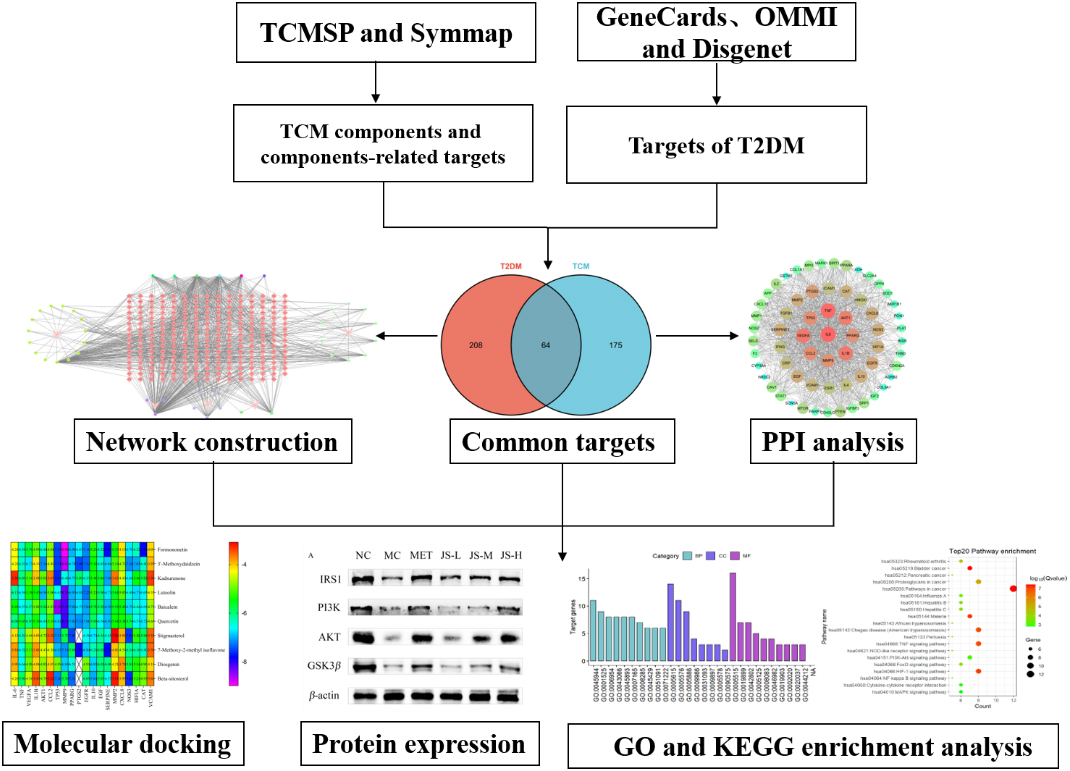
However, Chinese herbal have various components and complex mechanisms of action. The bioinformatics big data analysis method of network pharmacology can elucidate the possible mechanisms by which Chinese herbal medicines act. It is primarily based on analyzing interactions and interconnections between multiple components and TCM targets [19]. This study used network pharmacology and molecular docking methods to predict the mechanism of action of JS compound in treating T2DM, analyze and screen the main components contained in the compound and their targets of action and signaling pathways, and provide a scientific basis for developing functional products of traditional Chinese medicine compound to assist hypoglycemic. Figure 1 depicts our main workflow.
Network pharmacology workflow of Chinese herbal compound and T2DM.
Methods
Screening of active ingredients and targets
All chemical constituents were searched with the keywords “Dangshen,” “Haungjing,” “Shanyao,” “Gegen,” and “Sanqi” using TCMSP and Symmap [20]. According to literature reports and pharmacokinetic parameters, drug similarity (DL) and oral bioavailability (OB) were employed to screen chemical constituents (DL 0.18, OB 30%) [21]. Then, the chemical components were entered into the “targets information” option under the “related targets” menu bar of the TCMSP database to obtain the related target. Simultaneously, a literature review was conducted to supplement the excluded chemical components and their targets that have been demonstrated to play pharmacological roles. After the screening, the target information was entered into the UniProt database for a unified search. The species “Homo sapiens” was selected to remove the duplicate, non-standard, and non-human protein targets and standardize the targets of the compounds [22].
T2DMrelated targets collection
The Genecards, OMIM, and DisGeNET databases were searched using “type two diabetes mellitus” and “T2DM” as keywords for potential targets related to T2DM [23]. The results were ranked according to the “Relevance score,” and targets with relevance 30 were selected as diabetes-related targets in this study.
Network construction and analysis
The screened active ingredients and their targets were imported to build a “compound-ingredient-target” network using Cytoscape software. Then, the Network Analyzer plugin to identify the compound’s main potential targets for T2DM
Core target screening and protein-protein interaction (PPI) network diagram construction
The online Venny map drawing platform was used to draw the Venny map of drug and disease-related targets, where the intersection target may be the key target of JS for regulating blood glucose [24]. The cross-targets were imported into the STRING platform [25] to construct a PPI network, and proteins with a score of 0.900 were selected [26]. The obtained data were imported into Cytoscape 3.8.1 software for visual analysis, with the node size and color set according to the “Degree” and the edge thickness and color set according to the “Combine score”. The core targets of compound action on T2DM were obtained through topological analysis, and the top 20 targets were selected for follow-up analysis.
Gene ontology (GO) and Kyoto encyclopedia of genes and genomes (KEGG) senrichment functional analysis
GO functional and KEGG signaling pathway enrichment analyses were carried out on the core targets of 20 compounds in T2DM using the DAVID 6.8 database [27]. The histogram of GO enrichment analysis and bubble diagrams of the KEGG pathway were drawn by using R. language for visualization and analysis [28].
Molecular docking
In the PPI network diagram, the top five core targets were ranked by Degree value as receptor proteins. The top five associated targets were selected as ligand small molecules for semi-flexible molecular docking. The five active ingredients were identified in the TCMSP, and the 2D structure information was obtained using the PubChem database [29] and saved in “SDF” format. The 3D structure pattern of the target protein was discovered by the RCSB PDB database and saved in “PDB” format [30]. Proteins and components were uploaded to Maestro 11.1 software, and appropriate docking boxes and dockings parameters were set according to the size of ligand and receptor proteins, followed by molecular docking and visual analysis [31]. It was concluded that when the binding energy was 7.0 kJ/mol (1 kcal /mol 4.186 kJ/mol), the receptor protein and ligand small molecule binding activity was better [32].
Animal experimental validation
Eight-week-old healthy male Kunming mice weighing 35 3 g were purchased from Hunan Slake Jing da Experimental Animal Co., Ltd (Hunan, China; License number: SCXK (Xiang) 2019-0004). All mice were housed in groups of five per cage and raised in a sanitary environment (temperature 24 2C, 50 10% humidity, 12 h light and dark cycle) with a standard pellet diet and water.
Sixty KM mice were randomly divided into normal control (NC) and model groups. The model group was given intraperitoneal STZ injections (75 mg/kg per time for two days) after consuming a high-fat diet for eight weeks to induce IR. Meanwhile, the NC group received the same volume of sodium citrate buffer solution. Blood was collected from the mice seven days after the final injection to test fasting blood glucose (FBG) values; mice with FBG values of 11.1 mmol/L [33] or higher in two consecutive tests were considered successful models. Jingshen Xiaoke decoction (JS) intervention began two weeks after the model was established. The low, medium, and high dose groups (JS-L, JS-M, and JS-H) were given 2.5, 5, and 10 g/kgBW JS by oral gavage (1.05 g/kg for adults in raw doses), respectively. The MET group was given 200 mg/kg of metformin solution [34]; MC and NC groups received the same volume of saline for four weeks.
After collecting blood from each group of mice, the liver tissues were removed, washed with saline, weighed, and organ indices were calculated [35]. The tissues were fixed with 4% paraformaldehyde, dehydrated in gradient ethanol, paraffin-embedded, and stained with hematoxylin-eosin stain (H&E) in 5 m serial sections [36]. Part of the tissue sections was observed under an inverted microscope, while the other part was stored in a 80C refrigerator to detect protein expression levels using western blotting.
Briefly, 100 mg of the liver was homogenized in RIPA lysis buffer containing PMSF. The sample was centrifuged at 12,000 rpm for 30 min at 4C after 30 min of an ice bath. The supernatant was collected to assess the total protein concentration of the liver using the BCA assay kit, which was used for subsequent experiments. The protein loading buffer was added in proportion to make up to 3 g/L, heated to denature, and stored at 20C for later use. The protein expression level was detected by using antibodies against IRS1, PI3K, AKT, and GSK3. -actin was used as a control to keep the same amount of protein loading.
All data were expressed as mean standard deviation (SD). SPSS 18.0 and GraphPad Prism 6.0 statistical software were used to analyze and plot the data. One-way analysis of variance (ANOVA) was used between multiple groups. 0.05 indicated a significant difference, while 0.01 indicated an extremely significant difference.
Referenced databases and online software
Table 1 displays the databases and online software cited and referenced in this study.
Involved reference database and online software in the study
Name
Website
TCMSP
https://old.tcmsp-e.com/tcmsp.php
Symmap
http://www.symmap.org/
UniProt
http://www.uniprot.org
Gene cards
https://www.genecards.org/
Hiplot
https://hiplot.com.cn/
STRING
https:/ /string-dborg/
DAVID
https://david.abcc.ncifcrf.gov
PubChem
https://pubchem.ncbi.nlm.nih.gov/
RCSB PDB
https://www.pdbus.org/
Results
Predicted results of compound active ingredients and targets
According to the screening conditions OB 30% and DL 0.18, 51 active ingredients were screened from the TCMSP and Symmap database. The duplicate items were excluded to obtain 45 active ingredients (Table 2). The duplicate items were deleted, and 239 effective targets corresponding to the compound were obtained through the screening of Related Targets in TCMSP. The corresponding target genes were obtained by matching them with the UniProt protein database.
Basic information on the active ingredients of the compound
Herb
Mol ID
Compound
OB/%
DL
Shanyao
MOL001559
Oiperlonguminine
30.71
0.18
MOL001736
(-)-taxifolin
60.51
0.27
MOL000322
Kadsurenone
54.72
0.38
MOL005430
Hancinone C
59.05
0.39
MOL005435
24-Methylcholest-5-enyl-3-O-glucopyranoside_qt
37.58
0.72
MOL005438
Campesterol
37.58
0.71
MOL005440
Isofucosterol
43.78
0.76
MOL000449
Stigmasterol
43.83
0.76
MOL005458
Dioscoreside C_qt
36.38
0.87
MOL000546
Diosgenin
80.88
0.81
MOL005465
AIDS180907
45.33
0.77
MOL000953
CLR
37.87
0.68
Gegen
MOL000392
Formononetin
69.67
0.21
MOL000358
-sitosterol
36.91
0.75
MOL002959
3’-Methoxydaidzein
48.57
0.24
MOL003629
Daidzein-4,7-diglucoside
47.27
0.67
Dangshen
MOL001006
Condrillasterol
42.98
0.76
MOL002140
Perlolyrine
65.95
0.27
MOL002879
Diop
43.59
0.39
MOL003036
ZINC03978781
43.83
0.76
MOL003896
7-Methoxy-2-methyl isoflavone
42.56
0.20
MOL004355
Spinasterol
42.98
0.76
MOL005321
Frutinone A
65.90
0.34
MOL000006
Luteolin
36.16
0.25
MOL006774
Stigmast-7-enol
37.42
0.75
MOL007059
3--Hydroxymethyllenetanshiquinone
32.16
0.41
MOL007514
Methyl icosa-11,14-dienoate
39.67
0.23
MOL008393
7-(-Xylosyl)cephalomannine_qt
38.33
0.29
MOL008397
Daturilin
50.37
0.77
MOL008400
Glycitein
50.48
0.24
MOL008407
Cholesteryl sodium sulfate
45.40
0.76
MOL008411
11-Hydroxyrankinidine
40.00
0.66
Huangjing
MOL001792
DFV
32.76
0.18
MOL002714
Baicalein
33.52
0.21
MOL000359
Sitosterol
36.91
0.75
MOL003889
Methylprotodioscin_qt
35.12
0.86
MOL004941
Liquiritigenin
71.12
0.18
MOL006331
4’,5-Dihydroxyflavone
48.55
0.19
MOL009760
Sibiricoside A_qt
35.26
0.86
MOL009763
(+)-Syringaresinol-O--D-glucoside
43.35
0.77
MOL009766
Zhonghualiaoine 1
34.72
0.78
Sanqi
MOL001494
Mandenol
42.00
0.19
MOL005344
Ginsenoside rh2
36.32
0.56
MOL007475
Ginsenoside f2
36.43
0.25
MOL000098
Quercetin
46.43
0.28
Establishment of a component-target network
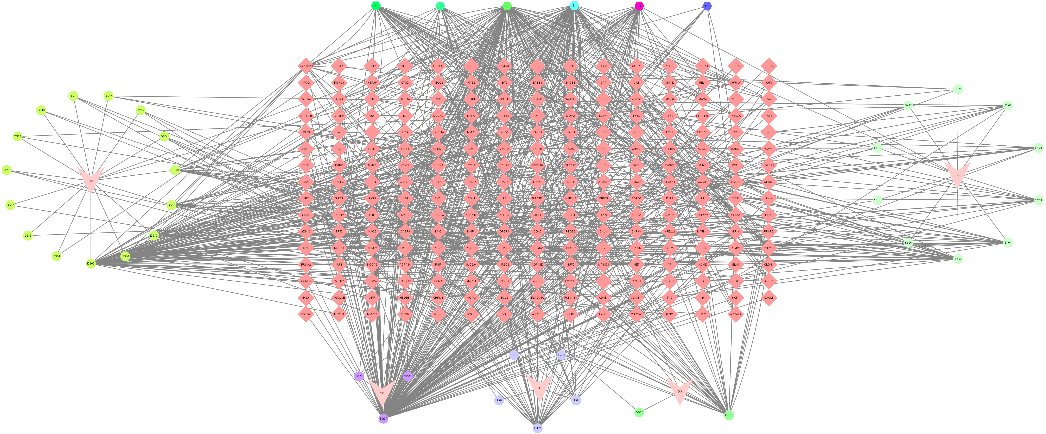
A network diagram of compound-active ingredients-potential targets was constructed by importing five traditional Chinese medicines, 45 active ingredients, and 239 target proteins into Cytoscape 3.8.1 (Fig. 2). In the compound-target interaction network, there are 285 nodes and 858 edges; the pink V-shaped nodes represent five types of medicinal materials, whereas the circular nodes of varying colors surrounding the V-shaped nodes represent the active ingredients. The and the common components of five kinds of medicinal materials are arranged above the red diamond-shaped drug targets. The larger the circular node is, the more targets the ingredient acts on. The nodes are ranked according to their degree, and the higher the degree of the active ingredient in the network, the more likely a core node (Table 3). The top five active ingredients are quercetin, -sitosterol, stigmasterol, luteolin, and 7-Methoxy-2-methyl isoflavone, which may be the main active ingredients for the compound to be effective. The top-ranked targets such as PTGS2 (degree 29), NCOA2 (degree 23), PTGS1 (degree 22), HSP90AA1 (degree 20), and ADRB2 (degree 18), are likely to the main potential targets for treating T2DM.
Treatment of T2DM compound-target network central top 10 active components
MOL ID
Composition
Degree
Herb
MOL000098
Quercetin
151
Sanqi
MOL000358
sitosterol
111
GegenHuangjingSanqi
MOL000449
Stigmasterol
93
ShanyaoDangshenSanqi
MOL000006
Luteolin
57
Dangshen
MOL003896
7-Methoxy-2-methyl isoflavone
41
Dangshen
MOL000392
Formononetin
37
Gegen
MOL002959
3’-Methoxydaidzein
36
Gegen Huangjing
MOL002714
Baicalein
36
Huangjing
MOL000546
Diosgenin
34
Shanyao Huangjing
MOL000322
Kadsurenone
26
Shanyao
Compound – target network.
Disease target screening and PPI network construction
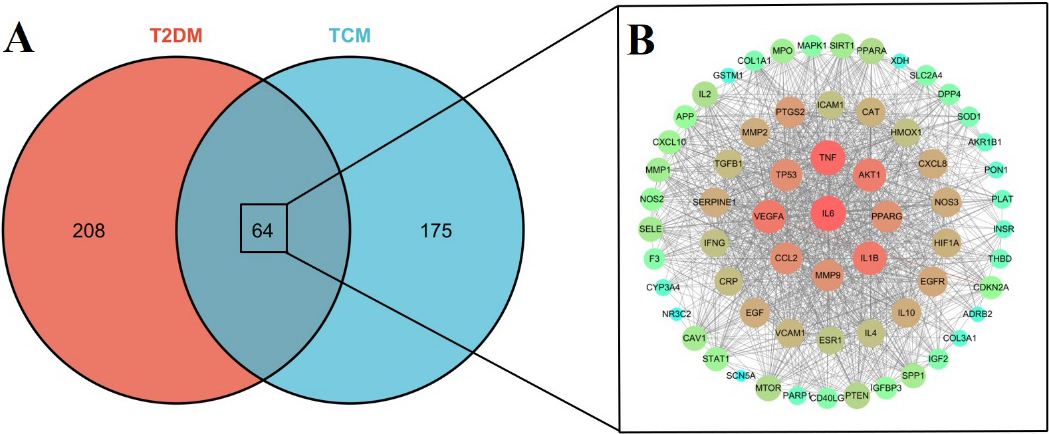
A total of 272 disease targets were screened by score 30 in the GeneCards, OMMI, and DisGeNET databases, and 64 common targets were obtained by intersecting them with 239 drug component targets using the Venny online mapping tool, which is the potential target of the five compounds for the treatment of T2DM (Fig. 3A). The PPI network was obtained using STRING 11.0 online platform and further optimized using Cytoscape 3.8.1 software to obtain the protein interaction diagram (Fig. 3B). The PPI network contains 64 nodes and 1,092 edges. After conducting a topological analysis with Network Analyzer, the degree of freedom of each target was used to rank the top 20 genes. Table 4 illustrates the top genes. These results suggest that these targets occupy a significant role in the PPI network and are key targets in treating T2DM in compound therapy.
Topological analysis results of action targets
Gene
Betweenness centrality
Closeness centrality
Clustering coefficient
Degree
IL6
0.042
0.955
0.568
60
TNF
0.035
0.940
0.583
59
VEGFA
0.022
0.900
0.633
56
IL1B
0.024
0.900
0.625
56
AKT1
0.021
0.887
0.638
55
CCL2
0.015
0.851
0.676
52
TP53
0.017
0.851
0.664
52
MMP9
0.012
0.840
0.698
51
PPARG
0.021
0.840
0.631
51
PTGS2
0.010
0.818
0.725
49
EGFR
0.013
0.797
0.688
47
IL10
0.007
0.778
0.756
46
EGF
0.009
0.788
0.747
46
SERPINE1
0.016
0.788
0.687
46
MMP2
0.009
0.788
0.733
46
CXCL8
0.009
0.788
0.750
46
NOS3
0.019
0.788
0.663
46
HIF1A
0.007
0.778
0.754
45
CAT
0.014
0.768
0.692
45
VCAM1
0.009
0.768
0.740
44
(A) Venn diagram of the common target gene for compound – T2DM; (B) Compounding the PPI network of T2DM target proteins.
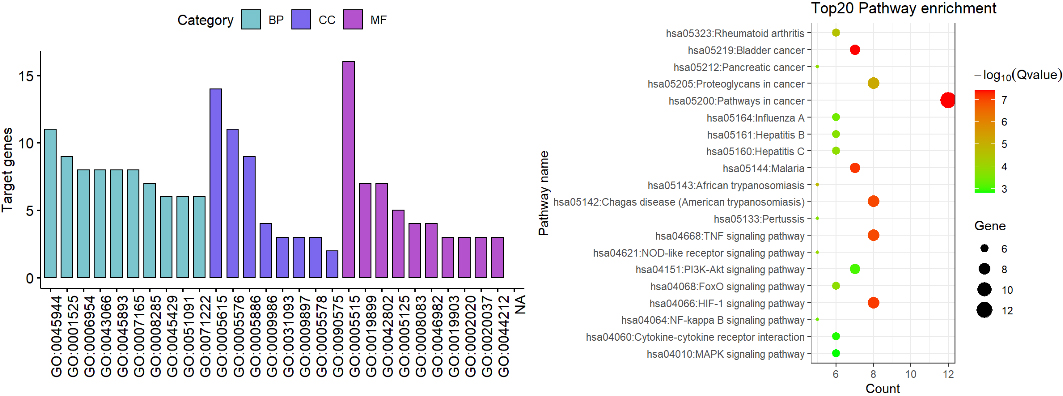
Core target GO and KEGG enrichment analysis.
The heat map of molecule docking scores.
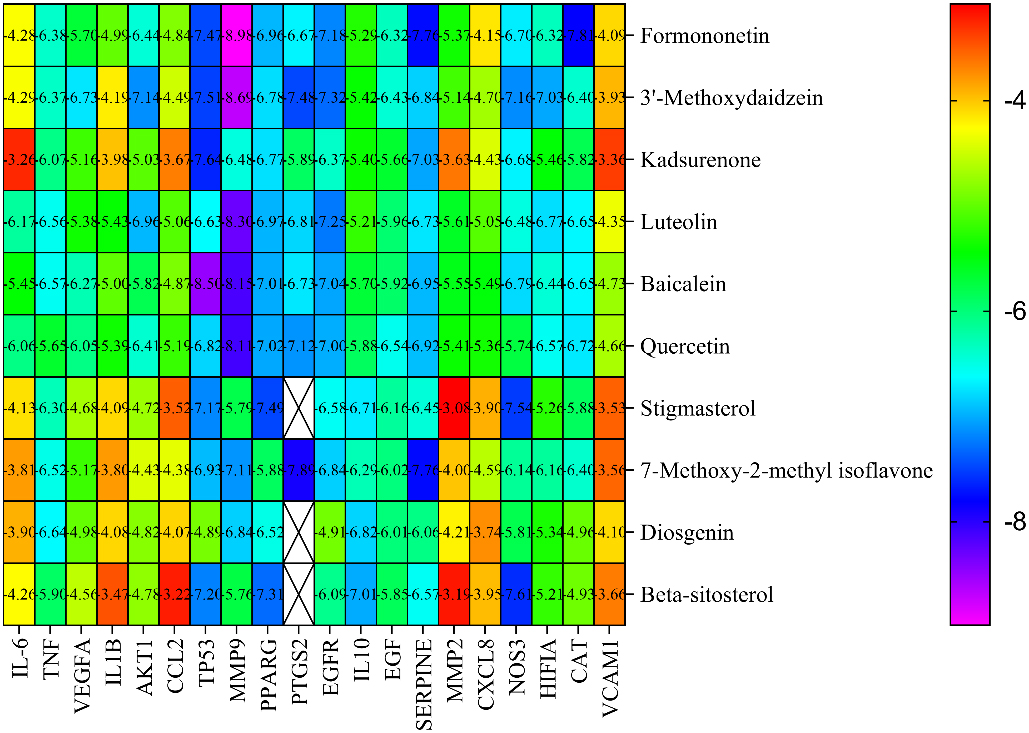
Analysis of biological information on core targets
GO functional enrichment analysis was performed on the 20 core targets acting in T2DM. The enrichment analysis resulted 222 entries, including 186 biological processes (BP), 23 molecular functions (MF), and 13 cellular components (CC) items. Benjamin 0.05 correction and the screening of 0.05 yielded 77 BP, four MF, and three CC, of which positive regulation of transcription from RNA polymerase II promoter in BP enriched 11 genes, including HIF1A, TNF, TP53, EGFR, and VEGFA. There are protein binding and enzyme binding in MF, with enzyme binding enriching 14 genes, including CAT, AKT1, PPARG, PTGS2, and HIF1. CC enriched the extracellular space with 15 genes, including VCAM1, CXCL8, EGF, MMP2, and SERPINE1.
According to the DAVID database analysis, there are 62 KEGG signaling pathways, with 0.05 for 59 KEGG signaling pathways. After Benjamin’s correction, 48 articles meet the requirement. Twelve genes were enriched for Pathways, while eight were enriched for HIF-1, the TNF signaling pathway, and Proteoglycans in cancer. The PI3K-Akt signaling pathway was enriched by seven genes (Fig. 4).
Molecular docking analysis
Molecular docking was performed using the Maestro software between 20 ingredients and 10 core targets, and Fig. 5 presents detailed results. The binding energy of molecular docking determines the binding activity of the active ingredient and the key target. The lower the binding energy between the ligand and receptor, the more stable the structure and the stronger the binding activity, with 0 kcal/mol indicating good binding activity and 7.0 kcal/mol indicating stable binding activity [37]. The molecular docking results demonstrate that Baicalein and Luteolin scored the lowest among these targets. Moreover, the binding results of the ligand small molecules with the lowest scores were selected and visualized in Maestro (Fig. 6).
Molecular models of the lowest scores between the ligand and receptor.
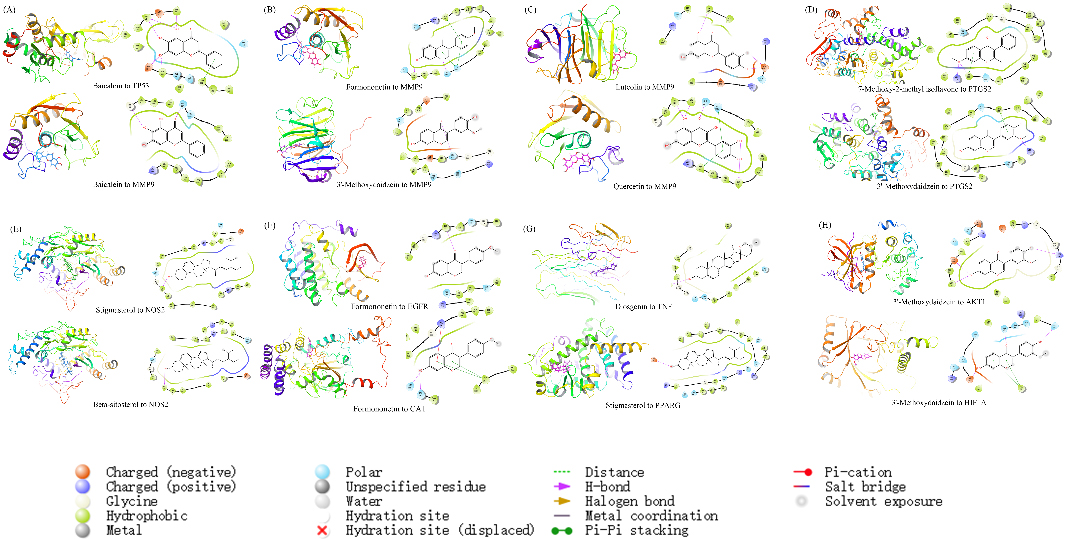
Animal experimental validation
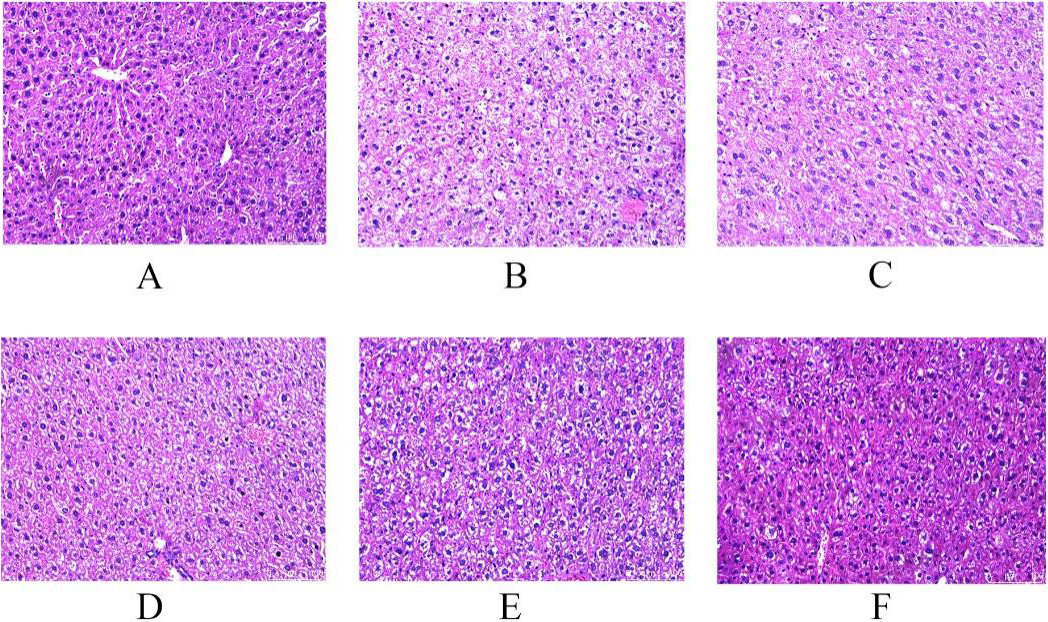
We performed H&E staining to evaluate the effect of JS on the pathological phenotype of liver tissue. Figure 7 depicts no obvious improvement in the JS-L group, but hepatocyte arrangement in MET, JS-M, and JS-H are quite regular, the nuclear structure is clear, and inflammatory cells are reduced. It indicates a significant improvement in the severity of hepatic steatosis and injury. The JS-H group reduced liver tissue structural damage in T2DM mice better than the other groups.
Effect of CRPR on liver histopathology Note: A. NC; B. MC; C. MET; D. JS-L; E. JS-M; F. JS-H (HE, 200).
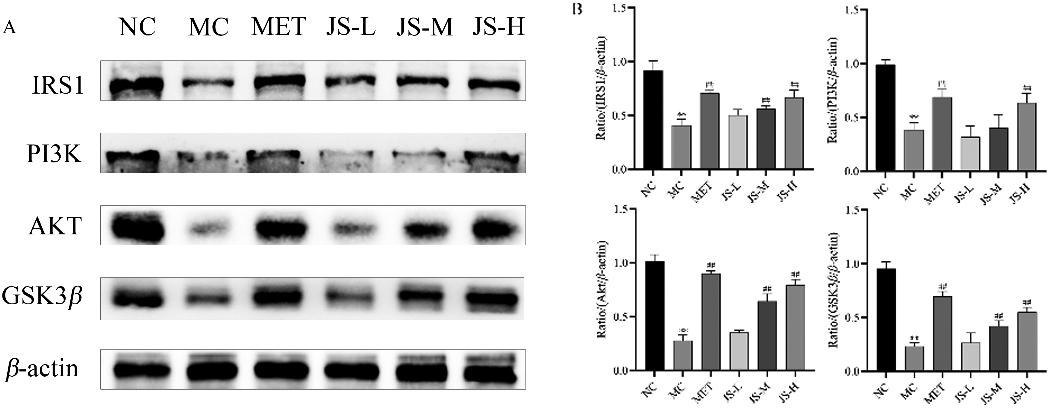
We detected IRS1, PI3K, AKT, and GSK3 protein expression in the liver of each mice group using western blotting to investigate the effect of JS on the PI3K/AKT signaling pathway. IRS1, PI3K, AKT, and GSK3 expression levels increased with different degrees in the treatment group compared to the MC group ( 0.05, Fig. 8). These results indicated that IRS1, PI3K, AKT, and GSK3 expressions in T2DM mice liver were down-regulated to different degrees, and JS can reverse this trend, especially in the high-dose group.
Effects of JS on IRS1, PI3K, AKT, and GSK3 protein expression. Notes: (A) Images of gels and blots were cropped to improve the clarity and conciseness of the presentation. (B) Statistical analysis of IRS1, PI3K, AKT, and GSK3 relative protein expression.
Discussion
According to the theory of Chinese medicine, T2DM displays symptoms of excessive drinking, polyphagia, polyuria, and wasting, which are classified as “thirst” and “spleen disease.” and Chinese medicine has rich experience and remarkable effects in preventing and treating spleen disease and thirst. This study selected traditional Chinese medicines, including Dangshen, Huangjing, Shanyao, Gegen, and Sanqi. have the functions of invigorating the middle warmer, invigorating the spleen and lung, nourishing blood, and promoting fluid production, which was the main drugs of JS. Shanyao has the functions of invigorating qi and yin, invigorating the spleen, and nourishing the kidney, whereas Gegen has the functions of relieving muscle fever, penetrating rash, promoting fluid production, and quenching thirst, raising yang, and relieving diarrhea. Sanqi has the effects of dispersing blood stasis, stopping bleeding, reducing swelling, and relieving pain, which can be combined to clear heat and restore fluid, as well as treat spleen deficiency and stomach. Based on this study, the mechanism of action of the JS on T2DM was investigated using network pharmacology as an analytical tool and molecular docking as an aid, laying the foundation for developing functional food products of the same origin as medicine and food.
Main active ingredients and key targets
Compound-active ingredient-potential action target network diagram and topological parameters analysis revealed that 45 effective ingredients of the compound are quercetin, -sitosterol, stigmasterol, luteolin, and 7-Methoxy-2-methyl isoflavone for treating T2DM. Quercetin is an herb-derived flavonoid with a wide range of pharmacological activities and biological functions, including antioxidant, hypoglycemic, and hypolipidemic properties. Studies have demonstrated that quercetin has good anti-inflammatory effects and can effectively improve liver damage and fibrotic lesions in T2DM mice, possibly by inhibiting NF-B transcription [38, 39]. Li [40] demonstrated that quercetin could reduce pancreatic oxidative damage by activating the Nrf pathway to up-regulate the protein expression of downstream related antioxidant enzymes HO-1 and NQO1, thereby regulating blood glucose levels. -sitosterol and stigmasterol are natural phytosterols that have hypolipidemic effects to improve fatty liver and metabolic abnormalities, protect -cell function to a certain extent, and reduce insulin resistance. Luteolin is a natural flavonoid with various pharmacological activities and should be improved [41]. The results demonstrated that Luteolin inhibited TLR4 and JNK mRNA expressions, improved insulin resistance, and alleviated pancreatic inflammatory reaction in the pancreas of T2DM rats [42]. Ambasta [43] activated the Nrf pathway and up- regulated superoxide dismutase level, thus exerting an anti-diabetic effect. 7-Methoxy-2-methyl isoflavone, a flavonoid, can activate AMP-activated protein kinase (AMPK) and acetyl coenzyme Acetyl-CoA carboxylase (ACC) phosphorylation expression levels promote glucose uptake, fatty acid metabolism, and insulin sensitivity, thereby reducing blood glucose levels [44]. Formononetin, flavonoid phytoestrogen, has effectively inhibited high-glucose-induced activation of the NF-B signaling pathway, reduced p65 phosphorylation and nuclear transport, and blocked the pathological process of diabetic nephropathy regarding reducing the inflammatory response of the kidney [45]. The same or different compounds contained in all five herbs have the effect to improve T2DM, allowing the combined application to achieve significant clinical effects. However, these ingredients need further experimental detection to determine whether they play a hypoglycemic role in the formulation.
PPI network topology analysis
In this study, the PPI network analysis revealed that the core target of the compound treatment T2DM primarily has IL6, TNF, VEGFA, IL1B, and AKT1. IL6 is a multifunctional cytokine with pro-inflammatory and anti-inflammatory properties that stimulate the production of glucagon-like peptide-1 (GLP-1) and gastrin inhibitory peptide (GIP) production by pancreatic -cells to improve insulin sensitivity and thereby help Glucose concentration control [46, 47]. Tumor necrosis factor (TNF) is a cytokine secreted by macrophages that binds to TNFRs and directly induces inflammation. It can cause insulin resistance by inhibiting insulin-induced IRS1 tyrosine phosphorylation and glucose uptake and promoting GKAP42 protein degradation in adipocytes [48]. VEGF is a highly specific pro-vascular endothelial growth factor. VEGFA has been involved in the pathology of T2DM through its association with high glucose-induced metabolic memory [49]. AKT1 is a serine/threonine protein kinase required for islet -cell proliferation and a key protein in the PI3K/AKT signaling pathway. AKT promotes insulin resistance by inhibiting hepatocyte glucose release and transferring glucose transporter proteins to the cell membrane, thereby increasing glucose uptake. AKT can promote insulin resistance by inhibiting glucose release from hepatocytes and transferring glucose transporter proteins to the cell membrane, thereby increasing glucose uptake [50, 51]. This study further demonstrates the characteristics of multi-targeted, synergistic herbal treatment for T2DM disease.
Biology information and animal experimental analysis
Based on the analysis of the biological function and pathway enrichment of compound treatment for T2DM, the main signal pathways related to diabetes are PI3K-Akt, HIF-1, TNF, and Fox O signaling pathways. The PI3K-Akt signaling pathway is a well-known insulin signaling pathway linked to the development of insulin resistance. Insulin receptor substrate-2 (IRS-2) is an important signaling protein that promotes -cell replication, neogenesis, and survival. When insulin binds to the corresponding receptor, insulin receptor tyrosine kinase is activated, resulting in IRS-2 tyrosine site, phosphorylation. Phosphorylated IRS-2 can activate downstream PI3K molecules, thereby initiating the PI3K/Akt signaling pathway [52]. Simultaneously, Fox O1 in the Fox O signaling pathway is phosphorylated and inactivated, with PI3K/Akt activation [53]. When Fox O1 activity is reduced, glucose-6-phosphatase (G-6Pase) decreases expression, inhibiting gluconeogenesis and thus achieving lower blglucoseucos [54]. Studies have confirmed that diabetic rats treated with Dendrobium polysaccharide can up-regulate p-IRS2, p-PI3K, and p-AKT protein expressions in liver tissues, improve lipid metabolism-related indicators, and promote normal insulin secretion. The HIF-1 signaling pathway senses and response to oxygen and can be activated under hypoxia, and can be achieved by modulating the HIF-1 signaling pathway [55]. Sun et al. demonstrated that when HIF-1 expression was inhibited in diabetic mice, the activation of the Rho A/ROCK signaling pathway could be suppressed, serum MDA levels decreased, and SOD levels increased, resulting in a decrease in diabetic mice’s blood glucose levels [56, 57, 58]. TNF- is a major effector molecule in the TNF pathway, which can activate various pathways and mechanisms, including the NF-B and MAPK pathways, thereby inducing an inflammatory response that triggers insulin resistance. The compound also modulates several other pathways and mechanisms [59].
The liver is one of the important places to regulate glucose metabolism and maintain the dynamic balance of glucose concentration, and plays a vital role in energy balance. A large number of studies have shown that there is a correlation between lipid accumulation in liver tissue and T2DM. Under the stimulation of long-term high fat and high glucose, the liver metabolic function is impaired and the morphological structure is damaged to a certain extent. Histopathological analysis of liver sections in the MC group indicated that the liver tissue showed obvious pathological changes, a large number of liver cells showed edema, tissue structure disorder and irregular arrangement; The morphology, arrangement and histological structure of hepatocytes in the treatment group tended to be normal without obvious pathological changes. It shows that Jingshen Xiaoke decoction has certain protective effect on liver tissue of T2DM mice.
Experimental results depict that the ratio of IRS1, PI3K, AKT, and GSK3 relative protein expression was significantly lower in the MC group than in the NC group, indicating that insulin signal transduction was inhibited and insulin resistance was aggravated. After Jingshen Xiaoke decoction intervention, especially in the JS-H group, IRS1, PI3K, AKT, and GSK3 protein expressions were significantly increased in liver tissue, indicating that the drug pair can effectively restore the protein phosphorylation level and expression level, making it normal. This prescription can effectively prevent and treat T2DM by activating the PI3K/AKT signal pathway. However, in our current experiment, we mainly discussed the effect of the drug on the PI3K/AKT signaling pathway. The FOXO signaling pathway downstream of PI3K has not been test yet, and we will conduct a detailed study in subsequent experiments.
Analysis of molecular docking results
Molecular docking is a common method to calculate protein-ligand interactions. This study revealed that the core components of the compound, such as quercetin, -sitosterol, stigmasterol, luteolin, and 7-Methoxy-2-methyl isoflavone, can able to bind to a good extent to the core targets IL6, TNF, VEGFA, IL1B, and AKT1, indicating that the compound can treat T2DM by acting on the above core targets.
Conclusion
This study investigated the molecular biological mechanism of TCM compound therapy for T2DM using network pharmacology and molecular docking analysis methods. The potential targets and signaling pathways of the compound for treating T2DM were predicted, primarily IL6, TNF, VEGFA, IL1B, and AKT1, which were closely related to Pathways in cancer, PI3K-Akt, HIF-1, TNF, Fox O, and other signaling pathways. Then, experiments were conducted to verify the mechanism’s most important target and pathway. The results revealed that Jingshen Xiaoke decoction could inhibit the insulin resistance of T2DM mice, and improve the abnormal glucose tolerance and blood lipid level of diabetic mice, and improve and repair the damage of liver in T2DM mice, thus preventing diabetic complications. Its hypoglycemic mechanism might improve the insulin resistance of T2DM mice by activating PI3K/AKT signal pathway, promoting glycogen synthesis, and regulating blood glucose levels, reducing the levels of TG, TC, LDL-C in serum, and increasing the level of HDL-C. However, the mechanism of its downstream pathway must to be further studied to provide a theoretical basis for developing a new functional food of traditional Chinese medicine for auxiliary hypoglycemia.
Footnotes
Acknowledgments
We thank the Shanghai Tengyun Biotechnology Co., Ltd. for developing Hiplot Pro platform (https:// hiplot.com.cn/) and providing technical assistance and valuable tools for data analysis and visualization.
Conflict of interest
The authors declare no potential conflicts of interest with respect to the research, authorship, and publication of this article.
Funding
This work was supported by the Chongqing Key Laboratory Project of Development and Utilization of Authentic Medicinal Materials in Three Gorges Reservoir Area (Grant no. Sys20210017) and supported by the Science and Technology Research Program of Chongqing Municipal Education Commission (Grant no. KJZD-K202202702).
References
1.
KeZCHouXFJiaXB. Discussion on the application of hypophagmic Chinese medicine based on active ingredients, Chin Herbal Med. 2016; 47(10): 1797-1805. doi: 10.7501/j.issn.0253-2670.2016.10.028.
2.
DeFronzoRAFerranniniEGroopLHenryRRHermanWHHolstJJ, et al. Type 2 diabetes mellitus. Nat Rev Dis Primers.2015; 23(1): 15019. doi: 10.1038/nrdp.2015.19.
3.
American Diabetes Association. 2. Classification and Diagnosis of Diabetes: Standards of Medical Care in Diabetes-2019. Diabetes Care.2019; 42(Suppl 1): S13-S28. doi: 10.2337/dc19-S002.
4.
Chinese Diabetes Society Guideline for the prevention and treatment of type 2 diabetes mellitus in China (2020 edition) Chin Diabetes Society. Int J Endocrinol Metab. 2021; 41(5): 482-548. doi: 10.3760/cma.j.cn121383-20210825-08063.
5.
GaoYFZhangMNWangTXWuTCAiRDZhangZS. Hypoglycemic effect of D-chiro-inositol in type 2 diabetes mellitus rats through the PI3K/Akt signaling pathway. Mol Cell Endocrinol.2016; 15(433): 26-34. doi: 10.1016/j.mce.2016.05.013.
6.
TianHDWangJGuoLNJiaMLChenXPWangR. Mechanism of drug Conbination Rhizoma coptidis-Panax notoginseng against type 2 diabetes mellitus based on network pharmacology. Herald Med.2020; 39(12): 1608-1614. doi: 10.3870/j.issn.1004-0781.2020.12.003.
7.
XuXShanBLiaoCHXieJHWenPWShiJY. Anti-diabetic properties of Momordica charantia L. polysaccharide in alloxan-induced diabetic mice. Int J Biol Macromol.2015; 81: 538-543. doi: 10.1016/j.ijbiomac.2015.08.049.
8.
SavychAMarchyshynSBasarabaR. Screening study of hypoglycemic activity of the herbal mixtures (Message 1). ScienceRise:Pharmac Sci.2020; 4(26): 40-46. doi: 10.15587/2519-4852.2020.210734.
9.
YeWBFanL. Effect of polysaccharides extract from Codonopisis pilosula on glycemia and lipidemia in alloxan-induced diabetic rats. Sci Technol Food Ind.2015; 36(20): 359-363. doi: 10.13386/j.issn1002-0306.2015.20.065.
10.
LiuWLvXHuangWYaoWGaoX. Characterization and hypoglycemic effect of a neutral polysaccharide extracted from the residue of Codonopsis Pilosula. Carbohydr Polym.2018; 1(197): 215-226. doi: 10.1016/j.carbpol.2018.05.067.
11.
LiRTaoAYangRFanMZhangXDuZ, et al. Structural characterization, hypoglycemic effects and antidiabetic mechanism of a novel polysaccharides from Polygonatum kingianum Coll. et Hemsl. Biomed Pharmacother.2020; 131: 110687. doi10.1016/j.biopha.2020.110687.
12.
ChaiYLuoJBaoY. Effects of Polygonatum sibiricum saponin on hyperglycemia, gut microbiota composition and metabolic profiles in type 2 diabetes mice. Biomed Pharmacother.2021; 143: 112155. doi: 10.1016/j.biopha.2021.112155.
13.
ZhouSHuangGChenG. Extraction, structural analysis, derivatization and antioxidant activity of polysaccharide from Chinese yam. Food Chem.2021; 361: 130089. doi: 10.1016/j.foodchem.2021.130089.
14.
EstiasihTUmaroD, Harijono. Hypoglycemic effect of crude water-soluble polysaccharide extracted from tubers of purple and yellow water yam (Dioscorea alata L) on alloxan-induced hyperglycemia Wistar rats. Prog Nutr.2018; 20(1).
15.
YangCHWeiHLiuFXuGZhangYMWangYR. Exploration on the mechanism of ‘Salviae Miltiorrhizae Radix Et Rhizoma and Puerariae Lobatae Radix’ drug pair for ischemic stroke treatment based on network pharmacology. World Chin Med.2020; 15(17): 2549-2555. doi: 10.3969/j.issn.1673-7202.2020.17.006.
16.
XiaoBSunZSunSYDongJLiYGaoS, et al. Effect of cortex mori on pharmacokinetic profiles of main isoflavonoids from pueraria lobata in rat plasma. J Ethnopharmacol.2017; 14(209): 140-146. doi: 10.1016/j.jep.2017.07.035.
17.
ZhongZDWangCMWangWShenLChenZH. Major hypoglycemic ingredients of Panax notoginseng saponins for treating diabetes. J Sichuan Univ (Med Sci Edi).2014; 45(2): 235-239.
18.
YangCYWangJZhaoYShenLJiangXXieZG, et al. Anti-diabetic effects of Panax notoginseng saponins and its major anti-hyperglycemic components. J Ethnopharmacol.2010; 130(2): 231-236. doi: 10.1016/j.jep.2010.04.039.
19.
LiSZhangB. Traditional Chinese medicine network pharmacology: theory, methodology and application. Chin J Nat Med.2013; 11(2): 110-20. doi: 10.1016/S1875-5364(13)60037-0.
20.
RuJLiPWangJZhouWLiBHuangC, et al. TCMSP: a database of systems pharmacology for drug discovery from herbal medicines. J Cheminform.2014; 6(1): 1-6. doi: 10.1186/1758-2946-6-13.
21.
AhmedSRamakrishnanV. Systems biological approach of molecular descriptors connectivity: optimal descriptors for oral bioavailability prediction. PLoS One.2012; 7(7): e40654. doi: 10.1371/journal.pone.0040654.
22.
UniProt Consortium. UniProt: the universal protein knowledgebase in 2021. Nucleic Acids Res.2021; 49(D1): D480-D489. doi: 10.1093/nar/gkaa1100.
23.
StelzerGRosenNPlaschkesIZimmermanSTwikMFishilevichS, et al. The GeneCards Suite: From Gene Data Mining to Disease Genome Sequence Analyses. Curr Protoc Bioinformatics.2016; 54: 1.30.1-1.30.33. doi: 10.1002/cpbi.5.
24.
Hiplot. A comprehensive and easy-to-use web platform boosting the publication-ready biomedical data visualization and modeling. Openbox community;2021; Available from: https//hiplot.com.cn/.
25.
SzklarczykDFranceschiniAKuhnMSimonovicMRothAMinguezP, et al. The STRING database in 2011: functional interaction networks of proteins, globally integrated and scored. Nucleic Acids Res.2011; 39(Database issue): D561-568. doi: 10.1093/nar/gkq973.
26.
FuCLMeiYLiXHQiuZWChenCXZhengCQ. Mechanism of Hindu Datura in the treatment of rheumatoid arthritis from the perspective of network pharmacology. Rehabilitation Med.2020; 30(6): 459-467. doi: 10.3724/SP.J.1329.2020.06008.
27.
HuangDWShermanBTLempickiRA. Systematic and integrative analysis of large gene lists using DAVID bioinformatics resources. Nat Protoc.2009; 4(1): 44-57. doi: 10.1038/nprot.2008.211.
28.
ZhangCZhengYLiXHuXQiFLuoJ. Genome-wide mutation profiling and related risk signature for prognosis of papillary renal cell carcinoma. Ann Transl Med.2019; 7(18): 427. doi: 10.21037/atm.2019.08.113.
29.
KimSChenJChengTGindulyteAHeJHeS, et al. PubChem in 2021: new data content and improved web interfaces. Nucleic Acids Res.2021; 49(D1): D1388-D1395. doi: 10.1093/nar/gkaa971.
30.
BurleySKBhikadiyaCBiCBittrichSChenLCrichlowGVChristieCH, et al. RCSB Protein Data Bank: powerful new tools for exploring 3D structures of biological macromolecules for basic and applied research and education in fundamental biology, biomedicine, biotechnology, bioengineering and energy sciences. Nucleic Acids Res.2021; 49(D1): D437-D451. doi: 10.1093/nar/gkaa1038.
31.
SayersEWBeckJBoltonEEBourexisDBristerJRCaneseK, et al. Database resources of the National Center for Biotechnology Information. Nucleic Acids Res.2021; 49(D1): D10-D17. doi: 10.1093/nar/gkaa892.
32.
HsinKYGhoshSKitanoH. Combining machine learning systems and multiple docking simulation packages to improve docking prediction reliability for network pharmacology. PLoS One.2013; 8(12): e83922. doi: 10.1371/journal.pone.0083922.
33.
XieYTLuoYZYangJ. Hypoglycemic effects of jujube polysaccharide in diabetic mice induced by streptozotocin. Food Sci Technol.2018; 43(9): 244-250. doi: 10.13684/j.cnki.spkj.2018.09.042.
34.
WangYWWangJX. Hypoglycemic and lipid-lowering effects of polysaccharides from Dendrobium officinale stems in type 2 diabetic mice. Food Sci.2020; 41(21): 127-132. doi: 10.7506/spkx1002-6630-20191101-001.
35.
LuQRHuangFLShaoPLXingKHZhangLF. Hypolipidemic effect of jujube pigment on mice fed with high fat diet. Chin Food Additives.2020; 31(2): 89-94. doi: 10.19804/j.issn1006-2513.2020.02.008.
36.
ZhangCLZhangJXLiuXHSunLMLiRQ. Unified Manufacturing Process and Influencing Conditions of Paraffin Sections of Multiple Organs of Experimental Animals. Chin J Clin Exp Path.2019; 35(1): 108-109. doi: 10.13315/j.cnki.cjcep.2019.01.031.
37.
FanQMYangYTXiaoMFLiuWLZhouJHeYT, et al. Interaction between components of Buyang Huanwu Decoction and targets associated with ischemic strok. Chin Tradit Herbal Drugs.2019; 50(17): 4200-4208. doi: 10.7501/j.issn.0253-2670.2019.17.028.
38.
MeiGBChenLJiangCJYaoP. Protection of quercetin to T2DM mice metabolic treatment. Acta Med Univ Sci Technol Huazhong.2021; 50(5): 561-565+573. doi: 10.3870/j.issn.1672-0741.2021.05.002.
39.
JiangHYamashitaYNakamuraACroftKAshidaH. Quercetin and its metabolite isorhamnetin promote glucose uptake through different signalling pathways in myotubes. Sci Rep.2019; 9(1): 2690. doi: 10.1038/s41598-019-38711-7.
40.
LiYSuYLiGHLiQWangYXDingYS. Antagonistic effect of quercetin against oxidative pancreatic injury in diabetic rats via Nrf2 pathway. Food Sci.2021; 42(5): 208-214. doi: 10.7506/spkx1002-6630-20200223-260.
41.
FengSDaiZLiuABHuangJNarsipurNGuoG, et al. Intake of stigmasterol and β-sitosterol alters lipid metabolism and alleviates NAFLD in mice fed a high-fat western-style diet. Biochim Biophys Acta Mol Cell Biol Lipids.2018; 1863(10): 1274-1284. doi: 10.1016/j.bbalip.2018.08.004.
42.
YingQHePZhangWPanYDaiLXZhangX. Improvement role of luteolin on insulin resistance of type 2 diabetes based on TLR4/JNK signaling pathway. Chin Pharm.2020; 23(6): 1064-1068.
43.
AmbastaRKGuptaRKumarDBhattacharyaSSarkarAKumarP. Can luteolin be a therapeutic molecule for both colon cancer and diabetes? Brief Funct Genomics.2018; 18(4): 230-239. doi: 10.1093/bfgp/ely036.
44.
GuoXFRuanYLiZHLiD. Flavonoid subclasses and type 2 diabetes mellitus risk: a meta-analysis of prospective cohort studies. Crit Rev Food Sci Nutr.2019; 59(17): 2850-2862. doi: 10.1080/10408398.2018.1476964.
45.
TianXChangPZhouYGShuZ. Effects of the stabbed shank to high sugar-induced mouse measuring mouse inflammatory factor regulation and proliferation. Chin Tradit Patent Med.2017; 39(5): 1052-1056. doi: 10.3969/jissn1001-1528.2017.05.036.
DanieleGGuardado MendozaRWinnierDFiorentinoTVPengouZCornellJ, et al. The inflammatory status score including IL-6, TNF-α, osteopontin, fractalkine, MCP-1 and adiponectin underlies whole-body insulin resistance and hyperglycemia in type 2 diabetes mellitus. Acta Diabetol.2014; 51(1): 123-131. doi: 10.1007/s00592-013-0543-1.
48.
AndoYShinozawaYIijimaYYuBCSoneMOoiY, et al. Tumor necrosis factor (TNF)-α-induced repression of GKAP42 protein levels through cGMP-dependent kinase (cGK)-Iα causes insulin resistance in 3T3-L1 adipocytes. J Biol Chem.2015; 290(9): 5881-5892. doi: 10.1074/jbc.M114.624759.
49.
GaoJAilifeireMWangCLuoLZhangJYuanL, et al. miR-320/VEGFA axis affects high glucose-induced metabolic memory during human umbilical vein endothelial cell dysfunction in diabetes pathology. Microvasc Res.2020; 127: 103913. doi: 10.1016/j.mvr.2019.103913.
50.
CarlingD. AMPK signalling in health and disease. Curr Opin Cell Biol.2017; 45: 31-37. doi: 10.1016/j.ceb.2017.01.005.
51.
JinHSHongKWLimJELeeGJHanJHGoMJ, et al. Association analysis of v-AKT murine thymoma viral oncogene homolog 1 (AKT1) polymorphisms and type 2 diabetes mellitus in the Korean population. Genes genomics.2009; 31(1): 73-83. doi: 10.1007/BF03191140.
52.
SongZGuoYZhouMZhangX. The PI3K/p-Akt signaling pathway participates in calcitriol ameliorating podocyte injury in DN rats. Metabolism.2014; 63(10): 1324-1333. doi: 10.1016/j.metabol.2014.06.013.
53.
HuXWangSXuJWangDBChenYYangGZ. Triterpenoid saponins from Stauntonia chinensis ameliorate insulin resistance via the AMP-activated protein kinase and IR/IRS-1/PI3K/Akt pathways in insulin-resistant HepG2 cells. Int J Mol Sci.2014; 15(6): 10446-58. doi: 10.3390/ijms150610446.
54.
ZhouQZhuXDTongXLWangYSiXYWangY. Impact of Gegen Qinlian decoction to IRS-2 / Pi3k-Akt pathway in rats with type 2 diabetes. J Tradit Chin Med.2018; 59(11): 973-977. doi: 10.13288/j.11-2166/r.2018.11.018.
55.
QuJTanSXieXWuWZhuHLiH, et al. Dendrobium Officinale Polysaccharide Attenuates Insulin Resistance and Abnormal Lipid Metabolism in Obese Mice. Front Pharmacol.2021; 12: 659626. doi: 10.3389/fphar.2021.659626.
56.
XiaoYFuQZhaoJXSunRQHuangWJLiuYF, et al. Mechanism of “ginseng – Huanglian – Sanqi” drug skewers in type 2 diabetes. World Chin Med.2022; 17(1): 22-30. doi: 10.3969/jissn1673-7202202201005.
57.
SunLYXuWXuL. Effect of inhibiting HIF-1α expression on RhoA/Rock signal transduction pathway in diabetic mice. J Clin Exp Med.2020; 19(22): 2371-2374. doi: 10.3969/j.issn.1671-4695.2020.22.006.
58.
SongYYangJJingWWangQLiuYChengX, et al. Systemic elucidation on the potential bioactive compounds and hypoglycemic mechanism of Polygonum multiflorum based on network pharmacology. Chin Med.2020; 15(1): 121. doi: 10.1186/s13020-020-00401-2.
59.
LiWChenCYLuoHL. Effects of Tripterygium wilfordii due to the expression of inflammatory factors in rats with chronic glomerulonephritis. Chin J Clin Pharmacol.2020; 36(19): 3030-3032+3065. doi: 10.13699/j.cnki.1001-6821.2020.19.019.