




Abstract
BACKGROUND:
Colon cancer is the most prevalent and rapidly increasing malignancy globally. It has been suggested that some of the ingredients in the herb pair of Coptidis Rhizoma and ginger (Zingiber officinale), a traditional Chinese medicine, have potential anti-colon cancer properties.
OBJECTIVE:
This study aimed to investigate the molecular mechanisms underlying the effects of the Coptidis Rhizoma-ginger herb pair in treating colon cancer, using an integrated approach combining network pharmacology and molecular docking.
METHODS:
The ingredients of the herb pair Coptidis Rhizoma-ginger, along with their corresponding protein targets, were obtained from the Traditional Chinese Medicine System Pharmacology and Swiss Target Prediction databases. Target genes associated with colon cancer were retrieved from the GeneCards and OMIM databases. Then, the protein targets of the active ingredients in the herb pair were identified, and the disease-related overlapping targets were determined using the Venn online tool. The protein-protein interaction (PPI) network was constructed using STRING database and analyzed using Cytoscape 3.9.1 to identify key targets. Then, a compound-target-disease-pathway network map was constructed. The intersecting target genes were subjected to Gene Ontology (GO) enrichment and Kyoto Encyclopedia of Genes and Genomes (KEGG) pathway analyses for colon cancer treatment. Molecular docking was performed using the Molecular Operating Environment (MOE) software to predict the binding affinity between the key targets and active compounds.
RESULTS:
Besides 1922 disease-related targets, 630 targets associated with 20 potential active compounds of the herb pair Coptidis Rhizoma-ginger were collected. Of these, 229 intersection targets were obtained. Forty key targets, including STAT3, Akt1, SRC, and HSP90AA1, were further analyzed using the ClueGO plugin in Cytoscape. These targets are involved in biological processes such as miRNA-mediated gene silencing, phosphatidylinositol 3-kinase (PI3K) signaling, and telomerase activity. KEGG enrichment analysis showed that PI3K-Akt and hypoxia-inducible factor 1 (HIF-1) signaling pathways were closely related to colon cancer prevention by the herb pair Coptidis Rhizoma-ginger. Ten genes (Akt1, TP53, STAT3, SRC, HSP90AA1, JAK2, CASP3, PTGS2, BCl2, and ESR1) were identified as key genes for validation through molecular docking simulation.
CONCLUSIONS:
This study demonstrated that the herb pair Coptidis Rhizoma-ginger exerted preventive effects against colon cancer by targeting multiple genes, utilizing various active compounds, and modulating multiple pathways. These findings might provide the basis for further investigations into the molecular mechanisms underlying the therapeutic effects of Coptidis Rhizoma-ginger in colon cancer treatment, potentially leading to the development of novel drugs for combating this disease.
Introduction
Colon cancer is the third most common malignant tumor globally. The incidence and mortality of colon cancer continue to rise each year due to factors such as poor environmental conditions and unhealthy lifestyles [1, 2]. According to the American Cancer Society, approximately 149,500 newly cases of colon cancer were diagnosed and about 52,980 deaths were attributed to the disease in 2021. In recent years, it has been recognized that tumor prevention is one of the most promising approach to combating cancer. It involves using natural or synthetic compounds to inhibit or reverse tumorigenesis. Therefore, the search for low-toxicity and high-efficiency anticancer drugs has a broad application prospect and great practical significance. In recent decades, the compounds extracted from traditional Chinese medicine (TCM) for modern drug development have gained widespread attention. TCM has a long history of clinical application in tumor prevention and treatment, characterized by low toxicity, minimal side effects, and cost-effectiveness [3]. In addition, previous studies have reported herbal formulas as important therapeutic strategies and a new avenue in cancer chemotherapy [4]. Herb pairs are the simplest and most fundamental form of prescription therapy in TCM.
In TCM, Coptidis Rhizoma belongs to the buttercup family and consists of berberine, coptisine, palmidin A, quercetin, and other compounds. Its main functions include clearing away heat, drying up dampness, treating diarrhea, and detoxifying. It was also often prescribed to patients as one of the significant ingredients in TCM composite formulas. Several clinical studies have shown that berberine is safe and may reduce the risk of colorectal adenoma recurrence, making it a potential option for chemoprevention after polypectomy [5, 6]. Ginger (Zingiber officinale) is the rhizome of a perennial herb from the ginger family, long used as both a spice and medicine in Asian countries [7]. The health-promoting effects of ginger include gastrointestinal protection, immunomodulation, antilipidemic effects, antimicrobial activity, and other beneficial biological effects. The ginger extract has been demonstrated to be effective in preventing and treating cancer, attributed to compounds like 6-gingerol and 6-shogaol. These compounds exhibit immunomodulatory, antioxidant, and anticancer activities. In vitro experiments have demonstrated the anticancer activities of these compounds against gastrointestinal cancer. These activities attributed to the ability of these compounds to modulate the functions of several signaling molecules, such as STAT3, Akt, cyclooxygenase-2 (COX-2), Bcl-2, caspases, and other cell growth regulatory proteins [8, 9]. TCM is usually used in the form of compounded or paired medicines. It often follows the principle of “sovereign-minister-assistant-envoy” (Jun-Chen-Zuo-Shi in Chinese) to achieve comprehensive therapeutic effects via the combination of various herbs. The synergistic effects of TCM can improve therapeutic efficacy or reduce toxicity [10, 11]. However, a large number of compounds in the herb pair Coptidis Rhizoma-ginger have multiple targets and mechanisms in treating diseases. Hence, the combinatorial rules and roles of herb pairs in treating diseases remain to be elucidated. TCM and related formulas treat diseases synergistically via multi-target, multi-ingredient, and multi-pathway mechanisms.
Therefore, combining biological networks with drug action networks is essential to make new discoveries. Network pharmacology is a new paradigm that integrates the existing massive database of bioinformatics and pharmacological analysis to elucidate the multi-compound and multi-target relationships between various TCM herbs and reveal formulas for treating complicated diseases [12]. The Chinese medicine Pulsatilla decoction has some therapeutic effects on colon cancer. “Monotherapy” refers to the use of a single medicine to treat a disease. This study aimed to establish a drug-compound-disease-target-pathway network to investigate the potential mechanisms of the herb pair Coptidis Rhizoma-ginger in preventing colon cancer [13]. We used molecular docking to screen potential target genes, providing a theoretical foundation for further investigations and reasonable clinical applications of the compounds against colon cancer. The detailed workflow of the study design is shown in Fig. 1.
Detailed workflow of the study design.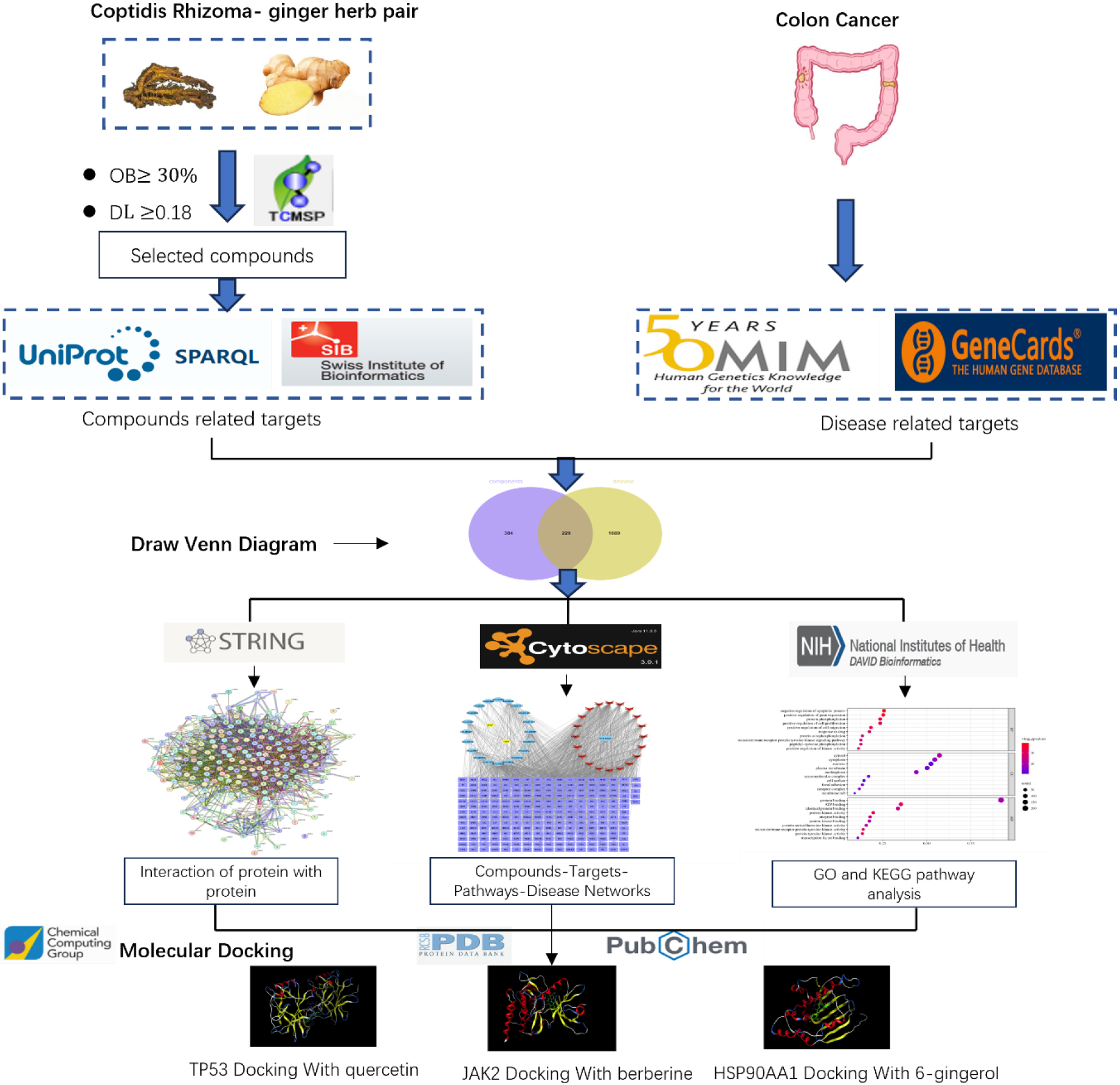
Collection of the active compounds
The Traditional Chinese Medicine System Pharmacology (TCMSP,
A threshold of OB
OB is defined as the rate and extent of absorption of the active moiety from the drug product. High OB is often a key indicator in determining whether a bioactive molecule has pharmaceutical properties as a therapeutic. DL is the relative amount and rate of absorption of an orally administered drug into the body’s circulation. It is a qualitative property of a chemical widely used in drug discovery in an early stage.
Screening for colon cancer-related genes
Using “colon tumor” or “colon cancer” as keywords, we searched the OMIM database (
Clustering of Coptidis Rhizoma-ginger and colon cancer-related target genes
Subsequently, the protein targets of potential active ingredients of Coptidis Rhizoma and ginger were collected through TCMSP. The UniProt (
The target genes were intersected with colon cancerrelated genes using the Venn online tool (
Protein-protein interaction network
Protein-protein interaction (PPI) network is a network of proteins interacting with each other to participate in vital processes. It is constructed for processes such as biological signaling, regulation of gene expression, energy and material metabolism, cell cycle regulation, and co-localization of potential target genes interacting with predicted genes [16]. The potential genes were imported to the STRING database platform (
Construction of drug-compound-disease-target-pathway network
A visual network of drug-compound-disease-target-pathway was established through Cytoscape software, version 3.9.1, to characterize the mechanism of action of the herb pair Coptidis Rhizoma-ginger for preventing and treating colon cancer. In this network, each node of different colors and shapes represented drugs, compounds, diseases, targets, or disease-related pathways, whereas edges represented the associations between nodes.
Analysis of GO and KEGG pathway enrichment
The potential target genes were imported into the DAVID database (
Evaluation of binding capacity of active ingredients to key genes using molecular docking
Ten key genes were selected as the core receptor proteins. The names of proteins were entered into the PDB database (
Results
Active ingredient and potential genes associated with colon cancer
A total of 313 active ingredients of the herb pair Coptidis Rhizoma-ginger were searched and collected in the TCMSP database, and 20 potential active compounds were identified to establish the database using OB
Characterization of the active ingredients of the herb pair Coptidis Rhizoma-ginger
Characterization of the active ingredients of the herb pair Coptidis Rhizoma-ginger
DL, Drug-likeness; OB, oral bioavailability.
A total of 196 protein targets for the active ingredients of 2 herbs, denoted by a set
The sets
Potential target genes and PPI network map of the herb pair Coptidis Rhizoma-ginger for treating colon cancer.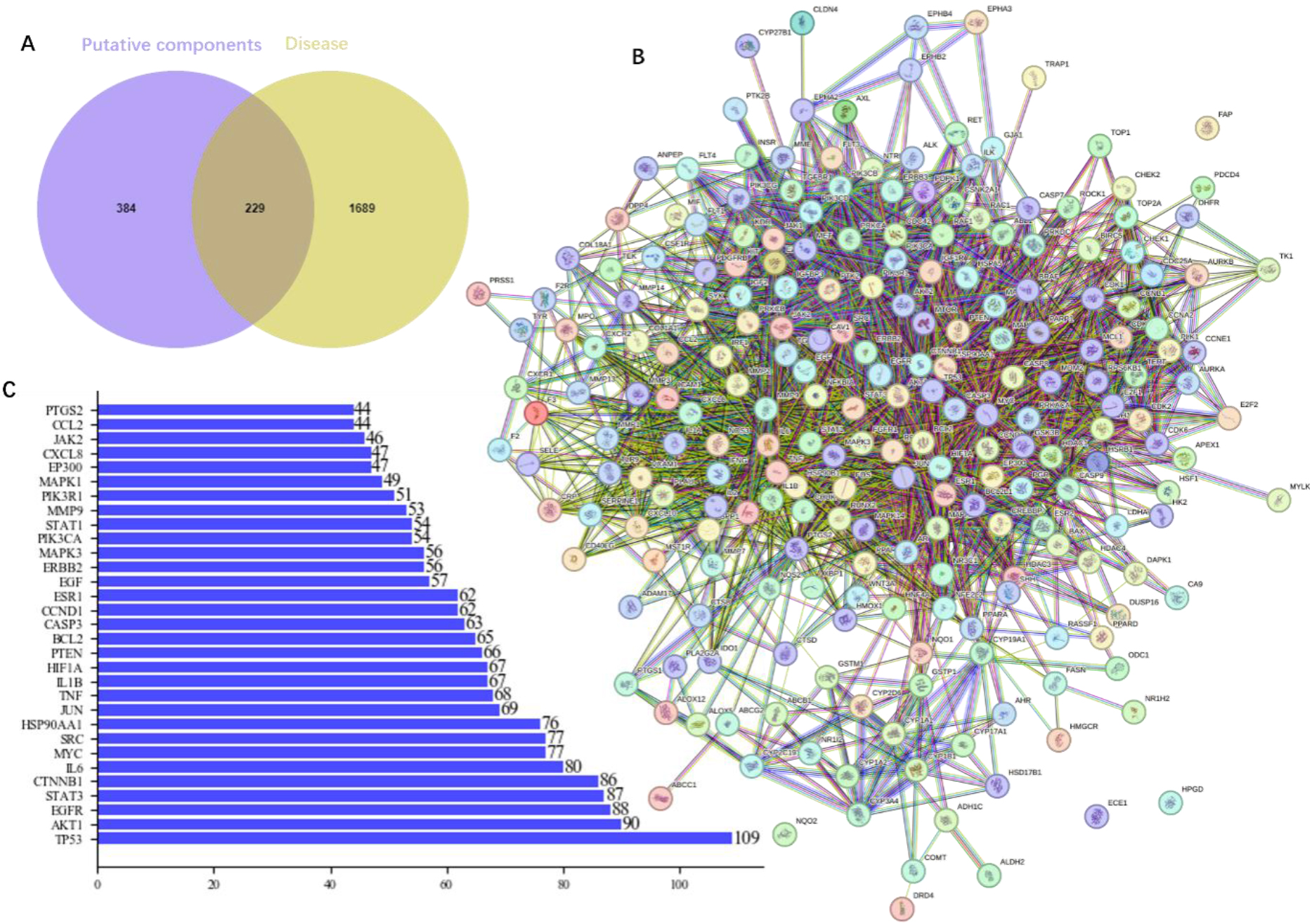
Subsequently, 229 potential genes were imported into the STRING database to obtain the PPI network (Fig. 2B), and the species was restricted to “Homo sapiens” with interaction score
Key targets of the herb pair Coptidis Rhizoma-ginger for treating colon cancer and the topological parameters
Key targets of the herb pair Coptidis Rhizoma-ginger for treating colon cancer and the topological parameters
Representative map of protein-protein cluster network. The darker the red color, the stronger the correlation. (A) One protein-protein cluster with 31 nodes and 337 edges. (B) One protein-protein cluster with 31 nodes and 149 edges. (C) One protein-protein cluster with 26 nodes and 93 edges.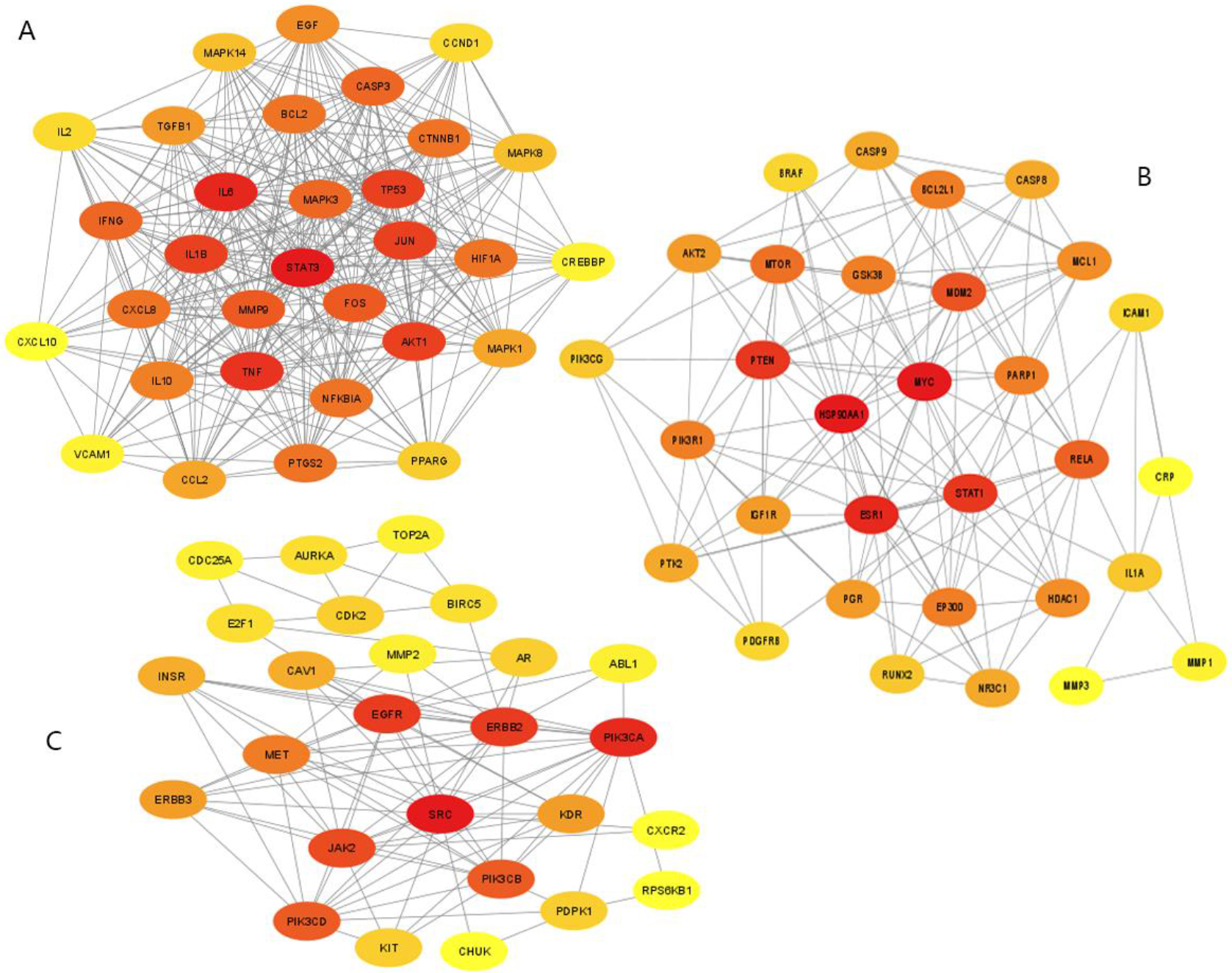
Cytoscape’s plugin MCDE was used to further analyze the PPI network (Fig. 2B), which consisted of 225 nodes and 2555 interaction edges, with 4 unconnected nodes deleted. In addition, the top three PPI cluster networks were established (Fig. 3A–C). Genes STAT3, IL6, Akt1, TNF, TP53, JUN, ILB1, and Akt1 were as the core genes of the first cluster network (31 nodes and 337 edges). MYC and HSP90AA1 were the core genes of the second cluster network (31 nodes and 149 edges), whereas the third cluster network (26 nodes and 93 edges) had SRC and PIK3CA as the core genes.
The network of drug-compound-disease-target-pathway is shown in Fig. 4, including 272 nodes (20 compounds, 229 target genes, 20 pathways, 2 drugs, and 1 disease) and 311 edges. The yellow prismatic nodes indicated the Chinese herbs Coptidis Rhizoma and ginger. The blue rectangles indicated colon cancer, and the V nodes indicated the 20 significant signaling pathways (the top of 20 pathways in Fig. 4). The purple rectangular nodes indicated the 229 candidate targets, the blue elliptical nodes represented the 20 potential active compounds, and the connecting lines represented interactions. According to the network analysis, compounds from the herb pair Coptidis Rhizoma-ginger acted on at least one target gene, with quercetin (MOL000098) and 6-gingerol (MOL002467) considered as the most important and effective compounds interacting with 133 target genes. Furthermore, most of the target genes were regulated by at least two active compounds and four genes potentially involved in each pathway associated with colon cancer. The network analysis showed that the herb pair Coptidis Rhizoma-ginger had multi-compound and multi-target therapeutic characteristics against colon cancer.
Potential target gene network of the herb pair Coptidis Rhizoma-ginger.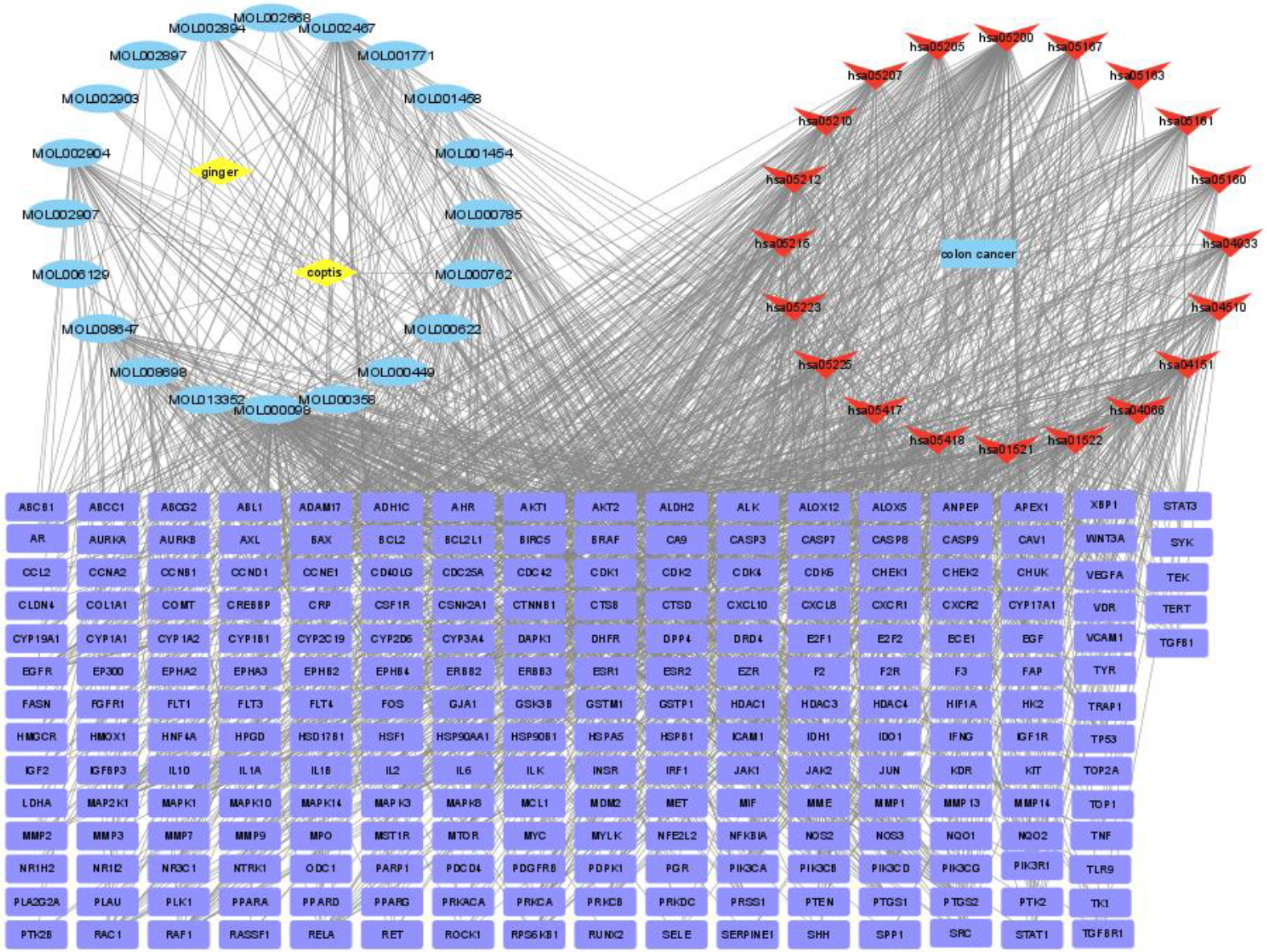
A total of 229 potential genes were obtained from GO and KEGG enrichment analysis (
Enrichment analysis of BPs, CCs, and MFs of the top 10 key targets. (A) Bubble chart illustrating GO enrichment analysis. (B) Visualization analysis of the 40 key genes.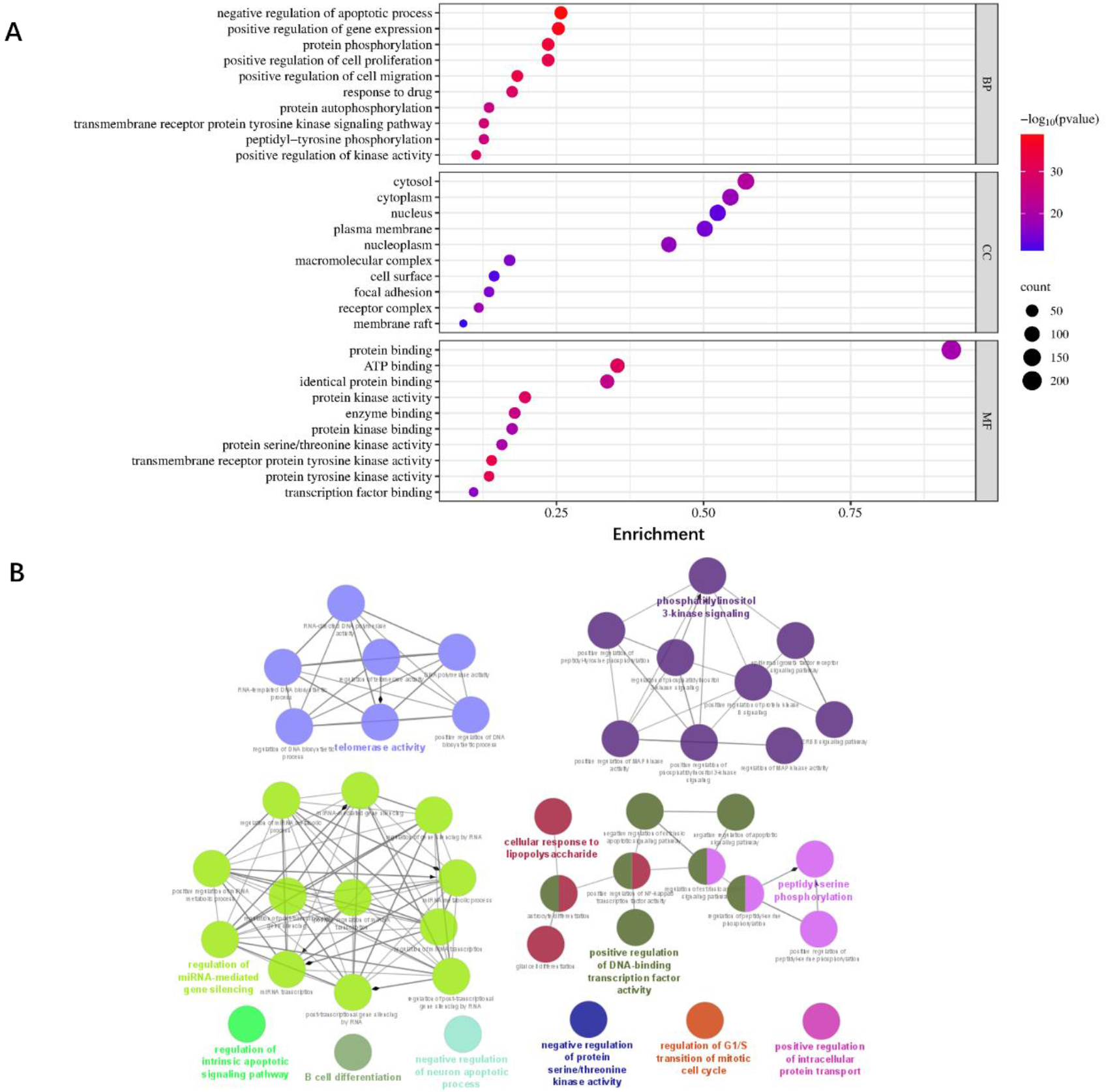
The KEGG pathway enrichment analysis was used to investigate how the herb pair Coptidis Rhizoma-ginger acted on the signaling pathway. The top 20 significant signaling pathways with
Top 20 remarkably enriched KEGG signaling pathway analyses of the herb pair in colon cancer.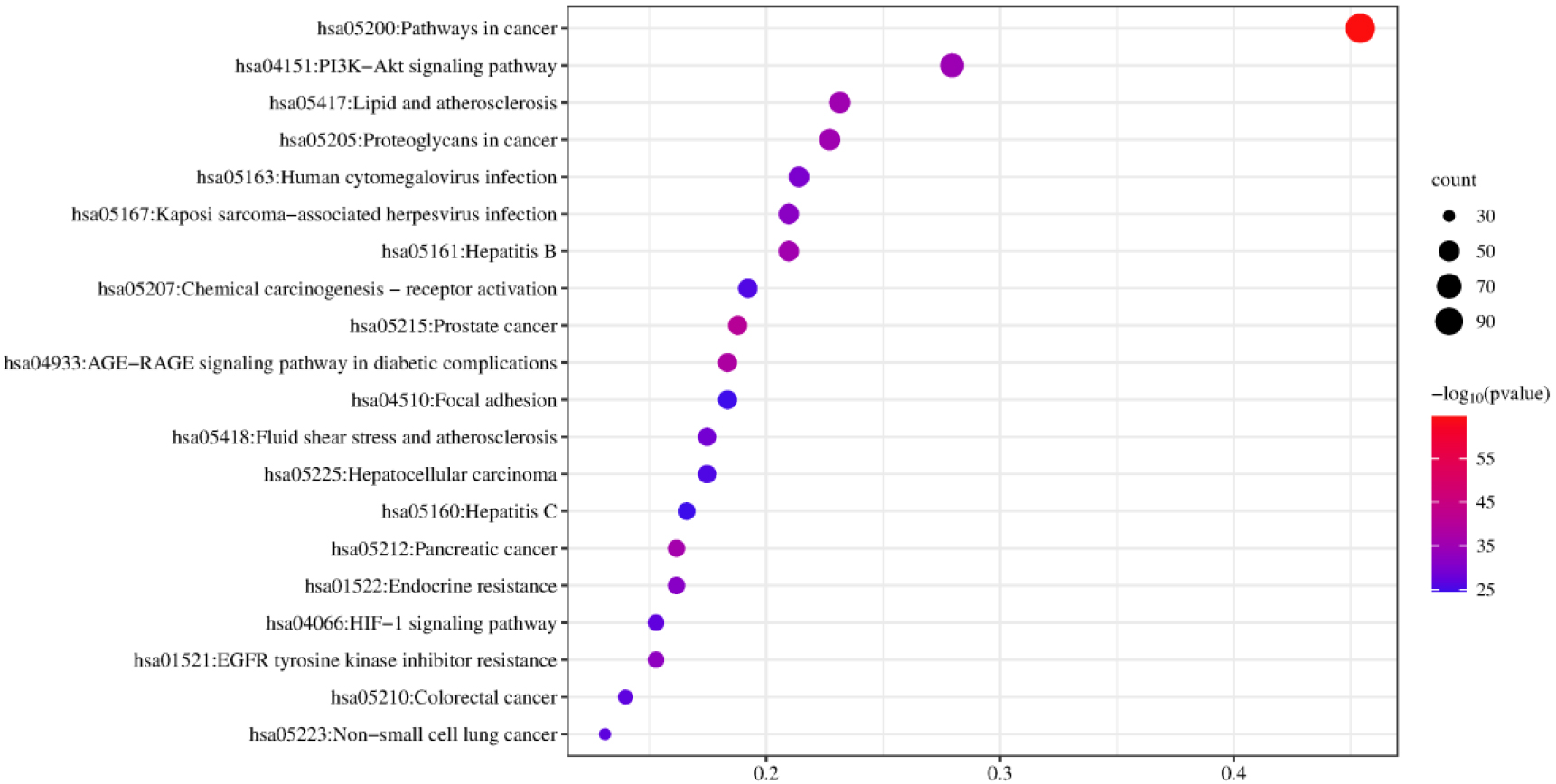
A total of 10 key genes (Akt1, TP53, STAT3, SRC, HSP90AA1, JAK2, CASP3, PTGS2, Bcl2, and ESR1) displayed strong interactions with potential compounds, pathways, and other genes. Therefore, the 10 key genes were selected as the targets for molecular docking. Molecular docking technology, as an emerging technology for drug molecular screening, uses the “lock and key principle” of one-to-one correspondence between ligands and receptors, which helps in the computer system-assisted high-throughput screening of drug molecules.
After the docking was completed using MOE software, the docking results were viewed in the newly opened Database Viewer window. In the S column, a smaller negative value indicated that the ligand molecule bound more tightly to the receptor. Different scoring functions provided different results. In this case, we chose London dG Scoring to evaluate the free energy of binding of a ligand from a given pose with the following function.
Where
The results of binding energies and scores of the compounds docking with the proteins are presented in Table 3. The results of low free energy of binding for target-protein docking were visualized using MOE software (Fig. 8).
Discussion
The incidence of colon cancer is high due to the high intake of red meat and a low intake of dietary fiber. Additionally, factors such as obesity, lack of physical exercise, smoking, and alcoholism have been shown to further increase the risk of colon cancer [23]. Therefore, many Chinese herbs not only serve as medicines but also are used in the daily diet and as cancer prophylactic in patients who prefer healthy treatment after tumor surgery. Network pharmacology has become a promising tool to analyze the network of interactions among drug, targets, and diseases in recent years. In this study, the molecular mechanisms underlying the multi-targeted action of the herb pair Coptis Rhizoma-ginger in colon cancer was investigated using network pharmacology and molecular docking. The study showed that the herb pair could prevent colon cancer through multi-compound, multi-target, and multi-pathway modulation.
Binding energies and scores of 10 core targets and their interacting compounds
Binding energies and scores of 10 core targets and their interacting compounds
Main pathways were colored using a KEGG mapper. The red color denotes the targets of the herb pair C. Rhizoma-ginger regulation in colon cancer. (A) PI3K-Akt signaling pathway. (B) HIF-1 signaling pathway.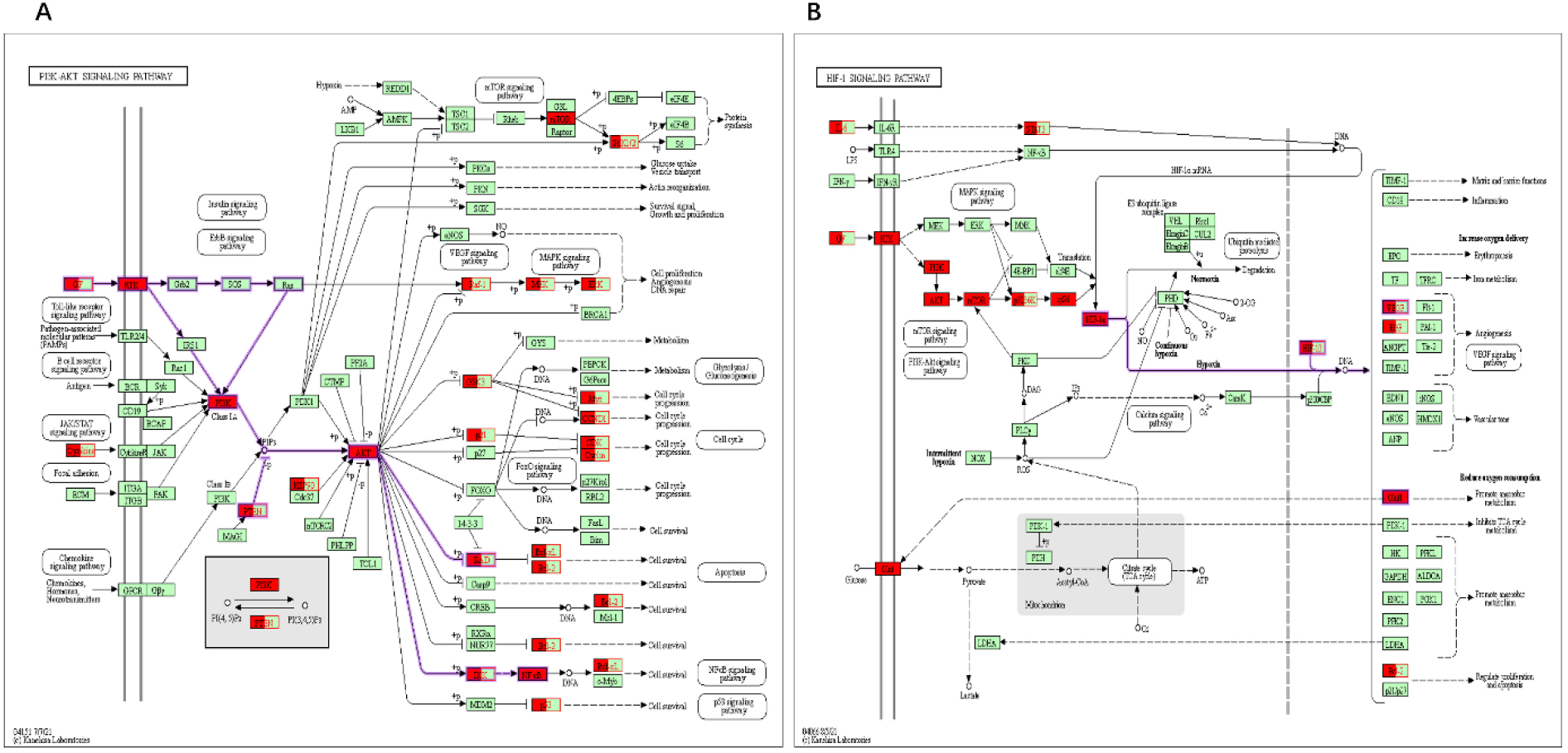
Results of analysis of the mode of action of active compounds with five protein targets using molecular docking. (A) Action mode of palmidin A (MOL000762) with target BCl2 (PDB:5uuk). (B–F) Action mode of 6-gingerol (MOL002467) with targets HSP90AA1 (PDB:1BYQ) and STAT3 (PDB:6gfa). (C–F) Action mode of berberine (MOL001454) with targets JAK2 (PDB:5aep) and STAT3 (PDB:6gfa). (D and E) Action mode of coptisine (MOL001454) with targets JAK2 (PDB:5aep) and ESR1 (PDB:6v8t).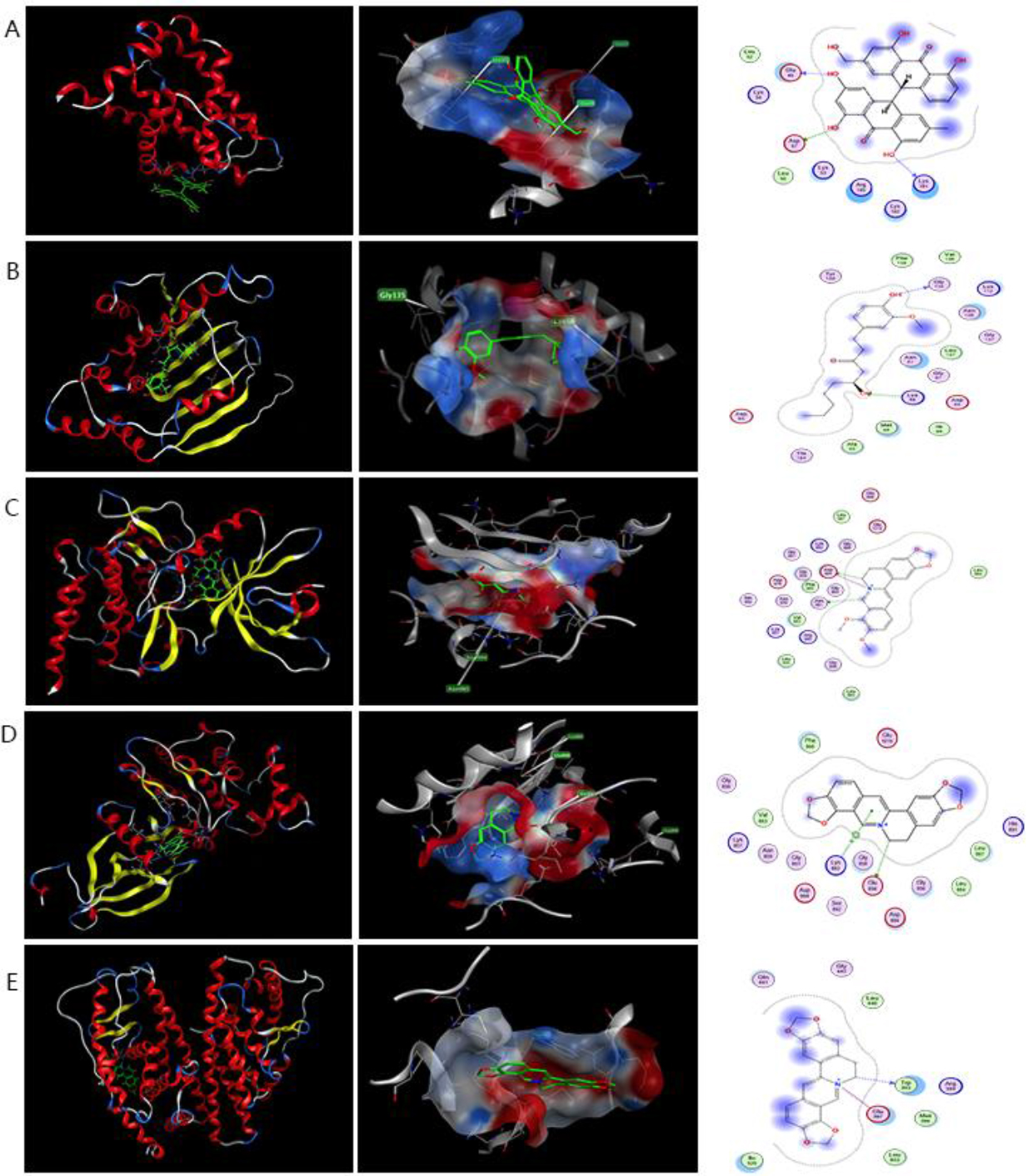
(G and H) Action mode of quercetin (MOL001454) with targets STAT3 (PDB:6gfa) and SRC (PDB:2bdf). (I and J) Action mode with targets TP53 (PDB:5O1F) and Akt1 (PDB:2uzs).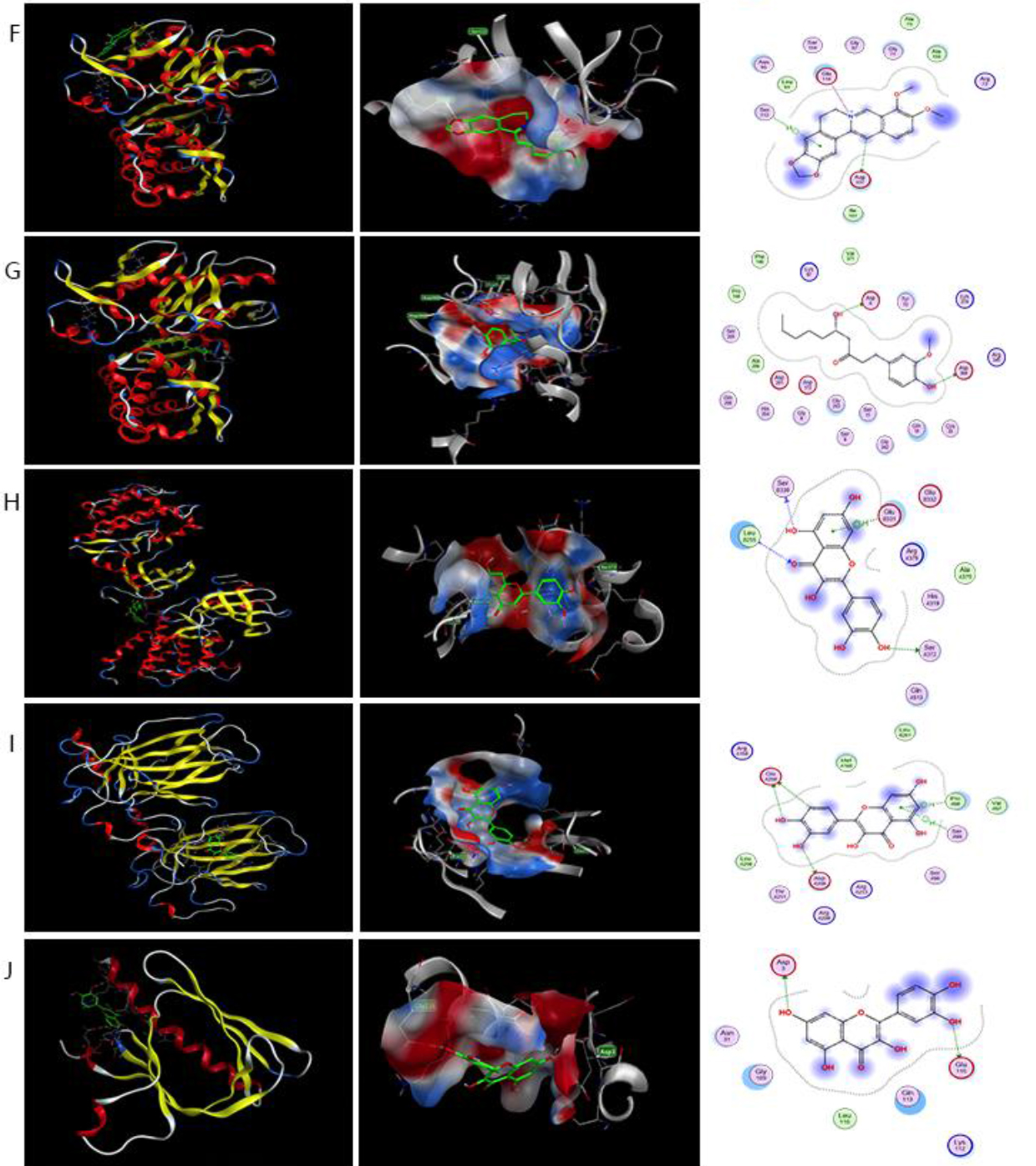
A total of 20 potential active ingredients from the herb pair Coptis Rhizoma-ginger were identified from the TCMSP database, with 14 originating from Coptis Rhizoma and the remaining from ginger. Quercetin, 6-gingerol, berberine, coptisine, palmidin A, and beta-sitosterol play an anti-colon cancer role. Quercetin, the active ingredient of Coptis Rhizoma, also a natural flavonoid found in many vegetables, has been shown to induce the apoptosis of human colon cancer cells, reduce proliferation, and inhibit mitotic processes [24, 25]. Quercetin treatment enhances cytotoxicity and apoptosis in colon cancer stem cells and HT-29 cells, blocking tumor cells in the G2/M phase [26]. The ginger extract inhibits cell proliferation in HCT 116 and HT 29 colon cancer cells by inducing apoptosis in the G0/G1 phase [27]. Further, 6-gingerol, as a naturally occurring plant phenol, is the most abundant ingredient in fresh (dried) ginger, which has displayed a dose- and time-dependent increase in the level of p27Kip1 in LoVo colon cancer cells, exerting a G2/M-arresting effect [28]. Berberine is an alkaloid isolated and extracted from Coptis Rhizoma, barberry, and other plants. It can downregulate COX-2 and PGE2 expression levels and JAK2/STAT3 signaling in SW620 and LoVo colorectal cancer cells [29]. Beta-sitosterol in ginger, a major dietary phytosterol, has been shown to prevent colon carcinogenesis in rodent models by inhibiting dysregulated cell cycle progression and inducing apoptosis; it also exerted antiproliferative effects on HT116 and HT-29 human colon cancer cells [30, 31, 32]. Coptisine is a natural alkaloid from Coptis Rhizoma shown to exhibit significant cytotoxic activity against HCT-116 cells during colon cancer tumorigenesis by inducing G1-phase cell cycle arrest and increasing apoptosis with preferential inhibition of survival pathway and activation of the caspase protease family in HCT-116 cells [33, 34]. Some studies have explored the anticancer effect of berberine on HT-29, SW-480, and HCT-116 human colorectal cancer cell lines [35]. Beta-sitosterol is a plant sterol that can interfere with different cell signaling pathways, including cell cycle, apoptosis, proliferation, survival, invasion, angiogenesis, and inflammation. It can also inhibit the proliferation of colon cancer cells by downregulating the expression of LEF-1 [36]. However, its poor aqueous solubility and bioavailability, coupled with low targeting efficacy, limit its therapeutic efficacy and clinical application [37]. Therefore, it is hypothesized that the treatment efficacy of the herb pair Coptis Rhizoma-ginger is mediated by quercetin, 6-gingerol, coptisine, and berberine.
The active compounds of the herb pair Coptis Rhizoma-ginger can inhibit the expression of pro-inflammatory cytokines and enzymes, such as COX-2 and nuclear factor-kappa B. They can also scavenge reactive oxygen species and reduce oxidative stress-induced damage to DNA, proteins, and lipids, thus inhibiting tumor initiation and progression. These compounds play a crucial role in the inflammatory process associated with the potential mechanism of treating colon cancer. Xu et al. [38] reported novel berberine analogues that could target RXR
Based on “compound-target-pathway-disease” network (Fig. 6) analysis, it was predicted that SRC, HSP90AA1, Akt1, TP53, STAT3, and JAK2 were the key targets for treating colon cancer, which were directly or indirectly related to compounds such as quercetin, berberine, palmidin A, 6-gingerol, and coptisine. Quercetin compounds showed strong associations with 33 key target genes whereas 6-gingerol compounds showed strong associations with 16 key target genes. This suggested that both quercetin and 6-gingerol compounds could be potential active ingredients for colon cancer prevention. However, the E (kcal/mol) score of 6-gingerol was higher than that of quercetin, which might be due to poorer DL properties (DL
Through GO enrichment analysis, we learned that the herb pair was involved in the negative regulation of the apoptotic process, negative regulation of the apoptotic process, and other BPs. Also, we found that the regulation of miRNA-mediated gene silencing, phosphatidylinositol 3-kinase (PI3K) signaling, and telomerase activity played essential roles in regulating cancer pathways. Some studies have shown that the excessive activation of the PI3K/Akt/mTOR pathway played a significant role in tumorigenesis and progression. As an essential kinase in this pathway, PI3K regulated the expression of downstream signaling proteins and mediated the activation of the PI3K/Akt/mTOR pathway. In particular, PI3K-related factors were overexpressed in many cancers, including breast cancer, non-small-cell lung cancer, and colorectal cancer [39, 40]. In addition, telomerase activation is a crucial stage in tumor development and is widely recognized as both a tumor marker and a target for antitumor therapy. In recent years, the inhibition of telomerase activity by TCM has become one of the hotspots in tumor therapy. Some BPs, such as negative regulation of the apoptotic process, have been shown to regulate signaling pathways in human colon cancer [41].
The enrichment analysis of KEGG pathways revealed the therapeutic effects of the herb pair on colon cancer through pathways such as the cancer signaling pathway, PI3K-Akt signaling, lipid and atherosclerosis, proteoglycans in the cancer signaling pathway, and so forth. The PI3K/Akt pathway is a key signaling pathway focusing on serine/threonine kinase Akt and involving genes such as Akt1, JAK2, HSP90AA1, TP53, BCl2, and CASAS. The PI3K/Akt pathway plays a crucial role in various downstream pathways, including metabolism, apoptosis, cell growth, survival, and angiogenesis, and is also one of the most frequently activated pathways in cancer [42].
PI3K signaling pathway plays an oncogenic role in the development and progression of colon cancer; the phosphorylation of Akt has been associated with the inhibition of cell proliferation and apoptosis in human colon cancer [43, 44]. The inhibition of the PI3K/Akt pathway has been used in cancer therapy. Another signaling pathway, that is, hypoxia-inducible factor 1 (HIF-1) signaling, has been effectively used as a promising target for therapeutics because it has a significant impact on tumor proliferation, angiogenesis, and metastasis [45, 46]. Moreover, in previous studies, some genes were identified to be associated with both apoptosis and hypoxia in cancer, along with the “PI3K-AKT signaling pathway” and the “HIF-1 signaling pathway” [47]. Recent studies suggest that a combination of HIF-1 and Akt inhibitors may be a reasonable treatment approach for patients with colon cancer. Therefore, the PI3K-Akt in combination with HIF-1 signaling can be considered as an important signaling pathway in treating colon cancer.
As seen in the drug-compound-disease-target-pathway (Fig. 4), one target gene can be regulated by not only one compound but also multiple compounds and multiple pathways. These genes include but are not limited to Akt1, TP53, STAT3, SRC, HSP90AA1, JAK2, CASP3, PTGS2, BCl2, and ESR1. TP53 is one of the most significant mutated genes in human colon cancer associated with 15 pathways, including the PI3K-Akt signaling pathway. Two genes Akt1 and PIK3CA are associated with all important pathways. In addition, the core target genes Akt1, TP53, HSP90AA1, and STAT3 have been shown to be potential targets for treating colon cancer through molecular docking. HSP90AA1 is closely related to tumor cell cycle, apoptosis, invasion, and differentiation, and is a key protein in treating colon cancer [48, 49]. These findings revealed that the active ingredients of the herb pair were characterized by the modulation of multiple target genes in theory.
A total of 20 active compounds, 630 target genes, and 1922 disease-associated targets were identified from the herb pair Coptis Rhizoma-ginger as potentially relevant to the treatment of colon cancer. Forty key genes were generated in the PPI network. The GO biological functions and KEGG pathway enrichment found that PI3K-Akt and HIF-1 signaling pathways played an essential role in colon cancer prevention. Also, these pathways were a potential target for therapeutic intervention and the development of novel anti-colon cancer drugs. Moreover, BCl2, HSP90AA1, STAT3, JAK2, ESR1, SRC, TP53, and Akt1 are hypothesized to be the most important key targets. Meanwhile, palmidin A, 6-gingerol, berberine, coptisine, and quercetin were obtained by molecular docking and used for structural modification and development of new drugs to treat colon cancer. Antitumor Chinese medicines are highly suitable for developing new drugs for the clinical treatment of colon cancer due to their multi-target, multi-pathway, and multi-effect characteristics, as well as their low toxicity and side effects.
Footnotes
Acknowledgments
This study was partially supported by the Macau Science and Technology Development Funds (Grant No. 0056/2020/AFJ) from the Macau Special Administrative Region of the People’s Republic of China, and the Key Project from the University of Educational Commission of Guangdong Province of China Funds (Natural, Grant No. 2019GZDXM005).
Conflict of interest
None to report.