




Abstract
BACKGROUND:
When various balance exercises are combined with strengthening or stretching exercises, the specific effects of any individual balance exercise are unclear.
OBJECTIVE:
The purpose of this study was to compare muscle activation and ratio in the quadriceps, hamstring, and gastrocnemius muscles in balance exercises.
METHODS:
In total, 20 healthy volunteers participated. The balance exercises consisted of standing on one-leg stand, a lunge, and trunk rotation. Electromyography data were collected from lateral quadriceps (LQ), lateral hamstring (LH), lateral gastrocnemius (LG), medial quadriceps (MQ), medial hamstring (MH), and medial gastrocnemius (MG). One-way repeated-measures analysis of variance was used to assess the statistical significance of the muscle activation, muscle co-activation, and the muscle activation/co-activation ratio in the balance exercises.
RESULTS:
Compared with the other exercises, co-activation of the MQMH, LQLH, and LHLG increased significantly during the lunge (
CONCLUSIONS:
Co-activation of lateral muscles was greater than in the medial muscles during lunge exercises with repeated lunge exercise potentially causing lateral knee joint compression. Therefore, physical therapists and/or athletic trainers should pay specific attention to use of lunge exercise within the framework of balance exercise program.
Introduction
Balance exercises are used commonly in people with knee joint disorders. Balance exercises are performed by people with osteoarthritis and total knee arthroplasty to improve the position sense of the knee joint [1, 2], by people with strokes and multiple sclerosis to decrease the risk of falls [3, 4], by frail young and old people to enhance lower extremity function [5, 6], and by people following knee to improve knee function [7]. Many previous studies have compared various balance exercise programs to determine the most effective exercise to improve balance ability in the knee joint. Balance exercise programs have been reported to increase quadriceps and hamstring muscle strength and to improve performance of activities of daily living, Western Ontario and McMaster Universities Arthritis Index (WOMAC) scores, Berg balance scale (BSS) scores, and timed up-and-go (TUG) test scores [1, 2]. However, these findings have combined strengthening or stretching exercises with a balance program involving other exercises. When various balance exercises are combined with other exercises, the specific effects of any individual balance exercise are unclear.
Dynamic stability is increased by balance exercises. Improvement of dynamic knee joint stability by co-activation of the thigh muscle groups encourages function and controls abnormal joint translation [1]. Additionally, balanced co-activation of the quadriceps and hamstring can lead to knee joint stabilization in the frontal plane [8]. However, repeated exercises, particularly one-sided balance exercise (e.g., one-leg stand, lunge exercises), could cause excessive joint compression, and imbalance of the co-activation of medial and lateral quadriceps and hamstring muscle could lead to an abnormal alignment of the knee joint. Thus, determining the specific effects and co-activation of knee joint muscles in individual balance exercise is important.
The purpose of this study was to compare muscle activation in the quadriceps, the hamstring, and the gastrocnemius muscles. We also examined the co-activation and ratios of medial, lateral, and diagonal activity in the three muscles in lunges, one-leg stand, and trunk-rotation exercises.
Materials and methods
Subjects
An a priori power analysis was performed with the G-power software (ver. 3.12; Franz Faul, University of Kiel, Kiel, Germany) using the results of a pilot study (three subjects). The calculation of sample size was carried out with a power of 0.80, an
Balance exercises. A. One leg stand, B. Lunge, C. Trunk rotation left, D. Trunk rotation right.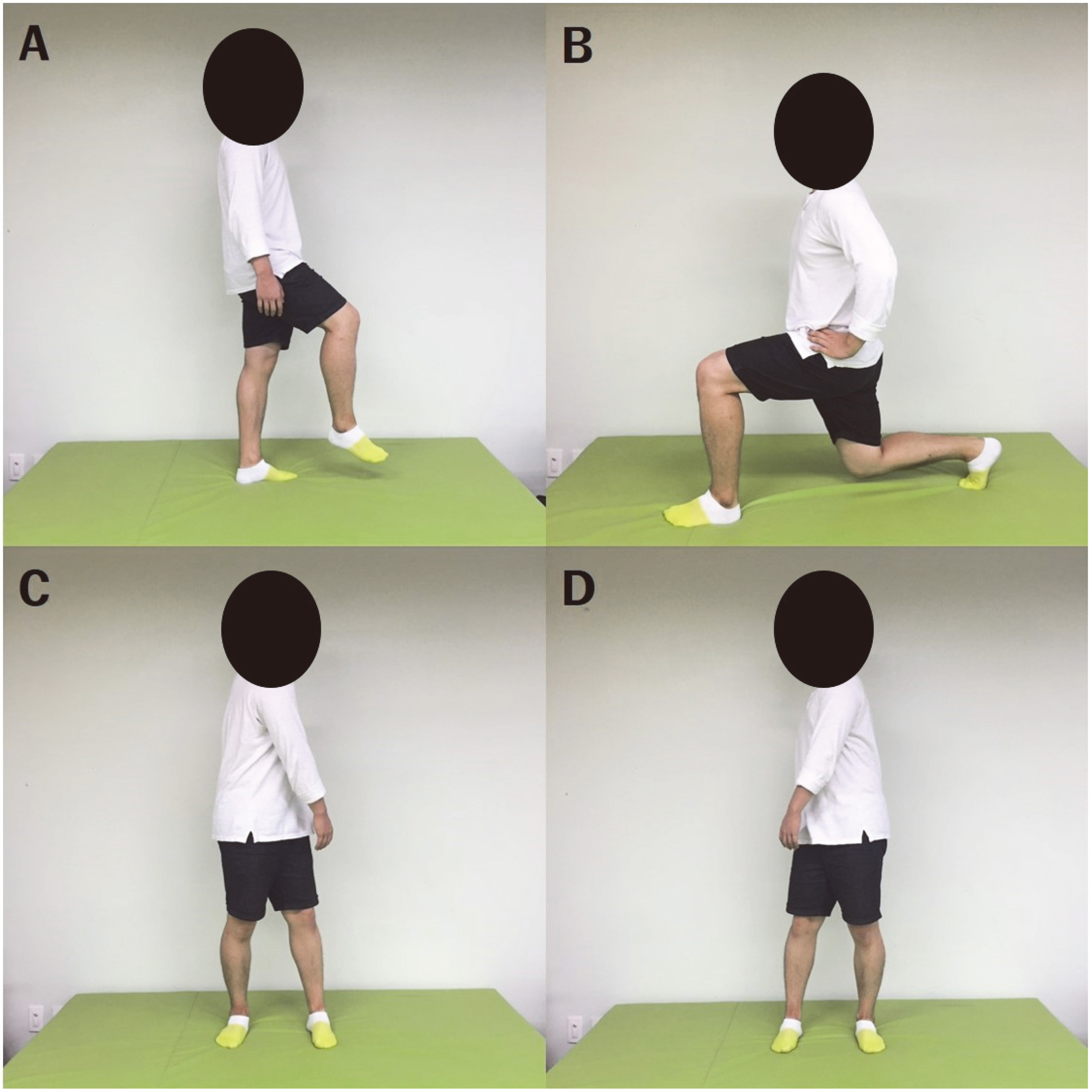
Surface EMG data were collected using a Noraxon Myotrace 400 (Noraxon, Inc., Scottsdale, AZ, USA) and analyzed using the MyoResearch XP Master software (edition 1.08.27). Data were recorded from the medial quadriceps (vastus medialis, MQ), lateral quadriceps (vastus lateralis, LQ), medial hamstring (semitendinosus, MH), lateral hamstring (biceps femoris, LH), medial gastrocnemius (MG), and lateral gastrocnemius (LG) on the non-dominant side. Electrodes were placed as follows. The medial quadriceps electrode was placed at an oblique angle of 55
Procedures
The balance exercises consisted of one-leg stand, lunges, and trunk rotations. Each exercise was repeated five times with a 1-min rest between trials and a 5-min rest between exercise sets. Subjects were educated in each position, and they practiced once or twice within a range that would not cause fatigue before measurements. Subjects stood barefoot with their feet pelvis-width apart, toes pointing forward, and arms placed naturally at their sides. First, the one-leg stand exercises involved flexing the knee joint (tibia on femur) with dominant leg to a self-comfortable level [13]. Second, the lunge exercise is a weight-bearing exercise that shifts the location of the center of gravity. Participants in this study were asked to maintain a lunge posture without touching the ground with the patella of the dominant leg while flexing the knee joint (femur on tibia) of the non-dominant leg to 90
Comparison of muscle activation among balance exercises.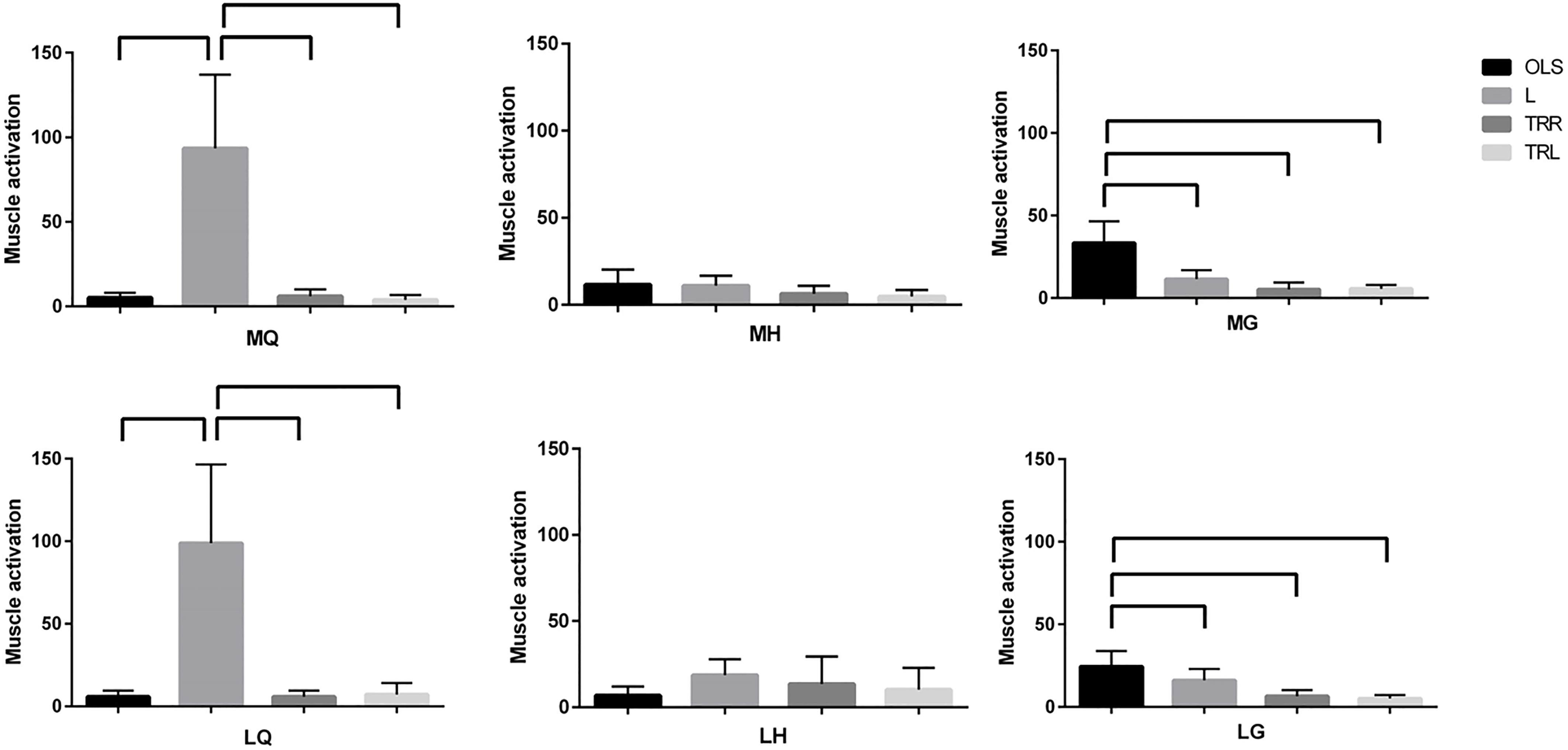
The PASW software (ver. 20; SPSS, Inc., Chicago, IL, USA) was used for all statistical analyses. One-way repeated-measures ANOVA was used to compare muscle activation, muscle co-activation, and the medio-lateral co-activation ratio during the balance exercises (one-leg stand, lunge, and trunk rotations). Statistical significance was set at
Results
Comparison of muscle activation among balance exercises
There was a significant difference in quadriceps and gastrocnemius activation among the balance exercises (
Comparison of medial and lateral muscle co-activation among balance exercises
Significant difference in MQMH, LQLH, and LHLG co-activation were found among the balance exercises (
Comparison of mediolateral muscle co-activation among balance exercises.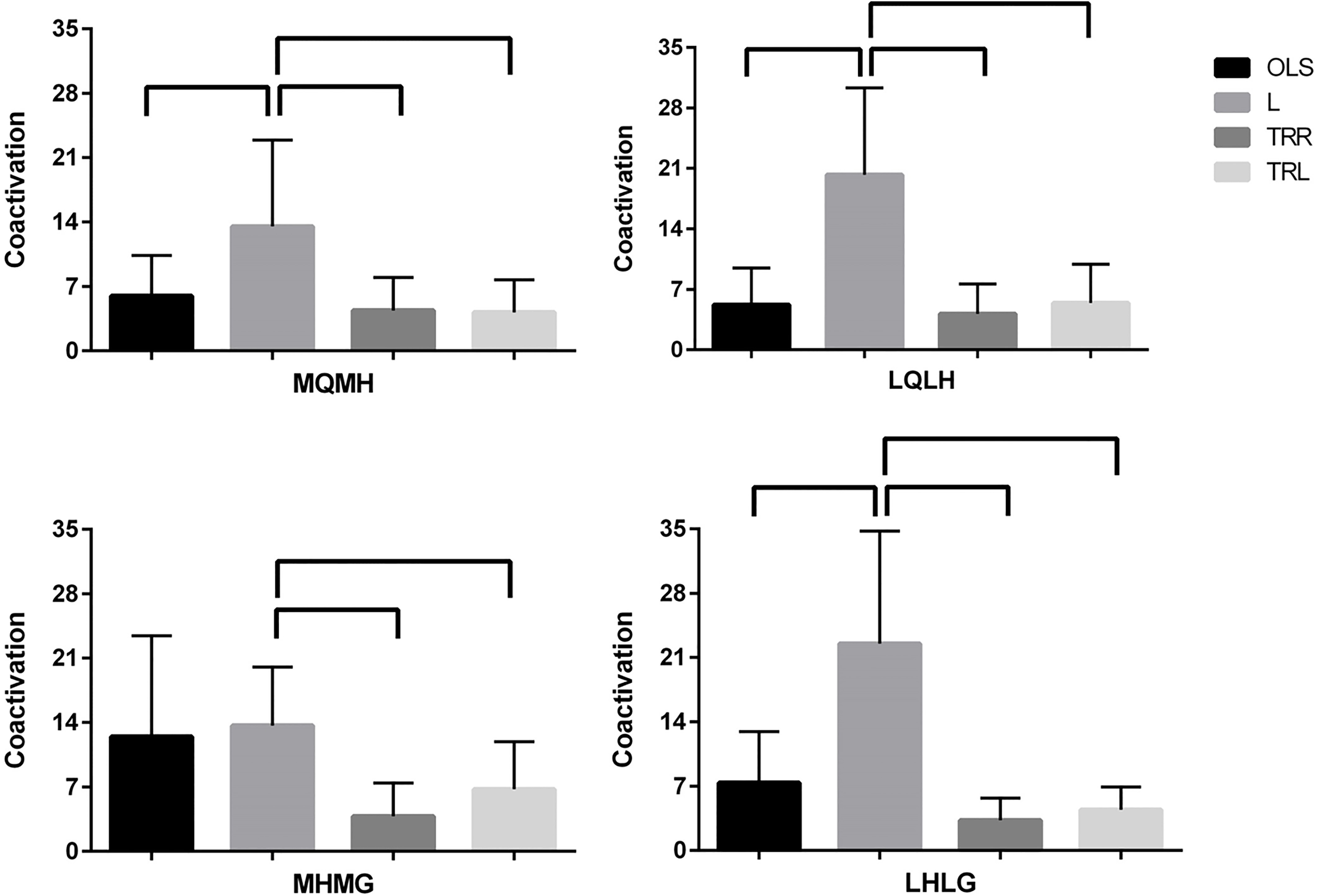
Comparison of balance exercise between medial and lateral muscle co-activations.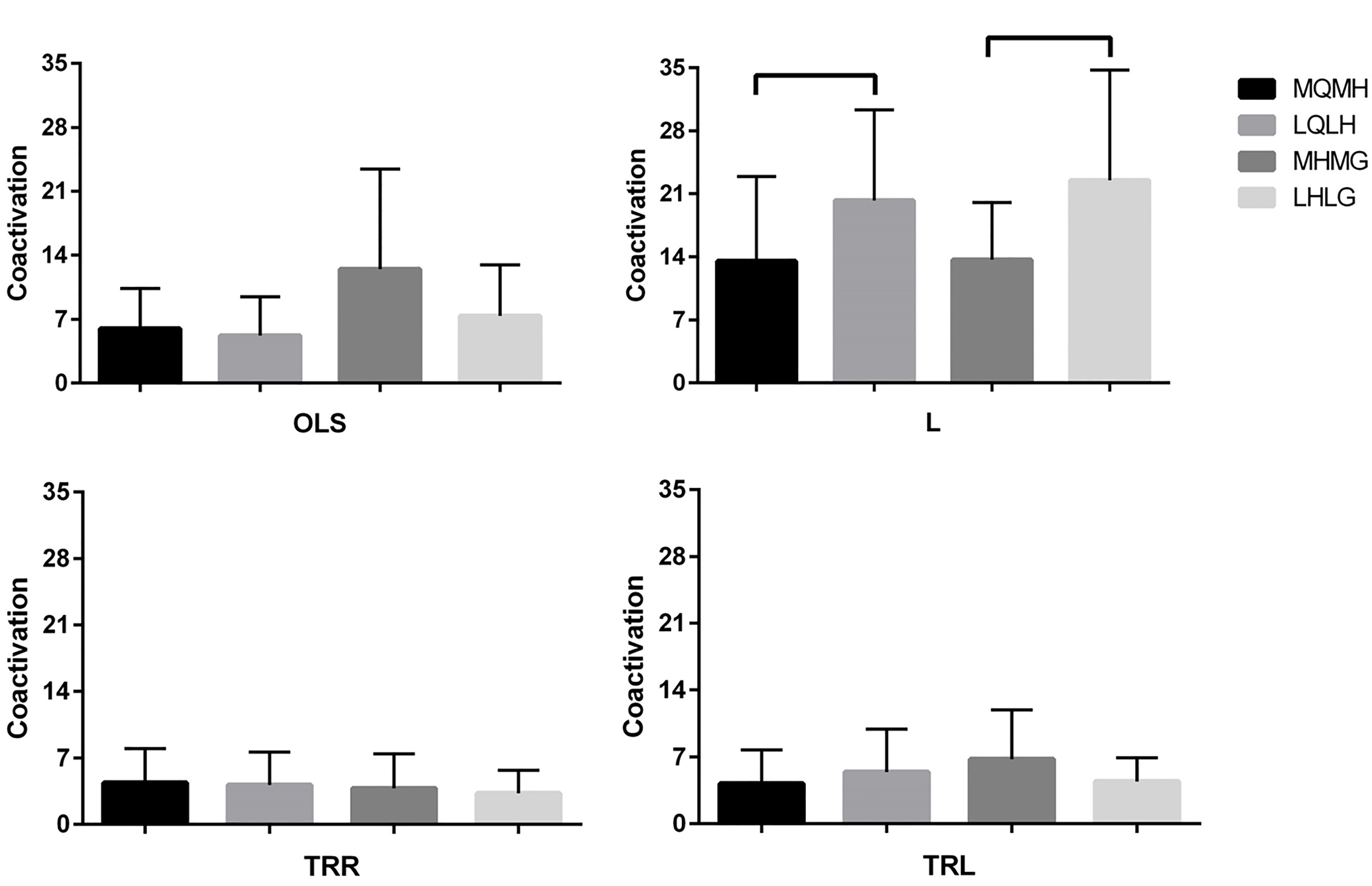
Comparison of right and left trunk rotation among diagonal muscle co-activations.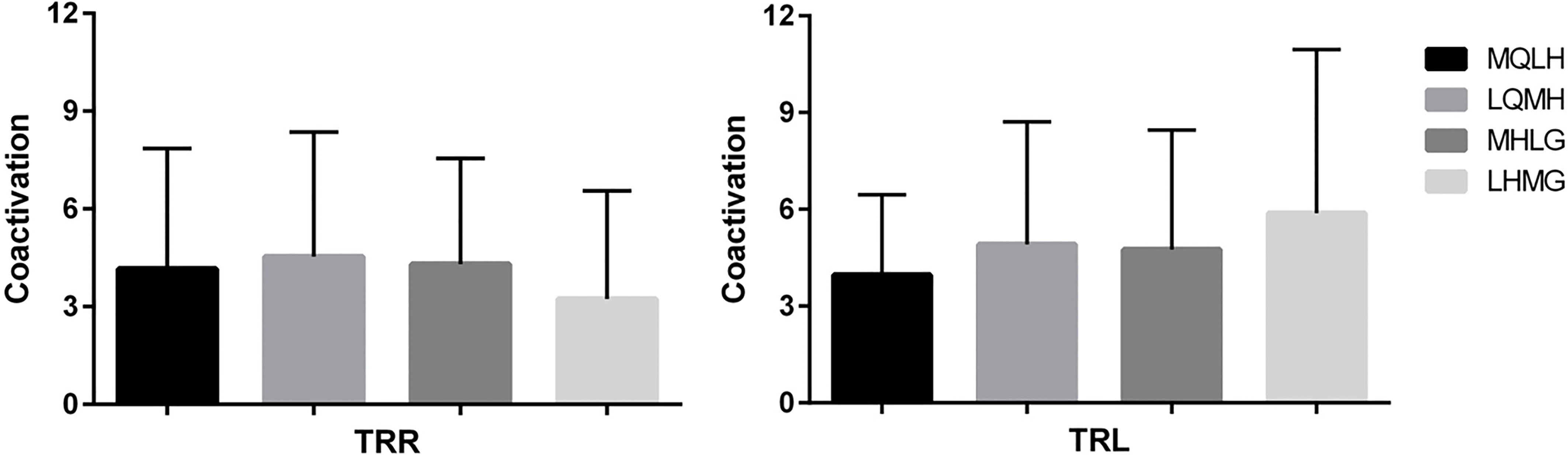
Comparison of medial/lateral co-activation ratio of Q vs. H and H vs. G among balance exercises.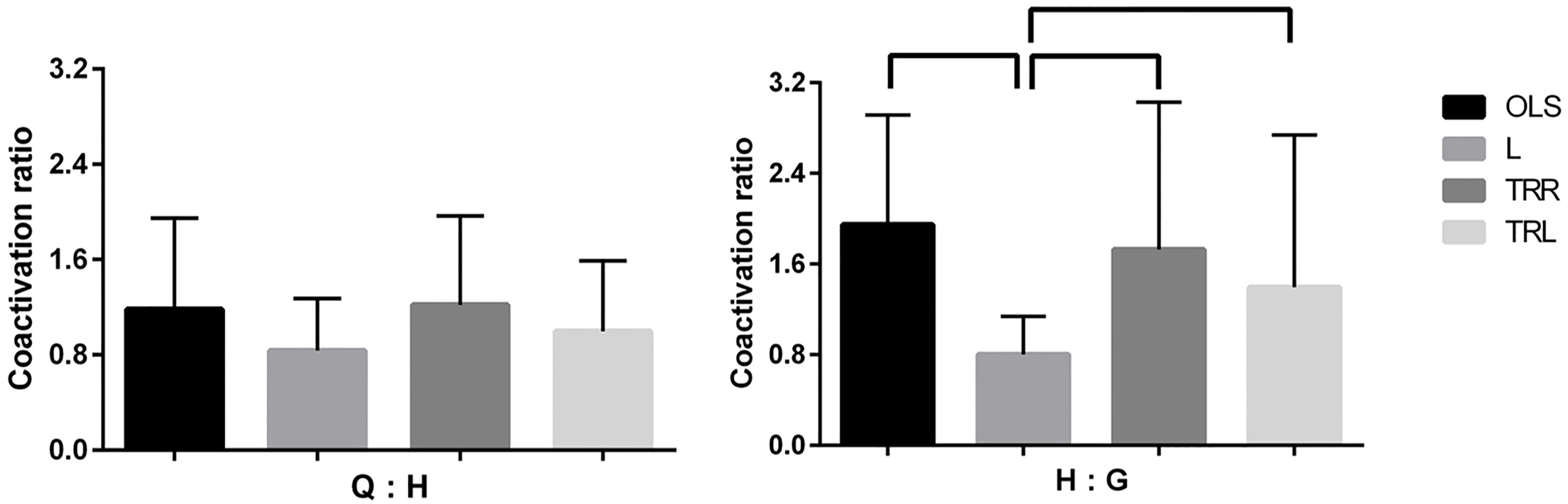
There was no significant difference in MQLH, LQMH, MHLG, or LHMG co-activation between right and left trunk rotations (Fig. 5).
Comparison of medial/lateral co-activation ratio of Q vs. H and H vs. G among balance exercises
There was a significant difference in the H:G co-activation ratio among the balance exercises (
Discussion
The result of this study showed significant and selective quadriceps muscles activation in the lunge and selective gastrocnemius muscle activation in one-leg stand. In the lunge, co-activation of the lateral muscles was increased more than that of the medial muscles. Other exercises showed balanced co-activation of medial and lateral muscles.
Our results demonstrated that quadriceps muscle activation increased more in the lunge exercise than the other exercises. This finding has been used in the rehabilitation field to address knee ligament injury and quadriceps muscle weakness. During a forward lunge, the quadriceps muscle is activated eccentrically and the medial and lateral quadriceps show synergic activation [15]. A previous study consistent with this reported that quadriceps activation was higher than hamstring and gastrocnemius activation in various lunge positions [14]. However, in the Pincivero’s study [16], activation of the quadriceps and biceps femoris muscles was increased, and semitendinosus activation was decreased in lunge exercises. Previous studies have analyzed EMG signals over the full range of lunge exercises by normalizing the performance time, but in the present study, we detected the end position of the lunge because activation of the lower extremity muscles is highest at the lunge end position [16, 17]. Although activation of the biceps femoris increased in the lunge exercise, it was less than quadriceps activation.
Additionally, gastrocnemius muscle activation was greater in one-leg stand than in the other exercises. One-leg stand is used in the rehabilitation of posture sway and ankle sprains. However, previous studies have reported varied and differing opinions about the positive effects of ankle stability [13, 18, 19], likely because ankle stability-related factors include mechano- receptors, ankle range of motion, muscle onset time, and peroneal nerve function [18]. Future studies should examine the relationship between increased gastrocnemius muscle activation and ankle stability.
In terms of medio-lateral co-activation, the lunge exercise showed greater lateral than medial co-activation compared with the other exercises. Increased co-activation indicates improved joint stability and/or higher joint compression. In the comparison of medial and lateral muscle co-activation, one-leg stand and trunk rotation exercises showed no significant difference, although the lunge exercise did show such a difference. The lunge exercise increased LQLH and LHLG more than MQMH and MHMG. This may be explained by the walking mechanism. In gait, the quadriceps and biceps femoris are activated during the loading response and early swing, and the semitendinosus muscle is activated during the terminal swing to prevent tibia external rotation [20]. Because our study was measured in a closed kinetic chain position, the semitendinosus muscle was not activated. In previous studies, lunge exercises resulted in higher tibiofemoral joint compression and greater quadriceps and hamstring activation than did squat exercises [21]. In the present study, it is possible that greater lateral muscle co-activation during lunge exercise could cause lateral knee joint compression.
Co-activation of muscles around the knee joint assists in maintaining stability and balance by medial, lateral and anterior, posterior balanced activation, but unbalanced co-activation may disproportionately activate the range of the knee joint and may lead to collapse [22]. In a comparison of the medial and lateral co-activation ratios of Q:H and H:G among the balance exercises, the comparison of MQMH and LQLH showed no statistical significance, but the lunge differed from the other exercises because the muscle activity ratio value was
The one-leg stand exercise resulted in no significant difference between medial and lateral co-activation. In comparing the medial and lateral co-activation ratios of Q:H and H:G in the balance exercises, MQMH/LQLH was not statistically significant, but the one-leg stand was significantly
We also assessed the co-activation of the non-dominant leg muscles in trunk rotation to the right and left. The lateral hamstring and medial gastrocnemius are activated by lateral rotation of the tibia, and the medial hamstring and lateral gastrocnemius are activated in medial rotation of the tibia [30]. These events apply in trunk rotation, which is a closed chain exercise; the lateral hamstring and medial gastrocnemius would be expected to be activated by the tibia with relatively lateral rotation due to the in medial rotation of the left femur when the trunk rotation is to the right, and vice versa. However, we found no significant difference between MQLH and LQMH or between MHLG and LHMG. The trunk rotation exercise used in this study may match the rotation direction of the femur and the tibia because the knee joint is locked in a standing position. In future studies, co-activation of the knee joint muscles during trunk rotation exercises according to various angles of knee flexion should be examined.
We could not determine the potential long-term effects of balance exercises because this was a cross-sectional study. Subjects were healthy young people; therefore, the results cannot be generalized to subjects in other demographic groups. Future studies should examine the long-term effects of balance exercises and extend the demographic range of test subjects to enable generalization of the findings.
Conclusions
The lunge exercise effectively activated the quadriceps, whereas the one-leg stand exercise effectively activated the gastrocnemius muscle. No significant difference was observed in medial and lateral muscle co-activation in the one-leg stand and trunk rotation exercises. The degree of lateral muscle co-activation was greater than that of medial muscle activation in the lunge exercise. Repeated lunge exercise may over-activate the lateral muscles, including the quadriceps, hamstring, and gastrocnemius and therefore due care should be paid when using lunge exercise in balance exercise program targeting knee patients of specific relevance.
Conflict of interest
The authors declare no conflict of interest.