




Abstract
BACKGROUND:
The ability of the lower-extremity muscle activation directly affects the performance and in turn interacts with the loading conditions of the muscle itself. However, systematic information concerning the characteristics of lower-extremity muscle during landings is lacking. In particular, the landing height and shoes are also important factors based on the actual situation, which could further contribute to understanding the neuromuscular activity and how biochemical response of the body tissues to double-leg drop landings.
OBJECTIVE:
The study was to investigate the effects of landing tasks on the activation of lower-extremity muscles and explore the relationship among movement control, landing heights, shoe cushioning, and muscle activities.
METHODS:
Twelve male basketball players were recruited to perform drop jump (DJ) and passive landing (PL) from three heights (30, 45, and 60 cm) while wearing highly-cushioned basketball shoes (HC) and less-cushioned control shoes (LC). EMG electrodes were used to record the activities of the target muscles (rectus femoris, vastus lateralis, biceps femoris, tibialis anterior, and lateral gastrocnemius) during the landing tasks.
RESULTS:
Pre- and post-activation activity of the lower-extremity muscles significantly decreased during PL compared with those during DJ (
CONCLUSIONS:
The activation patterns of lower-extremity muscles can be significantly influenced by landing types. Highly-cushioned basketball shoes would help reduce the risk of injuries by appropriately tuning the muscles during the PL.
Introduction
Participant in any sport carries an inherent risk of injury, especially those that combine jumping and swift changes of direction. These are most often associated with lower-extremity muscle and joint damages [1]. The most fundamental property of muscles is force generation, which is derived from contraction from nervous system activation [2]. The completion of a movement due to force generation is the basic element that constitutes the mechanical role in various sports. In other words, the ability to activate lower-extremity muscles directly affects performance that in turn interacts with the loading conditions of the muscle itself. Therefore, the control mechanism of the human neuro-musculoskeletal system can be understood by studying the characteristics of muscle activation during movements [3].
Sports medicine findings, along with medicine and science findings, inevitably contribute to lower-extremity injuries prevention for players in any sport. Since the 1970s, many researchers have observed muscle activation patterns in running and jumping movements via electromyography [1, 4, 5]. They found the occurrence and development of muscle activation are complex and affect many aspects of an action, such as the positions and loads of lower-extremity joints, the velocity and stiffness of the lower extremities, and the vibration of soft tissue structures. Running and jumping movements show the pre-and post-activation of lower-extremity muscles relative to the condition in the muscle’s working state; thus, the primary goal of muscle activation is to respond rapidly to impact and complete landing tasks before and after ground contact [6, 7]. However, systematic information concerning the characteristics of lower-extremity muscles during landing is lacking. In particular, the landing height is an important factor based on the actual situation, which could further contribute to understanding the neuromuscular activity and how these characteristics are represented, sports-injury mechanisms, and the biochemical response of body tissues to double-leg drop landings.
Additionally, muscle activation is an important biomechanical parameter in double-leg drop landings. Several researchers have put forward a new hypothesis based on original muscle function theories; according to them, one of the main functions of muscle activation is to fine-tune muscle activities in order to reduce the vibration of soft tissues before and after touchdowns [8, 9, 10]. Specifically, the neuromuscular system activates relevant muscles according to the conditions (landing speed, surface hardness, etc.) during running and jumping movements and minimizes the amplitude of soft tissue vibrations close to the resonance frequency to reduce the loads on joints and tendons and prevent the possibility of sports injuries [11, 12, 13]. Muscle activation patterns combining the muscle recruited, the impact force, and the soft tissue resonance frequency have attracted extensive attention in sports medicine and biomechanics, and have gradually been introduced into advancements in sports shoes [10, 14]. In basketball, landing movements often lead to ankle injuries [15], and ankle sprains are identified as one of the most common forms of injuries most players suffer in their careers [16]. Muscle strength is related to the risk of ankle-related injuries according to recent reports [16, 17] Therefore, research on muscle activation is particularly important. Muscle coactivation is related to motor control; it contributes to the accuracy of motion and avoidance of sports injuries [18, 19]. It is worth noting ankle muscle coactivation plays a vital role in affecting the function of the lower extremity and preventing sports injuries during landing movements.
Based on the above consideration, the objectives of this study were to investigate the effects of landing heights and shoe cushioning on lower-extremity muscle activation during two landing tasks and explore the relationship among them. Our findings are expected to provide useful suggestions and insight for athletes and footwear manufacturers. We hypothesized that: (1) the effects of shoe cushioning on muscle activation will differ in passive landing (PL) and drop jump (DJ) tasks from different landing heights, (2) the coactivation characteristics of the target muscles will differ in the target moments, and (3) the muscle pre- and post-activation in PL will be significantly lower than those in DJ.
Methods
Participants
Twelve male basketball players from Shanghai University of Sport (age: 23.8
Shoe types
The midsole of highly cushioned shoes (HC) used in this study was made of Phylon (light and soft material that has good cushioning properties and is made by foaming and compression [20]) and equipped with a full-length air cushion unit that has a strong cushioning function. The less-cushioned shoes (LC) had a hard rubber sole, no special midsole material, and no air cushion unit. The size of the two types of testing shoes was 270 mm (EUR 42.5).
Data collection
Touchdown moments were confirmed with a 90 cm
Sixty-four-channel wireless electromyogram (EMG)- electrodes (TrignoTM wireless sEMG, Delsys, USA) collected surface muscle activity at a sampling frequency of 1200 Hz. The sensors were positioned on the dominant leg muscles of the participants by the Surface EMG for the Non-invasive Assessment of Muscles Project [21]. The five test muscles were rectus femoris (RF), vastus lateralis (VL), biceps femoris (BF), tibialis anterior (TA), and lateral gastrocnemius (LG). The electrodes did not influence nor interfere with any of the recorded data.
Experimental protocol
Each participant completed 12 (2
Data analysis
Means and standard deviations of all tests and statistics were assessed using IBM SPSS Statistics version 19.0 (IBM Co., Armonk, NY, USA). An independent
Raw EMG signals were band-pass filtered between 10 and 400 Hz, full-wave rectified and normalized as a percentage of the highest value of each muscle recorded during all tests [23, 24]. The normalized EMG amplitude was calculated by root mean square (
where
The pre-activation phase was defined as 50 ms before ground contact (
Normalized EMG–time curve at drop jumps. Note: TA, tibialis anterior; LG, lateral gastrocnemius; RF, rectus femoris; VL, vastus lateralis; BF, biceps femoris.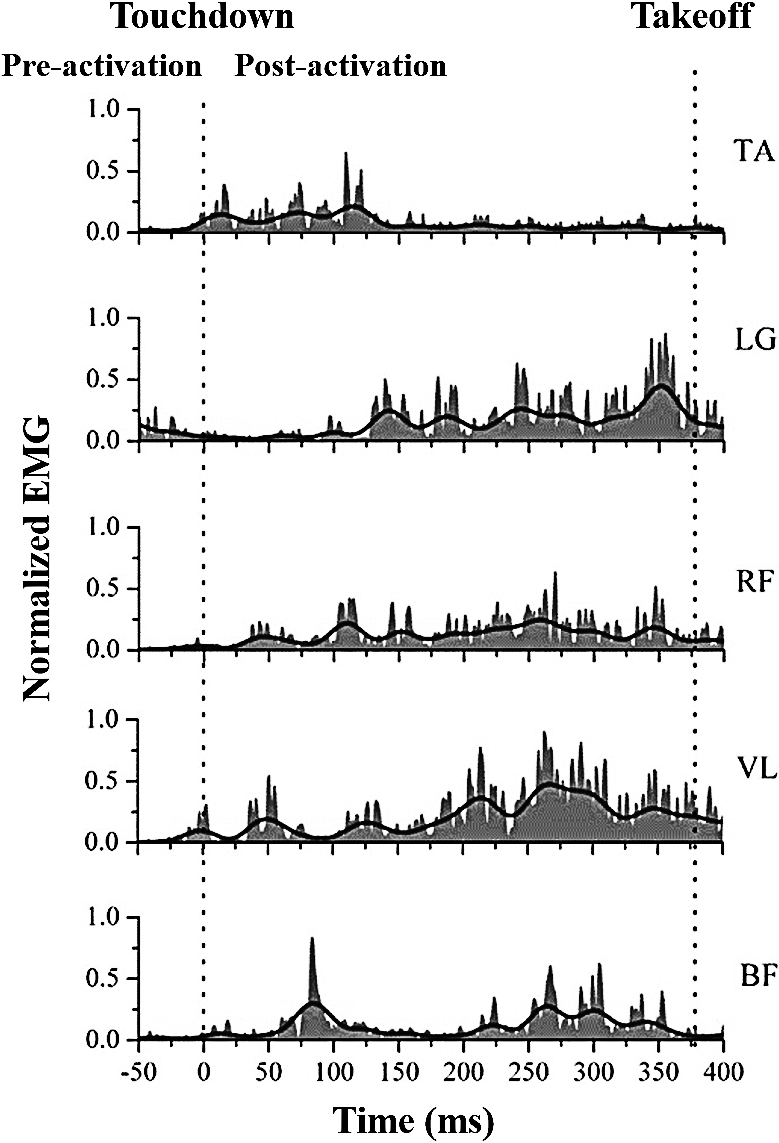
Normalized pre-activation EMG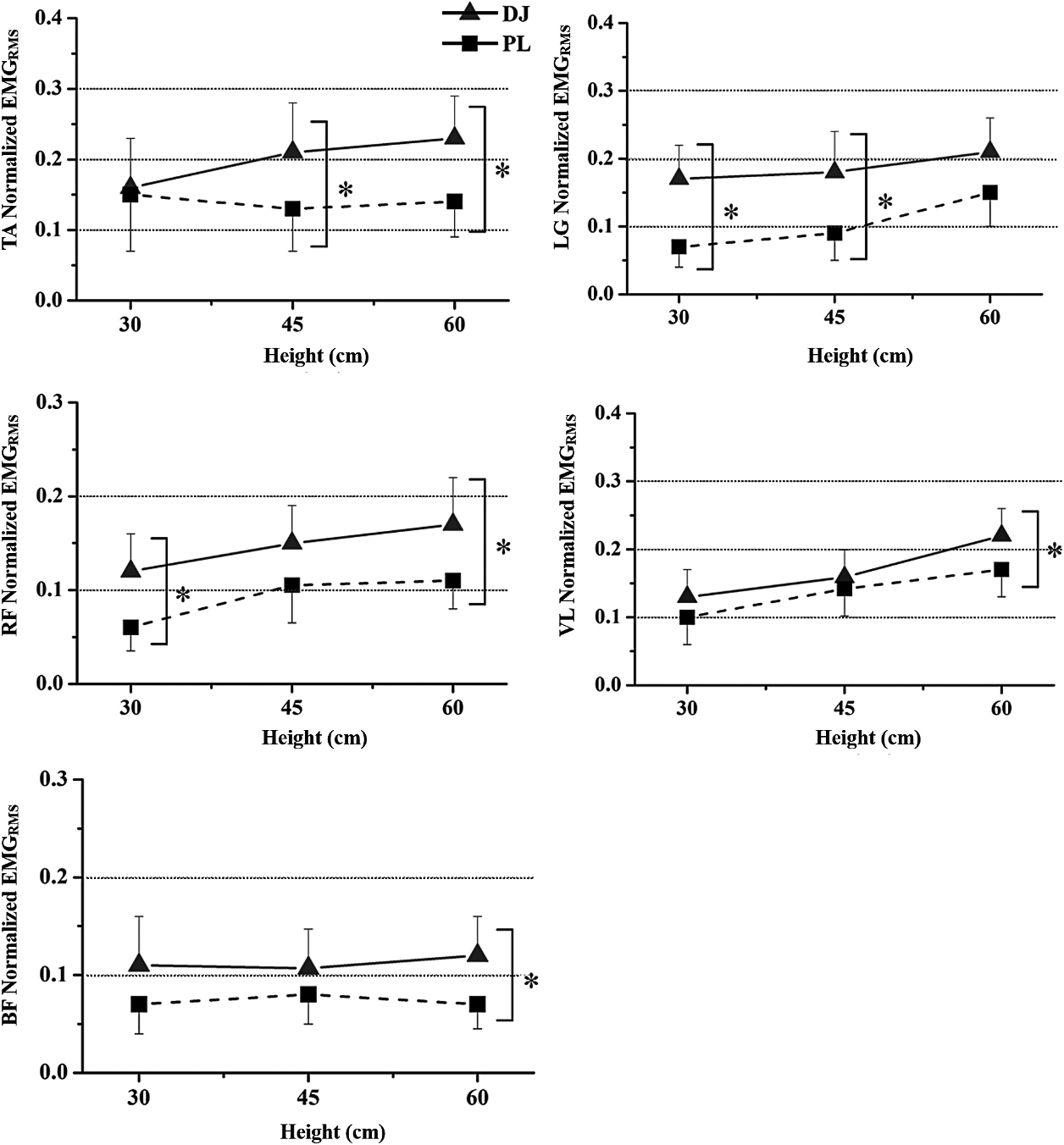
For coactivation, coordination between the agonist and antagonist arises to adjust the timing and strength of muscle contraction to adapt to the demands of the peripheral environment based on the central nervous system [25]. Coactivation regulates the stiffness of the muscles around the lower-extremity joints and thus maintains the stability of the joints when the lower-extremities are affected by the external environment (e.g., violent impact) [26]. Antagonist-agonist coactivation is calculated as the ratio of the activation degree of the antagonist and agonist; it is used to reflect the mode of coordinated movement of the two types of muscles in the same time interval [27].
Effects of shoe conditions on the pre-activation EMG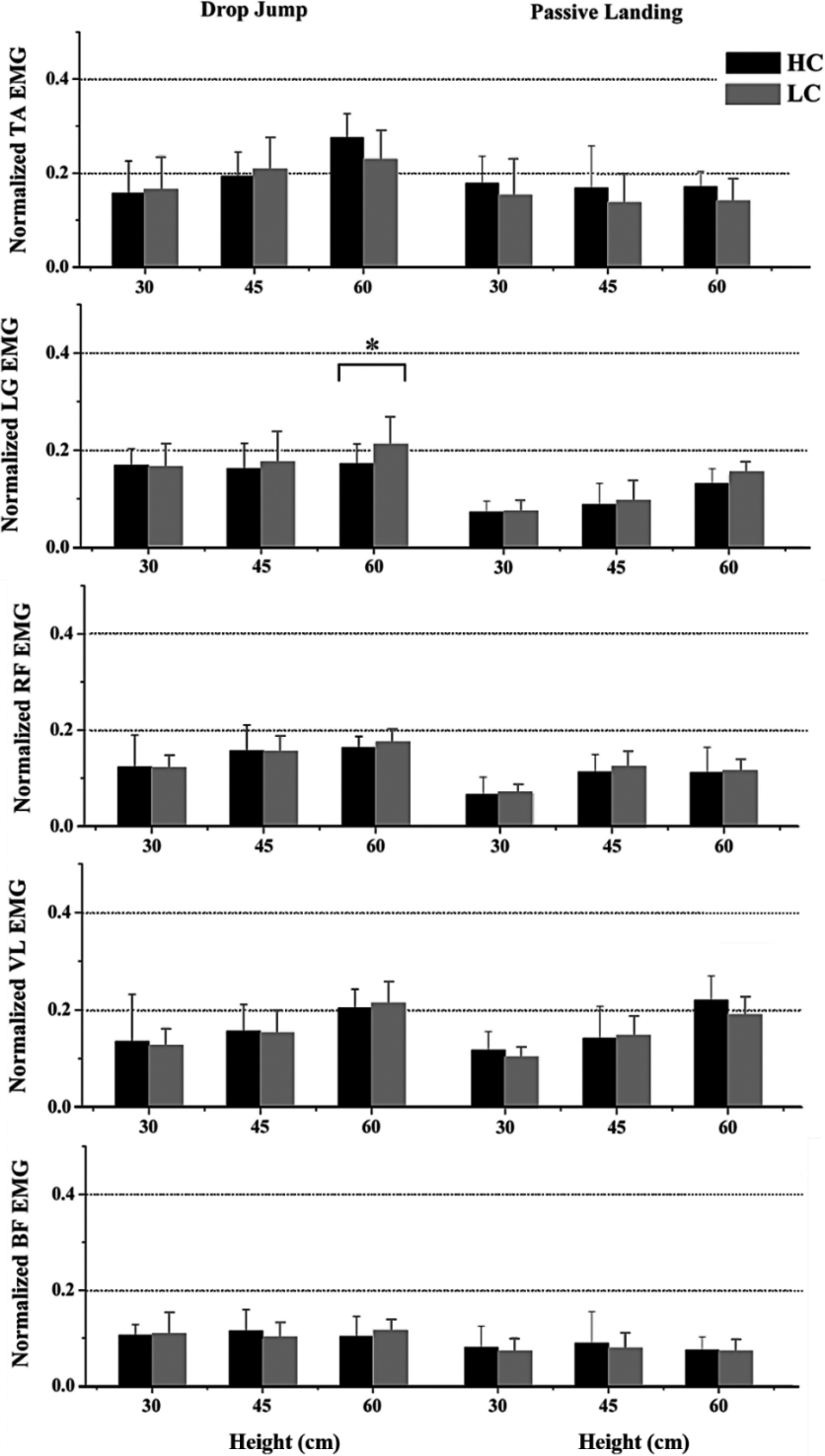
In this study, TA and LG were selected to observe the ankle coactivation characteristics at pre-and post-activation phases [24, 28].
All statistical analyses were performed using SPSS 19.0 (SPSS Inc., Chicago, IL, USA). Results were expressed as mean
Results
Muscle pre-activation
The muscle pre-activation in PL was much less than that in DJ at the three heights (Fig. 2) (
The type of footwear did not significantly affect the pre-activation of the lower-extremity muscles (TA, RF, VL, and BF) at the three heights and two landing tasks (Fig. 3). Differences were observed in the pre-activation of LG between the use of LC and HC when the participants performed DJ at the 60 cm height (
Muscle post-activation
Similar to the pre-activation process, the muscle post-activation during PL was still smaller than that during DJ. Significant differences (
Effects of landing tasks and shoe types on ankle coactivation (%) at different dropping heights
Effects of landing tasks and shoe types on ankle coactivation (%) at different dropping heights
Note: HC, highly cushioned shoes; LC, less-cushioned shoes.
Post-activation EMG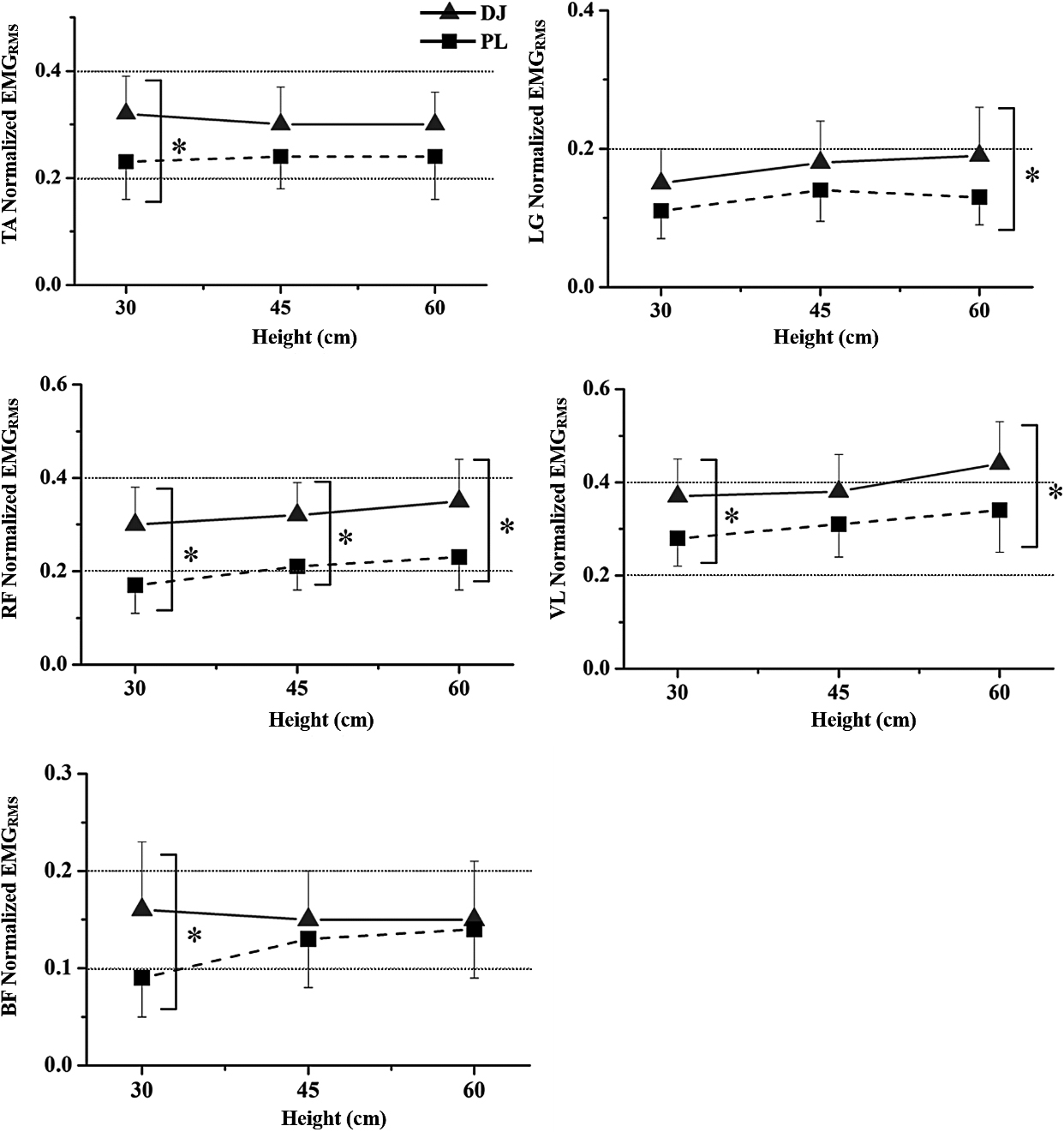
Effects of shoe types on the post-activation EMG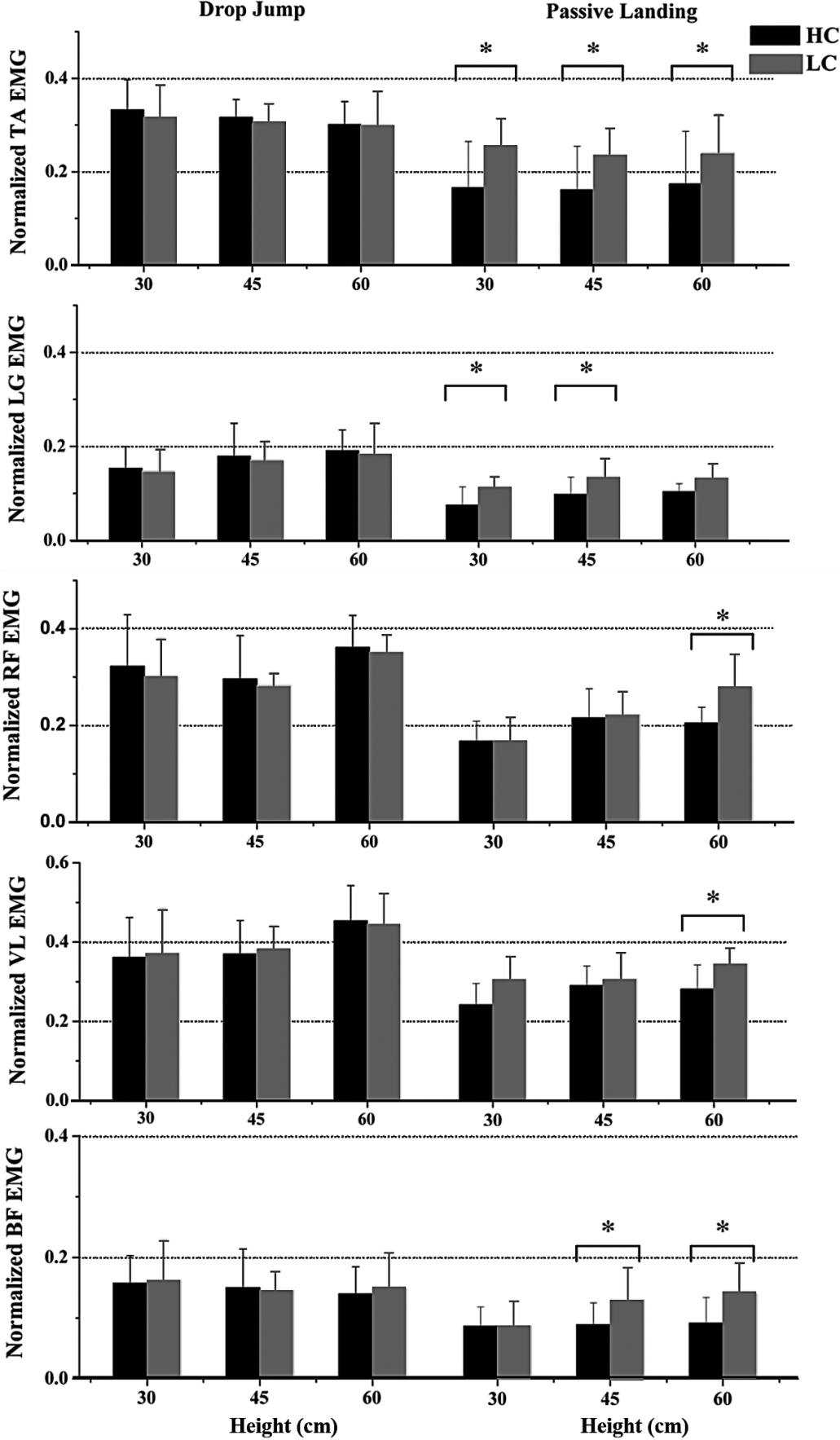
The different shoe types did not significantly affect the post-activation of the lower-extremity muscles in the DJ task. However, LC could increase post-activation in the PL movement (Fig. 5). The post-activation of TA at the three heights; LG at the 30 and 45 cm heights; RF, VL, and BF at the 60 cm height; and BF at the 45 cm height were all significantly higher in LC than in HC (
Whether for the DJ or PL movement, ankle muscle coactivation of the participants who wore LC showed no significant differences at 50 ms before ground contact compared with those who wore HC. Coactivation of the ankle joint muscle was primarily affected by height (Table 1). Specifically, the coactivation at 60 cm was significantly higher than that at 30 cm for the DJ tasks, but the result was reversed for the PL tasks (
Discussion
Landing task effects on muscle activation
DJ is one of the technical features of various sports that focus on jumping abilities (basketball, volleyball, etc.); it involves muscle activation and motion characteristics of the typical stretch-shortening circle [29]. DJ has more obvious impact characteristics compared to running and jumping done at normal speeds. In the present study, PL enabled participants to c make lower extremity ground contact without sufficient anticipation; thus, the active regulation of the body is more difficult. The results corroborated that the
From a neuromechanical perspective, the human musculoskeletal system is impacted by landing conditions (landing speed, ground hardness, etc.). Soft tissue activity caused by falling’s impact can be minimized by changes in muscle recruitment, which may reduce joint and tendon loads before and after landing during running or jumping [14, 30]. About muscle recruitment, adjustments in joint stiffness and geometry may activate soft tissues at risk of resonance [14, 31, 32]. Research shows the amplitude can be increased when the frequency of the ground impacts approach the natural frequency range of soft tissues, but the amplitude rapidly decays to less than 5% after soft tissues have undergone vibration [33]. The reason is widely believed to be increased muscle activation, that is, the body cuts down the resonance of the soft tissue system by muscle alterations in recruitment, thus reducing the possibility of injuries. The assumptions of previous studies about muscle recruitment and soft tissue resonance coincide with our findings. The human central nervous system can create a string of appropriate adjustments by releasing impulses and activating corresponding muscles during the DJ. This controlled the movement of subjects as they fell or took off and finally relied on forces generated by muscles to complete the movements. However, the activation of muscles (TA, LG, RF, and VL) throughout DJ was much greater than that during PL because of the take-off with the former movement, and the lack of sufficient precognition, and the increased difficulty of active regulation for the latter. Differences between tasks may play an important role, but the difference between self initial and passive initial cannot be ignored. Boyer and Nigg [12] investigated the effect of unknown movement surfaces on the strategies of muscle recruitment during running. In their study, 13 male participants ran 21.9 m at a rate of 4.8
Shoe effects on muscle activation
Researchers have studied the feedback regulation of muscle activation during vibration shocks since the 1980s [35]. At the beginning of this century, many investigations were conducted to determine if changes in sports shoe characteristics (midsole material, hardness/thickness, etc.) had positive effects on muscle activity. Dupuis et al. [35] found changes in the middle sole hardness of sports shoes (Shore C
However, the post-activation at some muscles when falling at different heights (Fig. 5) and ankle muscle coactivation at partial heights (Table 1) was significantly increased when the participants wore LC. The results for PL are similar to those of the human pendulum test conducted in previous studies [9, 36]. The researchers found the activation effect of wearing shoes with a soft midsole on the lower-extremity muscles had no obvious difference compared with that of wearing shoes with a hard midsole in the pre-activation stage before impact. However, the participants who wore the shoes with the hard sole had significantly increased post-activation of TA and quadriceps femoris (
In summary, the corresponding muscles in the central nervous system were appropriately activated and adjusted to certain stages during DJ, and shoe type as an additional factor did not significantly affect the characteristics of lower-extremity muscle activation and coactivation in such a context. This result is consistent with our previous finding that wearing basketball shoes cannot significantly change the impact forces and vibration performance of soft tissues during DJ [22, 37]. In addition, considering the differences among individuals, we found that the movement control of the participants and their different adaptations to the shoes reduced the variations in the results. The study also found that muscle activation of the lower extremities during PL is much less than that during DJ (Figs 2 and 4). In other words, the lack of self-regulation consciousness and proper control of muscles decreased muscle activation. LC could play an important role in substantially increasing the
Several limitations of this study should be considered. First, the participants were recruited from the same university basketball team and had different training years, which may limit the external validity. Further, the study lacked the comparison of different genders. Finally, generalization and application of the findings may be treated cautiously as only two types of shoes (one mimics the barefoot condition) and three landing heights were adopted in the current study, and kinematics and dynamics should be considered.
Conclusion
Different landing tasks from three landing heights can significantly change the characteristics of lower-extremity muscle activation, respectively. Additionally, different shoes have a wider influence on post-activation in PL, but the effect is not significant in a maximum effort movement like DJ. Highly-cushioned basketball shoes would help reduce the risk of injuries by appropriately recruiting muscle during PL. These results suggest the shoe intervention achieved a modest change in the state of muscle activation because the participants lacked the appropriate adjustment at impacts.
Author contributions
CONCEPTION: Weijie Fu.
PERFORMANCE OF WORK: Yang Yang, Changxiao Yu and Chenhao Yang.
INTERPRETATION OR ANALYSIS OF DATA: Yang Yang, Changxiao Yu and Liqin Deng.
PREPARATION OF THE MANUSCRIPT: Yang Yang and Changxiao Yu.
REVISION FOR IMPORTANT INTELLECTUAL CONTENT: Yang Yang, Changxiao Yu and Weijie Fu.
SUPERVISION: Weijie Fu.
Conflict of interest
There is no conflict of interest. Given his role as an Editorial Board Member, Weijie Fu had no involvement nor access to information regarding the peer review of this article.
Ethical considerations
All participants were informed about the experimental procedures and requirements, and written consent was obtained before experimental data collection. The study was approved by the Institutional Review Board of the Shanghai University of Sport (date: 15/02/2017; No. 2017007).
Funding
This research was funded by the National Natural Science Foundation of China (11772201), Shanghai “Aurora Scholar” (19SG47), and Shanghai “Outstanding Young Scholar” project.
Footnotes
Acknowledgments
The authors have no acknowledgments.