




Abstract
BACKGROUND:
Gastric cancer (GC) is one of the most common tumors. There were several classifications of GC recently. The value of Lauren classification in evaluating the prognosis after radical gastrectomy was still unclear and the prognosis of gastric cancer remained relatively poor in the absence of prognostic biomarkers. This study aimed to explore microRNA (miRNA) in the prognosis of GC with different Lauren classification.
METHODS:
A retrospective study of 1144 patients was performed in this study. Quantificational reverse transcription-PCR (qRT-PCR) was used to examine the expression of miRNAs. Univariate and multivariate analysis were performed to evaluate prognosis value of Lauren classification.
RESULTS:
Total 1144 GC patients were recruited in this cohort, including 302 diffuse type (26.4%), 436 intestinal type (38.1%) and 406 mixed type (35.5%) GC. Multivariate analysis showed that Lauren classification, patients’ age, tumor size, tumor infiltrating depth, vascular nerve infiltrating and metastatic lymph nodes ration were significantly correlated with GC patients’ OS and DFS. The miR-141-3p, miR-200b-3p and miR-133a-5p were significantly down-regulated in diffuse type compared to intestinal type GC tissues, the miR-105-5p had significant lower expression in diffuse type compared with intestinal type and mixed type GC tissues. As a consequence of univariate analysis, low miR-141-3p in diffuse type GC showed significant worse OS and DFS than high miR-141-3p.
CONCLUSIONS:
Lauren classification was an independent prognostic factor in GC. MiR-141-3p was an independent prognostic factor and a promising prognostic biomarker in Lauren classification GC.
Introduction
Gastric cancer (GC) is the third leading contributor of cancer mortality worldwide [1]. To date, the anatomical American Joint Committee on Cancer (AJCC) and Union for International Cancer Control (UICC) tumor-node-metastasis (TNM) staging system is the most widely used for describing GC states [2]. However, GC is a multifactorial and multistage disease [3]. It is hard to have better understanding on prognostic value just using TNM classification without reference to its pathology [4]. Since 1965, the Lauren classification has been proposed and become one of effective methods based on the histological structure of GC cells. GC is divided into diffuse type, intestinal type and mixed type according to the Lauren classification [5]. The histopathology of intestinal type is gland like structures and is considered to be associated with chronic inflammation induced by Helicobacter Pylori infection, smoking, obesity and other dietary factors [6, 7], diffuse type is isolated-cell carcinoma and induced by active inflammation which leads to poor prognosis [8]. Thus, the prognostic relevance of GC using Lauren classification still remains unilluminated.
Primary studies reported that different moleculars played important roles in GC prognosis prediction, such as KRAS, APC, TP53 and so on [9, 10]. MicroRNAs (MiRNAs), endogenous non-coding RNAs with 20–22 nucleotides in size, are known as oncogenes or tumor suppressors in various human cancers through regulating target mRNAs [11, 12]. MiR-205/miR-338-3p regulated BCL-2 expression to suppress prostate cancer cells apoptosis [13]. Besides, miRNAs become popular biomarkers for cancer diagnosis and prognosis [14]. MiR-16 was confirmed the diagnosis value in common cancer like lung cancer, gastric cancer and endometrioid endometrial cancer [15]. MiR-487a worked as prognostic biomarker in hepatocelluar carcinoma [16]. MiR-194 was verified as favourable prognosis biomarker in GC [17]. It was reported that the down-modulation of miR-375 is specifically linked to Lauren’s classification [18]. There is also research that suggests miR-18a-5p plays diagnostic and therapeutic potencies in mixed-type gastric cancer [19]. However, the application of miRNA on predicting prognosis in Lauren classification GC is still underway and needs further investigation.
To the point of controversy, we performed a retrospective study of 1144 patients who received radical gastrectomy and analyzed the clinical characteristics and significance in Lauren classification. In addition, we examined the expression levels and evaluated the prognostic value of related miRNAs from different Lauren classification GC tissues. This study provided the theoretical basis for the potential use of miRNAs in diagnosis and prognosis of gastric cancer with different Lauren classification.
Materials and methods
Study cohort
We collected data on 1144 patients who received radical gastrectomy at First Affiliated Hospital of Nanjing Medical University from January, 2005 to December, 2011. After surgery, GC patients were followed up every 3 months at first 2 years then every 6 months within 5 years, annually after 5 years, the last follow-up was in June, 2017. All patients from the cohort underwent radical gastrectomy and histologically confirmed. Clinical stage and histological classifications of GC were used the WHO classification criteria and the eighth edition of the AJCC TNM classification for GC.
Sample collection
We collected 145 GC tissues from the study cohort. Inclusion criteria include (1) complete clinical data, (2) Standard D2 lymph node dissection, (3) TNM stage I, to III, (4) no preoperative radiotherapy or chemotherapy, (5) postoperative chemotherapy regimen based on 5-FU and completed at least 4 cycles.
RNA extraction
Sections (8
Quantitative RT-PCR
The correlation analysis between Lauren classification and clinicopathological characteristics
The correlation analysis between Lauren classification and clinicopathological characteristics
The cDNA was conducted using the specific primers of reverse transcription (RT) (Exiqon, Denmark). The amplification of miRNA was used Bulge-Loop
Overall survival (OS) and disease free survival (DFS) curves plotted by the Kaplan-Meier method for (A) 1144 GC patients (B) GC patients with Lauren classification, diffuse type, intestinal type, mixed type.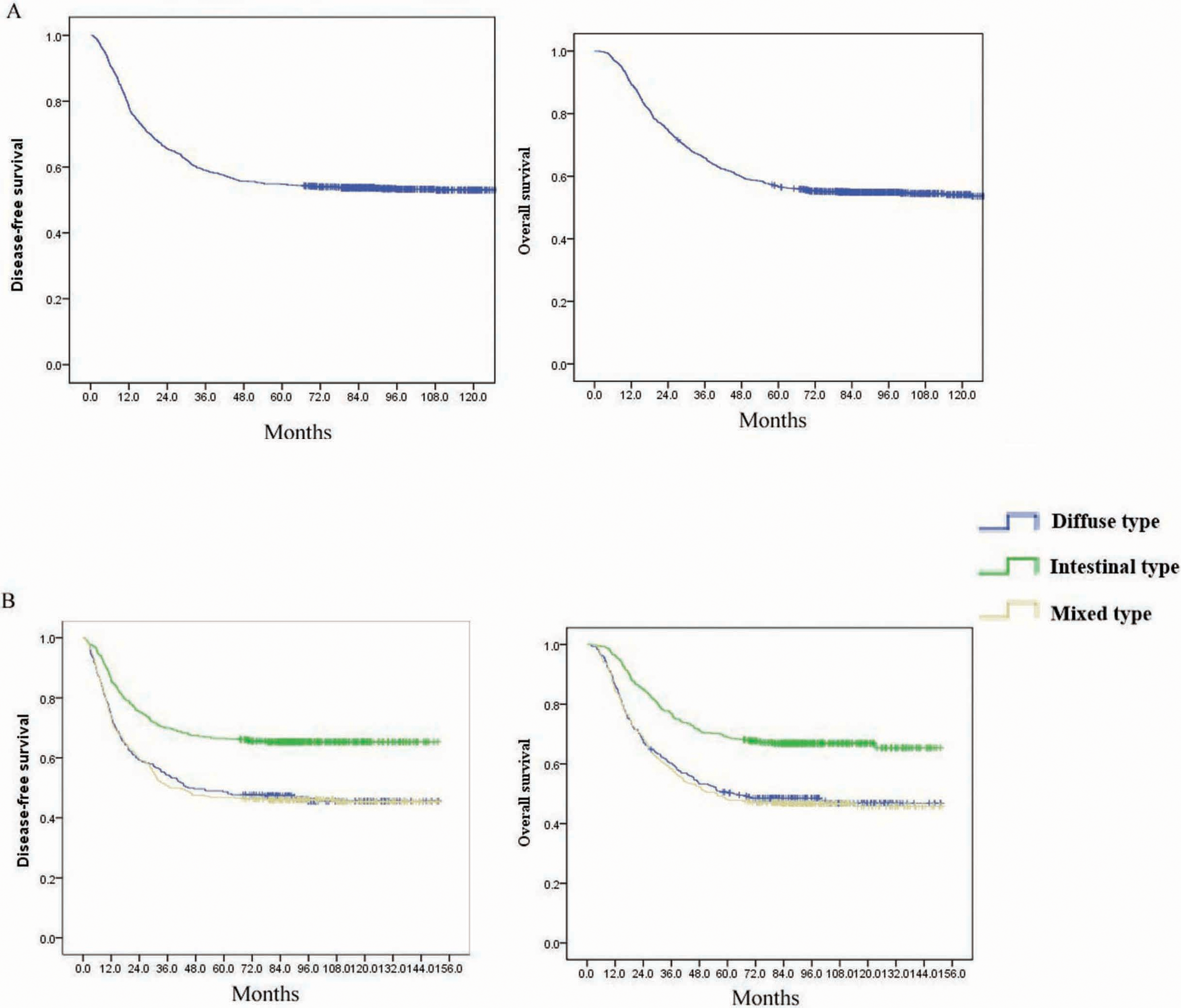
The differential miRNAs expression levels between GC tissues and control tissues were analyzed by Mann-Whitney test. Clinical characteristics among Lauren classification groups and the relationship with miRNAs were analyzed by one-way ANOVA or
The univariate analysis between disease free survival (DFS) and clinicopathological characteristics
The univariate analysis between disease free survival (DFS) and clinicopathological characteristics
*The median survival time was not reached by follow-up,
The univariate analysis between overall survival (OS) and clinicopathological characteristics
*The median survival time was not reached by follow-up,
Clinicopathological characteristics of study subjects
Total 1144 GC patients (846 males and 298 females, mean age, 61 years) were recruited in this cohort, including 302 diffuse type (26.4%), 436 intestinal type (38.1%) and 406 mixed type (35.5%) GC, the demographic information of GC patients were summarized in Table 1. We conducted the correlation analysis between Lauren classification and the differentiated. The results indicated that GC patients with diffuse type were younger (
Univariate and multivariate analysis for prognosis of gastric cancer
The multivariate COX risk model analysis of overall survival (OS) and between disease free survival (DFS)
The multivariate COX risk model analysis of overall survival (OS) and between disease free survival (DFS)
Among 1144 GC patients, the overall survival (OS) of 1-year, 3-year and 5-year were 90%, 75% and 66%, while the disease free survival (DFS) of 1-year, 3-year and 5-year were 78%, 66% and 59% (Fig. 1A). The univariate analysis showed that Lauren classification was strongly related to the OS and DFS (
Multivariate analysis were introduced using Cox proportional hazards regression (forward LR stepwise procedure) to analyze independent prognostic predicting factors based on the statistically significant variants in univariate analysis. Multivariate analysis showed that Lauren classification, patients’ age, tumor size, tumor infiltrating depth, vascular nerve infiltrating and metastatic lymph nodes ration were significantly correlated with GC patients’ OS and DFS (
We searched keywords, gastric cancer, stomach cancer, miRNA and Lauren classification in PubMed website. The latest publication time of reference was January, 2017. Finally, a total of 8 references were in line with our topic idea after intensive reading. There were 22 candidate miRNAs, miR-105-5p, miR-100-5p, miR-199a-5p, miR-99a-5p, miR-133a-5p, miR-373-5p, miR-498, miR-202-5p, miR-32-5p, miR-141-3p, miR-182-5p, miR-125b-5p, miR-143-3p, miR-145-5p, miR-494-3p, miR-21-5p, miR-299-5p, miR-365b, miR-499a-5p, miR-200a-3p, miR-200b-3p and miR-200c-3p [22, 23, 24, 25, 26, 27, 28, 29].
Expression levels of 14 candidate miRNAs in the diffuse type, intestinal type and mixed type GC tissues. Horizontal line: mean with 95% CI. Each 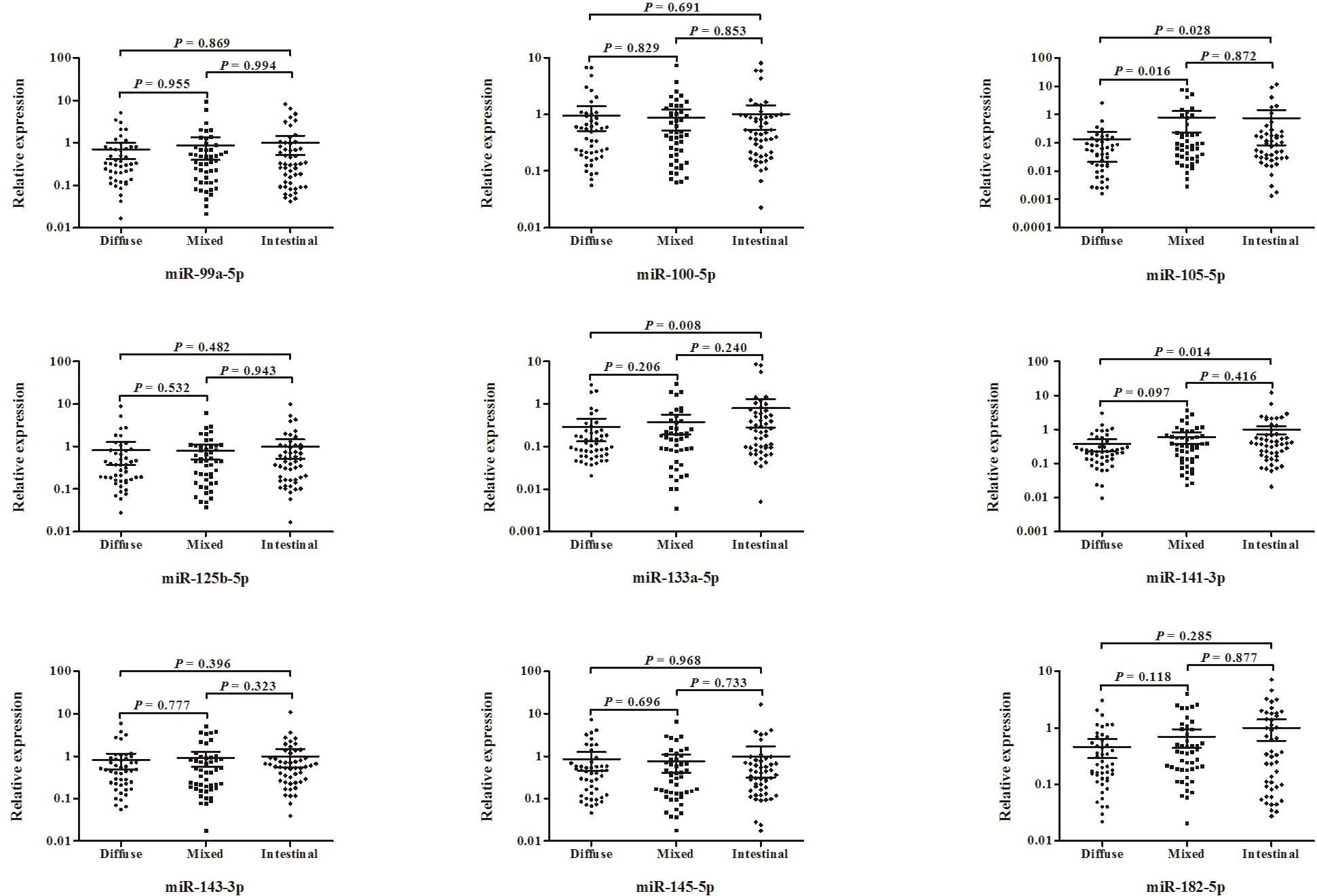
continued.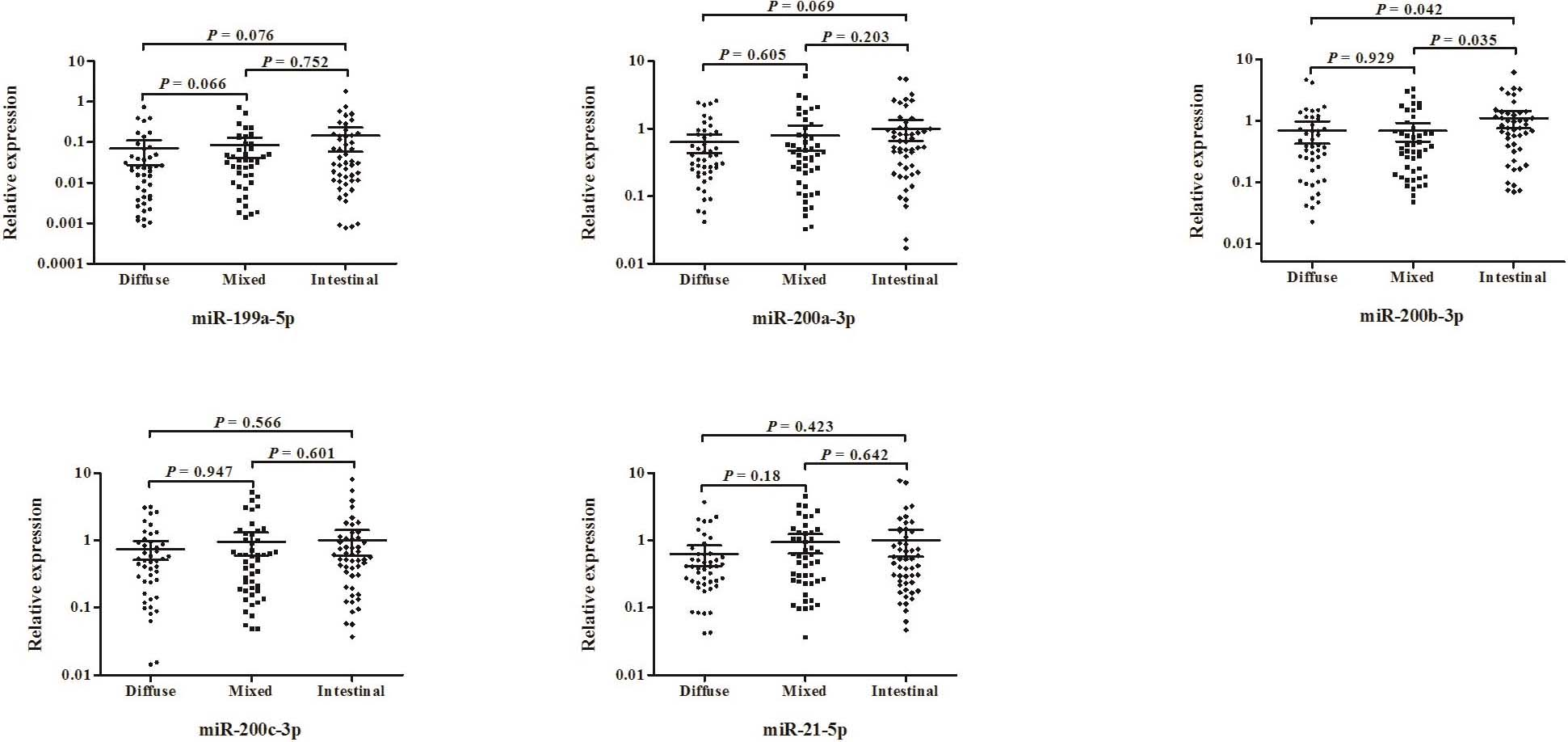
Clinicopathological characteristics used in miRNA expression detection
The expression levels of 22 miRNAs were verified in 145 GC tissues, 47 diffuse type (32.4%), 50 intestinal type (33.1%), 48 mixed type (34.5%), the clinical features of patients were listed in Table 5. The expressed of miR-202-5p, miR-299-5p, miR-32-5p, miR-365b, miR-373-5p, miR-494-3p, miR-498 and miR-499a-5p were weakly expressed in GC tissues. As shown in Fig. 2, there were no significant difference in miR-100-5p, miR-199a-5p, miR-99a-5p, miR-182-5p, miR-125b-5p, miR-143-3p, miR-145-5p, miR-21-5p, miR-200a-3p, and miR-200c-3p among diffuse type, intestinal type and mixed type GC tissues. Compared to intestinal type GC tissues, the miR-141-3p, miR-200b-3p and miR-133a-5p were significantly down-regulated in diffuse type. Meanwhile, the miR-105-5p had significant lower expression in diffuse type compared with intestinal type and mixed type GC tissues.
Log-rank test analysis of overall survival (OS) and disease-free survival (DFS) of candidate miRNA
Log-rank test analysis of overall survival (OS) and disease-free survival (DFS) of candidate miRNA
During the followed up, the median DFS and OS of 145 GC patients was 47.9
The COX risk model analysis of overall survival (OS) and disease-free survival (DFS) of miR-141-3p
The univariate analysis indicated that the prognostic value of GC patients was related to tumor size, tumor infiltrating depth, vascular nerve infiltrating, number of metastatic lymph nodes and metastatic lymph nodes ration, TNM stage, Lauren classification and miR-141-3p. Multivariate analysis of OS and DFS revealed that metastatic lymph nodes ration, Lauren classification and miR-141-3p were independent prognostic factors (Table 7).
Overall survival (OS) and disease free survival (DFS) curves of low miR-141-3p and high miR-141-3p group plotted by the Kaplan-Meier method in (A–B) diffuse type, (C–D) intestinal type, (E–F) mixed type GC. Each 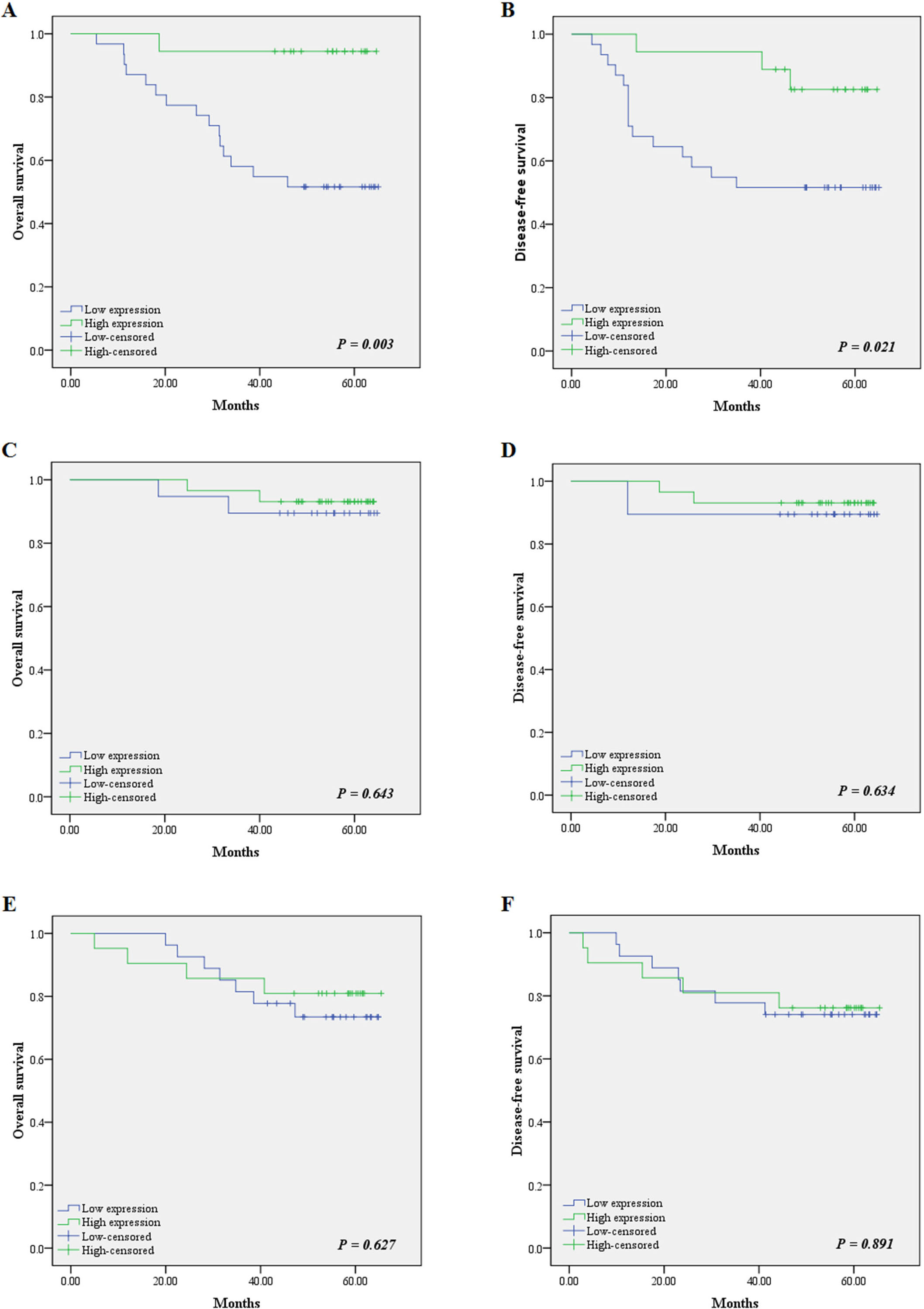
To explore the prognostic value of miR-141-3p in Lauren classification GC, we conducted univariate analysis of miR-141-3p among diffuse type, intestinal type and mixed type GC. As a consequence of univariate analysis, low miR-141-3p in diffuse type GC showed significant worse OS and DFS than high miR-141-3p (
Currently, there are several classifications of GC, including histologically and molecular [30]. It is hard to say which classification is the best one due to the morphological characteristics of GC. Choosing one classification system is insufficient to provide precise prognosis for individual treatment. Lauren classification is the most-used one, however, there is still controversial whether Lauren classification plays better roles on prognosis performance of GC. In this study, we performed a retrospective study of 1144 patients who received radical gastrectomy. The results indicated that intestinal type GC (38.1%) had higher incidence than diffuse type GC (26.4%) which was line with previous study [31]. The difference with the study was that mixed type GC had higher incidence due to regional diversity. In diffuse type, the incidence was higher in younger ones than elder ones and females were predominant which may be related with oestrogen receptor [32]. The signet ring carcinoma, mucinous carcinoma, poor differentiated, deeper infiltration and higher metastatic lymph nodes ration were found in diffuse type GC than intestinal type GC, resulting in poor prognosis in diffuse type GC. The OS, DFS and 5-year survival of intestinal type GC had obvious survival advantages than diffuse type GC. According to multivariate analysis, Lauren classification was an independent prognostic factor and diffuse type GC was an independent risk factor for poor prognosis. In addition, our study showed that diffuse type GC was predominant in younger population in our country, the late TNM stage, large tumor size, lymphatic metastasis. It may be strongly correlated with heredity and may help to further understand the tumorigenesis of diffuse type GC.
Previous researches have confirmed that miRNAs have clinical implications in pathogenesis, diagnosis and prognosis of human cancers [11, 12, 33]. To have better understanding on targeted therapies in GC, we analyzed the expression levels of miRNAs in Lauren classification GC to seek for a prognostic biomarker. In our study, the expression levels of miR-141-3p were significantly down-regulated in diffuse type compared to intestinal type GC tissues using qRT-PCR. Multivariate analysis of OS and DFS revealed that metastatic lymph nodes ration, Lauren classification and miR-141-3p were independent prognostic factors. The low expression of miR-141-3p lead to worse OS and DFS in contrast to high miR-141-3p in diffuse type GC. MiR-141 was demonstrated as tumor suppressor through regulating target gene TAZ in GC. Inhibition of miR-141 resulted in promoting GC cells proliferation, invasion and migration in vitro [34]. MiR-141-3p, a member of miR-200 family, and its target gene ZEB1 and ZEB2 (E-cadherin transcriptional repressors) were associated with epithelial to mesenchymal transition (EMT). Enhanced expression of miR-141-3p suppressed EMT, while inhibition of miR-141-3p induced EMT. Downregulation of miR-141-3p played important roles on tumor progression [35]. The results were consistent with the low expression of miR-141-3p lead to worse OS and DFS in diffuse type GC. Using DIANA-miRPath v3.0 online software to assess miR-141-3p regulatory roles and the identification of controlled pathways [36]. As shown in Table S1, KEGG molecular pathways showed that miR-141-3p was associated with P53 signaling pathway. It was confirmed that overexpression P53 indicated the poor prognosis in GC, especially in diffuse type [37]. GO pathway analysis showed that miR-141-3p was associated with epidermal growth factor receptor signaling pathway, which was confirmed to be an independent prognostic factor influenced prognosis of GC [38].
There were some limitations in our study, the number of candidate miRNAs in predicting prognosis of GC and subtype of GC were relatively small. Also, neoadjuvant chemotherapy, Helicobacter Pylori infection and HER-2 gene amplification were not included in the prognostic factors.
Conclusions
Taken together, the present study suggested that Lauren classification was an independent prognostic factor in GC and the diffuse type was an independent risk factors for poor prognosis of GC. Lauren classification may help clinical doctors provide a reasonable plan for individual treatment combining with other clinicopathological characteristic. MiR-141-3p was an independent prognostic factor and may become a promising prognostic biomarker in Lauren classification GC. However, the mechanism of miR-141-3p in prognosis of Lauren classification still need further investigation.
Ethics statement
The medical ethical committee of First Affiliated Hospital of Nanjing Medical University. Written informed consent was obtained from all GC patients included in the study.
Author contributions
Conception: WC, ZH, MZ and SQ.
Interpretation or analysis of data: WC, QG, ZH, and ZH. WC, QG, YD and ZH performed the experiments.
Preparation of the manuscript: WC, QG and ZH.
Revision for important intellectual content: YZ, MZ and SQ.
Supervision: MZ and SQ.
Footnotes
Acknowledgments
The staff authors are sincerely grateful to all volunteers who participated in this follow-up study. The work was supported by the Jiangsu Provincial Medical Key Discipline (Grant number: ZDXK202235).
Conflict of interest
The authors have declared that no potential conflict of interest exists.