




Abstract
BACKGROUND:
MicroRNA-425-5p (miR-425-5p) has been investigated in some human cancers, but the understanding of its clinical and functional roles in non-small cell lung cancer (NSCLC) remains poor.
OBJECTIVE:
This study sought to measure the expression of miR-425-5p in NSCLC samples, assess its prognostic significance in cancer patients, and explore its functional role during tumor progression.
METHODS:
Expression of miR-425-5p was examined using quantitative Real-time polymerase chain reaction (qRT-PCR). Kaplan-Meier survival analysis and Cox analysis were conducted to evaluate the prognostic value of miR-425-5p. The effects of miR-425-5p on NSCLC cell proliferation, migration and invasion were assessed using cell experiments.
RESULTS:
Expression of miR-425-5p was upregulated in NSCLC tissues and cells compared with the normal controls (all
CONCLUSIONS:
Overexpression of miR-425-5p predicts poor prognosis of NSCLC and promotes cancer cell proliferation, migration and invasion by targeting FOXJ3.
Introduction
Lung cancer remains one of the most serious health burdens and the leading cause of cancer-related deaths among men and women worldwide [1]. It is divided into two subtypes, including small cell lung cancer carcinoma (SCLC) and non-small cell lung cancer (NSCLC), based on its pathological pattern [2]. NSCLC accounts for more than 80% of lung cancer cases, with increasing rates of morbidity and mortality [3]. Although the advances in therapeutic strategies, including surgery, radiotherapy and chemotherapy, the prognosis and clinical outcomes of patients with NSCLS remain dismal and the 5-year overall survival is only approximately 17.1% [4]. Thus, more effective therapeutic methods are urgently needed for patients suffering from NSCLS. Targeted therapy has been highlighted in human cancer treatment, which mainly focuses on the molecules with important functional roles during tumor progression [5, 6]. These molecules usually have aberrant expression patterns in tumors, and are associated with diagnosis and prognosis of various human cancers [7, 8]. For example, DBC1 expression has been reported to be upregulated in hepatocellular carcinoma and associated with the prognosis of cancer patients, and it could promote the tumor progression and may be a candidate therapeutic target for this malignancy [9]. In addition, the abnormal expression of microRNA-129 has been described as an efficient therapeutic target and biomarker in gastrointestinal cancer [10]. In lung cancer, the increased expression of microRNA-130b has been proved to promote cancer cell proliferation, migration and invasion, indicating that microRNA-130b may have a significant therapeutic potential for lung cancer targeted therapy [11]. Therefore, it is critical to search for novel functional molecules to meet the clinical requirements and improve the treatment of NSCLS.
Emerging evidences revealed that microRNAs (miRNAs) are involved in tumor progression in different types of human cancer [12, 13, 14, 15]. MiRNAs are a class of endogenous non-coding RNAs, with a length of 18
In the present study, the expression of miR-425-5p in NSCLS tissues and cells was investigated, and its prognostic significance and functional roles during NSCLC tumor progression were also explored.
Materials and methods
Patients and tissues collection
All tissue samples were collected from 134 NSCLC patients, who were undergoing surgical resection from February 2009 to May 2012 in Shanghai Pulmonary Hospital. Among these patients, 74 cases were pathological diagnosed with lung adenocarcinoma, and 60 cases were lung squamous cell carcinoma. None of the patients had received preoperative anti-tumor therapy or had histories of malignancy. A total of 134 pair of cancerous tissues and adjacent normal tissues were collected from the patients during the surgery and immediately stored in liquid nitrogen until RNA extraction. We recorded the clinicopathological characteristics of the patients, which were listed in Table 1. After the surgery, all the patients were enrolled in a 5-year follow-up survey, and their survival data was obtained by telephone. The experimental procedures were approved by the Shanghai Pulmonary Hospital, and informed consent was obtained from each patient.
Relationship between miR-425-5p expression and clinicopathological features of NSCLC patients
Relationship between miR-425-5p expression and clinicopathological features of NSCLC patients
Three NSCLC cell lines, including A549 (KRAS mutation), SPCA1 and H1299, and one human bron-chial epithelial cell line (16HBE) were purchased from American Type Culture Collection (ATCC), and cultured in Dulbecco’s modifed Eagle’s medium (DMEM; Gibco, CA, USA) supplemented with 10% FBS(Gibco, CA, USA) at 37
RNA extraction and quantitative real-time polymerase chain reaction (qRT-PCR)
Total RNAs including miRNAs were extracted from the fresh tissues using TRIzol reagent (Invitrogen, Carlsbad, CA, USA). NanoDrop 2000 (Thermo Fisher Scientific, Waltham, MA, USA) was adopted to evaluate the concentration and quality of RNAs. Single stranded cDNA was synthesized from pure RNAs using PrimeScript RT reagent kit (TaKaRa, Shiga, Japan) and then stored at
In this study, qRT-PCR was used to measure the expression levels of miR-425-5p in NSCLC tissues and cell lines. SYBR green I Master Mix kit (Invitrogen, Carlsbad, CA, USA) and 7300 Real-Time PCR System (Applied Biosystems, USA) were used to carry out qRT-PCR, and U6 was adopted as internal control gene. The sequences of primers used in the reactions were as follows: miR-425-5p forward: 3’-TGCGGAATGACACGATCACTCCCG-5’, reverse: 3’-CCAGTG CAGGGTCCGAGGT-5’; U6, forward: 5’-GCTTCGG CAGCACATATACTAAAAT-3’, reverse: 5’-CGCTTC ACGAATTTGCGTGTCAT-3’. The relative expression of miR-425-5p was calculated using 2
Expression of miR-425-5p measured by qRT-PCR in NSCLC. A. The expression of miR-425-5p in NSCLC tissues was significantly higher than that in the normal controls (***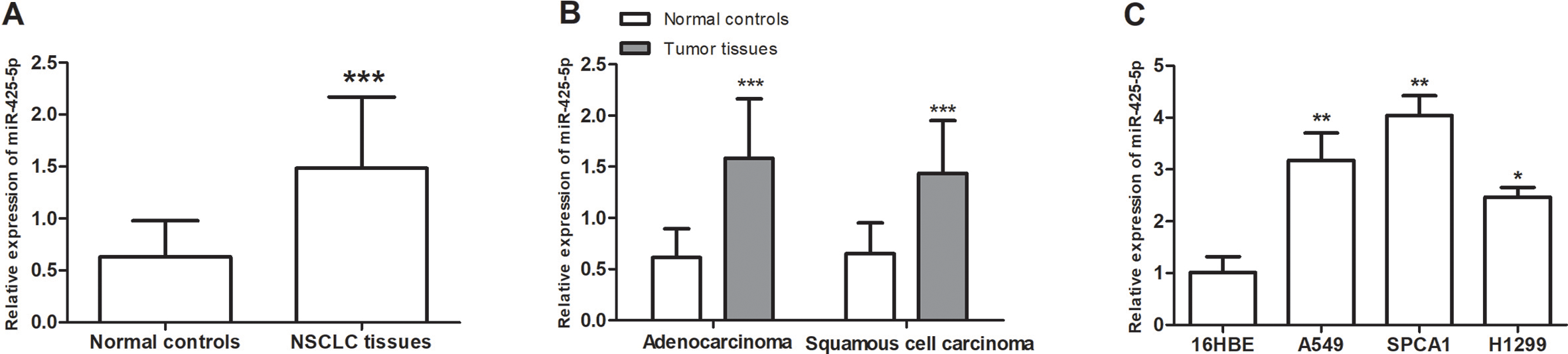
Cell proliferation of NSCLC cells was evaluated by MTT assay. Stably transfected cancer cells were seeded into 96-well plates at a cell density of 4
Cell migration and invasion analysis
To examine the cell migration and invasion of transfected NSCLC cells, Transwell assay was performed in this study. The transwell chambers with 8
Luciferase reporter assay
To uncover the underlying molecular mechanisms of miR-425-5p in NSCLC, we used TargetScan (
Statistical analysis
All statistical analyses were performed using SPSS 18.0 software (SPSS Inc., Chicago, IL, USA) and GraphPad Prism 5.0 software (GraphPad Software, Inc., USA). Data are expressed as mean
Results
Expression of miR-425-5p in NSCLC tissues and cells
The relative expression of miR-425-5p measured by qRT-PCR was found to be upregulated in NSCLC tissues (expression range of 0.124–2.961) compared with the adjacent normal tissues (expression range of 0.086–1.808) (
The expression patterns in NSCLC cells were also investigated by qRT-PCR. As shown in Fig. 1C, the expression of miR-425-5p was also higher in three NSCLC cell lines than that in the normal cells (all
Relationship between miR-425-5p expression and clinicopathological features of NSCLC patients
The association of miR-425-5p expression with clinicopathological characteristics was examined to determine the role of miR-425-5p during tumor progression of NSCLC. The results of Mann-Whitney
Multivariate cox regression analysis for miR-425-5p in NSCLC patients
Multivariate cox regression analysis for miR-425-5p in NSCLC patients
Survival analysis for NSCLC patients based on different miR-425-5p expression levels using Kaplan-Meier method. Patients with high miR-425-5p expression had shorter survival time compared with those with low miR-425-5p expression (log-rank 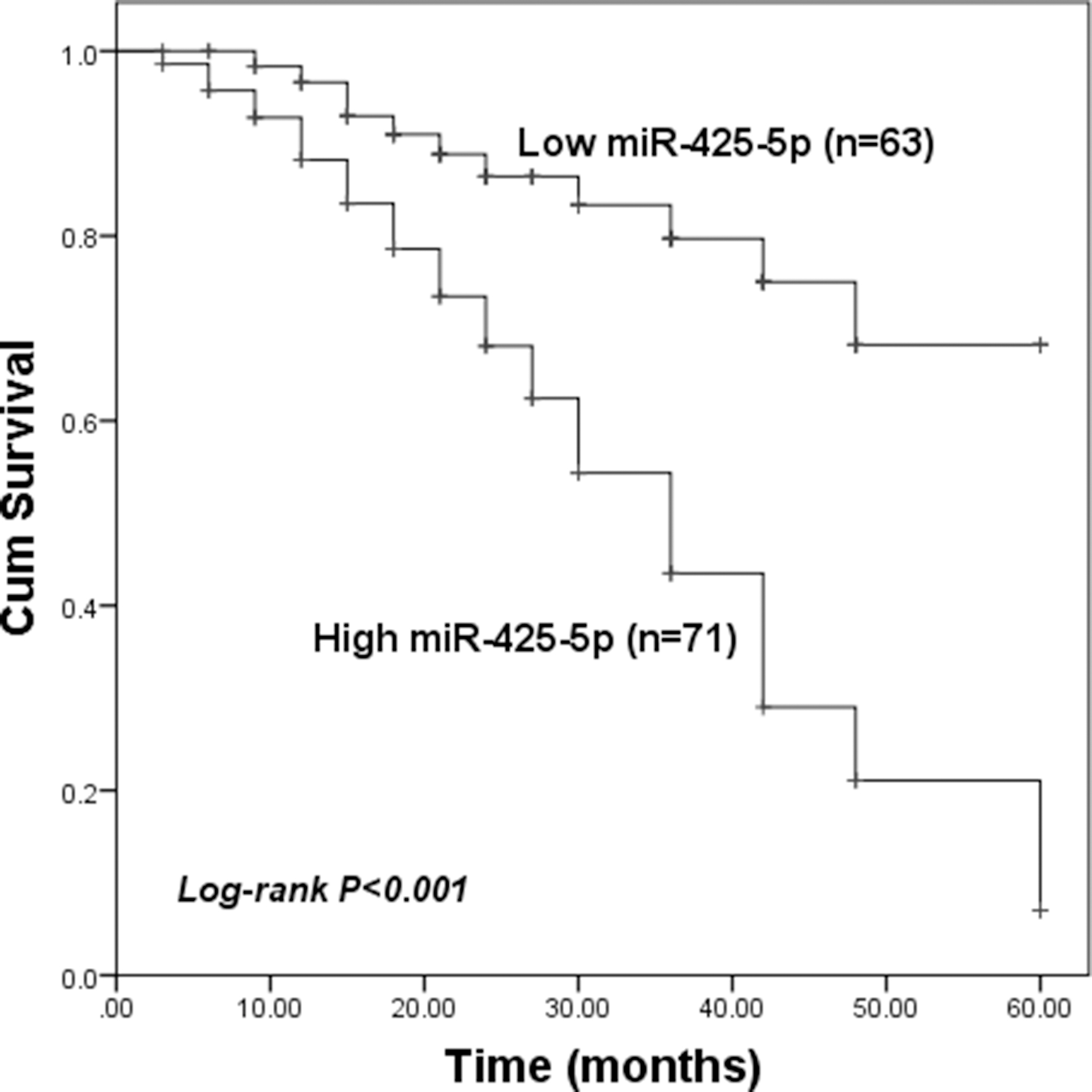
In the present study, the clinical significance of miR-425-5p in NSCLC prognosis was also focused. To facilitate the subsequent analyses, we used the mean miR-425-5p expression value (1.484) to divide the patients into two groups: low miR-425-5p group (expression range of 0.124–1.469) and high miR-425-5p group (expression range of 1.487–2.961). According to the analysis of the survival information of the patients, the Kaplan-Meier survival curves were constructed and indicated that the high miR-425-5p expression group with a median survival time of 18 months had a worse overall survival than that in the low miR-425-5p group with a median survival time of 27 months (log-rank
Effects of miR-425-5p on cell proliferation of NSCLC cells
To further explore the biological function of miR-425-5p during tumor progression of NSCLC, its effects on NSCLC cell biological processes were evaluated. A549 and SPCA1, which possessed extremely high miR-425-5p expression levels, were adopted in the cell experiments. The expression of miR-425-5p in the cancer cells was modulated by miR-425-5p mimic or miR-425-5p inhibitor. According to qRT-PCR, we proved that the expression of miR-425-5p was upregulated by miR-425-5p mimic, and was downregulated by miR-425-5p inhibitor compared with the control groups (all
Effects of miR-425-5p on proliferation of A549 and SPCA1 cells. A and B. The expression of miR-425-5p was obviously upregulated in NSCLC cells transfected with miR-425-5p mimic, and was markedly downregulated in NSCLC cells transfected with miR-425-5p inhibitor (**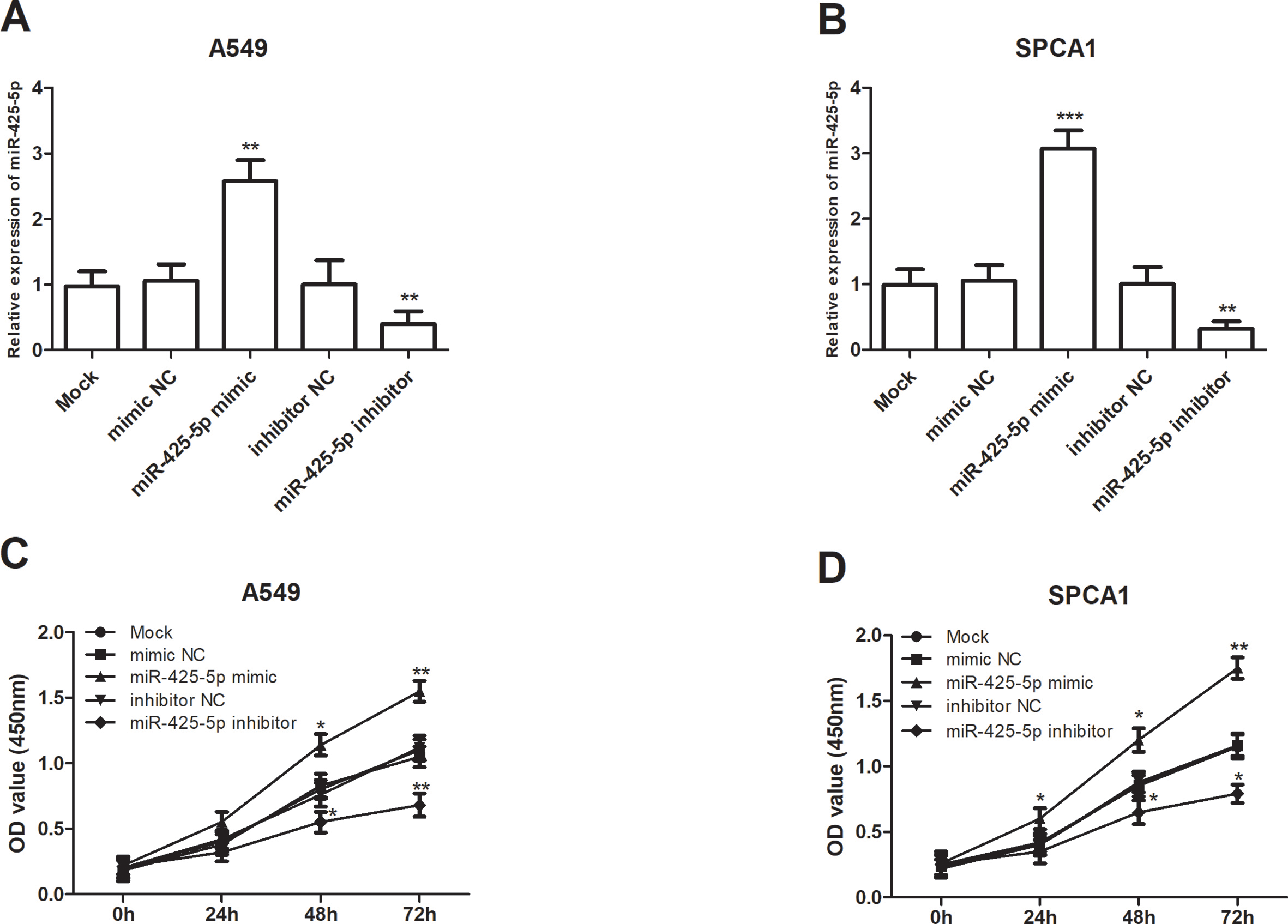
The abilities of migration and invasion of NSCLC cells were measured using Transwell analysis. After regulation of the miR-425-5p expression in the cancer cells, we found that both the number of migratory cells and invasive cells number were increased in the miR-425-5p overexpression group, but were decreased in the miR-425-5p reduction group (all
Effects of miR-425-5p on cell migration and invasion in A549 and SPCA1 cells. A and B. The number of migratory cells was elevated by miR-425-5p overexpression, while was decreased by miR-425-5p reduction (*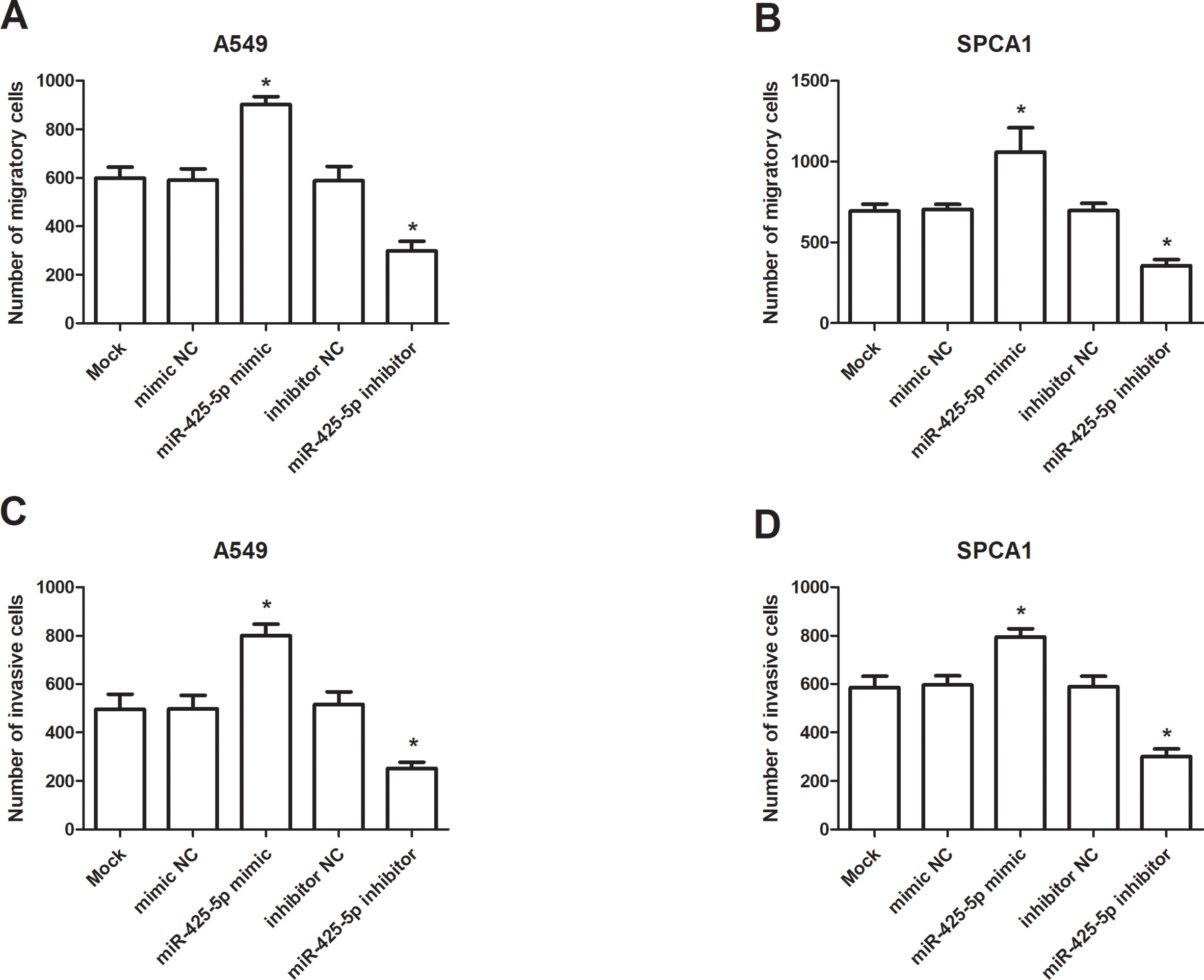
FOXJ3 is a direct target of miR-425-5p in NSCLC cells. A. The complementary sequence of miR-425-5p in the 3-’UTR of FOXJ3. B. The luciferase activity of FOXJ3-3-’UTR-WT was decreased by overexpression of miR-425-5p (***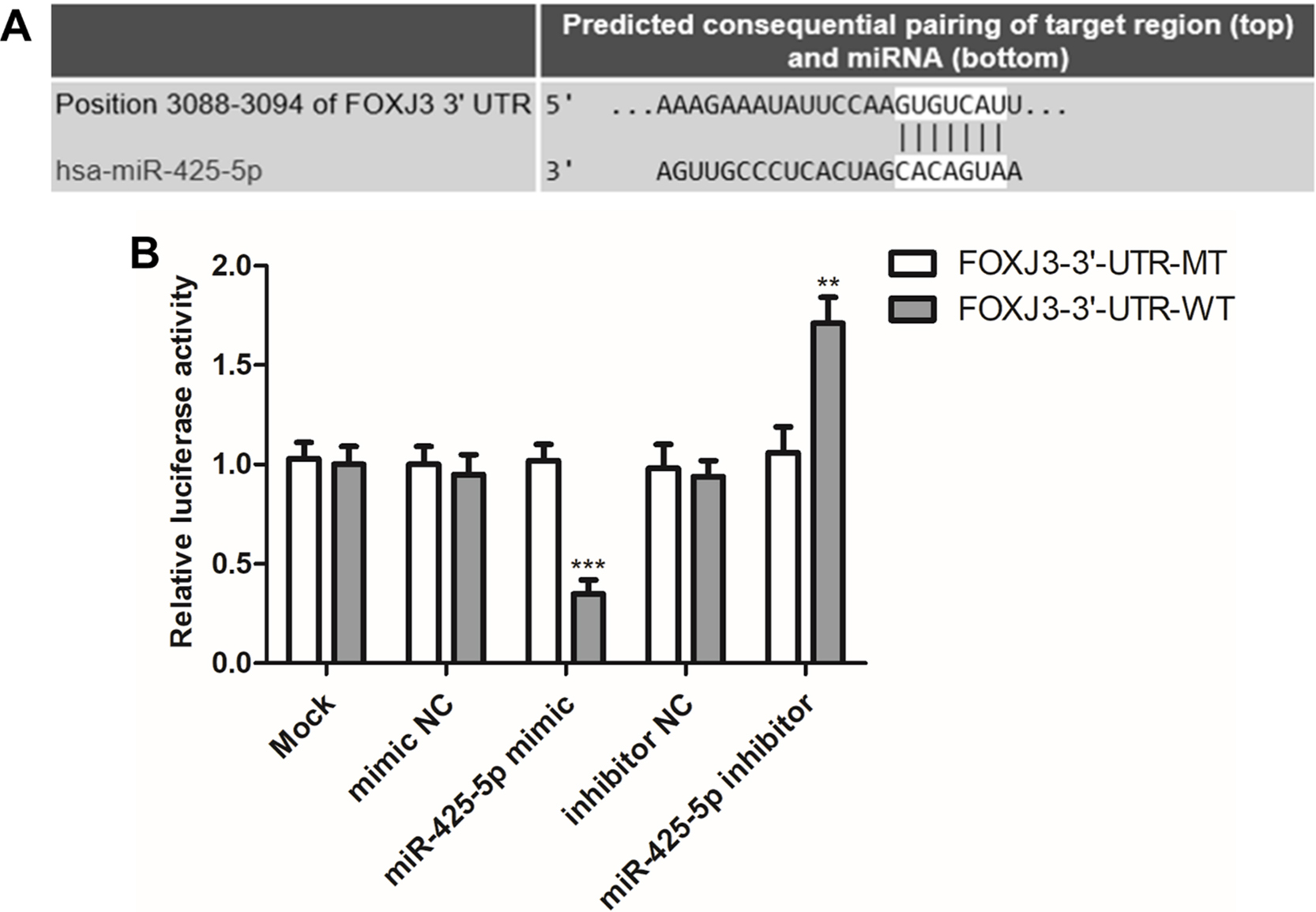
In the current study, we further predicted the potential targets of miR-425-5p and found that FOXJ3 has the complementary sequence of miR-425-5p in its 3-’UTR (Fig. 5A). To validate this prediction, a luciferase reporter analysis was carried out in the SPCA1 cells. As shown in Fig. 5B, we found that the luciferase activity of FOXJ3 with wild-type 3-’UTR (FOXJ3-3-’UTR-WT) was significantly decreased by overexpression of miR-425-5p (
Discussion
Accumulated evidences have reported that miRNAs are deregulated in various human cancers, and act as crucial roles in tumor initiation and development [24]. MiRNAs can regulate the expression of oncogenes or tumor suppressors, and thus are involved in tumor progression of diverse malignancies [25]. For example, expression of miR-320a was found to be downregulated in colorectal carcinoma cells, and suppressed cancer cell migration, invasion and cell cycle by decreasing the Rac1 expression, which represents one of the oncogenes of colorectal carcinoma [26]. Upregulated miR-199a-3p has been identified in gastric cancer cells and tissues, and could promote gastric cancer cell proliferation and inhibit cancer cell apoptosis. This tumor-promoting action of miR-199a-3p was exerted by downregulation of ZHX1, which has been determined as a tumor suppressor in gastric cancer [27, 28].
NSCLC is the most common type of all lung cancer cases with increasing rates of morbidity and mortality. In addition to the traditionally therapeutic strategies, targeted therapy has also attracted lots attentions in NSCLC treatment [29]. Currently, some members of miRNAs with aberrant expression patterns have been identified in NSCLC, which may provide potential effective therapeutic targets. Shi et al. [30] have reported that miR-204 expression was decreased in NSCLC, and overexpression of miR-204 inhibited NSCLC cell migration and invasion via suppression of NUAK1, indicating that miR-204 might be a potential targets for NSCLC therapy. MiR-1271, as another example, has been proved to be upregulated in NSCLC cells, and was involved in the promotion of tumor cell proliferation, migration and invasion, which suggested that miR-1271 could be used for improvement of NSCLC targeted therapy [31]. Therefore, we considered that identification of novel miRNAs, which are involved in tumor progression, is important for development of NSCLC treatment.
In the present study, we observed the dysregulation of miR-425-5p in NSCLC samples. MiR-425-5p has been studied in some human cancers [32]. For instance, upregulated expression of miR-425-5p was detected in gastric cancer tissues, which predicted poor prognosis and was involved in gastric cancer cell proliferation and apoptosis [33]. The elevated expression of miR-425-5p has also been reported in hepatocellular carcinoma, and could promote cancer cell metastasis and invasion [34]. In renal cell carcinoma, miR-425-5p was proved as an oncogenic miRNA with significant effects on cancer cell proliferation, migration and apoptosis [35]. In addition, the increased expression of miR-425-5p in breast cancer cells results in promoted migration and invasion by regulation of tumor suppressor EI24, indicating the role of miR-425-5p as a potential therapeutic target in this malignancy [36]. Similarly, the tumor cell migration and invasion were also found to be upregulated by miR-425-5p in gastric cancer cells, which suggested that the methods to decrease the expression of miR-425-5p may be novel therapeutic strategies for gastric cancer treatment [37]. In colorectal carcinoma, the aberrant expression of miR-425-5p could promote the chemoresistance and was also described as a novel therapeutic target for the intervention of this malignancy [38]. All these previous studies focused on the pivotal role of miR-425-5p and its remarkably potential for the improvement of targeted cancer therapy. However, the current studies about miR-425-5p are not enough to understand its important role in NSCLC. Thus, we aimed to investigate the expression patterns, clinical significance and functional role of miR-425-5p in NSCLC.
According to qRT-PCR, we found that the expression of miR-425-5p was remarkably higher in NSCLC tissues than that in the adjacent normal controls. Similar results were performed in NSCLC cell lines, which also observed that upregulated miR-425-5p expression in NSCLC cells compared with the normal cells. Thus, we considered that the miR-425-5p might serve as an oncogenic miRNA in NSCLC. In addition, the elevated expression of miR-425-5p was associated with positive lymph node metastasis and advanced TNM stage of NSCLC patients, suggesting that miR-425-5p might be involved in the development of NSCLC. To further investigate the clinical significance of miR-425-5p in NSCLC prognosis, Kaplan-Meier survival analysis and Cox analysis were carried out, and demonstrated that cancer patients with high miR-425-5p expression had poor overall survival compared with those with low miR-425-5p expression, and that the expression of miR-425-5p was an independent prognostic factor in patients with NSCLC. All these data above indicated that the overexpression of miR-425-5p was associated with poor prognosis in patients with NSCLC.
Furthermore, the functional role of miR-425-5p in tumor progression of NSCLC was explored in NSCLC cells. The expression of miR-425-5p was regulated in NSCLC cells by cell transfection with miR-425-5p mimic or miR-425-5p inhibitor. The NSCLC cell proliferation measured by MTT assay was promoted by miR-425-5p overexpression, while was inhibited by miR-425-5p reduction. In addition, the cell migration and invasion of NSCLC cells were also examined using Transwell assay. The results revealed that the upregulation of miR-425-5p could enhance, whereas the knockdown of miR-425-5p could suppress the NSCLC cell migration and invasion. From the above, we considered that the overexpression of miR-425-5p could promote the tumor progression of NSCLC. To further understand the underlying molecular mechanisms of miR-425-5p playing in NSCLC, we predicted the potential targets of miR-425-5p. By the in silico analysis and a luciferase reporter assay, we found that FOXJ3 was a direct target of miR-425-5p in NSCLC cells. FOXJ3 is an important transcription factor of mitochondrial biogenesis, and plays pivotal role in cell proliferation, longevity and differentiation [39, 40]. A previous study by Jin et al. [41] indicated that miR-517a-3p could enhance lung cancer progression by targeting FOXJ3. Thus, we believed that miR-425-5p also promoted tumor NSCLC cell proliferation, migration and invasion by directly downregulation of FOXJ3. Although our study provided a candidate biological biomarkers and a potential therapeutic target for NSCLC, some limitations are presented in this study, such as the small size of research cohort and the limited understanding about the molecular mechanisms underlying the roles of miR-425-5p and FOXJ3 in NSCLC. Thus, further studies that focus on these queries are needed.
Conclusion
Taken together, the upregulated expression of miR-425-5p predicts poor prognosis of NSCLC, and promotes cell proliferation, migration and invasion in NSCLC cells by targeting FOXJ3. We considered that miR-425-5p may be a novel therapeutic target in NSCLC treatment.