




Abstract
BACKGROUND:
Non-small cell lung cancer (NSCLC) is the major type of lung cancer. MicroRNAs (miRNAs) are currently considered as novel targets and tools in cancer therapy.
OBJECTIVE:
The aim of this study was to investigate the expression level and functional role of miR-519a in NSCLC, as well as its clinical values.
METHODS:
One hundred and two patients with NSCLC were recruited. Quantitative real-time PCR (qRT-PCR) was used for the measurement of the expression level of miR-519a. Kaplan-Meier survival and Cox regression analyses were conducted to explore the prognostic significance of miR-519a in NSCLC. MTT and Transwell assays were used to detect the effect of miR-519a on NSCLC cell proliferation, migration, and invasion.
RESULTS:
MiR-519a was significantly downregulated in NSCLC tissues, as well as NSCLC cell lines. The expression level of miR-519a was prominently associated with lymph node metastasis and TNM stage. Kaplan-Meier analysis suggested that low miR-519a expression was closely associated with shorter overall survival. Multivariate Cox regression analysis demonstrated that miR-519a expression level and TNM stage were two independent prognostic factors for 5-year overall survival in NSCLC patients. In vitro study, miR-519a significantly inhibited the proliferation, migration, and invasion of NSCLC cells. STAT3 was proved to be the target gene of miR-519a.
CONCLUSIONS:
MiR-519a functions as a tumor suppressor and inhibits tumor progression of NSCLC via targeting STAT3. MiR-519a may act as a prognostic biomarker and therapeutic target for NSCLC.
Introduction
Lung cancer is the most common cancer worldwide, and is regarded as the leading cause of cancer-related deaths [1, 2]. A variety of risk factors have been identified to be associated with the occurrence of lung cancer, such as smoking, air pollution, radon exposure and occupational carcinogens [3, 4]. Non-small cell lung cancer (NSCLC) is the major type of lung cancer, accounting for approximately 80%–85% of lung cancer cases [5]. At present, a number of biomarkers have been detected which are closely related to prognosis and dug-sensitivity of NSCLC [6]. Despite the great progress of prevention, diagnosis and treatment strategies, the overall 5-year survival rate of NSCLC is still poor [7]. Exploring the molecular mechanisms underlying the development and progression of lung cancer is still urgent needed, and it is of great significance to identify novel and sufficiently effective predictive markers in order to improve the prognosis of NSCLC.
MicroRNAs (miRNAs) are defined as a class of single-stranded, non-coding RNAs, with a length of 19–25 bp. Dysregulation of miRNAs has been detected in many kinds of human cancers including lung cancer, such as miR-940, miR-199a-5p, and miR-1204 [8, 9, 10]. These miRNAs serve an important role in cancer development, including tumor proliferation, metastasis, and invasion, as well as angiogenesis of several cancers. More importantly, miRNAs can regulate the expression of cancer-related genes via binding to their 3’-untranslated region (3’-UTR), and serve as an oncogene or suppressor gene in the occurrence and development of tumors [11]. Over the past decades, numerous prognosis-related miRNAs have been identified in NSCLC, which would provide a new theoretical basis for the prognosis and targeted therapy of NSCLC [12, 13]. MiR-519a belongs to a larger cluster of miRNAs, C19MC, and it has been reported to be involved in the pathogenesis of several human cancers, including ovarian cancer, hepatocellular carcinoma (HCC), glioblastoma (GBM) [14, 15, 16]. A latest research reported that miR-519a is involved in the cisplatin resistance in NSCLC [17]. But its role in NSCLC development has not been explored.
Therefore, in the present study, we investigated the expression level and functional role of miR-519a in NSCLC, and further explored its clinical values.
Materials and methods
Patients and sample collection
The study protocol was approved by the Ethical Committee of Yidu Central Hospital of Weifang. And all enrolled participants signed written informed consents. A total of 102 pairs of fresh NSCLC tissues and corresponding adjacent normal tissues were collected from patients who were diagnosed with NSCLC and received surgical resection at Yidu Central Hospital of Weifang from January 2010 to November 2013. All tissues were immediately frozen in liquid nitrogen after surgery for subsequent experiments. Before surgery, all the patients did not receive any treatment. The detailed clinicopathological characteristics were summarized in Table 1. After surgery, all patients were followed-up by means of a 5-year follow-up survey, and the survival information was obtained by telephone.
Association of miR-519a expression with clinicopathological characteristics in non-small cell lung cancer patients
Association of miR-519a expression with clinicopathological characteristics in non-small cell lung cancer patients
The NSCLC cell lines (A549, H520, H1299, H1975) and a normal human bronchial epithelial cell line (16HBE) were purchased from Shanghai Cell Bank of the Chinese Academy of Sciences. All cells were cultured in Dulbecco’s modified Eagle’s medium (DMEM; Gibco/Life Technologies, Grand Island, NY, USA) containing 10% fetal bovine serum (FBS), and incubated in a humidified incubator with 5% CO
MiR-519a mimic, miR-519a inhibitor and the corresponding negative controls of mimic and inhibitor (mimic NC and inhibitor NC) were used to upregulate and downregulate miR-519a expression (RiboBio, Guangzhou, China). H1975 and A549 cells were transfected with miR-519a mimic, miR-519a inhibitor, mimic NC or inhibitor NC respectively using Lipofectamine 2000 reagent (Invitrogen, Carlsbad, CA, USA) following the instructions of the manufacturer. Untreated cells were used as a control group.
Quantitative real time-polymerase chain reaction (qRT-PCR) Assay
Trizol reagent (Invitrogen, Carlsbad, CA, USA) was used for the extraction of total RNA. RNA was reverse-transcripted to complementary DNA (cDNA) using a High Capacity cDNA Reverse Transcription Kit (Applied Biosystems, Foster City, CA, USA). Then qRT-PCR was counted to quantify the level of miR-519a using the SYBR green I Master Mix kit (Invitrogen, Carlsbad, CA, USA). U6 was the endogenous control. The relative quantification of miR-519a was determined using the comparative delta CT (2
MTT assay
The 3-(4, 5-dimethylthiazol-2-yl)-2, 5-diphenylte- trazolium bromide (MTT) assay was conducted to determine the cell viability. The stably transfected cells were seeded in 96-well plate with a density of 5
Cell migration and invasion assays
Transwell chamber with 8
Luciferase reporter assay
According to the TargetScan results, the 3’-UTR of STAT3 has a binding site of miR-519a, STAT3 was identified to be a candidate target gene of miR-519a. To confirm the prediction, the luciferase reporter assay was performed. The wide type (Wt)-STAT3 and mutant (Mut)-STAT3 3’-UTR was cloned into pGL3 luciferase vectors (Promega, Madison, WI, USA). Then the Wt or Mut reporter vectors and miR-519a mimic, miR-519a inhibitor or mimic NC, inhibitor NC were co-transfected into A594 cells. after incubated for 48 h, luciferase activities were detected by using a dual luciferase assay kit (Promega, Madison, WI, USA). Renilla luciferase was used for normalization.
Statistical analysis
Results were presented as the mean
Results
The level of miR-519a is down-regulated in NSCLC
To investigate whether miR-519a expression was altered in NSCLC, the expression levels of miR-519a were measured in 102 pairs of NSCLC tissues and adjacent normal tissues using qRT-PCR. It was found that miR-519a was significantly downregulated in NSCLC tissues compared with the adjacent normal tissues (
Expression of miR-519a in NSCLC tissues and cell lines. A. MiR-519a was downregulated in NSCLC tissues compared with the adjacent normal controls (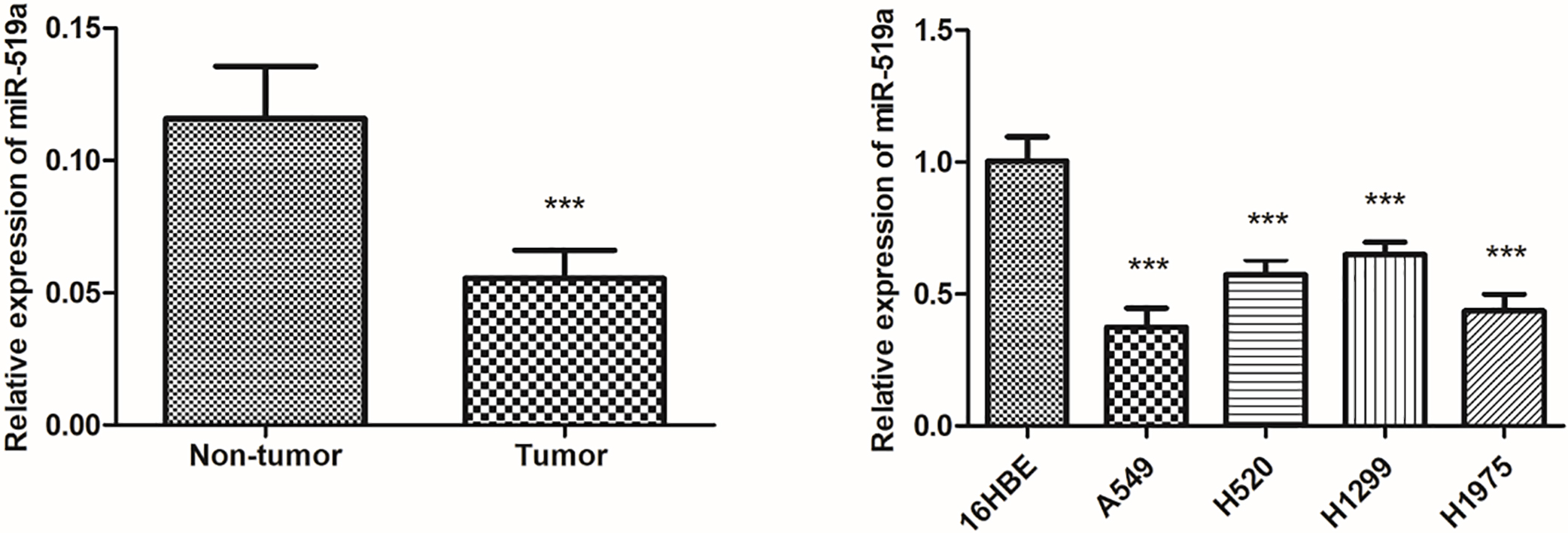
The association of miR-519a expression and clinicopathological parameters was further explored, and all NSCLC patients were divided into low expression group (
Prognostic value of miR-519a expression for patients with NSCLC
According to the overall survival information of NSCLC patients, Kaplan-Meier analysis was conducted to assess the prognostic value of miR-519a in NSCLC. It was noted that low miR-519a expression was closely associated with shorter overall survival (log rank test
Multivariate Cox regression analysis for miR-519a in non-small cell lung cancer patients
Multivariate Cox regression analysis for miR-519a in non-small cell lung cancer patients
According to the overall survival information of NSCLC patients, Kaplan-Meier analysis was conducted. Low miR-519a expression was closely associated with shorter overall survival (log rank test 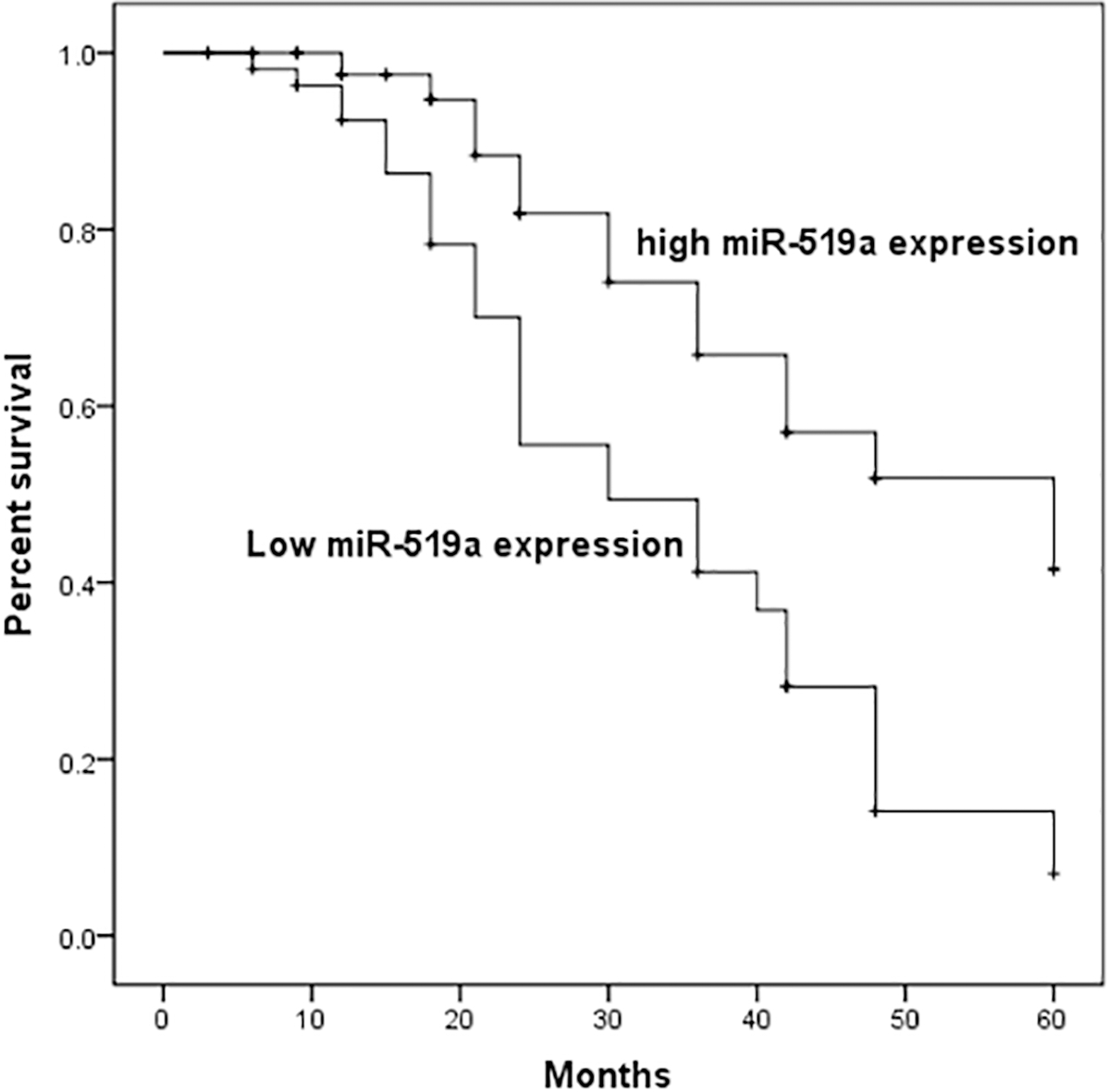
MiR-519a inhibited the proliferation, migration, and invasion of NSCLC cells (A549 and H1975) in vitro. A. miR-519a expression levels in NSCLC cells transfected with miR-519a mimic, inhibitor, or mimic NC, inhibitor NC (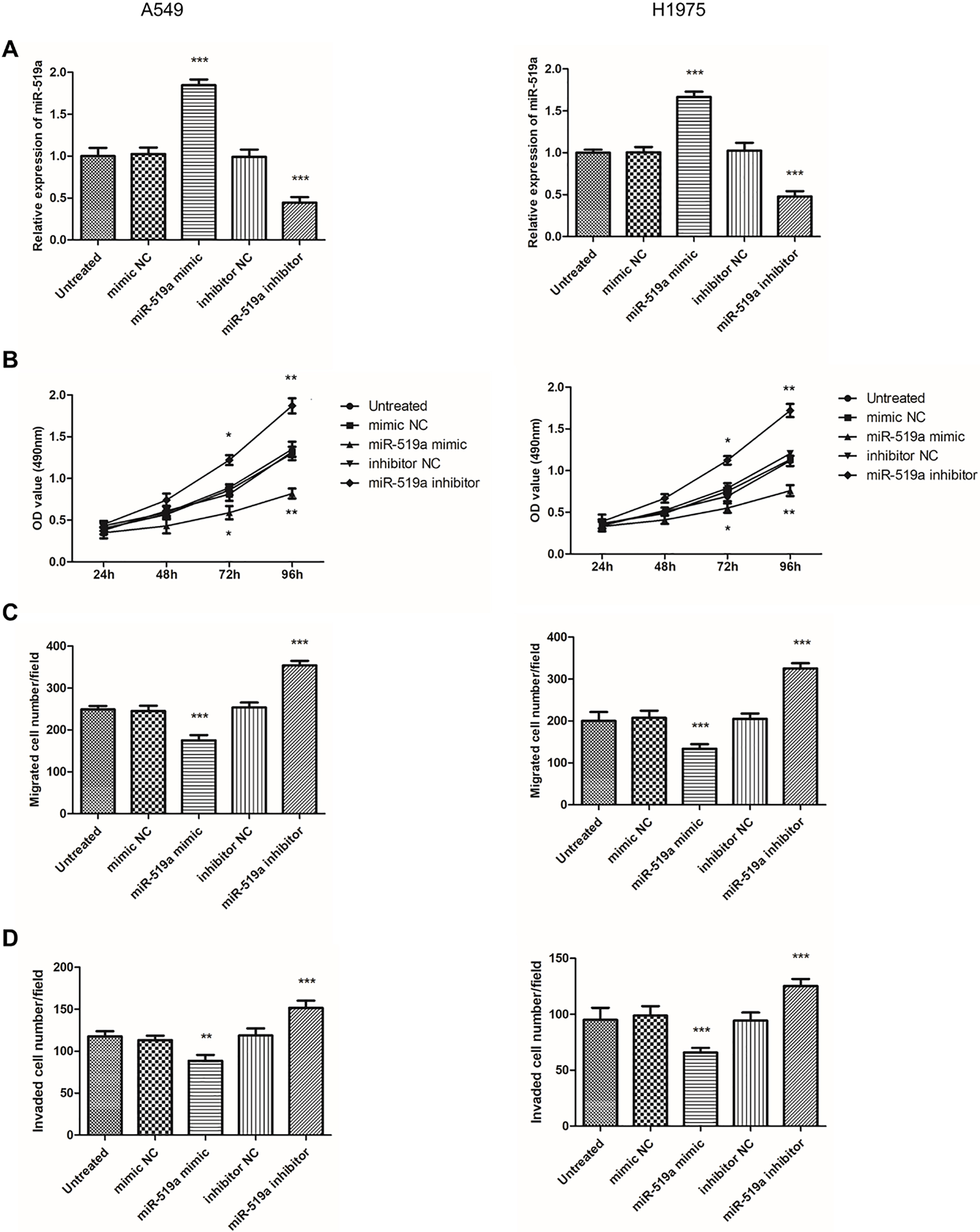
To investigate the functional role of miR-519a in NSCLC, we transfected A549 and H1975 cell lines with miR-519a mimic or inhibitor. A significant increase in miR-519a expression was detected in both A549 and H1975 cells after transfected with miR-519a mimics, while a remarkable decrease trend was found following miR-519a inhibitor transfection (all
STAT3 was the target gene of miR-519a. A. The TargetScan results indicated that STAT3 mRNA contains a miR-519a seven-nucleotide seed match at position 541–547 in the 3’-UTR. B. compared with untreated group, miR-519a mimic transfection significantly attenuated the luciferase activity of STAT3 3’-UTR, while miR-519a inhibitor transfection promoted the luciferase activity of STAT3 3’-UTR. But no significant difference was detected for the luciferase activity between groups when the mutant STAT3 was expressed. 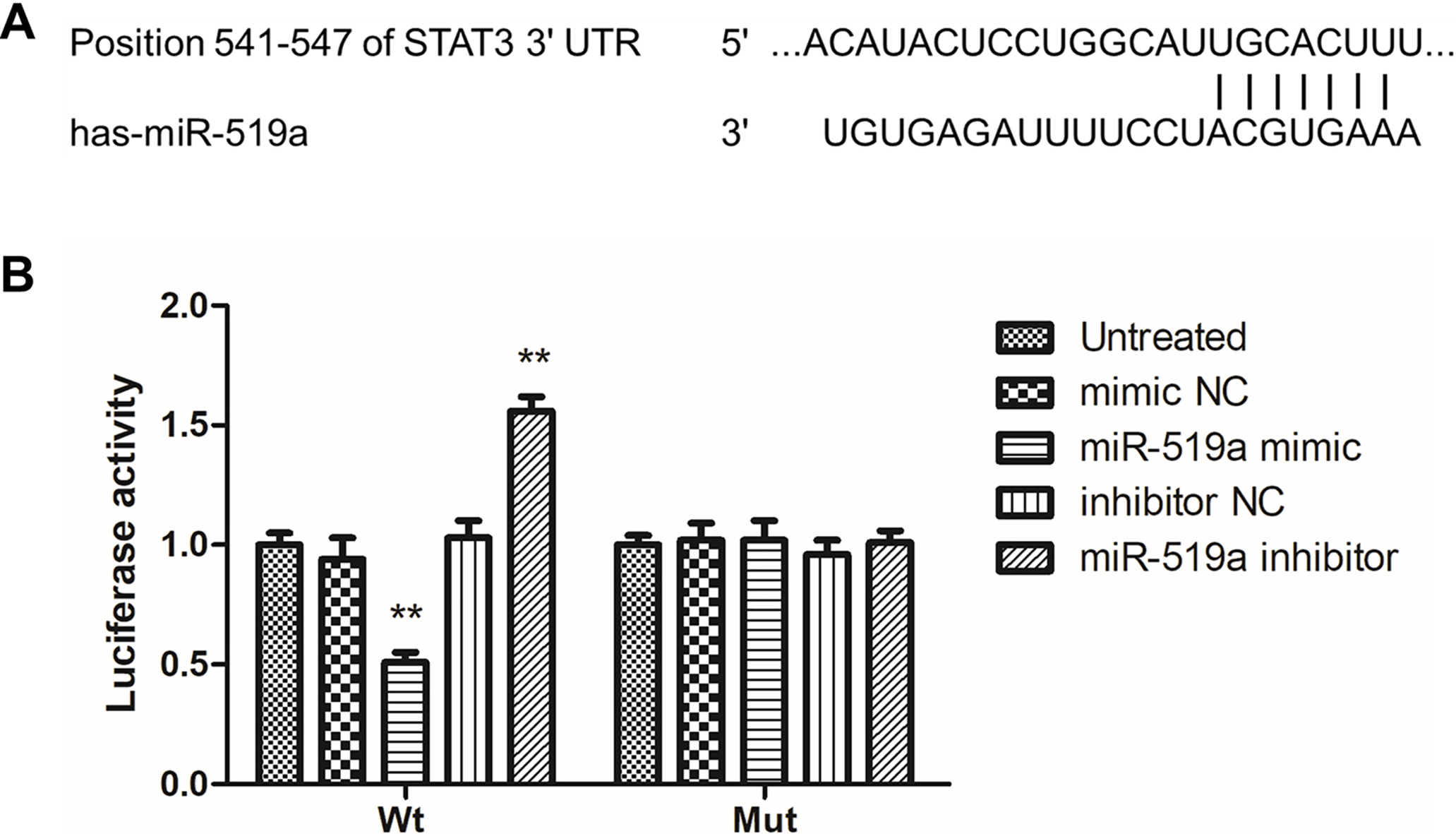
The TargetScan results indicated that STAT3 contains a miR-519a seven-nucleotide seed match at position 541–547 in the 3’UTR (Fig. 4A). Then the luciferase reporter gene assay was performed to confirm whether STAT3 was the direct target gene of miR-519a in NSCLC cells. As shown in Fig. 4B, compared with untreated group, miR-519a mimic transfection significantly attenuated the luciferase activity of STAT3 3’-UTR, while miR-519a inhibitor transfection promoted the luciferase activity of STAT3 3’-UTR. But no significant difference was detected for the luciferase activity between groups when the mutant STAT3 was expressed.
Discussion
MiR-519a belongs to a larger cluster of miRNAs, C19MC, and it has been reported to be aberrantly expressed in several human cancers. In ovarian cancer, miR-519a was significantly downregulated in tissues samples compared with the normal tissues, and overexpression of miR-519a significantly inhibited the cell proliferation and promoted cell apoptosis [14]. Hong et al. suggested that the expression level of miR-519a was downregulated in GBM tissues and cell lines, downregulation of miR-519a was correlated with poor outcomes associated with GBM [18]. In HCC, miR-519a was observed to be elevated in HCC tissues, and the increased level of miR-519a was significantly associated with tumor size, cirrhosis, advanced tumor-node-metastasis tumor stage and overall survival time [19]. In the present study, miR-519a was proved to be downregulated in NSCLC tissues for the first time. Clinically, the expression level of miR-519a was prominently associated with lymph node metastasis and TNM stage in NSCLC. Additionally, similar results were also confirmed in NSCLC cell lines. These results suggested the potential role of miR-519a in NSCLC. In a study of the cisplatin resistance in NSCLC, miR-519a was reported to be proved to be a direct target of Linc00221 which promoted the cisplatin resistance of NSCLC, and miR-519a was found to be downregulated in NSCLC cells compared with normal bronchial epithelial cell line (HBE) [17]. These results supported our findings.
MiRNAs are currently considered as novel targets and tools in cancer therapy. Although a great progress of prevention, diagnosis, and treatment strategies have been made, the overall 5-year survival rate of NSCLC is still poor [20, 21]. It is of great significance to identify novel and sufficiently effective predictive markers in order to improve the prognosis of NSCLC. The molecular markers attract more and more attention currently which serve an important role in the prognosis or diagnosis in NSCLC, including miRNA. For example, Kang et al. reported that miR-612 was expressed at low levels in NSCLC and correlated with overall survival time of NSCLC patients, overexpression of miR-612 decreased proliferation, migration, and invasion, and promoted apoptosis of NSCLC cells in vitro [22]. Zhang et al. observed that miR-621 was lowly expressed in NSCLC tissues, and closely related to pathological grade and poor prognosis of NSCLC [6]. Notably, the prognostic value of miR-519a in different cancer has also been identified. In HCC, miR-519a was found to be significantly correlated with clinicopathological characteristics, as well as the 5-year overall survival and disease-free survival of HCC patients [15]. Additionally, the miR-519a was also reported to be associated with the clinical stage of ovarian epithelial tumors, and in late stage serous carcinoma miR-519a expression showed a significant correlation with its progression-free survival [23]. In the present study, downregulation of miR-519a was found to be correlated with the adverse clinicopathological characteristics including lymph node metastasis and TNM stage, suggesting the potential role of miR-519a in the development of NSCLC. Kaplan-Meier analysis suggested that patients with low miR-519a level had remarkably short survival time compared with those with high miR-519a expression. Furthermore, miR-519a was proved to be an independent prognostic factor for 5-year overall survival in NSCLC patients. Consistently, according to the database from The Cancer Genome Atlas (TCGA), miR-519a was identified by Li et al. to be a potential biomarker for predicting survival in lung adenocarcinoma, which supported our findings. Taken together, all results suggested the prognostic value of miR-519a in NSCLC.
Recently, the role of miR-519a in tumor progression has been identified in several human cancers. In HCC, miR-519a was proved to be upregulated, and upregulation of miR-519a promoted HCC cell proliferation and cell cycle progression and inhibit cell apoptosis in vitro [15, 19]. Another study by Tian et al. suggested that in ovarian cancer, miR-519a functions as a tumor suppressor, and overexpression of miR-519a inhibited the proliferation and promoted the apoptosis of ovarian cancer cells [14]. In the present study, the effects of miR-519a on cell proliferation, migration, and invasion of NSCLC was also investigated, to explore the biological function of miR-519a in the progression of NSCLC. It was observed that overexpression of miR-519a significantly inhibited NSCLC cell proliferation, migration, and invasion, whereas downregulation of miR-519a caused an increase of cell proliferation, and promotion of the migratory and invasive capacities. Notably, Tian et al. also reported that signal transducer and activator of transcription 3 (STAT3) was a direct target gene of miR-519a in ovarian cancer [14]. Additionally, miR-519a was also reported to serve as a tumor suppressor in glioma via targeting STAT3 [18]. Therefore, in the current study, we further confirmed whether STAT3 was the target gene of miR-519a in A549 cells. STAT3 was proved to be the target gene of miR-519a. STAT3 can be activated by a variety of cytokines, growth factors and interferons, and it has been widely reported to be highly expressed in several human cancers, including NSCLC [24, 25, 26]. Clinically, the expression level of STAT3 had also been reported to be associated with lymph node metastasis, clinical stage and tumor differentiation of NSCLC patients, and overexpression of STAT3 was closely correlated with poor survival of NSCLC patients [27]. Furthermore, the functional role of STAT3 in NSCLC has also been studied, and it was shown that the knockdown of STAT3 remarkably suppressed NSCLC cell proliferation and promoted cell apoptosis [28]. Therefore, together with those of previous studies, we speculate that miR-519a may inhibit tumor progression of NSCLC via targeting STAT3. But the molecular mechanisms should be investigated in further investigation.
Taken together, we concluded that miR-519a was downregulated in NSCLC. Overexpression of miR-519a inhibited cell proliferation, migration, and invasion via targeting STAT3. The results of the present study provide evidence to confirm that miR-519a functions as a tumor suppressor and may act as a prognostic biomarker and therapeutic target for NSCLC.
Footnotes
Conflict of interest
The authors have declared no conflict of interest.