




Abstract
The aim of the present study was to investigate kinesin family member 7 (KIF7) expression in epithelial ovarian cancer tissues (paraffin-embedded tissues and fresh) and to explore its expression, association with clinicopathological parameters and prognostic value in patients with epithelial ovarian cancer. A total of 113 paraffin-embedded tumor tissues of epithelial ovarian cancer patients diagnosed and operated at the memorial hospital of Sun Yat-sen University Between December 2009 and March 2017 and 41 paratumor tissues were collected for the present study and were assessed for KIF7 expression using immunohistochemistry. Furthermore, 22 fresh epithelial ovarian cancer tissues and their matched paratumor tissues were collected from the Integrated Hospital of Traditional Chinese Medicine, Southern Medical University, between August 2013 and March 2019 and subjected to reverse-transcription quantitative PCR analysis to detect the mRNA expression of KIF7. The expression of KIF7 was lower in cancer tissues than in paratumor tissues, and KIF7 expression was associated with recurrence-free survival and overall survival in epithelial ovarian cancer patients. Furthermore, multivariate logistic regression analysis indicated that low KIF7 expression was an independent predictor of poor survival in patients with epithelial ovarian cancer. In conclusion, KIF7 has a tumor suppressor role in epithelial ovarian cancer and is a useful independent prognostic predictor. It may hold important value for the clinical diagnosis and treatment of epithelial ovarian cancer.
Keywords
Introduction
Ovarian cancer is the seventh most common cancer type in females worldwide and the first leading cause of death from cancers of the female reproductive system [1]. Each year,
Kinesin family member 7 (KIF7) has the genomic location of 15q26.1 and is a kinesin-4 family member that has been indicated to have critical roles in Hedgehog (Hh) signaling during embryonic development [8, 9]. Li et al. [10] reported that KIF7 interacted with Sufu to inhibit basal cell carcinoma in vivo. Ho et al. [11] suggested that KIF7 attenuated the proliferation and migration in choriocarcinoma cells. Wong et al. [12] indicated that KIF7 is a novel tumor suppressor in prostate cancer. However, to the best of our knowledge, the role of KIF7 in epithelial ovarian cancer has remained elusive.
Therefore, the present study aimed to explore the exact role of KIF7 in epithelial ovarian cancer by examining its expression in tissues and paratumor tissues (paraffin-embedded and fresh samples), determining the association of KIF7 expression with clinicopathological parameters and assessing the prognostic value in epithelial ovarian cancer.
Materials and methods
Paraffin-embedded tissue sections. Between December 2009 and March 2017, a total of 113 par- affin-embedded ovarian cancer tissues and 41 paired paraffin-embedded paratumor tissues that had been pathologically confirmed at the memorial hospital of Sun Yat-sen University were collected for the present study. The survival duration was calculated from the date of surgery until 1st August 2018 (last follow-up). Approval of the present study was obtained from the Ethics Committee of the memorial hospital of Sun Yat-sen University. All of the patients provided written informed consent prior to the operation.
Fresh tissue specimens
Between August 2013 and March 2019, 22 fresh ovarian cancer tissues and their matched fresh paratumor tissues were collected from the Integrated Hospital of Traditional Chinese Medicine, Southern Medical University, at the time of diagnosis after surgery. All fresh samples were immediately preserved in liquid nitrogen. Approval was obtained from the Ethics Committee of the Integrated Hospital of Traditional Chinese Medicine, Southern Medical University. All of the patients provided written informed consent prior to surgery.
Immunohistochemistry (IHC)
The expression of KIF7 in paraffin-embedded epithelial ovarian cancer and paired paratumor tissues was detected by IHC staining. First, 4-
Reverse transcription-quantitative (RT-q)PCR
Total RNA was extracted from the ovarian cancer tissues and paratumor tissues by using TRIzol (Takara Bio, Inc.). GAPDH mRNA was detected as the internal control. The expression levels of each paired fresh paratumor tissue sample were set as the control group (the expression levels of KIF7 in all of the paratumor tissues were 1.00
KIF7 was significantly down-regulated in epithelial ovarian cancer tissues compared with paratumor tissues
KIF7 was significantly down-regulated in epithelial ovarian cancer tissues compared with paratumor tissues
KIF7 is significantly downregulated in human prostate cancer and other cancer types as indicated by analysis with Oncomine. (Note: This figure is quoted from a previous study [12]).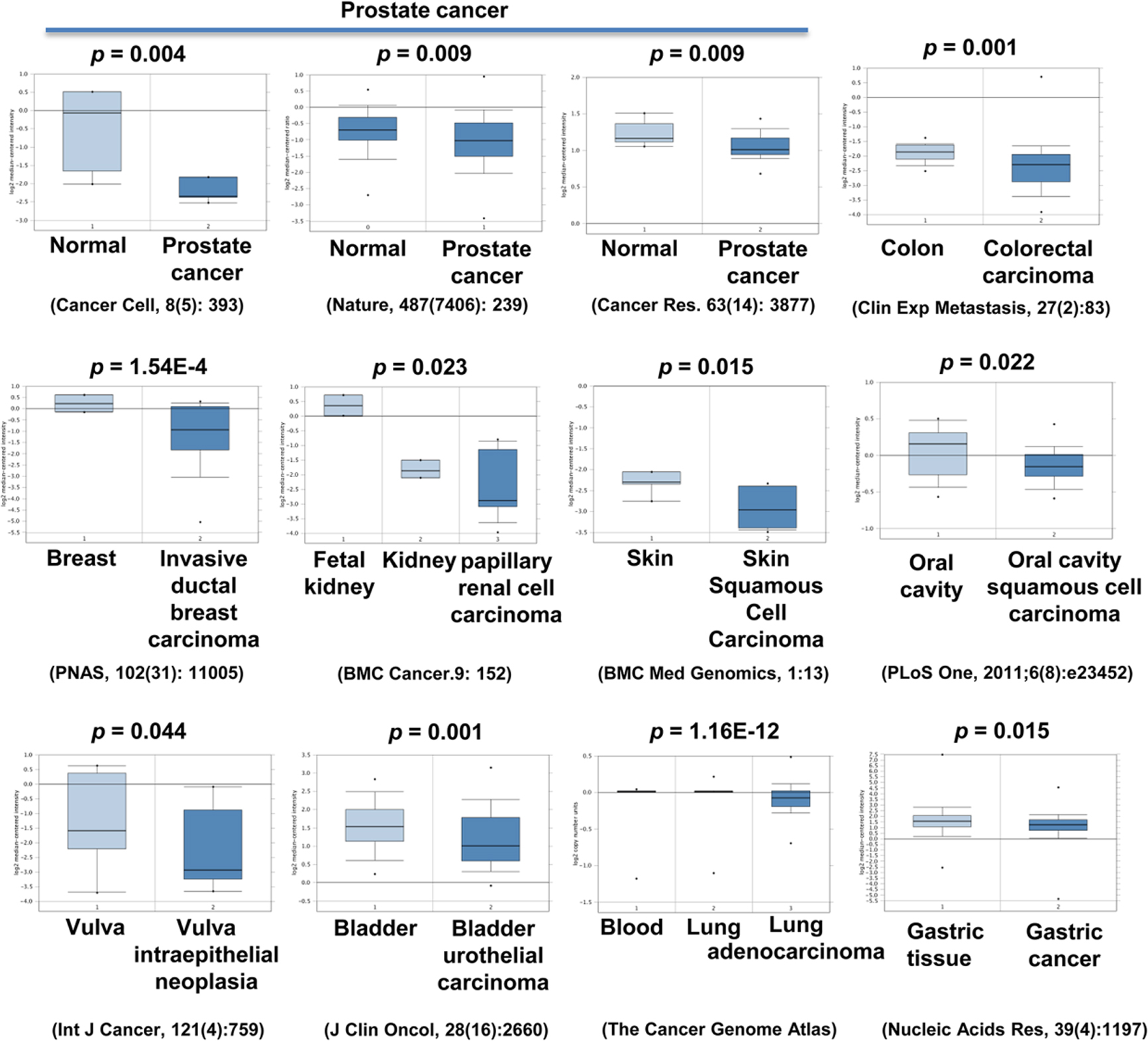
KIF7 is significantly downregulated in fresh epithelial ovarian cancer tissues. KIF7, kinesin family member 7.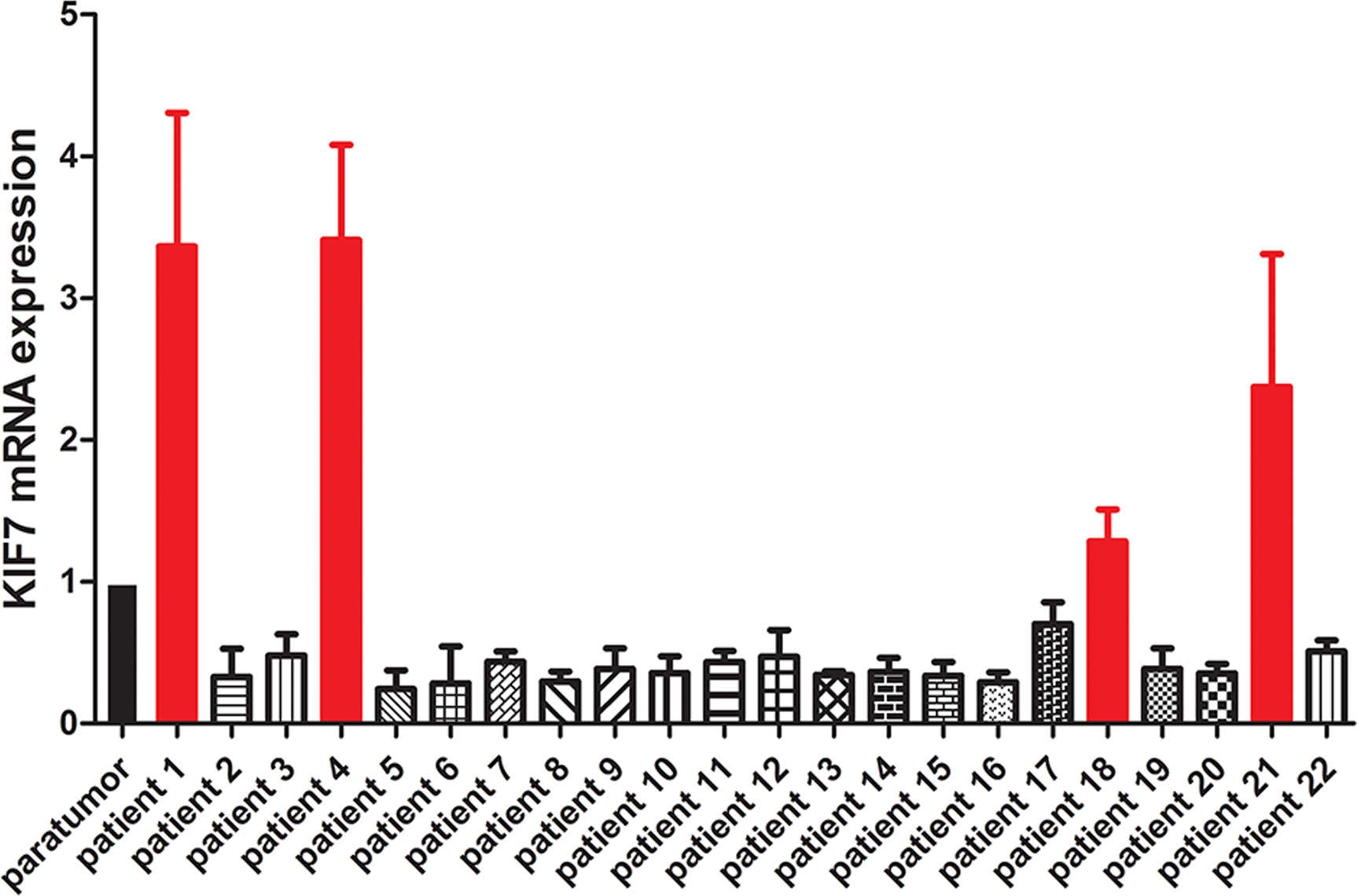
KIF7 expression in association with standard clinicopathological variables assessed using the
KIF7 has a candidate tumor suppressor role in epithelial ovarian cancer. (A) There was a significant difference in KIF7 expression between epithelial ovarian cancer tissues and paratumor tissues (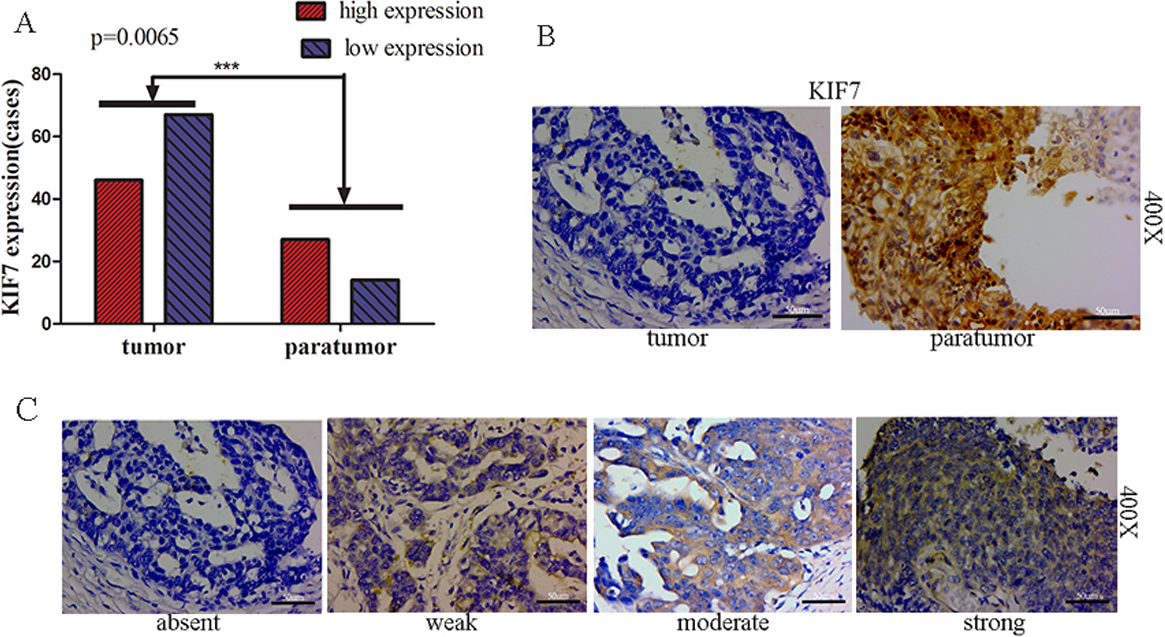
Statistical analysis. All data analyses were performed using the statistical software package SPSS 21.0 (IBM Corp.) and GraphPad Prism 5 (GraphPad Software, Inc.). The chi-square test or Fisher’s exact test were used to analyze the association between KIF7 and clinicopathological parameters. Furthermore, the recurrence-free survival (RFS) and overall survival (OS) were analyzed by Kaplan-Meier analysis, and the differences were assessed using the log-rank test. Cox’s proportional hazards regression model was used for univariate and multivariate analysis. The mRNA expression of KIF7 was expressed as the mean
Bioinformatics analysis indicates that KIF7 is significantly downregulated in human prostate cancer and other cancer types. Analysis of a dataset for human prostate cancer and other cancer types in Oncomine [13] indicated significant downregulation of KIF7 in cancer vs. normal tissues (Fig. 1).
KIF7 mRNA is downregulated in fresh epithelial ovarian cancer tissues compared with that in paratumor tissues. RT-qPCR was performed to detect the mRNA expression levels of KIF7 in 22 fresh ovarian cancer tissues and paired paratumor tissues (Fig. 2). The expression of KIF7 in all of the paired paratumor tissues was set as 1.00
KIF7 expression in paraffin-embedded epithelial ovarian cancer tissues and paratumor tissues assessed by IHC. To further determine whether KIF7 has a tumor suppressor role in epithelial ovarian cancer, 113 paraffin-embedded epithelial ovarian cancer tissues and 41 paratumor tissues were subjected to IHC analysis of KIF7 expression. The results indicated that 67/113 (59.29%) of the tumor samples had low/no staining (rated as low expression) and 46/113 (40.71%) had moderate/strong staining (rated as high expression), while IHC analysis of the 41 paratumor tissues indicated that 14/41 (34.15%) had low/non staining and 27/41 (65.85%) had moderate/strong staining, and there was significant difference between the cancer and paratumor tissues (
KIF7 expression is associated with the clinical parameters of epithelial ovarian cancer. Subsequently, the correlation between KIF7 expression and the clinicopathological parameters of epithelial ovarian cancer patients was analyzed (Table 2). The results indicated significant associations between KIF7 expression and clinicopathological parameters of patients with epithelial ovarian cancer, including the following factors: Age, FIGO stage, intraperitoneal metastasis, intestinal metastasis and vital status (at last follow-up).
Univariate and multivariate Cox regression analyses of prognostic factors in epithelial ovarian cancer
Univariate and multivariate Cox regression analyses of prognostic factors in epithelial ovarian cancer
Kaplan-Meier survival analysis for dead ovarian cancer patients. (A) Kaplan-Meier curves for overall survival between KIF7 expression and dead ovarian cancer patients. (B) Kaplan-Meier survival of progression-free survival between KIF7 expression and dead ovarian cancer patients. KIF7, kinesin family member 7.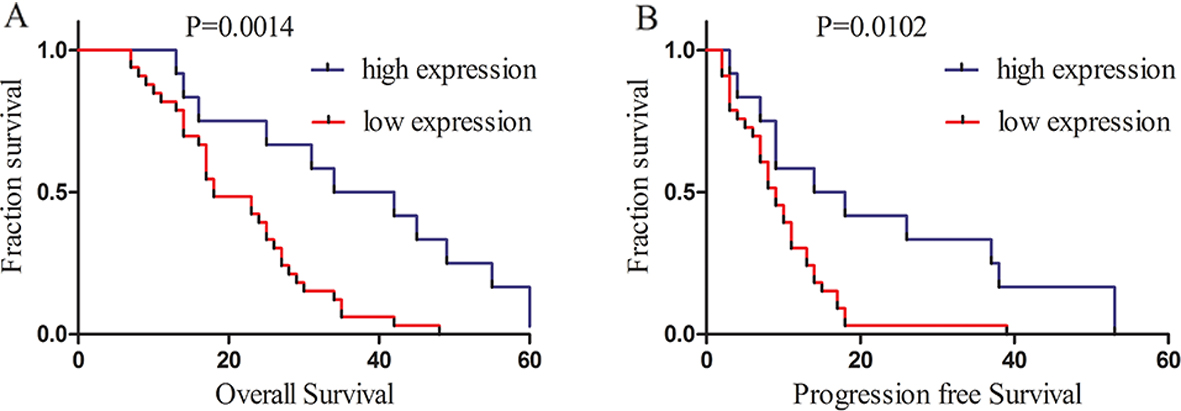
Low expression of KIF7 is an independent prognostic predictor in epithelial ovarian cancer. In the present study, patients with low expression of KIF7 had a median OS time of only 18 months and a median PFS time of 9 months, while patients with high expression of KIF7 had a median OS time of 34 months and a median PFS time of 14 months. Kaplan-Meier survival analysis with log-rank test demonstrated that there were statistically significant differences in PFS and OS between the KIF7 low expression and KIF high expression groups (
In addition, univariate analyses identified various prognostic factors in patients with epithelial ovarian cancer, including low expression of KIF7, intraperitoneal metastasis, serum cancer antigen (CA)153, hyperthermic intraperitoneal chemotherapy and serum carcinoembryonic antigen (CEA). Furthermore, multivariate analysis indicated that low expression of KIF7 was an indeed prognostic predictor in patients with epithelial ovarian cancer (Table 3).
Recent studies indicated that KIF7 is a novel tumor suppressor in various cancer types [10, 11, 12, 13, 14]. However, to the best of our knowledge, the role of KIF7 and epithelial ovarian cancer has remained elusive, and no previous study has reported on the IHC analysis of the expression of KIF7 in cancers. The present study was the first to demonstrate that KIF7 was downregulated in paraffin-embedded epithelial ovarian cancer tissues (including serous adenocarcinoma and mucoid adenocarcinoma), which is consistent with the results of previous studies [10, 11, 12, 13], but there was no significance in histology type. In addition, the present study was also the first to indicate that KIF7 mRNA expression was downregulated in paraffin-embedded epithelial ovarian cancer tissues compared with that in paratumor tissues, which is consistent with the study by Katoh and Katoh [14]. The present study suggested that KIF7 may act as a tumor suppressor in epithelial ovarian cancer.
Furthermore, KIF7 expression was associated with various factors, including the following: Age, FIGO stage, intraperitoneal metastasis, intestinal metastasis and vital status. Furthermore, the results indicated that low expression of KIF7 was more likely to occur in older patients, suggesting that KIF7 detection should be performed in older individuals for an earlier diagnosis. In addition, low expression of KIF7 was associated with advanced epithelial ovarian cancer, indicating that KIF7 may have a role in the initiation and progression of epithelial ovarian cancer. Low expression of KIF7 was also associated with intraperitoneal and intestinal metastasis, suggesting that KIF7 may be implicated in metastasis and invasion of epithelial ovarian cancer. It may therefore be concluded that KIF7 is involved in the pathogenesis of epithelial ovarian cancer. However further in vitro and in vivo studies are required to elucidate the molecular mechanism.
In addition, Kaplan-Meier survival analysis indicated that patients with low expression of KIF7 have a shortened PFS and OS compared with those with high expression of KIF7. Furthermore, univariate Cox regression analysis identified various prognostic factors in epithelial ovarian cancer patients, including low expression of KIF7, intraperitoneal metastasis, serum CA153, hyperthermic intraperitoneal chemotherapy and serum CEA. Further multivariate analysis suggested that low expression of KIF7 was an independent prognostic predictor for patients with epithelial ovarian cancer. Serum CA125 and CEA were also still independent prognostic predictors, but intraperitoneal metastasis was no longer a prognostic predictor of epithelial ovarian cancer. As is known, CA125 is a widely used biomarker for diagnosis and monitoring of patients with epithelial ovarian cancer. Based on the present results, it may be suggested that the combination of KIF7 detection and serum CA125 is adopted for the diagnosis and monitoring of patients with epithelial ovarian cancer. The present study indicated that low expression of KIF7 is associated with poor prognosis of patients with epithelial ovarian cancer. It may be used as a biomarker for the diagnosis of patients with epithelial ovarian cancer and their follow-up after operation or chemotherapy.
In conclusion, all of the present results suggested that KIF7 has a tumor suppressor role in epithelial ovarian cancer, and it may be used as an effective prognostic predictor of patients with epithelial ovarian cancer. It may have utility in the diagnosis and monitoring of patients with epithelial ovarian cancer. The present study contributed to the current knowledge regarding the role of KIF7 in various cancer types. According to certain studies [8, 9], KIF7 is associated with Hh signaling, and future studies by our group will explore the mechanisms of KIF7 in epithelial ovarian cancer, including Hh signaling. In addition, it requires to be assessed whether KIF7 expression is a pathogenic factor or an outcome of epithelial ovarian cancer, and future in vivo and in vitro studies should assess its functions and molecular mechanisms.
Footnotes
Acknowledgments
This work was supported by the Nature Science Fund of Guangdong Province (No. 2016A030313536) and Guangdong Medical Research Fund (A2019096).
Conflict of interest
The authors declare no conflict of interest.