




Abstract
OBJECTIVE:
This study aimed to explore the correlation of circular RNA itchy E3 ubiquitin protein ligase (circ-ITCH) with pathological features as well as its predictive value on prognosis in prostate cancer patients.
METHODS:
Three hundred and twenty-four patients with prostate cancer underwent radical prostatectomy were consecutively included in this retrospective study, and patients’ specimens of tumor as well as paired adjacent tissues were collected for detection of circ-ITCH expression. Patients’ baseline characteristics and survival data were obtained from follow-up records, and correlation of circ-ITCH with patients’ pathological features and survival was determined.
RESULTS:
Circ-ITCH expression was decreased in tumor tissue compared with paired adjacent tissues (
CONCLUSIONS:
Circ-ITCH is downregulated in prostate cancer tissues, and its low expression correlates with advanced pathologic T stage, high lymph mode metastasis risk and poor survival in prostate cancer patients underwent radical prostatectomy.
Introduction
Prostate cancer is the most prevalent and the third death-leading malignancy among males accounting for 13.5% of all cancer cases and 6.7% of cancer deaths worldwide [1]. In Eastern Asia, the incidence of prostate cancer is 23.9 per 100,000 and the mortality is about 14.8 per 100,000, and its prevalence is constantly increasing in China largely accounting for the change in lifestyle and dietary structure [1, 2]. Modern diagnosis approaches (such as biomarker screening using prostate-specific antigen (PSA) and imageological examinations) allow early determination as well as proper staging of prostate cancer, while despite the success in diagnosis, the emergence of disease recurrence and metastasis is still very common, which leads to unfavorable prognosis in prostate cancer patients [3, 4, 5, 6]. Recently, understanding about the pathogenesis of prostate cancer is getting deeper with growing functional researches, while there is still a substantial gap in our knowledge about therapeutically reliable biomarkers for disease risk and prognosis in prostate cancer patients [7, 8]. Therefore, exploring novel biomarkers is greatly needed for improvement of diagnostic and prognostic forecasting in prostate cancer as well as benefiting patients’ survival.
Circular RNAs (circRNAs) are defined as a class of RNAs that form covalently closed loops, which make them stable in structure and resistant to degradation [9]. In recent years, thousands of circRNAs have been newly identified and some of them play vital roles in biological processes involved in the development of human cancers, and a number of them have been reported to participate in pathogenesis of prostate cancer [10, 11]. CircRNA itchy E3 ubiquitin protein ligase (circ-ITCH) is coded from ITCH gene and shares micro RNA (miRNA) binding sites with 3’ translated region of ITCH gene, which makes it a sponge for miRNAs [12]. The anti-tumor effect of circ-ITCH has been discovered in various cancers including bladder cancer, hepatocellular carcinoma, lung cancer and esophageal squamous cell carcinoma [12, 13, 14, 15]. However, the role of circ-ITCH in prostate cancer still remains uninvestigated. Therefore, this study aimed to explore the correlation of circ-ITCH with pathological features and its predictive value on prognosis in prostate cancer patients underwent radical prostatectomy.
Methods
Patients
From Jan 2013 to Dec 2016, 324 patients with prostate cancer underwent radical prostatectomy in Huangshi Central Hospital were consecutively included in this retrospective study. The inclusion criteria were: (1) histopathologically confirmed prostate cancer; (2) age above 18 years old; (3) radical prostatectomy, and fresh-frozen tumor tissue and paired adjacent tissue were reserved and available; (4) clinicopathologic data and follow-up records were complete and accessible. The exclusion criteria included: (1) underwent neoadjuvant therapy; (2) with incomplete medical records; (3) missing follow-up records; (4) complicated with other solid tumors or had a history of other malignancies. The study protocol was approved by the Institutional Review Board of Huangshi Central Hospital, and written informed consents were obtained from all patients or their guardians.
Data collection
Patients’ age, level of prostate-specific antigen (PSA) before surgery, Gleason score, pathologic T stage, lymph node metastasis and surgical margin status were collected from medical records. All patients were followed up until 2018/6/30, and the survival data were obtained from follow-up records, which were used to calculate disease-free survival (DFS) and overall survival (OS). The DFS was defined as the duration from partial remission (PR) to recurrence or progression of disease or death; the OS was defined as the time interval from PR to death.
Detection of circ-ITCH in tumor and paired adjacent tissue
Fresh prostate tissues were procured immediately after surgery, cut into the size of 1 cm
Statistical analysis
All statistical analyses were performed with the use of SPSS 22.0 software (SPSS Inc., Chicago, IL, USA) and GraphPad Prism 7.00 (GraphPad Software, La Jolla, CA, USA). Normal distributed continuous variable was presented as mean value
Study flow.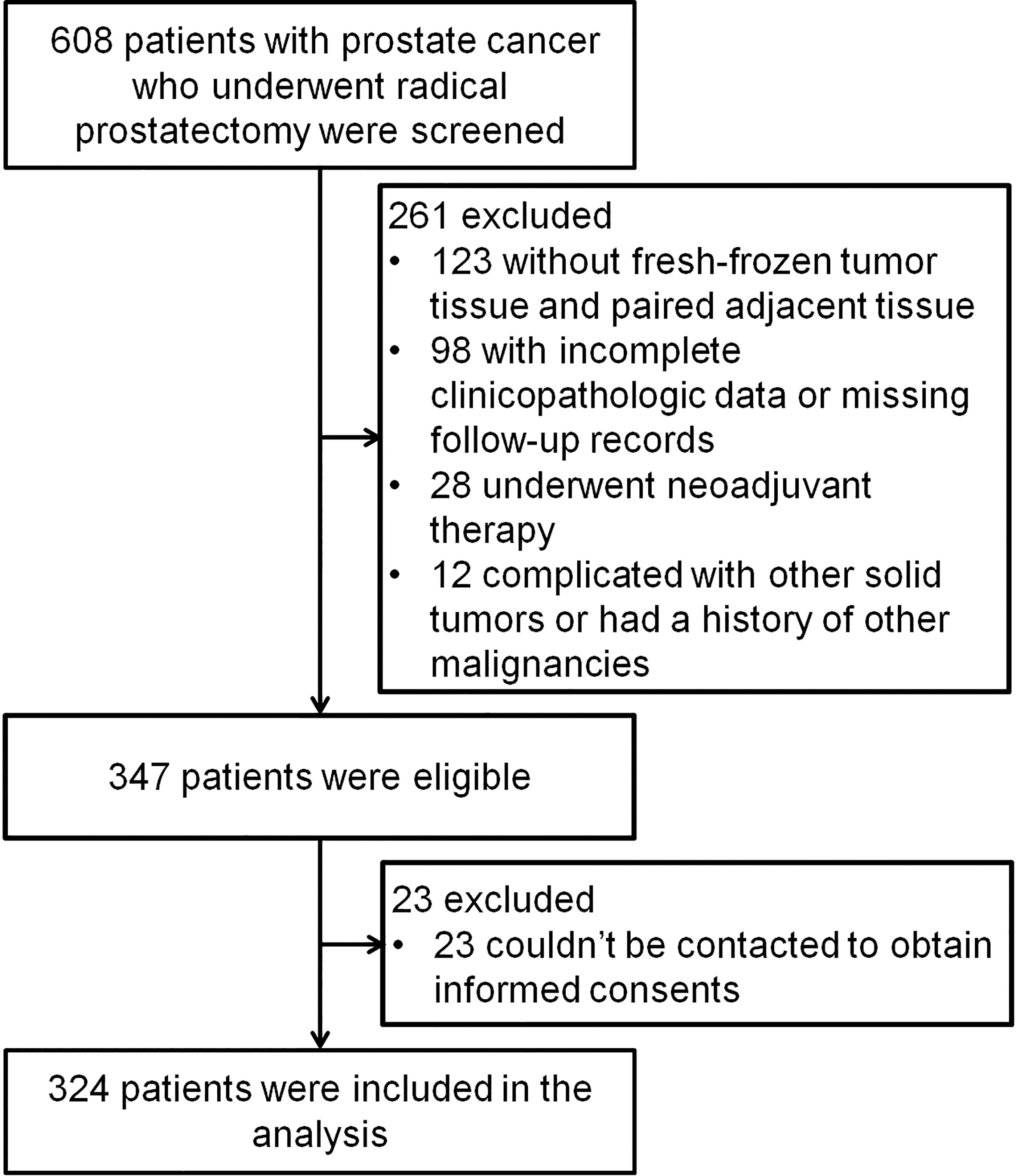
Study flow
Six hundred and eight prostate cancer patients who underwent radical prostatectomy were screened for eligibility, while 261 patients were excluded including 123 patients without fresh-frozen tumor tissue and paired adjacent tissue, 98 patients with incomplete clinicopathological data or missing follow-up records, 28 patients underwent neoadjuvant therapy and 12 patients complicated with other solid tumors or had a history of other malignancies (Fig. 1). Three hundred and forty-seven patients were eligible, whereas 23 of them who could not be contacted to obtain informed consents were excluded. Finally, 324 patients were included in the analysis.
Baseline characteristics of patients with prostate cancer
Baseline characteristics of patients with prostate cancer
Data were presented as mean value
Circ-ITCH relative expression in tumor tissue and paired adjacent tissue in prostate cancer patients. Circ-ITCH relative expression was downregulated in tumor tissues compared with paired adjacent tissues (A). ROC curve displayed the good value of circ-ITCH in distinguishing tumor tissue and paired adjacent tissue (B). Comparison of circ-ITCH relative expression between tumor tissue and paired adjacent tissue was determined by Wilcoxon signed-rank sum test, and the value of circ-ITCH in distinguishing tumor tissue and paired adjacent tissue was assessed by ROC curve. 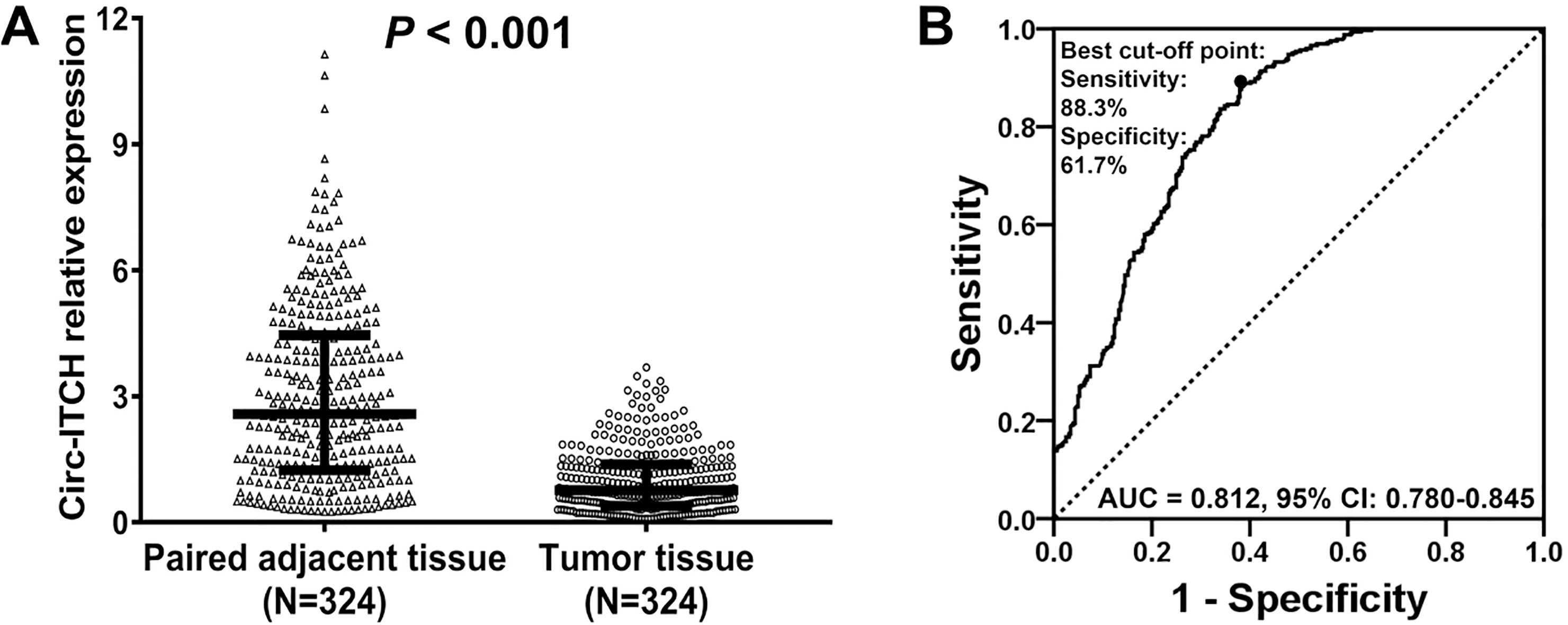
Three hundred and twenty-four prostate cancer patients with median age of 63 (56–69) years were included in the analysis (Table 1). Among whom, 97 (29.9%), 157 (48.5%) and 70 (21.6%) of patients were with PSA
Circ-ITCH expression in tumor tissue and paired adjacent tissue
Circ-ITCH relative expression in tumor tissue (0.764 (0.387–1.381)) was lower compared with paired adjacent tissue (2.576 (1.242–4.455)) (
Correlation of circ-ITCH relative expression with patients’ characteristics
Correlation of circ-ITCH relative expression with patients’ characteristics
Data were presented as count (percentage). Comparison was determined by Chi-square test.
Association between circ-ITCH expression and survivals in prostate cancer patients. Circ-ITCH high expression was correlated with longer DFS (A) and OS (B) in prostate cancer patients. The difference of survival between patients with circ-ITCH low expression and high expression was illuminated with Kaplan-Meier curve and determined by log-rank test. 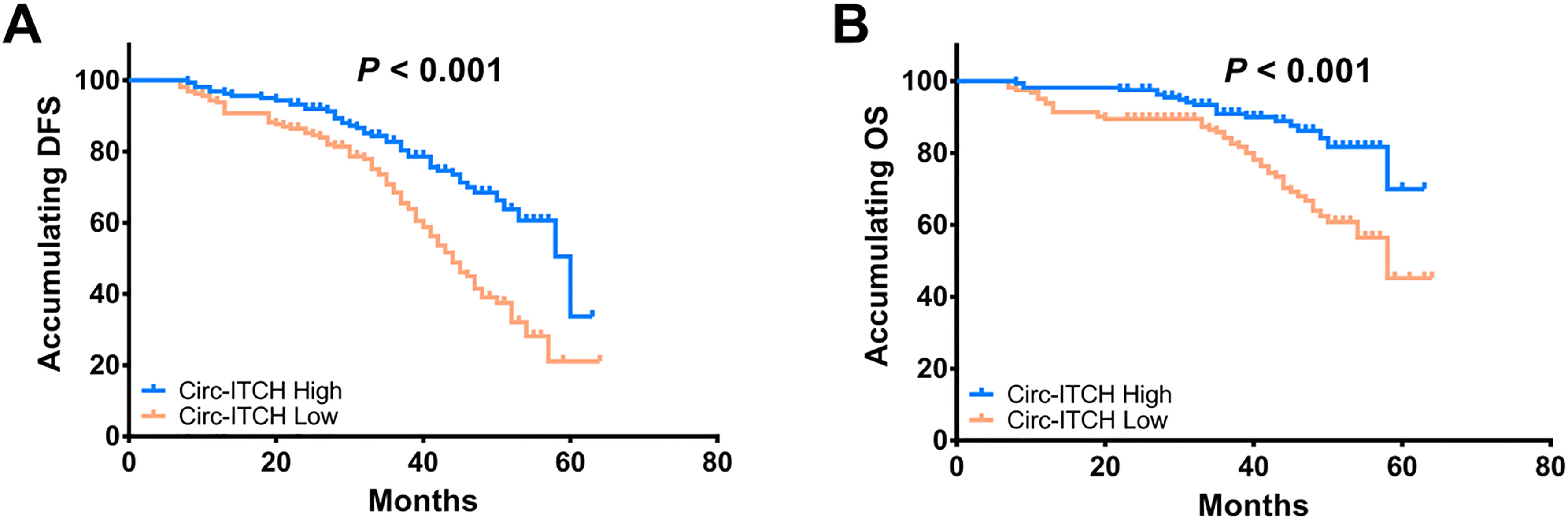
Difference in DFS between circ-ITCH high expression and low expression patients in subgroup analysis. Circ-ITCH high expression patients presented longer DFS compared to circ-ITCH low expression patients in subgroups including: age 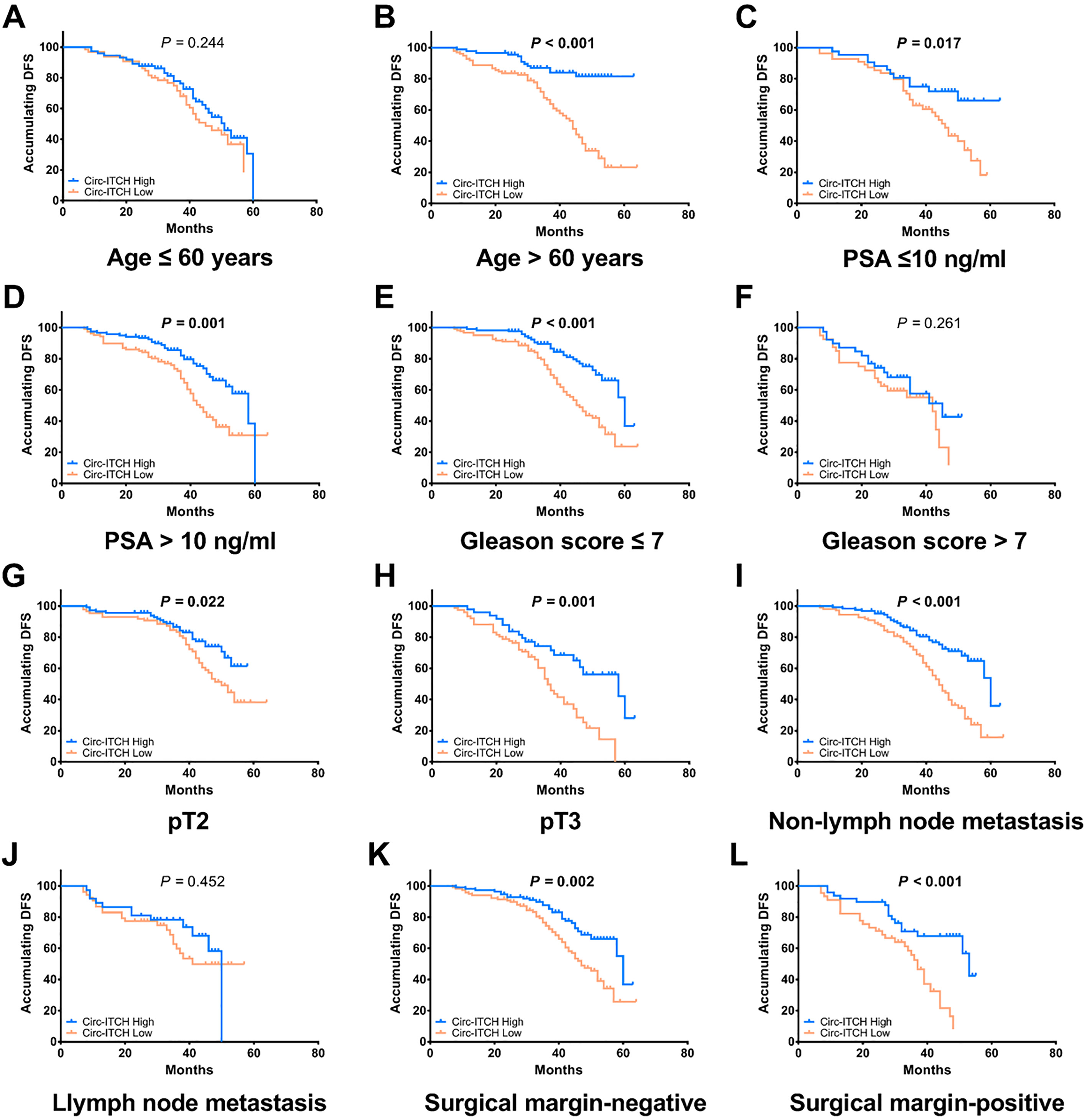
Patients were divided into circ-ITCH low expression (
Correlation of circ-ITCH expression with patients’ survival
Patients’ DFS and OS was evaluated by Kaplan-Meier curve analysis and comparison of survivals between circ-ITCH high expression and low expression groups were performed using log-rank test (Fig. 3). Circ-ITCH high expression was correlated with longer DFS (
Comparison of DFS between circ-ITCH high expression and low expression patients in subgroup analysis
Patients were divided into subgroups according to their baseline characteristics, and in each subgroup, comparison of DFS between circ-ITCH high expression and low expression patients was carried out (Fig. 4). Compared to circ-ITCH low expression patients, circ-ITCH high expression patients presented longer DFS in subgroups including: age
Comparison of OS between circ-ITCH high expression and low expression patients in subgroup analysis
For OS in subgroup analysis, better OS was observed in circ-ITCH high expression patients compared with low expression patients in subgroups including: age
Difference in OS between circ-ITCH high expression and low expression patients in subgroup analysis. Better OS was observed in circ-ITCH high expression patients compared with low expression patients in subgroups including: age 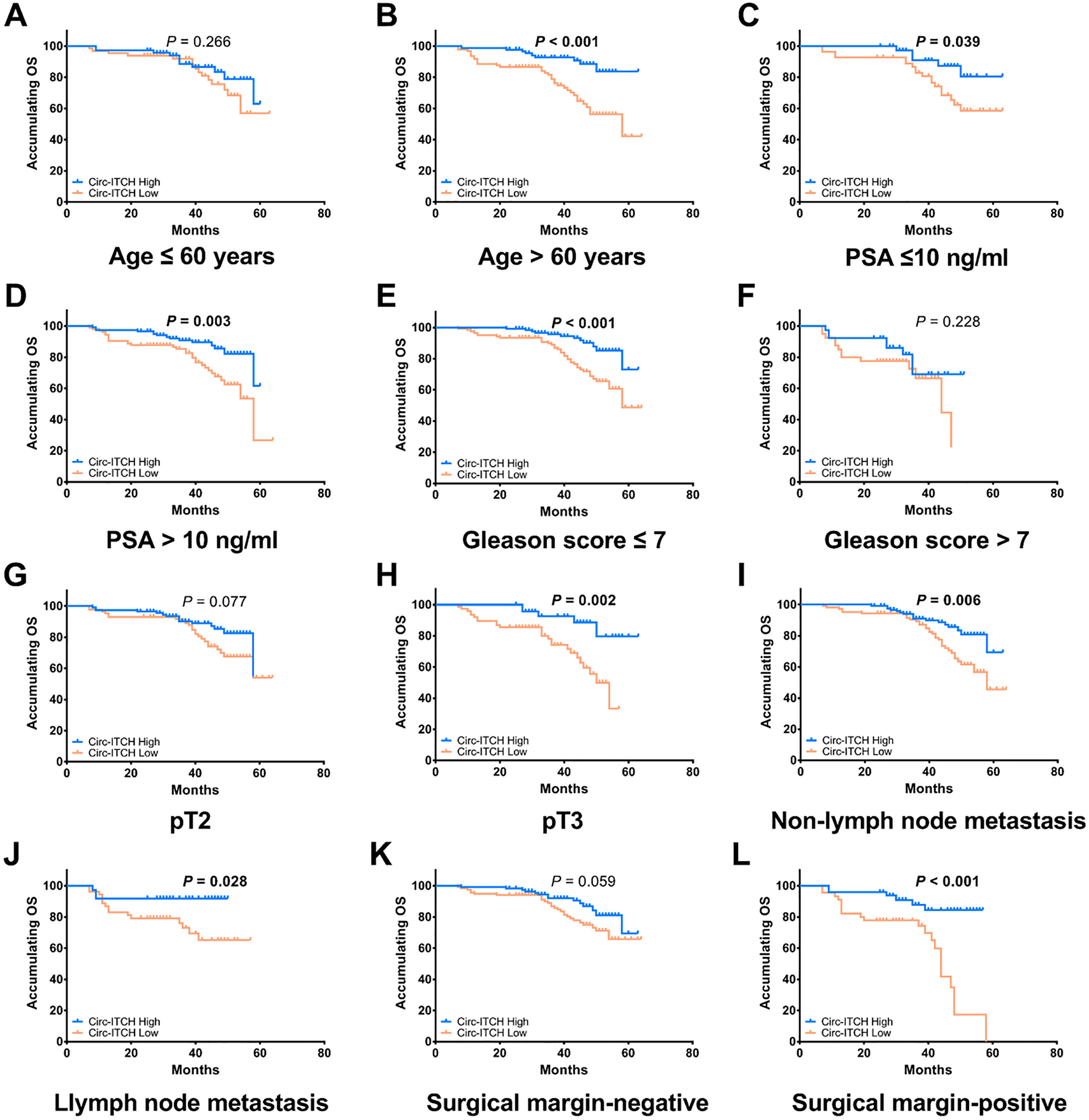
From univariate Cox’s regression analysis, circ-ITCH (high vs. low) (HR
Factors affecting DFS by Cox’s proportional hazards regression analysis
Factors affecting DFS by Cox’s proportional hazards regression analysis
Factors affecting DFS were determined by univariate and multivariate Cox’s proportional hazards regression analyses.
Factors affecting OS by Cox’s proportional hazards regression analysis
Factors affecting OS were determined by univariate and multivariate Cox’s proportional hazards regression analyses.
Circ-ITCH (high vs. low) (HR
Discussion
In the present study, we observed that: (1) Circ-ITCH was downregulated in tumor tissues, and its high expression was correlated with lower pathological T stage as well as reduced lymph node metastasis risk. (2) Circ-ITCH expression was positively associated with survivals in prostate cancer patients underwent radical prostatectomy.
CircRNAs are non-coding RNAs arising from exons and introns of the genome, and they are evolutionary conserved, relatively stable as well as abundantly expressed in mammals [16, 15]. Since the discovery, circRNAs are believed to be versatile in post-transcriptional regulation of gene expression via RNA-RNA interaction, and several endogenous circ-RNAs has been shown to serve as a sign of malignant degeneration [17, 16]. Circ-ITCH is a typical circRNA that works as microRNA sponge to increase ubiquitin E3 ligase ITCH level, and it has been reported to suppress cell proliferation of various cancers via inhibiting the Wnt/
Beyond the capability as gene regulators, the correlation of circ-ITCH with tumor progression and severity in human cancers has been increasingly reported [19]. For example, circ-ITCH is downregulated in tumor tissues compared with normal adjacent tissues in papillary thyroid cancer, and overexpression of circ-ITCH impairs tumor growth, hence attenuates cancer severity in papillary thyroid cancer patients [20]. In addition, circ-ITCH is downregulated in colorectal cancer (CRC) and suppresses cancer progression in CRC patients [18]. These previous studies imply that circ-ITCH is downregulated in various cancers and suppress tumor progression, while information about circ-ITCH in prostate cancer development and progression is still limited. In the present study, we compared the expression of circ-ITCH between tumor tissue and paired adjacent tissue and we observed that circ-ITCH was downregulated in prostate tumor tissue with great value on distinguishing tumor tissues from paired adjacent tissues. Besides, circ-ITCH high expression was associated with lower pathological T stage as well as reduced lymph node metastasis risk in prostate cancer patients underwent radical prostatectomy. These might be due to that: (1) Circ-ITCH might work as anti-oncogene by sponging oncogenic microRNAs (e.g. miR-17, miR-224 and miR-145) to suppress oncogenes (e.g. P21 and PTEN) or elevate level of cancer-suppressor genes (e.g. ITCH and RASA1), therefore, circ-ITCH high expression was correlated with reduced pathological stage and lower risk of lymph node metastasis in prostate cancer patients [13, 18, 21]. (2) Circ-ITCH might inhibit cell proliferation, migration, invasion and metastasis through suppressing signaling pathways (e.g. Wnt/beta-Catenin signaling pathway) in prostate cancer, thereby attenuated tumor progression in prostate cancer patients.
In the meantime, the correlation of circ-ITCH expression with prognosis of cancer patients has been discovered. One previous study demonstrates that circ-ITCH exerts inhibitory effect on HCC and its high expression is associated with improved OS in hepatocellular carcinoma (HCC) patients [14]. Another study also discloses a positive association between circ-ITCH expression and OS in bladder cancer patients [13]. These studies present a positive correlation between circ-ITCH expression and survival profiles in cancer patients, whereas for prostate cancer, the prognostic value of circ-ITCH is still obscure. In accordance with the previous studies, our study revealed that circ-ITCH expression was independently correlated with better DFS and OS in prostate cancer patients underwent radical prostatectomy. The possible explanations were: (1) Circ-ITCH might suppress cancer cell proliferation, migration and invasion by inhibiting Wnt/beta-Catenin pathway, attenuating tumor progression and improving the prognosis in prostate cancer patients. (2) Circ-ITCH high expression was correlated with lower pathological stage and reduced lymph node metastasis as described above, therefore, it might predict better survival in prostate cancer patients. (3) Circ-ITCH might increase the sensitivity of cancer cells to the subsequent chemotherapies or radiotherapy after radical prostatectomy and result in better treatment responses, hence favoring the survival of prostate cancer patients. However, further validation was needed for this supposed explanation.
To our knowledge, this is the first study investigating the role of circ-ITCH in prostate cancer, whereas there still remained several limitations in our study. Firstly, tissue samples were used for detection of circ-ITCH whose collection was invasive, whereas for biomarker detection, it was critical that the sample was easy to access. Therefore, other sample sources, such as blood samples, that were non-invasive and easier to obtain could be evaluated in further studies. Secondly, the sample size was small with all patients originated from single hospital in China, resulting in weak statistical power and regional selection bias. Thirdly, GAPDH was the only one internal reference used in analysis of qPCR results, while more housekeeping genes could lead to more robust results. Finally, this single study identified a potential biomarker for prostate cancer, whereas we did not investigate the molecular mechanism of circ-ITCH in development of prostate cancer. Therefore, further experimental studies were needed for validation of our findings.
In conclusion, circ-ITCH is downregulated in prostate cancer tissues, and its low expression correlates with advanced pathologic T stage, high lymph mode metastasis risk and poor survivals in prostate cancer patients underwent radical prostatectomy.
Footnotes
Conflict of interest
None.